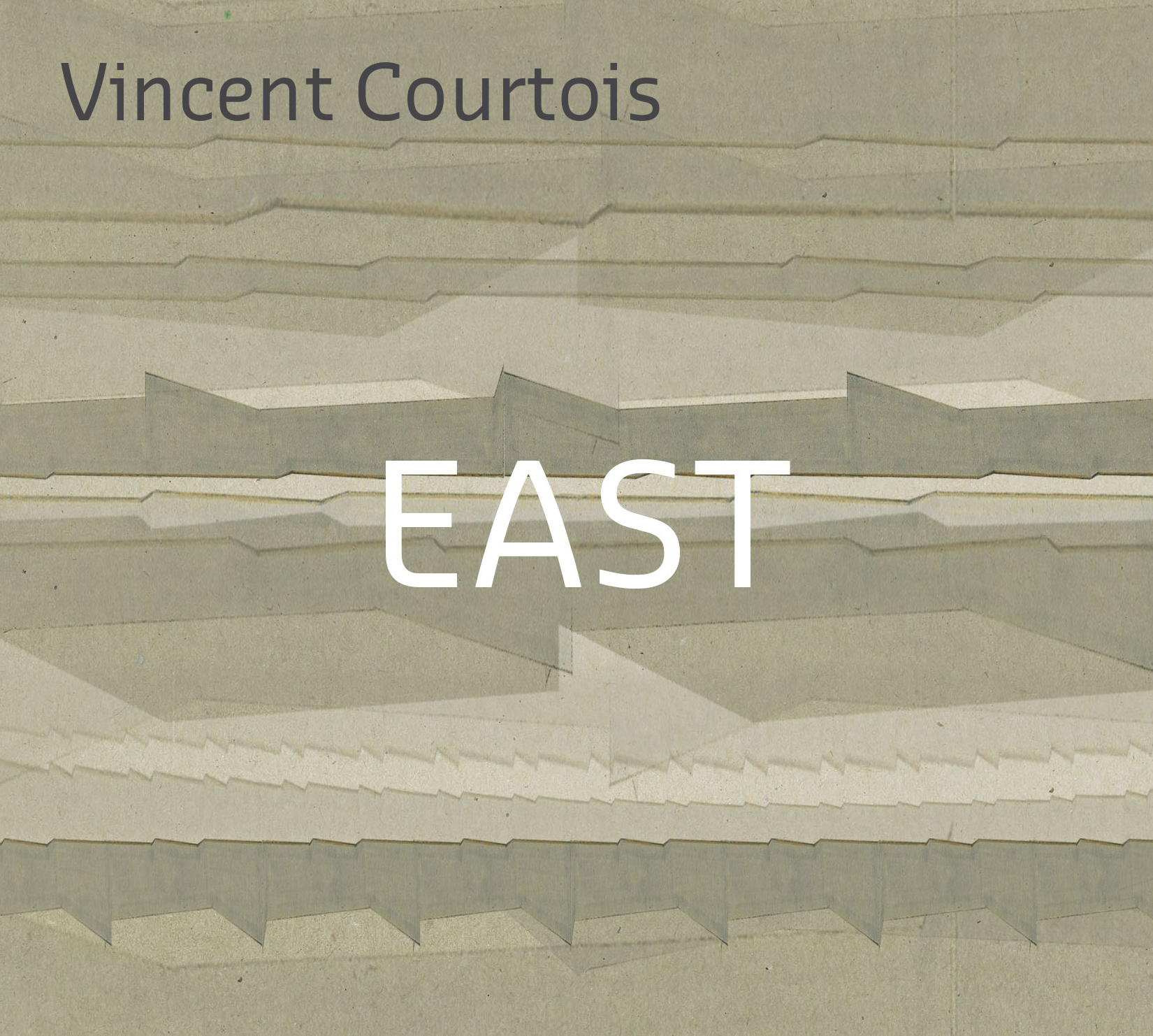
Vincent Courtois cello Mixing: Gérard de Haro at La Buissonne Studios Mastering: Nicolas Baillard at La Buissonne Studios Production: Gérard de Haro and RJAL for La Buisonne & La Cie de l’Imprévu Marketed in cooperation with ECM Records Release date: November 12, 2021
Although cellist Vincent Courtois is best known in jazz circles, his musical imagination was founded in classical discipline at the Conservatory of Aubervilliers. When the early days of the pandemic suddenly suspended ordinary time, he found himself alone with an instrument, a room, and a long-held desire to confront the monumental solo repertoire of the 20th century. This album is a chronicle of that isolation, a record of inward motion that gradually widens into something like spiritual travel.
Arthur Honegger’s rarely heard Paduana opens the program with a plunge into the cello’s subterranean depths. From that darkness emerges a voice at once grounded and restless, searching for a horizon it can almost taste. Courtois draws a tone that feels inhabited, a living current that runs beneath every phrase. The music breathes, pauses, and advances with a quiet inevitability.
Hans Werner Henze’s nine-part Serenade follows like a gallery of shifting faces. Each movement appears to illuminate another angle of an elusive figure as it comes into being. The central Vivace flares with kinetic brilliance, as if the music were hammering itself into form before our ears. Courtois moves effortlessly between bowed intensity and fleeting pizzicato gestures, revealing how much freedom resides in precision.
Krzysztof Penderecki’s Per slava begins as a whisper that refuses to remain small. Taut double stops hover in an uneasy suspension, suggesting a soul momentarily detached from its body. As the piece unfolds, sorrow gathers weight without ever softening into consolation. Courtois describes its difficulty as “a seemingly unclimbable mountain.” Yet his ascent feels less like a conquest than a patient persistence that carries him to the summit.
That hard-won clarity leads naturally into György Ligeti’s Sonata for Solo Cello. The opening slides glint with a folkish warmth before the music accelerates toward the incandescent Capriccio, where exuberance becomes almost ecstatic. The performance vibrates with alertness, every gesture sharpened by joy. Luciano Berio’s Les mots sont allés, built from the letters of dedicatee Paul Sacher’s name, follows as a kind of celebratory labyrinth. Its variations rub against one another until friction turns to flame.
Paul Hindemith’s Cello Sonata then arrives with immediate authority. From its first gesture, it strides forward rather than wanders. Courtois lets the music declare itself with unshakable resolve. Texture accumulates, yet the line never fractures.
The album ends with Dominique Pifarély’s pour Fernando Pessoa, a work of quiet turbulence. Tender passages give way to veiled unease. Courtois shapes its twists with restraint, allowing mystery to remain intact. What lingers most is not technique, however adventurous, but the sense of an instrument speaking plainly across time. These works belong to an era when the cello still carried the burden of narrative, capable of song, proclamation, and inner confession all at once.
Solitude has not narrowed this music; it has deepened it. In listening, we are reminded that art does not rescue us from isolation so much as reveal what we were always carrying within it.
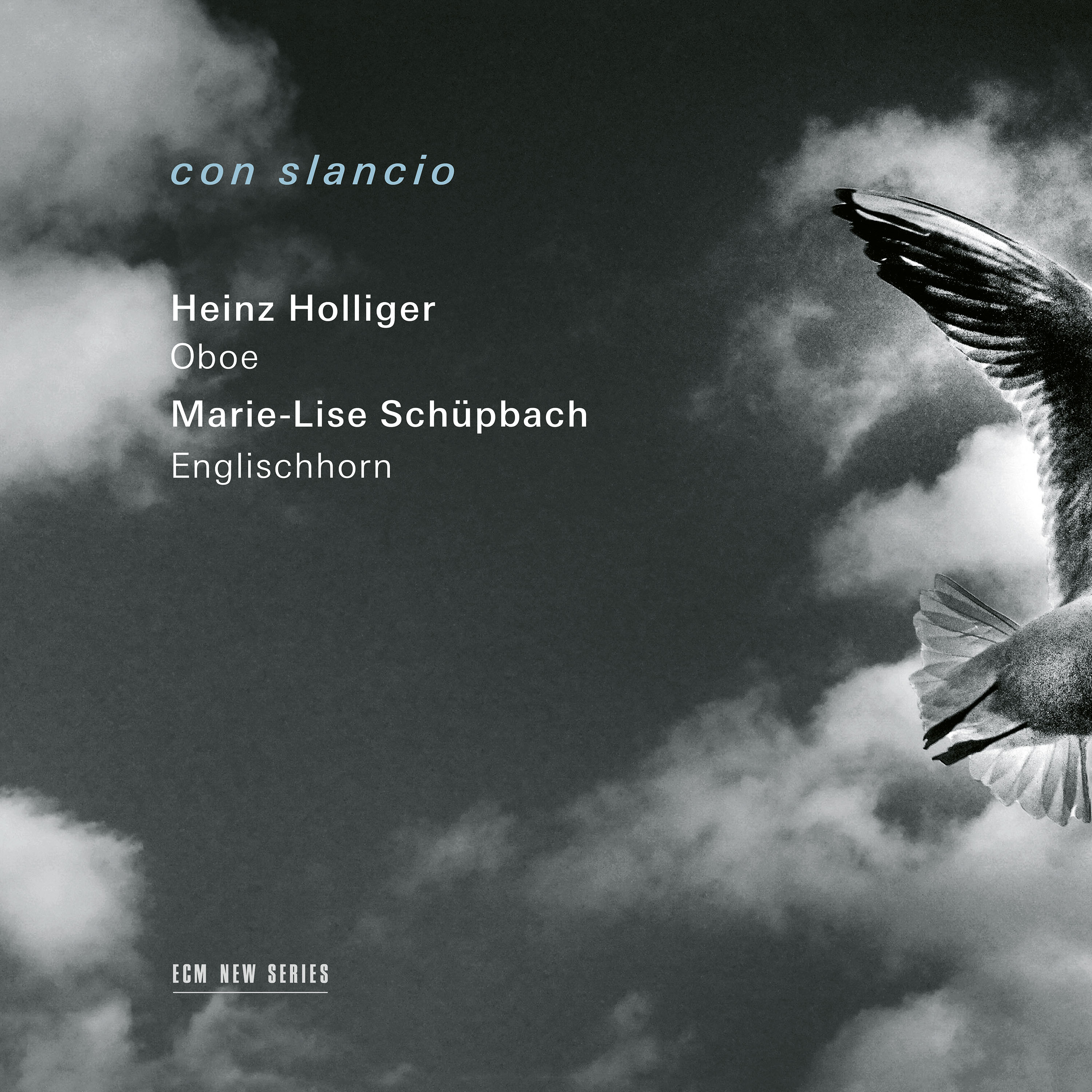
Heinz Holliger oboe, English horn, Sprechstimme Marie-Lise Schüpbach English horn, oboe Recorded July/August 2020 Radiostudio DRS Zürich Engineer: Andreas Werner Cover photo: Jean-Marc Dellac An ECM Production Release date: February 6, 2026
“I don’t want to communicate something definite, something concrete. I find music entirely unsuited for that.” –Heinz Holliger
This latest recording for ECM New Series by Heinz Holliger and Marie-Lise Schüpbach, who last appeared together on 2019’s Zwiegespräche, feels less like a recital than an extended meditation on the tremor that precedes orality. Across its span, the oboe becomes a site where language approaches, falters, and reconstitutes itself. Holliger’s return to composing for the instrument after decades of reticence gives the album its emotional and philosophical axis. In the booklet interview with Michael Kunkel, he speaks of Klangrede, a kind of sonic declamation in which music thinks aloud without becoming discourse. Rhythm for him is not a law but a mood. “Only in strict moments do I use a rigid framework,” he admits, “otherwise, I simply can’t bear it.” One hears in this a deeper suspicion of any language that hardens into doctrine. Music, he insists, is abused when reduced to a message. There is no lesson here, only a soul seeking its acoustical climate. With the oboe, that climate is paradoxical, what he calls “speaking with a closed mouth.” The entire program plays with this idea, as if testing how much meaning can survive in the face of a written score.
Holliger’s own con slancio from 2018 opens the project like a gasp before a sentence. Played by him alone, it begins with a leaping gesture that keeps missing its metrical footing. Fluttering figures scatter upward into brief star-flecks of multiphonics before dissolving into a luminous fade. Rather than announcing a theme, the piece performs hesitation itself. This sense of suspended utterance returns in his Ständchen für Rosemarie, where the English horn spars with its own desire to communicate, turning inward midway to reveal dreams that feel both candid and concealed. The two duo pieces from 2019, Spiegel – LIED and LIED mit Gegenüber (contr’air), place melody inside a hall of distorting mirrors. In the first, microtonal inflections make each phrase mishear itself, whereas the second builds nested dialogues in which the instruments appear to listen to their own thoughts while voicing them. The later works Fangis (fang mich) and à deux – Adieu, both from 2020, entwine play and specter, quick verbal-like exchanges interrupted by haunted multiphonics that sound like syllables losing their jobs.
Around these pieces gathers a constellation of works written for Holliger over decades, each treating the oboe as a dialect in danger of dissolving. Toshio Hosokawa’s Musubi from 2019, for oboe and English horn, knots the two players together only to let them unravel again. The instruments align in heart yet retain separate bodies, inventing a private grammar of crane-like calls that shed purpose precisely by insisting on it. As articulation softens, the music sinks into a subliminal murmuring. Jürg Wyttenbach’s Sonate für Oboe solo from 1961 is an entire idiom compressed into four movements. The opening juxtaposes public proclamation with whispered aside, while the second turns inward like a language translating itself into secrecy. The third becomes a virtuosic thicket in which Holliger’s upper register fractures into glittering particles before the epilogue lets the instrument split its tongue into a dance that evaporates into silence.
Jacques Wildberger’s Rondeau für Oboe solo from 1962 begins with disarming lightness, a kind of conversational sparkle that slowly acquires gravity. Higher registers awaken like excited vowels, yet beneath them lingers the anxiety that too much thought can make flight impossible. György Kurtág’s con slancio, largamente from 2019, played on English horn, answers this with austere brevity. An opening octave plunges downward into the instrument’s dark interior, brushing past a fleeting memory of Bach before collapsing into aphorism, and aphorism into an empty shell. Rudolf Kelterborn’s Duett für Oboe und Englischhorn from 2017 initially speaks in whispers but soon weaves an intricate web of gestures, a conversation that proves restraint can be the most baroque form of eloquence.
Finally, Robert Suter’s Oh Boe für Oboe solo from 1999 becomes the album’s most openly linguistic experiment. Holliger adds Sprechstimme for this recording, a personal gloss absent from the score. The spoken fragments stumble between playfulness and severity, nonsense and revelation, as if caught in a productive net of aphasia. Directions trip, recombine, and disintegrate, scattering meaning across the floor for the listener to collect, knowing that some syllables will forever be missing.
Taken together, these pieces create a cartography of inaudibility. Breath functions as syntax, timbre as grammar, silence as punctuation. The oboe emerges not merely as an instrument but as a fragile throat, perpetually on the brink of forgetting how to talk and therefore speaking all the more urgently. Music here does not replace language, nor does language dominate music. Instead, both hover in a trembling middle space where saying and sounding keep mistranslating each other.
By the album’s close, one senses that meaning survives only by remaining porous. Every phrase feels as though it might dissolve before finishing itself, and that very instability is what keeps it alive. Speech does not end in sound, sound does not end in speech. They circle one another like letters afraid of becoming words.
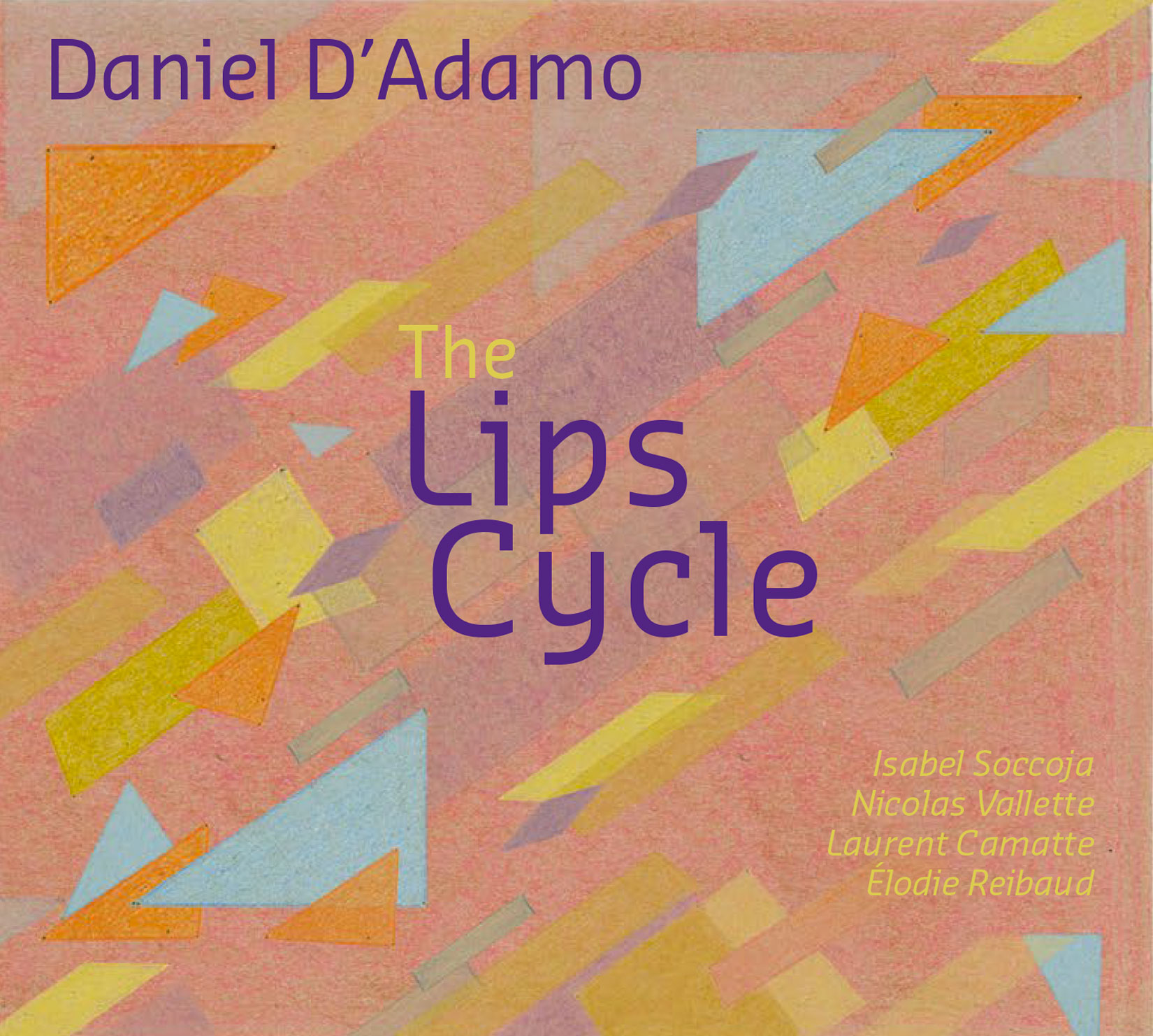
Isabel Soccoja voice Nicolas Vallette flutes Laurent Camatte viola Élodie Reibaud harp Recording: Daniel D’Adamo, Alexis Derouet and Maxime Lance (Césaré), Gérard de Haro, Jérôme Decque (Gmem), Vincent Carinola (ESM), Philippe Dao (GRM) Mixing and mastering: Gérard de Haro, Nicolas Baillard (La Buissonne – 2019) Production: Marc Thouvenot & La Buissonne Artistic Direction: Pascale Berthelot Release date: November 17, 2020
This album stands as a threshold document, both an ending and an aperture, tracing the emergence of a language that never stabilizes. The Lips Cycle is born from an inquiry that seems modest on its surface: What happens when speech is imagined but withheld, when the voice rehearses itself without crossing into audibility? During a period of isolation in São Paulo in 2010, Daniel D’Adamo turned inward, not toward silence but toward its hidden mechanics. Tongue grazing teeth, lips shaping absent vowels, breath circulating without destination. What emerged was not a void but a densely populated interior world, one smaller than phonemes and closer than words.
Listening becomes an ethical posture here, a sustained attention that must abandon expectation. These works unfold at a scale where meaning erodes faster than it can be grasped. The ear is asked to linger inside residues, murmurs, and half-gestures, where sound hovers between intention and disappearance. Sensuality arises not from excess but from proximity. The music leans close, breathes close, and insists on contact.
The cycle unfolds across works composed between 2010 and 2017 for voice, flute, harp, and electronics. Said electronics are not supplemental but anatomical, spun from the same material as the instrumental and vocal writing. They stretch physical effort into space, allowing sound to circulate, refract, and return altered. Spatialization becomes a way of thinking, a means of extending the performers beyond their own outlines. The listener is drawn into an immersive field where sound behaves like a tactile substance rather than a linear message.
Lips, your lips for mezzo-soprano and electronics opens the cycle by dwelling on the fragile perimeter of the voice. It studies what surrounds speech rather than speech itself. Inhalations splinter into texture, whispers fracture into particulate noise, and words cling desperately to coherence before slipping free. There is an almost ASMR-like intimacy to the listening experience, yet it is charged with volatility. Quiet never fully arrives. It is continually interrupted by a hovering, half-formed song that presses against audibility. The piece advances like a dream that cannot remain intact, gathering toward eruptions where fantasies flare and collapse, leaving behind delicate ruins of promise and ash.
With Keep your furies for mezzo-soprano, alto flute, and electronics, tactility builds. The alto flute enters not as accompaniment but as a second voice, equally bodily, equally vulnerable. Breath and metal converge until distinctions blur. The overlap between singer and instrument is so complete that only a sliver of separation remains. Sound seems to move through the body rather than around it, activating involuntary responses along the spine and scalp. Time behaves erratically here, like pages of a flip book animated in uneven bursts. Leaves become sounds, sounds become gestures, and gestures dissolve before they can settle.
Although Air lié for flute and electronics nominally removes the human voice, its presence lingers. Extended techniques, metallic inflections, and sustained resonances unfold according to their own internal logic. Breath persists, transposed into silver and duration. The piece’s ambient quality allows for a deeper enmeshment between ear and sound, a slow suspension in which spirals accumulate and tighten. One does not exit this space so much as become absorbed into its influence, gently erased as an observer.
Traum-Entelechiæ for mezzo-soprano, alto flute, viola, harp, and electronics reintroduces the voice into a thickened, almost alchemical texture. Convergences of tone function like temporary laboratories where language is subjected to stress and mutation. Texts drawn from Leibniz bring numerical rigor and philosophical speculation into collision with fragile vocal utterance. Questions of individuality, continuity, and becoming hover within the sound, never resolved. Even as the title gestures toward full realization, the music unfolds through asymptotic fragments. Moments of melodic clarity surface briefly, only to implode into breath and noise, as if coherence itself were an unstable state.
The emotional core of the cycle arrives with Fall, love letters fragments for mezzo-soprano, harp, and electronics, based on the correspondence between Virginia Woolf and Vita Sackville-West. Here, intimacy is not narrated but exhaled. Desire, ecstasy, and emotional turbulence emerge through wordless gestures that bypass articulation altogether. The harp and electronics cradle these eruptions with remarkable precision, allowing feeling to register without being named. It is love stripped of declaration, passion rendered as vibration and pulse.
Threaded between these works are three “Transitions,” brief passages that function as subliminal corridors of breath, clicking keys, and flickering tongues. They stitch the cycle together while dissolving any sense of stable orientation. One crosses from one state to another almost without noticing, already altered by the passage.
Placing this cycle in the lineage of works such as Berio’s Visage feels inevitable, yet these compositions speak in a quieter register. They do not confront language so much as destabilize it from within. What ultimately binds them is a sustained meditation on the fragility of the utterance. Language here is never secure. It trembles, erodes, and transforms under pressure. Words aspire to fix experience, but sound exposes their impermanence. In these pieces, speech is always in the process of becoming something else. Like those of us wielding it, it survives only by continually undoing itself.
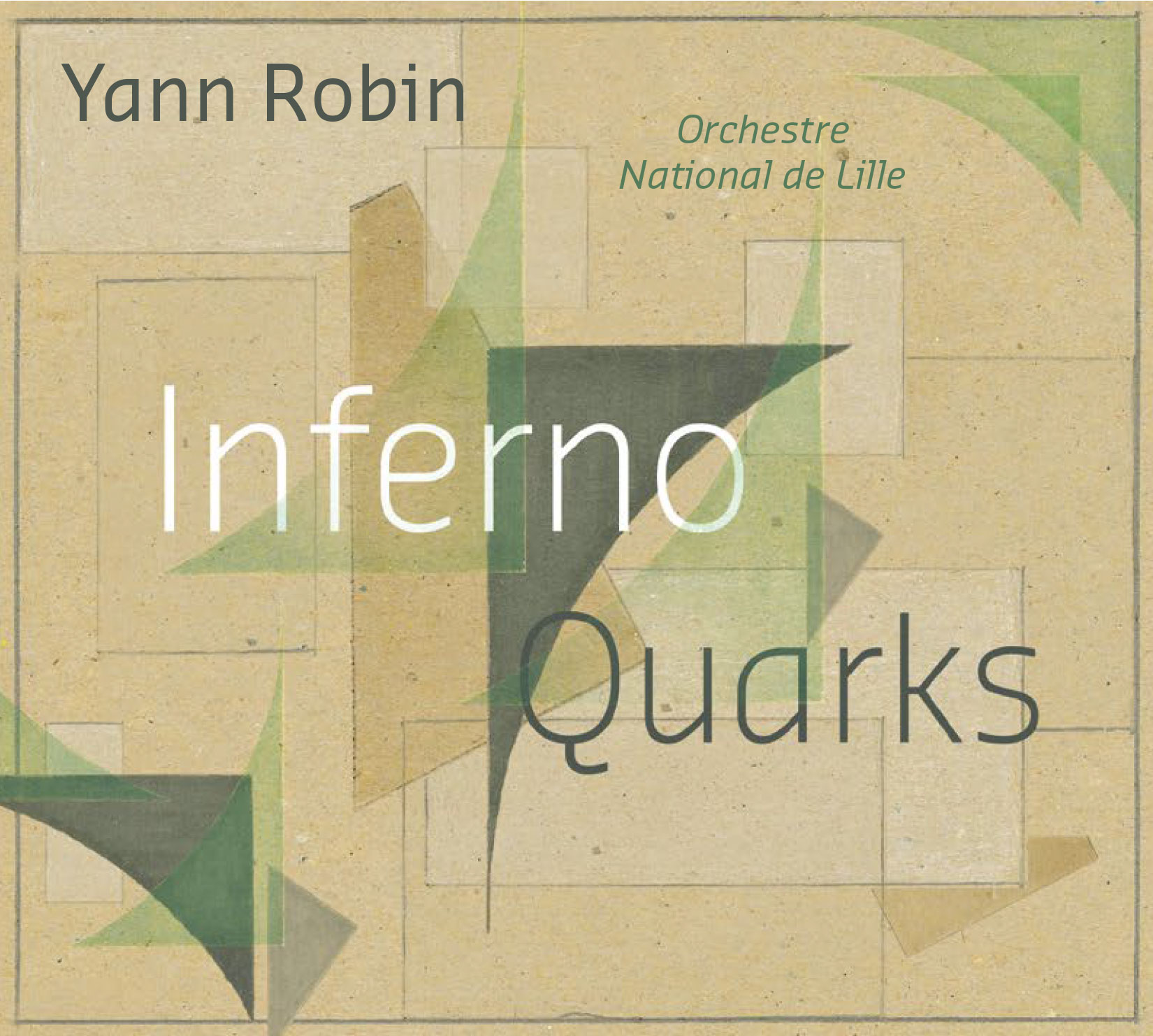
Orchestre National de Lille Alexandre Bloch conductor (Inferno) Peter Rundel conductor (Quarks) Éric-Maria Couturier cello (Quarks) Recordings made by France Musique on October 13, 2016 and by the technical team of the Orchestre National de Lille on July 1, 2017 at the Auditorium du Nouveau Siècle in Lille Mixing of Inferno and mastering: Anaëlle Marsollier (Studios La Buissonne – 2018) Production: Marc Thouvenot & La Buissonne Artistic Direction: Pascale Berthelot Release date: November 17, 2020
The seventh release from the CUICATL label, distributed by ECM Records and realized under the careful ear of Studios La Buissonne, unfolds like a descent staged in slow motion. It gathers two major works by French composer Yann Robin, not as paired opposites but as adjoining chambers within the same cavern, each carved by pressure, time, and an almost obsessive attention to sound as material that resists obedience.
Inferno for large orchestra and lectronics (2012/15), extends the molten logic of Robin’s earlier Vulcano into a broader and more perilous terrain. Where its predecessor seethed and erupted, Inferno opens the earth itself, widening the aperture to accommodate a full symphonic body and an electronic presence that behaves less like an accompaniment than a witness condemned to remain. The piece draws energy from volcanic force, from the grinding insistence of tectonic movement, but it also looks backward toward older cosmologies, toward the crater imagined as a mouth leading downward into realms where weight and consequence become absolute. Dante’s descent through the nine circles of Hell hovers here not as a story retold but as an organizing gravity, a philosophical excuse for sound to fall, to sink, to stretch itself into registers that feel less heard than endured.
From the outset, an oscillating electronic rhythm seeps upward from darkness, insisting on existence. It is tethered to the depths like a ferryman who has forgotten the surface, guiding others while remaining trapped in transit. Around it, the orchestra gathers in fragments. Flutes flicker briefly, offering half-phrases that seem to remember speech without fully recovering it. Other winds echo these gestures, voices reaching upward only to be pulled back by the mass below. The strings surge and recoil, animated by digital reactions, their undulations fueled by something restless and unnameable. They rise, they strain, and they fall back into place, condemned to repeat the same arc with minute variations, a ritual of motion without escape.
As the descent deepens, distorted impulses dart through the texture like fleeting hallucinations. They pass too quickly to be grasped, yet not so quickly that they leave no residue. The mind latches onto their outlines, assembling meaning where none is offered. Horns enter alongside radio signals, sharing air and intention without ever truly merging. They pass through narrow spaces, stiff and unyielding, only to warp once released, bending themselves into unfamiliar shapes as though testing the idea of survival beyond the threshold. A distant pulsing emerges, eerily reminiscent of a helicopter circling far above, a cruel reminder that time continues elsewhere, measured and indifferent. The balance of the piece begins to tilt. Timpani recede into silence while stillness itself becomes percussive. Out of this exchange rises a shrill, piercing song, demonic not in caricature but in its inevitability, spreading a thin carpet of resignation across the sound field. When the music finally withdraws, it does so gently, offering a softening that feels less like relief than a carefully staged illusion.
Quarks for cello and orchestra, composed in 2016, shifts the axis of inquiry without abandoning the underlying tension. Its inspiration lies not in physics as a system of laws but in the instability of language itself. Murray Gell-Mann’s decision to name the quark with a phoneme stripped of inherited meaning becomes the conceptual spark. Robin follows that gesture into sound, tracing how an idea becomes vibration, how vibration becomes articulation, and how articulation acquires the dangerous authority of a name.
The piece begins almost below perception. The cello stirs with grating gestures that refuse pitch, as if testing the edges of its own body. These sounds feel private, internal, the murmur of a language not yet agreed upon. Gradually, a chittering vocabulary forms, its units stitched into larger phrases by the orchestra. But coherence is never allowed to settle. Each structure is dismantled, recycled, pasted back together like fragments in a scrapbook whose chronology has been deliberately erased. Snippets of history drift through, human and otherwise, and with them comes a persistent unease. For all its orchestral breadth, the work remains fiercely intimate. The cello’s relentless friction keeps the listener tethered to its interior life, to the sensation of an instrument pushing against the limits of its own coherence.
Listening becomes a form of inhabitation. The ear does not observe the cello from a distance but moves inside it, sharing its insistence. It ceases to function as a soloist in the traditional sense. In its highest squeals, animal and raw, something elemental surfaces: an echo of creation itself, a human attempt to mirror the authority of the divine by assigning boundaries where none naturally exist.
Taken together, these works do not offer answers so much as conditions. They place the listener in situations where descent and emergence are concurrent states. What lingers after the final vibrations fade is not the memory of specific gestures but a quieter unease. If meaning arises only when we impose it, and if naming is always an act of power, then listening becomes an ethical move. To hear without conquering, to remain attentive without demanding resolution, may be the closest we come to understanding a world that does not require our comprehension in order to continue.
“I can imagine the New Series in the form of a journey: there is a route mapped out, but it is open to contingency; it does not insist on the shortest or most direct road. It allows for detours that might lead into totally different areas from the original plan.” –Manfred Eicher
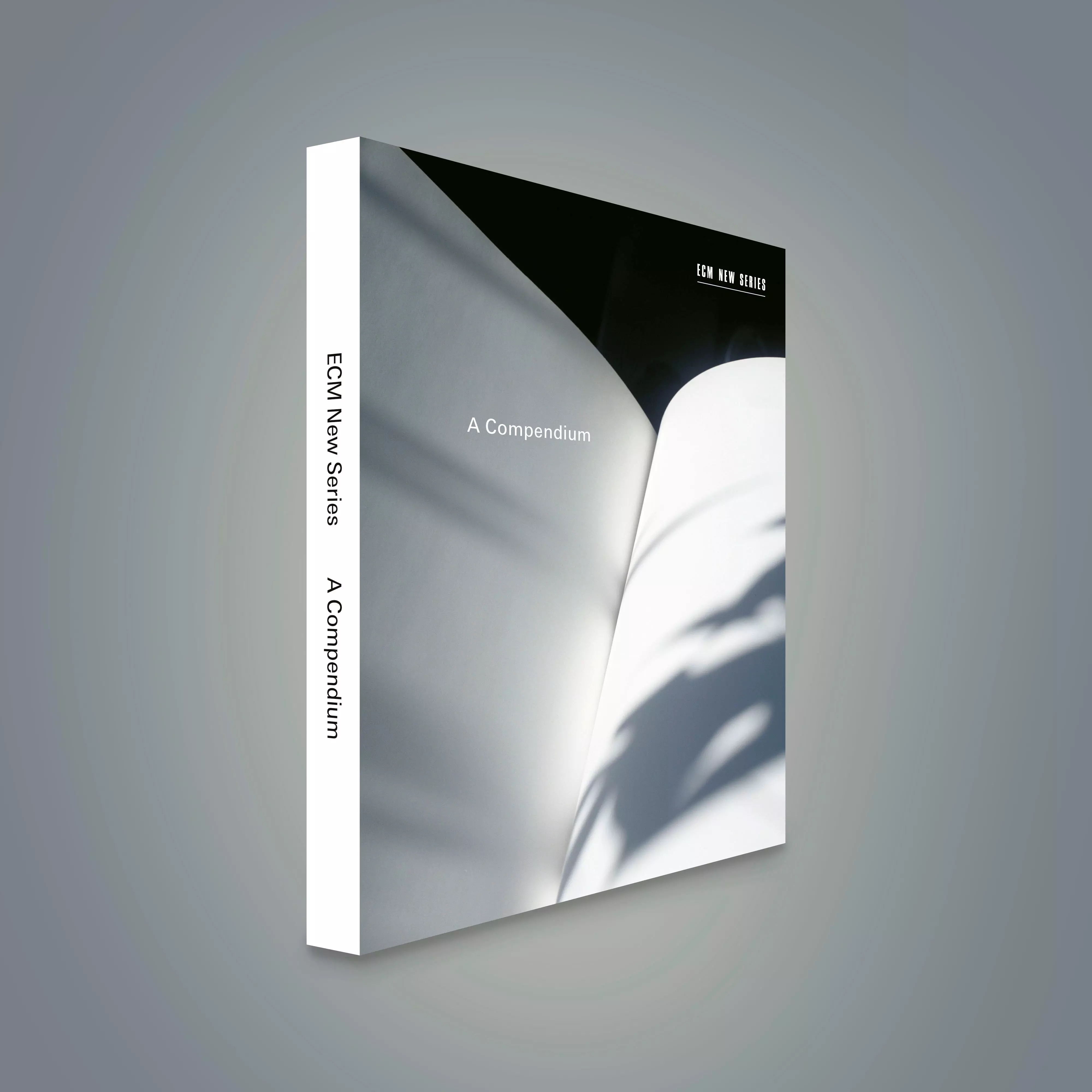
There exists a particular sensibility in recorded music that refuses spectacle, distrusts haste, and listens for what emerges only when attention is sustained. It is an ethos built on patience, on the belief that sound is not merely an event but an environment and that listening is as much a moral as an aesthetic act. Within this sensibility, music is not asked to announce itself loudly or justify its presence through novelty or authority. Instead, it is allowed to exist in a state of becoming. The Compendium at hand arises from this worldview. It does not rush to explain or persuade. It invites the reader into a space where time slows, where artistic intent is inseparable from restraint, and where the deepest meanings are often carried by what is nearly imperceptible.
Producer Manfred Eicher understands classical music not as a fixed inheritance but as a living terrain shaped by memory, silence, and risk. It softens the rigid hierarchies that separate genres, eras, and disciplines, favoring instead a continuity that flows between medieval chant and contemporary composition, between written score and spontaneous intuition, between the concert hall and the solitary act of listening. The guiding conviction is that music’s truth lies not in classification but in presence. How a note is played, how a phrase is allowed to decay, how a recording captures air, distance, and stillness matters more than the lineage of the material itself. The book emerges as an artifact of this conviction, shaped by the same attention to space, texture, and inwardness that has long defined the sound world it chronicles. It stands not as a monument but as a threshold, inviting readers into a cinematic way of hearing.
To situate this volume properly requires a widening of perspective, an understanding of how recorded classical music has historically been framed and mediated. For much of the 20th century, the dominant classical record labels functioned as custodians of authority. Houses such as Deutsche Grammophon, Decca, and Philips constructed a sonic canon through monumental interpretations, star conductors, and a reverence for definitive statements. Their achievements were immense and lasting, yet their aesthetic tended toward the architectural. Performances were designed to stand as reference points, recordings as polished monuments to permanence, history rendered stable and self-assured.
Against this backdrop, the New Series emerged not in opposition but in quiet divergence. Under the wider umbrella of ECM Records, it proposed a fundamentally different relationship between music, performer, and listener. Classical music was no longer approached as a preserved inheritance to be polished and displayed but as a living continuum, shaped by fragility, curiosity, and permeability. The New Series allowed sound to be influenced by poetry, film, sacred ritual, folk memory, and contemporary abstraction without anxiety over category or lineage. It invited unfamiliar accents into familiar forms and treated unfamiliar forms with the same care traditionally reserved for the canon.
The Compendium mirrors this orientation with remarkable fidelity. Its structure resists hierarchy, favoring proximity over ranking, conversation over proclamation. Rather than reinforcing the idea of repertoire as a fixed body of works to be mastered, it presents classical music as an ongoing exchange among composers, performers, and listeners across time and geography. Each page represents a frame in a larger, evolving montage. In doing so, the book articulates a philosophy that classical music remains most vital when it is allowed to remain unfinished, receptive, and alive.
At the center of this vision stands Eicher, not as a figure of authority in the conventional sense but as a listener whose curatorial instinct has quietly reshaped the conditions under which music comes into being. His words from a 1986 interview provide more than an epigraph for this review. They function as its axis. When he describes the New Series as a journey with a mapped route that remains open to contingency, he gestures toward an understanding of artistic practice that values deviation as deeply as intention. Progress is not measured by efficiency or arrival but by attentiveness to what reveals itself along the way, detours the very means through which meaning is discovered.
This conception of music as an exploratory act underlies every page of this volume. One senses its affinities with interior monologues, the long take in cinema, the negative space of modern painting, and the instinctive pacing of the stage. Music, in this framework, does not exist in isolation. It absorbs light, text, gesture, and silence, allowing each to subtly alter its contour. The Compendium reflects this sensibility without didacticism. It does not attempt to persuade through argument or analysis. Its structure mirrors the listening experience the New Series has long cultivated, where coherence arises gradually, and conviction emerges not from assertion but from accumulated attention.
The journey begins, with a sense of inevitability rather than chronology, in Arvo Pärt. His music, austere yet luminous, does more than inaugurate the New Series. It establishes a gravity field around which much of what follows seems to orbit. Pärt’s work reintroduced stillness as a radical force in modern music, restoring silence as something charged with ethical and spiritual weight. Thus, the label’s deeper preoccupations with time, devotion, and resonance come into focus.
From there, the book proceeds composer by composer, each chapter opening onto a distinct interior landscape while remaining visibly connected to a larger constellation. Figures such as György Kurtág, Giya Kancheli, Tigran Mansurian, Valentin Silvestrov, Alexander Knaifel, and Veljo Tormis are presented not as representatives of national schools or stylistic movements but as participants in a shared inquiry into memory, loss, and the fragility of form. Many of these composers write music that feels as though it is listening backward, attentive to echoes of vanishing traditions, while remaining unmistakably contemporary. Their work often proceeds by subtraction rather than accumulation, trusting sparse gestures, broken phrases, and restrained dynamics to carry emotional and historical weight.
Taken together, these composers suggest an alternative modernism, one less concerned with rupture or provocation than with remembrance and inwardness. Their music asks how history survives in sound, how trauma, exile, and cultural erosion might be transmuted into quiet persistence. The Compendium allows these affinities to emerge organically, without forcing comparison, inviting the reader to sense the shared temperature of their work over technical minutiae.
The scope widens further with composers whose practices actively dissolve the boundaries between genres and disciplines. Heinz Holliger and Heiner Goebbels bring to the New Series a heightened theatrical and literary awareness, where music becomes inseparable from text, gesture, and spatial experience. Their contributions underscore the label’s openness to works that exist as events rather than objects. In a different but equally expansive way, Meredith Monk articulates an aesthetic grounded in directness, purity, asymmetry, and transparency. Her music, born of the physicality of the voice and the ceremony of performance, seems to distill the label’s approach into human breath and movement, reminding us that experimentation need not sacrifice intimacy.
Alongside these figures stand composers such as Gavin Bryars, Erkki-Sven Tüür, Thomas Larcher, Dobrinka Tabakova, and Eleni Karaindrou, whose work stands slightly askew from prevailing trends. Their music is neither doctrinaire nor opportunistic. It operates according to an inner necessity, attentive to lyricism, atmosphere, and emotional clarity without yielding to sentimentality. The New Series has provided a home for such voices precisely because it values conviction over conformity, allowing composers to develop long arcs of work free from the pressures of fashion or institutional expectations.
The presence of each is deepened by carefully chosen quotations reflecting on the act of composition itself, paired with portrait photographs and images from recording sessions. These reveal the human conditions under which their creations come into being, the solitude, concentration, doubt, and patience required to bring sound into focus. One senses the rehearsal room, the studio, the long hours of listening and adjustment. In this way, the book affirms one of its central truths: that modern music, at its most vital, is not an abstract system but a lived practice, shaped by time, attention, and the enduring vulnerability of those who make it.
Equally vital to this story are the performers, whose interpretations run through the New Series in quiet refrain. They are not presented as virtuoso personalities imposing themselves upon the music but as mediators who allow its inner logic to speak with clarity and force. Their artistry lies in restraint as much as command.
Artists such as Gidon Kremer, András Schiff, and Kim Kashkashian exemplify this ethic through an almost ascetic devotion to sound itself. Their performances are marked by transparency of texture and a shedding of rhetorical excess, allowing even the most fragile or fragmentary music to retain its integrity. In the case of Keith Jarrett, whose presence bridges the worlds of improvisation and composed music, the New Series reveals how attentiveness can dissolve distinctions between genres, bringing the same intensity of listening to both the written score and being in the moment. Conductors such as Dennis Russell Davies further extend this approach, shaping large forms with a sensitivity to balance and pacing that privileges inner coherence over outward drama.
The ensemble performances documented in the Compendium deepen this perspective. Groups like The Hilliard Ensemble and Trio Mediaeval bring centuries-old repertoire into dialogue with contemporary composition, revealing unexpected continuities across time through their vocal blend and disciplined stillness. The Danish String Quartet exemplifies how chamber music, when approached with collective intelligence and trust, can achieve a rare balance of precision and vulnerability. In these performances, risk is not theatrical but structural, emerging from the willingness to expose the music’s quietest tensions.
Together, these musicians embody the New Series ideal, where lucidity replaces polish and attentiveness supplants display. Their work suggests that, at its highest level, performance is morally shaped. The Compendium honors them not as interpreters of a fixed tradition but as active participants in a living one, reminding us that the future of classical music depends as much on how it is experienced in the moment as on the notes preserved on the page.
As a physical object, the Compendium embodies the visual and tactile intelligence that has long distinguished ECM’s aesthetic. Its design speaks in a measured voice, austere yet quietly radiant, disciplined without austerity for its own sake. White space is not an absence but a field of attention. Typography, sequencing, and image placement appear calibrated to slow the reader’s pace, encouraging a form of engagement that mirrors the label’s decades-long listening habits. One does not skim this book. One dwells within it, returning to pages as one might return to a recording, attentive to shifts of mood and emphasis that only reveal themselves over time.
In this way, the book becomes an extension of the recordings themselves, another site where listening is shaped by care. It aligns with an idea of art that does not rush to occupy the foreground but waits for the reader or listener to meet it halfway. The reward for this patience is depth, not as density of information but as depth of presence.
In the end, ECM New Series: A Compendium stands as far more than an anniversary publication or institutional summation. It is a sustained meditation on how classical music might remain fully alive in the present without forfeiting its inwardness or historical gravity. By expanding the very conditions under which music is performed, recorded, and heard, the New Series has quietly altered the expectations surrounding classical sound. It has shown that innovation need not announce itself loudly, that progress can unfold through refinement, patience, and a deepening of attention.
This book captures that achievement with a humility that feels inseparable from its subject. It neither proclaims a legacy nor attempts to fix it in place. Instead, it reflects a way of thinking about music as a continuing conversation with time, one that values listening as an act of openness rather than mastery. Like enduring works of literature and art, the New Series does not seek to dominate history or escape it. It listens to it, answers it, and leaves space for what has yet to arrive.
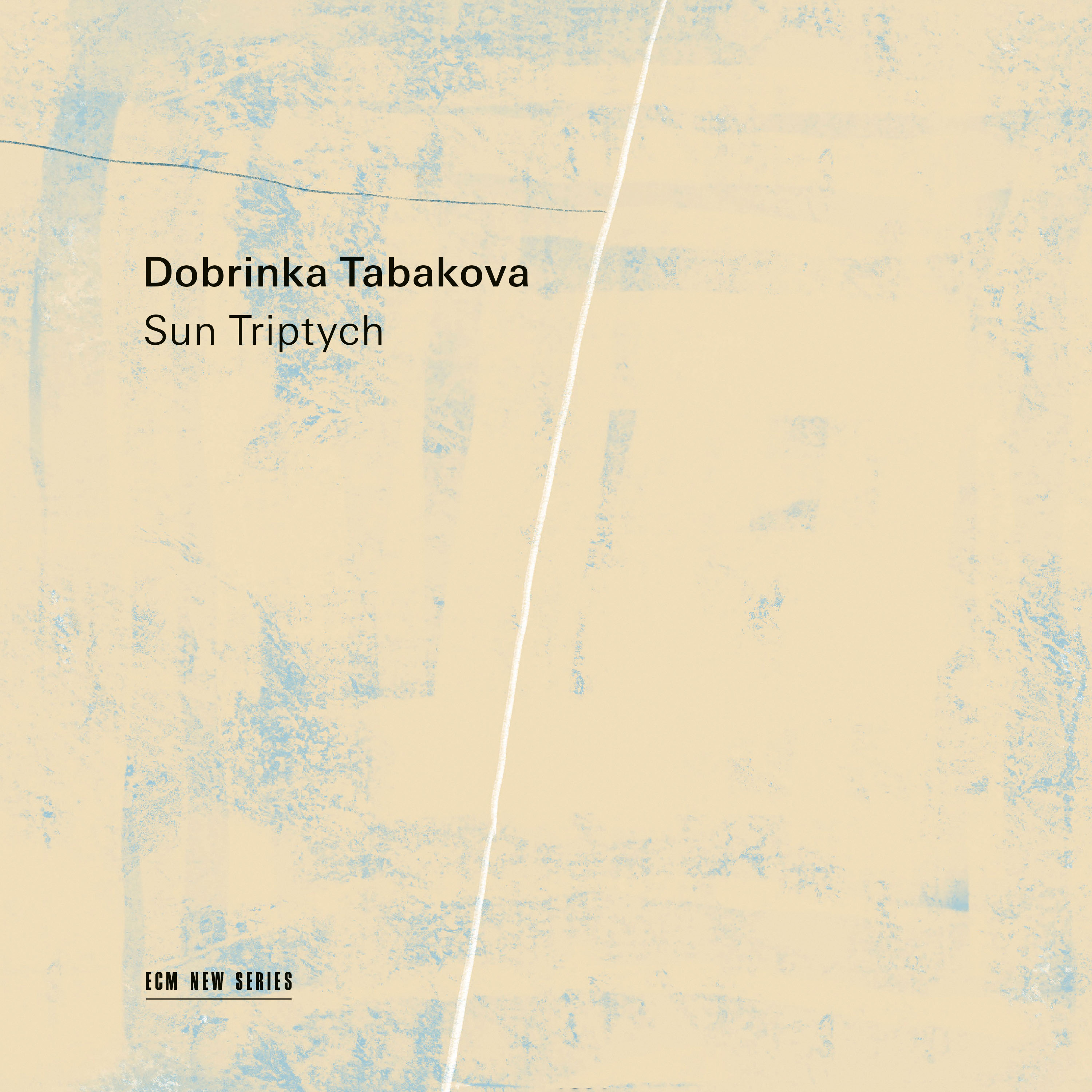
Maxim Rysanov viola Dasol Kim piano Roman Mints violin, hurdy-gurdy Kristina Blaumane violoncello BBC Concert Orchestra Dobrinka Tabakova conductor Fantasy Homage to Schubert, Organum Light, Sun Triptych Recorded July 2021 at Watford Colosseum Engineer: Neil Varley Assistant engineer: Joe Yon Whispered Lullaby, Suite in Jazz Style, Spinning a Yarn Recorded August 2020 at Meistersaal, Berlin Engineer: Rainer Maillard Mixed January 2025 by Manfred Eicher, Dobrinka Tabakova, and Michael Hinreiner (engineer) at Bavaria Musikstudios München Cover: Fidel Sclavo Album produced by Manfred Eicher Release date: September 26, 2025
British-Bulgarian composer Dobrinka Tabakova returns to ECM with her second full program, following String Paths. That 2013 debut left an indelible mark, establishing her voice among many new listeners as one of immense humility intertwined with fortitude. Selections from the album were even included in the films Adieu au langage (Goodbye to Language)and Le livred’image (The Image Book), both directed by longtime ECM affiliate Jean-Luc Godard. But beyond these connections, it was clear that Tabakova was creating a world unto itself, a parallel dimension of sorts where chance operations and heartfelt intentions danced with graceful strength. All of which leaves someone in my position with the not-so-graceful task of trying to capture the breadth of her sound in the confines of the screen you are reading now. Not coincidentally, she begins her liner note for the present recording as follows: “Writing music and writing about music are distant cousins at best.” And yet, her melodies have a way of bridging the gulf between them with purposeful unfolding.
Violist Maxim Rysanov and pianist Dasol Kim open with two distinct chamber pieces. From the indrawn breath of Whispered Lullaby (2005), the viola opens its octave as a pathway into the piano’s flowering spirit. What starts as a whisper, however, develops into a robust expression of lucidity. Having been originally written for a children’s opera titled Midsummer Magic, it takes on that feeling of an incantation—a clue, perhaps, into its evocative intensity. Suite in Jazz Style (2009) represents the third suite written for Rysanov, following Pirin and Suite in Old Style, the latter of which appeared on String Paths. It’s also a natural homecoming, if you will, for a composer who started her journey as a child improvising on the piano. Its tripartite structure begins with “Talk,” a prime showcase for Rysanov’s mastery that proves him to be one of Tabakova’s most fervent interpreters, having known her since their shared time as students of the Guildhall School. There is a delightful freedom to the interpretation, which, despite its precision (if not because of it), makes the proceedings feel spontaneous. In the interplay between him and Kim, listening and speaking become one in the same.
After this upbeat introduction, “Nocturnal” spreads the charcoal dust of its balladry in thicker strokes. There is, nevertheless, a continuation of that same playfulness, a wry smile in the viola that is self-aware, if now a touch mournful. As the bow travels between sul ponticello and sul tasto gradations, it opens itself to fresh meanings in the piano’s embrace. Kim is the ever-attentive partner, rendering context as faithfully as a saxophonist wandering the streets of a rainy city after a gig. And in “Dance,” which eases into eartshot with percussive tapping, the impulse to move takes on a desire of its own to love and be loved. There is a vibrant microtonal approach here that feels sinewy and thoroughly connected, stepping into folkish territory one moment as easily as it leaps into modernism the next. Rysanov navigates these gymnastics with a rooted sense of architecture, swaying with every tectonic movement to protect the structural integrity at hand.
The Fantasy Homage to Schubert (2005) for strings presents a recontextualization of Schubert’s Fantasy in C major for violin and piano, transfigured and otherworldly. The metaphor is not arbitrarily chosen, either. One could easily imagine it as a lost soundtrack selection from 2001: A Space Odyssey, each shift of light and celestial body revealing both the alien and the familiar. Tempting as it is, I hesitate to call this “haunting,” as this would imply there was someone around to be haunted. Rather, it feels disembodied, having nowhere to go but outward, forever echoing into the depths of the universe. And yet, somehow, we are privy to its secrets. The appearance of violin and cello (soloists Nathaiel Anderson-Frank and Benjamin Hughes, respectively) is a slow-motion transmission from an extinct Earth finding its way to us in hypersleep.
Organum Light (2000), also for strings, places Tabakova at the helm of the BBC Concert Orchestra. Originally for five singers, it takes its inspiration from the viol consort pieces of Gibbons and Purcell. Despite a deep, rich pulse, sliding harmonics in the strings open our hearts to its truths.
Spinning a Yarn (2011) for solo violin and hurdy-gurdy features its dedicatee, Roman Mints, on both instruments. A ligament between past and future, it leaves us to walk the present on the resulting tightrope. The playful unpredictability of the hurdy-gurdy provides a tactile foundation for the violin’s storytelling. All of it feels incidental to some scene from centuries ago brought to life in moving pictures. One can almost see the fields being planted, the animals being kept, the children being raised. It also has a rocking motion that makes its consonances sing all the more sweetly.
Last is the album’s title piece for violin, violoncello and string orchestra. Composed in 2007, it first took life as “Dawn,” which Tabakova wrote for the 10th anniversary of Kremerata Baltica and in celebration of Gidon Kremer’s 60th birthday, later adding two further movements. Mints is retained here alongside cellist Kristina Blaumane, fronting the BBC Concert Orchestra under the composer’s hand. The sheer depth of sonority is wondrous, at once frightening and comforting. “Day” is an arpeggiated crystal of which each facet reveals a slightly different perspective. A Philip Glass-like architecture opens itself to adventurous harmonies, ending in a hush that slides without pause into “Dusk.” Here, the mood is more meditative, stretched to reveal the spaces in between the notes. Even in slumber, it knows the sun will return to give life once again, even if there is no one around to enjoy it.
At the end of her liner note, Tabakova writes: “I’d like to think that in the silence that follows music, there may be a fleeting sense that the internal world has spoken – not in certainty, but in presence, however fragile or incomplete.” And if there is anything to be found in the silence that follows this album, it is surely the need to fill it once again with what we have just heard, lest the linearity of time remind us that, one day, we will all stop singing.
Vox Clamantis Jaan-Eik Tulve conductor Recorded 2021/22 at Haapsalu Cathedral, Estonia Engineer: Margo Kõlar Cover: Fidel Sclavo Produced by Manfred Eicher Release date: September 5, 2025
For we [are] strangers before thee, and sojourners, as [were] all our fathers: our days on the earth [are] as a shadow, and [there is] none abiding. –1 Chronicles 29:15
Building on more than 25 years of working alongside Arvo Pärt (whose relationship with producer Manfred Eicher spans nearly twice that length), Vox Clamantis and conductor Jaan-Eik Tulve present a new recording of choral works drawn from sacred texts. Their last recording, The Deer’s Cry, was a watershed moment in the Estonian composer’s discography, as it simultaneously narrowed the frame and opened up wider possibilities of interpretation.
Although the program is varied in direction, it is wholly centered around a theme of humility, and nowhere more so than in the opening Nunc dimittis (2001). Its setting of Luke 2:29-32 tells the story of Simeon, who holds the baby Jesus in his arms, knowing that God’s promise to see Christ revealed before his death has been fulfilled. What begins as an intimate supplication, however, turns into a vast theological chordscape of meditations on the openness of God’s grace freely given to all. What is so striking about the voices is not only the shapes through which Pärt guides them in the score but also the depth of power in their fragility. When alone, they waver ever so slightly; when aligned with others, they fix their gazes heavenward.
O Holy Father Nicholas (2021), taken from the Orthodox Prayer Book, was written for the opening of St. Nicholas Greek Orthodox Church and National Shrine at Ground Zero in New York City. Like the Bible itself, its covers grow worn with time; words wear off from handling yet remain unchanged, living and without contradiction. In seeking intercession, the choir allows the light of forgiveness to shine upon human depravity. The singing walks two distinct paths, each passing through like a pilgrim to destinations promised yet unseen. Such tensions reveal the shape of our sin, beautiful from a distance but gnarled and festering at close inspection. This contrast is a sobering one that places life at the center of an infinitely complex structure, of which belief lays the cornerstones.
Each of the Sieben Magnificat-Antiphonen (1988), recently heard arranged for strings on Tractus, speaks to a different manifestation of Christ. From the tender “O Weisheit” (O Wisdom) to the highs of “O Schlüssel Davids” (O Key of David), a full range of vocal and incarnational possibilities is examined through the lens of sound. Buried among them is “O König aller Volker” (O King of All the People), in which rhythmic circles reveal caesurae for glory to slip through like a quiet legion of angels. The stepwise movements that characterized the Nunc dimittis are to be found here in denser but no less translucent configurations.
Für Jan van Eyck (2019) is a rendering of the liturgical Agnus Dei (Lamb of God) based on the same section of the Berliner Messe and written for the restoration of the altarpiece of the van Eyck brothers’ Adoration of the Mystic Lamb, which was reopened in the Ghent Cathedral. Accompanied by Ene Salumäe on organ, it allows us a spell of awe before the magnitude of Christ’s sacrifice. So begins a sequence of shorter yet no less rich works that continues with Kleine Litanei (2015), which pays respect to Irish Benedictine monk, theologian, and philosopher St. Virgil (c. 700-784). Its fragments of traditional prayers shift between harmony and dissonance, evoking the tension of seeking spiritual comfort in a secular world. Last is the album’s title composition, And I heard a voice… (2017). It is, so far, the only Scripture that Pärt has set in his mother tongue. Based on Revelation 14:13, it concludes appropriately on an eschatological note, where the promise of eternal rest—a life without pain and suffering—is offered amid the wrath of the end times, leaving us with a most undefiled sense of hope.
Faith is not determined by the strength of one’s convictions but rather by the truth and integrity of what it worships. We can assert all the faith in the world in thin ice, but it will inevitably crumble beneath our feet. By the same token, we can have little faith in thick ice, and it will hold as we make our way safely across. Much of that truth comes alive in this music. As Christ says in Luke 17:6, “If ye had faith as a grain of mustard seed, ye might say unto this sycamine tree, Be thou plucked up by the root, and be thou planted in the sea; and it should obey you.” Let these choral works each be a mustard seed waiting to be watered by the listener’s tender regard.
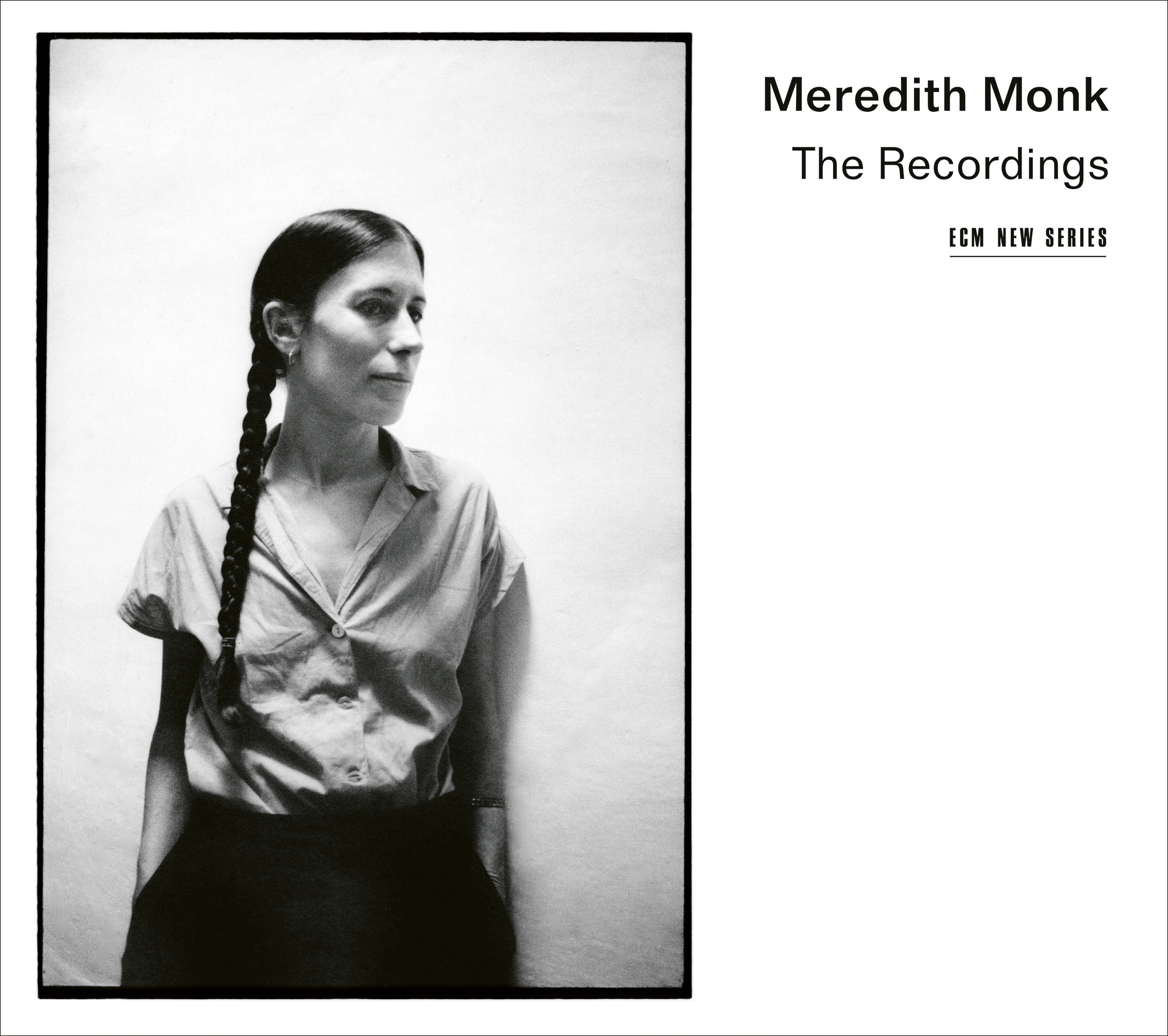
In November of 2022, ECM released this boxed edition compiling all 12 of Meredith Monk’s New Series discs to celebrate her 80th birthday. The set also includes a 300-page book reprising the original liner notes, along with new texts and interviews, photographs, archival documents, press quotes, and more. The result is more than a commemoration but a testament to the strength of the human spirit to make itself heard even in the face of inevitable entropy.
Manfred Eicher speaks of two important organs in the composer and singer’s oeuvre: their inspiration and their visual quality. In both, she finds a perfect partner in the producer, who has honed this approach across the territories of other singular artists, though none with quite the same combination of whimsy, ritual, and universalism.
In his essay, “The Worlds of Meredith Monk,” Frank J. Oteri characterizes the music as follows: “It paradoxically feels as if it was created at the very beginning of time and yet sounds completely new.” And while the works recorded here are scores in their own right since so much of her output defies standard notation, there is, he observes, a consistency that transcends the frameworks of their articulation. As part of a “living repertoire,” they seek out our ears as if they were extensions of themselves, thoughts on opposite sides of the brain spinning a seemingly impossible neural connection across oceans of time.
In an artist statement titled “The Soul’s Messenger,” Monk speaks of what the voice was able to reveal to her in the absence of its cultural reference points:
“Sometime in the mid 1960s, as I was vocalizing in my studio, I suddenly had a revelation that the voice could have the same flexibility and range of movement as a spine or a foot, and that I could find and build a personal vocabulary for my voice just as one makes movement based on a particular body. I realized then that within the voice are myriad characters, landscapes, colors, textures, ways of producing sound, wordless messages. I intuitively sensed the rich and ancient power of the first human instrument and by exploring its limitless possibilities I felt that I was coming home to my family and my blood.”
In other words, the voice was no longer an expression of the physical; it was physicality incarnate. “I began playing with what a vocal gesture would be,” she continues. “How would the voice jump, spin, spiral, fall? How would I abstract the sound of a laugh, of sobbing, of shouting, into a musical phrase?” Since then, her ”daily work” has not been to refine her singing so much as open it to its unadulterated imperfections, for in them are veins of possibility. These “gifts from a larger and wiser realm” are dug up like archaeological discoveries after long periods of waiting, each an old world made new.
At the age of three, Monk was diagnosed with strabismus, whereupon her mother enrolled her in a Dalcroze eurhythmics program, a technique that integrates music with movement. This experience, she recalls, “influenced everything I’ve done. It’s why dance and movement and film are so integral to my music. It’s why I see music so visually.” It’s also why the body has figured so viscerally in her live performances. Movement, dance, and shaping of sound all come across in the studio, not least of all because of Eicher’s attention to detail and Monk’s willingness to see where it leads. Without the shadow of infirmity hanging in the balance, questions of perfection become self-fulfilling prophecies.
Nowhere is the beauty of being off kilter expressed with such genuine poetry as in 1981’s Dolmen Music. In an excerpt from an interview by Ingo Bierman for his video series ECM50 | 1969-2019, Monk describes working with Eicher on this seminal session and how, after laying down Gotham Lullaby, she recorded a second take after concerns over her voice cracking in the first:
“It was technically perfect, but it really didn’t have that spirit, the kind of magic that the first take had. I have always respected Manfred for recognizing that, because you can edit yourself out of existence and get everything right, but there is something about the emotional continuity that communicates more deeply.”
The chamber program of which it is a part is quite varied and offers as full a portrait of Monk as you’re likely to find in one place. From the koan-like humor of The Tale to the 24-minute title piece, a larger narrative unfolds in almost liturgical fashion, each a step toward mortal awareness, with dashes of urban morbidity thrown in where it counts.
A touching piece of ECM lore worth mentioning is that Collin Walcott was a dear friend and frequent collaborator of Monk early on. He was, in fact, responsible for introducing her to Eicher and served as co-producer for Dolmen Music (playing violin and percussion on the album as well), which, along with Turtle Dreams, was thus shepherded into the ECM New Series stable after the imprint was created.
Speaking of Turtle Dreams, it makes for an enchanting companion. Although Monk’s performances used to confuse critics for their equal incorporation of dance, theater, and music, this 1983 follow-up shows her ethos to be based in the sounding body. Where this album’s predecessor regarded primordial realities, this one reflects the dissonance of living in the city through what she calls “Manhattan folk music.” Its intimate combination of keyboards and voices is nonetheless grand in its emotional scope, a dance with silence that sustains itself on contradictions and their resolutions and leaves room for what she calls “places to breathe, live, and play.”
All of this feels like a prelude to Do You Be. Released in 1987, Monk’s third album for ECM contains a melange of pieces from The Games: a science fiction opera and Acts from Under and Above, while the album’s title piece is from Vessel: an opera epic. Its incorporation of explicit words rather than the liminal spaces of and between feelings with which she was normally concerned places us at the center of a quiet storm of communication. The culminating effect is one of the voice as an instrument of memory, a beacon of futures that come to us as warnings.
Not coincidentally, Book of Days(1990) expands on that metaphor with even greater intensity in reimagining the incidental music to Monk’s film of the same name. Having seen the film, I can confirm its sense of dislocation and engagement with the human condition writ large. The story, set in Medieval times, tells of a young Jewish girl named Eva who is transfixed by visions of the modern world. Finding little comfort in her grandfather’s Torahic interpretations, she seeks solace in a local madwoman before her entire village succumbs to the plague. At the end, workmen who inadvertently unearth the village centuries later find Eva’s clairvoyant drawings of humanity’s demise. More than a soundtrack, the album is cinema in and of itself, morphing into weighted pathos.
Such ruminations of desolation were even more firmly on Monk’s mind when, at the end of 1989, while in residence at the Leighton Artists Colony in Banff, Monk found herself looking out her window at the Canadian Rockies. Despite being there to work on her opera ATLAS, she took inspiration from the scenery and produced a set of a cappella pieces that would become Facing North (1992). Conceived as a duet for her and Robert Een, it is a reflection of a place of cold uncoverings. The opera itself also made its way onto ECM. Over the course of three acts, ATLAS(1993) tells the life of Alexandra Daniels, an explorer who learns that the real journey is internal. This ambitious piece shows a transparent approach to instrumentation. Unlike the bombastic walls of sound that can dominate canonical opera, its accompaniment emerges from within instead of being forced from without. Interestingly, Eicher and Monk decided to cut the opera’s conclusion. “In the live performance,” she admits, “it was a crucial part of the whole. In the audio form, it became more of an epilogue, which seemed to both of us to make too much of a closure instead of letting the listener remain in motion at the end of the journey.” Such is the quintessential expression of movement through music, and how the soul breaks through the cracks in our voices is indicative of the necessity of imperfection to reveal self-worth.
Said cracks run even deeper in Volcano Songs(1997). As manifestations of human archetypes, these metaphysical pieces pay deference to Monk’s ongoing ethos of “always trying to explore forms that balance rigor with freedom.” Her melding with singer Katie Geissinger is astonishing to behold. Another program of strong variety, it includes such vital works as New York Requiem and Three Heavens and Hells, both of which deal with the transience of life and our regard for human suffering. Similar themes are explored in mercy(2002) and Songs of Ascension(2011), both of which represent collaborations with sculptor and installation artist Ann Hamilton. Whereas the former is built around the idea that the mouth can harm as much as heal, the latter was originally performed in an eight-story tower designed by Hamilton. In both, the instruments are just as vocal as the voices (and vice versa) in their explorations of fragility. As I wrote in my original review of mercy, “Monk’s is not a world in which the voice is primary but rather a voice in which the world is primary.” I stand by that statement and would point to these as Exhibits A and B. Nestled between them is 2008’s impermanence. A distinctly chromatic work, it eschews standard narrative in favor of a feeling, a connection to somewhere beyond the immediacy of experience.
Piano Songs, released in 2014, is a remarkable cross-section of Monk’s life and career, with purity and sameness through difference in mind, containing such touchstones as Paris, a piece from 1972 that marks her return to the piano after focusing intensely on the voice, and Ellis Island from 1981, which ties history and memory into one inexorable package. Last is On Behalf of Nature(2016), which speaks for the voiceless, the abused, and the forgotten. It has the most connective tissue of all, bleeding as much through the leaves as from the soil in which they are born.
If any red thread can be said to run through the above tapestry, it is that selves were made to expand. However, part of being human is realizing that with that expansion comes the responsibility of charting our way through all the extra space. With Monk at our side, we can feel sure of placing our feet on loving ground.
Estonian Philharmonic Chamber Choir Tallinn Chamber Orchestra Tõnu Kaljuste conductor Recorded September 2022 Methodist Church, Tallinn Engineer: Tammo Sumera Design: Sascha Kleis Produced by Manfred Eicher Release date: April 25, 2025
“Fear not that thy life shall come to an end, but rather that it shall never have a beginning.” –John Henry Newman
The title of Tõnu Kaljuste’s lovingly curated program of works by Estonian composer Arvo Pärt comes from its leading composition, Littlemore Tractus. Like much of what is presented here, it is somewhat older (dating from 2000) but newly arranged by the conductor (in 2022). Scored for mixed choir and orchestra, it dramatizes words from the 1843 sermon “Wisdom and Innocence” preached by John Henry Newman in Littlemore, Oxford. In it, the English cardinal seeks refuge in the Lord, set apart from a world turning circles around its self-interest. Like a tornado in reverse, Pärt’s rendering transitions from destruction to the calm before the storm, serving listeners with something intangible. Even in the seven Greater Antiphons I-VII, a 2015 string arrangement of the Seven Magnificat-Antiphons from 1988, we can feel the tension between that which is touched and that which is felt. Each is a stained glass window, allowing us insight into that one place where light can only reach by grace: the heart. The last of these, “O Emmanuel,” is the magnificence of holiness distilled.
Cantique des degrés for mixed choir and orchestra (1999/2002) is a dynamic setting of Psalm 121, in which David looks to the Lord, ever sustaining and filled with life. Its parabolic structure, from internal to external and back again, ascends the steps to the Temple of Solomon, but casts a final look backward for want of other souls to save. The choir is recessive, never dominating the foreground even at its most glorious. This is followed by Sequentia for string orchestra and percussion (2014/2015). Originally written as part of the Robert Wilson production, Adam’s Passion, it offers a subliminal meditation on Christ’s death, burial, and resurrection. These Words… (2008) is scored for the same combination of instruments. No less expressive for its lack of text, it quotes Pärt’s own Psalom (last heard on 1996’s Litany) as an inward-looking catalyst.
L’abbé Agathon for soprano and string orchestra (2004/2008) is reprised from its appearance on Adam’s Lament in 2012, led by soloist Maria Listra in a much more intimate and contemplative interpretation. Based on a legend from the fourth century regarding an encounter between the Abbot Agathon and a leper (who is really an angel in disguise come to test his faith), it tells the story with programmatic flair, replete with a string-heavy transfiguration as the angel ultimately ascends heavenward.
The album ends with two supplications. Where Veni creator for mixed choir and orchestra (2006/2009) is a deep cry for forgiveness, Vater unser for mixed choir, piano, and string orchestra (2005/2019) sets the Lord’s Prayer. Thus, wisdom and innocence are shown to be things that none of us possesses except by the cross.
This is not music that one discovers but that one welcomes as a gift. From depth to depth, it anoints with the oil of understanding that God is indeed with us, wrathful yet forgiving of the harm we have inflicted upon his creation.





 Between Sound and Space: ECM Records and Beyond