Joe Lovano tenor saxophone, tarogato Steve Kuhn piano David Finck double-bass Joey Baron drums Recorded December 2008, Avatar Studios, New York Engineer: James A. Farber Produced by Manfred Eicher
As John Coltrane’s original quartet pianist for eight weeks in the early months of 1960, Steve Kuhn is as qualified as anyone to assemble a fitting tribute to one of jazz’s eternal gurus. Despite his monumental significance in the field, ECM has reckoned with the Trane only sporadically—first on Dave Liebman’s Drum Ode and, most recently before this record, on Trio Beyond’s Saudades. Mostly Coltrane is, however, more than homage. It’s just as importantly a full-fledged portrait of the musicians bringing this music to renewed life. Saxophonist Joe Lovano has no pretensions of mimicking the man by whom 10 of the album’s 12 tunes were written or made famous. Bassist David Finck and drummer Joey Baron—the other sides of the Steve Kuhn Trio’s equilateral triangle—complete the group’s finely interwoven sound.
Kuhn, in that way he does, unpacks his solos one breath at a time, so that the considerations of “Welcome” offer a soft mapping of the road that lies ahead. Lovano is at the peak of his sentimentality, while Baron dances around the beat—Paul Motian in disguise. Lovano further threads the needle of “Song of Praise,” in which he tightens his grip on the higher notes like a dancing bird, touching wind one feather at a time until both wings sing in concert.
Kuhn may be the emotional center of the record, but his special sense of ebb and flow allows the crests of his bandmates to glint in the moonlight just as vividly. Lovano is irresistible in his luxuriant, chromatically infused takes on “Central Park West” and “Like Sonny,” while Baron provides gentlest uplift to his tarogato (a nod to Charles Lloyd?) in “Spiritual.” Other highpoints include two of Coltrane’s posthumous tunes: “Jimmy’s Mode” and “Configuration,” the former of which boasts an introspective solo from Finck, while the latter staircases its way into brilliance.
The two made-famous tunes—“I Want To Talk About You” and “The Night Has A Thousand Eyes”—are another remarkable pair. One traces its theme in retrograde, exuding sensuality in a trio-only setting. The other is a brisker tune in which the rhythmic section works a gorgeous telepathy, Finck the heartbeat of it all. Into this fray swoops Lovano like a bird who flies for sheer enjoyment, giant yet light on his feet. Marvelous.
Two more of a distant pair, this by Kuhn, rounds out the set. “With Gratitude” finds the composer solo, singing a song of dedication through his fingers. “Trance,” also solo, brings us full circle to his first ECM release of the same name, looking back in a rolling wave of light, thus signing off on a statement as timeless as the music it embodies.
Mayumi Miyata shō Münchener Kammerorchester Alexander Liebreich conductor Recorded October 2009, Himmelfahrtskirche, München Engineer: Peter Laenger
Produced by Manfred Eicher
Toshio Hosokawa, born 1955 in Hiroshima, is a fisher of multiple ponds. On the one hand, he carries the torch of European modernism, having studied in Germany under Isang Yun and Klaus Huber. On the other, he professes a deep affinity for traditional Japanese music and Zen Buddhism.
Landscapes is ECM’s only disc dedicated to the composer, who in three of the album’s four pieces employs the shō, or Japanese mouth organ. Here it is played by Mayumi Miyata. A pioneer in introducing the shō as a solo instrument in contemporary classical music, she plays a “concert” shō with a pitch range broader than its standard counterpart. It requires expert control of the lungs, including circular breathing and steady changes in dynamic intensity. In Miyata’s hands it sings like the very phoenix it was originally intended to mimic.
Mayumi Miyata
As for Hosokawa’s music, it all too easily falls into an interpretive trap like so many characterizations of Japan in general, which tend to paint the culture as a uniquely enigmatic blend of the ancient and the modern. Yet such an image fails to acknowledge the immediacy of its creative arts, and in particular of Hosokawa’s sound-world, which for all intents and purposes seeks not a bridging of spaces and eras but a reckoning of their aesthetic and (sometimes) political intersections. In the latter vein, he has created massive works in memory of the victims of Hiroshima and the tragic tsunami/earthquake of 3.11. In the former we have this program of meticulous dreamscapes to whet our appetite for beauty. It is, however, a tainted sort of beauty, one not destined for the painter’s canvas but rather for the videographer’s resignation. In his liner notes, Paul Griffiths likens Hosokawa’s constructions to the amorphousness of clouds, and certainly we can feel that stretch of variation, play of sun and spectrum, and stormy grays manifesting throughout the program.
Landscape V, originally composed for string quartet in 1993 and later expanded to the current version for shō and orchestra, unfurls a veil as thin as an insect’s wing that conforms itself to the shō’s summery spirals. One might not expect breath through bamboo to mesh so well with the feel of horsehair drawn across strings, but in Hosokawa’s renderings at least they become harmony incarnate, the shō illuminating the flow of air through an orchestra’s sound holes. In this pairing one may hear voices, shifts of wind, the flow of water, the meeting of stones, and even the light of moon taking sonic shape. The music is, at the same time, crystal clear. It wears no pretension, puts on no airs. It is, rather, the full breadth of its titular landscape pulled through a wormhole of consistency, so that even the more explosive moments take form not as catharses but as opportunities for deeper contemplation.
The Ceremonial Dance (2000) that follows is for string orchestra only, but loses no texture in the shō’s elision. Its heart would seem to lie in the comportment of gagaku (traditional Japanese court music), which turns illusions of a floating world into hyper-articulate bodies. That being said, the “dance” is implied through effect rather than movement, hiding in the absent drum. There is a liminal quality to this piece, performing an indeterminable ritual of which the score is but a simulacrum.
Sakura (2008), for shō solo, acts as a prelude to a choral setting of Japan’s most ubiquitous folk song. Bearing dedication to the former music director of the Westdeutscher Rundfunk, Otto Tomek (who also commissioned the setting), it is intimate and drifting, more postlude than prelude, the afterimage of a fallen blossom’s path toward water. As luminescent as its chords are, they are also dappled by the shadows of an unbroken gaze.
Last is Cloud and Light (2008), which pairs the shō with a full orchestra, including some light yet impactful percussion. Like its predecessors, it never overwhelms with its style, but unpacks itself in real time with self-awareness and tactility. It enacts a sharing of spirit between water and air, between the shapeless and the shaping. Large brushstrokes of brass pull their hairs through ink, soaking up as much of the universe as they can before falling along with the rain into the pond where Hosokawa’s bob and lure continue their meditation, content in knowing that no fish need ever bite to bring meaning to their dangle.
Camerata Romeu Zenaida Romeu conductor Alexandre Gismonti guitar Egberto Gismonti guitar “Sertões Veredas”
Recorded August 2006, Teatro Amadeo Roldán, Havana
Engineer: Jerzy Belc Assistant: Argeo Roque Bernabeu
“Duetos De Violões”
Recorded April and May 2007, Mega Studio and Cecília Meireles Hall, Rio de Janeiro
Engineer: Márcio Gama Assistant: Guthemberg Pereira Executive producer: Manfred Eicher
Saudações, of which the title means “salutations,” marks the welcome end of a 12-year ECM hiatus for Egberto Gismonti since 1997’s Meeting Point. Whereas on that record he explored his conservatory training in a set of lively orchestral compositions with Gismonti as piano soloist, the first of this two-disc follow-up consists of Sertões Veredas, a suite in seven parts for strings alone, while the second disc features guitar duets and solos with the composer’s son Alexandre.
Seasoned Gismonti listeners will know what to expect from the program’s latter half. In addition to renditions of classic tunes, including “Lundú,” “Dança Dos Escravos,” and “Zig Zag”—each a bouquet of nimble, sparkling exposition—the duo soars through a veritable résumé of Father Gismonti’s uniquely tender ferocity. From subdued (“Mestiço & Caboclo”) to slipstream (“Dois Violões”), the performances emit a veritable brocade of fire. Alexandre contributes two solos to the program: the gentle, cyclical “Palhaço” (by Egberto) and the original “Chora Antônio.” Alexandre’s animations make them both album must-hears. After a few jagged turns, notably in “Dança,” Egberto ends by his lonesome with the title track, an adroit little bee of a tune that settles in a flower of harmonics.
Gismonti & Son play with freedom of detail, all the while holding fast to an underlying pulse that distinguishes so much of Egberto’s writing. Concentrated as they are, any one of these pieces might expand to an album’s length without loss of potency. In a sense, this is the feeling behind the orchestral suite that begins the album. As always, Gismonti paints a world proper, a landscape of vivid memories, childhood impressions, and mature reflections—all tied together by a love for his homeland and its peoples. Subtitled as a “Tribute to Miscegenation” (Tributo à miscigenação) and played with vivaciousness by Cuba’s Camerata Romeu, it is a heartfelt tribute to—and preservation of—times and places clearly dear to him, all intermingling in a new continent.
The cornucopia of influences from which he has drawn is already apparent in the first movement, of which the spirit remains very much rooted in the composer’s guitaristic panache (even his pianism, heard elsewhere, turns the keyboard into an enormous, fretted instrument). More than the instrument’s mechanics, its immediate tactility carries over into the scores, which sound like magnified string quartets. Gismonti’s attention to the orchestra’s lower end is especially robust, the double basses providing pulse, melodic undertow, and soil for botanical riches above ground. The occasional cello line acts as a link between dynamic extremes, leaving the violins to pollinate, as they will. Each movement is a suite of its own, moving from high to low, slow to fast, loud to soft in a heartbeat. The most obvious references are to Stravinsky (Part IV), John Adams’s Shaker Loops (Part V), and even the romantic touch of a Mendelssohn (Part VI), leaving the final part, an ode to folk traditions and dances, to bask in the resolution of camaraderie.
Speaking of attention, Saudações is recorded with just the right balance of intimacy and mountainous space. Peak slope into a valley of riches, each more scintillating than the last. A treasure trove for Gismonti fans. Even more so for newcomers. Either way: leave your shoes at the perimeter and step into the circle as you are.
Marc Sinan guitar Yelena Kuljic vocals Lena Thies viola Julia Hülsmann piano Marc Muellbauer double-bass Heinrich Köbberling drums, percussion Recorded March 2008 at Rainbow Studio, Oslo Engineer: Jan Erik Kongshaug Produced by Manfred Eicher
Guitarist and composer Marc Sinan, recently of the (sadly) European-only release Hasretim, made his ECM debut with Fasıl, an album of enduring originality and refinement. The title refers to a suite form used in both classical and modern Ottoman ensemble music, and which here would seem to nod in both directions. It’s almost unfortunate that the Turkish word should so closely resemble the English “facile,” for the music here is anything but superficial. By way of comparison, one might pair it with Jon Balke’s SIWAN, as Balke illuminates and draws out likeminded ethnomusical connections with care.
Siwan’s own fasıl tells the story of ‘Ā’ishah bint Abī Bakr (613/14-678), youngest and favorite wife of the Prophet Muhammad. In this fresh musical context, her sentiments twirl and float by turns along a river’s current of rhythmic libations. Librettist Marc Schiffer weaves into those sentiments influences ranging from the Qur’an to ancient Persian poetry in search of common ground. Pianist Julia Hülsmann’s trio with bassist Marc Muellbauer and drummer Heinrich Köbberling—the subject of such later albums as The End of a Summer and Imprint—flexes the project’s instrumental spine. They are joined by violist Lena Thies, Sinan on guitar, and the Serbian-born, Berlin-based singer Yelena Kuljic in the role of ‘Ā’ishah.
The album begins, as does any fasıl performance, with an instrumental “Peshrev,” which lowers us gently into the waters of this emotionally dynamic world. It is a world of comfort and challenge, a quilt of geographical distances made immediate by design. Other traditional movements include iterations of the taksim, an improvisational interlude which unspools purple braids from Hülsmann’s interpretive fingers. Through these run the finer threads of Sinan’s flamenco-esque strumming and Thies’s spirited bowing. Sinan augments these with two movements based on transcriptions of an imam (Islamic cantor) he recorded while conducting research for this project in Turkey. “Sure 6/51” and “Sure 81 Taksimi” revolve around Hülsmann’s rhythm section, guitar and viola taking respective turns in the lead.
Yet it is by virtue of Kuljic’s portrayal of ‘Ā’ishah that the album comes into its own. Beginning with the drawing of desire that is “This Bloody Day” and ending with the affirmative “You Open My Eyes,” her voice sheds light by which to see. She explores themes as wide-ranging as agency and politics (“Taking Leave”), the body as landscape (“The Last Night”), and, couched in the album’s most entrancing melody, the intertwining of lives under Heaven (“The Dream”). Sinan rocks a lovely fulcrum in the latter through a smooth, jazzy core, and lends his flexible architecture to “The Struggle Is Over,” carving a sliver of moon into the sky.
All in all, these are songs of holdings on and lettings go. The instrumental elaborations are thoughtful (and thought-provoking), unraveling richly dyed sacraments in sound. At their heart is a song entitled “The Necklace.” It is a pivotal moment, both in the lives of its characters and of this cycle as a whole. It refers to story recounted in the Qur’an, in which ‘Ā’ishah, during one of Muhammad’s desert raids, is mistakenly left behind when she goes looking for a lost necklace and returns to camp to discover that her caravan has departed without her. She is found by a nomad under Muhammad’s employ named Sufwan and taken to the next campsite, only to be met with gossip of infidelity. Unbelieving of these rumors, Muhammad takes his wife’s word on faith (albeit after a revelation from Allah confirms her innocence), and her accusers are summarily punished. It speaks volumes about a woman whose strength thrived in her resolve, in her resistance to a world of men, and in her refusal to let her integrity fade into the dunes.
Quartetto Prometeo Giulio Rovighi violin Aldo Campagnari violin Massimo Piva viola Francesco Dillon violoncello Recorded January 2011, Teatro Giuseppe Verdi, Pollenza Engineer: Gianluca Gentili Executive producer: Manfred Eicher
Stefano Scodanibbio (1956-2012), best known for his collaborations with Terry Riley and as an improviser and extended technique innovator on the double bass, was also a prolific composer, writing more than 50 works for strings. His first album for ECM owes its existence to Irvine Arditti, lead violinist of the Arditti Quartet and a longtime friend, and actualizes a dream that occupied the composer’s final years to the point of obsession.
(Photo credit: Alfredo Tabocchini)
The “reinventions” of the album’s title refer to his string quartet reworking of Bach, Spanish guitar music, and Mexican songs in a long-form suite of seamless, expressive character. Although, on the surface, three iterations of the Contrapunctus from Bach’s Art of the Fugue seem little more than slight deviations of their source material, they actually brim with harmonic ornaments and slow tempi that allow the listener to better scrutinize their pathos through Scodanibbio’s idiosyncratic lens. Rather than simply “re-imagine” the works of his interest, Scodanibbio turns them slowly in the hands, studying them as might a diviner a crystal ball, until they sing of their own accord.
The Bach references are the massive vertebrae of the suite, each cushioned by the Spanish and Mexican disks between them. The former take the name of Quattro Pezzi Spagnoli, but breathe as one unit. The pizzicato ornaments of “Lágrima” begin a stroll through elegant gardens, which with every step elicits new aspects from each melody in turn. There is already so much life in this music that Scodanibbio’s filtering would feel intrusive, were it not for his sensitivity, so that by “Studio” we may feel every detail as a song unto itself.
The five Canzoniere Messicano, on the other hand, come across more urgently with the opening “Cuando sale la luna.” Their life force swirls in the night, disturbing the reflection of a waning moon and etching out a dance along the water. Even the evergreen “Bésame mucho” (the most beautiful song ever written, in the composer’s estimation) leaves ripples in the mirror of its timelessness. “Canzone popolare: La llorona” ends this portion as if thrown in a bottle out to sea, a beacon for ghosts whose love of life keeps them haunting the pitch.
The performances by Italy’s Quartetto Prometeo are quiet, assured, and strangely uplifting—as much a quality of the music as of their playing. The cyclicity of both underscores the depth of Scodanibbio’s craft: no mere homage but a profound exercise in empathy.
Marc Sinan music, guitars, idea, concept and production Traditional musicians from Turkey
Mustafa Boztüy darbuka, framedrum Güç Başar Gülle oud Ömer Can Satır kaval Onur Şentürk kemençe Erdem Şimşek bağlama Traditional musicians from Armenia Araik Bartikian duduk, zurna Vazgen Makaryan duduk, zurna Andrea Molino arrangement, conductor (DVD only) Jonathan Stockhammer conductor Markus Rindt idea, concept and production
CD recorded live July 2011 at Schleswig Holstein Musikfestival by Volker Greve and Holger Schwark
“Prolog” recorded December 2012 at MIAM Istanbul by Can Karadogan
Mastering: Volker Greve
DVD recorded Ocobter 2010 at Festspielhaus Hellerau
An ECM Production
Classical guitarist Marc Sinan, born in 1976 to a Turkish-Armenian mother and a German father, has over the past two decades attracted increasing demand as a soloist and collaborator, and dedicates his output to softening divides between genres, eras, and cultures. Hasretim represents the most significant evolutionary leap in his career as a composer. The result of a commission by Hellerau – European Center for the Arts Dresden and the Dresdner Sinfoniker, this video-musical journey traces Sinan’s heritage along the Black Sea coast to the Armenian border. More than that, it’s an invaluable archive of life and song on the Anatolian plateau, which he explored together with Dresdner Sinfoniker artistic director Markus Rindt in 2010. During the trip, Sinan was saddened to find that the preservation of folk music so prevalent elsewhere (viz: the Baltic states, Hungary, and Greece) was lacking in Turkey. Consequently, he took Hellerau’s commission as an opportunity to address the discrepancy, pooling a storehouse of traditional musicians and incorporating their art into a large-scale, contemporary piece of his own design. “I was quite nervous,” writes Sinan of the recording process. “Unlike musical field research, our project demanded much more than simply documenting the current state of the Turkish musical tradition regardless of its artistic merit. We were on a treasure hunt and would only rest once we stumbled upon something truly special.” As connections grew, so too did the availability of choice musical talent and the opportunity to capture it for posterity. Once satisfied with his bank of original recordings, to them Sinan introduced what he calls “decisive, subjective elaborations” in the form of both through-composed and improvised material.
Hasretim was originally conceived as an installation piece, with videos of these unrecognized Turkish troubadours (many of whom must balance their musical lives with working ones) projected onto five towering vertical screens at stage rear. Before them plays an assembly of European classical musicians augmented by traditional specialists from Turkey and Armenia. The latter bring their expertise to a veritable portrait of Asia Minor in sound as the oud, kaval, kemençe, bağlama, duduk, zurna, and frame drum hold their own alongside strings and winds. It is to ECM’s credit that its release should encompass both the audio on CD and the visual on an accompanying DVD. For while the music stands alone as a welcoming experience, to see the musicians (live and recorded) in their element, along with segues of candid scenes from Istanbul and beyond, brings out the project’s reach in most immediate terms. Both versions feature essentially the same personnel, with the notable exception of conductors: Jonathan Stockhammer directs the CD version, recorded live at the Schleswig Holstein Musikfestival, while Andrea Molino, also the project’s musical arranger, handles the DVD performance, recorded at Festspielhaus Hellerau.
As indicated by the title, which means “I’m yearning” or “My desire,” Hasretim is a search for roots. Yet it’s also a spray of new foliage in the towering branches, nourished by Sinan’s unique ear for montage. The album is bookended by a “Prolog” and “Epilog.” One is a menagerie of harmonics, blips, and whispers that tightens like a spring, while the other pieces together footage of nearly all the recorded musicians in a chain of reprisals, ending as it began: with an attunement that spans multiple geographies.
Within this frame are five distinct “Tableaux,” each named after a Turkish city or, in the case of “Tableau II – Yayla,” for the mountain pastures where an old man (Haci Ömer Elibol) plays the end-blown kaval while his sheep animate the background. His call, for that is what it becomes in Sinan’s contextualization, inspires some upbeat interweaving. In contrast to the dark fiddling of “Tableau I – Ordu,” which details the face of singer Asiye Göl across all five screens, it more fully includes itself in the musical goings on.
Indeed, voices resound clearest throughout the program, even if certain instrumentalists do stand out for their charisma. There is Hüsseyin Altay on the tulum (Turkish bagpipe), joined by droning brass; the unforgettable Ismail Küçük, who sings and bows his kemençe in “Tableau III – Trabzon” from the back seat of a car, thus underscoring the film’s road movie feel; the duet of Ömer Parlak on kaval and Mesut Kurt (along with Göl, the youngest of those featured) on kemençe; and in “Tableau IV – Erzurum” the rhythmically savvy Aşik Eminoglu accompanying himself on the bağlama to invigorating effect. This same Tableau also cradles “In Memory of Vahide,” a 10-minute duduk duet that interpolates shadows into light. All of this buoys “Tableau V – Kars” as the most compositionally unified vision of live elements (especially in the percussion) and descriptive archival work.
In absence of any background information, one might never know that Sinan witnessed firsthand a loss of connection among contemporary Turkish musicians to their rich heritage, or that their art needed recovery in this regard. Neither was the counterpoint lost on him between the boisterous people and their peaceful, sometimes dreary, settings. Such contrast of medium and message informs every frame and staff of this multimedia treasure trove. Although awarded a special prize by the German Commission for UNESCO for its “inspiring and experimental confrontation between different cultures,” Hasretim is less about experiment than experience and anything but a confrontation. Rather, it is a book to which each new witness adds a page.
(See the article as it originally appeared in RootsWorld online magazine, where you may also hear samples.)
Dino Saluzzi bandoneón José Maria Saluzzi guitar, requinto guitar Nicolás “Colacho” Brizuela guitar Felix “Cuchara” Saluzzi tenor saxophone, clarinet Matias Saluzzi electric bass, double bass Quintino Cinalli drums, percussion
Recorded March-May 2013 at Saluzzi Music Studio, Buenos Aires
Production coordination: José M. Saluzzi
Recording engineer: Néstor Díaz
Mix and mastering: Stefano Amerio
Album produced by Manfred Eicher
Over the past three decades of his association with Munich-based ECM Records, Argentine bandoneón virtuoso Dino Saluzzi has built a new home, but through his output on the label has traced so far back down his old roots that with El Valle de la Infancia (The Valley of Childhood) he might at last have reached the center of the earth. Playing once again with his “in-house” band, last heard with slightly different personnel on 2006’s Juan Condori, he emotes seamlessly with brother Felix on reeds, son José on guitars, and nephew Matías on electric and upright bass. Guitarist Nicolás Brizuela and percussionist Quintino Cinalli round out the extended family portrait. As ever, Dino’s humble beginnings (his father worked on a sugar plantation and played the bandoneón in his spare time before becoming a noted composer himself) manifest themselves in every note, and he credits them with freeing his creative approach. Dino’s mastery is thus so organic that to name it as such barely renders a sketch of his capabilities, as evidenced by this latest excursion. As it turns out, the valley of his childhood is a bountiful place to be.
The program of Infancia juxtaposes standalone pieces alongside compact suites, all of which blend into a meta-narrative dotted by contemplative pauses. At its core, the music (mostly by Dino himself) thrives on warm, impressionistic feelings, so that whenever the band does cohere, the effect is dazzling. “Sombras” welcomes new listeners to one of the most recognizable sounds in all of modern South American music, and old listeners to a familiar, paternal squeeze of the shoulder. The title means “shades” and connotes a mission statement Dino has been crafting since he first laid hands on bellows. His bandoneón exhales magic so potent and with such familiarity, one would swear to have been born in the presence of its melodies. After an intimate introductory sweep, José’s guitar (occupying the mid-left channel) opens its currents and inspires Father Saluzzi to low-flying surveys. Cinalli’s brushed drums (there’s nary a stick to be discerned on the album) lighten the weight of their memory.
Biological linkages strengthen in “La Polvadera” and “A mi Padre y a mi Hijo” (For My Father and Son), each a coming together of such thematic clarity as to whisk the heart away on a cloud. Brizuela’s picking (mid-right channel) contrasts verdantly with José’s nuanced flutter and sway. The two guitarists combine beautifully over butterfly-kissed snare and cymbals in “Churqui.” Cinalli’s rhythmic details make the scenography all the more believable. His patter may be that of rain one moment, the next of a magician who excels in misdirection.
The album’s mini-suites usher in colors from adjacent plains, where crops give way to the tilling of a new generation. Ranging from two to five parts each, the suites cover a range of emotional stirrings and interpret tunes by a handful of late Argentine folk singer-songwriters among Dino’s own. Moods vary accordingly. From the dissonant rainforest activity and droning resolution of “Urkupiña” to the guitar-driven medley that is “La Fiesta Popular,” motifs find their way through thickest forest and driest riverbed alike. Even “Tiempos Primeros,” which nods deepest toward folk traditions, balances images of sleeping and waking in the final curlicue of wind.
The tripartite “Pueblo” captures the band at its purest shade yet. Its introductory guitar solo (“Labrador”), written and played to angelic perfection by José, preludes a nocturnally realized “Salavina,” the most famous zamba (not to be confused with samba) of Mario Arnedo Gallo (1915-2001). The subtle unity forged therein carries over into Part III, the quietly majestic “La Tristecita” by Ariel Ramírez (1921-2010). As throughout the album, each instrument holds its own in equal measure, serving the depth of restraint over the allure of drama. That said, Felix’s tenor casts an inescapable spell: jazzy, gritty, and tasting of soil. All of which labors to remind us that even the most ethereal prisms of art extract their light from the embers of that which came before.
(See this article as it originally appeared in RootsWorld online magazine, where you may also hear samples.)
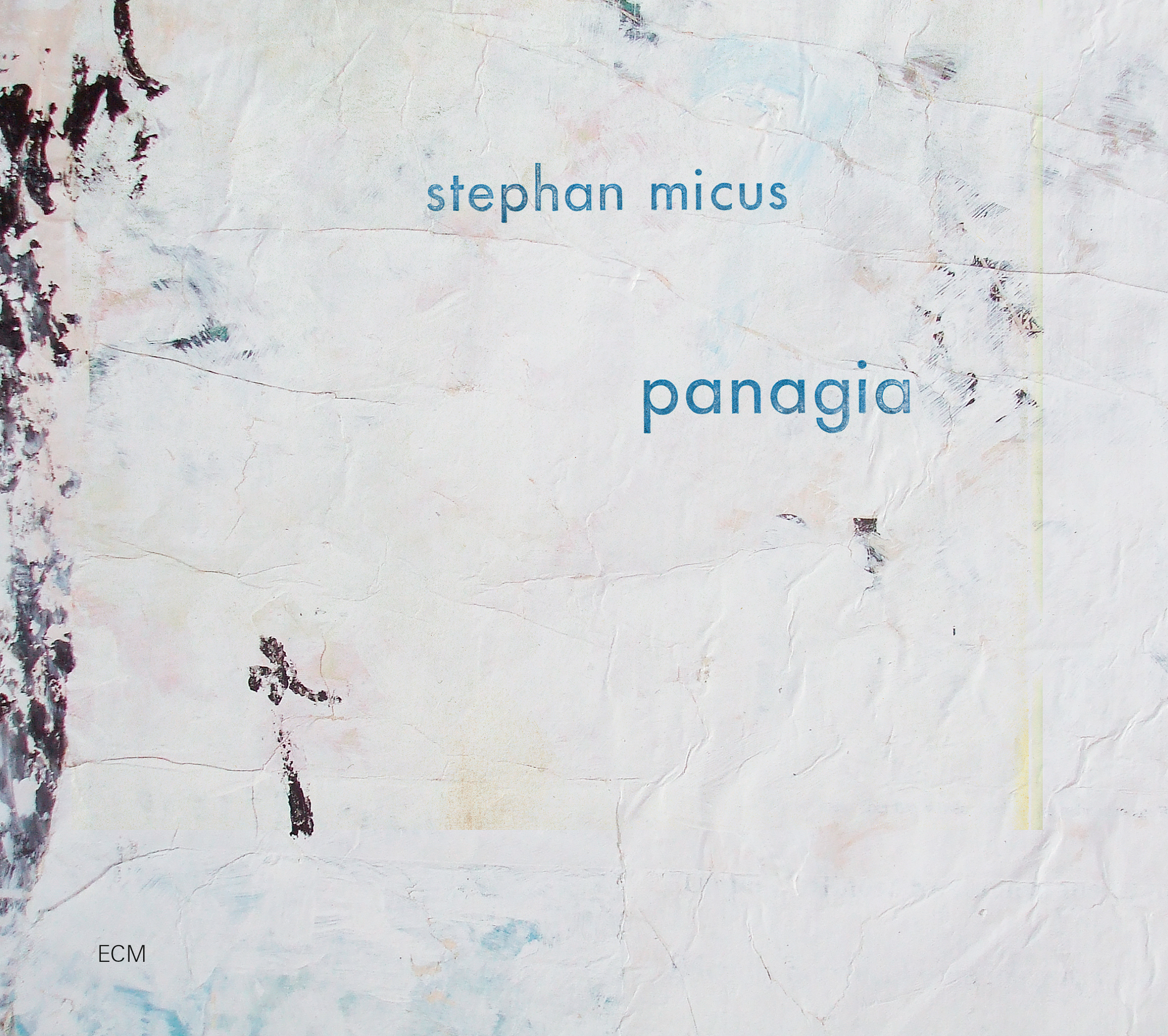
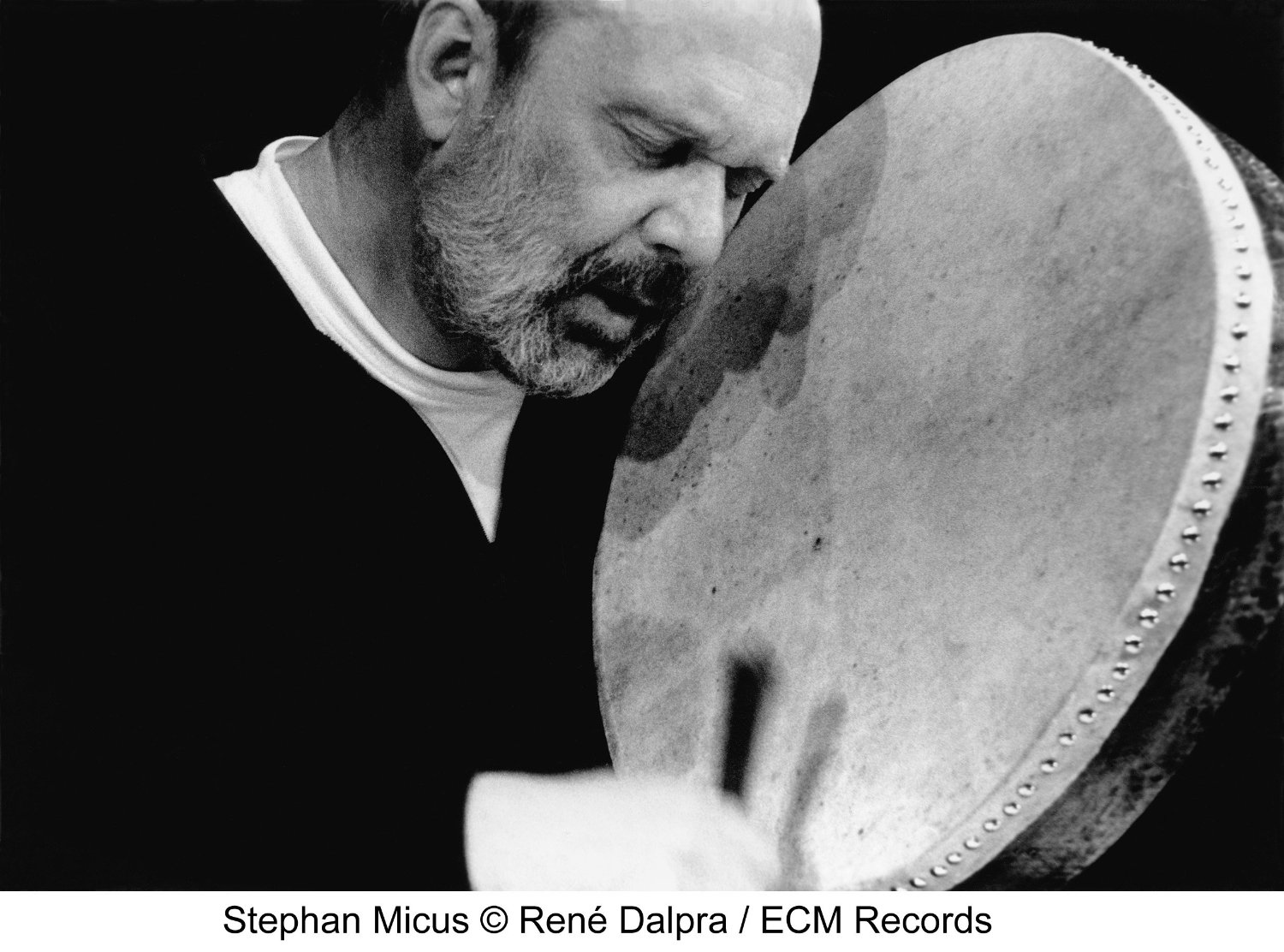
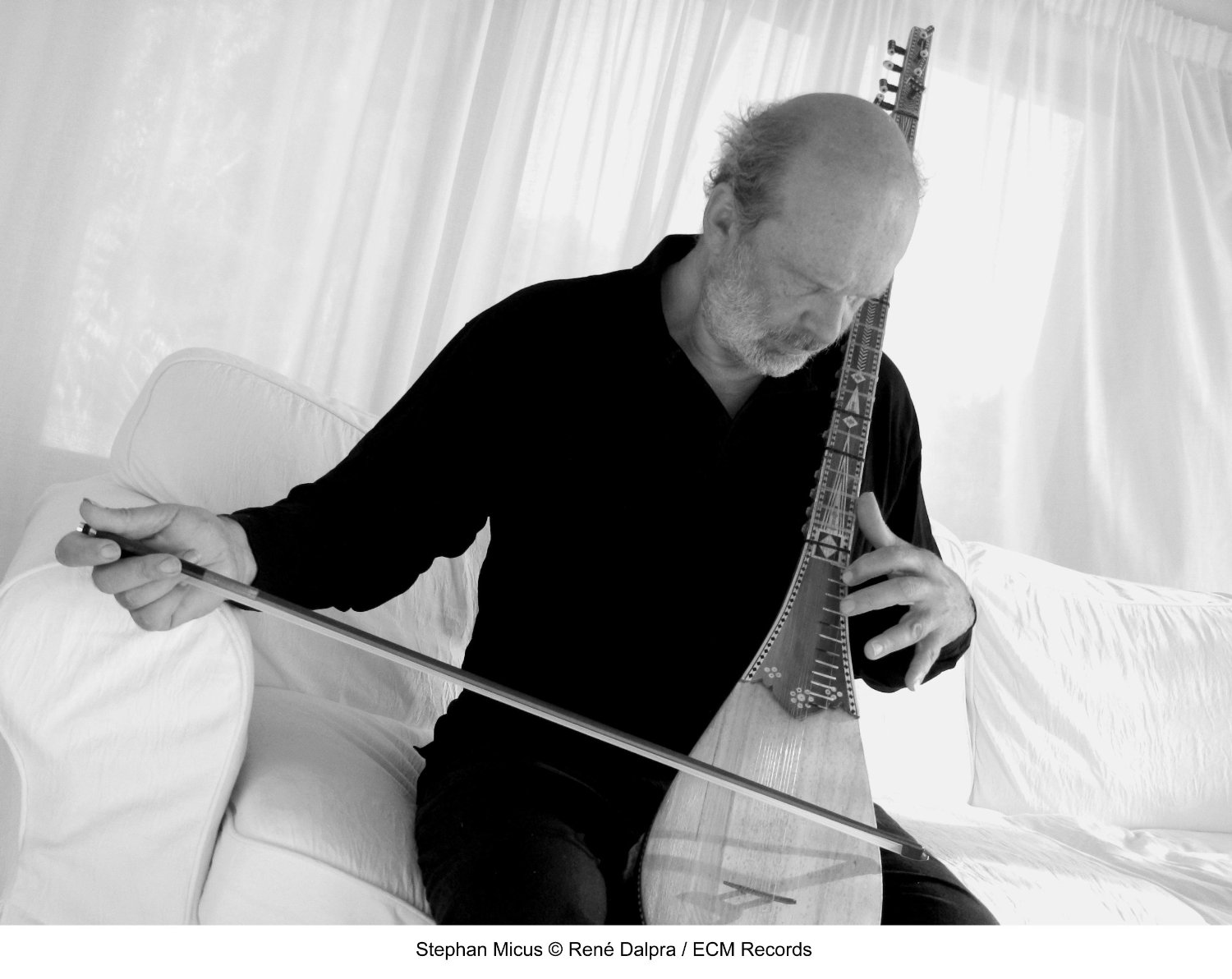
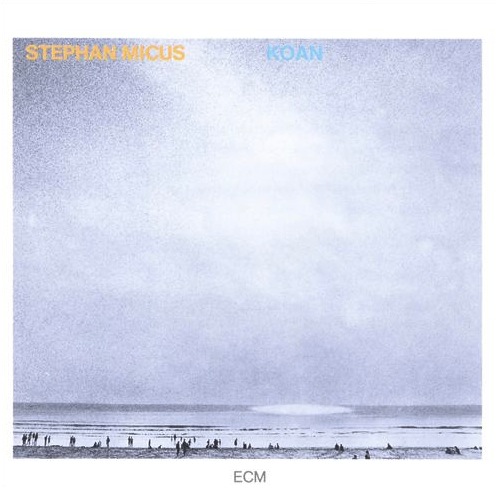
Stephan Micus douss’n gouni, duduk, maung, gongs, tibetan cymbals, bavarian zither, sinding, steel-string guitar, hammered dulcimers, charango solo, nay, bass duduk, voices Recorded 2004-2008 at MCM Studios
Produced by Manfred Eicher
For his 18th ECM meditation, German multi-instrumentalist Stephan Micus goes deeper into his travels, into his technique, and into himself. Among his usual bevy of means, the Armenian double-reed duduk—last heard on Towards the Wind—is now a central energy field, its song a balance to the cold. “I’ve always regarded snow as the essence of magic,” notes Micus in this album’s press release, and his impressionistic view of one of nature’s most enigmatic phenomena shines through with a glow all its own. The title track likewise harbors many warm bodies, despite the wintry theme. Two doussn’gouni (a West African harp that Micus debuted on Desert Poems), along with various gongs and cymbals, give the duduk a gentle berth for travel. Guided by breath, not oar, its intense presence rides toward frosty shores, singing of the ice as gateway and kissing the land with its solemnity. Also retained from Desert Poems is the sinding, another West African harp that blends with steel-string guitar, hammered dulcimers, and an ever-growing chorus of voices in “Sara.”
The duduk continues its tender mission across a “Midnight Sea” (accompanied here only by Bavarian zither) and into the arms of “Madre.” The latter speaks further in the language of strings and mallets, and both mix the reeds spatially, so that notes scale from left to right as they ascend. The album’s final track, “Brother Eagle,” features the bass duduk. Along with two sinding and fifteen voices, its near-ghostly sound feels spun from the very earth of which it chants. This marriage of glitter and darkening cloud, of moonlit sailing and glorious dream journeying, advances its subterranean walkabout lead by shadows toward the promise of sunrise.
Making its debut at Micus’s fingertips is the charango, an Andean double-stringed ukulele popularized by Argentine composer Gustavo Santaolalla. “Nordic Light” is a solo for the instrument, which in this context sounds more like some miniature koto that evokes its aurora with understated flame. Another solo begins “For Ceren and Halil” before being joined by seven more charangos, duduk, nay, sinding, and five hammered dulcimers in an eddying current of leaves and time until they reach the waterfall that makes one of them all. The album’s sole remainder is “Almond Eyes” (11 voices, steel-string guitar, maung), which offers some of Micus’s most impassioned singing yet.
It bears noting that the cover of Snow was painted by father Eduard Micus (1925-2000), a gestural painter who shaped his medium as his son shapes sound. It’s a naked glimpse into the musician’s upbringing, and proof that life is indeed a river that, once frozen, simply awaits the thaw of another realm.
Savina Yannatou voice Kostas Vomvolos qanun, accordion Yannis Alexandris oud, guitar Kyriakos Gouventas violin, viola Harris Lambrakis nay Michalis Siganidis double-bass Kostas Theodorou percussion, double-bass Recorded October 2007 at Sierra Studios, Athens Engineer: Yannis Baxevanis
Edited and mixed by Manfred Eicher, Yannis Baxevanis, Kostas Vomvolos, and Savina Yannatou
Produced by Manfred Eicher
Songs Of An Other marks the third point of contact between Greek singer Savina Yannatou, along with Primavera en Salonico, and ECM. The program is more geographically varied than ever and emphasizes the interpretive prowess of its musicians. Much of that prowess breathes through Primavera’s superb control, for while the album boasts moments of sportive extroversion, it upholds the music first and foremost as a model for emancipation.
Indeed, Songs Of An Other shows this collective at both its most animated and its most delicate, oftentimes within the same song. Both the slack-stringed “Za lioubih maimo tri momi,” which comes by way of Bulgarian Macedonia, and “Radile” (from Greece) run the line of straight-up folk and all-out jam. In the latter vein, two new tunes based on Greek sources add another line to the project’s résumé. “O Yannis kai O Drakos” is a dragon-slaying song replete with fanciful colorations, paroxysmal gasps, and subtly frenetic bassing. “Perperouna,” a call for rain, explores the gravelly pits of Yannatou’s voice, embraced by the windy brine of nay and kalimba, all moving in a Celtic knot of rhythm toward an adlibbed comet’s tail. Even the “Albanian lullabye” becomes a ritual of ululations and incantations, honing a mysterious and strangely accessible edge.
For much of the album, however, the musicians tread a delicate path, adapting to every dip in Yannatou’s tightrope along the way. From the dulcet “Smilj Smiljana” (Serbia) to the Italian olive-harvester’s song “Addio amore,” they emote lucidly. Combinations of flute, violin, and accordion cloud like ink in water in “Sassuni oror” (Armenia); dances take the night by the hand in “Dunie-au” (Kazakhstan); and the 16h-century Yiddish traditional “Omar hashem leyakoyv” is practically translucent in sentiment.
The greatest accomplishment of Songs is the fullness with which it romanticizes, as is clear in “Sareri hovin mermen” (Armenia). Given the “Eastern” feel, one might easily read into it an alluring sway. Likewise, “Ah, Marouli,” a Greek song about sponge-divers on the island of Kalymnos, sashays with seeming invitation. And yet, these arrangements are so emotionally (and physically) complete that they hardly need even these words to convey to the uninitiated listener the magic of their self-assurance. And that’s the thing: every step and element of this audible alchemy is as lucid as the light that illuminates the talents of these fine instrumentalists, Yannatou tracing them all the while as a wave might shape an Aegean breeze.