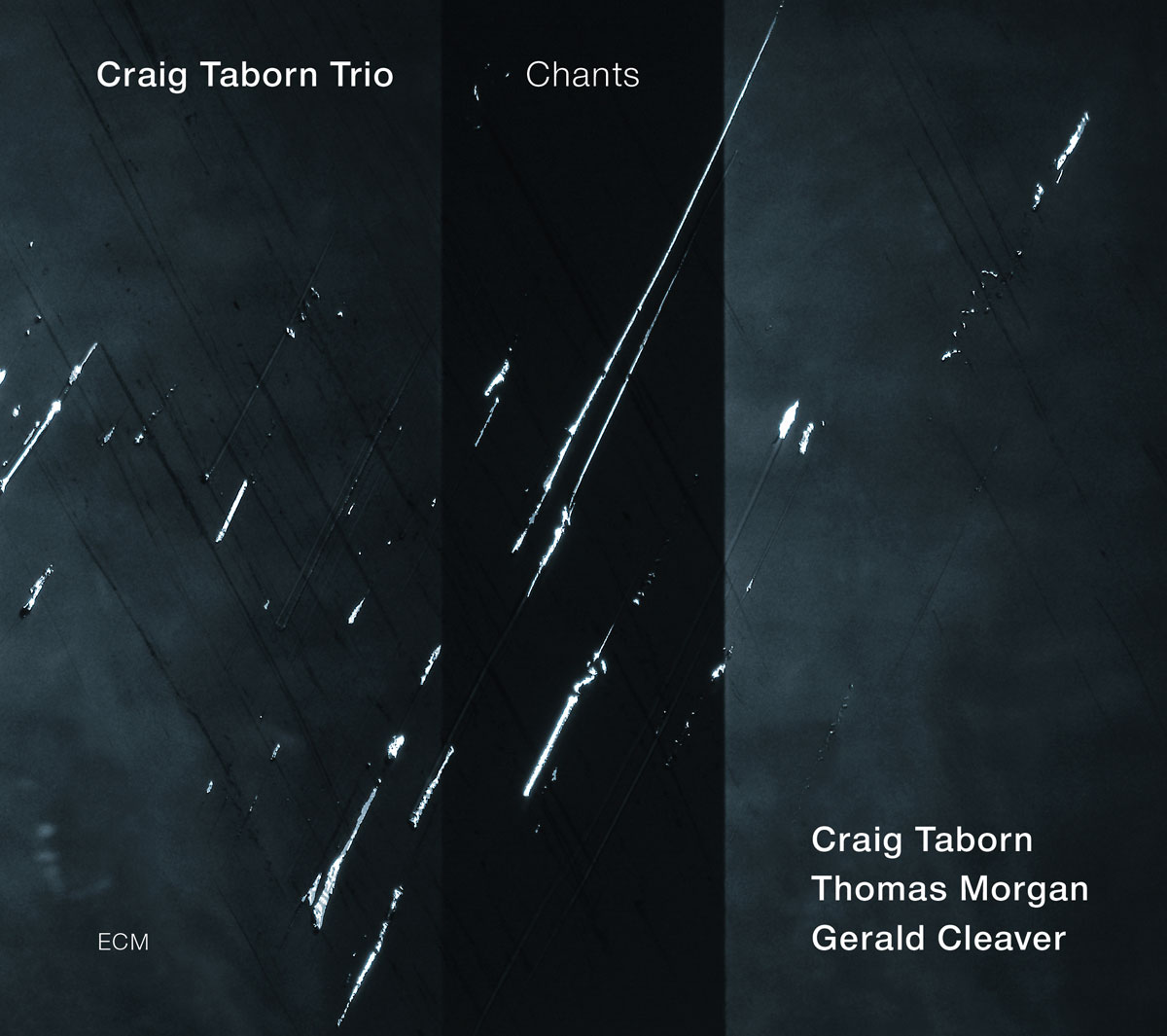
Craig Taborn Trio: Chants (ECM 2326)

Chants

Craig Taborn Trio
Chants

Craig Taborn piano
Thomas Morgan double bass
Gerald Cleaver drums
Recorded June 2012 at Avatar Studios, New York
Engineer: James A. Farber
Assistant engineer: Charlie Kramsky
Produced by Manfred Eicher

The Craig Taborn Trio is a metronome with a soul. For its debut release, Chants, the pianist’s fearless group carves a niche and fills it with so much creative spirit that no one but the listener can squeeze in for a spell. The album defines a repertoire, extracting from one of the most enviable rhythm sections in the business an elixir for surefire engagement. Bassist Thomas Morgan and drummer Gerald Cleaver know what Taborn is all about. They are never add-ons but are fully immersed atoms in his molecular goings on, nearly a decade in the forming. And if the syncopation of “Saints” is any indication, theirs is an aliveness of unity rare to hear. As in so many of the tracks that follow, there is a winding, slightly off-kilter feeling to its jaggedness. Taborn and Cleaver leave an especially consonant series of markings at the outset, each the half of a poker deck perfectly Farrowed to the tune of Morgan’s deal. The bassist works alone “In Chant,” enacting no mere solo per se but a living tendon between wholes. In those wholes contrasts abound. “Beat The Ground” evokes the blurred foliage of a running warrior’s peripheral vision. His weapons trickle down from the sky in care packages of godly insight, inspiring pulse-driven spirals into resonant fade. The feeling of resolution is as visceral as it is fragile. “Hot Blood,” on the other hand, is as cool as can be. It opens a city’s worth of brainwashed minds and, while flurried, keeps its inner flame in smooth focus.

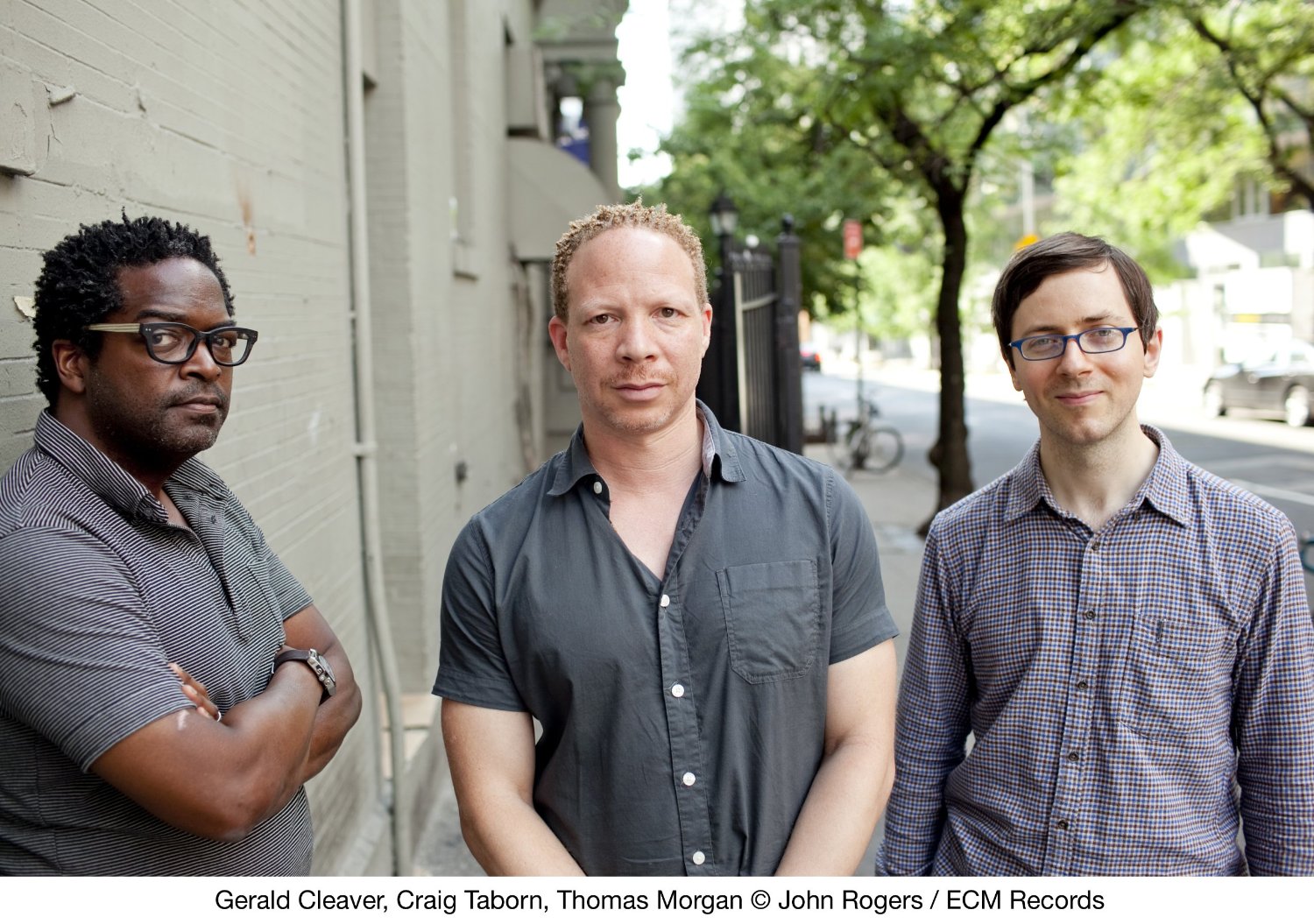
Taborn Trio

From the tectonic instability of its intro, “All True Night / Future Perfect” congeals like so much stardust. Its evolving Spirograph is toothed with miniscule variations, which though unapparent to the naked eye scream to the naked ear. Like a dislocated joint these connections remain encased in the body proper, hanging in lieu of locomotion. “Cracking Hearts” opens with a scattering of cobwebs from Cleaver before the trio rummages through everything in its attic, upturning memories that were never theirs to begin with yet which ring familiarly. More important than artifacts are the “Silver Ghosts” who haunt the rafters. Theirs is a ponderous song, an ephemeral dotted line of footprints in the dark, conducted by the wings of a trapped and frightened bat. “Silver Days Or Love” clears out the windows, drawing pointillist glyphs by Taborn’s right hand over a steady imprinting of chords from his left. A strangely enchanting bass solo, host to a network of internal gatherings, gives soil to Taborn’s sprigs of blossom. Only when they “Speak The Name” do clouds begin to open their pores to the firmament’s pale blue love.

While the music of Chants is certainly profound, it is, more simply, found. It is as if it had been wandering for countless years in the corners of our minds, each motif a determined mouse waiting for just the right cheese to tantalize its palate. Taborn never lets the intensity of this indulgence overwhelm. He knows just when to turn down the dial, lest the circuit break and leave us altogether unreceptive to signals. His brilliance is all in the music. Rather than go from A to B, he is content going from Q to R, clothing himself in the orbits of another planetary system that operates by its own gravitational and chemical rules. The chant, then, becomes a de-normalizing impulse, a light in the telescope that renders us in our darkest hour strangers even to ourselves.

There is glory and praise in these movements, sacrifice and self-reflection, pockets of expectation filled to bursting with illusions. As in the surgical discoveries of Nik Bärtsch’s Ronin, geometry is paramount, the lifeblood of all orbit. If the Keith Jarrett Trio revitalized the standard, Taborn and his allies have set one.

(To hear samples of Chants, click here, or watch the promo video below.)

Bley/Peacock/Motian: Not Two, Not One (ECM 1670)

Not Two, Not One

Not Two, Not One

Paul Bley piano
Gary Peacock double-bass
Paul Motian drums
Recorded January 1998 at Avatar Studios, New York
Engineer: James Farber
Produced by Manfred Eicher

This album documents a monumental coming together of pianist Paul Bley, bassist Gary Peacock, and drummer Paul Motian, a combination not seen on record since Paul Bley with Gary Peacock, laid down in 1963 and issued 1970 as ECM’s third release. Here the trio picks up where it left off some 35 years before, furthering a journey of deconstruction its members have since charted separately in various combinations. And combinations are really what this session is about, for the trio turns kaleidoscopically throughout, emphasizing certain angles over others in a constant shifting of crystals. One moment finds us mired in the quiet urban fantasies of “Don’t You Know,” in which Bley pours out every last drop from his flask of introspection, while the next tantalizes with “Fig Foot” (“Big Foot” by another name), last heard on Adventure Playground. Bley latterly dances like fire, erratic yet unified by elemental force, following a pattern that is beyond our ken. Peacock is duly inspired in his solo against a delicate swing from Motian, who stays the course with an effervescent washtub beat.

The album’s most notable soundings come from Bley’s pianism, which revels in the depths granted it by studio access to a Bösendorfer. Bley bathes in its open possibilities, moving from a sunny intro in “Not Zero – In Three Parts” to lively reveals of the instrument’s vibrating inner core. This touches off a spate of drums from Motian, whose own soliloquy takes root in the ethereal, and inspires from Peacock a solo that balances integrity with unruliness and ushers in the trio proper with bold progression. Bley’s zither-like touches tip the scales toward all-out swing. “Now” similarly digs low, forming a cascading and complex solo of bridge-cabled intensity. “Vocal Tracked” also finds Bley alone, this time pushing notes like pins into an entomologist’s specimen board. Peacock likewise enchants with “Entelechy,” an elliptical solo track that shows a master at work. He further contributes two tunes: the pirouetted “Intente” and the restless marginalia of “Set Up Set.” Each turns itself like a sentient children’s top, waiting for the moment when its inertia will falter.

Yet together is how the trio shines. In “Noosphere” they work as one amorphous blob, carefree yet passionate. A many-petaled solo from Peacock bespeaks an undaunted hand, thereby flinging the veil of obscurity in favor of transparent expression against Motian’s profound susurrations. And after a luxurious dip in the balladic waters of “Dialogue Amour,” the trio tightens the drawstring with “Not Zero – In One Part,” a brief and burrowing coda.

These three sages of modern jazz neither break down borders nor blaze trails. Rather, they ignore those borders altogether and shape their music as it comes: bare yet flavorful enough to shock your taste buds into bliss.

<< Giya Kancheli: Magnum Ignotum (ECM 1669 NS)
>> Zelenka: Trio Sonatas (ECM 1671/72 NS)

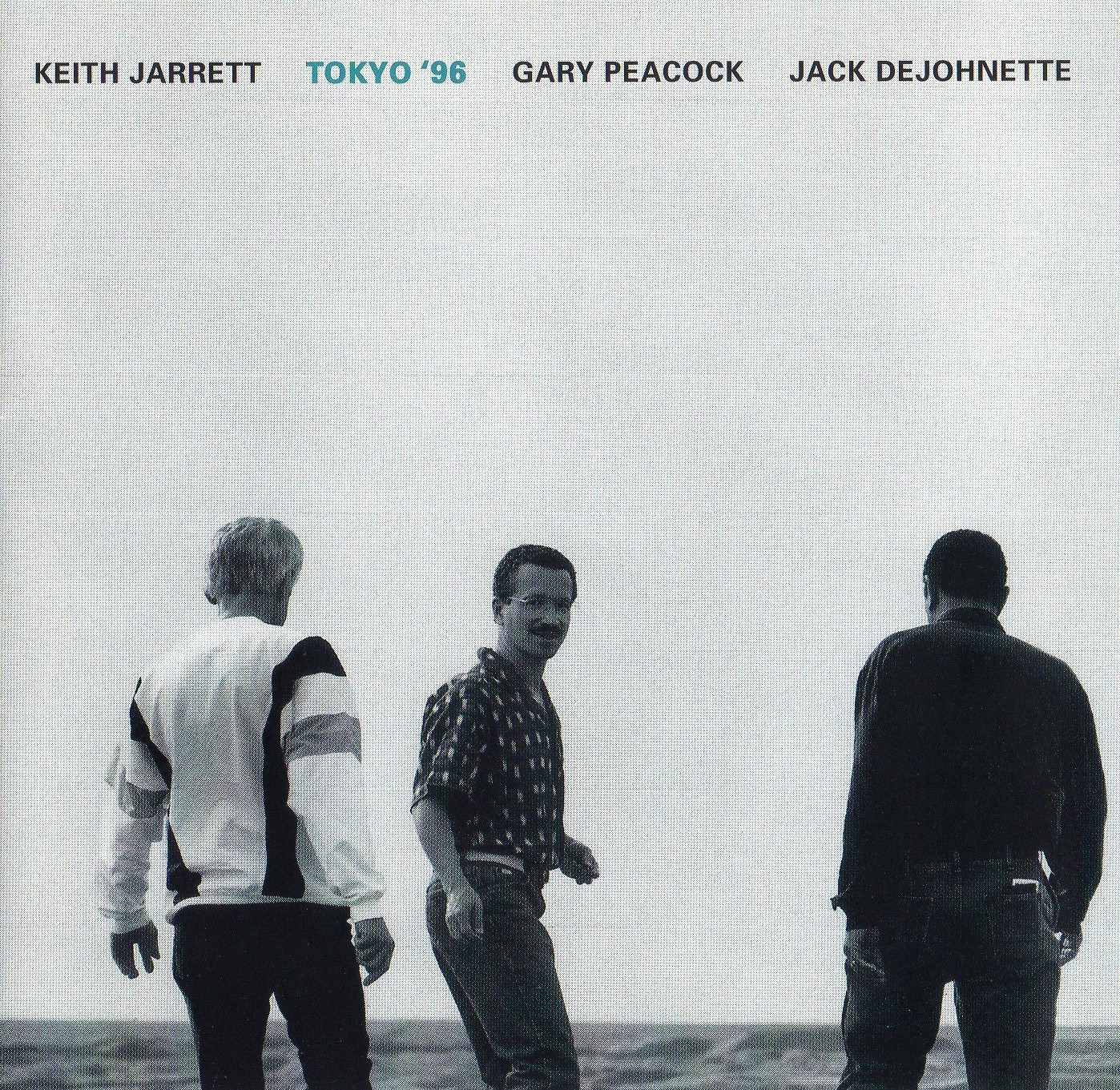
Keith Jarrett Trio: Tokyo ’96 (ECM 1666)

Tokyo '96

Keith Jarrett Trio
Tokyo ’96

Keith Jarrett piano
Gary Peacock double-bass
Jack DeJohnette drums
Recorded March 30, 1996 at Orchard Hall, Tokyo
Engineer: Toshio Yamanaka
Produced by Manfred Eicher

Keith Jarrett’s trend-setting standards trio returns to Japan in celebration of its 15th year in this commanding live recording, which from bare pianistic threads spins an up-tempo version of “It Could Happen To You” to kick things off just right. With DeJohnette’s brushes flying and Peacock likewise enamored, free and easy exchanges abound. At this point we’re already hooked, so that “Never Let Me Go” becomes a mantra to guide us through the rest. There’s so much tenderness from Jarrett here, it’s a wonder he can emote with so little vocal breach. This, along with Peacock’s soulful slides, makes for one of the most heartwarming tracks in the trio’s output. Peacock’s early lepidopteran solo in “Summer Night” traces Jarrett’s masterful story arc word for word and shifts into high gear for “John’s Abbey” in a chain of powerful music-making. The trio’s sparkling rendition of “Billie’s Bounce” is a splash of cold water on the face. Jarrett’s right hand slaloms through the left’s gentle punctuations before a concluding solo from DeJohnette puts the icing on this positively exuberant cake. It’s one of a few standout moments from the drummer, who relays hand percussion and hi-hat in “I’ll Remember April” and leads the trio into an organic fadeout. All of which makes the relatively brief “Mona Lisa” a magical moment. Painting with a dark and bar-lit hue, its grandeur is obscured, embraced, inhaled.

Two tracks find Jarrett drawing improvised pieces from the energies at hand. “Last Night When We Were Young” blends into “Caribbean Sky,” while “My Funny Valentine” morphs into “Song.” In each there is a hip nostalgia, Jarrett’s sweeping gestures the perfect foil for every tectonic shift the rhythm section brings topside. Like a mountain shadow looming in the twilight, the latter offers especial solace, standing as a vestige of times we have yet to know. DeJohnette’s quiet rumblings are a distant thunder, even as Peacock’s restless song offers the promise of a new day.

Were it not for the due process this trio brings to every verdict, it might be easy to let these live recordings blend into one another. Yet these are cases without perpetrators, whose crimes are absolved the moment they are committed. Like a virus that adapts to vaccinations, their creativity spreads with an all-consuming will to be felt. Only here, rather than pain and decay, there is affirmation, resurrection, and spirit. We encounter this most vividly in “Autumn Leaves,” which in addition to being one of the trio’s signatures finds delicate balance here through Jarrett’s anticipatory style. Jarrett makes block chords blossom with melody, just as he deepens the single note. In the wake of such marvel, perhaps only this rhythm section can sustain the flame with the skill that Peacock and DeJohnette possess in spades. DeJohnette’s brushes in particular keep up with every roll, while Peacock’s excitations somehow ring contemplatively.

Jarrett and his band mates carry a tune without ever letting us forget that they wouldn’t be here without that tune to begin with. Whether through bold, linear lines or atmospheric touches, the trio puts melody over matter, because in the end melody is all that matters.

<< Bent Sørensen: Birds and Bells (ECM 1665 NS)
>> Schönberg/Schubert: Klavierstücke (ECM 1667 NS
)

Bent Sørensen: Birds and Bells (ECM New Series 1665)

Birds and Bells

Bent Sørensen
Birds and Bells

Christian Lindberg trombone
Oslo Sinfonietta and Cikada
Christian Eggen conductor
Recorded October 1997 at NRK Studio, Oslo
Engineer: Audun Strype
Produced by Manfred Eicher

Visual practitioners have experimented with processes of decay for centuries. Their art has even become subject to it over time in varying degrees. Those working with sound, however, face different challenges in evoking the same. Electronic musicians have perhaps been most successful in this regard. Mike Sandison and Marcus Eoin, better known as Boards of Canada, often subject their creations to a sort of virtual oxidation whereby the music loses its sheen and welcomes blemishes and distortions into its fold. William Basinski inadvertently took this one step further when he captured the process live while recording what came to be known as the Disintegration Loops. And now we have Bent Sørensen, whose quasi-spectralist sound-world dons the ECM New Series cloak in this program of instrumental works.

Bent Sørensen

Most of the program places soloists inside an ad hoc group under the moniker Cikada Ensemble. The Lady and the Lark (1997) centers on viola amid a spray of other colors. And yet this series of five miniatures (the longest at three minutes) turns soloist into periphery, dotting a mandala-like framework with textured bodhisattvas. Amid fluttering intentions and water-drip effects, woodblocks touch the night with their toad-throated vibrations. Like paintings subjected to X-ray, they reveal underlying sketches. Such attention to microscopic detail further shapes the Funeral Procession for violin, viola and 6 instruments (1989), which similarly pulls up the carpet from the forest floor and shines a flashlight on all that squirms beneath. Like an astronomer, it focuses on the negative space as much as the stars, each nothing without its limpid backdrop.

By contrast, while The Deserted Churchyards for violin, cello, flute, clarinet, percussion and piano (1990) designates no central instruments, piano and flute act as quasar to its gaseous system. Their transcendent relays render invisible fissions audible. A tubular bell bends to the will of a shifting wind and drowns in a wisp of distance. From the title alone, one might imagine a still and neglected scene. We instead encounter a microbiome of scuttling activity. Desertion does not mean death; it means the freedom of kinesis to run its course unimpeded, except by its own zeal.

The Bells of Vineta for solo trombone (1990) dips freely into the Uncanny Valley. Christian Lindberg is the soloist, and his presence throughout is almost disturbingly vocal. With every muted slur he walks the line between cartoonish mockery and cathartic mourning. He travels with an eerie persistence in the tripartite title composition. Composed in 1995, it drops him into the larger palette of the Oslo Sinfonietta under the baton of Christian Eggen, who elicits a viscous, bleeding mosaic with wounds that sparkle from the touch of a healing ear. Each grows a tiny hand of light, plucking thorns of shadow from its own luminescent skin. Lindberg again animates his playing vocally, closing and separating to the pulse of a larger body. The result is a Doppler effect of the soul, the tinnitus of collected verses that make up any life. The occasional rhythmic passage cuts through the fog, each a tadpole swimming in the piano’s darkened well, a place where reality and childhood intermingle like ink and water, respectively. References to George Crumb, Gideon Lewensohn abound inside these cellular whispers, dreams yet to be dreamt and whose realization flowers with the tide’s recession.

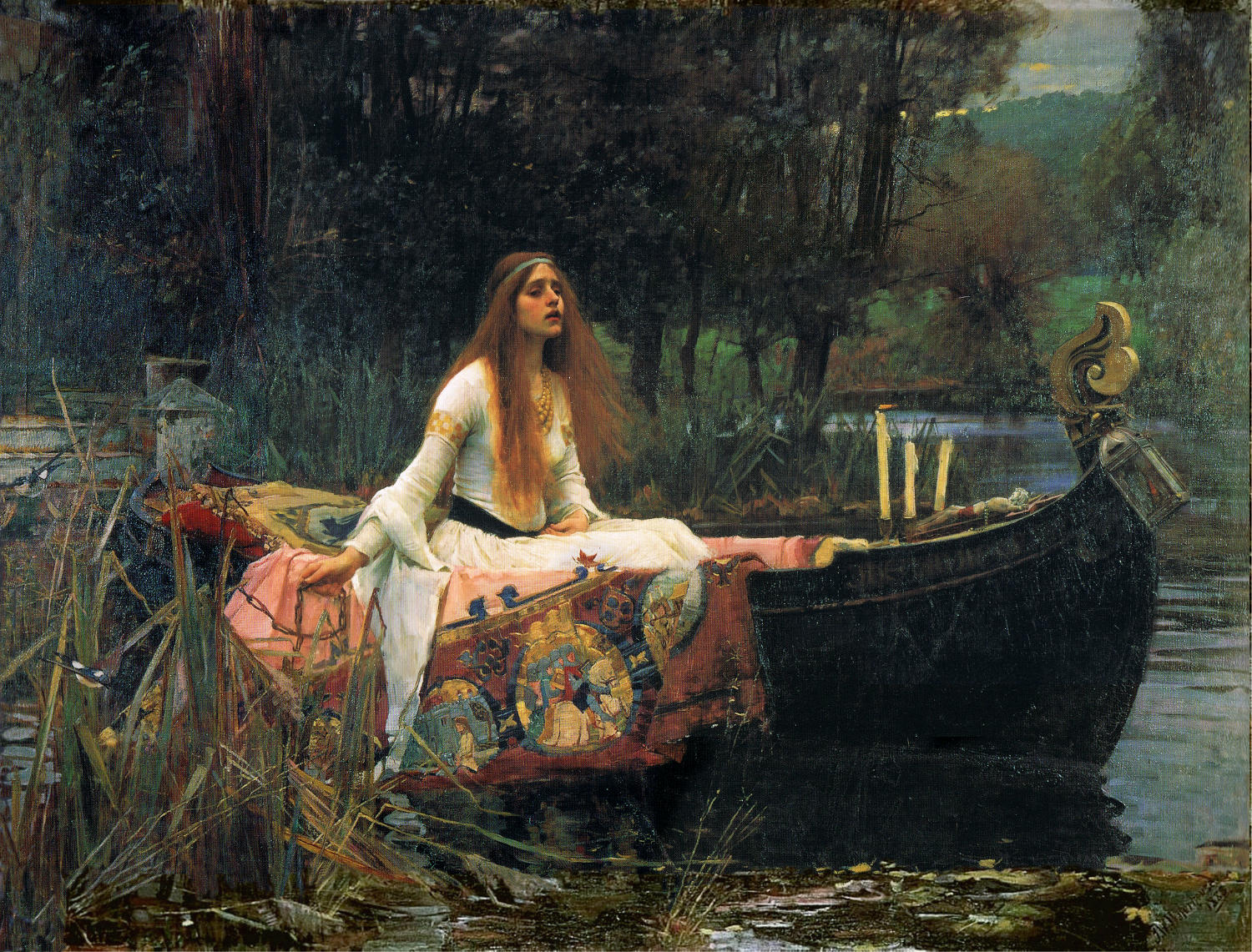
The Cikada Quartet draws a curtain with The Lady of Shalott (1993), which allows us to feel water and glass as if they were the same. Yet the cut of its passage is less like the boat in the famous John William Waterhouse painting…

Waterhouse Lady of Shalott

…and more like the threads in William Holman Hunt’s rendering, spilling from their loom with all the profusion of Christmas yet clipped by cerebral destruction. These are the paths we have taken, and they lead us all to where we began.

WHH Lady of Shalott

And on that note, these pieces, if only by virtue of their programming, exist as part of a phosphorescent whole. They arch their backs along the edge of a crescent moon, feeding off the oscillation of the night. By the humble touch of a fingertip to string and bone, their effect births as much as it dissolves. Though the foliage may change, the branches pulse in synapses of life. There is destiny in these leaves and it quivers with every verdant breath. In this music, sun and moon can touch each other without the slightest hint of destruction, for in that contact they acknowledge having been spun from the same breath.

<< Misha Alperin w/John Surman: First Impression (ECM 1664)
>> Keith Jarrett Trio: Tokyo ’96 (ECM 1666
)

Misha Alperin w/John Surman: First Impression (ECM 1664)

First Impression

First Impression

Misha Alperin piano
John Surman soprano and baritone saxophones
Arkady Shilkloper French horn, flugelhorn
Terje Gewelt double-bass
Jon Christensen drums
Hans-Kristian Kjos Sørensen percussion
Recorded December 1997 at Rainbow Studio, Oslo
Engineer: Jan Erik Kongshaug
Produced by Manfred Eicher

Ukrainian pianist and composer Misha Alperin joins forces for the first time in session with British reedist John Surman (a last-minute replacement for Tore Brunborg) in this melodious, spontaneous set. Augmented by Arkady Shilkloper on French horn and flugelhorn, Terje Gewelt on bass, and Jon Christensen on drums, their hypnotic nexus breathes ounces of thematic life into the “Overture” in watery, stepwise motion. Surman’s reptilian soprano takes us in some unexpected directions throughout a holistic introduction, while his unmistakable baritone threads resilient cables through “Twilight house” and “City Dance.” The first of these is where the session truly comes to life through his interactions with Alperin, while the latter serves a touch of groove in a veritable trill buffet (think Snakeoil). “Movement” features classical percussionist Hans-Kristian Kjos Sørensen (heard previously on No Birch) in a spindly improv, the pointillism and melancholy draw of which only thinly veil its composed undercurrent. A lovely solo from Shilkloper on French horn rises like a paper lantern lit and offered to the sky.

Yet these are but the roofing to the album’s five “Impressions,” each a pillar in the dust. Most of these are latticed pieces in chambered combinations, achieving darkest patina in “Second Impression,” in which Surman’s soprano dances like a wick-hugging flame, and whispering new beginnings in “Fifth Impression.” Neither is as intimate as the title track, in its way a profound one. In printing terms, the first impression is always the most crisp, the most sought after, but here we get something so ephemeral that it hardly seems to stick to the page. In its solo piano expanse is something metaphysical, a catch of moonlight in the mind.

<< Dave Holland Quintet: Points of View (ECM 1663)
>> Bent Sørensen: Birds and Bells (ECM 1665 NS
)

Dave Holland Quintet: Points of View (ECM 1663)

Alternate Points of View

Dave Holland Quintet
Points of View

Dave Holland double-bass
Steve Wilson soprano and alto saxophones
Robin Eubanks trombone
Steve Nelson vibraphone, marimba
Billy Kilson drums
Recorded September 25/26, 1997 at Avatar Studios, New York
Engineer: James Farber
Produced by Manfred Eicher

In 1997, ECM veteran Dave Holland unveiled his new quintet with saxophonist Steve Wilson, trombonist Robin Eubanks, vibist Steve Nelson, and drummer Billy Kilson. Wilson and Kilson were then the latest additions to the bassist’s milieu, the former making his only ECM appearance here and both making their debut with the label. Kilson has since grown to notoriety through his associations with Holland, and it’s impossible to wonder why after hearing him emote throughout this smooth, copacetic set, especially in tracks like “Metamorphos” (the sole Eubanks-penned tune therein) and Holland’s opener, “The Balance.” As representative a doorway as one could hope for, its unmistakable bass line underscores a developing signature of drums, bass, and vibes that sticks to the ribs like a good meal. It’s a deep and shimmering sound, whetting our appetite through a solid solo from Eubanks, Holland all the while bringing that buoyant flavor we crave. Wilson’s sopranism whips a thin caramel in Holland’s dark chocolate goodness, while Kilson’s riffle force adds texture and crunch. The result is the astrological sign under which the remainder lives.

As per usual, Holland takes the lion’s share of compositional duties. “Mr. B.” brings the joyful, swinging sort of beauty one would expect from bassist Ray Brown, to whom it bears dedication. An early vibes solo gets us off on the right foot in this sure jaunt through city streets. Wilson gives an exemplary lesson in alto improvisation, building from simple elements and unwinding in flowing chromatic lines that cajole the band to peak intensity. “Bedouin Trail” is a leftover from Holland’s Thimar session with Anouar Brahem and John Surman and proves to be a perfect atmospheric vehicle. Nelson draws from an especially appropriate color palette, pairing nicely with the sandy textures from Eubanks. “Ario” means à Rio and came out of a trip Holland took to Brazil just before putting this record together. Though inspired by rainforest and natural splendor, it boasts an urban edge, not to mention also the cleanest solos of the entire set. Holland’s then-recent work with Herbie Hancock adds due piquancy to “Herbaceous,” an upbeat cruise along fast-moving waters. Holland is swift as a jackrabbit here, setting off some gorgeous soprano work in the process.

Wilson and Nelson round out the writing with “The Benevolent One” and “Serenade,” respectively. The saxophonist gives us the tender heart of the session and provides plenty of page space for soulful monologues all around. Nelson likewise in “Serenade,” a tropical infusion of marimba that is easy, breezy, beautiful.

Throughout every track, Holland brings the listener courtside, as it were, with his lyrical, elliptical playing. Yet off all the soloists, it is Eubanks who shows the most fire and innovation. In the end, we have laid-back, non-confrontational, music that comes to us democratically and without pretension. A well-rounded record, slick as rain.

<< Philipp Wachsmann/Paul Lytton: Some Other Season (ECM 1662)
>> Misha Alperin w/John Surman: First Impression (ECM 1664
)

Mats Edén: Milvus (ECM 1660)

Milvus

Mats Edén
Milvus

Mats Edén drone-fiddle, violin, viola
Jonas Simonson flute, alto flute
Cikada String Quartet
Recorded September 1997 at Rainbow Studio, Oslo
Engineer: Jan Erik Kongshaug
Produced by Manfred Eicher

After making vital contributions to the ECM collaborations of Lena Willemark and Ale Möller, Swedish multi-instrumentalist and composer Mats Edén brings his folk revival sensibilities to this leader date from 1999. He joins longtime musical partner Jonas Simonson in paying homage to many great fiddlers, including Ärtbergs Kalle Karlström and Lejsme Per Larsson, and old-time masters Torleiv Björgum and Anders Rosén. The latter revived the use resonating strings, which Edén took on himself in developing a custom instrument called the bordunfiol, or drone-fiddle, featured prominently in Milvus.

Of that drone we get plenty in “Haväng,” an original tune dedicated to Indian violinist K. Shivakumar. Simonson’s flute is the photographic image that develops in Edén’s solution. This frothy combination of sublime harmonies and cohesive adaptation permeates especially the vibrant polskas that speckle the program. The contrast between airy riffs and tethered harmonics, between flowing lines and jagged accompaniment, between fragrant soil and dry winds makes for an altogether inviting atmosphere.

Having grown up in Värmland, which borders Norway, Edén takes inspiration from the region in “Norafjälls,” which he plays to earthen perfection. Likewise the dirge-like lows of “Vardag.” He also offers two improvised solo “Variations,” which bring with them a darker cast. Their strained quality and wrenching, emotional grit reveals a highly ingrained mind at work.

Simonson brings spiritual centeredness against distant fiddle accompaniment in “Den lyckliga (Beate Virgine),” a devout, reverberant jewel in the album’s rusted crown, and brings reflection and depth to his solo “Spillet,” a brief but profound segue.

As if this weren’t enough, the Cikada String Quartet concludes with Edén’s three-part String Quartet No. 1, of which the first movement feels like an unpacking of all the traditions that came before. As such, it is a distillation, a crystal fragmented and made whole again (the “jigginess” here is far more subtle, internal). The second movement is a quiet agitation of rubber-banded ideas, a spiral into the final Lento, engaged by folk themes amid careful attention to surroundings.

The album’s title refers to the kite bird. Not surprisingly, the music created in its name embodies the cut of those wings, angular and sure against the sky. Such contrasts would seem to be of vital importance to Edén, a musician who understands that the spaces in between the strings are just as important as the strings themselves.

<< Hans Otte: Das Buch der Klänge (ECM 1659 NS)
>> Joe Maneri/Mat Maneri: Blessed (ECM 1661
)

Eleni Karaindrou: Dust of Time (ECM New Series 2070)

2013-05-14_0839

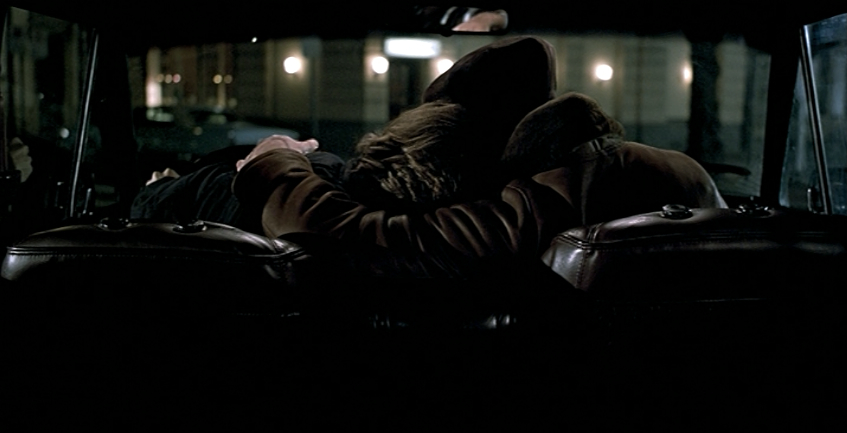
The Dust of Time is the last film of Theo Angelopoulos, a status it attained only after the Greek filmmaker unexpectedly disappeared from the mortal landscape in 2012. This film was the second in a trilogy begun with The Weeping Meadow and set to be completed by The Other Sea, in production at the time of his passing. It is at once his most complex and simplest film. Because it is his last, we may feel tempted to see it as the capstone to his oeuvre, a summary and reflection of things past. We might also experience it as an inception, a regression into birth.
2013-05-14_0905

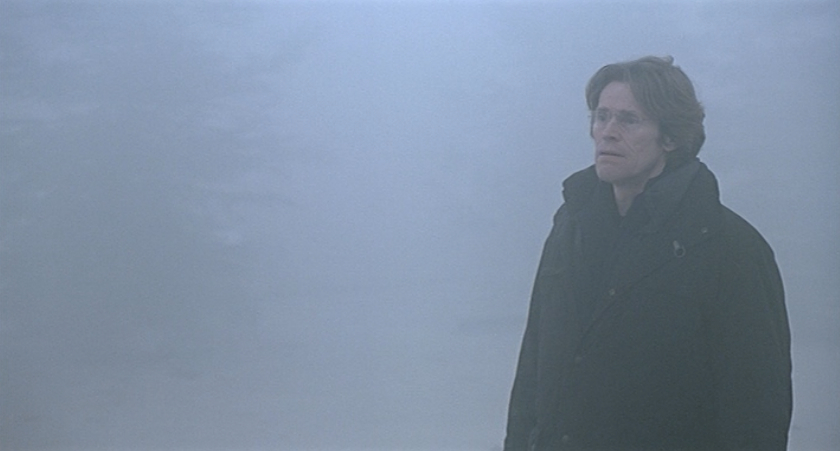
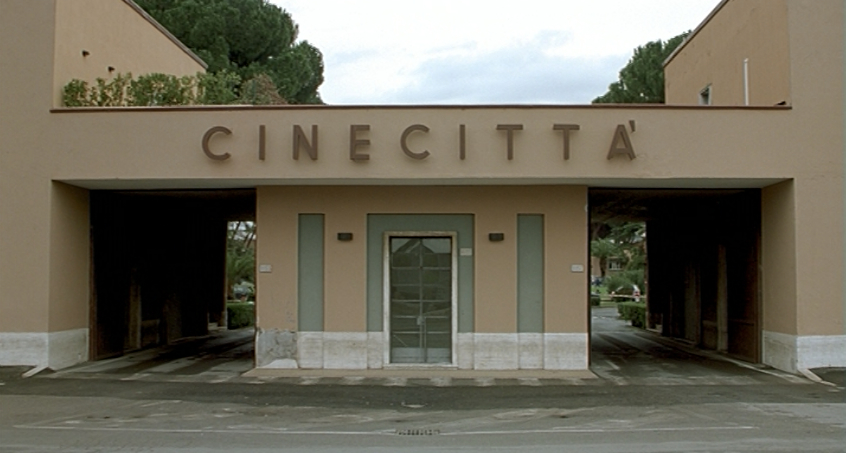
“Nothing ended. Nothing ever ends.” The voice of our protagonist. As in Ulysses’ Gaze, his name is A (Willem Dafoe), this time a director making a film about his parents’ perseverance in the post-Stalinist era. Sweeping through Italy, Germany, Russia, Kazakhstan, Canada, and the US, its manifold narratives take shape through soft address. A for anonymous. A for atrophy. A for apotheosis.
2013-05-14_0817

The film works on multiple levels. One finds A in the backwash of the tense politics that so fascinate him. His own film faces logistical difficulties, the weight of which, when combined with that of personal demons, seeks to break him. His anxieties shuffle into level two: his parents’ tale. Here the reality of cinema comes to life, indistinguishable from A’s own.
2013-05-14_0819

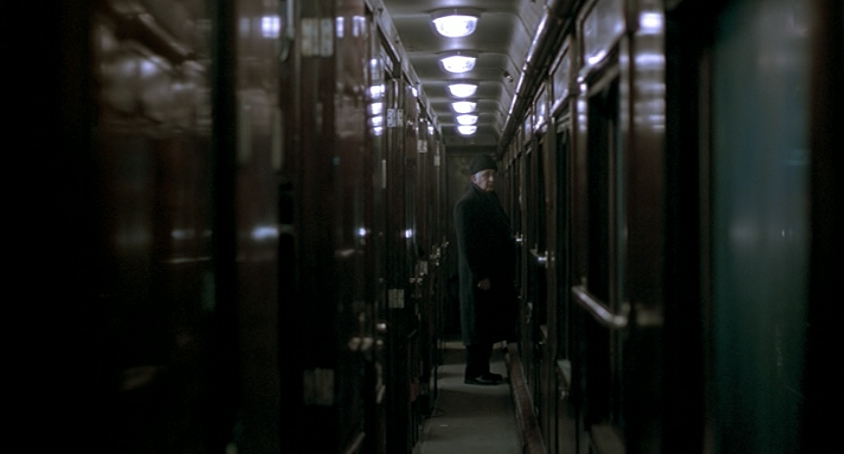
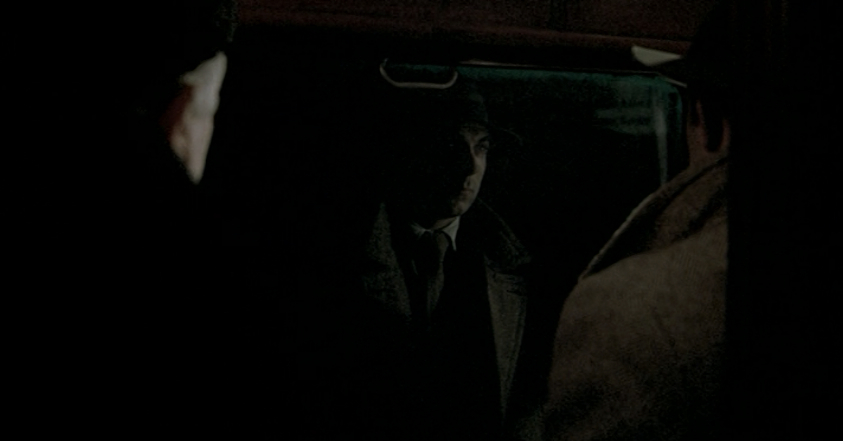
A clandestine exchange on a train introduces us to his father, Spyros (Michel Piccoli), whose twisting of the system has earned him an identity and the chance to see his beloved again.
2013-05-14_0821

2013-05-14_0836

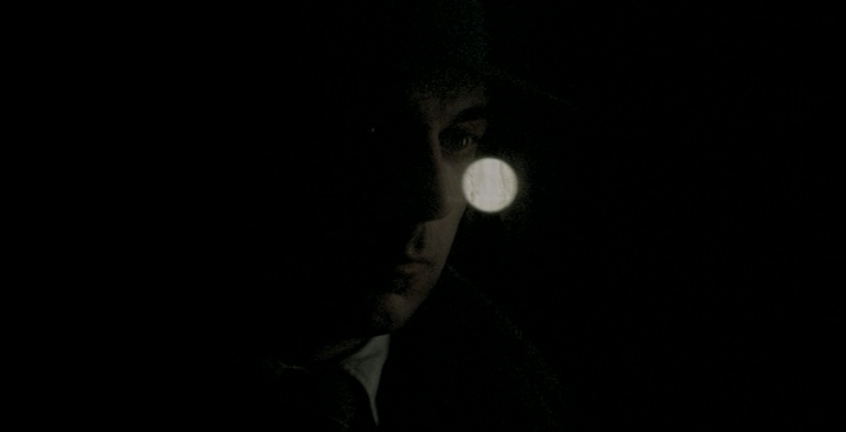
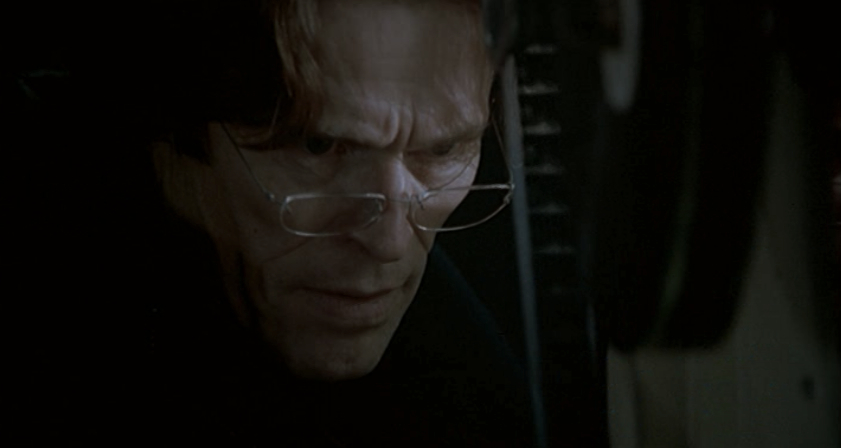
A man hands him a fake passport: “From now on, you’re playing with time.” Words to live by for A in the present, and a clue into the film’s title. Like the coating on old stock, dust plays with the imagery of our experiences in microscopic dances of light and shadow, holds those experiences like a bottle holds wine. As A watches archival footage of communist propaganda, a patch of light covers his eyes like a protective mask.
2013-05-14_0839b

As in so many moments of what follows, he bleeds into the biography he imagines. Witness in that alternate time his mother, Eleni (Irène Jacob). See the many border crossings etched into her face, the force of her abandon in the arms of the only other human being on her radar.
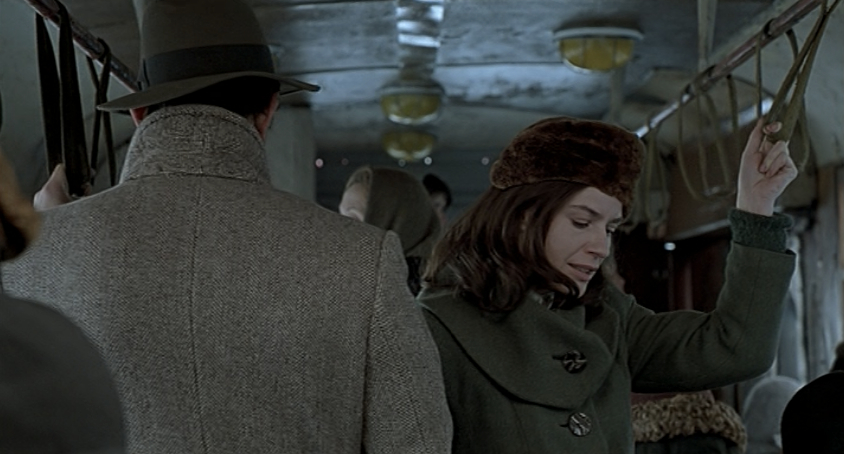
2013-05-14_0947

“It’s you. You’re here,” she says to Spyros, holding him at long last.
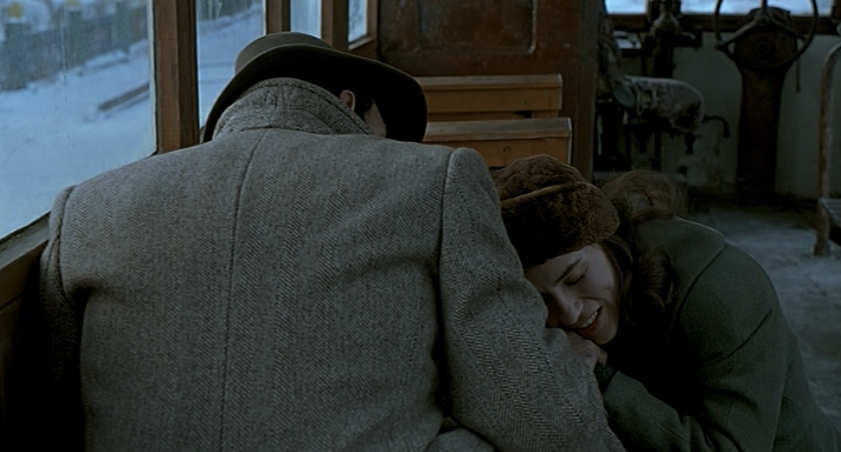
2013-05-14_0953

At the station, a crowd gathers before a statue of Stalin, disperses, and leaves us dangling in A’s pragmatic concerns.
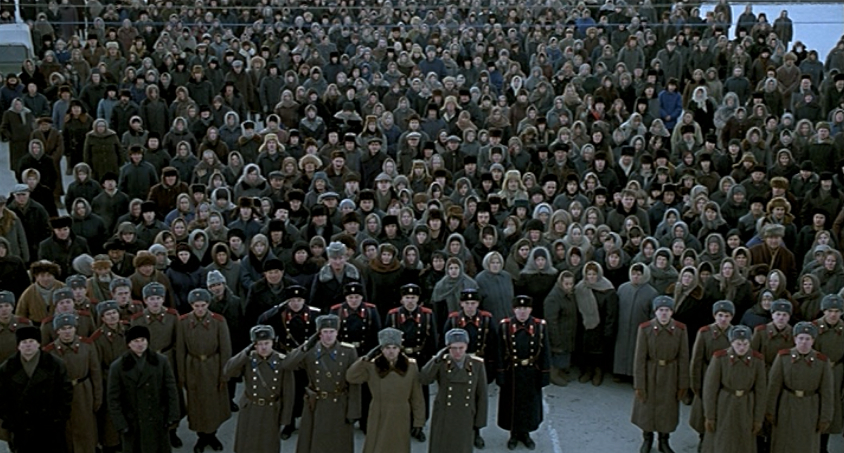
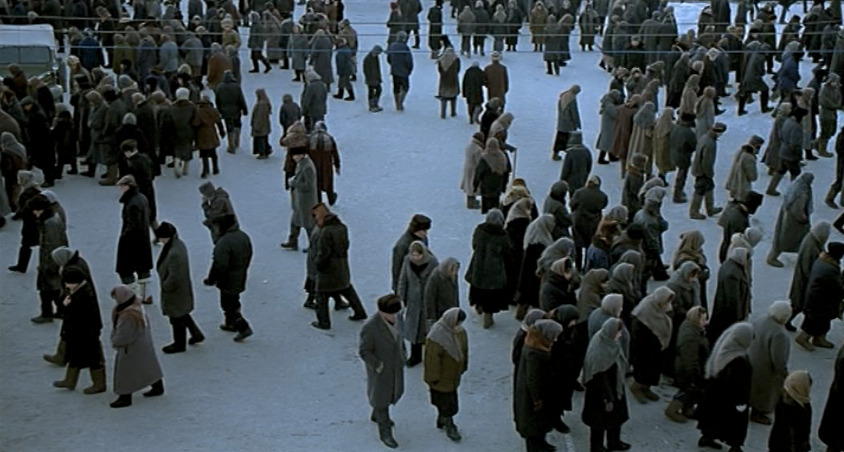
2013-05-14_1005

2013-05-14_1007

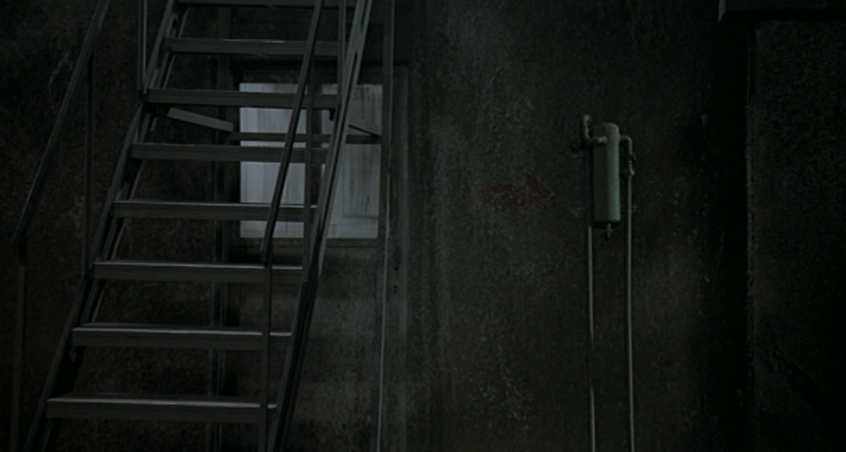
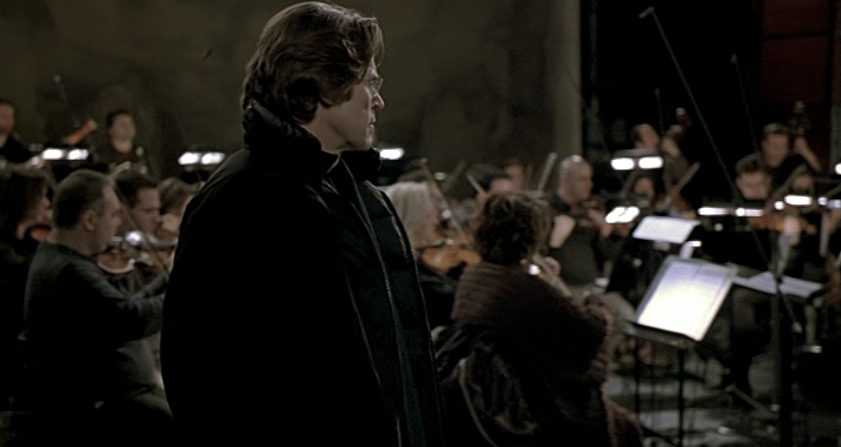
He surveys the margins of a soundtrack rehearsal, thus enacting one of Angelopoulos’s deepest intertextual sequences. Dafoe cues a melody for a dance in the film (a dance that comes later, in the comfort of water).
2013-05-14_1009

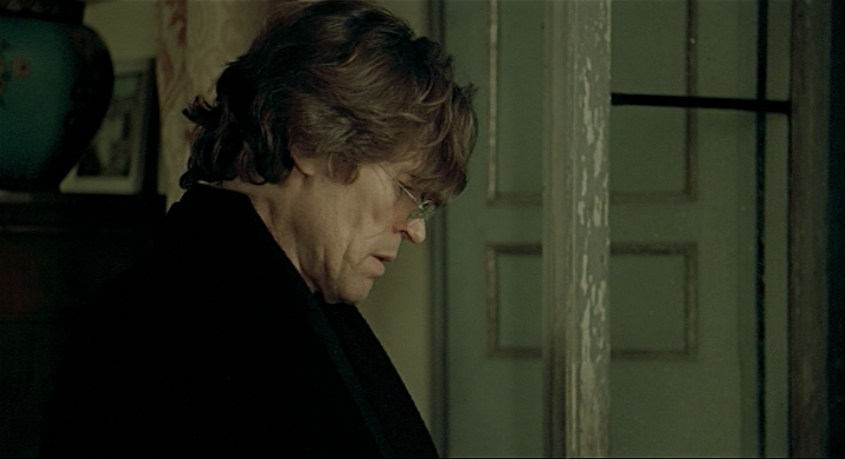
Although I hesitate to compare Angelopoulos to Tarkovsky, I cannot help but see the ringing phone that interrupts the rehearsal as an analogue to the unexpected call that startles the heart of the Zone in Stalker. Dafoe answers it, only to be confronted with voiceless street noise. He hopes it is his daughter, also named Eleni, and fills the studio with her name in vain. He returns home to find his daughter missing, and on her bed his mother’s lost letter to Spyros.
2013-05-14_1016

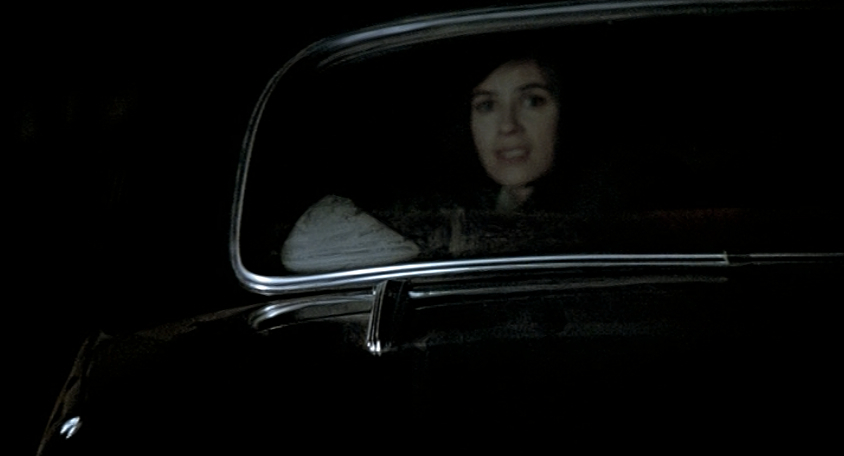
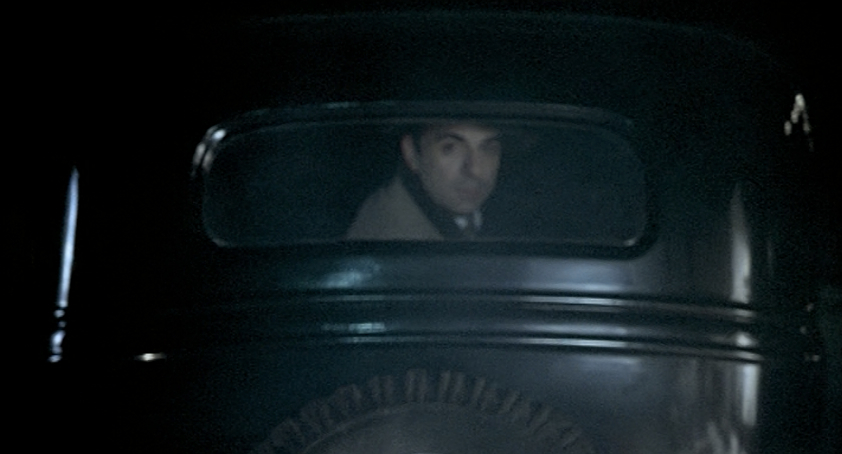
Back in their story, Spyros and Eleni are captured in the wake of their lovemaking, leaving only tire tracks and brokenness to show for their catharsis.
2013-05-14_1029

2013-05-14_1030

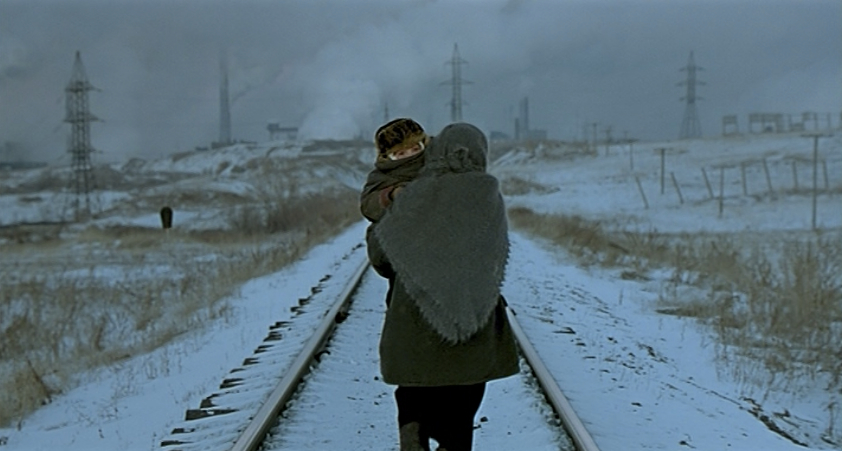
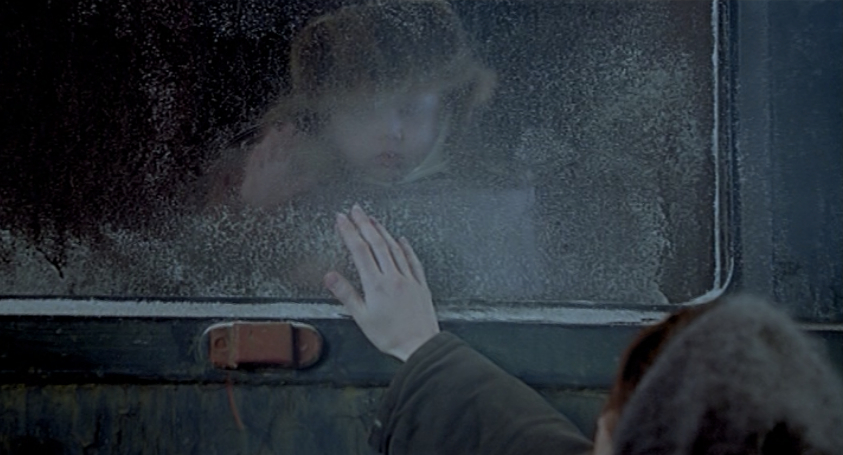
This inspires a series of letters that she knows will never reach him. She flees to Siberia with their son and puts him on a train to Moscow in the winter of 1956.
2013-05-14_1039 2013-05-14_1039b

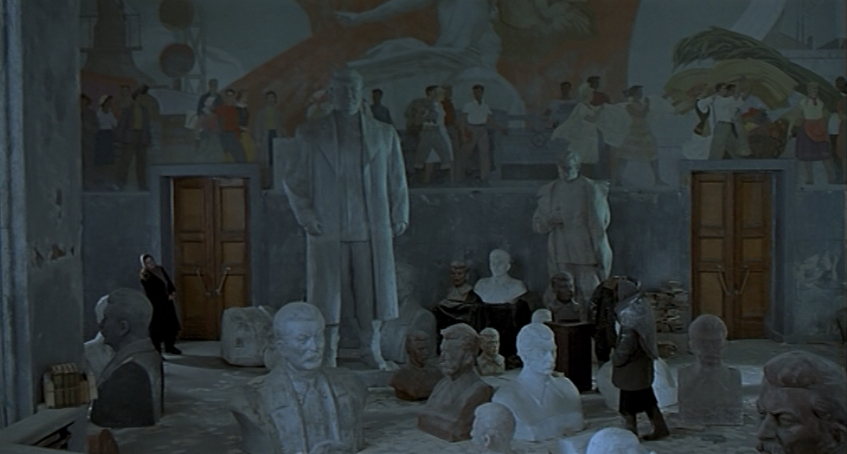
Her heart allows room for Jacob (Bruno Ganz), a man whose head is a museum of broken statues: monuments whose bodies have dilapidated yet whose messages resound.
2013-05-14_1043

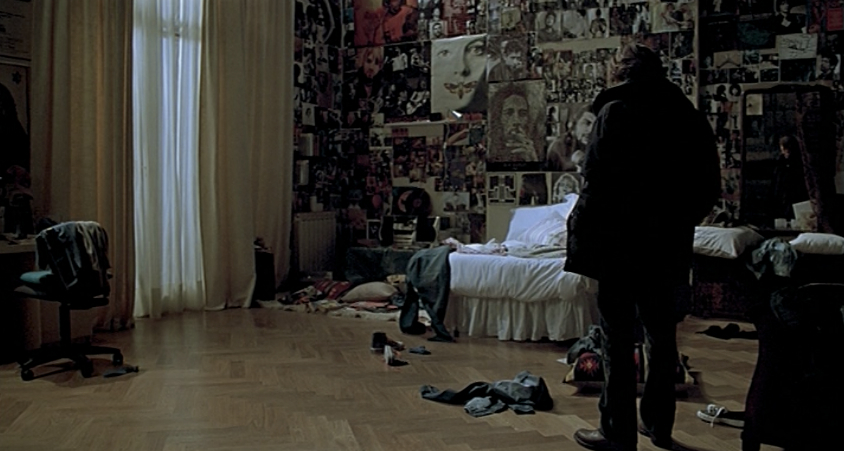
A’s daughter’s room is the physical equivalent. She has plastered her walls with heads of popular culture, each a window into aural upheaval and antidisestablishmentarian politic.
2013-05-14_1048

Like the soundscape that wafts in from the streets, they carry echoes of lost music, giving reason to a “strange anticipation” in A’s weary body. Together they are the song of a city greeting the new century. Later A stands before a movie theater, and in that moment realizes that his daughter’s collage is like the cinematic pantheon of which he is but a lost builder.
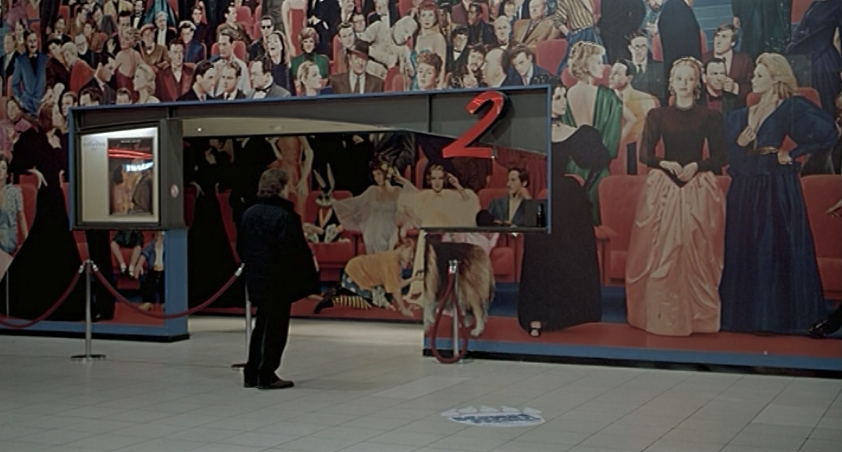
2013-05-14_1405

“For me there is no return. My destiny takes me somewhere else,” says Eleni to Jacob. She tells him to let her go, that no matter what happened between them she is someone else’s. Yet Jacob yearns for that return and finds its simulacrum decades later when Eleni and Spyros surprise A with a homecoming. It rings strangely hollow, however, and Jacob arrives in the hopes of reigniting what once so fleetingly was. (In a brief encounter, A admits to him, “I’m constantly traveling. Sometimes I don’t even know where I am.”) Jacob bears his soul to Eleni, invites her to touch the images burned into his mind. The trauma wells up in him. He raises his voice, as if he were onstage. He makes of life a theatre, replays scenes like an obsessed director.
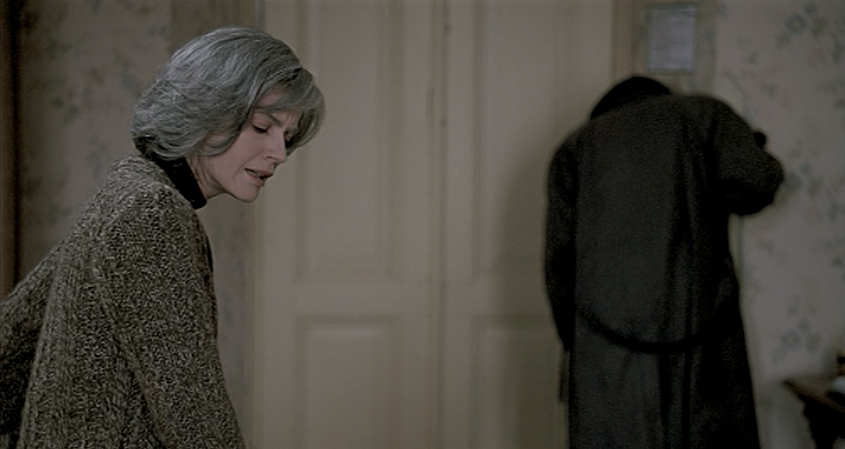
2013-05-14_1432

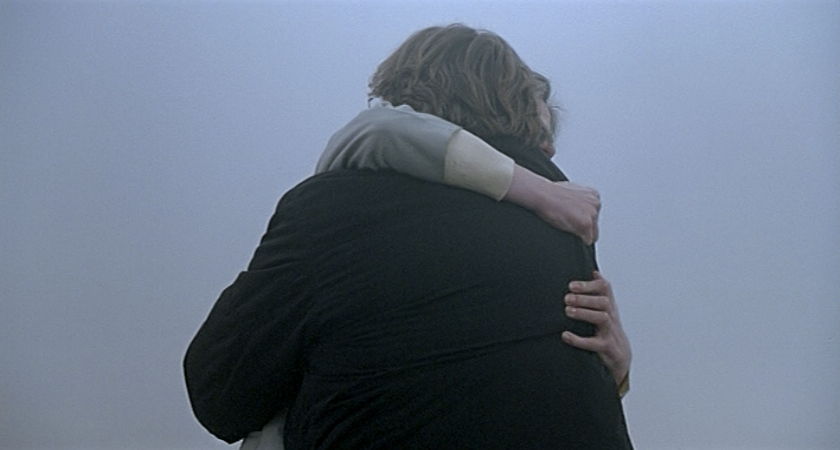
Only with this emotional breach does A gain access to his mother’s youth, finding her in the mist in violent embrace. The camera revolves around them, as would a planet around a sun.
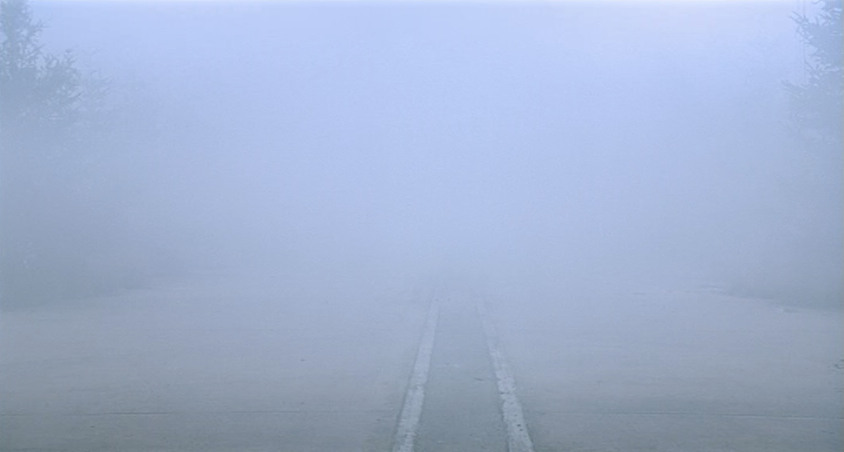
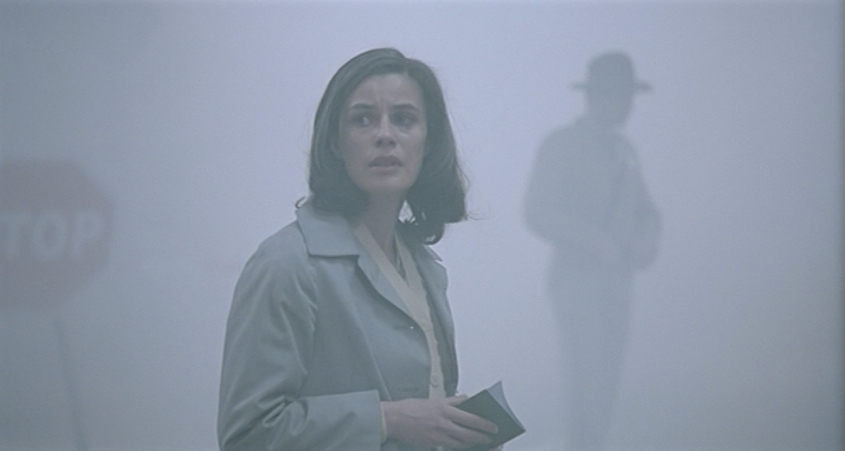
2013-05-14_1438 2013-05-14_1439 2013-05-14_1443 2013-05-14_1444

The final blow for him comes when his daughter threatens to end her life. In the presence of vagabonds and police, she gives in to her grandmother’s pleading, unlike Jacob who thereafter implores an invisible God before throwing himself into a river.
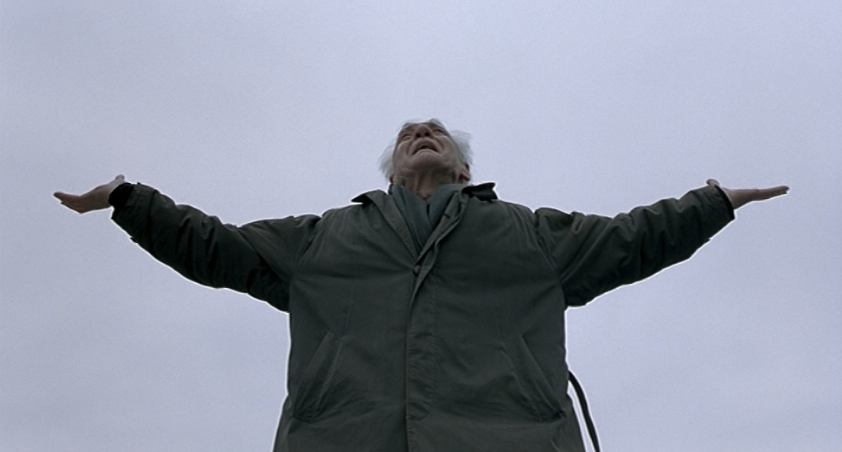
2013-05-14_1507

In the wake of these tribulations, A shares a ghostly moment, reflected on a passing car that bisects a line of eye contact with his ex-wife, Helga (Christiane Paul).
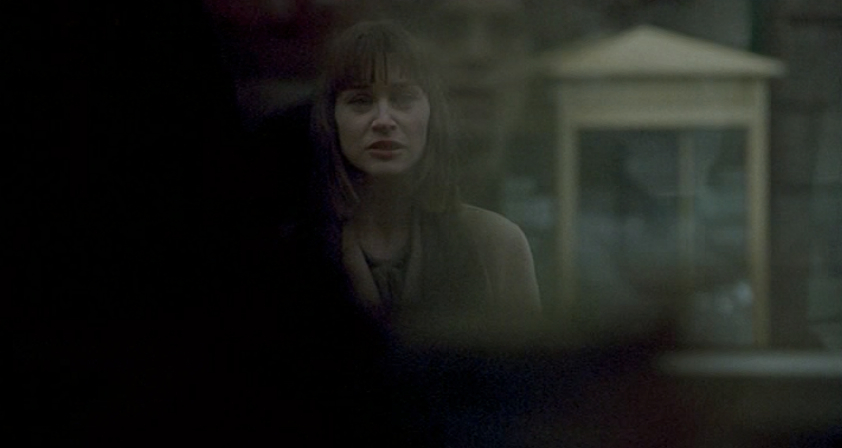
2013-05-14_1504

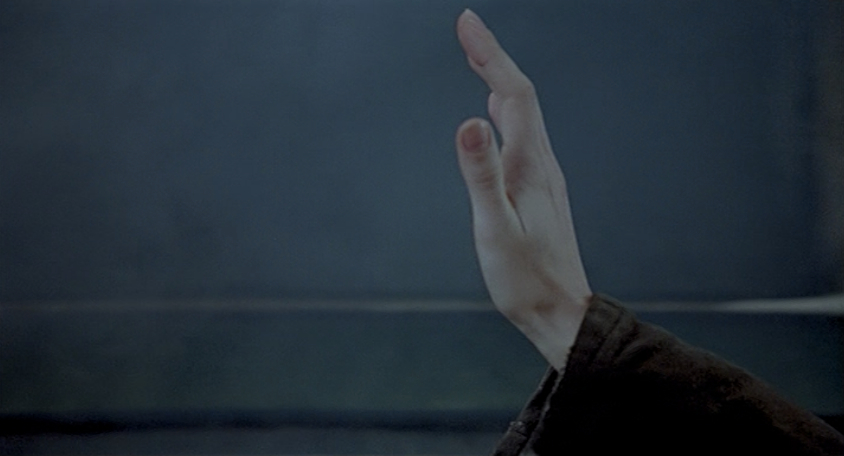
As Eleni falls ill, her hand drips with water.
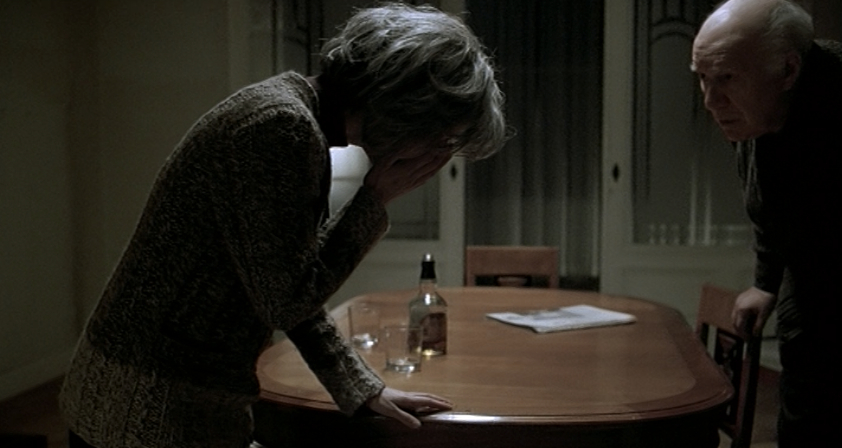
2013-05-14_1508 2013-05-14_1509

At her deathbed, a great wind floods the room with the exhalations of an impending storm.
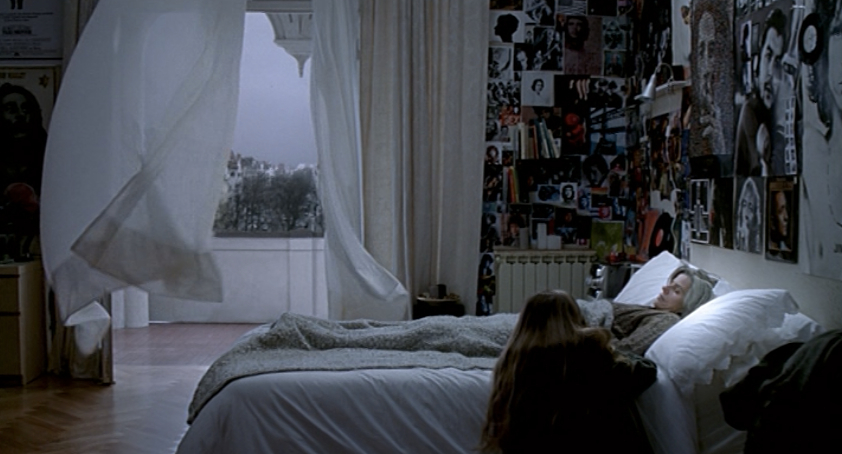
2013-05-14_1511

“Eleni, wake up,” says Spyro. “I’m coming to get you.” He reaches for her.
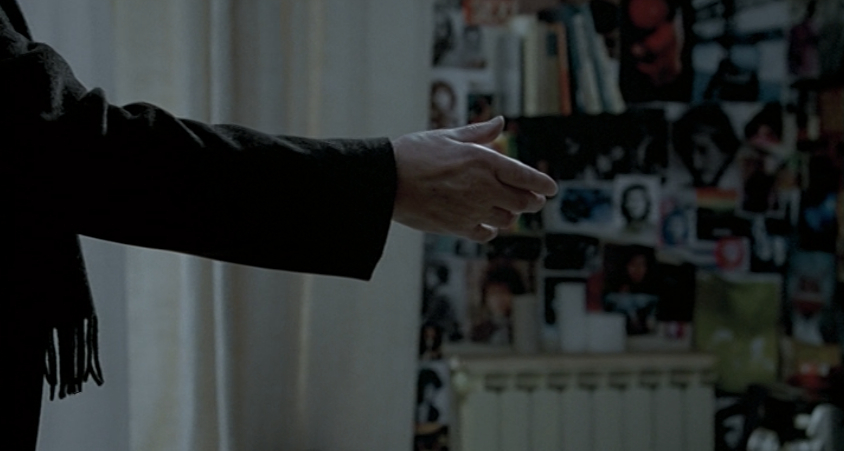
2013-05-14_1512

The girl takes his hand instead. It also drips.
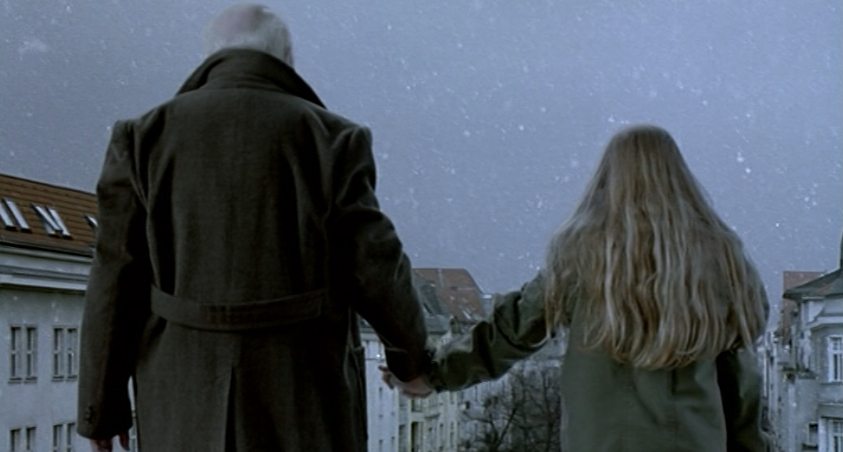
2013-05-14_1514

Here is where the film manifests a third level: the pliant corridor of death along which our feet will all someday tread. For as young Eleni and her grandfather step out of the window into the falling snow, we feel in their traversal of logical space an openness of reason. Hand in hand, they run through the streets, deserted like the universe.
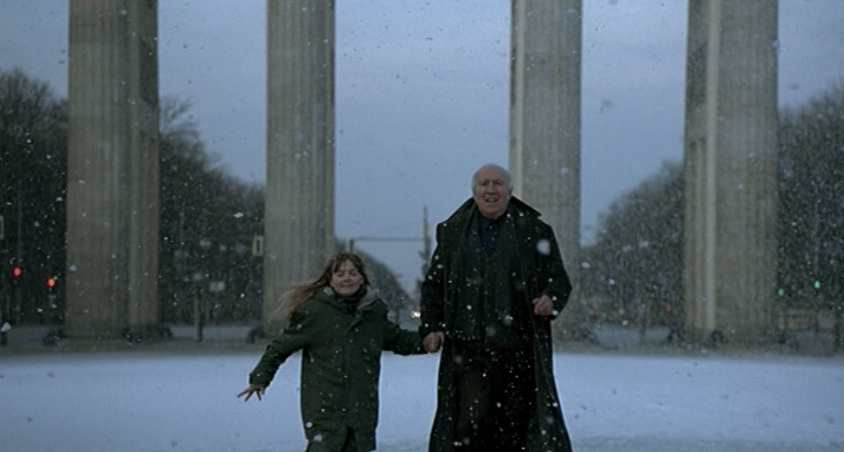
2013-05-14_1514b

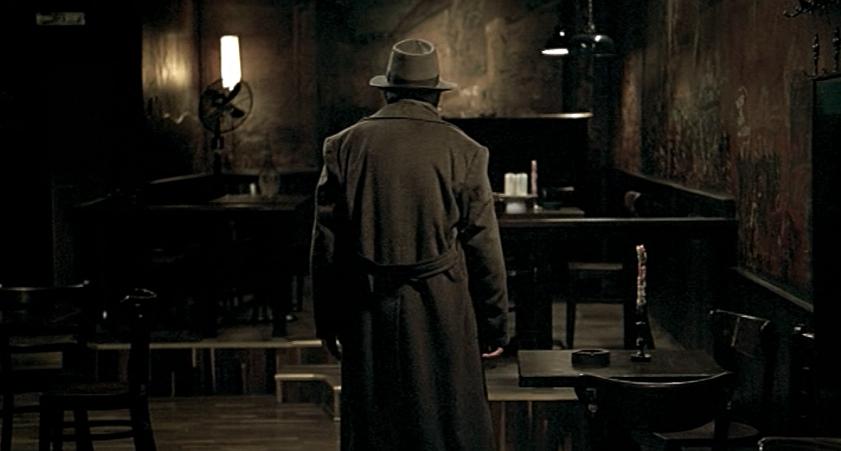
One can hardly discuss this film without noting Angelopoulos’s preference for back shots. Each portraits its respective character more insightfully than any close-up, and in the end shuffles our recollections until they unify.
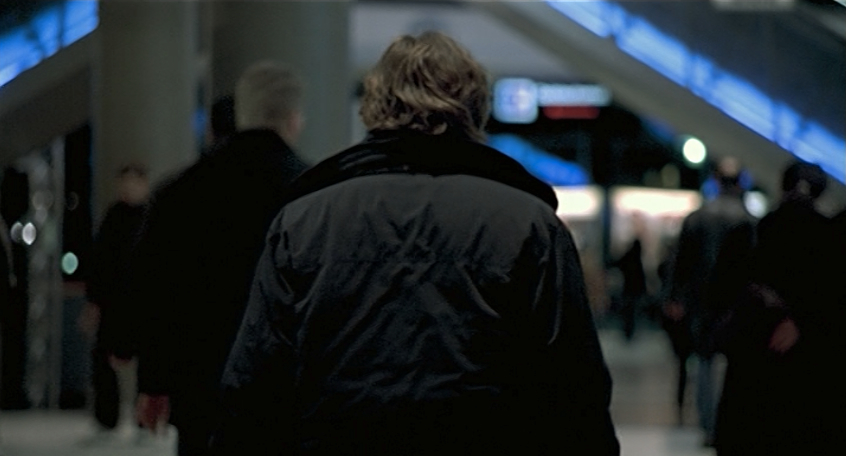
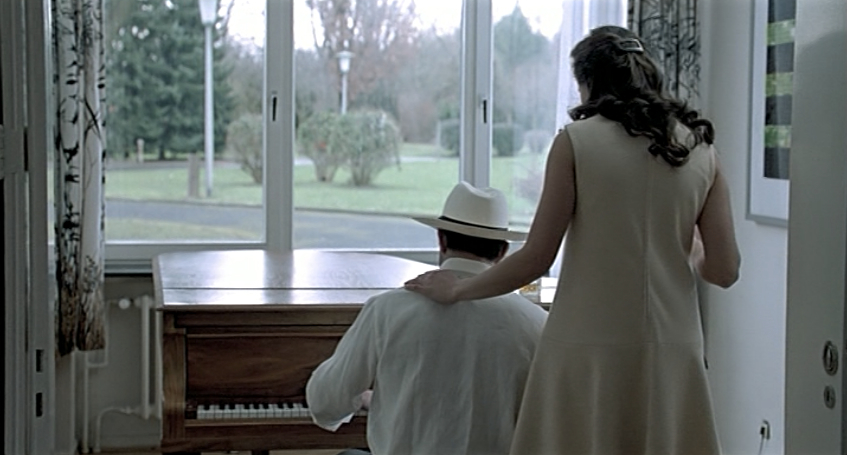
Back shot 1 Back shot 3 Back shot 2

Back shot 5 Back shot 6

A particularly moving example, however, is mother Eleni’s hair floating in the mist of her impossible reunion with A.
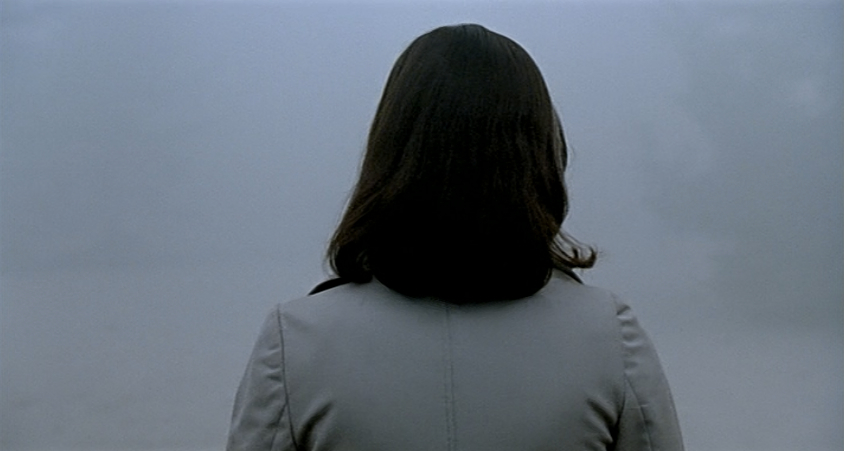
Back shot 4

She is creation incarnate, the bringer of tears where only there is desert. But what is a desert without its sky? That is where the music comes in.
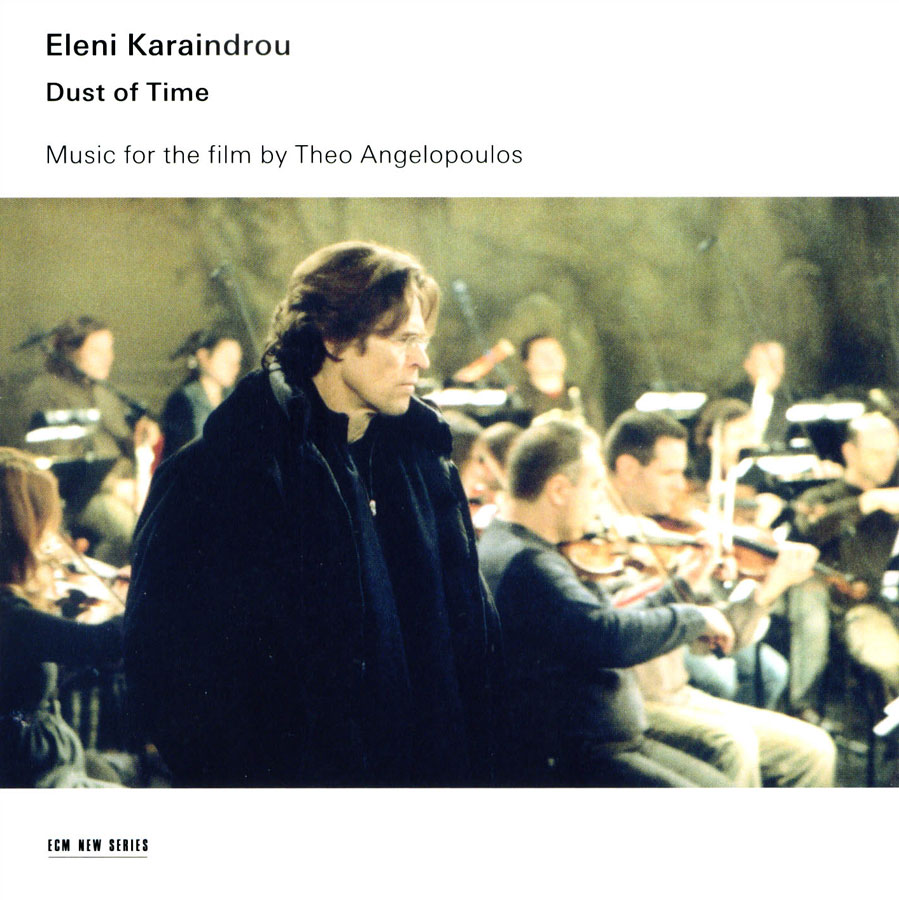
Dust of Time

Eleni Karaindrou
Dust of Time

Sergiu Nastasa violin
Renato Ripo violoncello
Maria Bildea harp
Vangelis Christopoulos oboe
Spyros Kazianis bassoon
Antonis Lagos french horn
Dinos Hadjiiordanou accordion
Eleni Karaindrou piano
Camerata – Friends of Music Orchestra
Natalia Michailidou piano
Hellenic Radio Television Orchestra
Alexandros Myrat conductor
Recorded January (tracks 9 and 15) & March 2008 at Megaron, Athens, Greece
Edited and mixed July 2008

Perhaps more than in any other film, Eleni Karaindrou’s score for Dust of Time wavers in the shadows. “To write the music I had to look for the film’s secret codes,” says Angelopoulos’s trusted composer, “I had to bring the essence of things to the surface and shed intense light on the sound colors underlining the timelessness of nostalgia.” This time the instrumental colors are most intimate, honed to evocative perfection by violinist Sergiu Nastasa, cellist Renato Ripo, and harpist Maria Bildea. Hailing from Romania and Albania, this trio brings its own traditions and nuances to a permeable set of motives. Of these, the “Dance Theme” and its variations figure centrally in both film and soundtrack. It is the music we hear in the pivotal rehearsal scene, homage to Karaindrou’s voicing and intuitive matching. “Waltz by the River” crystallizes the theme’s core values, adding accordionist Dinos Hadjiiordanou into the watercolor mix. As in so many of Angelopoulous’s films, dance animates the passage of time, the degradation of history, and the preservation of memory. Karaindrou’s attention to every movement wipes clean emotional dumping grounds for tragic pasts, purges war-ravaged biographies of their blood in single strokes.

Because the soundtrack’s 45 minutes were culled from over 100 minutes of music, what we encounter is a powerful skeleton. Between the harp and violin duet of “Le Temps Perdu” and the concluding oceanic currents of “Adieu,” Karaindrou figures the power of the melody with as much tact as her arrangements thereof. Along the way, threads unravel to reveal the tumult of wandering and exile in “Seeking,” while passages like “Solitude” speak in monosyllables of enchantment.
Dreams are not beyond us. They return. Like the old reels of A’s interest, they hold their images until the light of waking passes through them anew. Every picture, every note on a staff, is a voyage waiting to begin.

2013-05-14_1040

Chris Potter: The Sirens (ECM 2258)

The Sirens

Chris Potter
The Sirens

Chris Potter tenor and soprano saxophones, bass clarinet
Craig Taborn piano
David Virelles prepared piano, celeste, harmonium
Larry Grenadier double bass
Eric Harland drums
Recorded September 13-15, 2011 at Avatar Studios, New York
Engineer: James A. Farber
Assistant: Charlie Kramsky
Produced by Manfred Eicher

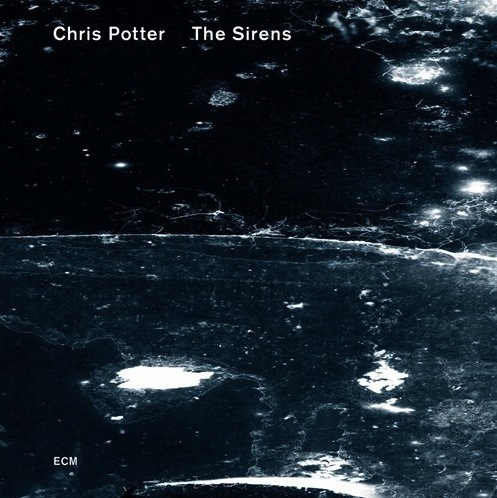
Saxophonist Chris Potter does Homer’s The Odyssey jazzily in his first leader date for ECM. Joined by pianists Craig Taborn and David Virelles, bassist Larry Grenadier, and drummer Eric Harland, he dips into a sea of changes and emerges with a row of gold coins in his mouth. It is one thing to read into his allusions and programmatic suggestions for what follows, quite another to take the music on its own terms in the heat of moment after delectable moment. Not only has he taken a concept and made it his own, but he has further let the concept have a life of its own. He’s unafraid to round the corners, darken the edges, and age the surface, so that each tune is fully weathered before it reaches us, despite its nominally spontaneous creation and oxidization. In such a context, his extroversion speaks a thousand tongues.

Sirens

From the start, “Wine Dark Sea” proves an apt descriptor of Potter’s tannined blowing and sets a tone for this smooth, eminently drinkable leader date (his first for ECM). The cinematic writing (all but the final track were penned by Potter) and rolling pianism get us into the textuality of things with a single reed as interpreter. Potter also opens the door for a far-reaching solo from Taborn, whose recognizable tickling brings a hip, modern edge to an otherwise classic sound. Matching this fine work is Virelles, whose prepared piano adds patina to “Wayfinder.” This ebullient track dashes more than a hint of its flavor from Pat Metheny and contrasts with the opener as a way of expressing Potter’s depth of execution.

On to “Dawn (With Her Rosy Fingers),” perhaps the only Homeric ballad in modern jazz. If we are tempted to read the urban sprawl into its matrix it’s only because Potter is so adept at rendering the ancient as if it were cotemporal with our awareness of it. Grenadier’s solo captures all of this and more, flipping rocks and mushroom caps like children in search of miniscule dreams. The progressive solo from Potter is a music lover’s dream come true: fresh, welcoming, sincere. He expands his versatility in the title track, for which he cracks open a vintage bottle of bass clarinet and lets its notes air. The attention to detail is sublime, even if the music is more than that. One might expect the call of the eponymous sirens to be ethereal, floating, and divine. Yet while the bass clarinet certainly possesses these qualities in its forested way, it is perhaps not the first instrument we might choose to evoke such iconic allure. What we experience, then, is not the call per se but the wrenching thrill of that call at the cellular level, of the biological fists that clench in response to it. We feel this especially in the arco bass solo, which threads its own curse, as if on the verge of blackout. And even when the calls themselves are realized by way of tenor, the steadiness of Potter’s breath enacts a decidedly secular enchantment. That same tenor flows through the veins of the penultimate “Stranger At The Gate” (a more complexly singing track that fits Taborn’s pointillism into a lovely trio progression) and gives the disjointed “Kalypso” an epic cast. The latter’s boppish ending throws us like a stone into moonlit water.

Potter dons the sopranist’s hat in “Penelope” and “Nausikaa,” both of which give us aerial views of the album’s topography and narrative arc. Potter’s squint-worthy changes and chromatic playing flower intently, towering but never domineering. Virelles evokes the princess’s footsteps via celeste, running with piano down the slopes—only in this valley of the wind there is only music. He and Taborn settle the tab with “The Shades,” a shimmering sunset of celeste and piano only.

The Sirens showcases Potter’s most mature writing yet. His tone is robust yet crisp, weighted yet dancing. He bears his improvisatory toolkit most admirably, going from legato chains to piercing wails at the flip of a tunic. His panache is never hackneyed. This the seasoned Potter fan will already know. What separates his saxophonism on this album apart is its commitment to story arc. How appropriate he should pick a tale that survived for so long through oral preservation alone. In meshing these two “texts”—the spoken and the written, the improvised and the composed—he continues that tradition, cutting into it a rift of personal experience into which we are welcome to pour our own. And indeed, Potter structures these pieces as any good storyteller would: with introductions that hook us in and with characters that come and go as they would in real life. This is the magic of The Sirens: in mining a classic of world literature, Poptter frees its personages and places from the bondage we might expect of them. Led by motives as gnarled as the oldest roots, they wander, never lost as long as they are heard.

Writing as I am in Ithaca (New York, that is), I cannot help but feel self-indulgent in loving this scintillatingly recorded disc. Its spacious, verdant music-making has as many tales to tell as there are people to hear them. Wherever ECM might take you, be sure to spend the night here at least once in your odyssey. Destined to be a classic.

(To hear samples of The Sirens, click here.)