Alice Zawadzki/Fred Thomas/Misha Mullov-Abbado: Za Górami (ECM 2810)

Alice Zawadzki
Fred Thomas
Misha Mullov-Abbado
Za Górami

Alice Zawadzki voice, violin
Fred Thomas piano, vielle, drums
Misha Mullov-Abbado double bass
Recorded June 2023 at Auditorio Stelio Molo RSI, Lugano
Engineer: Stefano Amerio
Cover painting: Emmanuel Barcilon
Produced by Manfred Eicher
Release date: September 13, 2024

Collected on our travels and taught to us by our friends, these are songs we have learnt and loved together. Gathered from Argentina, France, Venezuela, Poland, and the deep well of Sephardic culture, these folk tales speak to the moon, the mountains, the rain, the madness of humans, and the prophecies of birds.

The above is more than a collective artist statement from Alice Zawadzki (voice, violin), Fred Thomas (piano, vielle, drums), and Misha Mullov-Abbado (double bass). It’s also an example of how traditions, regardless of geographical distance, are organs of a larger body. Said body is literal, not metaphorical, insofar as it connects all of humanity at the internal level (the blood), even when the external (the voice) seems so disparate. The album’s title, Za Górami, says the same. Although it translates to “Behind the Mountains,” it is the Polish idiomatic equivalent of “Once upon a time…,” less a prompting of place than of possibility—not unlike the selections gathered here.

Within the trio’s curation of material, there is a liberal sprinkling of Sephardic songs. And yet, while some of the most well-worn treasures of the repertoire, including “Los Bilbilikos” (The Nightingales) and the lullaby, “Nani Nani,” are to be expected, the tact of each arrangement is remarkable. Even when the latter builds to an almost rapturous conclusion, it never loses sight of slumber’s healing effect. Such restraint is only made possible by a receding musicianship that lets the verses speak for themselves. This is increasingly rare to hear in Ladino programs, which can feel over-arranged as early music ensembles seek to outdo one another, favoring the interpreters over the interpreted. Not so in the hands of Zawadzki, who pours vocal plaster into “Dezile A Mi Amor” (Tell My Love) and “Arvoles Lloran Por Lluvias” (The Trees Weep For Rain) as if they were footprints in a landscape to be disturbed as little as possible. The tone and shape she brings to even wordless improvisations constitute natural delineations of their source material.

In Gustavo Santaolalla’s “Suéltate Las Cintas” (Untie The Ribbons), we find a most suitable modern companion. Steeped in the composer’s characteristically cinematic qualities, it lends itself to broader strokes in an instrumental economy. Thomas’s pianism is a warm evening breeze that equalizes the ambient air of its chamber and the lovers breathing it in. Its denouement alongside Mullov-Abbado’s heartbeat weaves a veil of privacy before Zawadzki renders their ecstasy a poetic afterimage. Another kindred spirit awaits in “Tonada De Luna Llena” (Song Of The Full Moon) by Venezuelan singer Simón Díaz, which yields some of the most evocative descriptions:

I saw a black heron
Fighting with the river
That’s how your heart
Falls in love with mine

The moon, even when not explicitly mentioned, is a constant presence in these songs, shining on the maiden in “Je Suis Trop Jeunette” (I’m Too Young, after Nicolas Gombert) who dreams of being swept away from her family. Her internal conflict is only heightened by the prepared piano in the upper registers, which carries over into the title song by Zawadzki, after the Polish traditional about a girl who defies her mother and ends up dancing her life away. “Gentle Lady,” Thomas’s setting of James Joyce, is a folk song in and of itself, stepping out of time to unravel its literary knot with grace.

ECM listeners familiar with the label projects of Savina Yannatou, Arianna Savall, and Amina Alaoui will feel swathed in comfort here, even as they are caught up in the unique flow that only this trio can bring forth from the hillsides of their wanderings. How fortunate we are that their paths have aligned on this side of the mountains.

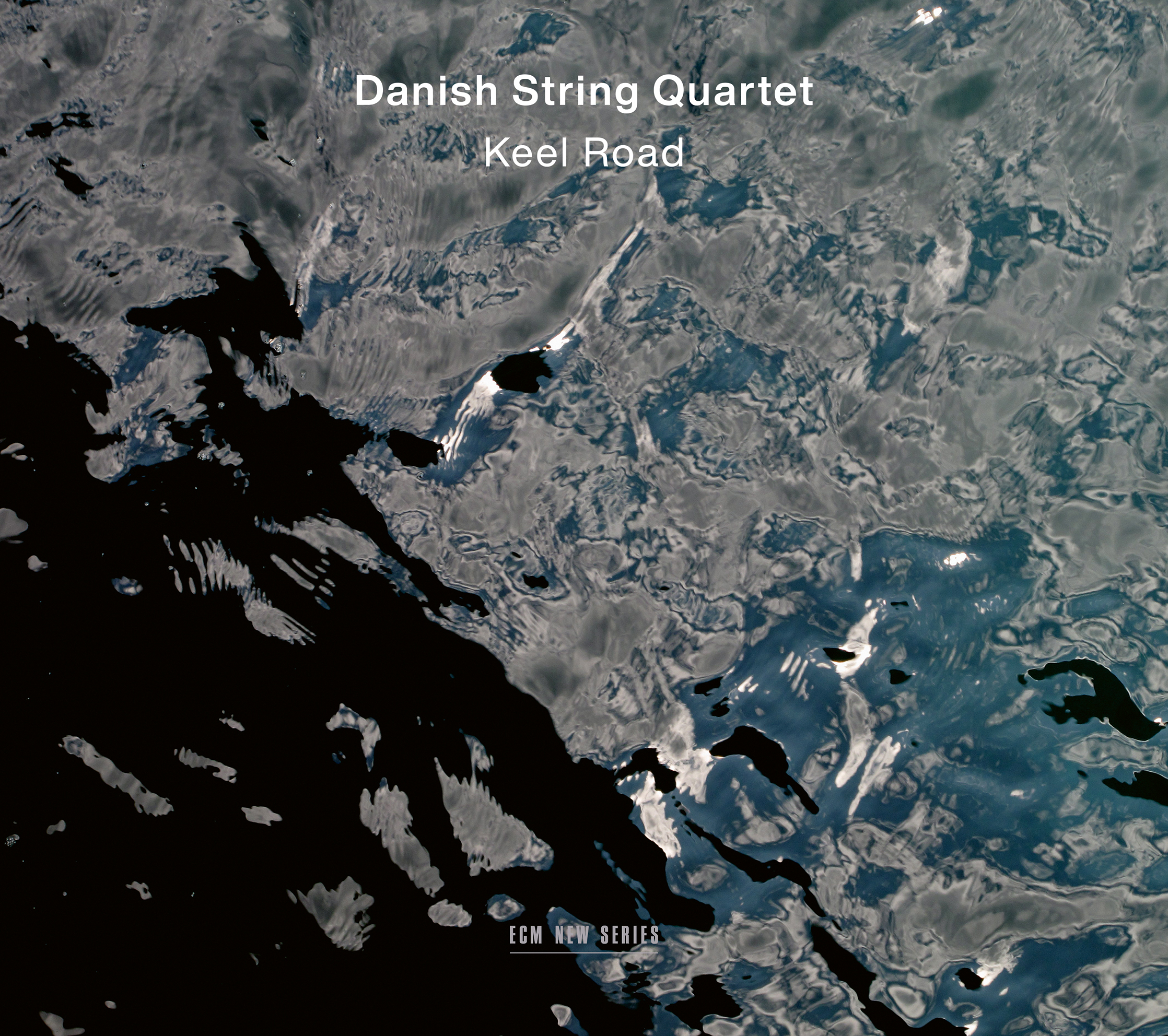
Danish String Quartet: Keel Road (ECM New Series 2785)

Danish String Quartet
Keel Road

Rune Tonsgaard Sørensen violin
Frederik Øland violin
Asbjørn Nørgaard viola
Fredrik Schøyen Sjölin violoncello
Recorded November 2022
The Village Recording Studio, Copenhagen
Engineer: Thomas Vang
Recording supervision: Guido Gorna
Mixed at Bavaria Musikstudios, München
by Rune Tonsgaard Sørensen, Guido Gorna, and Michael Hinreiner (engineer)
Cover photo: Nadia F. Romanini
Executive producer: Manfred Eicher
Release date: August 30, 2024

Folk music and its sensibilities have always been the Danish String Quartet’s guiding star, as they likely were for many of the composers whose works they champion. Over the years, they’ve amassed a collection born of their love for songs of the people, and at last, in Keel Road, we have an ECM New Series program dedicated to this facet of their creative spirit. Through a selection of tunes themed around the North Sea, touching not only Scandinavia but also the Faroe Islands and beyond to Ireland and England, and featuring additional instruments (including spinet, harmonium, bass, and clog fiddle, all played by the DSQ), we are treated to a cornucopia of colors and flavors.

“Mabel Kelly” by Turlough O’Carolan (1670-1738) eases us into this sound-world with a simple fable rendered with deep reflection. Other melodies by the legendary Celtic harpist from County Meath trailmark the journey that follows. From the programmatic “Carolan’s Quarrel With The Landlady” (Terry Riley after a little too much Jameson, perhaps?) to “Planxty Kelly,” his penchant for emotionally attuned textures is only heightened in the present renderings, fitting snugly in the company of the English traditionals “Lovely Joan,” in which pizzicato intersections cast a net for dreams, and “As I Walked Out,” where delicacy and sharpness mesh harmoniously.

Denmark gets placed under the microscope of “Pericondine,” a dance that moves with tender force. Despite the clean, modern production, it conveys a raw quality before shifting into the joyful “Fair Isle Jig” by lead violinist Rune Tonsgaard Sørensen. It’s one of a few such mashups, including an old archival recording of “En Sokamger Har Jeg Været” that presages Sørensen’s denouement thereof in “Once A Shoemaker.” Wordless vocals add to the cinematic tint of its imaginativeness. The pinnacle of this form, and of the album as a whole, is the triptych formed by “Marie Louise” (Danish traditional), “The Chat” (co-written by Sørensen and cellist Fredrik Schøyen Sjölin), and “Gale Warning” (Sørensen). Starting with mid-tempo urgency, it rides the rails through mountains in search of something lost before resolving into an oncoming storm.

Even with such gems as “Når Mitt Øye, Trett Av Møye,” in which a harmonium enhances the hymnal qualities of the DSQ’s haunting arrangement, one might hardly tell the past apart from the future as eras intermingle in the studio. A most welcome surprise in this regard is the tune “Stormpolskan” by Ale Carr, who joins on cittern alongside Nikolaj Busk on piano, thus bringing together one of my favorite folk ensembles, Dreamers’ Circus. How wonderful to see them under the ECM banner, doing what they do best.

Savina Yannatou: Watersong (ECM 2773)

Savina Yannatou
Watersong

Savina Yannatou voice
Lamia Bedioui voice
Primavera en Salonico
Kostas Vomvolos qanun, accordion
Harris Lambrakis nay
Kyriakos Gouventas violin
Yannis Alexandris oud
Michalis Siganidis double bass
Dine Doneff percussion, waterphone
Recorded March 2022 at Sierra Studios, Athens
Engineer: Yiorgos Kariotis
Mastering: Christoph Stickel
Cover photo: Woong Chul An
Album produced by Manfred Eicher
Release date: April 11, 2025

For her fifth ECM album, Greek singer Savina Yannatou returns with a collection of songs themed around water. Spanning the European continent and beyond, her sources draw from wells of uniquely situated cultures and traditions, where the elemental force that sustains us can be at once beatific and menacing. Along with her mainstay musicians, Primavera en Salonico, she is joined by Tunisian singer Lamia Bedioui, last heard alongside Yannatou on Terra Nostra, and whose Arabic inflections lend interlocking contrast to the Mediterranean flavors.

The soul of the set list is to be found in the Greek material, of which “The Song of Klidonas” brings that distinctive voice into frame, while violin and oud dot the sky with extra stars. Yannatou links these into a storyboard of constellations. Similar vibrations abound in “The Immortal Water,” which moves like a body in the throes of unrequited love, while “Kalanta of the Theophany” turns a solemn carol into a jazzy free-for-all. Yannatou and her band further skirt the edges of interpretation in “Perperouna,” which describes water as something prayed for to ensure a harvest for survival. A percussive backdrop lends uplift, violin and nay soaring as birds catching a tailwind.

While island hopping from Cyprus (“Ai Giorkis,” a hymn to Saint George) to Corsica (“O onda,” a paean to ocean waves and distant storms by G. P. Lanfranchi), we encounter a gallery of moods, times, and places, including “Sia maledetta l’acqua” (Cursed Be the Water), a playful 15th-century gem, plus two journeys farther north. In the Gaelic “An Ròn” (The Seal), the qanun plays the role of harp, filling the air with shades of green and blue. And in “Full Fathom Five,” Robert Johnson’s 17th-century setting of words from Shakespeare’s The Tempest, percussionist Dine Doneff plays the waterphone for a haunting evocation of entropy. But nowhere is the beauty so deep as in “A los baños del amor” (At the Baths of Love). This anonymous ballad from 16th-century Spain configures water as a sign of loneliness, a space to drown one’s sorrows. It is also something of a sister to “Con qué la lavaré?” (With What Shall I Wash It?) by El Cançoner del Duc de Calabria (1526-1554), another astonishingly lyrical melody, held in the most delicate of frames. It expresses that same sense of solitude, but with a hint of resignation to fate. 

Bedioui’s contributions are worlds unto themselves, especially because of the bridges they build. “Naanaa Algenina” (Garden Mint), an Egyptian traditional from Aswan, finds a suitable partner in “Ivana” from North Macedonia. Where one opens in duet as a moonflower, the other turns mystical in its freer geographies. “Mawal” (To the Mourning Dove, I Said) sets the poetry of Aby Firas al-Hamdani (10th century) to music by Iraqi singer-songwriter Nazem al-Ghazali, meshing Bedioui’s spoken word with Yannatou’s improvisational underlayment, hand drums marking the unprimed canvas with their ink. Finally, “Alla Musau” (God of Moses), a Nubian song about baptizing infants in the Nile, is interwoven with the African American spiritual “Wade in the Water.” The result is unexpected and wondrous.

As always, Primavera en Salonico’s chameleonic abilities are as free as they are precise. Playing both an anticipatory and reflective role, the band unpacks as many vocal implications as possible without the aid of words. Of the same mind, they walk in unison, even as their speech draws lines between increasingly disparate tongues.

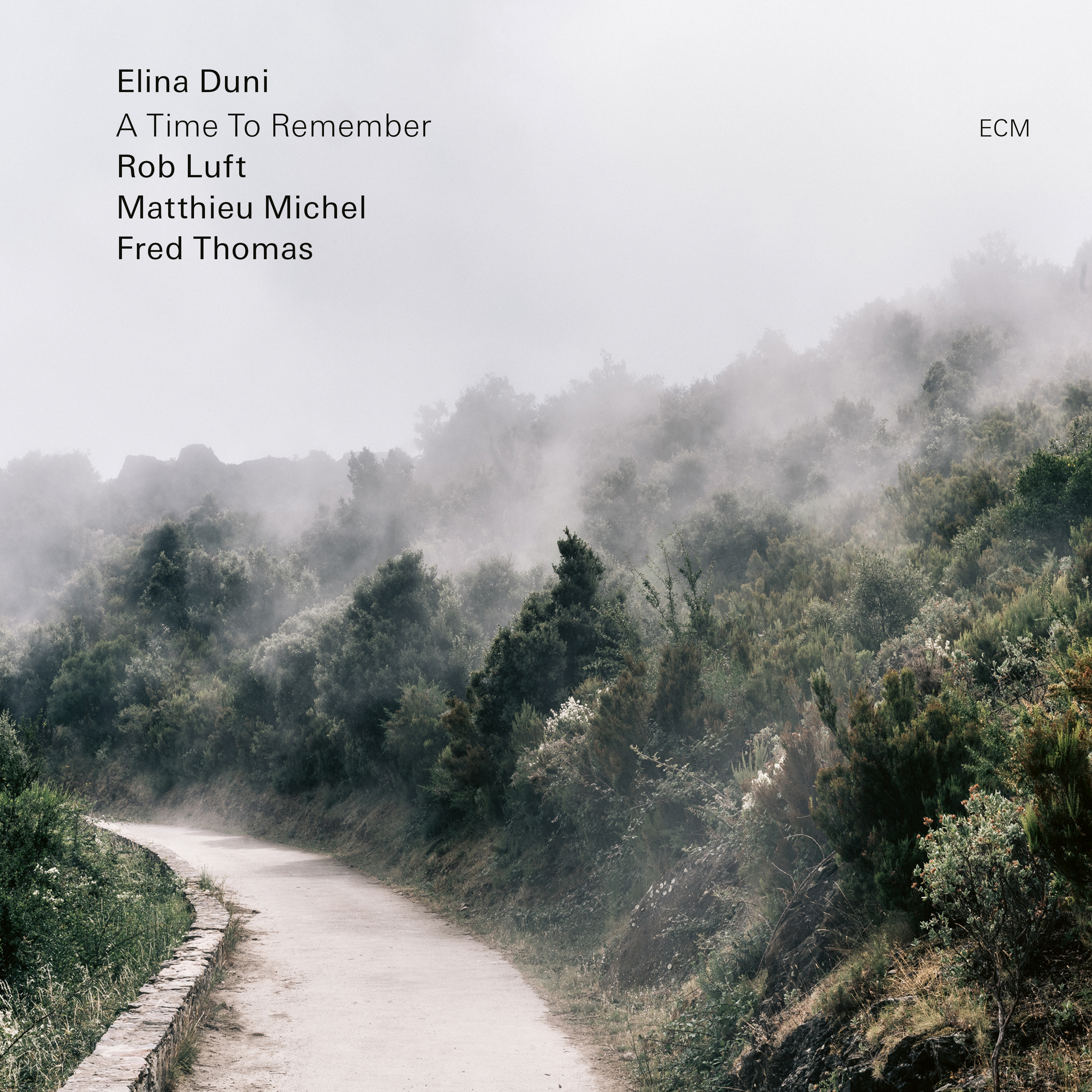
Elina Duni: A Time To Remember (ECM 2781)

Elina Duni
A Time To Remember

Elina Duni voice
Rob Luft guitar
Matthieu Michel flugelhorn
Fred Thomas piano, drums
Recorded July 2022 at Studios La Buissonne, Pernes-les-Fontaines
Engineer: Gérard de Haro
Mastering: Nicolas Baillard
Cover photo: Nicolas Masson
Executive producer: Manfred Eicher
Release date: June 16, 2023

And I will face the sea
that will bathe the pebbles.
Caresses of water, wind and air.
And light. Immensity.

So begins A Time To Remember, the latest box of newly minted coins to be placed alongside the others that singer Elina Duni has contributed to the ECM treasury. The song, “Évasion” (Escape), with music by Duni and guitarist Rob Luft and lyrics by Belgian-Israeli poet Esther Granek, is a paean to the stripping of hearts and minds down to their barest elements. Admirers of 2020’s Lost Ships will find the band more cohesive than ever, four hedges whose shapes have expanded and intertwined into one larger formation. Multi-instrumentalist Fred Thomas contributes flowing pianism to the set’s opener, while Matthieu Michel adds a voice of his own through the flugelhorn, all of it cradling Duni’s journey from wave to wave, carrying eras of history compressed into every exhalation. On the next shore awaits “Hape Derën” (Open The Door), one of two Albanian traditionals on the program, the other being the enchanting “E Vogël” (Little One), in which Duni and Luft weave through the air as birds in flight. Thomas adds light drums and percussion to this scene of domestic comforts, while Duni’s voice is as delicate as rice paper, softening the glare of remembrance from beyond the pale. “Mora Testinë” (I Grabbed The Water Jar), a folksong from Kosovo, completes the ancestral triangle with whims of flirtation and potential romance, Luft’s guitar sailing crystalline waters, as Duni and Michel move forth in unison of theme and purpose.

Singer and guitarist are the primary creative forces behind the texts and composing, respectively. The title song is one of a quadriptych from their adoring collaboration. Recalling the great folkish ballads of the 1960s and 70s (I sense the fingerprints of Tim Buckley or even Dan Fogelberg), it finds collective purpose in its individualism, where the love one shares with another, soul to soul, stands as the only monument to a world where towers and altars and fallen into dust. Meanwhile, “Whispers Of Water” and  “Sunderland” offer dreamier energies, the latter nestled in more quotidian surroundings:

Cars and spaces
Concrete erases my state of mind
But somehow
The heart is on rewind

This is the core of their navigation, where a split between the flesh and the environments it inhabits functions as its own safety net. Even the wordless “Dawn” transpires as a meditation, the meaning of which is never in doubt.

A curated smattering of touchpoints rounds out the story arc. Charlie Haden’s “First Song” finds the musicians in the most fragile mode, letting the innocence of Abbey Lincoln’s heartfelt lyrics blossom without getting in the way of their fragrance. Even Luft’s fuzzy electric works beneath the voice rather than through it. The Stephen Sondheim classic “Send In The Clowns” stands out as a surreal addition. To hear something so mainstream takes us out of body. Like “Put On Your Sunday Clothes” in the opening of the Disney/Pixar film WALL-E, it’s almost as if the world for which it was created is gone. Instead, it exists on its own terms, haunting outer space with echoes of a planet left to die. “Mallëngjimi” (Nostalgia), with music/lyrics by Rashid Krasniqi, expresses a kindred longing for an Albania that no longer exists. Even the unison of flugelhorn and voice, expanded by pianistic harmonies, can only be a closed circle. The standard “I’ll Be Seeing You” is another step out of time. It’s as if the Great American Songbook were an unfinished sentence on the tip of the cosmic tongue. Accompanied only by acoustic guitar, Duni’s voice recedes, forever unrequited.

Just as light and shadow need each other to survive but never fully comingle, each song on A Time To Remember gives shape to the rest. Their unity is born in contrast, taking shape as one of my top ECM albums of the decade.

Sinikka Langeland: Wind And Sun (ECM 2776)

Sinikka Langeland
WInd And Sun

Sinikka Langeland vocals, kantele, Jew’s harp
Mathias Eick trumpet
Trygve Seim tenor and soprano saxophones
Mats Eilertsen double bass
Thomas Strønen drums
Recorded June 2022 at Rainbow Studio, Oslo
Engineer: Martin Abrahamsen
Mixed at Bavaria Musikstudios, Munich
by Sinikka Langeland, Guido Gorna, and Michael Hinreiner
Cover photo: Dag Alveng
Produced by Guido Gorna
Release date: September 15, 2023

It walks and walks
and all the dead are with us
the dead too walk and walk
in us

–Jon Fosse

Sinikka Langeland has given breath to lungs far beyond the inner sanctum of the body, both through her salt-of-the-earth singing and unmatched touch of the kantele. And while she is ever an unfettered soul, unafraid to cross physical and metaphysical borders, there’s something particularly special about the assembly of musicians on Wind And Sun. With trumpeter Mathias Eick, saxophonist Trygve Seim, bassist Mats Eilertsen, and drummer Thomas Strønen, she brings life to the poetry of Jon Fosse as if it were the most natural process in the world—and perhaps, for her, it is. 

“Row My Ocean” sets a mood of sound and spirit. Its image of pushing against the water to move forward is the band’s modus operandi. It takes the rhythm of the waves not as a challenge to overcome but as a guiding heartbeat. This underlying pulse continues in the title track, an understated yet no less powerful instrumental that shines its way into fantasy and, in a later sung version, reveals secrets of the sea with maternal urgency.

The feet of Langeland’s composing fit perfectly in the shoes of Fosse’s verses. Her fluid yet pointillistic approach to “It Walks And Walks” echoes the poem’s dark yet life-affirming slant. As the gravity of land replaces the freedom of the waves, we feel the weight in our legs and feet and stumble into “Boat in Darkness,” where solitude becomes a path to resolution. Meanwhile, “Hands That Held” snakes and wanders as if accustomed to the uncertainty of living in the moment, unfolding in the album’s most haunting melody. Even “A Child Who Exists” (co-written with Geirr Tveitt) suffers no loss of space in being accompanied only by Seim. Neither does “Wind Song,” in which Jew’s harp and kantele dance as their own light source in the night.

Langeland’s kantele playing seems to get more enchanting with every release, and in “When The Heart Is A Moon,” we hear just how masterfully delicate her contact can be. It sparkles without offending the eye and takes our ear by the hand. The band is also locked into a faithful unity with the listener. Even Eick’s rising solo, a bird in low flight, never loses sight of its shadow throughout “I Want To Listen To The Angels,” while Eilertsen’s arco streaks and Strønen’s brushes evoke a subtle blues in “A Window Tells” and “The Love,” respectively. Band unity is on full display in the triptych of “You Hear My Heart Come” / “These Inner Days” / “Let The Rain Breathe,” where a single note needs forcing. Like the journey as a whole, every twist and turn speaks freely from the heart in the fullness of knowing that the destination is already behind us.

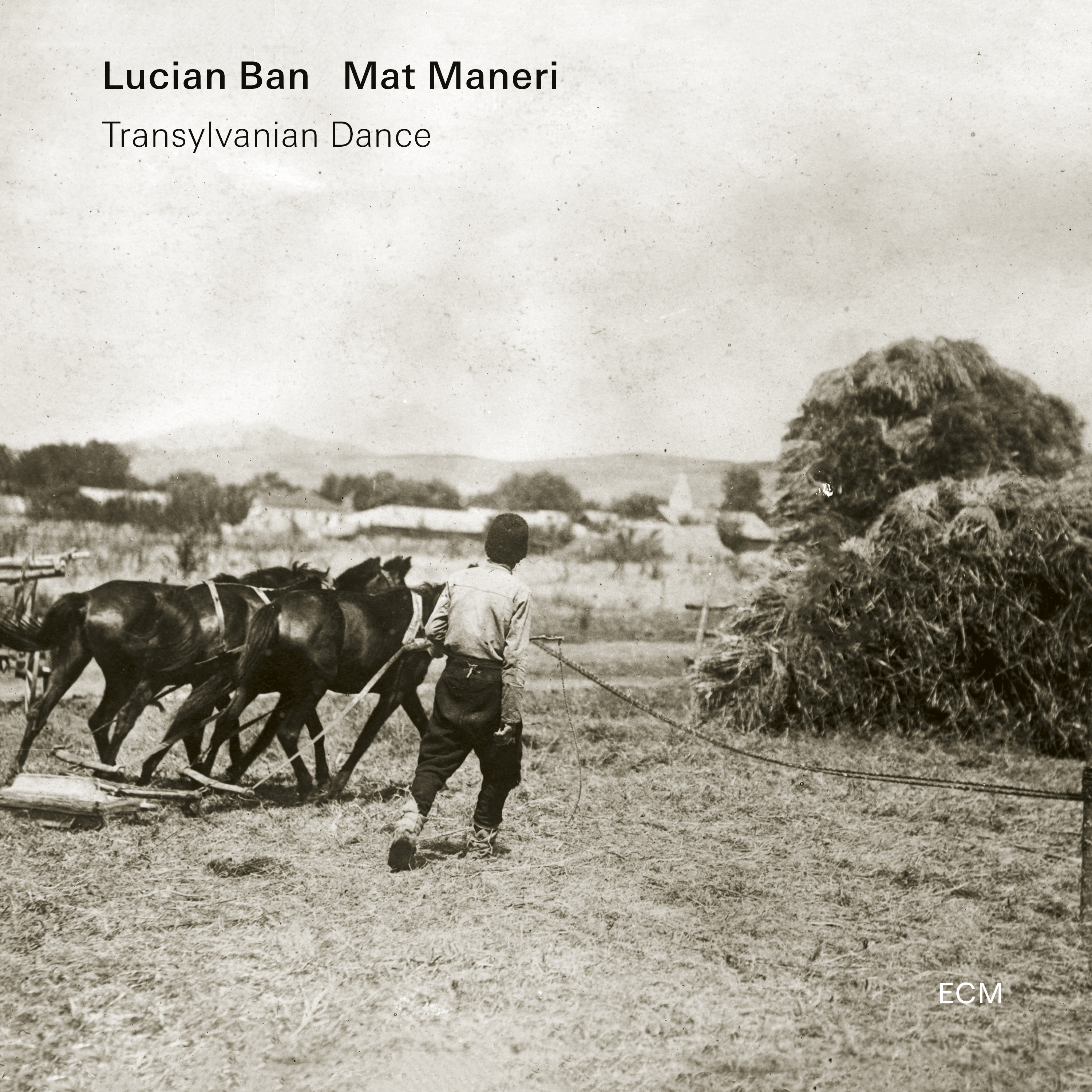
Lucian Ban/Mat Maneri: Transylvanian Dance (ECM 2824)

Lucian Ban
Mat Maneri
Transylvanian Dance

Mat Maneri viola
Lucian Ban piano
Recorded live at CJT Hall in Timișoara, October 29, 2022
Recording engineer: Utu Pascu
Mixing: Steve Lake and Michael Hinreiner (engineer)
at Bavaria Musikstudios, Munich
Cover photo: Romania farm scene, 1919 (courtesy Library of Congress, Washington)
Album produced by Steve Lake
Release date: August 30, 2024

Transylvanian Dance is the long-awaited follow-up to 2013’s Transylvanian Concert. The latter ECM debut of pianist Lucian Ban and violist Mat Maneri’s collaboration was a landmark showcasing the duo’s ability to immerse and blend in a partnership written in the stars. The present program, recorded live in October 2022 in the context of the Retracing Bartók project in Timișoara, is based entirely on songs and dances collected by Béla Bartók in Transylvania. And yet, the recapitulation of this music is more than a gesture of preservation; it’s an act of solidarity. If Ban and Maneri are archaeologists, they regard every artifact on its own terms. Rather than dust off the caked sediment, they appreciate it as a part of what the object has become.

In his liner notes for the album, Steve Lake invokes the “treasure-house,” a term used by Bartók and fellow composer Zoltán Kodáldy to describe the folksongs that may have gone lost without their efforts and one that feels duly appropriate to label the container built by these four hands. Drawing from his own experience growing up in Transylvania, Ban stains the wood with an ancestral quality, while Maneri carves adornments patterned after the imprints of far-reaching histories from within.

Open the door and take any interpretation stored a few steps beyond it, and you’re sure to find something to connect to. That being said, “Poor Is My Heart” is about as sparkling an introduction as one could hope for into this archive of still photographs come to life. To be welcomed into this space so freely is more than a privilege; it speaks to the human right of free expression against tyrannies of silence. Appropriately, the pianism is lithe yet strong, while the viola is a pliant voice that speaks of reeds and winds from bygone eras, its harmonics turning shafts of recollection into particles of real-time action. Like the title track later in the program, it keeps no secrets from us. However near or far the musicians feel, their balance of extroversion and introversion is superbly rendered. If Ban is the earth, then Maneri is the tiller of its collective memories. “Romanian Folk Dance” is another ripe harvest. Through disjointed yet natural movements, it breathes with an unsettled (but never unsettling) quality. The instruments circle each other, closing but never tightening the knot past the point of loosening.

What might seem to be a discerning focus on revelry is the oxygen for the darker flames of “Lover Mine Of Long Ago,” which treats its garments as layers of skin to be shed at will. Ban’s exploration of the piano’s inner strings, whether by plucking or muting, polishes a dowry of coins and other trinkets to be left behind with it. Meanwhile, “The Enchanted Stag” is a keening hymn in which bluesy accents bend to the will of the compass’s needle. Both “Harvest Moon Ballad” and “The Boyar’s Doina” turn the concept of the soul into a playing style. Wavering yet never faltering, each is a house creaking in the night, reminding us of the fragility of what we call home. Settling ever deeper into the ground, their candlelit windows beacons for wandering dreamers, they create a breezeway for the final song, “Make Me, Lord, Slim And Tall.” Not a single note feels wasted: percolating, germinating, and fragrant as a forest floor after the rain. With so much fertility, we can only wonder at the gifts it will yield with repeat listens.

Elina Duni/Rob Luft: Lost Ships (ECM 2689)

Elina Duni
Rob Luft
Lost Ships

Elina Duni voice
Rob Luft guitar
Fred Thomas piano, drums
Matthieu Michel flugelhorn
Recorded February 2020
Studios La Buissonne, Pernes-les-Fontaines
Engineer: Gérard de Haro
Mastering: Nicolas Baillard
Cover photo: Jean-Paul Dumas-Grillet
Album produced by Manfred Eicher
Release date: November 13, 2020

You’ll have to flee,
But you’ll carry
This relentless sea,
Echoing in you, for always.

With this lyric, Elina Duni and Rob Luft share the secret of their collaborative masterpiece, Lost Ships. Between themes of migration and ecological failure, interspersed with memories of times and places, the Albanian-Swiss singer and British guitarist turn the spirit of contradiction inside out over and over until the differences blur beyond recognition. The track yielding this poetic observation, an ode to the wind entitled “Brighton,” is a veritable curtain of sound billowing in breath. Before that, however, the Italian lullaby “Bella Ci Dormi” (Beauty, You Sleep) elicits the album’s first declaration. Whereas we might normally think of such singing as marking the closing of a day, this feels more like the opening of one. The pianism of British multi-instrumentalist Fred Thomas and lilting guitar exude the same grammar. Other traditional gems, including the Albanian “Kur Më Del Në Derë” (When You Appear At Your Doorstep) and the American “The Wayfaring Stranger,” remind us that nothing has truly changed from when they were first unearthed.

“Flying Kites” is one of the many journeys herein penned by Duni and Luft and stands out for its instrumental unraveling, especially in the playing of Swiss flugelhornist Matthieu Michel, who completes the ensemble. Further originals include “Numb,” a timely plea for forgiveness, and the title song, a shapely construction that travels in curves even as it speaks straight to the heart. Another is “Empty Street,” a duet that turns ghosts into signposts for those living in the wake of their demise…

No matter what Duni touches, she turns into something far more precious than gold: time incarnate. A marvelous example is her rendition of Frank Sinatra’s “I’m A Fool To Want You.” As a lantern hanging from the outstretched hand of a dark past, it seeks redemption in an era that has forgotten its meaning. At Duni’s lips, the words remind us of just how sharp the edges of hope can be. And in making Charles Aznavour’s “Hier Encore” her own, to the sole accompaniment of an acoustic guitar, she helps us understand that nature stands in the way of love when our love of self stands in the way of nature.

Lost Ships carves a special line in ECM’s broad waters, and to its fleet I would add Amina Alaoui’s Arco Iris, Arianna Savall/Petter Udland Johansen’s Hirundo Maris, and Norma Winstone’s Somewhere Called Home for worthy company. As such comparisons should imply, it is more than a recording; it is a voyage, contrary to its title, of being found.

Sinikka Langeland: Wolf Rune (ECM 2674)

Sinikka Langeland
Wolf Rune

Sinikka Langeland kantele, vocal
Recorded December 2019 at Rainbow Studio, Oslo
Recording supervision: Sean Lewis
Engineer: Martin Abrahamsen
Cover photo: Christian Houge
Executive producer: Manfred Eicher
Release date: April 9, 2021

My eye and God’s eye
is one eye,
and one sight,
and one knowledge,
and one love.

–Meister Eckhart

After a loosely bound series of five tablets, the most recent being 2015’s The Magical Forest, Sinikka Langeland chisels an authorial portrait of the highest order with her first solo album. With so many multicolored scenes in collaborative form behind her, the Norwegian singer and kantele storyteller offers this monochromatic wonder as an ode to becoming and dissolution.

For the opening “Moose Rune,” she attunes the acoustic signatures of Rainbow Studio through her 15-string kantele, playing it with a bow to bring every molecule into sacred order. So begins an extended prayer of which the 39-string sister instrument breathes like an elder of time perched on a stony crag to oversee the histories Langeland has been blessed to carry. Playing the traditional “Polsdance from Finnskogen,” she expands the sonority at hand with liquidity to spare. Such instrumentals carry themselves with a fleshly quality, leaving footprints in every patch of earth they traverse.

Two “Kantele Prayers” give solace. Played on a 5-string instrument, they are like a child cultivating a mature soul, waiting for the day when, as an adult, she can do the opposite. Thus do the strings resonate in “Winter Rune” with all the force of a life lived circularly—tender yet aware of the rigid climbs one must complete to survey paths of learning. Past traumas blush on the horizon, but the voice gives assurance that not a single drop of their storms will make itself known upon the skin of the here and now. And when Langeland’s bow opens its heart for the second time, she creates a portal of escape for anyone who wishes to follow.

While her heart pumps with the blood of tradition, as in the modest folk tune “The Girl In The Headlands” and the hymnal “I See Your Light,” it also chambers a deeply generative spirit. From the latter is birthed a handful of original melodies. Langeland composes with an ancient sensibility and gives a wealth of experience to every turn of phrase. In “Row My Ocean,” her setting of a text by poet and playwright Jon Fosse, she evokes the movement of oars more emotional than physical, extending every string as a current in its own right, while “The Eye Of The Blue Whale” curls its fingers around her own verses, describing a disembodied whale’s eye as a metaphor for songs that, once sung, belong only to themselves. Such observations take wing in “When I Was The Forest.” Every gesture encoded in these words after 13th-century philosopher Meister Eckhart contains sparkle and shadow in equal measure. At tip of finger and rim of lip, Langeland enacts wandering, supplication, and regard for the natural world in ways that blur the lines between flesh and fern.

The starlit melody of “Don’t Come To Me With The Entire Truth” practices what it espouses: a humbling exaltation of the drop before the ocean, content in knowing just enough to make every breath count. All that’s left to regard is the title track, a rendering of an old rune song in which the Trinity is loosed like a pack of light to roam the darkness of this world, devouring every demon in sight. The stepwise motions of the kantele here are beyond virtuosic: they are fully integrated into their environment.

This is the soul of the forest made clean, a hearth in which to hibernate until the clouds pass over us in search of dawn.

Maria Farantouri/Cihan Türkoğlu: Beyond The Borders (ECM 2585)

2585 X

Maria Farantouri
Cihan Türkoğlu
Beyond The Borders

Maria Farantouri voice
Cihan Türkoğlu
saz, kopuz, voice
Anja Lechner 
violoncello
Meri Vardanyan kanon
Christos Barbas
ney
İzzet Kızıl percussion
Recorded June 2017, Sierra Studios, Athens
Engineer: Giorgos Karyotis
Produced by Manfred Eicher
Release date: June 21, 2019

“Everything flows.
Out of one thing there comes unity,
and out of unity one thing.”
–Heraclitus

The project documented on Beyond The Borders was born when Greek singer Maria Farantouri first heard Cihan Türkoğlu, a saz virtuoso of Anatolian extraction who had been living in Athens for ten years. After proposing the idea to ECM, producer Manfred Eicher helped shape the program into its present form, debuting it as part of the 2017 Athens Festival. For this live performance, they are joined by Anja Lechner on cello, Meri Vardanyan on kanon, Christos Barbas on ney, and İzzet Kızıl on percussion. Their collective sound is distinctly individual, like a soul of many cities and eras compressed into the flesh of a single body.

Most of the songs are traditional treasures from the lands of Turkey, Armenia, Lebanon, and Greece. Each tells a story preserved by centuries of reiteration, and achieves relevance as a cool drink of water in today’s political firestorm. The scintillating arrangement of “Drama köprüsü” (The Bridge of Drama) finds both Türkoğlu and Farantouri singing the life of Hassan, a legendary Robin Hood-like figure who went rogue after slaying his superior, stealing from the rich and giving to the poor while shadowing the village just to glimpse the woman to whom he was once betrothed. The Sephardic ballad “Yo era ninya” (I Was a Girl) tells of a highborn maiden ruined by a deceitful man. A mournful quality made resolutely genuine by Farantouri’s delivery, as if sung through a cloud, makes this a standout among standouts. Lechner’s cello is remarkable, a red thread drawn through shadows of time.

From Armenia we receive “Kele kele” (Strolling), an anonymous song preserved by Komitas Vardapet around the turn of the 20th century. In it, a lovelorn girl sings: “I am dying for your footsteps, my precious.” An extended intro from Vardanyan paints a wide terrain on which to seek the traces of her loved one. Not all is so gloomy, however, as the Macedonian wedding song “Triantafylia” (Upon the Rosebush) works from a quiet introduction to an energy powerful enough to shine unscathed through a pessimistic future. “Wa Habibi” (My Beloved), a Christian hymn from Syria and Lebanon, unravels with a lifetime’s worth of experience in every throaty word.

The program is rounded out by songs written specially for Farantouri with music by Türkoğlu and words by Agathi Dimitrouka. “Dyo kosmoi mia angalia” (Embraced Worlds) takes Eros as its theme and evokes loving attributes via kanon, in which are felt reflections of sunlight upon a body of water whose surface is a portal between realms. “Ta panda rei” is a setting of Heraclitus, whose blurring of parts and wholes, of lives and life itself, yields percussive details from Kızıl and breaths from the ney of Barbas. Between “Lahtara gia zoi” (Yearning for Life), an empathic song for the uprooted, and “Anoihtos kaimos” (A Secret Yearning), a surreally uplifting dream, we feel the connective tissue of death and life as if it were the very substance of our hearts. With every beat, we get closer to this music, even as it follows its own path through the tragedies of our world.