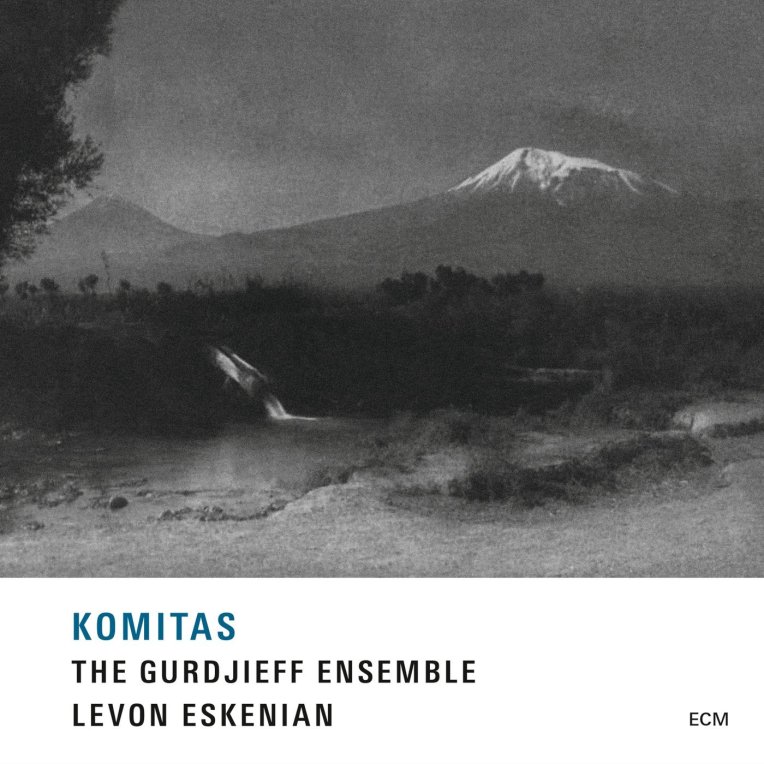
The Gurdjieff Ensemble: Komitas (ECM 2451)

Komitas

The Gurdjieff Ensemble
Komitas

The Gurdjieff Ensemble
Emmanuel Hovhannisyan duduk, pku, zurna
Armen Ayvazyan kamancha
Avag Margaryan pogh, zurna
Aram Nikoghosyan oud
Davit Avagyan tar
Mesrop Khalatyan dap, dhol
Vladimir Papikyan santur, voice
Meri Vardanyan kanon
Norayr Gapoyan duduk, bass duduk
Eduard Harutyunyan tmbuk, cymbal, kshots, burvar, bell
Levon Eskenian director
Recorded February 2015, Auditorio Stelio Molo RSI, Lugano
Engineer: Markus Heiland
Produced by Manfred Eicher
U.S. release date: October 2, 2015

Since forming the Gurdjieff Folk Instruments Ensemble in 2008, musician and director Levon Eskenian has moved beyond delineations of the group’s namesake, even while staying truer than ever to the roots such an association implies. His ECM debut, Music of Georges I. Gurdjieff, drew from a well that had already been dug into the label’s landscape by Keith Jarrett and Vassilis Tsabropoulos/Anja Lechner, and deepened by Lechner’s subsequent duo with François Couturier. It was only natural, then, that Eskenian should turn his attention to that spiritual progenitor of Armenian classical music: Soghomon Soghomonian (1869-1935), a.k.a. Komitas.

Having appeared on Kim Kashkashian’s Hayren and Savina Yannatou’s Songs of Thessaloniki, among others, the music of Komitas has been something of a leitmotif in the ECM catalog, where its expressions of folk sentiment feel right at home, and nowhere so fully as on this first disc dedicated to him alone. As with Gurdjieff, Eskenian and his ensemble have gone as far back to into this music’s past as is conceivable, arranging it for the very instruments whose sounds first inspired Komitas to put pen to paper. Eskenian has, in essence, “re-composed” them as physical environments around on which listeners can walk to absorb every detail.
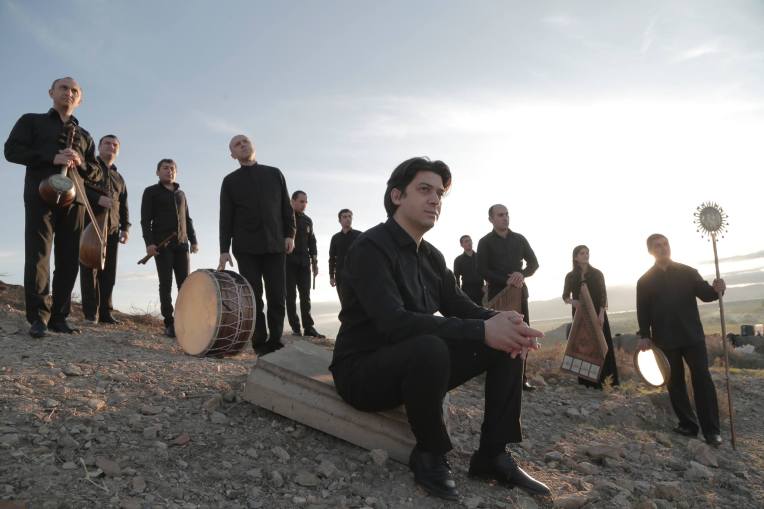
Gurdjieff Ensemble
(Photo credit: Andranik Sahakyan)

Eskenian, for his part, provides—in both the music and liner notes—a loving account of Komitas, whose approach to diverse interests imbued his writing with metaphysical levels of beauty. Even when composing for western instruments, he would often notate with traditional instruments in mind, and so Eskenian’s instinct is in keeping with the origin story at hand. Komitas and Gurdjieff share one degree of separation by way of the latter’s student, Thomas de Hartmann, but even more in terms of philosophy, lifestyle, and artistic engagement. I asked Eskenian whether these connections had anything to do with how he put this album together.

“Gurdjieff sent de Hartmann to Yerevan, where he immersed himself in, held concerts of, and gave lectures on the music of Komitas. Later on, de Hartmann would found the Komitas Society with the goal of collecting and printing the composer’s music. There are some pieces in which Gurdjieff and Komitas used the same folk tunes. Both of them were truth-seekers. Like Gurdjieff, Komitas would also talk about vibrations. He consulted ancient manuscripts and believed in the healing powers of music, the effects of modes and how each string of the knar [a traditional harp], for example, had on a different part of the body. He taught movements rooted in ancient ritual dances of pre-Christian temples, and often referred to himself as a teacher of dancing. In all cases, I consider the music of Komitas to be an essential key for a better understanding of the music of Gurdjieff and of the many other classical composers who have based their compositions on folk motifs.”

Eskenian’s gentle and respectful assertions of the significance of this music further explain why the album seemed to take form of its own volition. Eskenian elaborates on the genesis of the project, which began with a suggestion on the part of producer Manfred Eicher to center a follow-up to his Gurdjieff debut around Armenian folk and sacred music:

“For many years I’d thought about the Komitas dances, to have them performed on traditional Armenian and ancient instruments. I knew the pieces long before my encounter with the music of Gurdjieff and they had always served as a reference for me, but arranging the piano scores for authentic traditional Armenian instruments was in fact a bold labor which required additional research along anthropological, historical, and ethnomusicological lines in order to have a certain level of objectivity that wouldn’t ruin his work. Manfred left me free to decide the program. During the recording session he was actively involved in creating a comfortable atmosphere in which the musicians might better hear their inner sound, and with the assistance of engineer Markus Heiland recorded these instruments in their full timbrous colors. During the mixing session, Manfred paid strict attention to the sequence of pieces, and to the ‘silent’ pauses between them. The album cover was also of his choosing, a beautiful photo and one of the first of biblical Ararat Mountain ever taken at the beginning of the 20th century.”

In his own briefer liner note for the album, Armenian composer Tigran Mansurian—onetime director of the Komitas State Conservatory of Yerevan—expands on the cultural iconicity of Komitas, whose piano pieces he goes so far as to describe as “documentary works,” preserving as they do the spirit of his Armenian heritage. The “Yot Par” (Seven dances) represent one such set of piano pieces, recalibrated here to suit the spectral qualities of Eskenian’s peerless ensemble. These dances are centered around the capital of Yerevan, the contentious city of Shushi, the village of Karin, and the Turkish provincial capital of Mush. Whether the binary star of bowed kamancha and hammered santur in “Manushaki,” the duduk and tar in “Yerangui,” or the pogh flute and tmbuk drum duet that is “Het u Araj,” each dance flows in measured contrast to surrounding tunes and highlights a different instrumental color. That same pogh flute, in tandem with oud, embodies perhaps the deepest entanglement of ancient impulse and contemporary realization in “Karno Shoror,” which is about as close to experiencing history as this music gets. Even “Masho Shoror,” another piano work newly fashioned, is rife with textures that feel much older than we can articulate by any other means. The present rendition cross-hatches the double-reed zurna with the santur’s metallic lines. At just under 12 minutes, it is an album in and of itself, gathering as it does many influences in a single hearth of understanding.

“I often think about this piece,” says Eskenian, “which was a series of mystical pagan dances accompanying pilgrimage to St. Karapet Monastery in Mush. The monastery was one of the main pilgrimage sites for Armenians and served as their temple even before Christianity. After the Armenian genocide inflicted by the Ottoman empire, when most Armenians were killed, this marvelous monastery was destroyed much like ancient monuments in the Middle East have been in recent years. It was a great loss, to be sure, but I reflect on the fact that we have these sounds and traditions encoded into the piano music, now brought back to their inspirational sources. Through this process, we are reconstructing something of what has been lost. I am grateful to be able to share this with the world: a piece of the past reaching out to us from unrecoverable times.”
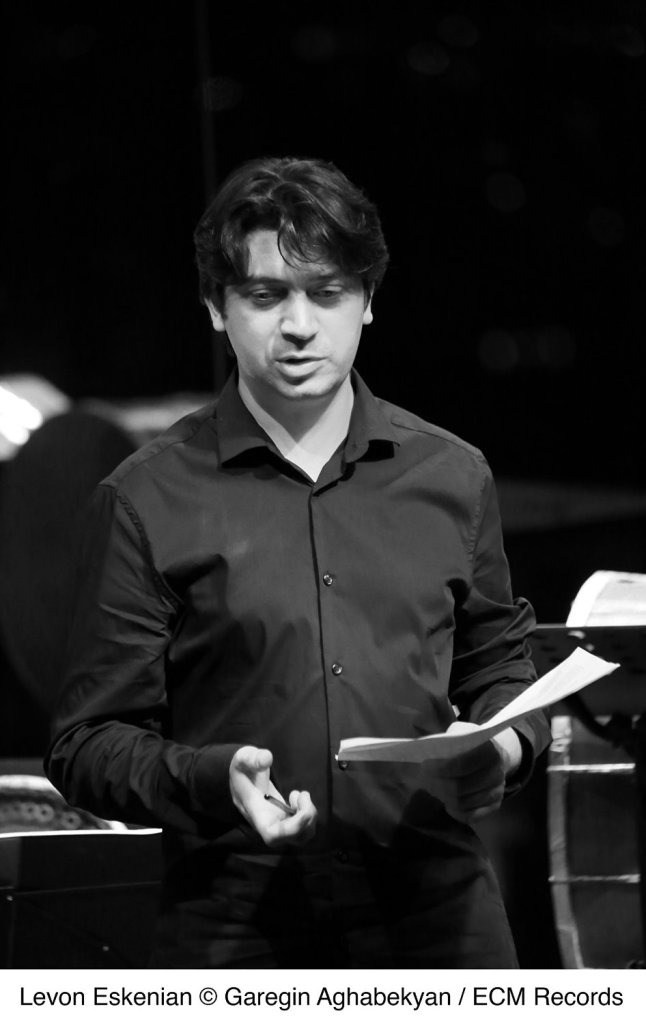
Eskenian

Many of the program’s standalone songs are likewise rooted in nature, by which traces of what came before our current generation continue to thrive, changed but also essential. In the plough songs of the northern Lori region, such as “Lorva Gutanerg,” we almost don’t need to know that Komitas gathered such melodies himself and separated them like chaff from the wheat so that posterity might be nourished by their bread. The medieval influences are clearest in these examples, as in the fortune-telling motivations of “Mani Asem, Tsaghik Asem” (Praises to the flower) and, more so, the strains of “Hov Arek” (Dear mountains, send me a breeze), a high point in the album’s topography that accentuates the talents of santur player Vladimir Papikyan, whose virtuosity unites sentiment and form. Moving through lullabies and other pieces for children, as well as love songs, the ensemble touches on Komitas’s religious affinities in songs like “Havun” (The fowl of the air), in which two duduks express Christ’s Resurrection in metaphor. On the subject of ascendant beings, the pogh solo “Havik” (A radiant bird) evokes its eponym with purposeful flight. Breathy and full of charcoal in its palette, it recalls the sensory world of a Japanese brush painting, trees barely visible as splashes of ink in the background.

Despite any mystical characterizations one might draw around Komitas, it’s clear from this recording that the heart of his music runs on a fundamental energy. It’s the same energy that allows us to listen and to love, to seek out those things which connect us beyond concerns of the flesh. So much so, that no matter what form it takes, the music of Komitas occupies an immediately relatable realm of understanding. In this vein, listeners can look forward to an album of his complete piano music as performed by Lusine Grigoryan, who has worked diligently to reproduce every effect as indicated in the original scores. Where Eskenian has taken those cues to heart by transferring them the very instruments that inspired them, Grigoryan has accepted the challenge of expanding the piano’s vocabulary to suit the ambitious needs of these timeless melodies. The reconstruction has just begun.

(Click here to read the rest of my interview with Levon Eskenian for RootsWorld online magazine, alongside another review of the album by Erik Keilholtz.)

Dreamers’ Circus review for RootsWorld

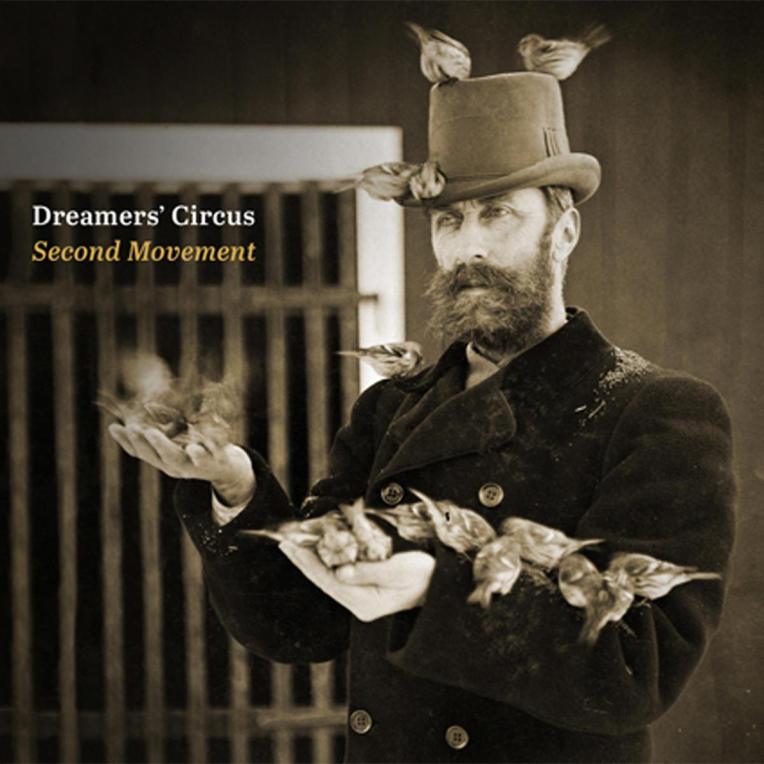
My latest review for RootsWorld online magazine looks at Second Movement, the sophomore album from Danish folk trio Dreamers’ Circus. This is sweeping, dreamlike music that should appeal to fans of Ale Möller. To read the review, click on the cover below. Also check out the live video below that to see the musicians in action.

Second Movement

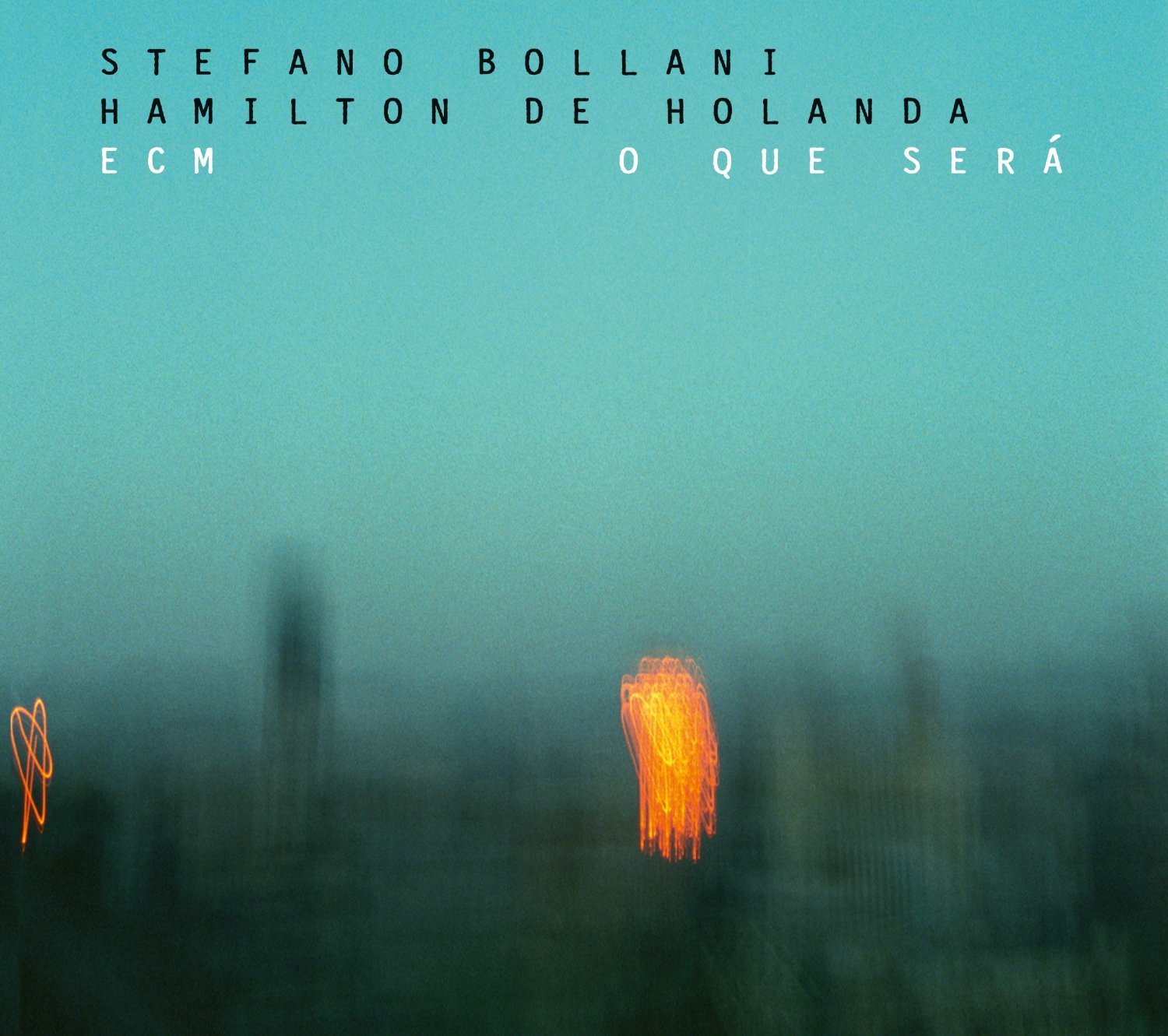
Stefano Bollani/Hamilton de Holanda: O que será (ECM 2332)

O que será

Stefano Bollani
Hamilton de Holanda
O que será

Stefano Bollani piano
Hamilton de Holanda bandolim
Recorded live August 17, 2012 at Jazz Middelheim, Antwerp by VRT-Vlaamse Radio en Televisie
Engineers: Walter de Niel and Johan Favoreel
Mixed at Rainbow Studio, Oslo by Jan Erik Kongshaug, Roberto Lioli, and Stefano Bollani
Album produced by Manfred Eicher

Since first sharing a stage together at a 2009 music festival in northern Italy, Italian pianist Stefano Bollani and Brazilian bandolim (10-string mandolin) maestro Hamilton de Holanda have met frequently as a duo. In this, their first full live album, they expand their commitment to beauteous improvisation in an electric atmosphere bound by faith in the moment. While not such a surprise in terms of programming—Bollani has, after all, extolled his passion for Brazilian music on Orvieto, and elsewhere—the album sparkles with ingenuity.

Bollani and de Holanda

In his pointillist fervor, Bollani has an obvious affinity for Chick Corea and Scott Joplin, while de Holanda’s playing dovetails Django Reinhardt and Egberto Gismonti at their best. These are a mere few of the many influences one might read into the notecraft of these consummate virtuosos, to say nothing of the great composers whose timeless melodies fly from their fingers. That said, the verdant, sparkling relays of Bollani’s “Il barbone di Siviglia” and the crystalline wanderings of de Holanda’s “Caprichos de Espanha” hold their own alongside classics from Astor Piazzolla (“Oblivión”), Antonio Carlos Jobim (“Luiza”), and Pixinguinha (“Rosa”). In their capable hands, such timeworns are fresh as summer while the originals feel like folk songs torn from the pages of a shared past. Across the board, de Holanda’s picking is restless but never overbearing. Bollani in the meantime emotes assuredly, caressingly, and all with a smile like the setting sun.

Two tracks of strikingly different character epitomize the duo at its most attuned. De Holanda dominates the ins and outs of “Guarda che luna” (Gualtiero Malgoni/Bruno Pallesi), in which his impassioned singing inspires cheers and laughter from the audience. A memorable relay as he switches to muted comping beneath Bollani’s flights of fancy adds oomph to their pristine musicality. Even more engaging is “Canto de Ossanha” (Baden Powell/Vinicius de Moraes), which becomes a rhythmic master class in controlled tension. The feeling of progression here is so vivid, it’s practically uncontainable. And yet, contain it the musicians do by means of their joyful, flared unity.

A smattering of lyrical tunes rounds out the set. Between the lush, balladic opener “Beatriz” (Edu Lobo, Chico Buarque) and the vivacious “Apanhei-te Cavaquinho” (Ernesto Nazareth) that closes, Bollani and de Holanda become increasingly more like each other, reflections of anticipation and follow-through. Like the title track (also by Buarque), their enchantment comes about in the exuberances for which no score has a means of notation. Rarely has a duo been this exciting, and results of this fortuitous encounter rank easily among ECM’s top 10 for the new millennium.

(To hear samples of O que será, click here.)


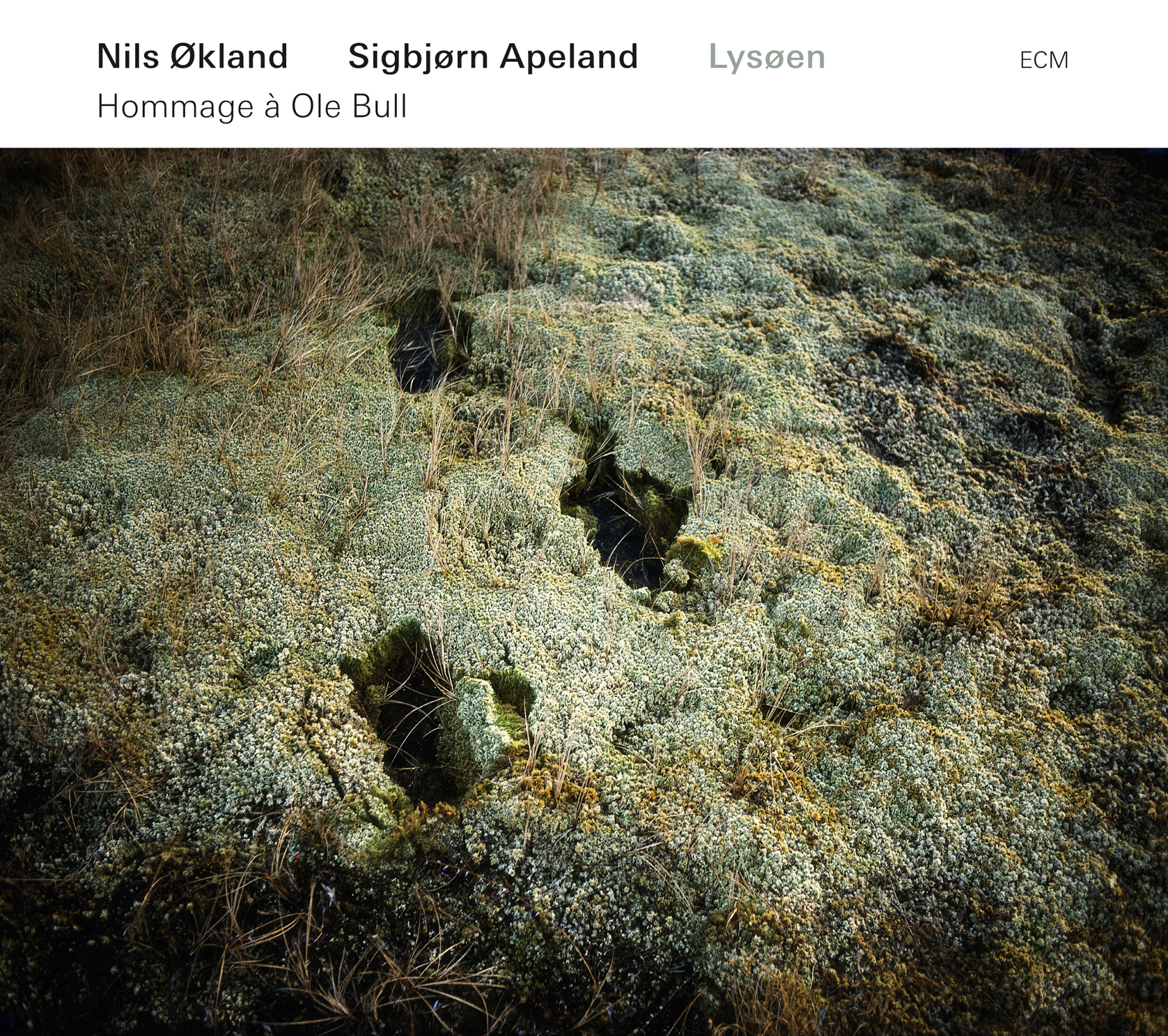
Nils Økland/Sigbjørn Apeland: Lysøen – Hommage à Ole Bull (ECM 2179)

Lysøen

Nils Økland
Sigbjørn Apeland
Lysøen – Hommage à Ole Bull

Nils Økland violin, Hardanger fiddle
Sigbjørn Apeland piano, harmonium
Recorded September 2009 and January 2010 at Villa Lysøen, Hordaland, Norway
Recording engineer and editing: Audun Strype
Album produced by Manfred Eicher

Fiddler Nils Økland and pianist Sigbjørn Apeland offer a studied take on the legacy of Ole Bull (1810-1880), a violinist of classical renown who brightened the folk music of his native Norway like no other musician after him. The present album is named for the little island off Norway’s western coast where Bull built a summer home for his wife and daughter, a place he’d longed for since childhood and where he would die only a few weeks upon realizing his dream to live there. Økland and Apeland were privileged to have access to instruments once owned and played by the Bull family for this recording, the first ever to be made at the Lysøen villa. Taking inspiration from the man Edvard Grieg once called a musical savior, the duo paints an idiosyncratic portrait using traditional and original pigments between daubs of Bull’s own, and all with a flair for adlibbing that is true to form. On that note, the musicians cite ECM greats Arild Andersen, Jan Garbarek, and, more recently, Frode Haltli as inspirations for likewise tapping folk veins in their improvisatory mining.

Traditionals take up most of the canvas, with the appropriately titled “Stusle Sundagskvelden” (Dismal Sunday Evening) opening in somber gesso. Its relay between fiddle and piano crafts a mood so potent, one almost feels it as a mist. Along with “I Rosenlund under Sagas Hall” (In the Rose Grove Under the Hall of Saga), it is the only folk track to employ this instrumental combination. The latter is a dirge-like piece that transitions into the famous “La Folia” without missing a beat. The rest, with two exceptions, pair fiddle with Bull’s own harmonium. This joining of forces—one earthly, one heavenly—is well suited to the material, which ranges from the rustic strains of “Sylkje-Per” (and its solo piano variation) and “Jeg har så lun en hytte” to the ethereal “Eg ser deg utfor gluggjen” (I See You Outside the Window).

The Bull songbook, such as it is, gives only barest insight into the kind of musician he must have been, but in the hands of these players I gather we come closer than by any other available means. Of the four tunes featured, “La Mélancolie” is another shaded, inward tracing. It’s also utterly beautiful and, in this arrangement, is possessed of a cinematic glow. The harmonium adds unusual propulsion to such pieces, and to others, like “Sæterjentens Søndag” (The Herdgirl’s Sunday), a similarity of extremes, from the subterranean to the extraterrestrial.

Økland and Apeland offer two duo originals. “Belg og slag” features tapping of the bow, which draws a line of inquiry to every answer. “Grålysning” (Daybreak) is a prettier circling of airs and sunlight. Økland’s solo “Solstraum” is reminiscent of Paul Giger’s Alpstein, its energies bright against Apeland’s “Tjødn,” a piano solo of eventide. The program rounds out with a fiddled rendition of Grieg’s famous “Solveigs sang.” At Økland’s bow, the strings sing this melody as if for the first time, even though, as with the rest, we feel that we have heard it before. Like Bull himself, it is a musical wanderer whose shadow leaves behind a trail to follow.

(To hear samples of Lysøen, click here.)

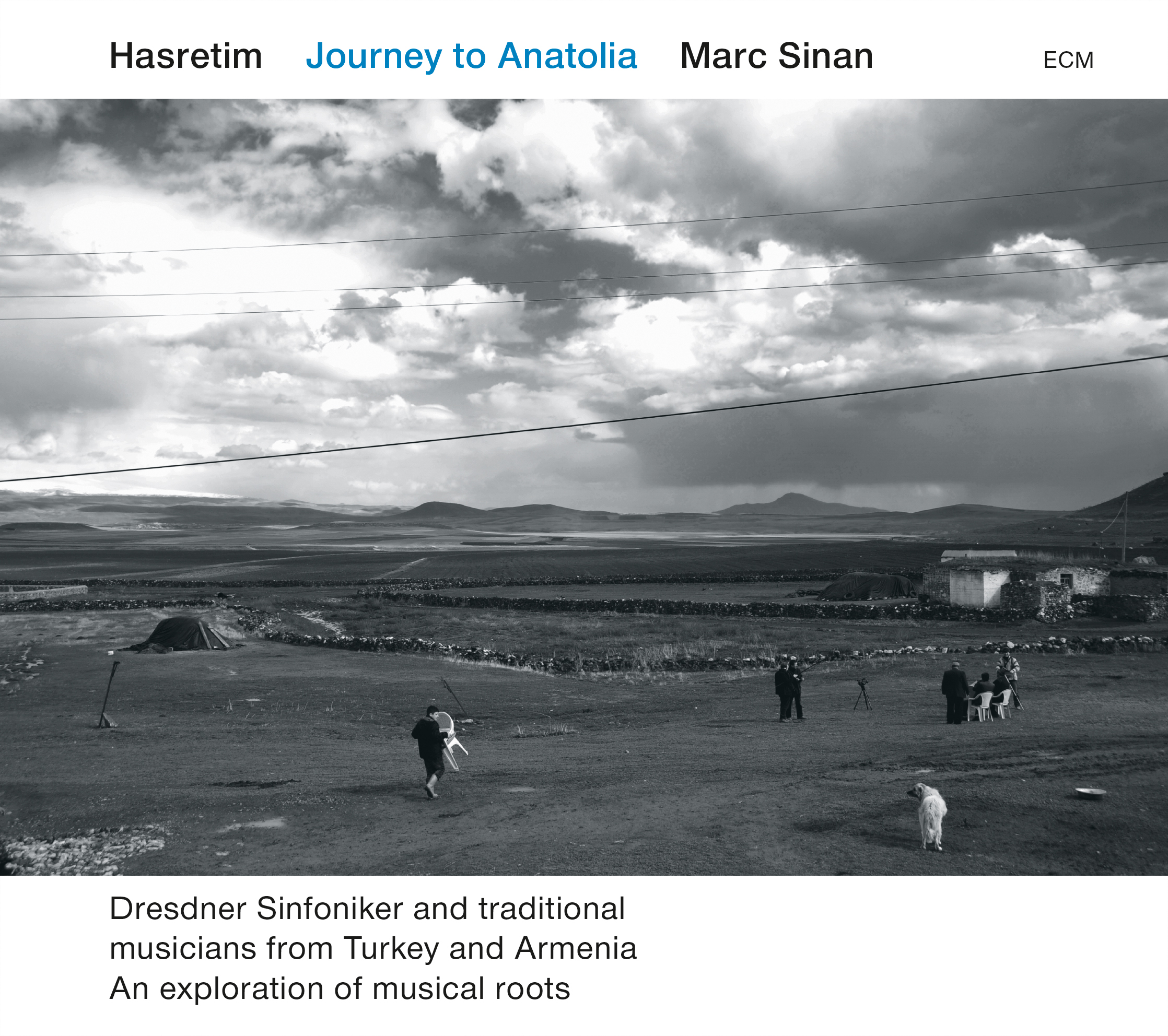
Marc Sinan: Hasretim – Journey to Anatolia (ECM 2330/31)

2330/31 X

Marc Sinan
Hasretim – Journey to Anatolia

Marc Sinan music, guitars, idea, concept and production
Traditional musicians from Turkey
Mustafa Boztüy
darbuka, framedrum
Güç Başar Gülle oud
Ömer Can Satır kaval
Onur Şentürk kemençe
Erdem Şimşek bağlama
Traditional musicians from Armenia
Araik Bartikian duduk, zurna
Vazgen Makaryan duduk, zurna
Andrea Molino arrangement, conductor (DVD only)
Jonathan Stockhammer conductor
Markus Rindt idea, concept and production
CD recorded live July 2011 at Schleswig Holstein Musikfestival by Volker Greve and Holger Schwark
“Prolog” recorded December 2012 at MIAM Istanbul by Can Karadogan
Mastering: Volker Greve
DVD recorded Ocobter 2010 at Festspielhaus Hellerau
An ECM Production

Classical guitarist Marc Sinan, born in 1976 to a Turkish-Armenian mother and a German father, has over the past two decades attracted increasing demand as a soloist and collaborator, and dedicates his output to softening divides between genres, eras, and cultures. Hasretim represents the most significant evolutionary leap in his career as a composer. The result of a commission by Hellerau – European Center for the Arts Dresden and the Dresdner Sinfoniker, this video-musical journey traces Sinan’s heritage along the Black Sea coast to the Armenian border. More than that, it’s an invaluable archive of life and song on the Anatolian plateau, which he explored together with Dresdner Sinfoniker artistic director Markus Rindt in 2010. During the trip, Sinan was saddened to find that the preservation of folk music so prevalent elsewhere (viz: the Baltic states, Hungary, and Greece) was lacking in Turkey. Consequently, he took Hellerau’s commission as an opportunity to address the discrepancy, pooling a storehouse of traditional musicians and incorporating their art into a large-scale, contemporary piece of his own design. “I was quite nervous,” writes Sinan of the recording process. “Unlike musical field research, our project demanded much more than simply documenting the current state of the Turkish musical tradition regardless of its artistic merit. We were on a treasure hunt and would only rest once we stumbled upon something truly special.” As connections grew, so too did the availability of choice musical talent and the opportunity to capture it for posterity. Once satisfied with his bank of original recordings, to them Sinan introduced what he calls “decisive, subjective elaborations” in the form of both through-composed and improvised material.

Hasretim was originally conceived as an installation piece, with videos of these unrecognized Turkish troubadours (many of whom must balance their musical lives with working ones) projected onto five towering vertical screens at stage rear. Before them plays an assembly of European classical musicians augmented by traditional specialists from Turkey and Armenia. The latter bring their expertise to a veritable portrait of Asia Minor in sound as the oud, kaval, kemençe, bağlama, duduk, zurna, and frame drum hold their own alongside strings and winds. It is to ECM’s credit that its release should encompass both the audio on CD and the visual on an accompanying DVD. For while the music stands alone as a welcoming experience, to see the musicians (live and recorded) in their element, along with segues of candid scenes from Istanbul and beyond, brings out the project’s reach in most immediate terms. Both versions feature essentially the same personnel, with the notable exception of conductors: Jonathan Stockhammer directs the CD version, recorded live at the Schleswig Holstein Musikfestival, while Andrea Molino, also the project’s musical arranger, handles the DVD performance, recorded at Festspielhaus Hellerau.

As indicated by the title, which means “I’m yearning” or “My desire,” Hasretim is a search for roots. Yet it’s also a spray of new foliage in the towering branches, nourished by Sinan’s unique ear for montage. The album is bookended by a “Prolog” and “Epilog.” One is a menagerie of harmonics, blips, and whispers that tightens like a spring, while the other pieces together footage of nearly all the recorded musicians in a chain of reprisals, ending as it began: with an attunement that spans multiple geographies.

Within this frame are five distinct “Tableaux,” each named after a Turkish city or, in the case of “Tableau II – Yayla,” for the mountain pastures where an old man (Haci Ömer Elibol) plays the end-blown kaval while his sheep animate the background. His call, for that is what it becomes in Sinan’s contextualization, inspires some upbeat interweaving. In contrast to the dark fiddling of “Tableau I – Ordu,” which details the face of singer Asiye Göl across all five screens, it more fully includes itself in the musical goings on.

Indeed, voices resound clearest throughout the program, even if certain instrumentalists do stand out for their charisma. There is Hüsseyin Altay on the tulum (Turkish bagpipe), joined by droning brass; the unforgettable Ismail Küçük, who sings and bows his kemençe in “Tableau III – Trabzon” from the back seat of a car, thus underscoring the film’s road movie feel; the duet of Ömer Parlak on kaval and Mesut Kurt (along with Göl, the youngest of those featured) on kemençe; and in “Tableau IV – Erzurum” the rhythmically savvy Aşik Eminoglu accompanying himself on the bağlama to invigorating effect. This same Tableau also cradles “In Memory of Vahide,” a 10-minute duduk duet that interpolates shadows into light. All of this buoys “Tableau V – Kars” as the most compositionally unified vision of live elements (especially in the percussion) and descriptive archival work.

In absence of any background information, one might never know that Sinan witnessed firsthand a loss of connection among contemporary Turkish musicians to their rich heritage, or that their art needed recovery in this regard. Neither was the counterpoint lost on him between the boisterous people and their peaceful, sometimes dreary, settings. Such contrast of medium and message informs every frame and staff of this multimedia treasure trove. Although awarded a special prize by the German Commission for UNESCO for its “inspiring and experimental confrontation between different cultures,” Hasretim is less about experiment than experience and anything but a confrontation. Rather, it is a book to which each new witness adds a page.

(See the article as it originally appeared in RootsWorld online magazine, where you may also hear samples.)