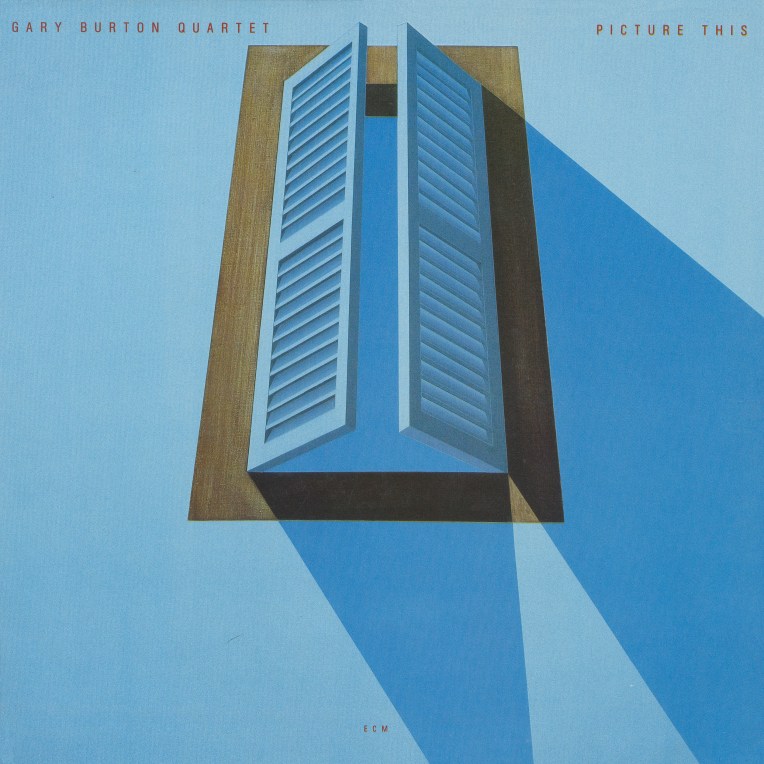
Gary Burton Quartet: Picture This (ECM 1226)

ECM 1226

Gary Burton Quartet
Picture This

Gary Burton vibraharp
Jim Odgren alto saxophone
Steve Swallow bass guitar
Mike Hyman drums
Recorded January 1982 at Columbia Recording Studios, New York
Engineer: Stan Tonkel
Produced by Hans Wendl

As I listened to Picture This for the first time, spring had just begun, and the music could hardly have been more fitting. Like an animal emerging from hibernation, its joyous frolics resonate in heart and mind with equal wit. Burton’s breath of fresh air is easy on the ears, never bogging us down with overly intellectual presumptions. For this transient quartet, he finds himself fronting a trio comprised of Jim Odgren on alto sax, Steve Swallow on bass, and Mike Hyman on drums. The mingling throughout from the two leads makes for some evocative motives and adds a curl to every letter written.

Burton never ceases to captivate, for here is a musician who is so—if you will excuse the pun—vibrant on his own terms, yet allows balance to flourish wherever he may be. Take, for instance, this new spin on the Carla Bley classic “Dreams So Real,” on which his presence is so integral yet so unassuming that at times one hardly notices, providing as he does only those key anchors needed for Odgren’s lithe restraint, only to unleash a primary force when soloing. This is the first of a few dips into the work of Burton’s favorite composers. Another, even deeper, plunge comes in the form of “Waltz.” This spindly Chick Corea tune cycles through far more rhythmic variations than its rudimentary title would indicate, and also sports a leapfrogging solo from Swallow that is by far the album’s highlight. Swallow also makes fine work of “Duke Ellington’s Sound Of Love” (Charles Mingus), where his lyrical sway is flexible enough to support both Burton’s superbly attenuated malleting and Odgren’s beautiful reed work. The latter makes a winner out of “Tanglewood ’63” and lends itself to the saxophonist’s own two offerings, “Tierra Del Fuego” and “Skylight,” both gifts of pure delight wrapped in bright melodic bows.

Burton has uncovered some of the most potent melodies in ECM’s dense and knotted trees. Every strike of his mallet is like a woodpecker, revealing that which only the most attuned ears can hear.

<< Dewey Redman Quartet: The Struggle Continues (ECM 1225)
>> Keith Jarrett: Concerts – Bregenz/München (ECM 1227-29)

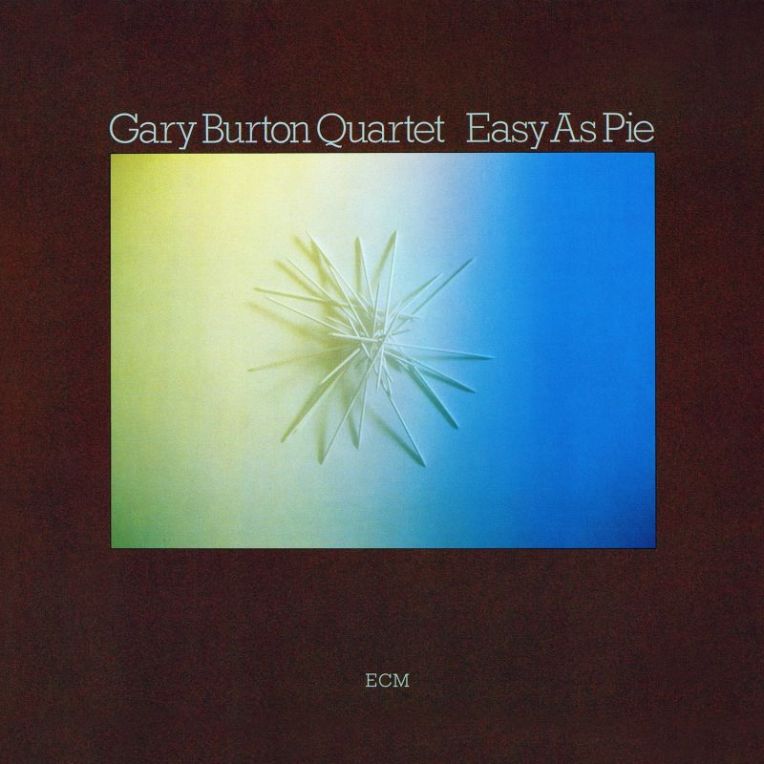
Gary Burton Quartet: Easy As Pie (ECM 1184)

ECM 1184

The Gary Burton Quartet
Easy As Pie

Gary Burton vibraharp
Jim Odgren alto saxophone
Steve Swallow bass
Mike Hyman drums
Recorded June 1980 at Tonstudio Bauer, Ludwigsburg
Engineer: Martin Wieland
Produced by Manfred Eicher

Gary Burton’s involvement in any project guarantees smoothness and melodic robustness, and Easy As Pie is no less promising than one would expect from the mallet master. As the title may imply, the results are generally laid back, but ever virtuosic. From the first licks of “Reactionary Tango” (Carla Bley) we get a taste of the banquet about to be laid before us. Jim Odgren shines on reeds the pages of this developing story, snipping from them a string of paper dolls. As one is swept away by the strains of “Summer Band Camp” (Mick Goodrick)—a fantastic piece that first appeared on the composer’s In Pas(s)ing—one notices just how integral Odgren is to the overall sound. “Blame It On My Youth” (Oscar Levant) is emblematic of what Burton does so well, capturing moments and memories as if in snapshots of living sound. In this solo piece, he sews that feeling of nostalgia into every motivic cell of activity. And further in “Isfahan” (Strayhorn/Ellington), a smoky ballad with plenty of shadow in which to luxuriate unseen, Burton turns that shadow into liquid gold in the throes of his soloing. Just so this joint doesn’t weigh us down with too much dark energy, two Chick Corea tunes, “Tweek” and “Stardancer,” give us plenty of beat to chew on and highlight Steve Swallow’s unstoppable groove. Between the kaleidoscopic drum solo from Mike Hyman and Odgren’s storybook endings, there is more than enough color to go around.

The members of Burton’s quartet work like kilned clay, which must be scored before being fit together to survive the heat with which it is imbibed. If this is dinner jazz, then prepare to be stuffed.

<< Corea/Burton: In Concert, Zürich, October 28, 1979 (ECM 1182/83)
>> Miroslav Vitous Group: s/t (ECM 1185)

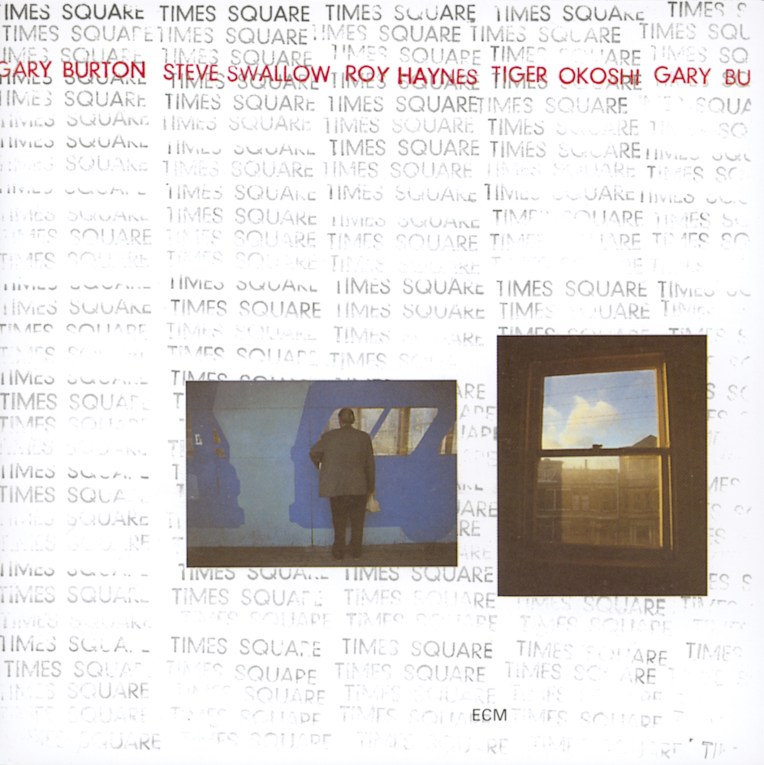
Gary Burton: Times Square (ECM 1111)

ECM 1111

Gary Burton
Times Square

Gary Burton vibes
Steve Swallow bass guitar
Roy Haynes drums
Tiger Okoshi trumpet
Recorded January 1978 at Generation Sound Studio, New York
Engineer: Martin Wieland
Produced by Manfred Eicher

Of vibraphonist Gary Burton’s roving quartets of the seventies, the assembly on Times Square is unique for the presence of Tiger Okoshi. The Japanese trumpeter’s collaborations with Burton caught the attention of many an ear and launched a fruitful career that has led to his current associate professorship at Berklee School of Music. Comfortable in both standard and fused territories, Okoshi brings a tenderness that is as biting as the leader’s vibes are liquid.

The band jumps right into the thick of things with a pair of Keith Jarrett tunes. Between the machine-gunned snare of “Semblance” and the balladic “Coral” we can already see the range of Okoshi’s flexibility. Not to be overlooked, however, is the straight-from-the-heart lyricism Burton unravels and reties in “Careful” (Jim Hall). This moves along swimmingly from the start and holds its shape through the itinerant bass of Steve Swallow, who provides five thoughtful originals for the album’s remainder. Okoshi shines again in “Peau Douce,” as does drummer Roy Haynes. Yet in this group overrun with talent from all sides, it’s Swallow who burns the midnight oil. Take, for instance, his lithe solo in “Radio” or the tightly wound core of “Como En Vietnam,” both not to be missed. And speaking of midnight, the selfsame track proves to be as sweet a palate cleanser as one could hope for. “True Or False” is also sure to bring a smile with Haynes’s whimsical solo couched between two fleeting punctuations.

Whenever Burton is involved in any musical project, one can rest assured that the melodies will be there for you, lurking in every patch of light and shadow alike. The gentle persuasions of he and his band mates preserve a nostalgic snapshot of the album’s namesake, where the onetime flowing bustle has since been clouded with noise and unrelenting visual overload. This dose of sonic clarity is all we need to make sense of the confusion.

<< Terje Rypdal: Waves (ECM 1110)
>> Keith Jarrett: Ritual (ECM 1112)

Crystal Silence: The ECM Recordings 1972-79 (ECM 2036-39)

ECM 2036-39Crystal Silence: The ECM Recordings 1972-79

Gary Burton vibraphone
Chick Corea piano

The vibraphone and piano combine to make one of jazz’s most potent instrumental combinations, and nowhere so invigorating than at the hands of Gary Burton and Chick Corea. To say that the possibilities between them are limitless is to ignore the immediacy of their abilities, in which we may now bask to the utmost content in this timely reissue. Jazz’s most singular duo in a set of three albums on four CDs. Now those are some positive integers.
1024 X

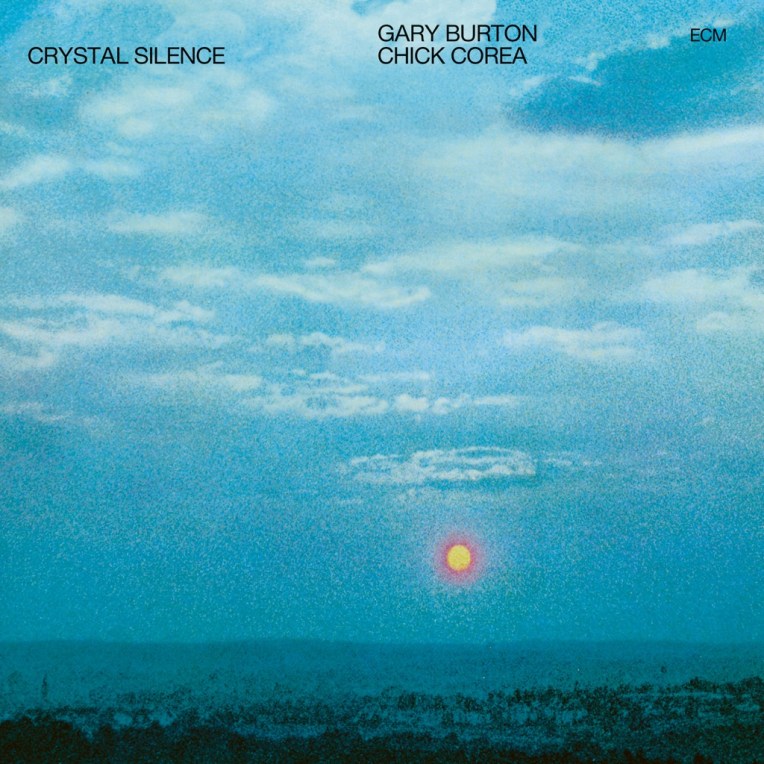
Crystal Silence (ECM 1024)

Recorded November 6, 1972 at Arne Bendiksen Studio, Oslo
Engineer: Jan Erik Kongshaug
Produced by Manfred Eicher

It all begins here, with Crystal Silence. The title says it all: silence crystallized into dazzling melodic gems, each its own prismatic doorway into improvisatory translucence. Corea offers a fine set of five compositions (the most notable being the slick opener “Señor Mouse”), along with three beautifully realized tunes by bassist Steve Swallow (“Arise, Her Eyes” being a personal favorite), and another by Mike Gibbs (the somber “Feelings And Things”). In spite of the variety of voices represented here, the album grows like one long, extended story, a dynamic that seems to shadow the musicians wherever they set foot. The title track, reprised and extended since its inaugural appearance on Return To Forever, is a subdued tour de force in style, presentation, and content. “Falling Grace” (Swallow) is one of the shorter pieces on tap, but what it lacks in time it makes up for in exhilaration. We end with an instrumental version of another Return classic, “What Game Shall We Play Today.” Each piece is rendered with such dynamic sensitivity that one can immediately recognize the effect Crystal Silence must have had when originally released, and no doubt continues to have to this day. Connected as they are by the same mellow fuse, these tunes need hardly a spark to set them to glowing.

This essential album constantly skirts the line between destitution and celebration, rebuilding as many structures as it tears down. The pianism soars, and one could never praise Burton enough for providing the intuitive right hand to Corea’s metronomic left. Above all, this is a masterful exhibition of improvisation around strong thematic material that breaks through its own generic conventions, and is another indispensable example of what ECM has done to enrich and enlarge the landscape of jazz music from day one.

<< Paul Bley: Open, To Love (ECM 1023)
>> Ralph Towner with Glen Moore: Trios/Solos (ECM 1025)

… . …
ECM 1140

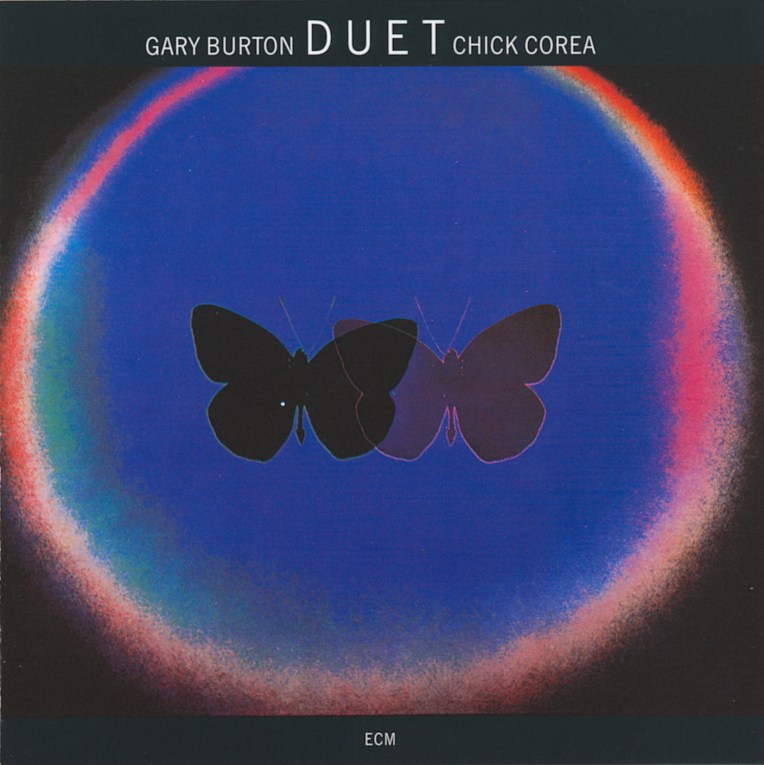
Duet (ECM 1140)

Recorded October 23 – 25, 1978, at Delphian Foundation, Sheridan/Oregon
Engineer: Bernie Kirsh
Produced by Chick Corea and Gary Burton

If Crystal Silence is the Corea/Burton universe writ large, then the “Duet Suite” that opens this follow-up album is its densest galaxy. Buoyant grace, turn-on-a-dime syncopation, and an abiding sense of direction make every moment an experience to savor and relive as many times as a single lifetime will allow. More than a lasting mosaic of what either of these musicians is capable of, the suite overflows with so much energy that it could easily have gone on to fill the entire album. And in many ways, it does, being a meta-statement of all to come. The lovingly arranged selections from Corea’s Children’s Songs that follow expand fourfold the brief glimpse into this masterwork afforded us in the project’s debut. These otherwise intimate excursions sparkle like film stills sped into viable movement. The hip nostalgia of “Radio” (Swallow) plunges us into the past, even as it directs our eyes to the future, reeling through its motifs with head-tilting abandon. Burton’s staggered rhythms make for an ecstatic crosshatching of polyphony. At last, we come to Corea’s seminal “Song To Gayle.” Soon to be a staple in the outfit’s traveling songbook, this fluid conversation is almost blinding in its agreement. Duet is rounded out by the ever so exquisite “Never” (Swallow) and “La Fiesta,” a Corea original that brings the album’s most enthralling moments into focus.

<< Mick Goodrick: In Pas(s)ing (ECM 1139)
>> George Adams: Sound Suggestions (ECM 1141)

… . …
ECM 1182_83

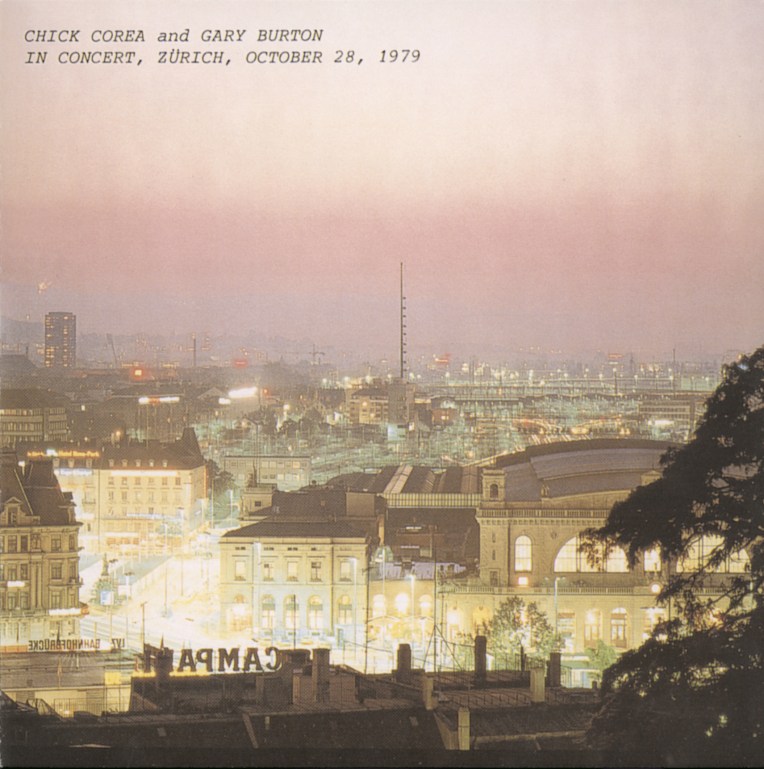
In Concert, Zürich, October 28, 1979 (ECM 1182/83)

Recorded October 28, 1979 at Limmathaus, Zürich
Engineer: Martin Wieland
Produced by Manfred Eicher

The Zürich live album is the clear standout of this collection and a real treasure among many in the ECM catalogue. All the classics are here, gloriously reincarnated for new and veteran listeners alike: a sweeping rendition of “Crystal Silence” flows with the power of a river during spring thaw, “Falling Grace” becomes strangely uplifting, “Song To Gayle” sparkles, and Corea’s improvisational turns during a vivacious “Señor Mouse” have all the makings of a hallmark triumph. These actually outdo themselves in live form, plain and simple. But they are only half the fun. Lest we forget the wealth of other material in the set, the duo delights us with “Bud Powell,” Corea’s pitch-perfect tribute to the bebop pioneer. The man at the piano can’t help but sing along as he negotiates one fluid key change after another. We also get some mesmerizing virtuosity from Burton, which makes us want to join in the applause at home. Another high point is “Endless Trouble, Endless Pleasure” (Swallow), which ends the show with a spicy half-step glory. But the real treasures here are the onetime C-Sides making their ECM digital debut at last. Each gives the respective musician his moment alone. Burton’s tender evocations of the Swallow standards “I’m Your Pal” and “Hullo, Bolinas” flit like a ballerina across the stage, while a lush 15-minute interpretation by Corea of his own “Love Castle” pulls his pianism into utterly new territories.

Live energy brings inexpressible wonder to these pieces. With each listen, they show their colors by an increasingly visible logic, extending solos here and shortening graces there, until the whole picture begins to make intuitive sense.

Once in a great while, there are combinations that simply cannot fail. Chick Corea and Gary Burton embody one of them. Their supporting articulations are sometimes so delicately applied that one cannot help but become an extension of the other. They seem to find in each other a new vision of life, which they bring to every note. They also really know how to introduce a piece. Rather than lead us patronizingly into their sound-world, they drop us directly into its liquid center, so that while coming up for air we begin to understand the music from the inside out. These are two wirewalkers at the height of their creative talents, yet who have since forgone their balance bars in favor of more airborne travels. This is quite simply music for the ages.

<< Pat Metheny: 80/81 (ECM 1180/81)
>> Gary Burton Quartet: Easy As Pie (ECM 1184)

 

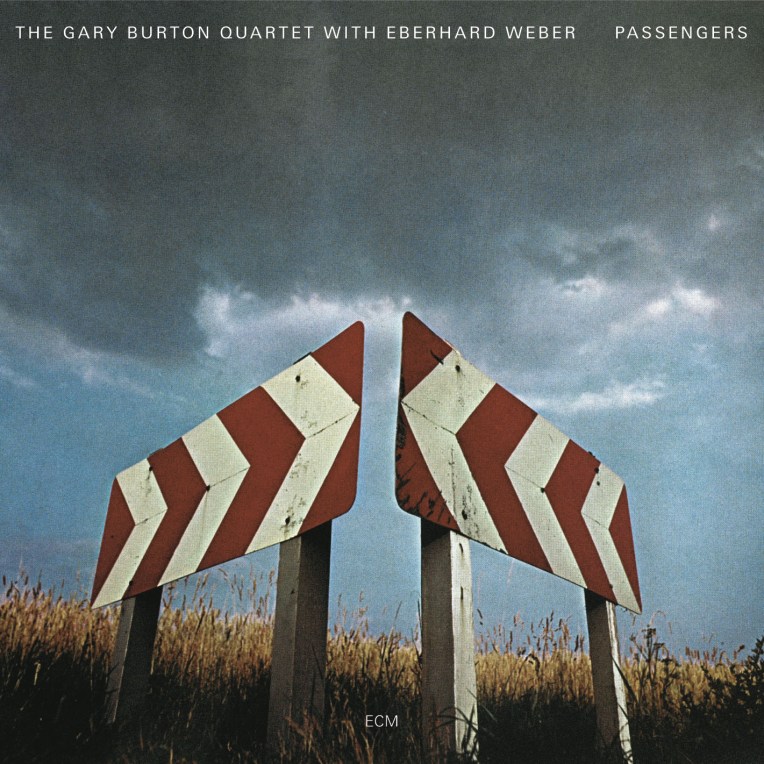
The Gary Burton Quartet with Eberhard Weber: Passengers (ECM 1092)

ECM 1092

The Gary Burton Quartet with Eberhard Weber
Passengers

Gary Burton vibraharp
Pat Metheny guitar
Steve Swallow bass guitar
Dan Gottlieb drums
Eberhard Weber bass
Recorded November 1976 at Talent Studio, Oslo
Engineer: Jan Erik Kongshaug
Produced by Manfred Eicher

Gary Burton’s Passengers has it all: its frontman’s incomparable mallets, Dan Gottlieb keeping the beat, the unmistakable bass of Eberhard Weber paired with the equally unique stylings of Steve Swallow, the fluid fingers of guitarist Pat Metheny (who would soon go on to front his own super group with Weber and Gottlieb), and the all-important bow of ECM’s attentive production. Not enough to whet your appetite? All the more reason to buy it.

Chick Corea’s “Sea Journey” opens with the floating exuberance that Burton carries off like no other. Weber pulls out all the stops here, proving to be perfect complement to Burton’s sound. A stunning piece of work with a heightened groove-oriented trajectory. This is followed by three Metheny compositions. In the subtle ballad “Nacada,” vibes rest on a gentle surface tension of flowing bass, guitar, and brushed drums. “The Whopper” locks into more upbeat strides. Weber’s bass is as bright and attractive as it gets, while Metheny’s solo dances on a pinhead. Listeners will recognize “B & G (Midwestern Nights Dream)” from his seminal Bright Size Life, its fractured rhythms maintained beautifully here. The quiet background supports a glowing solo from Weber, not to mention another from Metheny himself. “Yellow Fields” (Weber) is another exuberant number, and features the album’s most incredible vibe work. The bittersweet farewell of Swallow’s “Claude And Betty” contorts its hands in shadow puppets, backlit as if by a sad and lonesome dream.

Mindfully recorded and expertly executed, the melodies of Passengers come alive with unpretentious joy. The synthesis of players forms a palette in the truest sense, its colors already artfully arranged before they are ever mixed and applied to canvas. An essential addition to any Burton library, and a must-have for any Weber fan looking to complement his brooding, handsome meditations with something more uplifting.

<< Keith Jarrett: Staircase (ECM 1090/91)
>> Jan Garbarek: Dis (ECM 1093)

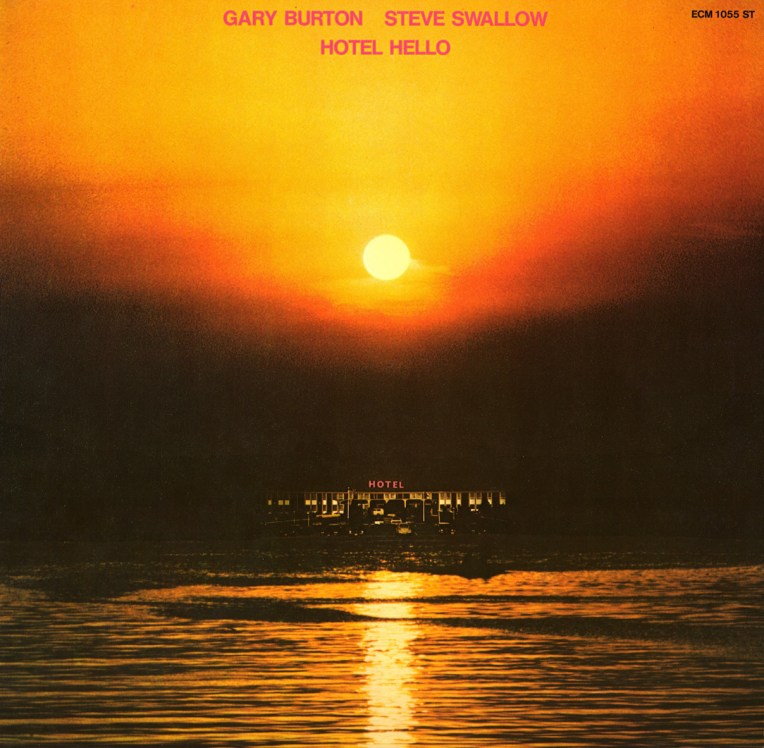
Gary Burton/Steve Swallow: Hotel Hello (ECM 1055)

ECM 1055 LP

Gary Burton
Steve Swallow
Hotel Hello

Gary Burton vibraharp, organ, marimba
Steve Swallow bass, piano
Recorded May 13/14, 1974 at Aengus Studio, Fayville, Mass.
Engineer: John Nagy
Produced by Manfred Eicher

The stirring piano and vibes of “Chelsea Bells (For Hern)” open this long-forgotten jewel among ECM’s many fruitful duo recordings. Lithe and nocturnal, its only light can be found in the sourceless reflections of its watery surface. Herein lie the beginnings of a shaded affair that shelters the most distant promise of love. “Hotel Overture + Vamp” pairs vibes with a tight constituent of guitar, bass, and Fender Rhodes for a full sound honed in metal. Swallow assumes a dual identity in the title track, playing both bass and piano. We get the only “un-Swallowed” motif with Mike Gibbs’s “Inside In,” a short and sweet number complete with wah-wah infusions, plenty of changes to keep our ears in check, and some fantastic vibe work to boot. The quaintly titled “Domino Biscuit” is a pleasant segue to the prismatic mood and lyrical bass of “Vashkar.” The most moving piece on the album, it is vividly evocative and honed to a mysterious edge. “Sweet Henry” is a more upbeat, jovial affair, sounding almost like the theme song for a seventies television show sans kitsch (or perhaps with just enough kitsch to satisfy our morbid curiosity). The “Impromptu” that follows is a lovely meditation in which each instrument blends into the other in a swell of monochrome.

Hotel Hello is a unique entry in the Burton catalogue, for it is the only one that feels as if it were painted in black and white. What it lacks in vibrancy (no pun intended) of color, it makes up for, if not surpasses, in its visceral sentiment. We feel this most acutely in the final track, “Sweeping Up,” which faithfully evokes the cleanup that follows any given event, so that no matter how beautiful an experience it is, one is bid to appreciate its refuse.

This is a consistently solid effort and arousing in its many changes. Built on the raw materials of studio trickery, its overdubbed experiments speak to the revelry of both musicians. Burton solos in such a way that while his tone and sound do soar, they always remain firmly embedded and connected to the surrounding thematic motivations. Burton plays on at least three simultaneous levels: anticipating the next note while striking the current one, having already written it in his mind during the one just passed. Swallow is equally exacting and works with a no less expansive vocabulary.

This is an album about alienation and the promise of its demise.

<< Richard Beirach: Eon (ECM 1054)
>> Ralph Towner/Gary Burton: Matchbook (ECM 1056)

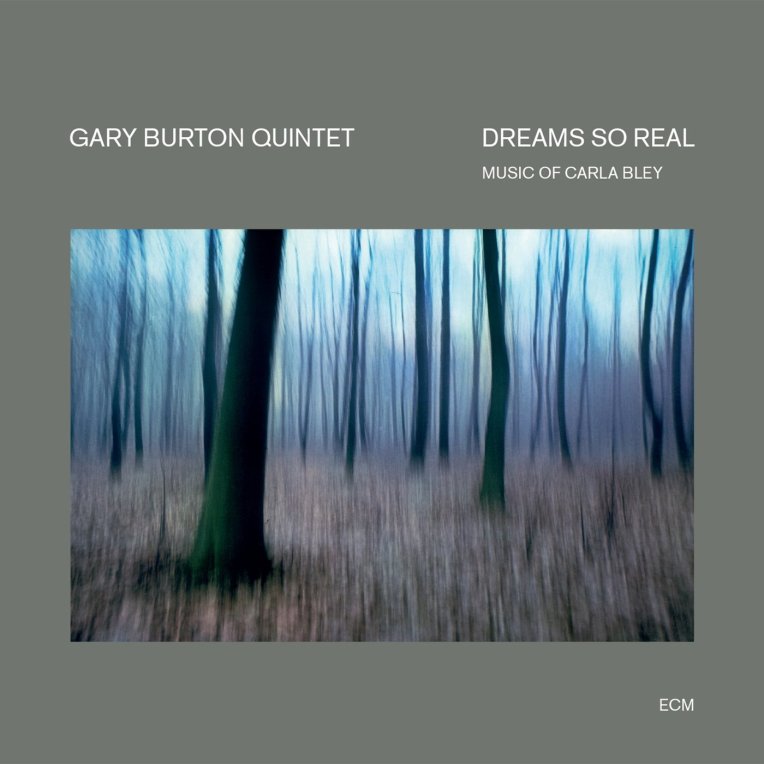
Gary Burton Quintet: Dreams So Real (ECM 1072)

ECM 1072

Gary Burton Quintet
Dreams So Real – Music of Carla Bley

Gary Burton vibraphone
Mick Goodrick guitar
Pat Metheny electric 12-string guitar
Steve Swallow bass
Bob Moses drums
Recorded December 1975, Tonstudio Bauer, Ludwigsburg
Engineer: Martin Wieland
Produced by Manfred Eicher

Gary Burton is one of those rare artists whose sound is immediately recognizable, yet who always manages to surprise and delight with his commitment to personal transformation. He is an artist of metamorphosis and of acknowledgment. Like Keith Jarrett, even at his most selfless moments he places each note as one would an important relic on an altar, such that his transitions from improvised to thematic material are hardly noticeable in the grander scheme of things. Fold into this batter of this already delectable recipe the music of Carla Bley, and you get an irresistible cake layered with energy and melody. We see this right away in the title opener, which spreads a thin layer of frosting over this metaphorical confection. “Ictus / Syndrome / Wrong Key Donkey” plays with the frantic jumps at which Burton is so skilled, beautifully accented by Pat Metheny’s electric 12-string. The tender vibraphone solo of “Jesus Maria” cradles the heart with its song, priming us for the gorgeousness that is “Vox Humana,” one of Bley’s crowning statements and interpreted here to perfection. After a modicum of resistance, the aptly titled “Doctor” heals the weary mind like good medicine. Burton shows off more fractured skills here, while Metheny swings in his virtuosic hammock. In spite of its title, “Intermission Music” is hardly a throwaway soundtrack to your break from more important activities. It is, rather, a beautiful flight into melodic skies, a lasting homage to the cinematic screen when it was still silver.

Bley’s tunes, with their chameleonic flair and peerless sense of forward motion, challenge any performer to be at his or her best. With this recording, the present assembly did much more than that by enlivening the music for an unsuspecting audience. As one of her most ardent champions, Burton has taken the soulful sounds of this one-time struggling waitress into that coveted place in our hearts where it belongs. Like skillfully sustained notes on a bowed instrument, Bley’s compositions are drawn in tight circles rather than in straight lines. Burton articulates every nuance, crossing dimensions with the ease of breathing. Metheny and mentor Goodrick are two leaves on the same stalk, each bowing to the wind to let sunlight peek through. Swallow’s presence is tender yet always palpable. And the attentive skills of Bob Moses shine at every rhythmic turn. While each of these musicians is easily spotted in any auditory congregation, they are immeasurably impressive as a collective unit. The album is recorded with ECM’s usual attentiveness, the vibes comfortably embracing the listener from both channels. Bley changed the landscape of jazz, quietly and one vamp at a time. And yet, hers a sound to which many have turned a deaf ear. One could hardly ask for a better wakeup call.

<< Tomasz Stanko: Balladyna (ECM 1071)
>> Pat Metheny: Bright Size Life (ECM 1073)

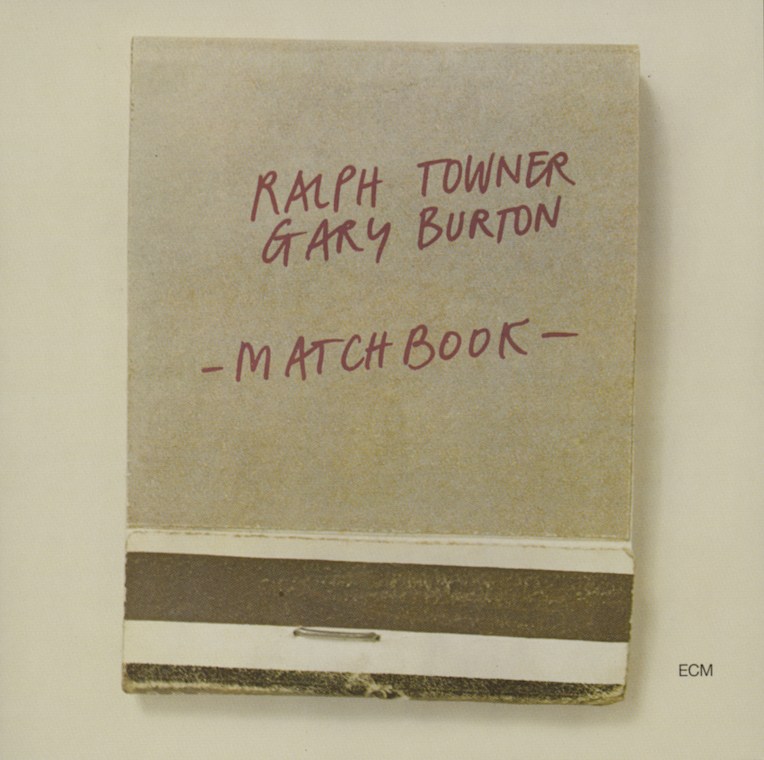
Ralph Towner/Gary Burton: Matchbook (ECM 1056)

ECM 1056

Ralph Towner
Gary Burton
Matchbook

Ralph Towner 12-string and classical guitars
Gary Burton vibraharp
Recorded July 26/27, 1974 at Tonstudio Bauer, Ludwigsburg
Engineer: Martin Wieland
Produced by Manfred Eicher

A matchbook doesn’t typically provide a surface for lasting statements. On its flap, one scrawls a phone number, an address, or any other piece of information as ephemeral as the flames for which it is mass-produced. Such is not the case with guitarist Ralph Towner and vibraphonist Gary Burton. Instead, we get indelible marks of grace and humility, each a brighter spark at the wick of our attention.

Towner originals form the bulk of this project, of which the opening “Drifting Petals” is a quintessentially evocative example. Between his 12-string and Burton’s plaintive returns, we get an emotive handful of light poured directly into our ears. This combination recurs in an intimately redacted version of “Icarus,” which paves new avenues of understanding through one of Towner’s most popular compositions. Burton’s touch adds a metallic fervor that contrasts well with the softer piano version on the previous year’s seminal Diary. Twelve strings of bliss continue in “Goodbye Pork Pie Hat.” In this delicate, dark arrangement, Mingus’s classic tune wilts into a devastating ending.

The album’s remainder gives us Towner in a more classical mode, thereby halving the number of strings at his disposal, but with no loss of distance. “Some Other Time” builds an enchanting synchronicity, throughout which both instruments connect and drift apart like memories and expectations. Burton’s plush chords give Towner’s fingers plenty of forgiving terrain. The two switch roles, as they often do, for their respective solos. “Song For A Friend” is a bleaker piece wrapped around a gentle persuasion. As an affirmation of beauty, it is sometimes painful, shaded by the same colors with which all relationships are rendered. Towner draws the album’s most endearing solo here across an ideal tidal accompaniment. A notable highlight is Towner’s buzzed introduction of the title track, achieved by weaving a matchbook into the strings of his guitar. This sets off a flurry of whimsical activity and attentive soloing, meshing in a tightly knit cloth that leaves no dangling thread.

Three instrumental angles converge in the triangular “Aurora”: classical and 12-string guitars occupy the left and right channels, while vibes bond them with living energy and song. In addition, Towner and Burton are each given their own moments in two brief, but beautiful, tracks. “Brotherhood” is a haunting piece by Burton alone, its musical nether regions fluttering in anticipation of the higher notes dropping into its dark pool, while “1×6” is a classical guitar solo that ends before it begins.

The sound of this album is like no other and unfolds itself with the delicacy of a morning glory, yet with melodies as indestructible as the sunlight that sustains them. Its many colors are provided not only through finely wrought melodies, but also through a wealth of rhythmic variations throughout. If you like either of these artists apart, then you can’t go wrong with them together.

<< Gary Burton/Steve Swallow: Hotel Hello (ECM 1055)
>> Bill Connors: Theme To The Gaurdian (ECM 1057)

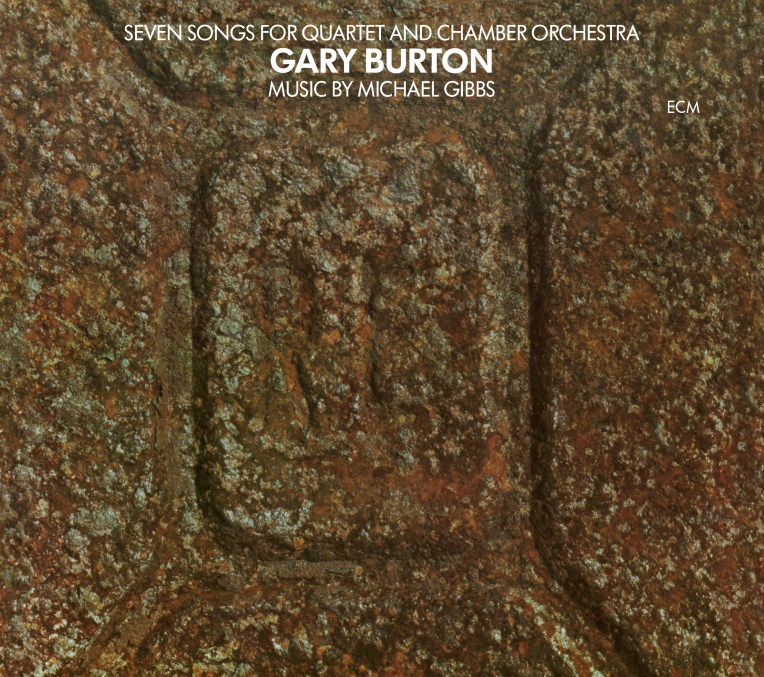
Gary Burton: Seven Songs For Quartet And Chamber Orchestra (ECM 1040)

1040 X

Gary Burton
Seven Songs For Quartet And Chamber Orchestra

Gary Burton vibraharp
Michael Goodrick guitar
Steve Swallow bass
Ted Seibs drums
NDR-Symphony Orchestra
Michael Gibbs conductor
Recorded December 1973 in Hamburg
Engineer: H. Ruete
Produced by Manfred Eicher

If one were to draw a line between the ensemble aesthetics of Eberhard Weber and Keith Jarrett, then one might plot the compositions of orchestral jazz legend Mike Gibbs somewhere along the way. Born in 1937 in what was then Southern Rhodesia, and a graduate of Boston’s Berklee College of Music, Gibbs has laid down a musical path as diverse as his travels. On Seven Songs for Chamber Orchestra, one gains vision of a mind looking not so much to cross over into uncharted waters as to expand the inclusivity of jazz’s already broad topography. At the heart of this project is Gibbs’s most famous student, the inimitable Gary Burton, who presents a lovingly realized program of his mentor’s own design. “Nocturne Vulgaire” sets the album’s plaintive tone with a groundswell of strings, into which Burton drops his mercurial sound. This delicate blend of mallets and bows continues unabated in “Arise, Her Eyes” (Steve Swallow), the only non-Gibbs number on the album. Mick Goodrick’s steady strums and Ted Seibs’s cymbal-heavy drumming make the most of the tender “Throb,” as Burton’s vibes glow like phosphorescent blood in the piece’s ambulatory body. “By Way Of A Preface” spins the album’s densest song. Its abstract beginnings carry over into a gorgeously perpetual solo from Goodrick, while Swallow makes his memorable mark in the pensive confines of “Phases.” The vast open fields that underlie “The Rain Before It Falls” give way to the chromatic wonders of “Three,” in which Burton and Goodrick’s relays emerge with all the inevitability of a final word.

This is a dream album for admirers of both Burton and Weber, combining as it does the former’s dulcet precision and the latter’s lush arrangements, and is therefore well worth tracking down (a CD-reissue is long overdue). Burton’s ability to carry a tune to fruition is only enhanced by Gibbs’s affected settings, which hardly make a dent in their emotional reserves. If jazz is about discovering the integrity of every lifted voice, then certainly Seven Songs rises from its murky waters with just a few of many unheard treasures.

<< Dave Liebman: Lookout Farm (ECM 1039)
>> Jan Garbarek: Witchi-Tai-To (ECM 1041)