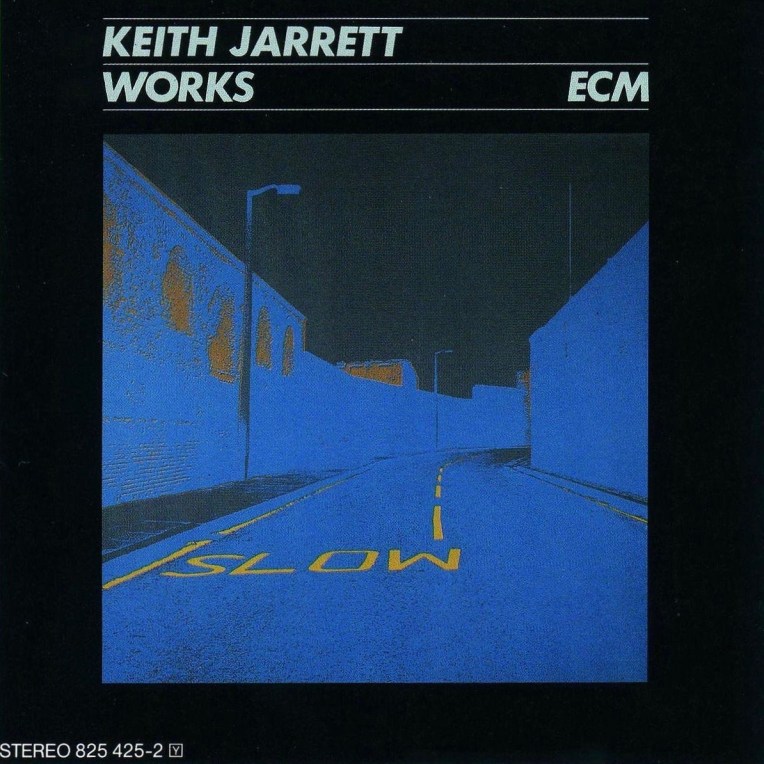
Egberto Gismonti: Works

Gismonti

Egberto Gismonti
Works
Release date: April 1, 1984

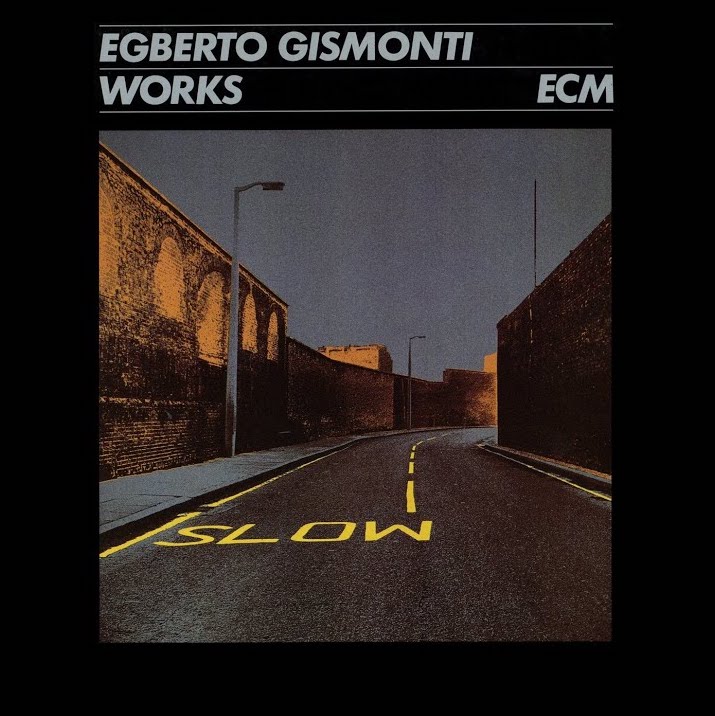
Egberto Gismonti is a force so enormous that ECM grandfathered his own label, CARMO, under its wing to archive much of his older material, as well as that of the younger musicians interpreting it still today. But to these ears his finest recordings have always intersected with ECM proper, and the late 1970s/early 1980s defined a golden age in this regard. Producer Manfred Eicher had a way of bringing out an inner peace in Gismonti’s frantic guitar playing and likewise enhancing something rough and ready in his sweeping pianism. It was therefore inevitable that such a sizable body of work would be faithfully abridged in his own “Works” compilation.

“Lôro” is one of two tunes from 1981’s Sanfona to find their worthy place in the mix. Impeccably recorded and performed, this jewel is one of Gismonti’s most precious on record and features the talents of his Academia De Danças band. Exemplifying the sound of both its era and its composer, its instrumentation, engineering, and execution glow in ECM’s resonant chamber aesthetic. “Maracatu” is another pianistic vehicle for Gismonti, whose rolling waves crash onto shore in the last rays of a setting sun. From here we jump back three years to Sol Do Meio Dia, a session shared with Nana Vasconcelos on percussion and Collin Walcott on tabla. Gismonti’s custom 8-string guitar is resolutely beat-driven throughout “Raga,” in which he experiments with harmonics and dissonances until only purest fusion remains.

“Magico” pays tribute to the 1980 album of the same name. This peerless trio with bassist Charlie Haden and saxophonist Jan Garbarek was the living definition of lockstep. As the latter two musicians embrace the space with hands of extremes, Gismonti solos over himself in a brilliant division into multiple voices. But nowhere does his ability clarify itself so resolutely than on his 1979 Solo, from which two tracks are excised. “Ciranda Nordestina” is a look inward through lenses of piano and bells, and is another stunning construction. “Salvador” returns to his 8-string guitar for a piece of remembrance. It is the musical realization that physical locations change just like those who inhabit them and can never go back to the way they used to be. We might flip (or click) through their histories, but the only way to know what things once were is to unbury them with things yet to be.

Ralph Towner: Works

Towner

Ralph Towner
Works
Release date: April 1, 1984

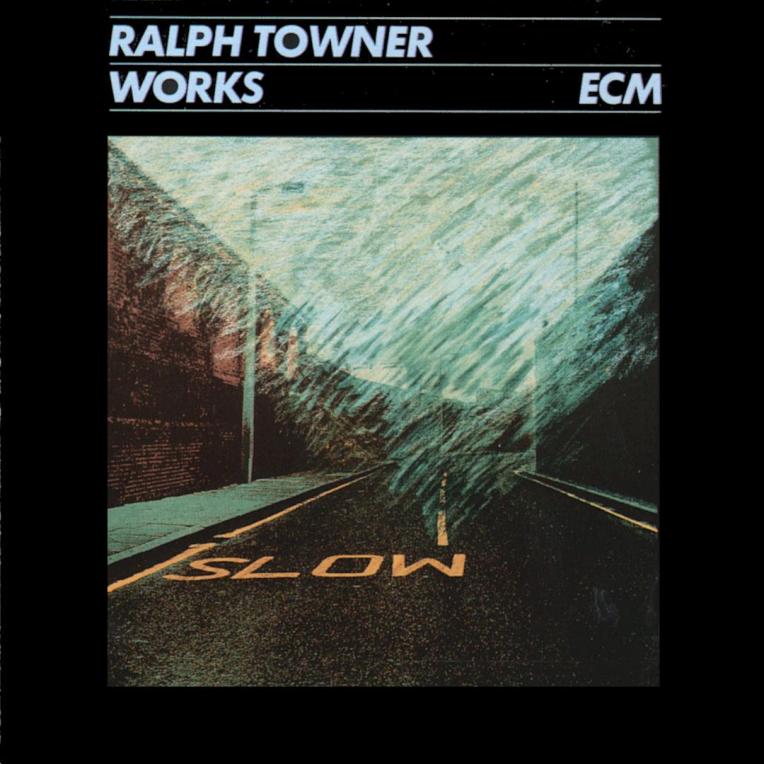
Guitarist Ralph Towner, like saxophonist Jan Garbarek (with whom he often collaborated during this formative phase), is one of ECM’s perennial talents and set a precedent for the label unlike any other on Solstice. Over the decades, the 1975 classic has acquired even more integrity than it exhibited when first released. “Oceanus” opens both it and this sensitively curated compilation, combining forces with Eberhard Weber, Jon Christensen, and Garbarek himself. It is perhaps the only logical first step with which to begin any foray into Towner’s universe. Weber’s cello, in combination with his plucked bass backbone, is an enchantment in and of itself, and elevates Towner’s resonating strings to nearly the same level as Garbarek’s tenor. Christensen’s sunlit cymbals complete the image. “Nimbus” finds Towner adding his piano to the mix. A patient intro unleashes the band’s total effect, Weber treading exuberantly across Christensen’s passionate soil.

The second album to be referenced is 1983’s Blue Sun, a solo effort from which two selections are presented. The title track features Towner on piano, Prophet 5 synthesizer, and percussion, alongside his trusted 12-string, for a nostalgic Polaroid that develops before our very ears. This is music that moves us, because it is movement in and of itself. “The Prince And The Sage” recalibrates the array to Prophet 5 and classical guitar only. Tracing a parabola over cities, villages, and waterways, it blends tastefully and in a way that would be unrepeatable with today’s ingredients.

Last we have two tracks from 1979’s Old Friends, New Friends. “New Moon” features Kenny Wheeler (trumpet and flugelhorn), David Darling (cello), Eddie Gomez (bass), and Michael DiPasqua (drums and percussion). If anything, it’s a memorable vehicle for Wheeler, who soars over landless expanse. “Beneath The Evening Sky” makes another reduction, this time to Towner’s 12-string and Darling’s cello. The latter unfolds a string quartet’s worth of backing in this deeply psychological character study.

And while there is some gold unmined in this collection, especially with regard to my all-time favorite Towner album, Solo Concert, there’s enough here to both satiate the hungry ear and inspire exploration for more.

Gary Burton: Works

Burton

Gary Burton
Works
Release date: April 1, 1984

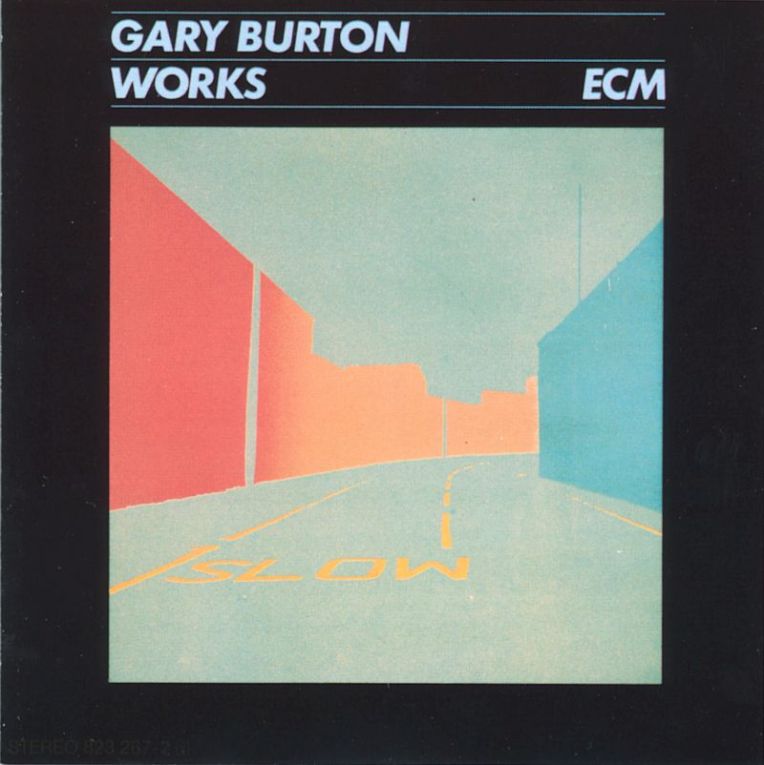
Vibraphonist Gary Burton, one of the defining voices of ECM’s formative years, is worthily honored in this second “Works” series installment. His contributions as virtuoso and interpreter of the instrument are unparalleled, and on ECM both aspects of his career found ample space in which to flourish. This particular era of the 1970s, which followed his RCA blitz, showed him also to be a musician of great patience, as on The New Quartet. The 1973 classic dropped him into a studio with guitarist Mick Goodrick, bassist Abraham Laboriel, and drummer Harry Blazer for a set as gorgeously played as it was conceived. From it we are treated to Keith Jarrett’s “Coral,” of which every spindly leaf is accounted for, and Carla Bley’s “Olhos De Gato,” which waters a groove that is laid back but never subdued. Those chamber sensibilities give way to more luscious details in “Vox Humana,” another Bley tune that references 1976’s quintet outing, Dreams So Real.

While Burton was quick to expound at length on any given theme, he also gave his bandmates room to breathe. This was especially true of 1974’s Ring, for which the quintet was augmented by bassist Eberhard Weber. From that album we are afforded “Tunnel Of Love.” Burton’s pitch-bending adds a degree of physicality to this nostalgic slice of life by Michael Gibbs. The third of 1974’s Seven Songs For Quartet And Chamber Orchestra is another master class in delayed gratification and defers to the bassing of Steve Swallow.

The remainder of this compilation features the deeper integrations of Burton’s duo projects. His highest achievement in this regard, 1973’s Crystal Silence, pairs him with pianist Chick Corea. The track chosen to represent it, “Desert Air,” is a springboard for some of the most virtuosic finishing of sentences one is likely to encounter in such a collaboration. Another duo project with Ralph Towner, 1975’s Matchbook, yields the title track, in which percussive impulses from the guitarist clear the road for an unimpeded ride over flatlands. And on “Chelsea Bells” and “Domino Biscuit” (Hotel Hello, 1975), both by Swallow, the composer joins Burton on piano with touches both anthemic and gospel-esque. All of which leaves us with an abridged version of an oeuvre steeped in timeless energy. A gift that keeps on giving, decades later.

Jan Garbarek: Works

Garbarek

Jan Garbarek
Works
Release date: April 1, 1984

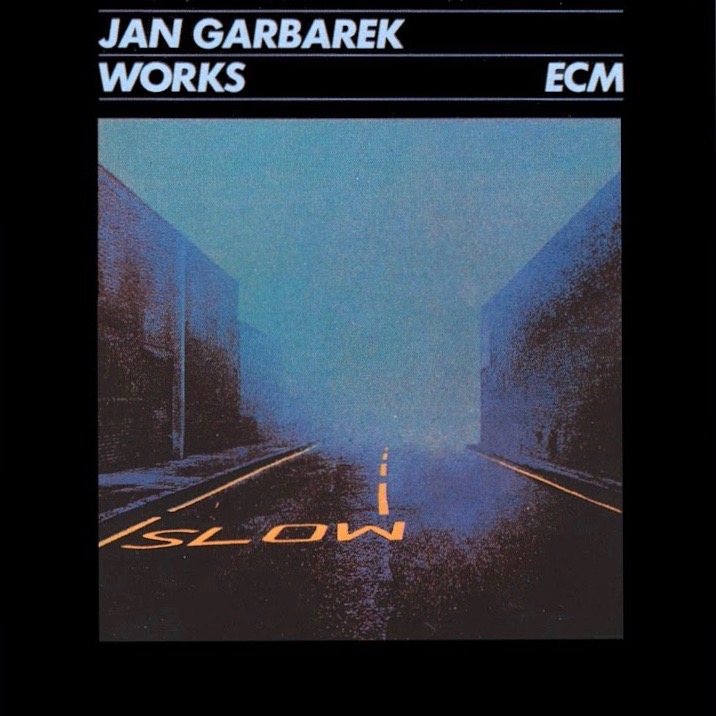
The “Works” series of ECM compilations began in 1984 to celebrate the label’s 15th anniversary, as it prepared to open a new chapter with its classically focused New Series imprint later that same year. It makes sense that Norwegian saxophonist and composer Jan Garbarek should be the subject of this first installment, as he defined not only the sound of ECM throughout the 1970s but also of a jazz scene that was relatively unknown outside its own borders until producer Manfred Eicher committed himself to the vision of broadening its wingspan.

Garbarek has taken on many roles throughout ECM’s now 50-year history, and even at this early stage had defined some key faces of his creative persona. In “Folk Song,” from 1981’s Folk Songs with guitarist Egberto Gismonti and bassist Charlie Haden, we find ourselves in the company of Garbarek the griot. With a telepathy as powerful as that of remembrance, the trio’s music transports us into ourselves. If Haden and Gismonti are shadow and light, respectively, then Garbarek is the one who wanders the valley between them, drawing a horizon wherever the sky will hold pigment. This is the spirit of Garbarek’s playing at all times: an itinerant yet grounded soul who understands the way of things to be carved in experience.

We also encounter Garbarek the sailor. In “Passing” (Places, 1978), he shares a vessel with John Taylor on organ, Bill Connors on guitar, and Jack DeJohnette on drums. With circadian rhythms and steady passage, marked like a fishing net by Connors’s acoustic wisdom, the quartet catches wind purposefully forward. And in “Svevende” (Dansere, 1976), inhaling brine and waves with Bobo Stenson on piano, Palle Danielsson on bass, and Jon Christensen on drums, Garbarek evokes sirens of both the mythical and preventative kind. Another track from Dansere, “Skrik & Hyl,” reveals a shepherd, now climbing a mountain with Danielsson alone. Sounding a call to the ether itself, Garbarek tends to his melodic flock without fear. Responding to said call are Terje Rypdal on guitar, Arild Andersen on bass, and Christensen again on drums in “Beast Of Kommodo” (Afric Pepperbird, 1970). This early build, from ECM’s seventh release, features guttural expression in a tactile setting. And in “Viddene” (Dis, 1977), his soprano meshing with the 12-string guitar of Ralph Towner over a windharp drone, he jumps from the cliff as one who looks down upon landscapes instead of up from them.

Finally, Garbarek the mystic welcomes us into internal spaces. In “Selje” (Triptykon, 1973), he turns to flute in the presence of Andersen, along with Edward Vesala on percussion, for an incantation of light. And in “Snipp, Snapp, Snute” (Eventyr, 1981), his flute is joined by Nana Vasconcelos on percussion, moving with the tide of biographical change.

Throughout these tunes, and regardless of focus, Garbarek activates thoughts of ancestors in the most undeniable terms: through sound. Vibrations thus activate us at the very core, stirring molecules of the heart with messages and songs. And while most compilers might use individual tracks to tell a larger story, Eicher has put together this sequence to show how that larger story feeds the individual.

La Buissonne Label – Hors-Série (RJAL HS002)

LBL

Though La Buissonne may be familiar to ECM listeners as a relatively recent hub of recording excellence, the French studio has also been putting out releases under its own name since 1994. Originally distributed by Harmonia Mundi, since 2019 they have been handled by ECM itself. This double compilation album, a promotional freebie earned by buying more than two CDs from La Buissonne’s official Bandcamp store, gives us a broad cross-section of their commitment to variety, atmospheric integrity, and personal expression.

At the heart of it all is the piano. That most perennial of modern instruments is represented in a slew of distinct yet integrated solo recordings by Andy Emler, Stéphan Oliva, Jean-Sébastien Simonoviez, and Bruno Ruder. Each is an evocative postcard mailed from soul to soul. The most indelible are those by Oliva, whose “La traverse” reflects the passage of time without compromise, and Emler, whose “There is only one piano left in this world” opens the collection in multitracked brilliance, banging and plucking its way through an array of modes. Emler is, in fact, a defining voice of the label and finds himself well-represented here. Highlights of his oeuvre include two selections from the so-called MegaOctet project (including the tuba- and tabla-rich “Doctor Solo”) and his magical ETE Trio with bassist Claude Tchamitchian and drummer Eric Echampard. An excerpt from the latter’s “Elegances” follows every emotion to its logical end. A trio of a slightly different feather, led by Oliva with the same bassist and Jean-Pierre Jullian on drums, yields one of my favorite tracks from La Buissonne’s entire output: the title cut off 2009’s Stéréoscope. Another I would encourage you not to gloss over is that of Jean-Marc Foltz (clarinet, bass clarinet, percussion), Oliva (piano, percussion) and Bruno Chevillon (bass, percussion). Their 2007 album Soffio di Scelsi is an understated tour through rain-kissed foliage and haunting dreams. Neither can we ignore the Trio Zéphyr: three string players whose voices walk like compasses across maps of their own making. Of the two pieces represented, “Sauve tes ailes” evokes distant travel with minimal brushstrokes and titles one of La Buissonne’s finest hours.

Solo artists beyond the keyboard bring equally delectable flavor profiles to the proverbial table. Among them are those of guitarist Carlos Maza (his “Altas y bajas” is a mechanical wonder), late bassist Jean-François Jenny-Clark, and cellist Vincent Courtois, whose “Skins” and “So much water so close to home” are poems written on the backs of slow-moving mountains. Courtois, like Emler, is a touchstone presence in this ever-expanding catalog and has made deepest impressions in his trio with tenor saxophonists Robin Fincker and Daniel Erdmann. Their “Rita and the Mediums” is a segue into wider territories.

Upgrading to quartets brings us to the nocturnal cinematography of Jeremy Lirola’s “Art the last belief” (featuring the remarkable subtlety of drummer Nicolas Larmignat), the “Junction point” of Jean-Christophe Cholet (a sonic train that turns 90-degree corners with ease), the skronk-leaning vibe of Gilles Coronado’s “Wasted & Whirling,” Bruno Angelini’s rendition of the Paul Motian classic “Folk song for Rosie,” and the phenomenal techno-sphere of Caravaggio’s “Dennis Hopper Platz” (its tangle of streets crumbling beneath the weight of progress). Other moments to watch out for are “Breath,” which represents the collaboration between pianist Jean-Marie Machado and saxophonist Dave Liebman (a failproof combination, to be sure); “Leonor Theme,” which places Simonoviez alongside bassist Riccardo Del Fra; and “Three coins in the fountain,” a Kurt Weil-ish song performed by Bill Carrothers at the piano. An unreleased outtake of “Que sera sera” from that same session further illuminates his gift for harmony.

In addition to the broad variety of music, this collection is a tribute to La Buissonne’s unique sonic fingerprints, which forensically matches those of engineer Gérard de Haro. His vision is their vision, and our fortune by extension to be privy to its growth over the past quarter of a century.

Vincent Courtois: Love of Life (RJAL 397034)

Cover

Vincent Courtois
Love of Life

Vincent Courtois cello
Robin Fincker clarinet, tenor saxophone
Daniel Erdmann tenor saxophone
Recorded June 26/27, 2019 in Oakland, 25th Street Recording Studio by Gérard de Haro, assisted by Gabriel Shepard
Mixed by Gérard de Haro at Studios La Buissonne, Pernes-les-Fontaines
Mastered by Nicolas Baillard at La Buissonne Mastering Studios
Produced by La Compagnie de l’imprévu and Gérard de Haro & RJAL for La Buissonne
Release date: January 31, 2020

The appropriately titled Love of Life is cellist-composer Vincent Courtois’s wordless tribute to writer Jack London. London is a fairly recent discovery for Courtois, who cites the semiautobiographical Martin Eden as a constant companion while on tour with reed players Robin Fincker and Daniel Erdmann. The trio began their travels on the East Coast and ended them in California, where they met with London’s great-granddaughter, improvised under the towering trees near his gravesite (as pictured on the album’s cover), and recorded this session on the author’s Oakland, California homestead. The result is music that brims with agency and verve and explores London’s empathy for the underrepresented, the spat upon, and the voiceless.

Each track title pays respect to a short story or novel from London’s oeuvre. His empathy for divided selves is reflected in two diptychs: one for Martin Eden and the other for “To Build a Fire.” Ranging from the former’s jaunty charisma (indicative of a fumbling naivety) to the latter’s crackling flames, Courtois leverages an emotionally naked tone in the contexts at hand. Before these deeply psychological forays, the title track sets the pace with its gentle procession of horns, as if to remind us that everything will be okay in spite of the struggles faced by all. This in contrast the fact that hope seems so far away in the period song “Am I Blue” (Grant Clarke/Harry Akst), which captures the angst of being a working-class subject in a bourgeois world. That same disgruntlement carries over into “The Dream of Debs” and “South of the Slot,” wherein wars are waged internally.

“The Road” is a marvelous highlight. Here the tenors provide a harmonious framework, almost like another cello playing double stops, while Courtois cries out with guttural fortitude by means of his own. Fincker and Erdmann throw their own shining coins into the compositional fountain with “The Sea-Wolf” and “Goliah,” respectively. Where one is stormy and dire, the other is delightfully sardonic. Courtois caps off with a solo “Epilogue” to restore credence to remembrance as the only viable coping mechanism in a world hijacked by self-interested materialists.

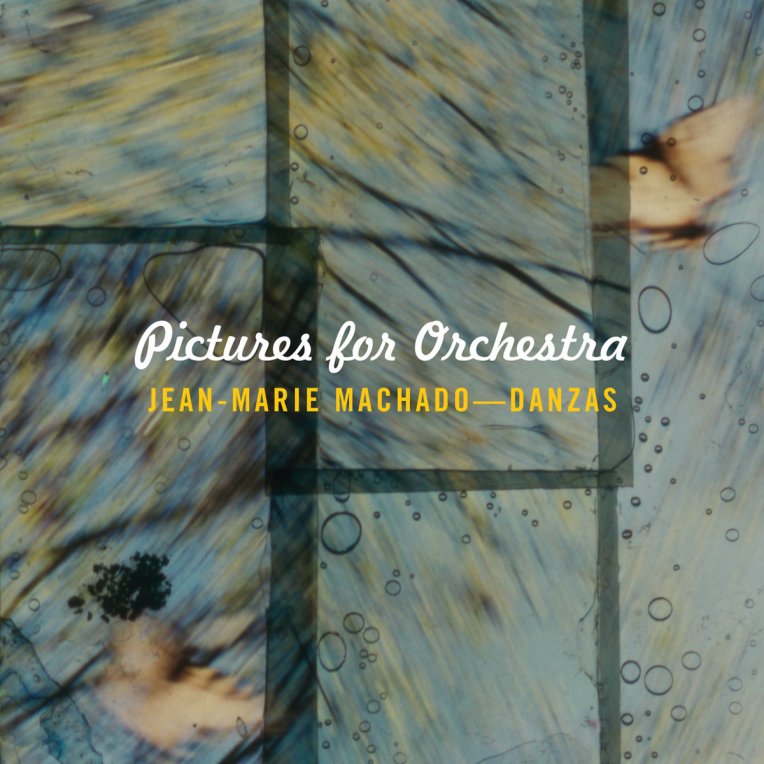
Jean-Marie Machado/Orchestre Danzas: Pictures for Orchestra (RJAL 397033)

Cover

Jean-Marie Machado
Orchestre Danzas
Pictures for Orchestra

Jean-Marie Machado piano
Didier Ithursarry accordion
François Thuillier tuba
Stéphane Guillaume flutes
Jean-Charles Richard saxophones
Cecile Grenier viola
Severine Morfin viola
Guillaume Martigne cello
Elodie Pasquier clarinets
Artistic direction by Jean-Marie Machado and Gérard de Haro
Recording, mixing, mastering, Studios La Buissonne, Pernes-les-Fontaines, France
Recorded October 2-5 and mixed November 12/13, 2018 by Gérard de Haro
Mastered by Nicolas Baillard at La Buissonne Mastering Studios
Piano preparation and tuning by Alain Massonneau
Release date: March 8, 2019

After making his La Buissonne label debut with saxophonist Dave Liebman, pianist and composer Jean-Marie Machado returns with his most personal project to date. Though leading a nine-member ensemble of two violas, cello, winds, accordion, and tuba, he leaves off the roster an important tenth member: improvisation itself.

The set is held intimately aloft by three piano solos, each sweeping and painterly in its own way. The opening “Minhas três almas” is the most nostalgic among them. Like a child taking its first steps, it sparkles with unadulterated delight even as it foreshadows the hardships life is sure to put in one’s path. While some of what comes after is in an exuberant mode—including the Egberto Gismonti-esque greenery of “A água do céu,” the tuba-centric dance of “Trompeta Grande,” and the invigorating encore, “Oriental jig”—the heartbeat of this musical body runs on the electrical impulses of something far more introverted. The space within, it turns out, is grander than any without, for only the mind and soul are equipped to imagine infinity.

Dust and ashes float in the air of “Nebbia,” throughout which a viola sings in its highest registers as a mercy of chronological salvation. Kindred voices extend their loving arms across other terrains. Like the cello drawing moonlight between the quivering branches of “As ondas da vida” or the soprano saxophone grazing cloud in “Circles around,” every gesture has an echo, and every echo is the start of another.

The cumulative effect is an emotionally resilient biography of a life known by no other name than our collective own. Even (if not especially) when Machado arranges the work of Astor Piazzolla (“Vuelvo al sur”) and Robert Schumann (“FW.1855”), we hear our own experiences reflected in every dialogue. All of which accounts for another gem in the La Buissonne catalog.

Andy Emler MegaOctet: A moment for… (RJAL 397032)

Cover

Andy Emler MegaOctet
A moment for…

Andy Emler piano, conductor
Claude Tchamitchian double bass
Eric Echampard drums
François Thuillier tuba
François Verly marimba, percussion
Laurent Dehors tenor saxophone
Guillaume Orti alto saxophone
Philippe Sellam alto saxophone
Laurent Blondiau trumpet
Recording, mixing and mastering, Studios La Buissonne, Pernes-les-fontaines, France
Recorded December 21/22, 2017 and mixed February 28 & March 1, 2018 by Gérard de Haro, assisted by Anaëlle Marsollier
Mastered by Nicolas Baillard at La Buissonne Mastering Studio
Steinway grand piano tuned and prepared by Alain Massonneau
Drums technician: David Grail
Produced by Gérard de Haro and RJAL for La Buissonne and La Compagnie aime l ‘air
Release date: October 5, 2018

Andy Emler returns to both the pianist and composer’s chair with his MegaOctet for a session of fresh, awesome material. Those who’ve followed Emler and his aptly named ensemble’s journey thus far will know that expectations are only made to be surpassed. A moment for… delivers, and then some.

One look at the set list and you’ll notice grammatical particles orphaned after many of the titles. While some, like “5 Series… of,” may seem like incomplete thoughts, there’s nothing incomplete in the album’s balance of airy grammar and deep punctuation. “Move out… if” serves up a smorgasbord of what Emler and friends are capable of at their collective best: rhythmically and melodically satisfying music that grabs us by the hands and swings until left and right become indistinguishable. Percussionist François Verly steps lithely across the marimba like feet over hot coals and sets up the seedier atmosphere of “Dirty Mood… so.” This tune meshes well with Emler’s ability to craft forward-moving vehicles and includes a choice solo by the one and only François Thuillier. The tuba master engages in hi-res expositions in “Move in… or”’ and “Flight Back… and,” the latter noteworthy for its punch of theatrical voices.

The rhythm section of bassist Claude Tchamitchian and drummer Eric Echampard shores up the tide of “Stand-Up and… blow,” the watery feel of which spurs along the vessel of Laurent Dehors’s soulful tenor saxophone. That tides reaches neap status in the title track, where patience and honesty rule the day. This leaves us to devices of “By the Way,” a caravan ride across a desert of horns who build (as they always do) to peak performance.

A moment for… is both music of and about the moment. It’s also significant for showing the MegaOctet at its most synergistic. Working as one body, Emler and his crew do nothing without consideration of the family. This is their mission statement.

Bruno Angelini: Open Land (RJAL 397031)

Cover

Bruno Angelini
Open Land

Bruno Angelini piano
Régis Huby violin, tenor violin, electronics
Claude Tchamitchian double bass
Edward Perraud drums, percussion
Recording, mixing and mastering, Studios La Buissonne, Pernes-les-fontaines, France
Recorded June 19-21 and mixed October 5/6, 2017 by Gérard de Haro, assisted by Annaëlle Marsollier
Mastered by Nicolas Baillard
Steinway grand piano tuned and prepared by Alain Massonneau
Produced by Gérard de Haro and RJAL for La Buissonne Label, and by Solange Association
Release date: March 23, 2018

Continuing where they left off on Instant Sharings, pianist Bruno Angelini, violinist Régis Huby, bassist Claude Tchamitchian, and drummer-percussionist Edward Perraud examine even deeper territory of quiet lyrical intensity. Angelini is the sole composer here, his trifecta of melody, tempo, and dynamics sensitively attuned to every face of this translucent gem.

The album begins and ends with two dedications. The first, “Tree song,” was written in honor of late pianist John Taylor, with whom Angelini shares an affinity for the unpretentious power of lyricism. Trailing half-tone harmonies across the night, it rakes its formless hand across an ether it cannot touch in hopes it will nevertheless be heard. The bassing reminds us that we are still here on solid ground, and that music can still be our bridge into light. The second homage is the three-part “You left and you stay” for Max Suffrin. This cinematic suite unearths its ore in an unrefined state to show us the beauty of that which has been untouched by hands of commerce.

“Perfumes of quietness” is an apt descriptor not only of this tender tune, but also of the quartet’s M.O. (as is “Both sides of a dream” of an innate ability to tell a story with light and dark faces). Angelini’s pianism is airy yet holds on to roots, even as a current of brushed drums threatens to wash it away. The variegated journey for violin that is “Jardin perdu” traverses the same territory over and over yet notices stark differences every time, leaving us unsure of whether it is the landscape or the traveler who changes. Such ambiguity is part of the band’s ability to suspend us over a chasm of uncertainty without fear of falling in. From the continental drift of “Indian imaginary song” to the oceanic motions of “Inner blue,” ambient suspensions serve as inhalations to wordless exhalations. They, like the album as a whole, are indicative of a masterful progression toward humility, a fluid orthography written on paper of the soul.