Wolfgang Muthspiel: Angular Blues (ECM 2655)

2655 X

Wolfgang Muthspiel
Angular Blues

Wolfgang Muthspiel guitar
Scott Colley double bass
Brian Blade drums
Recorded August 2018 at Studio Dede, Tokyo
Engineer: Shinya Matsushita
Assistants: Yuki Ito and Akihito Yoshikawa
Mixed at Studios La Buissonne by Manfred Eicher, Wolfgang Muthspiel, and Gérard de Haro (engineer)
Mastering: Nicolas Baillard
Album produced by Manfred Eicher
Release date: March 20, 2020

On Angular Blues, Wolfgang Muthspiel revives the format of his 2016 ECM leader debut. Rejoined by drummer Brian Blade yet inviting bassist Scott Colley in place of Larry Grenadier, the Austrian guitarist serves a full course of originals with a couple of surprises added to taste. The members of this trio share what Muthspiel calls a “love of song” and perhaps no more succinct a term could so accurately describe their rapport. Longtime listeners won’t be surprised that Muthspiel has brought together players who understand the value of space: how to shape it, to be sure, but more importantly how to let oneself be shaped by it in kind.

The narrative impulses of the opener, “Wondering,” harness the flexibility of Muthspiel’s acoustic playing, which in this context meshes with bass while kissed cymbals draw the z-axis of a three-dimensional sound. Moods cycle between gentility and insistence and shades between. The title track is aptly named for revealing a delicately virtuosic side to the energies at hand. “Hüttengriffe” follows with a soft-hewn anthem.

The remaining tunes find Muthspiel plugged-in, jumping into the amorphous body of his electric guitar. In “Camino” he is equally at home, his fingers free to engage in metaphysical play. As a thinly veiled tribute to the late John Abercrombie—not only in style but also in the way Muthspiel drafts his solo—it’s a highlight that deserves close listening. Others include “Kanon in 6/8,” which shows the trio at its deepest level of synergy (it’s also offset by the digitally enhanced “Solo Kanon in 5/4”), and bebop-influenced “Ride.” Two standards fill in the gaps. Where Cole Porter’s “Everything I Love” moves vertically, “I’ll Remember April” ends this worthy set on a horizontal plane.

(This review originally appeared in the April 2020 issue of The New York City Jazz Record, a full PDF of which is available here.)
James Ilgenfritz: You Scream A Rapid Language

YSARL

Bassist/composer James Ilgenfritz is rare for running lines of transfusion between jazz and classical bodies while keeping them equally alive. In that spirit, he presents this chamber program of formidable subtlety and feeling that travels comfortably between (and beyond) genres.

The combinations of instruments provide constant fascination, starting with the pairing of violin (Pauline Kim Harris) and double-pedal bass drum (Alex Cohen) in Terminal Affirmative. By turns primal and futuristic, this music frays the edges of such contradictions to the point of unity. It’s worth noting that this piece is based on observations of Ovid, who emphasized the power of water droplets to erode stone over time as an organic illustration of persistence. This philosophy seeps into everything that follows, but especially in Apophenia III: The Index. This trio for piano (Kathleen Supové), guitar (James Moore) and violin (Jennifer Choi), based on a short story by J. G. Ballard, asks the musicians to build a grander narrative out of through-composed fragments. Thus, what first seem to be aphorisms take on a coherence all their own.

Apophenia IV: A Bell In Every Finger sets poetry by the late Steve Dalachinsky (on Muhal Richard Abrams and Cecil Taylor, no less) for baritone (Thomas Buckner), piano (Joseph Kubera), percussion (William Winant) and Ilgenfritz himself. Buckner lends his falsetto to this garden of delights and darkness, contrasting hauntingly with the album’s masterstroke: How To Talk To Your Children About Not Looking At The Eclipse. Here flutist Margaret Lancaster breaks down breath to its most linguistically pure elements and makes them sing.

Tempting as it is to call this album intermittently assaultive, it is perhaps better described as possessed of a fierce intimacy. As in the concluding Fanfares For Modest Accomplishments for two violins (Pauline Kim Harris and Conrad Harris), it uses brevity to bring our attention to expanse. Such dichotomies are difficult to maintain, but these musicians do just that with unwavering strength.

(This review originally appeared in the April 2020 issue of The New York City Jazz Record, a full PDF of which is available here.)
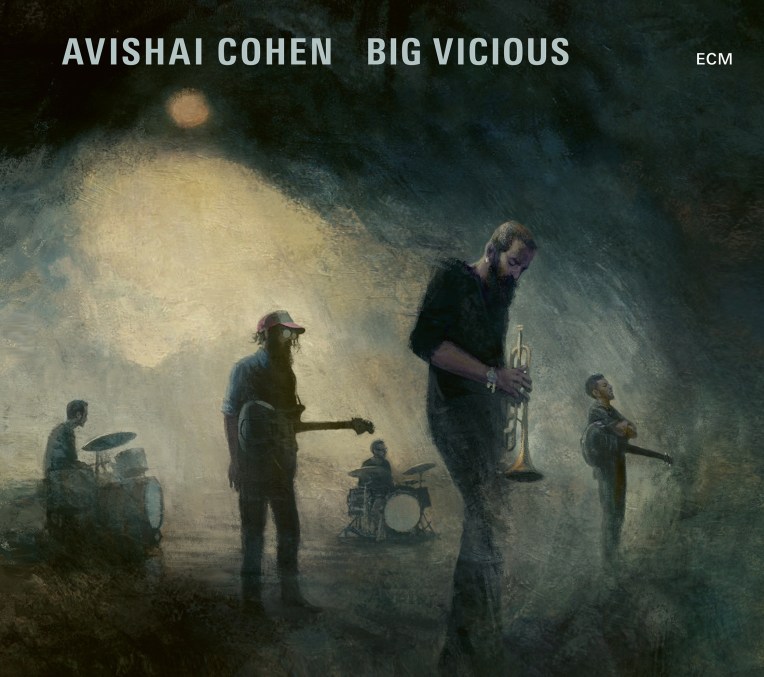
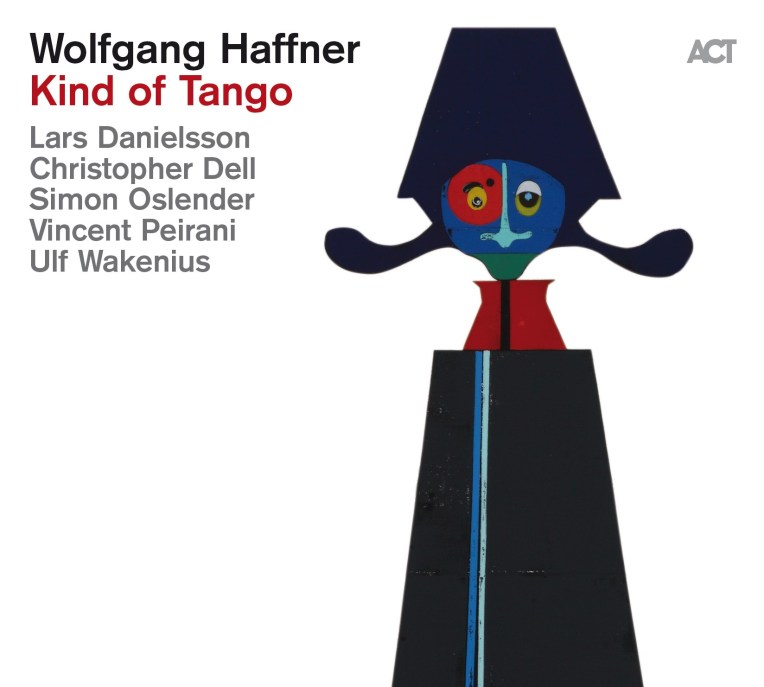
Wolfgang Haffner: Kind of Tango

Kind of Tango

This album expands composer and drummer Wolfgang Haffner’s Kind of… series with its best-integrated offering. Not only because the rapport he shares with bassist Lars Danielsson and pianist Simon Oslender is as involuntary as breathing, but also because the music spinning out from that core trio is reflective of a bandleader who understands that comfort is born of experience.

Whether in the understated groove of “La Cumparsita,” the inward glance of “Respiro” or the somber farewell of “Recuerdos,” Haffner figures that every dance doesn’t need to be a competition. And he’s not afraid to let melodies awaken slowly, as on “El Gato.” But the tango is best drawn between a leap and a crawl, and the brilliance of Haffner’s tempi lie in that balance. Quintessential in both concept and execution is his handling of Astor Piazzolla. By wrapping the familiar strains of “Libertango” in mystery and the lesser-known neorealism of “Chiquilín de Bachín” in the warmth of an open fire, he brings out a blush of sanctity from the secular. What we end up with, then, is a welcoming examination of tango: something personal, fresh and unforced.

(This review originally appeared in the May 2020 issue of DownBeat magazine.)

Tim Berne’s Snakeoil: The Fantastic Mrs. 10

Fantastic Snakeoil

There’s something undeniably adhesive about Snakeoil, alto saxophonist Tim Berne’s uncompromising outfit of exploding singularities. From the inaugural line, catalyzing an angular yet strangely joyful romp through head-nodding territory, we’d be hard-pressed to find ourselves unattached to at least one motif, line or beat along the way. Lending further veracity to his enterprise are Berne’s usual suspects of pianist Matt Mitchell, clarinetist Oscar Noriega and percussionist Ches Smith, adding to those guitarist Marc Ducret. One imagines the urban landscape moving in concert with these bodies ambulating through it, as if flesh, metal and concrete were all one assemblage to which this is the only logical soundtrack.

Despite the muscle behind much of the movement, passages of gargantuan sensitivity abound. Sometimes these are holistic, as in “Dear Friend,” which finds the band bowing its collective head for its composer Julius Hemphill. Other times, those moments are buried, as in “Surface Noise”—an accurate title, to be sure, but one that reclaims the term by severing its negatively connotative roots and replanting it in active soil.

The interplay between piano and alto saxophone is as oceanic as that between guitar and bass clarinet is amphibious, thus indicating a powerful array of duos throughout. Other notables include Mitchell and Ducret in the title track and “The Amazing Mr. 7,” Berne and Smith in “Rolo” and Berne and Noriega in “Third Option.”

All of this and more is summarized in “Rose Colored Assive.” At the touch of behind-the-scenes member David Torn, this concluding statement feels more like an opening one, its taste of fantasy whetting our palates for yet another new direction from one of the most exciting bands working in jazz today.

(This review originally appeared in the March 2020 issue of The New York City Jazz Record, a full PDF of which is available here.)
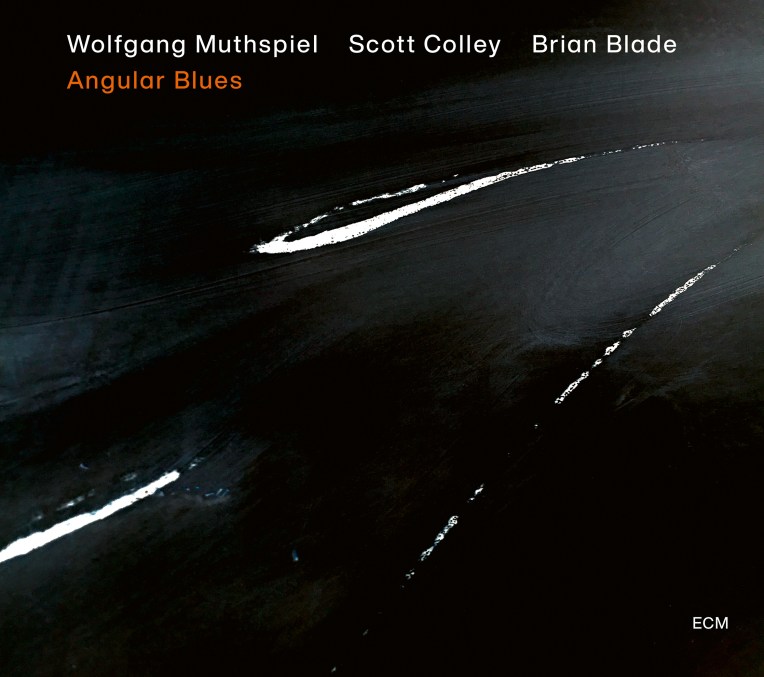
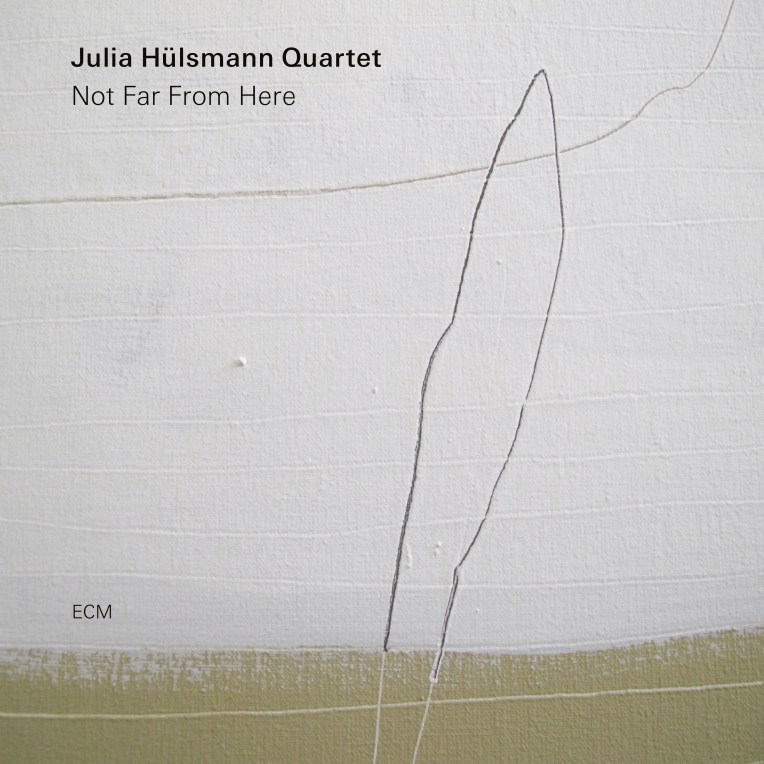
Julia Hülsmann Quartet: Not Far From Here (ECM 2664)

Not Far From Here.jpg

Julia Hülsmann Quartet
Not Far From Here

Uli Kempendorff tenor saxophone
Julia Hülsmann piano
Marc Muellbauer double bass
Heinrich Köbberling drums
Recorded March 2019, Studios La Buissonne, Pernes-les-Fontaines
Engineer: Gérard de Haro
Mastering: Nicolas Baillard
Produced by Thomas Herr
Release date: November 1, 2019

Fans of pianist Julia Hülsmann’s work will find familiar flavors enhanced by the unique spice of tenor saxophonist Uli Kempendorff being added to her long-running ensemble. He’s most vividly showcased on “Le Mistral,” one of two tunes contributed by bassist Marc Muellbauer. What begins with a quiet stirring develops into a freely interlocking sound—one honed by years of experience and held together by the band’s open-ended circuitry.

The poetry of Kempendorff’s playing is forthcoming, and the same holds true of his writing, even as “Einschub” is harmonized enigmatically. Most of the composing credits, though, go to Hülsmann. From the opening caress of “The Art Of Failing” to the masterful “No Game,” she treats every instrument as a vital ligament of the same appendage, pointing and flexing to the rhythms of emotional desire. With the tenderness of morning light gaining slow but steady purchase on the corner of a bedroom window, she follows a natural order of things.

Drummer Heinrich Köbberling throws a couple of his own coins into the proverbial fountain, including “Colibri 65,” which furthers the bandleader’s apparent mission of summoning placid, distinct airs.

The set is upheld by two versions of “This Is Not America,” a song written by David Bowie in collaboration with Pat Metheny and Lyle Mays. With broken nostalgia, it winds a melodic tangle from which escape is an easy but deeply unattractive option.

(This review originally appeared in the February 2020 issue of DownBeat magazine.)

Maciej Obara Quartet: Three Crowns (ECM 2662)

Three Crowns.jpg

Maciej Obara Quartet
Three Crowns

Maciej Obara alto saxophone
Dominik Wania piano
Ole Morten Vågan double bass
Gard Nilssen drums
Recorded March 2019, Studios La Buissonne, Pernes-les-Fontaines
Engineer: Gérard de Haro
Mastering: Nicolas Baillard
Produced by Steve Lake
Release date: October 25, 2019

After their 2017 ECM debut, Unloved, Polish saxophonist Maciej Obara and his quartet make their return with Three Crowns. In addition to six new tunes from the bandleader, the album features improvisational renderings of music by one of the most significant composers of the 20th century: Henryk Mikołaj Górecki (1933–2010). Though Górecki’s work has been subjected to improvisational treatments before, these renditions bear special distinction for being sanctioned by his family, whom Obara came to know while living in Katowice, where the composer once was based. The first Górecki interpretation, “Three Pieces In Old Style,” is so beautifully reimagined that it sounds as if it’s emanating from another world. Pianist Dominik Wania opens in a deeply respectful mood, allowing Obara’s incisive tone to keen overhead, while bassist Ole Morten Vågan and drummer Gard Nilssen roam a rain-kissed landscape below.

“Blue Skies For Andy” is among the stronger Obara originals—not only for its melodic strength but also its patience. It has a classic sound that feels warm to the ears, as precise as it is free. Other highlights range from the savvy urbanism of “Smoggy People,” notable for Wania’s postmodern swing, to the more geometric “Glow,” which recalls the tightly knotted compositions of fellow altoist Tim Berne. Obara’s bandmates grow in real time, though nowhere so maturely as on “Mr. S,” an homage to trumpeter Tomasz Stańko that rolls in on a wave of melancholy and sunshine in equal measure. Like the title track, it’s flexible and always attached to something pure and knowable. There is no mystery here. Only life.

(This article originally appeared in the January 2020 issue of DownBeat magazine.)

Keith Jarrett: Munich 2016 (ECM 2667/68)

2667|68 X

Keith Jarrett
Munich 2016

Keith Jarrett piano
Recorded live July 16, 2016
at Philharmonic Hall, Munich
Producer: Keith Jarrett
Engineer: Martin Pearson
Mastering: Christoph Stickel
Executive producer: Manfred Eicher
Release date: November 1, 2019

The more I listen to Keith Jarrett’s improvised concerts, the more I shy away from the adjective “solo” to describe them. Not because I live under a delusion that it isn’t just him translating energies that 99.99 percent of us could only hope to detect, but because each iteration of this asymptotic journey at the piano reminds me of the ghost of yet another former self who goes on playing in an alternate reality even after he lifts his hands and takes a bow amid the applause of this one.

Throughout this two-disc recording, which documents a July 16th performance in the city and year of its title, Jarrett unveils 12 numbered sculptures of possibility, each more freestanding than the last. Not that the path between them is linear. What begins in Part I—the set’s longest, just shy of 14 minutes—as a many-tentacled deep sea creature has by Part III already morphed into a landbound shepherd. The latter’s hymnal qualities light a gospel fire in the underground railroad lantern of Part IV before dissolving into the child’s dream that is Part V.

Part VI marks another change of face, uniting questions of mountains above with answers of valleys below. The contortions of Parts VII, IX, and XII are ages between, giving way to meditations in which un-pressed keys speak as truthfully as their contacted neighbors. Few are so profound in this regard as Part XI, of which a certain air of finality is only as permanent as the wind on which it’s written. It whispers as an antidote to the shouting match that has become our lives.

In light of all this, we get a trinity of shades in Jarrett’s choice of encores. In “Answer Me, My Love,” he embraces the past as if it were a dying future. In “It’s A Lonesome Old Town,” he embraces the present as if it were the only hope of peace. And in “Somewhere Over The Rainbow,” he lets go of all three states of mind, knowing that honesty of expression is the only wave we can catch to keep him visible as he follows one horizon in search of the next.

Kit Downes: Dreamlife of Debris (ECM 2632)

Dreamlife of Debris.jpg

Kit Downes
Dreamlife of Debris

Kit Downes piano, organ
Tom Challenger tenor saxophone
Lucy Railton cello
Stian Westerhus guitar
Sebastian Rochford drums
Recorded November 2018
at St. Paul’s Hall, University of Huddersfield
and St. John the Baptist, Snape
Engineer: Alex Bonney
Produced by Sun Chung
Release date: October 25, 2019

Following his 2018 ECM headliner debut, Obsidian, Kit Downes returns at the organ (and piano), this time among friends, including saxophonist Tom Challenger (heard for a spell on Obsidian), cellist Lucy Railton, and drummer Sebastian Rochford. The latter is heard prominently in the concluding “Blackeye,” a piece cowritten by Downes and Challenger. Its thicker brushstrokes fill a rather different sort of canvas than the ones preceding, albeit touched by the same palette.

“Sculptor” opens with Challenger’s bare tone, a kiss of sun on the morning glory of piano that then imbues the scene with its color. Also lurking is guitarist Stian Westerhus, a new addition to the Downes nexus who is rightly described by Steve Lake in his liner notes as, at times, a “near-subliminal participant.” Twinkling like starlight in “Bodes,” his guitar emotes under tension of utterly non-invasive strings. The latter tune is the album’s masterstroke: a fully narrative journey from cradle to grave that catches as many life experiences as it can before passing them on like an inheritance in faith of continuation.

Comforting about Downes as composer is his underlying sense of open-endedness. Titles such as “Pinwheel” and “Sunflower” suggest interconnections just beyond their titular surfaces—not only in Railton’s liquid threading, but also in their ability to turn melody into substance (if not the other way around). “Circinus” and “Twin” make sense of the organ as if it were a text to be interpreted in humility. Both elicit an undeniably cosmic feel, strangely rendered in textures of flesh and soil.

The only piece not by Downes is “M7.” Composed by his wife, bassist and vocalist Ruth Goller, this organ solo centers its energies in sustained pedal points while spreading open the periphery as one might a pair of hands. In its cradle, the entire album’s heart dents a pillow woven from old maps and cartographic sketches, each drawing closer to an undiscovered country but never quite reaching it. Content to float wherever the current may lead, it closes its eyes and redraws its path in the language of a dream, where the only songs that matter are those without words.

Avishai Cohen/Yonathan Avishai: Playing The Room (ECM 2641)

Playing The Room.jpg

Avishai Cohen
Yonathan Avishai
Playing The Room

Avishai Cohen trumpet
Yonathan Avishai piano
Recorded September 2018, Auditorio Stelio Molo RSI, Lugano
Engineer: Stefano Amerio
Produced by Manfred Eicher
Release date: September 6, 2019

Although trumpeter Avishai Cohen and pianist Yonathan Avishai have known each other and played together since they were teenagers in Tel Aviv, this is their first recording as a duo. The title refers to an offhand comment made by producer Manfred Eicher, who during the recording of Avishai’s Joys And Solitudes remarked, “Avishai [Cohen] should play this room.” The duo session documented here happened just a few days later, only now in the Auditorio Stelio Molo RSI at Lugano in place of Studios La Buissonne. And play the room they do. Not only in the sense of liberating a delightful mix of standards and original contributions to the modern songbook, but also because, like seasoned thespians, they inhabit their narrative roles with full physical commitment.

The set’s door is pushed open by said original contributions, starting with “The Opening” by Cohen, which seems to flower into audibility of its own volition to be heard. Piano and trumpet communicate so deeply, even when not playing at once, resulting in one of the more evocative beginnings to grace an ECM program quite some time. Avishai’s “Two Lines” is an equally introspective, if darker, companion, by whose gestures are activated shared memories. Cohen here is especially broad of emotional brush and paints with the abandon of a child.

John Coltrane’s “Crescent” kicks off the album’s airborne remainder, cycling through its own self-awareness and in that process attaching feather upon feather in anticipation of flight. Cohen rises and sets like the stars, while Avishai navigates by their movement. The effect is such that when Duke Ellington’s “Azalea” cracks open the scene like an egg of dawn, its classic sounds feel not so much reborn as reawakened. As in Ornette Coleman’s “Dee Dee” and Stevie Wonder’s “Sir Duke,” they approach the evergreen as an opportunity for pruning instead of replanting.

Whether in the comforting shades of “Ralph’s New Blues” (Milt Jackson) or the gorgeously rendering of “Kofifi Blue” (Abdullah Ibrahim), Cohen and Avishai stay true to form because they understand the form of truth. In their hands, and by the spatial allowances of Eicher and engineer Stefano Amerio, these tunes resonate with nothing more than what they were meant to be. All of which makes inclusion of “Shir Eres (Lullaby)” by Sasha Argov (1914-1995) poignant beyond measure. Not only because it’s an emotional touchstone in the hearts of the musicians, but also because it pulls the sky like a blanket over our ears, that we might better hear the sounds of our own heartbeats. Thus, Playing The Room is the sonic equivalent of the “moon illusion”—when our closest satellite appears bigger on the horizon than it does in the sky due to its visual proximity to earthbound objects. Once risen, however, it tells us just how far we’ve come, and how much infinitely farther we have to go.