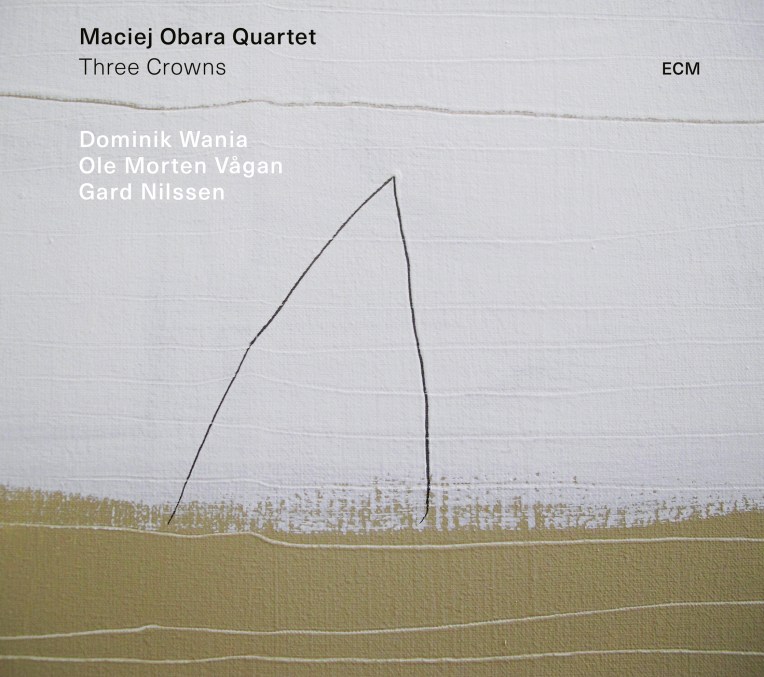
Maciej Obara alto saxophone Dominik Wania piano Ole Morten Vågan double bass Gard Nilssen drums
Recorded March 2019, Studios La Buissonne, Pernes-les-Fontaines
Engineer: Gérard de Haro
Mastering: Nicolas Baillard
Produced by Steve Lake
Release date: October 25, 2019
After their 2017 ECM debut, Unloved, Polish saxophonist Maciej Obara and his quartet make their return with Three Crowns. In addition to six new tunes from the bandleader, the album features improvisational renderings of music by one of the most significant composers of the 20th century: Henryk Mikołaj Górecki (1933–2010). Though Górecki’s work has been subjected to improvisational treatments before, these renditions bear special distinction for being sanctioned by his family, whom Obara came to know while living in Katowice, where the composer once was based. The first Górecki interpretation, “Three Pieces In Old Style,” is so beautifully reimagined that it sounds as if it’s emanating from another world. Pianist Dominik Wania opens in a deeply respectful mood, allowing Obara’s incisive tone to keen overhead, while bassist Ole Morten Vågan and drummer Gard Nilssen roam a rain-kissed landscape below.
“Blue Skies For Andy” is among the stronger Obara originals—not only for its melodic strength but also its patience. It has a classic sound that feels warm to the ears, as precise as it is free. Other highlights range from the savvy urbanism of “Smoggy People,” notable for Wania’s postmodern swing, to the more geometric “Glow,” which recalls the tightly knotted compositions of fellow altoist Tim Berne. Obara’s bandmates grow in real time, though nowhere so maturely as on “Mr. S,” an homage to trumpeter Tomasz Stańko that rolls in on a wave of melancholy and sunshine in equal measure. Like the title track, it’s flexible and always attached to something pure and knowable. There is no mystery here. Only life.
(This article originally appeared in the January 2020 issue of DownBeat magazine.)
Keith Jarrett piano
Recorded live July 16, 2016
at Philharmonic Hall, Munich
Producer: Keith Jarrett
Engineer: Martin Pearson
Mastering: Christoph Stickel
Executive producer: Manfred Eicher
Release date: November 1, 2019
The more I listen to Keith Jarrett’s improvised concerts, the more I shy away from the adjective “solo” to describe them. Not because I live under a delusion that it isn’t just him translating energies that 99.99 percent of us could only hope to detect, but because each iteration of this asymptotic journey at the piano reminds me of the ghost of yet another former self who goes on playing in an alternate reality even after he lifts his hands and takes a bow amid the applause of this one.
Throughout this two-disc recording, which documents a July 16th performance in the city and year of its title, Jarrett unveils 12 numbered sculptures of possibility, each more freestanding than the last. Not that the path between them is linear. What begins in Part I—the set’s longest, just shy of 14 minutes—as a many-tentacled deep sea creature has by Part III already morphed into a landbound shepherd. The latter’s hymnal qualities light a gospel fire in the underground railroad lantern of Part IV before dissolving into the child’s dream that is Part V.
Part VI marks another change of face, uniting questions of mountains above with answers of valleys below. The contortions of Parts VII, IX, and XII are ages between, giving way to meditations in which un-pressed keys speak as truthfully as their contacted neighbors. Few are so profound in this regard as Part XI, of which a certain air of finality is only as permanent as the wind on which it’s written. It whispers as an antidote to the shouting match that has become our lives.
In light of all this, we get a trinity of shades in Jarrett’s choice of encores. In “Answer Me, My Love,” he embraces the past as if it were a dying future. In “It’s A Lonesome Old Town,” he embraces the present as if it were the only hope of peace. And in “Somewhere Over The Rainbow,” he lets go of all three states of mind, knowing that honesty of expression is the only wave we can catch to keep him visible as he follows one horizon in search of the next.
Kit Downes piano, organ Tom Challenger tenor saxophone Lucy Railton cello Stian Westerhus guitar Sebastian Rochford drums
Recorded November 2018
at St. Paul’s Hall, University of Huddersfield
and St. John the Baptist, Snape
Engineer: Alex Bonney
Produced by Sun Chung
Release date: October 25, 2019
Following his 2018 ECM headliner debut, Obsidian, Kit Downes returns at the organ (and piano), this time among friends, including saxophonist Tom Challenger (heard for a spell on Obsidian), cellist Lucy Railton, and drummer Sebastian Rochford. The latter is heard prominently in the concluding “Blackeye,” a piece cowritten by Downes and Challenger. Its thicker brushstrokes fill a rather different sort of canvas than the ones preceding, albeit touched by the same palette.
“Sculptor” opens with Challenger’s bare tone, a kiss of sun on the morning glory of piano that then imbues the scene with its color. Also lurking is guitarist Stian Westerhus, a new addition to the Downes nexus who is rightly described by Steve Lake in his liner notes as, at times, a “near-subliminal participant.” Twinkling like starlight in “Bodes,” his guitar emotes under tension of utterly non-invasive strings. The latter tune is the album’s masterstroke: a fully narrative journey from cradle to grave that catches as many life experiences as it can before passing them on like an inheritance in faith of continuation.
Comforting about Downes as composer is his underlying sense of open-endedness. Titles such as “Pinwheel” and “Sunflower” suggest interconnections just beyond their titular surfaces—not only in Railton’s liquid threading, but also in their ability to turn melody into substance (if not the other way around). “Circinus” and “Twin” make sense of the organ as if it were a text to be interpreted in humility. Both elicit an undeniably cosmic feel, strangely rendered in textures of flesh and soil.
The only piece not by Downes is “M7.” Composed by his wife, bassist and vocalist Ruth Goller, this organ solo centers its energies in sustained pedal points while spreading open the periphery as one might a pair of hands. In its cradle, the entire album’s heart dents a pillow woven from old maps and cartographic sketches, each drawing closer to an undiscovered country but never quite reaching it. Content to float wherever the current may lead, it closes its eyes and redraws its path in the language of a dream, where the only songs that matter are those without words.
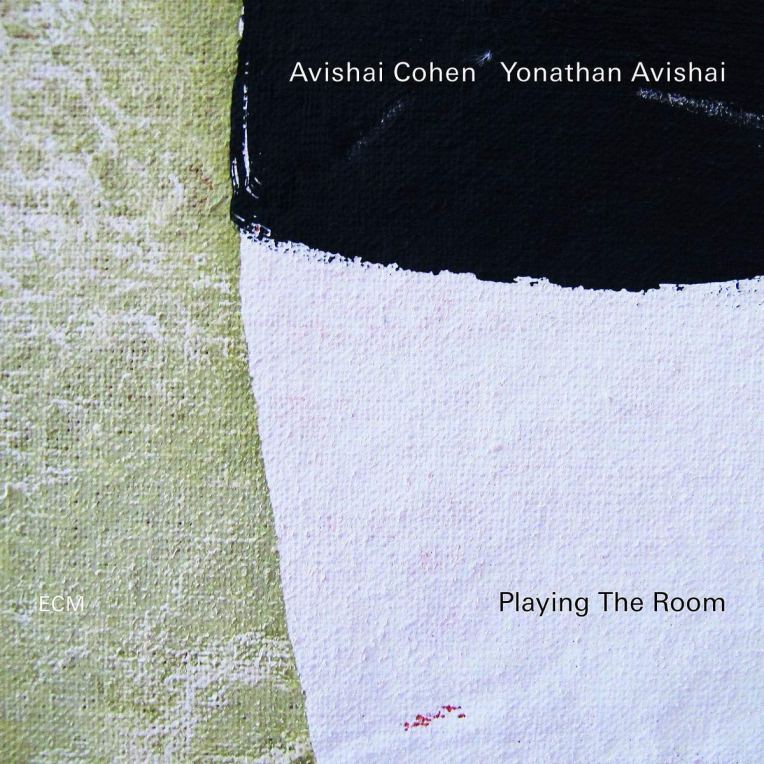
Avishai Cohen trumpet Yonathan Avishai piano
Recorded September 2018, Auditorio Stelio Molo RSI, Lugano
Engineer: Stefano Amerio
Produced by Manfred Eicher
Release date: September 6, 2019
Although trumpeter Avishai Cohen and pianist Yonathan Avishai have known each other and played together since they were teenagers in Tel Aviv, this is their first recording as a duo. The title refers to an offhand comment made by producer Manfred Eicher, who during the recording of Avishai’s Joys And Solitudes remarked, “Avishai [Cohen] should play this room.” The duo session documented here happened just a few days later, only now in the Auditorio Stelio Molo RSI at Lugano in place of Studios La Buissonne. And play the room they do. Not only in the sense of liberating a delightful mix of standards and original contributions to the modern songbook, but also because, like seasoned thespians, they inhabit their narrative roles with full physical commitment.
The set’s door is pushed open by said original contributions, starting with “The Opening” by Cohen, which seems to flower into audibility of its own volition to be heard. Piano and trumpet communicate so deeply, even when not playing at once, resulting in one of the more evocative beginnings to grace an ECM program quite some time. Avishai’s “Two Lines” is an equally introspective, if darker, companion, by whose gestures are activated shared memories. Cohen here is especially broad of emotional brush and paints with the abandon of a child.
John Coltrane’s “Crescent” kicks off the album’s airborne remainder, cycling through its own self-awareness and in that process attaching feather upon feather in anticipation of flight. Cohen rises and sets like the stars, while Avishai navigates by their movement. The effect is such that when Duke Ellington’s “Azalea” cracks open the scene like an egg of dawn, its classic sounds feel not so much reborn as reawakened. As in Ornette Coleman’s “Dee Dee” and Stevie Wonder’s “Sir Duke,” they approach the evergreen as an opportunity for pruning instead of replanting.
Whether in the comforting shades of “Ralph’s New Blues” (Milt Jackson) or the gorgeously rendering of “Kofifi Blue” (Abdullah Ibrahim), Cohen and Avishai stay true to form because they understand the form of truth. In their hands, and by the spatial allowances of Eicher and engineer Stefano Amerio, these tunes resonate with nothing more than what they were meant to be. All of which makes inclusion of “Shir Eres (Lullaby)” by Sasha Argov (1914-1995) poignant beyond measure. Not only because it’s an emotional touchstone in the hearts of the musicians, but also because it pulls the sky like a blanket over our ears, that we might better hear the sounds of our own heartbeats. Thus, Playing The Room is the sonic equivalent of the “moon illusion”—when our closest satellite appears bigger on the horizon than it does in the sky due to its visual proximity to earthbound objects. Once risen, however, it tells us just how far we’ve come, and how much infinitely farther we have to go.
Recorded live at Moscow’s DOM Cultural Center in November 2017, Free Radicals documents the assembly of three master improvisers: American trumpeter Peter Evans, Catalan pianist Agustí Fernández and British bassist Barry Guy. While all have unleashed their unquenchable fires in other contexts, this is their first album as a trio and the results are both exactly what anyone familiar with them would expect and yet enchantingly surprising.
Over the course of two tripartite sets, we fall into a conversational category of sound, whereby opinion and assertion blend to the point of indistinguishability and the purpose at the core of it all sheds its skin in search of jagged horizons. The piano’s innards are subjected to an especially fascinating surgery as Guy illuminates the operating table with his bass and Evans melts his trumpet down into a scalpel.
Where the first set isn’t afraid to throw some vinegar into the baking soda, neither does it shy from ponderance, treating quietude as a breeding ground of undiscovered order. The second set is even more substantive, achieving astonishing congruence at almost every turn. Moments in which bonds seem to crumble are those in which unity would come across as hypocritical and which by its very ejection leaves room for listener engagement. Part Two of the latter set is a suspension of disbelief that runs back and forth along the top of the proverbial fourth wall until it erodes to the ground. The encore is more of a beginning than an ending and by its suggestions of eternity rips off the “im” from “impossibility” and skips it across the pond of expectation until the final plop is heard on a shore too distant to see yet close enough to hear.
(This article originally appeared in the November 2019 issue of The New York City Jazz Record, a full PDF of which is available here.)
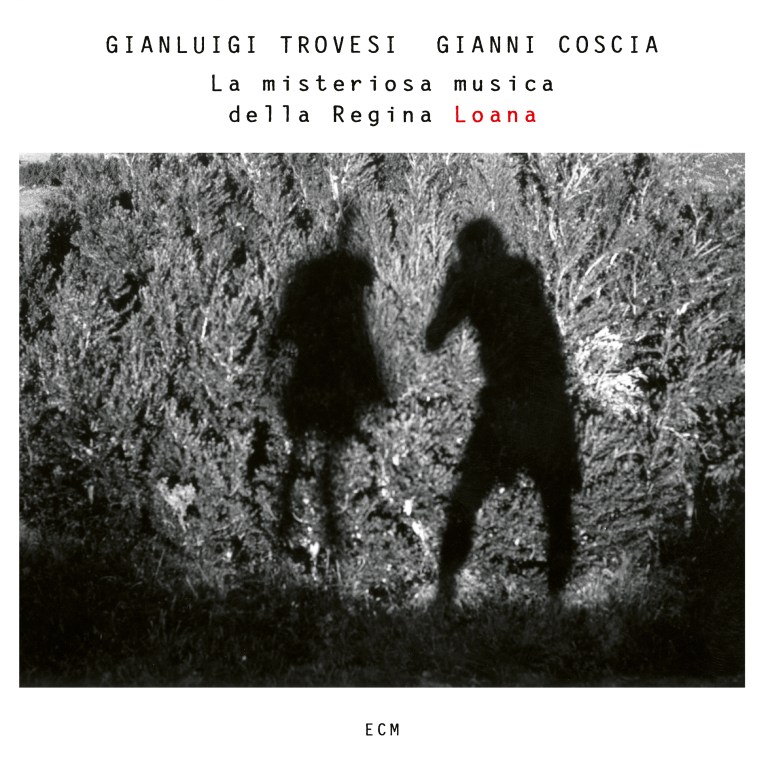
Gianluigi Trovesi piccolo and alto clarinets Gianni Coscia accordion
Recorded January 2018, Night And Day Studio, Cascinagrossa
Engineer: Paolo Facco
Mixed and mastered by Guido Gorna and Stefano Amerio
An ECM Production
Release date: June 21, 2019
Umberto Eco (1932-2016) once said of Gianluigi Trovesi and Gianni Coscia, “On a street corner or in a concert hall, they would feel at home just the same.” For their fourth ECM installment, the clarinetist and accordionist prove that statement in a tribute to their departed friend, taking listeners on a sonic journey through Eco’s semi-autobiographical novelLa misteriosa fiamma della regina Loana(The Mysterious Flame of Queen Loana). Along the way, they riffle through the archives of a bygone era and recreate it with loving attention to detail and personal association. Most of the songs are mentioned in the novel itself, the centerpiece being the five-part “EIAR.” Titled in homage to Italy’s first radio station, the suite drips with nostalgia of the 1930s and 40s.
Despite being of literary genesis, the album carries a tender cinematic charge, evident already in Coscia’s opening solo “Interludio.” More overt connections to the silver screen abound on “As Time Goes By,” fromCasablanca, which spreads across the ears like butter over warm bread, and the mysterious yet emotionally transparent “Bel Ami,” from the 1939 German film of the same name. Other perennial favorites, such as “Basin Street Blues” and Glenn Miller’s “Moonlight Serenade,” evoke pure delight yet are infused with enough beauty to court the glint of a tear.
Three originals called “Nebjana” take their inspiration from Leoš Janáček’sIn the Mists, while “Umberto” and “Eco” are improvised around Trovesi’s gematria of the honored name. Their masterstroke comes in the form of “Gragnola” (Hail of Bullets). Moving from tragedy to triumph, it’s a film in and of itself, casting in its leading role the unabashed love that defines a grander story.
(This article originally appeared, in truncated form, in the December 2019 issue of DownBeat magazine.)
On November 1 & 2, 2019, Jazz at Lincoln Center will present two nights in celebration of ECM’s 50th anniversary. The lineup will be the same on both nights. I will be there to review the November 2 show for All About Jazz.
The roster is as follows:
Tenor Saxophone Ravi Coltrane, Joe Lovano, Mark Turner Trumpet Ralph Alessi, Avishai Cohen, Enrico Rava, Wadada Leo Smith Guitar Bill Frisell Guitar and Piano Egberto Gismonti Piano Fabian Almazan, Nik Bärtsch, Marilyn Crispell, Giovanni Guidi, Ethan Iverson, Vijay Iyer, Shai Maestro, Andy Milne, Craig Taborn Piano and Voice Meredith Monk Cello Anja Lechner Bass Dezron Douglas, Matthew Garrison, Larry Grenadier, Drew Gress, Thomas Morgan, Barak Mori Drums Carmen Castaldi, Andrew Cyrille, Jack DeJohnette, Mark Ferber, Ziv Ravitz, Nasheet Waits
Tickets are available here. Hope to see some of you there!
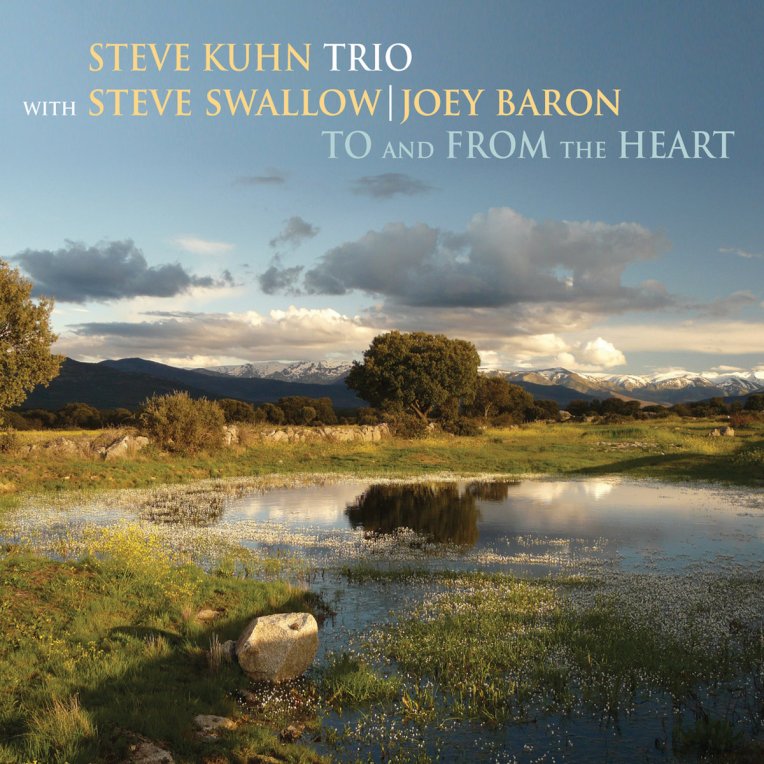
To And From The Heart, the latest on Sunnyside Records from pianist Steve Kuhn’s trio with electric bassist Steve Swallow and drummer Joey Baron, is a walking tour of dreams. By its guidance, we are led through one scene after another, each a step out of time. Two of the most fully rendered among them are by Swallow. “Thinking Out Loud” unfurls the set’s welcome mat into a sound so warm and inviting it feels like we’ve just stepped into an intimate jazz club. That the trio has a long performing history to its credit only adds to the live atmosphere. Such comfort as that expressed here can only come with age and experience.
In both this understated groove and “Away,” a bright and easygoing swing, Swallow’s solos are natural extensions of his comping and vice versa. Kuhn likewise stirs his own compositional palette with the concluding medley of “Trance/Oceans in the Sky.” From a sailing piano intro, it navigates rolling waves to dock on shore, where Swallow leads a long walk inland to Baron’s spotlight monologue, wherein he compresses an entire landscape into its first blade of grass. Along the way, into their joyous circle the trio welcomes Michika Fukumori’s “Into the New World,” a sunlit field dotted with Kuhn’s expository footprints while also throwing in a couple of standards—not only for good measure, but also to measure the good. Where Leslie Bricusse/Anthony Newley’s “Pure Imagination” balances elegance and humility, as epitomized by Baron’s scintillations and Swallow’s robust detailing, Jay Livingston/Ray Evans’ “Never Let Me Go” shows Kuhn to be one who understands that melodies aren’t made to be broken but stretched until one can see through them. When music is this good, this nostalgic yet forward-thinking, it can only be a matter of fate.
(This review originally appeared in the September 2019 issue of The New York City Jazz Record, a full PDF of which is available here.)
As the peoples of the Earth move into the
21st century, where hi-tech moves them deeper
and deeper into realms of the unknown, visions
of the ancient chime and bell remind us of
the lyrical power that remains at the heart
of mankind’s quest for fulfillment.
–Joseph Jarman
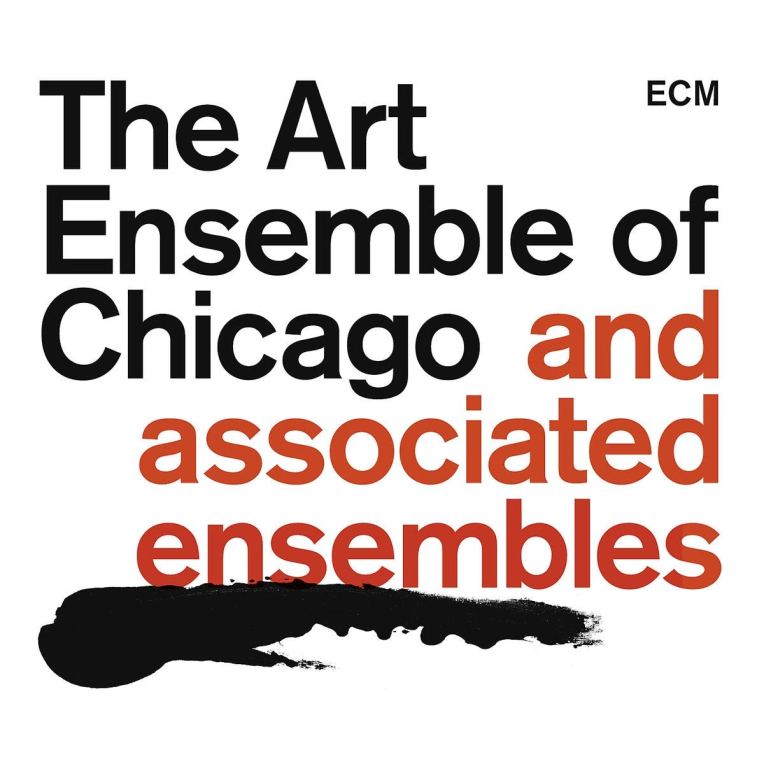
If ever there was a boxed edition that needs your attention, it’s The Art Enemble of Chicago and Associated Ensembles. If ever there was a boxed set that doesn’t need your attention, it’s also The Art Enemble of Chicago and Associated Ensembles, because the music it contains exists on a level so far beyond us that the very universe is already listening to it in infinite regression. What we have in this 21-disc treasure trove is something as metaphysical as it is satisfying in the hands: a legacy made wieldable in crisp lines of typography and cardboard.
ECM Records and the Art Ensemble of Chicago were both founded in 1969, and so it seems inevitable that their kinship should extend beyond numerological coincidence into the realm of audio. In the words of multi-reedist and founding member Roscoe Mitchell, “It has been amazing to have taken this journey together,” and make no mistake: This journey can be savored however one wishes to approach it, inserting life experiences into the music’s nooks and crannies, just as the music leaves its traces in those experiences in return.
The recordings gathered here span from 1978 to 2015, and are accompanied by a 300-page book that contains all of the original album materials along with newly unarchived photographs, paratexts, and essays written specifically for the occasion. In a preface by Manfred Eicher, ECM’s founder and lead producer speaks of his first encounters with this “polystylistic” collective as both sonically and visually unforgettable experiences. Having wanted to record them for some time, it wasn’t until 1978 when, in a six-month flurry of activity, he recorded the AEC’s Nice Guys, Jack DeJohnette’s New Directions, and Wadada Leo Smith’s Divine Love, all of which revolved around the genius of trumpeter Lester Bowie. Vijay Iyer describes in a liner note the “disruptive vocality” of Bowie’s trumpet as “discursive, declamatory, mischievous, and yet welcoming, as though he were somehow speaking to and for everyone.” As such, it marks this collection’s topography with the itinerant precision of a cartographer whose only dream is to show and never tell.
Producer Steve Lake, in a heartfelt tribute of his own to this roving constellation, calls Bowie and Mitchell “two of the most strikingly individual players in creative music of the post-Coltrane era.” To make good on that statement, one could spin this set like a globe and land a finger anywhere. Lake discusses the significance of the Association for the Advancement of Creative Musicians, and of what began as the Roscoe Mitchell Art Ensemble (with Bowie, reedman Joseph Jarman, and bassist Malachi Favors) in particular to reveal its compositional acuity and vivid individualism. As the first AACM project to sink its teeth into Europe (by that time acquiring percussionist Don Moye), the AEC had a lot to say. As Lake so delectably puts it: “On any given night, a set’s components might include gong-splashed ancestral meditations and go-for-broke collective improvising, throbbing drum choirs, parodic parade marches, fiery post-bop, vertiginous silences, classical paraphrases, prayer meeting invocations, hints of Chicago blues and country blues and old timey folk song, down-home funk and radical urban sound-collage with impatient bike horns and sirens, all underlining the ‘ancient to the future’ claim which mighty bassist Malachi Favors, in a moment of inspiration, had appended to the Great Black Music slogan.” All the while, labels were trying to capture the uncapturable, but it wasn’t until ECM came along that the AEC’s sonic panorama could be set free.
Nice Guys, being the ECM debut of the AEC, is lacquered in legend. A Rolling Stone Guide capsule review describes it as follows: “A Miles Davis tribute, a hint of reggae, percussion labyrinths, formidable saxophone solos and incredibly sensitive group dynamics are some of the ingredients that make Nice Guys essential.” The keywords are “some” and “essential.” The first because the album is a mélange of old influences and new creations alike; the second because no one who appreciates jazz as a living history should be without this watershed record. In Moye’s words, “In the ancient tradition of art and black music, a musical presentation was not just about music. It was about all the different elements of life.” Indeed, what the AEC achieves, whether in the studio or on stage, is nothing short of life itself. As pianist Craig Taborn, heard as part of Mitchell’s Bells for the South Side, likewise says of Nice Guys: “The melodies moved through actual environments that seemed palpable and teeming with life and energy.”
While Nice Guys is certainly a keystone in the AEC’s discography, I cradle it as a compass through some personal favorites. Highest among those is Full Force, a ball of fire and ice wrapped in one engaging package. From the ephemeral to the everlasting, its moods span the gamut of human experience and etch the soul with its contrasts. Without hesitation, I would direct any and all newcomers to this album as a point of initiation. Another immutable entry into this canon is Smith’s Divine Love, which matches the trumpeter’s depth and breadth with a formidable lineup that includes Bowie, trumpeter Kenny Wheeler, and bassist Charlie Haden. There is a muted quality to this album—both literally and figuratively—that hints at veils beyond veils to the emotional vibrations beyond them still. It is music as language, turned inward until it binds itself as a book of heartbeats.
A hop and skip bring us to Bowie’s All The Magic!, which blends tributes and the tribute-worthy, culminating in a fascinating solo session that approaches resonance and whimsy with equal sanctity. Peter Kemper characterizes this unusual album as a space in which “[c]areful movements must be made, with small steps forward and a watchful eye to the rear. The investigation of the path being taken appears more important than the goal at the end of the path.” In light of this apt description, and because Bowie is such a primary force, I bow to the dedicatory charisma of the AEC’s Tribute to Lester, which unfurls from every strike of the gong a spirit of undying breath.
Among the Mitchell outings included, I would uphold Composition/Improvisation Nos. 1, 2 & 3 as a vivid example of what he is capable of in his element. Like a strand of DNA broken and regrown into a widening family, every note births another by grand experimental design. That Mitchell makes it all sound so intuitive is testament to his ability to reign forces as a precondition for liberating them.
The self-titled effort from DeJohnette’s New Directions receives a welcome reissue among these other gems. Featuring guitarist John Abercrombie, drummer Eddie Gomez, and a perennial Bowie, it frames the trumpeter as lyrical griot and takes full advantage of the afforded space. All of this and more funnel into Made In Chicago, in which DeJohnette joins saxophonist Henry Threadgill, pianist Muhal Richard Abrams, bassist Larry Gray, and Mitchell. Jack DeJohnette was never part of the AACM proper, but his introduction of Abrams to Mitchell was the first sneeze in a creative avalanche unlike any other. Like old friends turning the same page, this live document rejoices in the very act of rejoicing and yields one of ECM’s most masterful turns in recent memory.
Music is, as Thomas Staudter phrases it, “the human experience in its full glory.” In the hands of the AEC, music means also a dance between the symbiosis of structure and freedom. In absence of said dance, we can make no truth claims about the AEC and its offshoots, for we are nothing more than the wind shaking the boughs of a tree whose fruit is forever ripe.
Tell of the rustling. Speak of horizons. Practice, practice the strength of beautiful telling from one generation to another so that the beautiful does not pass again into oblivion. Tell each other of life’s scenes. What was good shall be. Slow down to enjoy with the help of colors—and discover. See the greenness and hear the droning and transform your spontaneous sighs into a powerful song.
–Peter Handke, “Über die Dörfer” (“On Villages”)
Below is a list of all 18 albums contained in this essential collection, linked to my full review of each. Keep in mind, however, that no matter how many words I and others have spilled in honor of this hallowed assembly and its tandem galaxies, there’s nothing so cosmically rewarding as opening your ears and letting these lightyears of creative spirit flow where they will.
ECM 1126 Art Ensemble of Chicago: Nice Guys (May 1978) ECM 1167 Art Ensemble of Chicago: Full Force (January 1980) ECM 1211/12 Art Ensemble of Chicago: Urban Bushmen (May 1980) ECM 1273 Art Ensemble of Chicago: The Third Decade (June 1984)
ECM 1209 Lester Bowie: The Great Pretender (June 1981) ECM 1246/47 Lester Bowie: All The Magic! (June 1982) ECM 1296 Lester Bowie’s Brass Fantasy: I Only Have Eyes for You (February 1985) ECM 1326 Lester Bowie’s Brass Fantasy: Avant Pop (March 1986)
ECM 1808 Art Ensemble of Chicago: Tribute to Lester (September 2001)
ECM 1651 Roscoe Mitchell & The Note Factory: Nine To Get Ready (May 1997) ECM 1872 Transatlantic Art Ensemble/Mitchell: Composition/Improvisation 1, 2 & 3 (September 2004) ECM 1873 Transatlantic Art Ensemble/Parker: Boustrophedon (September 2004) ECM 2087 Roscoe Mitchell & The Note Factory: Far Side (March 2007) ECM 2494/95 Roscoe Mitchell: Bells for the South Side (September 2015)
ECM 1128 Jack DeJohnette’s New Directions (w/Lester Bowie): New Directions (June 1978) ECM 1157 Jack DeJohnette’s New Directions (w/Lester Bowie): In Europe (June 1979) ECM 2392 Jack DeJohnette (w/Roscoe Mitchell, Muhal Richard Abrams, Henry Threadgill): Made In Chicago (August 2013)