I’ve reviewed Schönbrunn, the leader debut of pianist Yuri Storione, for All About Jazz. An altogether uplifting piano trio album from a phenomenal young talent. Click the cover to read on…
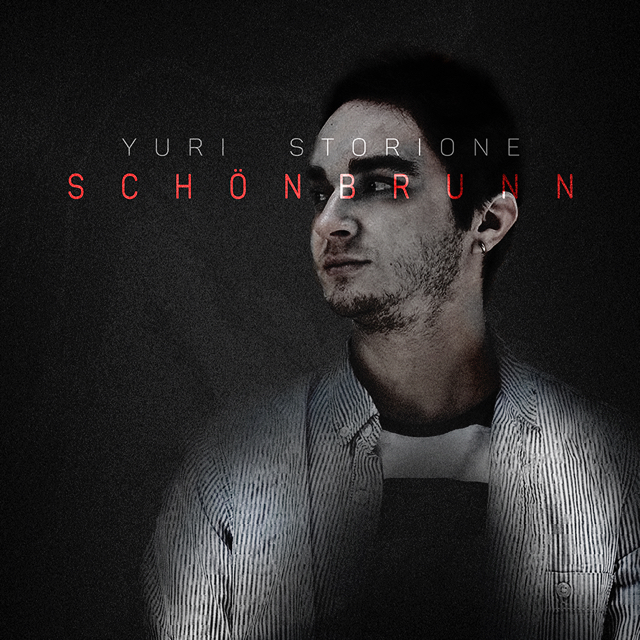


I’ve reviewed Schönbrunn, the leader debut of pianist Yuri Storione, for All About Jazz. An altogether uplifting piano trio album from a phenomenal young talent. Click the cover to read on…
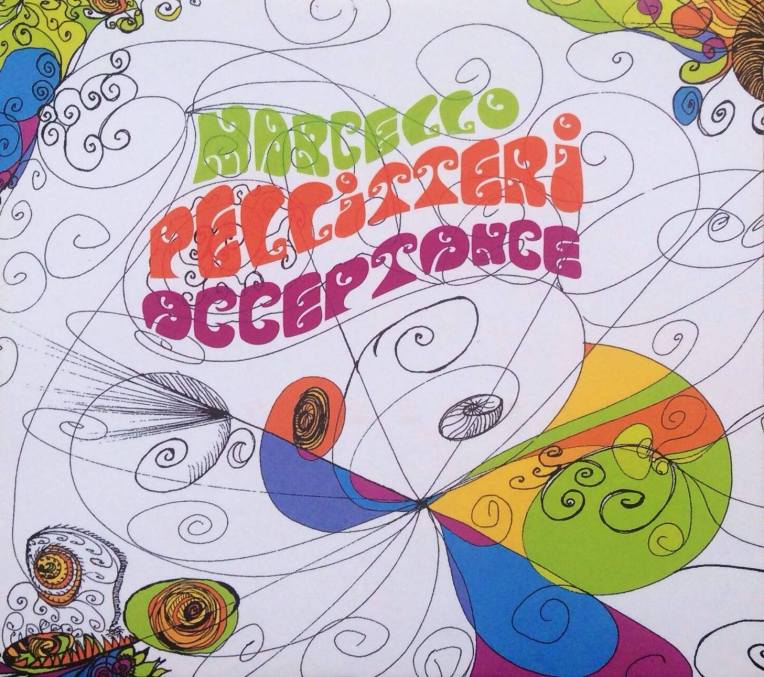
My latest review for All About Jazz is of drummer Marcello Pellitteri’s Acceptance, a heartfelt tribute to his late daughter. Click the cover to read the review, which incorprates my interview with the bandleader.
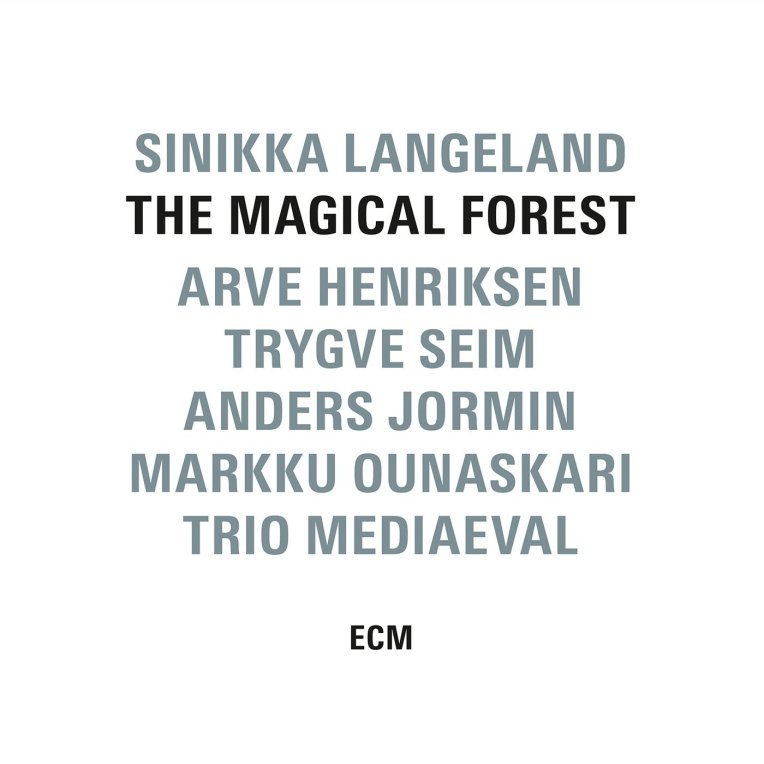
My latest review for RootsWorld online magazine is of Sinikka Langeland’s The Magical Forest. Click the cover to read the review and listen to samples.

For the inaugural Cornell Concert Series performance of 2017, Grammy-winning bassists Christian McBride and Edgar Meyer took to the stage at Bailey Hall on February 3. Although both musicians helm their respective vessels in nominally different streams, together they have created something as fresh as their foundations are solid. Where McBride is something of a musical chameleon, rooted in the backyard of the blues yet stretching his branches over into every willing neighbor’s property, Meyer has turned his classical wheelhouse into a kaleidoscope of interpretive possibilities. I had the opportunity to speak with both bassists — first to Mr. McBride on the phone, followed by Mr. Meyer via e-mail — as an overture to what promises to be an engaging night from this rare combination of instruments.
Tyran Grillo: One of my all-time favorites from your discography is Live at Tonic. I’m curious to know your personal feelings regarding that performance, because for me it’s such a solid compendium of who you are as an artist and of the different streams you bring together in your performance.
Christian McBride: That record was recorded in 2005, and by that point [saxophonist] Ron Blake, [keyboardist] Geoffrey Keezer and [drummer] Terreon Gully had been in my working group for six years. Consistency was always a struggle in terms of gigs and recordings, mostly because at that time I was touring also with Pat Metheny’s trio, which made it hard to get any momentum going. But I really loved that band. I considered it a hybrid. Everyone gets involved in false sentiments of genre, and everybody in that band listened to all sorts of music. Yes, our hearts and skills were in jazz, but the way we played it had been informed by pop, soul, classical, avant-garde, electronic, you name it. You can’t possibly be a professional creative musician and not be touched by various styles of music. Even those who make a conscious decision to do one thing—which is fine because you should do what moves you — like more kinds of music than one would give them credit for. You might not guess you could have an in-depth conversation with Wynton Marsalis about Earth, Wind & Fire, but you could.
TG: One thing I like about that recording is the third disc, which is nothing but jams. What does the jam mean to you?
CM: One of my current responsibilities is being the artistic advisor for jazz programming at NJPAC [New Jersey Performing Arts Center] in Newark, where I’m hoping to create something called “The American Jam,” for which my goal is to get musicians spanning all kinds of so-called genres up on stage to jam for an hour. Get a group of musicians from jazz, rock, country and gospel together, and there’s all one thing we know collectively, and that’s the blues. I’m hoping to make this thing happen at some point, because music seems to be the one fail-safe way to bring different cultures together. When you see the polarization and intense disagreements between parties, music is that one thing that keeps us on the same page and allows us to have a conversation. Music exposes the lies and propagandas that bombard us on a daily basis and brings out our honesty and rawest passions. In that respect, music is a truth serum.
TG: I’ve always enjoyed your arco playing. Were you inspired by anyone else’s use of the bow or was it just an extension of your training on the instrument that you decided to incorporate later on?
CM: I started using the bow out of necessity. One of my first steady gigs while attending Julliard was at a club called Augie’s. Every night, the third set would turn into a jam session. There was always a long line of saxophonists, trumpeters, guitarists, pianists, and drummers and maybe two bassists, who would usually go home. So there I was, playing the same song on stage for 40 minutes. One night we were playing an old [Rodgers and Hart] standard called “Lover.” The bandleader was Jesse Davis, who liked to play it way up-tempo. My muscles were already cramping up and my callouses getting soft, and there was Jesse looking at me for a bass solo. I couldn’t even feel my hands at this point. I took it as a challenge, but playing it pizzicato would’ve been too fast, so I pulled out my bow. Not only did it work, but Jesse seemed rather impressed, so I kept it in the playbook. That gig solidified my commitment to always using the bow, even in jazz settings.
TG: Can you talk about your relationship with Edgar Meyer and how you two came to play together?
CM: The first time I heard Edgar was in the early 1990s, shortly after I met the great Ray Brown, who was one of my greatest mentors and like a second father to me. Ray asked if I knew of Edgar Meyer, so he showed me this video he did with Edgar and fellow bassist Victor Wooten. From that point on, I became a huge fan of Edgar and started following his career, in awe of his creativity and skill. Jump to 2000, and speaking of Victor Wooten again, I went to Victor’s bass camp in Tennessee, where Edgar was a surprise guest. It was so great just meet the guy and hang with him, and we ended up jamming together. As all artists do, we shared the obligatory “Hey, we should work together one day” line, but as much as I admired him, I knew that if I wanted to do some duets with him, I had to be at the top of my game. It’s like, if you’re going to fight Floyd Mayweather, you’d better get training. In 2007, we decided to do a duet concert at the Aspen Music Festival. It was so wonderful that we decided to figure out how to keep it going, and finally started going on tour last year. Standing on stage next to Edgar is, on the one hand, depressing. I wish I could do what he does. But it’s also inspiring, because it makes me believe in what I cando and do it well.
McBride’s obvious respect for Meyer is echoed by the latter’s own for the former. True to form, and in artful contrast with McBride’s penchant for storytelling, Meyer speaks concisely and with rigor, although each of these respective tendencies is the yin to the other’s yang.
TG: Having performed with other bassists such as Victor Wooten, what distinguishes your work with Christian McBride, and how has it enriched your own playing?
Edgar Meyer: Most of what I did with Victor was to perform on a television program with him and Ray Brown around 25 years ago, which was of course a wonderful experience. Playing with another bass player is rare for me. I prefer to collaborate with complementary instruments. However, playing with Christian is an experience too rewarding to pass up. He is my favorite bass player and I enjoy hearing him up close and feeling what his flow and reactions are like. I can listen to the replay of a show and directly compare how we do things and try to imitate the things that I cannot do as well as he does. He also makes everyone with him better, so why wouldn’tyou want to play with him? Never turn down a breath mint.
TG: As one who crosses boundaries, working with a variety of musicians, do you see any need for identifying with particular genres, or is music more of a holistic experience for you?
EM: I do not have a clear answer to that question. I think the reality is complex. Studying a particular branch of music in depth should hopefully broaden horizons, not narrow them. A simplistic answer is that one should accurately observe what makes different music similar and what makes it different. I personally lean toward developing a unified voice that can be credible across a fairly wide stylistic range instead of multiple voices for different situations. It is helpful to try to figure underlying principles in different kinds of music instead of following rules of tradition.
TG: What is something you know now as an artist that you didn’t, say, 20 years ago?
EM: That we are here for a brief time. There is no time to waste.
Seeing how smoothly these two masters converse when they’re not even in the same room, one can only imagine how well their voices will mesh when they delight their audience this Friday.
Click here to read my review of the concert.
(See this article as it originally appeared in The Cornell Daily Sun by clicking here.)
Christian McBride and Edgar Meyer
Bailey Hall, Cornell University
February 3, 2017
8:00pm
The double bass is a perennial fixture of many jazz combos. And yet, how rare to hear it on its own terms. Rarer still in duet with a like partner. The Cornell Concert Series kicked off its spring season by proving that a duo of basses could be more than meets the ear. As twin ramparts of their generation, Christian McBride and Edgar Meyer are as masterful as they come. Where one cut his teeth on the jagged edges of jazz, the other was baptized in classical waters. Yet, both have eroded the boundaries of their chosen genres in mutual respect. This respect was nowhere so evident as in Bailey Hall on Friday, where they conversed as friends and allies do: without judgment or fear.
McBride and Meyer evoked a symbiotic relationship on stage. The combinatory powers of their artistries spanned the gamut. On the technical front, Meyer carried a resonant tone and perfect pitch throughout, as emphasized by his mellifluous bowing. McBride, meanwhile, drew a z-axis straight into the audience, going playfully off pitch as only a seasoned jazzman can, to emphasize flexibility of every note. In short: Meyer sang and McBride spoke.
This dynamic held true whether the duo was navigating the well-trodden landscapes of standards like “My Funny Valentine” and “Days of Wine and Roses,” or escorting listeners along far-less-traveled compositions between them. The concert opened in the latter vein with Meyer’s own “Green Slime,” a decidedly funky jaunt bearing all the benchmarks of either musician’s idiosyncrasies. McBride’s “Lullaby for a Ladybug” later revealed a softer side, and for it the composer played at the piano, by which he clothed its childlike whimsy in the tender skin of balladry. And their jointly written “Bass Duet #1,” a blues with postmodern touches.
The reigning highlights of the program were both solo pieces. Meyer performed an untitled composition for bass alone, which danced like a Hindemith viola sonata in its legato turns. McBride, for his part, treated us with a solo rendition of “Fly Me to the Moon” that was as acrobatic as it was insightful. Although McBride played it all-pizzicato, he too is an adept wielder of the bow and his gloss of “Bewitched, Bothered & Bewildered” was even more heartfelt.
A double-dip into the Miles Davis songbook yielded fresh versions of “Solar” and “All Blues” (the concert’s encore), while another into rural waters came up with a downright orchestral arrangement of Bill Monroe’s “Tennessee Blues” and the frantic virtuosity of Meyer’s aptly titled “Barnyard Disturbance.” The musicians’ free-spirited approach served the authenticity of these tunes and made for an inspiring evening. Like Meyer’s “F.R.B.,” which paid homage to the late, great Ray Brown, their love for each other, for the music and for all who inspired them was the most engaging melody of all.
Click here to read my pre-concert interview with both musicians.
(See this article as it originally appeared in The Cornell Daily Sun by clicking here.)
For the second year in a row, ECM commanded the stage at the New School’s Tishman Auditorium for Winter Jazzfest in New York City. Whereas 2016’s showcase spanned two nights, this year’s was a one-night event, and featured sets by the Michael Formanek Quartet (with Tim Berne, Craig Taborn, and Gerald Cleaver), Jakob Bro’s trio with Thomas Morgan and Joey Baron, two duos (Ravi Coltrane/David Virelles and Bill Frisell/Thomas Morgan), and a concluding performance by Nik Bärtsch’s Mobile. Click the concert photo below to read my full report.

(Nik Bärtsch; photo by Glen DiCrocco)

An intimate portrait of a pianist and composer at the height of his career, produced and directed by Charlotte Lagarde and Carrie Lozano, this documentary polishes facets of Hersch’s life that may be less obvious to casual fans. Viewers are introduced to Hersch as he descends the stairs of New York’s Jazz Standard to set up for a performance. From a web of starts, stops and stolen glances, the sound of a musician who now stands among the giants of jazz piano takes shape.
In the words of music critic David Hadju, one of a handful of advocates interviewed, “Fred’s music is borderless” and the film shows that characterization extending further to his personality. As one who embodies the art of improvisation outside the cage of performance, Hersch is invested in the outcomes of jazz beyond boundaries. It’s there in his organic mosaic of traditions and influences, in his willingness to work with a variety of musicians and in his activism as an HIV-positive gay man. The latter point, largely yet respectfully stressed throughout, is vital to understanding his music’s river-like qualities, which constitute nothing less than an ode-in-progress to life itself.
Nowhere is this so boldly expressed than in his My Coma Dreams, the preparations for and premiere of which dominate this documentary’s second half. Inspired by a series of vivid dreams Hersch experienced after an infection forced him into a coma in 2008, this multimedia work employs speech, video projection and live musicians to tell the story of his recovery. As pianist Jason Moran points out, however, more important than Hersch’s brush with death are the ways in which this magnum opus underscores his historical importance as a torchbearer of jazz’ reckoning with hardship. It’s a message underscored by his biography, which the filmmakers uncover through interviews with his mother Florette Hoffheimer and partner Scott Morgan, but also by his tireless mission to treat music as reality over fantasy. Hersch is keen on acknowledging the specificity of any given performance as an event and hopes that listeners may do the same in return.
((This article originally appeared in the January 2017 issue of The New York City Jazz Record, of which a full PDF is available here.)
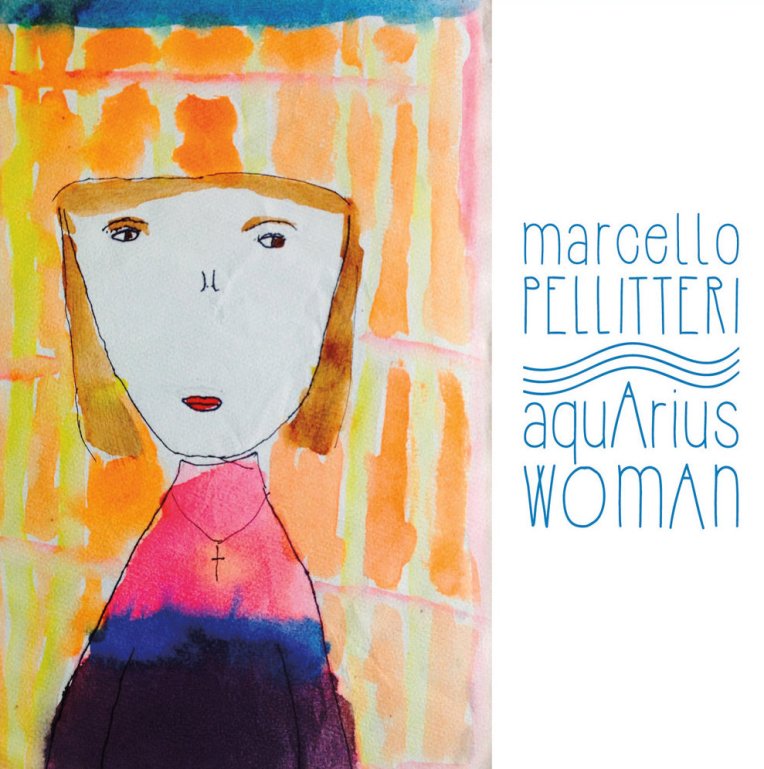
I am pleased to announce that I am now a writer for DownBeat magazine. My first review for the magazine is of drummer Marcello Pellitteri’s Aquarius Woman. Click the cover below to read on.
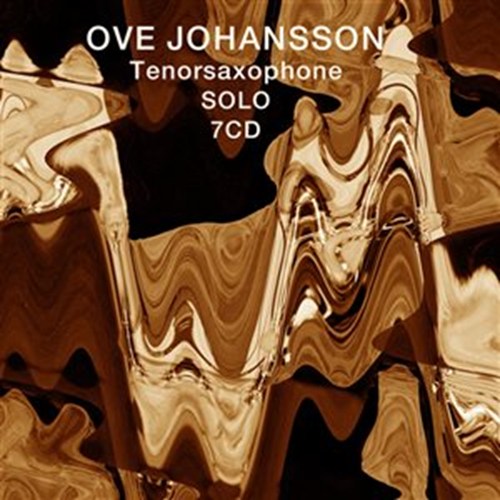
On Christmas Eve, 2015, Swedish jazz lost an undisputed maverick in Ove Johansson. All the more fitting then that the tenor saxophonist’s swan song should span seven discs in as many hours. Although just as comfortable tying his laces on straight as he was yanking them off his shoes and throwing them in the listener’s face, over the years Johansson settled into a trademark solo style, marrying long-form improvisations with electronics. While on paper this may recall John Surman’s classic reed-and-synthesizer experiments of the 80s, in practice Johansson’s is a less cohesive art. Which is not to say it doesn’t bond in accordance with its own clandestine rules. For while the electronics—which range from drum machine beats to impressionistic waves—at first seem like a cheap application of retrospective blush, over time their dated quality reflects these danses macabre with clarity. Still, seven hours of such clarity will test your resolve, if only because Johansson’s playing is so engaging on its own that anything added to it feels secondary at best and, at worst, intrusive.
The first four discs, along with the last, consist of hour-long improvisational treks over amorphous landscapes. Each is named after a month, November and December being the synth-heaviest and most meandering of the bunch. Discs five and six, which together boast 45 tracks, are the most exciting, spotlighting Johansson as they do in live settings. The compactness of these pieces makes them visceral, so that one can almost smell the sweat of their kinesis. All of this feeds into the seventh disc, which reveals the album’s sharpest edges and rewards the journey with rawness.
Just as Johansson was a self-taught musician, so too does his music require self-taught listening. There’s no roadmap or manual: just a splattered terrain that begs the tread of an adventurous ear. Listening to this set is like breaking a hermetic seal, out of which come spilling years of pent-up energy, which in light of his death reads like messages from the other side.
(This article originally appeared in the December 2016 issue of The New York City Jazz Record, of which a full PDF is available here.)

