Vincent Courtois: West (RJAL 397021)

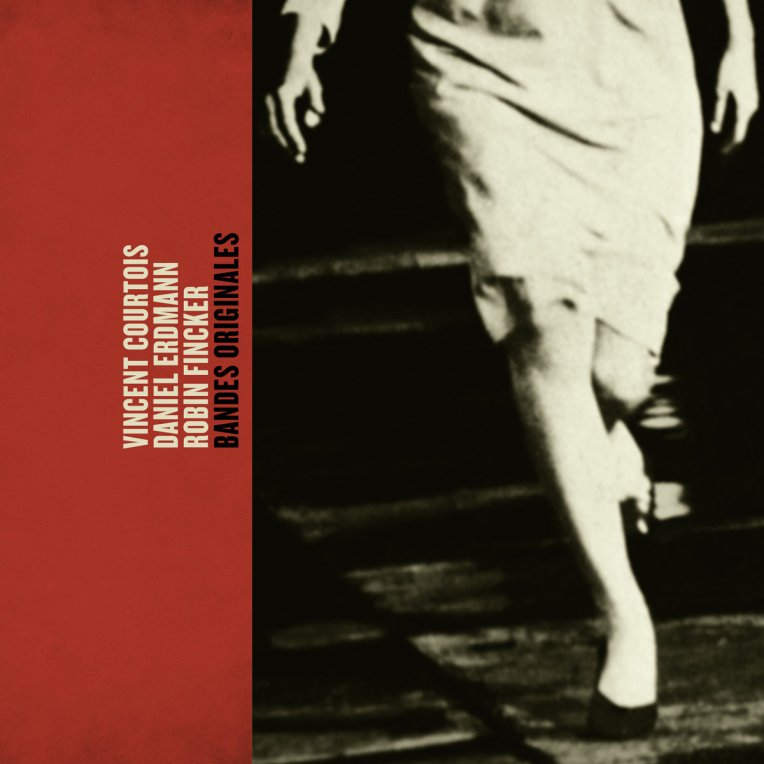
Cover

Vincent Courtois
West

Vincent Courtois cello, vocal guide
Daniel Erdmann tenor saxophone
Robin Fincker clarinet, tenor saxophone
Benjamin Moussay piano, harpsichord, celesta, toy piano
Recorded September 1-4 and mixed November 20/21, 2014 at Studios La Buissonne by Gérard de Haro, assisted by Nicolas Baillard
Mastered Nicolas Baillard at Studios La Buissonne
Piano, harpsichord, celesta, prepared and tuned by Alain Massonneau
Produced by Gérard de Haro and RJAL, la Compagnie de l’Imprévu
Release date: April 21, 2015

Cellist-composer Vincent Courtois continues his traversal of original landscapes, this time heading West in the most metaphorical possible sense. That is, he isn’t so much interested in dividing the world into arbitrary hemispheres as he is in questioning the very notion of borders as delineations of sociopolitical division and hierarchy while proceeding in a continuous direction. This philosophy is most forthrightly expressed in “So much water so close to home,” of which his pizzicato backbone and multitracked arco accents paint a living picture of the here and now as a means of putting the past into relief. His movements are palpable and consciously articulated, as Courtois himself notes in this album’s press release: “Conceiving, writing and orchestrating notes, almost like they were a travel plan, has become the main axis of my work, one that I cannot do without. A recording studio is a place like no other, these musical roads unwind and come alive.” Where on his last album, he explored such territories with saxophonists Daniel Erdmann and Robin Fincker, this time he welcomes also the structural backbone of Benjamin Moussay on piano, celesta, harpsichord, and toy piano.

Framed by two versions of “1852 mètres plus tard,” this sonic itinerary cushions every step in its picturing of time. Throughout “Modalités,” Fincker plays clarinet, later weaving with Erdmann’s tenor into a dramatic finish. From the brooding and distant (“Nowhere” and “L’Intuition”) to the whimsical and dramatic (“Freaks” and “Tim au Nohic”), every mood blossoms photorealistically. Moussay’s keyboards, especially the celesta and harpsichord of the title track, provide a Steve Reich-esque backdrop as multiple cellos dot the landscape with travelers. All of this funnels into the insistence of “Sémaphore,” throughout which the cello, divided into itself, draws an orthography of the soul for wayward ships to follow when lighthouses have used up their remaining oil. Moving ever forward yet glancing back to make sure that every footprint is a worthy record of what came before, each vessel docks safely to ensure our safe return.

Jean-Marie Machado/Dave Liebman: Media Luz (RJAL 397020)

Cover

Jean-Marie Machado
Dave Liebman
Media Luz

Jean-Marie Machado piano
Dave Liebman saxophone
Claus Stötter flugelhorn, trumpet
Quatuor Psophos
Eric Lacrouts violin
Bleuenn le Maitre violin
Cecile Grassi viola
Guillaume Martigne cello
Recorded live December 7, 2012 at NDR, Hamburg by Michael Plötz and Gérard de Haro
Sound Design by Andreas Paff
Production in Hamburg: Norddeutscher Rundfunk 2012
Executive Producers for NDR: Axel Dürr and Stefan Gerdes
Licensed by Studio Hamburg Distribution & Marketing GmbH
Recorded live January 25, 2014 at Centre des bords de Marne, Le Perreux by Gérard de Haro
Licensed by Cantabile
Mixed in June 2014 by Gérard de Haro at Studios La Buissonne
Mastered by Nicolas Baillard
Release date: November 18, 2014

Pianist Jean-Marie Machado and saxophonist Dave Liebman have been collaborating since 2003. For their third album, recorded live by Gérard de Haro for La Buissone on December 7, 2012, the duo welcomes trumpeter Claus Stötter and the Psophos Quartet for a program of uniquely melodic dreams.

Most of the set list was composed by Machado, and among his writing the title track is an atmospheric gem of sumptuous and cinematographic tendencies. The blending of string quartet with Liebman’s soprano and Stötter’s flugelhorn is magical, while piano comments selectively, engagingly. Machado’s “A noite (fado suite)” and “Snake sonata” are in three parts. Where the former is well-pruned, the latter walks a more overgrown path through emotional territories. A solo piano passage at its center, sweeping and spiraling inward, makes it a highlight. Liebman and Stötter crosstalk amiably in both, while the Psophos Quartet doesn’t just decorate but fleshes out real implications from within. Those same strings widen the camera of “La tarde silenciosa” and in the four-part “Same place different times” lift Liebman’s soprano like a brush on high.

The saxophonist’s own writing is as flexible as his playing. The mosaic of “Breath” is moody, that of “Snow day” more dance-like. “An old friend” closes the gap with a transparent stopper. Liebman’s is a voice to be heard with every fiber, and rewards what isn’t always easy listening with assurance of life.

Bruno Ruder: Lisières (RJAL 397019)

Cover

Bruno Ruder
Lisières

Bruno Ruder piano
Recorded May 21, 2013 and mixed February 7, 2014 at Studios La Buissonne by Gérard de Haro
Mastered by Nicolas Baillard at Studios La Buissonne
Piano prepared and tuned by Alain Massonneau
Produced by Stephane Oskéritzian, Gérard de Haro and RJAL for La Buissonne
Release date: June 3, 2014

Lisières (Fringes) is a collection of self-styled short stories for solo piano composed and performed by Bruno Ruder. Ruder’s style lives in the deeper recesses of his instrument. He seems particularly interested in natural resonance, which engineer Gérard de Haro is more than willing to embrace with gentle persuasion. By way of “Ce qu’on appellee,” initial stirrings within are openly drawn. He lets these instincts pour themselves into themselves, like circular pitchers of musical water in another dimension. The more ideas flow into each other, the more convoluted they become. Yet Ruder makes lucid sense of them—enough to draw a comet’s tail to finish.

In “Yojimbo,” if named for the popular 1961 film by Akira Kurosawa, I can detect nothing by way of association except to say that it paints a world long gone. None of that samurai spirit is found here, except perhaps in the tangled dance of cause and effect that besets its final waves of energy. The title of “L’agglutination des pensées” (The agglutination of thoughts) is a far more accurate description of the Ruder mode. It’s a stormy sea of evocation that expands its territory with every block chord. “Des recoins” is in the same vein, albeit tenderer in its insistence on being heard. “Obligation~Évagation” is a conversation between a divided self. Plowing soil both damp and arid, it mixes both until a middle ground takes shape. At last, “Ce qu’on retient” takes all of these orthographies and compacts them into an even grander language. Phenomenal runs in the right hand almost taunt the left for its regularity and achieve a lyrical confluence as they ascend a ladder into self-awareness.

A deeply psychoanalytical listen that requires us to keep our heads on the couch for its duration, letting our ears do the talking.

ETE Trio: Sad And Beautiful (RJAL 397018)

Cover

ETE Trio
Sad and Beautiful

Andy Emler piano
Claude Tchamitchian double bass
Eric Echampard drums
Recorded July 1/2 and mixed August 14/15, 2013 at Studios La Buissonne by Gérard de Haro, assisted by Romain Castéra
Mastered by Nicolas Baillard at Studios La Buissonne
Piano prepared and tuned by Alain Massonneau
Produced by Gérard de Haro and RJAL for La Buissonne Label
Release date: January 28, 2014

The ETE Trio—whose acronym stands for pianist Andy Emler, bassist Claude Tchamitchian, and drummer Eric Echampard—spins of its most fragrant fields on record with Sad and Beautiful. “A journey through hope” takes its first steps by gliding rather than walking, speaking through arco bass as if it were an amplifier of the soul. Cycling between ambient stretches out of time and heavy grooves steeped within it, the 11-minute opener actualizes a philosophy built on the permanent spaces between things rather than the ephemeral accomplishments linked to said things themselves.

This balance between the material and immaterial is what distinguishes ETE’s musical acts from their traditional counterparts and is reflected in a tendency to change things up from track to track. Note, for example, the brief and pliant train ride through memories on the verge of fading completely that is “Last chance,” yet which despite those grand implications sits up against “Elegances,” in which a more cellular approach to thematic development lets in the light of spontaneous interaction shine through panes of glass to a trifold interior.

A chain of topographical associations ensues. “Second chance” dips the piano in a dark green lake of bass and rippling cymbals before setting up a campfire near it in “Tee time” and planting a spray of delicate underbrush in “By the way.” Last, we are led into the melodic ellipses of “Try home,” cast into the night like a fishing line from the heart.

While each musician is fantastically talented in his own right, in the present formation I feel like any attempts at separation would do them a disservice. And so, the instinct to shorten their names to a single palindrome makes perfect sense. Such is the nature of their collective spirit.

Bill Carrothers: Love and Longing (RJAL 397017)

Cover

Bill Carrothers
Love and Longing

Bill Carrothers piano, voice
Recorded and mixed by Gérard de Haro at Studios La Buissonne, Pernes-les-Fontaines from 2005 to 2013
Release date: June 18, 2013

Despite having recorded pianist Bill Carrothers many times at La Buissonne, producer Gérard de Haro had never known Carrothers as a singer until he heard him hum a tune during some post-session downtime. Unable to let the opportunity pass, he set up a microphone and recorded this album of piano solos and songs, each performed in a distinctly personal style. As de Haro recalls: “We were no longer in the studio, nor were we in a normal time frame either—we were all in a state of absolute grace, love and peace.”

Though not a vocalist by trade, Carrothers has a natural delivery that pairs well enough with the material at hand and makes for an endearing program. Truly striking, however, is his bold harmonization and pianistic unraveling. Across a terrain of carefully chosen standards, his neighborly diction brings ease and comfort to the fore. In “Mexicali Rose” (Helen Stone/Hack Tenney) and “Moonlight Becomes You” (Jimmy Van Heusen/Johnny Burke), we find the words in lush yet never overblown settings as he unfolds gorgeous midsections for improvisational outpouring. From “The L & N Don’t Stop Here Anymore” (Jean Ritchie), a bluegrass song from 1965 about coal miners (its steady pulse recalls the steam engines of old), to “Three Coins In The Fountain” (Jule Styne/Sammy Cahn), he sheds one expansive layer after another. A standout is “A Cottage For Sale” (Larry Conley/Willard Robinson), in which a clockwork intro and sweeping arrangement give legs.

Interspersed throughout these is a veritable pinwheel of originals. Though mostly for piano alone, they find him singing more than ever. With a restlessness not unlike that of a lover’s heart, Carrothers pulls us through balladry, a splash of dissonance, and brightly lit expanses all the same. As a film reel come to its close, it winds down to stillness—a slow-motion sequence fading to black. To give the ending credits a soundtrack, he offers his most optimistic setting: that of “Skylark” (Hoagy Carmichael/Johnny Mercer), which features his birdlike whistling.

Despite the piano’s drape of reverb, Carrothers plays as if giving a home concert for close friends and family. And to this we are privy for, as one Cole Porter lyric puts it, “a night mysterious.” About as organic as it gets.

Caravaggio: #2 (RJAL 397016)

Cover

Caravaggio
#2

Bruno Chevillon bass, double bass, electronics
Benjamin de la Fuente violin, Mandocaster, electric tenor guitar, electronics
Eric Echampard drums, percussion, electronics
Samuel Sighicelli Hammond organ, sampler, synthesizers (Korg and Minimoog)
Recorded at Studios La Buissonne by Nicolas Baillard and Gérard de Haro
Mixed by Nicolas Baillard, Gérard de Haro, Samuel Sighicelli and Benjamin de la Fuente
Mastered by Nicolas Baillard at Studios La Buissonne
Release date: November 20, 2012

This blending of jazz, rock, and electronic idioms wraps its eclectic arms around bassist Bruno Chevillon, guitarist Benjamin de la Fuente, drummer Eric Echampard, and keyboardist Samuel Sighicelli. As Caravaggio, they elicit a sound not like the paintings of their namesake: boldly portraitive, making use of deep contrast, and vibrantly expressive. Opener “Polaroid” builds to slow fruition over an eight-minute span, pulling from the electric guitar an entire film’s worth of scenography. The cleverly titled “Dennis Hopper Platz” digs further into the muck of postmodern angst but eschews the ennui in favor of a hip, bass-driven embrace of sound bites from Easy Rider before finishing in a hush of data. As if drawing from that same font of digital wisdom, “Aguirre” spins an open-ended projection of bygone fantasies across alluring electronic doctrine.

“When will you be angelic” pays tribute to the Hammond organ. Its old-school Jan Hammer vibe reads like a jazz performance attended only by androids. “Anybody here?” is an even more explosive catapult through gigabytes of information. Riding in a vessel of light, it zooms at speeds unimaginable to the physical body into the industrial ambience of “Beth’s variation.” Following this, “Medusa” drops its heavy dose of outro prog rock, replete with skittering violin for contrast. If the aforementioned were measured in gigabytes, “Profundo” is a veritable terabyte. As drums, guitar, and synth combine to show us the way to transformation, we leave ourselves behind, one cell at a time, until only impulse remains, shot in countless directions.

Like the soundtrack to a lost Philip K. Dick novel, #2 breathes in tune with synthetic animals, black boxes, and panoptical realities. A rage against the machine, by the machine.

Vincent Courtois: Mediums (RJAL 397015)

Cover

Vincent Courtois
Mediums

Vincent Courtois cello
Daniel Erdmann tenor saxophone
Robin Fincker tenor saxophone
Recording and mixing at Studio La Buissonne by Gérard de Haro
Mastering at Studio La Buissonne by Nicolas Baillard
Release date: October 23, 2012

Mediums brings together an unprecedented trio of two tenor saxophonists (Daniel Erdmann and Robin Fincker) and cellist Vincent Courtois. Described by the latter as “the story of music I’ve conceived then written, out of my childhood memories and the happiness I experienced in the fantastic world of fairgrounds and the people who work there,” it accordingly welcomes us into a fantastical world replete with colors, lights, and sounds as tensions and harmonies come together like a storm of forces. Though it takes a little time to get settled in, once the parameters are clear, we are taken on an epic childhood tour.

The pizzicato arpeggios of “Mediums” speak of a lyrical core, while the reeds unleash a guttural filigree around them. “Une inquiétante disparition” is in two split parts. From the insistent pulse of the first to the muscular bowing of the second, it turns cries into songs and back again. Between them are the whispering haunt of “Regards” (the album’s most graceful) and the locomotive exuberance of “Jackson’s Catch.” Virtuosity is applied sparingly throughout, and only for the effect of underscoring a primary sentiment.

The tender “Rita and the mediums” and “La nuit des monstres” share studio space with the programmatic (the three-part “Bengal”) and the abstract (“Entresort”). Like “The removal” that wakes us from this dream, we can take each as the beginning of another until rest seems like the memory of a life no longer lived.

If Courtois can be counted on for anything, it’s the integrity of his sonic scripts, wherein most characters are played by himself. New faces shine like the sun—melodies without any other purpose than to cast the listener’s shadow.

Andy Emler MegaOctet: E total (RJAL 397014)

Cover

Andy Emler MegaOctet
E total

Andy Emler piano
Laurent Blondiau trumpet, flugelhorn
Laurent Dehors tenor and soprano saxophones, clarinets
Thomas de Pourquery alto saxophone and vocal
Philippe Sellam alto saxophone
François Thuillier tuba
Claude Tchamitchian bass
Eric Echampard drums
François Verly marimbas, tabla, percussion
With guest
Elise Caron voice
Recorded and mixed November 2011 and January 2012 at Studios La Buissonne by Gérard de Haro and Nicolas Baillard
Steinway piano prepared and tuned by Alain Massonneau
Release date: May 2, 2012

Andy Emler presents an ambitious recording with his aptly named MegaOctet. E total is more than an aesthetic choice; it’s a mission statement for the wandering pianist and composer, whose every step activates a melody to be lived under its own name.

The set list is divided in two. Part A takes a mosaic approach to its crafting of themes and variations. And despite the massive breadth of experience and ability represented by the full ensemble, there’s an astonishing tendency toward ambient quietude at key intervals. The opening “Good games,” for instance, begins with a ghostly piano and voice before the musicians throw everything they have into the mix across a chain of associations. Tuba virtuoso François Thuillier has a star solo, one that unleashes a vortex of overtones. The title track opens in kindred intimacy, this time with bassist Claude Tchamitchian’s arco cries, later joined by the tabla of percussionist François Verly, Eric Echampard’s drums, and a wonderfully geometric horn section. Emler, for his part, directs the flow of energies from his keyboard around a solo from tenor saxophonist Laurent Dehors. Among the other pre-intermission notables is “Father Tom,” another rhapsody from stillness that showcases Dehors’s discursive skills, now drawing a thread of clarinet through eclectic modes and ever-higher climbs. “Shit happens” is another dose of bright-eyed humor with muscular reed work and guttural vocals, ending in a drum free-for-all.

Part B consists of only two tracks, but offers the most substantial moments of the album. “Superfrigo” is its deepest groove, made clear and present by Thuillier’s uplift over Emler’s fantastic traction, and “Mirrors” (dedicated to Joe Zawinul) spins a web of breath and beat under the banner of vocalist Elise Caron. Subtle percussion and exquisite detailing make this a ride to remember.

If forced to compare (and for those that care), I might describe this as Carla Bley Big Band meets Tim Berne. Such is its combination of whimsy and angular virtuosity, its balance of left and right, and its ability to answer its own questions.

Carlos Maza: Descanso del Saltimbanqui (RJAL 397013)

Cover

Carlos Maza
Descanso del Saltimbanqui

Carlos Maza 10-string guitar, piano
Recorded on March 14-16, 2011 and mixed on January 3, 2012 at Studios La Buissonne by Gérard de Haro
Mastered by Nicolas Baillard at Studios La Buissonne
Steinway preparation and tuning by Alain Massonneau
Produced by Gérard de Haro, RJAL and Lautaro for La Buissonne
Release date: April 17, 2012

Ten-string guitarist and pianist Carlos Maza makes his La Buissonne debut in a session imbued with as many influences as there are melodies to contain them. Louis Sclavis describes his music as follows: “It’s Latin America having fun with Europe, it’s a Spanish guitar in an Indian’s hands, an Inca flute that’s slipped into a sonata by Liszt.” If anything can be gleaned from this assessment, beyond an obvious eclecticism, it’s that Maza adapts his shape and gestures to suit whatever waters in which he happens to find himself swimming at any given moment.

In his hands, the guitar serves as both pigment and paper. Between the zoetrope of “El tren de Hershey” and the Polaroid of “Magia y ascenso,” a nostalgic chain of imagery sways in time with the ways things were. Every strum sweeps away the dirt of maturation so that children may re-inscribe it with the signatures of their play. Personal favorites include “Levántate negrita” for its melodic purity and “Altas y bajas” for its roughly hewn unfolding, as if distant mountains were a score to be deciphered. Wordless singing gives voice to the longing that permeates this music.

Maza’s piano is not only a different instrument but also its own continent altogether. Whether in the bipolar “Remando hacia el Sol” (brooding one moment, sparkling the next) or the virtuosic “Rosacolis,” the contradictory language of love is paramount, shifting phases like the moon across a calendar month. The five-part “El Amor en tiempos de crisis” is everything that came before and more. Joy and exuberance share the field with melancholy and heartache, finishing with a dance through sunlit pastures.

This is duly intimate music making, never a challenge (unless you have perfect pitch, as the guitar has some tuning issues) but always a comfort, as if the very sky were pulled over us for a blanket of stars.