Heiner Goebbels: A House of Call (ECM New Series 2728/29)

Heiner Goebbels
A House of Call – My Imaginary Notebook

Ensemble Modern Orchestra
Vimbayi Kaziboni conductor
Recorded September 2021
by Bayerischer Rundfunk
Prinzregententheater, München
Engineer: Clemens Deller
Recording engineer: Gerhard Gruber
Mixed and mastered by Clemens Deller, Heiner Goebbels, and Gerhard Gruber
Cover photo: Gérald Minkoff
Executive producer: Manfred Eicher
Release date: August 26, 2022

With A House of Call, Heiner Goebbels peels back his most significant layer of multimedia music for the stage. This self-styled “imaginary notebook” incorporates archival recordings of prayers, songs, and other speech acts into dialogic relationships with a full orchestra. Much of what we hear is old and anonymous, barely hanging by a thread of preservation and never imaginable in a concert setting. And yet, here it all is, wired together like some elaborate lie detector of our shared past, pinging with increasing frequency to signal every denial of complicity by proxy. Tempting as it might be to view such a project through an archaeological or ethnographic lens, to do so would strengthen the very contradictions it wishes to dilute in its reckonings of time and place. “The music is a direct response to the complexity and roughness of the voices,” says Goebbels in his liner note, pointing also to the radiance thereof against the opacity of present traumas.

Across four thematic assemblages, the Ensemble Modern Orchestra, under the direction of Vimbayi Kaziboni, draws upon an intimate relationship with Goebbels to bring his vision of death to life. Part I, “Stein Schere Papier” (Rock Paper Scissors), cites Pierre Boulez’s orchestral work Répons as foundation, magnifying its call-and-response principle with glimpses of Goebbels’s art rock band Cassiber from the same period (the early 1980s). The initial stirrings of a privileged crowd indicate the biological venues we often fail to maintain. The instrumental colors are fluid, attentive to detail, and indicative of various styles pouring from many portals at once. The story of Sisyphus, as retold in Heiner Müller’s “Immer den gleichen Stein” (Always the same stone), wraps the orchestra in a chameleonic skin. And as the street noise of a Berlin building site from 2017 stirs up a vortex of unread manifestos, faded newspapers, and other detritus, we begin to treat all words as fair game.

Part II, “Grain de la voix,” borrows from the Roland Barthes essay of the same name, in which the French philosopher asserted the power of language to shield oneself against the glare of mortality. Ghosts from the Caucasus region open their lungs, strings trembling beneath the surface as a violin leaps in sporadic response. Thus, the hypocrisy of destroying the questions of culture to answer them is outed. When more modern recordings, like that of Iranian musician Hamidreza Nourbaksh intoning Rumi from 2010, reveal themselves, they take on a volition that blinds the orchestra’s feeble attempts at imitation. The juxtaposition is critically self-aware, a score written in scars. The evocation of Komitas and Armenian soprano Zabelle Panosian hints at the spiritual planes being razed in addition to the physical, as scrutinized in Part III, “Wax and Violence.” The title refers to the wax cylinders weaponized by pseudoscientific ideologues whose voracious appetite for the “exotic” was only the beginning of their consumption. In particular, Hans Lichtenecker’s xenophobic aural documents of the very people German soldiers would later destroy through genocide pull us by the ears. A recording of school children in the Namibian village of Berseba is even more haunting and spawns a big-band catharsis—if falsely so called, for what do we have to be released from by comparison? The effect is even stronger in the laments and incantations of Part IV, “When Words Gone,” wherein Amazon rituals conducted in lost languages blend into lines from one of Samuel Becket’s last texts amid digital whispers.

The danger of all this is reading the wrong kind of sorrow into everyone we hear. We latch on to familiar names like life preservers, forgetting that the nameless have been speaking truth all along. And so, while it would be easy to call this the pinnacle of Goebbels’s work, it might be more appropriate to see it as his valley of the shadow of death. We walk through it, guided by hands unseen, in faith that hope awaits us on the other side. But to get there, we must be willing to face the hostile forces of collective memory, thick with the mud of misunderstanding.
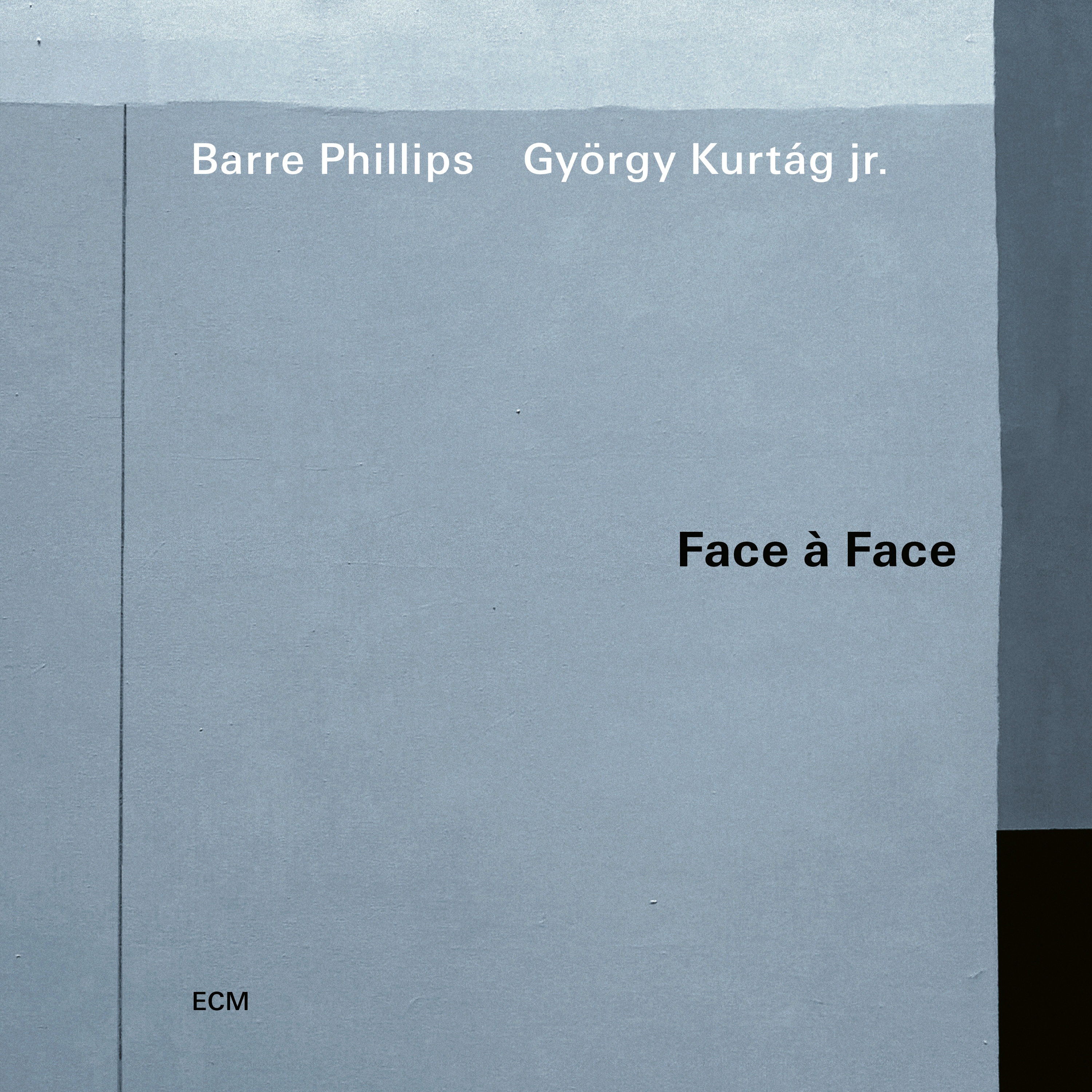
Barre Phillips/György Kurtág jr.: Face à Face (ECM 2735)

Barre Phillips
György Kurtág jr.
Face à Face

Barre Phillips double bass
György Kurtág jr. live electronics
Recording/mixing:
September 2020 – September 2021
Studios La Buissonne, Pernes-les-Fontaines
by Gérard de Haro, Manfred Eicher,
György Kurtág jr., and Barre Phillips
Mastering: Nicolas Baillard
Cover: Fidel Sclavo
Produced by Manfred Eicher
Release date: August 19, 2022

Although Barre Phillips and György Kurtág jr., respective virtuosos of the double bass and electronics, first collaborated by chance, one might not know it by the interlacing qualities of Face à Face. Each artist translates the other’s language in a borderless loop of communication, so that by the end we are one step closer to sharing their lexicon.

They begin in subterranean space, listening as if with the tympanal organs of a beetle to the stirrings of labyrinth makers. And maybe they never plant feet aboveground, more content to abandon the light for other forms of perception. Despite hints of the outside world in the sampled drums of “Two By Two” and the kalimba of “Across The Aisle,” our flesh always feels caught by something we cannot readily touch except in thought. Still, a feeling of tactility reigns.

The briefest excursions never reach two minutes, while the longest ones exceed only four. Among the latter, “Chosen Spindle” travels into backlit caves of memory, where seemingly infinite regressions flirt with the here and now.

Phillips is a sage of the bow, turning harmonies into shaded reveries that speak of decades leading to their emergence. In “Extended Circumstances,” he sings with mythical electricity in folds of cricket-like chatter. His pizzicato, too, moves vocally through the refractions of “Ruptured Air.” Kurtág plays his instrument (a practically biomechanical array of synthesizers and digital percussion) as a physical appendage, never letting go even when placing a shushing finger in the foreground. “Sharpen Your Eyes” is a remarkable example of his structural sensibilities, artfully suited to the bassist’s renderings of space. Their deepest integration takes form in the ironically titled “Stand Alone,” wherein mitochondrial anthems resound. Even “Forest Shouts” speaks in quiet streams of thought, each ripple extending a hand to pull us upstream to where it all began.

If asked to compare this to another album, I might nominate Heiner Goebbels’s Stifters Dinge, to which this may be heard as an electronic counterpart. Both are dreams awaiting visitors.

New Reviews for Shfl

I have been graciously asked to contribute capsule reviews (of 100 words or less) to Shfl, a phenomenal music recommendation tool for exploring old favorites and making new discoveries across genres. If you want to read my thoughts on key ECM albums in shorter bursts, check out my first wave of 100 reviews here, and the second of 25 here.

Follow me on Twitter for the latest updates, as I’ll be posting new batches there every Friday over the coming weeks. Never stop listening!

Special Announcement!

I am thrilled to announce that my book, Between Sound and Space: An ECM Records Primer, is at last available on Amazon! Those of you who have followed me for any portion of this journey know how much love, time, and care I’ve put into this project, and I hope the book, like the blog after which it was named, will lead listeners to many discoveries and hidden gems in the label’s ever-deepening catalogue. Click on the cover below to order yours while they last, and thank you, as always, for reading.

Johannes Luley: Follow Your Heart

Guitarist-producer Johannes Luley was born and grew up in Germany before relocating to California, where he honed his craft as an in-demand touring musician and began recording other artists in his Los Angeles studio. When said studio had to close at the start of the pandemic, Luley found himself facing a professional and personal crisis that kept him from the guitar for months. In August of 2020, he resolved himself to break free from that spell and move his creative muscles again. The result is Follow Your Heart.

As the title suggests, Luley examined what moved him from within, and this led him to dip into the ECM songbook, arranging tunes by some of the label’s key figures. His band includes reed player Max Kaplan, bassist David Hughes, drummer Dicki Fliszar, and percussionist Simon Carroll. Trumpeter and flugelhornist Jonas Lindeborg plays from afar, having laid down his parts in Stockholm, though one would hardly know it by the integration of his artistry.

Luley has a fluid ability to shift between styles and influences without missing a beat, adapting instruments and treatments to suit each track. The set opens with “Yellow Fields,” from Eberhard Weber’s 1976 album of the same name. Hughes evokes the German bassist via fretless before he and Fliszar put feet to ground with gentle traction. Kaplan’s soprano lends further credence to the revival, while Lindeborg’s flugelhorn adds reflective light. Next, Luley’s 12-string pivots into Ralph Towner territory on “Brujo.” Despite hailing from 1973’s Trios/Solos with Glen Moore, the expansiveness of this version points more toward Solstice from two years later. The Bill Evans/Miles Davis classic “Blue in Green” (which has appeared on two of Towner’s albums) glows in Luley’s fireside recreation. His restraint exudes warmth at every turn. This and Kenny Wheeler’s “Heyoke” (see 1976’s Gnu High) are standouts for their free and easy spirit, drawing magic from Lindeborg and propelling Luley to skim the proverbial waters with purpose. The latter tune’s seeking qualities match the composer’s perfectly, as do the far-reaching tones of “Ostinato” from Manfred Schoof’s Scales (a 1976 rarity from ECM’s onetime sister label, JAPO). Swells from electric guitar provide the foundation for a roving gallery of impressions, ranging from Kaplan’s bass clarinet to Lindeborg’s emotional flights.

The title track cites John McLaughlin’s My Goals Beyond (released in 1982 on the Elektra label) and features a crunchier sound from Luley and artful sopranism from Kaplan, while “One Melody” references Belo Horizonte (1981, Warner Bros. Records) to stratospheric effect. John Abercrombie also gets two musical mentions. “Telegram” time-travels from 1978’s Charactersand elicits the most cohesive dynamics from Luley’s group. Its nostalgic energy is only heightened by the rhythm section’s articulate drive. “Greenstreet” points to 2013’s 39 Steps and sits flush with its brethren in gentle resolve, ending the record with an embrace.

Follow Your Heart makes a welcome addition to any ECM lover’s shelf and should inspire listeners to explore Luley’s back catalog in kind. The album is available from his website here.

Dine Doneff: Lost Anthropology (neRED/3)

Dine Doneff
Lost Anthropology

Mathis Mayr cello
Antonis Anissegos piano, prepared piano
Stamatis Passopoulos bayan
Dine Doneff double bass, guitar, percussion
Recorded live July 2, 2015
Einstein Kultur Munich
Engineer: Hans R. Weiss
Remix: Pande Noushin
Mastering: Tome Rapovina
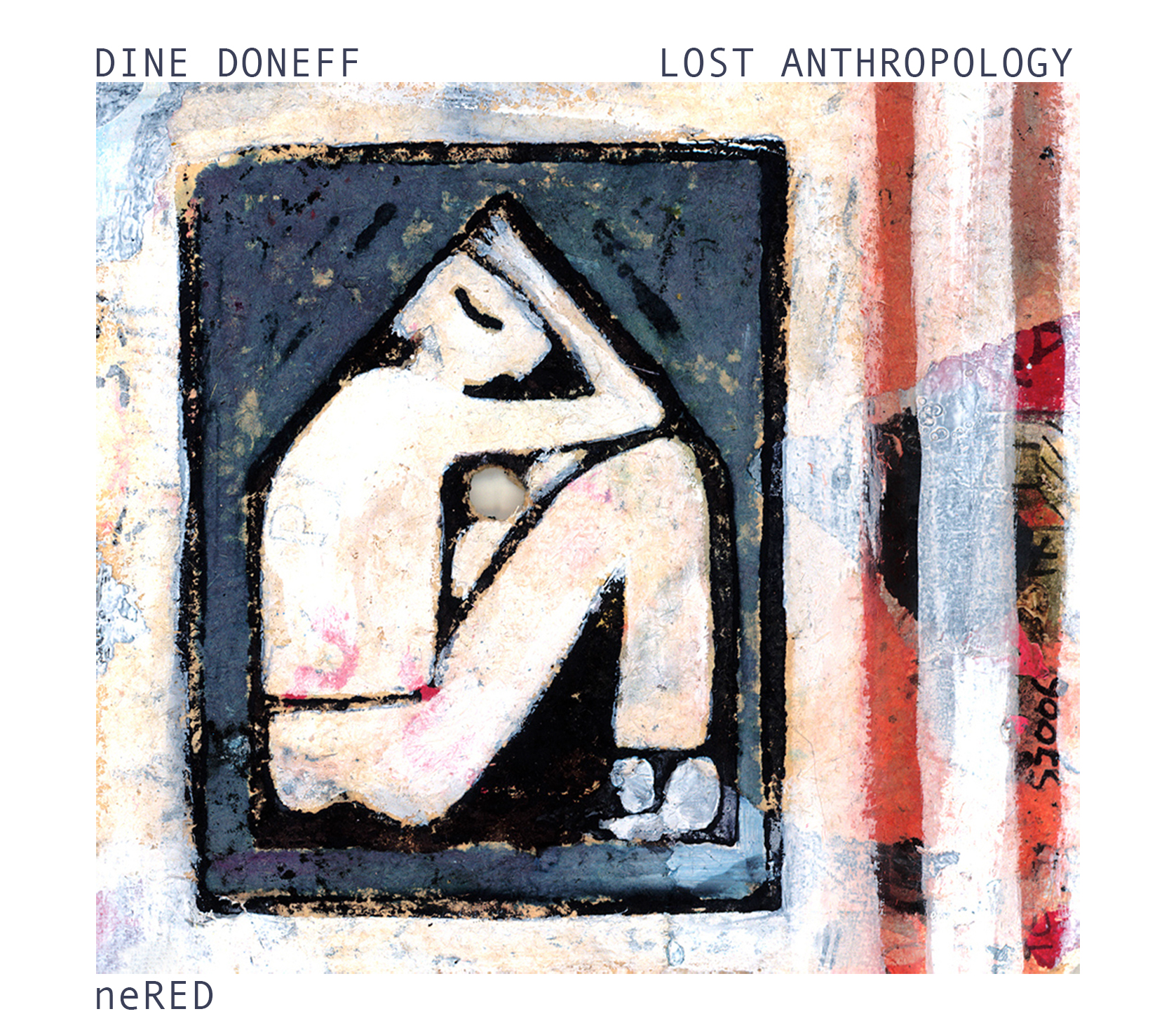
Cover artwork: Fotini Potamia

For the third full installment of his neRED label series, multi-instrumentalist Dine Doneff presents a live set of seven original pieces. Playing bass, guitar, and percussion, he leads a quartet completed by cellist Mathis Mayr, pianist Antonis Anissegos, and bayan player Stamatis Passopoulos. This combination yields a fascinating gallery of scenes painted in various mediums, often within the same track. The opening “Pripapindoll,” for example, introduces us to a faintly abstract sound, a pencil sketch for the paint yet to be applied. When the melody makes itself known, it leaves a trail of pigment in search of evergreen hills beyond. The range of sonorities these instruments achieve is as varied as the topography they describe, culminating in a folk-like flourish. “Endekapalmos” follows a parallel path of development from less ordered dreams to smooth awakening, opening its vista for the bayan’s welcome entrance, sunlit and free as the wind. Doneff’s bass is the anchor for “The Fallen,” in which a groovier aesthetic prevails, the cello adding a fluid overlay, riding a wave of emotional transference from one peak to another. Mayr and Doneff carry over their traction into “Meglen,” setting up an evocative vehicle for Passopoulos and Anissegos, who trade words and memories to climactic ends. After the bayan interlude of “Exile,” a cinematic nostalgia bleeds into “Rite of Passage,” the initial flow of which clots in the improvised plasma of a prepared piano. At last, we reach the turning point of “Prolet.” Building from guitar arpeggios, it shifts into higher gear through percussive color changes, driving toward the horizon without once looking back because the only thing that matters is catching the last glimpse of sun before it dies.

Music Hotel: ECM Musiktage Römerbad Badenweiler 1997 (VHS)

John Surman saxophones, clarinets
Anders Jormin double bass
Bobo Stenson piano
Dino Saluzzi bandoneón
Tomasz Stanko trumpet
Michelle Makarski violin
Jon Christensen drums
Rosamunde Quartett
Andreas Reiner
 violin
Simon Fordham violin
Helmut Nicolai viola
Anja Lechner cello
Filmed at Hotel Römerbad, Badenweiler, May 16-18, 1997
Edited by Pierre-Yves Borgeaud and Cyrille Nakache
Post-production: ARRI Studios, Munich
Executive producer: Fredrik Gunnarsson

Continuing in my coverage of ECM rarities, I was fortunate enough to be sent a copy of an obscure VHS tape documenting the 1997 Römerbad-Musiktage, where an eclectic group of ECM musicians gathered to perform as part of this annual musical event. The clamshell case insert provides the following description:

The Römerbad-Musiktage has been an important event in the contemporary music calendar since 1973, when impresario Klaus Lauer first began to present concerts in the Kuppelsaal of the hotel he owns in the South German resort town of Badenweiler. Although a wide range of music has been presented at the Hotel Römderbad, the emphasis has been on modern composition, and a close working relationship has been established with composers including Elliott Carter, Pierre Boulez, György Kurtág, György Ligeti and Wolfgang Rihm. In 1993, Lauer and music producer Manfred Eicher instigated another annual series, with performances by improvisors and interpreters associated with the ECM label. More than a mere festival, the Badenweiler meeting allows an informed public to witness ECM recording artists in the process of shared musical discovery. Spontaneity is the watchword as the musicians play together, in both proven and untested combinations. “The ECM Whitsun Concert Series at the Römerbad have become an enduring artistic experience,” wrote the Frankfurter Rundschau of the 1997 event. “The aesthetics of Eicher’s equally stringent and open agenda has acquired international renown. Listeners from 16 countries had the opportunity to enrich and modify their musical worldview and to perceive things unavailable at conventional music events.”

Sadly enough, the 50-minute video is not a document of the performances themselves. What we do get, however, is an intimate glimpse into ECM’s “behind-the-scenes” presence in the world of live music as Eicher brings together musicians that have rarely (if ever) shared a stage to create something as enduring in the minds of listeners as it is spontaneous in its coalescence. Filmmaker and friend of the label Pierre-Yves Borgeaud, along with coeditor Cyril Nakache, go to great lengths to clue us in not only on the logistics of putting together such an event but also on the everyday imperfections that must be ironed out to pull it off with elegance.

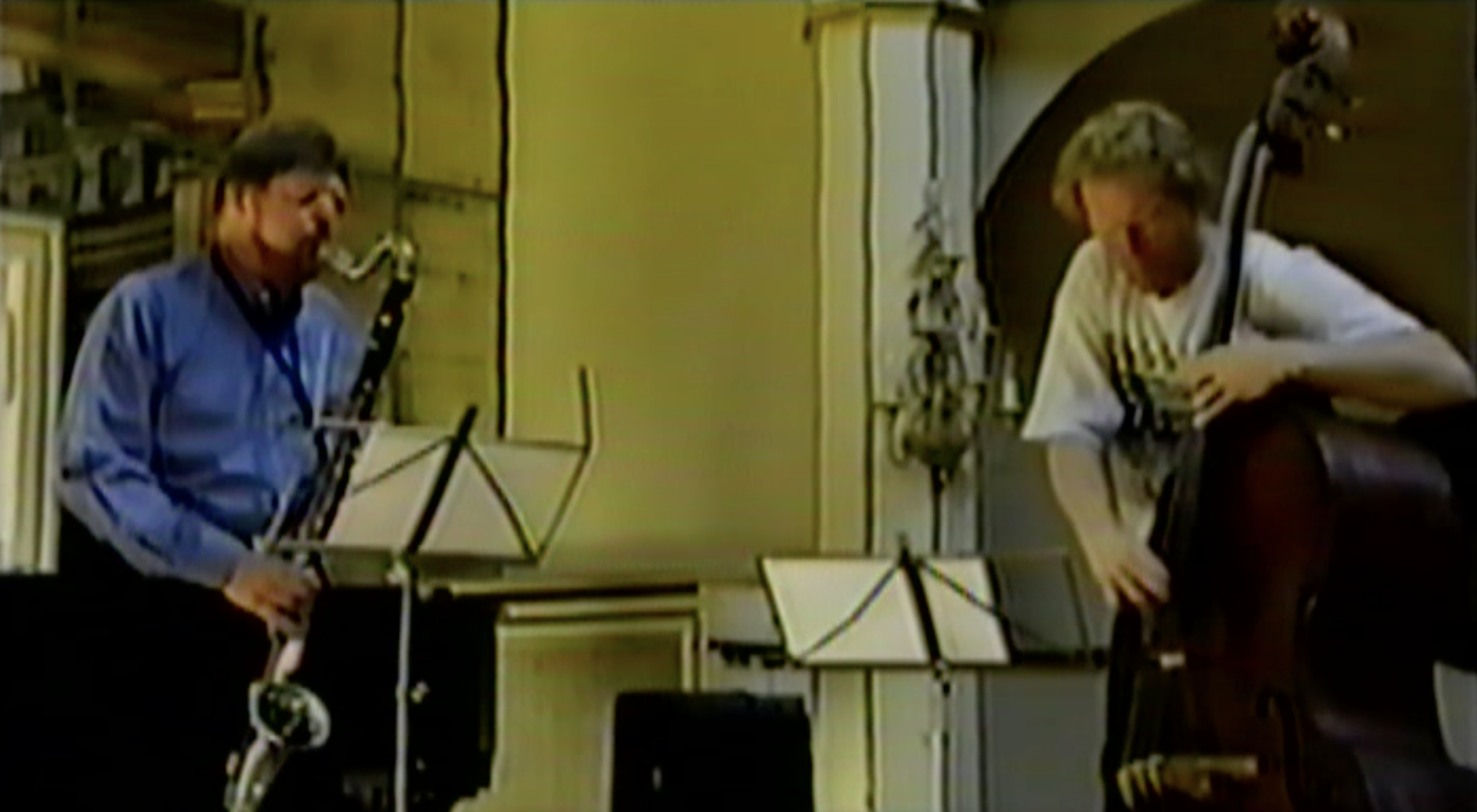
The split curtain that introduces us to the concert space, backgrounded by the unmistakable sound of John Surman’s bass clarinet, offers a sliver of orientation before we see the reed virtuoso in the flesh, along with bassist Anders Jormin, engaging in a measured dance as shots of the hotel’s interior and attentive staff are revealed in leisurely succession.

What follows is a series of rehearsal footage as Eicher molds the air with his hands, visually imagining what he hopes will take place when the room is populated with seasoned ears. Surman talks afterward about how easy it is to play with musicians who listen so deeply to each other before melodizing on soprano saxophone with Bobo Stenson and Jon Christensen joining on piano and drums, respectively.

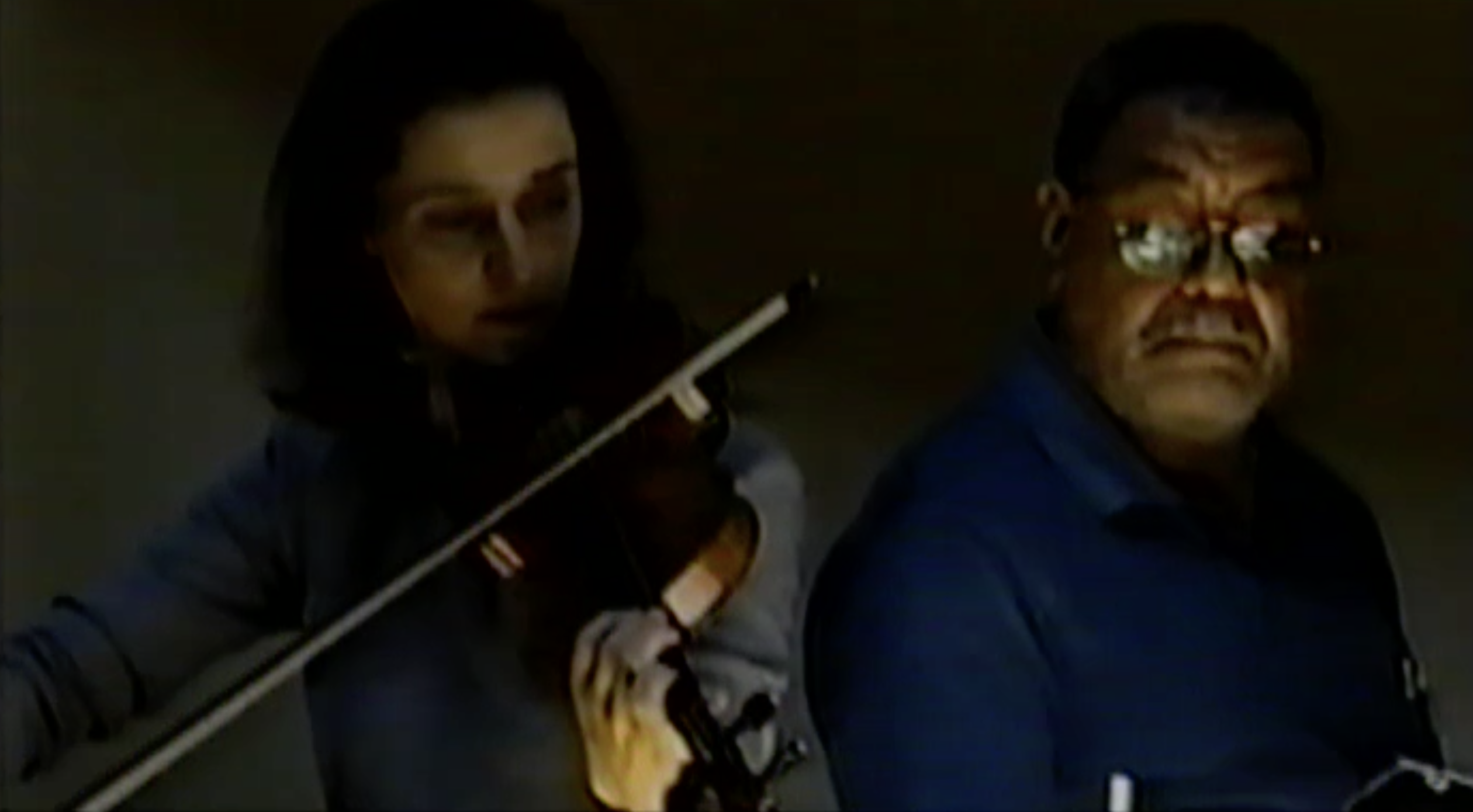
The film moves on to Dino Saluzzi, who fills the room with the resonance of his bandoneón as the other musicians decide on their configurations with Eicher’s input. They then augment Saluzzi with Jormin and trumpeter Tomasz Stanko. Violinist Michelle Makarski is also interviewed, expressing her love of improvisation despite her classical training and her gratitude for being among these jazz greats. She recalls being asked to perform the works of Keith Jarrett in New York City, which caught the attention of Eicher and resulted in the 1994 album Bridge Of Light, followed by her solo album Caoine one month before this film was made. Her sound meshes soulfully with Saluzzi and Stanko, the latter of whom talks about the beauty of the space, the dry acoustics of which allow for the cultivation of a fuller sound among such artfully curated musicians.

Saluzzi is the focal point of the most alluring ensembles, especially when he combines his sound with that of the phenomenal Rosamunde Quartett. Anchored by the robust cello of Anja Lechner, the strings pair wonderfully with Saluzzi’s generous spirit. In the interview that follows, he talks about pitching this formal music crossover as a blurring of divisions toward social harmony. His tangos uphold that ethos with utmost love, imprinting the film’s final moments with a message for all.

Peter Brötzmann: Nipples

Peter Brötzmann tenor saxophone
Evan Parker tenor saxophone
Derek Bailey guitar
Fred Van Hove piano
Buschi Niebergall bass
Han Bennink drums
Recorded April 18, 1969 at Tonstudio Bauer, Ludwigsburg (Track 1)and April 24, 1969 at Rhenus Studio, Godorf (Track 2)
Engineers: Kurt Rapp (Track 1) and Conny Plank (Track 2)
Cover design: Peter Brötzmann
Produced by Manfred Eicher + Jazz By Post

To my knowledge, Nipples is the only album produced by Manfred Eicher to not appear on the ECM label. This curious throwback was recorded in April of 1969, months before ECM’s first proper release would go down that same year in the famed Tonstudio Bauer, which yields the first track here. Of that track, which gives this album its name, we are given no warning, jumping instead into a blazing cacophony of sound. Even though it feels like waking up out of a coma in the middle of Shinjuku crossing, a bizarre sense of comfort begins to emerge the more one basks in its unrelenting glow. The one-two punch of Peter Brötzmann and Evan Parker on tenor saxophones bleeds on the proverbial page across which guitarist Derek Bailey, pianist Fred Van Hove, bassist Buschi Niebergall, and drummer Han Bennink add all sorts of diacritics, punctuation, and editorial asides. The result is like the chaos of peer review controlled in a single moving portrait wherein the listener’s visage gets split like Michelle Yeoh’s in Everything Everywhere All at Once. Despite (if not because of) this whirlwind approach, moments for solos abound, such as Van Hove’s flight of fancy about six minutes in. Against aggressive bowing and frontline drum work, his pianism kicks us in the shins and leaves us crawling for more. To that fray, Brötzmann and Bailey add uncompromising grit, all the while building up the ensemble to an ascorbic cohesion. A fantastic arco spasm from Niebergall in the third act yields equally favorable outcomes in this chameleonic chain reaction. All of this ends in a congregation of tails, each wispier and more meteoric than the last.

For the B-side, “Tell A Green Man” sheds Parker and Bailey to no less engaging effect. While the preamble from the rhythm section provides anything but discernible rhythm, its foundational qualities provide plenty of clay for Brötzmann and Van Hove to mold to their whim. Indeed, whim is the name of the game as irreverence ensues, dividing its equation until it bursts with the desire for recalibration. Niebergall’s scraping rears its tactile head for the listener to run a comb through, while Brötzmann gives himself over to less subtle temptations of vivacity.

Nipples first appeared on the Calig Records (Munich) in 1969 and was remastered by John McCortney in February 2000 at AirWave Studios (Chicago) for Atavistic. Three years later, Atavistic released a follow-up with outtakes from the same studio sessions. The result, called—what else?—More Nipples, offers up three tracks of invigorating mayhem. The title track gives up its ghost from the first moment, tracing its ephemeral paths with more delicate abandon. Despite a few ebb tides here and there, it focuses more on the inner than the outer. “Fiddle Faddle” is a reedy wonder dragged kicking and screaming through the fires of Niebergall and Bennink and may be my favorite of the collection for its control of free spirit. Finally, we have “Fat Man Walks,” which concedes to a groovier blues aesthetic, gut-wrenching and sincere in its devolvement into atonalism.

A much-needed call to attention in these dark times.

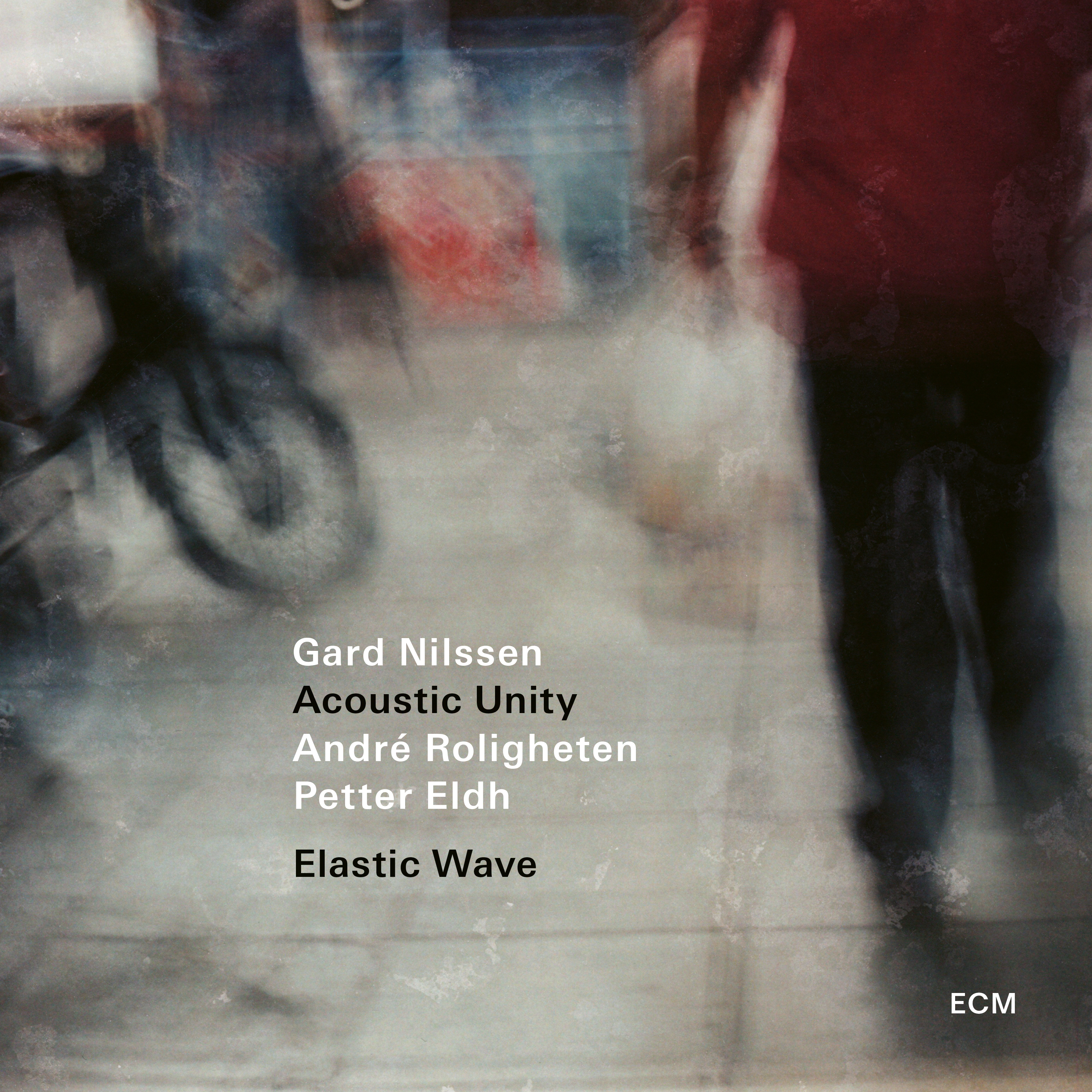
Gard Nilssen Acoustic Unity: Elastic Wave (ECM 2724)

Gard Nilssen Acoustic Unity
Elastic Wave

André Roligheten tenor, soprano and bass saxophones, clarinet
Petter Eldh double bass
Gard Nilssen drums
Recorded June 2021
Studios La Buissonne, Pernes-les-Fontaines
Engineer: Gérard de Haro
Mastering: Nicolas Baillard
Cover: Fotini Potamia
Produced by Steve Lake
Release date: July 15, 2022

André Roligheten is one of the most exciting young saxophonists in the Norwegian jazz scene. I had the pleasure of seeing him in various guises under the auspices of the 2018 Nutshell jazz festival (see my writeup and photos here), and I always hoped to see his name on an ECM roster one day. I am happy to say that day has come, and I can hardly imagine finer company than Swedish bassist Petter Eldh (who made his first label appearance as part of Django Bates’ Belovèd on The Study Of Touch) and Norwegian drummer Gard Nilssen, whose highly sought-after name emblazons Elastic Wave as bandleader. Nilssen has played with almost anyone of note in the European circuit you can think of, from veterans like Audun Kleive (under whom he studied) and Arild Andersen to fresher talents like Maciej Obara (see Unloved and Three Crowns) and Roligheten himself. His paths have also intersected with major figures from across the pond, including Bill Frisell and Pat Metheny.

With such a title and album cover to go with it, we might expect a frenzy of activity. Instead, we are introduced to Acoustic Unity’s fluid identity via “Altaret,” one of two more relaxed tunes from Eldh’s pen. In silver-tinted monochrome, it lays an ante of trust on the proverbial card table. Later in the set, the bassist’s “Dreignau” allows the chips to fall where they may, tapping into an ethos that animates everything the band touches. “Influx Delight” breaks form with a tenor-led romp of post-bop energy that sparks the senses and, along with “Acoustic Dance Music” (both were co-written by Nilssen and Roligheten), puts its unique brand of introspective extroversion on full display. On the flip side, we find extroverted introspection in Roligheten’s “Cercle 85” and “Til Liv.” Whereas the first is a clarinet-led stroll through streets at night, the second is an ode to the composer’s daughter, the abstractions of which capture that delightful complexity daughters so uniquely hold. Nilssen’s “Spending Time With Ludvig” counters with a tribute to the drummer’s son, while “Boogie” flows with Eldh in intuitive confluence. Its free and easy style never forces its hand, puffing out old clouds into a new sky.

Nilssen cites many influences, from Jack DeJohnette to Jon Christensen (one of whose cymbals, in fact, takes pride of place in this session’s kit), among others. The tune “Lokket til Jon, og skjerfet til Paul,” notes this album’s press release, “also alludes to a scarf once left at the La Buissonne studio by Paul Motian, used here to take the edge off the bass drum’s ringing overtones.” Brushed drums and softly splashing cymbals show an artist at the kit, painting in everything from watercolor and acrylics to thickly applied oils. Roligheten’s sensitivities retake the helm, revealing the same depth of character I experienced in live settings. The saxophonist further contributes “The Other Village,” in which he plays tenor and soprano simultaneously, surprising us with bagpipe sonorities before riding Nilssen’s rolling thunder into oblivion. The latter’s “The Room Next To Her” closes the set with the guttural wonders of Roligheten on bass saxophone. Such feet-to-flame playing enacts a slow-motion punch to the gut that leaves us stronger for it. I can’t wait for Round 2.