The Jazz Composer’s Orchestra: s/t (JCOA 1)

WATT-1801-front

Jazz Composer’s Orchestra

Don Cherry cornet
Gato Barbieri tenor saxophone
Larry Coryell guitar
Roswell Rudd trombone
Pharoah Sanders tenor saxophone
Cecil Taylor piano
The Jazz Composer’s Orchestra
Michael Mantler
conductor
Recorded on 3M 8-track tape recorders in RCA Victor’s Studio B, New York City
Recording engineer: Paul Goodman
Produced by Michael Mantler

It has been 52 years since the Jazz Composer’s Orchestra dropped its weighty stone into the pond of music history. And yet, its ripples are still rocking the boats of listeners today. Count me among them. Despite having first gotten to know Michael Mantler through his intersections with ECM Records (a personal favorite being The School of Understanding), and having been given a taste of this watershed double LP on Review, I was humbled by the intensity herein. The vital link to that latter compilation is “Preview” (recorded May 8, 1968), which compresses the album’s full magnitude into 3-1/2 minutes via a gut-wrenching solo from Pharoah Sanders on tenor. Over a punctuated ensemble, he gives us much to ponder on the altar of our listening, as if it were the living amalgamation of many deaths before it (if not the dying amalgamation of many lives before it). Not out of any grand level of abstraction or concept but only through a sheer embodiment of execution does it succeed to carry a charge.

While soloists tend to dominate the foreground at any given moment throughout this project, the orchestra itself isn’t something to bat a flaccid eyelash at, either. Sheltering such greats as Steve Lacy, Randy Brecker, Carla Bley, Charlie Haden, Andrew Cyrille, Ron Carter, and Eddie Gomez, it blisters to the touch, and perhaps nowhere no more so than on “Communications #8” (recorded January 24, 1968). Hitting us where it counts with a solar flare, it lights the continents of Don Cherry’s cornet and Gato Barbieri’s tenor with killer instinct. Theirs is a power to be reckoned with. Every breath matters. “Communications #9” (recorded May 8, 1968) is an ember by contrast. But Larry Coryell ensures that the air itself is flammable, and that his guitar is the only logical path toward its combustion. Beneath it all, Bley’s piano chops away at the spine to make way for nerve impulses while droning reeds and five bassists level the earth. Coryell twists his strings until they adhere to inner turmoil. “Communications #10” (recorded May 8, 1968) features a rare introduction from Steve Swallow on upright bass, abstract yet flexible, and for that reason alone lends it archival vitality. So begins a morose and strangely unbreakable chain of inward glances. Trombonist Roswell Rudd is the extroverted soloist moving through viscous oceans before reaching a deserted island where, in dialogue with drummer Beaver Harris, he unravels the stuff of fantasy as if it were his only viable companion. The orchestra swoops in until there’s nothing left but smoke to show for their existence.

All of this leads to the massive diptych “Communications #11.” Spanning nearly 34 minutes, it’s another unrelenting communique. Pianist Cecil Taylor solos the you-know-what out of it like someone on fire in frantic in search for water. His interactions with Cyrille’s percussive details is worth the dive in and of itself. If Part 1 is the freefall, then Part 2 illustrates the landing in gruesome detail. Cyrille and Taylor continue their banter, turning starlight knives, each intent on drawing blood. The energy of their flight is sustained so steadfastly as to bring a tear to the eye, only to dry it with a punch in the cheek. This is where insanity goes for respite. Let it keep you sane.

Bley/Sheppard/Swallow: Life Goes On (ECM 2669)

2669 X

Carla Bley piano
Andy Sheppard tenor and soprano saxophones
Steve Swallow bass
Recorded May 2019, Auditorio Stelio Molo RSI, Lugano
Engineer: Stefano Amerio
Produced by Manfred Eicher
Release date: February 14, 2020

For its third ECM outing, pianist Carla Bley’s trio with saxophonist Andy Sheppard and bassist Steve Swallow mixes up an antidote for these times of uncertainty and quarantine. The title suite is the first of three comprising the program. Given that “Life Goes On” came out of a recent brush with illness, it’s fitting that Bley should begin in the dark whimsy of the blues. Her left hand plows fertile soil before leaving Sheppard and Swallow to sow their thematic crop. Years of experience and collaboration funnel into Swallow’s intimate rapport with Bley and into Sheppard’s unforced, spiritual playing. The latter, whether breathing through tenor or soprano, takes two steps forward for every retreat.

A sardonic humor assumes center stage in the three-part “Beautiful Telephones.” The title, quoting a certain leader of the free world, speaks of dire political circumstances, which, like the dial tone of a nation on hold, keeps us hopeful for something that may never come. The central movement reveals some of the deepest conversations and finds Sheppard in an especially soulful mood. The jagged finish is about as astute a commentary as one could pen on the current state of things without words.

The trio saves its most lyrical for last in “Copycat”, which holds a candle to some neglected parts of the human condition. There’s so much beauty in the opening “After You” that only the vessel of the playful title section is big enough to contain it. Setting a tongue in every cheek, it coaxes us with a promise of better times.

Holding it all together is an almost photorealistic approach to life. Like the score pages above Bley’s face on the cover, time feels suspended at just the right moment to reveal a smile of hope beneath it all.

(This review originally appeared in the May 2020 issue of The New York City Jazz Record, a full PDF of which is available here.)

Tim Berne/Nasheet Waits: The Coandă Effect

The Coandă Effect

In this 2019 live set from The Sultan Room in Brooklyn, alto saxophonist Tim Berne and drummer Nasheet Waits connect a 49-minute Möbius strip of improvisational wonder. Composed of two free outpours, “Tensile” and “5see,” the performance is a barrage of ideas, which, despite their thickness of description, leave plenty of room for our imagination as listeners to run wild in tandem. With an immense freedom of spirit and catharsis of expression, the duo breaks down one wall after another until all expectations end up in a free box at the side of our mental road. Without a map, we are left to roam the subtler implications of their interactive cause. The ending of each statement becomes the beginning of another, leaving us with a string of words barred access to orthography. The ebb and flow between clarity and obscurity is as cohesive as the connection between bodily organs.

Berne plays with intense lucidity of communication. He tells stories not for the sake of a reaction but in the interest of filling in blanks the rest of us may be afraid to touch in the Mad Libs of life. His incisiveness fires arrows of indisputable meaning into the air. Waits likewise pulls out the rug from under us not out of a desire to break our equilibrium but to reveal an even more stable surface beneath it. Like Peter Pan, he cuts away his shadow in search of a land without rules, only to realize that connections of a higher order can never be broken. Such is the depth of their rapport as each defers to the other until the geyser of creativity grows too hot to contain. And so while we might end up with more questions than answers, we are all the better for having asked them.

(This review originally appeared in the May 2020 issue of The New York City Jazz Record, a full PDF of which is available here.)

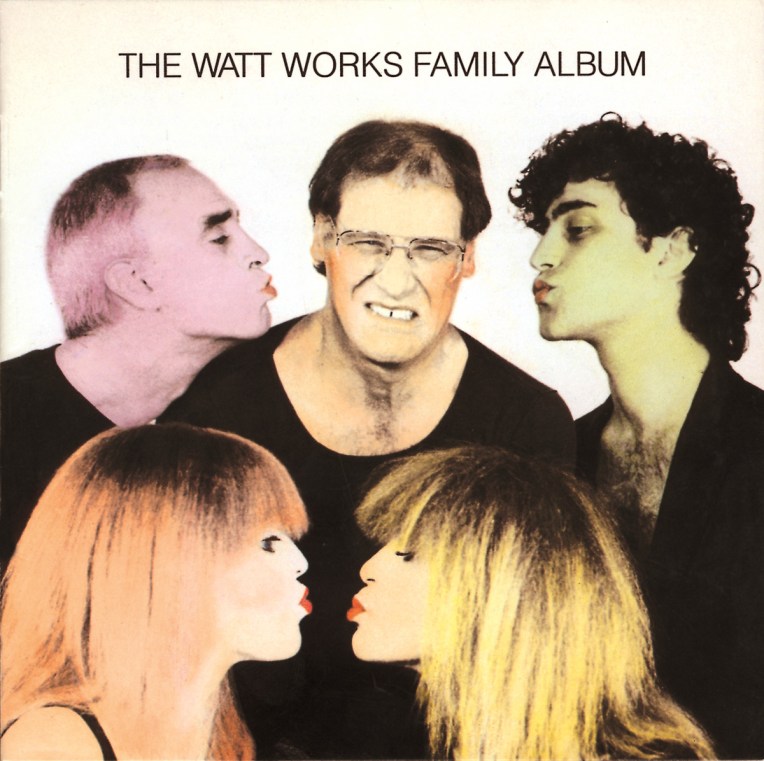
The Watt Works Family Album (WATT/22)

The Watt Works Family Album

The Watt Works Family Album

Having now traversed the entire WATT and XtraWATT catalogs, I feel it’s only appropriate to take a step back and admire the sheer variety of fish caught in this musical net. Thankfully, label owners Michael Mantler and Carla Bley assembled this compilation album to give us a representative selection. As noted in the CD booklet, WATT grew well beyond its nominal status as a record label into “a complete support system dedicated to the independent production of their music without compromise.” And while it may have been released on April 1, 1990, The Watt Works Family Album is no joke, but rather the thoughtful state of a union unlike any other.

Key artists from both labels are equitably represented. Bley gets first blush in her ravishing “Fleur Carnivore.” This 11-minute seduction isn’t without its elbows to the ribs, and pays worthy respect to her work for larger ensembles. “Walking Batteriewoman” jumps goes intimate in a duo version with bassist Steve Swallow, showing the breadth of her palette. Somewhere between the two in scope is the moonlit walk of “Talking Hearts,” left behind like a memory we hope will never end once the cringe of “I Hate To Sing” (from the brilliant vaudevillian album of the same name) takes over. “Ad Infinitum” (as it appears on 1977’s Dinner Music) expands Bley’s sound into even warmer climates, where the spirit of the age glows in our remembrance. The final Bley selection is “Funnybird Song,” which features a seven-year-old Karen Mantler. Fourteen years after that first appearance on record, she would make her leader debut, My Cat Arnold, from which we are treated to “Best Of Friends,” a delightful song about her love for mother Carla. As for father Michael, we are given deep, dark glimpses into a world of text and incidental soundtracks quite unlike anything else out there. From the genuine voices of Robert Wyatt in “A L’Abattoir” and Jack Bruce in “When I Run” to the orchestrally inflected powerhouses of “Twenty” and “Movie Six”—passing through Part 2 of Alien, which pairs Mantler’s trumpet with the synths of Don Preston, along the way—one can feel the stories aching to be told, even when no words are being sung. The two standalones are Swallow’s “Crab Alley” (a master class in fuzak) and Steve Weisberg’s “I Can’t Stand Another Night Alone (In Bed With You),” which for me is the sleeper hit of the XtraWatt portfolio.

After the pleasure of journeying through both labels, I can only thank you for joining me. I hope you took some pictures along the way.

Steve Swallow with Robert Creeley: So There (XtraWATT/12)

So There

Steve Swallow with Robert Creeley
So There

Steve Swallow bass
Robert Creeley voice
Steve Kuhn
piano
The Cikada Quartet
Henrik Hannisdal violin
Odd Hannisdal violin
Marek Konstantynowicz viola
Morten Hannisdal cello
Recorded August 25, 2001 at The Make Believe Ballroom, West Shokan, NY (Engineer: Tom Mark) and August 27/28, 2005 at the Kunsthogskolen, Oslo (Engineer: Jan Erik Kongshaug)
Edited at Flymax Studio, West Hurley, NY (Engineer: Pete Caigan)
Mixed at The Make Believe Ballroom, West Shokan, NY (Engineer: Tom Mark)
Produced by Steve Swallow
Release date: November 7, 2006

If you wander far enough
you will come to it
and when you get there
they will give you a place to sit…

These words, borne by a vessel of strings, begin a transportive musical experience meshing the music of Steve Swallow with the poetry of Robert Creeley (1926-2005). Though the latter’s readings were recorded in 2001, it took Swallow four years to gather momentum for the project, by which time Creeley had passed. This left Swallow no choice but to construct his playing around the words, by which time what started out as a dedication had turned into an elegy. Fans will know this not to be Swallow’s first brush with Creeley, as he had already set the poet’s words to music on 1980’s Home. As on that ECM project, he is joined here by pianist Steve Kuhn, but adds to themselves the metallic whispers of the Cikada Quartet.

Creeley’s aphoristic observations go down like sweet tea, and linger in the mouth all the same. For the most part, Swallow takes his time to set up each with an intimate context forged in bass and piano, the Cikadas breathing life into the periphery only when necessary. In this manner, the simple explorations of scenes like those described in “Indians,” “Return,” and “Blue Moon” take full shape before a single word is articulated. Only in tracks like “Later,” in which Kuhn rhapsodizes ever so subtly through sentiments of emotional delay, and the closing “A Valentine For Pen,” do instruments and words cross paths more continuously.

Swallow’s lyricism is suitably matched to Creeley’s. In the anthemic undertones of “Sufi Sam Christian,” the bassist evokes the very uplift of which the poet speaks; in “Miles,” he adds a jazzy nuance to a title that, in this context, has more to do with distance than with the elusive trumpeter; and in an excerpt from “Wellington, New Zealand” (which blends into “Eight Plus”), he personifies saintly patience. Interestingly enough, the music almost never belies a conscious attempt to match the rhythm of speech (as, for instance, in composer Scott Johnson’s settings of I. F. Stone, How It Happens). Such freedom compels the listener to fill in the gaps with personal histories, moments of reflection, and quiet appreciation.

…for yourself only, in a nice chair,
and all your friends will be there
with smiles on their faces
and they will likewise all have places.

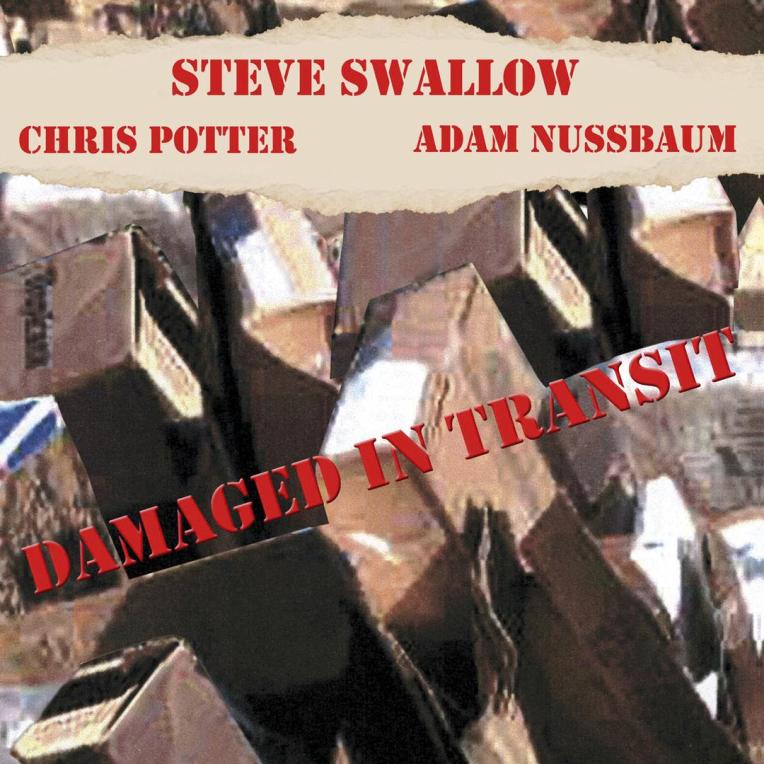
Steve Swallow: Damaged In Transit (XtraWATT/11)

Damaged In Transit

Steve Swallow
Damaged In Transit

Steve Swallow bass
Chris Potter tenor saxophone
Adam Nussbaum
drums
Recorded December 2001 by Bill Strode
Mixed by Tom Mark and Steve Swallow at The Make Believe Ballroom, West Shokan, NY
Mastered by Greg Calbi at Sterling Sound, New York City
Produced by Steve Swallow
Release date: October 7, 2003

Following two successful quintet outings, bassist Steve Swallow pared down his traveling show to a trio with tenor saxophonist Chris Potter and drummer Adam Nussbaum. Recorded live during a December 2001 tour in France, the present tunes are numbered as a series of nine “Items,” each marked “D.I.T.” (per the album’s title), allowing listeners more than the usual freedom to interpret them as they will. The same holds true of the performers themselves, who answer the call to interpretation with layer upon layer of phenomenal exposition. Not to say that such impulses weren’t already there in the larger band, but like a finely distilled spirit the clarity of notes speaks to the palate more directly.

The shedding of guitar and trumpet means Potter is left to bear that much more weight as melodic and improvisational leader, and he takes to the role without so much as a hiccup. The verve of “Item 1” is duly representative of all to follow, organically mixing the studious and the unchained. That same creative spirit abounds in “Item 5,” for which he unravels two knots for each one tied. And while Potter is known for his ability to navigate the most kinetic environments, he really stretches his wings in the blues of “Item 2” and downhome sweetness of “Item 7.” Nussbaum’s breadth of coloration ranges from the incendiary (“Item 5”) to the delicately supportive (“Item 6”), and indicates a deeply listening ear behind every choice at the kit. As for Swallow, he shows depth of character as setter of boundaries (cf. “Item 8”), soloist (“Item 4”), and painter of dreams (“Item 3”). In each capacity, and beyond, he proves the value of preparing for one’s journey to ensure that nothing gets damaged along the way.

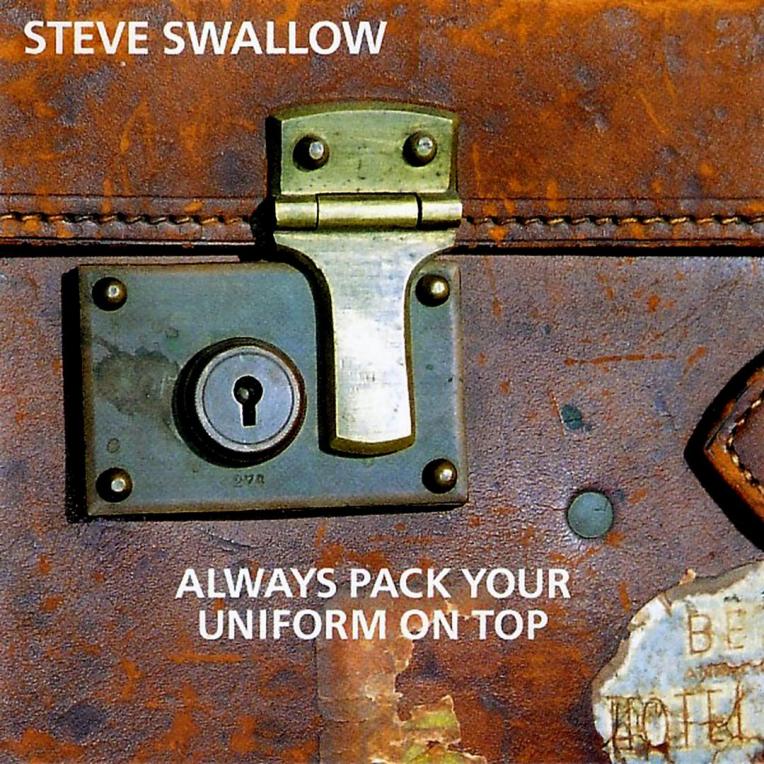
Steve Swallow: Always Pack Your Uniform On Top (XtraWATT/10)

Always Pack

Steve Swallow
Always Pack Your Uniform On Top

Barry Ries trumpet
Chris Potter tenor saxophone
Mick Goodrick guitar
Steve Swallow bass
Adam Nussbaum drums
Recorded April 1999 at Ronnie Scott’s Club, London
Engineer: Miles Ashton
Mixed and mastered at Grog Kill Studio, Willow, New York
Engineer: Tom Mark
General co-ordination: Ilene Mark
Produced by Steve Swallow
Release date: June 5, 2000

For this live expedition, recorded at Ronnie Scott’s Club in London in April of 1999, Steve Swallow carries on the nascent legacy of his quintet with drummer Adam Nussbaum, guitarist Mick Goodrick, tenor saxophonist Chris Potter, and (replacing Ryan Kisor) trumpeter Barry Ries. A quiet monologue from Swallow keys open “Bend Over Backward,” an 11-and-a-half-minute suitcase of a tune. A brief nod to “Heart And Soul”—that perennial favorite among those who can’t play an instrument—reminds us we are in the presence of those who can…and then some. Potter and Nussbaum saunter onto stage like they own the place, shoes shined and hats cocked playfully askew. After Goodrick completes the picture, Ries comes in only at the end, foreshadowing his headlong dive into “Dog With A Bone,” a standout in both name and content that gives Potter plenty of leg room to dance without compromise. Energies thus spent, they deserve the downtime that casts its spell in “Misery Loves Company.” Ries is on point from start to finish, exuding a tonal quality from his trumpet closer to that of a flugelhorn. Goodrick blesses the proceedings with a graceful run of his own, skating across every patch of ice smoothed by Nussbaum’s brushes.

Any Swallow fan knows that sunset is when he comes alive, and in “Reinventing The Wheel” he gives us precisely that kind of flavor, spiked by the golden rays of Ries’s muted lines. “Feet First” then takes us on a night drive through empty streets before seeking solace in “La Nostalgie De La Boue.” And while everyone gives it their all, it’s Potter who stands out for his tightrope run between class and fortitude. Already flirting with mastery by this point, he cracks open every tune like a child hoping for that one rock that might turn out to be a geode. And that he finds, each note a facet of light reflected off the crystals within.

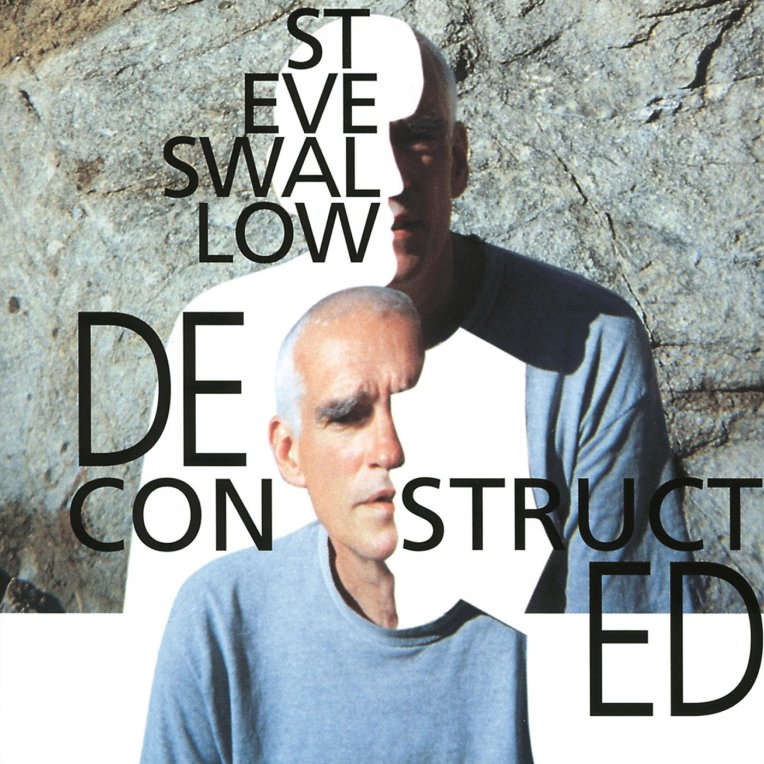
Steve Swallow: Deconstructed (XtraWATT/9)

Deconstructed

Steve Swallow
Deconstructed

Ryan Kisor trumpet
Chris Potter tenor saxophone
Mick Goodrick guitar
Steve Swallow bass
Adam Nussbaum drums
Recorded, mixed, and mastered December 1996 at Grog Kill Studio, Willow, New York
Engineer: Tom Mark
General co-ordination: Ilene Mark
Produced by Steve Swallow
Release date: June 2, 1997

On Deconstructed, bassist Steve Swallow treats listeners to a set of relatively straight-laced bebop with an outstanding new quintet. Flanked by trumpeter Ryan Kisor, tenor saxophonist Chris Potter, guitarist Mick Goodrick, and drummer Adam Nussbaum, he composites a new species around the chordal DNA of Tin Pan Alley, and from those rafters hangs a tangle of original melodic vines.

Swallow sets up the picnic table of “Running In The Family” before introducing the full band spread, which hits you with padded gloves before setting loose the session’s first major solos from Potter and Goodrick. Equally sanguine developments abound in “Babble On,” for which Swallow and Nussbaum pave the way, leaving Kisor to run as far as his horn will allow (as he also does on the closing title track) while Potter stands firm, reeling with joy. “Bird World War” is another upbeat gem, this time with a blazing solo from Goodrick.

Not all is fun and games, however, as Swallow turns down the lights one click at a time between the unassuming “Another Fine Mess” (a tune so aching it begs for words), the smoldering “I Think My Wife Is A Hat” (a highlight for me), and the bluer “Viscous Consistency.” Even “Bug In A Rug,” a calypso-inspired slice of life, soothes as much as it titillates. As Swallow locks step with himself, Goodrick and Potter harmonize synergistically with Kisor. The same description might just as easily apply to “Lost In Boston,” which moves from uncertain to frantic in “Name That Tune.” In each of these, as he is wont to do, Swallow reminds us that every exhale needs a deep inhale to say everything it needs to say.

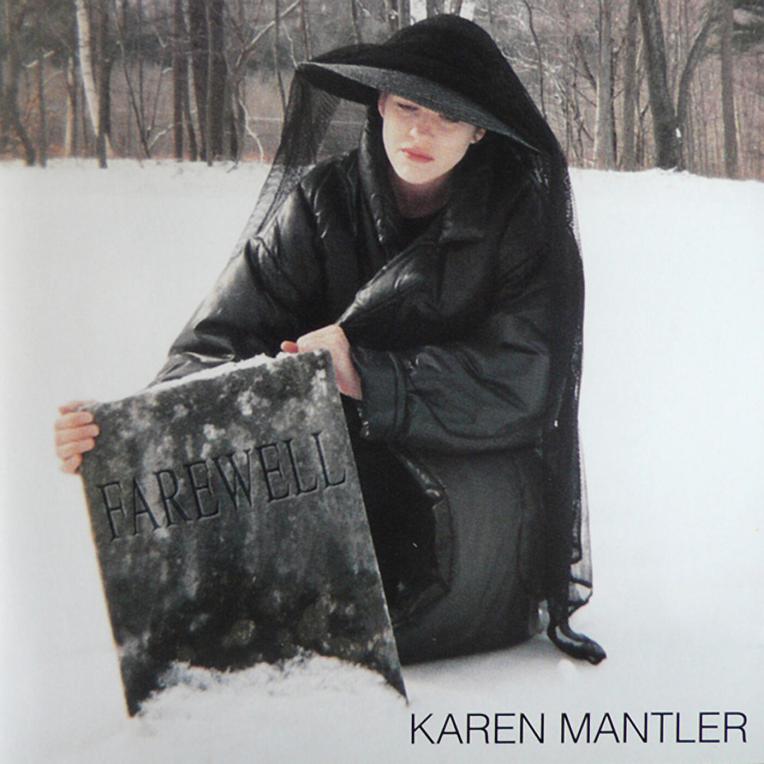
Karen Mantler: Farewell (XtraWATT/8)

Farewell

Karen Mantler
Farewell

Karen Mantler vocals, harmonica, piano, organ, synthesizer, harmonium, glockenspiel
Michael Evans drums, frying pan, oven rack, whisk, refrigerator pan, ankle bells, bean pod, vocal (on “Arnold’s Dead”), glasses, chains, sheet metal, alto saxophone, vibraphone, tabla, Indian bell, snake charmer, whistling, “electrical” sounds
Special guests:
Carla Bley C melody saxophone (on “The Bill” and “Con Edison”)
Scott Williams vocal (on “The Bill”)
Recorded and mixed December 1995 by Tom Mark, Grog Kill Studio, Willow, New York
General co-ordination: Ilene Mark
Produced by Karen Mantler
Release date: June 1, 1996

Karen Mantler (insofar as we can know her through a musical persona) is a soul struggling to stay upright in a world that has lost its balance, yet who always returns to center no matter how many times she is led astray. Given the fact that she loved her cat Arnold so dearly, as attested by the two albums preceding this one, and because her songs so often deal with the inevitable sting of hardship, it was only a matter of time before the death of that beloved feline would break her in two. The glue holding her together, it seems, is the music pouring from within, and which finds its way into the duo session recorded in this, her most insightful and musically rich creation to date. Emoting via keyboards (and her ever-cathartic harmonica), she is joined by Michael Evans on an array of percussive objects, spanning the gamut from drums and bells to frying pan, oven rack, whisk, and refrigerator pan. That so many of these involve the kitchen, where we imagine many cans of cat food for Arnold were surely opened, speaks to the breakdown of Mantler’s domestic space in the wake of a gaping absence.

This time around, we may divide the songs into three tiers. First are those dealing with broken relationships and emotional detachment. Sitting on the throne of this category is the emotionally raw title track. Balancing the sardonic and the sincere, Mantler forges a mood that extends to kindred spirits of affliction in “Brain Dead” and “Arnold’s Dead.” Evans speaks in the latter, feigning an empathy that is impossible to sustain against the depth of Mantler’s grief. As “the only cat I ever truly loved,” Arnold is a martyr for the lost. Second are Mantler’s paeans to survival, which tend to deal with money (or lack thereof). In “The Bill,” guest vocalist Scott Williams plays the role of bill collector, while “Con Edison” is offered as a prayer for the eponymous company to turn her electricity back on. (Her mother, Carla Bley, plays C melody saxophone on both.) These sentiments culminate in “I Hate Money,” which lines up romance and fame alongside this most material of woes. A third ilk of songcraft deals with fear and uncertainty, as epitomized in “Mister E” (a stalkerish nightmare), “Help Me” (icily arranged for harmonica, harmonium, tabla, and resonating water-filled glasses), and “Beware” (a ritual of organ and drums). Even the droll outlier, “I’m His Boss,” is swiftly undermined by the gloom of “My Life Is Hell,” over which the unpaid rent looms like a specter of modernism.

Anyone wanting to know the crystal-clear atmospheres Mantler is capable of creating may wish to start here, but how much more fascinating to trace the journey back to the beginning, when Arnold still shined his light into Plato’s allegorical cave.