

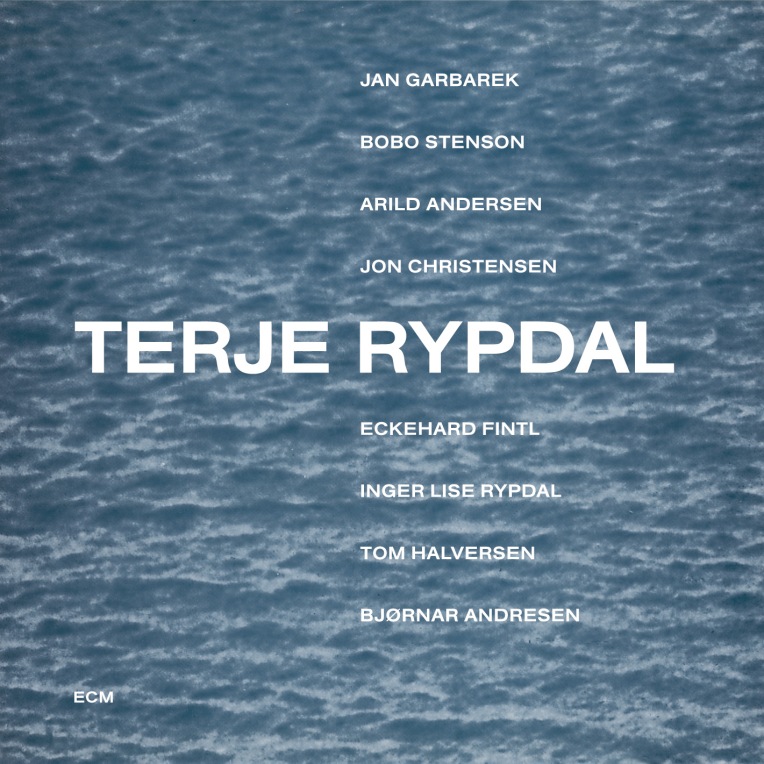
Terje Rypdal: s/t (ECM 1016)

ECM 1016

Terje Rypdal

Terje Rypdal guitar, flute
Inger Lise Rypdal voice
Ekkehard Fintl oboe, English horn
Jan Garbarek tenor saxophone, flute, clarinet
Bobo Stenson electric piano
Tom Halversen electric piano
Arild Andersen electric bass, double-bass
Bjørnar Andresen electric bass
Jon Christensen percussion
Recorded August 12 & 13, 1971, Bendiksen Studio, Oslo
Engineer: Jan Erik Kongshaug
Produced by Manfred Eicher

Terje Rypdal’s first ECM effort as frontman is a bewitching look into the Norwegian guitarist’s formative years. With a bevy of talented musicians in tow, he forges a mercurial portrait of late-night melodies and hidden desires. “Keep It Like That – Tight” is stifling and seedy, buffeted by cooling fans and laced with the fumes of an alcoholic haze. It’s a desolate hotel room where more than evening falls, a cigarette put out on the skin, incoherent words spilling from warm lips. The atmosphere is acutely palpable, oozing with film noir charisma and slurred speech. Garbarek spins a notable solo here, only to be overtaken all too soon by Rypdal’s drunken swagger. One might think this would be a taste of things to come, but Rypdal surprises with “Rainbow,” a most ethereal track laden with reverb and stratospheric beauty, dominated by oboe for a more classical sound. The background clinks and hums with a variety of percussion, bowed electric bass, and flute. The third track, “Electric Fantasy,” lies somewhere between the first two, a jazz suite with symphonic flavor. Rypdal’s former wife Inger Lise adds some moody vocals as an English horn expands the sound even further. Illusive drumming from Christensen and the occasional wah-wah guitar add dynamic touches of their own. The ambient crawl of “Lontano II” reverses the opening effect by leading into the more blues-oriented “Tough Enough,” leaving a grittier aftertaste.

The striking differences in instrumentation between tracks may be off-putting to some, while others may see it as part of a larger concept. Either way, this self-titled album is thematically rich and more than worth the listen.

<< Jan Garbarek Quintet: Sart (ECM 1015)
>> Keith Jarrett: Facing You (ECM 1017)

Heinz Reber: MNAOMAI, MNOMAI (ECM New Series 1378)

Heinz Reber
MNAOMAI, MNOMAI

Thomas Demenga cello, viola
Terje Rypdal guitar
Jon Christensen drums
Tschin Zhang vocal
Ellen Horn vocal
Recorded October 1990, Rainbow Studio, Oslo
Engineer: Jan Erik Kongshaug
Produced by Manfred Eicher

The Swiss composer Heinz Reber (1952-2007) cut a fascinating figure in the world of sound. He began his career as a music therapist for psychiatric patients before turning to more public forms of audible expression. Reber would even combine the two in a 1975 play for Swiss radio, the cast of which was culled from those same patients. Such ruptures of identity would characterize his output to come. For the spiraling exegesis that is Mnaomai, Mnomai, Reber assembled a handful of equally committed (no pun intended) instrumentalists and vocalists for an intriguing mélange of sound and spoken word. The word mnaomai (pronounced “mnah’-om-ahee”) appears in the New Testament and means “to bear in mind” in Greek. Reber lifted his title from Jean-François Lyotard’s Libidinal Economy. Although the source texts are interesting in and of themselves—ranging from Beckett to Chinese protest poetry written by Tschin Zhang, one of the album’s vocal performers—they constitute a set of linguistic entities whose orthographic shapes are as equally important as their verbal ones. Thomas Demenga’s viola seems to struggle through its opening while a low groan stretches in the background. Demenga scrounges for phonetic footholds as Zhang’s voice rings out like a light to show the way. Jon Christensen and Terje Rypdal each take their own direct approach, even while Demenga continues to wrestle with his communicative role. Zhang’s voice soars through a field of strings with the surety of a homing pigeon, while that of Ellen Horn creeps in from above, percolating through Zhang’s as if to strip these languages of their semantic egos. Sometimes the voices are present, other times they are distant, but they never stray from their message. Part III consists of a repeated figure on viola, as if Demenga’s instrument has finally found a solid phrase and is reveling in its repetition. This is followed by a final spurt of poetic energy that fizzles out into a delicate cello strum.

In closing, I should like to address a concern I have over a particular way in which this piece has been interpreted. Mnaomai, Mnomai contains a fair amount of spoken Mandarin, and for those of us who don’t speak the language it’s all too easy to over-romanticize Chinese for its rhythms and other idiosyncrasies. This seemingly impenetrable barrier is further strengthened by the addition of Horn’s quieter recitations, of which Steve Lake writes: “When bringing Ellen Horn’s voice into the ensemble, Tschin Zhang’s poem was converted into Norwegian, another ‘alien’ tongue, to keep the text as a pure play of sounds.” But “pure” to whom? Surely, heritage speakers of either language will have a difficult time treating the text as a meaningless, if enchanting, jumble of phonemes. Rather, they will hear a skillful recitation of a heartfelt poem written in a time of great political upheaval. Are they somehow missing the point? I doubt it. In spite of Reber’s supposed interest in the “Far East,” I don’t feel as if he is using the world’s most populously spoken language just for the sound of it. Otherwise, what would be the purpose of using words at all? Chinese is itself no more “beautiful” or “musical” than any other language, and any assertions to the contrary are simply a matter of opinion. In the end, Reber cannot be said to be tapping in to some mystical linguistic core, but rather creating a new and personal juxtaposition of music and speech as a means of teasing out the narrative potential in both. Neither can we ignore that the musicians, and Demenga in particular, are also “speaking” through a multi-instrumental conversation. Still, I think Lake is getting at the heart of this record: namely, that language’s fundamentally arbitrary vocabularies are like composed matter—static and silent until they are enlivened by human rendering. It all comes down to the transparency of the utterance. This is music interested not in its legacy, but in its disintegration, for as the title reminds us, we do well to “bear in mind” that meaning exists only insofar as it holds our interest.

<< Werner Bärtschi: Mozart/Scelsi/Pärt/Busoni/Bärtschi (ECM 1377 NS)
>> Keith Jarrett: Dark Intervals (ECM 1379)

Jan Garbarek Quartet: Afric Pepperbird (ECM 1007)

1007

Jan Garbarek Quartet
Afric Pepperbird

Jan Garbarek tenor and bass saxophones, clarinet, flutes, percussion
Terje Rypdal guitar, bugle
Arild Andersen bass, african thumb piano, xylophone
Jon Christensen percussion
Recorded September 22/23, 1970 at the Bendiksen Studio, Oslo
Engineer: Jan Erik Kongshaug
Produced by Manfred Eicher
Release date: January 1, 1971

Saxophonist Jan Garbarek has changed with time and age, but already in Afric Pepperbird, his first album for ECM and one that would instigate an unbreakable association with the label, he invites us into a world that is playful yet mature. Half of the album is made up of miniatures, “Skarabée” and “Mah-Jong” the most precise and delicate among them, laced as they are with drummer Jon Christensen’s distinctive cymbal work and overall compositional sensibility. “MYB” and “Concentus,” for their part, drop like seeds into the album’s fertile soil. Bassist Arild Andersen’s steady bass line assures us the title track can swing with confidence, pouring on Saharan charm like fresh honey, while “Blow Away Zone” features an adventurous Terje Rypdal on guitar and an ether-wrenching solo from Garbarek, who squeezes his way through an opaque tornado of bass and drums. Clocking in at twelve-and-a-half minutes is “Beast Of Kommodo,” a rewarding romp of gargantuan proportions. Garbarek gives his all, mixing roars with fluted reveries with equal conviction. The set bows out with “Blupp,” a smile-inducing froth of percussion and vocals that doesn’t so much describe its title as demonstrate it.

This may very well be the quintessential Garbarek album for those who normally don’t care for his style. Whatever your taste in jazz, whatever your opinion on Garbarek and the label he calls home, this is a spirited and robust effort worthy of your attention.

<< Wolfgang Dauner: Output (ECM 1006)
>> Robin Kenyatta: Girl From Martinique (ECM 1008)