

At the moon´s gloaming I like to look
At the grey metropolis, crumbling ruins
Which serve as a measure of its greatness
On which humans learn to measure themselves.
–Christian Friedrich Hebbel
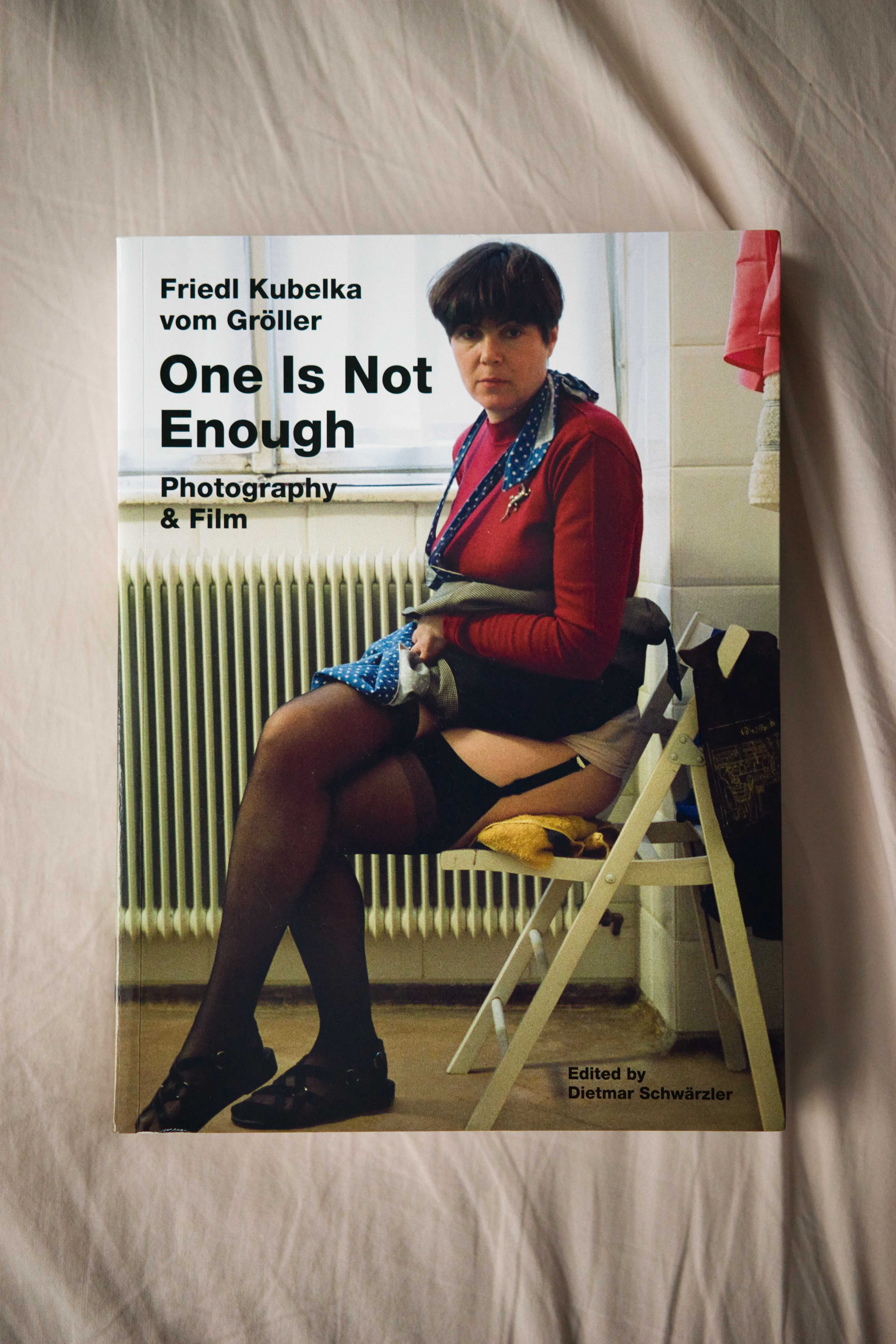
There are artists who continually reinvent themselves in pursuit of freedom. Friedl Kubelka, who in moving pictures assumes the name Friedl vom Gröller, has instead devoted her life to the opposite challenge: remaining within the same existential setting long enough for its hidden cracks to show. Across more than five decades, she has returned obsessively to faces, apartments, lovers, strangers, aging skin, mirrors, city corners, and windows clouded by rain or breath. Her work unfolds through a deepening sort of recurrence. The same mysteries persist from decade to decade, altered only by time’s pressure upon flesh and memory. Looking through One Is Not Enough becomes less an encounter with an oeuvre than an immersion into a trembling human continuum where identity never settles into certainty. Every face seems temporarily assembled from other versions of itself. Every gesture feels inherited from forgotten rituals. Her art understands personality as something permanently unfinished, a surface endlessly rewritten by experience, desire, fatigue, and solitude.
Editor-curator Dietmar Schwärzler’s introductory essay, “Aging – An Ideal Condition,” frames Kubelka above all as a portraitist, though portraiture here undergoes a strange dissolution. Traditionally, the portrait seeks definition, some concentrated revelation of character. Kubelka, on the other hand, is a believer in accumulation. The title One Is Not Enough therefore names both a method and a philosophy. A single exposure cannot contain a life. One expression collapses beneath the weight of all the others pressing invisibly behind it. Her sequences unfold with the nervous rhythm of consciousness itself, every slight alteration in posture or gaze destabilizing what came before. Looking at her serial works feels uncannily close to remembering someone rather than observing them.
This sensibility reaches its most monumental articulation in Yearly Portraits, the lifelong self-documenting project she began in 1972, taking one picture of herself every day for a year and repeating the process every five years thereafter. Seen together, these constellations become devastating meditations on time’s physicality. Lovers appear in bed beside her. Friends crowd into cramped interiors. Cigarettes burn down. Hairstyles vanish into different eras. The body thickens, loosens, hardens, softens. Her face slowly acquires the density of hard-won wisdom. Yet the real force of the series lies in its refusal of vanity. Kubelka never offers herself as icon, nor as confession. She studies herself with the same merciless curiosity she directs toward everyone else. Some poses carry vulgarity, exhaustion, and erotic indifference. Others radiate fleeting joy before collapsing back into ambiguity. In one sense, the work documents aging. In another, it documents the terrifying instability of the self, how one drifts through countless versions of personhood without ever fully becoming any of them.
Elsewhere in the book, one encounters entire worlds compressed into sequences that refuse closure. The Thought series possesses a particularly startling intimacy. Kubelka records the micro fluctuations of consciousness itself while subjects respond internally to unseen stimuli. Her mother, Lore Bondy, listens to a 1945 Austrian National Council debate, her face moving through skepticism, sorrow, distraction, historical exhaustion. Her daughter drifts into daydreams so completely that nothing else seems to exist around her. These are not reactions in the ordinary sense. They feel closer to thought becoming visible before language can imprison it. One begins to understand how little of another person we ever truly perceive.
Even works that initially appear playful are scathing critiques of proof. Broadway, San Francisco (1974) arranges peep show signs into a rigid 9×9 grid pulsing with urban lust and commercial seduction, only for the lower left corner to quietly disclose Kubelka and her husband embracing in bed. The tenderness arrives almost accidentally, tucked beneath the machinery of desire capitalism projects across the city. Suddenly, the surrounding promises above appear hollowed out by genuine intimacy below. In another series, Sigmund Freud’s Waiting Room, Berggasse 19, psychoanalytic history lingers ghostlike through the furniture and walls. Kubelka photographs the room not as sacred site but as residue chamber, a place where traumas still seem suspended in the air long after the voices articulating them vanished.
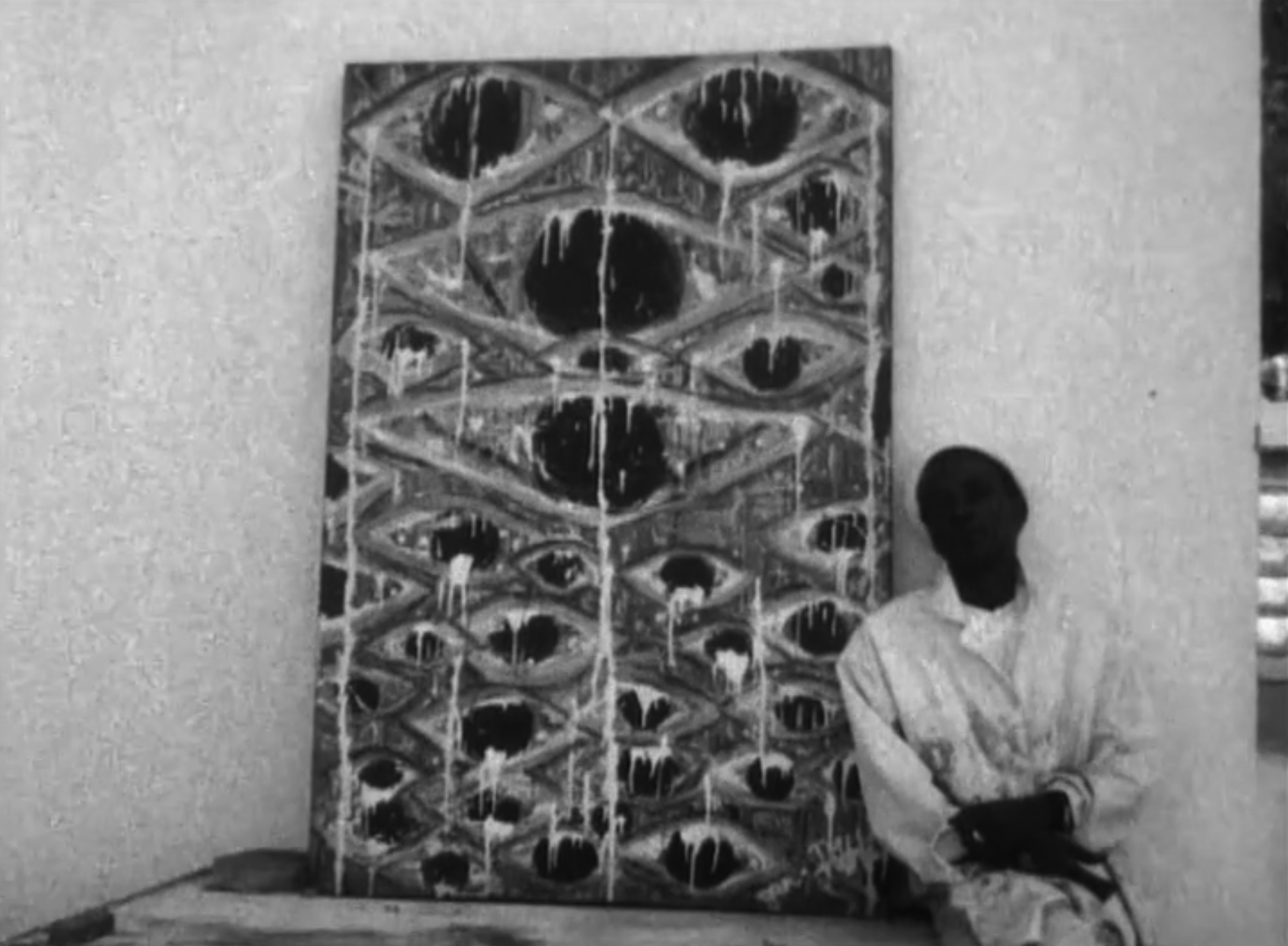
Her portraits from Dakar and the Atelier d’Expression sequences achieve extraordinary emotional density through their attention to material surroundings. One artist appears swallowed by a tangle of brushes and artistic debris, his body half dissolving into the very process of creation. The clutter around him acquires psychic force, as though thought itself had externalized into objects. Other artists sit beside walls crowded with unfinished canvases, masks, scattered tools, traces of previous gestures. Kubelka understands studios as extensions of consciousness, environments where private mythologies gather physical form.
Throughout the book, geography operates as psychic signature. Rome, New York, Paris, Dakar, St. Louis, Piedmont: these emerge through fragments of walls, gestures, windows, and bodies caught in transitional states. Kubelka moves through these places as though searching for fleeting temperatures rather than permanent landmarks. One begins to recognize her visual language immediately. The frontal regard. The grain of black and white. The sense that every room has absorbed years of invisible conversations. Her portraits from Senegal resonate especially deeply because they reveal how instinctively she responds to artistic communities formed under historical pressure. The supplemental magazine dedicated to muralist Pape Mamadou Samb, known as Papisto Boy, extends this dimension beautifully. Papisto Boy transformed Dakar’s walls into public memory, covering them with revolutionary figures, laborers, anticolonial resisters, and saints of survival. His works possess both immediacy and erosion, forever exposed to neglect. Kubelka understands him not simply as a painter of walls but as someone wrestling history back into visibility. In the Bel-Air industrial zone, his depictions of Lat Dior resisting colonial rail expansion or Amílcar Cabral dreaming liberation from Portuguese domination become inseparable from the physical decay surrounding them. The paint may crack, but histories persist.
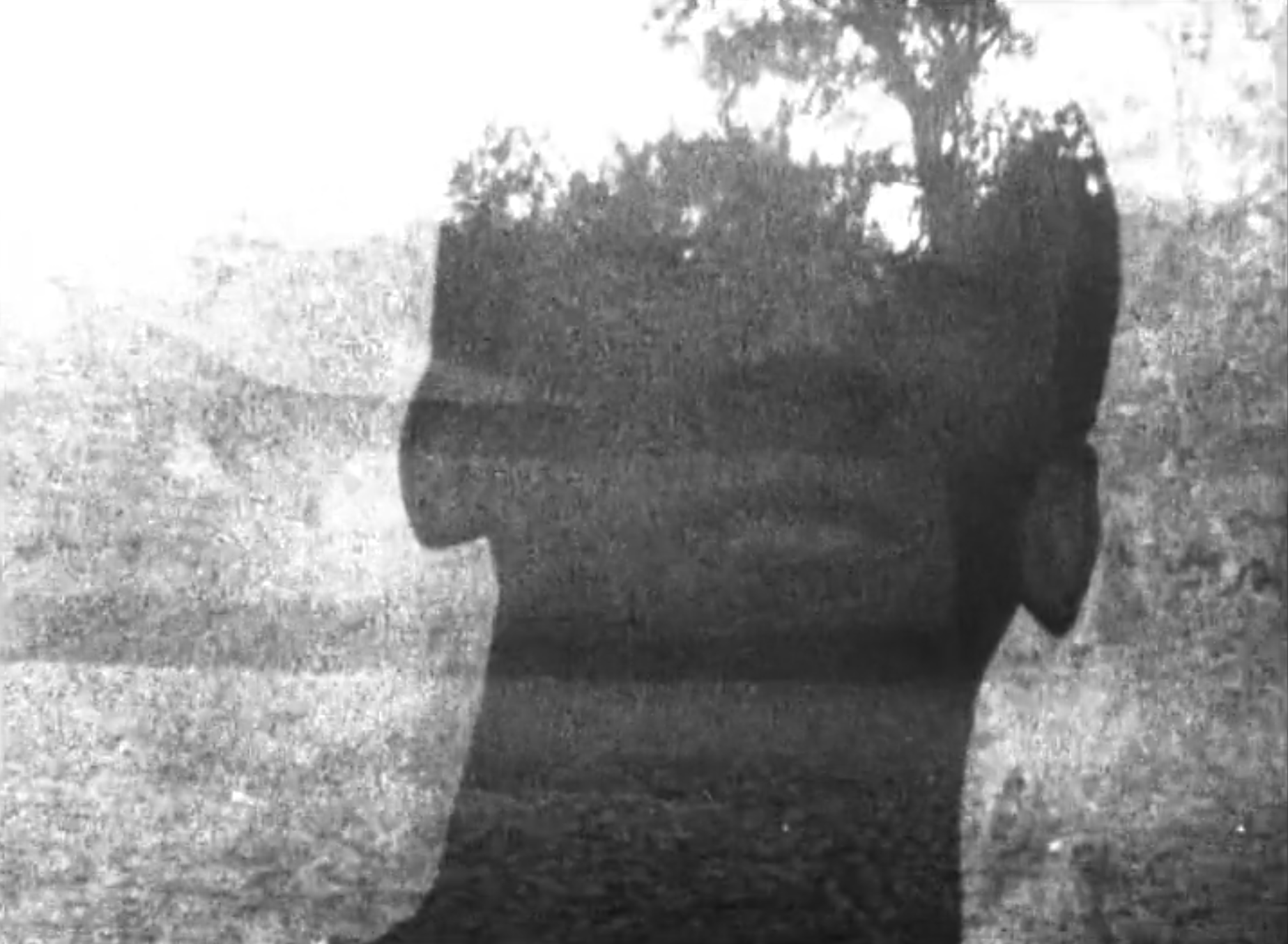
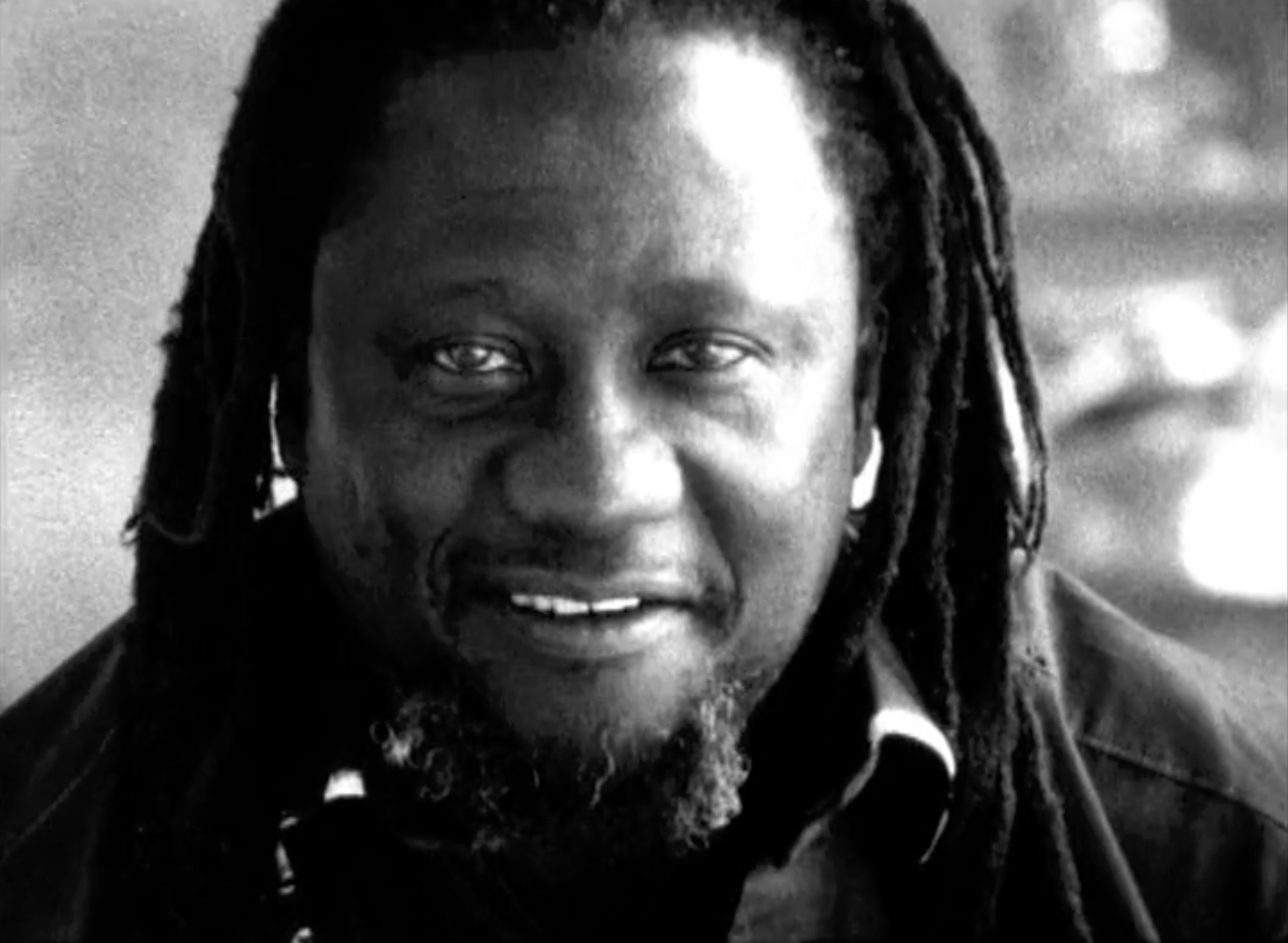
This tension between endurance and disappearance permeates the Dakar period of her filmmaking. 27.12.2013 St. Louis Senegal overlays faces and landscape in luminous double exposure so that fields seem to bloom from human interiors. Scars of European domination seep through sunlight. In Adama Diouf, the eponymous philosopher and teacher ambulates with extraordinary warmth, greeted by townspeople who clearly adore him. Kubelka follows him through markets crowded with fish, through streets layered in color and exhaustion, before drifting toward Papisto Boy’s murals and a worn Sartre paperback with a cracked spine adjusted carefully by hand. Madeleine Bernstorff describes Kubelka’s portraiture as balancing relations “with a touch behind the camera,” and nowhere is this clearer than here. Diouf’s gaze possesses immense vulnerability. He seems simultaneously present and already receding into memory.
What strikes one immediately upon entering Kubelka’s spaces is their multiplicity. Her sequences do not narrow possibilities toward a definitive representation, as fashion contact sheets do. They proliferate uncertainty. A soul emerges through contradiction, through accumulation, through micro-expressions that undermine one another. Whether she turns toward towering creative figures such as Eric Rohmer, Kenneth Anger, or Shigeko Kubota, or toward anonymous strangers, everyone receives the same trembling attention. Her black-and-white studies carry an almost tactile grain, the faces emerging from darkness with the force of remembered dreams. Even singular works feel accompanied by invisible doubles, echoes reverberating behind the visible surface.
Eva, Bigi, Louise (1984) channels an earthy sensuality that recalls the physical candor of Sally Mann, while the Allegory montages from 2014 summon the spectral theatricality of Julia Margaret Cameron. Women draped in cloth and shadow drift through tableaux poised between myth and domesticity. Kubelka moves fluidly between registers without sacrificing coherence. She possesses a profoundly adaptive eye, capable of becoming severe, erotic, mournful, and mischievous within the span of a few pages.
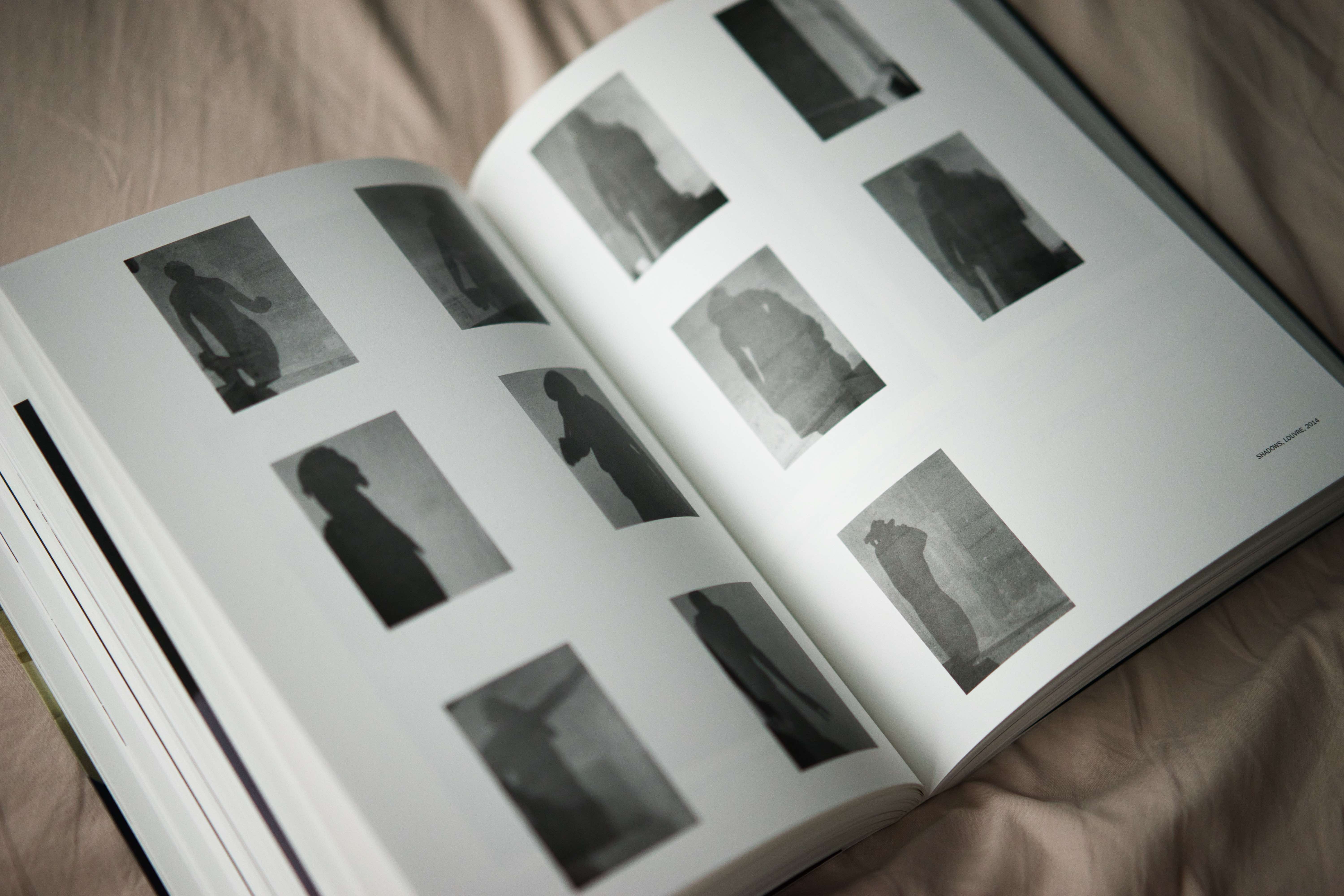
Shadows, Louvre from 2014 may be among her most distilled achievements. Rather than recording the sculptures themselves, she focuses entirely upon their shadows cast across museum walls by artificial light. Civilization survives as intangible residue. Form becomes absence. Presence flickers through disappearance. The world leaves behind silhouettes of itself.
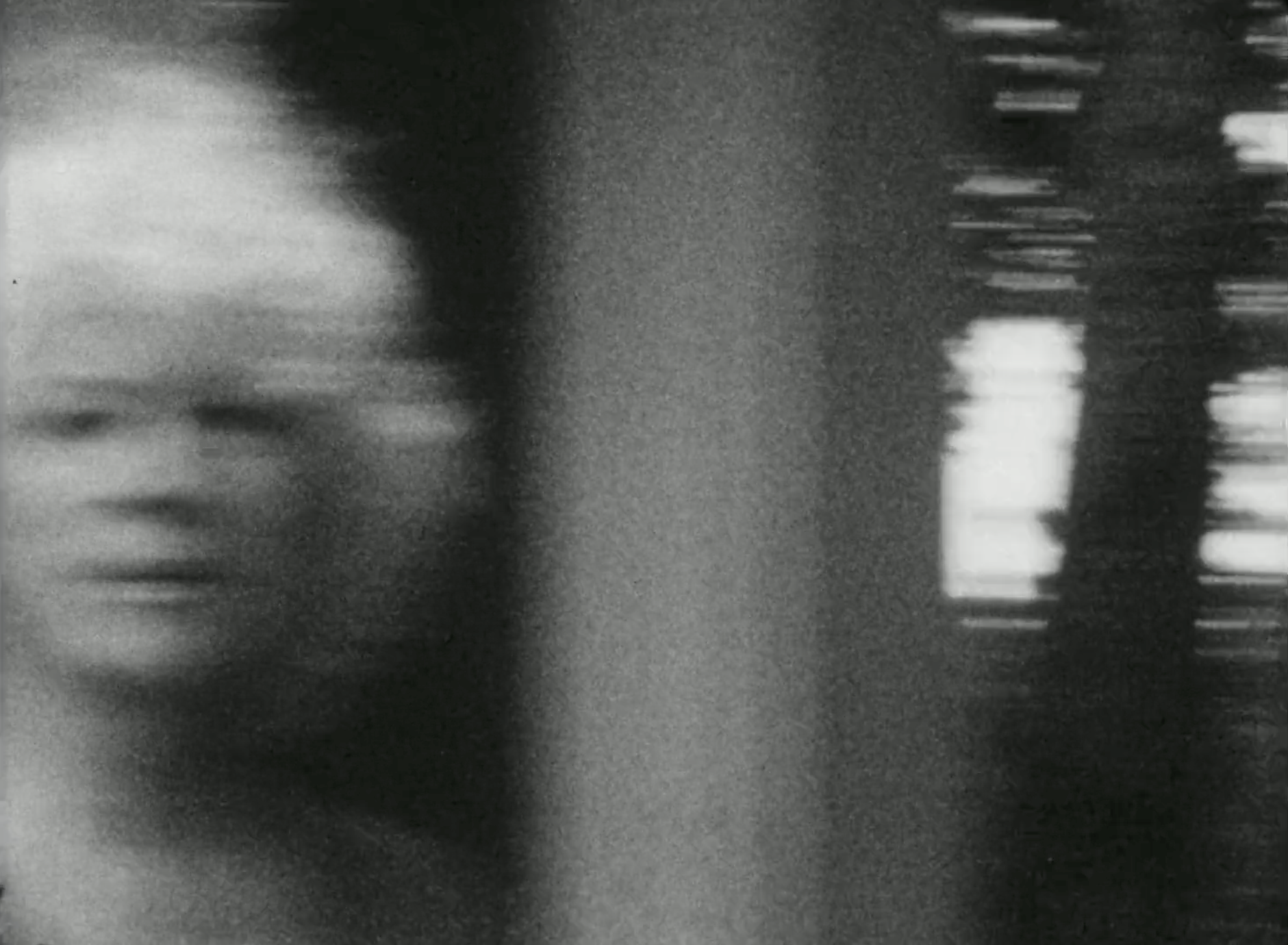
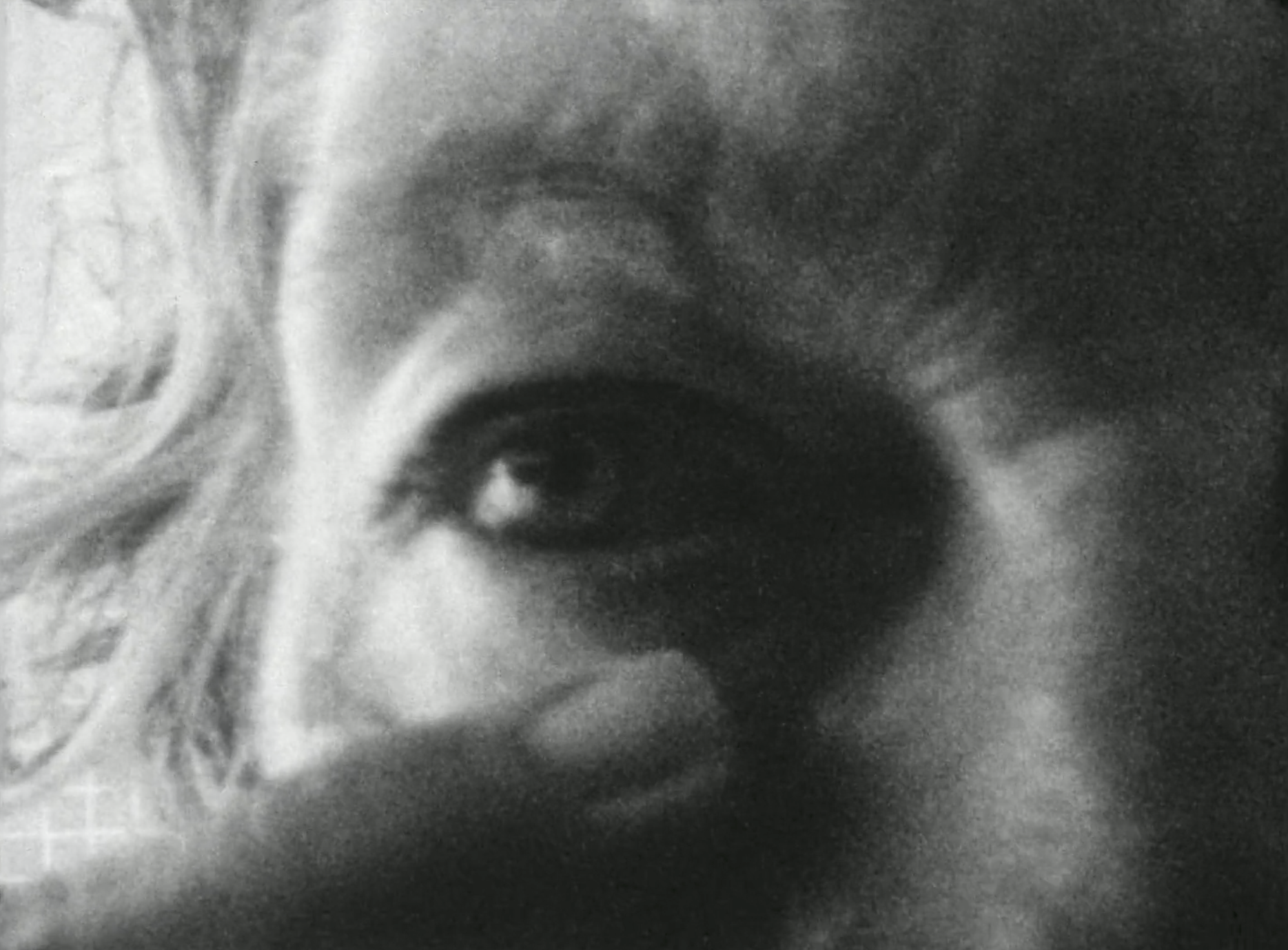
The moving works included in this INDEX edition deepen these obsessions while complicating them through duration and motion. Kubelka’s camera lingers where most directors would cut away. She gravitates toward moments usually discarded as transitional or awkward. In Ma peau précieuse (My Precious Skin), grainy black and white textures smear across the frame while two older women converse outside. Soon the lens presses brutally close to bathroom cosmetics and wrinkled flesh. Dian Turnheim massages products into her face with ritualistic concentration. The closer Kubelka moves toward the skin, the more absurd beauty culture becomes. After swimming in the ocean, the woman returns to her yard and silently mouths “Stop!” toward the camera, as though addressing both the act of filming and the erosion of time.
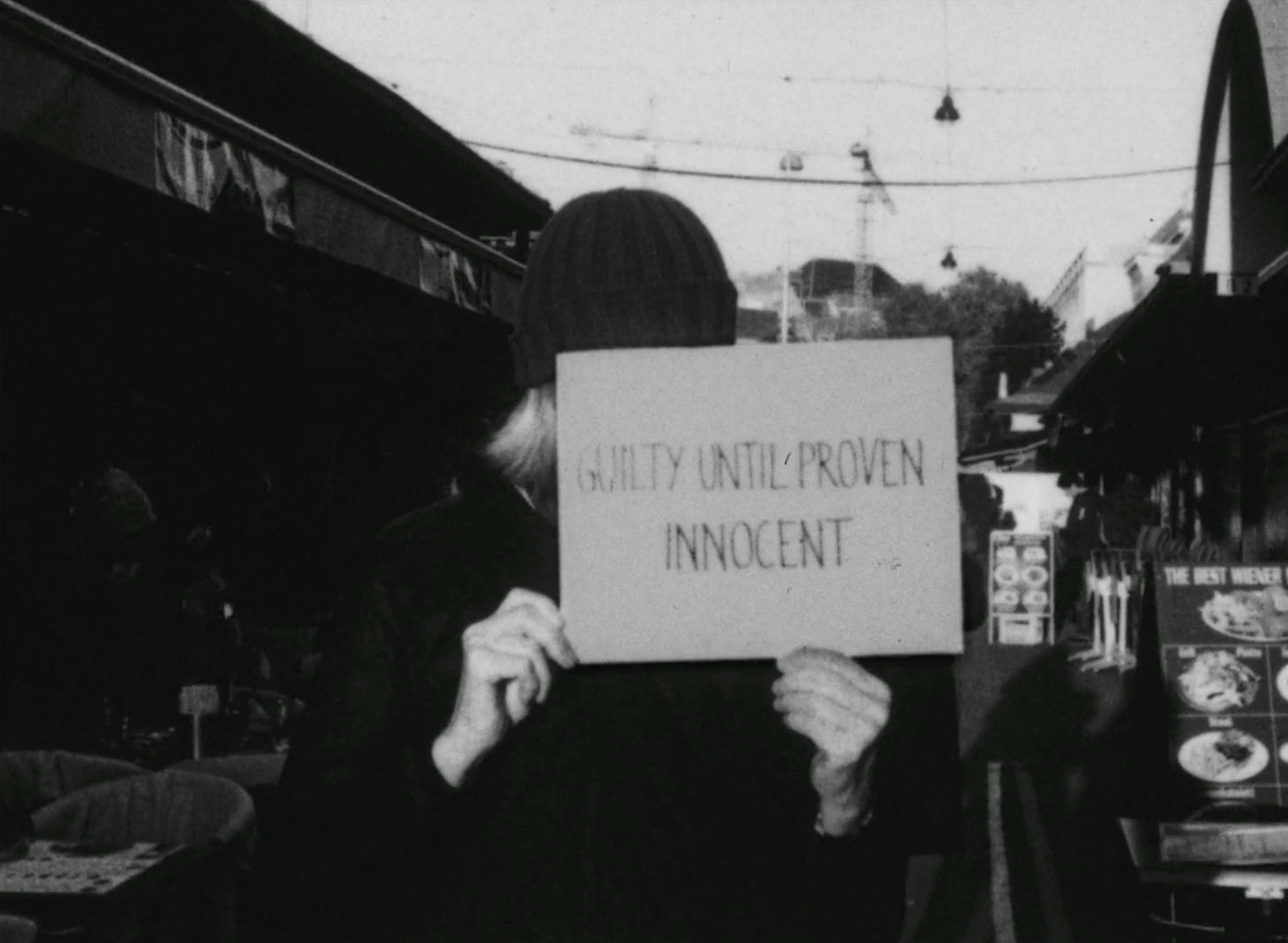
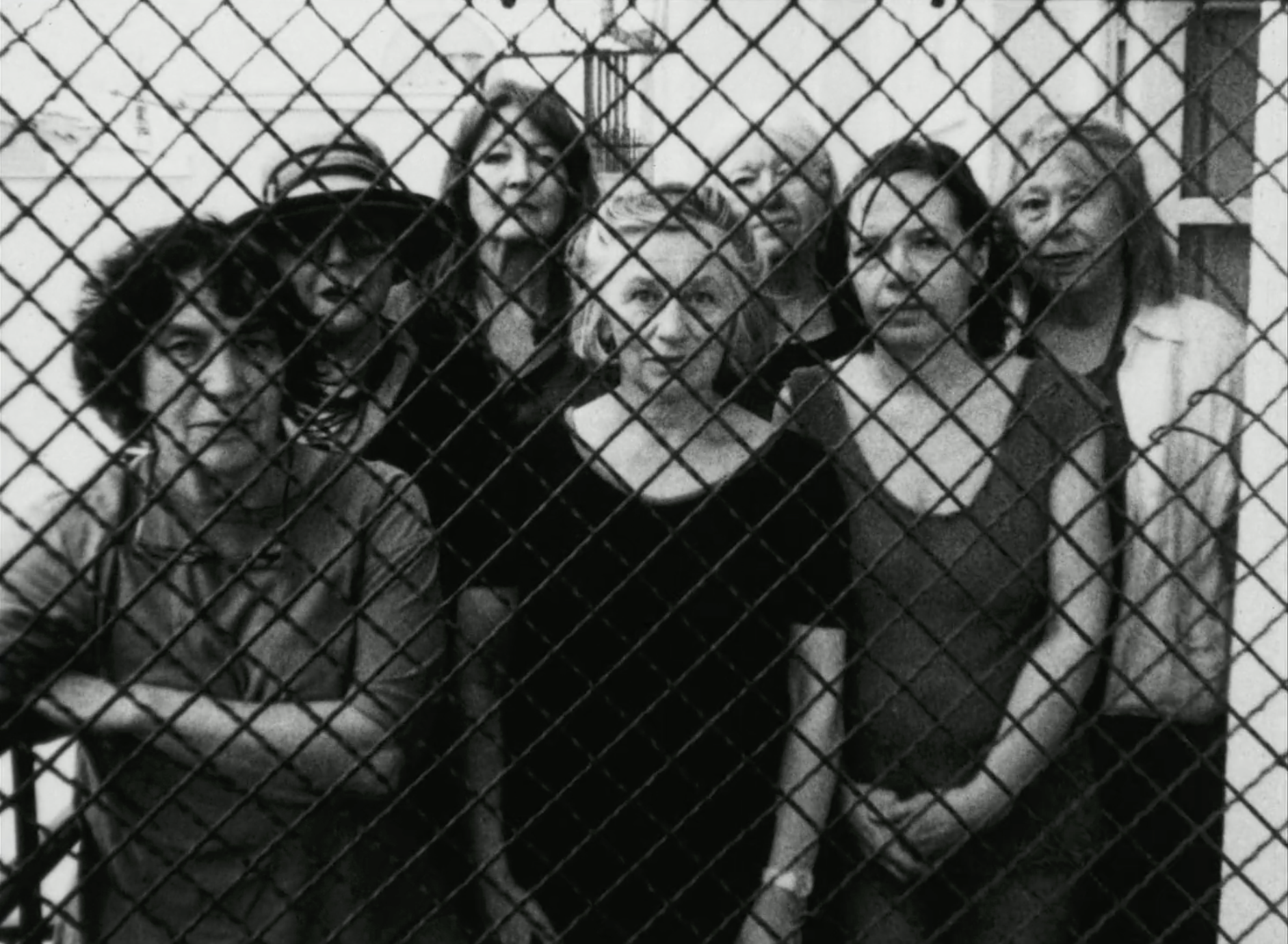
Guilty Until Proven Innocent transforms seven older women behind a chain link fence into an almost mythic collective presence. Their expressions remain unreadable, suspended somewhere between accusation and exhaustion. When Kubelka inserts herself among them and turns toward the others, the gesture feels startlingly intimate, a breach of invisible codes. The close-ups that follow allow the viewer to image lifetimes of sorrow, companionship, betrayal, and endurance. The absence of context enlarges the psychic field rather than diminishing it.
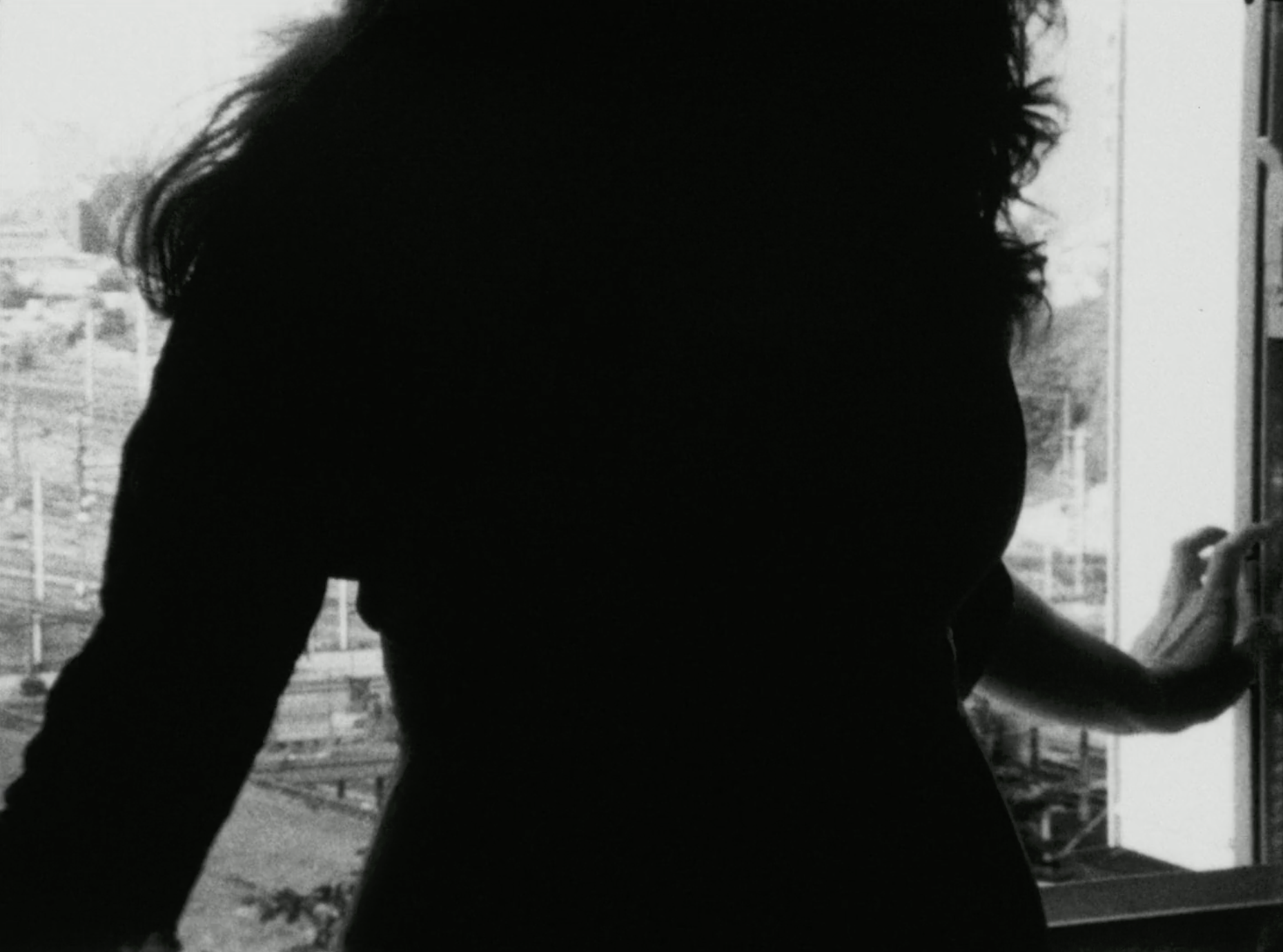
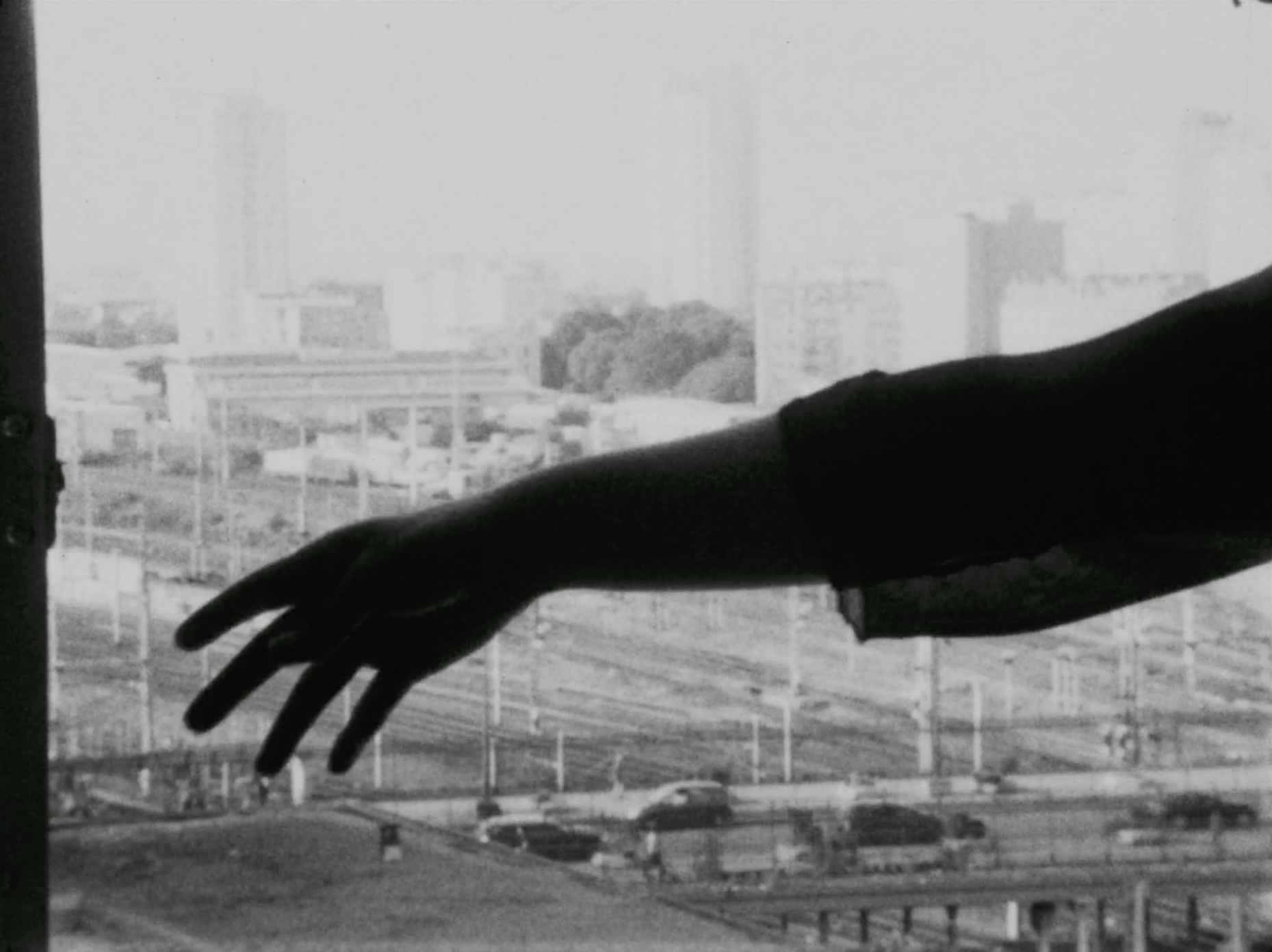
In 66, rue Stephenson, a young woman dances before an open window overlooking the noise of Paris below. Cars, trains, pedestrians pulse beneath her private joy. Exterior chaos gives way to interior refuge as Kubelka later explores the woman’s modest kitchen. The apartment becomes a temporary sanctuary against the world’s relentless machinery.
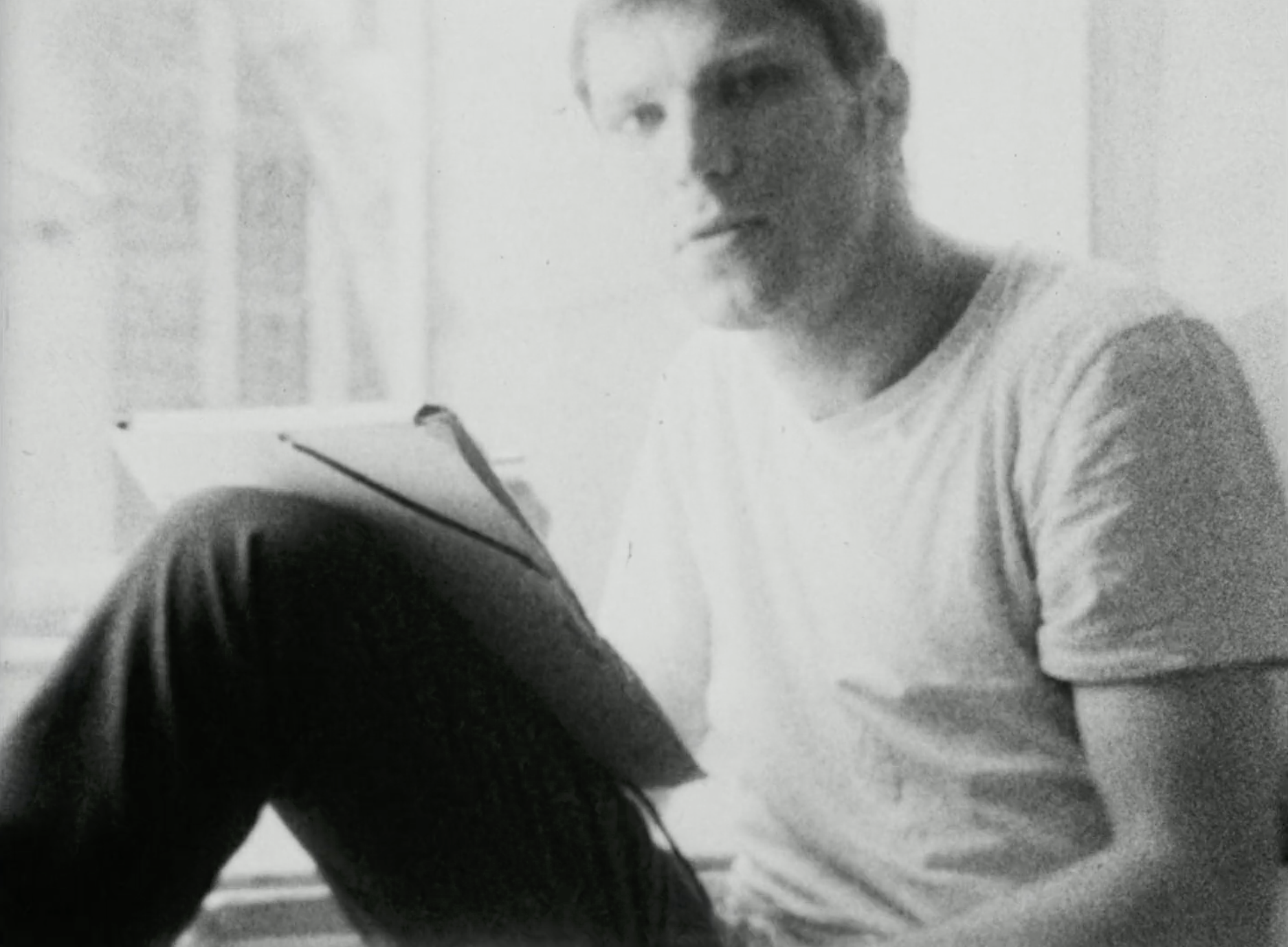
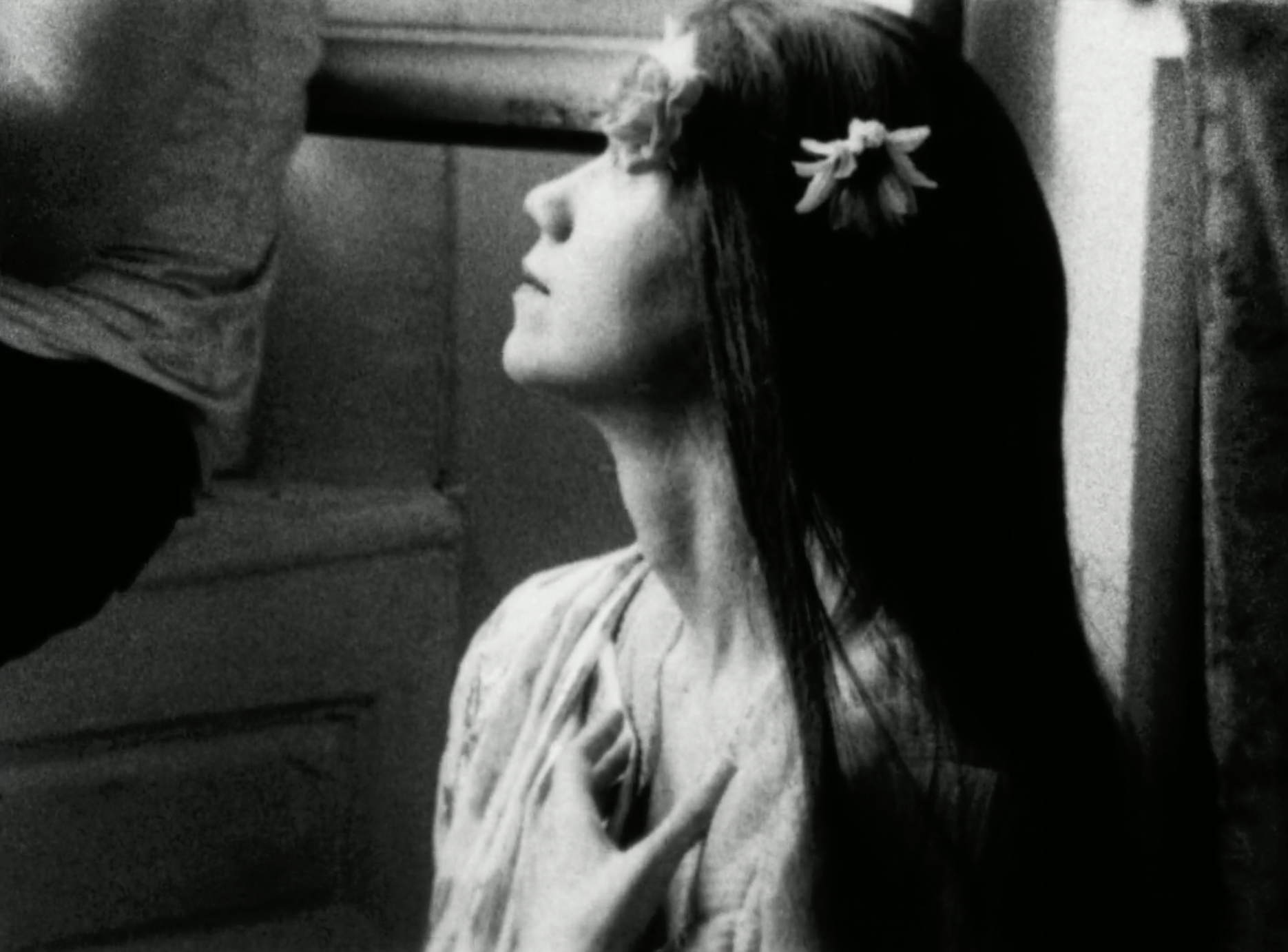
Poetry for Sale offers one of the collection’s sharpest meditations on artistic survival. Poet Mark Tapley writes beside an open window while attempts at seduction from his embodied muse irritate rather than entice him. Later, his rapid voice floods the Paris Métro as he hawks poems to indifferent passengers. The sudden eruption of sound after extended silence feels almost violent. Tapley’s desperation radiates through every gesture. Then comes a fleeting embrace from a young punk, and suddenly the entire emotional atmosphere shifts. Kubelka understands how fragile artistic affirmation can be, how entire lives hinge upon brief moments of recognition.
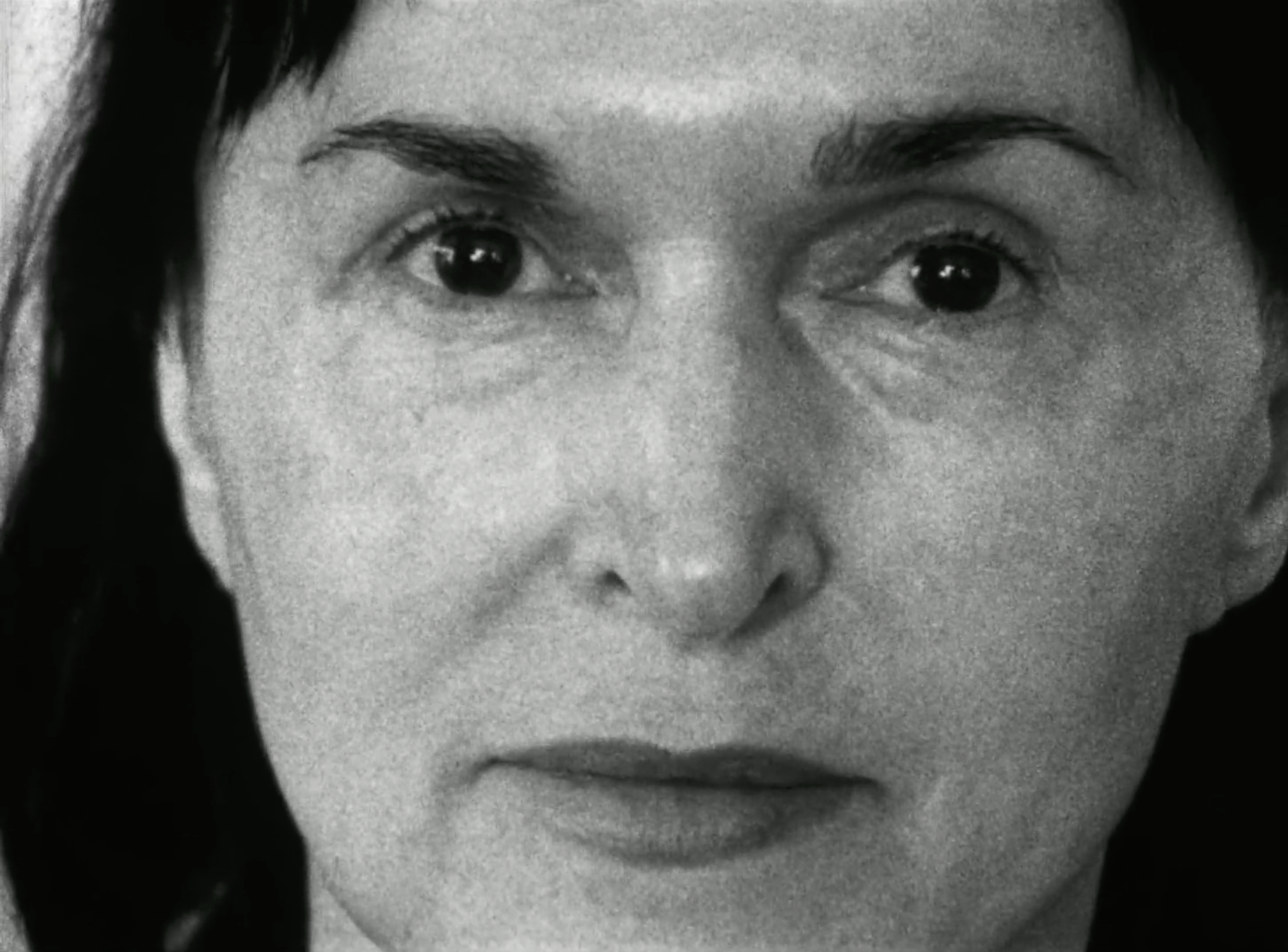
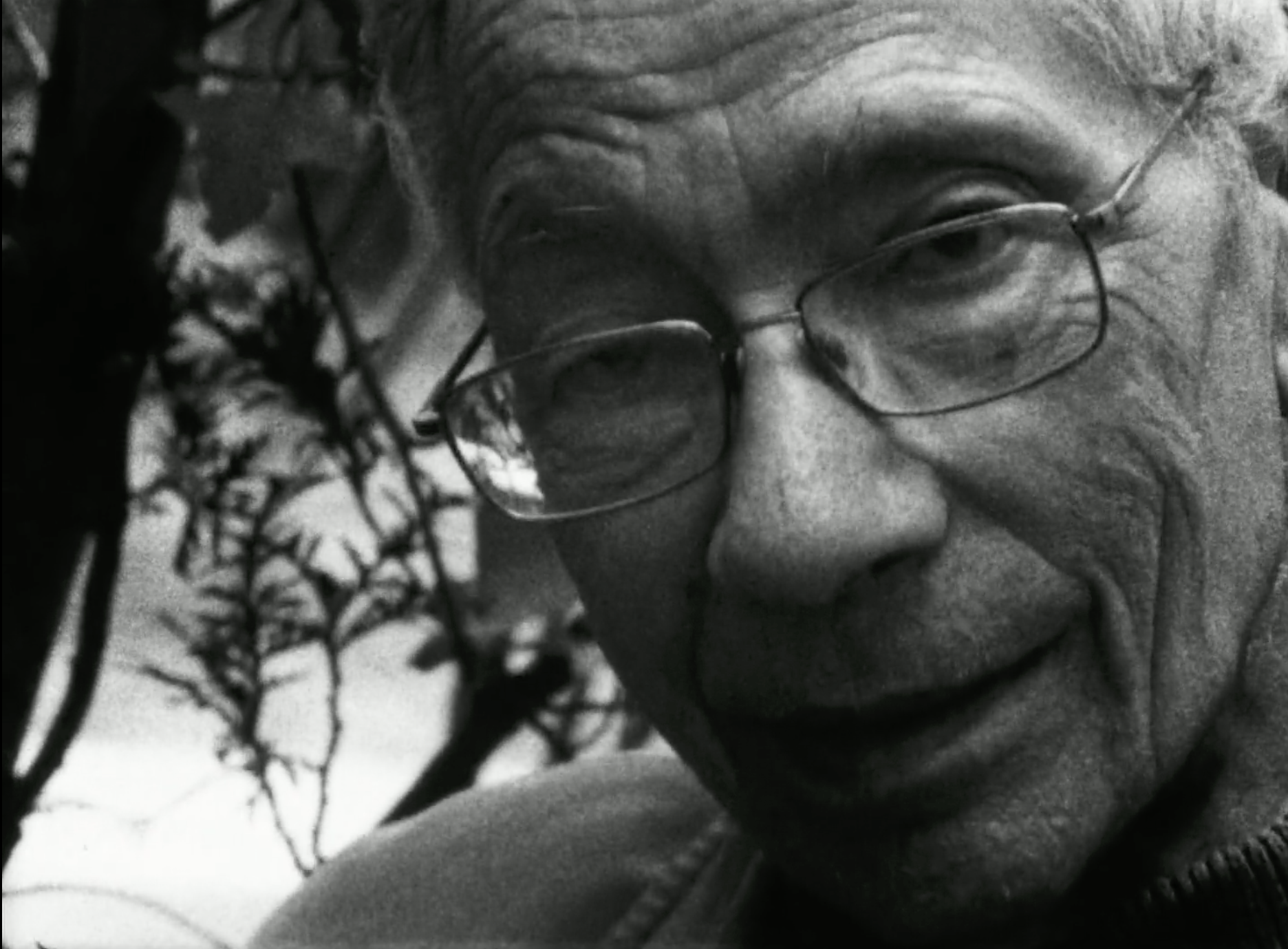
This melancholy deepens in THE PARIS POETRY CIRCLE, where poets gather to read aloud while Kubelka studies their faces with hypnotic patience. Voices emerge from bodies that appear isolated even in company. Rather than treating the face as psychological map, she transforms it into a conduit through which solitude passes between people.
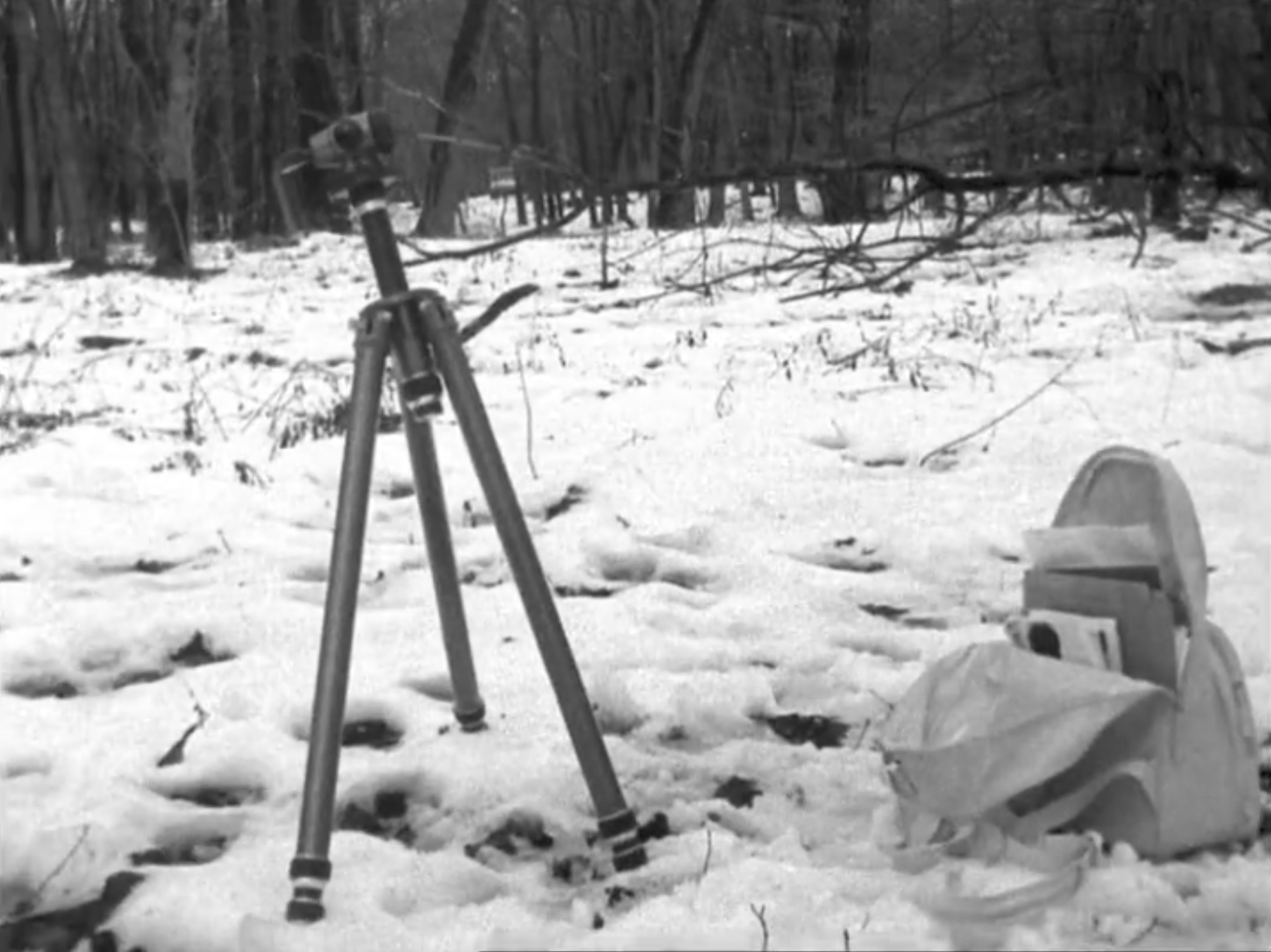
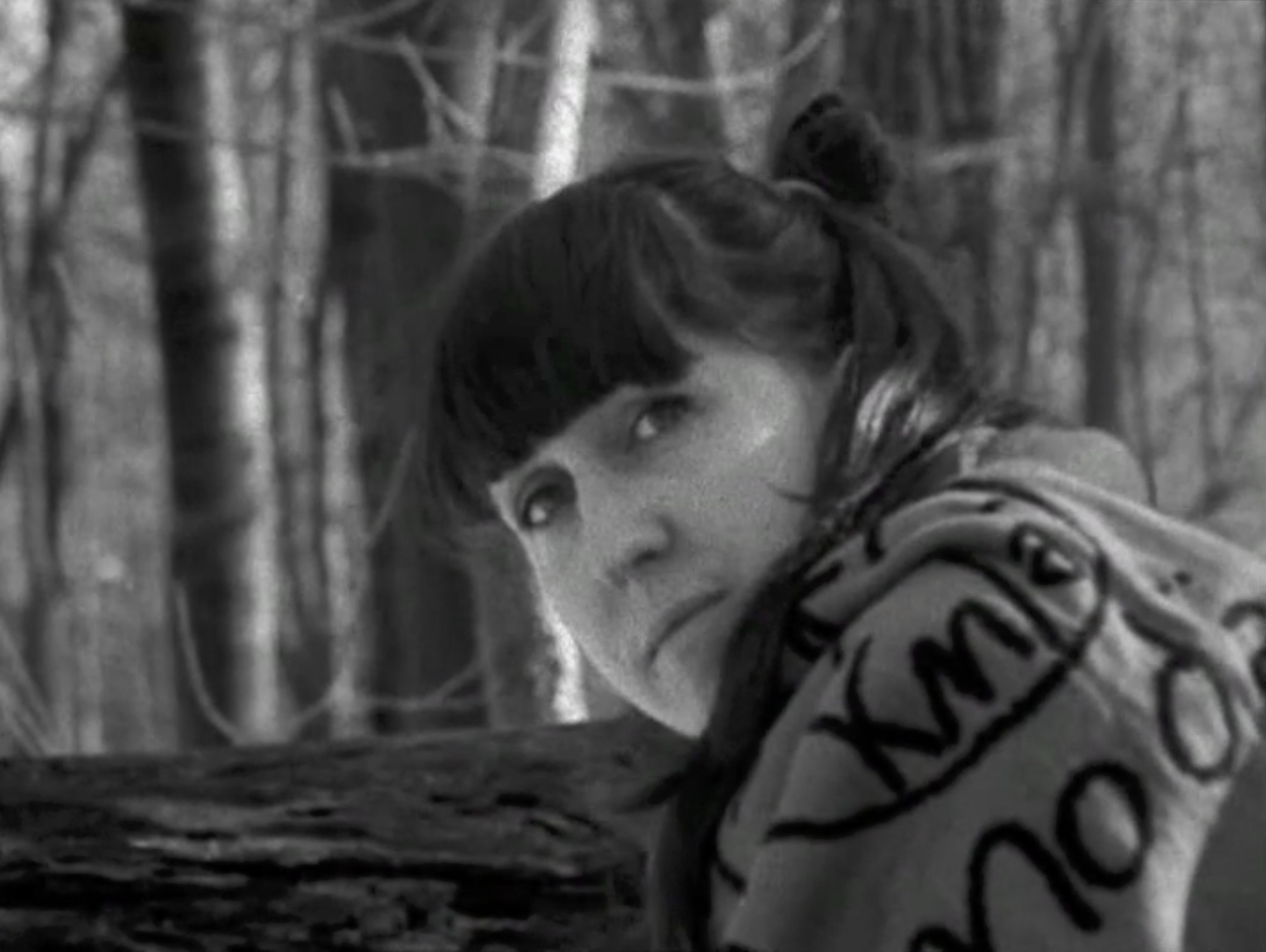
Several works confront voyeurism directly. Im Wiener Prater initially appears observational, following the artist Martina L. through snowy woods with restless anticipation. A tripod and backpack in the snow expose the apparatus behind image making itself. The camera’s desire becomes unmistakable, even predatory. When Martina urinates directly toward the lens, vision collapses into humiliation. The viewer’s voyeurism receives its answer materially. Kubelka contaminates the gaze with a byproduct of the very body it sought to master.
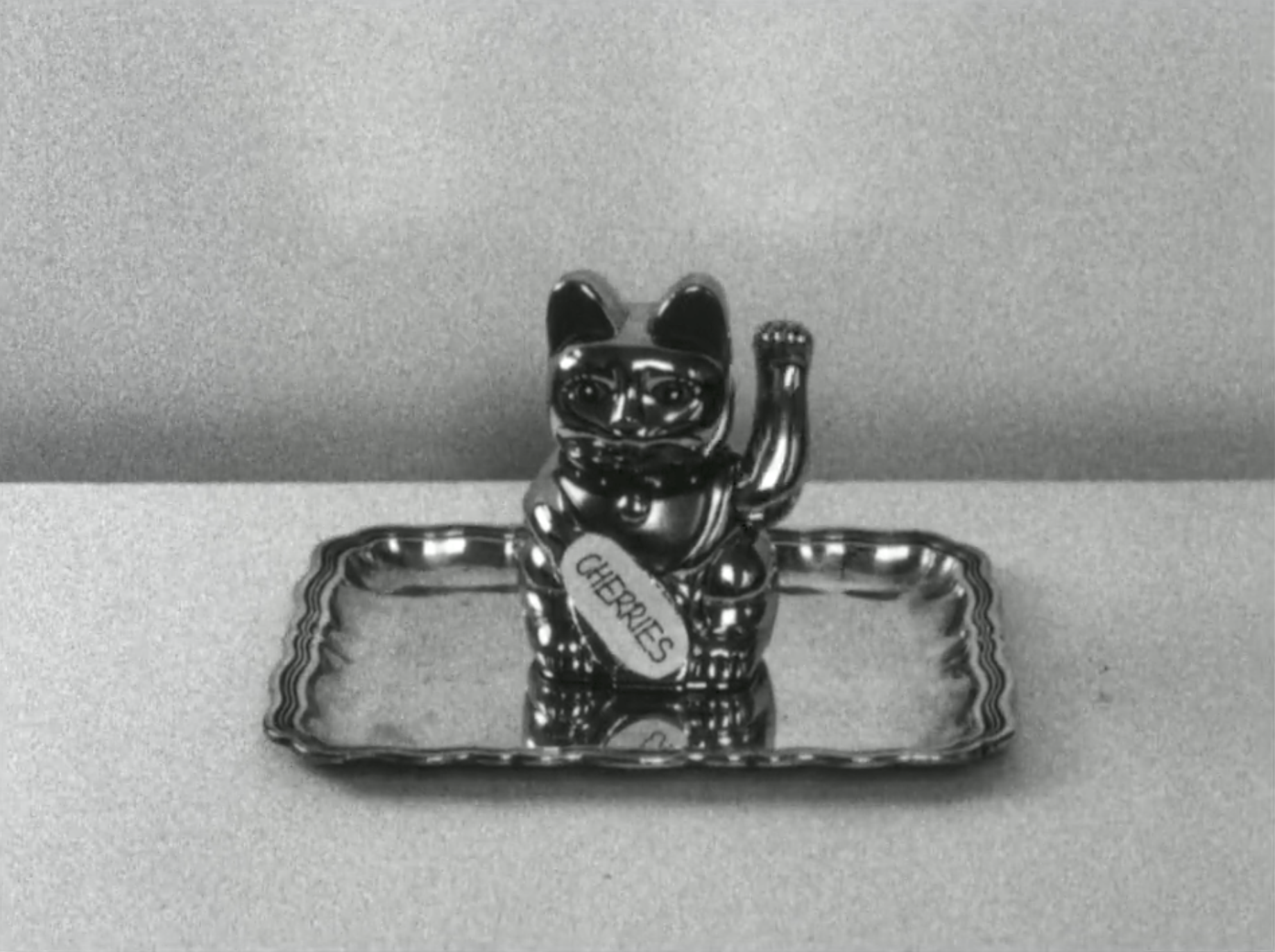
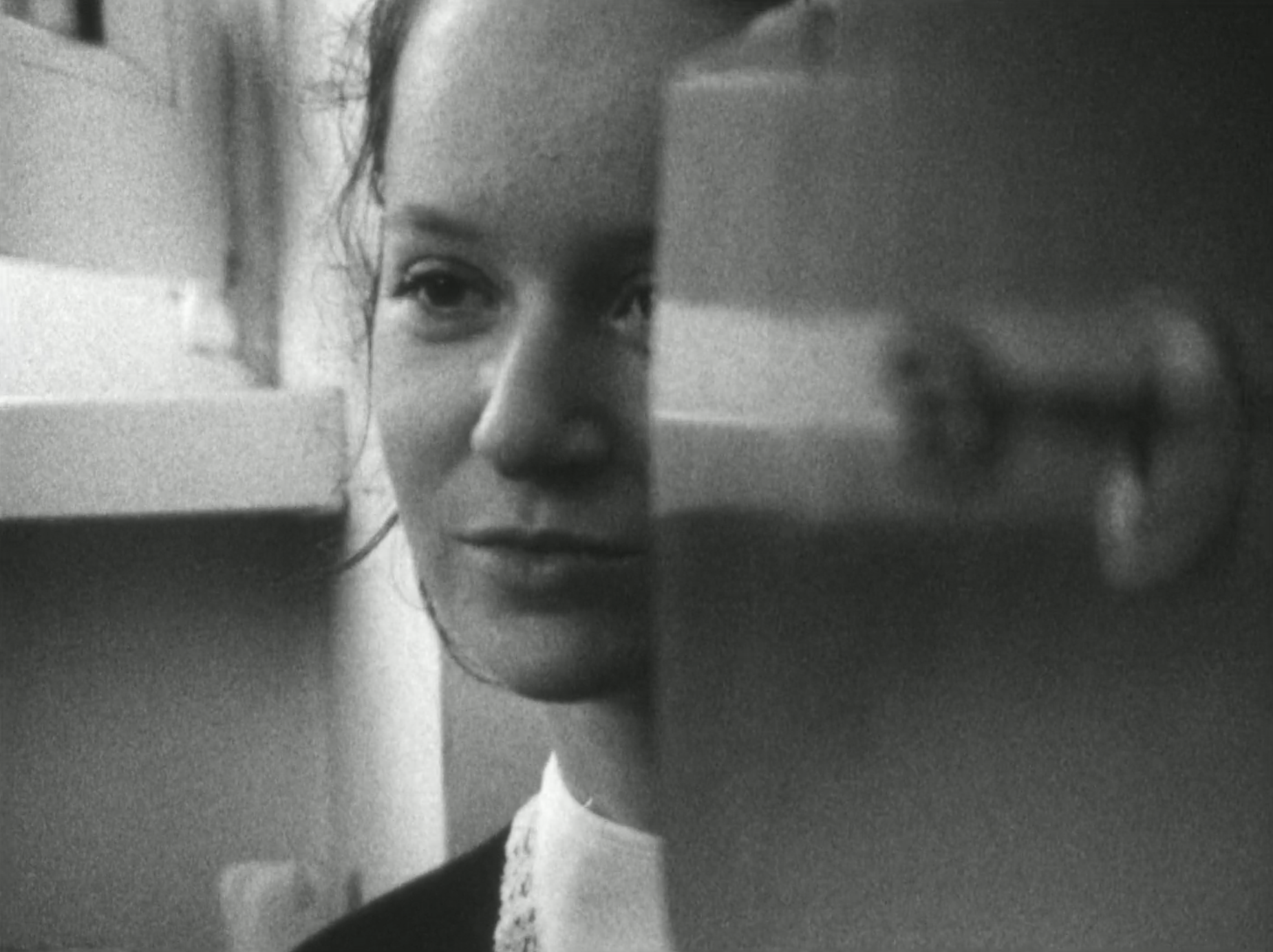
Kirschenzeit (Cherries) stages erotic intimacy with remarkable tonal complexity. A chambermaid watches a couple dressing in corsets and latex before serving them cherries during lovemaking. The atmosphere oscillates between tenderness, theatricality, absurd ritual. The bodies exist within a liminal state, no longer young yet not fully old, suspended at the threshold where eroticism acquires melancholy depth.
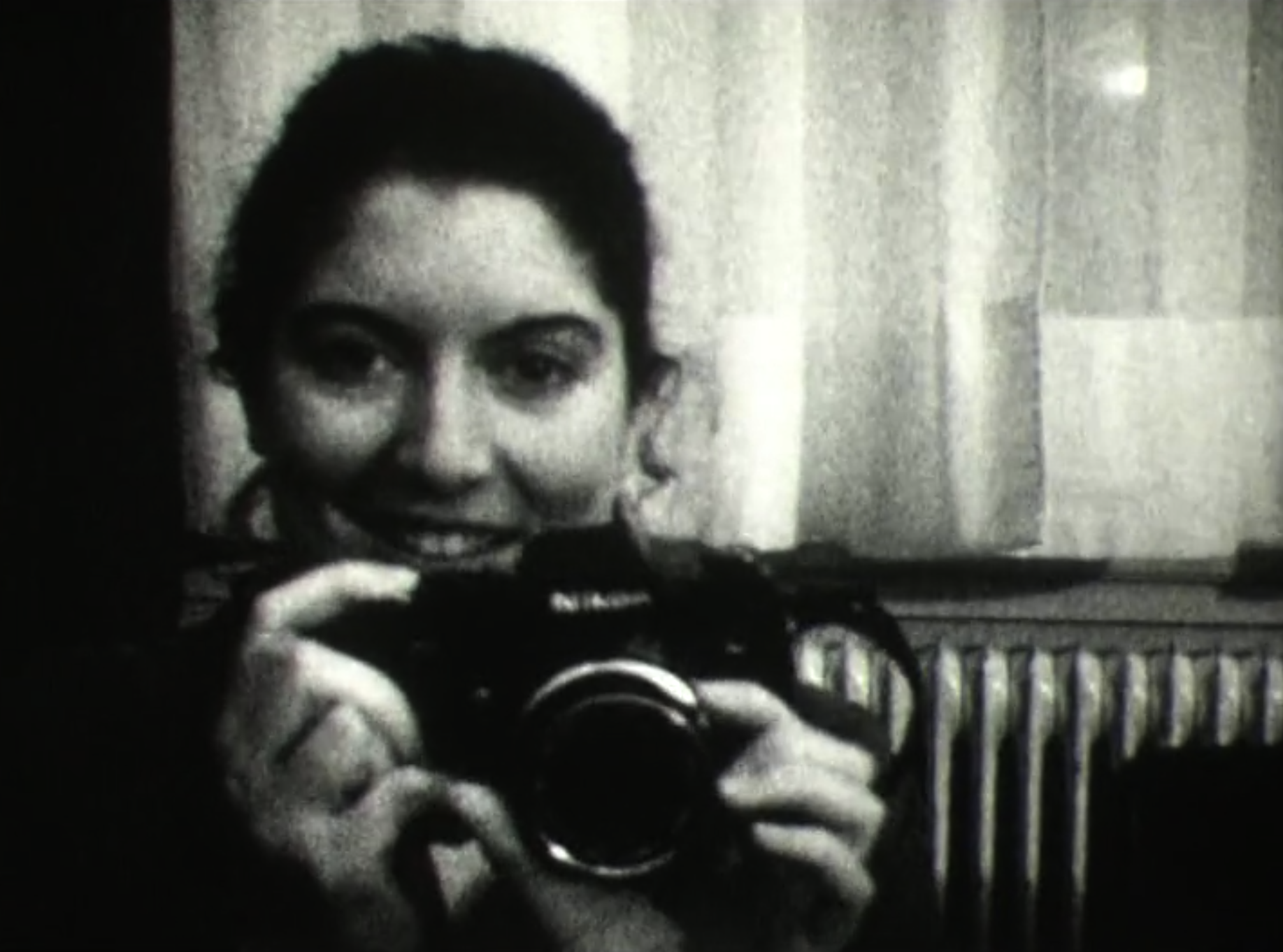

In Das neue Kostüm (The New Suit), Kubelka prepares for the Austrian State Prize for Photography while being fitted for clothing inside her psychoanalytic office. Family members drift through the space. Her daughter begins taking stills after the 16mm camera breaks. The accidental transition fragments time into isolated moments of charged domesticity. Nothing overtly dramatic occurs, yet the atmosphere feels profoundly intimate, almost forbidden in its ordinariness. Kubelka waving her hands to stop recording as light floods the frame becomes strangely moving, a reminder that privacy survives even within acts of sharing.
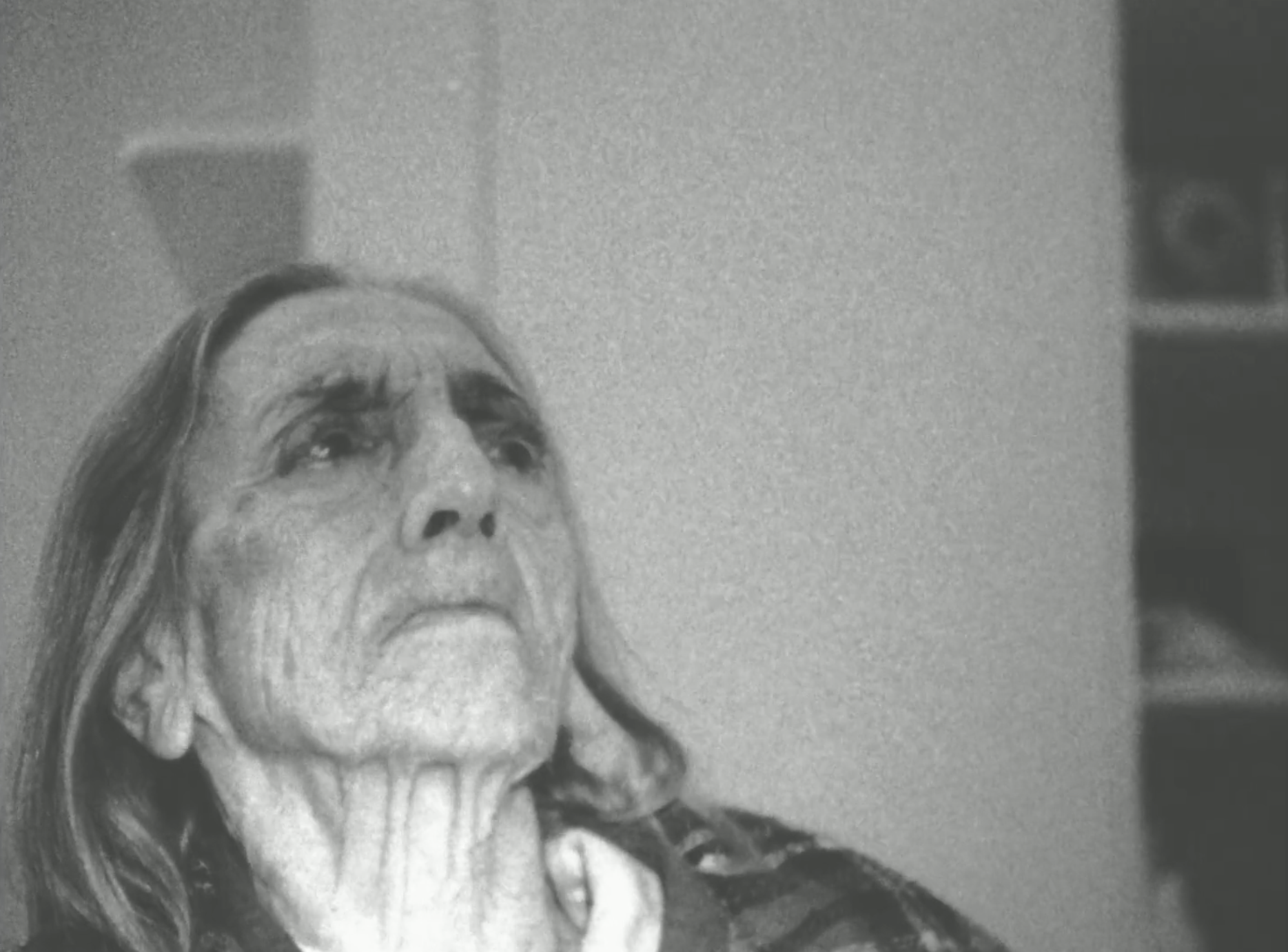
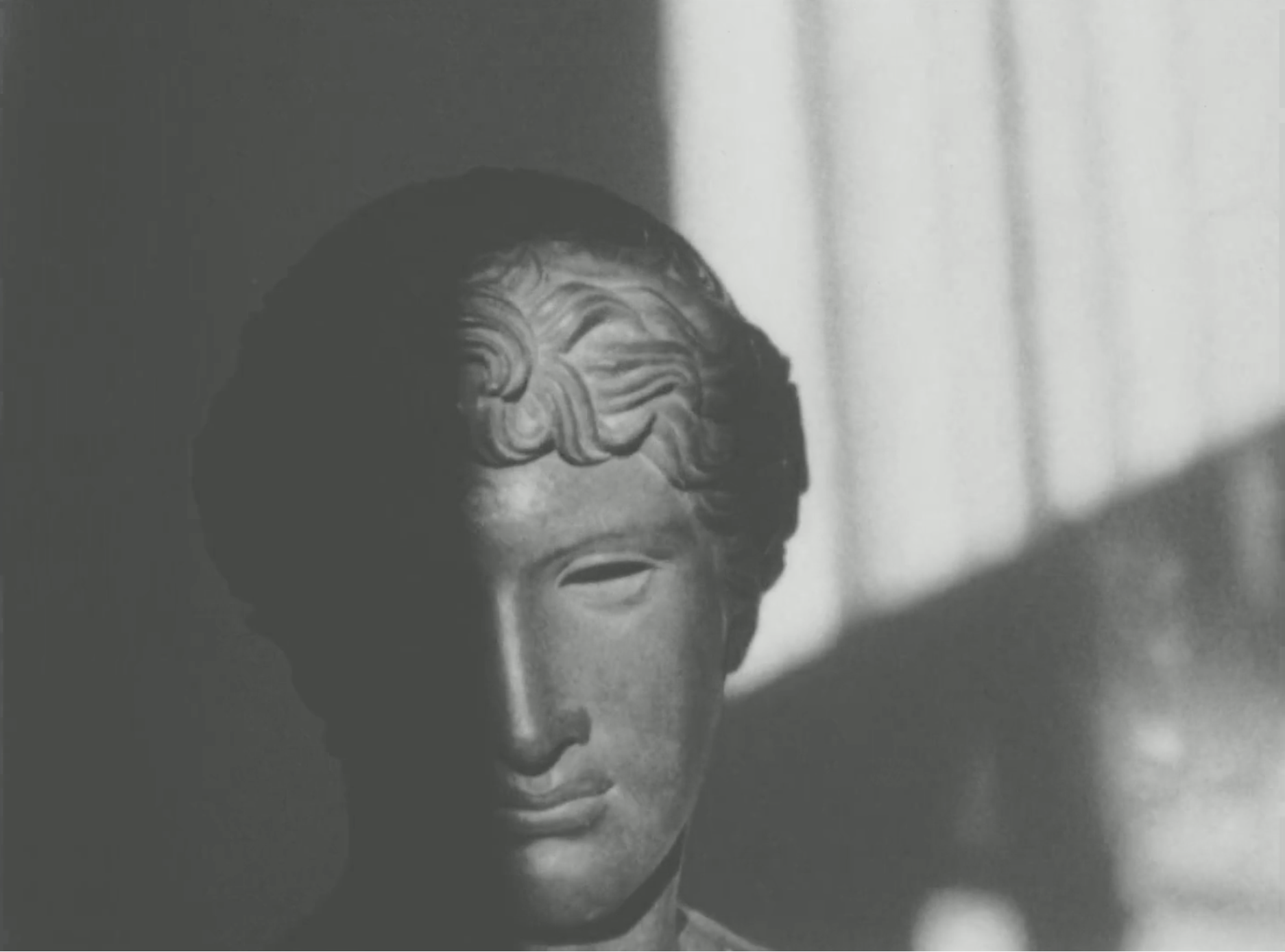
Aging and familial continuity reach devastating emotional force in NEC SPE, NEC METU. Kubelka revisits her mother in a nursing home where flashes of recognition emerge briefly through blankness. Distortions of light break across the frame unpredictably. A baby’s arm reaches toward the elderly woman’s face. The work closes on the head of a Greek statue, linking antiquity, bodily decline, memory, and inheritance, all of the coexisting inside one trembling continuum.
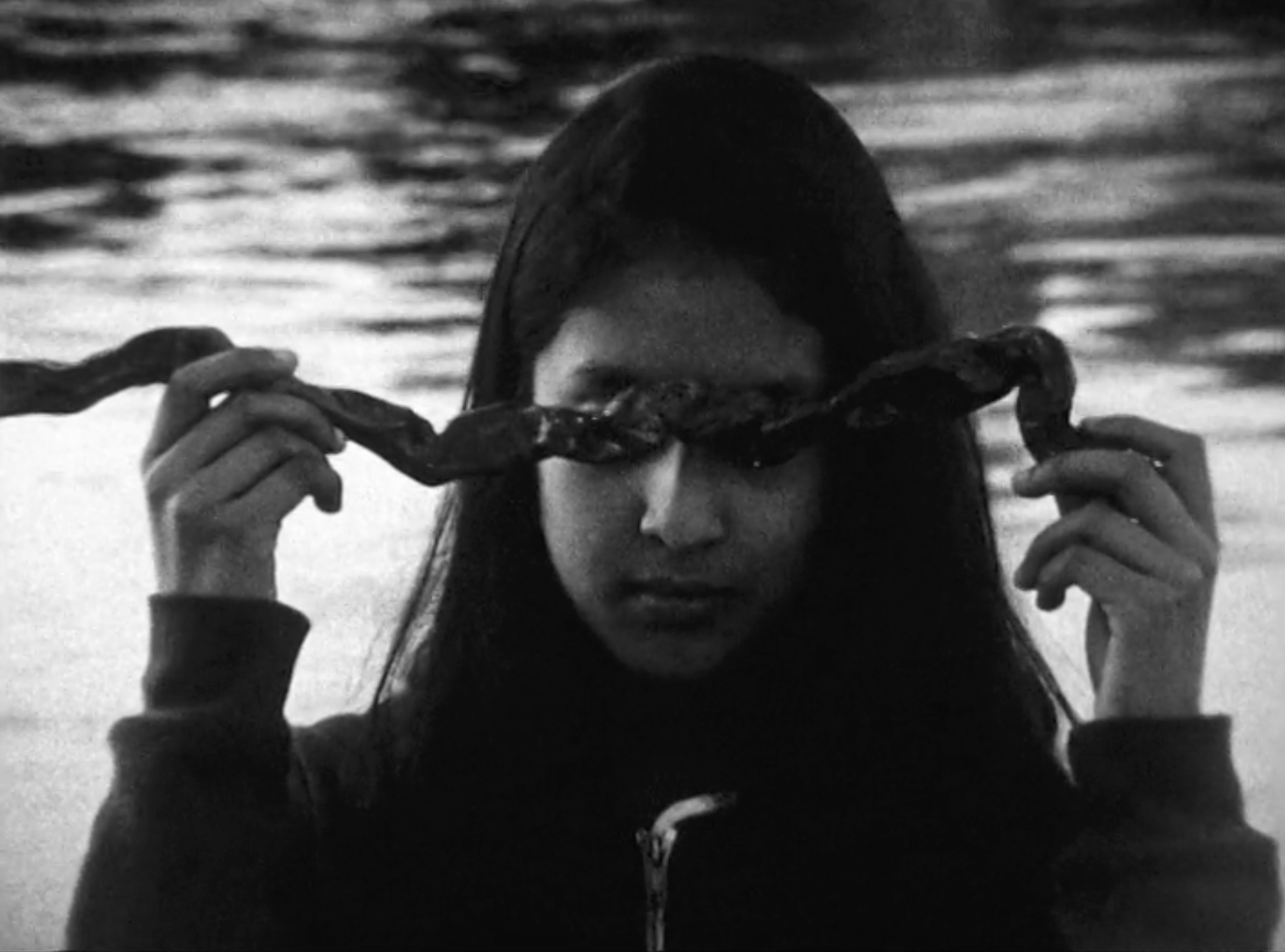
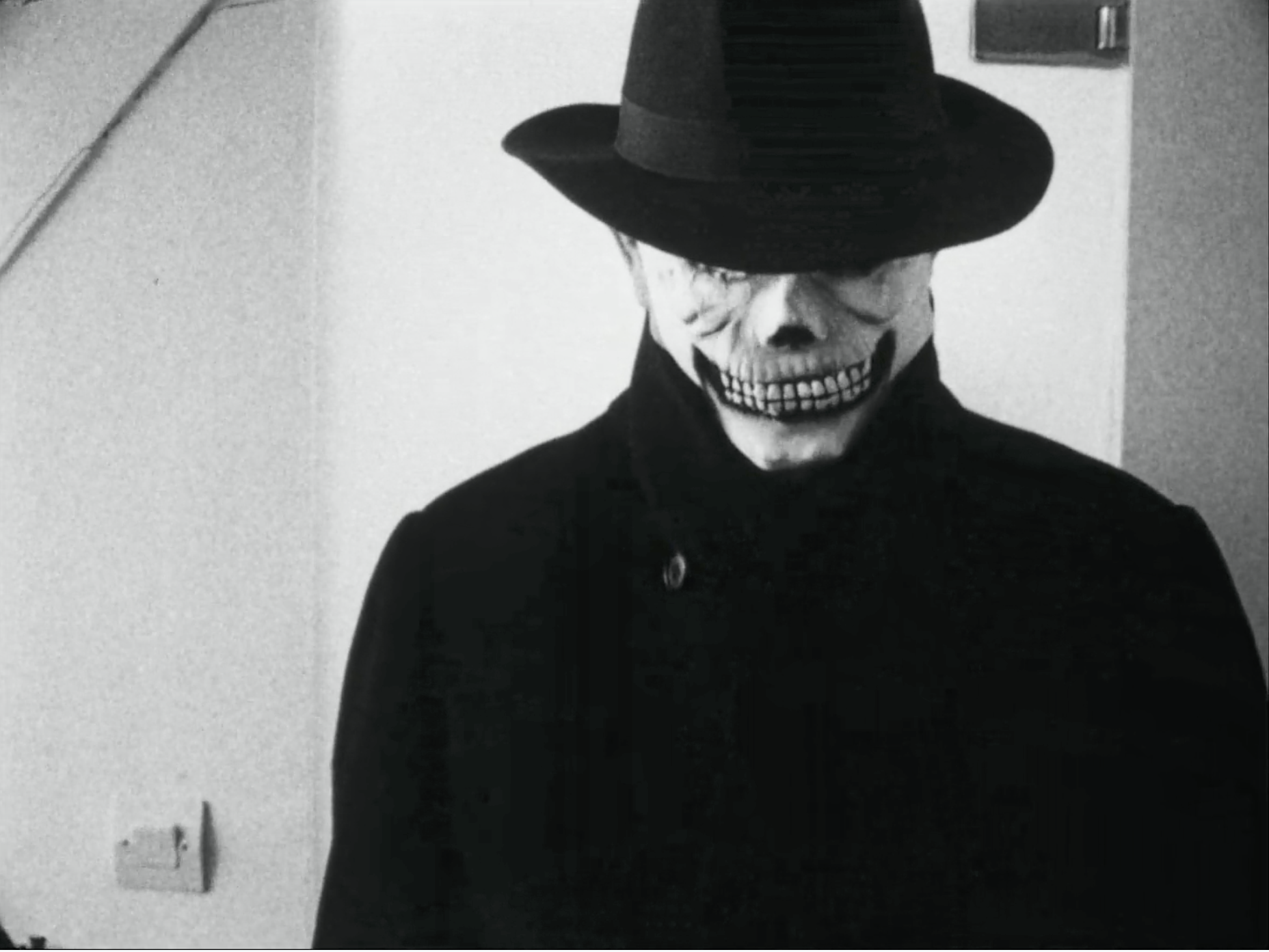
Elsewhere, Kubelka pursues entirely emotional registers without losing coherence. Ruhe auf der Leinwand (Silence on the Screen) studies a painted portrait by Otto Riedel until the act of looking becomes reciprocal. Empört Euch! (Time for Outrage!) traps a boa constrictor within mirrored enclosures, transforming capitalism into a suffocating serpent consuming both prey and spectator. Maschile. Roma moves across men’s faces from varying social classes before ending on a Roman fountain vomiting water endlessly into distortion. In Rome peers through the shooting slits of Castel Sant’Angelo at passing pedestrians, juxtaposing architecture with fragments of her husband’s aging body until the city itself feels voyeuristic. Ticino follows river worn driftwood gathered by children, turning nature into unconscious sculptor. Winter in Paris transforms scaffolding outside a window into fractured abstraction before revealing the muscular presence of a worker whose body becomes an object of fascination. Later, Kubelka embraces a figure wearing a hat and a grotesque mask, death and tenderness momentarily fused.
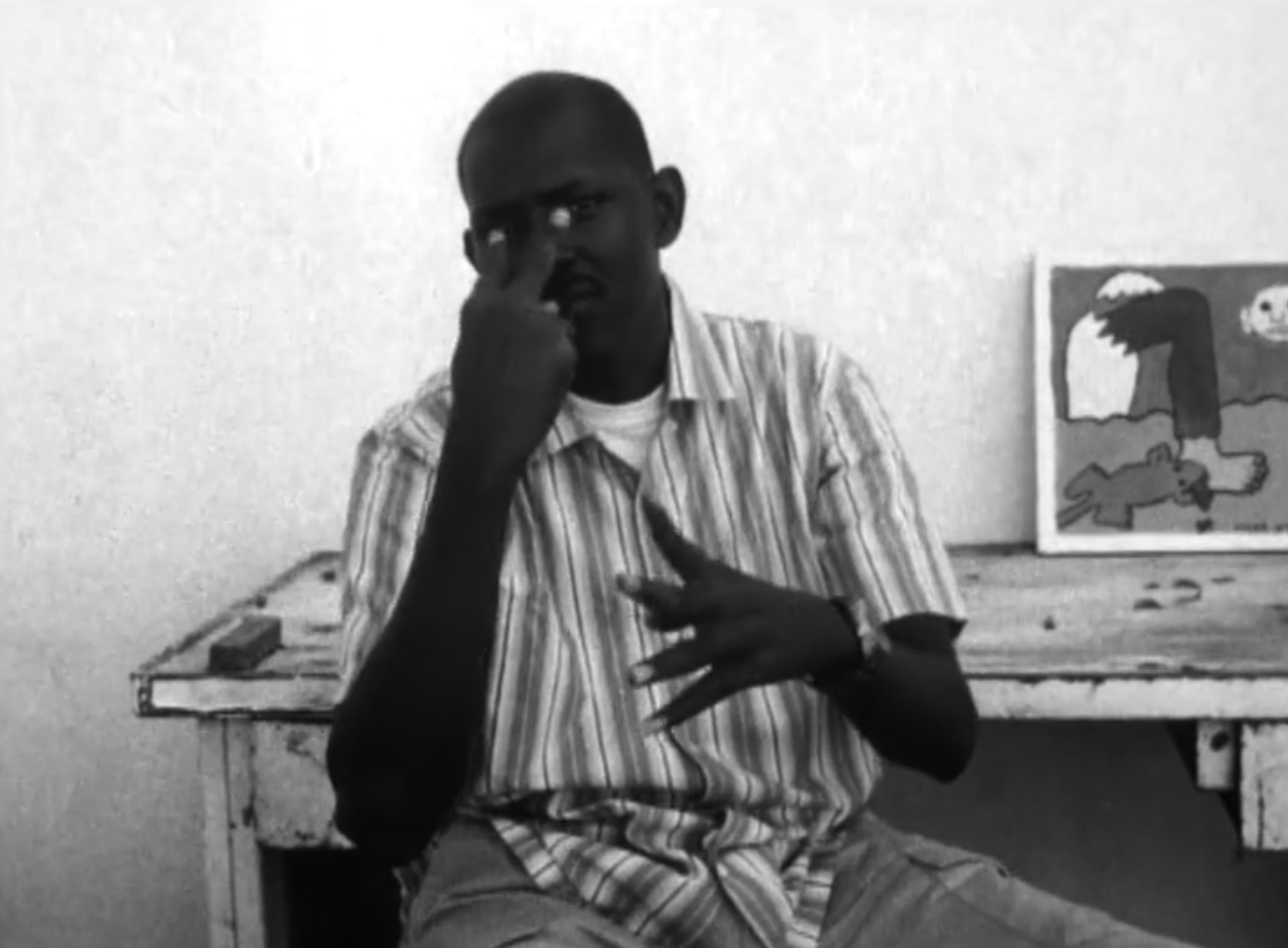
The longest piece here, Atelier d’Expression, may also be the collection’s emotional center. Set in a Dakar psychiatric workshop, it portrays seven artists alongside their creations with extraordinary patience and dignity. Omar N’Diaye, deaf and intensely expressive, explains one of his paintings in sign language: a bitten foot emerging from a cracked egg beneath a moon-faced witness. Other canvases teem with eyes, fragmented anatomy, dislocated times and places. Kubelka cuts between artworks, faces, and beach wrestlers tracing marks into sand, inner turmoil migrating outward into material form.
What ultimately distinguishes Kubelka is the ethical force of sustained attention. She keeps looking after most people would stop looking. Her work resists acceleration and the contemporary demand that visual culture deliver immediate legibility, resembling not an archive but an alternative system of timekeeping measured through intervals of attention. The central theme is clear: memory does not preserve us because preservation was never possible. We thrive instead through continual reappearance inside other people’s perceptions, becoming echoes carried unknowingly forward. Somewhere beyond every frame, after the shutter closes and the projector falls dark, the unfinished self continues wandering through the eyes of strangers.

 Between Sound and Space: ECM Records and Beyond