

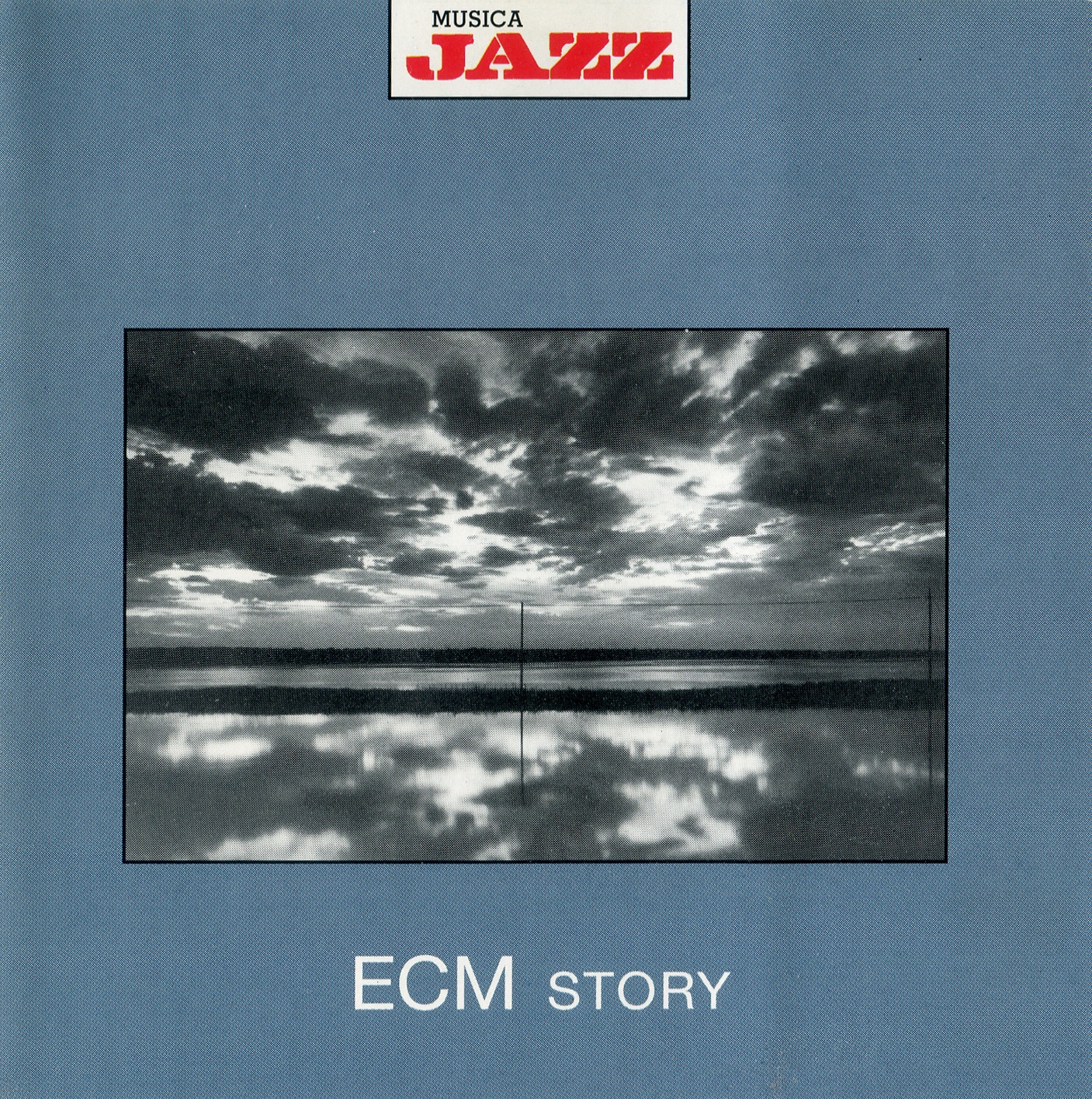
Released in 1994 by Musica Jazz for ECM’s 25th anniversary, ECM Story surveys the label through a deep sense of affinity. Produced in close collaboration, it gathers European innovators such as Jan Garbarek, Terje Rypdal, Louis Sclavis, and Dominique Pifarély alongside American masters including Paul Bley, Chick Corea, Gary Burton, and John Abercrombie. Keith Jarrett receives the sustained attention due a central figure, while Kenny Wheeler and Paul Motian represent its commitment to singular voices. The Art Ensemble of Chicago and Jack DeJohnette widen the field of vision. Codona embodies Manfred Eicher’s appetite for unexpected encounters, Dave Holland reflects ECM’s openness to new forms, and John Surman closes the sequence by foregrounding the label’s celebrated technical precision.
Paul Bley’s “Started,” from Open, to love (ECM 1023), is an ideal initiation in both name and spirit. Gnarled and incandescent, it finds Bley examining the piano from both sides of its visible anatomy. A turbulent opening gives way to blues-inflected abstraction assembled in real time. Jan Garbarek’s “Fountain of Tears, Parts I & II,” from Sart (ECM 1015), shifts into another register. Reed and flute face one another across a widening interior distance, intensified by Bobo Stenson’s electric piano. Garbarek’s broad tone carries a fracture at its center, giving every sustained note the right to its own disappearance.
“Ballad for Tillie” continues the early ECM atmosphere through free improvisation. Mirrors seem draped in darkness as the music turns late-night reflection inward until it begins singing of lives already faded. Its melancholy remains oddly buoyant. From that shadow emerges “Mevlevia,” citing Ring (ECM 1051), where flanged guitar creates a yielding current for Gary Burton and Eberhard Weber. Bob Moses supplies the gentlest possible safety net, though the music appears increasingly uninterested in rescue. Burton’s vibraphone glows at the margins of touch while Weber’s bass creates depth through restraint.
The encore from Keith Jarrett’s Eyes of the Heart (ECM 1150) places raw vitality at the center of the program. Its jaunty vamp provides the visible mechanism, while Charlie Haden and Paul Motian generate the cogs and belts, with Motian in especially robust form. Dewey Redman’s bioluminescent tenor opens hidden chambers in the groove. Jarrett’s cries become part of the instrumental fabric, sparks thrown from the friction between conception and touch. Kenny Wheeler’s “3/4 in the Afternoon,” from Deer Wan (ECM 1102), cultivates a parallel garden of melodic thought into a brass-gilded bloom. Ralph Towner’s reverberant undertow draws warmth from every interval, allowing Wheeler’s horn to reveal its bruised radiance.
The Art Ensemble of Chicago changes our orientation with “Old Time Southside Street Dance,” from Full Force (ECM 1167). An astonishing alto solo, sustained through circular breathing, drives a performance that repeatedly converts celebration into danger and danger back into communal motion. Trumpet and soprano flare above the bass as the ensemble skids toward the finish with the magnificent debris of invention still clinging to it. The track’s unpolished state is part of its power.
Codona’s “Walking on Eggs,” from the trio’s second album (ECM 1177), carries comparable freedom through gentler means. The group creates a music of feathered boundaries in which cultural memory loosens its official garments. Rhythm travels in curved lines, and melody acquires the texture of woven fiber, reminding us that Codona never pursued fusion as a finished condition.
Jack DeJohnette’s Special Edition contributes “Ahmad the Terrible,” from the brilliantly titled Album Album (ECM 1280). Klezmer-inflected jubilation and John Purcell’s fantastic soprano work give the piece an agile sheen. Its humor sharpens rather than softens the music. Purcell bends the melodic line until it develops peripheral vision, while DeJohnette keeps the structure airborne through fortune-telling rhythmic decisions.
Paul Motian’s “Conception Vessel,” the title track of ECM 1028, raises the curtain for Jarrett without greatly disturbing the piece’s surface tension. Discernible melody remains scarce, while piano and drums produce branching implications beneath perception. Motian leaves immense space around each gesture. Jarrett sends bright fragments through those openings, his fiery exuberance puncturing the border between musician and instrument. The track resists easy grasp, entering consciousness sideways.
Dave Holland’s “Wights Waits for Weights,” from The Razor’s Edge (ECM 1353), begins with a bass-centered mid-tempo groove whose apparent simplicity conceals elastic architecture. Holland creates a foundation capable of breathing under pressure, leaving trombonist Robin Eubanks room to strut and carve muscular figures. John Abercrombie’s “Haunted Heart,” drawn from his little-discussed live album with Marc Johnson and Peter Erskine (ECM 1390), opens through an extended guitar introduction that seems to draw a doorway on a wall while persuading said wall to forget its solidity. Abercrombie’s tone settles into a velvety ballad, while Johnson and Erskine let the harmony steep in its own richness. Beneath the tenderness lies a subtle unease.
The final stretch begins with “Hop!” from the Louis Sclavis/Dominique Pifarély Acoustic Quartet’s self-titled studio album (ECM 1526). Pifarély strings a cabinet of glittering ornaments across the violin before seizing the lead. Against crunchy bass, he delivers the sampler’s most astonishing solo, fracturing lines into bright angles until virtuosity resembles controlled disintegration. Sclavis supplies a darker counterforce without taming the delirium.
John Surman’s “Rame Head,” from Road to Saint Ives (ECM 1418), brings the sequence into its final chamber. A Michael Nyman-esque etude seems translated into reeds and stripped to ceremonial essentials. Surman’s layered phrases deepen the engraving with every return. The recording’s clarity magnifies breath and mechanism, allowing the body inside the instrument to remain audible.
ECM Story reveals a catalogue built through radical hospitality, one that preserves solitude while permitting communion. Its deepest truth lies in that tension. Recorded sound reaches backward through history, yet history is already reaching forward through the body that receives it. Beneath Surman’s final breath, the past removes its face and enters the blood.
 Between Sound and Space: ECM Records and Beyond