Released in 2000 by Universal Music France in collaboration with ECM Records, Horizons was conceived as a promotional introduction to a catalogue that had long resisted easy classification. Rather than assembling familiar peaks, it traces a quieter borderland where jazz, folk traditions, chamber music, and improvisation exchange passports without surrendering their origins. The collection leans toward ECM’s acoustic and global currents, yet its real subject is passage between cultures and between inner life and the silence that gives every sounded note consequence. The title would later find an echo in the 2007 oral history Horizons Touched, but here the horizon is less a destination than an ethical limit, a line approached through listening and never possessed.
Anouar Brahem’s “Barzakh,” from his 1991 ECM debut of the same name, opens that territory with oud and Béchir Selmi’s violin suspended in deep reverberation. The Arabic title suggests an interval between worlds, and the music inhabits precisely such a threshold. Brahem’s plucked phrases feel carved from darkness, while Selmi answers with a sorrow that never collapses into despair. Its eleven minutes enlarge the listener’s sense of scale until a pause acquires the dimensions of an abandoned city. Zakir Hussain’s “Making Music” then turns creation into a communal mystery. Hariprasad Chaurasia’s flute begins to shape the rhythmic field alongside John McLaughlin’s acoustic guitar, while Jan Garbarek’s soprano saxophone reveals that the pulse already exists within attention before Hussain fully enters. Tabla does not command the piece so much as disclose its hidden skeleton.
That shared act of discovery continues in Codona’s title track from the trio’s 1979 debut. Collin Walcott and Don Cherry meet Nana Vasconcelos in an encounter where wooden flute, tabla, hammered dulcimer, and percussion remain free of conquest. Each instrument retains its ancestry while contributing to a temporary commons. Egberto Gismonti’s “Salvador (Branco),” from Dança Dos Escravos, approaches freedom through play. His guitar writing keeps folding back on itself, changing the terms of its own argument, while his voice rises from within the texture as a private spirit briefly given flesh. Gianluigi Trovesi and Gianni Coscia offer a more theatrical take on “In cerca di cibo,” their clarinet and accordion reworking Fiorenzo Carpi’s music for a 1971 television adaptation of Pinocchio. Beneath its charm runs a darker question: perhaps becoming real begins with hunger, and consciousness is the appetite that can never be satisfied.
Stephan Micus’s “Passing Cloud,” from The Garden Of Mirrors, lets steel drums and sinding gather beneath the shakuhachi, creating a floating architecture whose materials remain earthy despite its vaporous motion. The piece becomes a screen for interior projection, offering faces to one listener and hollows to another. “Syster Glas (Sister Glass),” from Agram, gives that inward gaze a sharper surface. Jonas Knutsson’s soprano saxophone draws liquid lines through Mats Edén’s drone-fiddle, with Ale Möller’s mandola brightening the edges and Palle Danielsson’s bass moving beneath them as muscular memory. The track feels welcoming from a great distance, a voice calling through a transparent wall that cannot be crossed.
David Darling’s “Up Side Down,” from Dark Wood, draws the collection toward its most exposed emotional register. His cello builds a resonant foundation, then sends solitary cries upward through it. Light and shadow mingle until neither can remember its former name. Darling’s virtuosity serves vulnerability, leaving feeling almost undefended. Nils Petter Molvær’s “On Stream,” from Khmer, moves that bodily intimacy into electronic space. Trumpet breath, percussion, bass, and guitar form a slow nocturnal circuitry in which human respiration becomes the ghost lodged inside technology. The groove carries understated charge, yet the real drama lies in the friction between lungs and machinery.
Jan Garbarek’s “Her Wild Ways,” from RITES, answers with greater physical breadth. Marilyn Mazur’s percussion shifts under Eberhard Weber’s bass harmonics, while Rainer Brüninghaus opens long perspectives at the piano. Garbarek’s saxophone cuts through them with unusual directness, turning clarity into its own form of wilderness. Tomasz Stańko’s septet moves inward again on “Sleep Safe and Warm,” Krzysztof Komeda’s melody revisited on Litania. Bernt Rosengren’s tenor deepens its haunted tenderness, and Terje Rypdal’s guitar glows beneath the surface. The lullaby advances without comfort becoming innocent.
Eleni Karaindrou’s two selections from Eternity and a Day elicit a suspended cinema. “By The Sea” pares expression down to a tender piano line, allowing each interval to hold more than melody alone can explain. The variation on “Depart And Eternity Theme” gathers clarinet, mandolin, violin, and strings into a chamber of arrested gestures, where departure has begun but absence has not yet learned its shape. Dino Saluzzi and the Rosamunde Quartett bring the compilation to its final threshold with “Recitativo final” from Kultrum. Saluzzi’s bandoneón opens a grave conversation with the strings, joining private breath to historical weight. The music loosens dreams from their owners and guides them toward a door that remains closed to explanation.
Across Horizons, borders fade without abandoning meaning. These performances travel through inheritance and memory across immense distances while refusing the fantasy that encounter grants ownership. The collection’s deepest argument concerns attention itself. To listen closely is to enter another presence while accepting that some chamber within it must remain inaccessible. Perhaps that inaccessible chamber is where music keeps its conscience. The horizon, then, is not the farthest point the eye can reach, but the place where desire learns to tie its own shoes.
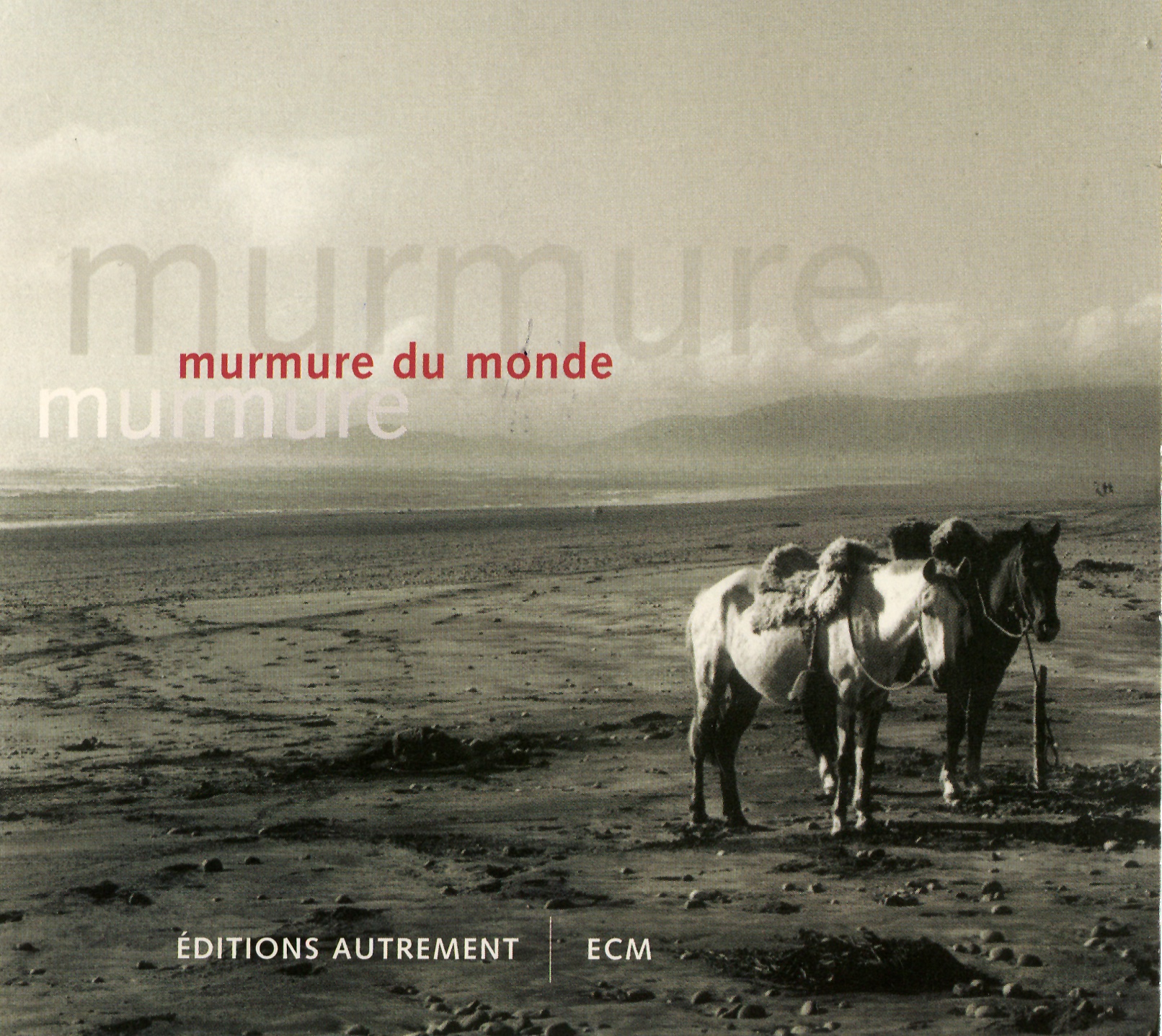
It is worth noting that this edition is the commercial re-release of murmure du monde (1998), originally produced as a strictly promotional, non-commercial CD. Created by PolyGram Projets Spéciaux (PolyGram Special Projects) and marked “Hors Commerce” (“Not for Sale”), it was distributed directly to French radio programmers, journalists, and music-industry professionals to promote ECM’s international jazz and ambient catalogue.