

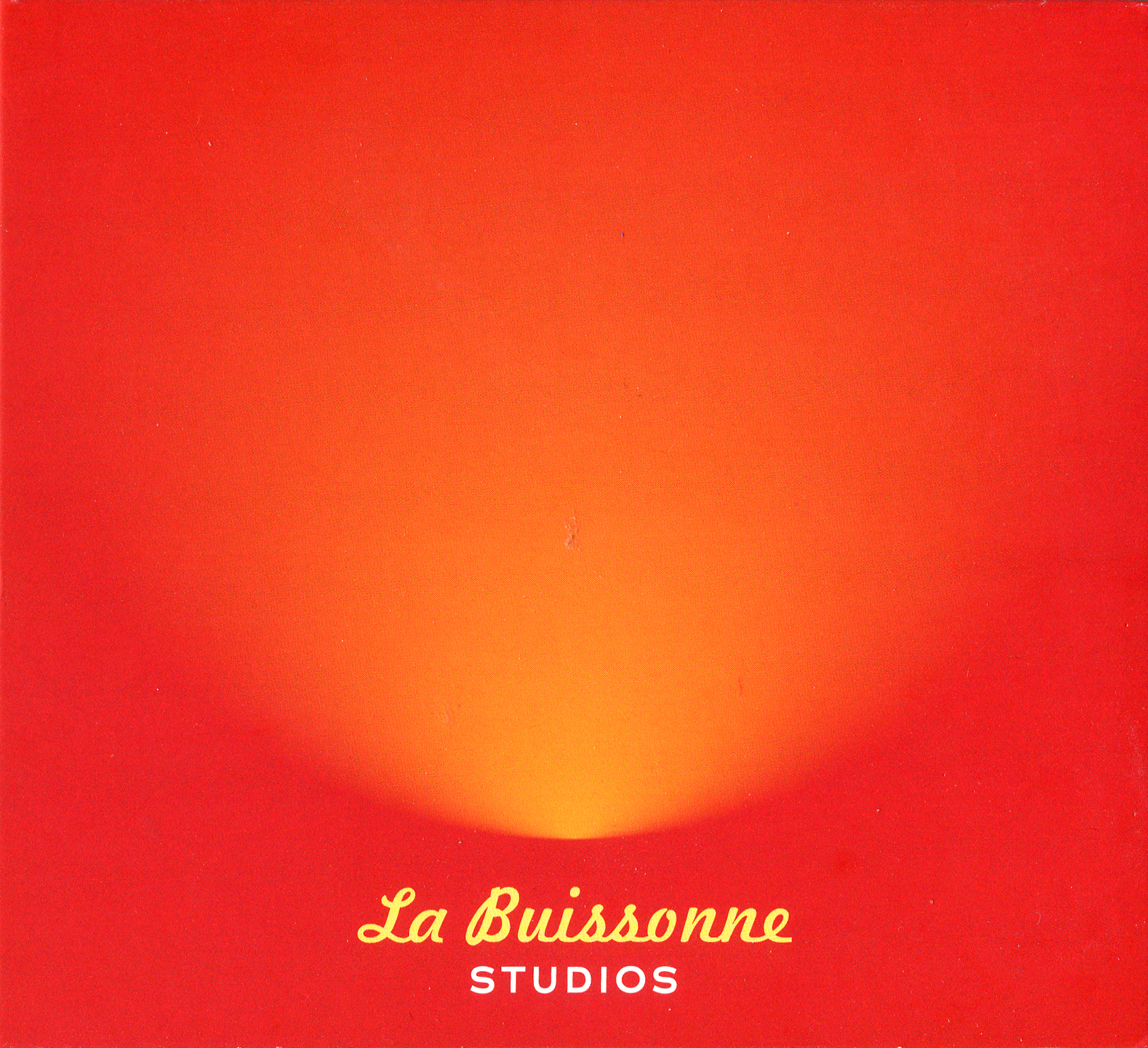
Released in 2005 as a promotion-only compilation, La Buissonne Studios occupies the elusive third chamber in the catalogue attached to the celebrated recording complex at Pernes-les-Fontaines. Its history was built through improbable labor. Gérard de Haro and two childhood friends first recorded musicians in a modest space at L’Isle-sur-la-Sorgue; an encounter with bassist Barre Phillips sharpened their desire for a professional studio. They found a hangar and house in Pernes, worked with acoustician Marc Beaufils, and opened La Buissonne on September 1, 1987.
Since then, its rooms have helped define modern European jazz as a silent collaborator, familiar to ECM devotees yet present across numerous labels. Only one ECM recording appears here. That scarcity clarifies the compilation’s purpose: less a house sampler than a map of circulation, showing how one acoustic language can pass through radically different bodies without imposing a uniform complexion. Many selections arrive as excerpts, fragments of fresco carrying enough pigment to imply the civilization around them.
The Jean-Philippe Viret Trio opens one inward passage with “Par Tous Les Temps,” as heard on Étant donnés (Sketch SKE 333025). Édouard Ferlet sets an arpeggio in motion as Viret’s double bass moves beneath him and Antoine Banville’s cymbals scatter radiance across the pulse. A processional shimmer brushes Steve Reich’s language without surrendering jazz’s appetite for contingency.
The Sketch label reappears through Michel Graillier and Riccardo Del Fra’s “Blue Wind,” via Soft Talk (SKE 333014), where piano and bass achieve rare conversational transparency. The inward gravity deepens in Stéphan Oliva’s “It Should Have Happened a Long Time Ago,” from Fantasm (RCA Victor 74321739252). Bruno Chevillon bows his bass until sorrow acquires grain, bowing to minute percussion marks from Paul Motian at the edge of Oliva’s piano.
That private concentration eventually seeks a public body. Under Bernard Struber’s direction, the Orchestre Régional de Jazz d’Alsace turns “Le Phare,” the title piece of its Enja album (ENJ 93592), into a festival whose gaiety contains structural rigor. Guest Louis Sclavis adds another hinge; brass and reeds exult while the rhythmic center remains lucid.
Claude Barthélemy finds harsher collectivity in “Mama Barth Blues,” recorded with the Orchestre National de Jazz for La fête de l’eau (Le Chant du monde 2741228). His guitar strikes the ONJ’s polished mass and releases gorgeous unrest. Andy Emler’s MegaOctet pushes the principle beyond decorum. The previously unreleased “Bal Tribal,” featuring Marc Ducret’s acoustic guitar, wanders through a hospitable delirium where direction keeps changing its name. On “4/4 Cm3/Horizons,” included on Dreams in Tune (Nocturne NTCD 361), Médéric Collignon’s voice becomes percussion and alarm signal before breaking into ecstatic fracture, as Emler’s ensemble treats meter as tensile sculpture.
Another family of pieces gathers around the exposed voice and its difficult bargain with intimacy. “Down by Love,” from Youn Sun Nah’s So I Am… (In Circum Girum ICG 0204-1), holds self-possession and vulnerability within the same trembling filament. David Neerman’s vibraphone opens suspended space, while Benjamin Moussay, Yoni Zelnik, and David Georgelet alter its depth and footing. Nah sings from the point where command begins to quiver, and that quiver becomes sovereign territory.
John Greaves approaches the art of song from a more autumnal interior on “The Price We Pay,” preserved on The Trouble with Happiness (Le Chant du monde 274 11 99). Sophia Domancich’s piano and Vincent Courtois’s cello enlarge the chamber in which mortality has taken a seat. Lucilla Galeazzi brings fiercer blood to “La Luz de Oro,” heard on Trio Rouge (Intuition INT 33532). Her diction tears a bright incision through the darkness, Courtois answers with pizzicato cello, and Michel Godard’s serpent coils through the lower register.
The geographic imagination then widens. Daniel Mille’s “Entre chiens et loups,” the title track of his Emarcy release (013535-2), lets the accordion carry an entire horizon inside its bellows. Jules Bikoko’s double bass provides the patient floor; Jean-Christophe Maillard moves between piano and guitar, with Minino Garay’s percussion tracing paths through the dust.
Carlos Maza’s “Guanabacoa,” appearing on Fidelidad (Emarcy 016109-2), opens the frame across a broad percussive field. Maza’s piano, voice, and cries of acclamation make awareness sudden and bodily before the excerpt withdraws. Jean-Marie Machado’s “Tua-Badalada,” taken from Leve leve muito leve (Hortus/Didier Maes H 100), gathers singers and wind players into modal pageantry. A trace of Carl Orff passes through the writing, though Machado’s fairytale has stranger laws, its tower built downward into recollection.
Scale contracts as smaller ensembles excavate dream matter. François Raulin’s “Légère Houle,” on Trois plans sur la comète (HatOLOGY 582), places his piano beside Bruno Chevillon’s bass and lets François Corneloup’s baritone saxophone roam through the clearing they create. Voice doubling introduces a child’s candor, turning wonder into a form of exact knowledge.
Claude Tchamitchian’s “Rêve. Hommage à Sayat Nova,” drawn from Le monde est une fenêtre (Émouvance EMV 1018), brings his double bass into dialogue with Gaguik Mouradian’s kamancheh across a narrow abyss. Earth and ether exchange substances; wood dreams in mineral. Louis Sclavis and Vincent Courtois achieve related concentration in “Grand Comme le Monde,” a clarinet-and-cello theme drawn from Denis Gheerbrant’s film Grands comme le monde rather than a conventionally catalogued album. Its brevity gives it the density of an inscription.
Rhythm itself becomes philosophy in Daniel Humair’s unreleased “Drum Solo,” drawn from the Work sessions for Sketch. Humair sends thought through skins and metal, asking how consciousness might proceed if it had no nouns, only impact and decay. Sparkle carries shadow, even as momentum becomes a life force whose destination recedes.
Eric Watson’s “Tryst,” documented on Full Metal Quartet (Owl Records 159 572-2), answers with the perilous discipline of the ballad. Mark Dresser’s bass and Ed Thigpen’s drums create a foundation supple enough to disappear. Watson’s piano offers tenderness without sentimentality, leaving Bennie Wallace’s tenor free to roughen the lyric surface. His sound bears the abrasion of a truth dragged across distance, and the quartet’s restraint makes every fracture audible.
Two larger visions convert audibility into conscience. Jon Balke’s North Magnetic Orchestra supplies the compilation’s lone ECM emissary with “Falling,” included on Diverted Travels (ECM 1886). Strings gather around Per Jørgensen’s wordless voice, creating a lullaby whose destination has been erased from the map. The piece suspends arrival, asking listening to survive without possession.
Charlie Haden’s Liberation Music Orchestra carries that suspension into historical responsibility on Bill Frisell’s “Throughout,” heard on Not in Our Name (Verve B0004949-02). Although the album was recorded in Rome, Gérard de Haro mixed it and La Buissonne later hosted its mastering, proof that the studio’s authorship sometimes begins after the musicians leave the recording floor. Carla Bley shapes the opening with Haden, Chris Cheek and the horns unfold in varying densities of duration, and Steve Cardenas threads guitar through the restrained ache. The performance never confuses beauty with innocence. Its tenderness has political weight because every lucid tone carries the pressure of what lucidity obliges us to see.
François Couturier, Jean-Marc Larché, and Jean-Louis Matinier gather those obligations into “Epilogue Requiem,” part of Music for a While (Émouvance EMV 1017). After Couturier’s piano opens in dark concentration, Matinier’s accordion and Larché’s soprano saxophone gradually lift the music into another register, though hope arrives with scars still legible in its grammar. The title promises an ending, while the performance quietly disputes the jurisdiction of such a concept.
Across this rare disc, La Buissonne’s crystal clarity makes room for separateness, preserving the pressure around a cymbal stroke, the darkness under a bowed note, and the breath before a singer risks becoming audible. The microphone receives vibration, but also ancestry and unborn meanings gathering around a phrase. What the studio preserves is that instant when something personal becomes an aperture. Through it, one can almost glimpse a future archaeology in which our civilization is known neither by its monuments nor by the catastrophes it mistook for destiny, but by the care with which a room once held a vanishing note and refused to let its fragility count as disappearance.

