The Dowland Project: Night Sessions (ECM New Series 2018)

Night Sessions

The Dowland Project
Night Sessions

John Potter tenor
John Surman saxophones, bass clarinet, percussion
Stephen Stubbs lute, chitarrone, baroque guitar, vihuela
Maya Homburger violin
Miloš Valent violin, viola
Barry Guy double bass
Recorded September 2001 and January 2006, Propstei St. Gerold
Engineer: Markus Heiland
Produced by Manfred Eicher

The Dowland Project was the brainchild of former Hilliard Ensemble tenor John Potter, and had before this album’s release lulled listeners over the course of three traversals: In Darkness Let Me Dwell, Care-charming sleep, and Romaria. As the story goes, after shedding its light in the middle recording, the Project returned to the studio at producer Manfred Eicher’s unexpected behest. Thus the night sessions documented herein were born, in and of the moment.

With Potter are reedist John Surman, lutenist Stephen Stubbs, violinists Maya Homburger and Miloš Valent (by turns), and bassist Barry Guy. Together they forge a sigil of such intuitive, adaptive power that the texts treated here come alive in new and evocative ways. Of those texts, Potter selected a wide assortment, reading them aloud to the group before giving each a onetime go. Improvising around both familiar and adlibbed tunes, the musicians drew their individual lines with such openness that only a bold stripe of unrepeatable music making was left behind. Following that line as listeners after the fact is half the fun. Imagining what it might have been like to be a fly on the wall at Austria’s Monastery of Sankt Gerold, where the sounds were captured for posterity, is the other.

The songs span a range of eras and moods, but all with a twinge of heart that only a troubadour’s pen can elucidate. In that vein, the 12th-century “Can vei la lauzeta mover” by Bernart de Ventadorn yields some of the album’s richest musical textures. Although Potter is the focus, Guy (especially when in conversation with Homburger) proves to be another defining voice. Potter’s own is the horizon line between extremes, while Surman’s soprano saxophone is achingly present, a trail of firefly light running through the darkness.

Sources run the gamut from Portuguese pilgrim song (“Menino Jesus à Lappa”) to Byzantine chant (“Theoleptus 22”). Whether cracking like parchment in the Middle English lyric of “Man in the moon,” clanging like the blacksmith’s hammer in the anonymous 15th-century “Swart mekerd smethes,” or luxuriating in the delicate unabashed descriptiveness of “Whistling in the dark,” Potter navigates all of it with a conscious comfort and playfulness of spirit. Notables include the early 16th-century carol “Corpus Christi” and the 14th-century “Fumeux fume,” the latter by the recherché French composer Solage. Both pair Potter with Surman’s bass clarinet, while the second adds Guy’s upright. Also intriguing are “Mystery play,” in which Potter occupies a back corner of the studio, and “I sing of a maiden,” another Middle English lyric that is by far the most haunting on the album.

Instrumental pieces sprinkled throughout lend reflective prowess to the program’s flow. Two improvised “triages” make contrasts of dance and shadow, while the rest put the lute of Stubbs to full effect, whether in his own improvisations or in the works of Joan Ambrosio Dalza (fl. 1508) and Pierre Attaignant (1494-1551/52). His soloing provides anchorage for the more complex spider’s filament strung between. He also ends the album as tenderly as he begins, with Attaignant’s “Prelude”: an indication of things yet to come, of dreams yet to be dreamed.

It must be said that every musician of Night Sessions is as much a singer as Potter’s voice is an instrument. They’re all storytellers, finding order in chaos, plucking pearls from historical oysters, forgotten in oceans long unswum.

Nils Økland: Monograph (ECM 2069)

Monograph

Nils Økland
Monograph

Nils Økland Hardanger fiddle, violin, viola d’amore
Recorded July 2007, Olavskirken, Avaldsnes (Norway)
Engineer: Audun Strype
Executive producer: Manfred Eicher

From the caverns of Christian Wallumrød’s Sofienberg Variations and A Year From Easter, Norwegian violinist Nils Økland emerges with his first ECM leader date, a solo album of fully original design and character. The composing may be his own, but like the playing it has roots in many times and places. And yet, the album’s sense of the here and now trumps the need for reference and allows even those unfamiliar with Nordic fiddling traditions and their modern developments alike to appreciate the spirit of Økland’s craft in the raw. Sometimes bucolic, at others streamlined, it is always moving.

nils ¿kland nov 04 foto: lars o.
(Photo credit: Lars O. Flydal)

Monograph wears its title well. Over a 13-track traversal, its comprehensive program expounds on multiple combinations of string and bow. The Hardanger fiddle, a national instrument of Norway of which Økland plays three on the album, lends a sandy, hurdy-gurdy-like texture to five tunes. Between the urgent cycles of “Kvelartak” and the shifting harmonies of “Skimte,” the instrument sprouts a forest’s worth of leaves. Versatility reigns in between the dancing shadows of “Mono,” and the pliant highs of “Snor.” In each of these is the mineral taste of soil, chased by the cleanliness of air.

For the album’s three violin tracks, Økland plays a centuries-old instrument. “Rite” circumscribes the space in spirited dance, “Seg” sings in charcoal pigments, and the wing beats of “Nattsvermer” (the album’s closer) would seem to reference Paul Giger’s emotive solo work on ECM. Sounding almost improvised, it rests on a blade of poetry.

Rounding out are some pieces played on the resonant viola d’amore. Hints of Irish pasture braid Nordic currents in “Mønster,” vividly opening the disc. Similar geographical conversations abound in the syllogistic “Dialog,” while “Pas de deux” and “Ø” bring tender, even forlorn, images into frame, touching and separating like a dragonfly and its reflection.

All of which is to say that Monograph is ultimately more than a solo album. Økland’s sound is so rich, it sings in the voices of many with a talent surpassed by few.

Terje Rypdal: Crime Scene (ECM 2041)

Crime Scene

Terje Rypdal
Crime Scene

Terje Rypdal electric guitar
Palle Mikkelborg trumpet
Ståle Storløkken Hammond B-3 organ
Paolo Vinaccia drums, sampling
Bergen Big Band
Olav Dale conductor
Recorded May 2009 at Nattjazz, Bergen by Norsk Rikskringkasting
Engineer: Per Ravnaas
Produced by Erling Wicklund

A line from The Good, the Bad and the Ugly plunges us into the world of Terje Rypdal’s Crime Scene: “Since we’re all going in the same direction, we might as well go together.” The fruit of a commission for the 2009 Nattjazz Festival in Bergen, Norway, the album is both a departure and a homecoming. In the former sense, it puts the Norwegian guitarist-composer’s pen to the 17-piece Bergen Big Band; latterly it deploys the rawness of his electric guitar into a mounting energy field. Joining him on the main stage are trumpeter Palle Mikkelborg, drummer Paolo Vinaccia, and Ståle Storløkken on Hammond B-3 organ, all under the baton of Olav Dale. The cinematic charge of such forces is brought home by Vinaccia’s tasteful, if unabashed, sampling of classic Hollywood westerns, gangster pictures, and films noirs.

Rypdal’s long-range suite erects a ghost town of familiar voices: Clint Eastwood’s Blondie, Marlon Brando’s Don Corleone, and even (surprisingly?) Christopher Lloyd’s Doc Brown add their own grit and wit to an appropriately gravelly undercurrent. Much has been made about the use of samples in this otherwise muscled sonic experience, but these popular sound bites provide anchorage for the music’s spiraling outcomes. In regard to those outcomes Rypdal gives us tantalizing clues by way of tongue-in-cheek track titles like “Prime Suspects,” “The Criminals,” and “Investigation.” Throughout this course in aural detection we encounter dueling tenors (both instrumental and emotional) and a trio of bass clarinets, the undercurrent of Storløkken’s Hammond stoking the furnace all the while. Mikkelborg often echoes Miles Davis (a major influence on Rypdal’s earliest fusional stirrings) as the rhythm section’s grungy airlock holds its own against a tide of brass. Through this Rypdal’s guitar cuts—not a knife but a siren, breaking the seal on a bag of forensic evidence with sheer force of thought.

As referential as Crime Scene is to its thematic bon mots, it is even more so to Rypdal’s own career and inspirations. Head-nodding bass lines recall What Comes After and Odyssey, scalding the night with their nostalgia. The ambient collage of “Parli con me?!” and hard-hitting funk of “Action” (a prime vehicle for Rypdal the acrobat) rest comfortably between composite sketches of horns. And the darker “It’s Not Been Written Yet” leads to the even darker conclusion of “Crime Solved,” the low drone of which burrows into the skull in a way not heard since Q.E.D.

Crime Scene belongs to that sparsely populated league of such montage procedurals as John Zorn’s masterful Spillane. Although it may not puff as many cigarettes as Zorn’s exemplar, it nevertheless swims in its fair share of smoke.

(To hear samples of Crime Scene, click here.)

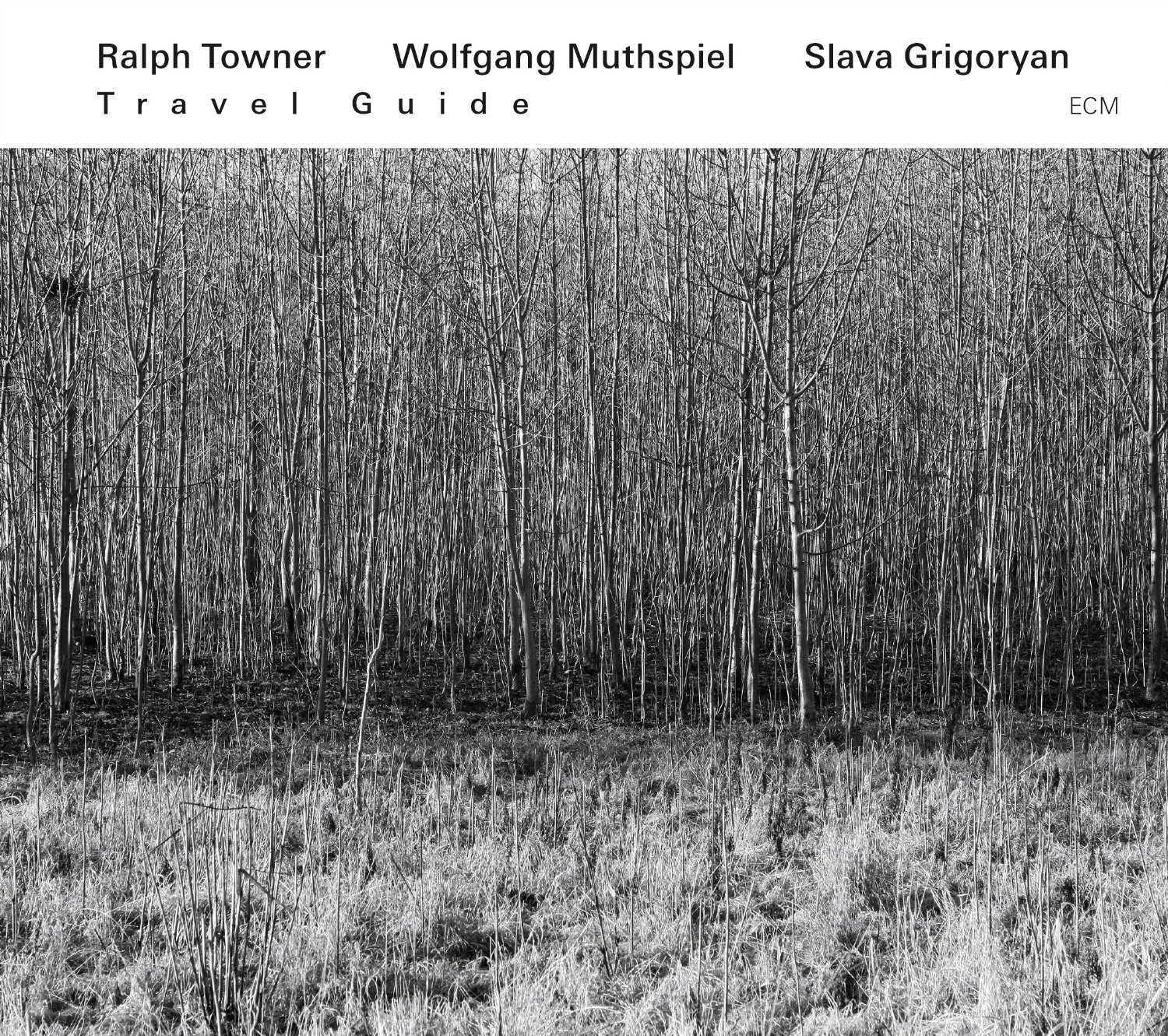
Ralph Towner/Paolo Fresu: Chiaroscuro (ECM 2085)

Chiaroscuro

Chiaroscuro

Ralph Towner classical, 12-string and baritone guitars
Paolo Fresu trumpet, flugelhorn
Recorded October 2008 at Artesuono Recording Studio, Udine
Engineer: Stefano Amerio
Produced by Manfred Eicher

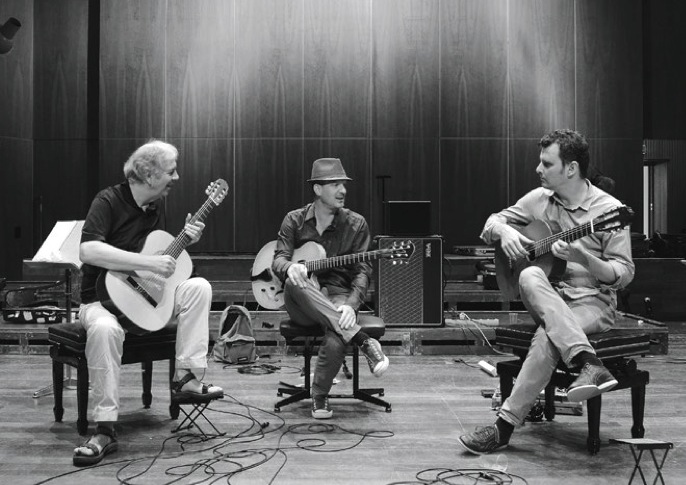
Ralph Towner describes his first encounter with Paolo Fresu at a festival in Sardinia: “I didn’t know him at all then, but from the very first phrase that he played, I thought: This guy really understands melodies!” Surely, we can say the same about both musicians once the first bars of “Wistful Thinking” lay the corner pieces of the ensuing puzzle, establishing with them a language of tasteful ornament. If the overall effect feels nostalgic, it’s because the track reprises material from Open Letter, an even more unusual pairing that found Towner in the company of drummer Peter Erskine. Another, “Zephyr,” was last heard on Oregon’s Ecotopia and shows in this duo version an even barer creative process at work.

Towner and Fresu

More to the point, Chiaroscuro is an album of balanced architecture, each tune an archway held strong by a melodic keystone. The title track, for one, turns like a windmill in April, sprouting with fractal energy that integrates the musicians in the same way that light and shadow dance in the cover photograph. There is always something of one in the other, even in the solo passages. Whether navigating Miles Davis’s undying “Blue In Green” (the only non-Towner piece of the program) or the propulsive “Punta Giara,” the dance of Towner’s earth tones and Fresu’s hints of sunrise maintains a robust meridian.

The guitarist’s rhythms are so compact that it’s refreshing to hear a partner drawing melodic threads through them without getting buried. In “Doubled Up” especially, Towner’s busy fingerwork would seem to shelter no room for interpretation, yet finds harmony in the trumpeter’s muted approach. Deeper still are the contrasts of “Sacred Place,” a chromatic solo piece from Towner that finds haunting reprise with Fresu’s unforced elaborations. These three tracks also make use of the baritone guitar, a low-tuned instrument new to Towner’s toolkit.

For balance (in both content and form), a dash of improvisations rounds out the session, slinging Fresu high above Towner’s incandescent 12-string. Pliant yet unflinching in its integrity, this is music that is organic by design.

Quercus: s/t (ECM 2276)

2276 X

Quercus

June Tabor voice
Huw Warren piano
Iain Ballamy saxophones
Recorded live March 2006 by Paul Sparrow
Edited by Mike Mower
Mixed at Rainbow Studio, Oslo by Jan Erik Kongshaug and Manfred Eicher
Produced by Manfred Eicher, Iain Ballamy, and Huw Warren

Quercus names both the debut album and trio composed of folksinger June Tabor, pianist Huw Warren, and saxophonist Iain Ballamy. The word is Latin for “oak,” but the image implies more than rootedness, embodying the full arboreal essence of this somber collection. Indeed, Tabor’s voice is the very wood of the forest, and invites the instrumentalists along its democratic path of music making.

Quercus Photo

All that I have endured
Lassie my dearie
Here in thine arms is cured
Lassie lie near me

These words, by Scotland’s national poet Robert Burns, ease us into a running theme: love as a salve for all ills. From the last line comes the title of the song, which Tabor sings with little affectation, save the emotional veracity of her diction, while Ballamy harmonizes, doubles, and cradles her by turns. He and Warren carry on the melody, unraveling finer implications behind the text with understated precision. This formula proves effective hereafter and works especially well in the iambic pentameter of Shakespeare’s “Twelfth Night,” from which is excerpted the lyrics of “Come Away Death,” in Ballamy’s own arrangement, and for which Tabor digs into her chest voice to tease out the Bard of Avon’s gravelly truths. It is a quality she employs selectively, as in her unaccompanied version of “Brigg Fair,” turning a normally airy song into ash. Ballamy further provides music for “Near But Far Away,” in which he seems to channel jazz legend Charles Lloyd in this melodious, if cautionary, tale that is one of the album’s finest. “As I Roved Out” completes the selection of traditional songs. Like a fantasy made actual and turned back into fantasy, its scrim bears the scars of transformation:

And at night when I go to my bed of slumber
The thoughts of my true love run in my mind
When I turn around to embrace my darling
Instead of gold sure it’s brass I find

“The Lads In Their Hundreds” couches the WWI poem by A. E. Housman in music of English composer George Butterworth. With the austerity of a Ken Loach film, it draws black where only green once thrived. The musicianship brings an eerie sense of calm and offsets morose imagery of young soldiers going off to war, only to die as anonymous placeholders of unwritten glory. To this elegy Warren responds with “Teares.” The John Dowland-inspired piano solo blends pointillism and sustain, for all a windswept pasture. Subsequent vignettes evoke faraway deserts (“Who Wants The Evening Rose”), the naïveté of love’s first kiss (“This Is Always”) and, in “A Tale From History (The Shooting),” the drama of remembrance. The latter, a true song of songs, features words and music by Irish singer-songwriter David Ballantine. Tales from history line our breath, goes the rhyme. Start with passion, end in death. The promise of retribution lingering in these mor(t)al variations finds fulfillment in the closing “All I Ask Of You,” by American spiritual leader and hymnist Gregory Norbet. Here Ballamy’s introductory soliloquy strikes a balance of prosody and poetry, and holds on to its melody as one in prayer might grasp a rosary. The flowing changes in instrumental color unexpectedly come together with Tabor in the final moments, oneness above all.

Like the three Robin Williamson discs before it, Quercus expands ECM’s unique interpretive folk niche. Although recorded live at The Anvil in Basingstoke in conclusion of a 2006 UK tour, it wasn’t released until 2013. The seven-year lag seems appropriate, for the trio had been together seven years before turning the microphones on. It’s as if the songs were doubly aged so that they might reach our ears at peak flavor and consistency, pushing us along the way into the darkest crannies of the human experience even as they lift us from those depths in want of light. Each is the shadow within the shadow, a space where dreams and realities intermingle until one cannot be pulled apart from the other.

(See this article as it originally appeared in RootsWorld online magazine, where you may also hear a sample track.)

Latest ECM reviews for RootsWorld

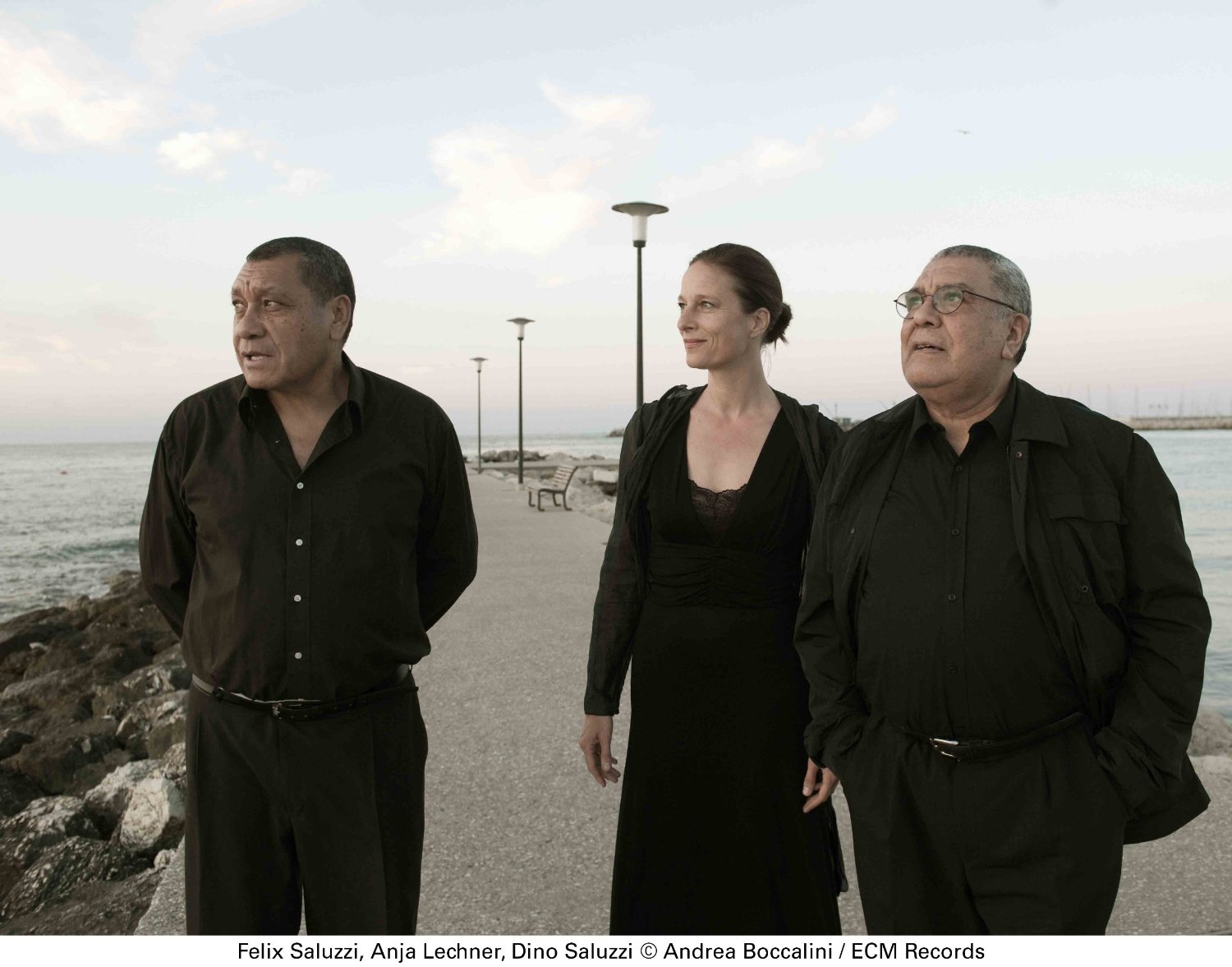
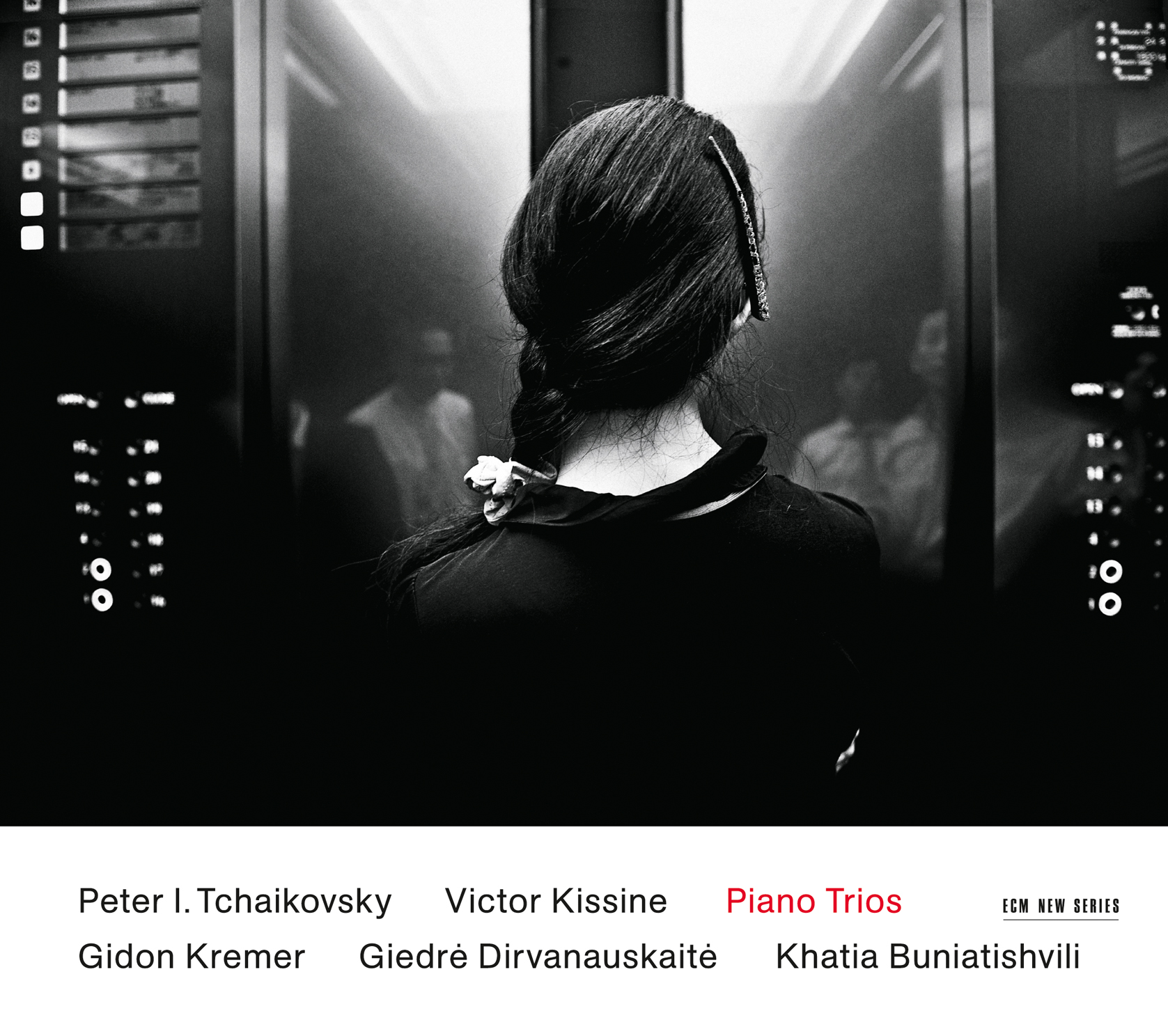
My latest two ECM reviews appear in RootsWorld online magazine. One is Dino Saluzzi’s quiet yet emotionally vivid journey, El Valle de la Infancia. The other is Marc Sinan’s Hasretim, one of the finest ECM releases of recent years and one worth seeking out (sadly, it won’t be released stateside). Click a cover to discover!

El Valle de la Infancia

2330/31 X

Milestone and four-week hiatus

As of my last post (Sinikka Langeland’s Starflowers), I’ve reviewed ECM’s first 1000 releases. Add to this the scattered others from later on in the catalogue, and that leaves only 144 albums before I “catch up” with the label’s unflinching rate of release. On July 17, I’ll be leaving for a four-week trip to Japan, during which time I will abstain from reviewing, immersed as I’ll be in linguistic and academic research in Kyoto. I’m sure you’ll find enough to mull over in the interim 😉

I’m beyond grateful to all of my readers, transient and constant alike, who’ve given me the resolve to keep this project going. Synchronicity is within reach!

Sinikka Langeland: Starflowers (ECM 1996)

Starflowers

Sinikka Langeland
Starflowers

Sinikka Langeland vocal, kantele
Arve Henriksen trumpet
Trygve Seim tenor and soprano saxophones
Anders Jormin double-bass
Markku Ounaskari percussion
Recorded May 2006 at Rainbow Studio, Oslo
Engineer: Jan Erik Kongshaug
Produced by Manfred Eicher

It is one of those nights
when loneliness stands with its back turned to everything
and its face frozen fast in the western sky.

“Starflowers” is both an apt name for Sinikka Langeland’s ECM debut and for the cast assembled beneath its canopy. The Norwegian vocalist and kantele (Finnish table harp) player welcomes trumpeter Arve Henriksen, saxophonist Trygve Seim, bassist Anders Jormin, and percussionist Markku Ounaskari for her original settings of verses by lumberjack-poet Hans Børli (1918-1989). Although classically trained, Langeland has nurtured a longstanding interest in folk music. This disc takes that interest into crucible, concentrating it into a melodic cosmology all her own. That Jan Garbarek was an early influence should come as no surprise, for the same mystical undercurrents that inform his own music are undeniably present in hers (refer especially to Mari Boine’s appearances with the saxophonist’s eponymous Group).

Sinikka
(Photo by Dag Alveng)

That said, Langeland is possessed of a voice and touch like no other. The latter, as fed through her five-octave concert kantele (different from the one pictured above) is striking enough to preclude the need for voice. Like the Japanese shō or Constantinople lyra, it’s one of those instruments that seems handed down from on high, left to sing of a homeland to which it can never return. It spins an earthy web as well, shimmering with the pliancy of water but the strength of trees. So preaches the album’s first song, “Høstnatt på Fjellskogen” (Autumn Night in the Mountain Woods), in which Langeland paints entire scenes with a caress of the strings, warping their sound to suit a dreamlike cast. It’s as if the words pull at her, and we hear their pull in every pitch-bent note. The forest is palpable.

Although Børli may rightly be considered a naturalist poet, he was not entirely unaware of the workaday world:

The earth seems to climb and climb,
Lifting into the sky.
Then suddenly there’s calm.
As when the elevator halts
Somewhere on the higher floors and
you take instinctively a backward step
to keep your balance.

Such analogizing only serves his commitment to the outdoors, where his imagery finds common home. Whether chipped away in “Saltstein” (Rock Salt) or emerging from the brushed snare and ghostly bassing of “Sus i myrull” (Whispers in the Cotton Grass) in Meredith Monk-like song-speech, a feeling of rootedness reigns. And in “Langt innpå skoga” (Deep in the Woods), a scrim of frost clings to Langeland’s raw voice, reflecting jazzier denouements from Seim and Ounaskari that speak of urban climes far in the distance.

“Stjernestund” (A Moment of Stars) and “Treet som vekser opp-ned” (The Tree That Grows Upside Down) take on a decidedly mystical air. Cosmic percussion in the one gives life through primal contact, while the other indulges in the power of progression. Both grow in tangled vines, fanciful yet sure as sun and sky. The scintillating quality never weakens. Like the titular instrument of “Den lille fløyten” (The Little Flute), its potential waits for the right person to come along and share it. Even stronger album highlights include “Det er ei slik natt” (It Is One of Those Nights), which features Langeland’s lone voice against the aurora borealis of Jormin’s harmonics, and “Elghjertet” (The Moose Heart), which tells of the same thrown steaming into the snow after a hunt. The heart is covered before the cutting of the carcass is done, left forgotten, cooling to crimson ice.

The album’s three instrumentals are sacred in their own light. “Sølv” (Silver) and “Støv” (Dust) explore likeminded ostinatos, glistening and true. The jazzier “Vindtreet” finds Langeland contributing wordless vocals as the band ventures into its freest territories settling into the quiet sheen and shimmer of strings. All roads, then, lead to “Har du lyttet til elvene om natta?” (Have You Listened to the Rivers in the Night?), where Seim’s soprano and Jormin’s bass embrace a rift of kantele in the rock. The river between them is at once artery and vein. The music builds with urgency, but looses every fish caught back into current. In the wake of their sudden departure, a heat distortion breathes like a church organ fading into sleep.

If you listen long to the rivers in the night,
listen long,
it is at last as if your soul
is mysteriously remembering its future.