Georg Friedrich Händel: Die Acht Grossen Suiten – Smirnova (ECM New Series 2213/14)

Die Acht Grossen Suiten

Georg Friedrich Händel
Die Acht Grossen Suiten

Lisa Smirnova piano
Recorded May 2007, May-June 2008, and Feburary 2009 at Schloss Goldegg, Austria
Engineer: Jens Jamin
An ECM Production

This is not the first time that music from Georg Friedrich Händel’s Suites de Pieces pour le Clavecin (a.k.a. the “Eight Great Suites”) of 1720 has appeared on ECM. Pianist Keith Jarrett recorded for the label’s New Series imprint a selection of suites by Bach’s near contemporary in 1993, and with it endorsed an affirmative reassessment of these exceptional works. Several complete recordings have since been issued, and many more predate it on vinyl, so the press release’s claim that these pieces are “too rarely brought together on disc” is, in fact, moot. Paul Nicholson’s cycle for Hyperion, recorded on harpsichord a year after Jarrett and distinguished by its highly embellished repeats, was a notable companion. Two further accounts have been issued this year (2014) alone. The first, by Richard Egarr for Harmonia Mundi, also opts for harpsichord, while the second, by Danny Driver for Hyperion, joins this 2012 release from Vienna-based Russian pianist Lisa Smirnova as a formidable contender for piano renditions. Smirnova would seem to marry the best of those recent followers, combining Egarr’s charm and Driver’s vibrancy with idiosyncratic success.

Smirnova

Although Händel humbly called these pieces “lessons,” their exact purpose is unclear. Their difficulty is, however, anything but and comprises an earthly counterpart to J. S. Bach’s heavenward considerations at the keyboard. For Smirnova, it is timeless music all the same, as attested by the five years of preparation and careful study she poured into it before a single studio microphone was switched on. Just as intriguing and well considered as her performance of the suites is the order in which she plays them, beginning as she does with the Suite No. 2 F Major HWV 427. A subtle yet bold choice of introduction, it lowers us into Händel’s pond so that we might see the ripples for what they are: as beautiful disturbances brought to life by a human touch. In the latter vein, the suite highlights Smirnova’s technical prowess: her syllogistic approach to the binary Adagios, balance of fluttering trills and steady pacing in the Allegros, and exquisite pedaling throughout.

The suites are full of idiomatic variety and avoid formal suite structure altogether. Consequently, Smirnova’s immediate jump to the Suite No. 8 F Minor HWV 433 makes as much sense as the composer’s elision of a Sarabande in the same (this peculiarity also marks the set’s most Baroque Suite No. 1 A Major HWV 426, which Smirnova places second to last). Thus foregrounded, this final suite elegantly flaunts its darker, more mature wardrobe. The extraordinarily lovely Allemande exemplifies both Händel’s sensitivity as a composer and Smirnova’s as a performer, legato phrasings and all. The concluding Gigue, too, shows us her grace and her ability to be fortuitous without tripping over prosody.

The Suite No. 4 E Minor HWV 429 and Suite No. 5 E Major HWV 430 are the only consecutive pairing. The echoing beginnings and sportive finish of the one sit comfortably alongside the dreamy core of the other. Next, the Suite No. 3 D Minor HWV 428 proceeds with gusto. The fantastic keyboard coverage of its Prelude recalls the grandeur of Bach’s organ works and opens a multivalent interface toward the gargantuan Courante. Simple in design yet expansive in effect, its octave voicings in the left hand and spurring trills in the right keep the final Presto in its sights, inspiring some of the set’s most virtuosic control of dynamics. By contrast, the Suite No. 6 F Sharp Minor HWV 431 portions itself more conservatively, keeping its inner fire audible but in constant check.

Händel mixes things up yet again in the Suite No. 7 G Minor HWV 432, for which he adapts the Overture of his cantata Clori, Tirsi e Fileno HWV 96. Here Smirnova puts on the air of a harpsichordist, her style brisé lending bite to every tantalizing swerve. This fullest of the suites is a veritable summation of the whole. From the salon-like Andante to the affirmative Passacaglia, it draws on many autobiographical roots until a new tree is born. Smirnova may be just one of many leaves on its ever-growing branches, but among them holds the sun in frame, her heart glowing green against cloudless sky.

(To hear samples of Die Acht Grossen Suiten, click here.)

Dario Castello/Giovanni Battista Fontana: Sonate concertate in stil moderno (ECM New Series 2106)

Sonate concertate in stil moderno

Dario Castello
Giovanni Battista Fontana
Sonate concertate in stil moderno

John Holloway violin
Lars Ulrik Mortensen harpsichord
Jane Gower dulcian
Recorded June 2008 at Propstei St. Gerold
Engineer: Stephan Schellmann
Executive producer: Manfred Eicher

John Holloway has charted a veritable history of the Baroque violin across the waters of ECM’s New Series, but perhaps none so tantalizing as the selections he has assembled for this benchmark recording. Holloway notes a special affinity for Dario Castello (1590-1658) and Giovanni Battista Fontana (1571-1630), composers whose works he played as interludes in vocal music concerts early on in his career. Now, nearly four decades later, he allows them the full force of center stage.

This program’s featured sonatas denote a time when the violin was coming into its own as a melodic lead (where before it was merely a consort instrument) and the portability and projection of the fagotto, an early incarnation of the bassoon known also as the dulcian, replaced the viola da gamba as the bass line in chamber ensembles. Historical bassoon specialist Jane Gower plays the dulcian alongside Holloway—with whom, as always, is harpsichordist Lars Ulrik Mortensen. It’s a formidable trio playing formidable music, but with a graciousness born of knowledge and experience.

Holloway Mortensen Gower

In her book Desire and Pleasure in Seventeenth-Century Music, musicologist Susan McClary brilliantly describes Dario Castello’s instrumental pieces as latching onto “a succession of impulses—some ordered with respect to goals, to be sure, but others producing extended passages of hovering.” Such a characterization might easily carry over into the concerto, to which this music represents a transitional link. Castello’s distinctly Venetian ornaments and flair for ecstatic denouements make of the listening—and, one can only imagine, the performing—a rewarding experience. The album is bookended by six sonatas from his two massive books of the same. All but two, the Sonata Prima à Sopran Solo and the Sonata Seconda à Sopran Solo, feature the dulcian. Those without boast a staggering variety of speeds, dynamics, and textures. Holloway and friends negotiate transitions between slow, reflective stretches of beauty and their cathartic outbursts with ease, and by those changes underscore a grand (but never grandiose) sense of development. Sonatas with the dulcian outweigh the potential complexities of the combination with awareness of line and form. Like masterful Celtic knotters, composer and musicians attend to every curve. Gower’s contributions (note especially the Sonata Ottava à due. Sopran e Fagotto) add depth of character to Mortensen’s sparkling frame, while Holloway enlivens the music’s cyclicity with meticulous intonation. The concluding Sonata Ottava à due. Sopran e Fagotto indeed brims with dramatic finality and, for its quick-witted arpeggios and filigreed structure, is the most virtuosic of them all.

It’s only natural that the music of Giovanni Battista Fontana, closest in style to Castello’s, should occupy the program’s center. Here we are treated to seven of his concerto sonatas, of which four do without the dulcian. To these Holloway brings a rustic energy by means of his bow, yielding and dancing in a veritable profusion of flora and fauna. Fontana, it might be said, was even more of an expository composer than Castello, as evidenced by tactile Sonata Terza Violino Solo and flowing tempi of the Sonata Sesta Violino Solo. Even more so with the dulcian in tow, as in the charged interactions of the Sonata Decima Fagotto e Violino. If these pieces seem more temperate, however, it’s only because the transitions between subdivisions are less explicit, marking as they do a time of great invention in the Italian sonata, so dutifully preserved for our own desire and pleasure for countless years to come.

Beating the Highs and Lows: Sō Percussion at Bailey

So Percussion

Sō Percussion
Bailey Hall, Cornell University
October 24, 2014
8:00pm

Percussion ensembles and their repertoires can be hard sells in the contemporary music market. On the one hand, their emphasis on rhythm over, or in tandem with, melody makes them accessible to a broader audience than their classical allegiances might have us believe. On the other, that very slipperiness renders them moving targets in a genre-driven industry. The members of Sō Percussion, one of the leading quartets of its kind, bring such an eclectic mix of backgrounds, tastes, and talents to the table that any reliance on category would seem long dead. That said, Friday evening’s concert at Bailey Hall charted a disorienting EKG graph of peaks and valleys that left behind more questions than answers.

The program’s frame consisted of two perennial classics by composer Steve Reich. His 1973 Music for Pieces of Wood—a composition for five woodblock players that required a helping hand from Sō’s Operations Manager, Yumi Tamashiro—was captivating and clean. Although not overtly about melody, its pitch-tuned surfaces nevertheless overlapped in melodic ways, blending waves of rhythm into a seamless whole. Clapping Music, composed the year before, was the concert’s encore. Consisting of nothing but clapping hands, it brought the art of percussion to an even more primal level, using only the body and its discipline to enliven the space.

Moving in from either end, however, brought us to the program’s longest pieces, both of which relied on gimmicks that outweighed their musical results. Intriguingly, the score of Todd Lerew’s Flagging Entrainment of Ultradian Rhythms and the Consequences Thereof was mapped out like a choose-your-own-adventure novel, guiding performers to change paths based on their interactions (or lack thereof) with one another. Conceptually robust, despite the title’s dubious use of the word “ultradian,” and not without its beauties (the recurrence of bowed vibraphones and glockenspiels was nothing short of haunting), by the end it was unclear as to what the exercise was meant to achieve. In stark contrast to John Zorn’s influential game and file-card pieces of the 1970s and 80s, this one established a vague mood at best, in service of which beauty for its own sake felt ultimately arbitrary.

Sitting somewhere between the Bowed Piano Ensemble pieces of Stephen Scott and the guitar symphonies of Glenn Branca, but approaching the depths of neither, was Bryce Dessner’s Music for Wood and Strings. An electric guitarist known for his work with The National, Dessner enriches a selective rank of rock musicians, such as Radiohead’s Jonny Greenwood, that have had successful careers as composers. Yet whereas in other projects—check out his brilliant, heartfelt Aheym, in collaboration with the Kronos Quarte—he shines, too many rough patches overwhelmed the light of this particular experiment. The conceit of Music for Wood and Strings is a quartet of instruments, each a chromatically arrayed guitar neck laid flat and played like a dulcimer. Built with the assistance of drummer Aron Sanchez, who has also designed instruments for the Blue Man Group, their properties were exhaustively explored by Dessner and the musicians in kind. Despite the composer’s professed attempt to align “triadic chord inversions…in complex rhythm patterns to create a kaleidoscopic effect of harmony,” the end effect was neither rhythmically complex nor kaleidoscopic. After about the fifth missed opportunity for an ending, I was left asking: Had this piece been played on standard instruments—pianos, for example, or even plain old dulcimers, for that matter—would it have sustained attention for 30 minutes?

All of which left us with the program’s two star turns. As part of their ongoing commitment to education, the members of Sō Percussion held brief residency at Cornell last spring, during which time they collaborated with student composers to yield new works premiered during Friday night’s performance. Tonia Ko and Corey Keating, both D.M.A. students at Cornell, presented their pieces via the ensemble’s meticulous, animated approach. Ko’s Real Voices and Imagined Clatter was a multifaceted exploration of that juggernaut of the symphony orchestra: the timpani drum. Although her piece also made ample use of gimmicks and extended techniques, none seemed extraneous but rather a means by which to bring out the inner voices of the liberated drums. The strength of her piece was in the details: in the small gong that added a hint of gamelan, in the large gong struck only occasionally, in the delicate triangle and woodblocks clattering throughout. The atmosphere was immediate, artful, and, for lack of a better word, mountainous.

Keating’s Audio Geometry (Pythagorean Triple) for Percussion and Electronics might also be convicted of pretentious titling if it did not practice what it preaches. Scored for marimbas and live electronics, the latter courtesy of the composer on stage, it mapped a resonant and unearthly soundscape. Distortions derived from rehearsals of the piece itself were recycled, warped, and fed through echo chambers in a sampling spiral. What separated his and Ko’s pieces from the program’s subcutaneous selections was their willingness to be closed circuits. Each said what it wanted to say and nothing more. They were also the most musical, moving with organic care by way of a thinking-out-loud approach far more akin to jazz than to merely pedantic composing.

Despite the concert’s low points, and as emphasized by its highs, it was refreshing to encounter unfamiliar music and unfamiliar instruments sandwiched between two evergreens in the field. If anything, the evening’s diversity proved the bravery and exploratory spirit of four souls whose love for the beat reigns supreme.

(See this article as it originally appeared in The Cornell Daily Sun here.)

Duo Gazzana: Poulenc, etc. (ECM New Series 2356)

2356 X

Duo Gazzana
Poulenc / Walton / Dallapiccola / Schnittke / Silvestrov

Natascia Gazzana violin
Raffaella Gazzana piano
Recorded June 2013, Auditorio Radiotelevisione svizzera, Lugano
Engineer: Markus Heiland
Produced by Manfred Eicher

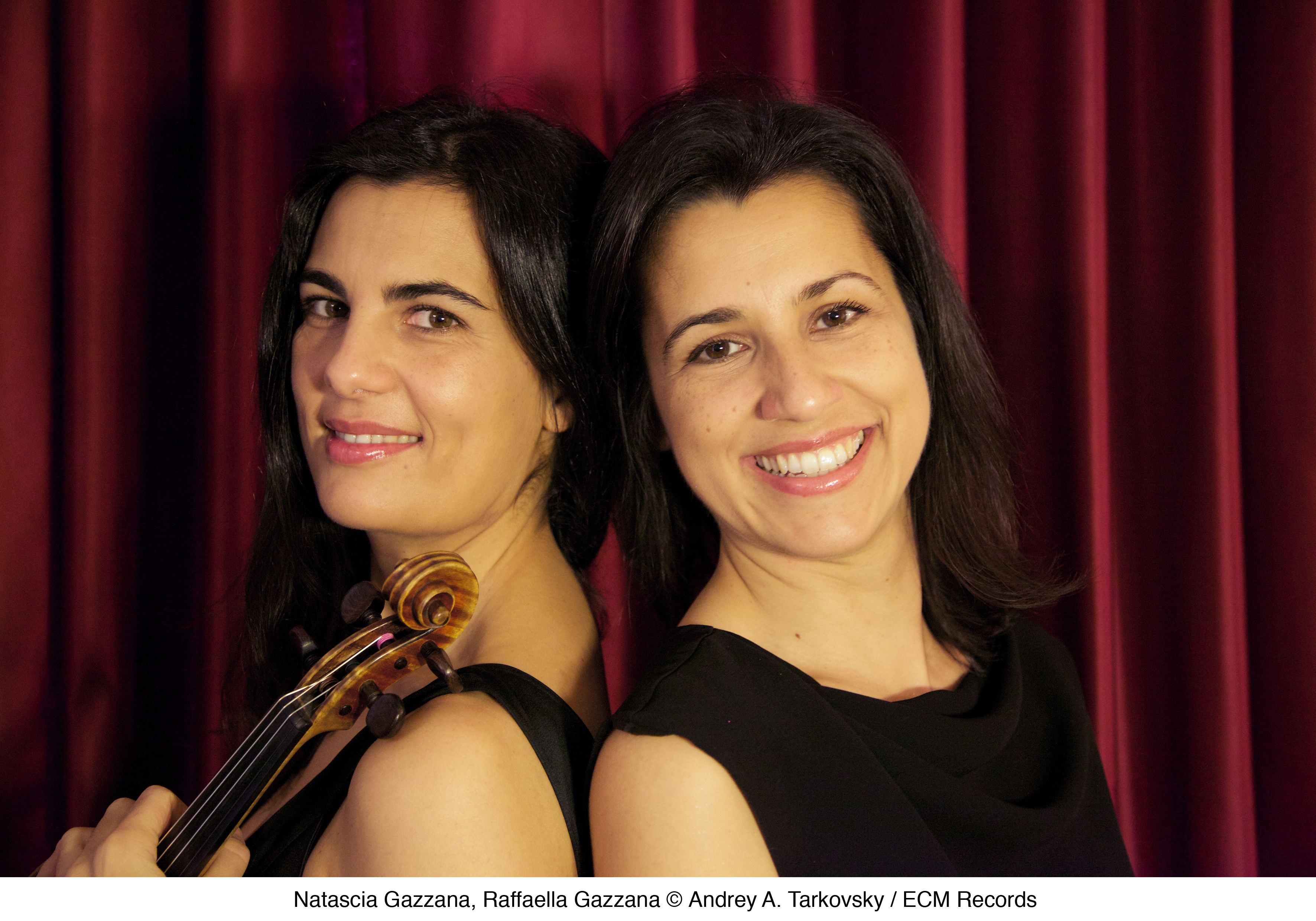
In 2011, pianist Raffaella Gazzana and violinist Natascia Gazzana, better known as Duo Gazzana, made a quiet, if colorful, splash with Five Pieces, their first record for ECM’s New Series imprint. Navigating a recital comprised of works by Takemitsu, Hindemith, Janáček, and Silvestrov, the Gazzana sisters, in close collaboration with producer Manfred Eicher, demonstrated an acute sense of programming, technique, and integrity. Despite the title of their debut (named for the Silvestrov composition of the same name), which contained only four pieces, Silvestrov’s Hommage à J.S.B. (2009) comprises the heart of this truly pentagonal sequel. The Ukrainian composer offers three short movements: two Andantinos and one Andante, each the band of a deeper and more nuanced spectrum. The end effect is one of suspension. Although originally written for Gidon Kremer, the Hommage is uniquely informed here by the Gazzanas’ attention to detail. “The music of Silvestrov is not difficult in terms of notes,” Raffaella tells me in a recent interview, “but it’s so particular. In a way, you have to isolate yourself from the noise of life. He’s a composer who belongs to another time, bringing these beautiful melodies, as if from the past.” Indeed, as Wolfgang Schreiber observes in his album notes, the Gazzanas share in the spirit of the music they have selected, which like them finds newness in the old. Their unwavering commitment to urtexts only serves to emphasize what is unwritten in them, thus coaxing out hidden messages and spirits.

Gazzana Portrait

Radiating outward from the Silvestrovian center are two richer, denser works: Poulenc’s Sonate pour violon et piano (1942/43, rev. 1949) and William Walton’s Toccata for violin and piano (1922/23). Dedicated to the memory of Federico García Lorca, the Poulenc sonata is, in Raffaella’s estimation, a product of its time, as is clear in the first in third movements, designated “Allegro con fuoco” and “Presto tragico,” respectively. These are extroverted, almost flailing. Stravinsky looms large in the final, especially, but there are also—unwitting, perhaps—nods to the late Romantics and Ravel as the piece nears its enigmatic coda. “After expressing the suffering of the war,” Raffaella observes, “Poulenc wanted to finish with this dreamy catharsis. This was his character, shy but also enjoying life. He was, I think, a very elegant man, and in this sonata you can hear that.” Poulenc purists take note: the Gazzanas’ interpretation corrects mistakes left in the original French edition prepared by Max Eschig, which elides key signatures in the last page. After careful study of the facsimile, they believe to have arrived at the definitive version.

Although more obscure, Walton’s Toccata was the subject of Raffaella’s dissertation and is no less possessed of elegance. Nataschia’s opening proclamation stirs the piano’s waters with relish and fortitude, giving way to a virtuosic and starkly exuberant foray, pocked by haunting, probing depressions. Although written in the composer’s 20s, it smacks of maturity and daring-do. Raffaella: “I am always impressed by the piece’s improvisational elements. At the time he was working on it, Walton was planning a jazz suite for two pianos and orchestra. Although it never panned out, you can hear this influence throughout the Toccata. The beginning contains no tempo or bar divisions. You just have to go with it.”

Two further works draw the album’s outer circle. First is Schnittke’s Suite in the Old Style. Originally composed for two 1965 films (Adventures of a Dentist and Sport, Sport, Sport) by director Elem Klimov, Schnittke arranged these five selections for violin and piano in 1972. Its moods are crisp and compelling. Especially moving are the Minuet and the spirited Fugue. Only the final movement, marked “Pantomime,” has the surreal touches one might expect of the composer. Still, it is playful and fragile, ending with a mystery.

Tartiniana seconda (1956), by the 20th-century Italian composer Luigi Dallapiccola, concludes. Referencing Tartini, this divertimento spreads a beautiful carpet across its four Baroque-inspired movements. “This piece enjoys great popularity in Europe,” Raffaella explains, “especially in Italy. It makes exclusive use of canons, pastorale, and variations: all forms that belong to the past.” At times ponderous and lyrical, at others swirling with ornament and invention, it culminates with a set of emphatic statements from both musicians. Of all the pieces on the album, it is the most architectural. This is no coincidence: “It helps to have the score in hand when listening, because it’s as much for the ears as it is for the eyes. In the opening Pastorale, for instance the piano plays the violin’s lines exactly, but staggered and in reverse, while in the second Variation, it plays the exact reverse, bar for bar.” The Tartiniana also gives contrast to the freer forms of Walton, lending finality and flourish to this exquisite sophomore program.

Coinciding with the release of this disc was the Duo Gazzana’s North American concert premiere when, on May 2, they performed as part of 2014’s Look & Listen Festival in New York City. For this performance, they chose the Silvestrov and Poulenc pieces from the new album, and enchanted the audience with their grace, sensitivity, and mutual resonance. Hearing this music live brought home a vital point in relation to the album’s core philosophy. Because the nature of past and future is immaterial, the only true reality of this music can be the here and now of performance and listening. On this point, Raffaella has the final word: “Chamber music has ever been one of the most beautiful expressions of liberation, one that tests the ability of performers to listen to one another in dialogue. These peculiarities attract us and in our interpretations we try to emphasize them. All the study we put into these pieces is just the grammar. But grammar must be spoken to come to life. Nowadays, it’s easy to speak without caring what other people think. Chamber music ensures we never fall into that trap. Sure, there are good performers, but it’s obvious when they’re performing only for themselves. Chamber music is, quite simply, enjoyable. It’s so beautiful to share it with such a caring musical partner, and with the listener in turn. When you do something out of love, you transmit this love to others. And people can hear this.”

(See this article as it originally appeared for Sequenza 21. To hear samples of this album, click here.)

Robert Schumann: Geistervariationen – Schiff (ECM New Series 2122/23)

Geistervariationen

Robert Schumann
Geistervariationen

András Schiff piano
Recorded June 2010, Historischer Reitstadel, Neumarkt
Engineer: Stephan Schellmann
Produced by Manfred Eicher

Pianist András Schiff, best known for his surveys of Bach and Beethoven, combines the former’s austerity and the latter’s dynamism in this, his second ECM reckoning with Robert Schumann. More so than the first, the present program tracks a composer stepping out from Beethoven’s shadow and into a light very much his own. As any Schumann interpreter perhaps must, Schiff brings awareness of attendant shadows as well. These he evokes through a balance of restraint and transparency.

To be sure, the Papillons (1829-31) one of Schumann’s earliest piano works (it is his Opus 2), benefits from just such a well-rounded approach. This collection of 12 innovative vignettes linked in brazen montage is as colorful as it is compact. Indeed, each section would feel like the beginning of a longer excursion were it not already so elaborate. The C-sharp Waltz and Waltz in D are notably filigreed in this manner, while the playful chromatism of the Polonaise in D leaves a tannin-rich aftertaste.

The first sonata, his Opus 11, follows. Written in 1835 and dedicated to his future wife, Clara, it is an effusive and utterly heartfelt work, one from which Clara would draw themes for her own compositions. From the introduction alone, it’s clear that Schiff has hit upon the right formula. The modest Aria that follows is, at just over three minutes, a lovely foil to its 13-minute predecessor, and all the more enchanting for it. Even in his propriety, Schiff teases out an epic flow from its underlying fortitude. The final two movements pulse with theatricality. The last is engaging from the first, not least for Schiff’s handling of its quieter passages, the sonata’s most delicate. Through both jagged stitching and smoother threadings of the needle, a brocade of melody and atmosphere emerges that works lyrically, but with a certain sense of muscle that is distinctly Schumann.

The Kinderszenen or “Scenes from Childhood” (1838) are his most widely performed pieces and represent another innovation: children’s music for adults. Among the first of their kind, they have inspired many imitations but none quite so charming and musically direct. Moments of quietude and solitude increase among those of play as they drift onto darker, more dreamlike avenues, culminating in the grimly apportioned “Der Dichter spricht” (The Poet Speaks). Whether opaque or translucent, all 13 are suffused with a spirit that in Schiff’s hands feels as fresh as the ink drying on the original score.

On the subject of original scores, the Fantasy in C of 1836 will be either the decisive or divisive hinge, depending on your taste. Schiff works vitally through the first two movements, his left hand working overtime in support of the flowering right. Furthermore, he brings out that special stream of consciousness that pervades even the softest moments of Schumann’s writing at its most mature. In a brief liner note, Schiff delights in his possession of a first-version manuscript of the third and final movement. In this iteration, Schumann revives the final theme of the first movement—a strategy later scrapped for its pedantry. For the tried-and-true, Schiff tacks on the final, published version at the album’s end, leaving those used to the latter searching for it there. Perhaps a more useful strategy would have been to switch the two, but this is one pianist’s vision, and to it we are invited to abide. Whatever your preference, an inherent boldness perseveres.

The Waldszenen (1848-49) or “Forest Scenes” are similar in title to the Kinderszenen, but reflect a starkly different spirit. Schiff seems to draw energy directly from nature and experiences of observation for a reading that is understated yet lyrical. He brings enough insight to inspire but not to overwhelm, allowing the solace of each to occupy its respective niche with plenty of room to slumber.

Last on the program proper is Geistervariationen, or “Ghost Variations.” These pieces of 1854 are rarely performed, much less with such veracity, and comprise Schumann’s final piano work. Brokering some urgency here and there, the main theme and its five variations bespeak a tender privacy that is self-assured and wise, despite being written in the wake of a failed suicide attempt and soon before admission into an asylum. And yet, here it stands, calm and collected, in need of a wider circle of interpreters to make its visions known.

On the whole, this has the makings of a benchmark record, although some listeners will want to pair it with other classics in the field. These Kinderszenen, for instance, may not replace Horowitz’s beloved traversal of the same for CBS, but are a close second and well worth as much consideration as Schiff has put into them. Neither will Richter’s take on the C-Major Fantasy likely forfeit its place at the top for some (or any) time to come. Nevertheless, what we have here is another example of a profound relationship between artist and label, triangulating with a composer whose piano music glistens anew, as if of its own desire to be heard.

(To hear samples of Geistervariationen, click here.)

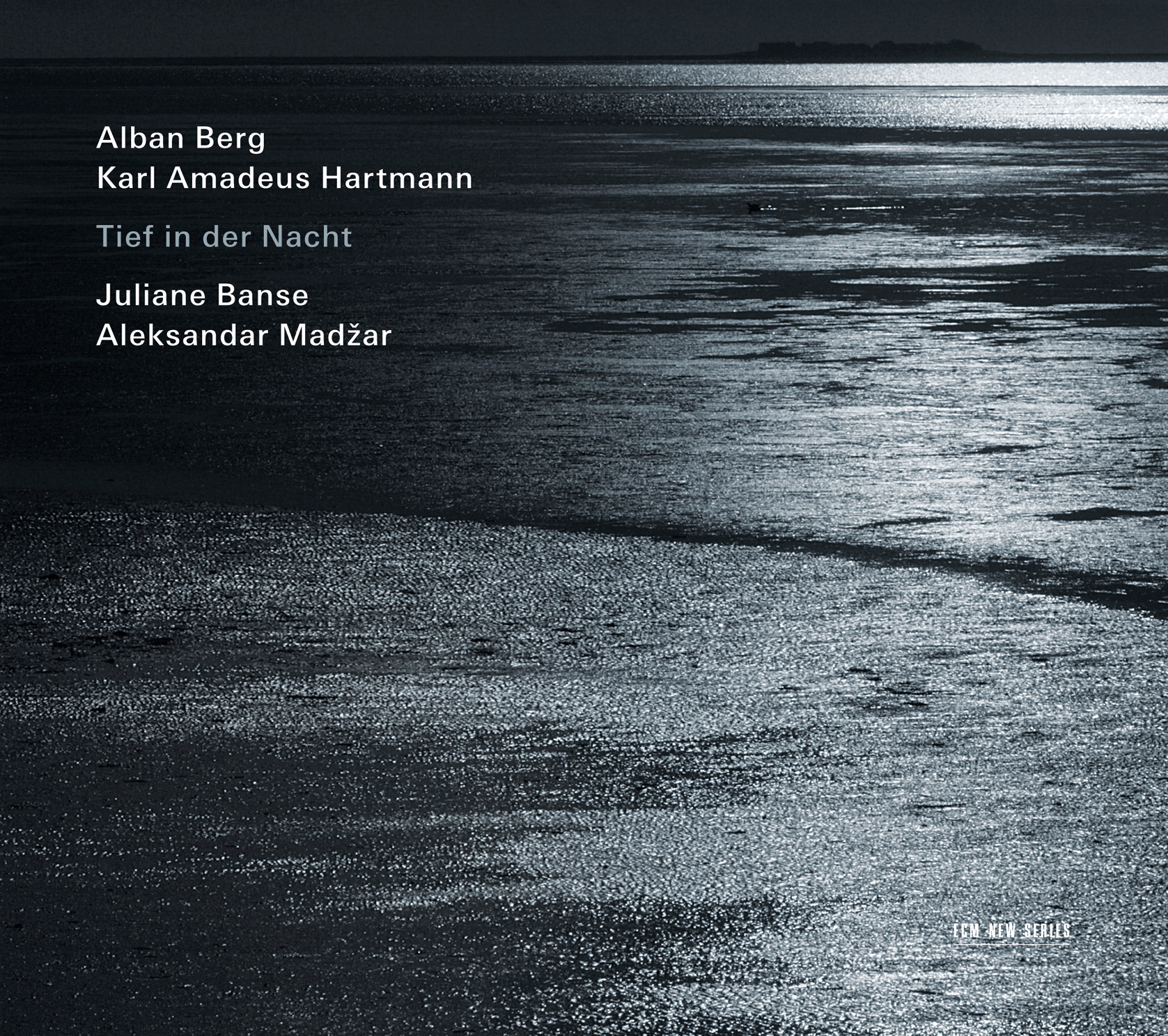
Alban Berg/Karl Amadeus Hartmann: Tief in der Nacht (ECM New Series 2153)

Tief in der Nacht

Alban Berg
Karl Amadeus Hartmann
Tief in der Nacht

Juliane Banse soprano
Aleksandar Madžar piano
Recorded March 2009, Historischer Reitstadel, Neumarkt
Engineer: Peter Laenger
Produced by Manfred Eicher

A grey man goes through the silent wood
singing a dismal song.
The birds at once fall silent.
The spruces tower so mute and sultry
with the heavy turmoil of their branches.
A sound rumbles in distant depths.
–Johannes Schlaf, “Rain”

When discussing Alban Berg, it’s almost impossible not to include Arnold Schoenberg, a mentor of whom he was the brightest protégé. While Berg grew into his own as a defining composer of the early 20th century, in scholarship and on record his early songs were relatively ignored at the time of this release. More than a transition stage, these songs embody key qualities of the composer’s output to come. The hand of Schoenberg is felt less in the music, which still has a foot in the waning Romantic era, and more in the assembly, as the Sieben frühe Lieder (1905–1908) that open the program were extracted from a set of thirty written under his teacher’s careful scrutiny. Setting the poetry of Carl Hauptmann, Nikolaus Lenau, Theodor Storm, Rainer Maria Rilke, Johannes Schlaf, Otto Erich Hartleben, and Paul Hohenberg, these seven songs are stippled with shadows and patches of forest, and the apparent ease with which soprano Juliane Banse and pianist Aleksandar Madžar weave through them enriches the listening experience. With titles like “Nacht” (Night) and “Traumgekrönt” (Crowned in Dreams), one can already sense the nocturnal imagery before a single word is sung. “You came,” goes a verse of the latter, “and softly as in a fairy tale the night resounded.” Thus the lyrics lead us into a world of fantasy. Whether carried on the back of “Die Nachtigall” (The Nightingale) or brightened in the final clip of “Sommertage” (Summer Days), each word turns charcoal to ash and ash to flame.

Rilke, Schlaf, and Storm further populate the Jugendlieder (1904-08) of the same period, along with poetry by Johann Wolfgang von Goethe, Carl Busse, and Peter Altenberg. Now the verses as well as the music are more colorful and, in light of Berg’s compact developments, genuinely impressionistic. From melancholic lullabies—“I mourn lost happiness,” sings Banse in “Erster Verlust” (First Loss)—to the Mozartian patterning of “Hoffnung” (Hope), composer and musicians draw from a nuanced palette of evocative pigments. Schlaf’s “Regen” (Rain) makes for a beautiful highlight, finding in the music a life only implied in the text. All of this culminates in “Mignon,” which expresses a longing for some idyllic land that, while beyond the reach of flesh, blooms across the landscape of art.

Two settings of the same poem—“Schließe mir die Augen beide” (Close Both My Eyes) by Storm—complete the Berg selections. The first, written in 1907, is already a masterful explosion and re-piecing of utterance, while the 1925 version works almost scientifically to balance freedom and precision. What was once a telescope now becomes a microscope.

Banse is extraordinary, not only for her diction but also for the steadiness of her footing as she journeys across Madžar’s constantly shifting topography. Berg is always felt, and Schoenberg over his shoulder, assuring that every change happens in mutual understanding, so that densities and clarities alike always share a strand.

One of those strands surely leads to Karl Amadeus Hartmann’s Lamento (1955), a work that in its original 1936/37 form bore dedication to Berg. Like Hartmann, it survived the war—during which time he studied with another Schoenberg protégé, Anton Webern, in Vienna—with not a few dark clouds in its memory. For this, Hartmann sets three poems of 17th-century Silesian dramatist Andreas Gryphius. One may not feel this as a trilogy, but as a continuous gradation of dusk to dawn. “Elend” (Misery) compares earthly and heavenly troops, and engages the wonder of God’s non-action. Although the light flowers in Banse’s delivery, the geometric diffusion that follows casts a pessimistic shadow to be obliterated in the central song, “An Meine Mutter” (To My Mother). This eulogistic prayer acknowledges the potency of the divine in the realm beyond, a realm in which grace leaks out through Banse’s powerful highs. In the final “Friede” (Peace), she emphasizes the core message: “We once were dead; now peace a life is giving.” The pianism throughout is exquisitely written and executed, and leaves us, like the album as a whole, to reckon with the authority of silence.

Alexander Lonquich: Robert Schumann/Heinz Holliger (ECM New Series 2104)

Schumann:Holliger

Alexander Lonquich
Schumann/Holliger

Alexander Lonquich piano
Recorded November 2008 at Auditorio Radio Svizzera, Lugano
Engineer: Stephan Schellmann
Produced by Manfred Eicher

Alexander Lonquich follows up Plainte Calme, an all-French program that introduced ECM listeners to this erudite German pianist, with a pairing from which New Series aficionados are sure to derive much pleasure. Composers Robert Schumann and Heinz Holliger may have intersected more recently on Aschenmusik, but here’s where it all began.

Schumann’s 1838 Kreisleriana and Holliger’s 1999 Partita share much in common. Both bear dedications to pianists (Schumann’s to Frédéric Chopin and Holliger’s to András Schiff), both are overflowing with ideas, and both immerse themselves in narrative to the last measure. Lonquich traverses the original 1838 version of the Kreisleriana, which, according to the composer, was “heavily revised,” many of its intricacies elided or otherwise obscured in its now-standard 1850 print. Lonquich notes an ego shift from the pianistic Schumann to the symphonic Schumann, but argues for the psychic exactitude of the earlier version, less glossed by a man rightly concerned with his public image. Indeed, the later changes “sacrificed many subtleties to the need for simplicity and clarity,” making the Kreisleriana, in modern parlance, more user-friendly.

Schumann’s wildly popular performance piece presents to us, as Hans-Klaus Jungheinrich notes in the CD booklet, “the dark, nocturnal sides of romanticism: wild dreams, phantasms, obsession, insanity.” Taking E. T. A. Hoffmann’s The Life and Opinions of the Tomcat Murr and its protagonist, Johannes Kreisler, as inspiration (the novel shares another ECM connection with György Kurtág, whose Hommage à R. Sch. also makes reference), the music reveals a growing dissatisfaction with what Schumann saw as the piano’s limitations. Not that we have reason to agree. The sweeping cascades that open the collection make for some invigorating listening. From cautious steps to headlong rush, we are led up spiral staircases and over archways, following Lonquich’s expert navigations of quietude interspersed with flushes of activity. With such a robust palette at our scrutiny, there’s plenty to pique the interest of repeat customers—whether in the reflective fourth movement (every bit as enchanting as Beethoven’s Moonlight Sonata) or in the sportive seventh—all the way to the curlicue finish.

Schumann has long occupied the “true center” of Holliger’s music thoughts, and in the Partita it’s easy to see why. Jungheinrich argues for a romantic affinity in Holliger’s penchant for the “fractured and insecure,” a characterization that in this instance takes sometimes wistful, sometimes complex form. If the title seems to cast its net over Schumann into Bach, it’s only because it seeks a structural traction in the face of romanticism’s self-deprecating infrastructures. Shuffled into the usual Prelude, Fugue, and Chaconne—all of which reflect Holliger’s prodigious ability to twist templates into deeply personal effects—are a few brilliant additions. Most notable are two Intermezzi marked “Sphynxen für Sch.” These achieve the cavernous atmosphere of their namesake by strumming inside the piano, sometimes in the barest whisper of skin on string, amid a pollination of microscopic adjustments. Another clever insertion is the “Csárdás obstiné,” a strangely beguiling vignette of interlocking helixes that seems a nod to Franz Liszt: an intriguing choice, given the complicated nature of Liszt’s relationship with Schumann. Such strategies, however, are to be expected of Holliger, a composer who has always indulged in a wry sense of patterning.

In addition to being a unique recital performed by its ideal interpreter, this is one of the finest pianos ECM has ever recorded. The instrument simply shines at Lonquich’s fingertips, as if eager to feast on every note until only resonant midden remains.

Toshio Hosokawa: Landscapes (ECM New Series 2095)

Landscapes

Toshio Hosokawa
Landscapes

Mayumi Miyata shō
Münchener Kammerorchester
Alexander Liebreich conductor
Recorded October 2009, Himmelfahrtskirche, München
Engineer: Peter Laenger
Produced by Manfred Eicher

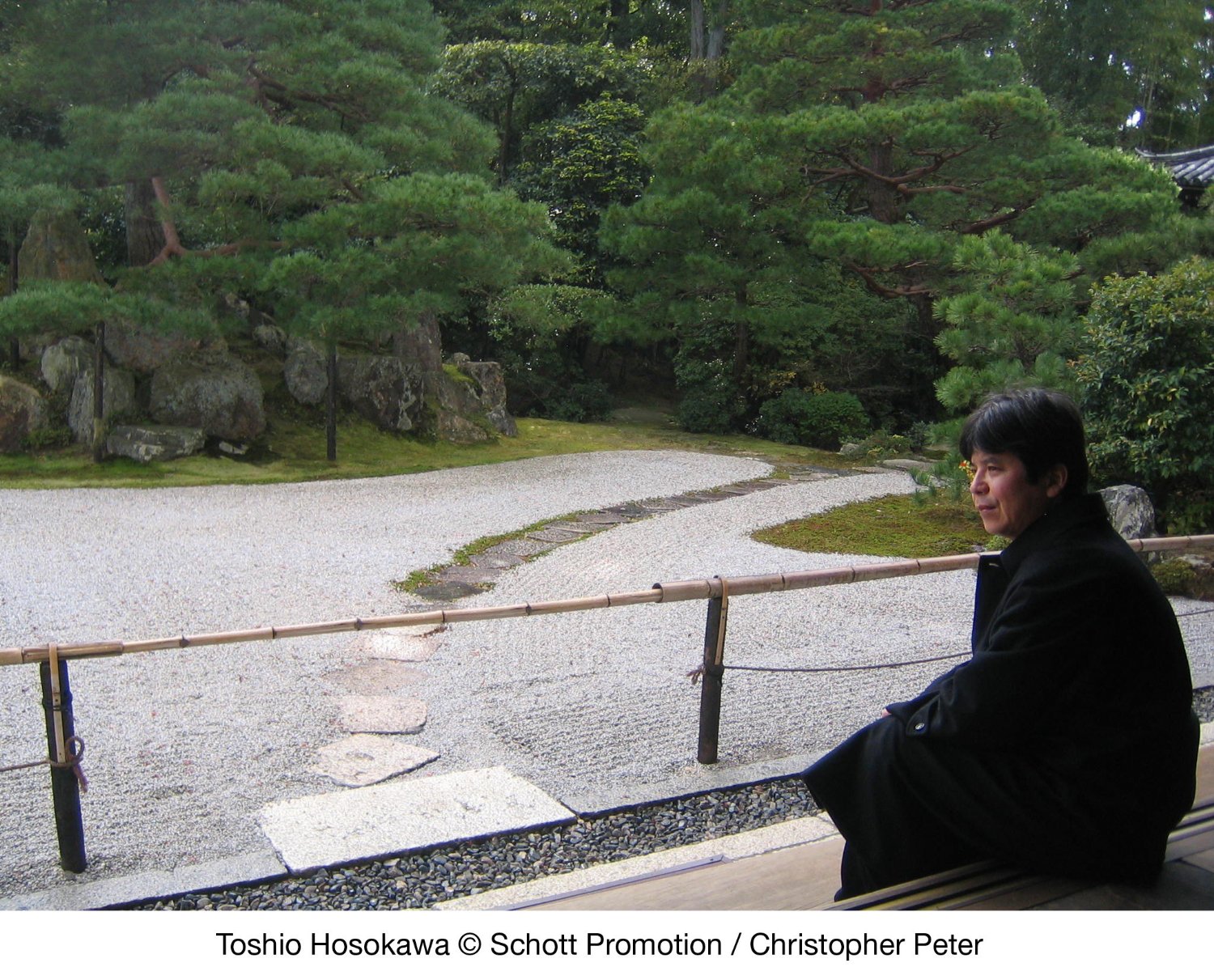
Toshio Hosokawa, born 1955 in Hiroshima, is a fisher of multiple ponds. On the one hand, he carries the torch of European modernism, having studied in Germany under Isang Yun and Klaus Huber. On the other, he professes a deep affinity for traditional Japanese music and Zen Buddhism.

Hosokawa

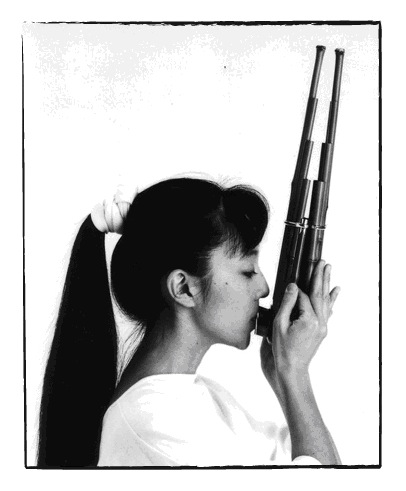
Landscapes is ECM’s only disc dedicated to the composer, who in three of the album’s four pieces employs the shō, or Japanese mouth organ. Here it is played by Mayumi Miyata. A pioneer in introducing the shō as a solo instrument in contemporary classical music, she plays a “concert” shō with a pitch range broader than its standard counterpart. It requires expert control of the lungs, including circular breathing and steady changes in dynamic intensity. In Miyata’s hands it sings like the very phoenix it was originally intended to mimic.

Miyata
Mayumi Miyata

As for Hosokawa’s music, it all too easily falls into an interpretive trap like so many characterizations of Japan in general, which tend to paint the culture as a uniquely enigmatic blend of the ancient and the modern. Yet such an image fails to acknowledge the immediacy of its creative arts, and in particular of Hosokawa’s sound-world, which for all intents and purposes seeks not a bridging of spaces and eras but a reckoning of their aesthetic and (sometimes) political intersections. In the latter vein, he has created massive works in memory of the victims of Hiroshima and the tragic tsunami/earthquake of 3.11. In the former we have this program of meticulous dreamscapes to whet our appetite for beauty. It is, however, a tainted sort of beauty, one not destined for the painter’s canvas but rather for the videographer’s resignation. In his liner notes, Paul Griffiths likens Hosokawa’s constructions to the amorphousness of clouds, and certainly we can feel that stretch of variation, play of sun and spectrum, and stormy grays manifesting throughout the program.

Landscape V, originally composed for string quartet in 1993 and later expanded to the current version for shō and orchestra, unfurls a veil as thin as an insect’s wing that conforms itself to the shō’s summery spirals. One might not expect breath through bamboo to mesh so well with the feel of horsehair drawn across strings, but in Hosokawa’s renderings at least they become harmony incarnate, the shō illuminating the flow of air through an orchestra’s sound holes. In this pairing one may hear voices, shifts of wind, the flow of water, the meeting of stones, and even the light of moon taking sonic shape. The music is, at the same time, crystal clear. It wears no pretension, puts on no airs. It is, rather, the full breadth of its titular landscape pulled through a wormhole of consistency, so that even the more explosive moments take form not as catharses but as opportunities for deeper contemplation.

The Ceremonial Dance (2000) that follows is for string orchestra only, but loses no texture in the shō’s elision. Its heart would seem to lie in the comportment of gagaku (traditional Japanese court music), which turns illusions of a floating world into hyper-articulate bodies. That being said, the “dance” is implied through effect rather than movement, hiding in the absent drum. There is a liminal quality to this piece, performing an indeterminable ritual of which the score is but a simulacrum.

Sakura (2008), for shō solo, acts as a prelude to a choral setting of Japan’s most ubiquitous folk song. Bearing dedication to the former music director of the Westdeutscher Rundfunk, Otto Tomek (who also commissioned the setting), it is intimate and drifting, more postlude than prelude, the afterimage of a fallen blossom’s path toward water. As luminescent as its chords are, they are also dappled by the shadows of an unbroken gaze.

Last is Cloud and Light (2008), which pairs the shō with a full orchestra, including some light yet impactful percussion. Like its predecessors, it never overwhelms with its style, but unpacks itself in real time with self-awareness and tactility. It enacts a sharing of spirit between water and air, between the shapeless and the shaping. Large brushstrokes of brass pull their hairs through ink, soaking up as much of the universe as they can before falling along with the rain into the pond where Hosokawa’s bob and lure continue their meditation, content in knowing that no fish need ever bite to bring meaning to their dangle.

(To hear samples of Landscapes, click here.)

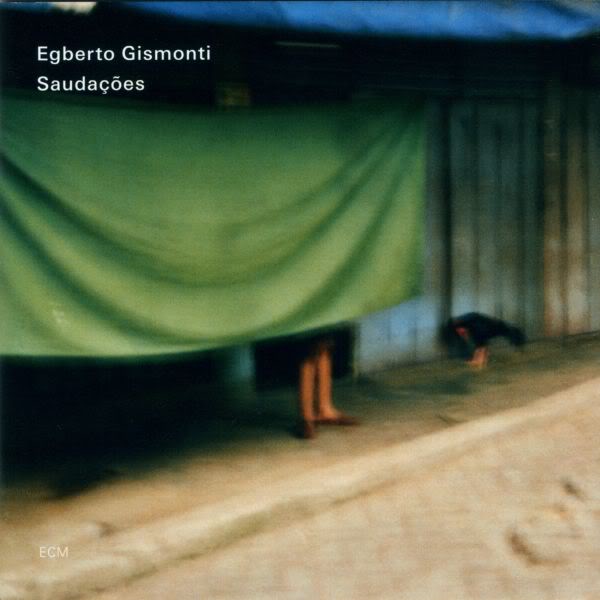
Egberto Gismonti: Saudações (ECM 2082/83)

Saudações

Egberto Gismonti
Saudações

Camerata Romeu
Zenaida Romeu conductor
Alexandre Gismonti guitar
Egberto Gismonti guitar
“Sertões Veredas”
Recorded August 2006, Teatro Amadeo Roldán, Havana
Engineer: Jerzy Belc
Assistant:  Argeo Roque Bernabeu
“Duetos De Violões”
Recorded April and May 2007, Mega Studio and Cecília Meireles Hall, Rio de Janeiro
Engineer: Márcio Gama
Assistant: Guthemberg Pereira
Executive producer: Manfred Eicher

Saudações, of which the title means “salutations,” marks the welcome end of a 12-year ECM hiatus for Egberto Gismonti since 1997’s Meeting Point. Whereas on that record he explored his conservatory training in a set of lively orchestral compositions with Gismonti as piano soloist, the first of this two-disc follow-up consists of Sertões Veredas, a suite in seven parts for strings alone, while the second disc features guitar duets and solos with the composer’s son Alexandre.

Seasoned Gismonti listeners will know what to expect from the program’s latter half. In addition to renditions of classic tunes, including “Lundú,” “Dança Dos Escravos,” and “Zig Zag”—each a bouquet of nimble, sparkling exposition—the duo soars through a veritable résumé of Father Gismonti’s uniquely tender ferocity. From subdued (“Mestiço & Caboclo”) to slipstream (“Dois Violões”), the performances emit a veritable brocade of fire. Alexandre contributes two solos to the program: the gentle, cyclical “Palhaço” (by Egberto) and the original “Chora Antônio.” Alexandre’s animations make them both album must-hears. After a few jagged turns, notably in “Dança,” Egberto ends by his lonesome with the title track, an adroit little bee of a tune that settles in a flower of harmonics.

Gismonti & Son play with freedom of detail, all the while holding fast to an underlying pulse that distinguishes so much of Egberto’s writing. Concentrated as they are, any one of these pieces might expand to an album’s length without loss of potency. In a sense, this is the feeling behind the orchestral suite that begins the album. As always, Gismonti paints a world proper, a landscape of vivid memories, childhood impressions, and mature reflections—all tied together by a love for his homeland and its peoples. Subtitled as a “Tribute to Miscegenation” (Tributo à miscigenação) and played with vivaciousness by Cuba’s Camerata Romeu, it is a heartfelt tribute to—and preservation of—times and places clearly dear to him, all intermingling in a new continent.

The cornucopia of influences from which he has drawn is already apparent in the first movement, of which the spirit remains very much rooted in the composer’s guitaristic panache (even his pianism, heard elsewhere, turns the keyboard into an enormous, fretted instrument). More than the instrument’s mechanics, its immediate tactility carries over into the scores, which sound like magnified string quartets. Gismonti’s attention to the orchestra’s lower end is especially robust, the double basses providing pulse, melodic undertow, and soil for botanical riches above ground. The occasional cello line acts as a link between dynamic extremes, leaving the violins to pollinate, as they will. Each movement is a suite of its own, moving from high to low, slow to fast, loud to soft in a heartbeat. The most obvious references are to Stravinsky (Part IV), John Adams’s Shaker Loops (Part V), and even the romantic touch of a Mendelssohn (Part VI), leaving the final part, an ode to folk traditions and dances, to bask in the resolution of camaraderie.

Speaking of attention, Saudações is recorded with just the right balance of intimacy and mountainous space. Peak slope into a valley of riches, each more scintillating than the last. A treasure trove for Gismonti fans. Even more so for newcomers. Either way: leave your shoes at the perimeter and step into the circle as you are.