John Holloway Ensemble: Henry Purcell – Fantazias (ECM New Series 2249)

John Holloway Ensemble
Henry Purcell: Fantazias

John Holloway violin
Monika Beer viola
Renate Steinmann viola
Martin Zeller violoncello
Recorded March 2015 at Radiostudio DRS, Zürich
Engineer: Stephan Schellmann
Cover photo: Thomas Wunsch
Produced by Manfred Eicher
An ECM/SRF2 Kultur coproduction
Executive producer (SRF): Roland Wächter
Release date: September 22, 2023

Henry Purcell (1659-1695), best known for his operas, was no less a formidable composer of instrumental music. His Fantazias are the pinnacle of the form, rich in their intermingling of counterpoint and polyphony. By the time Purcell put these to paper in 1680, the fantasia was over a century old. Despite being honed into a science by such estimable predecessors as William Byrd, William Lawes, John Jenkins, and Matthew Locke (whom Purcell replaced as “composer in ordinary with fee for the violin to his Majesty,” Charles II), it had fallen out of favor. Violinist John Holloway calls the present collection “a personal farewell to a kind of music, which in Purcell’s own chamber music would soon be superseded by sonatas.”

Leading an ensemble that includes violists Monika Beer and Renate Steinmann and cellist Martin Zeller, Holloway regards these 12 gems through a jeweler’s glass, cherishing every occlusion as a testament to its crafting through time. We encounter them here out of sequence, beginning with the river’s flow of No. 10. The sound is both creamy and metallic, sometimes allowing dreams to peek above the surface while at others pushing them into the mysteries of the current. Like No. 4, it affords a special sort of grace, pivoting from a seamless introduction into an intricate unfolding without changing skins. The ensemble matches with a palette that is equal parts shimmer and shadow.

Indeed, while these strings owe much of their grace to the composing, one cannot discount the players’ lifeblood. Like actors in a stage play, they embody these “characters” from within. In No. 6, for instance, Holloway’s violin laments like an agent of mourning while the others cross-hatch that inward focus with extroverted streaks of illumination. This dynamic reverses as the urgency heightens, and Holloway grabs hold of the future while the lower strings keep vigil to avoid forgetting the past. No. 9 is its companion in spirit: Even when it dances, it casts hedonism into the fire. Nos. 7 and 8 are equally wondrous in their contrasts, and their slips into dissonance reveal an improvisatory heritage, making them feel spontaneous, raw, and passionate.

In his liner notes, Holloway says, regarding the English composer’s handling of the form, that Johann Sebastian Bach “would certainly have acknowledged it as equal to his finest achievements in this art.” This is perhaps nowhere more obvious than in No. 5, the knotwork of which immediately suggests The Art of Fugue. Sitting on its right hand and left are Nos. 11 and 12. As translucent as they are viscous, they constitute a trinity of resolution that begs for more yet offers salvation only through silence.

While the above pieces are in four parts, Nos. 1-3 are in three. More intimate in form but no less expansive in scope, each is a dip into the heart of a creator whose font ran dry too soon.

Robert Levin: Mozart – The PIano Sonatas (ECM New Series 2710-16)

Robert Levin
Wolfgang Amadeus Mozart: The Piano Sonatas

Robert Levin fortepiano
Recorded February 2017 and Feburary 2018
Großer Saal, Salzburg Mozarteum Foundation
Engineer: Markus Heiland
Cover: Fidel Sclavo
Produced by Manfred Eicher
Release date: September 16, 2022

Wolfgang Amadeus Mozart (1756-1791) is as much an enigma as an indelible emblem of what it means to be “classical.” In this seven-disc boxed set, a monumental achievement dedicated to one whose own achievements were nothing less than monumental, pianist Robert Levin offers a conspectus of the piano sonatas on the very fortepiano Mozart played from 1785 until his death and on which he composed The Magic Flute and his Requiem. Built by Anton Gabriel Walter in 1782, it speaks as one traveling out of time with a message of space.

Like much of Mozart’s writing, the music in these sonatas resulted from improvisations he later noted from memory—a spirit that Levin captures with charming honesty. The pianist’s historically informed approach heightens this effect, seeking to, in his own words, “revive a documented tradition” of embellishing repeats that goes back to C.P.E. Bach, whom Mozart greatly admired. Despite a fixed tripartite architecture across the board, there is great variation in mood, scope, and difficulty.

While Mozart is often cast as a poster child of vivaciousness, each sonata is best savored for its rich, sweet center. In these slower movements, genius bobs above and below the surface of a mind whose depths we can only begin to comprehend. We get a hint of this already in the Sonata No. 1 in C major, of which the Andante, nestled in neo-Baroque surroundings, is the music box of a childhood we’ve long forgotten.

Should that metaphor hint at immaturity, let such an illusion be shattered by a vision of the prodigy it manifests and which steps boldly into the foreground in the Sonata No. 2 in F major, cradling an Adagio that is the sonic equivalent of a precious stone. Even the Sonata No. 3 in B-flat major, with its lockstep opener and one-two punch of a conclusion, cannot steal the quiet thunder of the central movement between them. Such controlled ferocity must have been obvious to the composer himself when beginning his Piano Sonata No. 4 in E-flat major with an Adagio, pointing to the influence of Joseph Haydn, whose own sonatas he had then recently discovered.

Over the next four sonatas, expositions of stateliness and pastoralism bow to the dynamic brilliance of the Sonata No. 6. This D-major triptych is a stage drama in concentrated form, culminating in the final theme and variations. Spanning 15 minutes, they comprise the collection’s longest stretch, suggesting an orchestral sensibility.

This brings us to the pinnacle of Mozart’s engagement with the form: the Sonata No. 9 in A minor. Written in 1778, soon after the death of his mother, Anna Maria, its first movement sits on the throne of the collection. Morphing from extroversion to introversion and back again, its changes nourish Levin’s insights as a performer. The Andante here is the most holistic. Bursting into moments of passion but always returning to baseline, it sets up the concluding Presto and leaves us where we started: in wondrous anticipation. Along with its younger sibling, the Sonata No. 10 in C major, this is the form perfected.

Even “greatest hits,” including the Sonata No. 11 in A major, reemerge as hidden gems. The universally known Alla Turca lends itself to listening without prejudice, the familiar becoming new under Levin’s fingertips. Whether in the famous Allegretto grazioso of the Sonata No. 13 in B-flat major or the opening of the Sonata No. 16 in C major, Levin goes straight to the heart of these pieces so that we can feel them on their terms again.

The Adagio of the Sonata No. 12 in F major is a revelation, as is the Fantasia in C minor. Both soar in the present recording. The Sonata No. 18 in D major is among the shortest of the set, nevertheless a depth charge in its own right. The closing Allegretto is especially savory, and Levin handles it as an organic farmer would his finest crop.

Sprinkled throughout are unfinished sonata fragments newly completed by Levin and informed by his scholarly and creative approach to idiom. The sonata movement in C major is a pluralistic wonder. Another in B-flat major reveals a shimmering and ambitious architecture, while the last in G minor proceeds boldly from impressionism to realism. All three are a testament to what makes Mozart so comforting—namely, that he always has the destination in mind before his first step hits the ground.

What a gift for the seasoned and unseasoned alike, as fresh as the day it leaped forth from the soul of a life that, though cut short, was destined to resonate for all ages.

Paul Giger: ars moriendi (ECM New Series 2756)

Paul Giger
ars moriendi

Paul Giger violin, violino d’amore
Marie-Louise Dähler harpsichord, chest organ
Pudi Lehmann gongs, percussion
Franz Vitzthum alto
Carmina Quartett
Matthias Enderle violin
Susanne Frank violin
Wendy Champney viola
Stephan Goerner violoncello
Recorded January 2015
Chiesa Bianca, Maloja
Engineer: Peter Laenger
Guggisberglied was recorded 2021 in Walenstadt
Cover photo: Jan Kricke
An ECM Production
Release date: August 26, 2022

The music of Paul Giger became a part of my blood when I first encountered 1989’s Chartres. Not since J. S. Bach’s Sonatas and Partitas had I understood just how architecturally robust the violin could be, to say little of 1993’s Schattenwelt, which introduced his violino d’amore, a custom instrument with five main and six sympathetic strings. If those early albums were temples of the spirit, then ars moriendi is a waystation of the flesh—if not vice versa. The ambiguity of such distinctions gives the album a timeless charge. Across the pages of its cavernous imaginings, Giger writes a real-time scripture of inspiration, building on echoes of lives before and since.

His mythologically tinged Guggisberglied, reinterpreting a popular Swiss folk song of unrequited love and the life one gives up in its name, follows a tracking shot of the human form, shifting in varying degrees of inevitability between innocence and decay. Cradled by the hush of flowing water, what we once saw as shadows are now the shadows of shadows. Such subtlety of framing and placement of subjects is possible only in one whose mind works as a camera. Giger looks within from without, the tones of other cultures beating his drum. The violin body is a percussive force, a multitracked orchestra of emotional instruments. Giger also plucks the lower strings in qanun fashion. Currents of molecular awareness caress the riverbank, praying for a peaceful transition into lifelessness.

The latter sentiment connects to the overarching title. “In the late Middle Ages,” explains Giger in a liner note, “a literary genre of devotional books illustrated with woodcuts flourished under the name ‘ars moriendi.’ They gave instructions on how to ‘die well.’ The purpose of this tradition was to attune the soul to the ‘art of dying’ in order to save it for eternity. Music is also an ars moriendi, an exercise in the ‘becoming’ of a note, of ‘being’ in sound and of ‘passing’ into silence—or into an inner reverberation.” These concepts refer to a triptych of Tyrolean painter Giovanni Segantini, subject of the eponymous documentary by Christian Labhart, for which Giger wrote the music. Selections from that soundtrack take up much of the present album, including three stages of Agony. In the company of percussionist Pudi Lehmann (gongs, singing bowls, frame drum, and conch shell), keyboardist Marie-Louise Dähler (harpsichord and chest organ), and the Carmina Quartett, he builds a tower of wonder one layer of stone at a time until time itself is suspended. As ice dissolves into water and further into steam, the violino d’amore opens light to reveal its individual colors, loosening the bonds of the material within the immaterial through the inherent art of refraction. Zäuerli mit Migrationshintergrund is rooted in the Swiss yodel, harking to 1991’s Alpstein, albeit in far subtler clothing.

Transcriptions of Bach carry over from the film, including two for violin and harpsichord (the choral prelude “Ich ruf’ zu dir, Herr Jesu Christ” and the Largo from the Sonata No. 4 in c minor), angling the mirror of our lives into a cell of collective memory where melodies play on repeat. There is also “Erbarme dich” from the St. Matthew Passion, as sung by alto Franz Vitzthum in a breathtaking arrangement for violin, chest organ, and strings. Vitzthum’s beauties culminate in Giger’s Altus solo II, stitching ground to sky with threads of silver. In the harpsichord’s tactile light, a mournful catharsis takes shape. Like M. C. Escher’s Rind, it suggests a face. Whether forming, unraveling, or holding its own against a patchwork of clouds, its eyes remain fixed on memory.

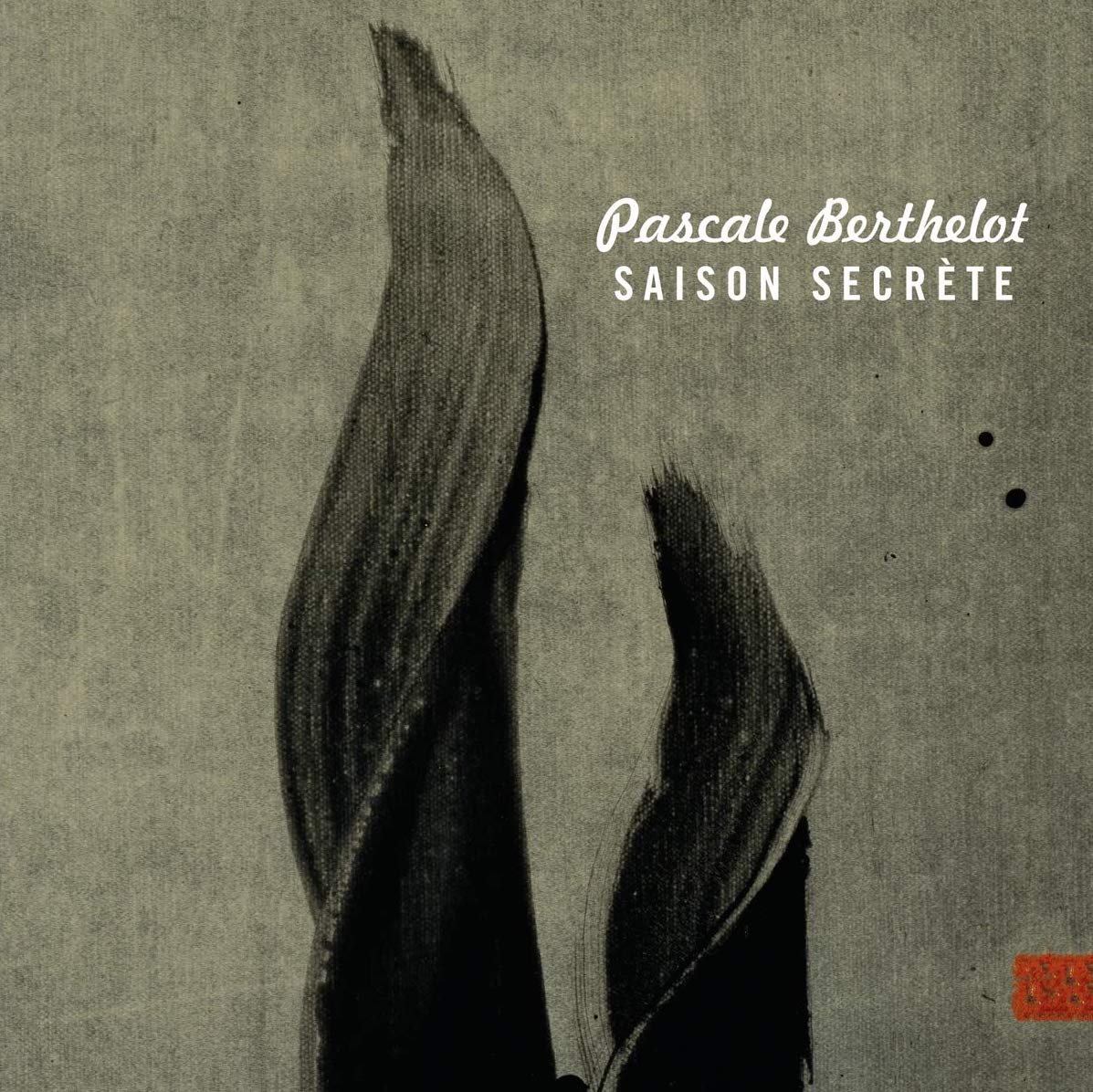
Pascale Berthelot: Saison Sècrete (RJAL 397037)

Pascale Berthelot
Saison Secrète

Pascale Berthelot piano
Recorded November 29, 2018
Studios La Buissonne, Pernes-les-Fontaines
Engineer: Gérard de Haro
Mastered by Nicolas Baillard at La Buissonne Mastering Studio
Steinway grand piano prepared and tuned by Alain Massonneau
Release date: October 26, 2020

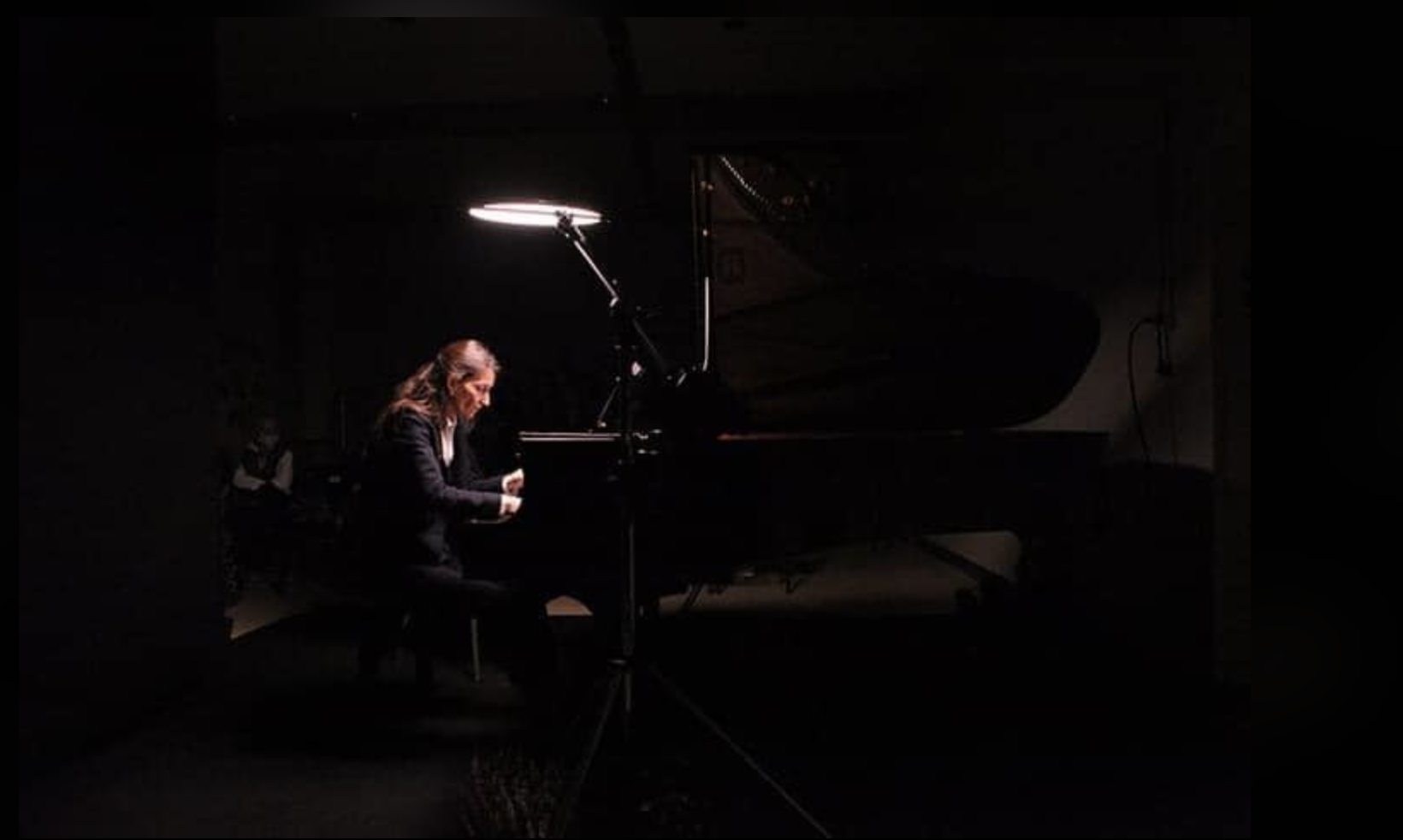
Pianist Pascale Berthelot, a remarkable interpreter of (and favorite among) living composers, becomes one herself—in a sense—throughout this program of five extended improvisations. Liberated at the behest of Gérard de Haro, engineer and head of Studios La Buissonne in France, these unabashedly visual evocations of in-the-moment imaginings constitute one of the most multidimensional piano recordings I’ve heard in years. While its impressionism lays its head as much on the shoulder of Poulenc as Jarrett, it shapes itself one body part at a time without the ultimate need for such comparative garments. Regardless of the lines of reckoning we might connect from Earth to its distant galaxy, it validates the listener’s imagination, and in that spirit I offer mine in return.

“Balance des étoiles” opens the curtains as if in expectation of morning but instead finds the moon masquerading as the sun, rising in mimicry of dawn. The toes become restless for the feel of soil between them, the heart for a lamp to light the way. What began as a reverie ends as a descent into ocean, where prose and poetry comingle until the difference is impossible to make out. In “Ciel s’illune,” the sky and earth are flipped, so that another distinction—that between inhalation and exhalation—is rendered mythological. When we at last get to the center of this genetic spiral, “Nuits, chères” abandons the lie of tranquility for the truth of its unsettling, thus evoking the bliss and deeper love that a relationship conflict can yield. Even in “Chambre sans langage,” in which the intonations of dampened piano strings resound like a knock at the door, spiritual tendencies move beyond prayer into communion. And so, when the dream of “Clair éclat de l’M” lights a ponderous candle with its tongue, it adds one last link to the chain we’ve been extending all along, dragging behind us a memory box whose contents we have already forgotten.

And yet, we mustn’t fool ourselves into thinking that the world Berthelot describes existed before these utterances. Rather, we experience it as she does, unfolding in real time at the touch of flesh and key until something inevitable arises. Thus, the recording itself is a song made up by a child lost in the woods, holding on to lullabies as the only answers to her questions of fear and emerging all the stronger for it.

Heiner Goebbels: A House of Call (ECM New Series 2728/29)

Heiner Goebbels
A House of Call – My Imaginary Notebook

Ensemble Modern Orchestra
Vimbayi Kaziboni conductor
Recorded September 2021
by Bayerischer Rundfunk
Prinzregententheater, München
Engineer: Clemens Deller
Recording engineer: Gerhard Gruber
Mixed and mastered by Clemens Deller, Heiner Goebbels, and Gerhard Gruber
Cover photo: Gérald Minkoff
Executive producer: Manfred Eicher
Release date: August 26, 2022

With A House of Call, Heiner Goebbels peels back his most significant layer of multimedia music for the stage. This self-styled “imaginary notebook” incorporates archival recordings of prayers, songs, and other speech acts into dialogic relationships with a full orchestra. Much of what we hear is old and anonymous, barely hanging by a thread of preservation and never imaginable in a concert setting. And yet, here it all is, wired together like some elaborate lie detector of our shared past, pinging with increasing frequency to signal every denial of complicity by proxy. Tempting as it might be to view such a project through an archaeological or ethnographic lens, to do so would strengthen the very contradictions it wishes to dilute in its reckonings of time and place. “The music is a direct response to the complexity and roughness of the voices,” says Goebbels in his liner note, pointing also to the radiance thereof against the opacity of present traumas.

Across four thematic assemblages, the Ensemble Modern Orchestra, under the direction of Vimbayi Kaziboni, draws upon an intimate relationship with Goebbels to bring his vision of death to life. Part I, “Stein Schere Papier” (Rock Paper Scissors), cites Pierre Boulez’s orchestral work Répons as foundation, magnifying its call-and-response principle with glimpses of Goebbels’s art rock band Cassiber from the same period (the early 1980s). The initial stirrings of a privileged crowd indicate the biological venues we often fail to maintain. The instrumental colors are fluid, attentive to detail, and indicative of various styles pouring from many portals at once. The story of Sisyphus, as retold in Heiner Müller’s “Immer den gleichen Stein” (Always the same stone), wraps the orchestra in a chameleonic skin. And as the street noise of a Berlin building site from 2017 stirs up a vortex of unread manifestos, faded newspapers, and other detritus, we begin to treat all words as fair game.

Part II, “Grain de la voix,” borrows from the Roland Barthes essay of the same name, in which the French philosopher asserted the power of language to shield oneself against the glare of mortality. Ghosts from the Caucasus region open their lungs, strings trembling beneath the surface as a violin leaps in sporadic response. Thus, the hypocrisy of destroying the questions of culture to answer them is outed. When more modern recordings, like that of Iranian musician Hamidreza Nourbaksh intoning Rumi from 2010, reveal themselves, they take on a volition that blinds the orchestra’s feeble attempts at imitation. The juxtaposition is critically self-aware, a score written in scars. The evocation of Komitas and Armenian soprano Zabelle Panosian hints at the spiritual planes being razed in addition to the physical, as scrutinized in Part III, “Wax and Violence.” The title refers to the wax cylinders weaponized by pseudoscientific ideologues whose voracious appetite for the “exotic” was only the beginning of their consumption. In particular, Hans Lichtenecker’s xenophobic aural documents of the very people German soldiers would later destroy through genocide pull us by the ears. A recording of school children in the Namibian village of Berseba is even more haunting and spawns a big-band catharsis—if falsely so called, for what do we have to be released from by comparison? The effect is even stronger in the laments and incantations of Part IV, “When Words Gone,” wherein Amazon rituals conducted in lost languages blend into lines from one of Samuel Becket’s last texts amid digital whispers.

The danger of all this is reading the wrong kind of sorrow into everyone we hear. We latch on to familiar names like life preservers, forgetting that the nameless have been speaking truth all along. And so, while it would be easy to call this the pinnacle of Goebbels’s work, it might be more appropriate to see it as his valley of the shadow of death. We walk through it, guided by hands unseen, in faith that hope awaits us on the other side. But to get there, we must be willing to face the hostile forces of collective memory, thick with the mud of misunderstanding.

Mieczysław Weinberg: Sonatas for Violin Solo (ECM New Series 2705)

Gidon Kremer
Mieczysław Weinberg: Sonatas for Violin Solo

Gidon Kremer violin
Sonatas Nos. 1 and 2
recorded December 2019
at Studio Residence Paliesius, Lithuania
Engineers: Vilius Keras and Aleksandra Kerienė
Sonata No. 3 recorded July 2013
at Lockenhaus Kammermusikfestival
Engineer: Peter Laenger
Cover photo: Max Franosch
Executive producer: Manfred Eicher

When Polish composer Mieczysław Weinberg (1919-1996) fled his homeland to escape the Nazis in the early stages of World War II, little could he have known the fate that would befall those left behind. It was Dmitri Shostakovich who eased his way into Russia, where the Stalinist regime would surely have killed him again had not the despotic leader died a month after Weinberg’s arrest for “Jewish bourgeois nationalism” in 1953. With more than a decade separating those events and his composing of the three solo violin sonatas recorded here, by which time his entire family had long perished in the concentration camps, there was yet room in his battered heart to amplify the need for humanity.

Violinist Gidon Kremer, who has championed Weinberg’s music on two previous discs with his Kremerata Baltica, offers the present program in reverse chronological order, starting with the Sonata No. 3, op. 126 (1979). Dedicated to his father and ostensibly taking form as a single movement, it is marked by borders that, like those in his life, were blessedly surmountable. It sharpens its blade of experience, forged in the fire of history, across stone-hard double stops before carving its way delicately through softer actions, snaking high lines, and bruised leitmotifs. Kremer navigates every chamber as if it belonged in his home, describing the furniture, curtain, and artwork hanging on the wall down to the last detail.

The concentrated sections of the Sonata No. 2, op. 95 (1967) take on descriptive titles. “Monody” digs up bare bones, while “Rests” shines a light on Weinberg’s brilliant personality. From “Intervals” to “Replies,” we see other sides of his visage—in the former, an angular nose; in the latter, a hair that refuses to stay combed. “Accompaniment” switches acrobatically from pizzicato to programmatic upswings as a magician might shuffle cards. “Invocation” cries for salvation, leaving only “Syncopes” to cut its jagged figure into the air with tactile dissonances.

Last is what came first: the Sonata No. 1, op. 82 (1964). There is a sad ebullience to its opening movement, characterized by alarming calls to action, which then turn on a dime into Bartókian flavors. The Andante is its dark side, churning as sediment in a river, slowed to the pace of a careful hunter. From there, the pointillism of a rotating Allegretto adds more stars to this sky, constellated by pliant bow work. After a multifaceted fourth movement, the final Presto recalls Bartók once again in its soil-scented urgency. Scratching motifs, strummed strings, and insistent harmonies pull each other in many directions, never straying from their handling. They know where they are going, even when everyone else around them is lost or falls behind.

As incredible as these pieces are, they are by no means “pleasant” to listen to. If anything, they listen to us, placing a stethoscope on our collective chest to amplify events we would rather ignore. If Bach’s solo violin works are of heavenly height, then Weinberg’s walk the valley of the shadow of death between them.

Michael Mantler: Coda (ECM 2697)

Michael Mantler
Coda

Recorded September 2019
at Porgy & Bess Studio, Vienna, Austria
Engineers: Martin Vetters and Juan José Carpio del Rio
Additional recording, mixing, and mastering
November 2019 and June 2020
at Studios La Buissonne, Pernes-les-Fontaines
Engineers: Gérard de Haro and Nicolas Baillard
Design: Sascha Kleis
Produced by Michael Mantler
An ECM Production
in collaboration with Porgy & Bess
Release date: July 16, 2021

Coda: a concluding statement, based on elaborations of thematic material from selected past works. So does the booklet for this album of Austrian trumpeter and composer Michael Mantler’s Orchestral Suites define its collective title. In that sense, we might point to its reworking of material from his substantial corpus, including elements of 13 3/4AlienFolly Seeing All ThisCerco Un Paese InnocenteHide and Seek, and For Two. Beyond that, it is an inclusive force that attaches its tendrils to outside influences, carved as much on the surface of the present as of the past. Using his favorite ensemble format of flute, oboe, clarinet, bass clarinet, trumpet, French horn, trombone, tuba, guitar, piano, marimba/vibraphone, and a string section (here under the direction of Christoph Cech), he walks self-referencing as a path to evolution.

While Mantler’s music has deeply cinematic skin (going back at least to 1978’s Movies), there’s no denying a dramaturgical heartbeat within. This isn’t just recycling; it’s a psychological reforming of the self. A frenetic yet never overbearing energy pulls a punch in the TwoThirteen Suite. The electric guitar of Bjarne Roupé rises from the strings as a phoenix, while pianist David Helbock stirs the ashes left behind. In the wake of this tempered triumph, the Folly Suite interrupts in mid-sentence, opening into a quieter realm where the trumpet emotes from the ledge of a skyscraper, tracking as many bodies as it can on the streets below until it loses count. Effortlessly gliding from one part of the city to another until only memories of gridlines are left, Mantler is the itinerant planner whose leaves his messages like tickets on the windows of every illegally parked car as a reminder of acoustic order in a digital world. The Alien Suite leaves such quotidian concerns far behind as Roupé and Mantler go extraterrestrial. The flute of Leo Eibensteiner adds a touch of unexamined landscapes over tense strings. The overarching sense is that of an oncoming storm that never arrives.

If the piano in the Cerco Suite is a pile of bones, then the orchestra is the archaeological team putting it back together. The excitement of this discovery veers into a cavern where the oboe of Peter Tavernaro speaks of civilizations drawn into ruin. Whatever voices we might have recovered there are subsumed into the HideSeek Suite. What were once lyrics now become impulses—the physical sensations of the breaths that produced them. As winds and piano hover beneath the heat of the electric guitar, a mature control of tension and release treats the explosive reveals of life as a matter of course.

Mantler has always had a gift for turning melodies into full bodies. More than signatures or calling cards, they hold themselves together in spite of staggered surroundings. Such is the theme of these compressed realities, each a doorway leading to another.

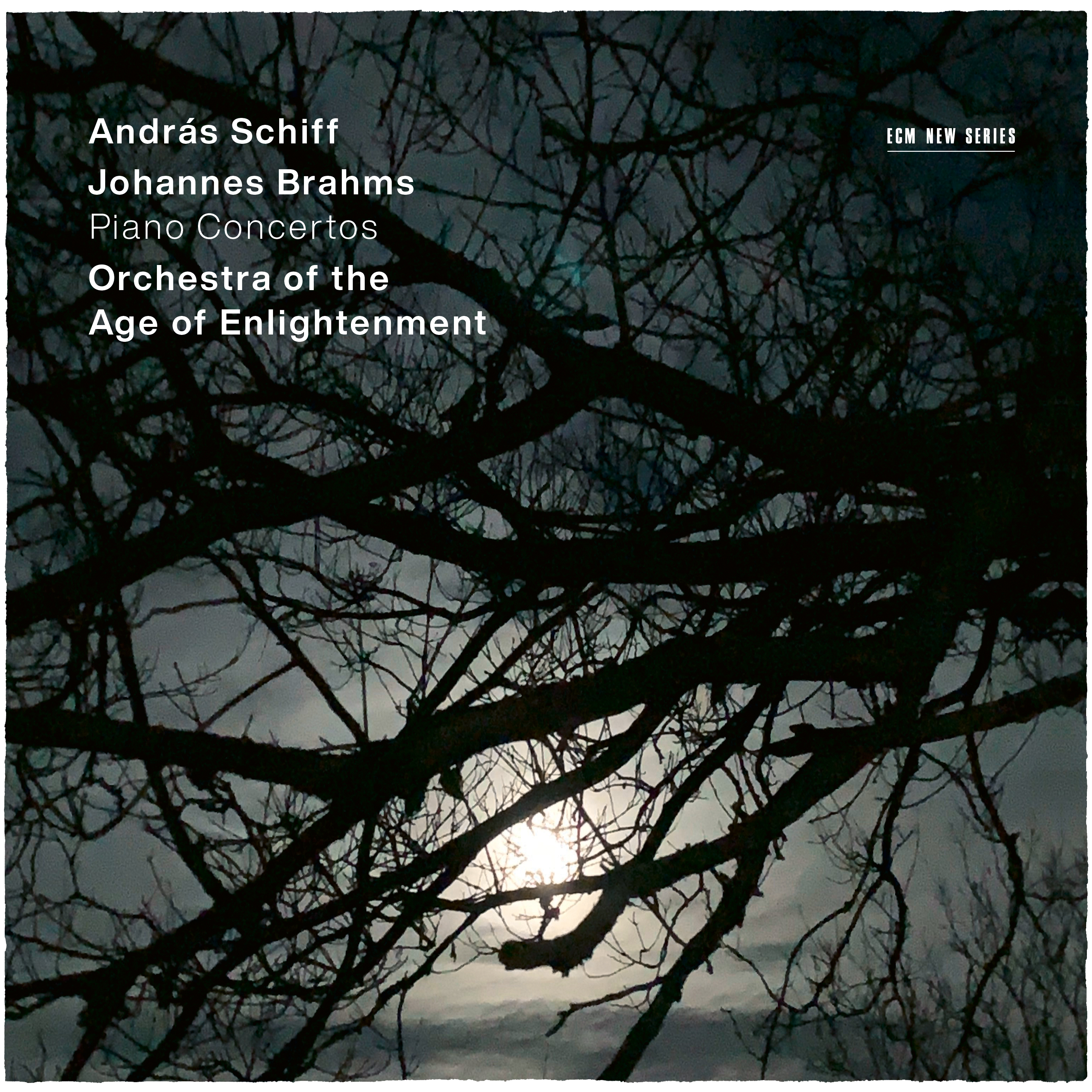
András Schiff: Brahms Piano Concertos (ECM New Series 2690/91)

András Schiff
Orchestra of the Age of Enlightenment
Johannes Brahms: Piano Concertos

András Schiff piano
Orchestra of the Age of Enlightenment
Recorded December 2019
Abbey Road Studios, London
Engineer: Stephan Schellmann
Balance engineer: John Barrett
Production coordination: Guido Gorna and Thomas Herr
Cover photo: Péter Nádas
Executive producer: Manfred Eicher
Release date: June 4, 2021

Following his 2020 release of the Brahms clarinet sonatas with Jörg Widmann, pianist András Schiff continues his exploration of this beloved composer by diving into his formidable piano concertos. With characteristic attention to detail, peeling back layers of artifice to get to the heart of what a score is trying to convey, Schiff seeks appropriate companionship in the Orchestra of the Age of Enlightenment, a period-instrument ensemble that often performs in the absence of a conductor, as it does here. Leading this entourage alongside Schiff is a Julius Blüthner grand piano built in 1859, from which he coaxes an incredible amount of resonance. Thus, he attempts “to recreate and restore the works, to cleanse and ‘detoxify’ the music, to liberate it from the burden of the—often questionable—trademarks of performing traditions.”

It was with Ludwig van Beethoven firmly in mind that Johannes Brahms (1833-1897) wrote his Concerto for Piano and Orchestra No. 1 in d minor, op. 15, even as he tried to step outside the giant’s shadow. Despite its poor initial reception, it has since grown into an experimental full-course spread in the estimation of performers and listeners alike. The opening movement betrays the piece’s transformation from sonata to symphony to concerto, bursting into being with a hit of strings and timpani. Such grandeur, however, is only temporary, as the river’s flow evens out beyond the dam’s reach. When the piano makes its entrance, it dances, carrying with it all the memories it needs to fend for itself in the wilderness. The drama returns only to break the proverbial vessel for a much-needed rebuilding in the Adagio. Brahms marked this movement “Benedictus qui venit in nomine Domini” (Blessed is he who comes in the name of the Lord) in response to the death of Robert Schumann. With unwavering emotional veracity, it shifts from dark to light and back again as unconsciously as breathing. Bringing us out of that pall is a vivacious Rondo leading the final movement’s charge. Schiff emphasizes its improvisational qualities, bringing luminous immediacy to every note.

One might not know that the Concerto for Piano and Orchestra No. 2 in B-flat major, op. 83, is notorious for being one of the most difficult in the repertoire from the pastoral flavor in which it opens. But as the piano’s rubato phrasing proceeds freely over the foundation, pizzicato strings trailing not far behind, the rhythmic complexities become increasingly apparent. The second movement represents some of Brahms’s finest writing. Schiff’s awareness of its textures testifies to his experience and maturity, thus emphasizing the time shift of strings and horns midway through—a resounding call for the future built on the technologies of the past. The wildly inventive third movement (with solo cello lines played by Luise Buchberger) is a lone wolf of expressivity leading us to the momentous Allegretto. The pianism takes striking turns, digging into the lower register before ending on a firmly resolute chord.

Schiff holds these pieces dear to his heart, as should we in being handed the gift of his interpretations.

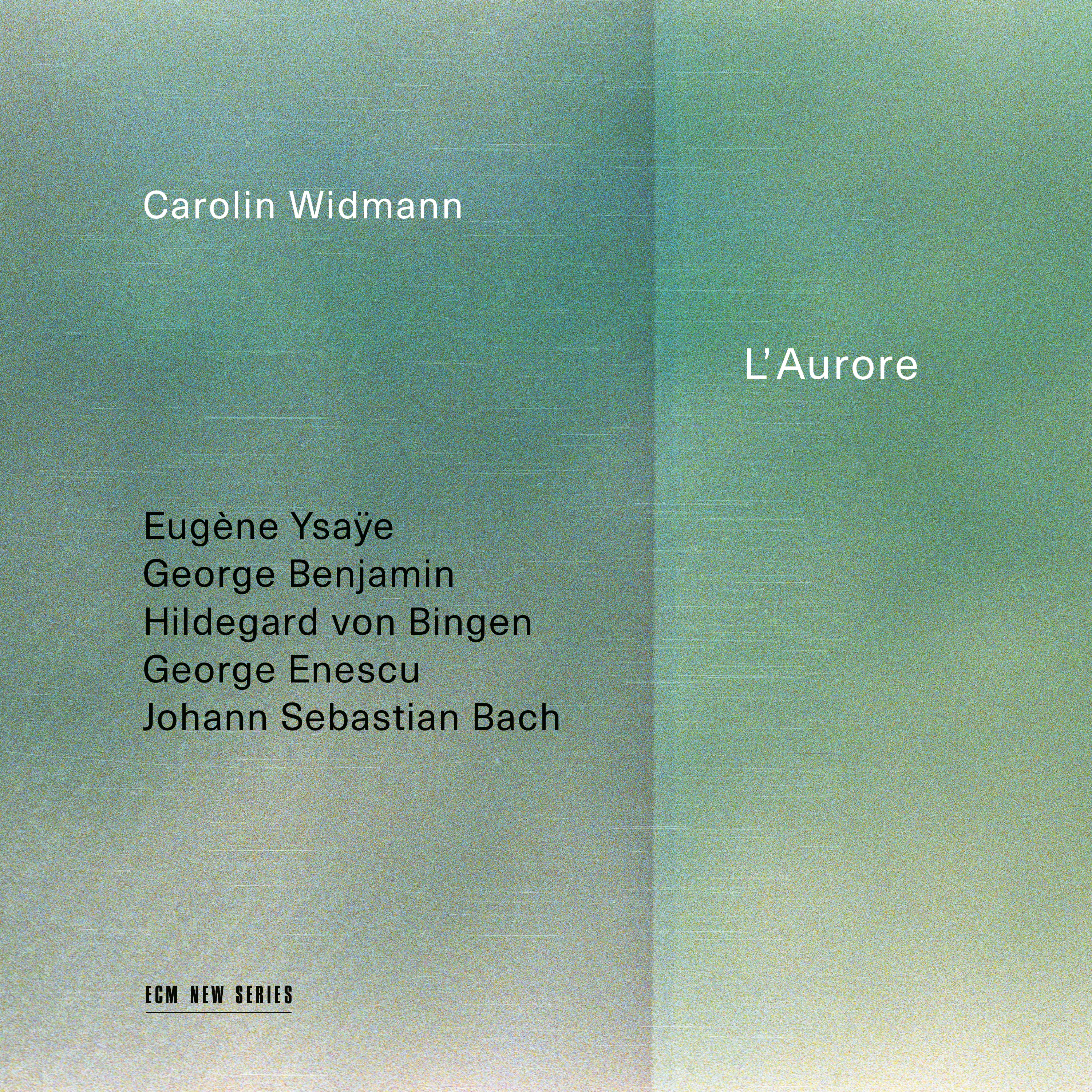
Carolin Widmann: L’Aurore (ECM New Series 2709)

Carolin Widmann
L’Aurore

Carolin Widmann violin
Recorded July 2021
Auditorio Stelio Molo RSI, Lugano
Engineer: Markus Heiland
Cover photo: Wilfried Hösl
Produced by Manfred Eicher
Release date: June 17, 2022

Although L’Aurore represents violinist Carolin Widmann’s seventh ECM appearance, this is her first solo program for the label, making it the culmination of the many potent strands she has woven to get here. Hearing her breathe through the Spiritus sanctus vivificans vita of Hildegard von Bingen (1098-1179), which opens the program with fundamental monophony, is equivalent to the feeling of recovering from a long illness, taking in mundane details with renewed appreciation. The angular vigor of the Fantaisie concertante by George Enescu (1881-1955) that follows reminds us further of the need to absorb as much of our surroundings as possible if we are to give back more to the world than it has given us. Widmann’s ability to bring verve to the most leaping gestures and quietest rasping of the bow ensconces the motivations of this rarely performed treasure she calls a “sweeping melisma” of improvisational qualities. Contrasts of pulchritude and decay leave us marveling over a gray area where no single impression overwhelms another. Any keen listeners drawing a line from here to the work of Eugène Ysaÿe (1858-1931) are rewarded by his Sonata No. 5 in G major, op. 27, the first movement of which yields this album’s title. Its multivalence drips from Widmann’s fingers like rain from leaves after a storm, her double stops leaving trails of light as she works her way toward the “Danse rustique.” Here, the mood is somehow airier, despite the denser textures and grounded form, though at no expense of emotional savor. Between these giants are the no-less-powerful Three Miniatures of George Benjamin (b. 1960). With an economy of expression that makes every note count, each tells its dedicatory story in lucid terms. In doing so, what otherwise might seem like fleeting shifts in more florid writing take on a stark significance. The central piece, in particular, stirs the soul with its elasticity.

After revisiting Hildegard’s antiphon, Widmann takes us on a journey through the Partita No. 2 in D minor of J. S. Bach (1685-1750), a piece she felt prepared at long last to present in the studio. And while it concludes the disc, it feels more like a renewal. The minutiae of her caring spirit are immediately apparent in the caressing Allemanda, from which a personal ethos of direct communication shines in welcome. Over the next three movements, she turns the mirror to capture flashes of light, fragments of dreams, and memories of better times. All’s well that ends well in the epic Ciaccona, which for Widmann is “an epitome of life” (as is Hildegard, she is quick to add). Without apparent force yet with total conviction, she renders its details with the control required to wield a feather quill. Every mark confirms the need for ink and paper, without which these leaves of the human spirit might fall from the trees of history, leaving its forest bereft of fruit.