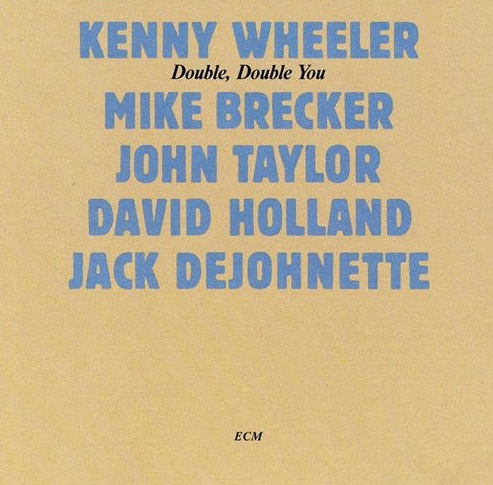
Kenny Wheeler: Double, Double You (ECM 1262)

Kenny Wheeler
Double, Double You

Kenny Wheeler trumpet, fluegelhorn
Michael Brecker tenor saxophone
John Taylor piano
Dave Holland bass
Jack DeJohnette drums
Recorded May 1983 at Power Station, New York
Engineer: Jan Erik Kongshaug
Produced by Manfred Eicher

One can always count on trumpeter Kenney Wheeler for three things: (1) rounded writing contrasted with pointed soloing, (2) an always-engaging sound, whether alone or surrounded by a large band, and (3) a perfect marriage with ECM production values. For this modest set, we get two epic cuts bookending two shorter ones, and the results do not disappoint. As if having the talents of Jack DeJohnette, Dave Holland, and Mike Brecker along for the ride weren’t enough, Wheeler is also joined by John Taylor, whose sweeping pianism tempers the trumpeter’s fire just enough to keep it from scalding us, and whose resplendence could alone carry the album. The potent lyricism of the entire congregation is on full display in “Foxy Trot.” Holland and DeJohnette bring on their own heat, as well as a live, exuberant energy to the proceedings that provides an ideal carpet of hot coals for Brecker’s carefully measured walk. After an unremarkable duet between Wheeler and Taylor (“Ma Bel”), he and Brecker spin a duet in “W. W.” that bowls us over once the rhythm section kicks in. The two horns are superbly attuned here, and Brecker in particular in his soaring solo, which burns up all of its available oxygen and leaves Holland to dance among the ashes. Last is a triptych of compositions that begins in bliss with Brecker and Taylor, wrought through by Wheeler’s sunshine and the glistening accents of DeJohnette and Holland. We also get an effervescent solo from Taylor, who draws the curtains around us like a silo of intimate memories. Wheeler’s resolutions seem to trace a life of contented solitude and bring closure to an album of high energy.

Wheeler hits his stride at every turn with his unabashed brand of exposition, which defines new sonic territory with every project. One could easy gush at length about his lyricism, but on this album we also get an even clearer sense his rhythmic sensibilities. Ignore the filler of “Ma Bel,” and you have an almost perfect album.

<< Shankar: Vision (ECM 1261)
>> Terje Rypdal/David Darling: Eos (ECM 1263)

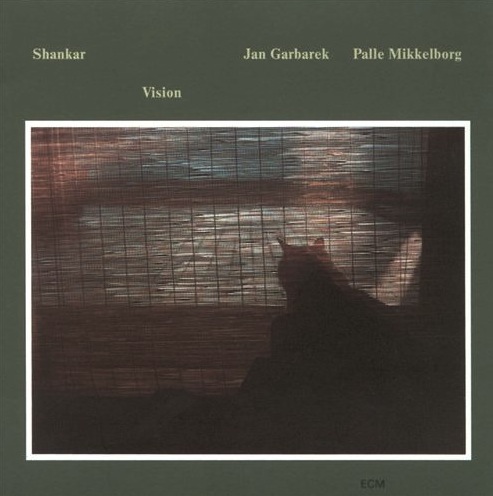
Shankar: Vision (ECM 1261)

Shankar
Vision

Shankar 10-string double violin, percussion
Jan Garbarek tenor, soprano and bass saxophones, percussion
Palle Mikkelborg trumpet, fluegelhorn
Recorded April 1983 at Talent Studio, Oslo
Engineer: Jan Erik Kongshaug
Produced by Manfred Eicher

After the masterstroke of Who’s To Know, perhaps it was inevitable that the growing ECM pool would provide unusual collaborative opportunities for the 10-string stereophonic electric violin of L. Shankar. And that we certainly are given in Vision, an unearthly journey that finds him in the company of saxophonist Jan Garbarek and trumpeter Palle Mikkelborg. The former is a no-brainer for this date, while the latter provides an ethereal depth to the already expansive sound. Shankar’s violin is heavily flanged throughout, an effect that does grow tiresome after a while. But such caveats hardly register in the melodious hearth in which they burn.

One need only follow the pizzicato footsteps of “All For You” to get acquainted with the album’s beauties and to feel the shadows of Garbarek and Mikkelborg flying overhead. With this exuberant awakening still echoing inside us, we can only close our eyes in the title track. Amid the raspy breath of the violin’s lower strings, the air itself vibrates with a cosmic growl, as if some enormous lioness were slowly coming out of her shell in Terje Rypdal’s dreams. Through the glacial slides of “Astral Projection,” Garbarek and Mikkelborg etch a flock of shooting stars in a slow-moving tide of meditation. “Psychic Elephant” follows in much the same vein as the opener, blossoming into a pizzicato line that one could listen to for hours on its own. This time around, Mikkelborg dons the ether like a cloak, while Garbarek surprises with rare turns on drums and bass saxophone. Only here does Shankar lose himself in more pronounced streams of life before the solitude of “The Message” carries us into stasis.

I wasn’t fully convinced by this album the first time I heard it, yet as I have grown with it, so too has it grown with me: proof positive of its power to transcend the disc on which it was recorded and find sanctum in the human heart.

<< Chick Corea/Gary Burton: Lyric Suite For Sextet (ECM 1260)
>> Kenny Wheeler: Double, Double You (ECM 1262)

Chick Corea/Gary Burton: Lyric Suite For Sextet (ECM 1260)

Chick Corea
Gary Burton
Lyric Suite For Sextet

Chick Corea piano
Gary Burton vibraharp
Ikwhan Bae violin
Carol Shive violin
Karen Dreyfus viola
Fred Sherry cello
Recorded September 1982 at Mad Hatter Studios, Los Angeles
Engineer: Bernie Kirsh
Produced by Manfred Eicher

The Lyric Suite for Sextet joins the unparalleled duo of Chick Corea and Gary Burton with string quartet for a combination soon to be repeated with the release of Hot House. Through an erratic and sometimes disjointed hall of mirrors, it explores a series of never quite fully formed ideas. The opening notes of this then unique collaboration create a thriving and exuberant sound that permeates every moment that follows. Burton’s liquid runs, especially in “Waltz” and in “Dreams,” bring forth all the music’s chambered revelry as Corea weaves nimbly through every sprung carnation left in his footfall. From the brief yet enthralling “Rollercoaster” to the ebullient “Finale,” feelings sweep us away, and are swept away by, their own intensity. But the album’s true colors come out in “Brasilia,” which opens with the gorgeous unfolding of Corea’s piano, slowly introducing water droplets of vibes and the firmer grounding of strings, which at last become a vital presence, interacting with the piano lines in a deeply internal conversation for the album’s tenderest moments. Corea’s delicacy is a wonder here.

As a concept album, the Lyric Suite is a classic to be sure, albeit one that’s difficult to put a finger on. Then again, perhaps that’s the point. And while the strings may seem a superfluous stroke alongside musicians already so lush (seeming to unify only in the album’s latter half), it is the expansiveness of vision and the infectious exuberance of the playing that may keep you returning on occasion to this curious little experiment.

<< Jan Garbarek Group: Wayfarer (ECM 1259)
>> Shankar: Vision (ECM 1261)

Oregon: s/t (ECM 1258)

Oregon
Oregon

Paul McCandless reeds, flute
Glen Moore bass, violin, piano
Ralph Towner guitar, piano, synthesizer
Collin Walcott sitar, percussion, voice
Recorded February 1983, Tonstudio Bauer, Ludwigsburg
Engineer: Martin Wieland
Produced by Manfred Eicher

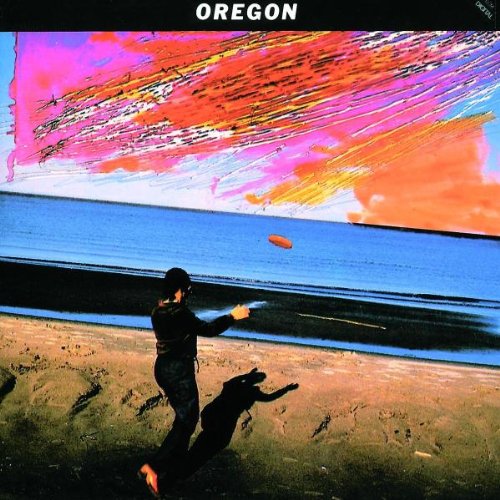
By the time of this self-titled ECM debut, the collective known as Oregon had firmly established its uncategorizable sound on a host of recordings for Vanguard. From the cover photograph, which stands as one of the more confounding choices in ECM history, those unfamiliar with Oregon would probably never guess that the music it sleeves could be so ethereal. Oregon finds the group still in its original incarnation with Paul McCandless, Ralph Towner, Glen Moore, and Collin Walcott (in one of his last sessions with the group before his life was tragically ended in a 1984 car crash).

The opening chords of “The Rapids” render some of the album’s more compositionally minded passages (the others being McCandless’s “Beside A Brook” and two pieces from Moore, of which the winged “Arianna” stands out). And yet, while rays of light shoot from McCandless’s soprano, the music’s percussive colors are what really hold our attention. Oregon doesn’t so much cross into as over idioms, as exemplified to pointillist effect in the droning “Beacon.” These sustained emotions continue later in “Skyline,” before carrying us into “Impending Bloom,” the rhythms of which burst like an organic ancestor of Aphex Twin’s “Alberto Balsalm.” It also constitutes a meta-descriptive statement for Oregon’s musical process, where the idea of profusion is but a memory on the slope toward a different kind of light. It moves with the persistence of a small locomotive, soprano saxophone flirting with the snake of smoke above it. The evocative “Taos” is another highlight, so adroitly negotiating as it does subterranean thrums with high flutes. The crepuscular guitar and wayfaring bass clarinet of “There Was No Moon That Night” form yet another.

I must confess that, despite Oregon’s legendary status, I was only recently introduced to their music via this recording. A magical experience. As I understand it, those more well-versed than I in Oregon lore tend to look down upon this album, so who knows how my relationship with it might change as I begin to familiarize myself with the more classic material. Whatever may come, I know I’ll always appreciate this date for having shown me the way.

<< Barre Phillips: Call me when you get there (ECM 1257)
>> Jan Garbarek Group: Wayfarer (ECM 1259)

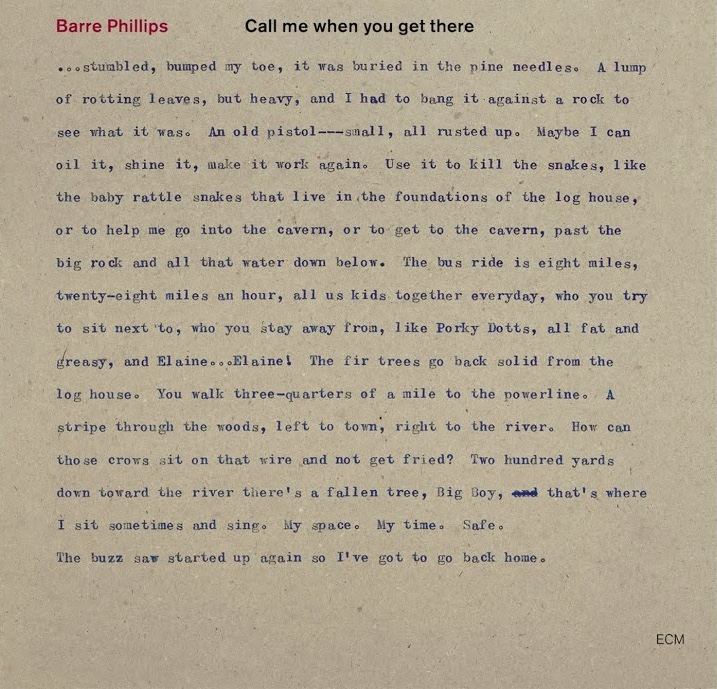
Barre Phillips: Call me when you get there (ECM 1257)

Barre Phillips
Call me when you get there

Barre Phillips solo bass
Recorded February 1983 at Tonstudio Bauer, Ludwigsburg
Engineer: Martin Wieland
Produced by Manfred Eicher

I’ve said it before, but Barre Phillips is one of ECM’s brightest stars, though one would never know it by the solemnity of his genius. Glowing with a pale fire that can be drawn only in cosmic pigments, his sound-world on Call me when you get there throbs as if Michael Galasso and David Darling had fused into a collaborative quasar. The opening “Grants Pass” would seem to have been written in the margins of Steve Reich’s Different Trains, and works its gentle magic under the toenails of our foothold. Played on resonant multi-tracked instruments, this track stands as one of Phillips’s finest. Each shade of harmonic interplay forms a new glyph before our ears and eyes, proving once again just how cavernous the bass really is. This wistful trail leads us to the “Craggy Slope,” an uneven climb into heavily eroded terrain, occasionally punctuated by the fluid twang of the waters that wrought it into existence, and ending surprisingly in an almost baroque denouement. And on that edge we linger, dancing the slow-motion jig of “Amos Crowns Barn” before following the anonymous stirrings beyond “Pittmans Rock.” But when we jump, we land on “Highway 37,” caught in a stampede of tumbleweeds. Here, the bass sounds more like a ball of twine wound around a rubbery core, expanding into some looming paternal guitar, hunchbacked from old age. “Winslow Cavern” bubbles like the molten rock of a volcano before taking shape in the aptly titled “River Bend,” which plucks and scrapes its way through a serpentine journey. And as we take shelter in “The Cavern,” we discover that the only promise of life that awaits us outside its darkness is “Brewstertown 2,” a nightmarish backcountry town with an impending tornado etched into its background.

We can add this album to the modest yet potent shelf of solo bass recordings begun with Dave Holland’s as-yet-unsurpassed Emerald Tears. A masterpiece in the Phillips discography and one well worth the plunge for those who’ve yet to dare.

<< Charlie Mariano: Jyothi (ECM 1256)
>> Oregon: s/t (ECM 1258)

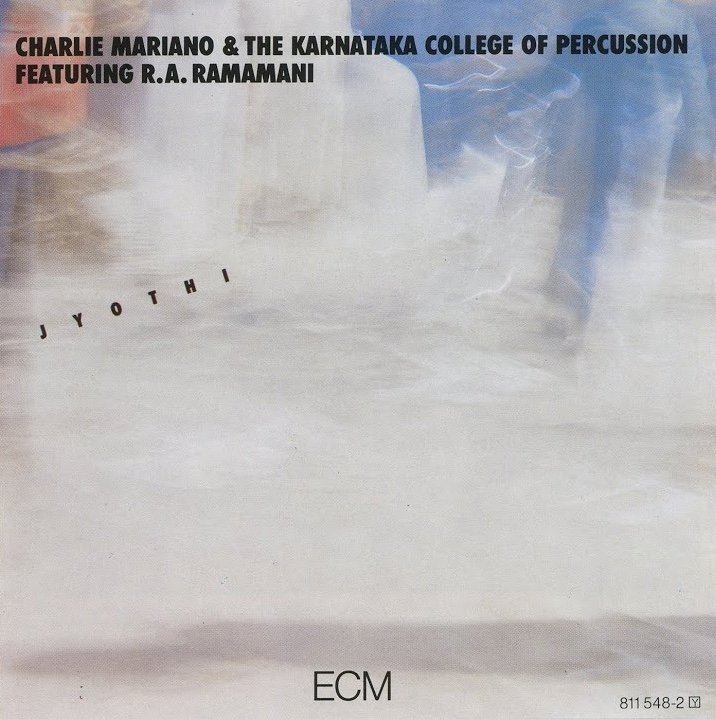
Charlie Mariano and The Karnataka College of Percussion: Jyothi (ECM 1256)

Charlie Mariano
The Karnataka College of Percussion
Jyothi

Charlie Mariano soprano saxophone, flute
R. A. Ramamani vocals, tamboura
T. A. S. Mani mridangam
R. A. Rajagopal ghatam, morsing, konakkol
T. N. Shashikumar kanjira, konakkol
Recorded February 1983 at Tonstudio Bauer, Ludwigsburg
Engineer: Martin Wieland
Produced by Manfred Eicher

Since 1964 the Karnataka College of Percussion has been committed to its mission of expanding awareness of Indian Classical (especially Carnatic) music. Part of this outreach has involved a number of jazz-oriented and fusion projects through which the institution has spread its affirmative message. Thus do we come to this intriguing, if seemingly forgotten, collaboration with American saxophonist Charlie Mariano, who left us in 2009 at the age of 86. The result is a fluid and respectable blend of cultural signatures that transcends any ties to genre in favor of a purely emotive experience. The voice of R. A. Ramamani figures prominently, as in the ruminative opening track, titled simply “Voice Solo.” She traces long stretches of landscape, one hill at a time, where the dry rolling plains offer up their secrets for the reward of rain. Her prayers are bifurcated through overdubbing, lending both a smile and a promise to the title. In this diffusely lit portal we find only further portals. In “Vandanam” we are regaled with tales of old by Mariano’s rolling flute, gilded by the pleasant jangle of the kanjira and mridangam. Ramamani’s ululations walk hand in hand with flute for a unified sound. “Varshini” and “Saptarshi” are smooth and graceful spaces in which voice is both cause and effect. Mariano’s soprano is a voice in and of itself, caught in flurries of percussion and passionate resolutions. These lively stops give way to the interweaving lines of reed and voice in “Kartik,” which closes on some transportive drumming from T. A. S. Mani on mridangam. Lastly is “Bhajan,” featuring doubled voice and a palpable communication with the beyond. As the drums anchor us, so too do they spring forth to those less definable stretches of land, where only the human voice can wander in its ephemeral laudation, threaded by the twang of the morsing (Indian jaw harp) and dancing a slow and careful surrender.

Without neither pretension nor ulterior motive, Jyothi is a delicacy in the ECM catalogue and a careful coming together of thought and performance to be taken as it comes…and goes.

<< Keith Jarrett Trio: Standards, Vol. 1 (ECM 1255)
>> Barre Phillips: Call me when you get there (ECM 1257)

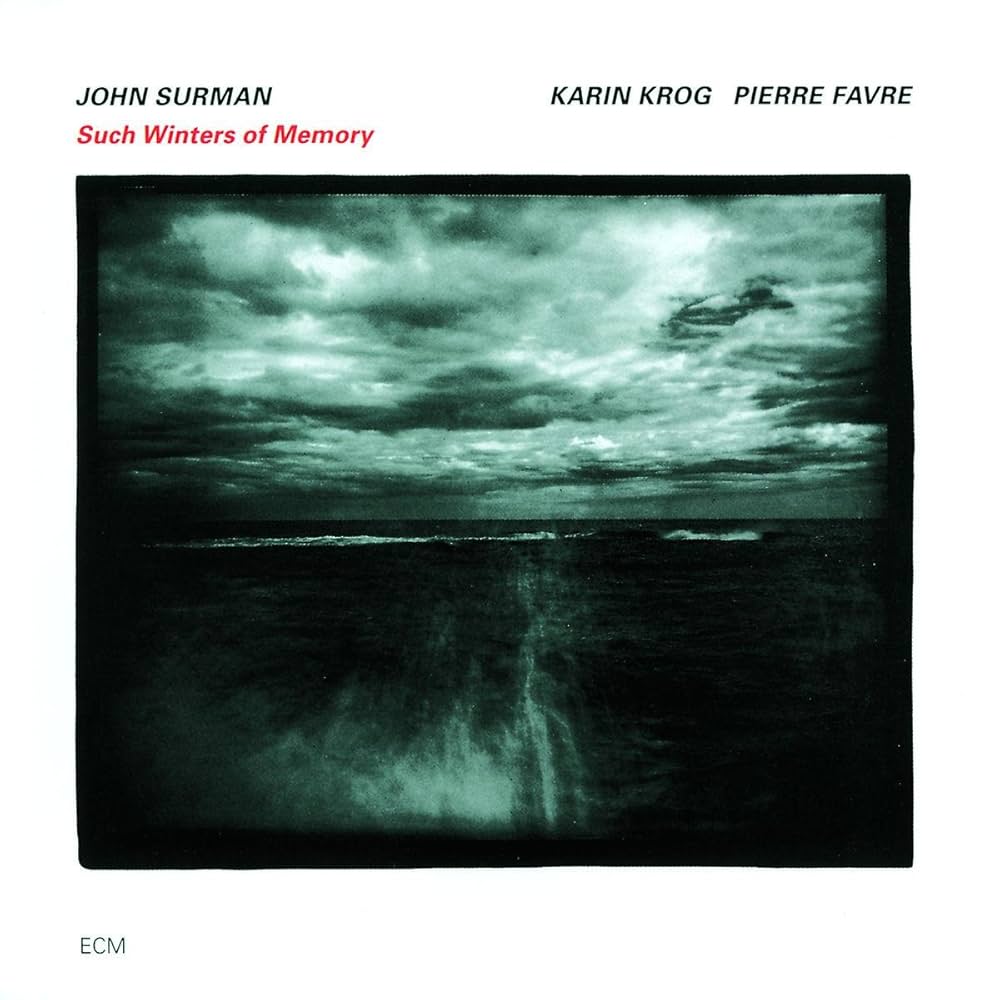
John Surman: Such Winters of Memory (ECM 1254)

John Surman
Such Winters of Memory

John Surman baritone and soprano saxophones, bass clarinet, recorder, piano, synthesizer, voice
Karin Krog voice, Oberheim ring modulator, tamboura
Pierre Favre drums
Recorded December 1982 at Talent Studio, Oslo
Engineer: Jan Erik Kongshaug
Produced by Manfred Eicher

Walking into a John Surman album is like wearing a blindfold. The remarkable reedman provides just enough sensory information to orient us. At times claustrophobic, at others airy and spatial, each composition and improvisation alike seem knitted by the same needle. On Such Winters of Memory, he is joined by percussionist Pierre Favre and vocalist Karin Krog for a calm and collected session sure to please admirers of his solo work. The drones of “Saturday Night” are like a chain of limpid pools from which Surman draws mercury lines. Out of these dreams comes “Sunday Morning,” which reprises the sequencer of “Nestor’s Saga” that would play such a key role in albums to come. Where the electronics were cold and windy at the start, here they are warm, still, and brimming with daybreak. Surman makes the baritone saxophone sing here like no other, and with it he renders even the most contrived surroundings into a strangely organic whole. Decidedly jazzier contours await us in “My Friend,” a loosely woven braid of voice and bass clarinet. Thus uplifted, we float through “Seaside Postcard 1951” on a jet stream of soprano whispers and glittering cymbals, content to be “On The Wing Again” through the approaching dusk. There we linger in monochrome, like the album’s cover, somewhere between steam and cloud. After the solo piano sweetness of “Expressions,” we are left to ponder the adhesive raga of “Mother Of Light / Persepolis,” following an echoing recorder across piped horizons.

Surman is a musician of gentle persuasion and even gentler philosophy. One can always count on an immersive experience, Such Winters of Memory being but one carefully brushed example. And while one may be hard-pressed to see into the autobiographical details of these titles, at least in their articulation one gets an immediate sense of the environments they so meticulously render into graspable sound.

<< Pat Metheny Group: Travels (ECM 1252/53)
>> Keith Jarrett Trio: Standards, Vol. 1 (ECM 1255)

Pat Metheny Group: Travels (ECM 1252/53)

Pat Metheny Group
Travels

Pat Metheny guitars
Lyle Mays piano, synthesizers, organ, autoharp, synclavier
Steve Rodby basses
Dan Gottlieb drums
Nana Vasconcelos percussion, voice, berimbau
Recorded July, October, and November 1982
Engineer: Randy Ezratty
Produced by Pat Metheny and Manfred Eicher

If you’ve ever desired a Pat Metheny Group greatest hits album, then Travels is for you. Compiled from the group’s touring activities in 1982, this double set is a must-have. From the glittering lotus of melody that is “San Lorenzo” to the even more effusive “Phase Dance,” the requisite classics are all here. We also get a curtailed, though no less epic, version of “As Falls Wichita, So Falls Wichita Falls,” which here draws out like a long cinematic fade and throws the windows open wide to the band’s boggling sonic purview. And one can hardly help but swoon from the dizzying heights reached by this live version of “Are You Going With Me?” Here the studio version seems but a memory on the path to glory, and finds exuberant life in what is perhaps Metheny’s best solo on record. An absolute affirmation.

Yet the album’s true value comes in the handful of songs exclusive to it. Through these we encounter softer sides of the PMG, each burnished like a different shade of leather. “The Fields, The Sky” is an outstanding place to start. Vasconcelos’s unmistakable berimbau threads a supremely melodious backdrop, while Metheny is at once distant and nearby, winding a slow and organic retrograde around the fiery center within. Vasconcelos is also the voice of “Goodbye,” a forlorn piece of sonic stationery across which Metheny inscribes a most heartbreaking letter toward a ripple of an ending. This pairs nicely with the title track, a laid-back photograph of Americana that is like a rocking chair on the back porch: lulling, and affording an unobstructed vista. Similar strains await us in “Farmer’s Trust,” a slow plunge into an ocean of undriven roads gilded by the whispering of baby birds and the rustling of the leaves that hide them, and in the smoothly paved blacktops of the synth-driven “Extradition” and “Song for Bilbao.” Each of these creeps along like wispy clouds over badlands, spun by keyboardist Lyle Mays into sunset. But it isn’t all drawl, as drummer Dan Gottlieb proves in the invigorating “Straight On Red,” throughout which he provides the perfect springboard for the masterful dialogues of Metheny and Mays.

Travels are what the PMG are all about, and the selfsame album shows us the collective at its finest hour. Those hearing the PMG for the first time will want to start with the studio sessions—and especially Offramp—from which Travels was in part drawn. That way, one can appreciate the enthusiasm of the crowds, and get at least a taste of what it must have felt like to be there among them. With a depth and cleanliness of sound that no band can match, the PMG were a force to be reckoned with, but also one so welcoming that reckoning need never have applied. Theirs is a space where nature and nurture shared the same pair of lungs.

Should posterity ever look back on our age as one of overconsumption, warmongering, and greed, one listen to Travels will prove to them that in our hearts we continued to cherish all that is good and true.

<< Dino Saluzzi: Kultrum (ECM 1251)
>> John Surman: Such Winters of Memory (ECM 1254)

Dino Saluzzi: Kultrum (ECM 1251)

Dino Saluzzi
Kultrum

Dino Saluzzi bandoneón, voice, percussion, flutes
Recorded November 1982 at Tonstudio Bauer, Ludwigsburg
Engineer: Martin Wieland
Produced by Manfred Eicher

This album, not to be confused with the ECM New Series effort of the same name, was Dino Saluzzi’s first for the label. Using only his two hands, the bandoneón master brings out the multifarious qualities of his instrument as no other can. In this music we feel decades upon decades of history compressed into every squeeze of the bellows, and find ourselves surrounded by yearned-for lands and traditions. Into these we are ceremoniously welcomed through “Kultrum Pampa – Introducción Y Malambo” (Introduction And Malambo). Flute and drum draw us out from the cave of our ignorance and into the rising dawn, where nothing but an open circle awaits us with the promise of life. A voice chants, lifting a feather with every word and dropping it into our memory. We disavow the codes that divide our skins and minds, that bind our resolve to ideology, that whisk away our honor and truth to false idols. This blending of chant and song enhances the sacredness of both. It is one of three longish pieces on the album, which include the stunning “Agua De Paz” (Water Of Peace), one of the most gorgeous Saluzzi has ever recorded, and the rushing current of “El Rio Y El Abuelo” (The River And The Grandfather), in which he brings his veritably orchestral sound to mountainous light. There are moments in this piece that, especially around the 3:10 mark, sound exactly like the penultimate fade of Erkki-Sven Tüür’s Illusion. Such unintended moments of confluence merely hint at the reach of Saluzzi’s playing. Similarly, the handful of shorter pieces on Kultrum seem to flirt with their own watery reflections, coming to a head in the three-part suite “Ritmo Arauca” (Arauca Ritual). This life cycle is woven in earth and ice by a shuttle of elemental percussion. What was once the ceremony now becomes all-knowing life, a landscape where towering figures mingle with those too small to imagine, where the wind and the sunlight share a common yarn, where the elevation of a human life depends solely on how it falls. Again, Saluzzi’s voice emerges alone, as much soothsayer as it is curious child. Fans of Ken Fricke’s Baraka will also recognize here the shared Andean roots of Inkuyo’s “Wipala.” At last, “Pasos Que Quedan” (Steps That Stay) calls us back into the smoke where we began, where only our selves await, purified by sky and song in “Por El Sor Y Por La Lluvia” (For The Sun And For The Rain).

This album proves Saluzzi’s value not only as a musician, but also as a living heart of which music is blood. He is a master in the truest sense, which is to say that he pours forth through his instrument, as his instrument, showing us that the only way down his musical path is to close our eyes and let our feet guide us. Without question, one of ECM’s top 10 of all time.

<< Ralph Towner: Blue Sun (ECM 1250)
>> Pat Metheny Group: Travels (ECM 1252/53)