Steve Kuhn: Non-Fiction (ECM 1124)

ECM 1124

Steve Kuhn
Non-Fiction

Steve Kuhn piano, percussion
Steve Slagle soprano and alto saxophones, flute, percussion
Harvie Swartz bass
Bob Moses drums
Recorded April 1978 at Tonstudio Bauer, Ludwigsburg
Produced by Manfred Eicher

Steve Kuhn is the all-purpose element: his presence heightens any musical concoction. Like no jazz pianist I know, he is aware of the negative spaces between his notes and shapes those spaces to suit the emotional needs of the tune. And what a set of tunes we have in Non-Fiction, a sorely out-of-print firecracker in dire need of a digital fuse. Speaking of conflagration, nothing singes our brow in any Kuhn project quite like “Firewalk,” which, despite its characteristically spacious feel, is clear and present (I bow to the uncredited engineer on this one). Kuhn accolades aside, it’s the sopranism of reedman Steve Slagle that really sets these coals to glowing and cradles every assured step in the liberation of play. Bob Moses and Harvie Swartz—an ideally suited rhythm section if there ever was one—lock the “Random Thoughts” that follow into lively traction. Slagle opts for flute and alto sax over a constantly shifting sonic palette. Whenever he isn’t breathing, he keeps his hands busy with additional percussion. (Unfortunately, the latter comes across as intrusive to my ears during headphone listening. External speakers will remedy this.) “A Dance With The Wind” and “The Fruit Fly” reverse the scales with a collective dose of whimsy and nostalgia. Swartz is simply fantastic here, weaving deftly through Kuhn’s canvas of vamps with distinct yet harmonious brushstrokes of its own. If anything has been missing so far, we find it all collected in “Alias Dash Grapey,” which has it all: a sweeping piano intro, replete with unrestrained cries from Kuhn, a spirited collage of solos (Moses ever palpable), and a deep sense of communication.

This is a tight album with plenty to unpack through repeated listening. Its energies fluctuate in volume, but always to the beat of Kuhn’s erudite dictation. As worth tracking down on vinyl as it is waiting for an appearance on CD.

<< Barre Phillips: Three Day Moon (ECM 1123)
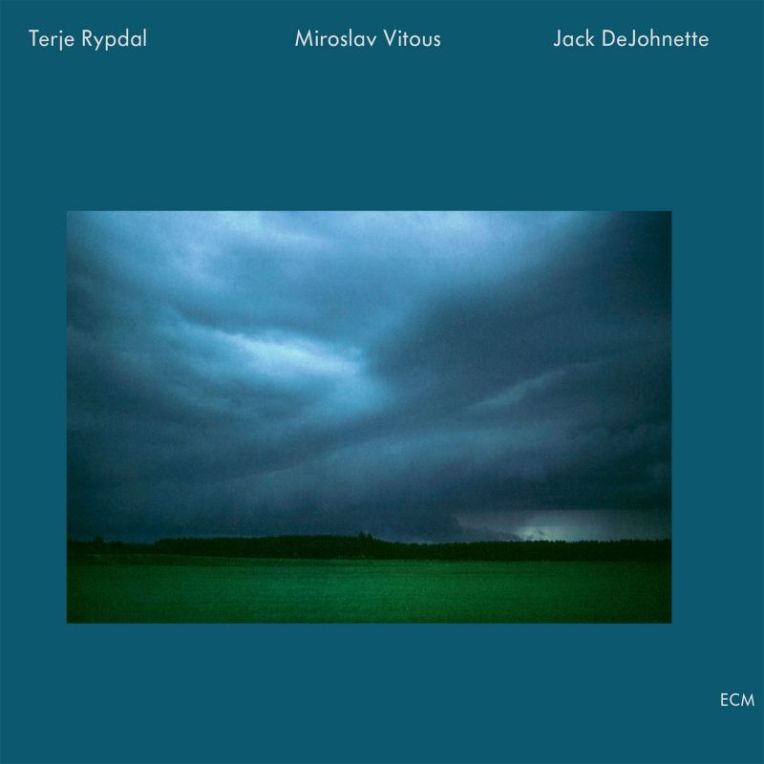
>> Rypdal/Vitous/DeJohnette: s/t (ECM 1125)

Barre Phillips: Three Day Moon (ECM 1123)

ECM 1123

Barre Phillips
Three Day Moon

Barre Phillips bass
Terje Rypdal guitar, guitar synthesizer, organ
Dieter Feichtner synthesizer
Trilok Gurtu tabla, percussion
Recorded March 1978 at Talent Studio, Oslo
Engineer: Jan Erik Kongshaug
Produced by Manfred Eicher

I have said it before and I will say it again: Barre Phillips is one of ECM’s most underrecognized treasures. A maverick of the upright bass, his is a mind in which one revels getting lost. This follow-up to 1976’s Mountainscapes is the genesis to the latter’s messiah. From Dieter Feichtner’s opening synth in “A-i-a” and its attendant bass line, we are immediately engaged in a dialogue that is untranslatable except via the grace of its performance. Electric guitar accents from Terje Rypdal, who feels right at home here, billow backwards from the stratosphere into fissures of sonic earth. Rypdal swaps axe for organ in “Ms. P.,” unfurling a shimmering heat in which the breath of bass turns to steam. Even spacier touches await us in “La Folle” and “Ingulz-Buz.” Farther-reaching abstractions mesh into the neutral colors of electric guitar and bowed bass, respectively, throughout these intertidal interludes. “Brd” puts me in mind of Paul Schütze’s Stateless (especially the track “Cool Engines”): strung by a steady bass line and tabla, the latter courtesy of Trilok Gurtu, and Rypdal’s continued ploys, each bead reveals new insights with every listen. If Rypdal has been a key figure in the album’s narrative thus far, for the final “S. C. & W.” he morphs into a demigod. Backed by an insectile arpeggiator, alongside bombilations from bass, Rypdal gets tricky with the effects, at times lapsing into R2-D2-like articulations, but always with integrity. An emblematic closer.

Grandiose, cinematic, and meticulously constructed, Three Day Moon once more proves Phillips to be one of jazz’s best-kept secrets. The album also sports one of the most evocative ECM sleeves of the seventies, with sonic innards to match.

<< Enrico Rava Quartet: s/t (ECM 1122)
>> Steve Kuhn: Non-Fiction (ECM 1124)

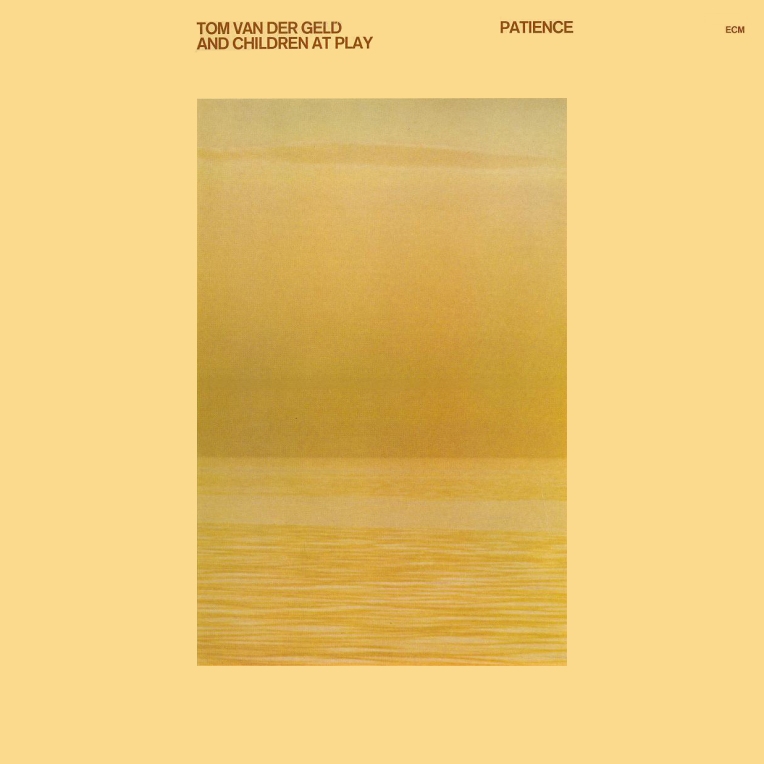
Tom van der Geld and Children At Play: Patience (ECM 1113)

ECM 1113

Tom van der Geld and Children At Play
Patience

Tom van der Geld vibraharp, percussion
Roger Jannotta soprano and baritone saxophones, flutes, oboe, bass clarinet
Kent Carter bass
Bill Elgart drums, percussion
Recorded May 1977 at Tonstudio Bauer, Ludwigsburg
Engineer: Martin Wieland
Produced by Manfred Eicher

As yet to provide choice “vibes” for Kenny Wheeler’s around 6, in addition to his elusive but well-worth-owning Path, mallet man Tom van der Geld made his ECM debut with this, his second of three “Children At Play” recordings. Less specific than his later work with the group, which was perhaps never meant to be a stable collective/concept in the first place, Patience may require just that. That being said, the abstractions of the opening title track have a charm all their own, seeming to inhabit that blurry space between fading night and the coming dawn. This diurnal circle unrolls into a relatively straight line in the flute of multi-instrumentalist Roger Jannotta through the vibes’ infrared lobs. With “Golden Stabs” we feel that dawn acutely, warming our faces with a gorgeous soprano that always remains tonally centered despite its erratic rays. Those smooth reeds carry over into the even smoother melancholia of “Alison.” “Celia” is an ever-changing mosaic of continental winds and underwater railways. Like a broken vial of liquid mercury, it recedes, unrecoverable, into the cracks of a melodious tessellation. “And Then…” ends the album on a pointillist reverie with the oboe as storyteller. We get the barest intimations of traction in the bass (Ken Carter) and drums (Bill Elgart) before taking shelter in more densely woven brush. It is here where the album at last begins to gel and its trajectory becomes known to us.

Viscous and profoundly solitary, van der Geld’s is an intimate world to be sure. Like the flute that haunts its darkest corners, it is a half-remembered death given a new body through the resurrection of the musical act. One feels Patience in degrees of heat, each track an incremental setting on a toaster that sets the coils aglow with varying intensity, leaving us with a distinct char every time.

<< Keith Jarrett: Ritual (ECM 1112)
>> Pat Metheny Group: s/t (ECM 1114)

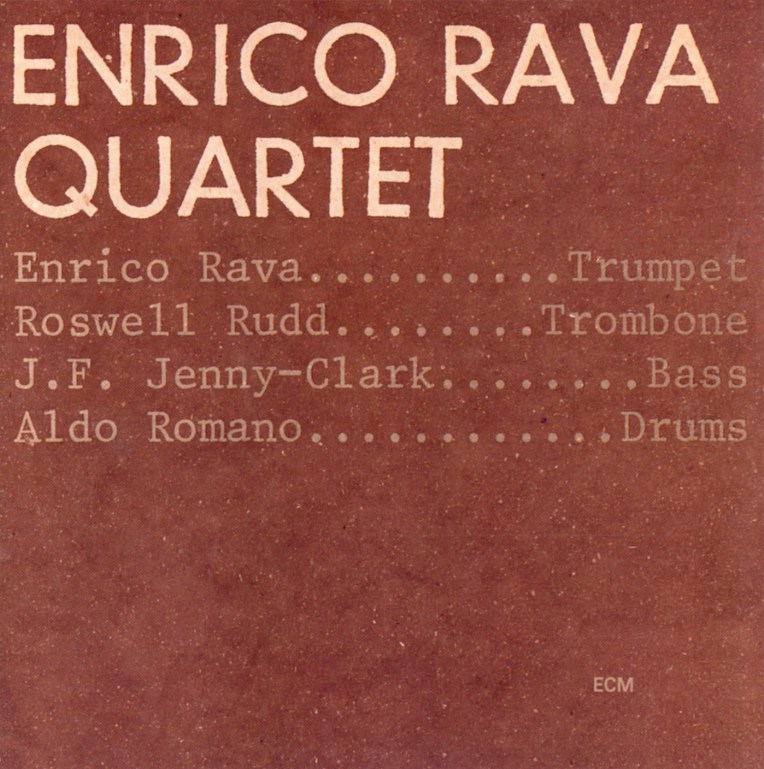
Enrico Rava Quartet: s/t (ECM 1122)

ECM 1122

Enrico Rava Quartet

Enrico Rava trumpet
Roswell Rudd trombone
Jean-François Jenny-Clark bass
Aldo Romano drums
Recorded March 1978 at Tonstudio Bauer, Ludwigsburg
Engineer: Martin Wieland
Produced by Manfred Eicher

Enrico Rava, one of the trumpet’s unsung heroes, unearthed a gem in this self-titled quartet offering from 1978. Although one can always expect an expertly realized variety in any Rava project, what makes this date so special is the assembly of its players. The Italian virtuoso’s hit-you-in-the-chest lyricism—matched perhaps only by label mate Kenny Wheeler—is foiled beautifully by trombonist Roswell Rudd, a free jazz specialist and Archie Shepp go-to whom ECM enthusiasts will recall from Michael Mantler’s CONCERTOS and a smattering of Carla Bley releases on Watt. Rudd’s fluid undertow brings our leader’s more incisive melodic lines to vivid light, gently laying down long thematic carpets upon which every improvisatory step leaves behind an indelible print.

The opening chunk of “Lavori Casalinghi” doesn’t so much kick things off as pull the curtains to reveal a slow sunrise. The drumming of Aldo Romano sets off a spate of powerful statements from the two brassmen, each linked by a chain of highly charged relays. The rhythm section never lags, and even spawns a nimble-fingered turn from bassist Jean-François Jenny-Clark before sliding back into the mournful twists with which it began. This is one of two substantial cuts, the other being “Tramps,” a fifteen-and-a-half-minute swell of sometimes frenzied proportions. Rava and Rudd draw each other into ecstatic exchanges, their playing at its most soaring. Wilder moments are short-lived, but always tasteful. Romano shows off one of the most fluid snare rolls in the business here, flanked by rousing phrasings from Rava and Rudd both. “The Fearless Five” is the first of three shorter numbers that flesh out this balanced effort. A bit of Monk creeps in, foreshadowing the well-worn “Round About Midnight,” which the crew buffs to like-new shine. Finally, the upbeat intro of “Blackmail” leads into some prime playtime for Rava. And as he skips his way across the sky, we take comfort in the somber closure into which he lays his final rest.

All in all, a fine session bubbling with personality and heft, and one well worth owning for the Rava newbie and veteran alike.

<< Ralph Towner: Batik (ECM 1121)
>> Barre Phillips: Three Day Moon (ECM 1123)

Bill Connors: Of Mist And Melting (ECM 1120)

1120 X

Bill Connors
Of Mist And Melting

Bill Connors guitar
Jan Garbarek saxophones
Gary Peacock bass
Jack DeJohnette drums
Recorded December 1977, Talent Studio, Oslo
Engineer: Jan Erik Kongshaug
Produced by Manfred Eicher

Three years after his astonishing acoustic turn on Theme To The Gaurdian and fresh from Jan Garbarek’s Places session, guitarist Bill Connors returned as leader for this moody quartet, for which one could hardly dream up a better roster: Garbarek (saxophones), Gary Peacock (bass), and Jack DeJohnette (drums) fill out the spectrum of this sound palette with the best of them. The synergy for which the latter two musicians have come to be so highly regarded is already plain to see here and spins the free and easy flow that characterizes the album’s ethos from beginning to end. While one might expect an electric guitar at anchor, Connors maintains his wireless interests with no loss of potency. One “side effect,” if you will, of this configuration is that the backing generally keeps its volume low and fades to near silence in order to give Connors ample soloing room. Garbarek’s chops are kept in check, for instance, in the opening cut, given only a single cosmic needle through which to thread their potentially overpowering strains. Similarly attractive negotiations abound in the heartrending tenor of “Not Forgetting,” in the lullaby effect of “Face In The Water.” Garbarek reignites in “Aubade” as if he were embodying the wavering reflections of a pool of fire. Where much of the album is diffuse and liquid, the groove of “Café Vue” is undeniably solid and allows for some engaging breaches of calm before being restored in “Unending.”

While perhaps less specific than Connors’s ECM debut, Of Mist And Melting is a worthy successor. It holds on to that same sense of freedom while charting an ethereal sound that could only come from those gathered.

<< Gary Peacock: December Poems (ECM 1119)
>> Ralph Towner: Batik (ECM 1121)

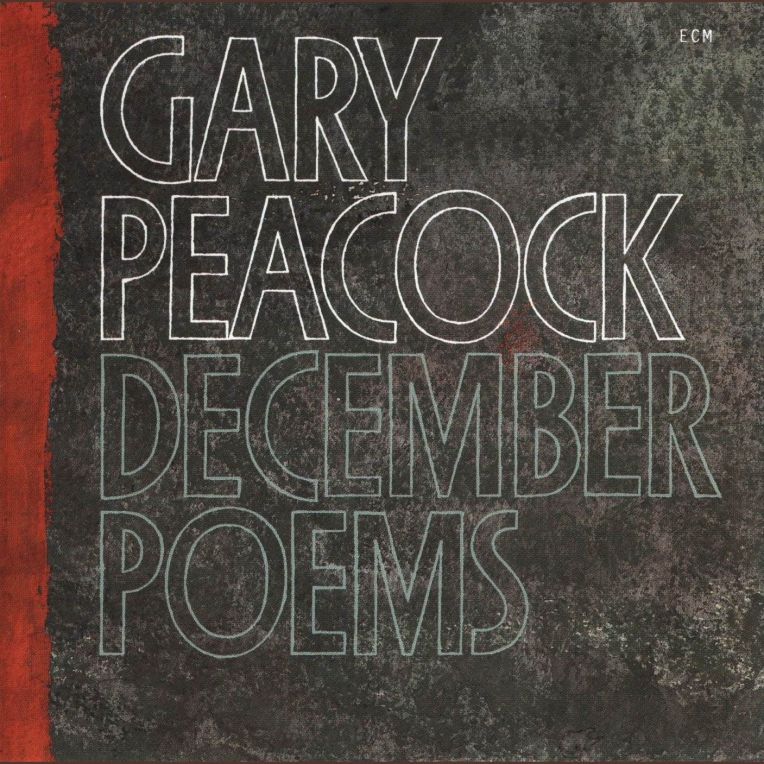
Gary Peacock: December Poems (ECM 1119)

ECM 1119

Gary Peacock
December Poems

Gary Peacock double-bass
Jan Garbarek tenor and soprano saxophones
Recorded December 1977 at Talent Studio, Oslo
Engineer: Jan Erik Kongshaug
Produced by Manfred Eicher

From the start of Gary Peacock’s December Poems, one revels in the sound of his instrument, the buzzing, raw quality of which comes to listeners at last relatively unmitigated. After a languid intro, “Snow Dance” lays down an unsinkable bass line, over which overdubbed improvisations abound. Jan Garbarek’s reports paint “Winterlude” like the sky outside my streaked window: that is, with only the barest of contrasts separating heaven and earth. “A Northern Tale” is a strangely airy segue into the wistful intro of “December Greenwings” and Garbarek’s subsequent reappearance. His winding paths intersect beautifully with Peacock’s straight and narrow in a track that is about as upbeat as the album gets. “Flower Crystals” changes the tone considerably with some internal pianism before settling into “Celebrations.” Like the opener, this also features two basses, only this time caught in a more erratic chain of events.

As I write this, it is indeed December—New Year’s Eve to be precise—and I am on a bus bound for New York City. Behind thoughts of friends and fun (the Metropolitan Opera’s performance of Pelléas et Mélisande awaits me), I feel in the starkness of this music the deeper roots of my travel. As the sun rises somewhere behind the cloud cover, I know that its light shines within. Recorded with unsurprising clarity, the album captures every creak, tap, and involuntary hum. Like a bare tree standing in a snowy field, its branches cut a bold hand-stretch of lines across a canvas of white and gray. As with Jack DeJohnette’s Pictures, this effort offers insight into an otherwise fiery group player whose free-spiritedness is akin to that of the label on which he has found his ideal home.

<< Jan Garbarek: Places (ECM 1118)
>> Bill Connors: Of Mist And Melting (ECM 1120)

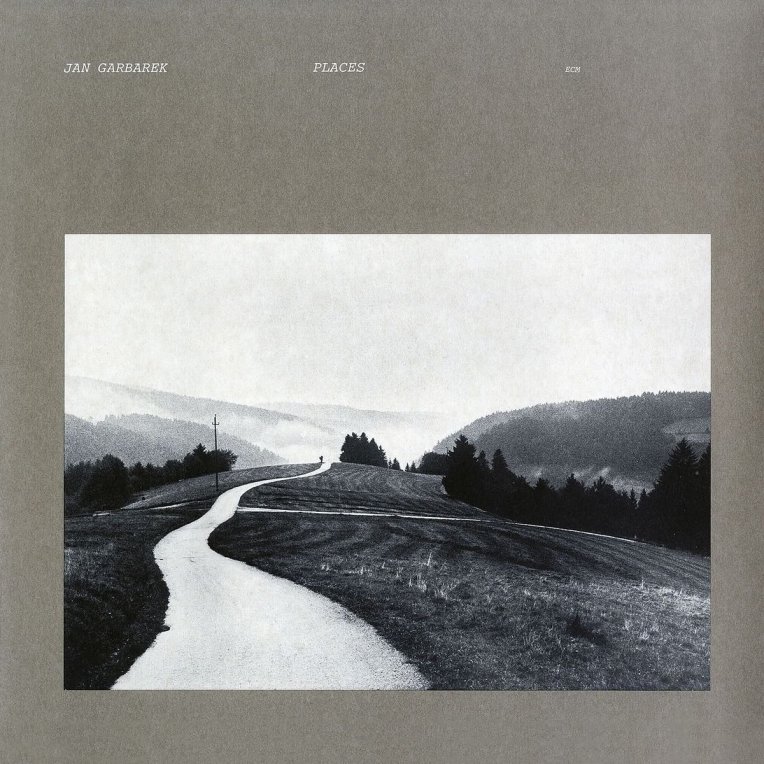
Jan Garbarek: Places (ECM 1118)

ECM 1118b

Jan Garbarek
Places

Jan Garbarek saxophones
Bill Connors guitar
John Taylor organ, piano
Jack DeJohnette drums
Recorded December 1977 at Talent Studio, Oslo
Engineer: Jan Erik Kongshaug
Produced by Manfred Eicher

Places brings together another congregation of musicians that could only come from ECM. Drummer Jack DeJohnette lassoes his scurrying loops to the acoustic hooks of guitarist Bill Connors, while John Taylor supplements most of the cargo with organ. At the helm of this vessel is Jan Garbarek, whose saxophonism starts high and goes only higher. With cumulative notecraft and a heartfelt commitment to atmosphere, he and Taylor unwrap a lush nexus in the stunning opener. The occasional harmonic falls like a dandelion seed onto this pool of night as cymbals splash all around us. Taylor weaves a fine spread, anchoring us with sustained bass lines and attentive chording, leaving Garbarek to seal every crack with his sonic caulk. Connors seeks to light his surroundings, striking at the flint with his percussive gesticulations in hopes that one spark might show the way. Garbarek sharpens himself with arid flavor and carves out a miniature oasis in the crumbling image of exotic desire. The organ weaves in and out like a halo circumscribing us with subtle urgency until it pulls us beyond the point of no return, where dwells only silence in these “Reflections.” We then find the organ “Entering” into an electric guitar embrace. Bass and drums give us footholds where we might not expect to find them. Thus, what began as an elegy turns into a far-reaching journey that is over too soon. But in the next track we’re still “Going Places,” spurred by DeJohnette’s steady pulse and Garbarek’s hidden thermals. The energy comes in waves, subsiding here for a guitar solo and swelling there at Garbarek’s call. “Passing” ends where the album began, in a fluid ostinato of organ over which Connors looses his wavering song. Garbarek draws an ascendant pattern between those quiet strings, lifting us to an arena in which age curls into a semblance of time.

For anyone who wished Aftenland had a beat, this one’s for you.

<< John Abercrombie: Characters (ECM 1117)
>> Gary Peacock: December Poems (ECM 1119)

Keith Jarrett: My Song (ECM 1115)

ECM 1115

Keith Jarrett
My Song

Keith Jarrett piano, percussion
Jan Garbarek tenor and soprano saxophones
Palle Danielsson bass
Jon Christensen drums
Recorded November 1977 at Talent Studio, Oslo
Engineer: Jan Erik Kongshaug
Produced by Manfred Eicher

From the moment we step into the transport of Keith Jarrett’s European quartet, we know we are in for a comforting ride filled with lush scenery and temperate climes. “Questar” opens this set of six Jarrett originals by unfolding a melodic altar for the saxophonic offerings of Jan Garbarek, who trades prime invocations with Jarrett in a formula that pervades the rest of the album to great success. The gorgeous title track, in which we encounter a slightly mournful but always majestic invocation, widens the music’s embrace. Garbarek’s pleasing yet incisive tone works wonders and continues to lead the way in “Tabarka,” where nostalgia shares its berth with the dripping shadows of resolution, and which protects the Michael Naura-like buoyancy of “Country” like a dome over Palle Danielsson’s wonderful solo on bass.

Jarrett cultivates the talents of his fellow musicians in a garden rife with unique hybrids. While his left hand is firmly rooted in the soil of his rhythm section, his right seems to frolic in the rain that nourishes it, changing from liquid to gas and back to liquid in a perpetual cycle of self-renewal. He comes across as nothing less than perfection, sharing in this democratic spread of passion. The colorful scatterings of his solo in “Mandala,” for example, are made all the more so for the fantastic rhythm section backing him every step of the way. As Jarrett peaks with intensity, Garbarek arches his back like a sun flare, a whip cracking silently through time-space in slow motion, giving us an aftertaste of the Norwegian reedman at his early best. During another rich bass solo, Jarrett plucks the strings inside his piano as if to defuse the epiphany. After this palpable spurt of energy, “The Journey Home” breathes a sigh of relief and provides the album’s most gorgeous turns from Jarrett. Fluid as his song, his voice basks in the sunshine. Not to be outdone, Garbarek matches this elegiac acuity, at last fading into brushed cymbals.

The music of Keith Jarrett was already highly sustainable long before the concept became an obligatory buzzword. With My Song he brings that personal ecology in fullest force. Garbarek hardly sounds better than he does alongside the discerning piano man, and is here soulful, restrained, consolatory but also insistent, and never afraid to let loose once in a while. These are musicians bound by trust, which they express with every pellucid turn of phrase they utter on an album that represents one of ECM’s most stunning dates of the seventies.

<< Pat Metheny Group: s/t (ECM 1114)
>> Egberto Gismonti: Sol Do Meio Dia (ECM 1116)

Egberto Gismonti: Sol Do Meio Dia (ECM 1116)

ECM 1116

Egberto Gismonti
Sol Do Meio Dia

Egberto Gismonti guitars, piano, kalimba, percussion, flute, voice
Nana Vasconcelos berimbau, percussion
Ralph Towner guitar
Collin Walcott tabla
Jan Garbarek soprano saxophone
Recorded November 1977 at Talent Studio, Oslo
Engineer: Jan Erik Kongshaug
Produced by Manfred Eicher

Inspired by his time spent with the Xingu Indians of the Amazon, to whom the album is also dedicated, Sol Do Meio Dia (Midday Sun) is a consistently intriguing transitional album from multi-instrumentalist Egberto Gismonti. With him are percussionists Nana Vasconcelos and Collin Walcott and guitarist Ralph Towner, as well as Jan Garbarek on soprano saxophone for a brief spell. At this point in his career, Gismonti was beginning to fill in the porous sound of his 8-string guitar. To this end, Vasconcelos and Walcott flesh out much of the dizzying rhythmic space that defines his sound, while Towner’s 12-string laces the background with more explicit chording. Walcott traces magical circles in “Raga,” for which Gismonti engages us with nimble fingerwork on the guitar’s highest harmonics. Thus begins a chain of sporadic bursts acting in dialogue. With modest virtuosity, the musicians run hand-in-hand down this ecstatic path of music-making to an even more specific sound, this time marked by kalimba and thumb piano. Gismonti’s shrill flute and wordless chanting here recall the work of CODONA. “Coração” is a rich solo and, along with the album’s closer, is a perfect exposition of Gismonti’s notecraft. The disc finishes with a 25-minute suite. Garbarek makes his only appearance in the opening section, which glows with his mournful ululations. An inviting solo from Towner opens the ears to another fluted passage anchored by percussion and handclaps. One can feel the forest at such moments as if it were living and breathing all around us.

The combination of musicians is pure ECM and reflects the brilliant casting of producer Manfred Eicher. As airy as Sol Do Meio Dia sounds, it is also weighted with a certain nostalgia that is difficult to quantify. Like a memory, its actors are always out of focus even when their intentions ring clear. And in the end the intentions are what it’s all about.

<< Keith Jarrett: My Song (ECM 1115)
>> John Abercrombie: Characters (ECM 1117)