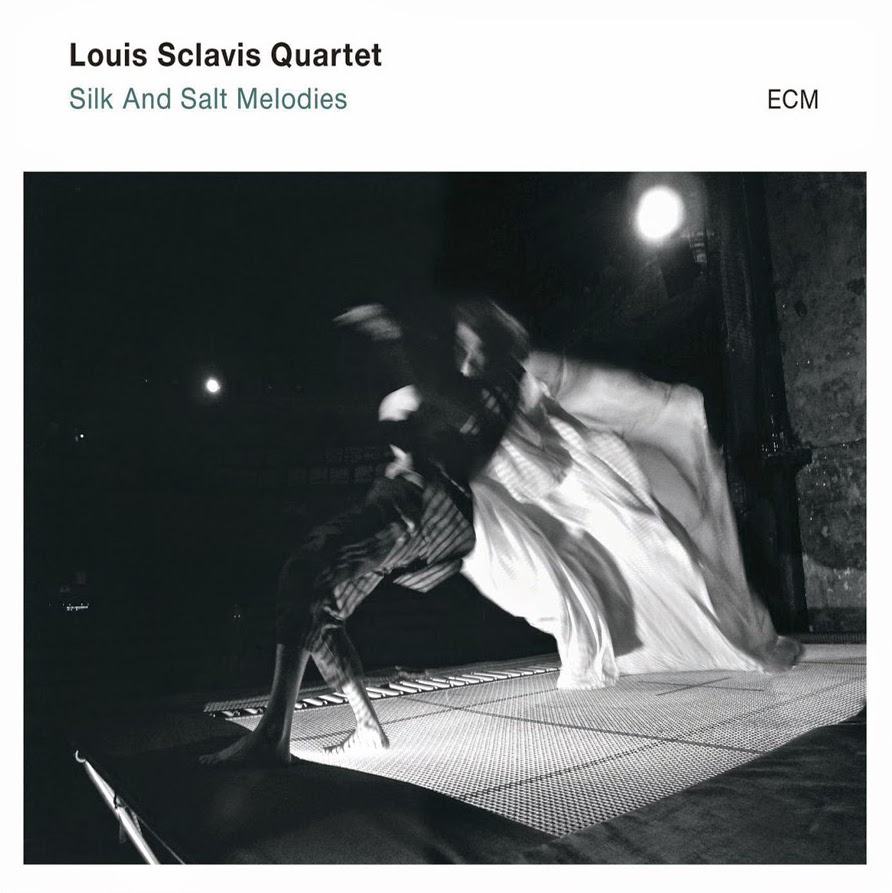
Kenny Wheeler: Songs for Quintet (ECM 2388)

Songs for Quintet

Kenny Wheeler
Songs for Quintet

Kenny Wheeler flugelhorn
Stan Sulzmann tenor saxophone
John Parricelli guitar
Chris Laurence double bass
Martin France drums
Recorded December 2013 and mixed September 2014 at Abbey Road Studios, London
Engineer: Andrew Dudman
Assistant: Toby Hulbert
Mastering: Frank Arkwright
Produced by Manfred Eicher and Steve Lake

The late trumpet/flugelhorn virtuoso and composer Kenny Wheeler was one of jazz’s most beloved musicians and every album he recorded for ECM was an event to be savored—and now more than ever with Songs for Quintet. Wheeler’s last recording nestles some classics in mostly newer material and is a departure for the label in being recorded at London’s legendary Abbey Road Studios, where he is joined by longtime friends tenor saxophonist Stan Sulzmann, guitarist John Parricelli, bassist Chris Laurence, and drummer Martin France.

KW

Given the way that “Seventy-Six” eases its way into the heart, you can be sure this is a Wheeler record. Like “The Long Waiting” later in the set, it rests on a foundation of bass and guitar, on which the band builds its togetherness. Within this mesh, Parricelli slings his guitar solo like a comfortable leather bag that conforms to the body from years of regular use. In both tracks, Sulzmann’s tenor is another remarkable voice, shadowing Wheeler’s own lyrical fronting without stepping on their toes. In fact, he and the rest are in obvious deference to their leader’s coolness.

Two blasts from the past, buffed to a reflective shine, enrich the album with their inclusion. “Old Time,” last heard as “How It Was Then” on the 1995 Azimuth album of the same name, is among the groovier numbers. Sulzmann and Wheeler share soaring harmonies over some prime rhythm sectionining: France an ambassador of finesse and Laurence of nimble eccentricities. And one of ECM’s finest jazz albums of all time, Angel Song, gets a nod in “Nonetheless,” a deserving self-tribute now shed of its shadows in the presence of brighter cymbals and guitar. Sulzmann’s wings catch thermal after thermal in a space that Wheeler might once have claimed on Gnu High. The saxophonist’s true standout track, though, is “Sly Eyes,” a luscious tango that is all the wiser for its bassing. “Pretty Liddle Waltz” is another robust dance.

The cryptically titled “1076” is champagne in a bottle, by which is christened a scuttling vessel. Like “Jigsaw,” its elements interlock seamlessly. The latter tune is slick in that distinctly Wheelerian way and spotlights a musician with a lot on his mind. By his gentle yet forthright tone, Wheeler serves no pretense but the down-home profundity of his vision. Even as his younger sidemen paint sunbursts overhead, he is content to strip his cottage and repaint its walls in variations of that same comfortable shade. In keeping with the rural theme, “Canter No. 1” begins with a relaxed bass solo, from which Wheeler spins an enchanting story. Each chord change becomes a rope swing in his hands as he suspends his peerless language over childhood rivers toward fuller throttle.

Not only is this as fine a swan song as one could hope for; it’s also fantastic album in and of itself. Were one to approach it not knowing the personnel involved, it would sound just as poignant, for its strength lies first and foremost in the writing: a mark of greatness, if ever there was one.

(To hear samples of Songs for Quintet, click here.)

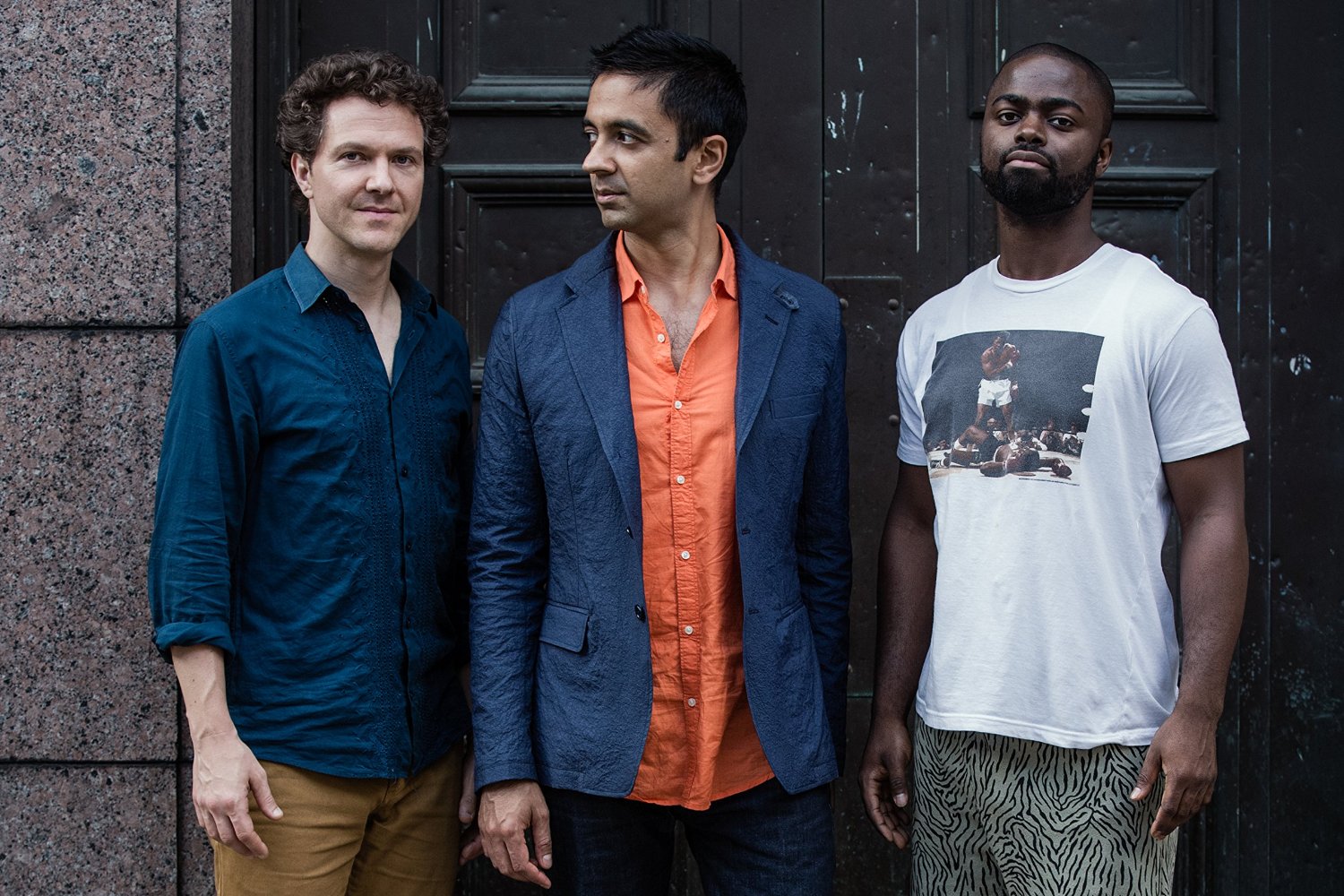
Chris Potter & Underground Orchestra: Imaginary Cities (ECM 2387)

Imaginary Cities

Chris Potter
Underground Orchestra
Imaginary Cities

Chris Potter tenor and soprano saxophones, bass clarinet
Adam Rogers guitars
Craig Taborn piano
Steve Nelson vibraphone, marimba
Fima Ephron bass guitar
Scott Colley double bass
Nate Smith drums
Mark Feldman violin
Joyce Hammann violin
Lois Martin viola
Dave Eggar cello
Recorded December 2013 at Avatar Studios, New York
Engineer: James A. Farber
Assistant: Tim Marchiafava
Mixed October 2014 by Manfred Eicher, Chris Potter and James A. Farber
Produced by Manfred Eicher

Chris Potter has been deservedly recognized as a superlative musician and soloist, but he will just as likely go down in history as one of the great jazz composers of his time. Having already proven himself in that capacity with The Sirens, Potter continues his relationship with the only label with vision deep enough to realize his own. The title of Imaginary Cities evokes Italo Calvino’s invisible ones, and like the Italian magical realist’s vignettes depicts the same space from different angles of time and perspective. Bringing life to this masterpiece are the musicians of his Underground Orchestra. Essentially an expansion of his Underground quartet with guitarist Adam Rogers, pianist Craig Taborn, and drummer Nate Smith, the current project adds to that nexus bassists Fima Ephron (on electric) and Scott Colley (on upright), vibraphonist and Dave Holland Quintet colleague Steve Nelson, and a string quartet headed by violinist Mark Feldman.

The album’s torso is the title suite in four parts. Beginning with the sparkle of “Compassion,” moving through the propulsive “Dualities” and “Disintegration,” and ending with “Rebuilding,” Potter applies pigment to a formidable cityscape indeed, beyond which the bandleader’s sidemen and -women unroll ocean until an entire globe’s worth of water is given a chance to reflect it. Strokes of brilliance to listen for are Rogers’s constellatory riffs (especially in the far-reaching Part 4) and the string quartet writing of Part 2 (in which Nelson’s marimba also makes a multifaceted splash within a pizzicato frame). Through it all, Potter’s saxophones carve lines in the water like the fins of benevolent sharks. He unpacks his solos with the intuition of an experienced traveler and, especially by the sopranism of Part 3, emotes in an honest, straightforward tone.

The peripheral yet no-less-integral outliers of the program beget some of Potter’s most advanced playing on record. Of these, “Lament” is a most worthy introduction. Colley’s contributions on bass to the same are duly expressive and feed off arco strings without draining their atmosphere, from which emerges Potter’s tenor only after a lush prologue. His patient reveal is genius and thwarts our over-allegiance to the man at stage center. Between the angular “Firefly” (remarkable for Ephron’s bass guitar solo) and the Bartók-inspired “Shadow Self” (marked by Feldman’s unmistakable violin and Potter’s bass clarinet), exist lips locked in a smile, and which in the concluding “Sky” leave their kiss marks on the clouds.

Potter practices a trifecta approach, meaning that he eases into his themes and that, no matter how far his fingers travel in improvising around them, he always keeps home base in plain sight. His is a music of the here and now. It needs only you to guide it into the future.

(To hear samples of Imaginary Cities, you may watch the EPK above or click here.)

Stefano Bollani: Joy In Spite Of Everything (ECM 2360)

Joy In Spite Of Everything

Stefano Bollani
Joy In Spite Of Everything

Mark Turner tenor saxophone
Bill Frisell guitar
Stefano Bollani piano
Jesper Bodilsen double bass
Morten Lund drums
Recorded June 2013 at Avatar Studios, New York
Engineer: James A. Farber
Mixed March 2014 in Lugano by Manfred Eicher, Stefano Bollani and Stefano Amerio (engineer)
Produced by Manfred Eicher

“You just go and you see what happens.” This is how pianist Stefano Bollani describes jazz in its purest form. And because so much happens on Joy In Spite Of Everything, his latest for ECM, you’ll want to return to it time and again to puzzle through its many twists and turns. The band is accordingly something of an ad hoc congregation. The album documents the first time that saxophonist Mark Turner, guitarist Bill Frisell, bassist Jesper Bodilsen, drummer Morten Lund, have ever been in the same room, and with their charismatic leader armed at the helm with nine original tunes, the results are spectacular.

Bollani band

Bollani never ceases to impress with the underlying consistency of execution he brings to even the most disparate music. His ballads glow by virtue of an inner fire, while his up-tempo numbers breeze coolly on by. But the new sound of “Easy Healing” may be something of a surprise. One half-aware listen, and you might swear it was an outtake from Charles Lloyd’s Voice In The Night. The instrumental combination—and within it Frisell’s John Abercrombie-esque picking, Bollani’s kaleidoscopic solo, and Bodilsen’s brief unpacking—in tandem with the closely miked engineering puts you in the center of it all.

Slow dances are hard to come by this round, but find a worthy ambassador in Turner, who graces two of the album’s most reflective sides: “Les Hortensias” and “Vale.” His soulful unpacking of the first, a gorgeous rubato picture brushed as finely as the drums, is by far the album’s highlight, while the second weaves its solos through a gnarled forest. Turner is, of course, just as comfortable on the hot plate, leaving his wheels on the runway of “No Pope No Party” with no intention of ever coming down. And as Lund balances power and sensitivity, Frisell walks a tightrope of his own between melodic defiance and evolution. The guitarist further shares moonlight with Bollani throughout “Ismene,” which would seem to evoke a fairy frolicking along the cusp of a leaf-cupped pool but which might just as well be a love song.

A sprinkling of other tunes rounds out the set. Bollani’s nimble fingers clutch the spotlight of “Alobar E Kudra.” Its angular groove is most representative of the album’s name. “Teddy” is a happy-go-lucky duet for guitar and piano that might seem out of place were it not so brilliantly executed. And the title track is the fleetest of them all, throwing the circle back on Lund, who shuffles the deck at every turn of this trio excursion.

I was delighted to encounter “Tales From The Time Loop,” which names a 2003 book by David Icke. Having read and listened to almost everything ever written by the world’s most controversial author, I couldn’t help but smile to see him referenced on an ECM record. Of the many theories put forth by Icke, his vision of a holographic universe is one of the more intriguing, and finds a musical equivalent in these smooth travels (this album’s title further echoes his message of infinite love). Every cell of the rhythm section’s bustling interactions suggests infinitely more within, setting up a chain of arresting illusions. Bollani’s very presence reminds us of why we arrived in the first place: to go and see what happens.

(To hear samples of Joy In Spite Of Everything, you may watch the EPK above or click here.)
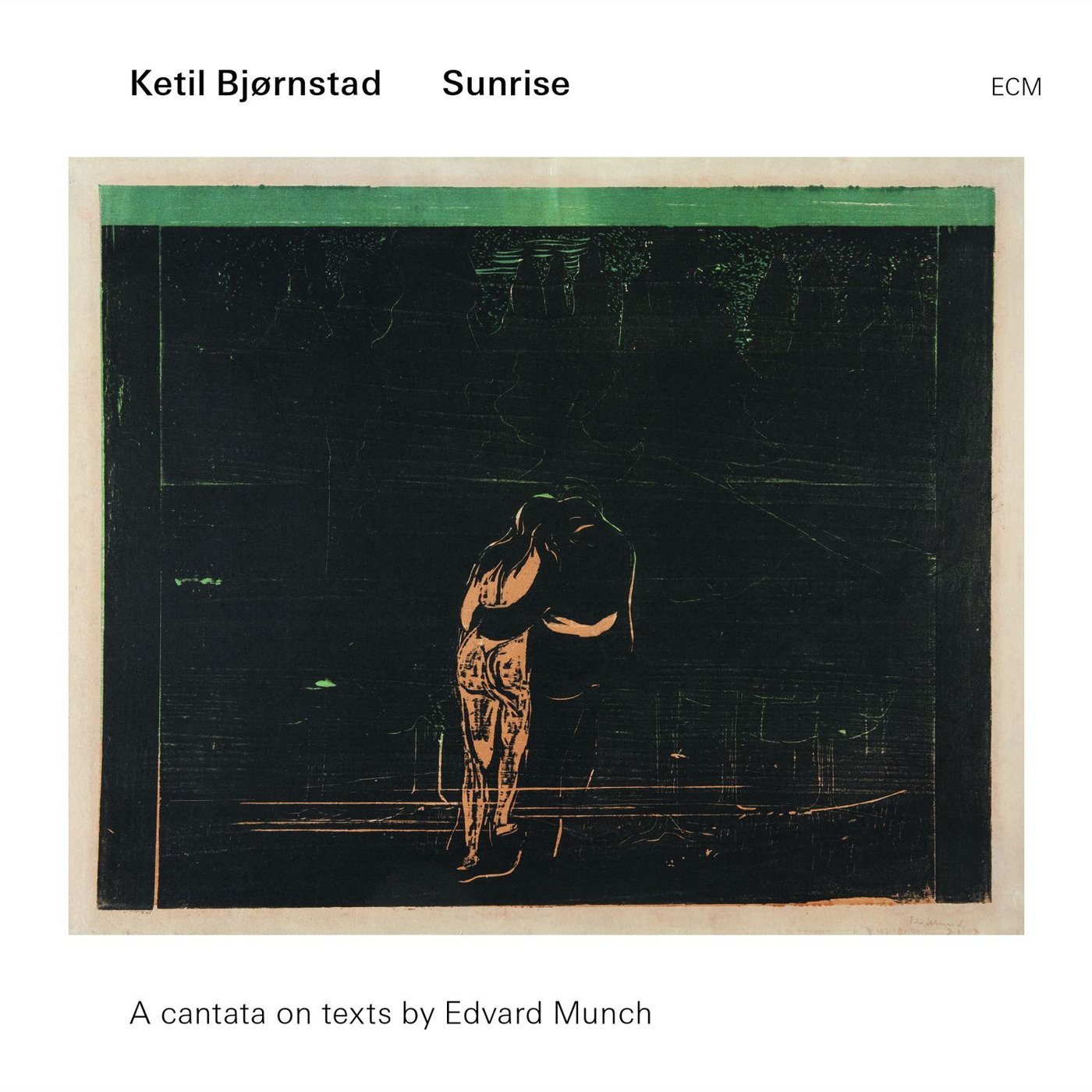
Ketil Bjørnstad: Sunrise (ECM 2336)

Sunrise

Ketil Bjørnstad
Sunrise

Kari Bremnes vocal
Aage Kvalbein cello
Matias Bjørnstad alto saxophone
Bjørn Kjellemyr double bass
Hans-Kristian Kjos Sørensen percussion
Ketil Bjørnstad piano
Oslo Chamber Choir
Egil Fossum conductor
Recorded April 2012 at Rainbow Studio, Oslo
Engineer: Jan Erik Kongshaug
An ECM Production

A bird of prey is trapped
deep inside me. Its talons
have ripped into my
heart, its beak has
driven itself into my chest,
and the beating of its wings
has darkened my sanity.

Norwegian pianist-composer Ketil Bjørnstad seems to be in one of the most creative phases of his career. Increasingly, he has turned to the human voice as an expressive outlet for his ever-songlike writing, and it was only a matter of time that those forces should reach the level of a choir, a medium for which he was asked to write music in commemoration of the Nordstrand Musikkselskap Choir’s 70th anniversary in 2011. Having already engaged with the life of Edvard Munch in his 1993 literary biography Historien om Edvard Munch and set the painter’s neglected words to music on the album Løsrivelse, he naturally returned to those same texts for Sunrise. Yet Bjørnstad’s self-styled cantata is more than the portrait of an artist. It is an affirmation of light.

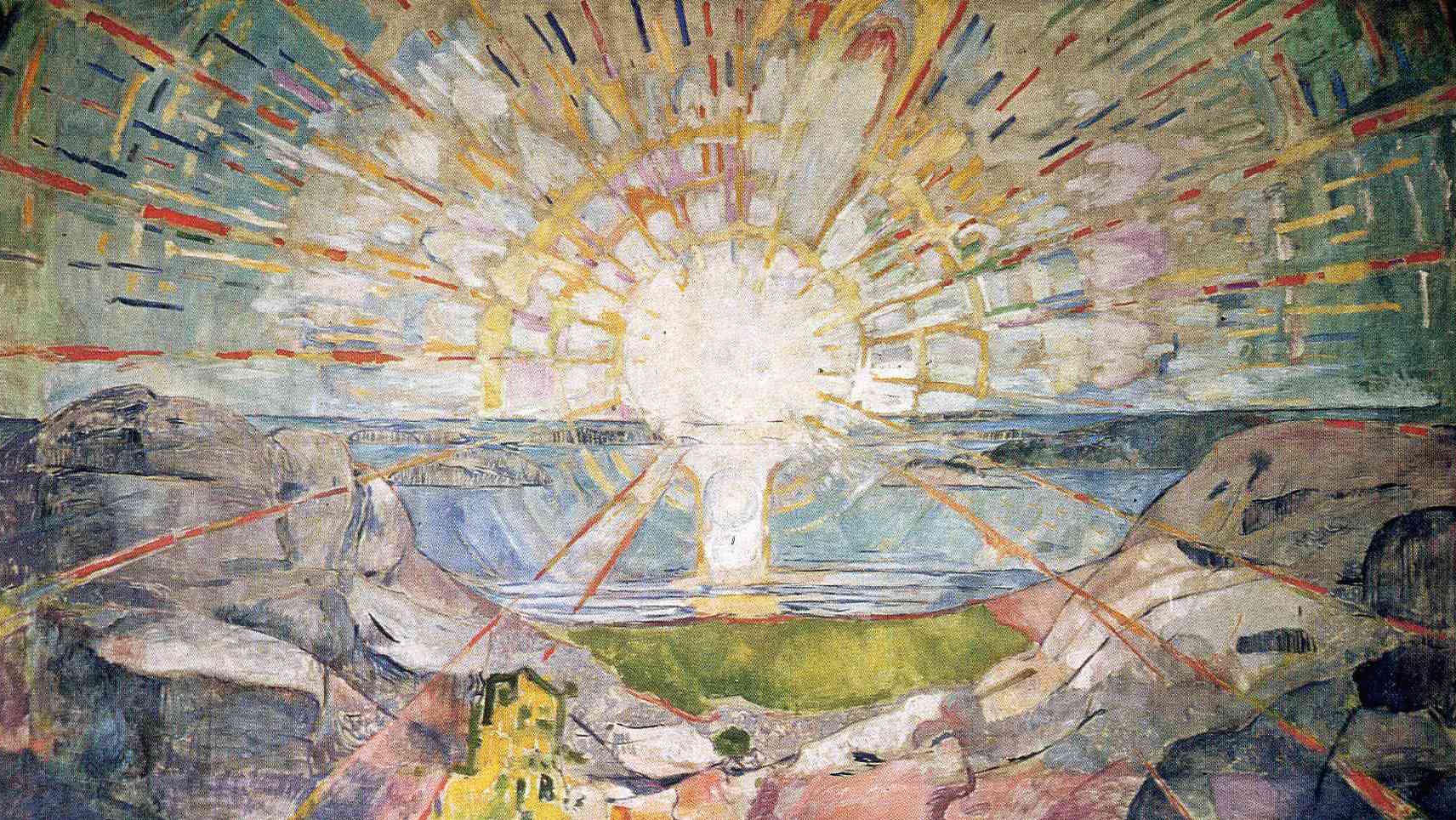
Munch wrote flashes of prose in preparation for many of his paintings. Bjørnstad characterizes the texts chosen for this monumental work as dealing unanimously with existentialist dilemmas. In addition to Munch’s paratextual writings, Bjørnstad was intimately acquainted with his 1909 mural The Sun, under which the young pianist saw many greats play at Oslo’s University auditorium, the Aula, where it hung. In that painting, notes the composer, “one can clearly discern the degree to which Munch struggled with and against the forces of life, and how deeply and endlessly he yearned for enlightenment and reconciliation.” The same holds true for the music he has written into its aura.

The Sun

Most attractive about Sunrise is its breadth of idiomatic conviction, which is most vividly clarified in the four songs written for singer Kari Bremnes, with whom Bjørnstad worked on the aforementioned Munch cycle. She is joined by Bjørnstad at the keyboard, alto saxophonist Matias Bjørnstad (no relation, it seems), and bassist Bjørn Kjellemyr on “Moren” (The Mother), which depicts the haunting scene of a young boy who holds his mother’s hand in anticipation of going outside but is blinded by the light of spring once they open the door. Bremnes’s oaken alto lends heart to every word it envelops. In the montuno-flavored “Stupet” (The Cliff), for instance, she evokes a jagged cliff and the dangerous ocean churning below like a death wish. The naturalness of her shading lends intuitive dimensionality to the near-pop groove of “De fineste nerver er rammet” (The Most Delicate Nerves are Affected) and a lover’s wicked thoughts in “Åpent vindu” (Open Window), for which cellist Aage Kvalbein provides the lamplight and Bjørnstad a certain temptation beneath the floorboards.

Turning to the sections for choir gets us into some potentially divisive territory. Bjørnstad is clearly not a choral writer, as attested by the fact that the vocal arrangements were done by Egil Fossum, who also conducts the present recording. Certain sections are more memorable than others, such as “En rovfugl har satt seg fast i mitt indre” (A Bird of Prey is Clinging to My Inner Being), which opens the entire cantata with the unlikely ante of a steel drum, courtesy of percussionist Hans-Kristian Kjos Sørensen. Like a warped church carillon as heard through the screen of memory, it breeds a prayerful cello to greet the dawn. The choir opens its lips to greet the titular bird, which traps itself in the chest but which by the grace of song is placated by God’s azure stare. Subsequent moods and images range from the apocalyptic [“Alfa og Omega” (Alpha and Omega)] to the frivolous [“Livets dans” (The Dance of Life)]. Other elements feel more derivative, such as the hints of Samuel Barber’s famous Adagio in “Adskillelsen” (The Separation).

More interesting to consider are Munch’s sentiments, revealing as they do a conflicted mind desirous of peace, splashing color across the human psyche as if it were the truest canvas. In “Intet er lite” (Nothing is Small) is nestled his meta-statement: Nothing is small, nothing is large. / We carry worlds inside us. Words to live by for both the painter and his thoughtful composer. Wordless singing beneath the cello’s commentary accentuates an underlying yearning. Even the jazzier inflections of “Joden elskede luften” (The Earth Loved the Air) enhance the starkness of Munch’s inner world, a place where trees uproot themselves and turn into human beings: Everything is alive and in motion. / Even at the center of the Earth / there are sparks of life. This leaves us to bask in the promised “Soloppgang” (Sunrise), which unites musicians and singers in an optimistic flourish that is hard to come by in Bjørnstad’s work.

Overall, there is a rustic, hymnal quality to the choruses, which suits the material well enough. More exciting, however, are the three “Recitatives” and “Intermezzos” signposting the program. The former elicit some of Bjørnstad’s most unchained playing on record in bursts of cathartic free improvisation, while the latter weave the piano into melodic shadows of cello or saxophone, each a thread gathered from an open wound and spun into new flesh. Like the protagonists of “Som i en kirke” (As if They Were in a Church), they reveal a gravid awareness of mortality, seeing creation as a church unto itself, and nature as God’s tabernacle.

(To hear samples of Sunrise, click here.)

Ketil Bjørnstad: La notte (ECM 2300)

La notte

Ketil Bjørnstad
La notte

Ketil Bjørnstad piano
Andy Sheppard tenor and soprano saxophones
Eivind Aarset guitars, electronics
Anja Lechner violoncello
Arild Andersen double bass
Marilyn Mazur percussion
Recorded live July 21, 2010 at Molde International Jazz Festival
Engineer: Jan Erik Kongshaug
Mixed March 2012 at Rainbow Studio, Oslo by Jan Erik Kongshaug, Ketil Bjørnstad, and Manfred Eicher
Produced by Manfred Eicher

Ketil Bjørnstad has been a formative presence on a wide variety of ECM releases. Since 1993’s Water Stories, his recognizable pianism and compositional voice have left indelible marks on the label’s catalogue. Age has fortified the intimacy of his melodic formations, whether in his darkly alluring collaborations with cellist David Darling or in projects with singers. La notte, however, represents a return to form, while also taking his craft in unexpected new directions. The result of a Molde International Jazz Festival commission and recorded live in 2010, Bjørnstad’s eight-part suite is a self-styled “soundtrack to an inner film.” It’s also his most sublime creation to date.

KB

Bjørnstad has always been literary in his music, just as he has always been musical in his literature, but cinema has also been an integral influence. Here he pays natural homage to Michelangelo Antonioni, citing the Italian director’s “slow, rhythmic authority” as an early source of musical inspiration. To bring that moving vision to life, he has assembled a powerhouse band of saxophonist Andy Sheppard, guitarist Eivind Aarset, cellist Anja Lechner, bassist Arild Andersen, and percussionist Marilyn Mazur. Together, they create a musique verité of raw forces.

Harnessing such forces requires no small amount of finesse and patience, as demonstrated in the slow progression from Parts I to II. Between the low, arco bass and electronic hum, there is little to grab hold of in the beginning. Even as Lechner’s cello and Bjørnstad’s piano engage in proper dance, Mazur’s tracery is still far away. Only when Sheppard lights up the sky with his tenor does the band’s full gravity take effect. Into that shift from liquid to solid, we might read the robustness of Antonioni’s characters and the fleetingness of their environments, if not the other way around.

Mazur and Sheppard are, in fact, the stars of this performance, although, duly invigorated as they are by Bjørnstad’s finely grained writing and flexible architecture. The saxophonist opts for soprano in Parts III, V, and VII, taking off with un-caged melodies. Having learned from Icarus’s example, his wings are impervious to the sun, which he proves to be a reflection anyway when he leaps into the sky as if it were an upside down pond, sending ripples toward every horizon. Mazur, for her part, accentuates the jazzier shades of this spectrum, acting as a buffer zone for Andersen’s bold cartography. With Bjørnstad, the latter two become a most formidable trio, the central nervous system to Aarset’s coronal guitar and Sheppard’s ecstatic flailing.

Mazur and Sheppard are, in fact, the stars of this performance, although, duly invigorated as they are by Bjørnstad’s finely grained writing and flexible architecture. The saxophonist opts for soprano in Parts III, V, and VII, taking off with un-caged melodies. Having learned from Icarus’s example, his wings are impervious to the sun, which he proves to be a reflection anyway when he leaps into the sky as if it were an upside down pond, sending ripples toward every horizon. Mazur, for her part, accentuates the jazzier shades of this spectrum, acting as a buffer zone for Andersen’s bold cartography. With Bjørnstad, the latter two become a most formidable trio, the central nervous system to Aarset’s coronal guitar and Sheppard’s ecstatic flailing. The presence of these bandmates rubs off on Bjørnstad, whose solo in Part IV magnifies the suite’s red thread with a fullness of expression such as he has rarely elicited before. When Lechner joins him, it feels more than logical. Their relationship is this music’s very foundation, prefiguring Parts VI and VIII as well and making broken images whole again by the glue of remembrance.

This is a must-have for fans of any of anyone involved, but especially of Bjørnstad, who on this stage reaches new heights, and depths, spreading his energies across the toast of inspiration into a brighter tomorrow.

(To hear samples of La notte, click here.)

Sounds and Silence: Travels with Manfred Eicher

Sounds and Silence

If every film has a soundtrack, does it not stand to reason that every soundtrack has a film? This would seem to be the guiding question behind Sounds and Silence. In this unprecedented DVD release, documentarians Peter Guyer and Norbert Wiedmer set out to capture ECM Records as a living entity in which human labor and ingenuity are the dual heart of musical life. Although billed as a “road movie” and patterned by footage of label founder and producer Manfred Eicher in various states of transport, it is equally concerned with the non-literal paths that have led to the creation, sustenance, and influence of the German imprint and its ongoing permutations. They keyword here is “ongoing,” because Eicher and his trust have only intensified their productivity since 1969, when it all began, to the point of releasing, on average, an album per week.

It is almost inevitable that the film’s opening montage and credit sequence should be accompanied by a recording of Keith Jarrett. The pianist is one of ECM’s brightest stars, but is also committed to the power of simplicity, as demonstrated in his rendition of Georges I. Gurdjieff’s “Reading of Sacred Books.” It is an apt description of the filmmakers’ and their process, tasked as they are with interpreting an archive of such magnitude that not even a collective documentary on each album could hope to articulate it. Rather, they must choose to concentrate on specific times, places, and moods in the hope of tapping into something essential to them all. That being said, when Eicher talks of seeking the luminosity of music, which like a comet’s tail leaves behind a pure trace of its being, and philosophizes that music “has no fixed abode,” we begin to realize that such technology of capture as the camera is forever limited in its relationship to the audio realm. For while images suggest associations by their very existence, sounds thrive on the nourishment of our wildest interpretations. Consequently, this film is not so much a behind-the-scenes manifesto of artistic creation as it is a gentle visualization of ECM’s inner heart and its ripple effect across oceans.

Pärt and Eicher
(Manfred Eicher and Arvo Pärt)

Rehearsals with Estonian composer and New Series darling Arvo Pärt at St. Nicholas’ Church in Tallinn yield the documentary’s first proper footage and serve as touchstones for its narrative arc. They offer a strangely profound glimpse into the countless intangibles that go into any ECM recording, but particularly those in which the composer is present, at once presiding over and deferential to the equally intangible magic of a committed performance. Pärt is every bit the contemplative human being one might expect. He feels music with every fiber of his being, and it’s a gift to witness, if only briefly, his childlike sagacity. His face is a veritable gallery of expressions, each attuned to a change in the score and the possibility of making it grow even further toward an unattainable perfection.

Pärt
(Pärt listens intently as conductor Tõnu Kaljuste’s right hand threads the proverbial needle)

During one such scene, a most touching development occurs when, in mutual happiness, Pärt engages Eicher in a dance. This single gesture reveals something perhaps unexpected in both men: in the composer a feeling of bliss that many of us lose in the name of adulthood, in the producer a love for the simple pleasure of forces aligning in exactly the way he wants. Eicher is indeed a guide of uncompromising integrity, and his smile reveals far more about why he does what he does than the iconic and relatively frequent photos of him hunched over yet another mixing board. True dedication to one’s craft, these images suggest, requires not only a seriousness of heart but also a frivolity of spirit.

Dance
(Eicher and Pärt share a dance to the tune of the latter’s Estonian Lullaby)

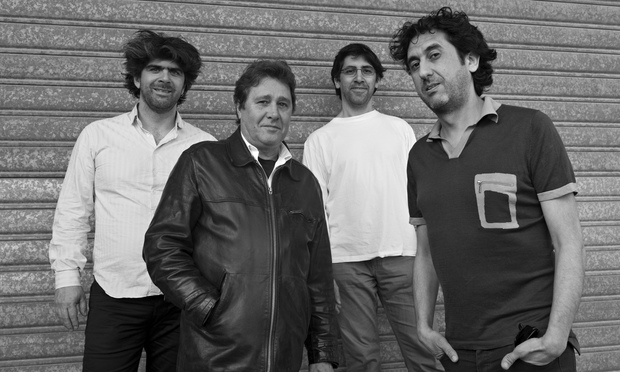
Between these signposts, we encounter a train of faces and voices, many perhaps for the first time. Interviews with Pärt and his delightfully honest wife Nora, Greek composer Eleni Karaindrou, Tunisian oudist and composer Anouar Brahem, Italian multi-reedist Gianluigi Trovesi and accordionist Gianni Coscia, Argentine bandoneón master Dino Saluzzi, and Eicher himself help us better understand the inconceivable alignments of fate that sometimes must occur just to bring the right people together, much less allow them the space to create whatever they will create. The bellows of Saluzzi’s lungs, for example, prove just as eloquent as those between his fingers when he shares his history as a musician who shunned the academy in favor of raw expression. In him is revealed an educator’s heart, one that seeks to learn as much as enhance learning in others. Brahem is likewise an articulate soul possessed of a subtle wit. His sensitivity toward political matters only serves to enhance appreciation of his sonic endeavors, which in light of his worldview take on new valences of awareness and pacifism. It’s a joy to watch him alone in his home studio, building his tunes, element by element.

Trees
(Only light may part shadow)

As we navigate environmental flashes of Eicher’s travels, we follow the producer to Athens for a monumental performance of Karaindrou’s music (of which he shadows a rehearsal with saxophonist Jan Garbarek and violist Kim Kashkashian), a recording session at Studios La Buissonne in southeastern France with Nik Bärtsch’s Ronin (and the intuition needed to bring out just one muted string hit in post-production), another at Copenhagen’s Sun Studio with Marilyn Mazur, a concert featuring Brahem with pianist François Couturier and accordionist Jean-Louis Matinier at the Prinzregententheater in Munich, and mixing Trovesi’s explosive reconstructions of operatic favorites in Bergamo, Italy. Other highlights include footage of said concerts, a brief sojourn to Argentina with Saluzzi and Lechner, some candid moments with the ever-animated Trovesi and his confederate Coscia, and even a peek into ECM’s Munich headquarters, where we see everyday logistics in action, including the meticulous process of selecting album covers.

Cover selection
(Reading between the covers)

In the same way that Eicher seeks to put the listener inside the music, so do the filmmakers try to put us in ECM’s world, and in that spirit we end where we began: with Pärt. Experiencing the consummation of every above-mentioned force is one of the most gratifying passages of the film. The music is the message, because the message exists to be sung.

Pärt rehearsal
(Icons before icons)

ECM’s music has always approached the level of cinema, and so it was only natural that it should be honored in moving pictures. And yet, the end result seems more like the realization of a fantasy than a picture of reality. Throughout the 87-minute duration, the filmmakers make as much as they can out of what little they have. Case in point: Saluzzi and Lechner’s Argentine sojourn. Aside from a hint of social awkwardness, the footage overlaps with another film by co-director Wiedmer (see El Encuentro, also released on an ECM-edition DVD) and is perhaps better saved for that portrait. Its inclusion here feels like recycling and not in the documentary’s best interest.

Another dividing point may be the lack of attention paid to certain other production aspects. Early on in the film, Pärt speaks sagaciously of the recording session as an organism, of which musicians, engineers, and producers are vital organs. And yet, what of those unsung engineers? While of course ECM has none under its employ (they are independent artists working for independent studios), Martin Wieland, Jan Erik Kongshaug, Stephan Schellmann, Peter Laenger, James A. Farber, and, more recently, Stefano Amerio, among others, have all been of vital importance in shaping the label’s distinctive identity. The reality, of course, is that such a film, regardless of maker, can at best only be supplementary and will be of far more interest to the ECM fan than to someone unfamiliar with the label. Nothing can replace the listener. And is that not what Eicher is, above all? Why else would we first encounter him on screen as a man alone with his thoughts, as if listening to the world?

Seated Eicher

And so, it is in the name of listening that I direct your regard to the film’s soundtrack.

ECM_2250_CD

A cover that brings to mind Iro Haarla’s Vespers situates us in a cloud-break with only a snatch of landscape below to indicate the separation of worlds. The composition is emblematic of a label that has always charted indefinable borders between civilization and emptiness, and in so doing has made music seemingly aware of its own mortality. Keith Jarrett’s “Reading of Sacred Books,” written by Georges I. Gurdjieff, asserts nothing but its own lack of assertion. It is instead an expression of transcendence, a confirmation of the energies all around and within us, by which we are able to produce this wonder called music in the first place.

If anything can be said to define ECM’s output, it is memory. Charting that which has already passed in order to open our eyes to that which has yet to come, these musicians have all primed us for the opening of newer doors. This is the spirit of the label: to take the musical moment and craft it into self. Few tracks on this compilation embody this spirit more creatively than “Modul 42” from Nik Bärtsch’s Ronin. After gaining access to the recording process in the film, it’s wonderful to encounter the music on its own terms, to look deep into its eyes and know it’s looking back at (and through) us. The sparkling middle passage ushers us into a world hitherto unknown yet undeniably familiar. Anouar Brahem’s “Sur Le Fleuve” is another slice of magic. Featuring the same trio combination of piano, accordion, and oud as recorded in the film, its marriage of instrumental signatures is nothing short of breathtaking. We can take great comfort in this music, for it is our partner.

Dino Saluzzi’s “Tango a mi padre” played as close to breathing as possible by him and Anja Lechner, speaks to another facet of that fascination with memory, which in this piece is so alive that it weeps for itself. We might, then, hear Vicente Greco’s “Ojos Negros” at the same duo’s hands with renewed sense of purpose. That these two bodies traveling through space and time have found themselves somehow joined at the soul, sharing with one another the details of their upbringing and the unknowns of their future, is a miracle. Also miraculous are two selections from Eleni Karaindrou, whose compositional fabric is spun from her “Farewell Theme,” which floats Jan Garbarek’s soulful tone across an ocean’s wave of strings, as Kim Kashkashian’s aquatic tail leaves its marks in the water, and “To Vals Tou Gamou,” in which piano, accordion, and violin dance like pens across paper. We may listen to this music either poignantly or through the lens of a joy that remains somehow clear in the mists of its origin.

The “Arpeggiata addio” by Giovanni G. Kapsberger, as heard on Rolf Lislevan’s Nuove musiche, likewise speaks of the past in the present. In it we can feel the propulsion of life experience by the power of desire. A voice carries us across the threshold of then and now, cradled in hands chapped like old parchment. Fresher inkwells spill their contents across Marilyn Mazur’s whimsical “Creature Walk,” a piece which as we know from the documentary brings a smile even to her face, and Gianluigi Trovesi’s blistering take on “Così, Tosca” by Giacomo Puccini. Although lit by a canonical match, Trovesi’s candle burns like an instrument of restless beauty in the macabre waltz funneling around him.

Arvo Pärt is also represented twice. His Für Lennart in memoriam is an undeniably dense molecule of emotional transfixion, while the postludinal Da Pacem Domine, after a reprise of Jarrett’s Gurjdieff “Reading,” carries us on its feathered back to the edges of sunset, where awaits the discovery of discovery.

How does one sum up ECM Records? Thankfully this is the purpose of neither the documentary nor its soundtrack. Rather, they exist to give us glimpses into the ever-shifting structure of the label’s skeleton. Following Manfred Eicher on these journeys, whether through eyes or ears, you might just find yourself wondering how so much external architecture could arise from music that is immaterial, only to realize that it’s the other way around.

(To hear samples of the soundtrack, click here.)

Jon Balke: Magnetic Works 1993-2001 (ECM 2182/83)

Magnetic Works

Jon Balke
Magnetic Works 1993-2001

Jens Petter Antonsen trumpet
Per Jørgensen trumpet, vocals
Arve Henriksen trumpet, vocals
Morten Halle alto saxophone, flute
Tore Brunborg tenor and soprano saxophones
Gertrud Økland violin
Trond Villa viola
Jonas Franke-Blom violoncello
Svante Henryson violoncello
Cikada String Quartet
Henrik Hannisdal violin
Odd Hannisdal violin
Marek Konstantynowicz viola
Morten Hannisdal violoncello
Jon Balke piano, keyboards, percussion, electronics
Anders Jormin double-bass
Marilyn Mazur percussion
Audun Kleive drums
Recorded 1993 (Further) and 2001 (Kyanos) at Rainbow Studio, Oslo
Engineer: Jan Erik Kongshaug
Solarized recorded 1998 at Audiopol, Skien
Engineer: Audun Kleive
and Rainbow Studio, Oslo
Engineer: Jan Erik Kongshaug
Compilation by Jon Balke
An ECM Production

Magnetic Works confirms keyboardist and composer Jon Balke as one of the most important and eclectic voices of Norwegian jazz. Collecting tracks from two ECM albums and nine of ten tracks from the long out-of-print Solarized (originally released in 1999 on the EmArcy label), this 2-CD set is an instant archival gem. In his liner note for the compilation, Balke describes the music he played with his influential Magnetic North Orchestra as having been “written to allow the individual musicians to enter an optimal playground for their expressivity.” Achieving this was no small feat, but listening to these musicians negotiate their personalities by way of the group’s collective distribution promises fascination for the Balke fan and newcomer alike. Although anyone who owns Further and Kyanos will find nothing new among the selections from those albums, hearing them shuffled in the present context is sure to bring about new relationships and nuances.

Further

Released in 1994, Further was the MNO’s label debut. “Departure” opens both album and compilation with an incantation of reed and brass. It’s a full-throated welcoming into a space abundant in elemental colors. The swinging undercurrent of “Changing Song” is picked up by strings and Per Jørgensen’s distinctive vocals, while drummer Audun Kleive and percussionist Marilyn Mazur flesh out the ecosystem of its unfolding. Balke, meanwhile, emotes at the piano through this lush climate with all the freedom of a bird. In this vein, “Flying Thing” expands on the percussive delicacies at hand, bassist Anders Jormin laddering down into the gears of a most intimate machine. Balke then leads a Brazilian-inspired groove, gliding just under the radar of the horns. “Horizontal Song” is a nostalgic piece of heaven. The string section relays pizzicato accents and arco trails while the horns and percussion flock to bass like wings of shadow to a flame. “Moving Carpet” is another rhythmic standout. So open yet so fully plumed, it boasts a soaring turn from saxophonist Tore Brunborg. “Taraf,” with its lovely altoism from Morten Halle, could very well be a Michael Mantler elegy. The ascending bass line of “Shaded Place” most clearly evokes its title. Like a napping stranger whose dreams are visible in a hovering cloud, it turns but does not wake. Balke and Jormin dig deep for emotional treasure and come up with handfuls.

Kyanos

Kyanos, from 2002, is a far more biologically minded album—not only because of the track names, but also because of the intensely miniscule palette on which Balke and his musicians draw throughout. A seemingly omnipresent breath of electronics sets it apart from other MNO records, as does its prioritized roster, only minimally adorned by strings. The title track is quintessential in its pairing of trumpet and droning wave. Like the tracks “Katabolic” and “Mutatio” that precede it, it has caught something mournful in its net and can only contemplate whether to throw it back or consume it. In this sense, Balke’s role is far more physiological than melodic, as demonstrated by the pianistic surgery of “Plica.” The fertility-laden “In Vitro” and “Zygotos” enrich the microscopy of every snake and ladder, breaking skin at last in the exploratory “Karyon.”

Solarized

Solarized sits between these two abridged albums, finishing Disc 1 and beginning Disc 2, as if it were somehow too expansive to contain in full. The rolling snare of “Present Position” ushers us into a substantial sound. Jormin’s bassing is weighty and, in this outing at least, indeed the most magnetic force within the group. Balke follows a linear, faceless figure through catacombs of spontaneity, mapped by the string players as Jørgensen’s trumpet lights every torch in the castle. The title track switches above ground. Through-composed beginnings lead to some beautiful leaps from Halle, who reaches catharsis with a hard-hitting altissimo. A phenomenal exercise in rewarded patience. Jormin glows again in “Dark And Slow,” in which trumpeter Arve Henriksen exhales his way through those oaken walls with ease. Like a heartbeat made manifest, “In Degrees” emotes in the name of survival and ends with a satisfying growl.

Because Balke is never one for being longwinded, at nearly eight minutes “Curve” might seem gargantuan were it not for the smoothness of its contours. This is such a visual track, with streets and pedestrians clearly discernible through the fog. The looping “Circular” is a steady but varied groove, Kleive leading all the way. Trumpet and violin double one another in “Vertical,” a short track that feels like a scene in a novel you once read and forgot about. “Encoded” sports an upbeat piano trio vibe. And just as there is nothing cryptic about it, neither is “Elusive Song” difficult to grasp. You can hear the wiping of strings along the piano’s edges, and the trumpet’s swan song touching a hand to the window.

It’s just as well that the seventh track of Solarized, “Linear,” should be left out, for there is nothing linear about the goings on documented here. Balke and his cohorts are champions of neglected songs, and this set ensures those songs will never be neglected again.

Ketil Bjørnstad: Vinding’s Music – Songs From The Alder Thicket (ECM 2170/71)

Vinding's Music

Ketil Bjørnstad
Vinding’s Music – Songs From The Alder Thicket

Ketil Bjørnstad piano
Gunilla Süssman piano
Jie Zhang piano
Norwegian Radio Orchestra
Christian Eggen conductor, piano
CD 1
Recorded December 2009, Pettersens Kolonial Lydstudio, Hønefoss, Norway
Engineer: Espen Amundsen
CD 2
Recorded March 2009, Store Studio, NRK, Oslo, Norway
Engineers: Morten Hermansen and Jan-Erik Tørmoen
Recording producer: Geoff Miles
An ECM production, in collaboration with Aschehoug and Suhrkamp

While we look not at the things which are seen, but at the things which are not seen: for the things which are seen are temporal; but the things which are not seen are eternal.
2 Corinthians 4:18

Pianist and composer Ketil Bjørnstad will be familiar to ECM listeners for his contributions to the label in many contexts, though perhaps most notably in his “Sea” duology (ECMs 1545 and 1633) with cellist David Darling, guitarist Terje Rypdal, and drummer Jon Christensen. With Vinding’s Music, he moves to the realm of the trilogy—specifically, his three-volume collection of novels that begins with To Music, continues with The River, and concludes with The Lady In The Valley. Despite being highly praised as an author in his native Norway, as of this review only To Music has been translated into English. Nevertheless, there has always been something of the written word in his craft, each phrase sculpted like a polished sentence in search of something otherwise inexpressible. The dimmer corners of the human psyche seem always to have been a primary interest of Bjørnstad, who mines his fictional genealogy for this double album of associations and impressions.

Bjørnstad’s trilogy follows the life of a young piano student, Aksel Vinding, whose experiences mirror Bjørnstad’s own as a budding musician and composer in the Oslo of the late 1960s and early 1970s. Vinding suffers the premature death of his mother, whose absence haunts him as he faces corruptions of the living, all while trying to enhance his musicianship with nourishing growth. To achieve this, he climbs through his mounting grief and regret, marking the way with music that is important to him. In March of 2009, Bjørnstad assembled those same pieces into a concert, thereby yielding this album’s second disc.

Although it is music we have heard before, it is duly inflected by the knowledge of Bjørnstad’s concept. As Christian Eggen conducts the Norwegian Radio Orchestra and plays the Adagio from Mozart’s Piano Concerto No. 23 to start, we might very well imagine Vinding himself feeding his shadow into the composer’s scintillating machine in the hopes that something between the two might result from the friction. The piano, then, ceases to be a solo instrument, for it exists only by the grace of others, known and unknown.

Gunilla Süssmann takes on the guise of Bjørnstad’s thinly veiled protagonist in an account of Debussy’s Clair de lune that is anything but. It is, rather, naked with lucidity. Süssmann also offers her take on the Adagio from Rachmaninov’s Piano Concerto No. 2 and the final movement of Beethoven’s Sonata No. 30. The former’s oceanic patterning is clearer than ever, while the latter’s epic tumult lends voice to Vinding’s own. Jie Zhang offers her renditions of Chopin’s waltzing, glorious Ballade No. 1 in g minor, 23 and the Adagio from Ravel’s Piano Concerto, which drips from her fingertips with melancholy. Fadeout comes with the prayerful solitude of Barber’s Adagio for strings.

With the aftereffects of the Oslo performance still in his mind, Bjørnstad was invited in December of that same year to try out a new recording studio and its Bechstein grand piano, where and on which he worked through latent expressions of suffering. Hence the first disc, which documents Bjørnstad’s wintry improvisations. Not only is it refreshing to hear Bjørnstad at last on his own after so many years of collaboration on ECM; it is also proof positive of the novels’ thematic connection between suffering and art. In the spontaneous gesture he captures feelings of his characters, to be sure, but more importantly of himself. This is a diary, the travelogue of a soul.

Titles are at once retrospective and inherent. Each references a line, image, or idea from the trilogy and inspires pieces as long as nearly 11 minutes (“So Far, So Hidden”) and as short as three (“Evening Voices”). There is a yearning quality to their arc, which follows Bjørnstad’s dear protagonist toward creative refuge. At the beginning of the program, grief is still a bad dream, lit beyond recognition like constellations by sunrise. As the progression becomes clearer, we find that Vinding’s memory is a storehouse of remorse and missed opportunities. He broods over major harmonies, which sound like minor blips of land on an otherwise level waterline. Conversations from the past return in that half-dream state in which the dead may live again, speaking as they once did. But these are ephemeral comforts. Indeed, the more dance-like the motif (“Promise” is one example), the more withdrawn Vinding becomes. For the most part, melodies steep themselves in those forever-unknowns of which no grieving soul can be dispossessed, leaving only the churning ocean of “Remembrance” to show for their having ever existed.

Elsewhere, as in “Outside Skoog,” Bjørnstad’s fingers move as if they were legs toward some silent rapture, whereby the body grows weaker with every step, in proportion to the heart’s resolve. Revolving arpeggios in the left hand leave the right to unhinge every window in a childhood home and let the air of adulthood flow through the empty rooms. “The Stones, The River” is likely to sound the most familiar to Bjørnstad admirers for the regularity of its breath (the recording is clear enough to capture him respiring through the keys) and its stark, hymnal quality. If optimism is anywhere, it is in the final “New Morning,” which despite its moving on touches lips to scars and inhales their moral lessons. Like stepping onto freshly harvested land, it must acknowledge the decay that feeds new growth.

This is music that sings because it must.

Anouar Brahem: Vague (ECM 1881)

Vague

Anouar Brahem
Vague

Anouar Brahem oud
Béchir Selmi violin
Lassad Hosni bendir, darbouka
John Surman bass clarinet, soprano saxophone
Dave Holland bass
Jan Garbarek soprano saxophone
François Couturier piano, synthesizer
Jean-Louis Matinier accordion
Kudsi Erguner ney
Jean-Marc Larché soprano saxophone
Palle Danielsson bass
Jon Christensen drums
Barbaros Erköse clarinet
Richard Gálliano accordion
Recorded 1990-2001
Produced by Manfred EIcher

This conspectus of Tunisian oud master Anouar Brahem, exclusively released in France and Belgium in 2003, might have flown under most radars, but considering that its tracks are taken from pre-existing ECM albums, there’s nothing lost in skipping this one. For those new to Brahem, however, this is a worthy place to begin the journey. Spanning a decade of work for the label, the program builds off two selections from Brahem’s 1991 debut, Barzakh, beginning with the solo “Ronda.” Being an early piece, it is more overtly expressive of the verve that moves him (compare, for example, the restraint of more recent ensemble pieces like Souvenance). And yet, even at his most animated he is sensitive to silence. He carves his themes like the rosette of his very instrument, leaving behind a design of grand yet intimate beauty through which the timelessness of his music flows.

AB

This album is as much a portrait of Brahem’s supremely gifted associates as of their prodigious leader. In “Parfume de gitane” he is joined by violinist Béchir Selmi and Lassad Hosni on the frame drum, longtime friends whose points and lines magnify one of ECM’s most original voices. There is even “Bou Naouara,” a goblet drum solo by Hosni, to cleanse the palette along the way. “La nuit des yeux” finishes the compilation proper with another solo, in which one can almost feel the night opening its palm and inviting us to dance into places not even the moon can reach.

Before getting to that ending, we are treated to a shuffled assortment of projects, including one of his most outstanding in the form of 1998’s Thimar. In that trio with multi-reedist John Surman and bassist Dave Holland, he created something unforgettable. On “Houdouth,” Surman’s bass clarinet is the rough to Holland’s smooth, and together with Brahem’s lilting undercurrent contributes to three most evocative dimensions. For “Mazad” Surman switches to soprano in a classically shaped tune, played with such intuition by this unprecedented (and unrepeated) combination. Although Brahem composes nearly everything on Vague, “Hulmu Rabia” reveals yet another motivation behind its assemblage: Brahem as composer. For here the oudist is nowhere in sight, but everywhere in sound as Surman and Holland navigate a mournful tune on their own.

From Conte de l’incroyable amour we get two tunes. Brahem’s second ECM album, released a year after his first, furthers his relationship with Hosni and introduces ney virtuoso Kudsi Erguner for “Diversion.” Erguner’s playing is so genuinely sandy that you might as well give up on trying to knock every last grain from your shoes. With a tone that could charm the charmer, he lifts the curtain of exoticism and floods the stage with life, patient and serene. “Le chien sur les genoux de la devineresse” is a third oud solo, which sounds like a troubadour’s lute before a fluttering plectrum announces more distant roots.

“Sebika” is the only track to make it from 1994’s Madar, pairing him here with Jan Garbarek, in whose presence the oudist becomes a tactile springboard for the Norwegian saxophonist’s parabolic improvisations. There has always been something of the shawm in Garbarek’s tone, and it finds a natural place in such a context. My only minor disappointment is that a personal favorite, Le pas du chat noir, only gets one nod as well. Thankfully, it is such a well-cut gem in Brahem’s discography that any facet of it will do, and “Leïla au pays du caroussel, variation” is a suitably nuanced ambassador. It is the second of his magical combinations: oud, piano (François Couturier), and accordion (Jean-Louis Matinier).

The latter combination was somewhat foreshadowed in “E la nave va,” in which bassist Palle Danielsson, Couturier on piano, and accordionist Richard Gálliano, who barely whispers over the field abandoned by Brahem, introduce a handful of selections from Khomsa. This 1995 album was a major turning point in Brahem’s compositional output, mining old connections while also building new ones. “Comme une absence” is uniquely scored for synthesizer (played by Couturier), Selmi’s violin, and Jean-Marc Larché’s soprano saxophone, with Danielsson and drummer Jon Christensen caressing the horizons on either side of their passage. This compilation’s title track also comes from the same album, a duet between Gálliano and Couturier that works a cinematic, Philip Glass-like progression by splicing DNA into discernible scenes. “Claquent les voiles” is also a duet, this time between Brahem and Danielsson, and features strummed chords for a more rustic sound. This one even hints at the atmospheres of Thimar.

Astrakan café, released in 2000, places the oud among Barbaros Erköse’s clarinet and Hosni’s goblet drum on both of the chosen tracks. “Nihawend lunga” is composed by Jamil Bey and arranged by Brahem. Its balancing of light and dark elicits likeminded virtuosity from Brahem. An alternate version of the album’s title track, on the other hand, fronts the two melodizers while the drum barely taps its way beneath.

Brahem is a non-invasive force whose former music has equal footing in our world and another of its own making, whereas now he has abandoned the dreamlike cast of his net and settled into the wonders (and bafflements) of reality. If anything, Vague chronicles the awakening of an artist whose vision has become greater than the sum of its parts and has yet countless paths to cross.

Alternate Vague
Alternate cover