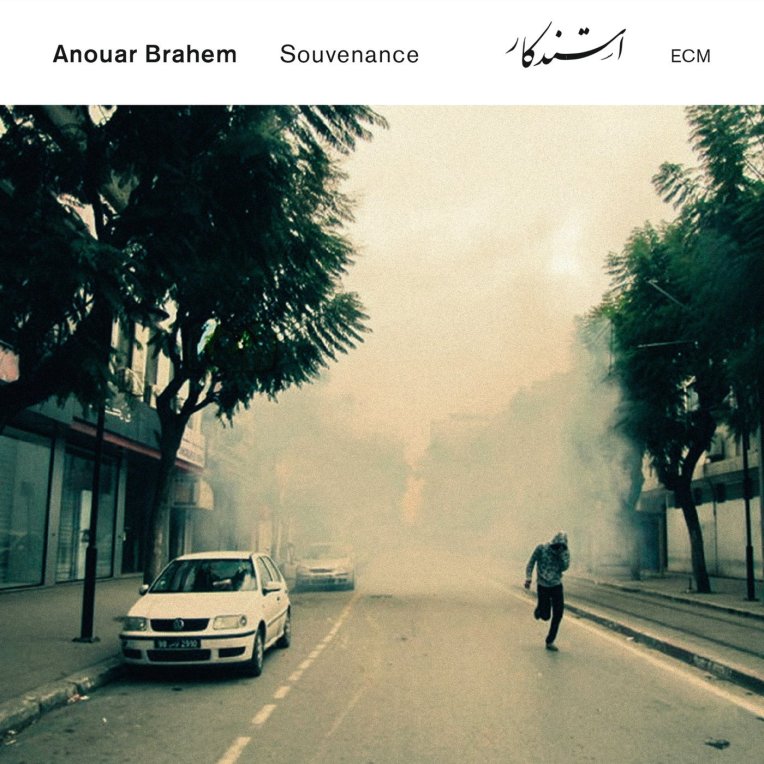
My latest review for RootsWorld online magazine is of Anouar Brahem’s latest (and to date most brilliant) disc for ECM, Souvenance. Click the cover to read and hear samples of the album.
ECM Releases
John Surman: Saltash Bells (ECM 2266)
John Surman
Saltash Bells
John Surman soprano, tenor and baritone saxophones, alto, bass and contrabass clarinets, harmonica, synthesizer
Recorded June 2009 and March 2011 at Rainbow Studios, Oslo
Engineer: Jan Erik Kongshaug
Produced by John Surman and Manfred Eicher
Saltash Bells expands multi-reedist John Surman’s ECM cartographies in directions that are at once new and familiar. The album marks a return to the solo projects that so distinguished his contributions to recorded art in the 80s and 90s. Originally conceived as the soundtrack for a documentary on the English West Country that fell through the cracks, the music evolved from memories of Surman’s childhood in Devon, of which the local environs are cued by track titles throughout.
Despite the fact that Surman’s solo efforts are known for incorporating—seamlessly, I might add—the technological adornments of synthesizers and digital delays, there’s always a taste of soil about them. Take, for instance, “Whistman’s Wood,” which opens the program with a program of its own in the form of pulsing, electronic signals beamed across a vista tilled by bass clarinet. An ancient spirit works the land, lifting arpeggios from their graves and animating them in such a way that respects their ability to sing. All this before Surman’s baritone proclaims its inner heart and unfolds it as a map for the journey to follow. Guided by a comet’s tail of soprano, he proceeds into the lonesome yet unbreakable bass clarinet of “Glass Flower.”
On the low reeds Surman is unmatched. His bass clarinet hovers as a sagacious presence over the oceanic currents of “On Staddon Heights” until a soprano joins in the swim, caressing every bubble to ensure it doesn’t break on the way to the surface. The same pairing ends the album with “Sailing Westwards,” further augmented by an exclusive appearance of harmonica. Aquatic textures also pervade the title track, which immediately follows “Ælfwin,” a robust yet lacey baritone solo. Between this and “Dark Reflections” (an unaccompanied piece for soprano), one can chart a defining contradiction of Surman’s playing: the higher the reed, the darker the sound, and vice versa. And in the solos especially, listeners can encounter the naked, self-directed nature of his writing.
The small congresses of “Triadichorum” and “The Crooked Inn” nevertheless pack visceral effect, rounding out one of Surman’s finest to date with the assurance that he still has decades more to say.
(To hear samples of Saltash Bells, click here.)
The Gurdjieff Folk Instruments Ensemble: Music of Georges I. Gurdjieff (ECM 2236)
The Gurdjieff Folk Instruments Ensemble
Music of Georges I. Gurdjieff
Emmanuel Hovhannisyan duduk
Avag Margaryan blul
Armen Ayvazyan kamancha
Aram Nikoghosyan oud
Levon Torosyan oud
Meri Vardanyan kanon
Vladimir Papikyan santur
Davit Avagyan tar
Mesrop Khalatyan dap, dhol
Armen Yeganyan saz
Reza Nesimi tombak
Harutyun Chkolyan duduk
Tigran Karapetyan duduk
Artur Atoyan dam duduk
Levon Eskenian director
Recorded November and December 2008 at Teryan Studio, Public Radio of Armenia, Yerevan
Recording producer: Levon Eskenian
Engineers: Armen Yeganyan and Khatchig Khatchadourian
Mastered by ECM at MSM Studio, Munich
Album produced by Manfred Eicher
The music of esoteric spiritual teacher G. I. Gurdjieff has been a lucid, if sporadic, touchstone of ECM set lists since Sacred Hymns, released in 1980. Keith Jarrett’s solo album was an appropriate place to begin such an association, as Gurdjieff’s inner melodies were made available to the outer world through the piano transcriptions of his student, Russian composer Thomas de Hartmann. Music was an integral part of Gurdjieff’s teachings, and much of his oeuvre of over 300 pieces came from a place unknown. The energy of his melodies molded the skeleton of its own sacred geometry, and to have an entire ensemble of musicians dedicating their musical lives to casting its patterns across the oceans is a gift, pure and simple.
On a mission of his own to nuance this romantic vision is Levon Eskenian, whose program draws from Gurdjieff’s experiences in lands where the instruments of this ensemble would have been heard in context, singing of the earth even while soaring above it. Eskenian and his talented musicians thus shine Gurdjieff’s light through the prism of the traditions he would have encountered as an itinerant (anti-)ascetic. There is an unmitigated sensibility at work in their extraction of the Armenian, Greek, Arabic, Kurdish, Assyrian, and Caucasian sources Eskenian heard echoing in Gurdjieff’s music. At last, we can experience them in interlocking contrast.
Four pieces link to cellist Anja Lechner and pianist Vassilis Tsabropoulos’s Chants, Hymns and Dances, the 2004 album which took Gurdjieff as starting point for improvisational pathways. Excepting the brightly inflected “Bayaty,” the present versions put the Armenian double-reed duduk at the center of the picture. The “Chant from a Holy Book” places three duduk alongside a single oud. Structured as a tagh, or Armenian sacred song, its cantabile enchantment opens the program at dusk. In comparison to the previously recorded reading, this one suspends itself, rendering the oud a current of wind beneath feathers. “Duduki” adds to this instrumental configuration the dap, or Persian frame drum. With such flexible tension in tow, the melody coheres by way of a mournful finality, even as it extends back toward infancy. Four duduk and one dap form the evocative palette of “Assyrian Women Mourners,” which is as cleansing as it is heart-wrenching.
Some tunes ply the trade of ancient dances. Two selections from Gurdjieff’s Asian Songs and Rhythms explore the ensemble’s percussive capabilities to the fullest. Combining Armenian motifs and spontaneous creation, they allow insight into the meta-level of it all: We can hear Eskenian hearing Gurdjieff hearing something in the world. Others, like the “Caucasian Dance,” draw from a rainbowed palette, relaying ecstatic flights and contemplative landings. Elsewhere, as in the “Sayyid Chant and Dance No. 10,” amalgamations of Greek, Sephardic, and Andalusian influences abound. In these compressions, the receiving body becomes a sheet of paper folded until its resistance as a single molecule can no longer be doubled.
The most transformative moments are reserved for the Kurdish tunes: a “Shepherd Melody,” played on instruments used by shepherds, and the “Atarnakh, Kurd Song,” which traverses continents in single bounds yet with a quiet dignity that feels as effortless as a cloud. At the heart of all this stands a “Prayer” played solo on the kanon zither. By its sounding a nameless portal opens, through which the hesitation of spiritual experience flees into the darkest corners of the mind.
In the album’s booklet, composer Tigran Mansurian describes a silence at the core of this music. Indeed, it moves to what Gurdjieff called the “swing of thought,” that unquantifiable rhythm by which flesh and spirit dance their eternal dance. These sounds are shadows of those movements, and in them is the key to a door, behind which glows the solace of another key.
(To hear samples of Music of Georges I. Gurdjieff, click here.)
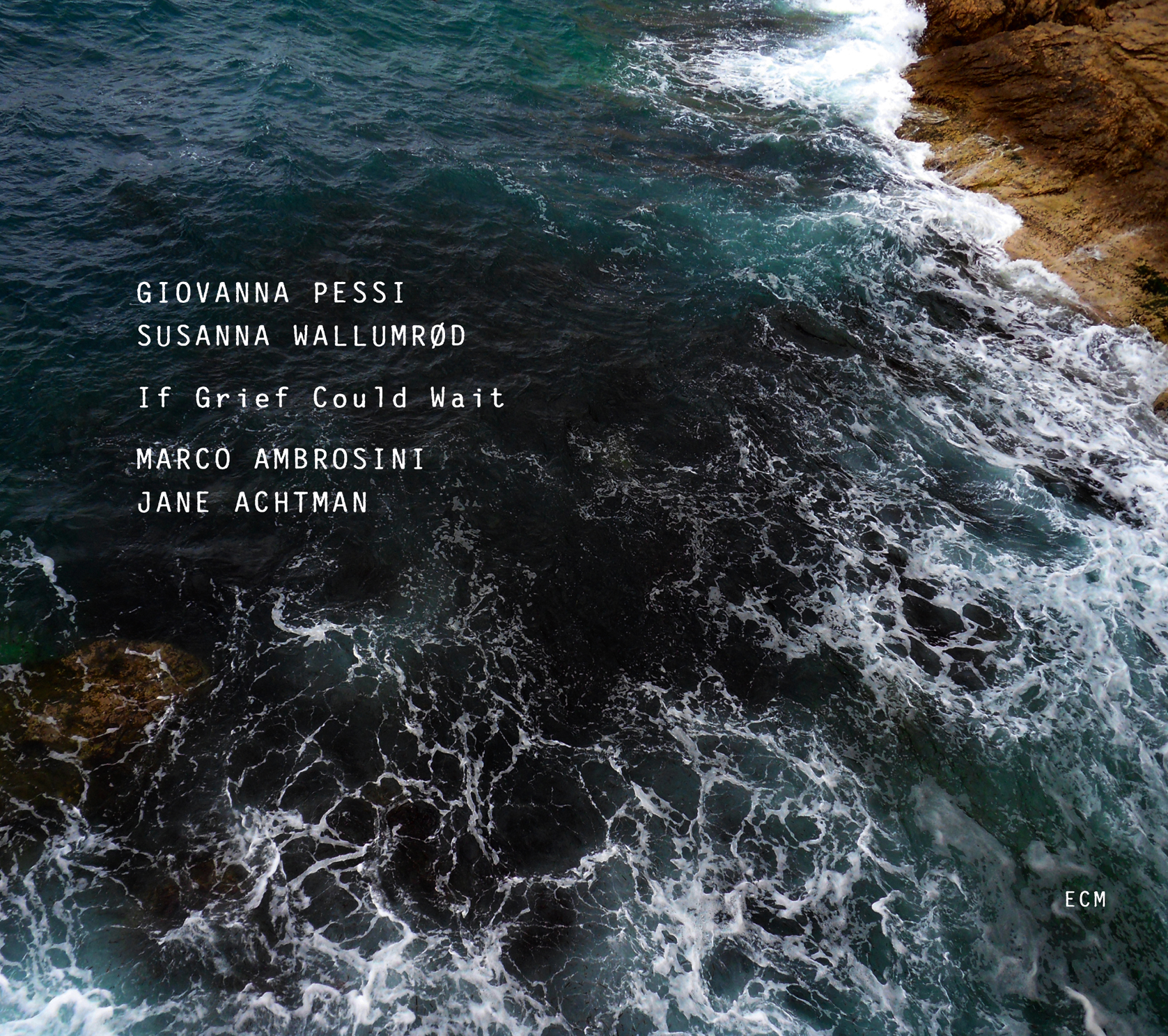
Giovanna Pessi/Susanna Wallumrød: If Grief Could Wait (ECM 2226)
Giovanna Pessi
Susanna Wallumrød
If Grief Could Wait
Giovanna Pessi baroque harp
Susanna Wallumrød voice
Jane Achtman viola da gamba
Marco Ambrosini nyckelharpa
Recorded November 2010, Auditorio Radiotelevisione svizzera, Lugano
Engineer: Stefano Amerio
Produced by Manfred Eicher
Music for a while
Shall all your cares beguile…
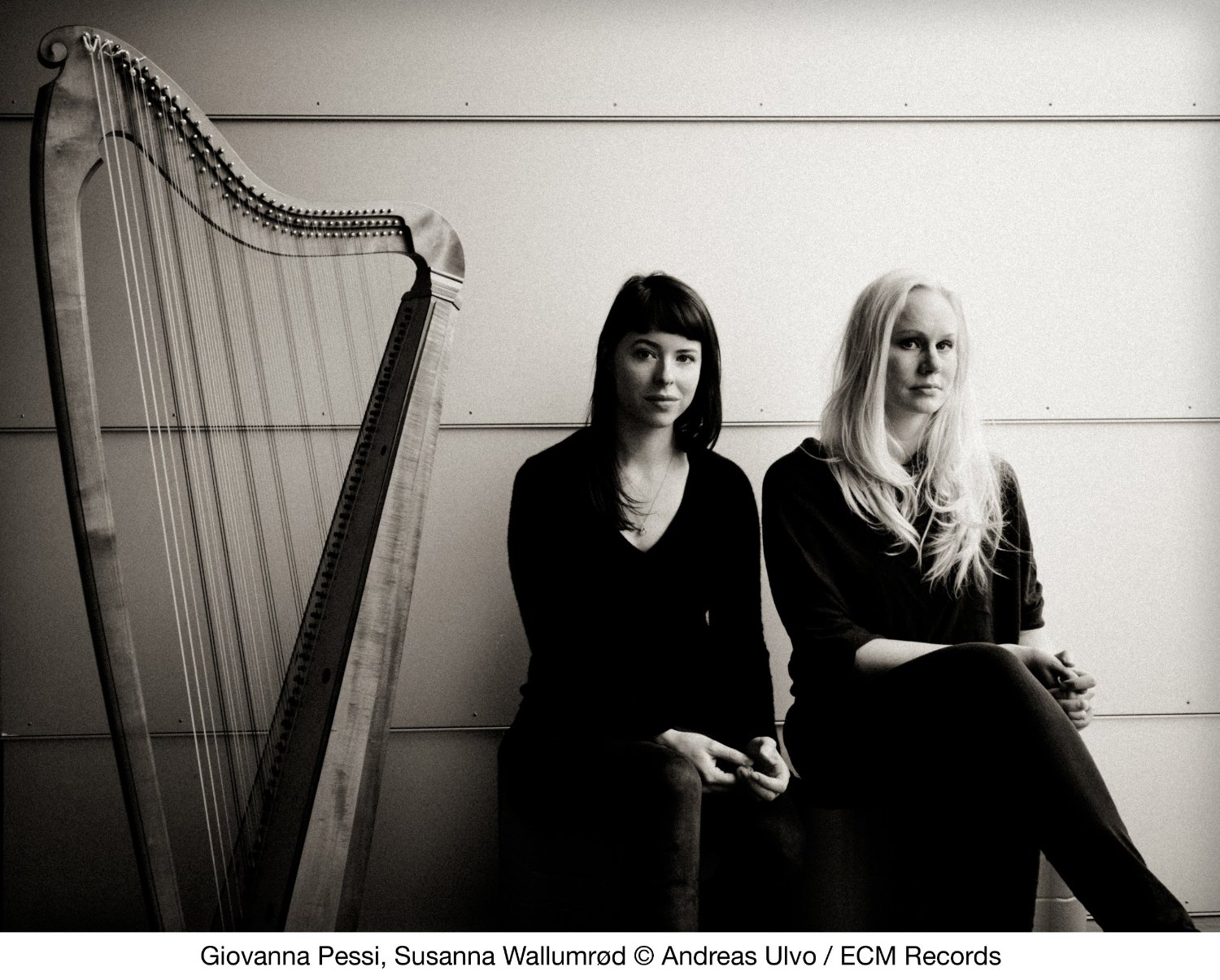
Harpist Giovanna Pessi and vocalist Susanna Wallumrød join forces with Jane Achtman on viola da gamba and Marco Ambrosini on the nyckelharpa (Swedish keyed fiddle). The songs of Henry Purcell (1659-1695), Leonard Cohen (80 years old at the time of this review), Nick Drake (1948-1974), and Wallumrød herself are subjects of this unforgettable disc. Drawing on the early music assemblage to which she so artfully contributed in Rolf Lislevand’s Diminuito, but also the genre-breaking experiments of Christian Wallumrød (through whom she met the pianist’s younger sister, Susanna), Pessi describes without words as much as Wallumrød with. Together, they open rear doors into vintage houses, rummaging through dust-covered artifacts until the spirit of each becomes obvious. Only then do they press RECORD.
Among the Purcell selections are references to his opera The Fairy-Queen (“The Plaint”), his incidental The Theater of Music (“If Grief Has Any Pow’r To Kill” and “O Solitude”) and Oedipus (“Music For A While”), and the anthemic Harmonia Sacra (“An Evening Hymn”). Through all of these runs a plaintive thread from which is hung ornaments that sound as spontaneous as they do plucked from the pond of antiquity in which they originated. Despite exploring the most resilient themes of song—death and love—their enchantment feels fresh by virtue of Stefano Amerio’s engineering, which cuts the harp’s glitter with shadow and spikes pools in forest glades with melancholy.
Of Cohen’s craft, which might seem unlikely company were it not for the similarly forested landscapes, we encounter two examples. Pessi and Wallumrød expand “Who By Fire” from its two-and-a-half-minute appearance on the 1974 album New Skin for the Old Ceremony—incidentally, a suitable descriptor for the present album’s reworking of the past—to a four-minute prayer (Cohen, too, tended to play the song for longer durations in live settings). The song’s morbid list of deaths, barely removed from its religious roots in the Unetanneh Tokef of Jewish liturgy, cuts an especially intimate silhouette. “You Know Who I Am” reaches back further to Cohen’s second album, Songs from a Room, released in 1969. Its poetry embraces a rare combination of vulnerability and fortitude that glistens as it beckons and turns the planets like elements of a larger-than-life mobile. All the more so for being so lovingly recreated here.
It is through such passion that Wallumrød the singer can be superseded only by Wallumrød the composer. Her rustic “The Forester” travels diagonally across fairy realms. Like an Arthur Rackham illustration come to life, it takes shape in leaves and brambles, flowing dresses and birdlike bodies. Her refrain of “Who are you?” explores curiosities of interaction much akin to Cohen’s. “Hangout,” too, reveals a songwriter keenly aware of spaces in which nature comes down like a mist and descends on those who breathe it in, so that they might exhale a language of dissolution.
Finally, Drake’s “Which Will,” off the tragically short-lived singer’s final album, Pink Moon (1972), is the flipside to “Who By Fire.” Its agile, seeking lyricism yearns for love in brighter places. As with the smattering of Purcell instrumentals that rounds out this disc, it cages dancing airs and sunrises within the cold hands of experience.
If Grief Could Wait is a must-have for fans of John Potter’s Dowland Project, and for those who appreciate the art of song, magnified.
(To hear samples of If Grief Could Wait, click here.)
Sinikka Langeland: The Land That Is Not (ECM 2210)
Sinikka Langeland
The Land That Is Not
Sinikka Langeland vocal, kantele
Arve Henriksen trumpet
Trygve Seim soprano and tenor saxophones
Anders Jormin double-bass
Markku Ounaskari drums
Recorded September 2010 at Rainbow Studio, Oslo
Engineer: Jan Erik Kongshaug
Produced by Manfred Eicher
Norwegian singer and kantele virtuoso Sinikka Langeland expands the brilliance of her ECM debut, Starflowers, in a program of original settings of poems by Edith Södergran (1892-1923) and Olav H. Hauge (1908-1994). Here the enmeshment of her roots with modern jazz achieves a harmony of the spheres. “I long for the land that is not,” she sings in the title song, “for I am weary of desiring all things that are.” Södergran’s words reveal a shaded, modernist voice that, like Langeland’s, tracks border zones between melancholy and luminescence. The rasping of her bandmates sets a tone of expanse by a sound that is both new for Langeland and an intensification of the traditions feeding every word she shapes.
Regarding said bandmates, Langeland nestles herself in the company of trumpeter Arve Henriksen, saxophonist Trygve Seim, bassist Anders Jormin, and drummer Markku Ounaskari—all familiar names to anyone whose ridden ECM’s Nordic currents in the past decade. Yet despite recognition of those names and the varied styles flowing from beneath them, this is not an album of solos and highlights. Verily, one might point to Seim and Henriken’s trajectories in “What Is Tomorrow?” and the herder’s call that begins “Spring In The Mountain,” or even the anchored bassing of “A Strip Of Sea,” but these are three stars in a galaxy of thought that spins outward from the program as a whole. They emit light as melody incarnate, dusting the crops of Langeland’s salt-of-the-earth voicings with affection.
The Land That Is Not, then, is not just a title but also a method. In being so vividly founded in language, its awareness peels away from terrestrial understandings. The larger questions put forth by such songs as “Triumph Of Being” and “It’s The Dream” seem to shine from the mouth of Time personified: a creator and destroyer in one. The grooviest passage thereof pave equal deference through light and darkness, while around it all Langeland’s kantele paints an ever-growing ice shelf of c(h)oral colors before planking a harbor of need at which we may all dock ship, spouting the rhyme of the most ancient mariner of them all: love. This is how we arrive at such a cosmic reach. Be it through the thaw of spring in the words of a laboring current (“The River Murmurs”) or trembling of first encounters blown into dust (“The Day Cools”), left like a trail of breadcrumbs along a freely woven path of fortune (“Lucky Cat”) or as the bloodstain of a heavy heart (“Slowly The Truth Dawns”), we can feel in these arrangements the ticking of some giant clock, of which we are the faintest passing seconds, such that by the end flesh becomes the shroud of a new year, a new era, a new self-awakening.
Like the label it calls home, this music travels by unraveling, even as it unravels by traveling.
(To hear samples of The Land That Is Not, click here.)
Marilyn Mazur: Celestial Circle (ECM 2228)
Marilyn Mazur
Celestial Circle
Marilyn Mazur drums, percussion, voice
John Taylor piano
Josefine Cronholm voice
Anders Jormin double-bass
Recorded December 2010 at Rainbow Studio, Oslo
Engineer: Jan Erik Kongshaug
Produced by Manfred Eicher
Under the guidance of percussionist Marilyn Mazur, Celestial Circle cinches a wealth of continental influences by resonances and rivers. The group is trio-plus, with pianist John Taylor and bassist Anders Jormin forming the core unit and Swedish jazz vocalist Josefine Cronholm pouring her magic at selective intervals. Of the latter, “Your Eyes” (with words by Cronholm and music by Taylor) and the Mazur original “Antilope Arabesque” feature straight-from-the-heart singing and cinematic atmospheres. Both paint acres of forest, through which Jormin dances and Mazur adds characteristic splashes as she plays among, around, and through her bandmates. Confirming the arboreal theme, “Among The Trees” (another Mazur original) imagines a landscape of swans and sunlight. Wordless vocals linger here and there, stretching canvas for Taylor’s brushwork in “Temple Chorus,” cradling the ritual punctuations of “Drumrite,” and scatting delicately across the propulsive “Kildevaeld.”
In addition to its sparkling variety, the music on Celestial Circle dives headlong into the subtle art of evocation. “Winterspell,” with words and music again by Mazur, casts its painterly nets via Taylor’s snowfall and Mazur’s icicles before Cronholm articulates a single word. Here the trio breaks free for a spell of its own before ending in sun-kissed freeze. Mazur sews the seams at every turn. Whether duetting with Taylor in “Secret Crystals” or with Jormin in the flowing “Oceanique,” or even doing nothing more than caressing a gong by her lonesome in “Transcending,” she wields every instrument like a palette, to which invites the listener to add any hues that may come.
(To hear samples of Celestial Circle, click here.)
Stefano Bollani/Hamilton de Holanda: O que será (ECM 2332)
Stefano Bollani
Hamilton de Holanda
O que será
Stefano Bollani piano
Hamilton de Holanda bandolim
Recorded live August 17, 2012 at Jazz Middelheim, Antwerp by VRT-Vlaamse Radio en Televisie
Engineers: Walter de Niel and Johan Favoreel
Mixed at Rainbow Studio, Oslo by Jan Erik Kongshaug, Roberto Lioli, and Stefano Bollani
Album produced by Manfred Eicher
Since first sharing a stage together at a 2009 music festival in northern Italy, Italian pianist Stefano Bollani and Brazilian bandolim (10-string mandolin) maestro Hamilton de Holanda have met frequently as a duo. In this, their first full live album, they expand their commitment to beauteous improvisation in an electric atmosphere bound by faith in the moment. While not such a surprise in terms of programming—Bollani has, after all, extolled his passion for Brazilian music on Orvieto, and elsewhere—the album sparkles with ingenuity.
In his pointillist fervor, Bollani has an obvious affinity for Chick Corea and Scott Joplin, while de Holanda’s playing dovetails Django Reinhardt and Egberto Gismonti at their best. These are a mere few of the many influences one might read into the notecraft of these consummate virtuosos, to say nothing of the great composers whose timeless melodies fly from their fingers. That said, the verdant, sparkling relays of Bollani’s “Il barbone di Siviglia” and the crystalline wanderings of de Holanda’s “Caprichos de Espanha” hold their own alongside classics from Astor Piazzolla (“Oblivión”), Antonio Carlos Jobim (“Luiza”), and Pixinguinha (“Rosa”). In their capable hands, such timeworns are fresh as summer while the originals feel like folk songs torn from the pages of a shared past. Across the board, de Holanda’s picking is restless but never overbearing. Bollani in the meantime emotes assuredly, caressingly, and all with a smile like the setting sun.
Two tracks of strikingly different character epitomize the duo at its most attuned. De Holanda dominates the ins and outs of “Guarda che luna” (Gualtiero Malgoni/Bruno Pallesi), in which his impassioned singing inspires cheers and laughter from the audience. A memorable relay as he switches to muted comping beneath Bollani’s flights of fancy adds oomph to their pristine musicality. Even more engaging is “Canto de Ossanha” (Baden Powell/Vinicius de Moraes), which becomes a rhythmic master class in controlled tension. The feeling of progression here is so vivid, it’s practically uncontainable. And yet, contain it the musicians do by means of their joyful, flared unity.
A smattering of lyrical tunes rounds out the set. Between the lush, balladic opener “Beatriz” (Edu Lobo, Chico Buarque) and the vivacious “Apanhei-te Cavaquinho” (Ernesto Nazareth) that closes, Bollani and de Holanda become increasingly more like each other, reflections of anticipation and follow-through. Like the title track (also by Buarque), their enchantment comes about in the exuberances for which no score has a means of notation. Rarely has a duo been this exciting, and results of this fortuitous encounter rank easily among ECM’s top 10 for the new millennium.
(To hear samples of O que será, click here.)
Tord Gustavsen Quartet: The Well (ECM 2237)
Tord Gustavsen Quartet
The Well
Tore Brunborg tenor saxophone
Tord Gustavsen piano
Mats Eilertsen double bass
Jarle Vespestad drums
Recorded February 2011 at Rainbow Studio, Oslo
Engineer: Jan Erik Kongshaug
Produced by Manfred Eicher
After the trio with whom he crafted a classic trilogy for ECM, Tord Gustavsen returns with his quartet, adding tenorist Tore Brunborg to the nexus of bassist Mats Eilertsen and drummer Jarle Vespestad in a unit that has since become the core vessel of the Norwegian pianist-composer’s sonic dousing. Hence, The Well. This self-styled liturgical journey nurtures Gustavsen’s church music roots and thus deepens the spiritual edges of his rendering.
Gustavsen cites the title track, part of a lion’s share of full quartet tunes, as a cornerstone of the set. Its groove emerges among a concentric wave of orbits as Eilertsen flings his satellite far into the darkness and Gustavsen emotes dustily to avoid impeding Brunborg’s signals. Such egalitarianism is part and parcel of the band’s streamlined dynamics, which from “Prelude” to the drum-less “Inside” weave bassing, percussing, and reeding into a basket of watertight beauty.
Song titles (for these pieces do indeed “sing”) indicate larger joints and ligaments beyond their immediate contexts. Whether through the oceanic, Byzantine enchantments of “Communion” and its variation or the soulful farewell of “Intuition,” a simplicity of vocabulary allows the listener to wander the band’s environs without fear of getting snagged by thorn or bramble, for here is a forest cleared of its dangers and replanted until every tree feels acknowledged.
Simplicity further infuses two trio tracks, which refer back to the earlier ECM works while also transcending them. “Playing” finds Vespestad grounding a softly popping current. Engineer Jan Erik Kongshaug fronts the drums here toward a balance of density and openness that is the trio’s signature. Eilertsen echoes in whispering ways, leaving Gustavsen to unravel his catch-and-release improvising. The inward blues of “Circling” is a kindred signpost, forging melody through rhythm and rhythm through inflection. It’s a reminder of just how complete the band felt before a saxophone was welcomed into its midst. But then, we encounter tracks “Suite” and “On Every Corner,” in which Brunborg’s non-invasive lines are the shuttle to the loom. With cinematic charge, he navigates a seeming crowd of pedestrians on his way toward solace.
And like Gustavsen’s solo “Glasgow Intro,” that is exactly what this album provides: a shelter for contemplation in a current that never ceases to pull at our sleeves.
(To hear samples of The Well, click here.)
Saluzzi/Lechner/Saluzzi: Navidad de los Andes (ECM 2204)
Dino Saluzzi
Anja Lechner
Felix Saluzzi
Navidad de los Andes
Dino Saluzzi bandoneon
Anja Lechner violoncello
Felix Saluzzi tenor saxophone, clarinet
Recorded July 2010, Auditorio Radiotelevisione svizzera, Lugano
Engineer: Stefano Amerio
Produced by Manfred Eicher
Building on the fruitfulness of their previous collaborations, Dino Saluzzi and Anja Lechner have never sounded so beautiful together as they do on Navidad de los Andes. Their unity reaches profoundest depths, more attentive than ever to the value of spaces between them. This achievement proves to be the album’s blessing and its curse.
In light of their groundbreaking Ojos Negros, the Argentine bandoneón master and German cellist welcome the former’s brother Felix, a reedman of exquisite talent who has graced such classic records as Mojotoro, Juan Condori, and more recently El Valle de la Infancia. Where in those larger contexts the Saluzzi “family band,” as it has come to be known, worked wonders in selective navigations of original and traditional sources, in this more compact setting Felix’s contributions on tenor saxophone feel somewhat excessive. Thankfully, they appear only on three tracks, working progressively better from the incongruous “Requerdos de Bohemia” to the jazzier “Candor/Soledad” and lastly to “Ronda de niños en la montaña,” where it fits best for being more like a voice singing a lullaby.
Felix’s clarinet, on the other hand, is a revelation. Whether nominally fronted in fragments from the “Trio for clarinet and two bandoneóns” or exploring the tango in “Variaciones sobre una melodia popular de José L. Padula,” his heavenly tone deepens the atmosphere of everything he touches. On that point, the trio functions most effectively when duties are shared in equal measure, as in “Son qo’ñati,” a lively dance that finds each musician handing off motives to the next in a continuous chain of technique and ingenuity. Breathtaking.
But it is, again, the bandoneón-and-cello center that mines the purest ore. Each collaboration in this vein develops its own film of a faraway ecosystem. The whistles and birdcalls of “Flor de tuna” give way to the cloudless sky of “Sucesos” and finish the album with the egalitarian “Otoño.” Along the way, the duo gives “Gabriel Kondor,” last heard on Saluzzi’s ECM debut, Kultrum, a nostalgic makeover.
Despite the tenor’s minor setback, the album stays true to its title, which translates as “Andean Nativity.” A spiritual sense of family and community across eras has always been at the heart of Saluzzi’s music, through which those dynamics thrive. Indeed, life would be nothing without them.
(To hear samples of Navidad de los Andes, click here.)