Surman/Krog/Rypdal/Storaas: Nordic Quartet (ECM 1553)

Nordic Quartet

John Surman soprano saxophone, baritone saxophone, alto clarinet, bass clarinet
Karin Krog voice
Terje Rypdal guitar
Vigleik Storaas piano
Recorded August 1994 at Rainbow Studio, Oslo
Engineer: Jan Erik Kongshaug
Produced by Manfred Eicher

Nordic Quartet bonds an unconventional roster of musicians and conceptual approaches. John Surman reaches into his usual toolkit, favoring the lower range, while vocalist Karin Krog sews her Sheila Jordan-like vibrato into Terje Rypdal’s electric swoons and pianist Vigleik Storaas’s intimate embraces. One can expect Surman to shine above any group he might be a part of, but in “Traces” it is Rypdal and Krog who slink like the wolves of our interest through abandoned factories, such that piano and reeds seem to drop from the ceiling, each a spider invisibly tethered. And indeed, the album is about nothing if not traces, smeared on the windowpanes of childhood homes, one-bedroom apartments, and coffee shops. We hear this most in Surman’s duets: “Unwritten Letter” (w/Krog), “The Illusion” (w/Storaas), and “Double Tripper” (w/Rypdal), the latter a battle-scarred stumble into post-traumatic memory. Rypdal steps up the mood in “Gone To The Dogs,” where his softly rocking chording anchors us in a hammock knotted by soprano (like floss through silver teeth) and lit by a kiss of pianistic sun. It is in these instrumental tracks that the album takes off in more exciting directions—surprising in light of the healthy pathos Krog wove into Such Winters Of Memory. Her most intuitive contributions to this session are wordless, as in the ghostly overtones of “Ved Svørevatn,” which blisters like an underwater volcano. Lost to its own philosophies, it is a voice guided only by (and into) itself. “Wild Bird” is the last breath, a quiet account of dark thoughts and darker thinkers. A heat rash of organ spreads across Krog’s lyrical skin, itself a half-remembered cry, windy and chopped beyond recognition. This is our solitude realized in sound, naked as the moment we are born.

<< Heiner Goebbels: Ou bien le débarquement désastreux (ECM 1552)
>> Terje Rypdal: If Mountains Could Sing (ECM 1554)

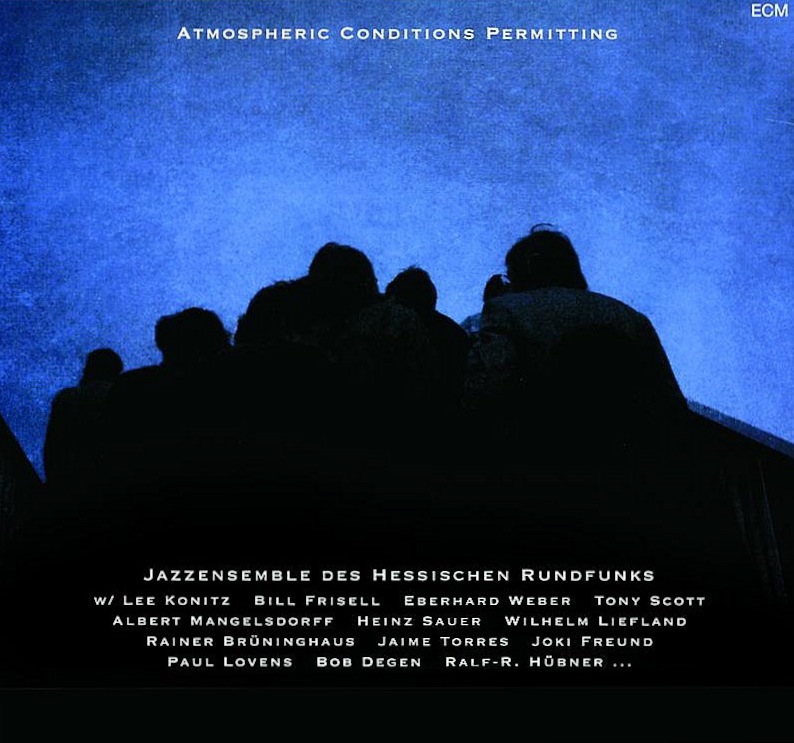
Jazzensemble des Hessischen Rundfunks: Atmospheric Conditions Permitting (ECM 1549)

Jazzensemble des Hessischen Rundfunks
Atmospheric Conditions Permitting

Lee Konitz
Bill Frisell
Eberhard Weber
Tony Scott
Albert Mangelsdorff
Heinz Sauer
Wilhelm Liefland
Rainer Brüninghaus
Jaime Torres
Joki Freund
Paul Lovens
Bob Degen
Ralf Hübner
et al.
Recorded 1967-93, Hessischer Rundfunk, Frankfurt
Engineers: Peter Michael Erler, Holger Mees, Fritz Moehrke, Helmut Schick, Rainer Schulz, and Erich Wemheuer
Remixed 1994 at Gasteig Studio, München by Steve Lake
Engineer: Martin Wieland
Produced by Ulrich Olshausen

Formed in 1958 by late trombone innovator Albert Mangelsdorff, the Frankfurt Jazz Ensemble had by the time of this recording produced one of the genre’s most sprawling archives, numbering some 2000 recorded pieces. Over the years, it has welcomed guest artists from abroad, including many of the ECM regulars featured in this tip-of-the-iceberg collection. Awarded the prestigious Hesse Jazz Award in 2009 for its invaluable contributions to the art, the Ensemble lives on for the home listener through the selections catalogued here. Drummer Ralf Hübner and saxophonist Heinz Sauer are the main compositional talents, and their passion shows in the ample room they leave for distinct soloing and other interpretive twists. The result is a 2.3-hour tour de force of gastronomic proportions spanning over a quarter century of activity.

Given the feast before us, one can only nosh on the wily clarinets of “Bagpipe Song” and the John Surman-esque touches of “Aud in den Wald” (with its palatable flavors of Rhapsody in Blue and big band pall) before getting our soup on with the rubber-banded bass and cascading pianism of “Niemandsland.” Bill Frisell lights up the air with his fluid wonders, cross-talking beautifully with Eberhard Weber’s fretless. From this we work our way up to such delectable starters as the harpsichord-inflected “Out Of June” and the chromatic “Stomp blasé.” What with the meditative spice of drummer Paul Lovens’s solo “Krötenbalz” and the contrasting sauciness of “Blues, Eternal Turn On,” there are plenty of main courses to choose from. Jazz critic Wilhelm Liefland’s poetry begins to unravel the meal’s moral and philosophical center in “Oben” and continues in “Schattenlehre,” thereby setting up the chewier textures of “Repepetitititive.” A veritable Ferris wheel in sound replete with spacey glitter and gold, it refills our wine glasses with “Fährmann Charon,” ending the first disc with children’s games and a jester’s twisting lips in the night.

Argentine master Jaime Torres smoothes us into the second with an epic pool of reflection in “Concierto de Charangojazz” amid the soulful caramel of Heinz Sauer’s reed. A pied piper’s parade awaits us, buoyed by the harrumph of tuba, in “Waltzer für Sabinchen,” leading us through the streets into “Für den Vater,” which along with “Von der gewöhnlichen Traurigkeit” blasts Sauer’s progressive talents into the stratosphere. Between a smattering of shorter pieces, the swinging celesta and dimly lit trumpet of “Kauf dir einen bunten Luftballon” and dramaturgical edge of “Manipulation” provide plenty to masticate before desert comes in the powered sugar of “Käuze und Käuzchen” and closes out this banquet with a bang and a nod in “Nachwort.”

Atmospheric Conditions Permitting is a solid take on this most influential collective, whose shifting vignettes and configurations do nothing to hide the fascinations behind them. Eclectic, professional, and not a trace of unpleasant aftertaste.

<< Azimuth: Azimuth / The Touchstone / Départ (ECM 1546-48)
>> Stephan Micus: Athos (ECM 1551)

Bjørnstad/Darling/Rypdal/Christensen: The Sea (ECM 1545)

The Sea

Ketil Bjørnstad piano
David Darling cello
Terje Rypdal guitar
Jon Christensen drums
Recorded September 1994 at Rainbow Studio, Oslo
Engineer: Jan Erik Kongshaug
Produced by Manfred Eicher

The twelve parts that comprise The Sea are of a proportion far beyond aquatic, for their magic lies in the hands and hearts of four musicians who came together for a session as ever-changing as its namesake. The number would seem to be significant: months in a year, hours in a day, each a cycle rendered timeless through a story that bleeds and weeps. David Darling’s trembling cello lets out the first cry, eddying with all the force of nature at the edge of a bow. Pianist Ketil Bjørnstad therefrom unfurls a theme for the ages, drifting as might a reader’s eyes pass over the words of a favorite letter. As the hearts of the session, his keys drip glitter and shadow in equal, sometimes comingling, measure. Drummer Jon Christensen knocks at a ghostly door suspended above the horizon, leaving guitarist Terje Rypdal to complete the picture, breaching vapor and phosphorous. Such is the first ray of light to spoke from this sonic hub, spinning to the pulse of Bjørnstad’s heart-tugging ostinatos in a pregnant and billowing unity. Somehow, the stars feel closer, each a solar flare arcing into rebirth. But the breath is always damp, the air even more so, while the language falters to hold its shape in the presence of something so free. Of note is Part VIII, a duet between Bjørnstad and Darling that presages The River and a beautiful lead-in to an enchanting closing of the triangle. The spectrum of Christensen’s palette grows richly and organically as threads wind together, each color a drop into the inky cascade of its rapture. Part XII closes the album with Bjørnstad at his solemn best, far from shore.

The power of this music is its ability to adapt to whatever mood you bring to it. The listener is its vessel. The Sea is also a remarkable feat of engineering, fully expressing ECM’s commitment not only to the evocation but also embodiment of concept. But though it might very well flourish in the flesh and machines that produced it, it ultimately flows from, and returns to, the currents of which it is composed.

<< Tomasz Stanko Quartet: Matka Joanna (ECM 1544)
>> Azimuth: Azimuth / The Touchstone / Départ (ECM 1546-48)

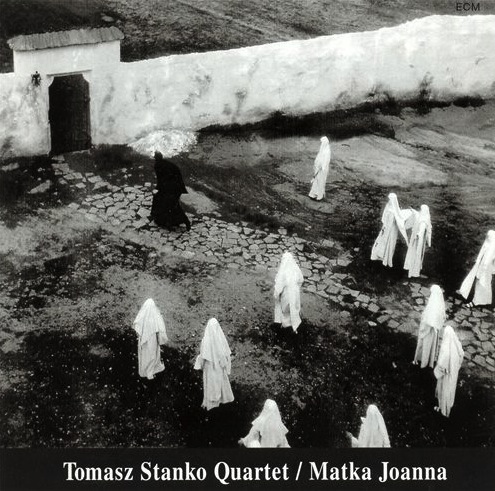
Tomasz Stanko Quartet: Matka Joanna (ECM 1544)

Tomasz Stanko Quartet
Matka Joanna

Tomasz Stanko trumpet
Bobo Stenson piano
Anders Jormin bass
Tony Oxley drums
Recorded May 1994 at Rainbow Studio, Oslo
Engineer: Jan Erik Kongshaug
Produced by Manfred Eicher

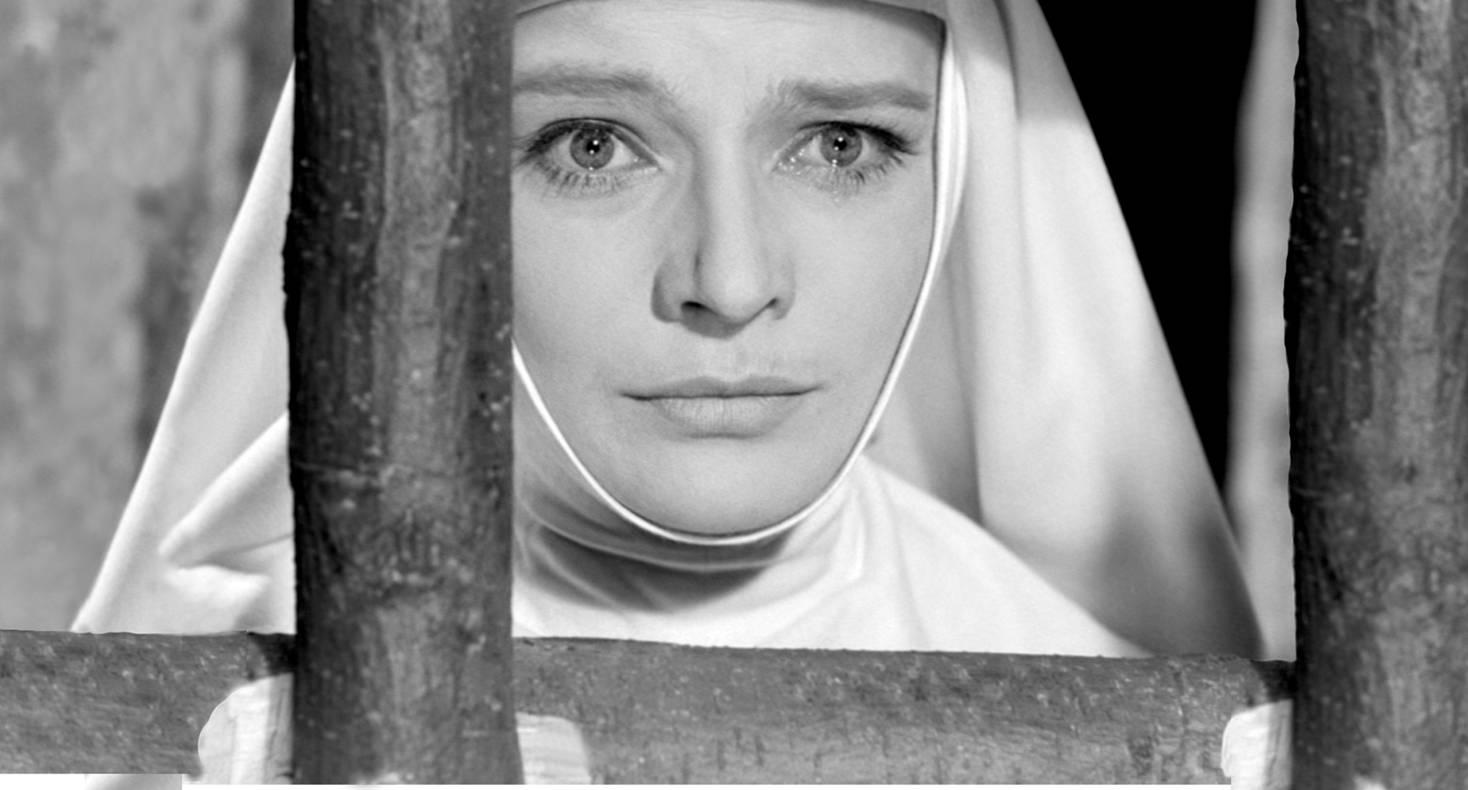
With a nearly two decades separating Polish trumpeter Tomasz Stanko’s ECM debut, Balladyna, and Matka Joanna, his label follow-up as leader, it’s no wonder the two are so different. Taking Jerzy Kawalerowicz’s 1961 film Matka Joanna od Aniołów as its inspiration, the second draws from a palette of possession and temptation as grittily as its namesake’s B&W canvas.


Still from Matka Joanna od Aniołów

Backed by pianist Bobo Stenson, bassist Anders Jormin, and drummer Tony Oxley (in a decidedly Christensenian mode), Stanko brings his pungent lyricism to bear across a swath of mountains and shadows that inhales cobwebs from a “Monastery In The Dark” and exhales the mummified sermons of its “Klostergeist.” Within those lungs mingle forgotten bells, vibrating between prayer and dreams, and chains of latent virtues. Jormin’s bass squeaks like a family of mice in the walls, Stenson the cat stalking them from every alcove. Stanko, meanwhile, lights votive candles with the tip of his every winded tongue, trailing mystery into the drowsy flower of a “Green Sky.” A complex track in spite of its recessive nature (the pianism alone is a maze of nuance), it sets bass adrift on a current of icy cymbals until the swinging “Maldoror’s War Song” sticks some feathers to Stanko’s skeletal wings. Amid this rosette of fire, Stenson connects the constellatory dots and hugs Jormin’s nebular blurs. Further highlights include the continuity of heaven and earth as heard through Stanko and Jormin’s relay in “Matka Joanna From The Angels” and the likeminded meditations of the superbly punned “Nun’s Mood.” Though but a brief excursion for trumpet and drums, the latter leaves us open to the cerebral fog of “Celina,” a sleeping face in sound whose eyes enchant before they ever open.

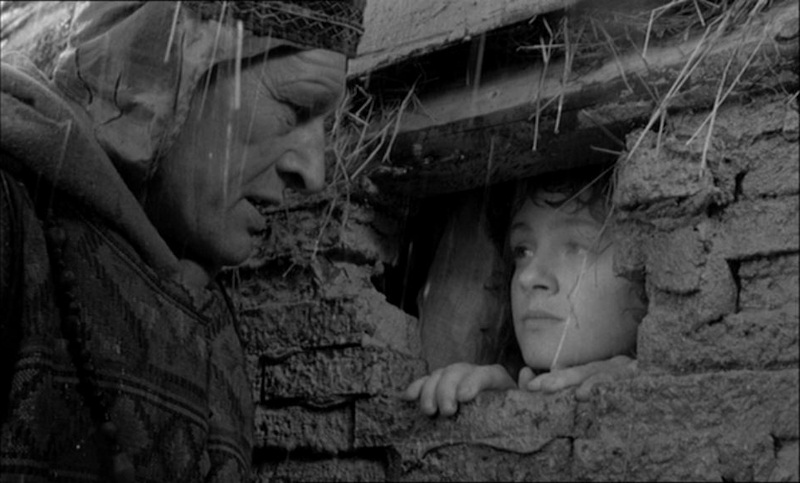
While Stanko’s economy of abandon (listen especially to “Cain’s Brand” in this regard) is something to marvel at, to these ears Jormin stands out from the rest in this soundtrack within a soundtrack. The depth of his grain holds the knots together, even as it dissolves that glue that keeps them from falling out. The result is a balance of style and effect that never wanes. Ironically enough, this album seems to recall another stark narrative of spiritual challenges: namely, Anchoress (1993, dir. Chris Newby). Ironic, because said film is utterly devoid of music, save for a passage of retribution at the end. So, too, with Stanko’s paean to an underrated picture, staring at us from beyond the celluloid in a straight line to our souls.


Still from Anchoress

<< Italian Instabile Orchestra: Skies Of Europe (ECM 1543)
>> Bjørnstad/Darling/Rypdal/Christensen: The Sea (ECM 1545)

Italian Instabile Orchestra: Skies Of Europe (ECM 1543)

Italian Instabile Orchestra
Skies Of Europe

Pino Minafra trumpet, megaphone
Alberto Mandarini trumpet
Guido Mazzon trumpet
Giancarlo Schiaffini trombone, tuba
Lauro Rossi trombone
Sebi Tramontana trombone
Martin Mayes French horn, mellophone
Mario Schiano alto and soprano saxophones
Gianluigi Trovesi alto saxophone, clarinet, alto and bass clarinets
Carlo Actis Dato baritone and tenor saxophones, bass clarinet
Daniele Cavallanti tenor and baritone saxophones
Eugenio Colombo alto and soprano saxophones, flute
Renato Geremia violin
Paolo Damiani cello
Giorgio Gaslini piano, anvil
Bruno Tommaso double-bass
Tiziano Tononi drums, percussion
Vincenzo Mazzone tympani, percussion, drums
Recorded May 1994 with the White Mobile, Auditorium F.L.O.G., Florence
Engineer: Martin Wieland
Produced by Steve Lake

Reductively speaking, Skies Of Europe is significant for welcoming reedist Gianluigi Trovesi into the ECM fold. More broadly, we find in this second record from the 18-piece Italian Instabile Orchestra a potpourri of stimuli that only hints at the significance of this democratic collective in its formative live settings, which helped spark a renaissance in Italian jazz. The group, founded in 1990, sports a lush yet angular sound that is exciting down to the marrow. True to form, it offers up two longish suites as showcases of hidden shadows and the talents that cast them.

Bassist Bruno Tommaso paints half of this diptych with his Il Maestro Muratore (The Master Mason). The open, golden sound rings of epic fantasy, spilling glitter and feathers like birds diving into waterfalls as drums light the way for deeper abstractions. Sections range from declamatory (“Squilli Di Morte”) and insistent (“Corbù”) in mood to the gentler persuasions of “Merù Lo Snob.” The latter’s formative vibes from piano and reeds kiss the air with promise, veiling sensual developments in the politics of breath. With vivacious resolve the music spreads in these directions and more, leaving but a silhouette and a clue.

The title suite, composed by pianist Giorgio Gaslini, sets its phasers to meditative in the opening section, “Du Du Duchamp.” This ponderous tenure at the casino swaps the former’s chips for ornately patterned pips, the violin’s Ace of Spades the most florid of them all. So begins a roving gallery of allusions, gambling higher stakes in “Quand Duchamp Joue Du Marteau” to translucent effect, letting out a Pifarély-like cry in “Il Suono Giallo,” and traipsing through the forested “Marlene E Gli Ospiti Misteriosi” on the heels of a stunning baritone, which stumbles like Little Red Riding Hood into the wolf’s open jaws. “Satie Satin” is a delightful palate cleanser with shrill arco touches, while “Masse D’urto (A Michelangelo Antonioni)” is as emotionally turgid as the cinema of its dedicatee. A manipulated trumpet spools the anthemic “Fellini Song” in an old dusty theater, petering into fadeout.

The IIO is an attentive and responsive unit—so much so that by the end of this performance the names of individual players (as brilliant as they are) cease to matter. In the midst of this acticity we are but bystanders at the roulette table, watching as that little white ball bounces from red to black until it settles on…

<< Keith Jarrett Trio: Standards In Norway (ECM 1542)
>> Tomasz Stanko Quartet: Matka Joanna (ECM 1544)

Kenny Wheeler: Angel Song (ECM 1607)

Kenny Wheeler
Angel Song

Kenny Wheeler trumpet, flugelhorn
Lee Konitz alto saxophone
Bill Frisell guitar
Dave Holland double-bass
Recorded February 1996, Power Station, New York
Engineer: Jan Erik Kongshaug
Produced by Manfred Eicher

For my first ECM review after the birth of my son, I decided to return to an old favorite. As one of the label’s deepest accomplishments in all respects, the generative spirit of Angel Song breathes like the life that has cast new light onto mine. Now that I hear everything through the lens of a fatherhood never known to me before, yet which is now as lucid as the quivering of a crying newborn, I discover something so poignant in “Nicolette” as can be matched only by the love of parent for child. This first of nine Wheeler originals bears every hallmark that makes Angel Song such a statuesque experience. From the soulful theme to the sheer depth of listening on part of the musicians and engineer Jan Erik Kongshaug, the interweaving of audible and inaudible elements sets an already high bar and builds a soft ladder from there.

The title of the album’s final track, “Kind Of Gentle,” is also its mode. It is a lulling and unwavering effect that cradles us in nebulae of memory. We dream, back to the cribs and crooks in which we all once drifted, all the while guided by a formidable foursome: Lee Konitz on alto sax, Dave Holland on bass, Bill Frisell on guitar, and trumpeter Kenny Wheeler in the lead. Absence of drums lends the music stretch and comfort, wrapping the metaphorical child of its creation in swaddle. The reed is paramount in this stretch of dawn-lit midnight, sealing every crevice of the album’s fragile architecture as securely as mother’s arms. Like a quiet vessel it cuts a V through the reflected sky, leaving the shores of “Present Past” and touching down on “Past Present.” And in “Nonetheless” his tone drips like honey from a comb. Holland, for his part, adds pliancy, pulling signature lines through such tracks as “Kind Folk” and “Unti.” Frisell also excels in both, peeling stretches of glitter from his restrained backdrops with the nimbleness of Peter Pan’s shadow. Each of his solos is a spider’s web trembling at our listening. As for Wheeler, he has never sounded more verdant, painting the landscapes of the title track and the relatively upbeat “Onmo” with the intensity of a thunderbolt yet the almost-not-there-ness of a dandelion puff.

Recorded in the winter of 1996 yet effusive with body heat, this is music that exhales one timeless theme after another. Perhaps because it was also my first exposure to Wheeler, I mark it as one of his very best. Even in the absence of comparison, it soothes, taking me back to the events of one week ago and the overwhelming unity that has held me since. After the fever dream that was his coming into this world, my son absorbed the light of his first morning as might a leaf drink from the sun. Behind him, the fears that beset any parent-to-be; before him, the safety now manifested in my waiting arms. I seek to magnify that tranquility in this music, and hope it may do the same whenever you find yourself in the presence of a miracle.

<< Ingrid Karlen: Variations (ECM 1606 NS)
>> Terje Rypdal: Skywards (ECM 1608
)

Keith Jarrett Trio: Standards In Norway (ECM 1542)

Keith Jarrett Trio
Standards In Norway

Keith Jarrett piano
Gary Peacock bass
Jack DeJohnette drums
Recorded October 7, 1989, Konserthus, Oslo
Engineer: Jan Erik Kongshaug
Produced by Manfred Eicher

One is hard-pressed to find fault in any Keith Jarrett Trio live album, and Standards In Norway is no exception. “All Of You” starts this exquisite set on a delightful note, filling the space with the palpitations of a joyful heart. Peacock jumps right in with the first solo of the night, as nimble as always, as he is also in “Little Girl Blue.” Tender and dulcet, this softly brushed ballad reaches an organic level of storytelling that finds each musician totally committed. That being said, one can single out certain displays over others. We are astonished by DeJohnette in “Just In Time” and in “Love Is A Many-Splendored Thing” (or is it a many-splendored swing, the trio seems to ask). Again by Peacock, who gleams both sides of the cube, now fragile in “Dedicated To You,” now livening up the joint in “I Hear A Rhapsody.” And of course by Jarrett, who draws the timelessness of “Old Folks” in his subtlest rendition yet, wrapping our awe in sonic pastry and baking it to the consistency of perfect filo. “How About You?” ends the set with inescapable optimism and tumultuous applause.

Mesmerizing, the only word.

<< Edward Vesala/Sound & Fury: Nordic Gallery (ECM 1541)
>> Italian Instabile Orchestra: Skies Of Europe (ECM 1543)

Tim Berne: Snakeoil (ECM 2234)

Tim Berne
Snakeoil

Tim Berne alto saxophone
Oscar Noriega B♭ and bass clarinets
Matt Mitchell piano
Ches Smith drums; percussion
Recorded January 10/11 at Avatar Studios, New York
Engineer: James A. Farber
Produced by Manfred Eicher

New York altoist Tim Berne makes his ECM debut as leader with an unorthodox quartet featuring clarinetist Oscar Noriega, pianist Matt Mitchell, and drummer/percussionist Ches Smith. Although he has been recording for almost as long as I’ve been alive, I’m fortunate to discover his craft in the ECM realm, where his distinctive balance of scripted and unscripted bodywork spreads far in producer Manfred Eicher’s intuitive acoustics. To be sure, the background is fascinating in and of itself, yet how much less so when pitted against the music that comes out of it.

The absence of bass in this latest group allows the development to breathe, and indeed the piano intro of “Simple City” takes in the session’s deepest breath and exhales throughout its remainder. In this music box of fitful dreams, Berne’s popping horn flows onto the scene like a gymnast’s ribbon. A shared essence of fear and ecstasy caresses every spring and key as if it were the last drop of rain to fall from a storm. We follow this drop in heavy pathos, hear it as it hits an upturned bell in a song all its own. Noriega reveals new images, interlocking with his partners in crime to form a graphic novelist’s portrait of life. Thunderous drums bubble up in lava, shooting out a pianistic steam of resolution. And all of this in the first cut? You bet.

Berne & Co. explore a range of emotional states from here on out. Starting with the vividly contemporary energy of “Scanners,” they evoke shopping malls and checkout lines, funneling into a fantastic solo from our district manager, as it were, and stowing away the bane of quotidian decisions in a dark, hidden storeroom. Each of the “Spare Parts” that follow is a potion never swallowed, touched only on the lips like wings to water. Some gorgeous crosstalk between the two reeds sets off a checkered unity with Mitchell and chain of gongs from Smith, calling like a trolley bell in the streets. There we are asked to “Yield,” spinning secrets from truths (and vice versa) and sidewinding into “Not Sure.” Despite the tactics that bring us here, the music keeps its feet above ground and head below cloud, so that by the time we get to the “Spectacle” we can bask in Mitchell’s sparkle as the group unrolls ecstatic cause like a carpet on which to shun and shiver in a final kowtow.

This is fresh, think-out-loud jazz that is understood to be itself and nothing more. It raises its tongue to the roof of its mouth, avoiding the cheek at all costs. You’ll find no title track on Snakeoil, and with good reason. It’s sincere to the core.

Samples can be found here, but approach them with caution. This is a record to be savored in its entirety.

Edward Vesala/Sound & Fury: Nordic Gallery (ECM 1541)

Edward Vesala
Sound & Fury
Nordic Gallery

Jorma Tapio alto saxophone, bass and alto clarinets, bass flute
Jouni Kannisto tenor saxophone, flute
Pepa Päivinen tenor, soprano, baritone and bass saxophones, flute, alto flute, piccolo
Matti Riikonen trumpet
Iro Haarla harp, piano, keyboard
Jimi Sumen guitar
Edward Vesala drums, percussion, bass, tamboura, angklung
Petri Ikkela accordion
Pekka Sarmanto bass
Kari Linsted cello
Tapani Rinne clarinet
Recorded 1993/94 at Sound & Fury Studio, Korkeakoski, Finland
Engineer: Jimi Sumen
Mixed at Rainbow Studio, Oslo
Engineer: Jan Erik Kongshaug
Produced by Manfred Eicher and Edward Vesala

Piggybacking on 1992’s Invisible Storm, ECM maverick Edward Vesala returned with his organic collective, Sound & Fury, as our guide for Nordic Gallery. Vesala draws a thinner circle around his ensemble this time around, weaving inside it a dreamcatcher for communal freedom, as exemplified in the 11-minute “Bird In The High Room,” a menagerie of cymbals, muted horns, drums, and birdsong. The latter signals a luxuriant indulgence in the Vesala soundscape as winds and wings fall in line like a panel out of Where the Wild Things Are. Even the electric guitar whistles in its sibilant cage, avian heart unfolded. Field recordings continue to leave breadcrumb trail of “Fulflandia” on its way toward “The Quay of Meditative Future.” Harpist Iro Haarla’s veiled and omnipresent insistence turns arrival into departure as the music’s long-shadowed caravan cuts a line in the sand. The mélange of flavors in “Hadendas”—ranging from roller rink organ and winds to Vesala’s own thumping accompaniment—lifts the tent flap of this night circus to usher in the “Unexpected Guest.” Is it the listener? The critic? The dog who’s been running circles outside this entire time? No, no, and yes. Such is the nature of this narrative turn, which cracks like the vocal egg that opened Storm. Accordion and gravelly tenor trade hands in “Bluego,” a tango deconstructed and put back together in reverse before an arrangement of “Lavander Lass Blossom” wilts, upended and suspended. A series of tunes at once glittering from Haarla’s careful appliqué of intimate crafts (“Streaming Below The Times”) and darkening in twisted whimsy (“One-Two-Three Or Four-Five-Six”) presses on through shimmer and corrosion into “Flavor Lust,” thus closing shop and hanging the day’s labor out to dry.

<< Heinz Holliger: Beiseit/Alb-Chehr (ECM 1540 NS)
>> Keith Jarrett Trio: Standards In Norway (ECM 1542)