Kenny Wheeler: Deer Wan (ECM 1102)

ECM 1102

Kenny Wheeler
Deer Wan

Kenny Wheeler trumpet, fluegelhorn
Jan Garbarek saxophones
John Abercrombie electric guitar, electric mandolin
Dave Holland bass
Jack DeJohnette drums
Ralph Towner 12-string guitar
Recorded July 1977 at Talent Studio, Oslo
Engineer: Jan Erik Kongshaug
Produced by Manfred Eicher

Among Kenny Wheeler’s cleverly punned titles, Deer Wan takes the cake. For his second ECM album as headliner, the prodigious trumpeter/fluegelhornist serves up a set of four originals—three long and one short—sure to enliven any morning routine or Sunday afternoon alike. The top-shelf cast reads like a who’s who of ECM’s best and brightest: Jan Garbarek on saxophones, John Abercrombie on electrics, Dave Holland on bass, Ralph Towner on his ever-present 12-string, and Jack DeJohnette at the drums. Wrap this in the splendid engineering of Jan Erik Kongshaug and you get unquestionable sonic bliss.

The 16.5-minute “Peace For Five” is an album in itself and provides an ideal launching pad for Wheeler’s astonishing lyricism. A somber aside from Holland and not-so-somber acrobatics from Abercrombie and Garbarek all contribute to a richly flowing tapestry in this epic opener. Wheeler and company tear a page from the book of Enrico Rava with “3/4 In The Afternoon.” Like a stroll through lush gardens, one finds in it a veritable ecosystem of visual and melodic ideas, compressed into a single brass-gilded flower. Towner’s reverberant plush underscores the warmth within. As we swing over into night with “Sumother Song,” Garbarek’s liquid tenor evaporates into its own swan song with only a tinkling of cymbals to mark where it once stood. But this, we soon discover, is only a pause before DeJohnette’s beautifully corrugated rhythms unfold beneath a soaring fluegelhorn. After a windy introduction, the title track quickly weaves itself into an upbeat welcome mat on which we wipe our feet as if after a long journey. Buffeted soloing all around brings us full circle to a state of renewed appreciation for that which we’ve always known.

Deer Wan is an unsung masterpiece of smooth jazz with just enough sharp edges to leave an unforgettable scar or two. A most endearing album for those who like a shot of whiskey in their musical coffee.

<< Gary Peacock: Tales Of Another (ECM 1101)
>> Jack DeJohnette’s Directions: New Rags (ECM 1103)
Gary Peacock: Tales Of Another (ECM 1101)

ECM 1101

Gary Peacock
Tales Of Another

Gary Peacock bass
Keith Jarrett piano
Jack DeJohnette drums
Recorded February 1977, Generation Sound Studios, New York
Engineer: Tony May
Produced by Manfred Eicher

The grouping on this album represents a milestone in ECM outfits, persevering to the present day as it has in the form of Keith Jarrett’s mighty standards trio. Though a far cry from the ecstatic overloads honed over years of synergy and touring, there is an almost naïve charm to this effort and the evenhanded musicianship that sustains it. Each of these six “tales” begins in loveliness. Piano and bass bring the most urgency to bear, as in the gorgeous “Vignette,” in which Peacock gets his first lilting solo, and its follow-up, “Tone Field.” Both start off slow and sure, with DeJohnette giving the barest hint of traction and Jarrett biting deeply into fractured themes. “Major Major” gives us the steady beat we crave beneath majestic chording from the piano man, who offers up a prime slab of linear sirloin. Yet the album’s juiciest sediments can be found in the massive “Trilogy” that makes up its second half. DeJohnette skirts the rims with requisite flair while Peacock slathers on a bright veneer. Jarrett grunts ecstatically with every new development, shooting fire from his fingers. Such is the energy one has come to expect from this nonpareil threesome. Jarrett cuts off our air supply before the final stretch, the hair-trigger precision and on-your-toes syncopations of which make this pensive journey more than worth taking.

Peacock’s moody compositions make for a strikingly different experience. His fingers pull with accomplished ease at the strings of his bass. DeJohnette sticks to the margins, but fills them like no one else can. Jarrett, it might be noted, is more vocal here than I’ve ever heard him. For many, this seems to be the album’s only downfall. As far as this listener is concerned, his woops, grunts, and squeals merely underscore a musician who is unafraid to let his heart sing.

<< Keith Jarrett: Sun Bear Concerts (ECM 1100)
>> Kenny Wheeler: Deer Wan (ECM 1102)

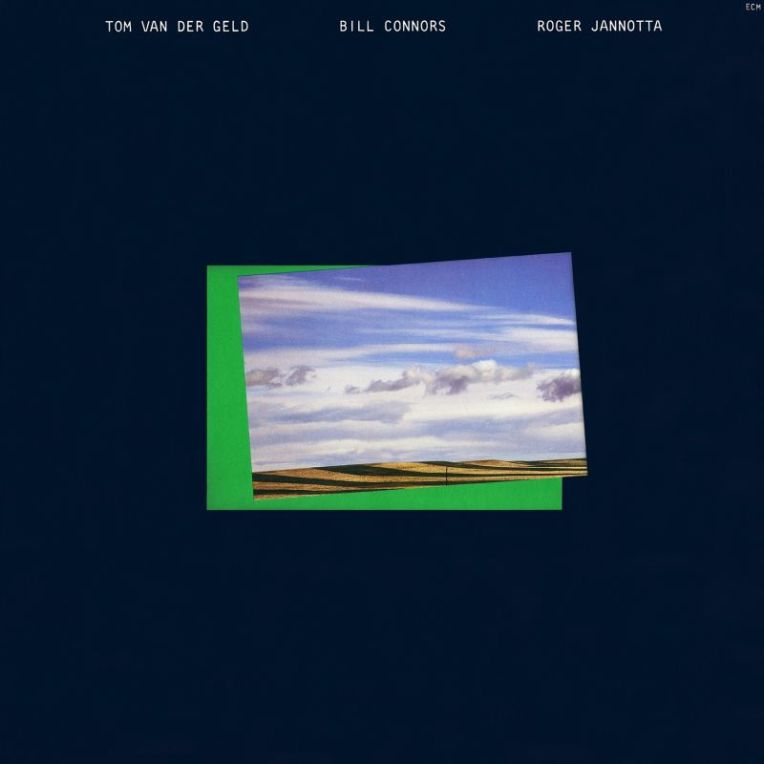
Tom van der Geld: Path (ECM 1134)

ECM 1134

Tom van der Geld
Path

Tom van der Geld vibraharp
Bill Connors guitars
Roger Jannotta flute, soprano saxophone, oboe
Recorded February 1979 at Tonstudio Bauer, Ludwigsburg
Engineer: Martin Wieland
Produced by Manfred Eicher

Path brings together guitarist Bill Connors (fresh off a stint with the Jan Garbarek Group on Photo With…), Carla Bley Big Band regular Roger Jannotta on winds, and vibraphonist Tom van der Geld for a network of pellucid improvisations entwining the barest of compositional skeletons. Connors’s twangy steel drops us immediately into an ethereal sound-world with “One,” mediating a pleasant conversation between flute and vibraphone. Thus begins a kaleidoscope of duets, trios, and quartets (the latter courtesy of some non-intrusive overdubbing). Mallets provide a resonant trunk in “Eevee,” from which branches Connors’s crisp foliage, all of it animated by the breath of a majestic flute. This blends smoothly into the pastels of “Joujou,” where familial nostalgia abounds. The title of “Michi” is Japanese for “path,” which makes it the title track by way of translation. Jannotta switches to soprano sax in this new enigmatic territory, landmarked by gossamer flags and empty way stations, before fluting a veil of Aeolian sounds over our ears. “Joys And Sorrows” works stretches our heartstrings and plucks each with the gentility of a raindrop on a spider’s web. Two ghostly guitars shine inside its nocturnal halo of vibes, bisected by soprano with a comet’s grace.

Like a meteor shower, one spends a long time waiting for excitement in Path, only to realize that the pregnant darkness to which one has held such rapt attention harbors far greater wonderment. As one of ECM’s most transparent statements, this positively exquisite album is an easy candidate for president of the label’s Bizarrely Out of Print Club. Find it any way you can and be moved, as you will.

<< John Abercrombie Quartet: Arcade (ECM 1133)
>> Jan Garbarek Group: Photo With… (ECM 1135)

John Abercrombie: Characters (ECM 1117)

ECM 1117

John Abercrombie
Characters

John Abercrombie guitars, electric mandolin
Recorded November 1977 at Talent Studio, Oslo
Engineer: Jan Erik Kongshaug
Produced by Manfred Eicher

Just four months after the historic Gateway 2 session, John Abercrombie stepped into Oslo’s Talent Studio to record Characters, his first and only solo album for ECM. While the guitarist’s trademark electric lurks here and there, a modified mandolin takes the strongest lead. The album also features about as much acoustic as one is likely to hear from Abercrombie in one sitting. All of this makes for sonic perfection.

At nearly 11 minutes, “Parable” is the longest cut on the album. A plaintive mandolin seems to stretch its strings as Abercrombie adds almost sitar-like cadences until, about halfway through, we realize this is but the stem of an overarching flower, which reveals its full bloom in an acoustic umbrella. With peerless thematic acuity, Abercrombie reconfigures his melodic matrix in “Memoir,” a nostalgic acoustic duet, each channel part of a spontaneous conversation. It is the most fleeting track on the album, but also the most intuitive. Next, Abercrombie transmits a “Telegram” straight into our souls. Like the message of its title, it is formless during transmission, but arrives in tangible form through the advent of technology, of which performance is Abercrombie’s medium of choice. His involuntary humming harmonizes with itself in a subconscious overdubbed chamber choir. “Backward Glance” recalls the title of Steve Kuhn’s classic tune. Dense acoustic chording spins powerful thermals upon which Abercrombie spreads his electric wings, drawing a feathered curtain over our eyes in the final strum. The spindly diversions of “Ghost Dance” percolate like anesthesia through the bloodstream before “Paramour” makes its debut as another acoustic duet (Abercrombie would soon resurrect it at the heart of his first quartet album, Arcade). More of the same awaits us in “After Thoughts,” where every pause feels like a deep breath that is at last exhaled in a luxurious chord. Lastly, through the liquid sheen of “Evensong” we catch visions of ourselves at different ages. After a silence, an acoustic hand opens its fingers wide as one electric swells in accompaniment and the other glides like a stingray for a sublime finish.

The album’s title is a prescient one. In addition to glyphs on a writing surface, “characters” are people, animals, or any other living creature whose desires animate a story. They might also be the traits of those creatures, or even the morals that define their personalities. Here, we encounter all of these and more, threaded ever so genuinely by one musician’s unique sense of space-time. For anyone wishing to peer into the soul behind the sound, let this be your window.

<< Egberto Gismonti: Sol Do Meio Dia (ECM 1116)
>> Jan Garbarek: Places (ECM 1118)

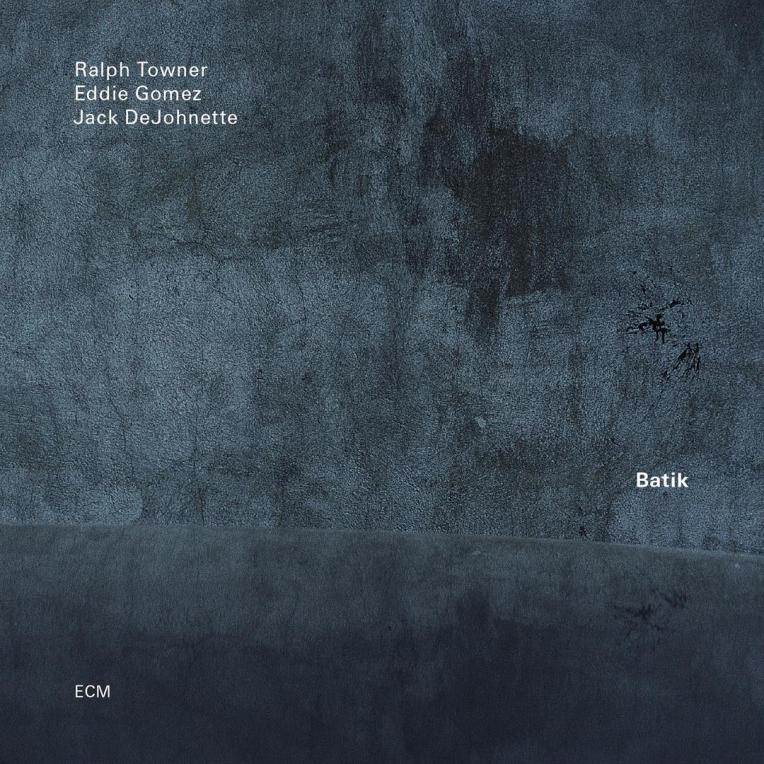
Ralph Towner: Batik (ECM 1121)

ECM 1121 CD

Ralph Towner
Batik

Ralph Towner 12-string and classical guitar, piano
Eddie Gomez bass
Jack DeJohnette drums
Recorded January 1978, Talent Studio, Oslo
Engineer: Jan Erik Kongshaug
Produced by Manfred Eicher

There are certain images that seem fail-proof when musically evoked. The “Waterwheel” that inaugurates us into guitarist Ralph Towner’s astonishingly beautiful Batik is one of them. Having since been painted for us by such varied talents as Hamza El Din (see the Kronos Quartet’s Pieces of Africa) and Marina Belica (former leader of the October Project, of which their self-titled debut is a personal all-time favorite), Towner’s particular configuration embodies the best of all worlds with the precision of his fingers magnified to great effect by Jack DeJohnette on drums and soothingly animated by the bass of Eddie Gomez. Towner’s democratic shifts in density allow for solos to shine through the haze unhindered, such as the enchanting bass that darts through his added splashes of 12-string. Towner rejoins in overdubbed costume, while amplified sustains peek like the sun from behind a cloud. Their passage through the sky is marked only by DeJohnette’s delicate metronome, allowing us one final glimpse of its thematic pool. “Shades of Sutton Hoo” is named for an Anglo-Saxon burial ground and haunts us with its reverberant lows and tinkling cymbals. A noticeably freer structure pervades, tracing every mound of earth with archaeological care. This delicate filler leads us up a “Trellis” of melody into ghostly afterthoughts. Gomez’s voice cuts with urgency through Towner’s ornamental stride. Their sumptuous counterpoint continues in the 16-minute title track and sets us down comfortably in Solstice territory. DeJohnette unleashes a noteworthy solo, while Gomez laces his quick fingers to support every hoisted footstep. We end in the “Green Room.” Painted with Towner’s mournful piano, it glows in a wash of potent commentary from bass and brushed drums, crumbling like spring snow into silence.

A classic to the nth degree.

<< Bill Connors: Of Mist And Melting (ECM 1120)
>> Enrico Rava Quartet: s/t (ECM 1122)

Paul Giger: Vindonissa (ECM 1836)


Paul Giger
Vindonissa

Paul Giger violin, violino d’amore, viola d’amore, footbells
Robert Dick c-flute, glissando flute, bass flute in c, bass flute in f, contrabass flute
Satoshi Takeishi percussion
Recorded June 1998 and 2000

Modern-day gypsy, musical traveler, melodic nomad: call him what you will, but Paul Giger has created some of the most haunting music to ever grace your ears. Adding yet another branch to the bold tree that began with Chartres and which was expanded in three subsequent projects, the Swiss violinist/composer beguiles us yet again with this more whimsical, though no less trenchant, collaboration. On Vindonissa, he is joined by two outstanding musicians. Robert Dick is a truly revolutionary American flutist and composer who has taken his instrument to new heights. A pioneer in extended techniques, design, and improvisation, he is a welcome presence on ECM. Percussionist Satoshi Takeishi is a kindred itinerant spirit, and has worked with a wide range of musicians, including Anthony Braxton and Joe Zeytoonian. A skilled improviser in his own right, his openness to the musical moment is a no-brainer for inclusion here.

Giger bookends this yawning chasm of life with a meditation on solo violin from which the album gets its name, distilling from the chromatic banality of open strings a potent tincture of dissonance and transcendence. Such lone signposts dot the album with moments of pause, as in the lilting Introitus and Kyrie. The group tracks contrast with open spaces and colorful mysticism. Starting with the pointillism of Oogoogajoo and ending on the likeminded An Ear On Buddha’s Belly, these intersections of time and circumstance seem to grow organically, as if in waves. Dick and Takeishi walk comfortably alongside Giger, bringing vital human energy to the untouchable center of Lava Coils and even greater earthly care to Fractal Joy, the most profound triangle therein. Gloria et Tarantella, in which Giger rocks the viola d’amore to the beat of his own foot bells, is the album’s masterpiece and builds to a frenzy of Tartini-like exuberance. With every note, it burns a root and follows its smoke ever skyward.

Giger is easily one of the greatest violinists of our time, not only because of his technical prowess, but more importantly for his ability to grab hold of a melodic handle and never let go until it asks him too. Such talent can take some getting used to, especially in the presence of other musicians, but I think this is an album in which one can rest assured that a meeting of three bodies, minds, and worldviews can indeed find harmony through sound’s untold alchemies.

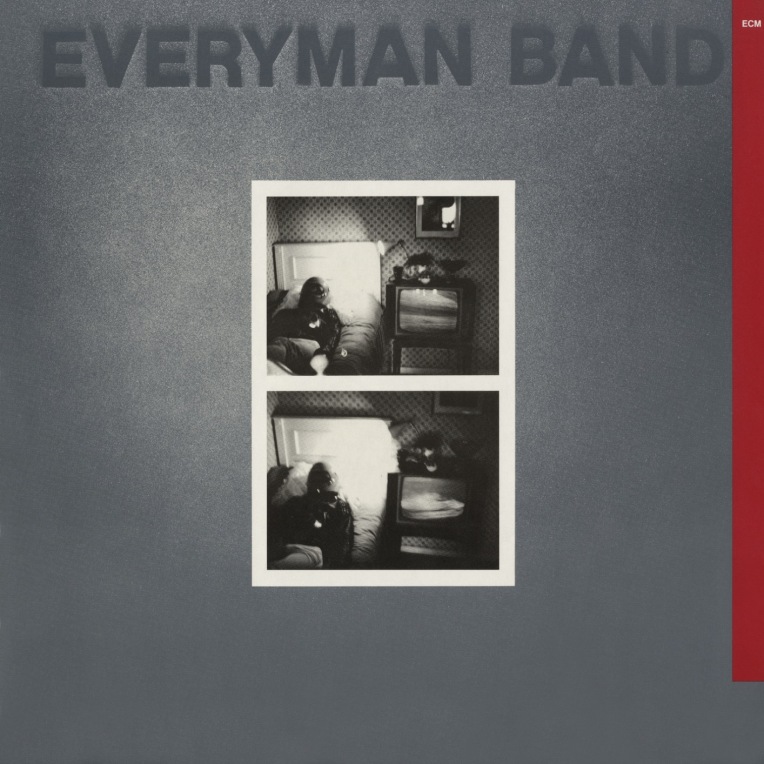
Everyman Band: s/t (ECM 1234)

ECM 1234

Everyman Band

Michael Suchorsky drums
David Torn guitar
Bruce Yaw bass
Marty Fogel saxophones
Recorded March 1982 at Talent Studio, Oslo
Engineer: Jan Erik Kongshaug
Produced by Manfred Eicher

What began as Lou Reed’s backing in the seventies stepped out on its own as Everyman Band, recording this self-titled debut for ECM in 1982. If a group is only as good as its musicians, then the name is a contradiction: not everyone possesses the firepower of Michael Suchorsky on drums, David Torn on guitar, Bruce Yaw on bass, and Marty Fogel on saxophones. The latter brings his idiomatic flair with three originals. Torn steals the show in “Lonely Streets,” a smoldering trek through nocturnal fires and other hidden conflagrations. Fogel spikes this punch with his own choice poisons. Yaw keeps up at every turn of phrase, and keeps us “On the Spot” with a memorable bass line, around which Fogel herds Torn’s flock in tight circuits. “Fatt Blatt” weighs in with a heavy tenor solo before the quartet pulls its best funk off the rack in a monochromatic swing. Yaw has his moment in the sun before diving back into the vamp with a vengeance.

Torn hones in with two clicks of his own. “Morals in the Mud” opens the album with a bang, his Strat popping the bubble of our attention with a neon pin, while “The Mummy Club” gives off an airier vibe. A slap bass distinguishes this wobbly palate-cleanser from the rest, as Fogel surfs Torn’s mighty chordal crashes with finesse. Suchorsky and Yaw churn out one tune apiece. “Japan Smiles” has a deeper, headier sound and features some fantastic bass/sax interaction. “Nuclear Suite,” on the other hand, is less direct, and speaks in tongues over a vast dynamic breadth. The appearance of a soprano sax lightens the load considerably. Playful, jaunty rhythms abound, overturning post-apocalyptic rubble for clues to a hidden past. Torn elbows his way through with an incisive solo. Like a slingshot of light into the evening sky for want of a meteor shower, it trails with unnaturally prolonged fire.

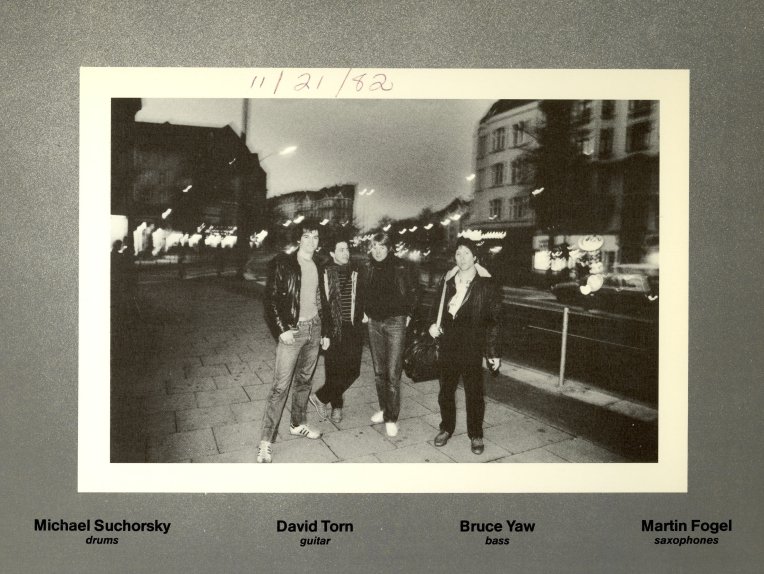
Everyman Band
(Photo by Ralph Quinke)

This album is an all-around solid effort brimming with guttural, after-midnight sounds that are iconic of the very era they tear to shreds. The band’s style is both distant and in our faces. The group shot on the back of LP jacket says it all: a relatively clear foreground lights the naked streets against an impossibly distorted backdrop in a single instantaneous image.

<< Chick Corea: Trio Music (ECM 1232/33)
>> Hajo Weber/Ulrich Ingenbold: Winterreise (ECM 1235)

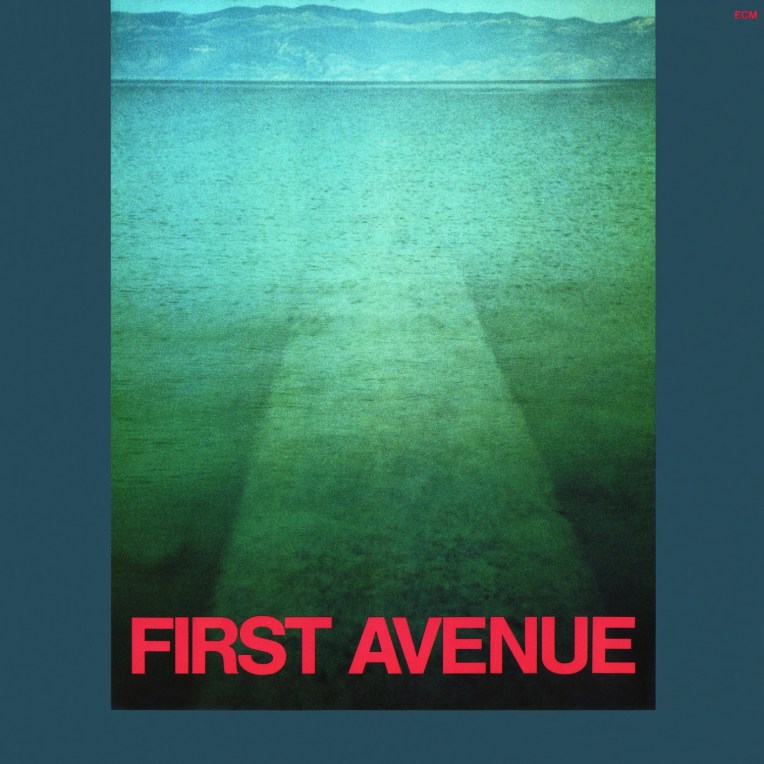
Goodhew/Jensen/Knapp: First Avenue (ECM 1194)

ECM 1194

First Avenue

Denney Goodhew alto saxophone, flute, bass clarinet
Eric Jensen cello
James Knapp trumpet, fluegelhorn, waterphone
Recorded November 1980 at Tonstudio Bauer, Ludwigsburg
Engineer: Martin Wieland
Produced by Manfred Eicher

“Our procedure is to simply begin.”
–James Knapp

Bringing together reedman Denney Goodhew, cellist Eric Jensen, and horn player James Knapp, First Avenue is a ghostly outlier in the ECM backlist. The project germinated within the American Contemporary Dance Company, which paired spontaneous incidental music with indeterminate movement on stage. As the trio began to branch out and perform as a group, they soon made their way into the studio for this enigmatic session. The pieces have no titles outside of “Band One,” “Band Two,” etc., and perhaps anything more would only be a distraction.

The haunting cries of a waterphone make their first of two appearances on the label (the other courtesy of Marilyn Mazur on Elixir) by way of introduction. From this, we encounter a spacious flowering of alto sax, cello, and horn, sounding much like a Gavin Bryars ensemble piece in its developmental arc. Some tracks (Bands Two and Seven) employ an echo effect which, though dated, is put to utmost creative use here, swirling into a spiral in which the original utterance ceases to exist. Band Three boasts as many overdubbed cellos in a clustered, reactive agitation, while Five is a beautiful piece for two overdubbed saxophones. The latter’s chromatic and lively syncopation make for a most engaging interlude to the overall denser flow. Band Four is more playful, yet somehow regretful, feeling like the soundtrack to a mental breakdown, Darren Aronofsky-style—each hiccup from the cello another pill popped, each horn blast another memory compromised.

Loops and delays abound in the album’s second half. Band Six paints a particularly fluid image of fluted beginnings and muted menageries. Bass clarinet and fluegelhorn bleed darker hues into a cello’s growls and other subterranean minutiae. Each ascendant line drapes its shadow from a barely visible line in a modest exhibition of pellucid musicianship and seamless changes of register. The echoed sax in Band Eight almost sounds as if it were being played backward as undulating cello lines keep it airborne. Abandon builds to stratospheric heights before fading in a final dissolve.

These are supremely harmonic, spacious improvisations that ply the ear with questions that are their own answers. This is intimate, far-reaching, and supremely accessible music drawn from a synergistic wellspring of talent. A more than pleasant surprise as yet unburned in CD form.

<< Surman/DeJohnette: The Amazing Adventures Of Simon Simon (ECM 1193)
>> Shankar: Who’s To Know (ECM 1195)

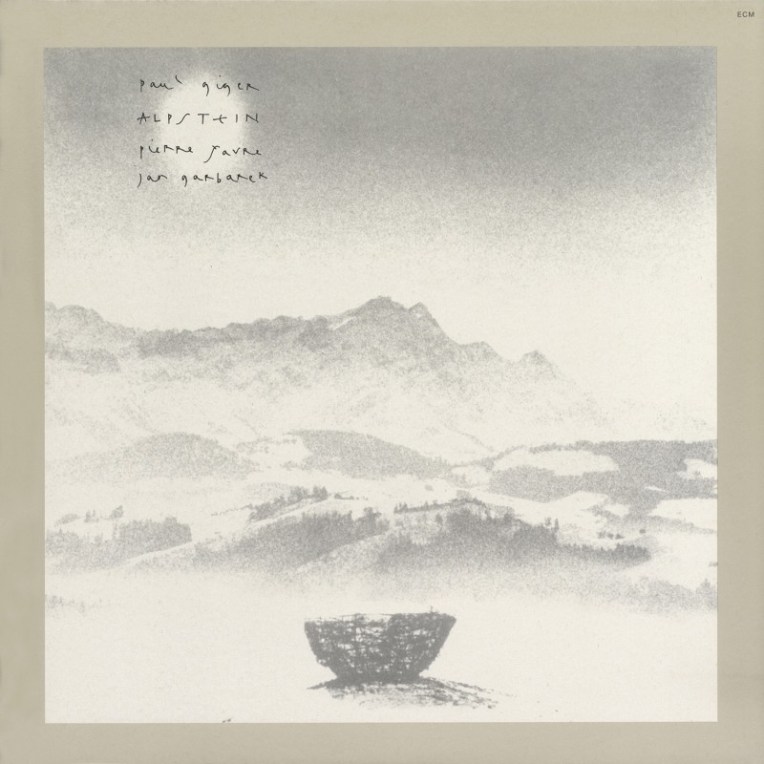
Paul Giger: Alpstein (ECM 1426)

1426

Paul Giger
Alpstein

Paul Giger violin
Jan Garbarek tenor saxophone
Pierre Favre percussion
Musicians from Appenzell (Switzerland) silvesterchlauseschuppel, schellenschötter
Recorded 1990/91 at Rainbow Studio, Oslo; 1990 at Trogen
Engineer: Jan Erik Kongshaug
Produced by Manfred Eicher

The first time I heard Swiss violinist Paul Giger, my soul might well have wept. His is a spiritualism beyond the trappings of human politics, a stage populated by human-animal hybrids, faceless musicians, and dancers of many forms. For this, his follow-up album, Giger is joined by saxophonist Jan Garbarek and percussionist Pierre Favre in a sonic portrait of his homeland. Delving into living folk traditions, this trio gives us as wintry a feeling as possible without ever stepping foot in into the Alps. Yet this is no mere sonic postcard, but a concerted effort to flip the land inside out and expose, as from under the logs we overturned as children, the life teeming within.

Anita's Alpstein
(Photo credit: Anita Brechbühl)

This music came into my life when I still had a violin in my hands. At the time, I was struggling with the idea of expressing my inner voice through an external instrument. Hearing Giger showed me it was possible, and this album’s second piece, Karma Shadub (Dancing Star), is something I played quite often in my ultimately futile attempts to emulate a sound that was beyond me. I even performed it once with an interpretive dancer at a high school assembly. Though the violin soon faded from my grasp, I remain ever in its shadow, a humble and open listener of its masters, of which Giger is a nonpareil example. Every dissolve of Karma reveals new visual combinations, each so rudimentary, so fundamentally alive. Garbarek’s throaty call dovetails with Giger’s in a symbiosis of dance and darkness. Alpsegen introduces the album’s first percussive colors. A caravan of metallic nomads, ranging from tambura to cymbals, processes across an ever-widening sound palette. Cowbells recede like ancestors as Giger leaps in evolutionary pirouettes. On Chuereihe, Garbarek revisits the herding calls that enthralled on Dansere, and climbs the peaks into which the cover photography beckons us. Giger’s violin here is sometimes insectile, sometimes onomatopoetic, but always anchored by Favre’s deepening drums. Chlauseschuppel gives us a taste of the Appenzeller bells, rung at the end of every year to ward off foul spirits as the new one is welcomed.

Silvesterchläuse by Vera Rüttimann
(Photo credit: Vera Rüttimann)

When I first heard Trogener Chilbiläbe, which closes the disc, its backdrop of urban sounds led me to believe it had been recorded in a church with the door flung open. Its inspiring solo cycles of fast runs and soaring meditations end with a slam, as if shutting out the noise of the outside world. Only later did I discover that the door in question belongs to a prison cell, and that the piece was recorded in the jail where Giger must serve out a few days of each year for refusing to pay military tax. As insightful as these biographical minutiae are, it is the Zäuerli, a haunting yodel particular to the Alpstein region making three appearances here, that is the album’s lifeblood. In order to evoke its polyphonic splendor via a single instrument, Giger taps his fingers on open strings, eliciting harmonics from within. These hidden voices are his aesthetic soil. As we come to be wrapped in their atmospheric blankets, we are awakened even as we slumber.

Alpstein is a cosmic alignment. Like all of the violinist’s albums, it is markedly different from the rest but digs just as deeply. Giger may not always look to the same future, but he does draw from the same mythic past. His playing is only one step removed from breath, for every stroke of the bow enriches the universe like air to a lung.

<< Kim Kashkashian: Shostakovich/Chihara/Bouchard (ECM 1425 NS)
>> Stephan Micus: Darkness And Light (ECM 1427)