Ralph Alessi trumpet Gary Versace piano Drew Gress double bass Nasheet Waits drums
Recorded September 2014 at Rainbow Studio, Oslo
Engineer: Jan Erik Kongshaug
Mixed October 2015 at Avatar Studios, New York by James A. Farber (engineer), Manfred Eicher, and Ralph Alessi
Produced by Manfred Eicher
Release date: February 19, 2016
Trumpeter Ralph Alessi returns to ECM, following his leader debut for the label, with an ace band of pianist Gary Versace, bassist Drew Gress, and drummer Nasheet Waits. This time around, his signature balance of openness and angularity is in fuller effect, made even more prosaic by Versace’s touch. Gress brings his own thorough palette to the studio, while Waits—with whom Alessi first played in Fred Hersch’s quintet—walks a delicate seam both inside and outside the pocket.
Over the course of ten originals, Alessi guides his painterly cohort through a gamut of hues. From the primer of “Here Tomorrow,” he moves ever-onward toward the next brushstroke before the current one has even the slightest chance to dry. As a player of genuine dynamism, Alessi treats the melancholy of “Window Goodbyes” (the title references his five-year-old daughter’s habit of waving from the window as he leaves for a tour) and “Shush” with as much rapt attention as any upbeat blending (of which the album is bereft until the closing “Do Over”).
The rubato “Smooth Descent” is a wondrous exhibition for Versace and Gress, both of whom widen its scope with every note they choose. “Gone Today, Here Tomorrow” and “Scratch” are the most cubist detours of the set, although both leave plenty of room between Alessi’s blasts of exposition to find our own way. Through it all, he shows narrative purpose in his playing. Whether in the somber intro of “Heist” or colorful exegesis of “I to I,” he understands the value of any language—in this case, music—to provoke meaning in the flesh. We might therefore think of the album’s blushing title track as the trembling of a body, although it makes just as much sense to imagine it as a bag slung across the back, each arrow it holds a melodic weapon rounded to heal rather than harm.
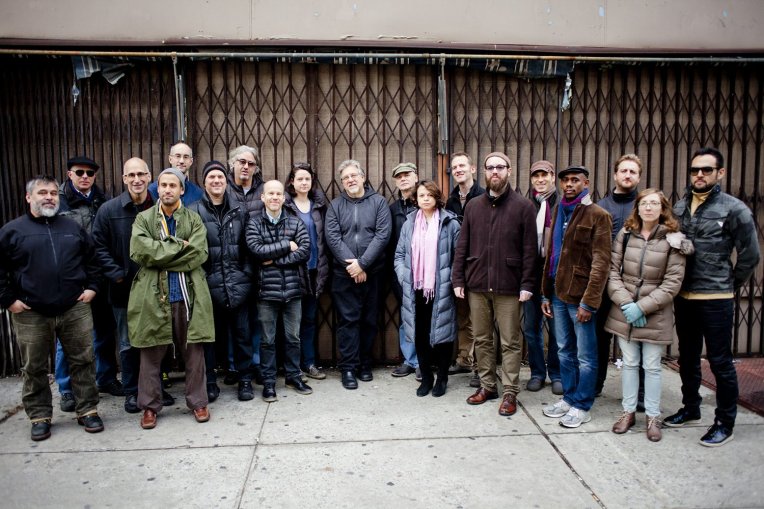
Ensemble Kolossus Loren Stillman alto saxophone Oscar Noriega alto saxophone, clarinet, bass clarinet Chris Speed tenor saxophone, clarinet Brian Settles tenor saxophone, flute Tim Berne baritone saxophone Dave Ballou trumpet Ralph Alessi trumpet Shane Endsley trumpet Kirk Knuffke trumpet, cornet Alan Ferber trombone Jacob Garchik trombone Jeff Nelson bass trombone, contrabass trombone Patricia Franceschy marimba Mary Halvorson guitar Kris Davis piano Michael Formanek double bass Tomas Fujiwara drums Mark Helias conductor
Recorded December 2014 at Systems Two, Brooklyn, NY
Engineer: Jon Rosenberg
Mixing: David Torn
Mastering: Christoph Stickel and Manfred Eicher at MSM Studios, München
Executive producer: Manfred Eicher
Release date: February 12, 2016
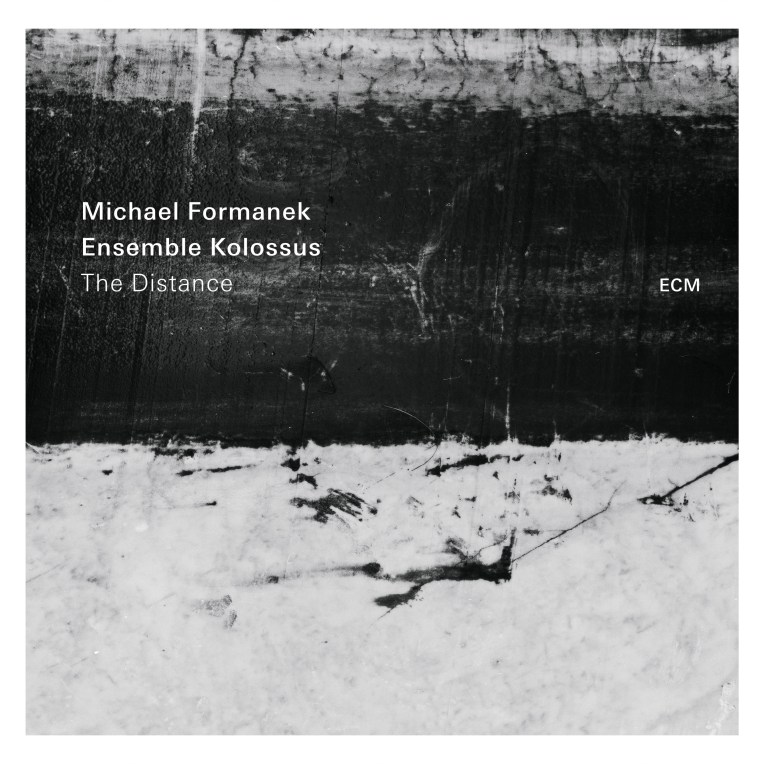
After two eminent quartet outings for ECM, The Distancedemonstrates Michael Formanek’s redefinition of big band jazz. Although the bassist and composer cites influences as diverse as Olivier Messiaen and Charles Mingus, his music is more than the sum of its parts, a palette that yields fresh hues with every listen. Drawing on talents both within and without his usual camp, the album pays equal tribute to the known and unknown and activates the sound of each and every player.
Most of this sonic continent is inhabited by denizens of Formanek’s octagonal Exoskeleton Suite. The suite is introduced by a prelude that embodies its title better than anything that follows it. The bandleader’s soloing indeed acts like a protective shell around the many chemical reactions taking place within it. Analyzing them with scientific precision are pianist Kris Davis and drummer Tomas Fujiwara, both of whom turn method into esotery in compact sweeps of accord.
In light of this opening statement, “Part I – Impenetrable” feels like newfound freedom. Pewter cloudbursts give way to Loren Stillman’s nostalgic altoism, which like a child overturning a log uncovers a wriggling ecosystem that would otherwise remain hidden. “Part II – Beneath the Shell” fast-forwards into evening, where a groove inhales the secrets exhaled by its predecessor. Chris Speed works his tenor into the very heart of things, while Kirk Knuffke’s cornet flickers like a candle in a room that smells of rum and ink. “Part III – @heart” is a showpiece for trombonist Ben Gerstein, whose elicitation of harmonics and other peripheral signatures works into a string-bending, metallic fringe of extreme beauty.
“Part IV – Echoes” is a rift in vast ocean waters, of which trumpeter Ralph Alessi and trombonist Alan Ferber are master navigators. Where Alessi cuts his map with an X-ACTO knife, Ferber glues those pieces into a new one, leaving guitarist Mary Halvorson to recalibrate the compass in “Part V – Without Regrets.” Taking the flow into unexpected directions, she forges a chamber aesthetic to the rhythms slithering between her strings. “Part VI – Shucking While Jiving” features a string of brilliant soloists, including Tim Berne on baritone saxophone, Brian Settles on tenor, Jacob Garchik on trombone, and Jeff Nelson on bass trombone. This one marks a tectonic shift in place and time. Smooth yet also pockmarked with worthy interruptions, its atmosphere combusts by influence of ecstatic kinesis. “Part VII – A Repitle Dysfunction” returns to the fragmentary intimacies of Part V, only now with the wall-breaking marimba of Patricia Franceschy and clarinet of Oscar Noriega. Fujiwara and Davis, too, shine through the ruins with their ancient light, as precise as an eclipse. All of which funnels into “Part VIII – Metamorphic,” a collective improvisation for the full ensemble that describes a landscape formed as if through-composed.
(Photo credit: John Rogers)
The suite’s prelude is itself preluded by the title track, which eases Settles onto a locomotive track of horns and brushed drums. The force of it moves just so, blurring trees on its journey toward empty coastline. In a development so misty and cinematic that it could almost be mistaken for a Gavin Bryars ensemble piece, it interlocks with its surroundings—less like a puzzle and more like a leaf among a spray of others.
Formanek has always been unafraid to bend his scores to their limits and let their rougher edges flap for want of new connections, but here his art achieves even deeper relevance in that regard. The result is not a message in a bottle, but a bottle in a message.
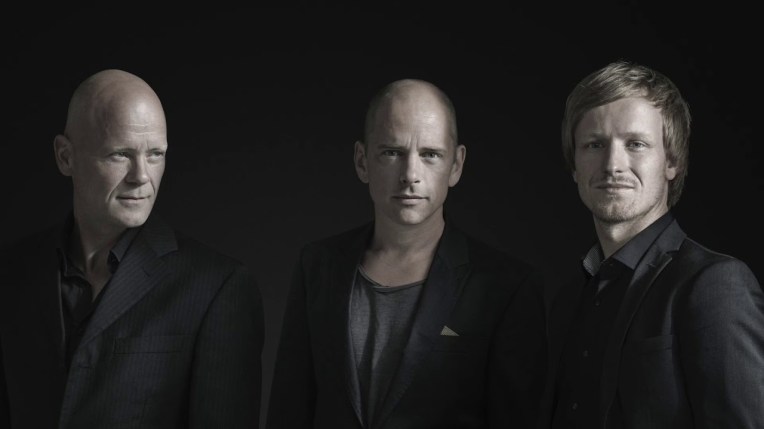
Tord Gustavsen piano, electronics Sigurd Hole double bass Jarle Vespestad drums
Recorded January 2018 at Rainbow Studio, Oslo
Engineer: Peer Espen Ursfjord
Produced by Manfred Eicher
Release date: August 31, 2018
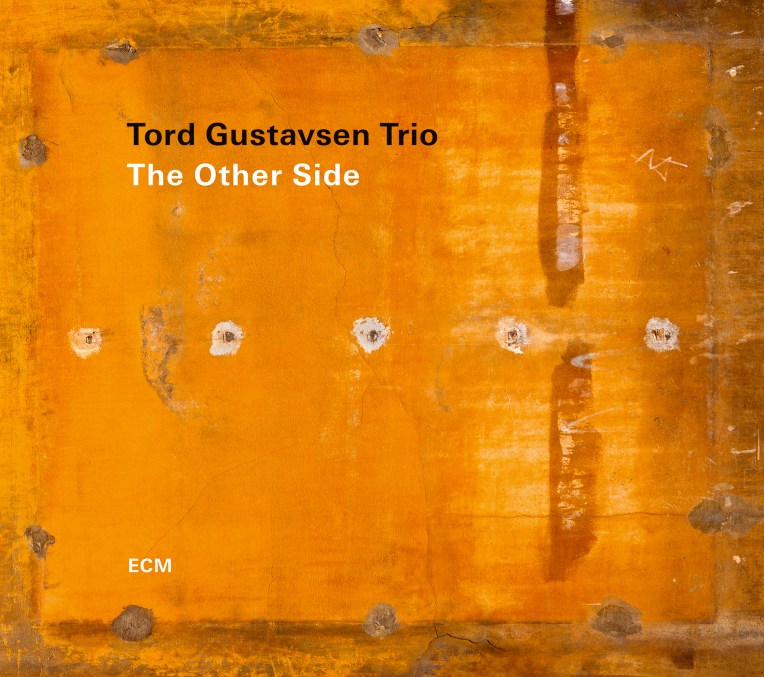
Following the success of three earlier ECM recordings and reeling from the death of bassist Harald Johnsen, Norwegian pianist Tord Gustavsen decided to pursue other sources of light. Here his trio is relit, carrying over the torch of drummer Jarle Vespestad and adding the new flame of bassist Sigurd Hole for a veritable candelabrum of poetic originals, folk songs and church music. Although 11 years separates this from the last trio session, Gustavsen’s self-styled approach of “radical listening” is more vibrant than ever—a mood only confirmed by the crispness of this album’s engineering and the humbling interactions it documents.
(Photo credit: Hans Fredrik Asbjørnsen)
Like a prism, colors change throughout The Other Side as a matter of perspective. Upon first listen, I find myself drawn to an anthemic subtlety such as only Gustavsen can articulate. It’s all there in the inaugural “The Tunnel,” which feels like a slow-motion flashback into the deepest corners of my happiest memories.
A slight change of angle highlights the band’s newest member. Hole is an intrepidly lyrical bassist whose approach to folk tunes and hymns alike reveals a buoyant physicality of execution. His spirited contributions to folklorist Ludvig Mathias Lindeman’s “Kirken, den er et gammelt hus,” for instance, reveal a heart rooted deeply in tradition. His arco whispers in “Duality” and “Taste and See,” both of which float on softest beds of electronics, are haunting and precise and the continuity of his playing in “Re-Melt” is nothing short of romantic.
Another shift brings out the deeper hues of three Bach chorales, lovingly arranged in dramatic braids. Of these, “Schlafes Bruder” teases out great joy from solemn hymnody and frames butterfly-winged drumming. The piano solo “Left Over Lullaby No. 4” is yet another band of a spectrum that speaks for itself and, like the title track and the concluding “Curves,” has a classic feel that beckons us into Gustavsen’s back catalogue. All of which yields a life-affirming record and a profound leap of faith for one of ECM’s most indelible trios. Welcome home.
(This review originally appeared in the September 2018 issue of The New York City Jazz Record, a full PDF of which is available here.)
Mark Turner tenor saxophone Ethan Iverson piano
Recorded June 2017, Auditorio Stelio Molo RSI, Lugano
Engineer: Stefano Amerio
Produced by Manfred Eicher
Release date: September 7, 2018
Following two appearances on ECM as part of the Billy Hart Quartet, saxophonist Mark Turner and pianist Ethan Iverson return to the fold as a duo. Their speculative blend of chamber jazz is a nod to the Lennie Tristano/Warne Marsh school, yet every listen reveals layers of spontaneous design.
Marsh’s own “Dixie’s Dilemma” is a thematic centerpiece, which in its present form feels like a jazz message shot into space, scrambled by the universe and dropped back through the Earth’s atmosphere with exacting lyricism. The lion’s share of credit, though, goes to Iverson, who penned six of the album’s nine selections. Set opener “Lugano” is an ode to the place of its recording as well as the state of mind it conveys. It’s a feeling that could exist nowhere and nowhen else and finds Turner’s tone, fleshier than ever, sprouting wings from the spine of an aching altissimo. The title tune and darker “Third Familiar” are soundtracks of the soul while the tighter knots of “Turner’s Chamber of Unlikely Delights” unravel with playful extroversion. Against the cloudy backdrop of “Yesterday’s Bouquet,” a piano solo oozing with remembrance, the bluesier “Unclaimed Freight” puts a spirited ice cube in the cocktail. Turner’s contributions, for their part, constitute a binary star of personal expression. Where “Myron’s World” is a masterfully realized tangle of associations given credence by the profundity of their grammar, “Seven Points” is the album’s creative apex. Its balance between focus and surrender is indicative of open communication. Turner navigates every change of direction and terrain with eyes closed and heart open, yielding massive returns from investments of experience.
Although the musicians were recorded in the same room, they seem to inhabit their own planetary orbits. Bound by the gravitation of a serious whimsy, they finish each other’s sentences even as they begin to cast new lines into the galactic pond on which they’ve anchored their boat for an hour’s duration. And while their kingship may be temporary, whatever they’re tapping into is anything but.
(This review originally appeared in the September 2018 issue of The New York City Jazz Record, a full PDF of which is available here.)
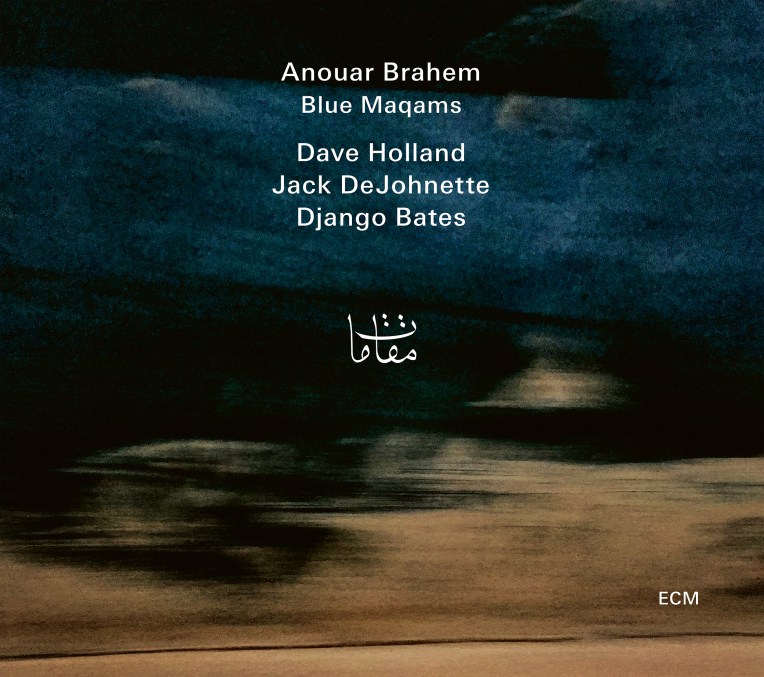
Anouar Brahem oud Dave Holland double bass Jack DeJohnette drums Django Bates piano
Recorded May 2017 at Avatar Studios, New York
Engineer: James A. Farber
Assistant: Nate Odden
Produced by Manfred Eicher
U.S. release date: October 13, 2017
If you’ve ever awoken from a dream with enchanting music on the brain, only to have it fade as the day wears on, Anouar Brahem’s Blue Maqamsmay just recapture the feeling of preserving it. The album is at once a return to form and a new direction for the Tunisian oudist, reuniting him with bassist Dave Holland (cf. 1998’s Thimar) and recording for the first time with drummer Jack DeJohnette and pianist Django Bates.
The introductory oud of “Opening Day,” solo but never alone, is a voice of pale light out of darkness, a careful witness of things just visible enough to understand. Holland listens from the periphery before locking step. DeJohnette feathers the edges, while Bates offers his gentle inclusions with the felicity of a poet. Thus complete, the quartet’s sound embarks as one body, lucid and self-aware.
Patience is the blood of Blue Maqams, as proven in “La Nuit.” Arpeggios from the keyboard are the nerves to Brahem’s soft impulses as deep notes flow duskily beneath. Only after six and a half minutes do bass and drums make their anchorage known, a formula replicated in “The Recovered Road to Al-Sham.” Such meticulously rooted stems produce ample flowers, and none so supple as the title track. Here Brahem and DeJohnette engage dialectically before a snaking theme works its way into the ventricles. Brahem’s cadenza—a thread of mournfulness in an otherwise peaceful weave—is the album’s conscience.
Bates delights in the duet “La Passante,” a tender segue into “Bom Dia Rio.” The latter is, along with “Bahia,” the smoothest joint of the set. A seamless ride through ocean waves and playful nights, it builds passion out of thin air and contrasts with “Persepolis’s Mirage,” in which we encounter something convoluted, emotional, emigrational. “Unexpected Outcome” closes the door by opening another. A steady rhythm section gives Brahem and Bates plenty of room to glide as the bandleader’s voice carries winged messages. Everything funnels into a final shimmer, making for one of the most stunning assemblages to ever graze its hands across ECM waters.
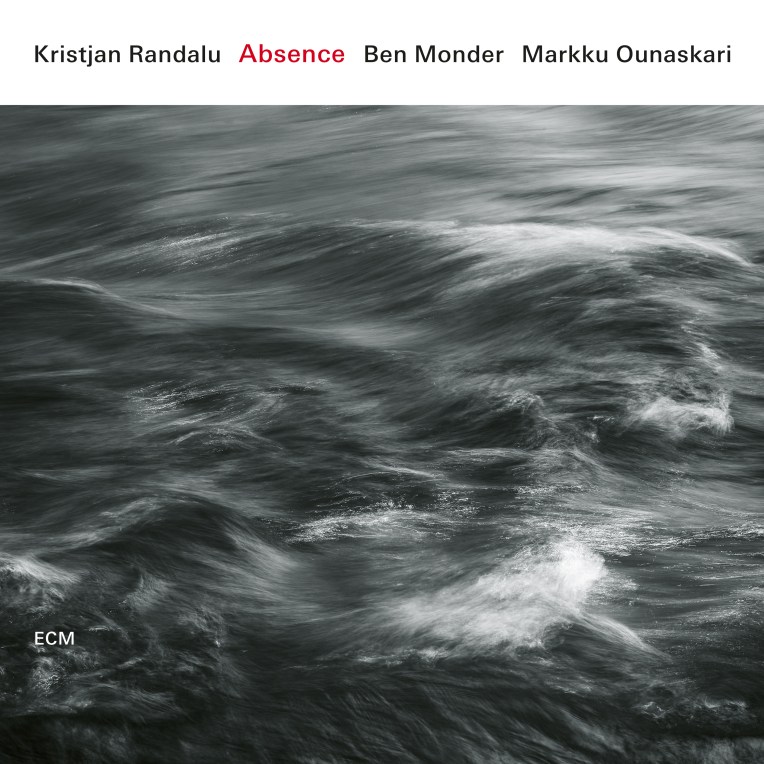
Kristjan Randlu piano Ben Monder guitar Markku Ounaskari drums
Recorded July 2017, Studios La Buissonne, Pernes-les-Fontaines
Engineers: Gérard de Haro and Nicolas Baillard
Produced by Manfred Eicher
U.S. release date: April 6, 2018
In the past decade, ECM Records has welcomed a range of new artists into its fold, but perhaps none so unassuming as Kristjan Randalu. Equally versed in classical and jazz performance, the Estonian pianist offers a debut that forgoes breaking ground in favor of the tectonic shifts beneath it. The title of Absence therefore accurately describes the music’s lack of allegiance to ear-catching grooves and sly hooks. Randalu and his bandmates—guitarist Ben Monder and drummer Markku Ounaskari—explore new territory without mapping it, per se, as the latter would imply a sense of colonial control in which they are clearly uninterested.
The album’s topography is nevertheless trail-marked by four of its briefer artistic statements. “Lumi I” and “Lumi II” are the most revealing in terms of process. Monder’s painterly sensibilities are free to roam here, as also in counterparts “Adaptation I” and “Adaptation II.” Together, these tracks illustrate the band’s core principles. Whether grounded in occasional arpeggios or expanding like lungs filling with air, they show a contemplative, physical awareness achieving greatest symmetry in “Partly Clouded.”
Although the album for the most part treads an even atmospheric keel, there are standouts. “Forecast,” for one, opens from Randalu’s crystalline intro into the album’s first and longest tune. But the brightest stars in the mix are “Sisu” and “Escapism,” both of which render some of the most achingly cinematic vistas to be developed out of the ECM camera in a long time. Working slowly and surely and with promises of nothing other than their own honest reflections, both are deeply moving works of art. The same holds true of the concluding title track, a lyrical vehicle for Monder’s balladry that ends with a tender kiss. An appropriate way to finish, to be sure: rewarding love with love, in the hopes of birthing more in kind.
(This review originally appeared in the June 2018 issue of The New York City Jazz Record, a full PDF of which is available here.)
Maciej Obara alto saxophone Dominik Wania piano Ole Morten Vågan double bass Gard Nilssen drums
Recorded January 2017 at Rainbow Studio, Oslo
Engineer: Jan Erik Kongshaug
Produced by Manfred Eicher
U.S. release date: November 10, 2017
In keeping with its commitment to fresh artistry, ECM presents the studio debut of Polish alto saxophonist Maciej Obara and his young quartet. As an improviser, Obara understands the fleeting nature of spontaneous creation, accordingly emoting with the soul of a poet—which is to say, wasting neither sentiments nor space to contain them. Case in point is the album’s opener, “Ula.” It introduces a tangible sound ideally suited to ECM’s visually-minded ethos. Remarkable about Obara is the gesso-like way in which he listens before applying his own strokes to any given canvas. Like any skilled oil painter, he knows that certain layers must dry before others can be added with clarity. In that vein, pianist Dominik Wania provides the broadest textural palette, giving just the right amount of uplift for the bandleader’s reed. Wania’s intros are especially well blended and draw from a variety of reference points. He brings shades of John Cage’s In a landscape to the album’s title track by Krzysztof Komeda (the only one here not penned by Obara) and in his extended setup of “Echoes” polishes a mirror without an inkling of vanity to show for it.
Bassist Ole Morten Vågan and drummer Gard Nilssen are purveyors of a mature subtlety by which give and take are rendered synonymous. In “One For,” they understand the lyrical potential of negative space. Interlocking in the freely-flowing “Joli Bord” and the concluding “Storyteller,” they sharpen serious arrows in preparation for whimsical targets. In terms of airtime, the piano trio is this record’s core, but Obara, in being so often backgrounded, unfolds his solos with an intensity made even more remarkable for selectiveness. His sound is unpretentious yet stands tall, fulfilling melodic promises with feeling rather than technique. It’s a surreal yet somehow organic form of communication that sticks as many feathers to each thematic bone until flight becomes achievable. The result is humility made musically incarnate and ready to fly.
(This review originally appeared in the June 2018 issue of The New York City Jazz Record, a full PDF of which is available here.)
Django Bates piano Petter Eldh double bass Peter Bruun drums
Recorded June 2016 at Rainbow Studio, Oslo
Engineer: Jan Erik Kongshaug
Produced by Manfred Eicher
U.S. release date: November 3, 2017
British pianist Django Bates makes his ECM leader debut with The Study Of Touch, and by its release gives hope to fatalists who see the piano trio as a dying genre. Bates himself was only convinced of throwing his own hat into that congested ring upon hearing his future bandmates—bassist Petter Eldh and drummer Peter Bruun—in the halls of Copenhagen’s Rhythmic Music Conservatory, where he’d just begun teaching in 2005. First conceived as an improvisation outfit, his Belovèd trio grew to encompass the formative influence of Charlie Parker as a springboard for Bates’ own writing. Parker’s spirited “Passport” is, in fact, one of only two non-originals on the program. The other, “This World” by Iain Ballamy, harks to the saxophonist’s All Men Amen (B&W, 1995), on which Bates appeared. Significantly enough, on Ballamy’s album this tune’s title was followed by four ellipses, whereas here those ellipses are gone, implying expressive surety. This symbolic change speaks to something vital about Bates’ artistry, by which each gesture feels as inevitable as the mind-melded contributions of his rhythm section. It’s there in the topsy-turvy feel of “We Are Not Lost, We Are Simply Finding Our Way” and underlying blues of “Senza Bitterness.” Such balance of slip and grip can only come from many hours of playing together without a roadmap.
Despite the many personal associations on which the tunes are founded, if not also because of them, listeners can’t help but merge at any given moment onto the band’s ever-changing fast lane of thought. Between the reflective “Little Petherick” and meatier “Slippage Street,” tessellated “Giorgiantics” and lushly colored “Peonies As Promised,” one encounters the clarity of anatomical drawing. The title track, along with the opener and closer, underscore this impression, sowing a sound defined by that which it refuses to define. Hence the prescience of touch as a theme for music rendered in that most asymptotic of contact zones between time and space, leaving us with one of the finest trio records of this millennium so far.
(This review originally appeared in the June 2018 issue of The New York City Jazz Record, a full PDF of which is available here.)
Nik Bärtsch piano Sha bass clarinet, alto saxophone Thomy Jordi bass Kaspar Rast drums
Recorded October 2017, Studios La Buissonne, Pernes-les-Fontaines
Engineers: Gérard de Haro and Nicolas Baillard
Produced by Manfred Eicher
U.S. release date: May 4, 2018
The booklet for Awase, Swiss pianist Nik Bärtsch’s latest release with his band of Ronin, quotes French theorist Roland Barthes: “The sign is a fracture which only ever opens onto the face of another sign.” Perhaps no other statement better expresses the fractal nature of this music, for the more one zooms in on its precisions, the more one senses its freedoms expand. Joined by Sha (bass clarinet and alto saxophone), Kaspar Rast (drums) and newest recruit Thomy Jordi (bass), Bärtsch finds himself rooted in a familiar ethos while sprouting new verdure.
The album continues his “modular” approach, by which larger bodies coalesce from elemental forces. The newest of these, “Modul 60” and “Modul 59,” open and close the album with hints of a concentrated future. Where the latter emotes in liminal territory, the former is a direct link to Continuum, Bärtsch’s previous record for ECM with his Mobile project. Any nods to the past, however, are refracted through a brighter coming of age: a sound that once ran now leaps. The ritual groove of “Modul 58,” for instance, is at once what we might expect and a fresher take on group integration, a taste of perpetual motion shown in the band’s willingness to let details express themselves to the level of ecstasy. “Modul 36” reveals the deepest change; known to any longtime listener of Bärtsch, here it takes on the uniformly colored properties that would seem to extend the band’s evolutionary path. It’s a classic yet forward-thinking groove, one that feels like a childhood home renovated from the inside out. “Modul 34” is another early tune, only now making its studio debut. There’s an almost digital quality to it, nuanced by human touch.
Awase is also a departure for including a non-Bärtsch original by Sha: the enigmatically titled “A.” Gradually building an ocean out of a water droplet, its waves flow to the magnetic suggestions of an itinerant philosophical compass. Like the album as a whole, it toes the line between light and shadow with every intention of shedding its ego to both along (and by) the way.
(This article originally appeared in the May 2018 issue of The New York City Jazz Record, a full PDF of which is available here.)