Louis Sclavis Quintet: L’affrontement des prétendants (ECM 1705)

L'affrontement

Louis Sclavis Quintet
L’affrontement des prétendants

Louis Sclavis clarinet, bass clarinet, soprano saxophone
Jean-Luc Cappozzo trumpet
Vincent Courtois cello
Bruno Chevillon double-bass
François Merville drums
Recorded September 1999, Studios La Buissonne, Pernes-les-Fontaines
Engineer: Gérard de Haro
Assistant engineer: Sylvain Thevenard
Produced by Louis Sclavis
Executive producer: Manfred Eicher

Multi-reedist Louis Sclavis unveils a new quintet with L’affrontement des prétendants, retaining only bassist Bruno Chevillon from his previous ECM sessions. Along for the ride are newcomers Jean-Luc Cappozzo on trumpet, Vincent Courtois on cello, and François Merville on drums. With them, he forges a distinctive jazz that never fails to titillate with its artful blend of composed and free elements. Like the wonderful Acoustic Quartet disc before it, this date immerses the listener in a refreshing, driven sound.

Despite the album’s title (one might translate it as “The clash of contenders”), the dynamics within the band are anything but contentious. Sclavis’s staid formula of spiraling, precisely notated bookends only serves to foil the brilliant unraveling occurring between them. Take the 17-minute “Hommage à Lounès Matoub,” for example. The masterpiece of the set, it honors its eponymous protest singer through an epic development of mourning into celebration. Bass shadows the solo cello that begins the piece before trumpet threads an alluring stretch of politics. Merville takes an indulgent look at the landscape before paving the way for Sclavis’s soprano. Like Dalí’s famous moustache, which the artist is said to have reserved for only the minutest detail, that pliant reed renders individual leaves, glints of sunlight, and footprints in the sand. Also indicative of the band’s unity is the opening title track, in which Cappozzo is the glue that binds. From growling catharsis to klezmer touches, its idiomatic merry-go-round hinges an exemplary doorway.

Despite the sometimes-dire associations, Sclavis surrounds himself with an eminently joyful milieu. The listener may feel this especially in brightness of “Possibles” and “Contre contre.” The latter’s groove-laden vista is a particularly fluid feature for Sclavis, who over a light percussive backdrop sparks a noteworthy exchange between cello and bass. Even more memorable is that between Sclavis and Courtois in “Distances,” as outgoing as it is crumpled to a pliant core. Yet another duet, this of clarinet and bass, develops full-bodied dances from merest whispers in “Le temps d’après.” Chevillon goes rogue in “Hors les murs,” a packed solo that stomps and pirouettes in turns, and links chains of forward-thinking energy into the stratosphere. Sclavis offers his own monologue via soprano, introducing the swinging “Maputo,” for which he switches to bass clarinet, running along a distinctly swinging backbone with fortitude and oddly graceful sibilance. Last is “La mémoire des mains,” a freely improvised spate he shares with Merville and Courtois: three birds in a cage chattering themselves to sleep.

<< Stockhausen/Andersen/Héral/Rypdal: Kartā (ECM 1704)
>> Jean-Luc Godard: Histoire(s) du cinéma (
ECM 1706-10 NS)

Stockhausen/Andersen/Héral/Rypdal: Kartā (ECM 1704)

Karta

Kartā

Markus Stockhausen trumpet, piccolo trumpet, flugelhorn
Terje Rypdal electric guitar
Arild Andersen double-bass
Patrice Héral drums, percussion, live electronics
Recorded December 1999 at Rainbow Studio, Oslo
Engineer: Jan Erik Kongshaug
Produced by Manfred Eicher

Although the title of Markus Stockhausen’s Kartā is Sanskrit for “higher power,” the music serving it suggests a path of regression from bird to egg. The trumpeter-composer fronts a superb trio that includes Arild Andersen and Patrice Héral (a percussionist whom Andersen characterizes as “a European equivalent to Nana Vasconcelos” and who can also be heard the bassist’s concept album, Electra). Guitarist Terje Rypdal guests, adding swirls of Technicolor to the band’s monochrome. True to collective spirit, much of the pre-arranged material was jettisoned in favor of the spontaneous improvisations that ensued for the recording session’s first ninety minutes. From this came the lion’s share of an 11-part set list. Of the four composed pieces that made the final cut, Andersen and Stockhausen each contributed two.

Looking out from “Legacy” (a sweet breaking of bread that evokes late-night Miles) at the album’s center, one sees Andersen’s pieces at the farthest reaches. Where “Sezopen” allures with its droning cries and floats Rypdal’s autumnal heart murmurs with ease, “Lighthouse” draws powerful arco lines, evoking not the structure itself but the rays of promise it emits and the vessels they rock to sleep. The resulting traction leaves us with a time-lapse photograph to cherish. One layer inward, in either penultimate position, are Stockhausen’s tunes, which between the rubato “Flower Of Now” and the amorphous “Choral” open various doorways of possibility into the ad-libbed nexus.

In said nexus reside creatures of great dexterity (viz: Andersen’s fingerwork in “Wood And Naphta” and Rypdal’s in the fiercely programmatic “Wild Cat”) and natural girth (“Sway”). Yet it is in freer tracks such as “Auma,” “Invocation,” and “Emanation” where the musicians’ sacred touchstones appear. Together they form the weight of a Foucault’s pendulum spun in resourceful filament. At times they reach fevered pitch at the suggestion of Andersen’s ebony ululations, while at others they slip into ghostly blur. Whatever the climate, they hold fast to their timekeeping in constantly shifting clockwork with admirable constancy.

Stockhausen is a player who bathes in outer space, finding freedom in the darkness between the stars. With Kartā he has crumpled a nebula back to its planetary state.

<< Gianluigi Trovesi/Gianni Coscia: In cerca di cibo (ECM 1703)
>> Louis Sclavis Quintet: L’affrontement des prétendants (
ECM 1705)

Herbert Joos: Daybreak – The Dark Side Of Twilight (JAPO 60015/ECM 3615)

Daybreak Dark

Herbert Joos
Daybreak -­ The Dark Side Of Twilight

Herbert Joos fluegelhorn, trumpet, cornet
Thomas Schwarz oboe
Wolfgang Czelustra bass, trombone
Strings of Radio Symphony Orchestra Stuttgart
Recorded October 1976 and July 1988 at Tonstudio Bauer, Ludwigsburg
Engineer: Carlos Albrecht
Produced by Herbert Joos and Thomas Stöwsand

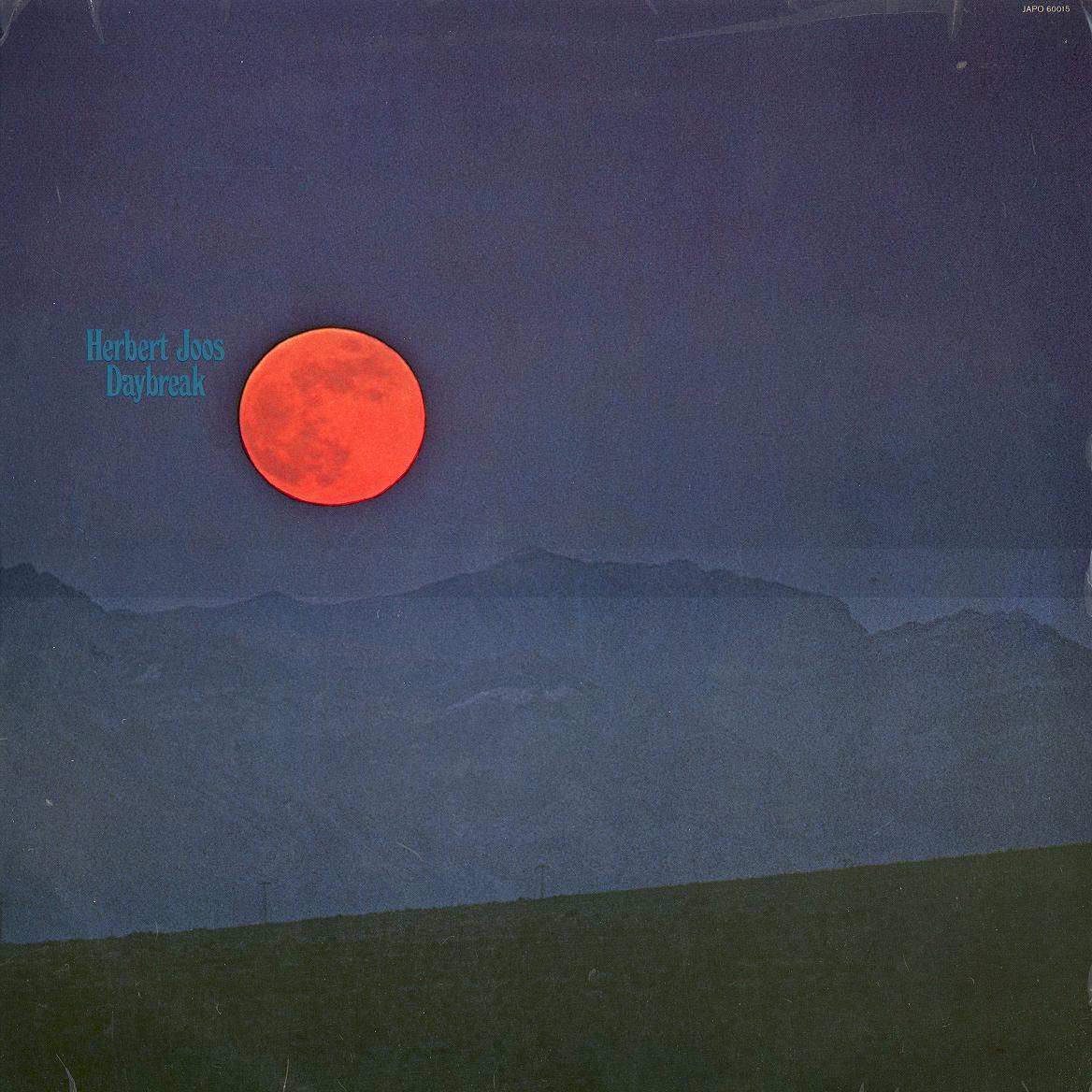
German trumpeter and fluegelhornist Herbert Joos’s flirtations with ECM have been few, contributing to the big brass sound of Eberhard Weber’s Orchestra and notably to Cracked Mirrors, a marvelous and, it would seem, overlooked date with guitarist Harry Pepl and drummer Jon Christensen. Yet it was with Daybreak, recorded in the fall of 1976 for sister label JAPO, that the knot of Joos first audibly untied itself alongside Thomas Schwarz (oboe), Wolfgang Czelustra (bass and trombone), and the strings of the Radio Symphony Orchestra Stuttgart.

The emphasis on classical textures will feel familiar to admirers of Keith Jarrett’s likeminded forays, especially In The Light and Bridge Of Light. That being said, the overall effect is shadowy, overhung, though equally honest. “Why?,” for example, answers its own question up front in the very asking. Although an obvious reference to Charles Ives’s The Unanswered Question, its progression spins closure from an interrogative oboe. The normally pastoral associations of the instrument are shed along with lingering symphonic details, such that when Joos’s breath cuts the air with its golden knife, the strings drip like lifeblood from its plane. None of which is meant to suggest that the music is in any way macabre. For what can there be but hope in the cyclical motif that churns during fadeout? “When Were You Born?” asks another question answered by its own sounding. The delicacies of Joos’s high-register playing render far more expansive maps in this instance, touching proboscis to firmament and sampling sunlight until nightfall. “Leicester Court 1440” features Joos in muted soliloquy. Riding a horse of compressed time, he enacts an agitated recession into the title piece. Joos has only his own echo for company before the inward journey is externalized by the dark arrival of strings. Hence, the “Black Trees” looming not far away. Yet despite the title, they actually let down the brightest of the album’s seeds with an approach that gives voice to nature and seeks universal truth in a bird’s nest. Joos’s lines bespeak haughty quest in “Fasten Your Seatbelt.” This playful frolic through arco fabric balances laughter and fearless arpeggios, while scuttling crabs and landlocked others communicate without need for sound. And when the seatbelt fails us, we are thrown into a life of slower motion, lit by “The Dark Side Of Twilight.” The latter appears only on the 1990 CD re-issue (ECM 3615) and, at 15 minutes, is the album’s most brooding texture. Relaying brass-synth and string chorale settings, it walks a broken circle with its head hung in thought, an outlier among the album’s modest population.

The music of Daybreak speaks to children in the language of adults. It photographs the illusion of age and melts it into a sea of numbers. Not every detail will be preserved in that translation, but in the process we come to understand that history and music are sometimes like water and oil. In this chamber of the past, futures hide in corners the light struggles to reach.

Daybreak
Original cover

Dino Saluzzi Group: Juan Condori (ECM 1978)

Juan Condori

Dino Saluzzi Group
Juan Condori

Dino Saluzzi bandoneon
Felix “Cuchara” Saluzzi tenor and soprano saxophones, clarinet
José Maria Saluzzi acoustic and electric guitars
Matias Saluzzi double-bass, bass guitar
U.T. Gandhi drums, percussion
Recorded October 2005, Estudios Moebio, Buenos Aires
Engineer: Stefano Amerio
Produced by Manfred Eicher

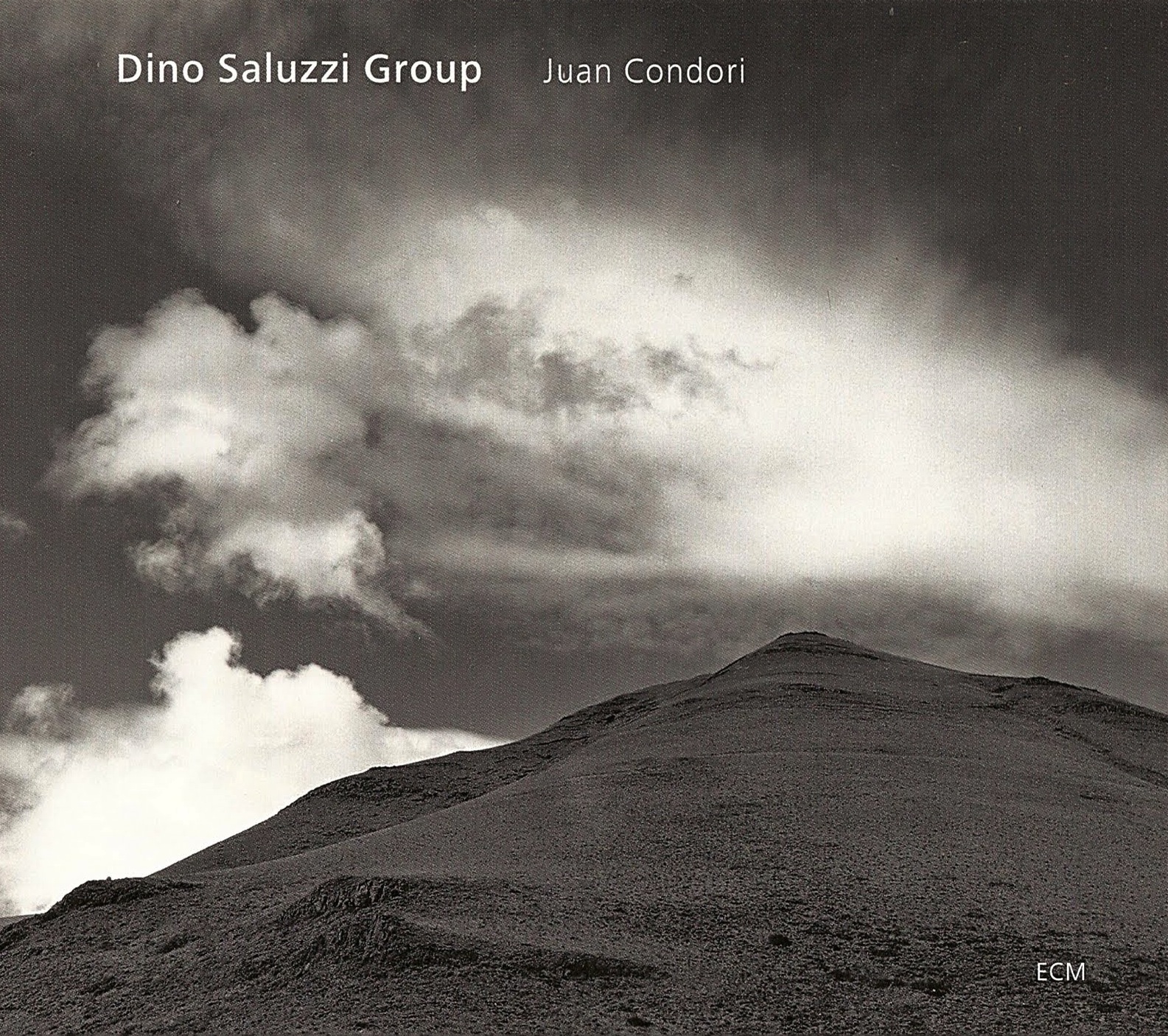
A Dino Saluzzi album is the audio equivalent of looking through a family photo album. Not so allegorically in this case, as Dino’s brother Felix (saxophones and clarinet), son José Maria (guitars), Felix’s son Matias (basses), and honorary kin U.T. Gandhi (drums and percussion) join the bandoneón virtuoso for this set of 12 moving pictures, each with its own thumb-worn page. Although named for a childhood friend whose free spirit holds special place in his heart, Juan Condori is less a personal portrait than it is a biography of a time and place preserved in memory. Indeed, from memory come the building blocks of Saluzzi’s music, the very blood without which it might never reach those bellows.

The themes of Juan Condori cross a few historical hairs, from the dying wisdom of South American indigenous peoples (“La Vuelta De Pedro Orillas” and “Chiriguano”) and the 1994 bombing of the Jewish Community Center in Buenos Aires (“Memoria”) to the life force of music itself (“La Parecida”). If any such references describe a world we know, then it is all we can do to seek hope in these instruments of light: not only memory, but also remembrance. Aside from the acoustic “Soles” by José, written metallic on wind carrying an attic’s scent, the Pedro Laurenz tango classic “Milonga De Mis Amores,” and the spontaneous “Improvisacion,” all the music here is Saluzzi Sr.’s own. Father and son share moments of clear telepathy, as in the airy dance movements of “La Parecida,” in which they paint starbursts of light around the Matias’s deep axis. José enchants further in “A Juana, Mi Madre,” in which his electric evokes the nocturnal stylings of John Abercrombie, and in the title track, while Felix’s pastoral clarinet in “Las Cosas Amadas” and “Los Sauces” deepens the feeling of locality. These and more comprise a set one can only admire for its thematic integrity, its emotive charge, and the quiet flow of its sustenance.

Pay close attention to this one. It brings water to the desert.

Gianluigi Trovesi/Gianni Coscia: In cerca di cibo (ECM 1703)

In cerca di cibo

In cerca di cibo

Gianluigi Trovesi clarinets
Gianni Coscia accordion
Recorded February 1999 in Zürich
Engineer: Markus Heiland
Produced by Manfred Eicher

The virtuosic duo of multi-reedist Gianluigi Trovesi (performing here on clarinets) and accordionist Gianni Coscia makes its first ECM appearance with In cerca di cibo. Over the course of an affectionate hour, these two points of light join to create a binary star that shines in full spectrum. The album’s title means “In search of food,” thus indicating seeds sown and re-sown until they bear new fruit to nourish the ears. It also points to the music’s folk origins, glazed and fired to perfection.

The title piece in duplicate bookends the 15-track program with selections from Fiorenzo Carpi’s score to the 1971 TV mini-series Le avventure di Pinocchio. With the artistry of a wind-blowing cloud on an old map, it christens this sonic vessel and guides its sails as true as Trovesi’s psychoanalytic leaps. “Gepetto” is perhaps the most insightful in this regard. A far cry from Disney’s bumbling songster, it takes us instead into the soul of a man tortured by the fact that his only hope for a child’s love is to carve that love from the forest’s very flesh and bone. These sentiments are echoed in the heartrending “Fata Turchina” (Fairy) and “Lucignolo” (Candlewick). The duo further references the 1994 film Il Postino in its title theme by Luis Bacalov, here but a heart murmur, a flash of romance crocheted into warmth.

Even without a track list in hand, the cinematic contours of nearly every piece are apparent. Whether navigating Trovesi’s descriptive “Villanella” or the nimble fingerwork of “Minor Dance,” to say nothing of his wailing inscriptions in Coscia’s “Le giostra di Piazza Savona,” there is plenty of storyboarding at play. The co-composition “Celebre Mazurka alterata” further epitomizes the duo’s wide range of moods, abilities, and technical flourishes—a masterpiece that lends Ángel Villoldo’s classic tango “El Choclo” all the verve it needs to leave its meteoric trail across the sky. Also noteworthy is “Django (Donadona)” by pianist-composer John Lewis: not only for its superb music, but also for the narrative arc it takes on in the present rendition. From mourning to frivolity, Trovesi and Coscia are omniscient purveyors of their domain, such that when they close the album’s bright, tempestuous circle with the very shadows from which it was born, we know that the melodies will continue to dance into the distances of their hearts.

What we’re left with is a scene cinched by the drawstring of politics, war, and indecision, shaken free of its inhibitions and re-clothed in passion. It takes us as we are, provided we leave our preconceptions at the door. As Umberto Eco says in his liner notes, “there’s no need to wonder about in which temple we should place the music of Coscia and Trovesi. On a street corner, or in a concert hall, they would feel at home just the same.” It may just be that they feel best at home with you.

<< John Surman: Coruscating (ECM 1702)
>> Stockhausen/Andersen/Héral/Rypdal: Kartā (
ECM 1704)

Dave Holland Quintet: Extended Play – Live At Birdland (ECM 1864/65)

Extended Play

Dave Holland Quintet
Extended Play: Live At Birdland

Chris Potter soprano, alto and tenor saxophones
Robin Eubanks trombone, cowbell
Steve Nelson vibraphone and marimba
Billy Kilson drums
Dave Holland double-bass
Recorded live at Birdland, November 21-24, 2001
Engineer: James Farber
Produced by Dave Holland

That Dave Holland ends his brief frontispiece in the CD booklet for Extended Play: Live At Birdland by acknowledging the commitment and uncompromising creativity of his band mates is proof positive of the bassist’s own. Everything he had recorded for ECM up to this point, starting with the label’s ninth release (A.R.C.) in 1971, comes to a head in this double-disc live recording from New York’s famous Birdland jazz club some three decades later. The quintet featured here is to date Holland’s best-oiled machine: saxophonist Chris Potter, trombonist Robin Eubanks, mallet man Steve Nelson, and drummer Billy Kilson work together with such professionalism, respect, and synchronicity that one needn’t even have been there to acknowledge it. And because the album’s nine tunes (averaging 15 minutes each) are all of such a massive piece, it fares better to speak of the men behind the music.

Kilson shines on “Prime Directive” (as he does on the album it titles), backing the spine-tingling negotiations of the horns and bringing the full gamut of his sound to bear on “The Balance,” which opens barely, tenderly: the last gasp of sunset before the dusk draws its curtain. At 21 minutes, this is no shy cat but a lion ready to pounce yet who would rather sing for the sheer pleasure of it. Holland’s intimate solo against Kilson’s beetle-wing cymbals makes for some beautiful downtime. Bassist and drummer also pair off nicely in “Claressence,” where they lay down a confident groove beneath the harmonized theme, leaving Potter to unleash a kennel’s worth of playful pets.

As for Potter and Eubanks, they are so well integrated that it’s all one can do to analytically separate them, though Potter edges out in the slumbering “Make Believe,” playing North Star to Holland’s seafaring. “Free for All” realizes deepest integration of this duo, and of the quintet at large. Soprano and trombone make a perfect pair, Holland the solid triangle at the fulcrum of their seesaw. Eubanks gets his soliloquy at the start of “Bedouin Trail,” for which he dons the storyteller’s hat and kicks off an especially flowing take on this quintessential journey, and dialogues superbly with both Potter and Holland in “Jugglers Parade.” He also stands out for the occasional moments of intensity during which he sings into his trombone in pure, incendiary brilliance.

Holland’s bass is an unbreakable tendon, showing off its flexibility in the Potter-penned “High Wire,” another fine display of congruence. His flip-flopping salts the rim of the alto margarita that ensues. Hip and then some, Kilson provides a splash of Cointreau, Nelson a Grand Marnier infusion. Going down just as smoothly is the gargantuan ender: “Metamorphos.” This one comes from the mind of Eubanks and finds Holland lyrical and ebullient, establishing at the outset the perfect conditions for transformation. His cell divides, and those further into a full-blown 20-minute experience, of which the night’s most engaging few are shared in triplicate between Eubanks, Kilson, and Holland.

And let us not forget Nelson, whose deft cross-hatching throughout—but especially in “Bedouin Trail,” “Free For All,” and “Claressence”—is so omnipresent, so slick and attentive, that without it the other four planets would fling wildly from their sun.

Extended Play is a rebirth of cool and about as perfect as live albums get. It is also a veritable résumé at a high point in the band’s career. The five intersecting planes on the cover say it all. If you only ever buy one Holland album (and I hope you don’t stop there), your choice is clear.

Dino Saluzzi: El Encuentro (ECM 2155)

El Encuentro

Dino Saluzzi
El Encuentro

Dino Saluzzi bandoneon
Anja Lechner violoncello
Felix ‘Cuchara’ Saluzzi tenor saxophone
The Metropole Orchestra
Jules Buckley conductor
Live recording February 13, 2009 Muziekgebouw aan ’t IJ, Amsterdam
Music supervisor: Gert Jan van den Dolder
Recording engineer: Gert de Bruijn (Dutchview)
Assistant: Per van der Zande (Dutchview)
Mixing engineers: Gert de Bruijn and Ronald Trijber (Dutchview)
Concert production and executive producer for the NPS: Gustavo Pazos
A production of NPS Radio in collaboration with ECM Records

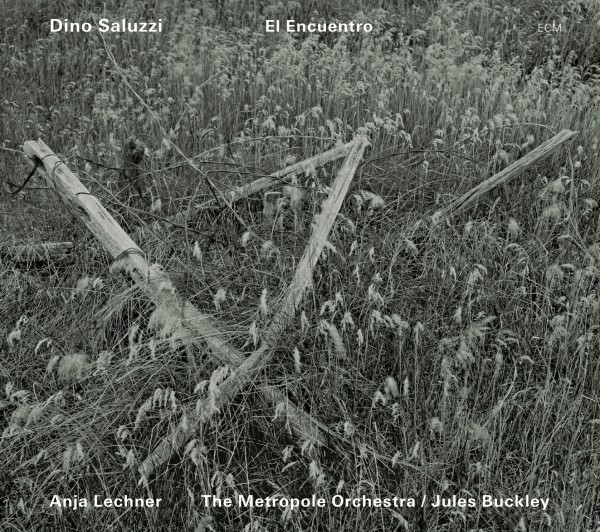
El Encuentro depicts Dino Saluzzi as a composer willing to go wherever the stream of consciousness takes him. In this, his first live album, the bandoneón maestro joins Anja Lechner (cello) and brother Felix (tenor saxophone) before the Metropole Orchestra, under the direction of Jules Buckley, for a varicolored quatralogy. Because the bandoneón is practically an orchestra unto itself, pairing it with strings feels like an implosive rather than explosive stroke of sonic fortuity. This introspective dynamic is heightened by the asymptotic relationship between the soloists, who are fully present in Plegaria Andina. This piece revisits thematic material from 1988’s Andina in a braid of wind, branches, and leaves: each strand a traveler from a different corner of the world. Even when silent, the soloists float like an oar-less vessel bobbing to the pulse of tide. The ruminations of this piece are thus deeply aquatic and equally representative of the clouds they reflect.

The relationship between bandoneón and cello is the album’s main anchor, and takes root in deepest reef in Vals de los días. Like the program as a whole, its moods and melodies are in constant flux, its themes as fleeting as the air in Saluzzi’s bellows, the touch of horsehair on Lechner’s strings. Assailed by dances and memories, their vessels keel and spread their melodic passengers far and wide. There is abundance to be felt here, plucked like ripe fruit from a branch, squished between the toes like wet sand, and dunked like the baptized body into holy river’s flow.

Despite its massive proportions, the title piece comports itself with the delicacy of a spider. It is the most brooding piece of the four—one which, despite its peaks and gorgeous finish, wallows in a pool of shadows. Its final jubilations pick at a lone thread of light, unravel the tapestry of the night, and weave a new one into the Miserere that follows. The strings, robust yet tentative in their dynamic recession, are servants to the bandoneón, the latter a messenger sent from above. Its lungs exhale only peace, leaving no doubt that Saluzzi’s is a spiritual art.

Despite the number of musicians gathered here, El Encuentro is one of Saluzzi’s most intimate realizations, compressing the sweep of an epic film into the eye of a spyglass. Because the title means “The Meeting,” it is tempting to read the album as one large cycle. Closer listening, however, reveals the self-awareness of the compositions therein. They are not cardinal points on a compass, but rather corners of a world that share a plane only in maps. Their yearning is more than physical; it is environmental. They meet only in dreams, drifting farther out to the sea with every heave. Were it not for the applause, we might blissfully remain so, never to feel the touch of shore beneath our soles.

(To hear samples of El Encuentro, click here.)

Enrico Rava: Easy Living (ECM 1760)

Easy Living

Enrico Rava
Easy Living

Enrico Rava trumpet
Gianluca Petrella trombone
Stefano Bollani piano
Rosario Bonaccorso double-bass
Roberto Gatto drums
Recorded June 2003 at Artesuono Recording Studio, Udine
Engineer: Stefano Amerio
Produced by Manfred Eicher

Enrico Rava has singlehandedly defined Italian jazz as a technical wizard. More importantly, he has also enlivened its soundscape with a playbook that balances verve and thoughtfulness. After a 17-year hiatus, the trumpet champion returns to ECM among his trusted quintet with what might just be his finest album yet (an opinion shared by Rava at the time of its recording). Wherever it may rank in your mental charts, it is a comfortably burnished standout in his discography, due in no small part to the artful brilliance of engineer Stefano Amerio.

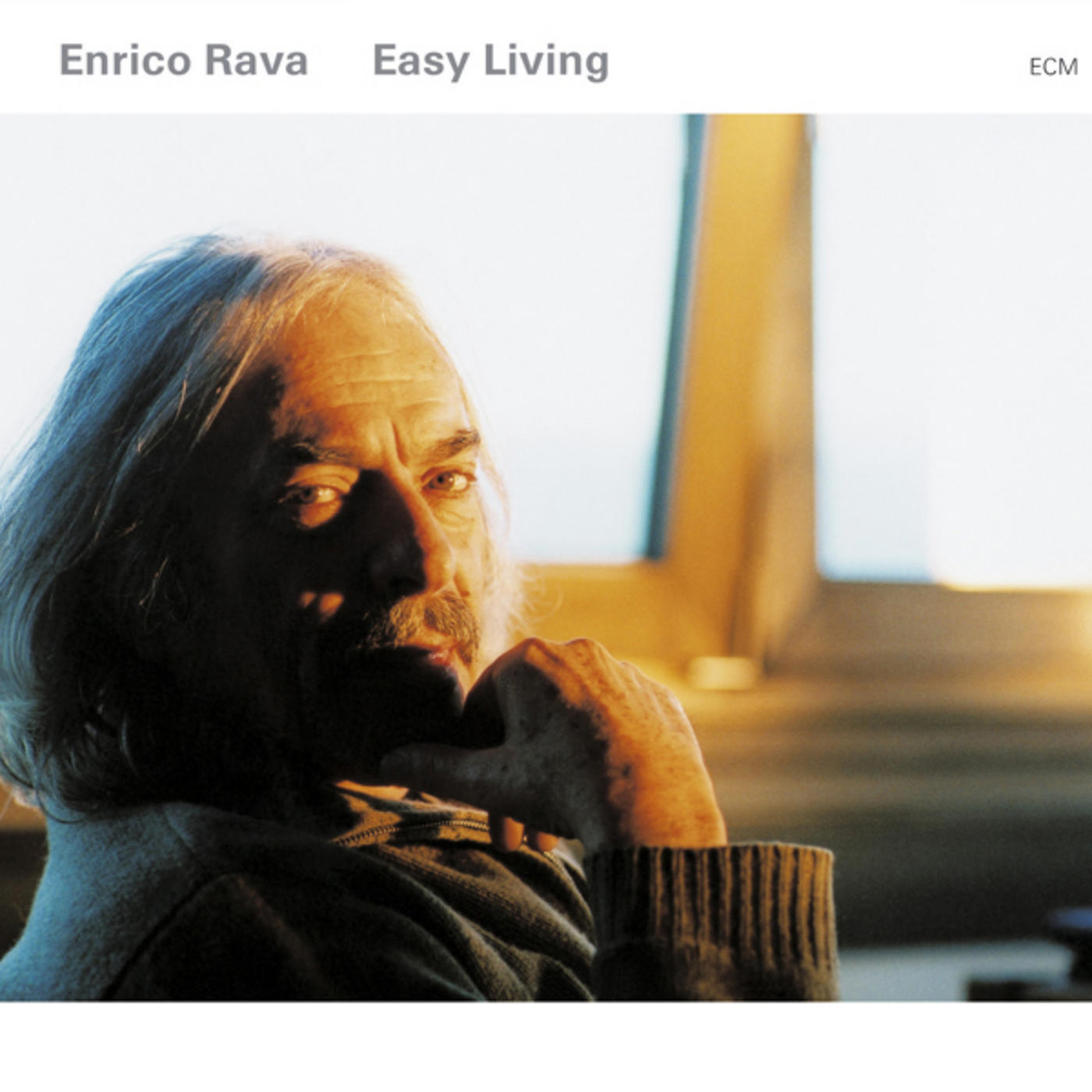
Perhaps not since Annette Peacock’s an acrobat’s heart has an ECM cover portrait so well captured the atmosphere of the music behind it. Indeed, the thoughtful sincerity of “Cromosomi” unfurls a palette befitting of Roberto Cifarelli’s warmly hued portrait. Rava’s interaction with the young trombonist Gianluca Petrella is close-eyed, intuitive, and lays the groundwork for some crystalline reverberations. The pointillism of Stefano Bollani and coruscating accents of drummer Roberto Gatto paint the last rays of sunset. Make no mistake about the title’s significance: Rava’s approach is fiercely biological, so attuned is it to the mutual appreciation of his band mates. “Drops” follows with a handful of candy, turning the chromosomal into the chromatic at the touch of a keyboard and setting the stage for Rava’s soaring flights in “Sand.” Using a slack backdrop as trampoline, he devises lyrical acrobatics and microscopic exchanges galore. Rava continues in this vein throughout the title track, the only one not composed by him, backed by support that has the consistency of meringue and is just as sweet. “Blancasnow” is another brief exercise in pure intonation. Fans will recognize it as the concluding track of his ECM debut, The Pilgrim And The Stars, and here its austerity is even more heavily shaded.

Lest the listener think that Easy Living is all drift, “Algir Dalbughi” plots a hard swing at album center. From Petrella’s ebullient harmonizing comes a vast, big band sound and foils Rava’s extroverted heights with pale fire. Bassist Rosario Bonaccorso opens “Traveling Night” with a fluttering solo and leads the band into another flowing diary entry. Gatto communicates hyper-effectively with Bollani as Petrella fires off a round of humid motives. “Hornette And The Drums Thing” is the finest track of the set and an even finer vehicle for the drummer, who jumps, skips, and shuffles his way through the deck like a blindfolded magician—though he has some acutely observant spectators in Petrella and Bollani following his every move. Rava’s sweep is characteristically melodic and assured. His fingers stir up their own concert, notes singing by like arrows. Gatto’s full-on wizardry quiets into a lush carpet for the band’s legato breakdown, bringing us at last to “Rain,” which draws the curtains, breaks down the set, and bids farewell in style. Between Gatto’s cymbal-laden drizzle, Bonaccorso’s thick sags, and Bollani’s varietal drama, there is plenty to admire in this luxurious sendoff.

Easy Living is ideal for an afternoon drive or lethargic morning alike. Its verdant fields and canopied paths smell of a grandmother’s food: no matter how many times you eat it, it will always taste like home.

Essential listening.

<< Dave Holland Quintet: Not For Nothin’ (ECM 1758)
>> Harald Bergmann: Scardanelli (
ECM 1761 NS)

John Surman: Coruscating (ECM 1702)

Coruscating

John Surman
Coruscating

John Surman soprano and baritone saxophones, bass and contrabass clarinets
Chris Laurence double-bass
Rita Manning violin
Keith Pascoe violin
Bill Hawkes viola
Nick Cooper cello
Recorded January 1999 at CTS Studios, London
Engineer: Markus Heiland
Produced by Manfred Eicher

The title of John Surman’s Coruscating means sparkling. Yet with track names like “At Dusk,” “Moonless Midnight,” and “An Illusive Shadow,” we are squarely in a nocturnal realm. The multi-reedist, along with bassist Chris Laurence, puts his touch on this set of eight compositions, which over the album’s course blend into a seamless whole. At their center is an ad hoc string quartet, to which Surman and Laurence act as improvisatory satellites. The two aforementioned sections drop Surman’s oboe-like soprano into pre-written cuts of land, each a ripple in a lake that holds ebony sky in its cup.

Although it will not be surprising to any Surman fan, it is as baritonist—ever the rightful successor to Gerry Mulligan—that he comes closest to bringing the shine. Whether in the softly rolling sentiments of “Dark Corners” or the  muscular stirrings of “Stone Flower” (in memory of another baritone great, Harry Carney), his low reed dots the compass many times over through charcoal travels. “Winding Passages” is the most mature of these breeze-swept soliloquies and provides a solid platform for the composer’s bronzed hieroglyphs. Laurence shakes his most geometric ghosts out in “Crystal Walls,” while “For The Moment” mixes cello tracings into vibraphone, Surman’s restless gestures carrying us all the while into deeper pasture.

Those who weren’t quite feeling Proverbs and Songs might find Coruscating more accessible, if only because there is so much space for listeners to relax and, in spite of all the darkness, feel their way around. It is a dream of quotidian objects sleepwalking for want of a place to have purpose, only to discover that their wandering is that very thing.

<< Jan Garbarek/The Hilliard Ensemble: Mnemosyne (ECM 1700/01 NS)
>> Gianluigi Trovesi/Gianni Coscia: In cerca di cibo (
ECM 1703)