Chick Corea: Solo Piano (ECM 2140-42)

Corea Solo Piano

Chick Corea
Solo Piano

Chick Corea piano
Ida Kavafian violin
(Children’s Songs, Track 20)
Fred Sherry cello
(Children’s Songs, Track 20)
Release date: March 26, 2010

Much of the jazz that has come to characterize the “ECM sound” is known for its pellucid solemnity. Conversations between sound and space abound, in which vestiges of their own histories mark the passage of time. To younger listeners like myself, it is sometimes easy to forget that the label remains rooted in the youthful immediacy one finds in these formative efforts from Chick Corea. While his refreshing approach to pianism inhabits the same continent as other formidable players, Corea is very much his own culture. Much of the later material that would come to define the “Corea sound,” however, is in clear evidence throughout these discs, and especially in the improvised efforts.

1014 X

Piano Improvisations Vol. 1 (ECM 1014)

Recorded April 21 & 22, 1971, Bendiksen Studio, Oslo
Engineer: Jan Erik Kongshaug
Produced by Manfred Eicher
Release date: 1971

From note one, these improvisations abound with the freedom of an artist who is ever at his peak. Their many tender touches and nostalgic leanings are shielded by a powerful optimism. Such exuberance makes them all the more embraceable in their poignancy. Tunes such as “Noon Song” twirl like a skirt in the breeze. Others (“Sometime Ago” and “Song For Sally”) are flirtatious and skip from one thought to another: a love in overdrive. The pièce de résistance, however, is the eight-part suite “Where Are You Now?” In this series of “pictures,” Corea renders for us a film whose soundtrack precedes its images. There are no mysterious titles to ponder; each tells us exactly what we are going to hear. The playing is at once pliant and mechanical, carrying across its feelings with such genuine appreciation for the listener that one cannot help but smile.

<< Dave Holland/Derek Bailey: Improvisations for Cello and Guitar (ECM 1013)
>> Jan Garbarek Quintet: Sart (ECM 1015)

1020

Piano Improvisations Vol. 2 (ECM 1020)
Recorded April 21 & 22, 1971, Bendiksen Studio, Oslo
Engineer: Jan Erik Kongshaug
Produced by Manfred Eicher
Release date: March 1, 1972

This companion volume of Corea’s improvisations doesn’t merely continue where the first left off, but fleshes out finer details unexplored in its neglected depths. This volume is more nocturnal than the last, a siesta in songs without words. “After Noon Song” starts us off alluringly before the crisper interjections of Thelonius Monk’s “Trinkle Tinkle” and Wayne Shorter’s “Masqualero.” The second act is where the album begins to fray at the edges, and becomes all the more mystical for it. At first, experiments like “Departure From Planet Earth” seem to stray into unnecessarily weighty territory. Yet with each listen, they tell us more about their travels. And while Corea’s often-discussed religious predilections (I dare not invoke the “S” word here) may give us even greater insight into the music’s enigmatic borders, in this instance such forays into biographical details provide little advantage. Either way, Corea reacclimates into “A New Place.” This is polyglot music, of which each melody its own tongue. Though some are more readily interpretable than others, we always know what is trying to be said.

<< Circle: Paris Concert (ECM 1018/19)
>> Keith Jarrett/Jack DeJohnette: Ruta And Daitya (ECM 1021)

1267

Children’s Songs (ECM 1267)
Recorded July 1983 at Tonstudio Bauer, Ludwigsburg
Engineer: Martin Wieland
Produced by Manfred Eicher
Release date: April 1, 1984

By a similar twist of fate that kept me from The Köln Concert for so many years, I only discovered this album recently, and I must say that it deserves a throne alongside Keith Jarrett’s magnum opus for its unfathomable hidden power. Beneath the album’s contemplative veneer beats a furnace of a heart stoked by creative flames, the heights of which are rarely surpassed in today’s genre-hungry climate. Begun in 1971, and recorded here twelve years later, Children’s Songs gives us Chick Corea at his compositional best. At first, the title is an enigma: Are these songs to be played by children or for children? But as we soon discover, the child has already outgrown itself. Like clouds, these pieces take on whatever shapes we project onto them. On the one hand, their steady obbligatos and carefully chosen points of contact resemble the latent energies of Philip Glass (No. 1) and Steve Reich (No. 9). On the other, they pantomime a range of influences, from ragtime to Satie (No. 19 is like something lifted straight out of Gymnopédies) to Bartók (the Mikrokosmos parallels being almost too obvious to mention). One can also clearly see how influential this music must have been to others. The filmic beauty of No. 4 cannot have been lost, for example, on Michael Nyman. These are also pieces about contrast. Take, for example, the left hand in No. 6, which lays out a triadic darkness, while the right hand insists on spinning light before our very eyes. Corea’s characteristic ornaments, as in the descending trill at end of No. 3, grow richer every time, and the sweeping elegies of No. 10, 12, and 13 allow the Corea we know and love to shine through. Violin and cello add delightful pliancy to the “Addendum,” a classically minded closer that puts a stylish bow on an already crisply wrapped package.

Corea and his legacy blossom at every moment throughout these three seminal albums, with which he singlehandedly revitalized the solo piano program as an art form to be taken seriously in the post-Art Tatum era. He is the reliable narrator, the quiet provocateur, and the entertainer. He is also none of these. He bids us to listen without pretense, knowing that a carefully defined surface is nothing without the depth to support it. At the same time, he wastes no time in trying to intellectualize what lies beneath, secure in the knowledge that his music will carry on the conversation. This is an essential collection that belongs on any ECM fan’s shelf, not to mention a prime candidate for reissue of the century.

<< Rainer Brüninghaus: Continuum (ECM 1266)
>> Ulrich P. Lask: Sucht+Ordnung (ECM 1268)


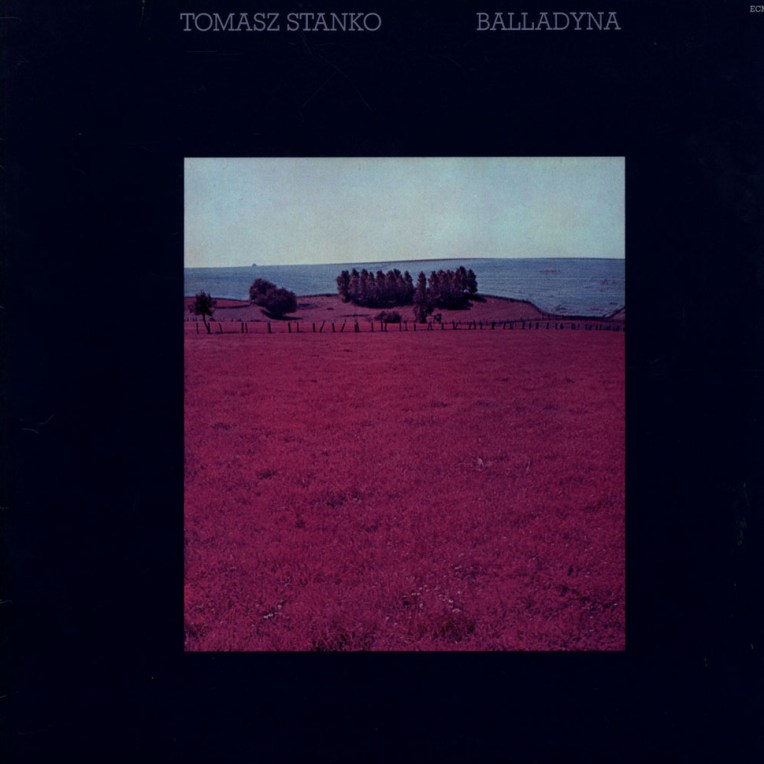
Tomasz Stanko: Balladyna (ECM 1071)

Balladyna

Tomasz Stanko
Balladyna

Tomasz Stanko trumpet
Tomasz Szukalski tenor and soprano saxophones
Dave Holland bass
Edward Vesala drums
Recorded December 1975, Tonstudio Bauer, Ludwigsburg
Engineer: Martin Wieland
Produced by Manfred Eicher

I can only imagine the reactions Tomasz Stanko garnered with Balladyna, his first recording for ECM. The no-holds-barred “First Song” jumps into action with that hard swing that can only come from Dave Holland. Add to this brew the wide-ranging percussion of Edward Vesala and the spicy solos of our frontman and Tomsaz Szukalski, and you have a jambalaya to savor and remember. After such a climactic opener, Stanko could play “Happy Birthday” for all I care. Thankfully (though who knows what this quartet might have done with such ubiquity?) we a get the Ornette Coleman-infused “Tale” that faithfully charts a key transition from raw to cooked jazz. One can feel the rapt attention with which each musician listens to the other.

Original Balladyna
Original cover

This live, interactive energy continues in “Num,” sustained by knitted cymbal work as the two Tomaszes go head to ecstatic head. A killer bass solo makes the cut complete. A lumbering Holland/Stanko interlude opens the door on the title number, anteing up in tutti before spreading its hand into a straight improvisatory flush. Stanko screeches above a pointillist rhythm section, Szukalski stepping into the footprints he leaves behind. A doleful, mocking tone returns in the tongue-in-cheekly titled “Last Song,” nodding like a head succumbing to sleep. The fine horn playing makes this one a standout. The actual last song, “Nenaliina,” is an effusive spring of percussion with a brassy tail.

After all these years, the teeth of Balladyna still make for quite a bite. Anyone wanting to hear the label’s heartbeat in its prime need place an ear to no other chest.

<< Keith Jarrett: Arbour Zena (ECM 1070)
>> Gary Burton Quintet: Dreams So Real (ECM 1072)

Kenny Wheeler: Gnu High (ECM 1069)

ECM 1069

Kenny Wheeler
Gnu High

Kenny Wheeler fluegelhorn
Keith Jarrett piano
Dave Holland bass
Jack DeJohnette drums
Recorded June 1975, Generation Sound Studios, New York
Engineer: Tony May
Produced by Manfred Eicher

Kenny Wheeler’s ECM debut cut against the grain of his previously avant-garde stylistics. Dispensing here with his trusty trumpet for fluegelhorn, Wheeler carved out a niche that still leaves room for no other. The heartening tone of “Heyoke” animates our very bodies with 22 minutes of bliss. After Wheeler’s prophetic intro, Jarrett is given free reign at the keyboard, uttering ecstatic cries as he threads through Holland’s solo while also buoying Wheeler’s instinctive pickups. “Smatter” injects this trio of compositions with a hefty dose of kinetic energy that is sustained by Wheeler’s fluid brass and the tireless volleys of Jarrett. Even as the latter takes his lone passage, one feels the energy lingering like a potential leap into flight. “Gnu Suite” begins smoothly before locking into a downtempo trajectory. An unrepeatable magic occurs as Holland’s magnetic solo opens into the wider ethereal territory of his bandmates’ consecutive reappearances. And as the voices realign themselves, we feel the release of arrival, of knowing that we’ve come home.

One could hardly smelt a more fortuitous combination of musical alloys, which in spite of (or perhaps because of) their intense respective powers, manage to cohere into a consistently visionary sound. Jarrett only seems to get better in the presence of others (this was to be his last album as sideman), feeding as he does off their energy and vice versa. Wheeler is another musician who easily stands his own ground, yet imbibes only the most saturated elixirs of mindful interaction. And I need hardly extol the wonders of having Holland and DeJohnette covering one’s back. Gnu High stands out also for the fact that many of its solos occur alone, so that we are able to place an ear to the heartbeat of every musician in turn. Their internal compasses share a magnetic north, pointing to a direction in sound that continues to drive the label some three-and-a-half decades later.

<< Terje Rypdal: Odyssey (ECM 1067/68)
>> Keith Jarrett: Arbour Zena (ECM 1070)

Steve Kuhn: Trance (ECM 1052)

ECM 1052

Steve Kuhn
Trance

Steve Kuhn piano, electric piano
Steve Swallow electric bass
Jack DeJohnette drums
Sue Evans percussion
Recorded November 11/12, 1974 at Generation Sound Studios, New York
Engineer: Tony May
Produced by Manfred Eicher

Perhaps no one on the ECM roster, other than Keith Jarrett and Chick Corea, has as enlightened an understanding of the keyboard as Steve Kuhn. His debut album for the label only grows profounder with age. The elegant title track says it all: a trance of epic proportions etched into a set of almost impossibly modest length. Its prominent bass line lays down an airy ostinato, through which Kuhn digs straight into the album’s molten interior. The tender Fender in “A Change Of Face” lulls us into thinking we’re in for another methodical number, opening instead into some blazing percussive interplay between Steve Swallow and Jack DeJohnette. “Squirt” begins and ends with the same staccato declarations, strung together by a continual stream of sustain-pedaled galaxies and brightened by Sue Evans’s always-colorful accents. “The Sandhouse” rolls along the keyboard, collecting debris as it gathers speed toward the hip electric style of “Something Everywhere.” Kuhn lets Swallow do most of the talking here, taking charge only briefly through a series of quick key changes, all while DeJohnette keeps up his end of the bargain and then some. “Silver” is the only piano solo and shows Kuhn at his lyrical best, which hones the raunchy “The Young Blade” into an even darker edge. Kuhn plays us out with “Life’s Backward Glance,” a curious metaphysical experiment in which he intones: “It was a dark and stormy night at sea. The captain called his men on deck and said, ‘Men, I have a story to tell.’ And this is the story he told. It was a dark and stormy night at sea. The captain called his men on deck and said, ‘Men, I have a story to tell.’ And this is the story he told.” The mise-en-abyme of this tale only serves to analogize the haunting enigma of his craft.

An historic example of Kuhn’s lush, romantic style, Trance speaks of something beyond the realm of even the most intense study; beyond the possibilities of unchecked ability, technical prowess, and sheer finesse. It is a journey that has been faithfully recorded for all its hardships and triumphs alike. Kuhn fills every space with something fresh and palpable, allowing us total freedom in the listening.

<< The Gary Burton Quintet with Eberhard Weber: Ring (ECM 1051)
>> Michael Naura: Vanessa (ECM 1053)

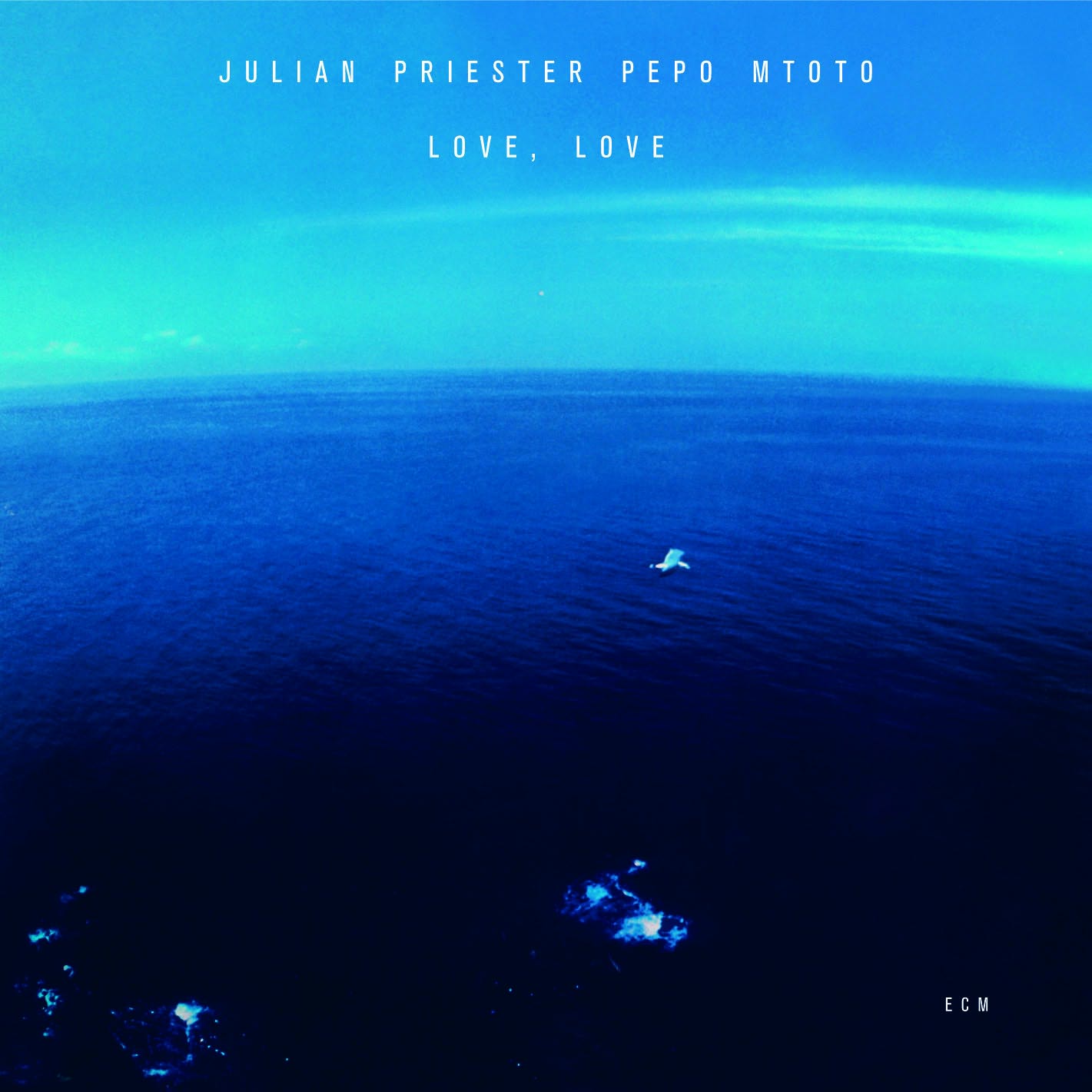
Julian Priester: Love, Love (ECM 1044)

Julian Priester
Love, Love

Julian Priester trombones, horns, whistle flute, percussion, synthesizers
Pat Gleeson synthesizers
Hadley Caliman flute, saxophones, clarinet
Bayete Umbra Zindiko pianos, clavinet
Nyimbo Henry Franklin basses
Ndugu Leon Chancler drums
Mguanda David Johnson flute, saxophone
Kamau Eric Gravatt drums, congas
Ron McClure bass
Bill Connors electric guitar
Recorded June 28 & September 12, 1973 at Different Fur Music, San Francisco
Engineers: John Viera and Dane Butcher
Produced by Julian Priester and Pat Gleeson

With a title like Love, Love, Julian Priester’s ECM debut could be nothing but a warm embrace, an abstract melodrama lifted from the pages of an epic story. Hot on the heels of Bennie Maupin’s The Jewel in the Lotus, this album gives us more than we might expect and electrifies like a Mwandishi joint sans Herbie Hancock. Between the groovy “Prologue” and brass-laden “Epilogue” lie three interconnected pieces in two 20-minute suites, each a head-nodding peregrination couched in the vibrant expanse that only an ensemble of this size can maintain. Congregations of horns abound in a funky milieu of drums and bass. The spell is immediate and unrelenting, heightened by an elegant application of synths. The late Hadley Caliman captivates with binding contributions to Priester’s own arsenal of raw materials. Guitarist Bill Connors, who would soon explore his acoustic leanings, shines on the electric, at times grazing the upper atmosphere with almost Steve Mackey-like ebullience. The first set ends as it began, fading into an originary space, leaving wisps of energy in the darkening skies. The second set arises from a tangle of sine waves. Drums stand tall like a stone circle, circumscribing the ritual within with rapt skyward attention. An electric piano courses through every gesture of this activity, petering out into a light flute-driven melody that rests confidently at the lower lip of dissonance. A fiery trombone solo from Priester forges an ecstatic peace. Bayete Umbra Zindiko works wonders at the keys, drawing lines from music to listener with every note struck, even as Connors lays a grungy scream of white noise in the face of possible self-destruction. The kinesis builds like a train until each instrument falls to the wayside, if not crushed under wheel by its passage. From this is pulled a thin urban stream of staccato harmonies that derail into a heap of conclusive breaths.

The music on this much-needed reissue at once sails through the clouds of its infatuations and plunges into the oceanic expanse of its fears. It knows exactly where it’s going, and hopes that you will be waiting on the other side.

<< Bennie Maupin: The Jewel In The Lotus (ECM 1043)
>> Terje Rypdal: Whenever I Seem To Be Far Away (ECM 1045)

Bennie Maupin: The Jewel In The Lotus (ECM 1043)

ECM 1043

Bennie Maupin
The Jewel In The Lotus

Bennie Maupin reeds, voice, glockenspiel
Herbie Hancock piano, electric piano
Buster Williams bass
Frederick Waits drums, marimba
Billy Hart drums
Bill Summers percussion, water-filled garbage can
Charles Sullivan trumpet
Recorded March 1974, Record Plant, New York
Engineer: Dennis Ferrante
Produced by Manfred Eicher
Remastered by Manfred Eicher with Jan Erik Kongshaug in Oslo in February 2007

After 33 long years, this ECM classic finally saw the light of day on CD in 2007. Thankfully, I came upon it since then, thereby saving me from the difficulties of tracking down its highly sought-after vinyl counterpart. On The Jewel In The Lotus, eclectic reedman Bennie Maupin is joined by his Mwandishi crewmates Herbie Hancock, Buster Williams, and Billy Hart, along with Headhunter percussionist Bill Summers and drummer Frederick Waits. Bassist Buster Williams further expands the Mwandishi nexus, while underrated trumpeter Charles Sullivan—who just two months later would step into the studio with Carlos Garnett to record the latter’s Black Love—rounds out the stellar cast. Maupin’s first album in leader’s shoes (his bass clarinet had already made an indelible mark on Miles’s Bitches Brew) is a space of many moods and consistent colors. The tentative bass of “Ensenada” flickers like a candle in a developing photograph. Subtle brass and hints of percussive breakouts adorn a rolling, poetic sound that is as vast as it is immediate. I cannot help but be reminded of the ensemble pieces of Gavin Bryars, such is the cinematic reach of Maupin’s extensive arrangements. Maupin turns to flute in “Mappo,” making way for Hancock’s floating reveries (both of which lift the stunning but ephemeral “Past + Present = Future”). Maupin’s haunting incantations open our ears into “Excursion.” Percussion tinkles like coins tossed into a prayer box. Instruments accustomed to leading instead become fragments in an impartial wash of sound, building to tightly controlled chaos. The title cut is bookended by Hancock’s spacey electric ornaments, complete with a “Fly Like an Eagle” moment or two (sans kitsch), and between which the grainy touch of snare and swaying bass provide a rhythmic hammock in which Maupin’s sax can lounge comfortably. “Winds Of Change” is another brief interlude, not surprisingly for winds only, and cleanses the palate for the final two tunes. The sparse bass solo and unimposing development of “Song For Tracie Dixon Summers” finds much common ground with ECM’s many Nordic projects, whereas “Past Is Past” stumbles into heavily romantic territory, with Hancock providing a fullness of sound that’s hard to resist. The album ends on a somber note, riding a wave back into the darkness from which it sprang.

1043 X
Original cover

Having never heard the original vinyl, I cannot speak for the remastering. All I know is that the reissue sounds terrific. While noticeably top-heavy, ever so slightly undercutting the bass in the process, the trebly focus works well enough in its present form. Rhythm comports itself erratically, as if hesitant to assert its presence out of mere expectation, and in so defying that expectation comes up with far more interesting things to say. The entire album moves in slow motion, as if a more concise musical statement unraveled, allowing musician and listener alike to bask in its finer nuances. Every moment is like an introduction and a finale in one, each speaking to the infinity implied therein.

<< Eberhard Weber: The Colours Of Chloë (ECM 1042)
>> Julian Priester: Love, Love (ECM 1044)

Gary Burton: The New Quartet (ECM 1030)

1030 X

Gary Burton
The New Quartet

Gary Burton vibraphone
Mick Goodrick guitar
Abraham Laboriel bass
Harry Blazer drums
Recorded March 5/6, 1973 at Aengus Studios, Fayville, Massachusetts
Engineer: John Nagy
Produced by Manfred Eicher

One needs only to catch the first few licks of “Open Your Eyes, You Can Fly” to know this album represents an era that can never be recaptured. Burton does wonders with the Chick Corea tune, lifting its upbeat soul to the greatest heights of creative pleasure. One can almost taste the freshness of his sound, the sheer newness of vision and synergy of musicianship ingrained into every moment of this phenomenal record. This was another early disc that managed to fall under my radar until I sought to review it. Burton is always a supreme joy to listen to, and with this, his second ECM appearance, he certainly made a profound statement. Burton himself contributes one composition, the enchanting “Brownout,” which takes full advantage of the rhythmic precision of his backing trio for a deft volley of restraint and abandon. Two Gordon Beck tunes provide the most robust flavors in this thickening stew, balancing the smooth full-ensemble nosh of “Tying Up Loose Ends” with the infectious full course of blistering key changes and nimble flair that is “Mallet Man,” the album’s centerpiece. The ballads are haunting and moody. “Coral” (Keith Jarrett) proves just how soulful vibes can be, while “Olhos De Gato” (Carla Bley), with its seedy undercurrent and humid climate, slinks like its namesake, stalking the edges of the night. Two Mike Gibbs tunes, “Four Or Less” and “Nonsequence,” round out the set on a more playful note, making dramatic use of pauses and a wider variety of textures.

Gary Burton is synonymous with the vibes. And while I had long been one of countless admirers of his technical and melodic acuity, this album was nothing short of a revelation for me. The technique is flawless all around and glistens with Burton’s Midas touch. He contacts his instrument like fingers walking up a spine, never missing a single nerve along the way. Yet one cannot commend this album without also praising Goodrick’s phenomenal guitar work, Laboriel’s quick-witted ornaments, Blazer’s unrelenting dedication to the moment, and the astounding unity the ensemble as a whole manages to uphold. The overall balance comes across as joyously democratic, and all with a fresh-off-the-boat sound that surprises at every turn. There isn’t a single errant note, gesture, or idea to be found on The New Quartet. From start to finish, an inimitable achievement.

<< Garbarek/Andersen/Vesala: Triptykon (ECM 1029)
>> Terje Rypdal: What Comes After (ECM 1031)

Paul Bley: Ballads (ECM 1010)

1010

Paul Bley
Ballads

Paul Bley piano
Gary Peacock bass
Mark Levinson bass
Barry Altschul drums
Recording engineered by Tommy Nola, Nola Studios, NYC
Recorded 28 July 1967 (Side 1) and 31 March 1967 (Side 2)
Mixing engineer: David Baker
Produced by Paul Bley
Executive production by Manfred Eicher/ECM
Release date: 1971

As an early ECM release, this all-Annette Peacock set already demonstrated the crystal clear recording and wide open spaces for which the label would come to be so well known. Throughout the long opener, ironically titled “Ending,” pianist Paul Bley handles most of the thematic legwork, while bassist Gary Peacock and drummer Barry Altschul skitter across his ivory surface like ice skaters so skilled they can stumble on cue. The title is multifarious. It’s the ending of a turn; the ending not of a life, but of the fallacy of its fulfillment; an ending of circumstance; an ending of watersheds; an ending of all the things in this world that buy us freedom, only to spit it back in our face. Altschul steals the show, soloing in slow-moving surroundings. The lagging pace lends further prominence to his playing, underscoring far more than mere virtuosity. As the piece goes on, it trickles like water, perhaps cluing us in on the title’s central meaning: that is, the music’s own loss of energy and creative source, a broken dam letting out its final drops. This is restrained music-making by a trio we know can swing with the best of them. Next is “Circles,” which seems to sweep up the mess of a long-waged battle, all the while showing an immense amount of fortitude in dealing with the prospect of an unclear future. Lastly, “So Hard It Hurts” gives a vivid sense of Annette Peacock’s compositional audacity and her unique way of turning gentility into pain, and vice versa. This time, Altschul is less cymbal-oriented and more focused on hitting the skins, providing ample room for bassist Mark Levinson’s own inspired finger work.

A delicate ridge rises between the musicians like a pyramid in every song, casting a moving triangular shadow as the sun marks its passage through time. The adlibbing is insightful and melodically well-aged. There is a crunchiness to this music, like biting into a confection filled with ever-changing flavors.

In 2019, this album was at last given the new life it needed through an ECM Touchstones reissue.

<< Corea/Holland/Altschul: A.R.C. (ECM 1009)
>> Dave Holland/Barre Phillips: Music From Two Basses (ECM 1011)

Eberhard Weber: The Following Morning (ECM 1084)

ECM 1084

Eberhard Weber
The Following Morning

Eberhard Weber bass
Rainer Brüninghaus piano
Members of Oslo Philharmonic Orchestra celli, French horns, oboe
Recorded August 1976 at Talent Studio, Oslo
Engineer: Jan Erik Kongshaug
Produced by Manfred Eicher

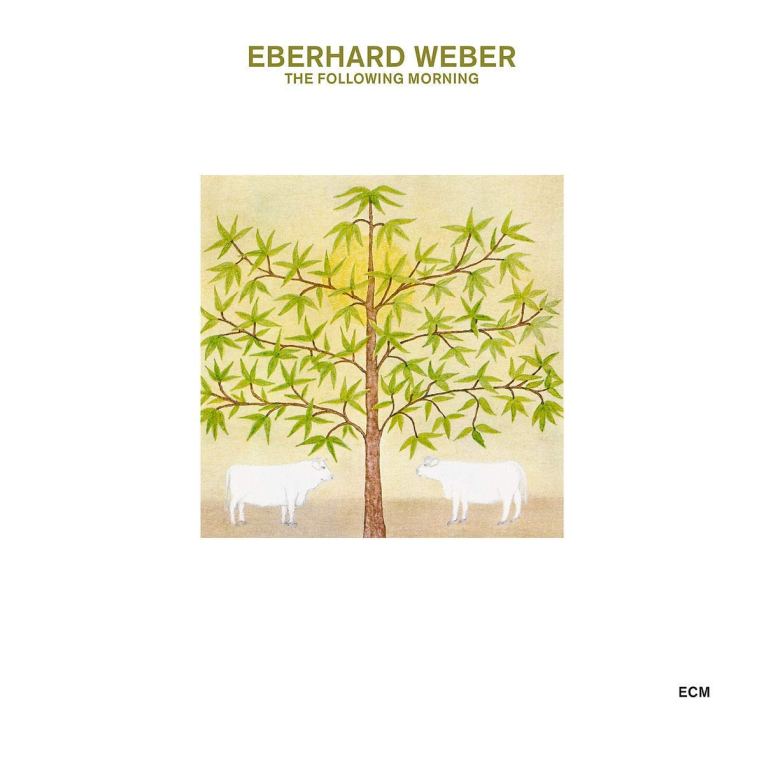
The title of Eberhard Weber’s classic 1977 album is as evocative as they come. At once cryptic and expository, the image calls up a host of associations, plays of light and shadow.

“T. On A White Horse” establishes the album’s solemn mood as Weber’s distinctive electrobass springs to life against an aquatic electric piano. A small orchestral section weaves its way in, painting chromatic oboe lines onto a droning canvas of cellos. As the strings intensify, bass and woodwinds share a plaintive synchronicity. The bass holds its breath, cupping its hands around Brüninghaus’s delicate flame. Oboes carry their lilting harmony across the oceans, fading into the bell-like call of sunrise.

“Moana I” feels less like a journey with a goal and more like a testing ground for confluence. The orchestra sprouts like a forest through which Weber must limp on his way toward dawn. The piano’s melodic charge, however, helps to cut this tension. Once the French horns offer their own desultory commentary, morning light pours in. The electric piano buffs the music to a crystalline sheen while horns and winds work their way back into rest. They find their beds and sleep, having reached the summit of their dreams.

The title track begins with indistinct ambient noises: people rustling in a resonant space, musicians shifting in their seats. This impressionistic cloud splits with a piano chord in reverse, loosing an electronic squall. Strings talk among themselves in the background as bowed harmonics trickle like rain down a window. The piano speaks of midnight to the bass, which emerges with a chorused effect. Weber’s keening tone touches the landscape, scratching glyphs into its fertile surface. The scene shifts and grinds, a hurdy-gurdy whispering in slow motion. The appearance of an acoustic bass in this track creates a dazzling effect, as if rising from some bygone era where the immediacy of live performance was a given and not a luxury, and where the communal experience of music thrived in the ears of every listener. The world unravels like a lullaby, revealing just enough of its heart to give us vast internal comfort. With this rupture mended the electrobass returns, laying out its motif over the pieces left behind. The acoustic bass chants the same note as a French horn plays us out.

“Moana II” puts us into an echoing flock of horns that seems to scorn the earth below. This segues into a brief passage of quiet abstractions before blossoming into a conversation between piano and bass, at which point the horns have flown away. Although the acoustic arrangements are wonderful, in this instance the heavily contrived bass feels just slightly out of place and, I think, clashes with the more organic backdrop. Thankfully, Weber reacclimatizes as he goes along, meshing beautifully with the synth effects at the album’s end.

Weber’s sound is instantly recognizable in its solitary function, marking its mission in stillness. With a liquid technique Weber wrings out as much melodic juice from his instrument as he possibly can. Not to be outdone, the epic piano stylings of Brüninghaus are the perfect foil for Weber’s decidedly intimate approach. Every time his fingers touch the keys, we begin to see where this music can really take us. Weber’s compositions constitute a vast sonic kaleidoscope in which one finds a range of moods all strung by the same nostalgic threads. Every detail is a new feather, stitched into the wings on either side of the space-bound fuselage that is his ever-expanding oeuvre. To listen to his music is to feel the state of things change from light to dark and back to light again.

<< Terje Rypdal: After The Rain (ECM 1083)
>> Keith Jarrett: The Survivors’ Suite (ECM 1085)