Galina Ustvolskaya (ECM New Series 2329)

2329 X

Galina Ustvolskaya

Patricia Kopatchinskaja violin
Markus Hinterhäuser piano
Reto Bieri clarinet
Recorded March 2013, Auditorio Radiotelevisione svizzera, Lugano
Engineer: Peter Laenger
Produced by Manfred Eicher

Galina Ustvolskaya (1919-2006) may not be a household name, but the Russian composer’s work speaks with a truth that is rare in modern music. As the favorite student of her famous teacher, Dmitri Shostakovich, she was destined for greatness. However, personal politics seem to have gotten in the way of her ascent to prominence. Shostakovich was quite taken with Ustvolskaya, twice proposing marriage. Her lack of reciprocation seems to have embittered him, and as a result her work was scarcely published or performed. According to her book, Shostakovich in Dialogue, however, author Judith Kuhn cautions against buying into Ustvolskaya’s personal mythology, as her claims of creative independence (“There is no link whatsoever between my music and that of any other composer, livind or dead”) might have been just as reactionary, and allusions to Shostakovich inevitably creep up in her work.

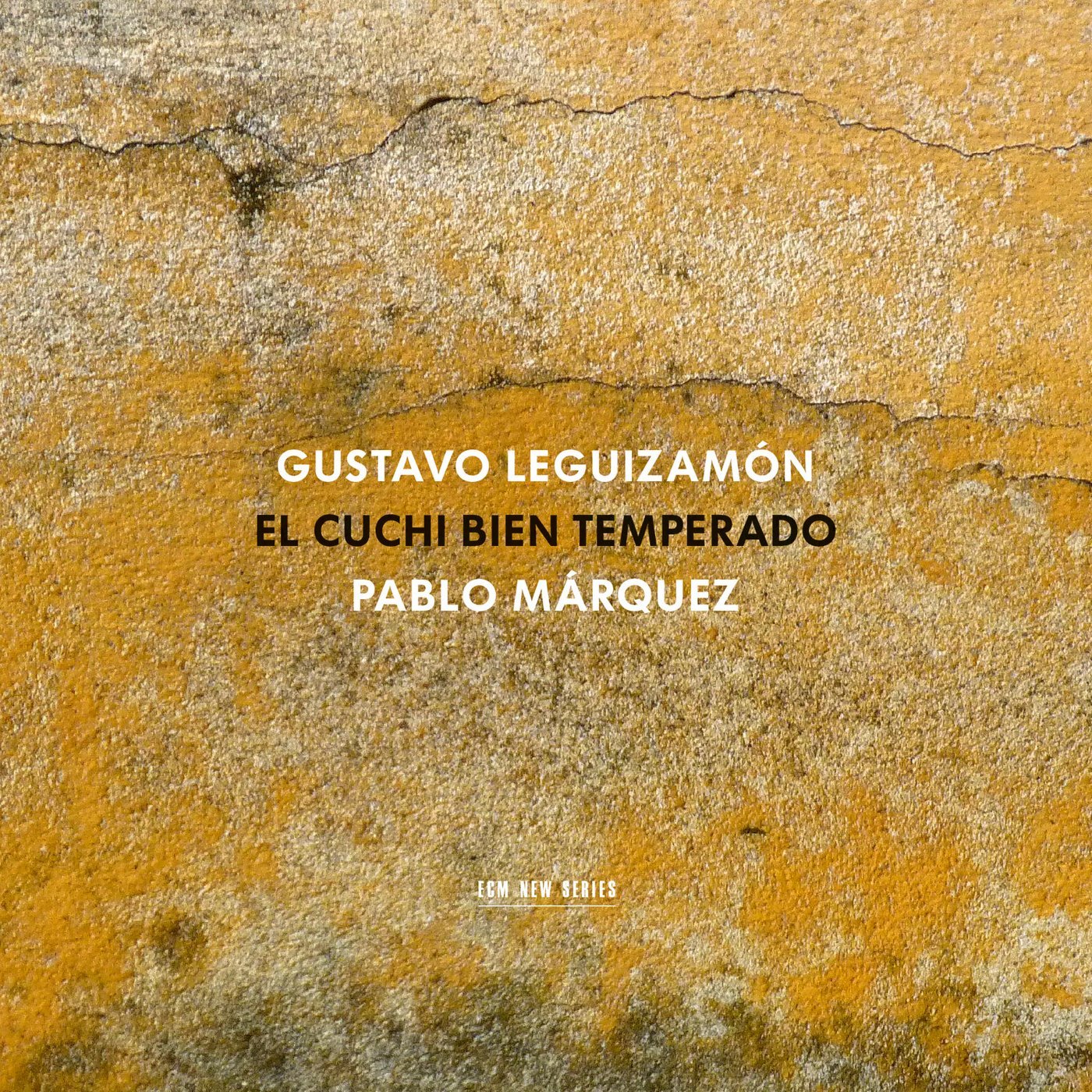
But life and art do not imitate one another in her music, which like the cover photograph of this ECM New Series album dedicated to it speaks to the broken pieces as much as those intact, for they also have songs to sing. Because it was she who said, “All who truly love my music should refrain from theoretical analysis of it” (though even this might have been a defensive statement), we do better to approach it not as an excuse for analytical thinking, but as a spiritual experience that demands undivided regard in return for its outpouring.

The beating heart of all three works featured here is Moldovan-Austrian violinist Patricia Kopatchinskaja, whose rendering of the Sonata for violin and piano (1952) alongside Markus Hinterhäuser is alone worth the acquaintance. The violin begins on a teetering, pianistic bridge in which just enough slats remain to grant full passage. On the other side, Kopatchinskaja must hold the music’s fabric together, frayed as it is. This requires an unusually pristine tone, and this she possesses, along with a variety of extended configurations. She can darken or brighten, be rough or smooth, and moves through the body of this music like creation itself. Notes devoid of vibrato stand out for their clarity and help temper the piano’s inclinations to dance. What emerges from all of this is an internal clock, marking not time but space. Its pulse is not mechanical, but shifts with every blush of mood. Kopatchinskaja takes up that pulse at the end as she raps the body of her instrument with a knuckle.

PK

The 1949 Trio adds clarinetist Reto Bieri to the duo for a tripartite work of artful design. Bieri’s own purity of tone enhances Kopatchinskaja’s, and vice versa, while Hinterhäuser stretches every filament into even consistency. The violin writing is more insistent and razor-like this time around, cutting the obvious relationships within the trio in favor of the implied. The second movement is a lullaby in shadow, walking a tightrope into a warped deconstruction of a Bach-like motif in the third. Here the jagged and the linear become a third, metaphysical category: a blueprint of a blueprint, in which the piano barely hangs on to life.

In his cultural history of St. Petersburg, Solomon Volkov writes, “Ustvolskaya’s chamber works are as monumental as a symphony, and her symphonies are as translucent as chamber music,” though I find it hard to believe that many would hold such an opinion had the composer not put it forth herself. We may see this dynamic operative in the 1952 Sonata, but the Duet for violin and piano, written in 1964, is an intimate cartography of resistance. The distinction between Sonata and Duet more rightly speaks to the composer’s defiance of the chamber music category. The violin’s unassuming introduction turns to flint as flashes ring out. Dissonant, romping scales in the piano, combined with the violin’s half-step faints and distant alarm calls, prime us for the expectorations to come. Yet within each crashing wave curls an invisible grammar, to which pizzicato periods dot arco exclamations. And in a ghostly finish, the violin scrims the line between Heaven and Hell, blending until there is no difference between the two.

And so, rather than simply compare these chamber works to symphonies, it would be more accurate to emphasize their repurposing of scale. It’s not that Ustvolskaya’s sound-world is so big as to engulf us, but that we shrink to such a size that what was once microscopic now seems cosmic. Biographical apocrypha aside, her work is vital for its staunchness of both vision and blindness to the listener. This is not to say we are ignored, but neither are we patronized. We must reckon the music as it is.

(To hear samples of Galina Ulstvolskaya, click here.)

Ketil Bjørnstad: La notte (ECM 2300)

La notte

Ketil Bjørnstad
La notte

Ketil Bjørnstad piano
Andy Sheppard tenor and soprano saxophones
Eivind Aarset guitars, electronics
Anja Lechner violoncello
Arild Andersen double bass
Marilyn Mazur percussion
Recorded live July 21, 2010 at Molde International Jazz Festival
Engineer: Jan Erik Kongshaug
Mixed March 2012 at Rainbow Studio, Oslo by Jan Erik Kongshaug, Ketil Bjørnstad, and Manfred Eicher
Produced by Manfred Eicher

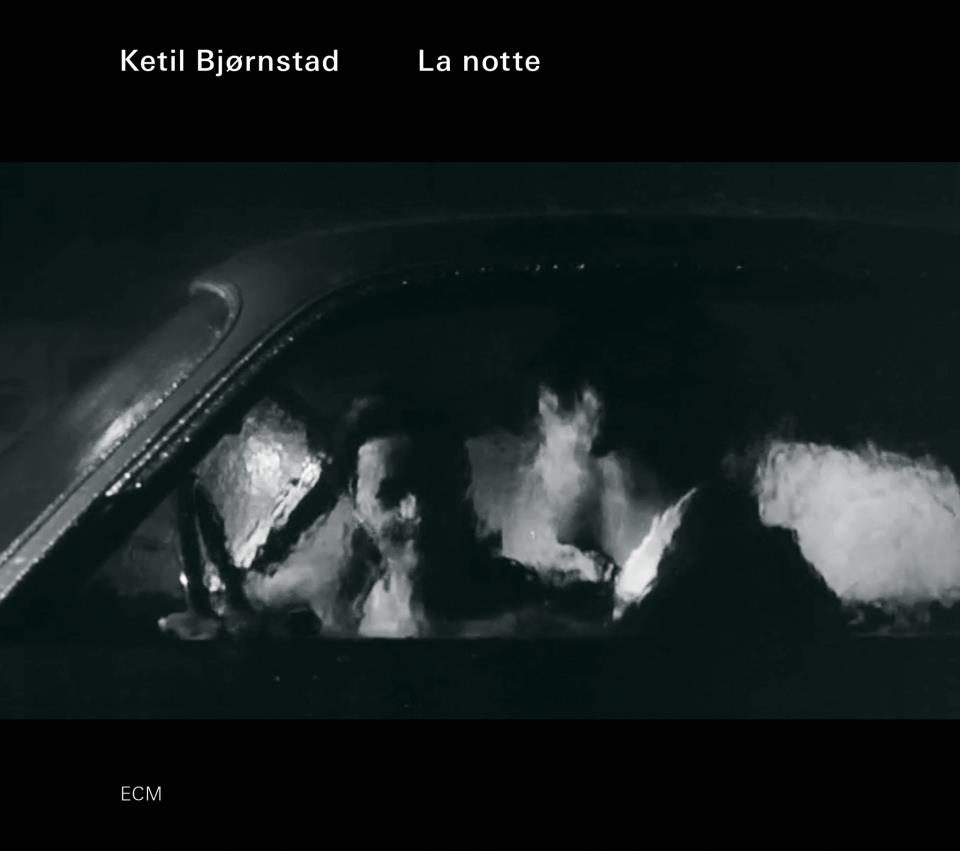
Ketil Bjørnstad has been a formative presence on a wide variety of ECM releases. Since 1993’s Water Stories, his recognizable pianism and compositional voice have left indelible marks on the label’s catalogue. Age has fortified the intimacy of his melodic formations, whether in his darkly alluring collaborations with cellist David Darling or in projects with singers. La notte, however, represents a return to form, while also taking his craft in unexpected new directions. The result of a Molde International Jazz Festival commission and recorded live in 2010, Bjørnstad’s eight-part suite is a self-styled “soundtrack to an inner film.” It’s also his most sublime creation to date.

KB

Bjørnstad has always been literary in his music, just as he has always been musical in his literature, but cinema has also been an integral influence. Here he pays natural homage to Michelangelo Antonioni, citing the Italian director’s “slow, rhythmic authority” as an early source of musical inspiration. To bring that moving vision to life, he has assembled a powerhouse band of saxophonist Andy Sheppard, guitarist Eivind Aarset, cellist Anja Lechner, bassist Arild Andersen, and percussionist Marilyn Mazur. Together, they create a musique verité of raw forces.

Harnessing such forces requires no small amount of finesse and patience, as demonstrated in the slow progression from Parts I to II. Between the low, arco bass and electronic hum, there is little to grab hold of in the beginning. Even as Lechner’s cello and Bjørnstad’s piano engage in proper dance, Mazur’s tracery is still far away. Only when Sheppard lights up the sky with his tenor does the band’s full gravity take effect. Into that shift from liquid to solid, we might read the robustness of Antonioni’s characters and the fleetingness of their environments, if not the other way around.

Mazur and Sheppard are, in fact, the stars of this performance, although, duly invigorated as they are by Bjørnstad’s finely grained writing and flexible architecture. The saxophonist opts for soprano in Parts III, V, and VII, taking off with un-caged melodies. Having learned from Icarus’s example, his wings are impervious to the sun, which he proves to be a reflection anyway when he leaps into the sky as if it were an upside down pond, sending ripples toward every horizon. Mazur, for her part, accentuates the jazzier shades of this spectrum, acting as a buffer zone for Andersen’s bold cartography. With Bjørnstad, the latter two become a most formidable trio, the central nervous system to Aarset’s coronal guitar and Sheppard’s ecstatic flailing.

Mazur and Sheppard are, in fact, the stars of this performance, although, duly invigorated as they are by Bjørnstad’s finely grained writing and flexible architecture. The saxophonist opts for soprano in Parts III, V, and VII, taking off with un-caged melodies. Having learned from Icarus’s example, his wings are impervious to the sun, which he proves to be a reflection anyway when he leaps into the sky as if it were an upside down pond, sending ripples toward every horizon. Mazur, for her part, accentuates the jazzier shades of this spectrum, acting as a buffer zone for Andersen’s bold cartography. With Bjørnstad, the latter two become a most formidable trio, the central nervous system to Aarset’s coronal guitar and Sheppard’s ecstatic flailing. The presence of these bandmates rubs off on Bjørnstad, whose solo in Part IV magnifies the suite’s red thread with a fullness of expression such as he has rarely elicited before. When Lechner joins him, it feels more than logical. Their relationship is this music’s very foundation, prefiguring Parts VI and VIII as well and making broken images whole again by the glue of remembrance.

This is a must-have for fans of any of anyone involved, but especially of Bjørnstad, who on this stage reaches new heights, and depths, spreading his energies across the toast of inspiration into a brighter tomorrow.

(To hear samples of La notte, click here.)

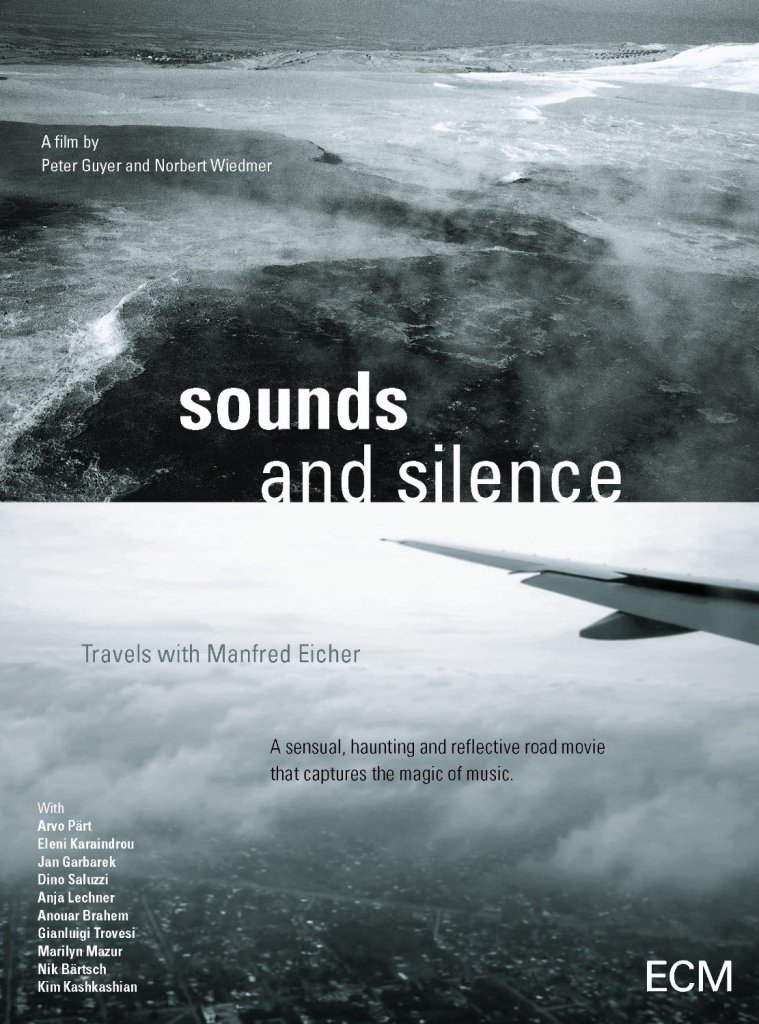
Sounds and Silence: Travels with Manfred Eicher

Sounds and Silence

If every film has a soundtrack, does it not stand to reason that every soundtrack has a film? This would seem to be the guiding question behind Sounds and Silence. In this unprecedented DVD release, documentarians Peter Guyer and Norbert Wiedmer set out to capture ECM Records as a living entity in which human labor and ingenuity are the dual heart of musical life. Although billed as a “road movie” and patterned by footage of label founder and producer Manfred Eicher in various states of transport, it is equally concerned with the non-literal paths that have led to the creation, sustenance, and influence of the German imprint and its ongoing permutations. They keyword here is “ongoing,” because Eicher and his trust have only intensified their productivity since 1969, when it all began, to the point of releasing, on average, an album per week.

It is almost inevitable that the film’s opening montage and credit sequence should be accompanied by a recording of Keith Jarrett. The pianist is one of ECM’s brightest stars, but is also committed to the power of simplicity, as demonstrated in his rendition of Georges I. Gurdjieff’s “Reading of Sacred Books.” It is an apt description of the filmmakers’ and their process, tasked as they are with interpreting an archive of such magnitude that not even a collective documentary on each album could hope to articulate it. Rather, they must choose to concentrate on specific times, places, and moods in the hope of tapping into something essential to them all. That being said, when Eicher talks of seeking the luminosity of music, which like a comet’s tail leaves behind a pure trace of its being, and philosophizes that music “has no fixed abode,” we begin to realize that such technology of capture as the camera is forever limited in its relationship to the audio realm. For while images suggest associations by their very existence, sounds thrive on the nourishment of our wildest interpretations. Consequently, this film is not so much a behind-the-scenes manifesto of artistic creation as it is a gentle visualization of ECM’s inner heart and its ripple effect across oceans.
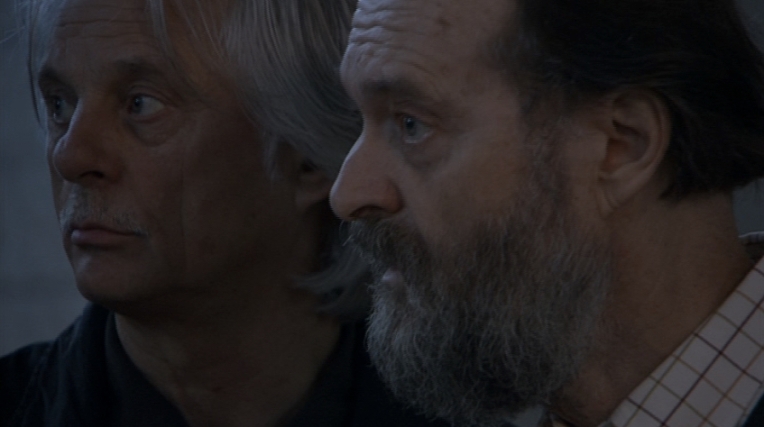
Pärt and Eicher
(Manfred Eicher and Arvo Pärt)

Rehearsals with Estonian composer and New Series darling Arvo Pärt at St. Nicholas’ Church in Tallinn yield the documentary’s first proper footage and serve as touchstones for its narrative arc. They offer a strangely profound glimpse into the countless intangibles that go into any ECM recording, but particularly those in which the composer is present, at once presiding over and deferential to the equally intangible magic of a committed performance. Pärt is every bit the contemplative human being one might expect. He feels music with every fiber of his being, and it’s a gift to witness, if only briefly, his childlike sagacity. His face is a veritable gallery of expressions, each attuned to a change in the score and the possibility of making it grow even further toward an unattainable perfection.
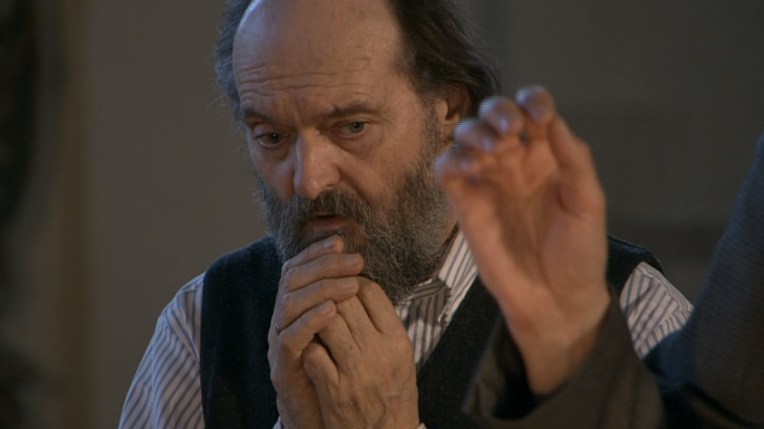
Pärt
(Pärt listens intently as conductor Tõnu Kaljuste’s right hand threads the proverbial needle)

During one such scene, a most touching development occurs when, in mutual happiness, Pärt engages Eicher in a dance. This single gesture reveals something perhaps unexpected in both men: in the composer a feeling of bliss that many of us lose in the name of adulthood, in the producer a love for the simple pleasure of forces aligning in exactly the way he wants. Eicher is indeed a guide of uncompromising integrity, and his smile reveals far more about why he does what he does than the iconic and relatively frequent photos of him hunched over yet another mixing board. True dedication to one’s craft, these images suggest, requires not only a seriousness of heart but also a frivolity of spirit.

Dance
(Eicher and Pärt share a dance to the tune of the latter’s Estonian Lullaby)

Between these signposts, we encounter a train of faces and voices, many perhaps for the first time. Interviews with Pärt and his delightfully honest wife Nora, Greek composer Eleni Karaindrou, Tunisian oudist and composer Anouar Brahem, Italian multi-reedist Gianluigi Trovesi and accordionist Gianni Coscia, Argentine bandoneón master Dino Saluzzi, and Eicher himself help us better understand the inconceivable alignments of fate that sometimes must occur just to bring the right people together, much less allow them the space to create whatever they will create. The bellows of Saluzzi’s lungs, for example, prove just as eloquent as those between his fingers when he shares his history as a musician who shunned the academy in favor of raw expression. In him is revealed an educator’s heart, one that seeks to learn as much as enhance learning in others. Brahem is likewise an articulate soul possessed of a subtle wit. His sensitivity toward political matters only serves to enhance appreciation of his sonic endeavors, which in light of his worldview take on new valences of awareness and pacifism. It’s a joy to watch him alone in his home studio, building his tunes, element by element.
Trees
(Only light may part shadow)

As we navigate environmental flashes of Eicher’s travels, we follow the producer to Athens for a monumental performance of Karaindrou’s music (of which he shadows a rehearsal with saxophonist Jan Garbarek and violist Kim Kashkashian), a recording session at Studios La Buissonne in southeastern France with Nik Bärtsch’s Ronin (and the intuition needed to bring out just one muted string hit in post-production), another at Copenhagen’s Sun Studio with Marilyn Mazur, a concert featuring Brahem with pianist François Couturier and accordionist Jean-Louis Matinier at the Prinzregententheater in Munich, and mixing Trovesi’s explosive reconstructions of operatic favorites in Bergamo, Italy. Other highlights include footage of said concerts, a brief sojourn to Argentina with Saluzzi and Lechner, some candid moments with the ever-animated Trovesi and his confederate Coscia, and even a peek into ECM’s Munich headquarters, where we see everyday logistics in action, including the meticulous process of selecting album covers.

Cover selection
(Reading between the covers)

In the same way that Eicher seeks to put the listener inside the music, so do the filmmakers try to put us in ECM’s world, and in that spirit we end where we began: with Pärt. Experiencing the consummation of every above-mentioned force is one of the most gratifying passages of the film. The music is the message, because the message exists to be sung.
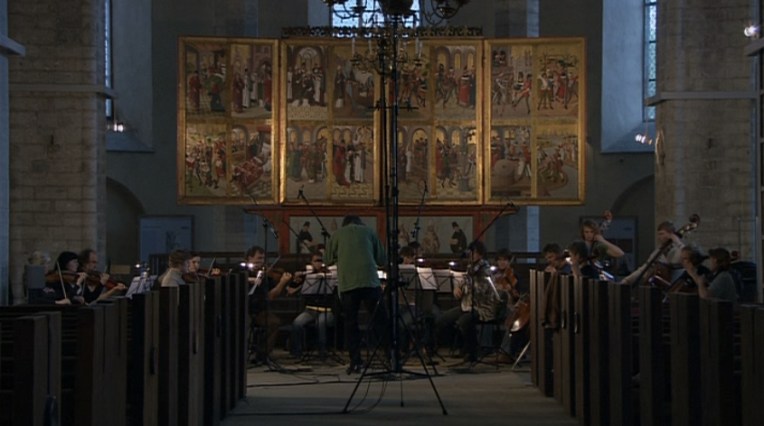
Pärt rehearsal
(Icons before icons)

ECM’s music has always approached the level of cinema, and so it was only natural that it should be honored in moving pictures. And yet, the end result seems more like the realization of a fantasy than a picture of reality. Throughout the 87-minute duration, the filmmakers make as much as they can out of what little they have. Case in point: Saluzzi and Lechner’s Argentine sojourn. Aside from a hint of social awkwardness, the footage overlaps with another film by co-director Wiedmer (see El Encuentro, also released on an ECM-edition DVD) and is perhaps better saved for that portrait. Its inclusion here feels like recycling and not in the documentary’s best interest.

Another dividing point may be the lack of attention paid to certain other production aspects. Early on in the film, Pärt speaks sagaciously of the recording session as an organism, of which musicians, engineers, and producers are vital organs. And yet, what of those unsung engineers? While of course ECM has none under its employ (they are independent artists working for independent studios), Martin Wieland, Jan Erik Kongshaug, Stephan Schellmann, Peter Laenger, James A. Farber, and, more recently, Stefano Amerio, among others, have all been of vital importance in shaping the label’s distinctive identity. The reality, of course, is that such a film, regardless of maker, can at best only be supplementary and will be of far more interest to the ECM fan than to someone unfamiliar with the label. Nothing can replace the listener. And is that not what Eicher is, above all? Why else would we first encounter him on screen as a man alone with his thoughts, as if listening to the world?
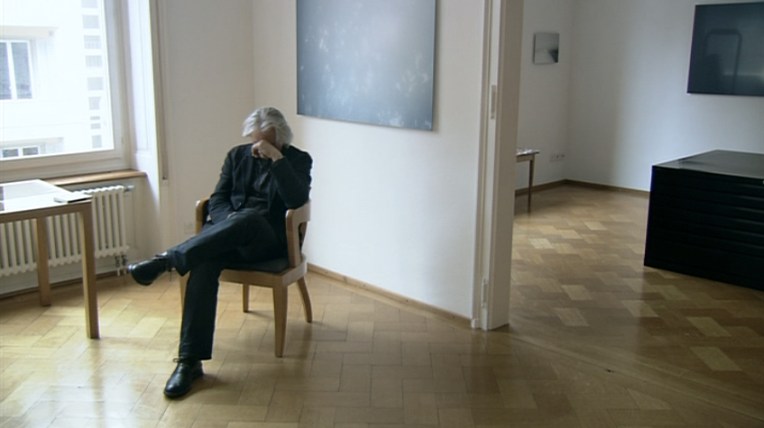
Seated Eicher

And so, it is in the name of listening that I direct your regard to the film’s soundtrack.
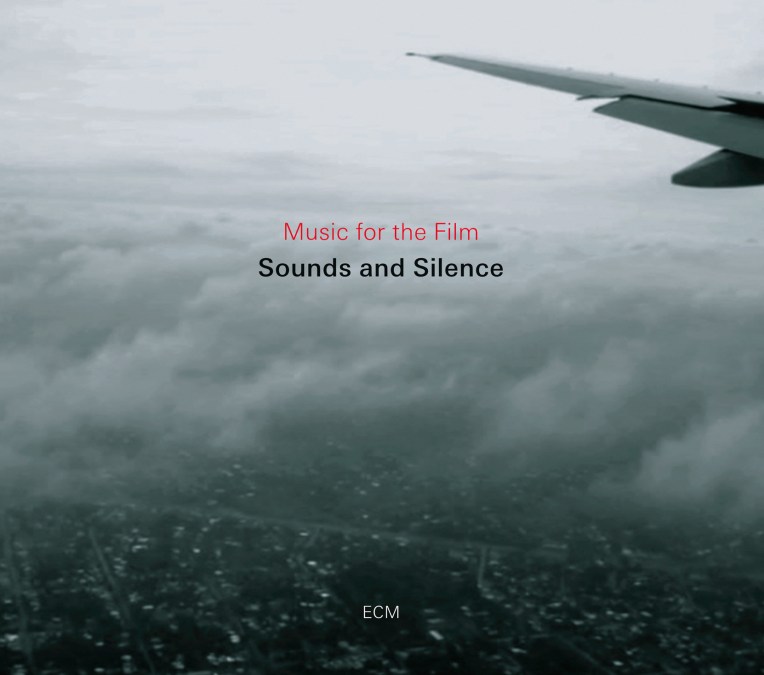
ECM_2250_CD

A cover that brings to mind Iro Haarla’s Vespers situates us in a cloud-break with only a snatch of landscape below to indicate the separation of worlds. The composition is emblematic of a label that has always charted indefinable borders between civilization and emptiness, and in so doing has made music seemingly aware of its own mortality. Keith Jarrett’s “Reading of Sacred Books,” written by Georges I. Gurdjieff, asserts nothing but its own lack of assertion. It is instead an expression of transcendence, a confirmation of the energies all around and within us, by which we are able to produce this wonder called music in the first place.

If anything can be said to define ECM’s output, it is memory. Charting that which has already passed in order to open our eyes to that which has yet to come, these musicians have all primed us for the opening of newer doors. This is the spirit of the label: to take the musical moment and craft it into self. Few tracks on this compilation embody this spirit more creatively than “Modul 42” from Nik Bärtsch’s Ronin. After gaining access to the recording process in the film, it’s wonderful to encounter the music on its own terms, to look deep into its eyes and know it’s looking back at (and through) us. The sparkling middle passage ushers us into a world hitherto unknown yet undeniably familiar. Anouar Brahem’s “Sur Le Fleuve” is another slice of magic. Featuring the same trio combination of piano, accordion, and oud as recorded in the film, its marriage of instrumental signatures is nothing short of breathtaking. We can take great comfort in this music, for it is our partner.

Dino Saluzzi’s “Tango a mi padre” played as close to breathing as possible by him and Anja Lechner, speaks to another facet of that fascination with memory, which in this piece is so alive that it weeps for itself. We might, then, hear Vicente Greco’s “Ojos Negros” at the same duo’s hands with renewed sense of purpose. That these two bodies traveling through space and time have found themselves somehow joined at the soul, sharing with one another the details of their upbringing and the unknowns of their future, is a miracle. Also miraculous are two selections from Eleni Karaindrou, whose compositional fabric is spun from her “Farewell Theme,” which floats Jan Garbarek’s soulful tone across an ocean’s wave of strings, as Kim Kashkashian’s aquatic tail leaves its marks in the water, and “To Vals Tou Gamou,” in which piano, accordion, and violin dance like pens across paper. We may listen to this music either poignantly or through the lens of a joy that remains somehow clear in the mists of its origin.

The “Arpeggiata addio” by Giovanni G. Kapsberger, as heard on Rolf Lislevan’s Nuove musiche, likewise speaks of the past in the present. In it we can feel the propulsion of life experience by the power of desire. A voice carries us across the threshold of then and now, cradled in hands chapped like old parchment. Fresher inkwells spill their contents across Marilyn Mazur’s whimsical “Creature Walk,” a piece which as we know from the documentary brings a smile even to her face, and Gianluigi Trovesi’s blistering take on “Così, Tosca” by Giacomo Puccini. Although lit by a canonical match, Trovesi’s candle burns like an instrument of restless beauty in the macabre waltz funneling around him.

Arvo Pärt is also represented twice. His Für Lennart in memoriam is an undeniably dense molecule of emotional transfixion, while the postludinal Da Pacem Domine, after a reprise of Jarrett’s Gurjdieff “Reading,” carries us on its feathered back to the edges of sunset, where awaits the discovery of discovery.

How does one sum up ECM Records? Thankfully this is the purpose of neither the documentary nor its soundtrack. Rather, they exist to give us glimpses into the ever-shifting structure of the label’s skeleton. Following Manfred Eicher on these journeys, whether through eyes or ears, you might just find yourself wondering how so much external architecture could arise from music that is immaterial, only to realize that it’s the other way around.

(To hear samples of the soundtrack, click here.)

Helena Tulve: Arboles lloran por lluvia (ECM New Series 2243)

Arboles lloran por lluvia

Helena Tulve
Arboles lloran por lluvia

Arianna Savall soprano, triple harp
Taniel Kirikal countertenor
Charles Barbier countertenor
Riivo Kallasmaa oboe
Marco Ambrosini nyckelharpa
NYYD Quartet
Helena Tulve glasses, wind chimes
Vox Clamantis
Ensemble Hortus Musicus
Jaan-Eik Tulve conductor
Estonian National Symphony Orchestra
Olari Elts conductor
Reyah hadas ‘ala recorded October 2009 at St. Nicholas Church, Tallinn
Extinction des choses vues recorded May 2010 at Estonia Concert Hall, Tallinn
Engineer: Maido Maadik
Editing: Maido Maadik and Margo Kõlar
Produced by Estonian Public Broadcasting
silences/larmes, L’Équinoxe de l’âme and Arboles lloran por lluvia recorded August and September 2010 at Church of the Transfiguration of Our Lord, Tallinn
Engineer: Igor Kirkwood
Editing: Igor Kirkwood and Margo Kõlar
Recording supervision: Helena Tulve
Album produced by Manfred Eicher

You are with us and all the while not with us.
You are the soul and that is why you do not make yourself visible.

Arboles lloran por lluvia (Trees Cry for Rain) is ECM’s second album dedicated to the music of Estonian composer Helena Tulve, whose Lijnen sailed the label’s waters in 2008. This European-only release proves that sometimes the greatest treasures are worth seeking. If you care at all about contemporary music, you’ll want to obtain this one at all costs. Not only because Tulve’s compositional voice is more assured than ever, but also because that voice contains so many others, whose constitutions now step forward like memories by lure of hypnosis.

Tulve
(Photo credit: Tarvo Hanno Varres)

Each of the five compositions featured on this program takes root in a text or theme that predates us even as it feels instantaneously born. Reyah hadas ’ala (The Perfume of the Myrtle Rises), for instance, may be scored for voices and early music consort, but its churning intimacy is fresh as fallen snow. The poem from which the piece gets its name is by Shalom Shabazi, a mystical Yemenite of the 17th century, who describes being awoken at midnight by an angelic vision. The performances of countertenors Charles Barbier and Taniel Kirikal, along with Vox Clamantis and Ensemble Hortus Musicus, make this scene—which would seem to demand much of its interpreters—feel as organic as breathing. Just as the poem allows us to imagine a light obscured by branches in the frayed edges of half-sleep, so too does Tulve’s setting thereof reveal by obfuscation. The text is its enzyme, but finishes as an alchemical transformation—or transfiguration, if you will—from word into flesh. The voices and strings intensify, becoming denser, but keep returning to an underlying pause. Cells of plainchant move in arcs so that we might better understand the straighter lines they frame. The oboe-like bombard is powerful to hear in this context, crying like a single beam of language that can only be understood through meditation. Images fade as quickly as they appear, as if inhaling light.

silences/larmes (silences/tears) nestles a handful of shorter poems by Mother Immaculata Astre, Abbess of Le Pesquié (a Benedictine nunnery in the south of France). Soprano Arianna Savall, oboist Riivo Kallasmaa, and Tulve herself (playing glasses and wind chimes) make for a crystalline skeleton to animate these verses, each a burst of pollen. There is a cautious, faunal quality to the emergence of voice and oboe, although the atmosphere is far from bucolic. After the performers recede into whispers (at which point they describe the brush of a night moth’s wings), the resurgent song becomes almost unsettling, for it emphasizes the messy biology that enables even the most basic sound to be produced.

L’Équinoxe de l’âme (The Equinox of the Soul) features Savall on voice and triple harp, joined by the NYYD String Quartet. Here the text is by 12th-century Sufi mystic Shabab al-Din Suhrawardi, and sung in a French translation from the Persian by Henry Corbin. It is dappled with parables from the Safir-i-Simurgh (The Calling of the Simurgh), and from them protrude spidery legs of awakening. As harp notes fall among seeds from laden branches, Savall navigates the text as if it were a gesture of divine scope. Suhrawardi’s messages are urgently cryptic, their answers revealed in the omnipresence of things. If, in each of these compositions, performers seem to be bonded by deeply microbial connections, in this context they are of the same body.

The album’s title composition is performed by Vox Clamantis, backing Savall and Kirikal as vocal soloists and Marco Ambrosini on the nyckelharpa. This time, Tulve turns her attention to a traditional Ladino (Sephardic) poem, for which the nyckelharpa’s muted pizzicati are an evocative treasure. Amid these raindrops, voices sing broken syllabus before more visions, now earthly, take focus. The Kirikal-Savall helix betrays the nervousness of wings, of leaves trembling beneath the weight of water, of the anticipation of physical union. Tonal changes add restorative brushstrokes to a decaying landscape, leaving Ambrosini in the hush of a sigh.

Although the final piece of the program, Extinction des choses vues (The Extinction of the Things Seen), features no vocalists, it is still rooted in a text: Jesuit thinker Michel de Certeau’s Extase blanche (White Ecstasy). Like Tulve’s later output, it traces a threshold between worlds. One can hear the influence of her illustrious teacher, Erkki-Sven Tüür. clearest in its fractal respiration and percussive skin, and in the distinctly threnody-like quality of this piece. Its mouth is a spiral, and the tongue that rests within is a nebula.

Arboles lloran por lluvia confirms in Tulve a voice and temperament comparable to Kaija Saariaho in that it looks beyond the label of “spectral” into a face, as of certain paintings, that is always staring back at you no matter where in the room you stand. If this music were a window, it would mourn the loss of light, drunk to the last drop by the leaves beyond its brow. It is perhaps in this spirit that the album bears dedication to Montserrat Figueras. The mother of Savall, her spirit is palpable in the recording, nodding and smiling throughout. Tulve thus attends to the ghosts between words and weaves them into a husk of dreams. Within them, she composes a world of movement without form.

Just as the trees cry for rain, so does the rain cry for trees.

Hildegard von Bingen: Ordo Virtutum (ECM New Series 2219)

Ordo Virtutum

Hildegard von Bingen
Ordo Virtutum

Ensemble Belcanto
Andrea Baader soprano
Edith Murasov mezzo-soprano
Rica Rauch alto
Martina Scharstein soprano
Dietburg Spohr mezzo-soprano

Benjamin Cromme speaker
Lilith Reid speaker
Selina Drews girl soprano
Recorded October 2010, Festeburgkirche, Frankfurt am Main
Engineer: Markus Heiland
An ECM Production

Hildegard von Bingen (1098-1179) is without parallel. She has been called by biographer Fiona Maddocks “The Woman of Her Age” and, elsewhere, “a Renaissance woman several centuries before the Renaissance.” We know very little about von Bingen, except that she certainly recognized the theological import of music, if not also the musical import of theology. As a composer, von Bingen came to popular prominence in the mid-1990s, when interpretations of her works by such landmark ensembles as Sequentia rode a wave of Gregorian chant and other recordings of medieval music to great success. Her Ordo Virtutum of circa 1150 is a quasi-liturgical mystery play that walks a textual path (modeled after the Song of Songs, Isaiah, and the Revelation of St. John) into what Gerhard R. Koch in his refreshing liner notes calls a “psychodrama” between the virtuous and the satanic. Koch rightly cautions those of us who think we appreciate von Bingen’s music, when really we adore the beautification of it. (Sequentia’s recording of the Ordo, in fact, set a precedent by adding instruments where none exist in the essentially monophonic score.) Indeed, how many of us have actually read her works, sat with her mystical visions and followed their many threads of light? The phenomenally talented singers of Ensemble Belcanto, led by mezzo-soprano Dietburg Spohr, have on this recording responded with a reading of their own—one in which divine impulses speak in earthly languages, and far from the adornments so much in vogue in early-music practice. “The presumption of uniformly executed solemnity,” Koch reminds, “induces at least ideological suspicion of a narcotic, lulling ideal of the Middle Ages.” Taking this suspicion to heart, Belcanto pays deepest respect to von Bingen’s vision by kneading shadows into its glow.

“Who are these, who seem like clouds?” So ask the patriarchs and prophets of the play’s opening scene. Such words speak to an overarching (and subterranean) theme of dual relationships: between internal and external, emotional and physical, present and historical moments. Already the recording is such that we feel a part of the singing circle, forgoing the reverberant cathedral space for an intimate experience: this is not the reflection of vaulted stone but the absorption of ancient wood. There is a solemnity, to be sure, but it comes from a feeling of sharing in a fearlessness of interpretation rather than from some unverifiable, hermetic fantasy. Here the voices interlock, shape one another in real time, and forge their own pathos like a barrier against the flames of Hell itself.

Belcanto’s immediately recognizable sound lends a familiarity to this narrative of struggle. The arrangement of “Querela Animarum in came positarum” (Lament of embodied Souls) is especially moving in its nervous tutti singing, and in the way its lowest voices extend to a self-aware ripple. Dissonances add willing integrity, while gasping, birdlike calls and responses and whistling motifs indicate the half-physicality of the titular Virtues and their eternal questioning. They are, in fact, given the most varied palette, much in contrast to the children’s voices speaking the Devil’s words out of sync. And while there are beauties (such as Charity’s introduction) to be found, the brevity of each section allows us to move on, and folk elements to spring Pagan-like from the grasslands. Spohr’s arrangements thus speak to the unspeakable: singing on inhales as Faith, breathing gravel as Discipline, and keening as fragile Mercy. What sparse instrumentation there is—a beaten drum for Victory, bells for Chastity—ignores the trappings of note value and goes straight for the viscera.

The final procession feels closest to plainchant, its core opening to the light of salvation. “So now, all you people,” it is sung, “bend your knees to the Father, that he may reach you his hand.” It is one possible realization of von Bingen’s ideal: that any and all voices should magnify the same faith. And despite the array of “modern” techniques employed to get there, we can be sure that Belcanto is not making the music new but rather fortifying its antiquity. The end result is among the more fascinating albums in the entire New Series catalogue, and as such asks only the same devotion of attention that went into its creation. Because the booklet provides no translation, you will want to have one in front of you while listening (one is available here). Only then will you appreciate the sheer level of embodiment taking place in every word.

Jon Balke: Magnetic Works 1993-2001 (ECM 2182/83)

Magnetic Works

Jon Balke
Magnetic Works 1993-2001

Jens Petter Antonsen trumpet
Per Jørgensen trumpet, vocals
Arve Henriksen trumpet, vocals
Morten Halle alto saxophone, flute
Tore Brunborg tenor and soprano saxophones
Gertrud Økland violin
Trond Villa viola
Jonas Franke-Blom violoncello
Svante Henryson violoncello
Cikada String Quartet
Henrik Hannisdal violin
Odd Hannisdal violin
Marek Konstantynowicz viola
Morten Hannisdal violoncello
Jon Balke piano, keyboards, percussion, electronics
Anders Jormin double-bass
Marilyn Mazur percussion
Audun Kleive drums
Recorded 1993 (Further) and 2001 (Kyanos) at Rainbow Studio, Oslo
Engineer: Jan Erik Kongshaug
Solarized recorded 1998 at Audiopol, Skien
Engineer: Audun Kleive
and Rainbow Studio, Oslo
Engineer: Jan Erik Kongshaug
Compilation by Jon Balke
An ECM Production

Magnetic Works confirms keyboardist and composer Jon Balke as one of the most important and eclectic voices of Norwegian jazz. Collecting tracks from two ECM albums and nine of ten tracks from the long out-of-print Solarized (originally released in 1999 on the EmArcy label), this 2-CD set is an instant archival gem. In his liner note for the compilation, Balke describes the music he played with his influential Magnetic North Orchestra as having been “written to allow the individual musicians to enter an optimal playground for their expressivity.” Achieving this was no small feat, but listening to these musicians negotiate their personalities by way of the group’s collective distribution promises fascination for the Balke fan and newcomer alike. Although anyone who owns Further and Kyanos will find nothing new among the selections from those albums, hearing them shuffled in the present context is sure to bring about new relationships and nuances.

Further

Released in 1994, Further was the MNO’s label debut. “Departure” opens both album and compilation with an incantation of reed and brass. It’s a full-throated welcoming into a space abundant in elemental colors. The swinging undercurrent of “Changing Song” is picked up by strings and Per Jørgensen’s distinctive vocals, while drummer Audun Kleive and percussionist Marilyn Mazur flesh out the ecosystem of its unfolding. Balke, meanwhile, emotes at the piano through this lush climate with all the freedom of a bird. In this vein, “Flying Thing” expands on the percussive delicacies at hand, bassist Anders Jormin laddering down into the gears of a most intimate machine. Balke then leads a Brazilian-inspired groove, gliding just under the radar of the horns. “Horizontal Song” is a nostalgic piece of heaven. The string section relays pizzicato accents and arco trails while the horns and percussion flock to bass like wings of shadow to a flame. “Moving Carpet” is another rhythmic standout. So open yet so fully plumed, it boasts a soaring turn from saxophonist Tore Brunborg. “Taraf,” with its lovely altoism from Morten Halle, could very well be a Michael Mantler elegy. The ascending bass line of “Shaded Place” most clearly evokes its title. Like a napping stranger whose dreams are visible in a hovering cloud, it turns but does not wake. Balke and Jormin dig deep for emotional treasure and come up with handfuls.

Kyanos

Kyanos, from 2002, is a far more biologically minded album—not only because of the track names, but also because of the intensely miniscule palette on which Balke and his musicians draw throughout. A seemingly omnipresent breath of electronics sets it apart from other MNO records, as does its prioritized roster, only minimally adorned by strings. The title track is quintessential in its pairing of trumpet and droning wave. Like the tracks “Katabolic” and “Mutatio” that precede it, it has caught something mournful in its net and can only contemplate whether to throw it back or consume it. In this sense, Balke’s role is far more physiological than melodic, as demonstrated by the pianistic surgery of “Plica.” The fertility-laden “In Vitro” and “Zygotos” enrich the microscopy of every snake and ladder, breaking skin at last in the exploratory “Karyon.”

Solarized

Solarized sits between these two abridged albums, finishing Disc 1 and beginning Disc 2, as if it were somehow too expansive to contain in full. The rolling snare of “Present Position” ushers us into a substantial sound. Jormin’s bassing is weighty and, in this outing at least, indeed the most magnetic force within the group. Balke follows a linear, faceless figure through catacombs of spontaneity, mapped by the string players as Jørgensen’s trumpet lights every torch in the castle. The title track switches above ground. Through-composed beginnings lead to some beautiful leaps from Halle, who reaches catharsis with a hard-hitting altissimo. A phenomenal exercise in rewarded patience. Jormin glows again in “Dark And Slow,” in which trumpeter Arve Henriksen exhales his way through those oaken walls with ease. Like a heartbeat made manifest, “In Degrees” emotes in the name of survival and ends with a satisfying growl.

Because Balke is never one for being longwinded, at nearly eight minutes “Curve” might seem gargantuan were it not for the smoothness of its contours. This is such a visual track, with streets and pedestrians clearly discernible through the fog. The looping “Circular” is a steady but varied groove, Kleive leading all the way. Trumpet and violin double one another in “Vertical,” a short track that feels like a scene in a novel you once read and forgot about. “Encoded” sports an upbeat piano trio vibe. And just as there is nothing cryptic about it, neither is “Elusive Song” difficult to grasp. You can hear the wiping of strings along the piano’s edges, and the trumpet’s swan song touching a hand to the window.

It’s just as well that the seventh track of Solarized, “Linear,” should be left out, for there is nothing linear about the goings on documented here. Balke and his cohorts are champions of neglected songs, and this set ensures those songs will never be neglected again.

Ketil Bjørnstad: Vinding’s Music – Songs From The Alder Thicket (ECM 2170/71)

Vinding's Music

Ketil Bjørnstad
Vinding’s Music – Songs From The Alder Thicket

Ketil Bjørnstad piano
Gunilla Süssman piano
Jie Zhang piano
Norwegian Radio Orchestra
Christian Eggen conductor, piano
CD 1
Recorded December 2009, Pettersens Kolonial Lydstudio, Hønefoss, Norway
Engineer: Espen Amundsen
CD 2
Recorded March 2009, Store Studio, NRK, Oslo, Norway
Engineers: Morten Hermansen and Jan-Erik Tørmoen
Recording producer: Geoff Miles
An ECM production, in collaboration with Aschehoug and Suhrkamp

While we look not at the things which are seen, but at the things which are not seen: for the things which are seen are temporal; but the things which are not seen are eternal.
2 Corinthians 4:18

Pianist and composer Ketil Bjørnstad will be familiar to ECM listeners for his contributions to the label in many contexts, though perhaps most notably in his “Sea” duology (ECMs 1545 and 1633) with cellist David Darling, guitarist Terje Rypdal, and drummer Jon Christensen. With Vinding’s Music, he moves to the realm of the trilogy—specifically, his three-volume collection of novels that begins with To Music, continues with The River, and concludes with The Lady In The Valley. Despite being highly praised as an author in his native Norway, as of this review only To Music has been translated into English. Nevertheless, there has always been something of the written word in his craft, each phrase sculpted like a polished sentence in search of something otherwise inexpressible. The dimmer corners of the human psyche seem always to have been a primary interest of Bjørnstad, who mines his fictional genealogy for this double album of associations and impressions.

Bjørnstad’s trilogy follows the life of a young piano student, Aksel Vinding, whose experiences mirror Bjørnstad’s own as a budding musician and composer in the Oslo of the late 1960s and early 1970s. Vinding suffers the premature death of his mother, whose absence haunts him as he faces corruptions of the living, all while trying to enhance his musicianship with nourishing growth. To achieve this, he climbs through his mounting grief and regret, marking the way with music that is important to him. In March of 2009, Bjørnstad assembled those same pieces into a concert, thereby yielding this album’s second disc.

Although it is music we have heard before, it is duly inflected by the knowledge of Bjørnstad’s concept. As Christian Eggen conducts the Norwegian Radio Orchestra and plays the Adagio from Mozart’s Piano Concerto No. 23 to start, we might very well imagine Vinding himself feeding his shadow into the composer’s scintillating machine in the hopes that something between the two might result from the friction. The piano, then, ceases to be a solo instrument, for it exists only by the grace of others, known and unknown.

Gunilla Süssmann takes on the guise of Bjørnstad’s thinly veiled protagonist in an account of Debussy’s Clair de lune that is anything but. It is, rather, naked with lucidity. Süssmann also offers her take on the Adagio from Rachmaninov’s Piano Concerto No. 2 and the final movement of Beethoven’s Sonata No. 30. The former’s oceanic patterning is clearer than ever, while the latter’s epic tumult lends voice to Vinding’s own. Jie Zhang offers her renditions of Chopin’s waltzing, glorious Ballade No. 1 in g minor, 23 and the Adagio from Ravel’s Piano Concerto, which drips from her fingertips with melancholy. Fadeout comes with the prayerful solitude of Barber’s Adagio for strings.

With the aftereffects of the Oslo performance still in his mind, Bjørnstad was invited in December of that same year to try out a new recording studio and its Bechstein grand piano, where and on which he worked through latent expressions of suffering. Hence the first disc, which documents Bjørnstad’s wintry improvisations. Not only is it refreshing to hear Bjørnstad at last on his own after so many years of collaboration on ECM; it is also proof positive of the novels’ thematic connection between suffering and art. In the spontaneous gesture he captures feelings of his characters, to be sure, but more importantly of himself. This is a diary, the travelogue of a soul.

Titles are at once retrospective and inherent. Each references a line, image, or idea from the trilogy and inspires pieces as long as nearly 11 minutes (“So Far, So Hidden”) and as short as three (“Evening Voices”). There is a yearning quality to their arc, which follows Bjørnstad’s dear protagonist toward creative refuge. At the beginning of the program, grief is still a bad dream, lit beyond recognition like constellations by sunrise. As the progression becomes clearer, we find that Vinding’s memory is a storehouse of remorse and missed opportunities. He broods over major harmonies, which sound like minor blips of land on an otherwise level waterline. Conversations from the past return in that half-dream state in which the dead may live again, speaking as they once did. But these are ephemeral comforts. Indeed, the more dance-like the motif (“Promise” is one example), the more withdrawn Vinding becomes. For the most part, melodies steep themselves in those forever-unknowns of which no grieving soul can be dispossessed, leaving only the churning ocean of “Remembrance” to show for their having ever existed.

Elsewhere, as in “Outside Skoog,” Bjørnstad’s fingers move as if they were legs toward some silent rapture, whereby the body grows weaker with every step, in proportion to the heart’s resolve. Revolving arpeggios in the left hand leave the right to unhinge every window in a childhood home and let the air of adulthood flow through the empty rooms. “The Stones, The River” is likely to sound the most familiar to Bjørnstad admirers for the regularity of its breath (the recording is clear enough to capture him respiring through the keys) and its stark, hymnal quality. If optimism is anywhere, it is in the final “New Morning,” which despite its moving on touches lips to scars and inhales their moral lessons. Like stepping onto freshly harvested land, it must acknowledge the decay that feeds new growth.

This is music that sings because it must.

Anouar Brahem: Vague (ECM 1881)

Vague

Anouar Brahem
Vague

Anouar Brahem oud
Béchir Selmi violin
Lassad Hosni bendir, darbouka
John Surman bass clarinet, soprano saxophone
Dave Holland bass
Jan Garbarek soprano saxophone
François Couturier piano, synthesizer
Jean-Louis Matinier accordion
Kudsi Erguner ney
Jean-Marc Larché soprano saxophone
Palle Danielsson bass
Jon Christensen drums
Barbaros Erköse clarinet
Richard Gálliano accordion
Recorded 1990-2001
Produced by Manfred EIcher

This conspectus of Tunisian oud master Anouar Brahem, exclusively released in France and Belgium in 2003, might have flown under most radars, but considering that its tracks are taken from pre-existing ECM albums, there’s nothing lost in skipping this one. For those new to Brahem, however, this is a worthy place to begin the journey. Spanning a decade of work for the label, the program builds off two selections from Brahem’s 1991 debut, Barzakh, beginning with the solo “Ronda.” Being an early piece, it is more overtly expressive of the verve that moves him (compare, for example, the restraint of more recent ensemble pieces like Souvenance). And yet, even at his most animated he is sensitive to silence. He carves his themes like the rosette of his very instrument, leaving behind a design of grand yet intimate beauty through which the timelessness of his music flows.

AB

This album is as much a portrait of Brahem’s supremely gifted associates as of their prodigious leader. In “Parfume de gitane” he is joined by violinist Béchir Selmi and Lassad Hosni on the frame drum, longtime friends whose points and lines magnify one of ECM’s most original voices. There is even “Bou Naouara,” a goblet drum solo by Hosni, to cleanse the palette along the way. “La nuit des yeux” finishes the compilation proper with another solo, in which one can almost feel the night opening its palm and inviting us to dance into places not even the moon can reach.

Before getting to that ending, we are treated to a shuffled assortment of projects, including one of his most outstanding in the form of 1998’s Thimar. In that trio with multi-reedist John Surman and bassist Dave Holland, he created something unforgettable. On “Houdouth,” Surman’s bass clarinet is the rough to Holland’s smooth, and together with Brahem’s lilting undercurrent contributes to three most evocative dimensions. For “Mazad” Surman switches to soprano in a classically shaped tune, played with such intuition by this unprecedented (and unrepeated) combination. Although Brahem composes nearly everything on Vague, “Hulmu Rabia” reveals yet another motivation behind its assemblage: Brahem as composer. For here the oudist is nowhere in sight, but everywhere in sound as Surman and Holland navigate a mournful tune on their own.

From Conte de l’incroyable amour we get two tunes. Brahem’s second ECM album, released a year after his first, furthers his relationship with Hosni and introduces ney virtuoso Kudsi Erguner for “Diversion.” Erguner’s playing is so genuinely sandy that you might as well give up on trying to knock every last grain from your shoes. With a tone that could charm the charmer, he lifts the curtain of exoticism and floods the stage with life, patient and serene. “Le chien sur les genoux de la devineresse” is a third oud solo, which sounds like a troubadour’s lute before a fluttering plectrum announces more distant roots.

“Sebika” is the only track to make it from 1994’s Madar, pairing him here with Jan Garbarek, in whose presence the oudist becomes a tactile springboard for the Norwegian saxophonist’s parabolic improvisations. There has always been something of the shawm in Garbarek’s tone, and it finds a natural place in such a context. My only minor disappointment is that a personal favorite, Le pas du chat noir, only gets one nod as well. Thankfully, it is such a well-cut gem in Brahem’s discography that any facet of it will do, and “Leïla au pays du caroussel, variation” is a suitably nuanced ambassador. It is the second of his magical combinations: oud, piano (François Couturier), and accordion (Jean-Louis Matinier).

The latter combination was somewhat foreshadowed in “E la nave va,” in which bassist Palle Danielsson, Couturier on piano, and accordionist Richard Gálliano, who barely whispers over the field abandoned by Brahem, introduce a handful of selections from Khomsa. This 1995 album was a major turning point in Brahem’s compositional output, mining old connections while also building new ones. “Comme une absence” is uniquely scored for synthesizer (played by Couturier), Selmi’s violin, and Jean-Marc Larché’s soprano saxophone, with Danielsson and drummer Jon Christensen caressing the horizons on either side of their passage. This compilation’s title track also comes from the same album, a duet between Gálliano and Couturier that works a cinematic, Philip Glass-like progression by splicing DNA into discernible scenes. “Claquent les voiles” is also a duet, this time between Brahem and Danielsson, and features strummed chords for a more rustic sound. This one even hints at the atmospheres of Thimar.

Astrakan café, released in 2000, places the oud among Barbaros Erköse’s clarinet and Hosni’s goblet drum on both of the chosen tracks. “Nihawend lunga” is composed by Jamil Bey and arranged by Brahem. Its balancing of light and dark elicits likeminded virtuosity from Brahem. An alternate version of the album’s title track, on the other hand, fronts the two melodizers while the drum barely taps its way beneath.

Brahem is a non-invasive force whose former music has equal footing in our world and another of its own making, whereas now he has abandoned the dreamlike cast of his net and settled into the wonders (and bafflements) of reality. If anything, Vague chronicles the awakening of an artist whose vision has become greater than the sum of its parts and has yet countless paths to cross.

Alternate Vague
Alternate cover

Marcin Wasilewski Trio w/Joakim Milder: Spark Of Life (ECM 2400)

2400 X

Marcin Wasilewski Trio w/Joakim Milder
Spark Of Life

Marcin Wasilewski piano
Slawomir Kurkiewicz double bass
Michal Miskiewicz drums
Joakim Milder tenor saxophone
Recorded March 2014, Auditorio Radiotelevisione svizzera, Lugano
Engineer: Stefano Amerio
Produced by Manfred Eicher

Still warm from a session with Jacob Young, Polish pianist Marcin Wasilewski’s landmark trio turns from guest to host, welcoming to its fourth ECM outing Swedish tenorist Joakim Milder for an otherwise characteristically eclectic mix of originals, outliers, and nonstandard standards. While the addition of a reed may at first seem unnecessary, emphasizing as much composed material as it does improvised, and leaving its mark on only about half of the set list, its role is crucial to not only the album’s development, but also to the trio’s own as it lengthens its reach.

MW

Even before Milder’s entrance by way of the Wasilewski original “Sudovian Dance,” the trio’s evolutionary prowess is in full evidence on “Austin.” Being the album’s opener and also by Wasilewski, it makes a definitive statement about the musicians’ enduring patience and fortitude in kind. As drummer Michal Miskiewicz airbrushes his way into frame and bassist Slawomir Kurkiewicz drops plumb lines into the bodies of water that emerge from every melodic cell, the band’s smoothness arises not from its playing alone but more so from the mutual understanding that drives that playing to fruition. In this track especially, Wasilewski emotes at the keyboard in a way not heard since Tord Gustavsen on Being There. His minor inflections are especially savory and add to the expansion of vision. That being said, and despite the big-sky country feel, the title is meant to evoke not Texas but Austin Peralta, the prodigious multi-instrumentalist who died in 2012 at the tragic age of 22. “Three Reflections” is another trio example, and along with the arcing title track and its concluding variation caps the bandleader’s pen for this round. In all of these, Kurkiewicz tends to the flame, while Wasilewski and Miskiewicz push their interactive skills to new depths.

Milder’s contributions are most acutely felt in his own composition “Still,” which frames an urban setting with robust punctuations, and in his repeat of Krzysztof Komeda’s “Sleep Safe And Warm” (originally written for the film Rosemary’s Baby and last heard at Milder’s lips on Tomasz Stańko’s Litania). The saxophonist’s improvisations are as integral as they are caressing, ever focused more on the atmospheric potential of melody than the melodic potential of atmosphere for its own sake. Miskiewicz meanwhile proves phenomenally articulate on cymbals, while Wasilewski carries us over one horizon toward the next.

MWT
(Studio photos by Gildas Boclé)

Other covers include “Do Rycerzy, Do Szlachty, Do Mieszczan” (For the Knights, the Nobility, and the Burghers), a sunlit arrangement of an already luminescent song by Polish rock favorites Hey, and “Message In A Bottle,” a throwback to Sting’s days with The Police. The latter indeed scrawls its concept of time across a curl of paper. Tossed into the ocean along with it, we feel the motion of the waves, their storms and slumbers. These and more we can read into a solo from Kurkiewicz, who digs even deeper for the interlocking groove of Herbie Hancock’s “Actual Proof,” in which distantly recorded drums blend in a psychedelic hue. Completing this album’s puzzle is the “Largo” from Grazyna Bacewicz’s 1963 Sonata No. 2 for piano. In the bassist’s arrangement, it shadows a river’s flow like the night follows noon.

The Japanese use a word, komorebi (木漏れ日), to describe the play of sunlight through trees. The term describes Spark Of Life to a T. Milder is the light, the trio its leaves and branches, and together they are a glade whose forest, one can hope, will continue to grow.

(To hear samples of Spark Of Life, you may watch the album trailer above or click here.)