John Cage: As it is (ECM New Series 2268)

-> Cover*

John Cage
As it is

Alexei Lubimov piano, prepared piano
Natalia Pschenitschnikova voice
Recorded December 2011, Radio Studio DRS, Zürich
Engineer: Stephan Schellmann
Produced by Manfred Eicher

“turning from the tremendous lie of sleep
i watch the roses of the day grow deep.”
–e. e. cummings

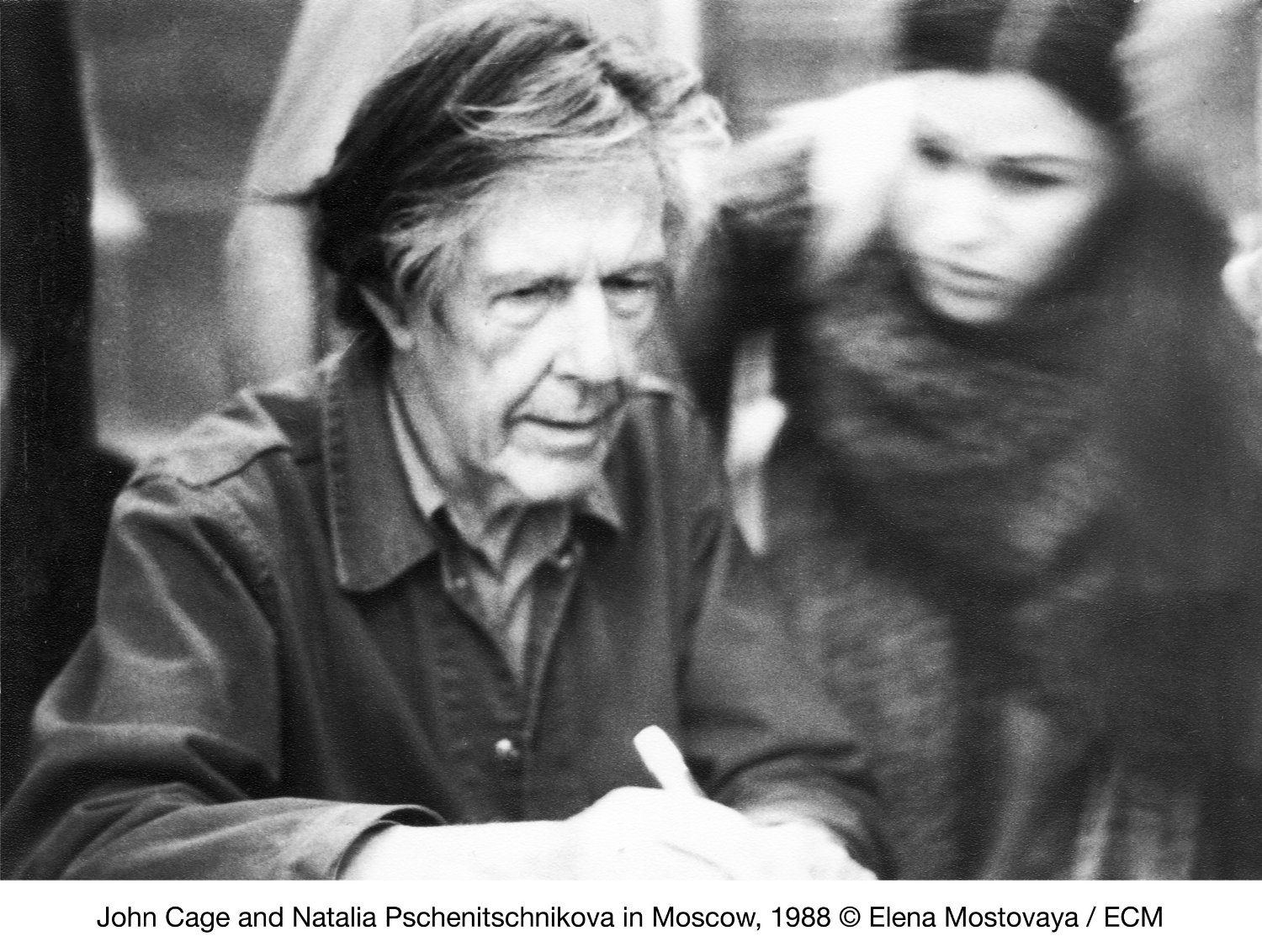
The music of John Cage has an intimate, if sporadic, history on ECM, where its deepest proponents have been pianists Herbert Henck and Alexei Lubimov. The latter joins soprano Natalia Pschenitschnikova for this collection of early works. Both performers were fearless advocates of Cage in their native Russia at a time when Western music registered peripherally, if at all, on the Soviet radar. Since meeting Cage during the 1988 International Contemporary Music Festival in Leningrad, they have championed his music with a vitality that translates pristinely in the present recording. Here is the portrait of a jovial man who took pleasure in the edible, the empty, in the unpretentious.

JC1

The solo piano Dream opens the program with a meditation in the vein of Cage’s In a landscape, only with a more circumscribed palette. It is a painting in miniature, a raking of stones, an attunement to the way things are. It is at once an organic and calculated introduction into a universe dictated not only by chance but also by the hands of musicians, producers, and engineers. One can locate this triangulation elsewhere in Lubimov’s pianism, which infuses the occasional prepared piano piece with bells, pulses, and, somehow, solitude. Both The Unavailable Memory of and Music for Marcel Duchamp are quintessential examples of what the instrument can do, and Lubimov does a fine job showing that it is not a piano augmented but its own entity. Multifarious and adaptive, the music it produces is a dance without bodies.

JC2

While the solo repertoire included on this disc moves with the quality of cinematic tracking shots, accepting whatever comes into frame, the introduction of voice slashes the screen so slowly that by the time backlight seeps through, it’s already too late to repair. Cage would surely have welcomed the glow. James Joyce’s Finnegans Wake provides the texts for The Wonderful Widow of Eighteen Springs, which Pschenitschnikova navigates as though on the verge of tears. As Lubimov hits the piano in microscopic footsteps, words cease to matter and extend tendrils far beyond their semantic shelters. Unlike Cathy Berberian, who gave the piece her lusciously operatic flair, Pschenitschnikova strips her voice bare and finds fresh physicality in its nakedness. Even when singing wordlessly, as in A Flower or She is Asleep, her powers of illustration are no less potent. And when she does elicit meaning from lips and tongue, it is already fragmented. The poetry of e. e. cummings lends itself permeably to Cage’s aesthetic proclivities, and the performers adapt themselves in kind. Pschenitschnikova sings at the back of the room in Experiences No. 2, for example, to beautifully unsettling effect. The programmatic Five Songs (also setting cummings) show the playfulness that was integral to Cage’s character. With such titles as “little four paws” and “Tumbling hair,” they make much of the little things in life that grasp the scarcest rungs of memory. (The final “wheeEEE” of “hist whist” conjures up cummings’s goat-footed balloon man.) Even the Rubik’s cube of Gertrude Stein (Three Songs) becomes transformed in Pschenitschnikova’s affected interpretation. As does Nowth upon nacht, which mines Joyce in a string of single notes and the slam of a piano lid. It’s a gem in the Cage catalogue, one all the more difficult to perform for its brevity and compactness of expression. It hasn’t sounded this vibrant since Joan La Barbara recorded it for New Albion in 1990.
JC3

Always comforting about Cage’s music is its attention to inhalation, the storehouse of emotion from which issues his cellular melodies. We can hear this in the Two Pieces for Piano, which together form roots and stem. Like the Dream in variation, which ends the program by redrawing the circle until it becomes a sphere, they wait behind closed eyes for life to begin.

(To hear samples of As it is, click here.)
Louis Sclavis Atlas Trio: Sources (ECM 2282)

Sources

Louis Sclavis Atlas Trio
Sources

Louis Sclavis bass clarinet, clarinet
Benjamin Moussay piano, Fender Rhodes, keyboards
Gilles Coronado electric guitar
Recorded September 2011, Studios La Buissonne, Pernes-les-Fontaines
Engineer: Gérard de Haro
Executive producer: Manfred Eicher
An ECM Production

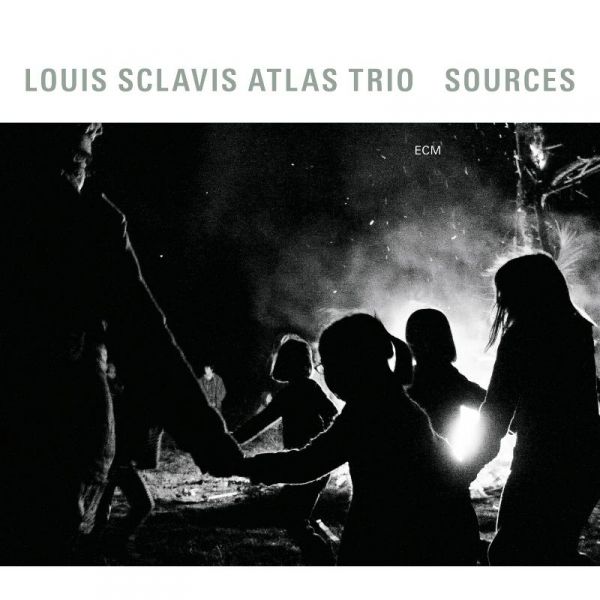
Clarinetist-composer Louis Sclavis continues his journey of self-reinvention on Sources, in trio with keyboardist Benjamin Moussay and guitarist Gilles Coronado. In the album’s press release, Sclavis notes its singularity in his personal oeuvre: “It doesn’t resemble anything else, it’s really music conceived for this group and which couldn’t exist until we played it.” With the exception of the final track, an exploratory groove by Coronado entitled “Sous influences,” the album is comprised of Sclavis originals. While shades of his characteristic edges are detectable, there is indeed something fresh about the textures of what’s being put together there.

Atlas Trio

The combination of instruments may seem afield of anything else that ECM has produced. And yet, listening to “Près d’Hagondange” and “Dresseur de nuages,” I can’t help but think of Anouar Brahem’s trio work with Jean-Louis Matinier and Françoir Couturier. Despite a marked difference in style, there is affinity of temperament. The spiraling precision of through-composed passages between clarinet and piano gives way to a muscular sort of improvisation that maintains unusual economy of spirit through virtuosity, by which the musicians don’t so much show off as revel in the possibilities of their synergy. The second tune spotlights Moussay on Fender Rhodes, droning beneath Coronado’s circuitry in a postmodern rewiring.

Yet whatever the context, nothing can disguise the sonorous abandon of Sclavis’s bass clarinet, which tears through “La Disparition” as wildly as it beautifies “A Road To Karaganda” with gentler, modal arcs over Moussay’s deeper cartographies (the pianist also excels in “A Migrant’s Day,” for which he toggles between airborne to landlocked movement). Sclavis further enhances the microscopic electronic beat of the title track and evokes river’s flow in “Along The Niger” in a flurry of brushstrokes.

If Sources were a train, it would be balancing on one set of wheels, nearly toppling over but hugging the track at every turn. The trio fuels itself with the sustenance of invention, and with it puffs steam and song without looking back. This is the spiritual successor of Sclavis at his most abstract, a mind shed of its need for fixed identity and all the freer for it.

(To hear samples of Sources, click here.)

Anouar Brahem: Souvenance (ECM 2423/24)

Souvenance

Anouar Brahem
Souvenance

Anouar Brahem oud
François Couturier piano
Klaus Gesing bass clarinet, soprano saxophone
Björn Meyer bass
Orchestra della Svizzera italiana
Pietro Mianiti conductor
Recorded May 2014, Auditorio Stelio Molo RSI, Lugano
Engineers: Stefano Amerio and Michael Rast (RSI)
Mixed in Lugano August 2014 by Manfred Eicher, Anouar Brahem, Stefano Amerio, and Michael Rast (RSI)
Executive producer RSI: Alissa Pedotti-Nembrini
Produced by Manfred Eicher

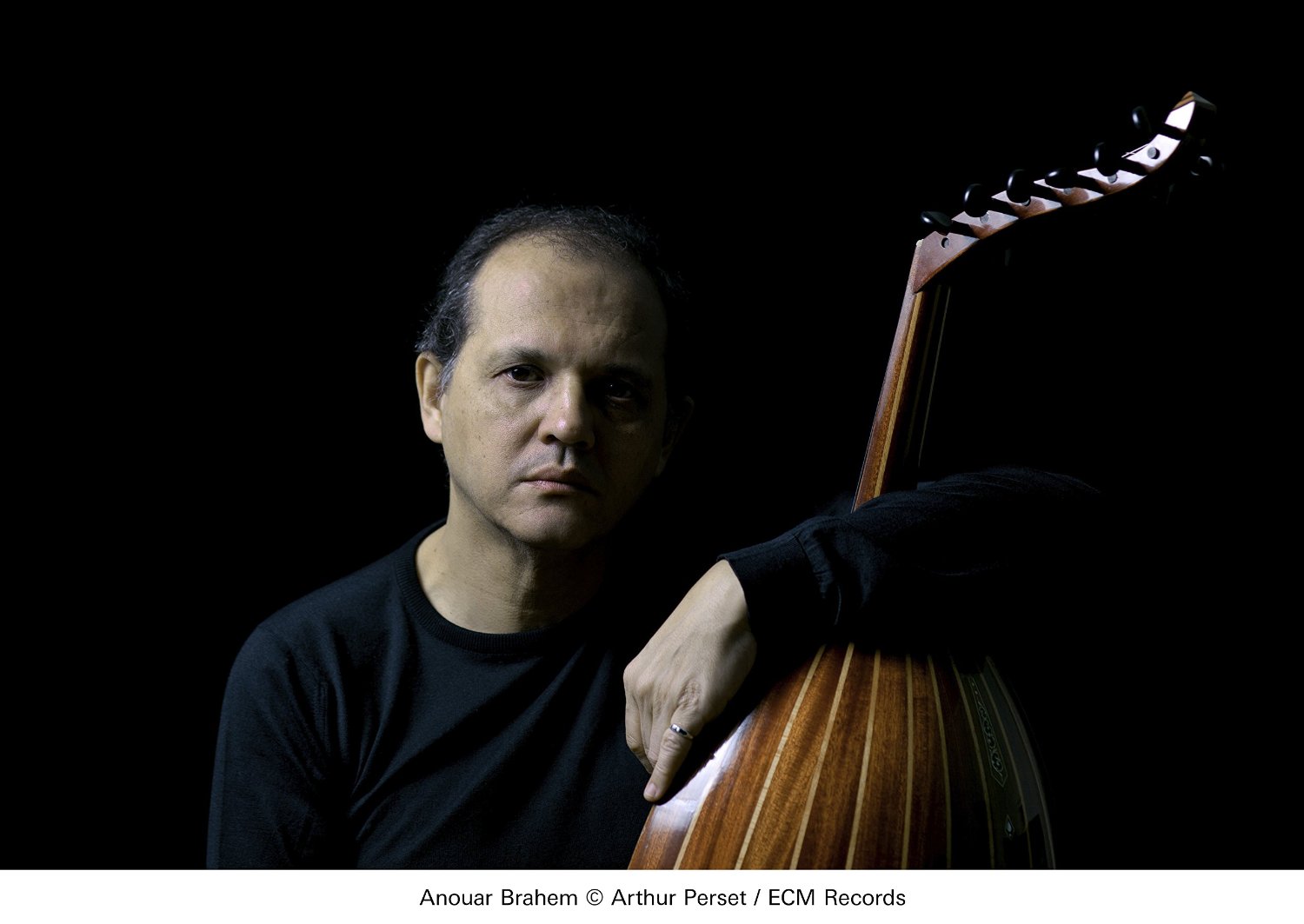
Following a six-year silence, master oudist Anouar Brahem returns to ECM Records with his most personal, yet somehow selfless, project yet. During the revolution that gripped his native Tunisia at the turn of 2011, Brahem experienced a creative drought and spent the following years gathering enough water to nourish the seeds that would become Souvenance. The title means “remembrance,” but the music looks resolutely forward, drinking in uncertainty as if it were the only sustenance visible from atop the rubble of uprising. Though Brahem claims no direct correlation to these events, their echoes remain, needing to be heard.

Brahem

Souvenance brings together a new assemblage for Brahem, who situates his rosette within a quartet completed by François Couturier on piano, Klaus Gesing on bass clarinet and soprano saxophone, and Björn Meyer (formerly of Nik Bärtsch’s Ronin) on electric bass. One further layer finds realization in the Orchestra della Svizzera Italiana, under the empathic direction of Pietro Mianiti. Given the size of this gathering on paper, one might expect what the record’s press release describes: “The strings have a glowing transparency and fragility in these pieces, often providing shimmering texture against which the contributions of the quartet members—and, above all, Anouar Brahem’s unique oud-playing—stand out in bold relief.” But this is precisely what you won’t get. The strings are anything but fragile. They bind the very strength of resolve that brought Tunisians through civil unrest with spirits intact. As for Brahem’s oud, it is one of many elements feeding a uniform sound and therefore more content to recede than stand out. This is what gives the album its glowing transparency. Its virtuosity is to be found not in relief but in restraint, atmospheric integrity, and melodic truth. Here is none of the youthful exuberance of 1991’s Barzakh (his ECM debut) but something more like the reflective countenance that shades Brahem’s 2006 trio effort Le Voyage de Sahar. This project shows him at the height of maturity.

Despite boasting an 11-part suite spanning 90 minutes over two discs, Souvenance makes no pretensions of capturing an era or politic. The listener is invited neither to grieve nor to celebrate, but to contemplate what causes any strand of the human loom to snap. This would seem to be the message behind retrospective titles such as “Improbable day,” “Deliverance,” and “Like a dream.”

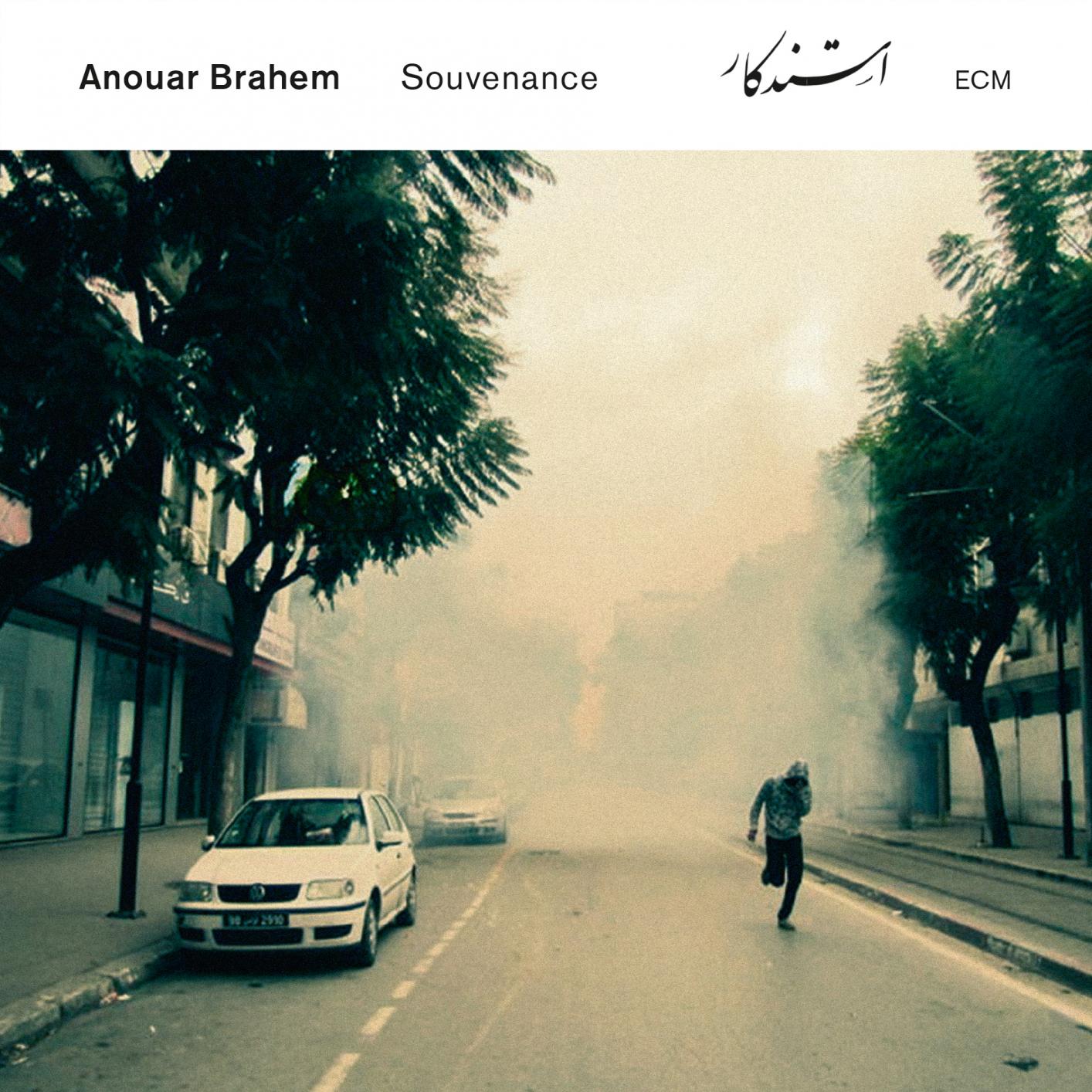
Couturier runs threads through them, but does so not to anchor but to reveal an underlying elasticity. With a gradualness than can only be described as pathos, the strings expel their breath to yield the organic oud. Within this collective snaps the large rubber band of Meyer’s bass, which goads the ensemble into acts of surprising lucidity and shines like the sun to Brahem’s moon. Between these signposts stretch the unanswered questions of an “Ashen sky” and “January.” Both would seem to reference the album’s cover photograph (taken on the streets of Tunis by Nacer Talel on January 18, 2011) and its pluming curtain of smoke.

Melodies are the lifeblood of Souvenance, and nowhere more so than in the title track, of which the modal pianism barely hints at sea changes in the air. As the program’s thematic heart, it percolates even more deeply than the rich surroundings of “Tunis at dawn” or “Youssef’s song.” In the latter, Brahem paints aftermath from a distance—a city in flames which barely appears to move and betrays nothing of the violations committed in its walls. Here and there, as the music flows toward closure, a bass line or reed motif will intertwine with some other branch of the tree. Homogeneity prevails, reaching cohesion in “Nouvelle vague,” a pulsing tune reprised from 1995’s Khomsa and arranged here for strings by Estonian composer Tõnu Kõrvits.

Do we fight for a world drunk at the wheel or do we jump from the vehicle before it drives off a bridge? This seems to be the conundrum faced by victims of injurious political agendas around the globe. With so much disgrace to (mis)understand, it’s all we can do not to separate ourselves from it. Bound as we are to fundament by stem and stalk yet reaching for firmament by leaf and petal, the test before us is whether or not to accept these things as a part of the human fabric, to remain standing even when all that we know is uprooted. Brahem, I dare say, shows us one possible path toward balance: the plectrum as fulcrum. In less uncertain terms, music is the answer to difference because its questions are greater than all of us put together. Sometimes “world music” exists in its own bubble, funneling cross-cultural influences to enliven self-awareness. Not so with Souvenance, which looks within to understand what transpires without. It’s not a statement, a manifesto, or a critique. It is pacifism at its utmost.

(See this review as it originally appeared in RootsWorld online magazine here.)

Sofia Gubaidulina: Canticle of the Sun (ECM New Series 2256)

Canticle of the Sun

Sofia Gubaidulina
Canticle of the Sun

Gidon Kremer violin
Marta Sudraba violoncello
The Kremerata Baltica
Nicolas Altstaedt violoncello
Andrei Pushkarev percussion
Rihards Zalupe percussion
Rostislav Krimer celesta
Riga Chamber Choir Kamēr…
Māris Sirmais conductor
Recorded July 2006 (Lyre) and July 2010 (Canticle) at Lockenhaus Festival
Engineer: Peter Laenger
Executive producer: Manfred Eicher

The liner notes for Canticle of the Sun open with a laudatory note from Gidon Kremer, who thanks Sofia Gubaidulina “for generously sharing your magic world with all of us.” Few recordings abide by that sentiment as vividly as ECM’s first album dedicated entirely to the Russian composer. The two pieces featured here were both recorded at Kremer’s Lockenhaus Festival, captured in all their spirit of absolution.

SOFIA GUBAIDULINA

The Lyre of Orpheus (2006), of which this is the world premiere recording, is the first of a triptych that explores the space between summation tone and difference tone (produced when two tones are sounded together), grinding them down into states where notes lose their value and become pulses alone. These pulses are, however, inaudible—an “acoustic no man’s land” as Gubaidulina calls it. Her search for intersections of metrical unity yields a sequence of notes corresponding to the titular lyre and its Pythagorean intervals, with which she inscribes a musical memorial to her late daughter. A mass of orchestral molecules coalesces into a solo violin, yet what seems to be a narrative focal point is more accurately heard as an obfuscation of linear storytelling. Beneath its glassine surface beats a heart of ash, reaching out toward the cellos for confirmation of purpose. Bow slaps and other percussive elements—a triangle here and snare drum there, along with touches of marimba and tympani—thread the soloist’s every needle. Strings work dichotomously between high and low, forging an inner realm between them and, at one point, lapsing into one of the most foreboding pizzicato passages of modern music. Kremer’s mastery labors in the service of Gubaidulina’s own, evoking her acute sense of mythological becoming by a thread of breath and mirror’s glint.

The album’s title composition, written in 1997 and revised in 1998, bears dedication to Mstislav Rostropovich for his 70th birthday. Scored for cello, percussion, and choir, and setting the eponymous poem by St. Francis of Assisi, it treats choral voices as, in Gubaidulina’s term, “secretive.” The cellist is likewise instructed to consolidate his or her playing on the C string, tuning it down to the brink of viability and eventually abandoning the bow altogether for bass drum and flexatone, only to return to the highest reaches of the cello in the final “Glorification of Death.” One might see this piece as an expansion of the light that concludes The Lyre of Orpheus, in the wake of which this catachresis of voices feels like flesh and scars. Where so much of Orpheus assumes a bird’s-eye view, Assisi’s beloved personifications shine through fractured glass, a webbing of damage that sees the sinful subject as a vessel for illumination. The cello gives voice to that illumination as if it were a self-aware body. In a variety of icons—some taut like Christmas carols, others stretched like spiritual elastic—Gubaidulina paints with a brush that manages to be declamatory even as it trembles in abundance of dawn. Of the percussion, marimba figures as an earthly voice, leaving the cellist with the difficult task of transfiguration. Whether or not the music is worthy of such characterization even after the fact will depend on the listener’s willingness to stare into our nearest star.

(To hear samples of Canticle of the Sun, click here.)

Keith Jarrett/Charlie Haden: Last Dance (ECM 2399)

Last Dance

Last Dance

Keith Jarrett piano
Charlie Haden double bass
Recording Producer: Keith Jarrett
Recorded March 2007 at Cavelight Studio
Engineer: Martin Pearson
Mastering at MSM Studios by Manfred Eicher and Christoph Stickel
Executive Producer: Manfred Eicher

Seeing as this was to be Charlie Haden’s final record, one could easy read mournful prophecy into Last Dance. To be sure, its poignancy is as heavy as the burden of the bassist’s loss. To do so, however, risks obscuring the fact that the music under its title stretches seams by virtue of an abundance of life. Born of the same sessions as Jasmine, the lovingly interpreted standards of Last Dance again find Haden in the company of pianist Keith Jarrett, who once characterized this rare partner as a musician who thinks through whatever melody comes his way.

Keith and Charlie

From the first few steps of “My Old Flame,” it’s clear these two men walk not together but along complementary paths, their shadows interlocking at any point along the trajectory of a tune. And by this forlorn song’s guiding hand, held above the starving ear like that of a Reiki master, an inner heat comes through. There is an album’s worth of feeling in this opener alone, and its flame is sustained in all that follows. It sets a proportional pace of love and loss that echoes throughout “Every Time We Say Goodbye” and “It Might As Well Be Spring.” That latter brings an especially joyful yet contemplative tone to the emerging image.

Lest we fall into a homogeneous meditation, the duo adds one part spice for every two of sugar. Be they navigating the rhythmic changeups of “Dance Of The Infidels” or leaping through the sprinklers of “Everything Happens To Me,” Haden and Jarrett sand down every jagged edge they encounter. True to the title of “My Ship,” they do not soar so much as sail, opening canvas to wind and mapping its lead. Their grandest voyage is an integral take on “’Round Midnight.” In addition to Jarrett’s oceanic foundation, it boasts a superbly architected solo from Haden, who builds a spire of song, robust as a centuries-old tree at the bottom yet thin as a whisper up top.

Alternate takes of “Where Can I Go Without You” and “Goodbye” carry over from Jasmine with even grander intimacy. Despite the bittersweet core of both, they feel like new beginnings. Each is a door of appreciation opened in the listener, from which pours memories of Haden’s legacy, thus making room for new ones to come. The musicians are achingly present, even as they transcend minds toward lyrical enlightenment. They flip through the Great American Songbook not as one might a newspaper, but resolutely and sincerely, as if it were scripture.

Given the lengths of these tunes (averaging about nine minutes each), I like to think that Haden and Jarrett might have spun any of them into a lifetime of improvisation. And perhaps, in a way, they already have. They play off each other so artfully before trading a single solo that solos begin to feel more like roots than departures. No matter how virtuosic their skills, the melody remains forever paramount. This album is like one massive song that will continue to evolve even after those who left its traces have improvised their way into another plane of existence entirely. And while Last Dance may be called cinematic, it differs from cinema in one key aspect: where cinema so often concerns itself with fictional characters, here the subjects are anything but. They are so real, it almost hurts to witness their conversation.

If Jarrett is the body, Haden is the soul.

(To hear samples of Last Dance, watch the video above or click here.)

Giovanni Guidi Trio: City of Broken Dreams (ECM 2274)

City of Broken Dreams

Giovanni Guidi Trio
City of Broken Dreams

Giovanni Guidi piano
Thomas Morgan double bass
João Lobo drums
Recorded December 2011, Auditorio Radiotelevisione svizzera, Lugano
Producer: Stefano Amerio
Produced by Manfred Eicher

Italian pianist Giovanni Guidi was not yet 30 when he recorded City of Broken Dreams, his ECM leader debut. Not only is it a trio album of crisp technical edges; it also welcomes to the fold an artist coming into his own as a composer. Fully schooled on Enrico Rava’s Tribe, he joins bassist Thomas Morgan and drummer João Lobo for a set of itinerant balladry.

Broken Trio

The title track and its variation begin and end the album’s journey. Snaking contours therein describe passage from gentle introduction to long goodnight. Like the outer frame, the inner picture is one of gentle spells and molecular grooves. From the lyrical and emotionally honest “Leonie,” one might think this was a trio decades in the making. The musicians’ democratic finger-painting renders speed a non-variable on the path of expression, working toward a unity not heard on the label since the Tord Gustavsen Trio made its own debut with 2003’s Changing Places.

Still, one can’t help but squint into individual floodlights breaking through the haze. Morgan stands firmly the center of this album. His contributions alone make the album a must-have for fans of the instrument and/or its player. He is just as comfortable feeling his way through the geometric interplay of “No Other Possibility” as he is wavering like a reflection behind the sweeping pianism of “The Way Some People Live.” Lobo, for his part, is a drummer of scope. On “Just One More Time” he swings in the way that Paul Motian did before him—that is, with a meticulous stagger. His penchant for subtlety on the cymbals is thusly noted, evoking a cautious stroll through “The Forbidden Zone” and revealing images in the afterglow of “Late Blue” as if it were a scratchboard. Not to be overpowered, Guidi dialogues with his bandmates in “The Impossible Divorce” with a synergy of wing and wind and waxes poetic on the nature of waves in “Ocean View.” He is one possessed of an explorer’s intuition and, like the album as a whole, is far more interested what lies beneath the rubble than what that rubble once signified.

(To hear samples of City of Broken Dreams, click here.)

Stephan Micus: Panagia (ECM 2308)

2308 X

Stephan Micus
Panagia

Stephan Micus Bavarian zither, dilruba, chitrali sitar, sattar, 14-string guitar, nay, voice
Recorded 2009-2012 at MCM Studios
An ECM Production

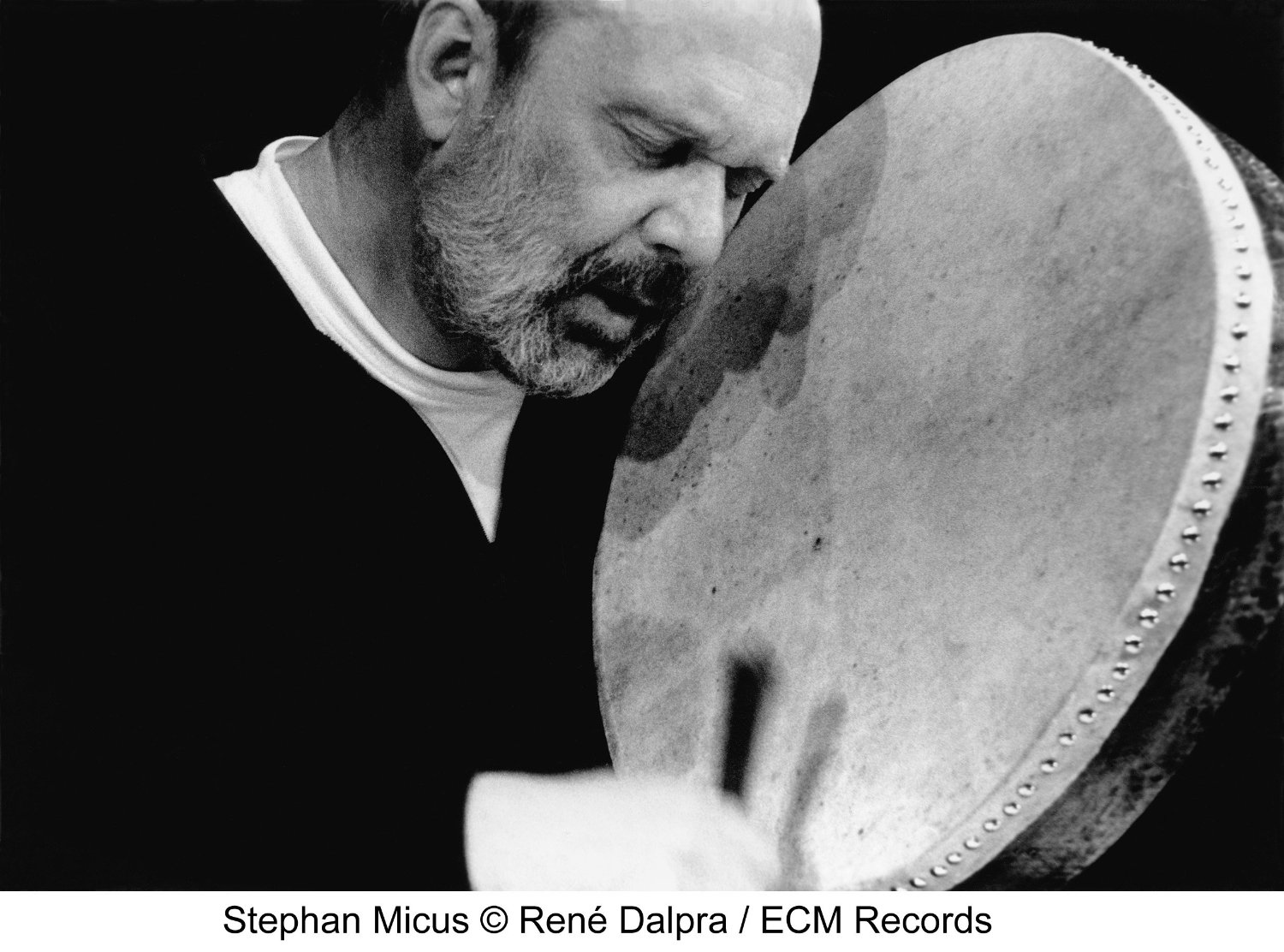
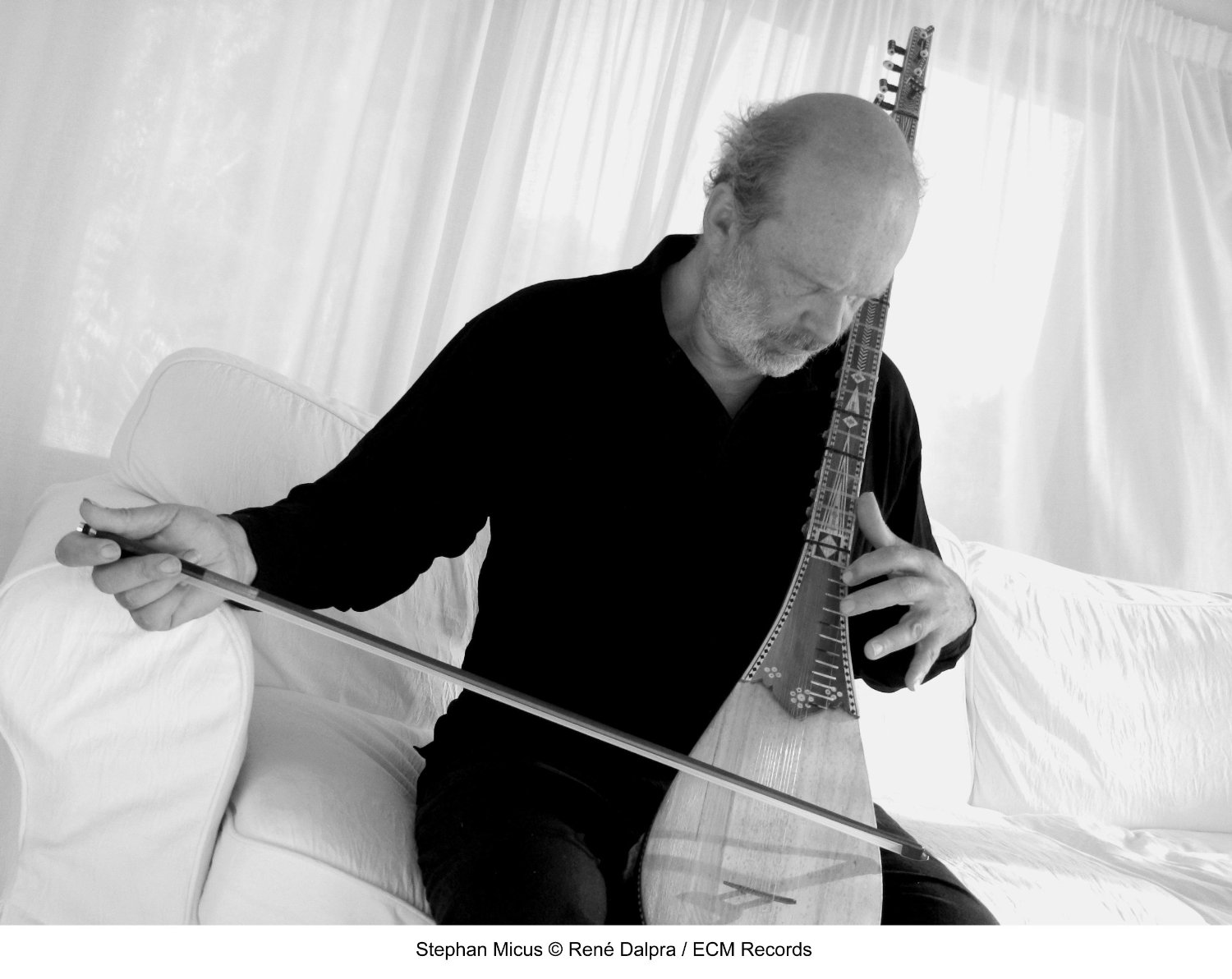
Panagia may be heard as the divine counterpart to Stephan Micus’s earthly album Athos of two decades before, and revisits the Greek peninsula that inspired its predecessor. As with all Micus projects, the focus here is crystalline and spiritual in a way that shuns any specific label or dogma. That being said, one can surely feel the personal histories that go into the many instruments with which he births his universal sounds, their ties to places rendered frozen by time. Micus’s magic—his rite, if you will—is to blend those variant histories into a singularity that few world travelers have ever translated so nakedly into the language of music.

Micus 1

Micus demonstrates this personal ethos in a brief album statement: “Throughout the world people have put their trust in a female goddess. In Greece she is called Panagia,” thus invoking an all-encompassing goddess even as he locates her within a particular faith. According to Evy Johanne Håland in her book Rituals of Death and Dying in Modern and Ancient Greece, Greek orthodoxy calls her Ē Prōtē (The First) and places her at the pinnacle of sainthood. Hence the seventh-century Byzantine prayers to Panagia of which Micus sings his verses, and in which Panagia is called, among other things, “Virgin Mary,” “blissful swallow,” “radiant cloud,” and, in Christ-like fashion, “the joy of the distressed, the guide of the blind and the refuge of orphans.” Where normally Micus falls into the histrionics of his own phonetic language, here a certain thematic vividness of worship lends his singing fresh anchorage.

Through its 11-part traversal, the album shuffles vocal tracks into instrumentals. The former are songs of praise, as indicated by their liturgical titles, while the latter are analogic poems in and of themselves. “I Praise You, Unfading Rose” and “I Praise You, Cloud of Light” open and close the circle with Micus accompanying himself on the Bavarian zither. The zither’s sparkle, in combination with the words, draws flesh from vibrational frequencies. It is as if the world were cradled in a giant hammock and swung from soul to soul like a pendulum of fate, leaving the solitary voice to twist like knots of meditation where tether meets tree. “I Praise You, Shelter of the World” is also bifurcated, only now we encounter 10 voices accompanied by Chinese gongs in a tangle of vapor and vine. In “I Praise You, Sweet-Smelling Cypress,” Micus adds to that number of voices his custom-built 14-string guitar, 8 dilruba (a bowed Indian instrument similar to the sarangi and prominently featured in Desert Poems), 3 sattar (Uyghur violin), and 5 Egyptian nay flutes for a thoroughly spectral palette. Two further tracks—“I Praise You, Lady of Passion” and “I Praise You, Sacred Mother”—feature 22 voices and 20 voices, respectively. Both are deeply hymnal.

Micus 2

The rebec-like sonority of 3 sattar in “You are like Fragrant Incense” (3 sattar) adds new timbres to Micus’s sound-world. With only their wordlessness to reckon with, the listener can feel their shape in a performance that travels like a pheromone: just below the radar of perception yet overflowing with connectivity. Whether doubled and joined by 2 Chitrali sitar in “You are Full of Grace” or with one sitar and 6 dilruba in “You are the Life-Giving Rain,” their topographical consistency attends to every leaf and branch and reveals the love necessary for self-enclosure. In a different stroke, both “You are the Treasure of Life” and “You are a Shining Spring” engage the same instrumentation of Tibetan chimes, Burmese temple bells, Zanskari horsebells, and 2 dilruba. The contrast between bell dust and dilruba soil mirrors that between sleeping and waking.

If pressed for a comparison, I would say that Panagia resembles Japanese classical gagaku in its arrangement and color, even if it is devoid of gagaku’s exclusivity. Rather, it makes of this big blue ball a royal court where we live not as servants but as purveyors of destiny. Its play of light on reflective surfaces makes it one of the best-recorded albums in the Micus catalogue. It is the meta-statement of a meta-statement, an expression of Gaia through cycles of human thought.

(To hear samples of Panagia, click here.)

Back, and here to stay

For those of you wondering where I’ve gone, and especially those who so kindly inquired, I just want to assure you that I’ve officially returned to my labors of reviewing love. As longtime readers will know, by day I’m pursuing a Ph.D. in Japanese Literature at Cornell University, and in that guise I’ve spent the better part of two months working on a rigorous and possibly career-defining fellowship application to conduct dissertational research in Japan. Now that said application is finished and has been submitted, I can return both to my academic and musical ramblings with renewed vigor. Onward I go.