Herbert Joos: Daybreak – The Dark Side Of Twilight (JAPO 60015/ECM 3615)

Daybreak Dark

Herbert Joos
Daybreak -­ The Dark Side Of Twilight

Herbert Joos fluegelhorn, trumpet, cornet
Thomas Schwarz oboe
Wolfgang Czelustra bass, trombone
Strings of Radio Symphony Orchestra Stuttgart
Recorded October 1976 and July 1988 at Tonstudio Bauer, Ludwigsburg
Engineer: Carlos Albrecht
Produced by Herbert Joos and Thomas Stöwsand

German trumpeter and fluegelhornist Herbert Joos’s flirtations with ECM have been few, contributing to the big brass sound of Eberhard Weber’s Orchestra and notably to Cracked Mirrors, a marvelous and, it would seem, overlooked date with guitarist Harry Pepl and drummer Jon Christensen. Yet it was with Daybreak, recorded in the fall of 1976 for sister label JAPO, that the knot of Joos first audibly untied itself alongside Thomas Schwarz (oboe), Wolfgang Czelustra (bass and trombone), and the strings of the Radio Symphony Orchestra Stuttgart.

The emphasis on classical textures will feel familiar to admirers of Keith Jarrett’s likeminded forays, especially In The Light and Bridge Of Light. That being said, the overall effect is shadowy, overhung, though equally honest. “Why?,” for example, answers its own question up front in the very asking. Although an obvious reference to Charles Ives’s The Unanswered Question, its progression spins closure from an interrogative oboe. The normally pastoral associations of the instrument are shed along with lingering symphonic details, such that when Joos’s breath cuts the air with its golden knife, the strings drip like lifeblood from its plane. None of which is meant to suggest that the music is in any way macabre. For what can there be but hope in the cyclical motif that churns during fadeout? “When Were You Born?” asks another question answered by its own sounding. The delicacies of Joos’s high-register playing render far more expansive maps in this instance, touching proboscis to firmament and sampling sunlight until nightfall. “Leicester Court 1440” features Joos in muted soliloquy. Riding a horse of compressed time, he enacts an agitated recession into the title piece. Joos has only his own echo for company before the inward journey is externalized by the dark arrival of strings. Hence, the “Black Trees” looming not far away. Yet despite the title, they actually let down the brightest of the album’s seeds with an approach that gives voice to nature and seeks universal truth in a bird’s nest. Joos’s lines bespeak haughty quest in “Fasten Your Seatbelt.” This playful frolic through arco fabric balances laughter and fearless arpeggios, while scuttling crabs and landlocked others communicate without need for sound. And when the seatbelt fails us, we are thrown into a life of slower motion, lit by “The Dark Side Of Twilight.” The latter appears only on the 1990 CD re-issue (ECM 3615) and, at 15 minutes, is the album’s most brooding texture. Relaying brass-synth and string chorale settings, it walks a broken circle with its head hung in thought, an outlier among the album’s modest population.

The music of Daybreak speaks to children in the language of adults. It photographs the illusion of age and melts it into a sea of numbers. Not every detail will be preserved in that translation, but in the process we come to understand that history and music are sometimes like water and oil. In this chamber of the past, futures hide in corners the light struggles to reach.
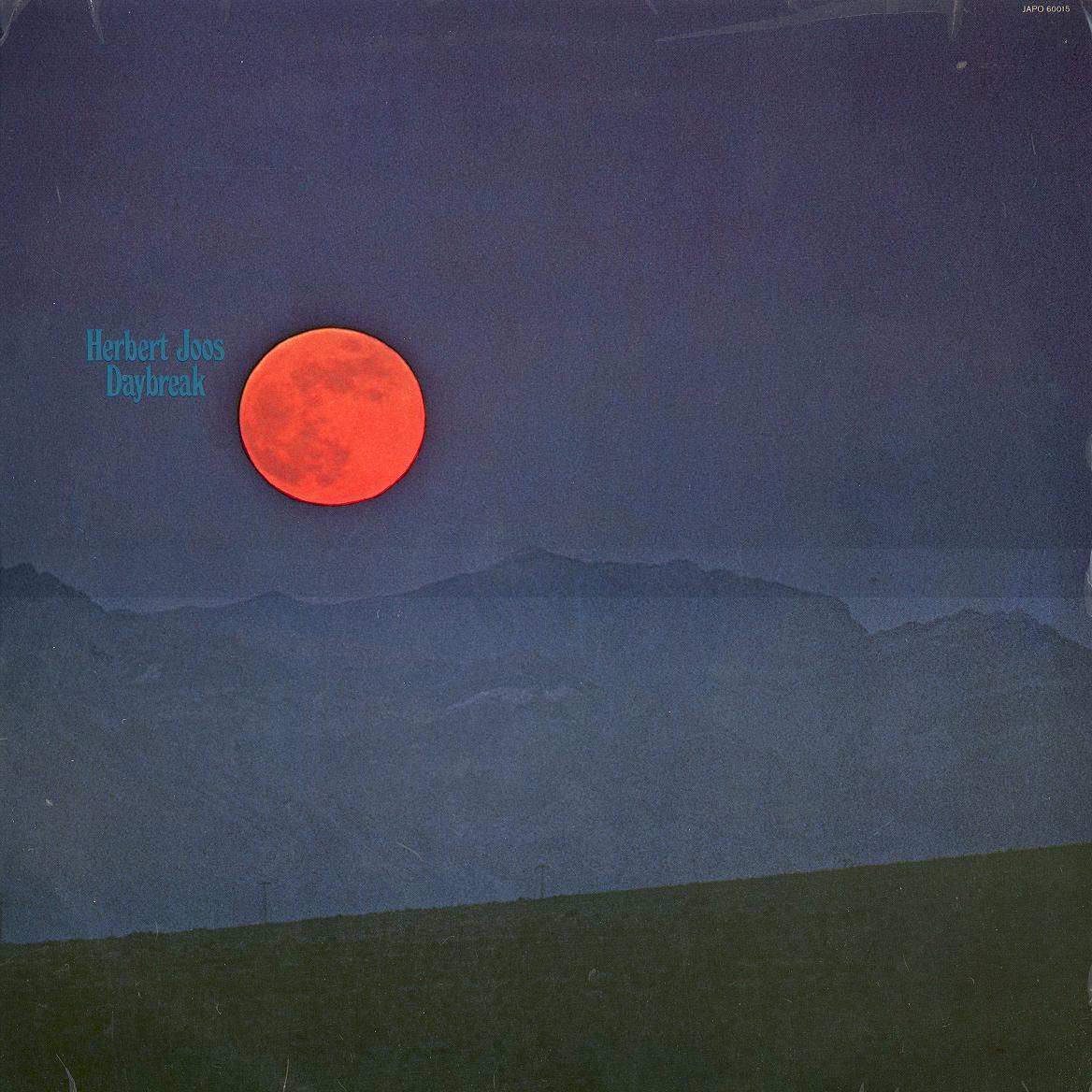
Daybreak
Original cover

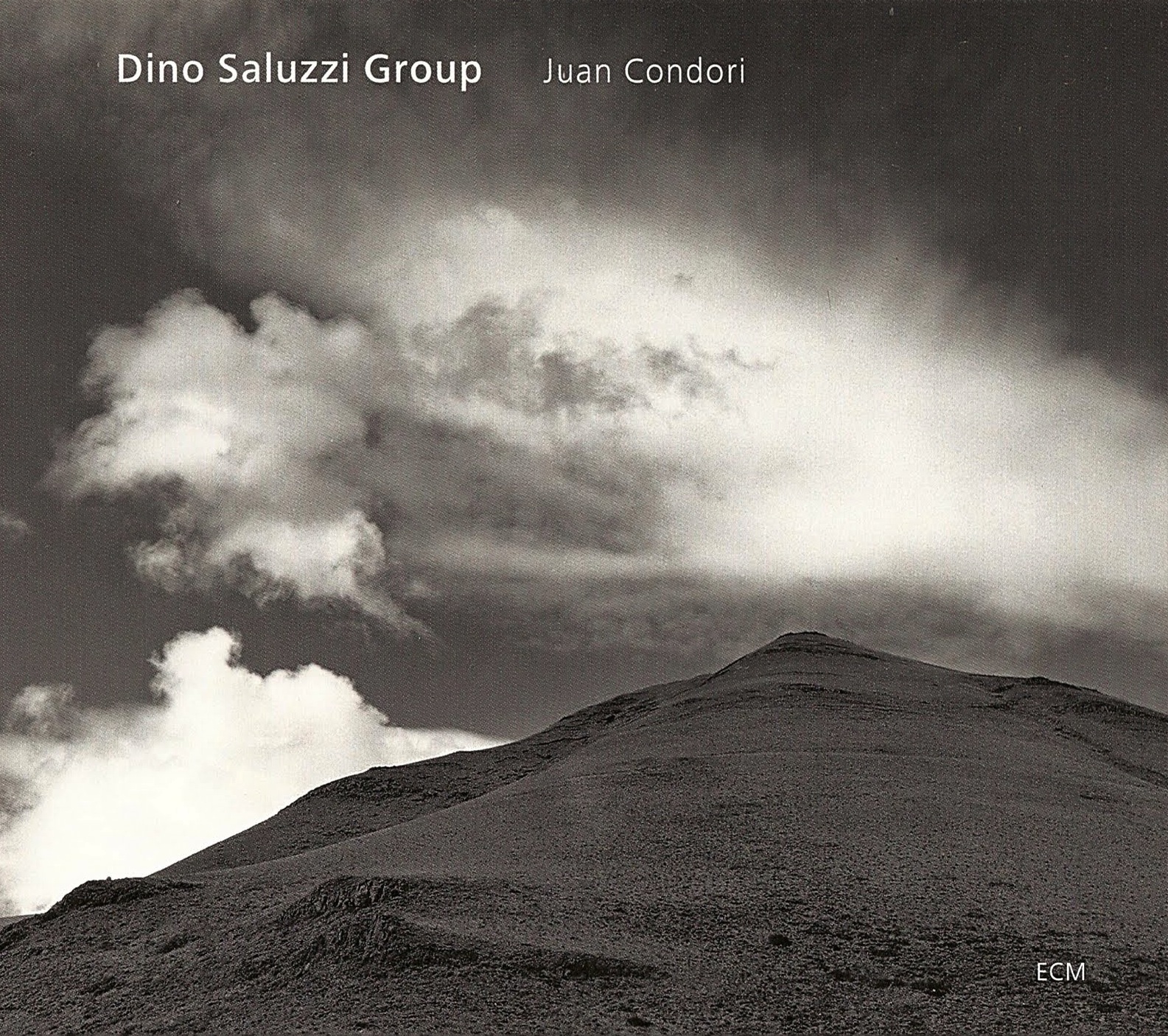
Dino Saluzzi Group: Juan Condori (ECM 1978)

Juan Condori

Dino Saluzzi Group
Juan Condori

Dino Saluzzi bandoneon
Felix “Cuchara” Saluzzi tenor and soprano saxophones, clarinet
José Maria Saluzzi acoustic and electric guitars
Matias Saluzzi double-bass, bass guitar
U.T. Gandhi drums, percussion
Recorded October 2005, Estudios Moebio, Buenos Aires
Engineer: Stefano Amerio
Produced by Manfred Eicher

A Dino Saluzzi album is the audio equivalent of looking through a family photo album. Not so allegorically in this case, as Dino’s brother Felix (saxophones and clarinet), son José Maria (guitars), Felix’s son Matias (basses), and honorary kin U.T. Gandhi (drums and percussion) join the bandoneón virtuoso for this set of 12 moving pictures, each with its own thumb-worn page. Although named for a childhood friend whose free spirit holds special place in his heart, Juan Condori is less a personal portrait than it is a biography of a time and place preserved in memory. Indeed, from memory come the building blocks of Saluzzi’s music, the very blood without which it might never reach those bellows.

The themes of Juan Condori cross a few historical hairs, from the dying wisdom of South American indigenous peoples (“La Vuelta De Pedro Orillas” and “Chiriguano”) and the 1994 bombing of the Jewish Community Center in Buenos Aires (“Memoria”) to the life force of music itself (“La Parecida”). If any such references describe a world we know, then it is all we can do to seek hope in these instruments of light: not only memory, but also remembrance. Aside from the acoustic “Soles” by José, written metallic on wind carrying an attic’s scent, the Pedro Laurenz tango classic “Milonga De Mis Amores,” and the spontaneous “Improvisacion,” all the music here is Saluzzi Sr.’s own. Father and son share moments of clear telepathy, as in the airy dance movements of “La Parecida,” in which they paint starbursts of light around the Matias’s deep axis. José enchants further in “A Juana, Mi Madre,” in which his electric evokes the nocturnal stylings of John Abercrombie, and in the title track, while Felix’s pastoral clarinet in “Las Cosas Amadas” and “Los Sauces” deepens the feeling of locality. These and more comprise a set one can only admire for its thematic integrity, its emotive charge, and the quiet flow of its sustenance.

Pay close attention to this one. It brings water to the desert.

Gianluigi Trovesi/Gianni Coscia: In cerca di cibo (ECM 1703)

In cerca di cibo

In cerca di cibo

Gianluigi Trovesi clarinets
Gianni Coscia accordion
Recorded February 1999 in Zürich
Engineer: Markus Heiland
Produced by Manfred Eicher

The virtuosic duo of multi-reedist Gianluigi Trovesi (performing here on clarinets) and accordionist Gianni Coscia makes its first ECM appearance with In cerca di cibo. Over the course of an affectionate hour, these two points of light join to create a binary star that shines in full spectrum. The album’s title means “In search of food,” thus indicating seeds sown and re-sown until they bear new fruit to nourish the ears. It also points to the music’s folk origins, glazed and fired to perfection.

The title piece in duplicate bookends the 15-track program with selections from Fiorenzo Carpi’ score to the 1971 TV mini-series Le avventure di Pinocchio. With the artistry of a wind-blowing cloud on an old map, it christens this sonic vessel and guides its sails as true as Trovesi’s psychoanalytic leaps. “Gepetto” is perhaps the most insightful in this regard. A far cry from Disney’s bumbling songster, it takes us instead into the soul of a man tortured by the fact that his only hope for a child’s love is to carve that love from the forest’s very flesh and bone. These sentiments are echoed in the heartrending “Fata Turchina” (Fairy) and “Lucignolo” (Candlewick). The duo further references the 1994 film Il Postino in its title theme by Luis Bacalov, here but a heart murmur, a flash of romance crocheted into warmth.

Even without a track list in hand, the cinematic contours of nearly every piece are apparent. Whether navigating Trovesi’s descriptive “Villanella” or the nimble fingerwork of “Minor Dance,” to say nothing of his wailing inscriptions in Coscia’s “Le giostra di Piazza Savona,” there is plenty of storyboarding at play. The co-composition “Celebre Mazurka alterata” further epitomizes the duo’s wide range of moods, abilities, and technical flourishes—a masterpiece that lends Ángel Villoldo’s classic tango “El Choclo” all the verve it needs to leave its meteoric trail across the sky. Also noteworthy is “Django (Donadona)” by pianist-composer John Lewis: not only for its superb music, but also for the narrative arc it takes on in the present rendition. From mourning to frivolity, Trovesi and Coscia are omniscient purveyors of their domain, such that when they close the album’s bright, tempestuous circle with the very shadows from which it was born, we know that the melodies will continue to dance into the distances of their hearts.

What we’re left with is a scene cinched by the drawstring of politics, war, and indecision, shaken free of its inhibitions and re-clothed in passion. It takes us as we are, provided we leave our preconceptions at the door. As Umberto Eco says in his liner notes, “there’s no need to wonder about in which temple we should place the music of Coscia and Trovesi. On a street corner, or in a concert hall, they would feel at home just the same.” It may just be that they feel best at home with you.

<< John Surman: Coruscating (ECM 1702)
>> Stockhausen/Andersen/Héral/Rypdal: Kartā (
ECM 1704)

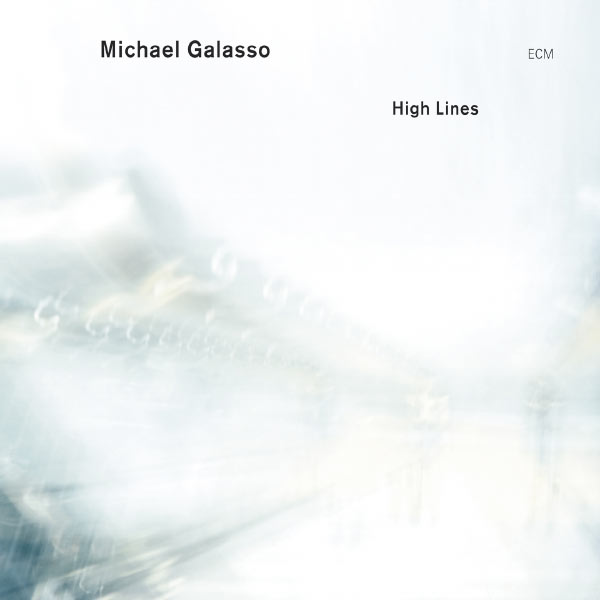
Michael Galasso: High Lines (ECM 1713)

High Lines

Michael Galasso
High Lines

Michael Galasso violin
Terje Rypdal guitar
Frank Colón percussion
Marc Marder double-bass
Recorded November 2002 and April 2004 at Rainbow Studio, Oslo
Engineer: Jan Erik Konghaug
Produced by Manfred Eicher

The late violinist-composer Michael Galasso—whose solo album Scenes is a personal label favorite—returned to ECM more than two decades later with High Lines, a multifaceted set of music that draws on his love for theatre (as a longtime collaborator of dramatist Robert Wilson), film (having scored for Wong Kar-wai, Martin Provost, and many others), and dance. These activities brought him to many places around the world, among them Iran, where rhythms and melodies swirled their way into much of the writing realized here. From his soundtrack to Secret Ballot (dir. Babak Payami) to his extensive incidental work with Wilson, the program references many touchstones of Galasso’s varied career. Along with ECM stalwart Terje Rypdal on guitar (brought in at producer Manfred Eicher’s suggestion) and bassist Marc Marder with percussionist Frank Colón (brought in at Galasso’s), he opens himself to new interrelationships.

Because Scenes proved Galasso capable enough to row the waters in a boat of his own making, the presence of another distinctive voice in Rypdal bears mixed fruit. Whereas his atmospheric contributions in “Spheric” and “Fog and After” give sanctity and tactility to the surroundings, as an agent of melody his guitar feels like an afterthought in the context of tracks like “The Other” and “Swan Pond.” There’s not a single thing off about the playing itself: it’s pure Rypdal flame. It just doesn’t always have its eyes open. Then again, High Lines is more about the music than about the names behind it, and ultimately succeeds in this regard. Spread like ceremonial salt across a sumo stage, it prefaces a slow-motion ballet of powerful bodies in motion. Some of those gestures are cryptic, others hypnotic, and still others are intensely filmic. In the latter vein we have “Gothic Beach,” a brief passage pairing violin and ocean waves. Every footprint on those sands glows with life.

And really, the four strings conveying these things are the album’s heart and soul. A few pieces find Galasso multi-tracking on delicate fulcrums (“Iranian Dream” being a standout in this regard) and even experimenting with starry digital delays, as in “Boreal.” Lost travelers from Scenes (e.g., “Chaconne”) cross our paths, swaying and arpeggiating to the metronome of distant winds, while less familiar figures also sell their wares along the way. As one title would have it, this is an album of crossing colors, and in the final “Gorge Green” we have a churning stew of them. It is perhaps no coincidence, then, that Rypdal achieves strongest congruence of purpose here, tethering the journey at last to a foreseeable destination.

Yet lurking in the chemical composition of these sounds is an element that belongs to no instrument or music-maker. It is one that Galasso’s music activates of its own will, a wish made real in the asking.

<< Michelle Makarski: Elogio per un’ombra (ECM 1712 NS)
>> Thomas Zehetmair/Camerata Bern: Verklärte Nacht (
ECM 1714 NS)

Dave Holland Quintet: Extended Play – Live At Birdland (ECM 1864/65)

Extended Play

Dave Holland Quintet
Extended Play: Live At Birdland

Chris Potter soprano, alto and tenor saxophones
Robin Eubanks trombone, cowbell
Steve Nelson vibraphone and marimba
Billy Kilson drums
Dave Holland double-bass
Recorded live at Birdland, November 21-24, 2001
Engineer: James Farber
Produced by Dave Holland

That Dave Holland ends his brief frontispiece in the CD booklet for Extended Play: Live At Birdland by acknowledging the commitment and uncompromising creativity of his band mates is proof positive of the bassist’s own. Everything he had recorded for ECM up to this point, starting with the label’s ninth release (A.R.C.) in 1971, comes to a head in this double-disc live recording from New York’s famous Birdland jazz club some three decades later. The quintet featured here is to date Holland’s best-oiled machine: saxophonist Chris Potter, trombonist Robin Eubanks, mallet man Steve Nelson, and drummer Billy Kilson work together with such professionalism, respect, and synchronicity that one needn’t even have been there to acknowledge it. And because the album’s nine tunes (averaging 15 minutes each) are all of such a massive piece, it fares better to speak of the men behind the music.

Kilson shines on “Prime Directive” (as he does on the album it titles), backing the spine-tingling negotiations of the horns and bringing the full gamut of his sound to bear on “The Balance,” which opens barely, tenderly: the last gasp of sunset before the dusk draws its curtain. At 21 minutes, this is no shy cat but a lion ready to pounce yet who would rather sing for the sheer pleasure of it. Holland’s intimate solo against Kilson’s beetle-wing cymbals makes for some beautiful downtime. Bassist and drummer also pair off nicely in “Claressence,” where they lay down a confident groove beneath the harmonized theme, leaving Potter to unleash a kennel’s worth of playful pets.

As for Potter and Eubanks, they are so well integrated that it’s all one can do to analytically separate them, though Potter edges out in the slumbering “Make Believe,” playing North Star to Holland’s seafaring. “Free for All” realizes deepest integration of this duo, and of the quintet at large. Soprano and trombone make a perfect pair, Holland the solid triangle at the fulcrum of their seesaw. Eubanks gets his soliloquy at the start of “Bedouin Trail,” for which he dons the storyteller’s hat and kicks off an especially flowing take on this quintessential journey, and dialogues superbly with both Potter and Holland in “Jugglers Parade.” He also stands out for the occasional moments of intensity during which he sings into his trombone in pure, incendiary brilliance.

Holland’s bass is an unbreakable tendon, showing off its flexibility in the Potter-penned “High Wire,” another fine display of congruence. His flip-flopping salts the rim of the alto margarita that ensues. Hip and then some, Kilson provides a splash of Cointreau, Nelson a Grand Marnier infusion. Going down just as smoothly is the gargantuan ender: “Metamorphos.” This one comes from the mind of Eubanks and finds Holland lyrical and ebullient, establishing at the outset the perfect conditions for transformation. His cell divides, and those further into a full-blown 20-minute experience, of which the night’s most engaging few are shared in triplicate between Eubanks, Kilson, and Holland.

And let us not forget Nelson, whose deft cross-hatching throughout—but especially in “Bedouin Trail,” “Free For All,” and “Claressence”—is so omnipresent, so slick and attentive, that without it the other four planets would fling wildly from their sun.

Extended Play is a rebirth of cool and about as perfect as live albums get. It is also a veritable résumé at a high point in the band’s career. The five intersecting planes on the cover say it all. If you only ever buy one Holland album (and I hope you don’t stop there), your choice is clear.

Arild Andersen Group: Electra (ECM 1908)

Electra

Arild Andersen Group
Electra

Arve Henriksen trumpet
Eivind Aarset guitars
Paolo Vinaccia drums, percussion
Patrice Héral drums, percussion, voice
Nils Petter Molvær drum programming
Savina Yannatou vocal
Chrysanthi Douzi vocal
Elly-Marina Casdas chorus vocal
Fotini-Niki Grammenou chorus vocal
Arild Andersen double bass, drum programming
Recorded 2002/03 at home, 7. Etage in Oslo, Kæv Studio in Copenhagen, Les productions de l’érable in Montpellier and Spectrum Studio in Athens
Engineers: Reidar Skår (7. Etage), Kæv Gliemann (Kæv Studio), Christophe Héral (Les productions de l’érable), and Vangelis Katsoulis (Spectrum Studio)
Mixed by Reidar Skår at 7. Etage (tracks: 1, 10, 14, 18), Jock Loveband at Barracuda Studio (tracks: 3, 9, 11, 13, 16), and Kæv Gliemann at Kæv Studio
Produced by Arild Andersen

In the beginning was the word and the word was breath, brought to life through life, as life. This is the message written in “Birth Of The Universe,” a guiding of human expression through honed elements and air. It is a cursory introduction, nevertheless packed with voids and stardust, opening into the slow-motion formations of “Mourn,” which begin the set list proper of Arild Andersen’s Electra. Originally composed for a production of the Sophocles play directed by Yannis Margaritis at Spring Theatre in Athens, this concept album par excellence shows the Norwegian bassist at his most lyrically contemplative. Lying somewhere between the all-acoustic ruminations of Voice of Eye and the electronic infusions of Khmer, it belongs squarely beside the latter as a classic alchemy of jazz, digitalia, and less definable sources. The Khmer comparison is no coincidence, for Electra in fact borrows that groundbreaking session’s leader, Nils Petter Molvær (moonlighting here as drum programmer) and the versatile guitarist Eivind Aarset. Drummers Paolo Vinaccia and Patrice Héral cross the t’s and dot the i’s, leaving trumpeter and ECM veteran Arve Henriksen to feel his way through tight spaces and alleyways by virtue of his melodic whiskers. Completing the cast is vocalist Savina Yannatou, singing as Electra, and her Greek chorus: Elly Casdas, Chrysanthi Douzi, and Fontini Grammenou. Yannatou evokes the album’s lifeblood in the title song, which is bookended by a fluid Intro and Outro. Thus embraced by Andersen’s thematic leadership, her soliloquies form the hub of this karmic wheel.

At its most meditative moments (e.g., “The Big Lie”) Electra journeys inwardly and without judgment, while at its most extroverted (the guttural “Clytemnestra’s Entrance” and, surprisingly enough, the robust unfolding that is “Whispers”) it tears down the fourth wall and grabs the listener at point blank. Along the way, four “Choruses” dot the landscape with their walkabouts, each an atmospheric soul-search with a hermetic, percussive feel. Those beats echo in empty shells of a life aquatic, each a bead threaded by the dreadlock of a lumbering deity whose arms swing like lightning bolts slowed to the pathos of dreams. Such are the types of figures that shape-shift with every track.

Yet it is Andersen whose wayfaring leaves the most indelible footprints throughout. So profound is his drifting that the appearance of drums often feels like the storms of a distant planet, swirling in an indecipherable calligraphy. Whether laying down heady grounds against Héral’s beatboxing in the droning “Opening” or stitching the edges of “7th Background,” he pulls worlds of feeling into the crucible, which reduces every sonic ingredient into the sputtering electronic fuse of “Big Bang.” Dying like a depressed piano key, it sounds in the eco-verse.

If you love Khmer, then you’re sure to enjoy getting to know Electra. It represents Andersen the structuralist, an artist as compositionally as he is instrumentally present in a program of deep, flavorsome music with a clear sense of dramaturgical motion and a keen interest in unseen worlds.

Press releases

Over the past year I have been freelancing as a press release writer for the promotion company, Kari-On Productions. I do this out of love and respect for independent artists who work themselves to the marrow in the hopes of touching a few hearts in the universe with their music: not because they are the voices of tomorrow, but because they are the voices of the here and now. I’ve already posted one of these press releases for the Bay Area-based jazz vocalist Masha Campagne, with more to follow as the work finds me. I strongly encourage my readers to keep an eye out for these talents and to follow up on their efforts. And as always, you can click the “Non-ECM Reviews” category for other artists of interest.

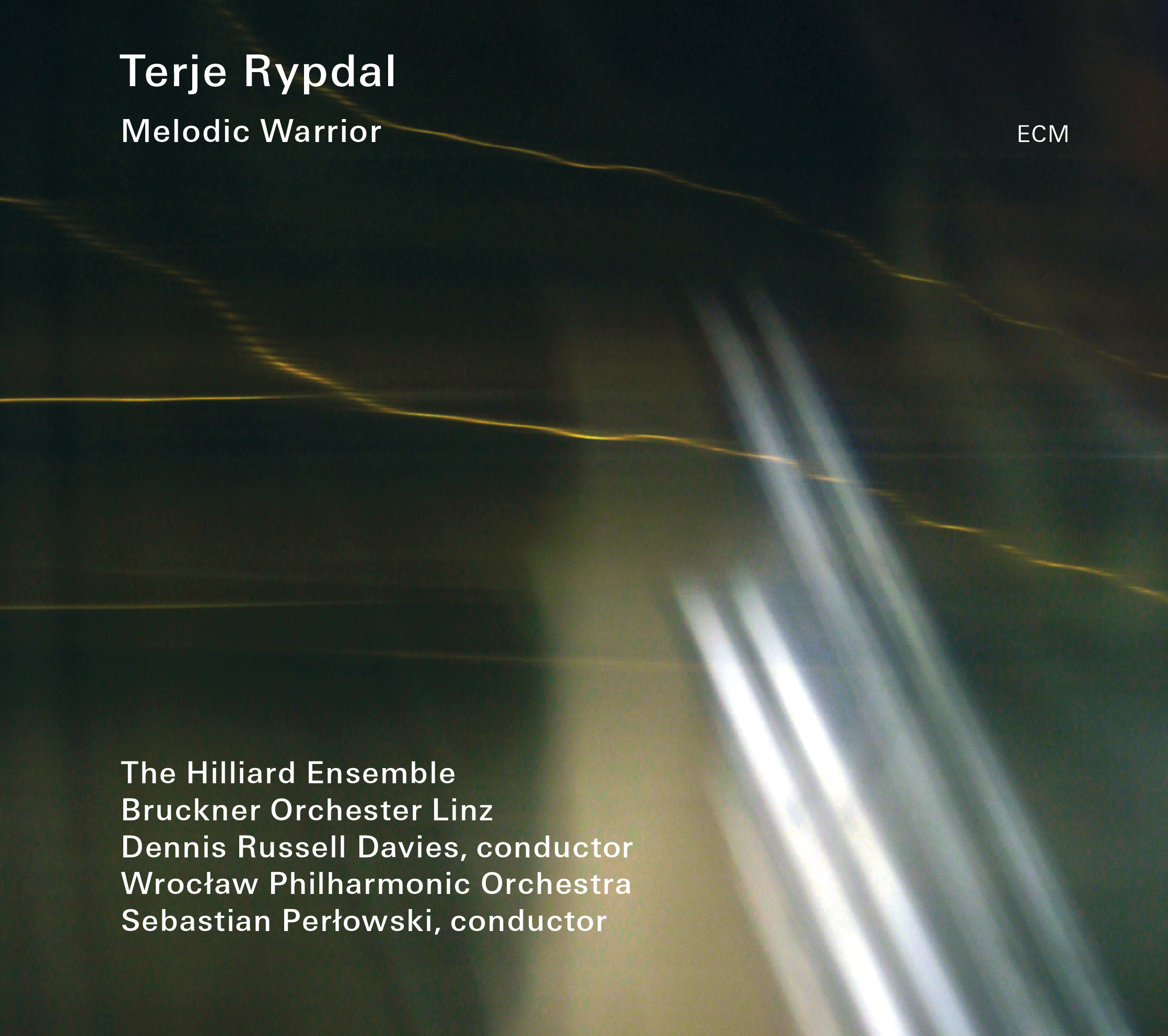
Melodic Warrior liner notes

It is my honor to announce that Terje Rypdal’s Melodic Warrior, a masterpiece commissioned by the Hilliard Ensemble and featuring Rypdal on electric guitar fronting two separate orchestras, will include liner notes by yours truly. You can pre-order your copy from Amazon here, or from your vendor of choice. In the meantime, I encourage you to check out a sample. Now the question is: How am I going to write a review for this one?

2006 X

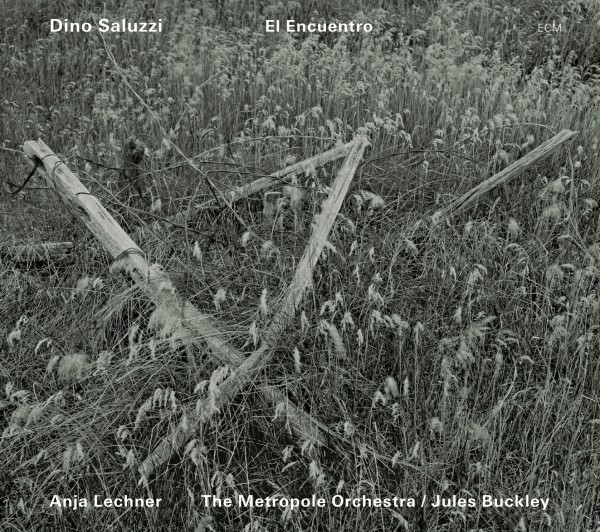
Dino Saluzzi: El Encuentro (ECM 2155)

El Encuentro

Dino Saluzzi
El Encuentro

Dino Saluzzi bandoneon
Anja Lechner violoncello
Felix ‘Cuchara’ Saluzzi tenor saxophone
The Metropole Orchestra
Jules Buckley conductor
Live recording February 13, 2009 Muziekgebouw aan ’t IJ, Amsterdam
Music supervisor: Gert Jan van den Dolder
Recording engineer: Gert de Bruijn (Dutchview)
Assistant: Per van der Zande (Dutchview)
Mixing engineers: Gert de Bruijn and Ronald Trijber (Dutchview)
Concert production and executive producer for the NPS: Gustavo Pazos
A production of NPS Radio in collaboration with ECM Records

El Encuentro depicts Dino Saluzzi as a composer willing to go wherever the stream of consciousness takes him. In this, his first live album, the bandoneón maestro joins Anja Lechner (cello) and brother Felix (tenor saxophone) before the Metropole Orchestra, under the direction of Jules Buckley, for a varicolored quatralogy. Because the bandoneón is practically an orchestra unto itself, pairing it with strings feels like an implosive rather than explosive stroke of sonic fortuity. This introspective dynamic is heightened by the asymptotic relationship between the soloists, who are fully present in Plegaria Andina. This piece revisits thematic material from 1988’s Andina in a braid of wind, branches, and leaves: each strand a traveler from a different corner of the world. Even when silent, the soloists float like an oar-less vessel bobbing to the pulse of tide. The ruminations of this piece are thus deeply aquatic and equally representative of the clouds they reflect.

The relationship between bandoneón and cello is the album’s main anchor, and takes root in deepest reef in Vals de los días. Like the program as a whole, its moods and melodies are in constant flux, its themes as fleeting as the air in Saluzzi’s bellows, the touch of horsehair on Lechner’s strings. Assailed by dances and memories, their vessels keel and spread their melodic passengers far and wide. There is abundance to be felt here, plucked like ripe fruit from a branch, squished between the toes like wet sand, and dunked like the baptized body into holy river’s flow.

Despite its massive proportions, the title piece comports itself with the delicacy of a spider. It is the most brooding piece of the four—one which, despite its peaks and gorgeous finish, wallows in a pool of shadows. Its final jubilations pick at a lone thread of light, unravel the tapestry of the night, and weave a new one into the Miserere that follows. The strings, robust yet tentative in their dynamic recession, are servants to the bandoneón, the latter a messenger sent from above. Its lungs exhale only peace, leaving no doubt that Saluzzi’s is a spiritual art.

Despite the number of musicians gathered here, El Encuentro is one of Saluzzi’s most intimate realizations, compressing the sweep of an epic film into the eye of a spyglass. Because the title means “The Meeting,” it is tempting to read the album as one large cycle. Closer listening, however, reveals the self-awareness of the compositions therein. They are not cardinal points on a compass, but rather corners of a world that share a plane only in maps. Their yearning is more than physical; it is environmental. They meet only in dreams, drifting farther out to the sea with every heave. Were it not for the applause, we might blissfully remain so, never to feel the touch of shore beneath our soles.

(To hear samples of El Encuentro, click here.)