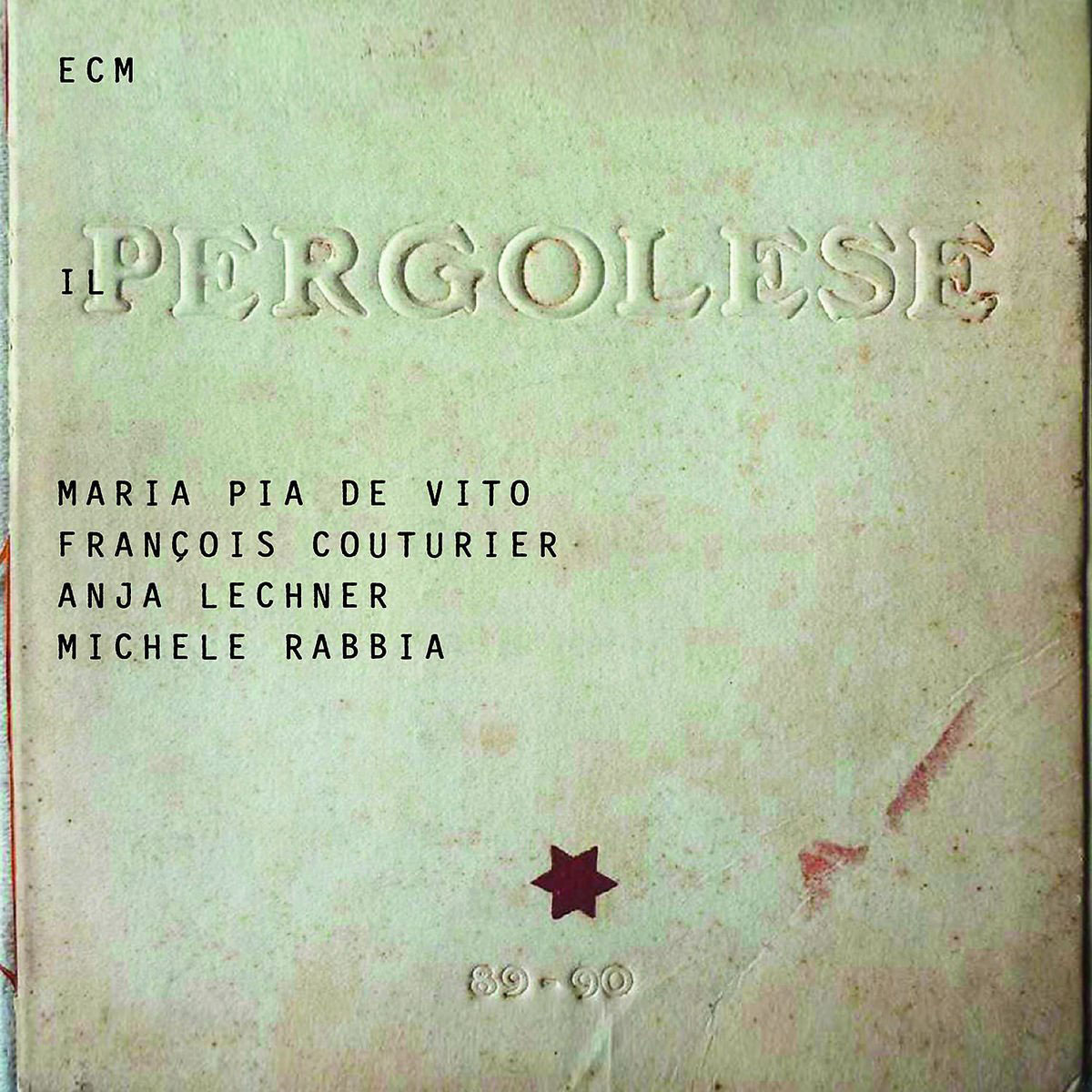
Maria Pia De Vito, et al.: Il Pergolese (ECM 2340)

Il Pergolese

Il Pergolese

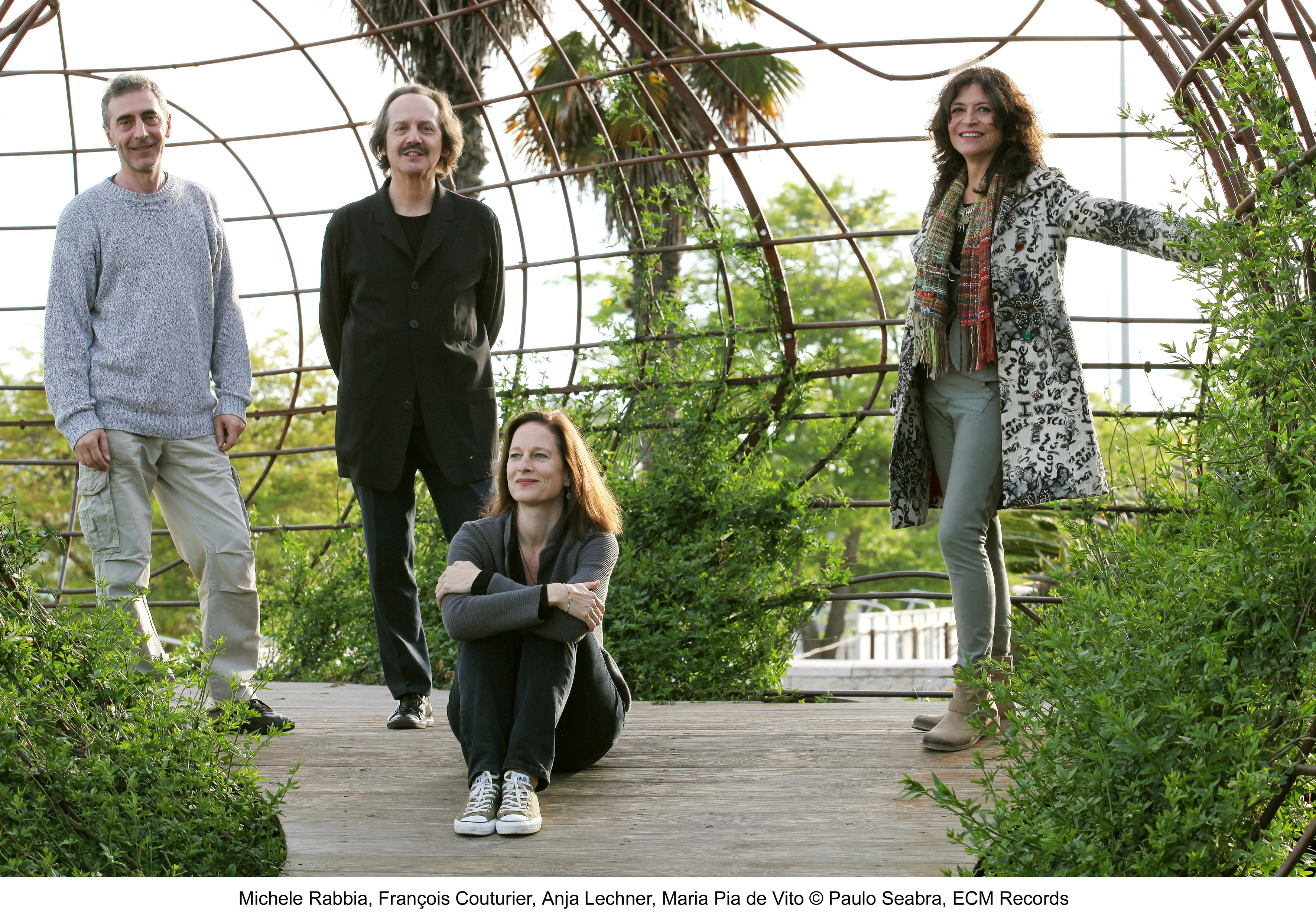
Maria Pia De Vito voice
François Couturier piano
Anja Lechner violoncello
Michele Rabbia percussion, electronics
Recorded December 2012, Auditorio Radiotelevisione svizzera, Lugano
Engineer: Stefano Amerio
Produced by Manfred Eicher

The life of Giovani Battista Pergolesi (1710-1736), cut tragically short at age 26 by tuberculosis, nevertheless made an immeasurable impact on the world of Baroque music and, as evidenced here, beyond. Already a successful opera composer by his mid-20s, Pergolesi would leave behind his final work, the Stabat Mater of 1736, on his deathbed. As Il Pergolese, singer Maria Pia De Vito, pianist François Couturier, cellist Anja Lechner, and percussionist Michele Rabbia have responded to the Italian composer by modernizing him at a crossroads of jazz, folk, and improvisation, De Vito going so far as to translate texts from the Stabat Mater into Neapolitan. The latter move yields pieces by Couturier inspired by that same masterpiece. His “Amen,” like the album as a whole, treats the development process as a precious use of time: only after Rabbia’s airbrushed percussion and additional electronics take hold do the darkly rolling piano and forlorn nightingale of cello share a canvas. The affirmation itself fluoresces under De Vito’s care before carrying over into Couturier’s jazzily inflected chords, by which he sets up Pergolesi’s processional “Fac Ut Portem.” De Vito rides the ocean waves of its drama, craving sunlight but drinking only storm. She then dips back into the Marian text with “Dolente.” Resonant percussion and birdlike vocals give Couturier the space to lull us into the song proper for a lachrymose yet, by virtue of the Neapolitan language’s delectable syllabic flavor, somehow blissful repose.
IP

From Pergolesi’s first comic opera Lo frate ’nnamorato (The Brother in Love) come two arias. The achingly lyrical “Ogne pena cchiù spietata” rests on a bed of piano and cello. Into this gorgeous scene steps De Vito like another Maria—Farantouri, that is—but with a little more maple mixed into her oak. Even after she fades, traces linger on as Lechner and Couturier are joined by Rabbia’s tapped hand drums. “Chi disse ca la femmena,” on the other hand, is a more straightforward melody that turns into folkdance and best explores the band’s rhythmic possibilities. A similar carpet of development unrolls itself down the corridor the “Sinfonia for violoncello,” which holds its own in a landscape of shifting tectonics. With archaeological care and glass tools, Rabbia chips away at Lechner’s caged pizzicati as if they were relics in need of recognition. That they most certainly get in the return of Couturier, who with an empathic analysis tells the backstory of their unearthing. And as Lechner’s bow sings its arco song, it resuscitates a Baroque heart to a calm yet glorious rhythm. “Tre giorni son che Nina,” a wildly popular song of the Italian Baroque attributed to Pergolesi, is another thing of beauty. It opens in raindrops before Lechner puts bow to string and follows a river breached from a dam of mortality.

Some freely improvised tracks round out the program. “Fremente” winds itself around De Vito, whose bubbling lines run wild in the realm of possibility, while “In compagnia d’amore I” and its sequel evoke Luciano Berio’s Visage and a voiceless chasm, respectively. Whatever their guise, the musicians of Il Pergolese pose their emotional statuary in accordance with the moment at hand, turning everything they touch into intimate theater, with De Vito as the heart, and the trio as the soul.

(To hear samples of Il Pergolese, you may watch the EPK above or click here.)

Dans les arbres: Canopée (ECM 2278)

Canopée

Dans les arbres
Canopée

Xavier Charles clarinet, harmonica
Ivar Grydeland electric guitar, banjo, sruti box
Christian Wallumrød prepared piano, harmonium
Ingar Zach gran cassa, percussion
Recorded June 2010 at Biermannsgården and April 2011 at Cafeteatret, Oslo
Engineer: Thomas Hukkelberg
Produced by Dans les arbres

If you were to look only at the musicians and their instruments on paper, the music of Dans les arbres would not likely ooze into your mind as it does once you hear it. Xavier Charles’s clarinet indicates classical foundations, while the harmonica next to his name might imply a more itinerant spirit. Ivar Grydeland’s electric guitar and (prepared) banjo reveal a natural born picker, but the sruti box (an Indian drone instrument bellowed like the harmonium) reaches farther afield. Christian Wallumrød will be the most familiar name to ECM listeners. Anyone in possession of his albums will have a leg up on what to expect and find nothing out of the ordinary to see a harmonium also at his fingertips. Finally, percussionist Ingar Zach stands out for listing the gran cassa (orchestral bass drum) as his primary instrument. And indeed, its cavernous thrum is a foundational voice throughout the quartet’s second ECM spelunk.

In my review of the first, self-titled Dans les arbres album, I compared their sound to that of the short-lived Japanese outfit Nijiumu, whose elusive Era of Sad Wings remains the pinnacle of such freely improvised work. This album approaches that ideal even more closely.

With such kindred track titles as “La Fumée” (Smoke), “L’Émanation” (The Emanation), and “L’Immatériel” (The Immaterial), it would seem to make little sense attempting to parse that which cannot be parsed. In this resonant gong-space, we are surrounded by creaking toy chests. Their keyholes burn with shadow and are wonders to behold in the attic light. Downstairs pacing betrays the parents of children who have hidden themselves so long that they have become part of the house. Bells and bowls and other glowing things float like tones of the inner ear made manifest in the form of dust particles and the wings of dead moths. Deep drones and breathy harmonics share only what they embrace, while the in-betweens reach from their wombs, only to withdraw just before making contact with the outside world. Their lungs open as would any book, of which each brachial page swims with adverbs. Hints of machinery linger, but their pathogens are quickly neutralized by the system.

All that said, some of the most intangible cognates (e.g., “La Vapeur” and “L’Éther) name the album’s most tactile creations. In these we discover a heavier mortality at work, as if by means of an intimate machine, of which gears serve as bones and time the marrow that sponges them. Whether by the clarinet’s guttural awakenings or the bass drum’s deepest moon phase, the aqueducts of ancient cities are somehow resurrected only so that they might speak once more before dying, leaving only the metallic drip of virtue to show for their channeling. Like the spaces of “La Transparence” (Transparency), they are pregnant with afterthoughts in such a way that all internal things become external and vice versa, starving the illusion that there was ever a distinction in the first place.

(To hear samples of Canopée, click here.)

Trio Mediaeval: Aquilonis (ECM New Series 2416)

Aquilonis

Trio Mediaeval
Aquilonis

Anna Maria Friman voice, Hardanger fiddle, melody chimes
Linn Andrea Fuglseth voice, portable organ, melody chimes
Berit Opheim voice, melody chimes
Recorded June 2014 at Propstei St. Gerold
Engineer: Peter Laenger
Recording supervision: John Potter
An ECM Production

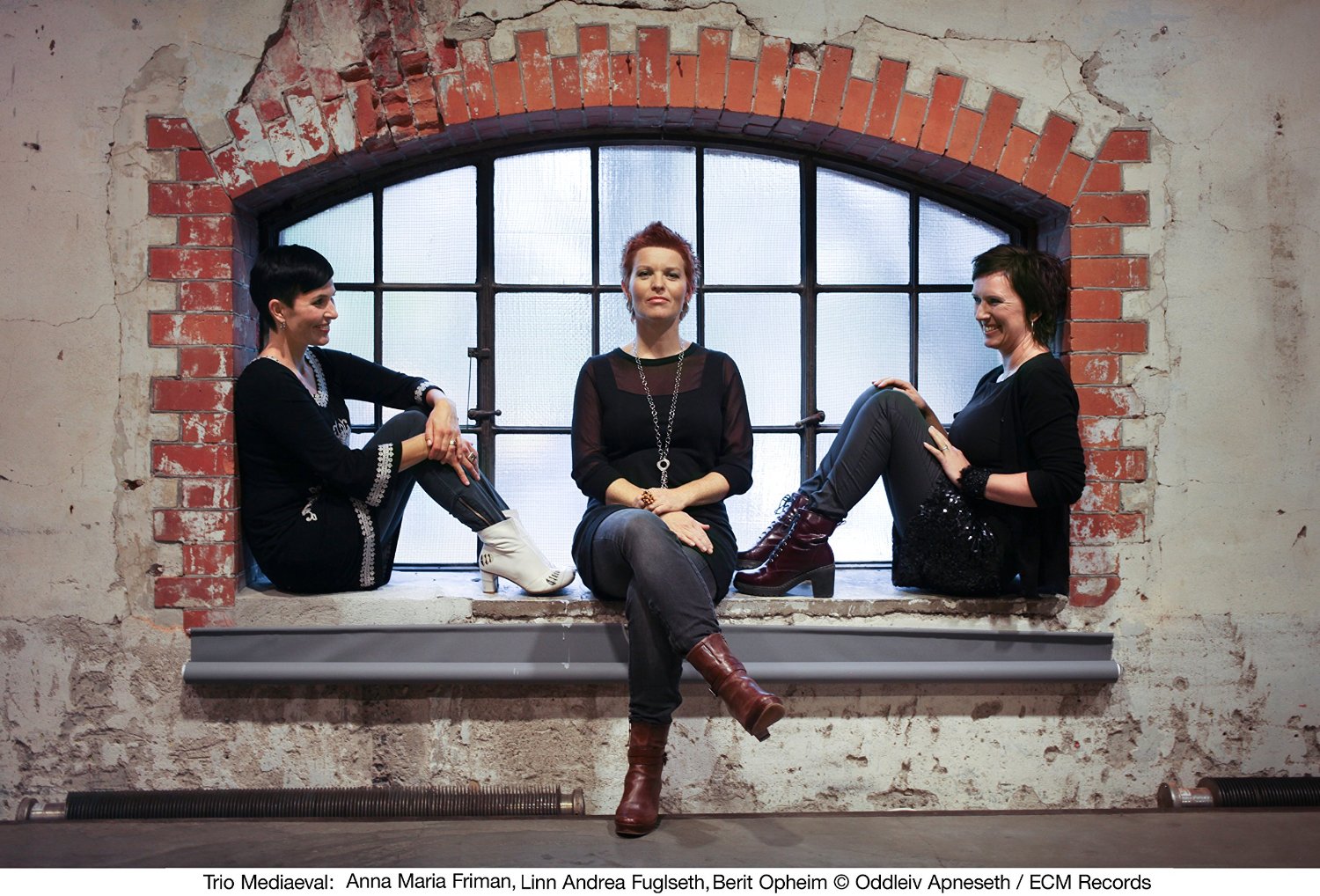
Trio Mediaeval are Anna Maria Friman, Linn Andrea Fuglseth, and, making her ECM debut, Berit Opheim (who in 2014 replaced Torunn Østrem Ossum). In their sixth New Series program, the Scandinavian songstresses bring a characteristically thoughtful cohesion to their selections and the themes under which they live again. The album’s title means “North Wind,” but as recording supervisor John Potter explains in his album note, the metaphor is as much temporal as geographical, emphasizing as it does the Trio’s centuries-long reach.

TM

Furthest from the present are two Italian sacred songs from the 12th century. “Benedicti e llaudati” (Sacred and blessed apostles…) and “Fammi cantar l’amor” (Let me sing of the love…) contrast radiant harmonies spun around a core of chant with monophonic lines of flight. The drone also figures as a natural extension of three Norwegian folk songs, which find the singers accompanying themselves for the first time on instruments (the enriching percussion heard on 2007’s Folk Songs was courtesy of Birger Mistereggen). The Hardanger fiddle, played by Friman, is both heart and lungs of “Ingen vinner frem til den evige ro” (Eternal rest is the reward of…), and its ghost whispers in the air of the vocal solo “Gud unde oss her at leve så” (God gave us grace to live), a string of beauty untying itself in righteousness.

A step closer brings us to 14th-century Iceland and the vespers of the Office of St. Thorlak, beautifully unpacked from their plainchant rudiments into braids of censer smoke. The masterful arrangements enchant with their folkish brogue, sounding at times more like songs of the Irish plains than prayerful nights. Now it’s Fuglseth on the portable organ who gleans a droning undercurrent from the score and copies its DNA until it breathes. Yet another step lands us in the more pronounced polyphony of three 15th-century English carols, of which “Ecce quod natura mutat sua jura” (Behold, nature changes her laws) and “Alleluia: A newë work” are sublime highlights. The latter was the first piece the original Trio ever sung and makes its glowing presence known to a wider audience at last.

In the realm of the living, English composer Andrew Smith contributes three symbiotic pieces to the Trio’s repertoire. Of these, “Ioseph fili David” (Joseph, son of David) is the crowning jewel of the program, while “Ave regina caelorum” (Hail, Queen of heaven) breaks glass with its light. Swedish composer Anders Jormin, better known to ECM fans as a jazz bassist with a classical heart, solely offers “Ama.” Based on a poem by Virgil, it is a miniature of overlaid shapes, transparent and turned askew until they form new harmonies in search of the old. The singers themselves compose three pieces, each a vital organ to the program’s functioning body, planets without satellites whose clouds welcome all suns. And American composer William Brooks yields the somber yet tender “Vale, dulcis amice” (Farewell, sweet friend) on which the program ends.

The combination of self-accompaniment and new music secures the women of Trio Mediaeval as the reigning torchbearers of the now-defunct Hilliard Ensemble, of whom they are superlative protégés. Like their legendary mentors, they are able to move from one coil of existence to the next without slightest loss of form. Here’s hoping they continue to do so for decades to come.

(To hear samples of Aquilonis, click here.)

The Hilliard Ensemble: Transeamus (ECM New Series 2408)

Transeamus

The Hilliard Ensemble
Transeamus

David James countertenor
Rogers Covey-Crump tenor
Steven Harrold tenor
Gordon Jones baritone
Recorded November 2012, Propstei St. Gerold
Engineer: Peter Laenger
Executive producer: Manfred Eicher

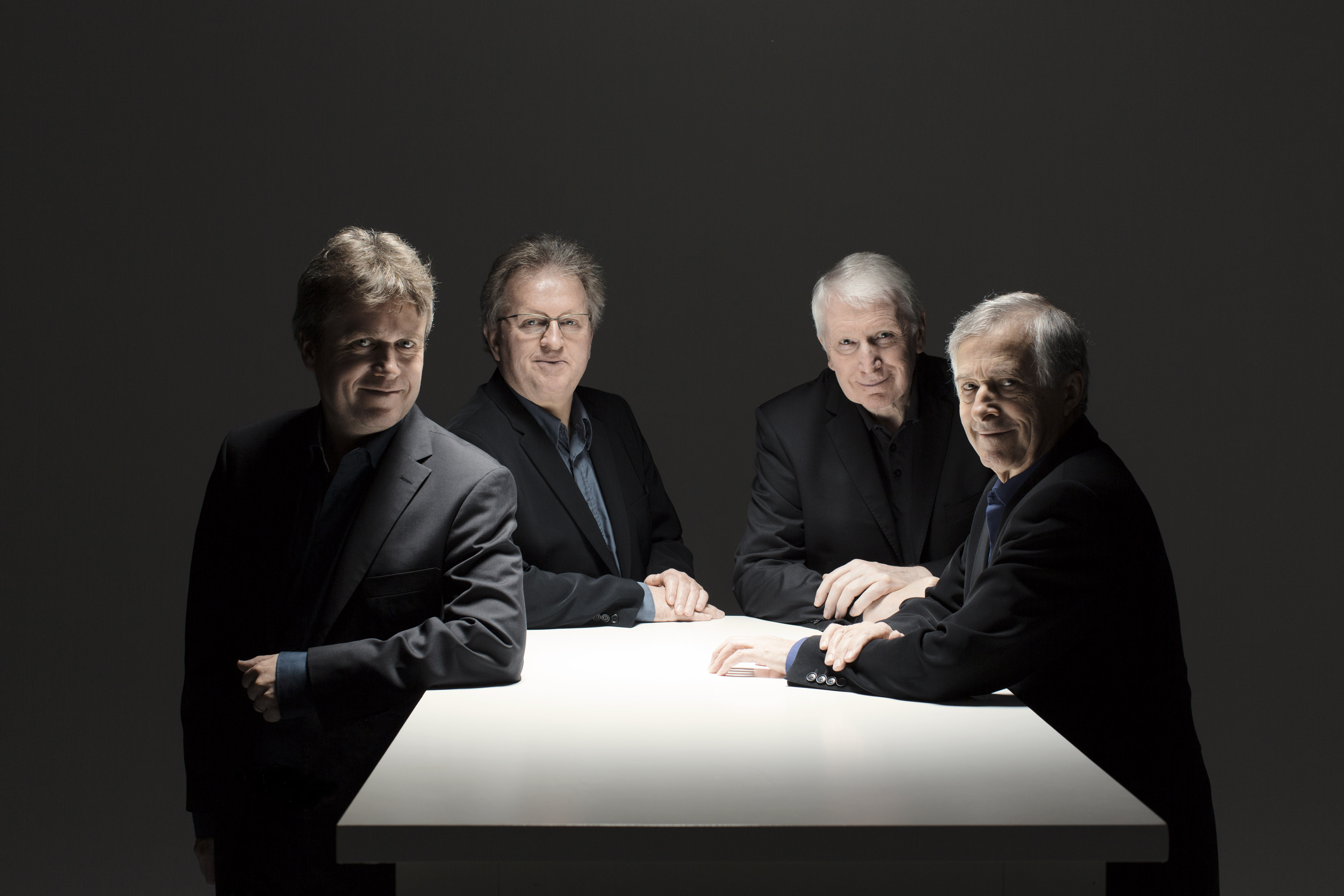
The illustrious Hilliard Ensemble ends its decades-long tenure with ECM, and with the world of performance, in a program of 15th-century English carols and motets for two, three, and four voices. Since debuting on the label with 1989’s Perotin, countertenor David James, tenors Rogers Covey-Crump and John Potter, and baritone Gordon Jones have enchanted with their peerless blend of timbres, equal interest in contemporary and early music, and scholarly sheen. In 1998 Steven Harrold filled the venerable shoes of Potter, who would go on to strengthen his leadership of the Dowland Project (see, for example, Night Sessions) and pursue alluringly off-the-map endeavors such as Being Dufay. Harrold joined ECM’s venerable ranks in a traversal of motets by Guillaume de Machaut, one of many landmark recordings by the newly minted ensemble.


(Photo credit: Marco Borggreve)

Whereas other vocal groups might have bowed out with a flourish, the Hilliards have chosen a contemplative return to roots, drawing from a repertoire ingrained in their individual beings long before becoming a part of their collective one. Many of the composers whose work is represented herein are anonymous, yet their music, notes David James in his affectionate liner note, is anything but. Included among the sélections sans auteur is some of the Hilliards’ most incisive singing on disc, which illuminates the verily bookended pages of “Clangat tuba” in purest gold and imbues “Lullay, I saw” with baby’s-breath. Also remarkable are the more intimate combinations, especially those pairing James with one or both of the tenors. The Codex Speciálník has long been one of my most beloved Hilliard albums, in large part because of its occasional duets, and Transeamus may just share that position for its own. “There is no rose,” one of the program’s three carols, is one such instance of skeletal beauty.

John Plummer (1410-1483) is one of four known composers represented. His “Anna mater” is an astonishing creation. Through watery sustains, over which the higher voices bend like willow branches, it reveals a consummate approach between image and reflection. The “Stella Caeli” by Walter Lambe (1450/51-a.1499) threads one of the program’s most angelic looms with a continually changing color scheme. “Ave Maria, Mater Dei” by William Cornysh (c.1468-1523) is as lovely as it is luminescent, and is all the more moving for Gordon Jones’s spinal tap. Lastly, Sheryngham’s “Ah, gentle Jesu” secures the Hilliard Ensemble legacy with a piece of such descriptive power that it turns the immaterial into a tangible piece of faithful proportion, if not also proportional faith. Like the windows of Propstei St. Gerold, the Austrian monastery where so much of their brilliance was captured for posterity, these unrivaled singers allow light to shine both ways.

This album’s title may be Latin for “we travel on,” but we the listeners can be sure that just as much of the Hilliards will be left behind in our hearts as they will carry forward in their own.

(To hear samples of Transeamus, click here.)

Anna Gourari: Visions fugitives (ECM New Series 2384)

Visions fugitives

Anna Gourari
Visions fugitives

Anna Gourari piano
Recorded October 2013, Historischer Reitstadel, Neumarkt
Engineer: Stephan Schellmann
Produced by Manfred Eicher

I do not know wisdom—leave that to others—
I only turn fugitive visions into verse.
In each fugitive vision I see worlds,
Full of the changing play of rainbows.
Don’t curse me, you wise ones. What are you to me?
The fact is I’m only a cloudlet, full of fire.
The fact is I’m only a cloudlet. Look: I’m floating.
–Konstantin Balmont, 1903

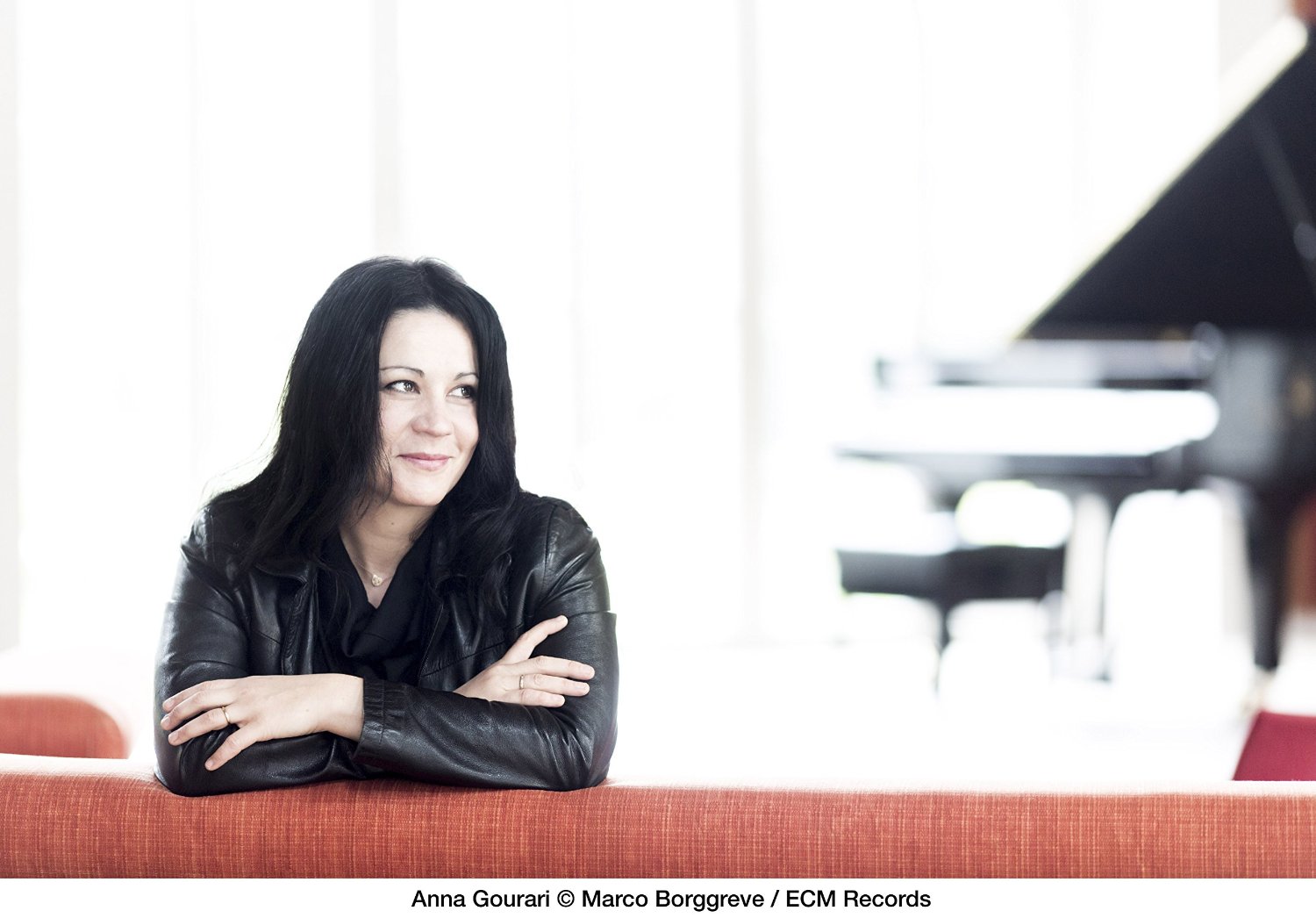
In 2012, pianist Anna Gourari made her ECM debut with Canto Oscuro, a diurnal recital of such imagination that it begged a sequel. Only Visions fugitives is, despite its modern vintage, more of a prequel, for it opens more of her heart than ever to the listener’s privilege. The title composition by Sergei Prokofiev (1891-1953) is his opus 22 and marks a sensitive turning point in the prolific Russian composer’s oeuvre. Written between 1915 and 1917, the clarity of its 20 miniatures is in full evidence. But as David Nice observes in his biography of Prokofiev, the Visions fugitives also reveals “a new and more disturbing vein of the dynamic malice found in the early piano pieces as well as a more elusive sadness,” and these Gourari elicits with her detailed touch.

Prokofiev seems never to have intended the Visions as a set (the composer himself played no more than a handful in one sitting), but in listening to them as such, one cannot help but notice what Paul Griffiths in his liner text rightly calls their “family resemblances.” And while the title connotes fleeting things, there is something unusually indelible about their impressions. Closer to linked verse than haiku, the suite coheres by virtue of its consistent intimacy. It is, of sorts, an anti-sonata endowed with illustrative prowess, each movement so perfectly flavored that it needs no side dishes: a veritable tapas tasting of thematic subjects, of which only two exceed the two-minute mark. The opening dichotomy sets a tone of blissful regret that, like a pile of shorn wool, is pulled and spun into workable thread. Internal variations work in such a way that each piece, marked only by its tempo, seems a reflection of the one that precedes and a predictor of the one that follows. You may find yourself drawing connections to other composers (No. 8, for example, marked “Comodo,” feels a bit like Satie), but the phenomenological presence of Prokofiev’s score is such that one need hardly reach far to find purchase in between the lines. Some, like Nos. 7 (Pittoresco) and 18 (Con una dolce lentezza), may be incredibly pretty, but resist the plunge into full-on impressionism. Others, like No. 4, 5, 9, 15, and 19 are virtuosic standouts, but speak in tongues of escape over flourish. And in the twentieth Gourari finds a contemplative doorway waiting for her.

AG

At two minutes and forty-six seconds, the Fairy Tale in f minor by Nikolai Medtner (1880-1951) may look like filler material in theory, but in practice it acts as a vibrant ligament at the program’s center. Composed in 1912 as part of Medtner’s opus 26, it is a prime example of his skazki, or “tales,” a genre of his own making. One may project any number of scenes onto its imaginary folk setting, but these ears detect a forest of seasons: the wind combing through trees in spring, the fragrant foliage of summer, the decay of autumn, and the whisper of snowfall in winter. With these transformations in mind, we turn lastly to Frédéric Chopin (1810-1849) and his opus 58 Sonata No. 3 in b minor of 1844. In the opening Allegro and subsequent Scherzo, Gourari is an artful dodger, the adept inhabitant of an otherwise empty castle. She walks through walls and transcends chambers as simply closing the eyes. She pushes through memories of pomp and circumstance, emerging from them trailing a single thread of transcendence, by which she stitches virtuosity to its shadow. The formidable Largo is a more brooding affair with a funereal quality but sheltering a hope realized in the triumphant Finale before burrowing into the reset of hibernation. Declamation, not proclamation.

Returning to Griffiths, who notes, “In integrating, however, Chopin also disintegrates,” we might lay the same claim about Gourari’s selections. This recital is a step inward, a dissolution of self into pure music that, once unleashed, takes on a life…and death…of its own.

(To hear samples of Visions fugitives, click here.)

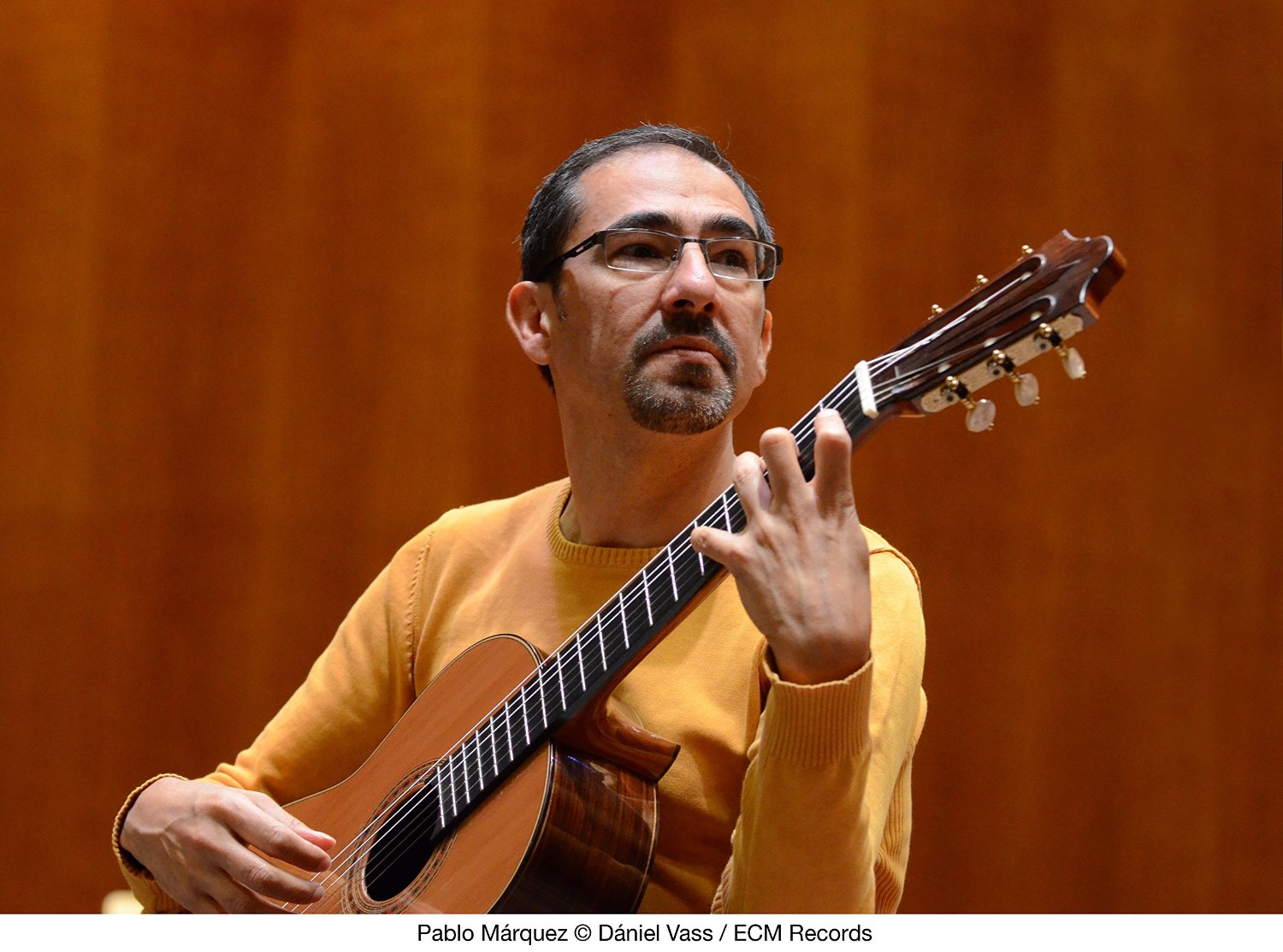
Pablo Márquez: El Cuchi Bien Temperado (ECM New Series 2380)

El Cuchi Bien Temperado

Pablo Márquez
El Cuchi Bien Temperado

Pablo Márquez guitar
Recorded May 2012, Auditorio Radiotelevisione svizzera, Lugano
Engineer: Markus Heiland
Produced by Manfred Eicher

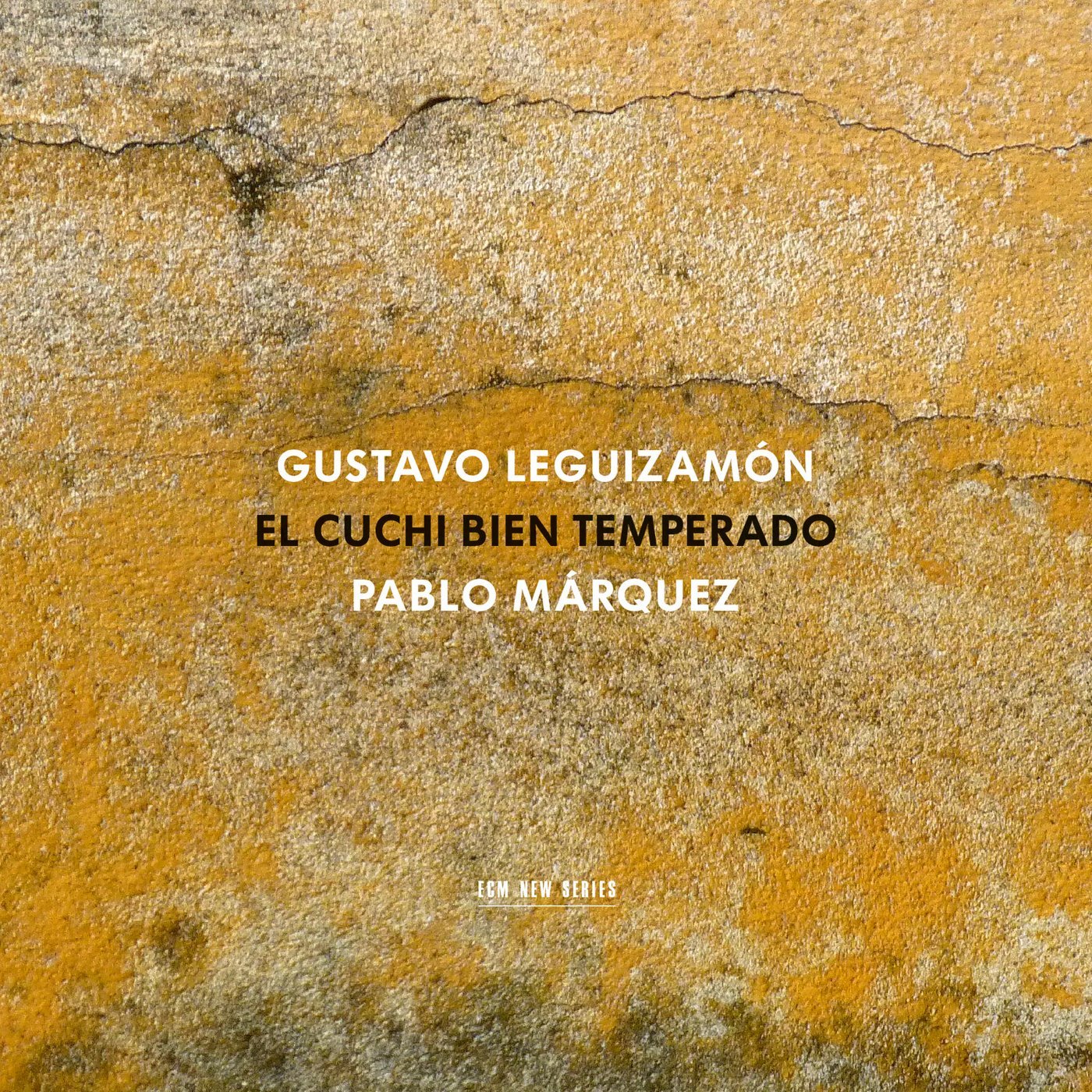
Even if The Well-Tempered Pig sounds far more appetizing in Spanish than it does in English, Pablo Márquez’s second album for ECM is an extraordinary achievement. The titular “Cuchi” (an ancient Quechua word meaning “pig”) was the sobriquet of one Gustavo Leguizamón (1917-2000), a composer, musician, lawyer, and pedagogue from the northwestern Argentine city of Salta. Salta is renowned for its musical heritage and is named for the same province that gave us Dino Saluzzi, who followed in Cuchi’s footsteps. Márquez describes Cuchi’s zambas (folk dances) as quintessential markers of Salta’s culture. Having grown up singing so many of them (they are, he explains, always accompanied by poems), Márquez was ideally suited to arrange them in a spectrum of 24 keys akin to, and inspired by, Bach’s monumental Well-Tempered Clavier. Although this album’s press makes further allusion to Debussy, Ravel, Stravinsky, and Schoenberg, the listener would do well to absorb this music without intervention of a comparative filter.

PM

Although Cuchi’s zambas take up the lion’s share of the program, the songlike vidalas, few as they are, reveal his truest heart. Opener “Coplas des Tata Dios” is a shimmering vidala-baguala, tinged with folkish hues and broken by the occasional tambora (rhythmic tapping at the base of the guitar strings). It seems to emerge from the fog of obscurity into the lucid here and now, and like so many of the pieces assembled here is intensely evocative. A single strum can reveal a shy glance through an open window, and the ghosts of a love that has yet to pass beyond it. Other instances of this form include “Chaya de la albahaca,” which plays with dissonant clusters and scraping of fingernails, and “Canción del que no hace nada,” which ends the album. But before we reach that bittersweet farewell, we are treated to an audible banquet like no other. Less represented dance forms such as the courting bailecito and exuberant carnavalito yield cavorting motifs and elastic strumming, while the three more compactly syncopated chacareras sprinkle the path with technically brilliant puzzles.

All of these aspects and more permeate the masterful zambas, which at Márquez’s touch serve as benchmarks of their form. In cinematic terms, they range from interior shot (“Zamba del carnival”) and soft-focus dream sequence (“Zamba de Lozano”) to flashback (“La cantor de Yala”) and close-up (“Zamba para la Viuda”). Also like an effective film, the music’s character development strengthens over a soundly engineered narrative arc and saves the best for later in “Zamba soltera” (this would be the love scene), “Zamba del pañuelo” (its enervating afterglow), the starkly realized “Maturana,” and “Chilena del solterón.” The latter is indicative of the entire set, pausing for breath and gathering new inspiration before rejoining the waves.

If Márquez were a painter, he would of course have his way with a brush, but would be especially skilled with a palette knife. With rigid elements he is able to render softness and structure in equal measure. As he recalls for an interview printed in this album’s booklet, Cuchi was fond of saying that “the ultimate accolade for an artist is that people think his work is anonymous.” But we can be thankful that, thanks to the efforts of guitarist, engineer, and producer, such anonymity may be harder to come by and will only enhance the wonders therein.

(To hear samples of Ei Cuchi Bien Temperado, click here.)

Tre Voci: Takemitsu/Debussy/Gubaidulina (ECM New Series 2345)

Tre Voci

Tre Voci

Marina Piccinini flute
Kim Kashkashian viola
Sivan Magen harp
Recorded April 2013, Auditorio Radiotelevisione svizzera, Lugano
Engineer: Markus Heiland
Produced by Manfred Eicher

When is it really over? What is the true end? All borders are as if with a stick of wood or with the heel of a shoe driven into the earth. Until then…here is the border. All that is artificial. Tomorrow we’ll play another game.
–Francisco Tanzer, trans. J. Bradford Robinson

Tre Voci are violist Kim Kashkashian, flutist Marina Piccinini, and harpist Sivan Magen. Following a 2010 debut at the Marlboro Music Festival, the trio solidified its identity as such and came to ECM with this program of three works. Although disparate in geographical origin, each connects to the others by instrumentation and, above all, integrity of spirit. More than the unique combination, however, it is the supreme, interlocking level of ability in each musician that makes this disc such a pleasure to behold.

TV

The program opens with the reflection of a reflection: And then I knew ’twas Wind by Tōru Takemitsu (1930-1996). The Japanese composer’s illustrative genius is in full effect in this garden of painterly delights, from its opening sprinkle of raindrops to its closing fractals of coincidence. Although the instruments are inseparable partners in the worlding of this piece, and must be equally attuned to what Jürg Stenzl in his liner notes calls the “almost calligraphic precision” of Takemitsu’s score, the harpist must be especially aware of the palette at hand. Magen articulates a veritable ecosystem of harmonics, glissandi (produced by sliding a fingernail along a string), and timbral variations. One can almost feel the quiver of leaves shedding the weight of raindrops in the afterglow of a storm. From this scene, flute and viola emerge not like the fauna of stereotypical impressionism, but rather like the flora drinking in all the nourishment. The viola becomes, then, a natural navigational instrument, a magnetized sliver in a forested compass. Despite sounding sometimes like a single player, for the most part Kashkashian and Piccinini walk their solitary paths. Like some bucolic dream gone dark, however, not all is sunshine and roses, as emphasized by the distinctive pathos of their interpretation. Here is the leaf magnified, revealing infinite others within.

Given Takemitsu’s admiration for Claude Debussy (1862-1918), the latter’s Sonata for flute, viola and harp makes for a most suitable companion. As Debussy’s penultimate composition (succeeded only by the Sonata for violin and piano) before he succumbed to cancer, it shows both maturity and vulnerability. Over the course of three distinct yet interconnected parts, it develops with such tactile beauty that one is hard-pressed to find a hook of any size from which to hang an ornament of criticism. Part I opens in a river’s flow such as only Debussy can devise. With their unpretentious, relaxed treatment thereof, Tre Voci quickly overturn the notion that impressionism equals lack of clarity. The flute blends into the viola, and together they empty into a vivid ocean. Part II is recognizable by its cyclical motifs. If the first was an awakening, this is nature in the raw. Part III rests on a fulcrum of harp, teetering atop some of the trio’s subtlest descriptions, and the tipping point of its sportive, declamatory ending would be echoed 11 years later (1926) in Manuel de Falla’s Concerto for harpsichord, flute, oboe, clarinet, violin and cello. If anything, this sonata is about physics, as is the piece that follows.

Sofia Gubaidulina’s Garten von Freuden und Traurigkeiten (Garden of Joys and Sorrows) is this album’s crowning achievement. The progression of its introductions quivers with sobering anxiety until the trio’s dynamic range is nearly exhausted. The viola tends toward harmonic whispers, while harp and flute take more direct routes toward their melodic destinations. This is not to say that the piece is a goal-oriented one. Rather, it thrives on the value of distortion. Much like Gubaidulina’s quartets it favors skeleton over muscle, and through the creaking of its joints seeks harmony in ashen reveries and broken things. It ends with a recitation, in German, of a poem by Francisco Tanzer: not the universe in a raindrop, but a raindrop in the universe.

(To hear samples of Tre Voci, click here.)

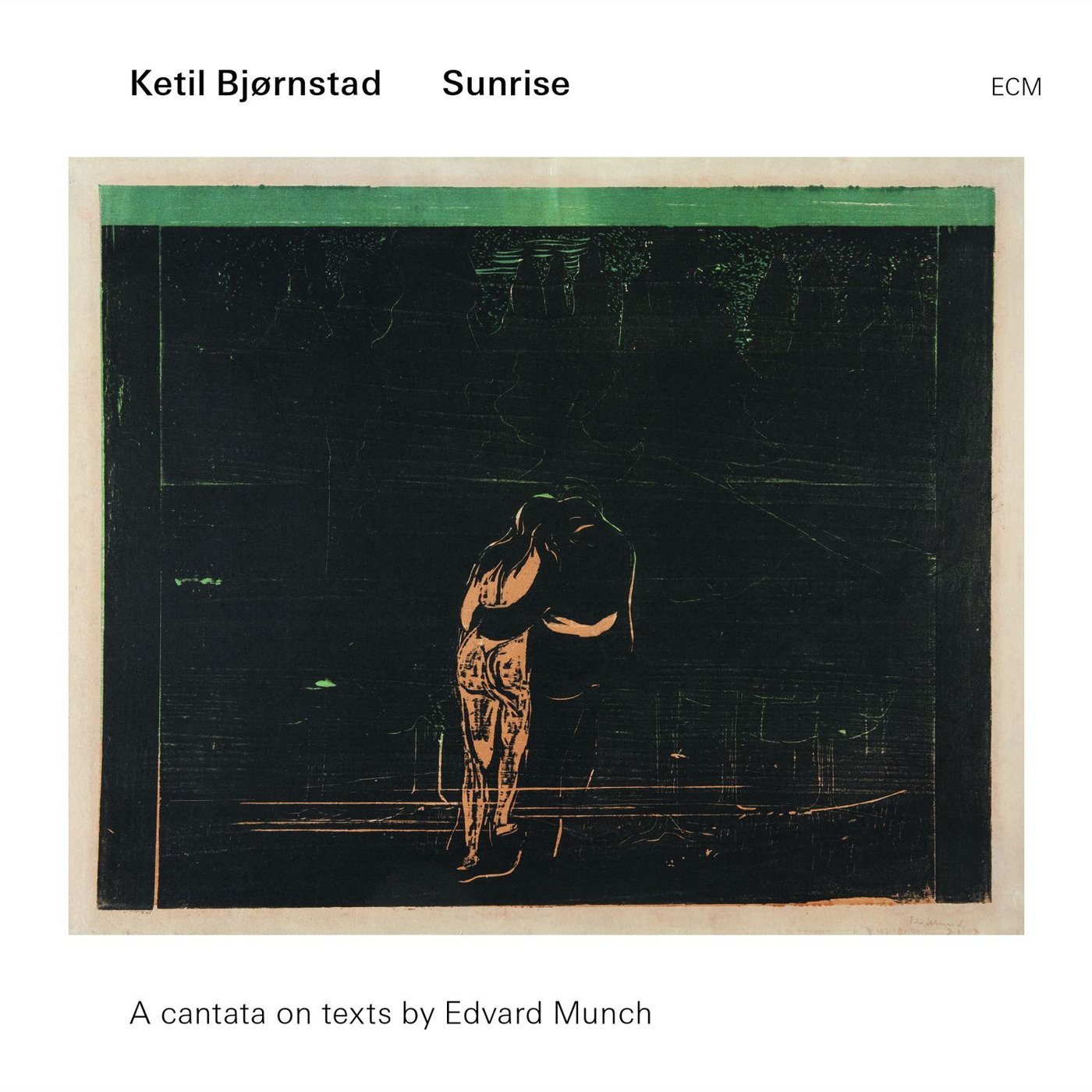
Ketil Bjørnstad: Sunrise (ECM 2336)

Sunrise

Ketil Bjørnstad
Sunrise

Kari Bremnes vocal
Aage Kvalbein cello
Matias Bjørnstad alto saxophone
Bjørn Kjellemyr double bass
Hans-Kristian Kjos Sørensen percussion
Ketil Bjørnstad piano
Oslo Chamber Choir
Egil Fossum conductor
Recorded April 2012 at Rainbow Studio, Oslo
Engineer: Jan Erik Kongshaug
An ECM Production

A bird of prey is trapped
deep inside me. Its talons
have ripped into my
heart, its beak has
driven itself into my chest,
and the beating of its wings
has darkened my sanity.

Norwegian pianist-composer Ketil Bjørnstad seems to be in one of the most creative phases of his career. Increasingly, he has turned to the human voice as an expressive outlet for his ever-songlike writing, and it was only a matter of time that those forces should reach the level of a choir, a medium for which he was asked to write music in commemoration of the Nordstrand Musikkselskap Choir’s 70th anniversary in 2011. Having already engaged with the life of Edvard Munch in his 1993 literary biography Historien om Edvard Munch and set the painter’s neglected words to music on the album Løsrivelse, he naturally returned to those same texts for Sunrise. Yet Bjørnstad’s self-styled cantata is more than the portrait of an artist. It is an affirmation of light.

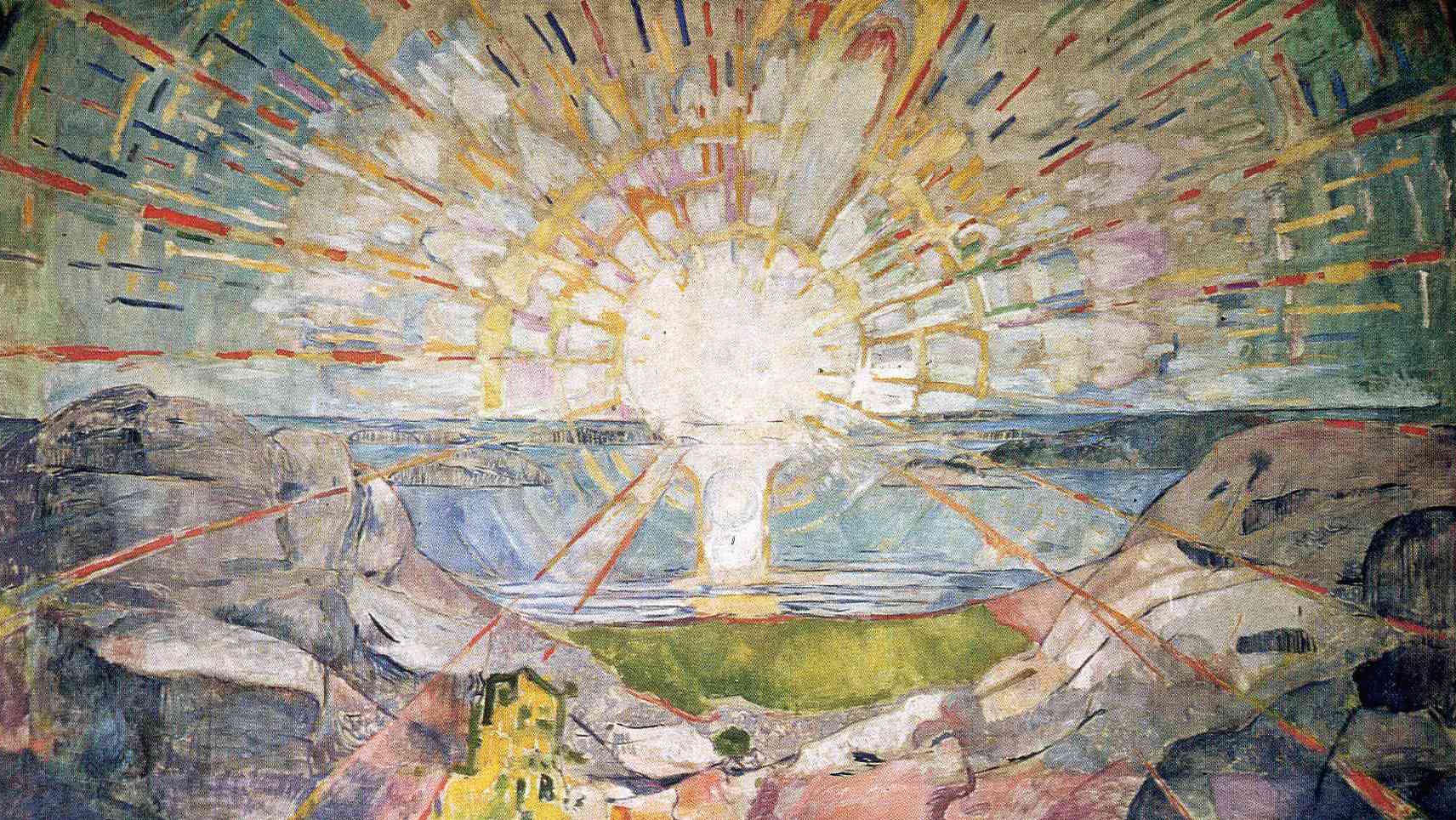
Munch wrote flashes of prose in preparation for many of his paintings. Bjørnstad characterizes the texts chosen for this monumental work as dealing unanimously with existentialist dilemmas. In addition to Munch’s paratextual writings, Bjørnstad was intimately acquainted with his 1909 mural The Sun, under which the young pianist saw many greats play at Oslo’s University auditorium, the Aula, where it hung. In that painting, notes the composer, “one can clearly discern the degree to which Munch struggled with and against the forces of life, and how deeply and endlessly he yearned for enlightenment and reconciliation.” The same holds true for the music he has written into its aura.

The Sun

Most attractive about Sunrise is its breadth of idiomatic conviction, which is most vividly clarified in the four songs written for singer Kari Bremnes, with whom Bjørnstad worked on the aforementioned Munch cycle. She is joined by Bjørnstad at the keyboard, alto saxophonist Matias Bjørnstad (no relation, it seems), and bassist Bjørn Kjellemyr on “Moren” (The Mother), which depicts the haunting scene of a young boy who holds his mother’s hand in anticipation of going outside but is blinded by the light of spring once they open the door. Bremnes’s oaken alto lends heart to every word it envelops. In the montuno-flavored “Stupet” (The Cliff), for instance, she evokes a jagged cliff and the dangerous ocean churning below like a death wish. The naturalness of her shading lends intuitive dimensionality to the near-pop groove of “De fineste nerver er rammet” (The Most Delicate Nerves are Affected) and a lover’s wicked thoughts in “Åpent vindu” (Open Window), for which cellist Aage Kvalbein provides the lamplight and Bjørnstad a certain temptation beneath the floorboards.

Turning to the sections for choir gets us into some potentially divisive territory. Bjørnstad is clearly not a choral writer, as attested by the fact that the vocal arrangements were done by Egil Fossum, who also conducts the present recording. Certain sections are more memorable than others, such as “En rovfugl har satt seg fast i mitt indre” (A Bird of Prey is Clinging to My Inner Being), which opens the entire cantata with the unlikely ante of a steel drum, courtesy of percussionist Hans-Kristian Kjos Sørensen. Like a warped church carillon as heard through the screen of memory, it breeds a prayerful cello to greet the dawn. The choir opens its lips to greet the titular bird, which traps itself in the chest but which by the grace of song is placated by God’s azure stare. Subsequent moods and images range from the apocalyptic [“Alfa og Omega” (Alpha and Omega)] to the frivolous [“Livets dans” (The Dance of Life)]. Other elements feel more derivative, such as the hints of Samuel Barber’s famous Adagio in “Adskillelsen” (The Separation).

More interesting to consider are Munch’s sentiments, revealing as they do a conflicted mind desirous of peace, splashing color across the human psyche as if it were the truest canvas. In “Intet er lite” (Nothing is Small) is nestled his meta-statement: Nothing is small, nothing is large. / We carry worlds inside us. Words to live by for both the painter and his thoughtful composer. Wordless singing beneath the cello’s commentary accentuates an underlying yearning. Even the jazzier inflections of “Joden elskede luften” (The Earth Loved the Air) enhance the starkness of Munch’s inner world, a place where trees uproot themselves and turn into human beings: Everything is alive and in motion. / Even at the center of the Earth / there are sparks of life. This leaves us to bask in the promised “Soloppgang” (Sunrise), which unites musicians and singers in an optimistic flourish that is hard to come by in Bjørnstad’s work.

Overall, there is a rustic, hymnal quality to the choruses, which suits the material well enough. More exciting, however, are the three “Recitatives” and “Intermezzos” signposting the program. The former elicit some of Bjørnstad’s most unchained playing on record in bursts of cathartic free improvisation, while the latter weave the piano into melodic shadows of cello or saxophone, each a thread gathered from an open wound and spun into new flesh. Like the protagonists of “Som i en kirke” (As if They Were in a Church), they reveal a gravid awareness of mortality, seeing creation as a church unto itself, and nature as God’s tabernacle.

(To hear samples of Sunrise, click here.)

Galina Ustvolskaya (ECM New Series 2329)

2329 X

Galina Ustvolskaya

Patricia Kopatchinskaja violin
Markus Hinterhäuser piano
Reto Bieri clarinet
Recorded March 2013, Auditorio Radiotelevisione svizzera, Lugano
Engineer: Peter Laenger
Produced by Manfred Eicher

Galina Ustvolskaya (1919-2006) may not be a household name, but the Russian composer’s work speaks with a truth that is rare in modern music. As the favorite student of her famous teacher, Dmitri Shostakovich, she was destined for greatness. However, personal politics seem to have gotten in the way of her ascent to prominence. Shostakovich was quite taken with Ustvolskaya, twice proposing marriage. Her lack of reciprocation seems to have embittered him, and as a result her work was scarcely published or performed. According to her book, Shostakovich in Dialogue, however, author Judith Kuhn cautions against buying into Ustvolskaya’s personal mythology, as her claims of creative independence (“There is no link whatsoever between my music and that of any other composer, livind or dead”) might have been just as reactionary, and allusions to Shostakovich inevitably creep up in her work.

But life and art do not imitate one another in her music, which like the cover photograph of this ECM New Series album dedicated to it speaks to the broken pieces as much as those intact, for they also have songs to sing. Because it was she who said, “All who truly love my music should refrain from theoretical analysis of it” (though even this might have been a defensive statement), we do better to approach it not as an excuse for analytical thinking, but as a spiritual experience that demands undivided regard in return for its outpouring.

The beating heart of all three works featured here is Moldovan-Austrian violinist Patricia Kopatchinskaja, whose rendering of the Sonata for violin and piano (1952) alongside Markus Hinterhäuser is alone worth the acquaintance. The violin begins on a teetering, pianistic bridge in which just enough slats remain to grant full passage. On the other side, Kopatchinskaja must hold the music’s fabric together, frayed as it is. This requires an unusually pristine tone, and this she possesses, along with a variety of extended configurations. She can darken or brighten, be rough or smooth, and moves through the body of this music like creation itself. Notes devoid of vibrato stand out for their clarity and help temper the piano’s inclinations to dance. What emerges from all of this is an internal clock, marking not time but space. Its pulse is not mechanical, but shifts with every blush of mood. Kopatchinskaja takes up that pulse at the end as she raps the body of her instrument with a knuckle.

PK

The 1949 Trio adds clarinetist Reto Bieri to the duo for a tripartite work of artful design. Bieri’s own purity of tone enhances Kopatchinskaja’s, and vice versa, while Hinterhäuser stretches every filament into even consistency. The violin writing is more insistent and razor-like this time around, cutting the obvious relationships within the trio in favor of the implied. The second movement is a lullaby in shadow, walking a tightrope into a warped deconstruction of a Bach-like motif in the third. Here the jagged and the linear become a third, metaphysical category: a blueprint of a blueprint, in which the piano barely hangs on to life.

In his cultural history of St. Petersburg, Solomon Volkov writes, “Ustvolskaya’s chamber works are as monumental as a symphony, and her symphonies are as translucent as chamber music,” though I find it hard to believe that many would hold such an opinion had the composer not put it forth herself. We may see this dynamic operative in the 1952 Sonata, but the Duet for violin and piano, written in 1964, is an intimate cartography of resistance. The distinction between Sonata and Duet more rightly speaks to the composer’s defiance of the chamber music category. The violin’s unassuming introduction turns to flint as flashes ring out. Dissonant, romping scales in the piano, combined with the violin’s half-step faints and distant alarm calls, prime us for the expectorations to come. Yet within each crashing wave curls an invisible grammar, to which pizzicato periods dot arco exclamations. And in a ghostly finish, the violin scrims the line between Heaven and Hell, blending until there is no difference between the two.

And so, rather than simply compare these chamber works to symphonies, it would be more accurate to emphasize their repurposing of scale. It’s not that Ustvolskaya’s sound-world is so big as to engulf us, but that we shrink to such a size that what was once microscopic now seems cosmic. Biographical apocrypha aside, her work is vital for its staunchness of both vision and blindness to the listener. This is not to say we are ignored, but neither are we patronized. We must reckon the music as it is.

(To hear samples of Galina Ulstvolskaya, click here.)