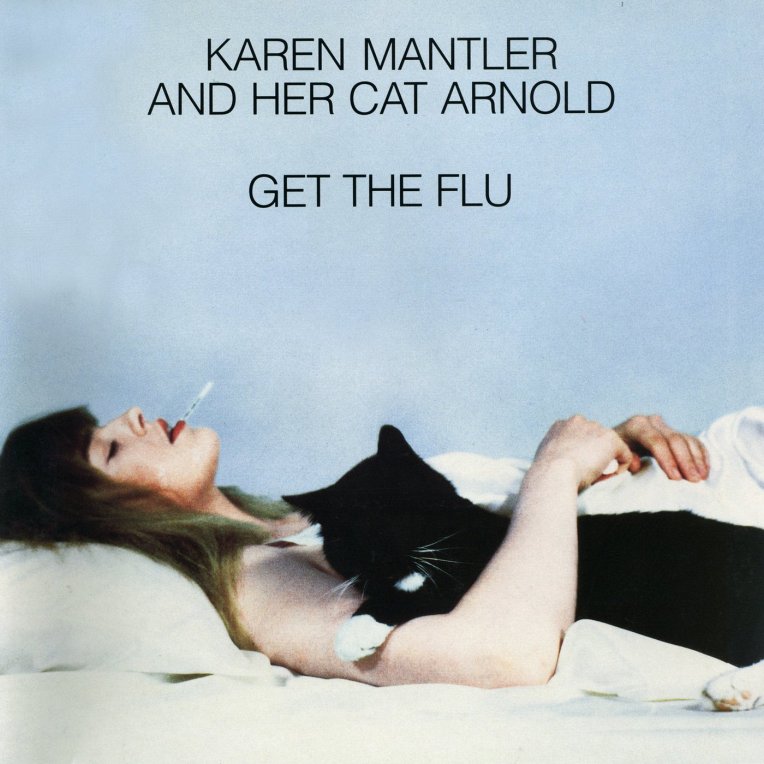
Orchestra Jazz Siciliana: Plays The Music Of Carla Bley (XtraWATT/4)

OJC

Orchestra Jazz Siciliana
Plays The Music Of Carla Bley

Nico Riina, Massimo Greco, Pietro Pedone, Faro Riina, Giovanni Guttilla trumpets
Salvatore Pizzo, Salvatore Pizzurro trombones
Maurizio Persia bass trombone
Orazio Maugeri alto saxophone
Claudio Montalbano alto and soprano saxophones
Stefano D’Anna tenor saxophone
Alessandro Palacino tenor and soprano saxophones
Antonio Pedone baritone saxophone
Ignazio Garsia piano
Pino Greco guitar
Paolo Mappa drums
Sergio Cammalleri percussion
Guest artists:
Gary Valente trombone
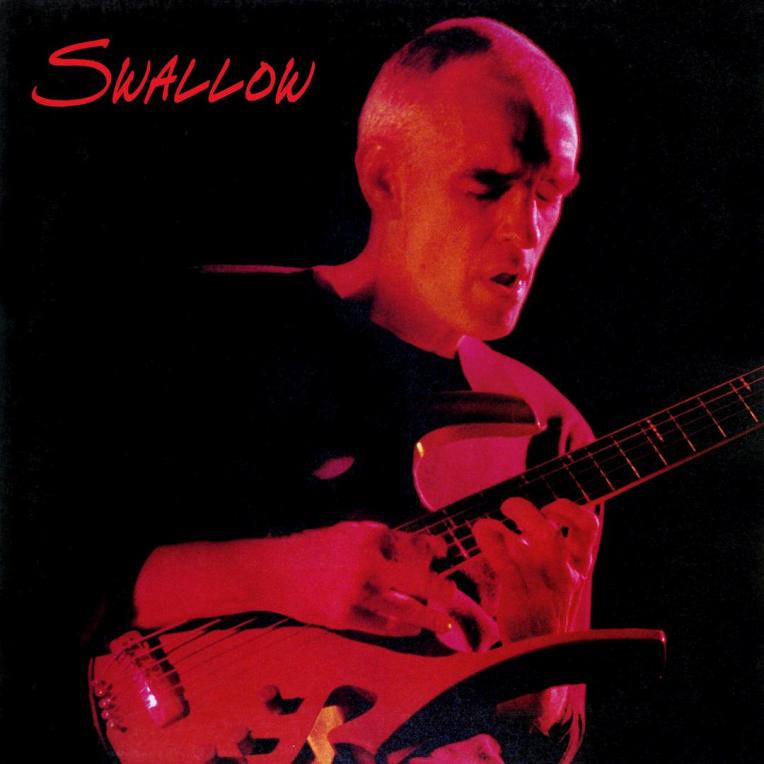
Steve Swallow bass
Recorded direct to 2-track Digital Audio Tape at Brass Group Jazz Club and in concert at Teatro Metropolitan, Palermo, Sicily, May 11-16, 1989
Recording engineer: Lillo Sorrentino, assisted by Pino Passalacqua
Post-production by Steve Swallow and Carla Bley, November 1989, at Grog Kill Studio, Willow, New York
Engineer: Tom Mark
Mastered by Greg Calbi at Sterling Sound, New York, NY
General Co-ordination: Michael Mantler
Executive producer: Ignazio Garsia
Release date: October 1, 1990

Interpretations of a jazz composer as highly respected as Carla Bley can proceed one of (at least) two ways: either as springboard for idiosyncratic adlibbing and personal expression or as opportunity for an adoring homage. In the case of this recording by the Orchestra Jazz Siciliana under the direction of Bley herself, we get an instance of the latter. Each of these pieces has been re-orchestrated for big band by Jeff Friedman from their original versions and, with the exception of “Egyptian,” will be familiar to those who’ve kept an ear planted in her robust discography.

The sizable Italian ensemble, joined by special guests Gary Valente on trombone and Steve Swallow on bass, hits a line drive right off the bat with “440” by virtue of a faster pitch compared to its first appearance on record. Artisanal textures keep the melodic strengths of Bley’s writing front and center, while selective solos from altoist Orazio Maugeri and Valente serve to emphasize the smoothness of the undercurrent at hand. This gives way to the blues in “The Lone Arranger.” For this version, the banter is delivered (even by Bley herself) in Italian, making it a delightful standout. All of which feels like a grand prelude to the centerpiece: “Dreams So Real.” The present arrangement, compared to its siblings, is probably the most divergent from its source. With oodles of soul to reckon with, Valente’s trombone blasting across the airwaves with conviction, it evokes the title with gusto, and all of it framed by the beauty of guitarist Pino Greco.

The album’s remainder is taken from a May 1989 live recording at Teatro Metropolitan in Palermo. A tasteful reverb lifts the sound closer to the stratosphere, where some of the soloists like to spend their time. If Valente was the star of the first half (though one can hardly bat an eyelash at his solo in “Baby Baby”), this second half extols the wonders of tenor virtuoso Stefano D’Anna, whose backbone heightens the flexibility of such tunes as “Joyful Noise” and the outlying “Egyptian,” which lights Orientalism like a fuse and watches it explode with glee. In closing, we get hit with the cinematic flair of “Blunt Object.” The drums and percussion by Paolo Mappa and Sergio Cammalleri, respectively, along with Maugeri’s muscular turn at the plate, make this a solid home run.

The audience is into it, as should we be. Bravos all around.

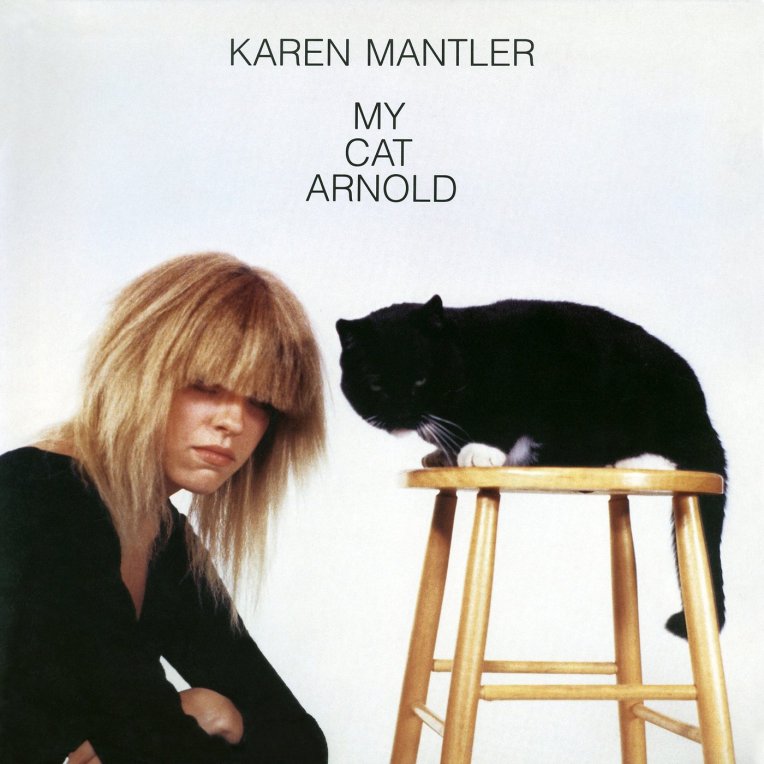
Karen Mantler: My Cat Arnold (XtraWATT/3)

My Cat Arnold

Karen Mantler
My Cat Arnold

Karen Mantler vocals, harmonica, organ, piano
Eric Mingus vocals
Jonathan Sanborn bass
Ethan Winogrand drums
Marc Muller guitar
Steve Weisberg synthesizers
Steven Bernstein trumpet
Pablo Calogero baritone saxophone
Recorded Spring 1988 by Angela Gomez and Steve Swallow
Mixed by Tom Mark, Grog Kill Studio, Willow, New York
Mastered by Greg Calbi, Sterling Sound, New York, NY
General co-ordination: Michael Mantler
Produced by Carla Bley and Steve Swallow
Release date: November 1, 1989

Karen Mantler, who takes after her father (Michael Mantler) in name and taste for the morose, as after her mother (Carla Bley) in musical spirit, has cobbled herself a pair of shoes that no one else could possibly fill. If Suzanne Vega did late-night cabaret, this might just scratch the surface of what you’ll find on this emblematic debut. Add in the talents of Charles Mingus’s son Eric on vocals and David Sanborn’s son Jonathan on bass, along with a bevy of nuanced musicians, and you get some dusty, forlorn songcraft that burrows into the skin and tattoos it from the underside.

As will become her usual, Mantler hangs out in the dimly lit corners of human experience and describes them as a means of emphasizing the unconditional purity of the relationship she shares with her titular cat Arnold. The most imposing door stands before us in the form of “I Wanna Be Good.” This one-act play of derision between partners spins a funky argument, replete with Greek chorus-like commentary from the band between verbal spars as the boyfriend (played by Mingus) tries to mold her into something she wishes not to be. Their relationship plays out further in “Breaking Up,” for which they swap self-defenses amid a congregation of bass, drums, organ, and the popping baritone saxophone of Pablo Calogero. “Fear Of Pain” takes an even more disturbing turn into domestic violence (Steve Weisberg’s synthesizer delineating a palpable tension throughout). Thankfully, Mingus isn’t always a target of fear, as when he takes on a comedic role in “My Stove,” acting the part of salesman trying to sell her on a variety of stoves (read: thinly veiled stand-ins for men) to the hapless Mantler, who longs for her old stove after it “moved to another town.”

Emotionally honest as these are, the album’s highlights deal with more mundane objects of concern. On “Vacation,” Mantler croons about her desire to get away from it all. Songs like this come across as destitute, because we know the events they describe will never happen. On the flip side, those about overtly sad things are presented as whimsical and airy. A fine example of the latter is “People Die,” which is so unadorned that nothing but emotion comes through. “It’s a fact,” she sings. “Once you’re born there’s no turning back.” These childlike rhymes blister with truth. With so little affect to get in their way, the wisdom of their banality glows.

The title track is an ode to her cat. Described as a “big furry pillow with claws,” he occupies her thoughts 24/7. Mantler’s obsession with Arnold makes the thought of losing him unbearable (and foreshadows the pall of her third album). “Best Of Friends” is a lovely song about her mother and is perhaps the only moment when genuine sunshine peaks through the clouds. Finally, “Green Beans” is a soulful song about—you guessed it—those vegetables so often pushed to the side of a child’s plate. Mingus gives a method performance as the man who hates green beans as much as the woman serving them, bringing us full circle to the reality of a broken world in which Arnold’s purr might be the only hope left.

Mantler’s one-of-a-kind psychoanalysis warms the cerebrum. Noteworthy also is her harmonica playing, which casts a varicolored light across each lyric. More than any other artist in the WATT family, she is an uncompromising outlier who understands that every generation has its story to tell, even if that story will never change.

Steve Swallow: Carla (XtraWATT/2)

Carla

Steve Swallow
Carla

Carla Bley organ
Steve Swallow bass
Hiram Bullock guitar
Larry Willis piano
Victor Lewis drums
Don Alias percussion
Ida Kavafian violin
Ik-Hwan Bae viola
Fred Sherry cello
Recorded and mixed Winter 1986/87 at Grog Kill Studio, Willow, New York
Mastered by Greg Calbi at Sterling Sound
General co-ordination: Michael Mantler
Produced by Steve Swallow and Carla Bley
Engineered and co-produced by Doug Epstein
Release date: October 1, 1987

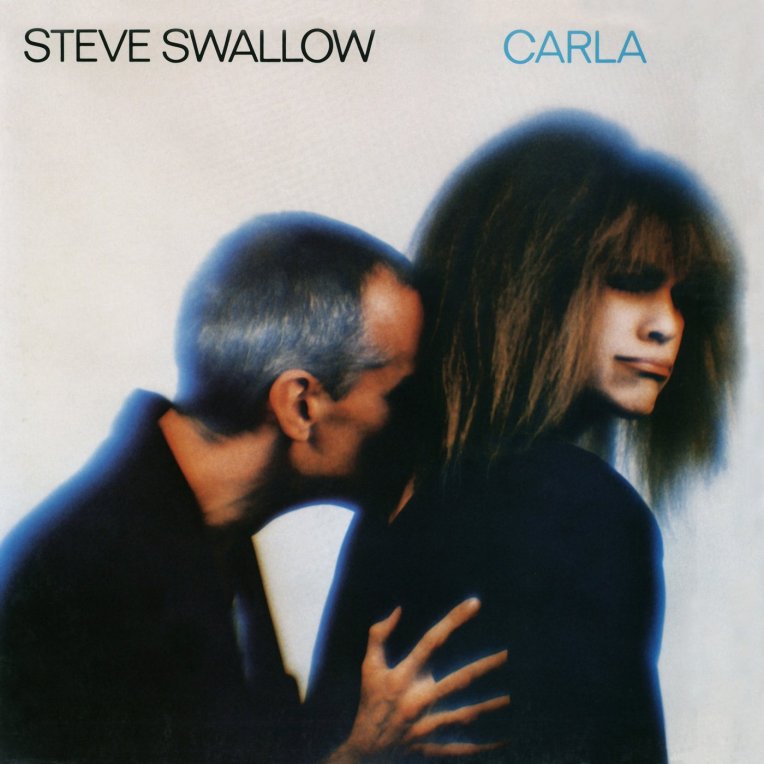
This timeless love letter from Steve Swallow to Carla Bley belongs on the shelf alongside Sextet, as both albums emerged from the same sessions. The core band of guitarist Hiram Bullock, pianist Larry Willis, drummer Victor Lewis, and percussionist Don Alias applies, but is augmented by DW-6000 and DW-8000 synthesizers, played by the lifelong lovers of the hour, and a bona fide string trio. Those extra forces enhance the underlying mood with such a high level of atmospheric integrity that the music they wrap themselves around is elevated to an emotional state far beyond nostalgia.

The quirky cover photograph makes more sense once the luxuriance of “Deep Trouble” unravels its melody like an unwanted cigarette. The tension between bliss and self-deprecation is real, and reminds us how falling in love is sometimes the greatest threat to everyday equilibrium. Bley’s fresh-out-of-the-oven organ—both here and in such tracks as “Fred And Ethel,” “Afterglow,” and “Last Night”—is as romantic as it is mysterious. Yet her spotlight is only as bright as Swallow’s compositions, which have the strength of a full moon. Whether coaxing a head-nodding rhythm from Alias and Lewis in “Count The Ways” or deferring to his partner’s sense of humor in “Hold It Against Me,” Swallow assures the listener of total comfort through slick key changes and unforced propulsions.

His ability to craft an environment is especially complex in “Crab Alley” and “Read My Lips.” With every shift of gear, he drives deeper into the chambers of his psyche, sticking a hand out of the window every now and then to take a Polaroid in his search for an authentic sense of self to lay down at his lover’s altar. And as Willis’s pianism propels the band into the stratosphere, we realize there’s still so much to discover within ourselves.

Carla is a crowning achievement for Swallow, through and through, and is about as enchanting as jazz gets. Something our hearts have heard before, because it hears us so well.

Steve Weisberg: I Can’t Stand Another Night Alone (In Bed With You) (XtraWATT/1)

I Can't Stand

Steve Weisberg
I Can’t Stand Another Night Alone (In Bed With You)

Lew Soloff trumpet (solo on “Trapped”)
Baikida Carroll trumpet (solo on “Table”)
Gary Valente trombone
John Clark French horn
Wolfgang Puschnig alto saxophone, flute
Howard Johnson baritone saxophone, contrabass clarinet, tuba
Hiram Bullock guitar
Steve Weisberg piano, synthesizer, organ (on “Table” and “You Can’t”)
Steve Swallow bass
Victor Lewis drums (on “I Can’t Stand”)
Anton Fier drums (on “Table” and “Trapped”)
and
Norman David tenor saxophone
Neil Leonard clarinet
Eric Goldberg accordion
Karen Mantler organ (on “I Can’t Stand” and “Trapped”)
Mike Stanzilis bass (on “Trapped”)
Jack Cook drums (on “You Can’t”)
Ken Winokur percussion
Carol Capstein viola
Priscilla Chew cello
Frank Luther double bass
Recorded and mixed November/December 1985 by Tom Mark at Grog Kill Studio, Willow, New York
Produced by Carla Bley and Steve Swallow
Release date: November 1, 1986

In 1986, the WATT sublabel—a dedicated showcase for the musical projects of Carla Bley and Michael Mantler—gave birth to the sub-sublabel XtraWATT. To celebrate this momentous occasion, the inaugural release was handed off to Steve Weisberg. The onetime New York fixture, who continues to perform regularly with his orchestra (only now in Los Angeles, where he relocated permanently in 2003), is perhaps best known as a prodigious arranger who has worked with such diverse talents as Hal Willner, Marianne Faithfull, Howard Tate, and Suzy Williams, to name but a few.

The unmistakable trombone of Gary Valente opens the title track with a swanky, after-midnight atmosphere. Boiling with the tension of finding love in an urban sprawl, the music welcomes a large-scale ensemble, many members of which are on loan from the Carla Bley Big Band. Expertly blended strings and a bass line from Steve Swallow kick off an evocative groove through sunnier climates. The accordion of Eric Goldberg adds to the seaside palette and invites us on a journey to faraway places where dreams live on despite the dank reality outside our doors. Weisberg’s warped synthesizer reminds us that beauty always fades.

“Table For One” and “Trapped In True Love” are the album’s finest passages. Both feature legendary underground drummer Anton Fier, who bounces lithely beneath Swallow’s groundlines. The former tune features a clarion solo from trumpeter Baikida Carroll, while the latter boasts alluring horn textures and a carnivalesque undertone. Trumpeter Lew Soloff emits solar flares in his solo, and guitarist Hiram Bullock adds to the mounting tension, both in his comping and incendiary solo. Between these two encounters, we are treated to the interludes of “Walking Home Alone” and “Waking Up Alone,” each a haunt of cinematic proportions. All of which makes the final blast of fantasy that is “You Can’t Have Anything” an uplifting takeaway.

Having no idea what to expect from this recording, especially given the less-than-appealing title and cover art (a lesson I should already have learned during my jaunt through WATT), imagine my delight when I found this to be a lovingly composed, arranged, and performed album from start to finish. In Weisberg there beats a kindred heart to Carla Bley, whose influence is felt all over this curious little gem from one of jazz’s behind-the-scenes iconoclasts.

Carla Bley: Carla’s Christmas Carols (WATT/35)

Carla's Christmas Carols

Carla Bley
Carla’s Christmas Carols

Carla Bley piano, celeste
Steve Swallow bass, chimes
Tobias Weidinger trumpet, flugelhorn (lead), glockenspiel
Axel Schlosser trumpet, flugelhorn (soloist), chimes
Christine Chapman horn
Adrian Mears trombone
Ed Partyka bass trombone, tuba
Recorded December 8/9, 2008 and mixed and mastered at La Buissonne Studio, Pernes Les Fontaines
Engineers: Gérard de Haro and Nicolas Baillard
“O Holy Night” and “Joy To The World” recorded live in Berlin on December 4 by Rundfunk Berlin-Brandenburg
Produced by Carla Bley and Steve Swallow
Release date: November 6, 2009

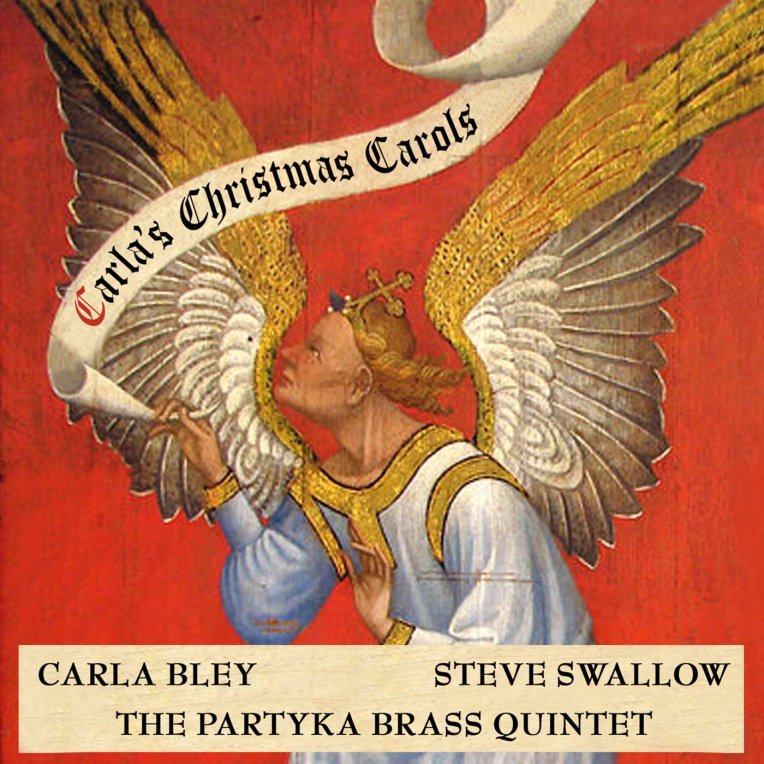
It seems altogether fitting, given Carla Bley’s religious jumping of ship, to come full circle in their biographical tendencies with this utterly reverent collection of well-known Christmas music. Joined by Steve Swallow and the Partyka Brass Quintet, Bley offers an album of original arrangements that speak to the heart of every song while drawing out something long-concealed by the artifice of commercialization.

The staples one would expect in such an assortment are all there. From the nostalgic uplift of “It Came Upon A Midnight Clear” and “Jingle Bells” to the sincere gratitude of “The Christmas Song,” there’s plenty of spice to mull your cider. More interesting, however, are the splashes of rum to spike your egg nog. These come in the form of Bley’s clever harmonization of “O Tannenbaum,” in the addition of celeste of “Away In A Manger,” and in the soulful trombone of Adrian Mears in “Ring Christmas Bells.” Like those pops of air from logs settling in a fireplace, such moments court our attention in unforeseen directions while abiding by the comforts of the familiar. Axel Schlosser in “God Rest Ye Merry Gentlemen” is another noteworthy soloist, by his flugelhorn lighting the set’s brightest candle.

Bley contributes two tunes of her own: the jauntier “Hell’s Bells” (replete with sarcastic allusion to “Santa Claus Is Coming To Town” and, of course, the sound of jingle bells) and the processional “Jesus Maria,” which Swallow reads prayerfully through the bass. Moreover, we get two bonuses—“O Holy Night” and “Joy To The World”—recorded live in Berlin during the tour from which the band broke to make this album. The end effect is of childhood unwrapped like a present beneath the tree.

And with that, we come to what is (as of this writing) our final stop on the WATT train. We’ve been through a lot together, in terms of space and time, traversing cultures and even galaxies as easily as opening our ears. But let us never downplay the unquantifiable amount of energy and sacrifice Carla Bley has given to the world of sound in order to refashion it in her own image.

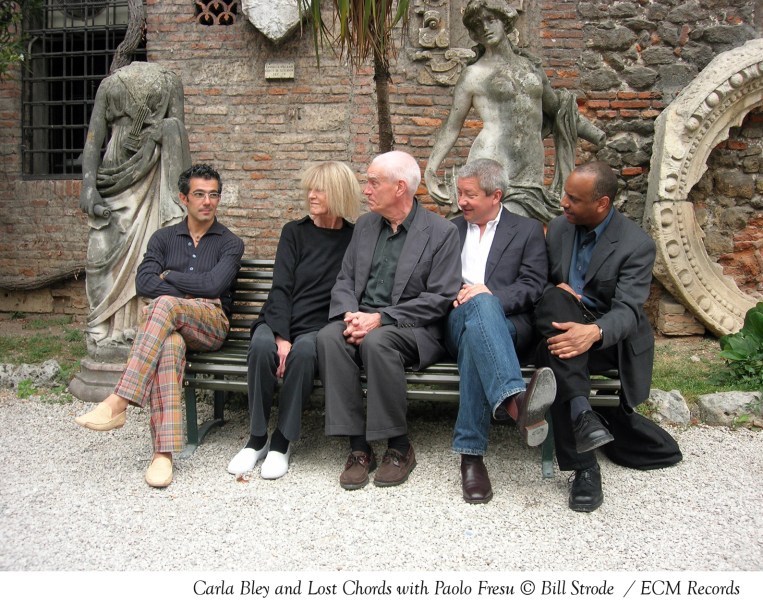
Carla Bley: The Lost Chords Find Paolo Fresu (WATT/34)

TLC Find Paolo Fresu

Carla Bley
The Lost Chords Find Paolo Fresu

Paolo Fresu trumpet
Andy Sheppard soprano and tenor saxophones
Carla Bley piano
Steve Swallow bass
Billy Drummond drums
Recorded May 19/20 and mixed and mastered August 19-21, 2007 at La Buissonne Studio, Pernes Les Fontaines
Engineers: Gérard de Haro and Nicolas Baillard
Produced by Carla Bley and Steve Swallow
Release date: October 26, 2007

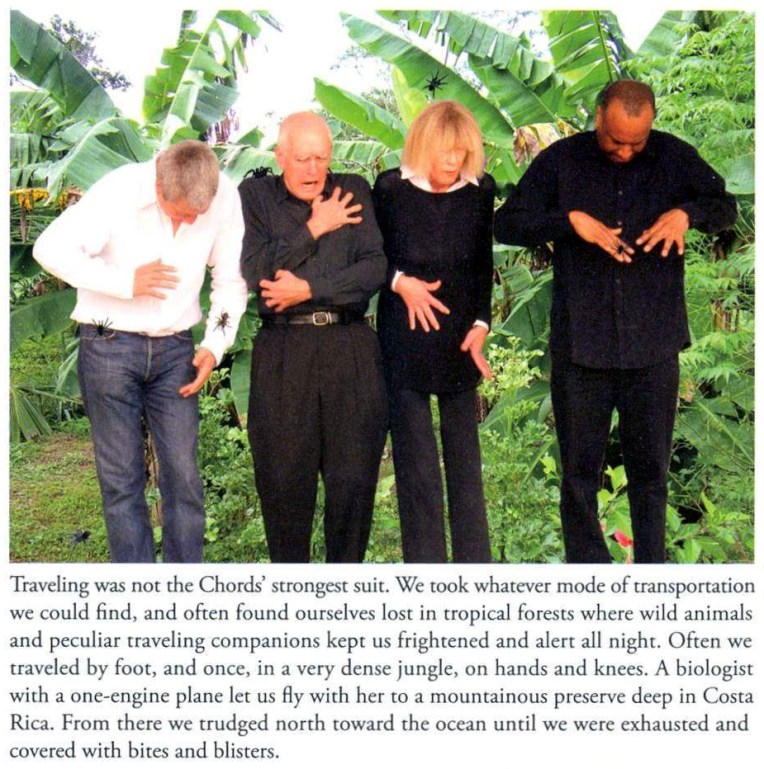
The Lost Chords Find Paolo Fresu is one of those rare albums that not only tells but also demonstrates a story through deft self-presentation. The CD booklet is a journey in and of itself, laying down the music’s backstory to the point of admirable absurdity.

WATT-34-booklet- 7

When we first encounter the quartet of Carla Bley (piano), Andy Sheppard (soprano and tenor saxophones), Steve Swallow (bass), and Billy Drummond (drums), they’ve just been traveling south of the American border, when they hear tell of Paolo Fresu, who has been teaching and playing nearby. So begins a search for the elusive trumpeter that takes them to Central America:

Costa Rica

In the wake of all that drama, they learn that Fresu is in Rome, and off they go to the Italian capital by way of Paris, while on tour, to find him at last:

WATT-34-booklet-8

The interpretations that emerge from this seemingly fated alignment of signatures are as variegated as the mythology that binds them. “The Banana Quintet” is a six-part suite in quintessential Bley style. Fresu opens by extending an invitation to Sheppard’s tenor before Drummond’s brushes prime the canvas for every stroke that follows. The many allusions contained therein, spanning the gamut from the Beatles to the blues, parallel the tonal combinations that comprise them. And while the mood is gentle at heart, peaks of expression arise where needed. Fresu knows how to handle these with grace, and gives them a retrospective cogency to balance the wit at hand. Whether in the wryly peeled “Three Banana” or the melodically sophisticated “Four,” the quintet knows where it’s going at every interval. Some of the most rhapsodic textures come across in “Five Banana,” in which dovetailed bass and drums allow Sheppard’s tenor to leap with ecstasis and Fresu’s trumpet to unravel a spectrum’s worth of tonal colors. Indeed, Fresu shows himself to be close in spirit to Enrico Rava when it comes to lyrical approach. Sheppard gives over to beauties of his own, mind-melding with Fresu along lines of emotional timbre.

“Death Of Superman / Dream Sequence #1 – Flying,” written in memory of Christopher Reeve, spins pianistic thermals for Swallow’s outstretched wings. Delicate cymbals streak like clouds in flyby, a muted trumpet stringing chains of memory in their wake. The band bows out with a reading of Bley’s classic “Ad Infinitum” that, while relatively straightforward in arrangement, elicits particular grit from Sheppard as Drummond adds sunset gradations.

Pristinely recorded at La Buissonne Studio in Pernes Les Fontaines, with Gérard de Haro and Nicolas Baillard engineering, the effect of all this is so spacious and fluid, it might just as easily have been released on ECM, and ranks among my Top 3 WATT albums of all time.

Carla Bley Big Band: Appearing Nightly (WATT/33)

Appearing Nightly

Carla Bley Big Band
Appearing Nightly

Earl Gardner, Lew Soloff, Giampaolo Casati, Florian Esch trumpets
Beppe Calamosca, Gary Valente, Gigi Grata, Richard Henry trombones
Roger Jannotta soprano and alto saxophones, flute
Wolfgang Puschnig alto saxophone, flute
Andy Sheppard tenor saxophone
Christophe Panzani tenor saxophone
Julian Argüelles baritone saxophone
Carla Bley
piano, conductor
Karen Mantler organ
Steve Swallow bass
Billy Drummond drums
Recorded live at The New Morning, Paris, July 17 & 18, 2006 by La Buissonne Studio with BorderLive Studio
Engineers: Gérard de Haro, Sylvain Thévenard, and Mikol Seminatore
Mixed and mastered at La Buissonne Studio, Pernes Les Fontaines, August 18 & 19, 2006
Engineers: Gérard de Haro and Nicolas Baillard
Produced by Carla Bley and Steve Swallow
Release date: August 22, 2008

In her first (nominal) big band recording since 1996’s Goes To Church, Appearing Nightly comes to us by way of a two-night residency at The New Morning (Paris) in July of 2006. Despite the characteristically high levels of musicianship, composing, and arranging, I find myself relatively underwhelmed by these performances on the whole. Both “Greasy Gravy” and “Awful Coffee,” which open the album, were commissioned by Orchestra Jazz della Sardegna. The latter is the better of the two, with its compelling upswing and protein-rich baritone saxophone, courtesy of Julian Argüelles. But for some reason I struggle to fit myself into the surroundings. Having said that, as is the case with even her least essential albums, there’s always that one masterpiece that keeps its bead from falling off the string. In this case, it’s the 25-minute “Appearing Nightly At The Black Orchid.” Commissioned by the Monterey Jazz Festival and conceived as an homage to the 1950s, this fourfold suite gives the widest berth for musicians and listeners alike to stretch their limbs. What opens with subtle grit from the horns against the smooth groundwork laid by bassist Steve Swallow and drummer Billy Drummond opens into a prolific showcase for its soloists, including the ever-incisive Lew Soloff on trumpet, Wolfgang Puschnig on alto, and Gary Valente on trombone. Down a rung but still holding firmly on to the ladder of greatness is “Someone To Watch,” for which Swallow and Drummond (for me the stars of the entire recording) establish a superlative groove while reserving enough spotlight for Roger Jannotta’s soprano. Only in the final stretch of Ray Noble’s “I Hadn’t Anyone Till You,” however, does a certain lyrical beauty take hold of the proceedings.

Commendable as this effort is, I wouldn’t start here if you’re new to Bley, as its subtleties may be lost on those who don’t know her work already. More of a grower than a shower, Appearing Nightly is an album that reveals itself upon repeated listening, so consistent in its focus that we must labor more to uncover what lies beneath.

Bley/Sheppard/Swallow/Drummond: The Lost Chords (WATT/32)

The Lost Chords

The Lost Chords

Carla Bley piano
Andy Sheppard soprano and tenor saxophones
Steve Swallow bass
Billy Drummond drums
Recorded October 2003 on tour in Europe
Engineer: Bill Strode
Mixed November 2003 by Tom Mark and Steve Swallow at The Make Believe Ballroom, West Shokan, New York
Produced by Steve Swallow
Release date: June 7, 2004

The Lost Chords marks the birth of a marvelous quartet comprised of Carla Bley on piano, Andy Sheppard on soprano and tenor saxophones, Steve Swallow on electric bass, and Billy Drummond on drums. Culled from a European tour in October of 2003, the set presented for our listening pleasure is one of chameleonic moods and methods.

“3 Blind Mice” adlibs on the nursery rhyme with a comic genius that is uniquely Bley. What at first abides by a rigorous sense of rhythm soon gives way to childlike wonder, and perhaps clues us in on the seemingly inexhaustible creative well from which she and her bandmates draw. The middle section of this three-parter yields one of Sheppard’s most astonishing runs, breathing circularly through his soprano with an air of mystery. Swallow and Drummond retie the backdrop to ensure the integrity of every scene change, the drummer unleashing particular catharsis in the wake of Sheppard’s exhausting run. Drummond shines further on “Hip Hop,” which nods his head alongside Swallow’s funky stylings.

After the 80s throwback of “Tropical Depression” (a lost track from Night-Glo, perhaps?) and the hipper inflections of “Red,” in which Bley follows Swallow’s tightrope walk from below with arms outstretched yet never needing to fear that he might stumble, the “Lost Chords” suite brushes our vision with pigments of twilight, followed by a boppish ride into the statelier conclusion that holds its final chord to the point of breathlessness.

At every turn, Bley calls upon her capacity for placing notes exactly where they belong, neither underselling nor exaggerating her role. As composer, she is the mastermind. As performer, she knows where she and her bandmates need to be, and allots their due accordingly.

The Carla Bley Big Band: Looking For America (WATT/31)

Looking For America

The Carla Bley Big Band
Looking For America

Earl Gardner, Lew Soloff, Byron Stripling, Giampaolo Casati trumpets
Robert Routch French horn (“The Mothers”)
Jim Pugh, Gary Valente, Dave Bargeron trombones
David Taylor bass trombone
Lawrence Feldman alto and soprano saxophones, flute
Wolfgang Puschnig alto saxophone, flute
Andy Sheppard, Craig Handy tenor saxophones
Gary Smulyan baritone saxophone
Karen Mantler organ, glockenspiel
Carla Bley
piano, conductor
Steve Swallow bass
Billy Drummond drums
Don Alias percussion
Recorded October 7 & 8, 2002 at Avatar Studios, New York
Engineer: Tom Mark
Assistants: Brian Montgomery and Josh Benezra
Mixed November 2002 by Tom Mark and Steve Swallow at The Make Believe Ballroom, West Shokan, New York
Mastered by Greg Calbi at Sterling Sound
Produced by Steve Swallow
Release date: May 5, 2003

Looking For America is yet another milestone in Carla Bley’s discographic adventure as leader of a big band. In addition to being her first to be recorded in New York’s famed Avatar Studios, it’s also a backdoor introduction of one of my favorite drummers, Billy Drummond, into her gene pool. Add to that a twisted smile across the visage of modern politics, one so derisive that it prompted a disclaimer on the back page of the CD booklet exempting the musicians and label from the views expressed therein, and you have a cogent musical essay on the spirit of its age.

Starting and trail-marking the album are four maternal preludes: “Grand Mother,” “Step Mother,” “Your Mother,” and “God Mother.” These blushes of horns, cymbals, and bass are letters to ancestors that came before and those yet to be, each a torchbearer of memory and moral legacies that change with the times. An equally deep nod to adaptation is “Fast Lane,” which enchants by virtue of Wolfgang Puschnig’s superb alto playing. Drummond and bassist Steve Swallow are locked in and give the band a secure springboard off which to jump before deferring to a tangle of horns.

“The National Anthem” swears itself into office over the course of five parts that hinge on a funky bass line from Swallow. Drummond and percussionist Don Alias dig deep and, over the next 22 minutes, adapt their color schemes to suit the message of every given moment. Feelings of patriotism butt up against cynical revisionism, each depending on the other to keep the harmony of free speech alive. Despite kaleidoscopic effect, if not because of it, allusions to Americana become borderless in a larger mosaic of meaning.

Running crosswise to this nationalistic angle are the moody dances of “Los Cocineros” and “Tijuana Traffic,” the latter a hat tip to the Tijuana Brass that looks back on memories as if through a flipbook. Sunbursts from trombonist Gary Valente and trumpeter Lew Soloff spearhead downright orchestral textures on the whole. Tying it all together is Bley’s arrangement of “Old MacDonald Had A Farm.” Valente has tons of down-home fun with this staple, so thoroughly transplanted that it’s almost unrecognizable. Inspired to the last drop!