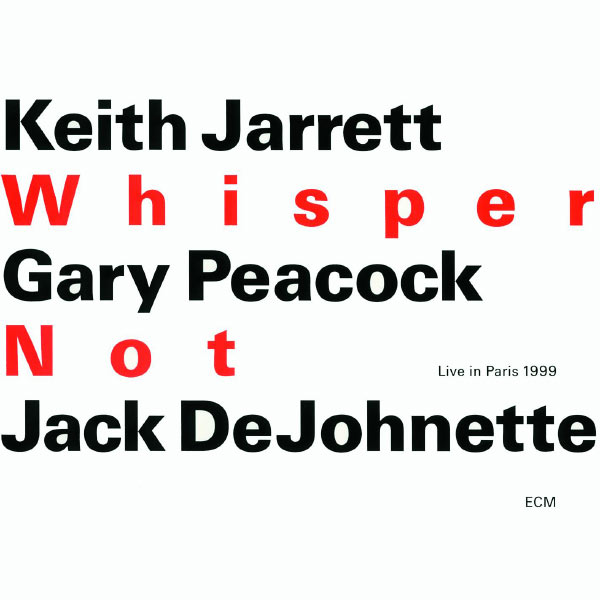
Keith Jarrett Trio: Whisper Not (ECM 1724/25)

Whisper Not

Keith Jarrett Trio
Whisper Not

Keith Jarrett piano
Gary Peacock double-bass
Jack DeJohnette drums
Recorded July 5, 1999 at Palais des Congrès, Paris
Engineer: Martin Pearson
Produced by Manfred Eicher

Following his intimate comeback from an illness that might have barred him from the keyboard forever, pianist Keith Jarrett closed another gap with Whisper Not, the first live album with his standards trio in three years. Once the needle of “Bouncin’ with Bud” drops, however, it’s as if there’d never been a skip in the record. Jarrett seems unable to contain the joy of being once again in his element, so that his chording behind Peacock’s first solo feels like a bird circling, waiting to dive: not in for the kill, but for the sheer thrill of his clip. And dive he does, navigating DeJohnette’s thermals with expert care, thus marking a triumphant return to the fold. That said, when later Jarrett comes into his vocal own on “Hallucinations,” he proves that this concert is more than that: it’s a reframing of what always was, and ever will be, a profound talent.

That the trio’s sound is brighter and more focused will be obvious to any longtime listener. There’s a special, scintillating quality to this album notable already in the title track, which opens with a characteristically wood-knotted intro before locking into a welcoming gait. Yet Jarrett positively fluoresces in the more downtempo turns. “Chelsea Bridge,” for one, moves with the magical fortitude of a classic fairytale—only this music is undeniably real. Some tender unpacking from Peacock sets the pianist to the delicate task of sorting those artifacts to heartwarming effect. His vivid approach to melody stands out further in “All My Tomorrows” and “Round Midnight,” both deep gazes inward that light candles in a post-storm blackout: not with fire but with an inextinguishable love for the musical process.

From “Wrap Your Troubles In Dreams” to George Shearing’s “Conception,” the set’s more upbeat turns have a tenderness all their own. On the same note, “Groovin’ High” might as well be the name of a school, for the trio’s performance of this Dizzy Gillespie tune is a master class in exposition. Peacock revels in the sound to which he is able to contribute so intelligently, while DeJohnette elicits visceral exchanges, ligaments to this as-yet-infallible body. “Sandu” further proves why Peacock and DeJohnette comprise one of the most intuitive rhythm sections in the business. They flow so organically, and with such unforced conviction, that it seems impossible to listen outside their spell. Each has his master moment: the bassist’s in “Prelude To A Kiss” and the drummer’s “Poinciana.” The latter is one of the most brilliant in the trio’s recorded output, of which only this concert’s encore, “When I Fall In Love,” has made it to disc before. Even more beautiful than one could hope for, it’s the perfect way to end a new beginning.

Welcome home.

<< Bruno Ganz: Wenn Wasser Wäre (ECM 1723 NS)
>> Herbert Henck: Piano Music (
ECM 1726 NS)

Children At Play: s/t (JAPO 60009)

Children At Play

Children At Play

Tom van der Geld vibes, percussion
Roger Janotta reeds, percussion
Larry Porter piano, electric piano, percussion
Richard Appleman bass
Jamey Haddad drums
Bob Gulotti drums
Recorded 1973 at Rennaissance Studios, Maynard, Massachusetts
Engineer: C. Ange
Produced by Tom van der Geld

Vibraphonist Tom van der Geld’s distinct musical wanderings have left behind some of the choicest among ECM’s out-of-print relics. Whether the trio settings of Path or the broader palette of Patience, his sound is at once soft and unbreakable, forthright yet ecumenical. His footsteps also found purchase in the rarer soil of the JAPO sub-label, of which this self-titled date from his legendary group Children At Play was the first. Here van der Geld is joined by Roger Janotta on reeds, Larry Porter on keyboards, Richard Appleman on bass, and Jamey Haddad on drums. Basking in opener “Tamarind,” it’s clear why the ensemble has attained such high status among collectors. This power statement awakens to a wealth of morning light every bit as descriptive as Grieg’s. The brittle bass line that ensues nets a flavorsome admixture of piano, vibes, and soprano sax that positively exudes personality. Between Porter’s grounding keys and a drum circle-like interlude, there is much to take in throughout this 18-minute journey as it pulls down the sun to where it began.

“Wandering I” lumbers further into the album’s storybook scenography, bringing illustrations to life with a hint of whimsy. In addition to the group unity forged in such tracks, Janotta’s reeds work a most vivid magic throughout, but especially in “Sweet My Sweet,” in which he sets up a tropical narrative from van der Geld, trembling and sunbathed, swaying like the album cover’s long grasses. Drummer Bob Gulotti replaces Haddad on “Reason,” a rubato outing of multifaceted inner dimensions. A gnarled, lethargic bass solo paints the picture of sleep before van der Geld’s dreams touch off lens flare accents.

If pushed to find a point of critique regarding this album, I might comment only on the sequencing, for the tracks might have better served themselves in reverse. As the order stands, it’s like starting with an enormous dessert and working one’s way back through smaller main courses. Either way, the album is another beautiful entry in the van der Geld travelogue and finds rich closure in “Patch Of Blue.” The only track not written by the bandleader (this one comes from Porter’s pen), it molds a pastiche of all that came before, combining the time of “Tamarind,” the fantasy of “Wandering I,” the warmth of “Sweet My Sweet,” and the introspection of “Reason” in smooth detail. The feeling is one of sand—not of desert, but of beach—between the toes, honest down to the last grain.

Hristo Vitchev: A Nomad and His Guitar

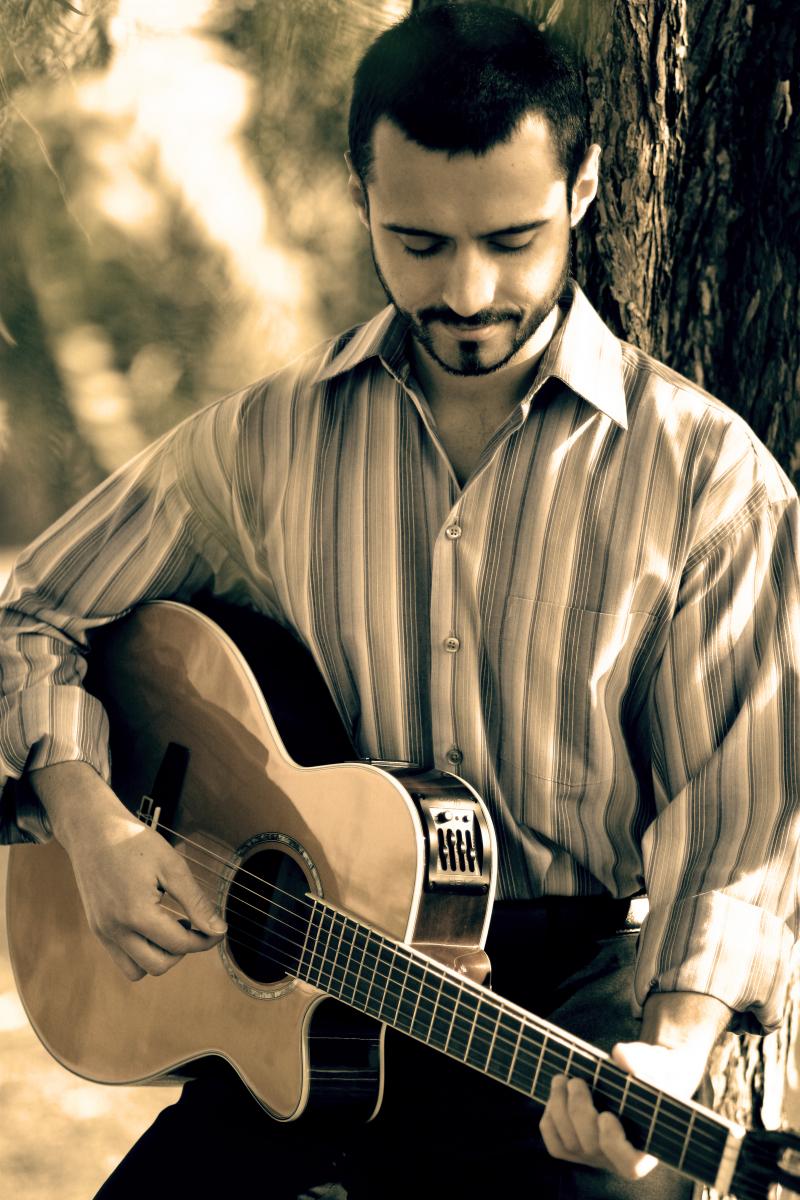
Hristo 1

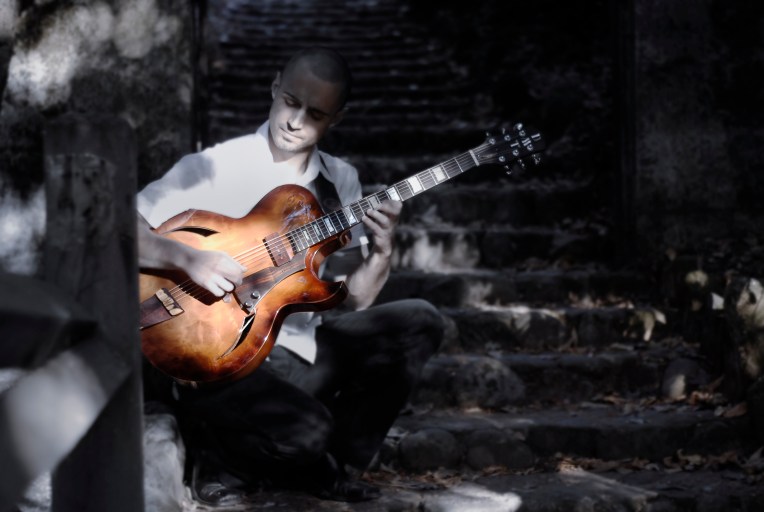
Hristo Vitchev is a gem among jewels. Born in Sofia, Bulgaria and now based in San Francisco, the jazz guitarist-composer has nearly 300 original compositions, various articles on improvisation, and even a book on jazz chord theory to his credit. His 2009 quartet debut, Song for Messambria (2009), was released to wide critical acclaim and firmly established Vitchev as an artist to keep an ear on. For indeed, keeping an ear on things is what his music is all about. Thus attuned to the pulse of his path, his is a spiritually focused craft that welcomes all without judgment. Like many independent artists working today, he has achieved this state of mind through no small measure of sweat and determination, but you might never know it from the effortless fluidity of his playing and the accommodating vitality that animates it.

Of that playing, comparisons to Pat Metheny seem inevitable. Vitchev’s penchant for smooth geometries and quick key changes certainly falls in line with the former’s graceful sound. And so, it only made sense to pose this question during a recent interview. Vitchev’s response:

He is definitely one of my heroes. I was first exposed to Metheny’s music around 1999, and the first record I heard was Imaginary Day. I still remember how mesmerized I was by the tonal colors and textures of that album. At the time, however, I was still into rock music and had yet to discover jazz. In a way, the mystery and curiosity that Pat’s music planted in me was one of the forces behind deciding to study and understand this great American art form. Of course, one cannot escape the conscious and subconscious influences of his/her idols, but if I had to compare my style with his, I would say I’m more of an impressionist, blending harmonic and tonal planes to a more finite degree and playing with the smallest nuances. Pianists are among my biggest influences: Tord Gustavsen, Esbjörn Svensson, Brad Mehldau, not to mention Ravel, Debussy, and all the great composer impressionists.

The impressionist angle is an important one to unpack, for it distinguishes Vitchev from others on the scene, who may forego such interest in what he terms “harmonic tapestries” in favor of a less mitigated approach. Yet the patterns with which he concerns himself are truly integral to the sound he has worked to establish. It is a freedom of expression born of unquantifiable practice, performance and, above all, sharing:

There seems to be a lot of travel implied in your songs. The track titles of Song for Messambria in particular contain references to clouds, sky, etc. Is there any conscious geographical or spatial relationship in your music and how do the recording and improvising processes construct or react to that space?

Over the years, I have traveled to many different places and spent a considerable amount of time living on three different continents. Traveling to me is the ultimate way to learn, internalize, and comprehend all the uniqueness of different cultures, traditions, and human diversity. I can affirm that I’m very inspired by geographical places, and by the actual act of traveling. Song for Messambria was inspired by the enchanting city of Messambria (now Nesebar), located on the Black Sea coast of Bulgaria and also one of the oldest cities in Europe. My quintet record The Perperikon Suite was also inspired by a geographical location—the city of Perperikon, also known as the capital of the great Thracian civilization dating back to 5000 B.C. My latest record, Familiar Fields, is inspired by the many emotions I felt returning to Bulgaria many years later (as an adult) to see the homeland of my childhood. Translating this into my music and my sound seems to be a very natural process. When the band gets together and plays the first note of a chart, it is really the beginning of a sonic journey that is responsive and reactive to what each member notices on the way. It is very hard to explain, but in reality playing and improvising music is the same as taking a road trip with your friends and constantly relating to each other’s feelings about the environment around us.

What attracts you to jazz and how has it enriched your life?

My attraction to jazz came rather late in life, but when it arrived it was more intense than any other interest I have ever known. There is something so freeing about its spontaneity. This music is contagious for all its vivid aliveness and constant evolution. Of course, my take on jazz differs quite substantially from the classic definition of the word. For me it is more of a procedure than a style. It is that special and magical element that everyone can embrace and make it his/her own. This music really helped me define who I am as a person, as a musician, as an element of this world and as a spiritual molecule. It is immense.

Overall, is your music consciously autobiographical in any way?

I guess the constant goal of any musician, especially those in the improvisatory arts, is to grow into attaining the ultimate level of emotional expression, one that loses nothing in translation. Straight from the heart and soul. This is also my goal. I work very hard day after day, and hopefully that comes across to the listener. There is nothing more beautiful to me than sincerity and honesty expressed through art.

What kind of music did you listen to growing up?

When I was growing up I first started listening to 80s rock bands. I then transitioned into heavy metal, then progressive rock, fusion, and finally landed in the jazz world in 2000. Of course, being Bulgarian I always had traditional Bulgarian folk music around me as well.

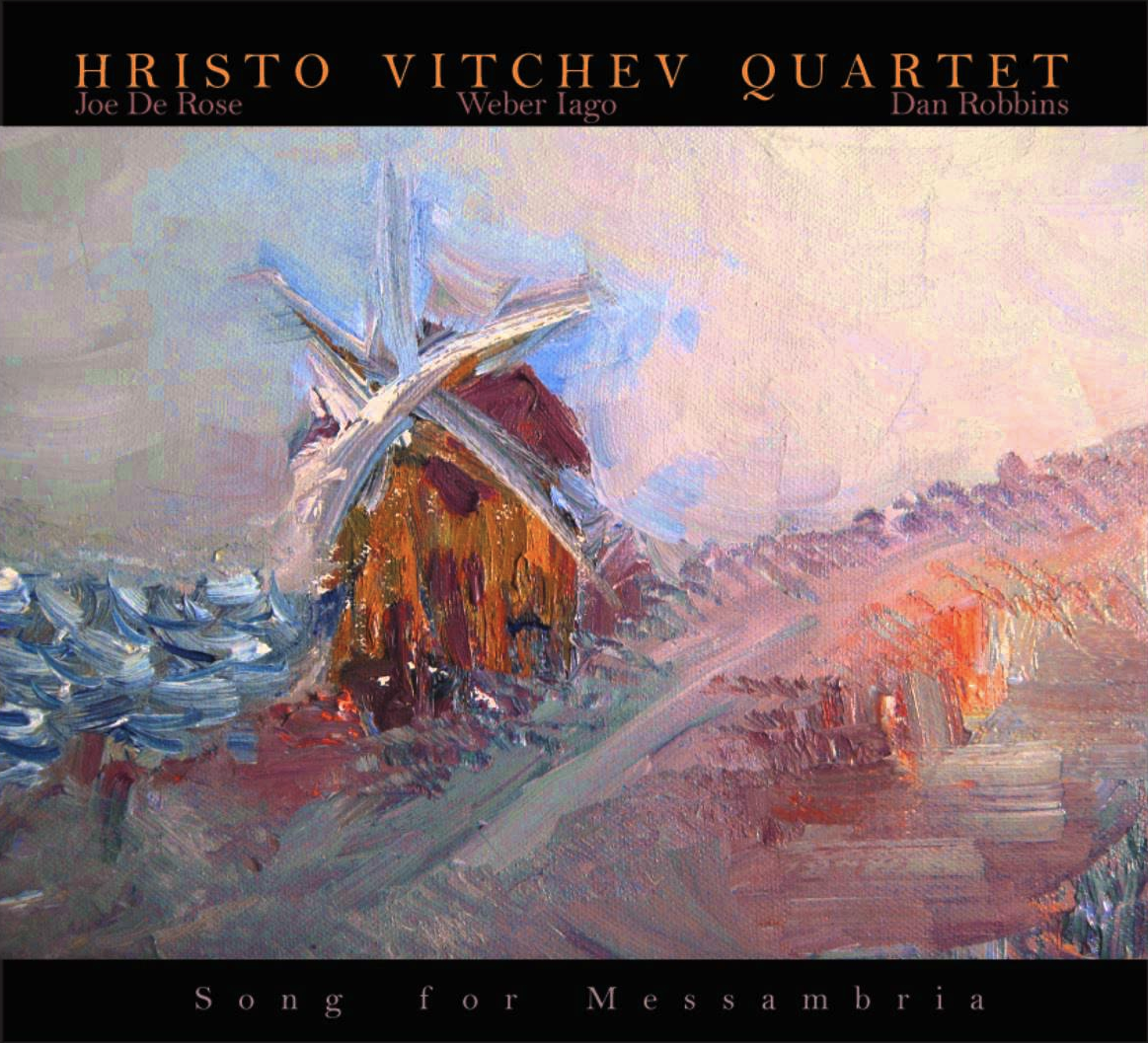
Song for Messambria

To be sure, Vitchev’s autobiographical impulses are clearly felt on Song for Messambria, which for a debut feels like a step into an already boldly flowing stream. From the first licks of “Waltz for Iago,” the album maps a decidedly itinerant mind, jumping straight into the melodic heart of things. Messambria gets brownie points for featuring acoustic guitar throughout, as well as for its palpable group telepathy. Tracks like “Sad Cloud” and “The Road to Naklabeht” show a quartet in peak form, speaking also to Vitchev’s ability to surround himself with likeminded talent. Bassist Dan Robbins rocks the boat in the whimsically titled “Dali in Bali,” while drummer Joe DeRose keeps us locked into every development with ease. Vitchev clicks most beautifully in the closer, “It Follows.” An emblematic track, it pairs guitar and piano in seeming anticipation of The Secrets of an Angel, his first full duet album with longtime collaborator Weber Iago.

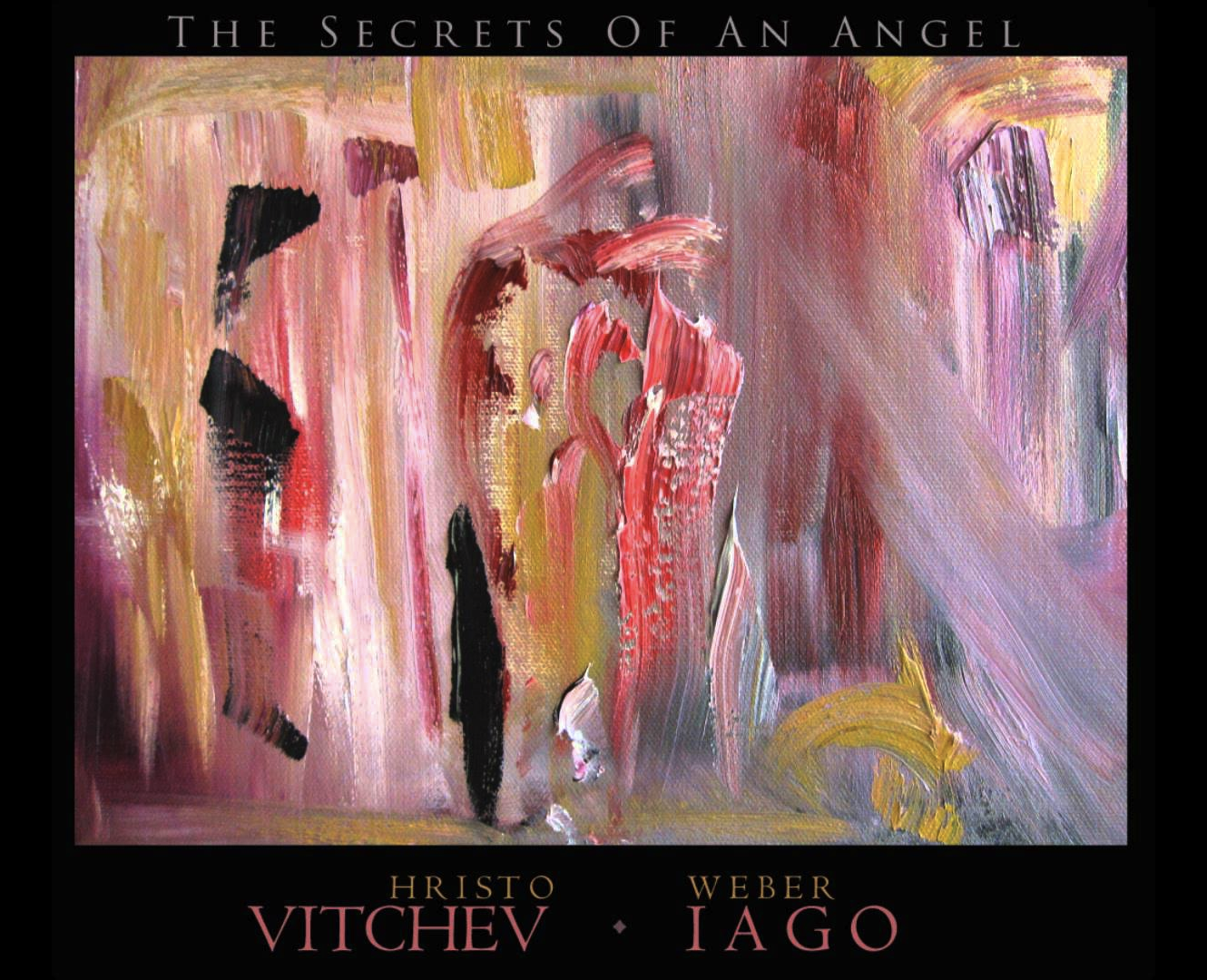
The Secrets of an Angel

Of that second album, the opening “Waltz by Chance Alone” starts us down a highway to supreme insight. From the intimate and sublime (“Zima’s Poem”) and the delightfully programmatic (“When It Rains” and “Haiuri’s Dance”) to the storytelling vibe of the two-part “The Last Pirate,” there is a continuity of purpose and consistency of color. The final “Leka Nosht (Good Night)” ends like the previous album, closing its eyes on a dream, as if what has just transpired were but a waking memory, a fantasy too beautiful to exist for more than a breath’s duration in this world.

“Waltz by Chance Alone” speaks to unpredictability, to the beauties that can come out of unforeseen encounters. Is your music ultimately your way of reflecting upon the wonder of life’s mysteries?

As an artist, I always thrive to represent my life experiences in sounds without any filters or colorations. As they say: straight from the heart. I’m in love with life and admire and value every single breath, every single day on this planet, and every single emotion felt. I also find the mystery and unpredictability of our human condition to be the most important driving force and reason to move forward and wake up each day. Capturing such emotions in my work is the ultimate goal since there is nothing more beautiful that the sincerity and innocence of living. If the listeners can hear such sensations and qualities in my work and music, then my mission is accomplished.

What made you decide on going acoustic for the first quartet and duet albums? What sparked the shift to electric in the later?

For my first two albums I really wanted to capture the textures and colors of whispering, relating a story in the most delicate and relaxed way possible. In contrast, the material I needed to express on the next three records was a bit more edgy and multidimensional and required the ability to cover a wider dynamic range with my instrument. I’m a true believer that as a composer one has to let the music dictate what it requires to come alive.

How do you approach the duet differently from the larger ensembles?

From the composing to the recording to the playing, the duet records with Weber Iago are so much fun in all aspects of conception. There is something very special about a duo setting. There is this elasticity and immense space for expression for both instruments that is almost impossible to capture in any other format. It also allows for a much deeper and more intense improvisatory experience. I actually love the duet format so much that as we speak I’m finalizing the mixing of my next record: another duo session with Bulgarian master clarinetist Liubomir Krastev. The record’s name is Rhodopa and it covers very old Bulgarian traditional songs which I have arranged in a modern jazz fashion as well as a few original pieces I wrote for the album.
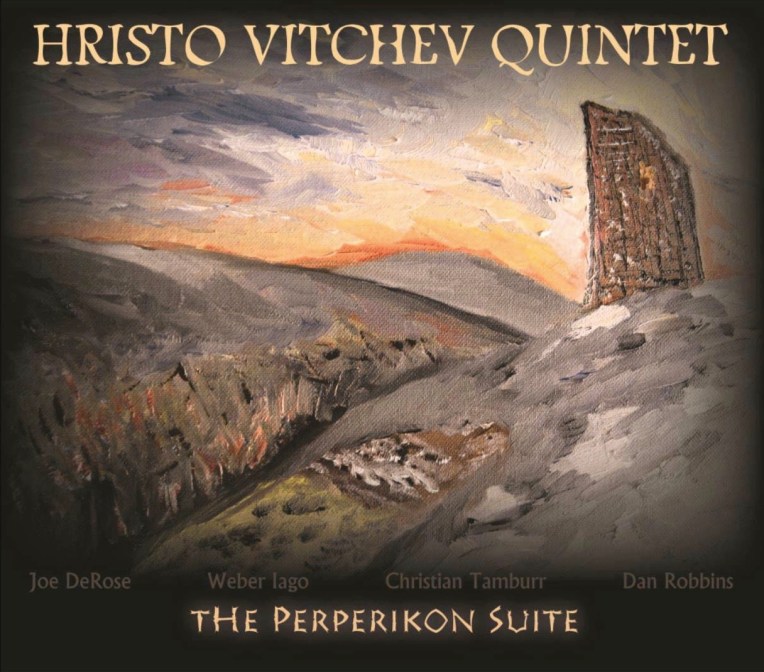
The Perperikon Suite

Vitchev’s next major project, The Perperikon Suite, fleshes his sound out to a quintet with the multitalented Christian Tamburr on vibes. The album feels orchestral, almost cinematic in scope, and establishes with “The Stone Passage” a sprawling, living scenery that brings us to “The Palace” by the light of flickering torch. The thematic shapes here are vivid, the music as descriptive as the titles. Tamburr adds reverence to the proceedings, as in tracks like “The Shrine of Dionysus.” All of this comes to a head in the virtuosic ride that is “The Acropolis” before easing us back into the mountains via the backstreets of “The Northern City” and “The Southern City,” through which we float on a bed of string and brush into the sunset.

Conceptually speaking, The Perperikon Suite is your most complex project. But in this day and age of radio airplay, what do you hope the listener will get out of it when s/he encounters it without knowledge of that concept?

That particular record is really a concept album. In a way it is one composition divided into seven different movements that capture the complex sensations and emotions that I felt as I explored the ruins of the ancient city of Perperikon, located in the Eastern Rhodopa mountains. It is definitely hard to grasp and experience the concept, meaning, and intention of the music if one is to hear only one isolated movement from the album, but what can you do. We live in an age and time where instant gratification and short attention spans are the norm.

What is the importance of mythology in your music?

I love history and mythology very much and it is a great source of inspiration to me. Coming from a land where mythology and history interweave, a land of such rich cultural heritage, I almost feel it is my duty to express as much of it through my music as I can.

Heartmony

For his second duo album with Iago, Heartmony, Vitchev builds a mythology of his own. The album is also a stunning showcase for Iago’s lush pianism, offset as it is by both acoustic and electric guitars, often in overdub. This combination is most effective in “Musica Humana,” which aside from being a gorgeous piece of music is also a good descriptor of his craft on the whole. The deeper sound of Heartmony looks outward, as if from a great height, as one can hear in “The Last Leaves Which Fell in the Fall.” Between the poetry of “Crepuscular Rays” and the surprisingly uplifting “The Melancholic Heart,” there is much to soak in and savor.

Heartmony seems to be more extroverted than your first duo album with Iago. Would you agree with this?

Yes, I completely agree with that statement. Out of all my records, Heartmony has the most different style of composing. Usually I use a good combination of ear, theory, and arrangements when I pick the up the pen to write a new composition. For Heartmony I decided to only use my heart in the true essence of the word. I sat down at the piano and just played with no conception for form, harmonic progressions or melody. When I finally reached the point where I felt the story had been completely told, I looked back and there were 11 very interesting compositions already finalized. The rest of the magic was simply playing together with my great friend and musical brother Weber.

You clearly have a deep musical relationship with Weber. How did you meet and what did it feel like to play with him for the first time?

I met Weber in 2007 when we both played in the pop-opera band of a great Italian tenor. From the very first time I heard Weber warm up before a gig and listened to his take on harmony and melody I knew that if I ever could be a pianist I would want to sound just like him. We connected instantly and ever since that date we have worked on every musical endeavor together. His voice on the instrument is truly unique and as a composer he is second to none.

Your albums tend to end on a somber, reflective note, but despite its title, “The Melancholic Heart” ends Heartmony with optimism. Were you trying to show the positivity that can come from sadness?

Yes, a lot of people are surprised when we play that song live. They expect something sad and reflective and in a way it is a very bouncy and uplifting song. I can definitely say that I’m a melancholic person, but when I reflect on the past I often do so in the most uplifting and grateful way. I’m also a true believer that there is something very romantic and beautiful in sadness. It reflects the fragility and innocence of the human condition.
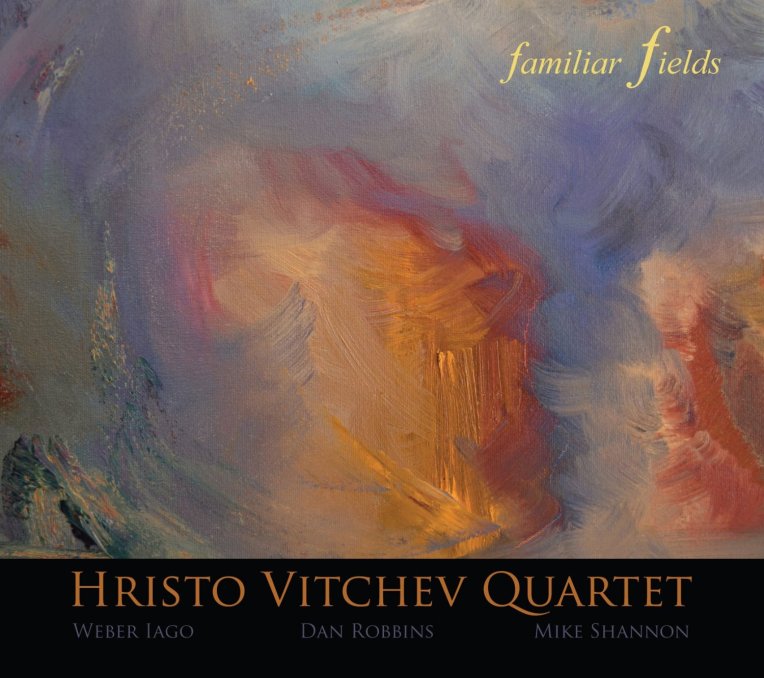
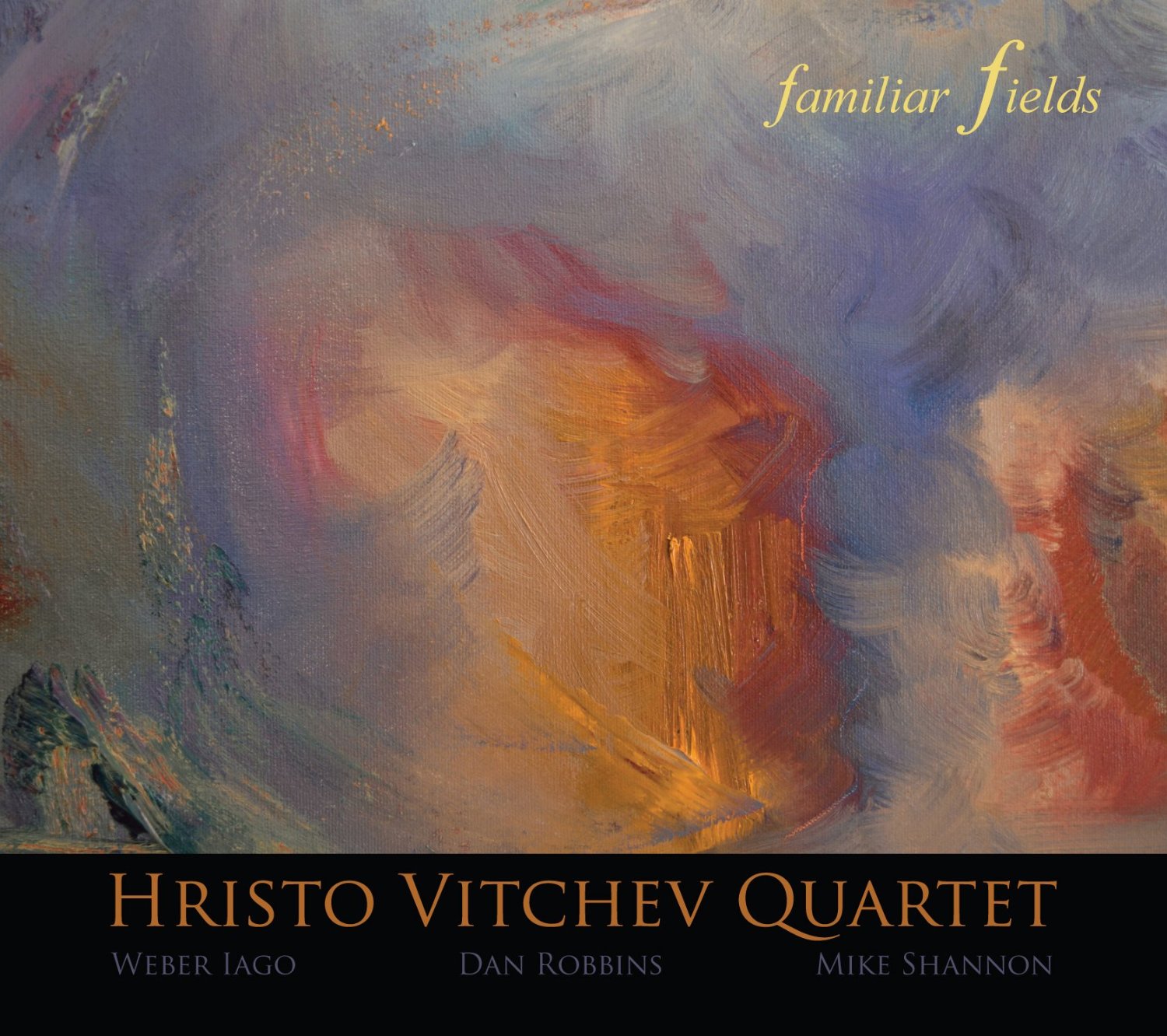
Familiar Fields

All of these tender sentiments and more seem to have gone into Familiar Fields, Vitchev’s latest effort that lands him again in the trusted company of his quartet, with Mike Shannon replacing DeRose on drums. If any Metheny comparisons are warranted, then let them point to “Ballad for the Fallen.” This groovy, flowing snapshot travels similarly well-worn avenues through a lovely pattern of tension and release. The quartet moves forward with a confidence that is as breezy as it is robust. In spite of his democratic approach, however, Vitchev lures plenty of spotlight his way in “Wounded by a Poisoned Arrow” and “The Prophet’s Daughter,” each a dialogue with the self. Fields feels most familiar when the band lies back, building autumnal susurrations to sparkling summer in “They Are No More” and mortaring galactic staircases in the two-part title tune. Recalls of previous albums also make an appearance. “The Mask of Agamemnon,” for example, harks back to Perperikon, while “The Fifth Season” seems to pick up where Heartmony left off, holding the rhythm section’s wings into the open vistas of “Willing to Live,” whereby this sandy carpet of illusion closes on a philosophical note.

The quartet you have assembled on Familiar Fields is a special one. What does it mean to you to play with these intuitive musicians?

All my musical brothers in the group bring so much to the table. They are simply incredible musicians and improvisers, but most importantly they are my best friends. It is the love and friendship we have for each other and for the music that makes this band so special to me. From the very first note we play, there is only camaraderie and respect in the air. No egos, no barriers. Just the unifying love for exploration and sincere expression. Some people wait an entire lifetime to find a team like that.

What is the concept behind Familiar Fields?

The concept of Familiar Fields actually started a few years ago when I traveled back home to Bulgaria for the first time in 14 years. As the years went by, I kept wondering just how much of my memories was real and how much was imagined. When I finally went back, everything was so different, but in the most fascinating way my memories were more alive than ever. It was the strangest thing. Here I was in a place that I knew close to nothing about, yet everything seemed as if it had been a part of me all these years. It was like I was walking through the most familiar fields yet also discovering new frontiers among them. This was the beginning of the writing process for the record. The music evolved in a very similar way. I had to wait a few years before I knew the music was ready to be put on tape.

Thankfully, you need only wait for the blink of a cosmic eye before the music is your hands…
Hristo 2

Nils Petter Molvær: Solid Ether (ECM 1722)

Solid Ether

Nils Petter Molvær
Solid Ether

Nils Petter Molvær trumpet, piccolo trumpet, synthesizer, electronics, bass, percussion, sound treatments
Eivind Aarset guitar, electronics
Audun Erlien bass
DJ Strangefruit voices, beats, samples, ambience
Per Lindvall drums
Rune Arnesen drums
Sidsel Endresen vocals
Reidar Skår vocoder
Recording producer: Nils Petter Molvær
Recorded, edited and mixed 1999 at various floors in Oslo, Norway
Mastering: Shawn Joseph, Masterpiece London
Album produced by Manfred Eicher

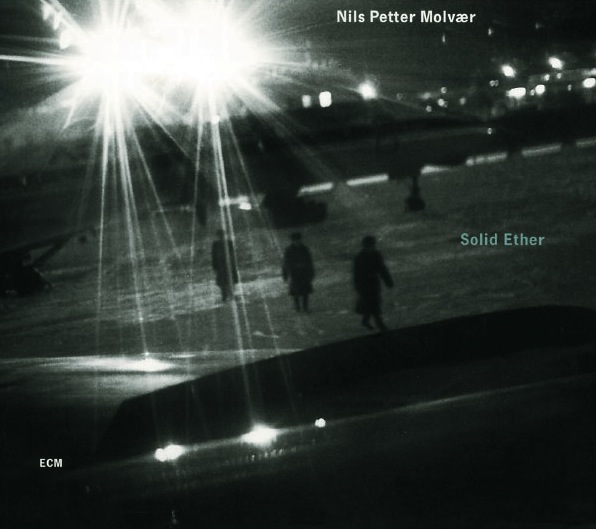
ECM left an indelible mark in 1998 with the release of Khmer. Trumpeter Nils Petter Molvær’s leader debut spread a royal flush across the table when the music industry least suspected it. Solid Ether marks a return to that trending sonic universe, only now it turns away from the idiomatic sources of its predecessor and looks deeper into the mirror for inspiration. This time around, the layers are more archaeologically striated, servile to a beat-driven cartography. Melodically, the album is rawer, rudimentary, and finds its voice through the detailed care of the arrangements. “Dead Indeed” is but one rhythmically arresting example with an altogether sharper edge: a bolder, well-oiled machine. Molvær’s far-reaching introduction surveys a landscape with hand over eyes before diving into a serpentine Nile of its own making. The grinding drum ‘n’ bass vibe raises the dead with its veracity while singing calls harmonize like ancestors with the living: a mummy reanimated and bid to break-dance like it has never loosed a ribbon before. With a wry smile, it cocks its head and throws a handful of sand into those same eyes, that it might have a moment to fade and leave you wondering if it was all just a dream, a vision gone mad the moment you pressed PLAY. This opening track is also significant for being almost entirely played and programmed by Molvær himself, grafting only guitarist Eivind Aarset’s overdubs for effect.

“Vilderness 1” takes its name from Molvær’s daughter Vilde and boasts a cut-and-paste aesthetic of many masks. It is a porous, geometric picture, of which the throbbing bass is an alizarin crimson-loaded palette knife. “Vilderness 2” doesn’t continue where the first left off but dances through its forest once more, hopping from branch to branch like the lithe warriors of Ninja Scroll. After experiencing this slide of Rubik’s plane as if from the inside, the caress of “Kakonita” feels like a wholly different love. Floating primary-colored blocks of notecraft on a bed of infant foghorns, it reworks cinematic DNA into a golem’s playlist. Sidsel Endresen, with whom Molvær plays on the singer’s two ECM recordings, So I Write and Exile, lends her voice to two iterations of “Merciful.” Joined by Molvær on piano, she cuts moving pictures of intense observation, each a morsel of gesture in a world of stills. Her poetry peels alienation away like a sticker, filling in the remaining ghost as if it were a piece of candy in danger of melting.

“Ligotage” first appeared on a Khmer tie-in single and takes a more congealed form here. Its breathtaking scope and depth of language glistens with sun-kissed brilliance. Audun Erlien’s growling bass flushes the sewers of the mind with its grit, heightening the feeling of alarm until it leaps with the unbridled spirit of a dolphin against Ra’s unblinking eye. Drummers Per Lindvall and Rune Arnesen add similar comfort to the concoction of “Trip,” proving definitively that the feeling created by this hip collective sells the music by virtue of its structural integrity alone. From tripping to skipping, we come to “Tragamar.” Striding a fuzzy border between ballad and lament, it drowns in the title track and its biochemical integers. More live drumming adds punch and bites us in the ear with its head-nodding finality.

There is an indigeneity to Molvær’s art that is as far away from pretension as we are from knowing the truth about ourselves. The music is a stranger in its own land, a king without subjects, a dog without a leash. It has only us to turn to.

<< Michael Mantler: Songs and One Symphony (ECM 1721)
>> Bruno Ganz: Wenn Wasser Wäre (
ECM 1723 NS)

Dave Holland Quintet: Not For Nothin’ (ECM 1758)

Not For Nothin

Dave Holland
Not for Nothin’

Chris Potter saxophones
Robin Eubanks trombone, cowbell
Steve Nelson vibraphone, marimba
Billy Kilson drums
Dave Holland double-bass
Recorded September 21-23, 2000 at Avatar Studios, New York
Engineer: James Farber
Assistant engineer: Aya Takemura
Produced by Dave Holland

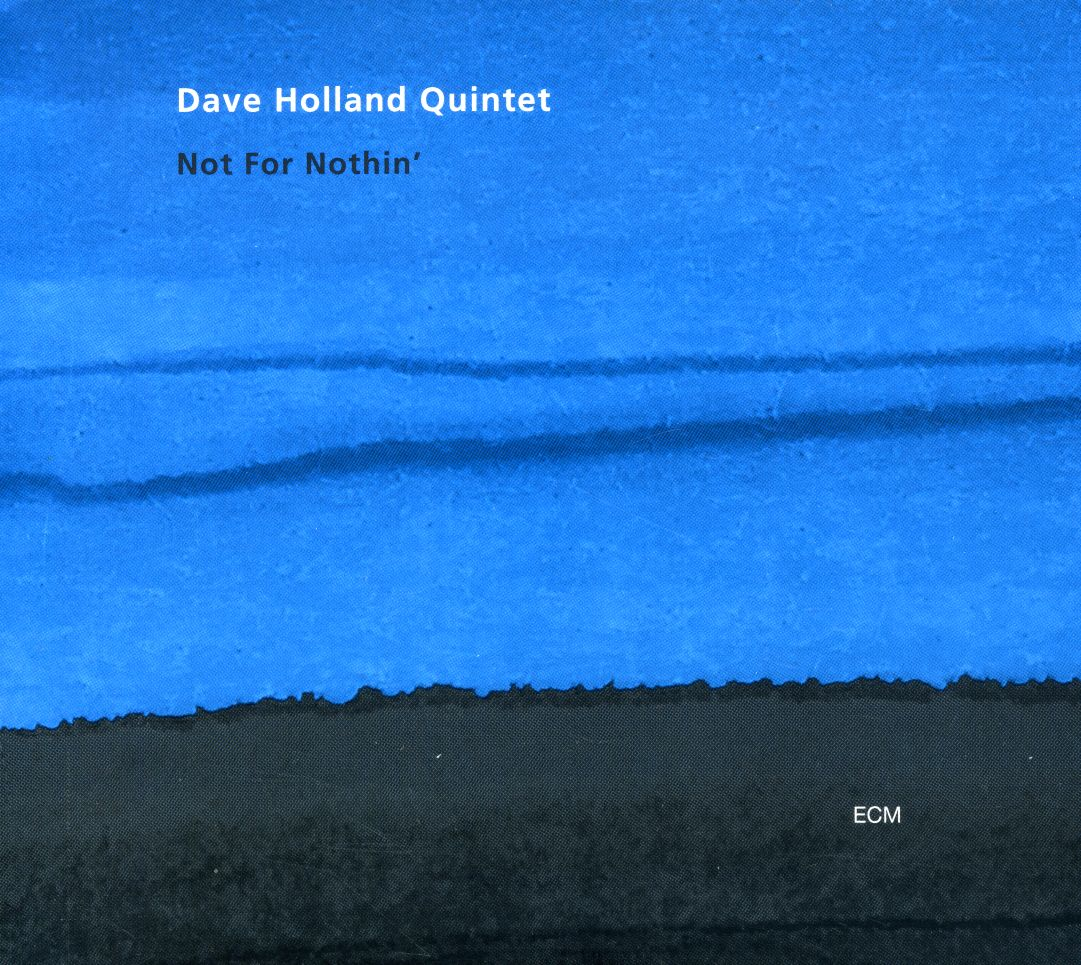
Dave Holland has done for the modern jazz quintet what Keith Jarrett has for the standards trio. Balancing utter control with democratic reverence in a carefully assembled team, he pushes an open agenda of bold yet affectionate creation. In this third and final ECM record of his most proper quintet, he, along with saxophonist Chris Potter, trombonist Robin Eubanks, vibraphonist Steve Nelson, and drummer Billy Kilson cut some of the group’s most flawless diamonds yet. As much a unit as one could ever hope for, their connection as such is more than telepathic—it’s downright genetic. This is all the more astonishing when you think that by the year 2000, when this album was laid down, the group had only been together for three years (even less, seeing as Potter replaced Steve Wilson in 1998).

Of the album’s nine tunes, five have felt the scratch of Holland’s pen. Vital and varietal, they boast the quintet’s signature joy in spades. Unique among them is the reflective “For All You Are,” which begins in a loose weave and proceeds to lay the love on thick. For this one Potter has an especially soulful turn on tenor, gray as a storm cloud and as rainbowed as its aftermath. “What Goes Around” is this session’s vehicle of choice for the horns and also titles the follow-up big band album. This hot ticket is a master class in listening to one’s band mates. The symmetry has to be heard to be believed. The title track is an equally hip penultimatum and finds Nelson shining over break-beat support from the rhythm section. Potter’s soprano adds further bite on two tracks, running like a shawm’s great-great-granddaughter through “Shifting Sands” in anticipation of new settlements and cracking eggs of phenomenal cast in “Cosmosis.” Almost flippant but ever genuine, he charts a magnetic course indeed.

Into Holland’s five the set list shuffles one tune by each remaining member. Eubanks’s “Global Citizen” bolts straight out of the gate freshly laminated. Nelson takes an early lead by a head and carries the quintet swiftly around every bend. Holland navigates this game of Snakes and Ladders all the while, marking a turning point midway through into breezier denouements, which, iced by Kilson’s semisweet drumming, provide plenty of skating surface for the composer’s gliding valves. Potter’s offering is “Lost And Found,” which finds Holland in especially muscled form. Eubanks cuts the cloth with precision, leaving Kilson to rev up the energy to interlocking heights. The drummer’s own “Billows Of Rhythm” dovetails into Holland’s love of jagged syncopation and throws the bassist into an early solo. This gives plenty of breathing room for Potter’s upbeat tenoring in what amounts to the set’s most youthful track. This leaves only Nelson and his sardonically titled “Go Fly A Kite,” which is actually quite forgiving in execution. It paints an evocative picture of sky and cloud, giving the horns more than enough room to soar.

Whether it’s bass and vibes, bass and drums, or sax and trombone, the combinations turn on a dime in constant organic relay. All of which puts the humble reviewer to task in picking sides. For just when Kilson seems to steal the show, Holland overwhelms with its virtuosic flair. When Nelson seems buried under Potter’s effervescent rides, he resurfaces with glittering treasure in hand. Eubanks preens his fair share of feathers as well. All the more reason to just sit back and shake one’s head in wonder at the plenitude.

<< Stephan Micus: Desert Poems (ECM 1757)
>> Enrico Rava: Easy Living (
ECM 1760)

Barre Phillips: For All It Is (JAPO 60003)

For All It Is

Barre Phillips
For All It Is

Barre Phillips bass
Palle Danielsson bass
Barry Guy bass
Jean-François Jenny-Clark bass
Stu Martin percussion
Recorded March 12, 1971 at Alster Film-Tonstudios, Hamburg
Engineer: Klaus Bornemann
Produced by Barre Phillips

This unusual meeting of minds pits bassists Barre Phillips (who also penned the proceedings), Palle Danielsson, Barry Guy, and Jean-François Jenny-Clark with percussionist Stu Martin in a tactile playoff with mixed results. It’s remarkable to think that four behemoths could sound so open, and so one shouldn’t be surprised to encounter a few tangles in “just 8.” For the most part, however, this introductory track maintains the clarity of separation that characterizes the album’s latter remainder. Either way, it’s a jaunty ride into an unprecedented sound-world. Martin anchors “whoop” with his engaging loops amid a menagerie of pizzicato signifiers. Along with “few too” it evokes a jack-in-the-box weeping for want of exposure. From that unrequited lament comes a bright promise, skewed by a hope that the world turns not even for itself. It’s a melancholic hope, to be sure, but hope nonetheless. Martin’s absence here makes the track an early standout: just the rocking of bows pressed into myriad shapes by insistent fingertips. “la palette” and “y en a” form another pair, taking a decidedly architectural approach to this most warped string quartet. Together, they form a cycle of destruction, pain, and healing.

The album only really comes together in the final two tracks. Where “dribble” proves an apt title for its dotted ritual, “y. m.” dances like an anonymous car alarm stripped of its batteries and given new acoustic life. The latter is a particularly complex, anchored piece that spits out some utterly brilliant turns of phrase.

For All It Is, for all it is, is above all an exercise in linguistics. Its cognates are familiar, even if the grammars are not. Although I’d likely recommend this one least out of Phillips’s otherwise astonishing ECM outings, for the completist it will be an intriguing blip on the radar of all four bassists’ careers.

Magog: s/t (JAPO 60011)

Magog

Magog

Hans Kennel trumpet, fluegelhorn, perussion
Andy Scherrer soprano and tenor saxophones, flute, percussion
Paul Haag trombone, percussion
Klaus Koenig piano, e-piano, percussion
Peter Frei bass
Peter Schmidlin drums, percussion
Recorded November 1 and 2, 1974 at Tonstudio Bauer, Ludwigsburg
Engineers: Martin Wieland and Carlos Albrecht
Produced by Solitron Productions, S.A.

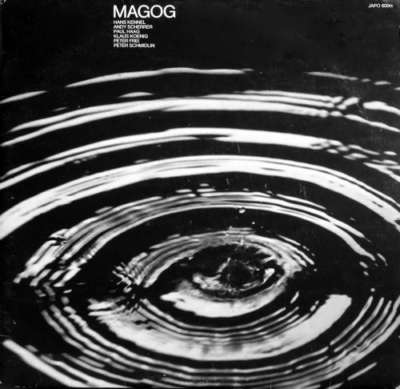
Magog was the brainchild of trumpeter Hans Kennel, who made a name for himself in the 1960s as a hard-bop king of the Swiss jazz scene. After earning his chops with the likes of fellow countryman Bruno Spoerri and American bassist Oscar Pettiford, he continued to work with other brilliant outliers, including Mal Waldron, George Gruntz, and Pierre Favre. The band documented here arose in the mid-seventies and was something of a stepping-stone as he grew into his own as a purveyor of “New Alpine Music” (including an alphorn quartet outfit called Mytha), combining now the traditional music of his ancestors with modern jazz idioms.

As it stands, this self-titled album from the short-lived Magog is a worthy JAPO outing. There is plenty to admire in the sounds forged by Kennel and his cohorts. Reedman Andy Scherrer, trombonist Paul Haag, pianist Klaus Koenig, bassist Peter Frei, and drummer Peter Schmidlin round out a sometimes-formidable sextet in this program of as many cuts. Haag pens opener “Lock.” It’s the album’s weakest, building a loose groove from base (read: bass) elements to Kennel’s breezy adlibbing. Despite the pleasant jam aesthetic, it feels like a studio warm-up in comparison to the sprawling entity that is Scherrer’s “Gogam.” This bubbling spring promises stronger themes and realizes them with a tuck and a roll into swinging traction. The big-band-on-a-shoestring sound achieved here is remarkable, as is the steamy action between the composer and the rhythm section.

Koenig counters with two. Haag’s trombone is a prominent voice in “Rhoades,” threading the piano’s claustrophobic maze of needles with ease. This and Kennel’s visceral squeals, not to mention the sleepwalking bass solo, make for some inspiring journeying toward the final pop. “Der Bachstelzer” finds Koenig plugged in, providing somber introductory remarks to the smoothly paced excursion that ensues. More inspired, erratic brushwork from Kennel (whose musicianship stands a head above the others) and lithe sopranism from Scherrer lay a rough yet fluid track. The group really hits its stride, however, in the closing tunes from Kennel. Between the hauntingly atmospheric beginnings of “Summervogel,” replete with ancestral ululations, and the solid groove of “New Samba,” there is much to warrant return fare.

Magog doesn’t seem to have been afraid to test the waters on tape. Their honesty is apparent throughout and makes for a transparent listening experience. The group flicks through dreams like a Rolodex, working fingers to the bone in search of closure. Although said closure never quite materializes, it leaves us free to interpret the sounds however we choose.

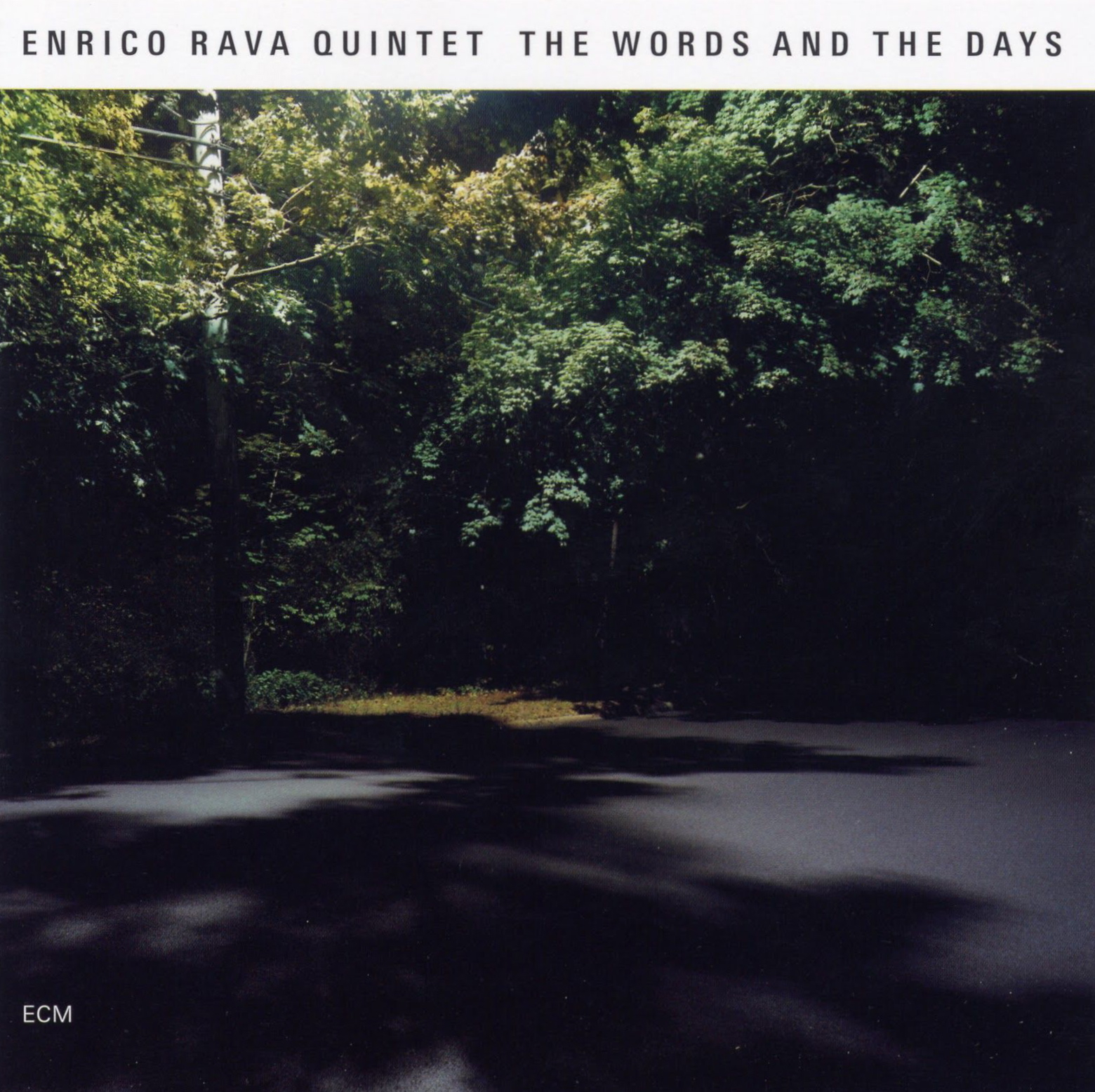
Enrico Rava Quintet: The Words And The Days (ECM 1982)

The Words and the Days

Enrico Rava Quintet
The Words And The Days

Enrico Rava trumpet
Gianluca Petrella trombone
Andrea Pozza piano
Rosario Bonaccorso double-bass
Roberto Gatto drums
Recorded December 2005 at Artesuono Recording Studio, Udine, Italy
Engineer: Stefano Amerio
Produced by Manfred Eicher

The Words And The Days follows Easy Living, which marked the studio return of Italian trumpeter Enrico Rava after a 17-year hiatus. More than the continuation of a comeback, it constitutes a self-contained entity with its own dreams. It is only natural, then, that the title tune should flow like a soundtrack to those dreams. Verdant and sincere, it hangs, as might a contended hand over the side of a boat, cutting a path through the water. Rava seems to paint that vessel’s wake while the intuitive drumming of Roberto Gatto renders every glint of sun thereafter with photorealistic detail. Yet despite these sundrenched beginnings, where Easy Living was warm and fuzzy all over, we generally encounter a cooler sound in this mostly Rava-penned program.

Gatto and bassist Rosario Bonaccorso hold fast to their formidable dual role, at once supportive and pace-setting. Rava is happy to follow wherever they may lead, with often-joyful results. In “Secrets,” for instance, some of his formative Brazilian influences jump from the woodwork. Meanwhile, trombonist Gianluca Petrella puts his enigmatic stamp of things. Although his language can be fiercely chromatic, this time around he moves under the table in search of forgotten crumbs. He works a quiet magic in the Russell Freeman standard “The Wind,” engendering a chain of lilting calls, while in “Serpent” he preens his feathers to the tune of a slick, rubato synergy. Most of that synergy he shares with Rava, reigning clearest in “Art Deco,” a three-minute duet that crosses the straight and the curved and pays tribute to its composer, the great Don Cherry. Petrella and Rava trade more brass arrows in Gatto’s “Traps,” evoking a big band on an intimate scale, balancing the pans with its breezy concentration. As a player, Gatto’s adaptive panache figures centrally in “Bob The Cat.”

Pianist Andrea Pozza, replacing Stefano Bollani from the last session, marks a shift in the group’s sound. His reflective approach adds monochromatic atmospherics to “Echoes Of Duke,” taking the session’s feet from its picturesque murk and washing them anew with a more classically rendered style. Rava digs deepest on this expedition, unearthing a plethora of finely preserved artifacts. In this regard, the bandleader excels highest when he is cut loose, as in the cinematic veils of action and soft-focus drama of “Tutù” and the stretch of empty road that is “Todamor,” which unrolls its horizon after a viscous monologue from Bonaccorso entitled “Sogni proibiti” (Forbidden dreams). Although unpopulated, that horizon is filled with stories. Rava is confident behind the wheel in taking us there, navigating an echoing corridor with superb control of every gear. And as he pulls us into the driveway of “Dr. Ra And Mr. Va,” of which the strangely somber exterior only thinly veneers a fiery heartbeat within, it is clear that the journey has only just begun.

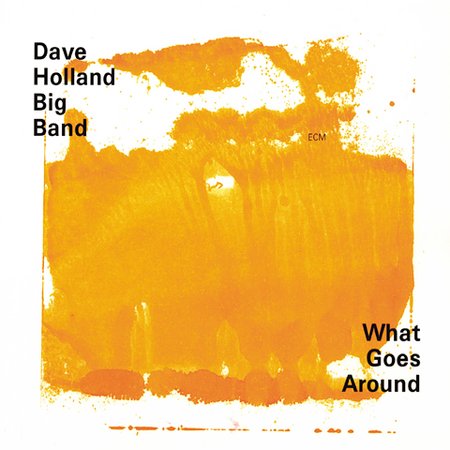
Dave Holland Big Band: What Goes Around (ECM 1777)

What Goes Around

Dave Holland Big Band
What Goes Around

Antonio Hart alto saxophone, flute
Mark Gross alto saxophone
Chris Potter tenor saxophone
Gary Smulyan baritone saxophone
Robin Eubanks trombone
Andre Hayward trombone
Josh Roseman trombone
Earl Gardner trumpet, flugelhorn
Alex Sipiagin trumpet, flugelhorn
Duane Eubanks trumpet, flugelhorn
Steve Nelson vibraphone
Dave Holland double-bass
Billy Kilson drums
Recorded January 2001 at Avatar Studios, New York
Engineer: James Farber
Assistant engineer: Aya Takemura
Produced by Dave Holland
Co-produced by Louise Holland
Executive producer: Manfred Eicher

Bassist Dave Holland widens the span of his guiding hand for his first big band album. At the heart of this defiant session is Holland’s peak quintet with saxophonist Chris Potter, trombonist Robin Eubanks, vibraphonist Steve Nelson, and drummer Billy Kilson, all of whom nestle among an extended family of brass and reeds. Representing nearly two decades of original compositions, What Goes Around dives headfirst into the deep end with a choice tune from 1988’s Triplicate. “Triple Dance” tips its hat into a savvy introductory groove that immediately fronts the delectable baritone of Gary Smulyan. The music tops a perfect pint before sliding it down the bar into “Blues for C.M.” This sweet, low swing evokes the ebony moods of its namesake, Charles Mingus, while yielding half-pikes for Nelson’s self-propulsions and Potter’s compact swing. A tender solo from the bandleader caps off the proceedings with soul. Also from The Razor’s Edge is that 1987 record’s title track, which now unfolds in denser, slicker brilliance, duly reminding us that the effectiveness of a razor’s cut is nothing without the gap in its center, which allows its anchorage and turns danger into utility. Next is the 17-minute title track, which comes to us via the 2001 release Not For Nothin’. As the album’s deepest fantasy, it puts Holland’s bass lines on full display, jumping out as they do from gentle persuasion to grounding digs, the latter inspiring some uninhibited cloudbursts from the horns. Potter unleashes some fierce tenorism early on, outdone only by Eubanks’s proud frenzy. After passing through dense checkpoints of passion along the way, a cathartic spate from Kilson works us into the breakdown. Phenomenal. “Upswing” serves up more hearty baritone, sharing a plate with the crisper articulations of Duane Eubanks on trumpet the tang of gumdrop vibes. Duane flashes back to 1984’s Jumpin’ In with the blush of “First Snow,” which above all spawns a truly masterful solo from Antonio Hart on alto that is worth the price of admission ten times over. Hart sheds his skin again in the sway of “Shadow Dance,” adding flute to the mixture. Amid a palette of rich ochre and lemon highlights, Holland’s ear-catching artery and Potter’s acrobatic embouchure trip us over an explosive drum solo into the final weave of horns and magic.

Get this.

<< Valentin Silvestrov: leggiero, pesante (ECM 1776 NS)
>> Valentin Silvestrov: Requiem for Larissa (
ECM 1778 NS)