

Messengers in a Dark Forest: Lucian Ban, John Surman, and Mat Maneri

Artists often draw their deepest language from the places that first shaped their ears. For Lucian Ban, Mat Maneri, and John Surman, those places lie far apart geographically, culturally, and temperamentally. Yet, they converge in a shared devotion to improvisation and to the long memory carried by folk and classical traditions. Each musician arrives bearing an inheritance that feels less chosen than received. Ban carries the resonance of Transylvanian soil and song, absorbed long before jazz became his working language. Maneri brings an intuitive fluency, shaped by lineage and lived immersion rather than mere instruction. Surman arrives from open landscapes and weathered distances, his voice shaped by wind and horizon, ancient in contour and unsettled in spirit. Together they move as messengers through a forest of inherited material, carrying signals rather than declarations.

That shared path leads to Béla Bartók, whose early 20th-century field recordings in Transylvania revealed a music at once elemental and inexhaustible. Bartók sought preservation through rescue and documentation, gathering what might otherwise vanish. Ban, Maneri, and Surman approach these songs differently. For them, the material functions as a living threshold rather than a dying art, per se. Carols, laments, love songs, and dances do not arrive as artifacts to be handled, but as presences to be encountered, forms capable of friction and renewal.

Rather than fixing these melodies in place, the trio leaves them deliberately open-ended. Transcriptions act as waymarkers rather than maps. Fragments stretch and breathe until new centers of gravity appear. Silences are openings. Roles circulate, dissolve, re-form. What emerges absorbs history without sealing it off, allowing the past to remain porous to the present. Beneath everything runs a current older than borders or schools, a knowledge carried in breath and gesture. Thus, these tunes shelter a human grain, worn smooth by use, whether shaped by peasant hands or bent through jazz.

On Cantica Profana, recorded across three European concerts between November 2022 and November 2023, that grain is fully awakened. The album unfolds like a passage through shadowed terrain, where individual pieces as clearings briefly illuminated. The appearances of “Violin Song I” and “Violin Song II” establish a language of restless intimacy. Their skittering surfaces mask a deep inward focus, as muted piano strings and fragmentary viola lines open space for Surman’s soprano saxophone to move with playful acuity. His voice does not lead so much as observe, circling the material with curiosity. Novelty carries little weight here. These playgrounds are built from old principles and long-held feelings, animated by the freedom with which they are entered.

As the forest deepens, the melodies turn toward absence. “First Return” introduces a somber presence, Surman’s keening soprano a solitary call carried through the night air. That impulse surfaces again in “Last Return,” where wandering itself becomes a form of knowledge. Everything moves in widening circles around silence, the stillness that precedes life and waits beyond it, following not paths marked on maps but traces left by lived experience.

“Dowry Song I,” the first of two such communal clearings along the way, introduces the bass clarinet, its rough fibers weaving textures of interlaced light. Beneath it, Ban’s piano establishes a gentle cadence, enlivening Maneri’s viola until it takes on a copper patina. The trio finds a rocking motion that feels ritualistic, generous, drawing out the melody’s embedded joy before releasing it toward a distant horizon. “Dowry Song II” returns to this space with greater density and color, the voices braided into a resilient weave where each strand strengthens the others.

Other pieces arrive as messages carried from deeper within the trees. “Up There” repeatedly opens with extended bass clarinet meditations, Surman circling the melody until it settles into focus. Around this, Ban and Maneri widen the terrain, giving the line ground and horizon. What follows is often a dance of striking acuity, allowing Maneri room to roam while preserving collective balance. “A Messenger Was Born” distills this sensibility into a quiet prayer and inward dirge for those yet to be lost, for figures glimpsed briefly and never fully named.

“Dark Forest” stands as both setting and invocation. It unfolds as a lush, dreamlike traversal of nocturnal paths, where beauty emerges slowly. Improvisatory spirals coexist with melodic clarity in this, the trio’s deepest attunement. Meanwhile, the title track begins with struck resonance, muted piano notes falling like measured footsteps, before yielding to Maneri’s fluid inflections.

“Evening in the Village” captures darkness as a settling rather than a conclusion. Starlight defines the space as much as shadow. Thoughts, anxieties, romances, and plans continue their quiet circulation. By the time of “Transylvanian Dance,” the accumulated energy breaks open. An anticipatory rhythm gives way to exuberant confluence, Surman’s soprano emerging as a vividly human presence.
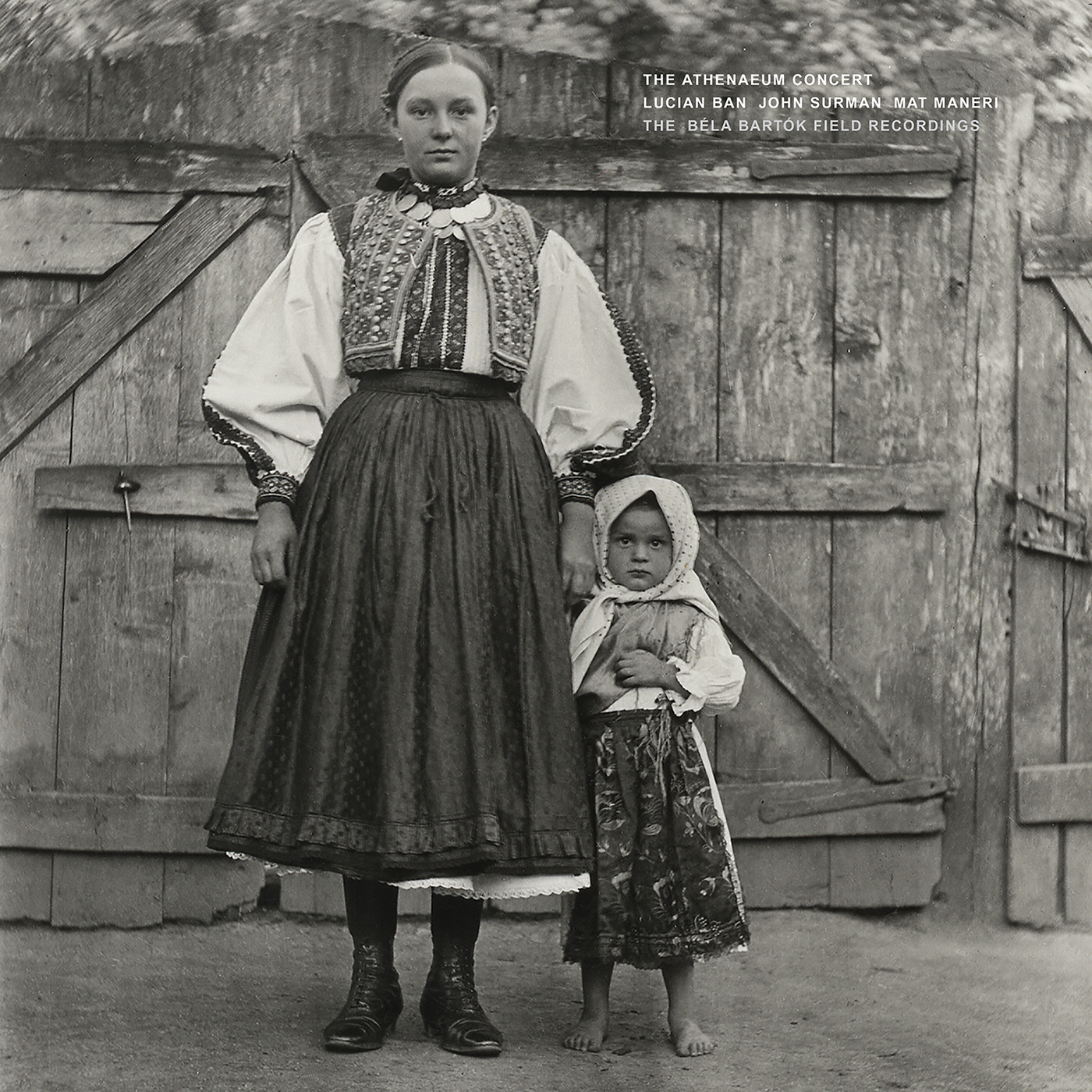
The standalone vinyl The Athenaeum Concert, recorded in June 2024 at the Romanian Athenaeum in Bucharest, extends this language with an even deeper patience. Where Cantica Profana often reads like a gathering of poems or stories, this companion album unfolds more like a life remembered in long form. “Evening in the Village (Bitter Love)” opens with a mournful viola that sounds like an extinct instrument briefly summoned back into breath. Wrinkled yet supple, it enters bearing generational weight. As dampened piano footsteps join and the bass clarinet emerges, the music takes on the temperament of weather itself, fog and time moving across the land, before slowly turning toward dance.

The present version of “Dowry Song” leaps immediately into motion, raining promises with the force of embodied love. The bass clarinet grounds itself, inviting participation, while the viola lifts free, buoyed by Ban’s steady, turning pianism. “Up There” again traces a river’s course, winding through brush under historical pressure, moving from insistence to reverie across its span. “Violin Song” builds gradually from quiet stirrings until Surman’s soprano takes flight, migrating toward warmth. Joy radiates through the exchange, though darkness lingers beneath, a reminder that wonder and struggle remain entwined.

Taken together, the two albums read as studies in ethical listening, in how sound is allowed to appear rather than be summoned by force. Their connection lies partly in shared source material, but more decisively in the trio’s instinct to remain inside unfolding time. Duration becomes a form of care. Attention turns toward relationship, toward the ways voices breathe around one another, and toward the responsibility carried by each choice. Folk material is treated as lived terrain, entered with awareness of what has already passed through it and what may yet arrive. From this stance emerges a vision of tradition shaped by patience and watchfulness, where meaning rises slowly from sustained uncertainty.

Maneri is often described as a microtonal improviser, yet the music pursued here feels macrotonal in spirit, resisting borders and divisions in favor of a broader resonance. Ban serves as both anchor and instigator, shaping time without enclosing it, anchoring the ensemble while inviting risk. Surman contributes a voice that feels elemental rather than ornamental, his reeds acting as carriers of weather and message, passing freely through the ensemble like breath through leaves. And so, the distance between Bartók’s Edison phonograph and now collapses into a single resonant gesture, fulfilling his quiet prophecy from 1921, that future musicians might uncover truths the original collectors could not yet hear.

Both albums are available from Sunnyside Records.
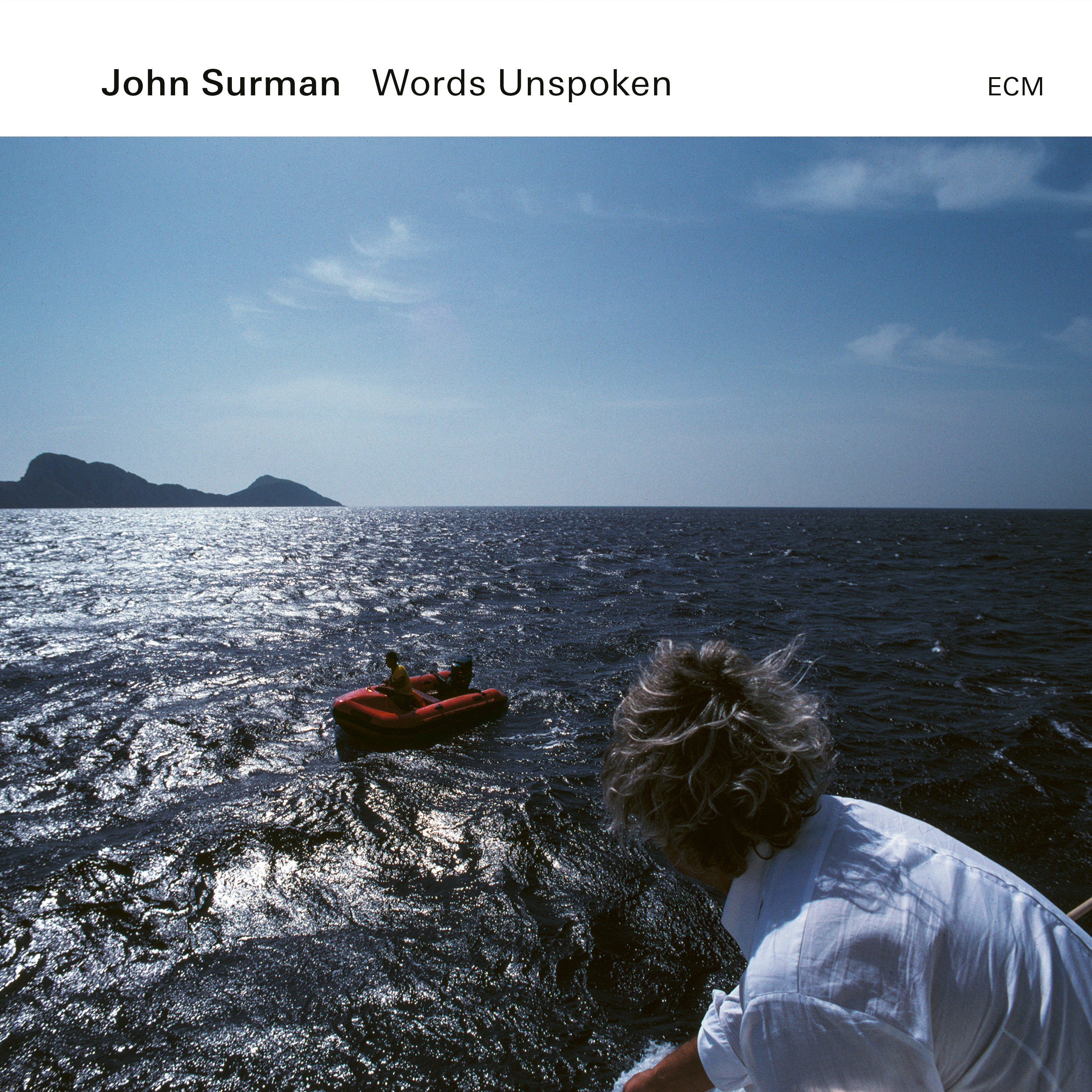
John Surman: Words Unspoken (ECM 2789)

John Surman
Words Unspoken

John Surman soprano and baritone saxophones, bass clarinet
Rob Luft guitar
Rob Waring vibraphone
Thomas Strønen drums
Recorded December 2022 at Rainbow Studio, Oslo
Engineer: Martin Abrahamsen
Cover photo: Christian Vogt
Executive producer: Manfred Eicher
Release date: February 16, 2024

Words Unspoken documents the unique convocation of saxophonist John Surman (in his 80th year as of this writing) with guitarist Rob Luft, vibraphonist Rob Waring, and drummer Thomas Strønen. The combination, both in terms of the instruments and the spirit of those handling them, evokes some of the groundbreaking collaborations that graced ECM in the 90s, If Mountains Could Sing not least among them. Though I wouldn’t place this in the same category, the session certainly has a charm all its own—one that is unmistakably Surman.

While the bandleader’s fluidity on soprano saxophone is as full-throated as ever, especially in the opening “Pebble Dance,” for which Waring and Luft create a flexible center while Strønen provides the undercurrent for their forward motion, there’s nothing quite like his handling of the lower reeds. The baritone of the title track dances with a characteristically light touch, while Luft’s electric overlay adds cosmic touches expanding on Surman’s experiments with arpeggiators back in the 80s. This, in combination with the vibraphone, adds a requisite touch. The baritone moves more snakily in “Around The Edges,” where romantic and platonic impulses comingle. Sticking with the gravelly end of things, Surman elicits some fantastic palindromes on the bass clarinet, culminating in “Hawksmoor,” which offers the most endearing development of the set, exhaling two parts gold for every inhalation of silver. Along the way, “Graviola” epitomizes the freedom of his playing over Waring’s precise infrastructures. Strønen, too, defers to a liberated touch.

Let us not neglect, though, the soprano’s philosophies, so beautifully expressed in such tracks as “Precipice,” in which it teeters at dizzying heights, and “Flower In Aspic,” where time and space bond over shared interests. The revelrous “Onich Ceilidh” (“ceilidh” referring to a party with dancing and music) encapsulates the joy still left in one of ECM’s most uncompromising yet humble stars, giving Luft carte blanche to reach some of the album’s finest points. And while much of the territory will seem familiar to longtime listeners at its core, to experience it under the navigation of such a fresh band makes it feel presciently true.

John Surman: Selected Recordings (:rarum 13)

Surman

John Surman
Selected Recordings
Release date: January 26, 2004

John Surman is to the saxophone as a tuned mass damper is to a skyscraper. No matter the intensity of seismic activity at hand, he regulates balance, security, and stability through counteractive force. It’s an ability uncannily realized in “Druid’s Circle” (A Biography Of The Rev. Absalom Dawe, 1995), for which baritones provide rhythm and harmony beneath a dancing soprano, and “Portrait Of A Romantic” (Private City, 1988), a tender gathering of bass clarinet, recorder, and synth that tingles with fairytale magic. Such solo spaces are his métier, created through patient multitracking in studio and refined through an aging process that gives it a patina. Employing a sequencer in “Edges Of Illusion” (Upon Reflection, 1979) and using keyboards as a means of keeping time in “Piperspool” (Road To Saint Ives, 1990), he emits signals from universes within to those without.

Surman has also widened the scope of his own music in cyclical “The Returning Exile” (The Brass Project, 1993), “The Buccaneers” (The Amazing Adventures Of Simon Simon, 1981) in duet with drummer Jack DeJohnette, and “Stone Flower” (Coruscating, 2000), which pairs his baritone with an inkwell string section. Other collaborative endeavors mark his discography in cardinal directions. Where “Gone To The Dogs” takes us northward to 1995’s Nordic Quartet and “Figfoot” southward to 1992’s Adventure Playground, the latter alongside pianist Paul Bley, bassist Gary Peacock, and drummer Tony Oxley, “Number Six” from the Miroslav Vitous Group’s 1981 self-titled debut heads west with its circular breathing and dug-in heels, while “Ogeda” looks eastward to 1993’s November with guitarist John Abercrombie, bassist Marc Johnson, and drummer Peter Erskine. Abercrombie’s tender chorus effect contrasts pleasingly with Surman’s blade over the fluid rhythm section.

And in the freely improvised “Mountainscape VIII” (Mountainscapes, 1976), Surman’s baritone and the bass of Barre Phillips, along with Stu Martin on drums and Abercrombie on guitar, render some physically demanding terrain. Yet Surman always knows where to place his steps, defining his path even as the path defines him.

John Surman: Invisible Threads (ECM 2588)

2588 X

John Surman
Invisible Threads

John Surman soprano and baritone saxophones, bass clarinet
Nelson Ayres piano
Rob Waring vibraphone, marimba
Recorded July 2017 at Rainbow Studio, Oslo
Engineers: Peer Espen Ursfjord and Jan Erik Kongshaug
Produced by Manfred Eicher
Release date: January 19, 2018

John Surman is one of those rare reed players whose tone is so recognizable that it contributes to an ever-expanding autobiography with every aural stroke. In this unusual new trio, he joins forces with pianist Nelson Ayres, who he met while recording in Brazil, and vibraphonist Rob Waring. The program consists largely of material written for this studio occasion, and by its dovetailed aesthetic renders one image after another of cinematic integrity. The most vivid tracks in this regard include “The Admiral” (a dream of maritime proportions), “Pitanga Pitomba” (the marimba of which reveals a Southeast Asian influence), and Ayres’s folky “Summer Song” (the only track on the ballot not written by Surman). The pianist adds even deeper grooves to “Autumn Nocturne,” a picturesque scene that glides easily into the soul. He dashes Latin flavor into the music’s broth, thereby encouraging a fragrant symbiosis of ingredients.

The interplay of the band is cosmic, as in the airy “Within The Clouds” and the more haunting “On Still Waters.” From the latter’s bowed vibraphone, Surman’s bass clarinet emerges as lava in search of a place to form an island, while the former spans the gamut from amphibian sermon to avian reverie and compresses the most beautiful parts of summer into five minutes of bliss. “At First Sight” is one among a handful of diurnal excursions in which Surman’s soprano cuts the air like a bird threading the needle of time. Both this and “Another Reflection” are built around the harmonies of “Byndweed,” an album highlight for the communion of Ayres and Waring, and Surman’s lilting poetry. His baritone (viz. “Concentric Circles”) flexes the broadest muscles of all and, not unlike “Stoke Damerel,” lushly reimagines memories of what came before.

As the album’s title implies, these threads may be invisible, but they’re nevertheless easy to detect in what amounts to one of Surman’s most vital sessions to date. Buy it now, and it will make up for whatever you spend on it a hundredfold in your first listen.

John Surman: Saltash Bells (ECM 2266)

Saltash Bells

John Surman
Saltash Bells

John Surman soprano, tenor and baritone saxophones, alto, bass and contrabass clarinets, harmonica, synthesizer
Recorded June 2009 and March 2011 at Rainbow Studios, Oslo
Engineer: Jan Erik Kongshaug
Produced by John Surman and Manfred Eicher

Saltash Bells expands multi-reedist John Surman’s ECM cartographies in directions that are at once new and familiar. The album marks a return to the solo projects that so distinguished his contributions to recorded art in the 80s and 90s. Originally conceived as the soundtrack for a documentary on the English West Country that fell through the cracks, the music evolved from memories of Surman’s childhood in Devon, of which the local environs are cued by track titles throughout.

JS

Despite the fact that Surman’s solo efforts are known for incorporating—seamlessly, I might add—the technological adornments of synthesizers and digital delays, there’s always a taste of soil about them. Take, for instance, “Whistman’s Wood,” which opens the program with a program of its own in the form of pulsing, electronic signals beamed across a vista tilled by bass clarinet. An ancient spirit works the land, lifting arpeggios from their graves and animating them in such a way that respects their ability to sing. All this before Surman’s baritone proclaims its inner heart and unfolds it as a map for the journey to follow. Guided by a comet’s tail of soprano, he proceeds into the lonesome yet unbreakable bass clarinet of “Glass Flower.”

On the low reeds Surman is unmatched. His bass clarinet hovers as a sagacious presence over the oceanic currents of “On Staddon Heights” until a soprano joins in the swim, caressing every bubble to ensure it doesn’t break on the way to the surface. The same pairing ends the album with “Sailing Westwards,” further augmented by an exclusive appearance of harmonica. Aquatic textures also pervade the title track, which immediately follows “Ælfwin,” a robust yet lacey baritone solo. Between this and “Dark Reflections” (an unaccompanied piece for soprano), one can chart a defining contradiction of Surman’s playing: the higher the reed, the darker the sound, and vice versa. And in the solos especially, listeners can encounter the naked, self-directed nature of his writing.

The small congresses of “Triadichorum” and “The Crooked Inn” nevertheless pack visceral effect, rounding out one of Surman’s finest to date with the assurance that he still has decades more to say.

(To hear samples of Saltash Bells, click here.)

John Surman: The Spaces In Between (ECM 1956)

The Spaces In Between

John Surman
The Spaces In Between

John Surman soprano and baritone saxophones, bass clarinet
Chris Laurence double-bass
Rita Manning violin
Patrick Kiernan violin
Bill Hawkes viola
Nick Cooper cello
Recorded February 2006, Propstei St. Gerold
Engineer: Markus Heiland
Produced by Manfred Eicher

When reedman John Surman first collaborated with bassist Chris Laurence and an ad hoc string quartet on 2000’s Coruscating, the end result was a cause for beginnings. Unlikely surprising to the veteran Surman listener yet fresh as sun-dried sheets, the music of that debut opened a chapter in his compositional thinking now fleshed out to the depth of a novel on The Spaces In Between. Indeed, despite the wealth of fine performances all around, it’s the writing that makes this album such a notable entry in Surman’s expansive discography. The folk-infused melodies, and the means by which they are elucidated, shine through translucent curtains of improvisation, at which the bow-wielders now more forthrightly try their hands.

Balances abound. At the larger level, the album works in two halves, spit at the fulcrum of the title track. This playful sojourn for solo violin, brought to evocative fruition by quartet leader Rita Manning, upgrades the album’s wingspan from butterfly to bird, flitting from limb to limb in search of emerging buds. Before this, the set list steeps itself in winter, interlacing embraces and lettings go. Surman etch-a-sketches his own branches in “Moonlighter,” his methodical figurations seeming to describe a return from hard labor. In them is a sense of tragedy, with bass acting as narrator and strings as chorus. More nuanced balances follow. There is the diurnal contrast of bass clarinet (which under his fingers sings incarnate) and soprano saxophone. The latter doesn’t so much add to as emerge from the strings, drawing out warmth of heart from “Wayfarers All” and the crisper “Winter Wish.” As for those strings, they speak in pastoral dialects, their home a hearth among the ice.

Spring abounds on the other side of the album’s titular spaces, with “Now See!” setting tone in bucolic tracings. Only this and “Where Fortune Smiles” rely on the soprano’s inherent buoyancy to speak its own accord, favoring instead the baritone’s relatively challenging bounce. “Mimosa” (originally written for, but never included on, Thimar) elicits the jazziest inflections in this regard, that low reed moving jaggedly yet surely across the plains. This leaves only “Leaving The Harrow,” a song of drifting, of chemical reactions, of moving on.

Although its mise-en-scène is minimal, the emotional complexities of The Spaces In Between reach far and wide. Like the skies above, they welcome every change in weather, rain or shine, as if it were the first.

John Surman/Howard Moody: Rain On The Window (ECM 1986)

Rain On The Window

Rain On The Window

John Surman baritone and soprano saxophones, bass clarinet
Howard Moody church organ
Recorded January 2006 at Ullern Kirke, Oslo
Engineer: Jan Erik Kongshaug
Produced by Manfred Eicher

Since their first collaboration on Proverbs and Songs, Ivan Moody (then as conductor, here as organist) and reedman John Surman have established an affinity that manifests itself vividly throughout this duo session under the evocative title Rain On The Window. Recorded in the Ullern church of Oslo, the program includes mostly originals and improvisations, the two exceptions being renditions of the English folk song “O Waly Waly” and the Negro spiritual “I’m Troubled In Mind.” The latter two bring earthiness and grit to the album’s textural palette. Both also feature Surman on baritone saxophone, as do a number of pieces, including “Stained Glass” and the brief yet memorable “Dancing In The Loft,” a free improvisation that showcases Surman’s eminently recognizable approach to the instrument. All of these and more are laid at the altar of “Pax Vobiscum,” a baritone prayer that ends the album. Like a phoenix from the ashes of Moody’s dense embers, Surman’s lyricism sings, reborn, in light of day.

Yet in spite of the recording’s sacred leanings, there is a refreshingly agnostic sheen to its musculature, as attested by Surman’s ingenious sopranism. Between the geometry of “Circum I” and the klezmer-like flourishes of “Step Lively!” there is plenty of gradation to be found. Some portions of the program (specifically, “The Old Dutch”) cast their nets back into childhood, when the calliopes of distant carnivals still mingled with the breeze. At times Surman’s tone matches Moody’s with its clarity and fortitude, while at others it looks through a glass darkly. Moody even goes solo in the inward spiral that is “Tierce.”

Like the title track, the record as a whole makes stars of raindrops and connects them in virtuosic constellations. The listener need be no astrologist to appreciate their interlocking stories, for each is told as if for the first—and the last—time.

John Surman: Brewster’s Rooster (ECM 2046)

Brewster's Rooster

John Surman
Brewster’s Rooster

John Surman baritone and soprano saxophones
John Abercrombie guitar
Drew Gress double-bass
Jack DeJohnette drums
Recorded September 2007 at Avatar Studios, New York
Engineer: Joe Furla
Assistant: Rick Kwan
Mixed June 2008 at Legacy Studio, New York by John Surman, Jack DeJohnette, and Joe Furla
Mastered by Christoph Stickel, Munich
Executive producer: Manfred Eicher

This jazzy outing with guitarist John Abercrombie, bassist Drew Gress (making here his ECM debut), and drummer Jack DeJohnette, sits multi-reedist and composer John Surman back in his most worn saddle. Only relatively straightforward (it’s not without its wild side), the album throbs like the beating heart that has given life to every stirring of this most peripatetic artist. His ECM discography is a compendium of riches, taking listeners through a sizable archive of solo dates, free jazz settings, classical commissions, music for stage and screen, and robust collaborations. Of the latter, his brass menageries with John Warren are especially memorable. And so, it is perhaps no surprise that Surman should pay respect by starting off the set with Warren’s “Slanted Sky.” The choice is duly appropriate: not only does it count every dollar of this fantastic quartet; it also establishes an eerily comfortable (and comforting) mood. As one of only two non-originals (the other being a lyrical take on Billy Strayhorn’s “Chelsea Bridge”) on the disc, “Slanted Sky” stands out for its structural difference. One sweep through its turnstile, and there’s no doubt you’ll be in good company for the next hour.

What a pleasure to hear Gress and DeJohnette playing side by side in “Hilltop Dancer,” their interactions as lithe as the title would have you believe. It’s a partnership not yet repeated for ECM, but one that bears ample fruit for the group’s melodic frontline to savor, as it does further in the title track and “Going For A Burton.” Both of these balance a gritty baritone atop an equilateral triangle of support, by turns slick and darkly whimsical.

Surman’s skywriting on soprano leaves its signature to dissipate into the oceanic blue of only two tunes, including the 11-minute “Counter Measures.” This one showcases the tonal mastery of each musician in kind, from Abercrombie’s undulating solo and Gress’s subtle pop to DeJohnette’s gluey tracings and Surman’s well-oiled joints, there’s plenty to admire on repeated listening. Yet this is really a baritone lover’s record. One spin of “Haywain,” and it all becomes clear, for what sounds like an entirely improvised tangle proceeds into unexpected unity.

Brewster’s Rooster is also an album with its own sense of humor, as expressed by the title “No Finesse.” It’s about as tongue-in-cheek as you might expect, for these musicians have finesse aplenty. Breathless yet secure, unhinged yet always close by, theirs is music that moves.

John Surman: Free and Equal (ECM 1802)

Free and Equal

John Surman
Free and Equal

John Surman soprano and baritone saxophone, bass clarinet
Jack DeJohnette drums, piano
London Brass
Recorded live June 2001 Queen Elizabeth Hall, London
Recording engineers: Steve Lowe and Ben Surman
Mixed January 2002 at Rainbow Studio, Oslo by Jan Erik Kongshaug, John Surman, and Manfred Eicher
Executive producer: Manfred Eicher

Free and Equal, John Surman’s furtherance of intermingling genres, is its own animal. Under its original title of That’s Right, it was the culmination of a 2000 festival commission and premiered in October that same year. The performance recorded for ECM comes from 2001, giving the work some time to incubate, as did subsequent mixing in Oslo’s Rainbow Studio under the direction of its composer, engineer, and producer.

Nods to classical and jazz modes are a clear and present danger throughout, for the purpose of their coexistence is not to mash them into some new hybrid but rather to flag their common goal: namely, to move listener and performer alike. Surman is joined by drummer Jack DeJohnette (also on piano) and classical stalwarts London Brass in an atmospheric tour de force that departs considerably from such previous experiments as Proverbs and Songs. The instrumentation alone would seem to imply a big band experiment à la Surman’s robust work with John Warren (see The Brass Project), but such is not the case. Neither should the DeJohnette connection, already well honed on Invisible Nature, foster misperceptions of what’s going on here. For as Surman paints the canvas with his soprano oils amid the swells of “Preamble,” it’s clear that freer considerations are at play. DeJohnette’s pianism, heard only occasionally on disc, proves descriptively apt in the follow-up “Groundwork,” which loops bass clarinet through trumpet in an evolving macramé of melody. Here, as elsewhere, Surman finds seemingly impossible paths for his improvisations through growing mazes of gold. Such balancing of the minimal and complex is no small task, and the establishment of that balance highlights their mutuality. It is in this spirit, perhaps, that DeJohnette doesn’t pick up his drumsticks until ten minutes into the album, working into “Sea Change” with the crash of surf in his cymbals, the heave of ocean waves in the brass choir at his back. His moments of abandon are thus kept within sight.

Soloists among the London players strengthen the marrow of this nine-part suite. The tuba soliloquy that opens “Back and Forth,” for one, gives an edible sense of textural contrast. Punctual and enlivening, it signals the first in a series of hardenings and dissolutions, from which trombone throws streams of light and draws Surman’s low reed into an invigorating trio with skins. Likewise, “Fire” traces the multifarious paths of its namesake through a modified trio of drums, trumpet, and bass clarinet. The latter continues its coppery speech in “Debased Line” with a nostalgia and restlessness of spirit that embodies Surman’s passion as a musician. “In the Shadow” evokes Paul McCandless in its sopranism, which floats over a relatively aggressive waltz in the background and sparks an ensemble-wide reaction in the title portion. Virtuosity is on full display as Surman looses his wilder side and fuels DeJohnette’s closing protraction. The drummer cracks many dams in the “Epilogue,” emptying into an open sea of well-earned applause.

Filled with exciting music that creates and maintains its own standard, Free and Equal represents an evolutionary leap in Surman’s compositional thinking. His uncanny ability to be at once joyful and mournful in a single arpeggio has elsewhere never been so explicit. It is music that begs for dancers or the flicker of a cinema screen—a vast, organic machine that runs on the promise of another listen.