Roberto Masotti: Keith Jarrett – A Portrait

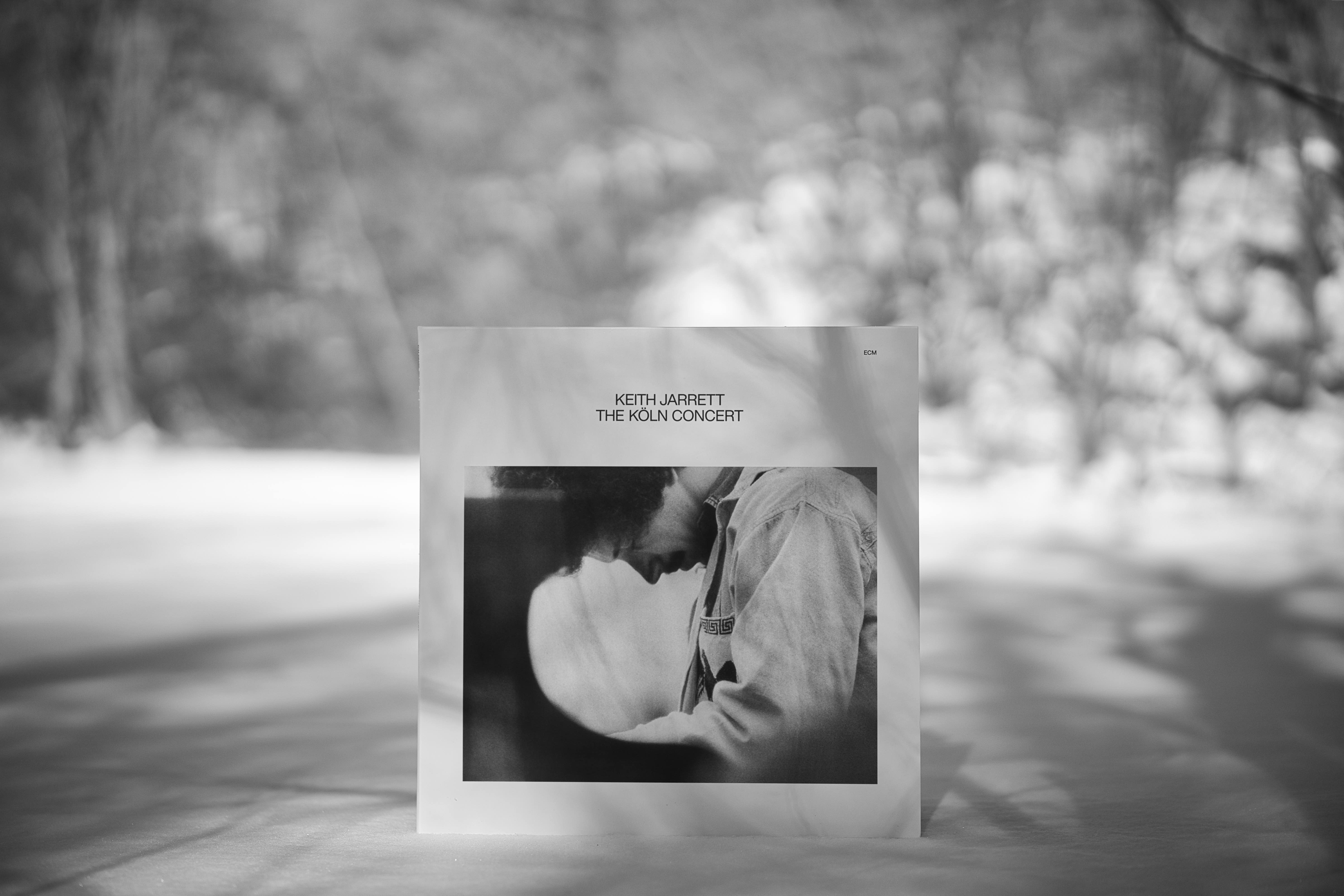
Italian photographer Roberto Masotti (1947-2022) was among the most perceptive visual chroniclers of modern music, a figure whose work shaped the sensibility of ECM Records. His photographs graced nearly two hundred covers and booklets for the label, forming a parallel archive to the music itself. From the austere radiance of Officium to the quietly arresting portrait of John Cage that frames Herbert Henck’s recording of the composer’s early piano works, Masotti played a role in defining how this music would be seen, approached, and remembered. He was not merely a documentarian of studio sessions but a devoted listener whose camera functioned as a secondary instrument, tuned to the inner heartbeat of performance. Nowhere is this fusion of attention more evident than in Keith Jarrett: A Portrait, a volume that reads less as a record of appearances than as an extended act of listening rendered visible.

Masotti’s own words illuminate his method with uncommon clarity. “In this series of photographs that I observe with a retrospective gaze,” he writes, “I play with the concept of presence, that one of the body and the one of the instrument, which appear and disappear in the image.” He speaks not of capture but of exchange, of an intimacy grounded in restraint. These photographs arise from what he calls an “objective attention” shaped by long admiration, yet they are equally the result of Jarrett’s conscious acceptance and active participation. The images are thus collaborative in spirit, not imposed from without but allowed to unfold through mutual recognition. What remains is an archive that resonates with sound even in silence.

To move through the sequence so carefully composed in this book is to encounter a photographer who understands that an artist such as Jarrett cannot be approached through biography or chronology alone. Masotti storytells through a mode of looking that resembles ritual, one without a prescribed outcome, sustained only by attention. For him, photography does not consist of isolated instants but of moments, a distinction that carries ethical weight. Within a moment, an entire accumulation of experience can register itself through posture, gesture, or stillness. This understanding leads naturally to a deeper inquiry: what, after all, constitutes a portrait?

In Masotti’s hands, the portrait ceases to be an act of description. It becomes a site of encounter where identity is neither fixed nor fully disclosed. A portrait does not declare who its subject is; it asks how presence manifests, and under what conditions it withdraws. In this sense, the portrait is not a mirror but a threshold. It holds open the possibility that what is most essential about a person may resist total visibility. Masotti seems keenly aware of this tension. He recognizes the value of distance, of knowing when not to press closer, of allowing the subject’s aura to assemble itself without the insistence of the lens. This discipline is inseparable from his deep admiration for Jarrett, an admiration rooted not in fandom but in experiential listening. He does not set out to check off the pianist’s achievements so much as to dwell within their unfolding.

It was through Jarrett, in fact, that Masotti first came into ECM Records’ orbit. At the pianist’s recommendation, he traveled to Munich in 1973 to present a photo shoot to producer Manfred Eicher. The encounter proved decisive. The images were received enthusiastically and would soon be incorporated into the Bremen/Lausanne release of that same year, marking the beginning of a collaboration that would shape the label’s visual identity for decades to come.

Jarrett’s well-known sensitivity to distraction during performance posed a particular challenge. To photograph him in action required not only technical skill but a form of empathy calibrated to the moment. Masotti met this challenge with a chameleonic tact, adapting himself to the environment rather than imposing upon it. The resulting images often unfold in a montage that feels almost cinematic, though they never lapse into spectacle. Their power lies in continuity, in the quiet accumulation of gestures and expressions that suggest movement beyond the frame.

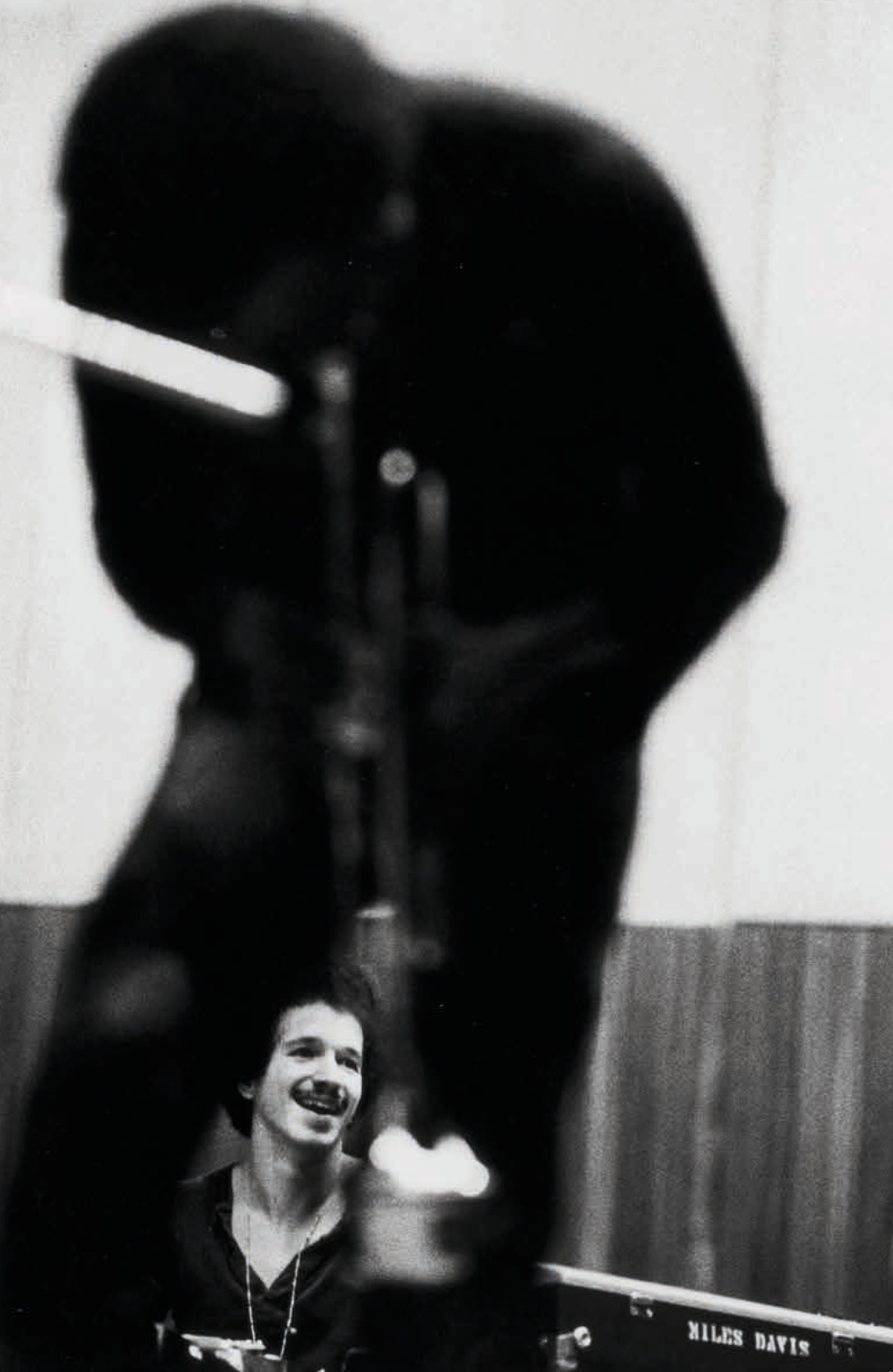
1971, Miles Davis Group, Philarmonie di Berlino
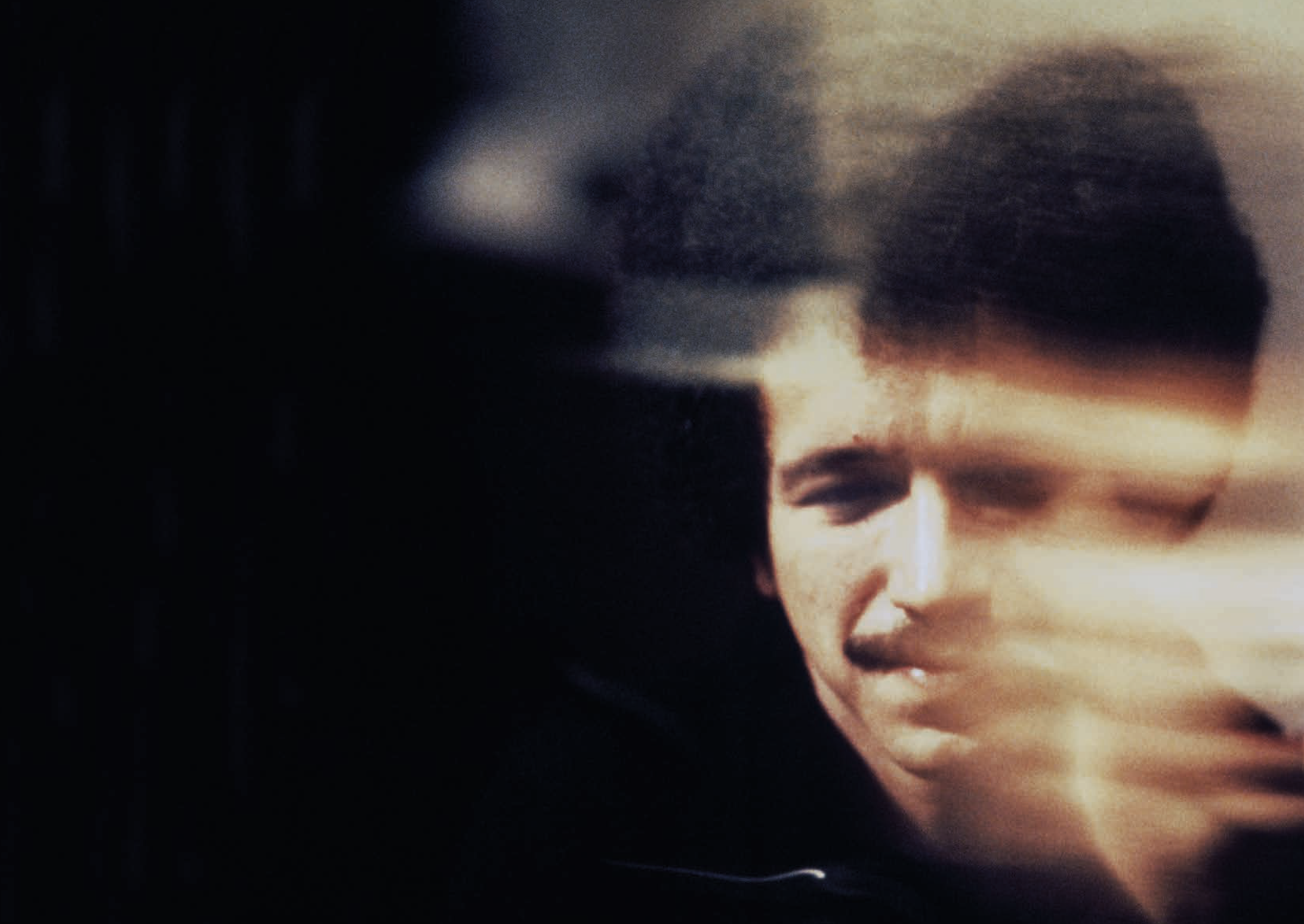
1973, Monaco di Baviera, America Haus, soundcheck
1974, Pescara, Jazz Festival
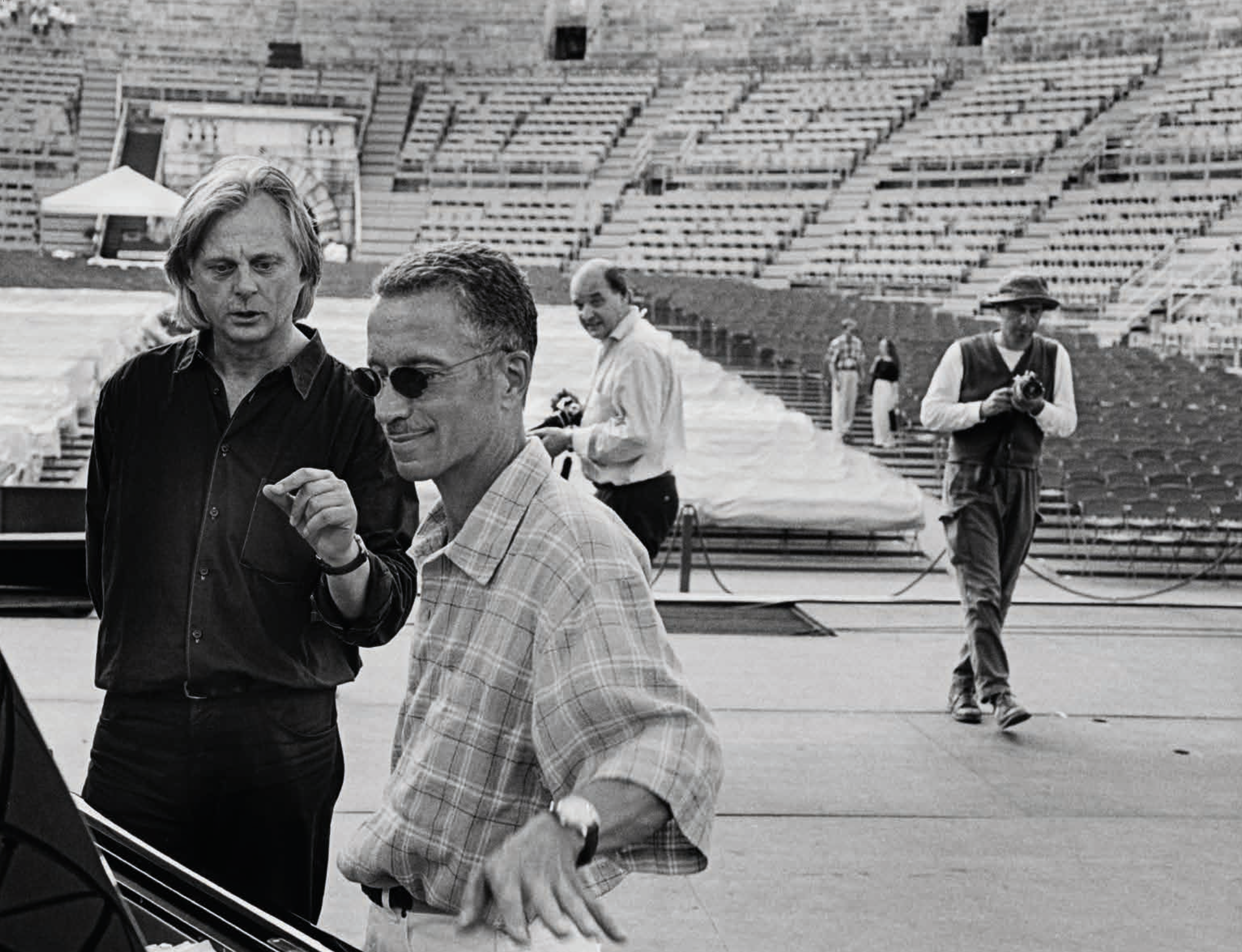
1999, Verona, Arena, Jazz Festival, with Manfred Eicher
2002, Lucca, Summer Festival

Taken together, the images chart Jarrett’s evolution from a fiercely expressive sideman in the orbit of Miles Davis to an increasingly enigmatic figure, and finally to a singular presence in solo improvisation. Yet the photographs resist narrative closure. They do not resolve into a story so much as a constellation of states. Among them, one image stands apart. It is the second one above, where Jarrett’s face appears refracted in soft color, suspended between clarity and dissolution. Masotti, a photographer of formidable technical command, rarely indulged in overt manipulation. Here, however, he allows the image to drift toward the spectral. The effect is restrained yet profound. It touches something central to Jarrett’s music, its simultaneous rootedness in the physical act of playing and its persistent reaching beyond the self. The photograph carries within it a residue of sound, an afterimage of music that seems to hover just beyond reach.

Keith Jarrett: A Portrait proposes a way of seeing that honors absence as much as presence. Masotti reminds us that the deepest forms of attention do not seek to possess their subject. They remain open, patient, and receptive. The book closes with a quiet suspension between composition and improvisation, as though the music has not ended but simply moved elsewhere. In that lingering space, photographer and musician meet on equal terms, each attentive to the other, and to the fragile, enduring moment they share.

Keith Jarrett: New Vienna (ECM 2850)

Keith Jarret
New Vienna

Keith Jarrett piano
Recorded live July 9, 2016
Goldener Saal, Musikverein, Vienna
Producer: Keith Jarrett
Engineer: Martin Pearson
Mastering: Christoph Stickel
Cover design: Sascha Kleis
Executive producer: Manfred Eicher
Release date: May 30, 2025

Today marks the 80th birthday of Keith Jarrett, one of the most uncompromising visionaries of modern music. Although he is unlikely to be heard from again in a live setting, we can rejoice that ECM still has recordings in its vault waiting to be released. Among them is New Vienna, the label’s fourth document from the pianist’s final European solo tour (the previous recordings being Munich 2016, Budapest Concert, and Bordeaux Concert). The title of the present disc is a nod to his seminal Vienna Concert, recorded 25 years earlier, almost to the day.

Part I jumps into the bramble of our expectations and slinks through the sticks and foliage with the litheness of a mountain lion. The music evolves in a convoluted dance, moving ever forward to its sudden cessation. In light of such focused energy, it’s only fitting that the shadows of Part II should cast their pall over the scene at hand. Rather than tell a story, each resonant chord lingers long enough for us to come up with our own, so that by the end of this meditative slip, we are closer neither to the destination nor the point of departure. The applause between this and Part III is especially jarring, even as it prepares us for the latter’s spell-breaking properties. Every stomp of its feet is a declaration of the shorter forms that Jarrett came to favor in his latter-day performances. Part IV is an anthem for the soul, drawing a dangling hand through the waters of reflection on its way to the opposite shore. A brief shift into dissonance in the final leg is the only tinge of regret we encounter.

The balladic Part V represents a sea change in the program, channeling feelings so familiar that we must close our eyes to contain them. Every new layer reveals an older memory—this one of a hermetic childhood, that one of an unbridled young adulthood, and yet another of generations interconnected by love—leaving behind a gift unwrappable by time and space. The rise and fall of Jarrett’s left hand mimics the trepidations of an anxious heart that finds truest release at the keyboard alone. The hall recedes, the audience fades, and the lights dim until there is only vibration existing for no other sake than its own.

Part VI is the aftermath of an argument. An unnamed protagonist picks up the physical and immaterial pieces of what has just transpired in the hopes of refashioning them into a semblance of unity. But no matter how much he tries, the cracks are always visible. Part VII evokes the mourning of self that follows, creating hope from scratch before the clouds have a chance to weep. The increasingly dense textures come across as simultaneously desperate and liberated, while Part VIII cleans the proverbial slate with a brief yet cathartic blues. The gospel-infused Part IX is a return to form, giving joy to everything it touches. This glorious turnaround shows us that hope is a many-pronged path. And of all the places it might take us, “Somewhere Over The Rainbow” couldn’t be more suitable. Its timelessness is the frame of a building that continues standing even when the mortar crumbles away. And as the winds blow through its open walls, they seem to whisper, “In a life filled with so much wonder, melodies are the only language that matters.”

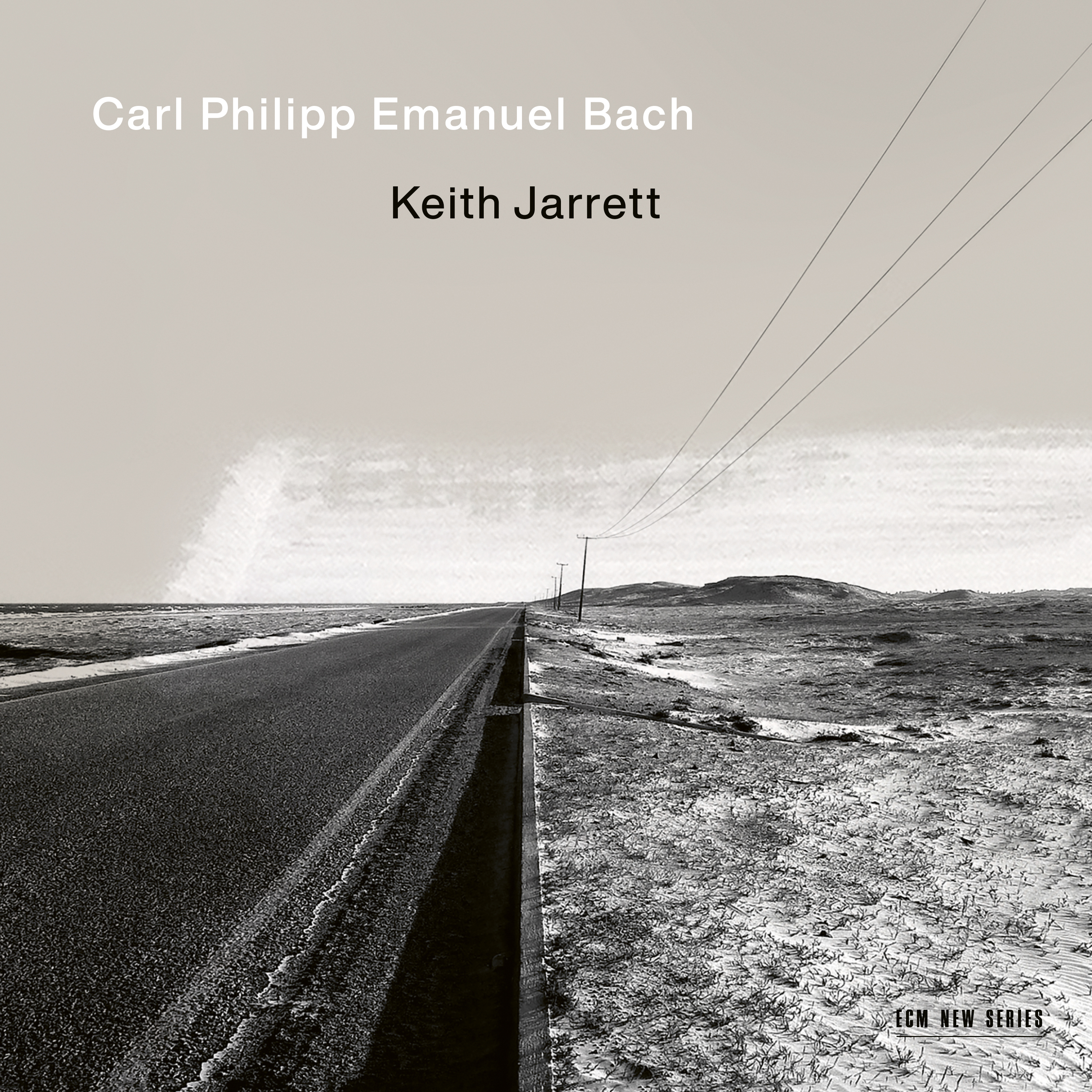
Keith Jarrett: Carl Philipp Emanuel Bach (ECM New Series 2790/91)

Keith Jarrett
Carl Philipp Emanuel Bach

Keith Jarrett piano
Recorded May 1994 at Cavelight Studio, New Jersey
Engineer: Peter Laenger
Cover photo: Mayo Bucher
Executive producer: Manfred Eicher
Release date: June 30, 2023

In his 2014 monograph, The Music of Carl Philipp Emanuel Bach, music historian David Schulenberg paints a compositionally focused portrait of Johann Sebastian’s second son. Despite living in his father’s shadow, his influence managed to shine a light through the veil of history by way of his seminal Essay on the True Manner of Playing Keyboard Instruments and the conduit he was purported to have furled between the Baroque and Viennese Classical schools. As a composer of nearly 1,000 works, his oeuvre is nothing to sneeze at, nor his style, as much an example of evolution in and of itself as of eras retrospectively defined. 

As Paul Griffiths notes in the liner text for the present album, which documents Keith Jarrett’s traversal of CPE’s Württemberg Sonatas, the ocean between father and son may seem vast, even as it churns with currents of familiarity in concert with calls from more distant shores. Dedicated to Carl Eugen, Duke of Württemberg, this collection “makes the point about inheritance avoided, or qualificated, or contradicted, or accepted, whether with gratitude or resignation.” Although nominally composed in 1742/43 for the student who would soon ascend to his dukedom, Griffiths observes, “More likely it was for his own fingers he was writing, and for his own ears.” Jarrett, having only heard these pieces on harpsichord, felt compelled to make a piano version, resulting in this home studio recording from 1994, likewise also for his own fingers and his own ears. All the more honored we should feel to have it available three decades later.

Sonata I in a minor is glorious from the start. There are moments of intense poignancy, as in the Moderato, while the faster outer layers elicit feelings of joy that are always undercut by what Griffiths calls a “sad grace” throughout (I might also call it a glorious melancholy). The final movement, marked Allegro assai, carries astonishing depth in tow. What seems a lightly articulated dance has room for so much more than the listener can calculate. Jarrett brims with vitality and precision without ever letting go of the improvisational spirit for which he is known on the jazzier side of things.

The sheer clarity of Jarrett’s voicings, a profound match for the younger Bach’s own, is fully displayed in Sonata II in A-flat major, of which the concluding Allegro is especially vibrant for its multifaceted joys. Like a brick wall, each layer staggers, parallel to every other layer below and above it, adding strength to the overall design and function.

The opening of Sonata III in e minor is perhaps the most glorious of them all, revealing its heart from the first sweep of the second hand. The Adagio is nostalgia incarnate, while the Vivace—the briefest movement of the collection—peels itself away with unfiltered love. The pauses in Sonata IV in B-flat major make for passionate contrast, yielding an Andante of great beauty. Working in stepwise formation, it is a DNA helix surrendering to melodic sequencing.

The more these sonatas develop, the more they veer toward Father Bach, especially in the Adagio fugue of Sonata V in E-flat major. With sweeping intimacy, it pieces together its puzzle between gusts of wind and spirit. The final Sonata VI in b minor is another inwardly focused distillation that defends variegations of light and shadow. The clocklike Adagio is a gem, while the final Allegro glistens in the setting sun. Each is a different keyboard, two eddies in a bay coming together harmoniously, speaking the same truth but with different tongues.

Keith Jarrett: Bordeaux Concert (ECM 2740)

Keith Jarrett
Bordeaux Concert

Keith Jarrett piano
Recorded live July 6, 2016
at Auditorium, Opéra National, Bordeaux
Producer: Keith Jarrett
Engineer: Martin Pearson
Mastering: Christoph Stickel
Cover photo: Max Franosch
Executive producer: Manfred Eicher
Release date: October 14, 2022

Every new release of a Keith Jarrett recording activates something old—ancient, if you will. By this, I mean to suggest that his immaterial approach to a resolutely material instrument invites us to appreciate the synergy of being and non-being. To experience his notecraft, whether in person or via ECM’s relentless charting of his footsteps, is to understand that a physical body is required to interpret even abstract realities. And in the 13-part odyssey we have here, we encounter one of the most spiritual gifts to take flight from Jarrett’s fingertips.

From the same tour that brought such wonders to light as Munich 2016 and Budapest Concert comes this July 6th performance at the Auditorium de l’Opéra National de Bordeaux. In this spontaneous mosaic of waves and dissolutions thereof, he articulates an ocean’s worth of expanse. If Part I can be said to burst forth as if in need of being heard after a long silence, Part XIII intones the whisper of low tide. Between them, he unleashes a rhapsodic account of muscle and morality.

Flexibility is central to these pieces in the making, nowhere more so than in Part III. This breath of fresh balladic air is road music for the heart. There’s something painfully final about it, a tearful evocation of mortal ends. It also passes on hope to those left behind. Occasional dissonances hint at bittersweetness, always returning to the foreground with bits of the past polished and placed carefully on an altar for the future.

So begins a grand sequence of somber inner visions. Without ever losing sight of a certain playfulness of childhood (as in the spiral staircase of Part V), he navigates hymnal block chords (Part VI) and savory vamps with grace. Crooning his way through the valley, he ensures that beauty never becomes an idol. For while the lyrical fulcrum of Part VII, for example, veers into sunlight, Jarrett is quick to don the shades of Part VIII, bringing temperance such as only the blues can claim.

But if the feeling of farewell peaks in Part XII, it’s only because the destination is nearer than our point of departure. In such moments, we step outside of time, wearing it like a coat. We can reach into any pocket and pull out an episode of our lives, slicing away at infinity like a doctor in search of a cure.

Keith Jarrett: Budapest Concert (ECM 2700)

Keith Jarrett
Budapest Concert

Keith Jarrett piano
Recorded live July 3, 2016
at Béla Bartók Concert Hall, Budapest
Producer: Keith Jarrett
Engineer: Martin Pearson
Cover photo: Martin Hangen
Mastering: Christoph Stickel
Executive producer: Manfred Eicher
Release date: October 30, 2020

From the 2016 European tour that gifted us with Munich 2016 comes this improvised solo concert from Keith Jarrett recorded at Béla Bartók National Concert Hall in Budapest. The pianist’s Hungarian heritage and love of the venue’s namesake gave the experience a homecoming feel that fed into every note he rendered, whether spontaneous or previously held in mind. Jarrett has since held the result in high regard as epitomizing what he is capable of at the keyboard—and rightly so, because what we have here is crafted in a spirit of such welcome that one might easily forget the album was released during a time of social distancing and quarantines.

In twelve parts spanning two CDs, Jarrett digs deep within to give much without. I offer this image as something more than a metaphor; he is physically mining his cells in search of the ore that we on the outside might call splendor. That said, there’s nothing lofty about the music that results from this process of elimination. If anything, it builds ever downward to build a private kingdom. Remarkable, then, that we might share in its retrospective pleasures.

From the moment Jarrett lays hands to instrument, he touches fertile soil from which to yield the striking contrast of his shadowy left and playful right. A dance-like quality struggles to be heard but instead feels the temptation of convention slip off like clothing that is far too big for its body. This music is also very fibrous, as if Jarrett were tying a knot, fraying the leftover end, then tying a smaller one, and so on until even his nimble fingers can no longer separate the strands. Part II works its way into the silhouette dreamed of on a traveler’s pillow. It turns this way and that but only changes its outline, neither approaching nor receding. After Part III pulls out the weeds, Part IV offers a dark, jazzy affair with smoky trails and squinting brilliance. Though restrained, it feels unbound in its emotional impulses, as ancient as an image on a cave wall drawn in the dying light of day. So begins an epic harvest of which the ripest fruits are picked in rhythms woven from strands of convolution, development, and dissolution. The sweetest among them is Part VII, which elicits some of the most astonishing textures Jarrett has ever liberated. It moves with a depth of feeling that can only have been arrived at when one has less of life ahead of them than behind. Near contenders include Part V, a lyrical aside that curls like a diagram of relativity into the innermost thoughts of childhood, and Part VIII, the near-constant fluttering of which evokes the wings of an angel just out of reach.

After the bluesy Part XII, Jarrett takes an evolutionary leap from fundament to firmament in two encores: a sweeping take on “It’s A Lonesome Old Town” and the achingly comforting “Answer Me, My Love.” Thus, we are left with a lifetime’s worth of listening in the dimensions of a delineated object. And even as the atmospheric shifts of the heart turn their eyes toward a brighter tomorrow, they never seem to forget the lightless void from which they emerged into being.

Keith Jarrett: A Biography

The late Ian Carr’s Keith Jarrett: The Man and His Music long stood as the most complete portrait of its subject, who turns 76 this month. Being a product of 1991, however, the book begged a companion this side of the second millennium. In 2015, German music editor and biographer Wolfgang Sandner answered that call. Five years later, Jarrett’s youngest brother Chris, who lives and teaches in Germany, offered this superbly rendered, expanded and updated translation into English. The result, Keith Jarrett: A Biography, retreads some of the pianist’s formative milestones while stringing through them artful observations, interpretations and connections. 

We find ourselves transported back to Jarrett’s upbringing in Allentown, Pennsylvania, where Sandner credits Jarrett’s mother for not putting her son on the pedestal that has separated so many young prodigies from the possibility of a normal childhood. This may be one reason why his genius was able to flourish so organically—untainted by the bane of expectation, he built a career on transcending it. 

We sit in the audience during his first solo recital at the age of seven—a mélange of classical and original compositions—waiting for the moment when jazz will enter the soundtrack of his past. We cling to the wall like proverbial flies as, in a mere five-year span, he joins forces with Art Blakey, Charles Lloyd and Miles Davis. Jarrett’s tenure with the latter, who convinces him to join after multiple overtures, goes largely unrecorded and survives only through anecdote. By the time Jarrett parts ways with the Miles, it’s 1971, just two years after the founding of ECM Records by producer Manfred Eicher, with whom Jarrett will forge a lasting relationship. Said relationship yields albums—80 between 1971-2020—that were made to exist, just as they exist to have documented a pianist who “had not really become a soloist—he had actually always been one” (pg. 88). 

Jarrett’s “musical syntax” is as recognizable as it is challenging to distill in words. Whether in his traversals of the Great American Songbook with bassist Gary Peacock and drummer Jack DeJohnette or his recording of J.S. Bach’s The Well-Tempered Clavier (of which he characteristically remarked, “I was actually refusing more than I was giving”), the mosaic we think we know has revealed tile after unprecedented tile. 

All of which serves to validate Sandner’s decision to view jazz through a hypermodern lens, framing its latter-day developments as a recalibration of space among the rubble of the Second World War. And there, in the middle of it all, Jarrett spans the ocean like a bridge between the forward march of Americanism and the traumatic retrogression of the continent. This may be why Sandner concedes in his foreword: “Most of all, though, this music should be heard.” For a musician of Jarrett’s caliber, the best biography remains the discography.

(This article originally appeared in the May 2021 issue of The New York City Jazz Record, a full PDF of which is available here.)

Keith Jarrett: Selected Recordings (:rarum 1)

Jarrett

Keith Jarrett
Selected Recordings
Release date: April 29, 2002

Between 2002 and 2004, and following its “Works” series in the mid 1980s, ECM Records produced twenty “Selected Recordings” compilations under the overarching title of :rarum. A fitting word (Latin for “rarity”) to designate the uniqueness of ECM’s output, scope, and vision. In addition to their archival significance and 24-bit remastering, these releases are special for being curated by the artists themselves. The first two—this one dedicated to Keith Jarrett and the next to Jan Garbarek—are double-disc lenses of insight into what these perennial figures deem important in their own creative lives. The relatively longer format allows for multiple pieces to be chosen from the same album, so that sequences within sequences are given room to breathe, grow, and invite fresh interpretations from the listener.

Jarrett’s self-regard may or may not match your own chosen path through his discography, but once immersed in his clavichord improvisations (1987’s Book Of Ways), it’s difficult to imagine a more personal way to begin. Unfolding in a style that is at once Baroque and postmodern, sounding as they do like the lute of a mute troubadour, these pieces come to us with an apparent sense of age and rustic simplicity. The recording regards these wonders in the moments of their creation—not so much traveling back in time as pulling the past forward to be with us in the present. Other unaccompanied endeavors are faithfully represented here. Worthy of note are his detailed exploration of the piano’s innards on “Munich, Part IV” (Concerts, 1982); the haunting, open-throated supernovas of his organ improvisation, “Hymn Of Remembrance” (Hymns/Spheres, 1976); and his quiet build from stillness to melodic monument in “Recitative” (Dark Intervals, 1988). The latter album is perhaps among his most overlooked masterstrokes and further yields the anthemic gem of “Americana.”

Even deeper self-examinations await in his soprano saxophone playing, artfully represented in two tracks from 1981’s Invocations/The Moth and the Flame, and in his multi-instrumental Spirits from 1986, on which he emotes through an array of winds and percussion besides. Thus reduced to five selections (numbers 16, 20, 2, 13, and 25, for those keeping score), the full brunt of that divisive album’s 26 is made more palatable and clarifies just how much terrain he could cover when left to his own devices.

With the exception of the solo concerts, Jarrett’s finest pianism was always to be found with two legendary bands. The first was his so-called European Quartet with saxophonist Jan Garbarek, bassist Palle Danielsson, and drummer Jon Christensen, of whose phenomenal run is offered a broad cross-section. From the unabashed confidence of “’Long As You Know You’re Living Yours” (Belonging, 1974) and the lyrical integrations of “My Song” (from the 1978 album of the same name) all the way to the sharp-edged blues of “Late Night Willie” (Personal Mountains, 1989), the promise of homecoming is never far. In addition to sporting one of the few rhythm sections substantial enough to sustain Jarrett’s high metabolism, the quartet also found an ideal harmonic partner for him in Garbarek.

And then, of course, there is the “Standards Trio” with bassist Gary Peacock and drummer Jack DeJohnette. More than a band (and, by that measure, more than a standards machine), it was a world unto itself where timeless tunes and spontaneous miracles danced as equals. The title track of 1991’s The Cure is as much atmospherically as it is technically unchained, while 1995’s At The Blue Note shows a tessellated rapport in “Bop-Be” and “No Lonely Nights.”

At the risk of belaboring a simile I’ve used before, Jarrett’s oeuvre is like a globe that one could spin and land a finger on anywhere to plot a path of genius. In this collection, we find as intimate an itinerary as one could chart through the experiences of an artist without equal, not even to himself.

Keith Jarrett: Works

Jarrett

Keith Jarrett
Works
Release date: April 1, 1985

If the artists represented by ECM’s “Works” series so far have been princes, then Keith Jarrett would be candidate for their king. The pianist (and multi-instrumentalist besides), composer, and interpreter continues to chart the most prolific path through the label’s history in solo, trio, and quartet settings, as well as through the lenses of multiple genres. For this compilation, we encounter all of those strands, save for his trio outings, which would warrant a collection in and of itself.

Two tunes from his second European Quartet album, 1978’s My Song, touch our collective soul with a highly individualistic tone. “Country” reinscribes the unrepeatable nature of the band. From the ways in which piano and Jan Garbarek’s tenor saxophone lay down the theme while the rhythm section of bassist Palle Danielsson and drummer Jon Christensen emotes with equal assurance in horizontal (not vertical) relation to the exuberant restraint of Jarrett’s grounding throughout, it’s a tune that feels as much like a farewell as a hello. We then find ourselves walking “The Journey Home.” As Garbarek leads with melodic fortitude, he sets up a welcoming groove of light. Christensen is especially three-dimensional, while Jarrett defers to Garbarek’s charms and really only dominates in the final slowdown.

From that rich soundscape to the wonders of unaccompanied hideaways, we turn to “Ritooria,” from Jarrett’s 1972 ECM debut, Facing You. Like a candle burning in the dark for all who have ears to sense its dancing flame, it holds on to its wick in the left hand while the right flickers erratically yet connectedly. Another lone effort, Staircase, yields Part II of that 1977’s album’s title triptych. If you haven’t already revisited it, let this track remind you of it as one of Jarrett’s finest studio achievements alone at the piano. Like two transparencies of the same image overlapped yet slightly askew, it develops through not-quite-parallel voices, ending in almost ritualistic space. The only live solo selection is “Nagoya Part IIb (Encore)” from 1989’s Sun Bear Concerts. Treading the keyboard as if it were water, Jarrett holds every note in place before finding rest in gentle chords.

Between these relatively direct expressions of personal energy, Jarrett the composer is represented by the 2nd movement of his String Quartet, as performed by the Fritz Sonnleitner Quartet on 1974’s In The Light. Despite being a lovely work in its own right, it feels straightjacketed in its present company. (I might have chosen the beautiful Metamorphosis for flute and strings from that same program instead.) Somewhere in between those two poles of classicalist and improviser is Jarrett’s often-overlooked 1981 masterpiece Invocations/The Moth and the Flame, from which “Invocations (Recognition)” is excerpted. A semi-waltzing rhythm via pipe organ sets up an echoing soprano saxophone, warped and yet flowing in the right direction at any given moment. All of which serves to remind us that we are indeed nothing but moths in the presence of Jarrett’s alluring combustion, struggling to recreate our shape in the air long enough to be regarded as (to reference a much later title) a multitude of angels struggling to record what can never be notated, except on the ephemeral paper of the flesh.

Keith Jarrett @ 75

In celebration of Keith Jarrett’s 75th birthday, ECM has gifted listeners with two very special albums. The first is a teaser encore from the upcoming Live from Budapest album, slated for a Fall 2020 release. In anticipation of what is sure to be a worthy live document, we encounter the beautiful suspensions of “Answer Me,” in which Jarrett molds the piano in loving clay.

front-answer-me-keith-jarrett

Despite being recorded not too long ago (July 3, 2016 to be precise), it sings to us from a distance, held up to the ear like a conch shell in which the past of another has been sheltered from the ravages of time. And yet, the more we listen back on these memories, the more they become folded into our own, as if they had been living inside us all along. This is what Jarrett at his best can achieve: whether spontaneously improvising or digging deep into the tried and true, he makes it all feel so inevitable. The music has always been there, waiting to be drawn out by the right pair of hands. And whose hands could be more effective than his to articulate a melody in the language of sunlight through breeze-shaken leaves.

The second, and more substantial, present is Keith Jarrett 75, a sequence of five tracks curated by producer Manfred Eicher himself. Opening with the churned butter of “Never Let Me Go” (Standards, Vol. 2), it flows in stride with the passage of time. Perennial partners Gary Peacock and Jack DeJohnette are more than a rhythm section, but organs of the same body returning home after a long sojourn. In Jarrett’s vocalizations we hear the ache of it all, pooling like rain in cupped flowers, flung into the air by Peacock’s organic solo. And speaking of solo, we transition into that very territory with Part VII of Creation. In this rolling wave of spirit, sentient waters and thoughtless continents meet to share their silences.

ME Sequence

Another jump in time and mood warps us to Jarrett’s European quartet with saxophonist Jan Garbarek, bassist Palle Danielsson, and drummer Jon Christensen. Together, they unpack the largest cargo from the oceanic vessel that is “Personal Mountains.” A prototypical example of forward motion in music, it sustains inspiration from start to finish, Garbarek gilding the edges of Jarrett’s eyes, themselves closed in surrender. A shuffle of the deck brings us to the landmark duo record Jasmine with bassist Charlie Haden for a gently swinging take on “No Moon At All.” As sweet as it is sincere, it touches the soul with inspiration. Last but not least is “Flying Pt. 1” from Changes. A glorious soar through skies where wingtips catch clouds and leave melodic trails in their wake, it opens Jarrett’s inimitable trio like a book of truisms and waits for us to catch up with the confirmation of experience. The more exciting the music gets, the more we understand the power of harmony at altitudes beyond the audible.