Keith Jarrett: Barber/Bartók (ECM New Series 2445)

Barber Bartók

Keith Jarrett
Barber/Bartók

Keith Jarrett piano
Rundfunk-Sinfonieorchester Saarbrücken
Dennis Russell Davies conductor
New Japan Philharmonic Orchestra
Kazuyoshi Akiyama conductor
Samuel Barber
Concert recording, June 3, 1984 at Congresshalle, Saarbrücken
Engineer: Helmut Fackler
Balance engineer: Helmut David
Béla Bartók
Concert recording, January 30, 1985 at Kan’i Hoken Hall, Tokyo, as part of Tokyo Music Joy Festival
Engineer: unknown
Concert promoter: Toshinari Koinuma
Mastered at MSM Studios by Christoph Stickel
Executive producer: Manfred Eicher

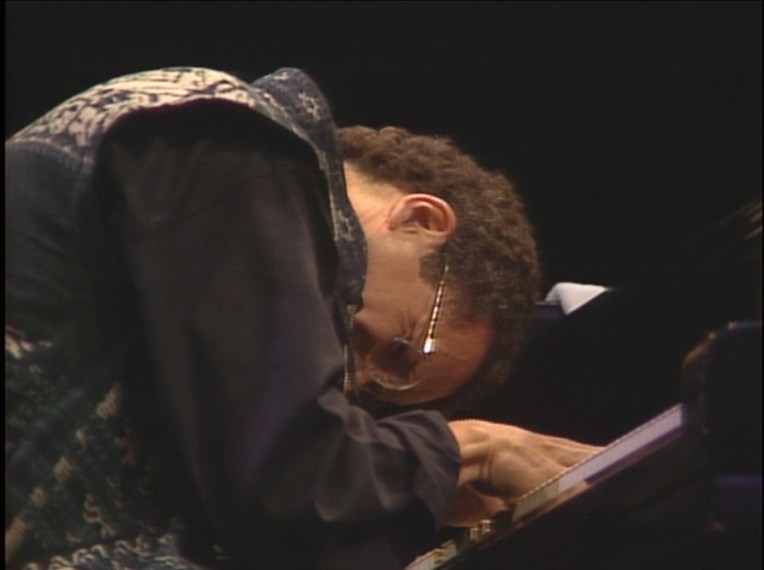
It’s tempting to trace overlaps between Keith Jarrett’s roles as a “classical” and “jazz” musician, but in this archival treasure I for once see the importance of their differences. It is precisely because Jarrett is so well versed, and indebted, to both spheres of influence that he seems to recognize the divergent types of rigor involved. In less uncertain terms: to merely conflate one with the other shortchanges both in the process. Hearing these recordings, now three decades old, we can be sure that many things have changed in the pianist’s approach to style and timbre just as we can be sure that whatever indefinable flame sustains him burns as brightly now as it did then.

What we have here are two recordings—one made in Germany in 1984, the other in Japan in 1985—of piano concertos and an additional encore of improvisation. Beyond that, however, we have a statement of almost divine purpose from a musician who listens to everything before he plays.

KJBB

The Piano Concerto of Samuel Barber (1910-1981) is first on the program and finds Jarrett fronting the Rundfunk-Sinfonienorchester Saarbrücken under the direction of Dennis Russell Davies. Davies is a natural fit, having previously conducted Jarrett on record as composer (see Ritual) and, more than a decade after this recording was reeled, as the featured soloist of Mozart’s own concertos. Written between 1960 and 1962, Barber’s earned him a second Pulitzer Prize and is largely considered to be among his masterworks. The sheer variety of the first movement alone tells us so. The introductory solo might seem spontaneous were it not for the first orchestra hit soon thereafter. Jarrett’s rhythmic acuity is in such fine form that the other instruments almost feel ornamental. The second movement more pastoral, and Jarrett plays it with such flowing intuition that again it sounds like his own creation. Here the very personality of the piano, through Barber’s writing, takes shape, like an infant growing to young adulthood in the span of five minutes. The final movement begins as if through a mysterious screen before stoking its hearth to roaring flame. More pronounced brass and percussion make it a captivating one, even if those faunal winds do creep around the occasional corner with indications of less complicated sojourns. Rousing rhythms from both soloist and orchestra trade places at a moment’s notice, leaving us spellbound.

It’s perhaps no coincidence that Barber’s only piano concerto should be paired with the third of Béla Bartók (1881-1945), as soloist John Browning, who premiered the Barber in 1962, ranked it alongside the very same as a crowning achievement of the genre in the 20th-century. Bartók wrote his in the final year of his life, after having fled to America in the wake of World War II. Jarrett likewise renders it here far from home (in Tokyo, that is) with the New Japan Philharmonic Orchestra under Kazuyoshi Akiyama. The first movement is more soaring than the Barber, filled with minuscule nooks in which to store our fascinations. The denser textures and more overtly “pianistic” writing allow for great variation at the keyboard. Jarrett responds with that trademark touch, building punctuation marks into paragraphs and paragraphs into full narratives. The second movement, though graver, nevertheless achieves crystalline form. Among Bartók’s most profound pieces of writing, its strings emerge like sunrays at dawn. Jarrett coaxes the orchestra, even as it coaxes him, creating a feedback loop of lyrical unfolding. He attends with a patience that is noticeable even in the most percussively inflected portions. An unresolved ending anticipates the finale, a movement of such fitness that it practically leaps away from the musicians of its own accord. Through windswept strings, Hungarian folk dance motifs, and purposeful drama, Jarrett handles that final ascent with finesse.

Following this performance, Jarrett improvised a piece that has since taken the name “Tokyo Encore—Nothing But A Dream.” It’s a balladic jewel that diffuses the energy of the Bartók even while enhancing it, for here is a heart that respects not only the beauty of art, but more importantly the art of beauty, handling both as if they were of the same substance. Anyone else might bungle it, but Jarrett gives it such a genuine connection that we are reminded of his many gifts, not least of all those given to listeners fortunate enough to see their lives overlap with his.

(To hear samples of Barber/Bartók, click here.)

Jarrett/Haden/Motian: Hamburg ’72 (ECM 2422)

Hamburg 1972

Keith Jarrett
Charlie Haden
Paul Motian
Hamburg ’72

Keith Jarrett piano, soprano saxophone, flute, percussion
Charlie Haden double bass
Paul Motian drums, percussion
NDR-Jazz-Workshop 1972
Radio producer: Michael Naura
Recording engineer: Hans-Heinrich Breitkreuz
Recorded live June 14, 1972 in Hamburg
Remixed July 12, 2014 at Rainbow Studio, Oslo by Jan Erik Kongshaug and Manfred Eicher
Album produced by Manfred Eicher

We may only speculate as to the untold Keith Jarrett riches still locked away in ECM’s vaults. The releases of Sleeper and, more recently, No End were but the tip of what is shaping up to be a majestic mountain indeed. Where those albums respectively showed us Jarrett’s European Quartet and homebody experiments, here lies something in between: a fearless document of a composer and improviser at the top of his game. Make that three.

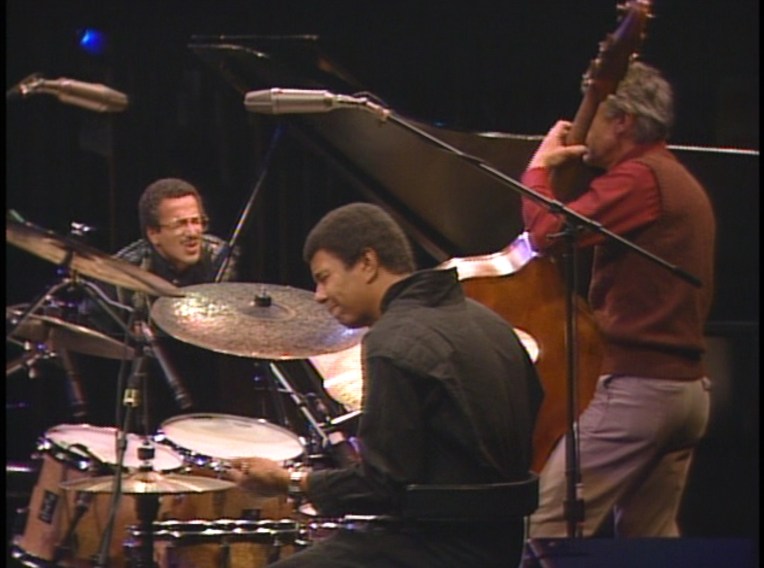
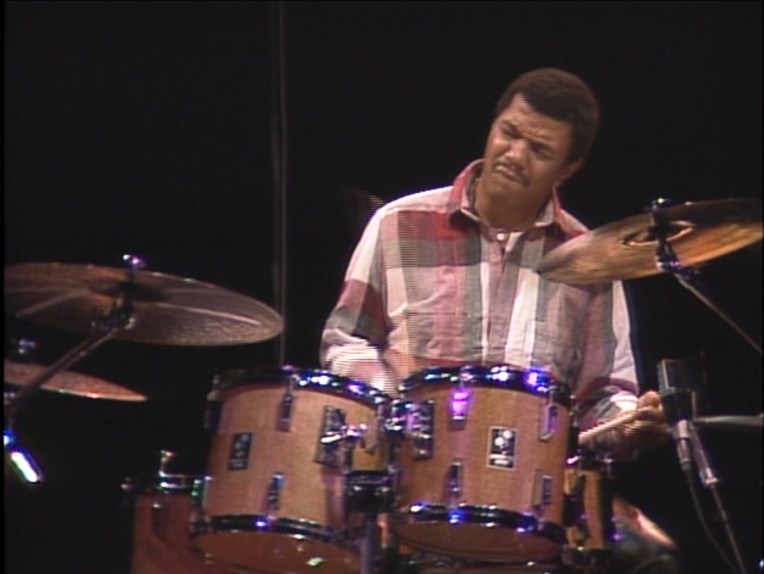
We may make much of the fact that bassist Charlie Haden and drummer Paul Motian are no longer with us, and that hearing them in this impervious creative triangle is like witnessing a resurrection. The trio was Jarrett’s first power group and had been in existence for six years already before the capture of this live recording at Hamburg’s NDR Funkhaus. Mixed by Manfred Eicher from the master tapes with engineer Jan Erik Kongshaug at Oslo’s Rainbow Studio in 2014—one day, we learn from the album’s press release, after Haden’s death—it is now in the public ear and here to stay.

Jarrett Hamburg

We may marvel at the nostalgic archaeology of Jarrett’s compositions, of which the thumbnail “Life, Dance” is exclusive to this album. Its breath of an intro gives the floor to Haden, who confirms mastery in less than three minutes. Haden and Jarrett slip hand-to-glove in “Everything That Lives Laments,” only now the pianist abandons keys for the spirit song of a wooden flute over Motian’s jangling percussion. Haden works the land until the piano sprouts from it like a tree. The sunny-side-up “Piece For Ornette” reminds us not only of Haden’s former tenure with Coleman, but also of what Jarrett might have been in another life: a soprano saxophonist of invention and merit. His dance finds purchase on an invigorating carpet, as laid down by attuned rhythmatists, lighting up the sky with firework potential. Motian is no less incendiary, but lights his playing as if by match to kerosene, keen to catch the ashes of Jarrett’s high-velocity chromatism in hands cupped like upturned cymbals. Lastly for this crop is “Take Me Back,” in which Haden’s echoes yield more reactive bassing. Equal parts jam band session (listen for Jarrett on tambourine for a spell before diving back into the keyboard) and gospel gush, it launches the trio into a prime, if not primal, groove.

We may further delight in the album’s outer edges. “Rainbow” opens with a hands-in-the-earth intro from Jarrett, whose first wife Margot pens the tune. In realizing the latter’s thematic structure, the full trio slides organically into place. Motian’s starry cymbals are foregrounded, while Jarrett caroms from one to another, leaving constellations in his wake. At the other end is “Song For Che,” which in this intimate, 15-minute version unclogs previously neglected arteries of interpretation. As the crowning jewel of Haden’s Liberation Music Orchestra, it defines personal and historic eras alike. After the leaping and lurking of Jarrett’s soprano, Haden works his arco magic to call the piano back into being before wading through the marsh alone toward closure, alive as ever.

We may do all of this and more, but forget that every act becomes part of the grander archive the moment it transpires. So while you’re enjoying this surprise dug up from the past with a glass of wine, take a moment to stare at your own reflection in that circle of burgundy and know that you are part of the music’s history as well.

(To hear samples of Hamburg ’72, click here.)

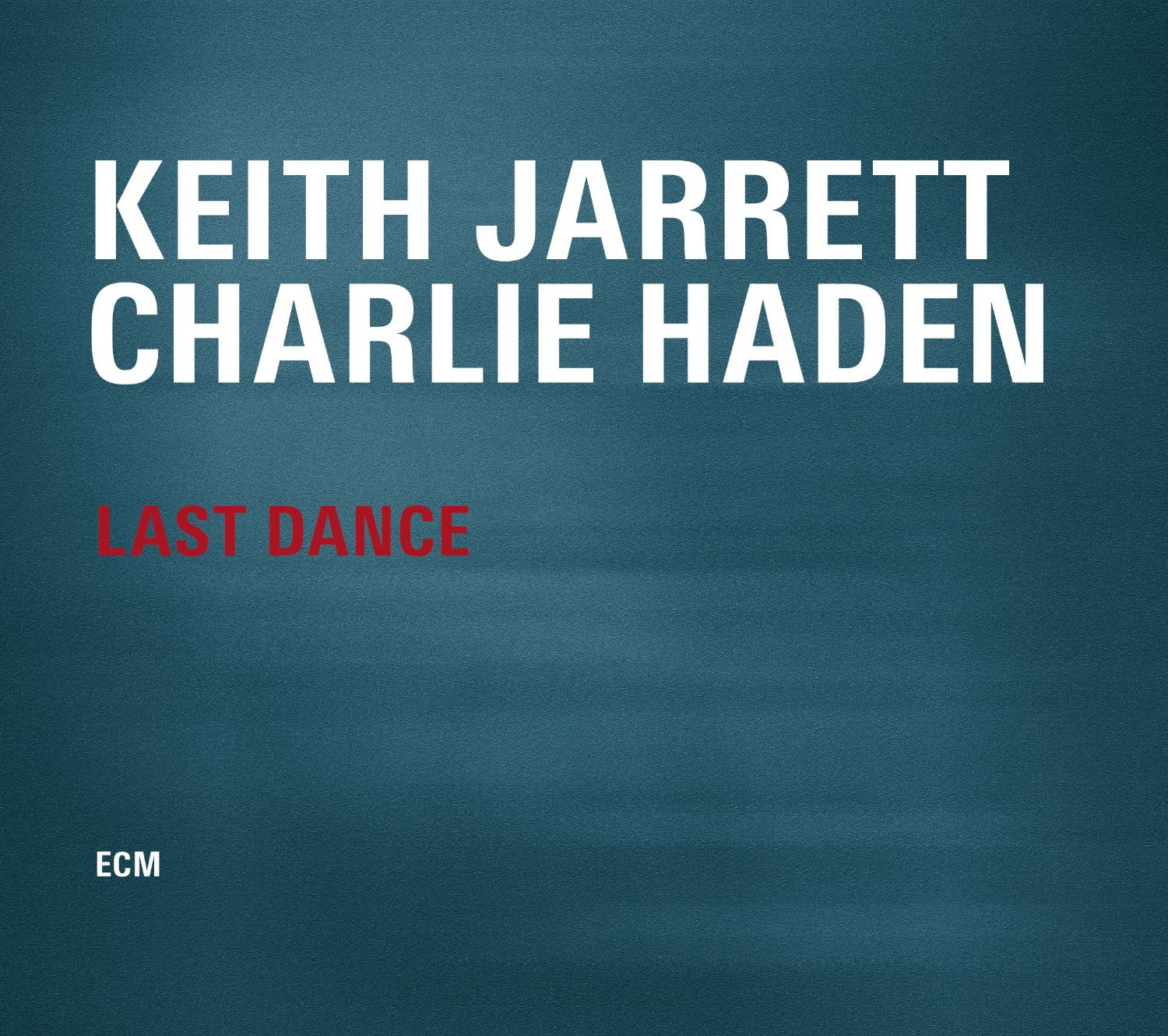
Keith Jarrett/Charlie Haden: Last Dance (ECM 2399)

Last Dance

Last Dance

Keith Jarrett piano
Charlie Haden double bass
Recording Producer: Keith Jarrett
Recorded March 2007 at Cavelight Studio
Engineer: Martin Pearson
Mastering at MSM Studios by Manfred Eicher and Christoph Stickel
Executive Producer: Manfred Eicher

Seeing as this was to be Charlie Haden’s final record, one could easy read mournful prophecy into Last Dance. To be sure, its poignancy is as heavy as the burden of the bassist’s loss. To do so, however, risks obscuring the fact that the music under its title stretches seams by virtue of an abundance of life. Born of the same sessions as Jasmine, the lovingly interpreted standards of Last Dance again find Haden in the company of pianist Keith Jarrett, who once characterized this rare partner as a musician who thinks through whatever melody comes his way.

Keith and Charlie

From the first few steps of “My Old Flame,” it’s clear these two men walk not together but along complementary paths, their shadows interlocking at any point along the trajectory of a tune. And by this forlorn song’s guiding hand, held above the starving ear like that of a Reiki master, an inner heat comes through. There is an album’s worth of feeling in this opener alone, and its flame is sustained in all that follows. It sets a proportional pace of love and loss that echoes throughout “Every Time We Say Goodbye” and “It Might As Well Be Spring.” That latter brings an especially joyful yet contemplative tone to the emerging image.

Lest we fall into a homogeneous meditation, the duo adds one part spice for every two of sugar. Be they navigating the rhythmic changeups of “Dance Of The Infidels” or leaping through the sprinklers of “Everything Happens To Me,” Haden and Jarrett sand down every jagged edge they encounter. True to the title of “My Ship,” they do not soar so much as sail, opening canvas to wind and mapping its lead. Their grandest voyage is an integral take on “’Round Midnight.” In addition to Jarrett’s oceanic foundation, it boasts a superbly architected solo from Haden, who builds a spire of song, robust as a centuries-old tree at the bottom yet thin as a whisper up top.

Alternate takes of “Where Can I Go Without You” and “Goodbye” carry over from Jasmine with even grander intimacy. Despite the bittersweet core of both, they feel like new beginnings. Each is a door of appreciation opened in the listener, from which pours memories of Haden’s legacy, thus making room for new ones to come. The musicians are achingly present, even as they transcend minds toward lyrical enlightenment. They flip through the Great American Songbook not as one might a newspaper, but resolutely and sincerely, as if it were scripture.

Given the lengths of these tunes (averaging about nine minutes each), I like to think that Haden and Jarrett might have spun any of them into a lifetime of improvisation. And perhaps, in a way, they already have. They play off each other so artfully before trading a single solo that solos begin to feel more like roots than departures. No matter how virtuosic their skills, the melody remains forever paramount. This album is like one massive song that will continue to evolve even after those who left its traces have improvised their way into another plane of existence entirely. And while Last Dance may be called cinematic, it differs from cinema in one key aspect: where cinema so often concerns itself with fictional characters, here the subjects are anything but. They are so real, it almost hurts to witness their conversation.

If Jarrett is the body, Haden is the soul.

(To hear samples of Last Dance, watch the video above or click here.)

Keith Jarrett: Concerts – Bregenz/München (ECM 1227-29)

Concerts

Keith Jarrett
Concerts – Bregenz/München

Keith Jarrett piano
Recorded May 28, 1981 in Festspielhaus Bregenz (Austria) and June 2, 1981 in Herkulessaal München (Germany)
Engineer: Martin Wieland
Produced by Manfred Eicher

Concerts may just be the brightest star in the galaxy of Keith Jarrett’s live solo improvisations. Where previously one could get only a third of the nearly two-and-a-half-hour experience on CD (the entire experience was, of course, always available on vinyl), it has at last been restored to its celestial glory in digital form. Indeed, form is what this recording is all about, for its spins, seemingly from nothing, a fibrous body of sound. The first of the album’s concerts took place in Bregenz on 28 May 1981, the second in Munich on the 2nd of June that same year. Though markedly different, their kinship is overwhelming.

Bregenz is the meatier of the two, and comes into being, as Jarrett’s improvisations so often do, as if midstream, a reverie from which attention has been diverted by the circadian rhythms of life. A quiet and reverential tone pervades its initial stirrings, which sometimes dart into the sky like meteors in reverse. Yet one gets the feeling as Jarrett lays into jazzier motives that he is neither floating nor falling but emotes in softest paralysis. He intensifies urgency, stomping to a drum only he can hear. Within each solemn depression of key and spirited cluster alike, there is constant medi(t)ation. Like fingers uncurling, his music melts through tension and ego. Shostakovichian flourishes enable ecstatic transition into Part II, where the clockwork of his instrument further opens his performing self. He is a reflection of the interior, eliciting rolls that hum their way along the edges of unforeseeable futures into the stillness of bated breath. Were it not for the applause, the spell might never be broken. “Untitled” is terse and brightly syncopated, trail-marked by Jarrett’s paroxysms. These get a deservedly strong reaction from the crowd before ending on a soulful note with the anthemic, and iconic, “Heartland.”

Munich swaddles with its porous sound. Part I is likewise born to humble beginnings. Individual droplets spread into sheets of rain, in which one tastes a bittersweet concoction of trial and transcendence. Fingers slide into Gurdjieff-like homage, Jarrett grunting with intense joy between pauses, where breathes the generative energy that sustains his brilliance long into the enigmatic Part II. With this savory swing he mortars fractured arcs of time by way of uncontainable expectorations, every note emoting the staying power of a keystone. He breaks the stillness with his feet, easing into a liquid ostinato. Gently at first, then with more insistence, Jarrett gilds the frame with increasingly frenzied ornaments. At their center are the gospel sounds of Part III. Threaded by Jarrett’s singing on and off the keys, these bustle with a deep commitment to pastoral resolution, evoking the majestic patchwork of clouds as well as that of the land below them. This switches to rich ascending phrases and chord voicings, taking pleasure in the therapy of an unobstructed view, which Jarrett manages to describe to us as if we were blind. The little staircase of Part IV burrows deeper into the ear, opening into a full-blown lighthouse of sound before jumping off into the sparkling horizon. Abstract touches inside the piano break the monochromatic spell and pour us into the colorful world of “Mon Cœur Est Rouge,” in which Jarrett achieves such poignant balance that it might just be his most astonishing solo ever recorded. Running with the abandon of a child yet marked by experience, it beams a laser into a reprise of “Heartland.” The latter is the perfect title for Jarrett’s emotional geographies, inspired as they are by the terrain of love and photosynthesis that sustains them.

Most compelling about these solo concerts is that, no matter how epic their tales become, they never seem more than flecks of dew, noticeable only because Jarrett angles the sunlight on them just so. What stands out in these oceans of technical flourish, therefore, are those carefully rendered single notes. Whether finger-pedaled or hanging in space like gongs, each mitochondrial curlicue recedes into another life. That life may be yours or a stranger’s. Or maybe it’s trying to tell us that those lives are one and the same, and that a need for music has all along been the eternal chain of being from which we all swing and of which we all will one day let go.

<< Gary Burton Quartet: Picture This (ECM 1226)
>> Don Cherry/Ed Blackwell: El Corazón (ECM 1230)

Keith Jarrett: Hymns/Spheres (ECM 1086/87)

Hymns Spheres

Keith Jarrett
Hymns/Spheres

Keith Jarrett organ
Recorded September 1976, Ottobeuren Abbey
Engineer: Martin Wieland
Produced by Manfred Eicher

There are musicians and there are magicians. Keith Jarrett is of the latter persuasion. Whenever his fingers touch the keyboard, they seem to have plunged into earth and anointed themselves with million-year-old magma before committing themselves to ivory. To be sure, he is one of the world’s most renowned improvisers, yet Hymns/Spheres—released unabridged at last in this double-CD set—documents an encounter with a grand Baroque organ that seems written in the stars. The organ in question was built by Karl Joseph Riepp in the eighteenth century and is a spectacular instrument in its own right. In communication with Jarrett, it produces sounds of extraordinary color and variety of register (many of the unique effects were produced by pulling stops only partway), sounds that comprise perhaps his most transcendent record to date.

Trying to describe it is like painting every leaf on a tree: far easier to take a photograph and offer it in place of an inferior rendering. Yet the parsing of its canvas over the years justifies a more surgical analysis. When first reissued on CD in 1985 as Spheres (ECM 1302)—i.e., with none of the “Hymns” included—it retained from those titular pieces only the 1st, 4th, 7th, and 9th Movements. Through them Jarrett was telling an eco-minded story, one that follows a single drop of water from the sky (prelude to a storm that never materializes) and freezes it in midair with winter’s coming to the sound of one bird flying south. Feelings of ice pervade the barren trees. The laughter that once ricocheted between them now hangs from the branches, an icicle for every child’s breath. Not all is gloom, however, for there is also a plenitude of warmth to be consumed and savored. Like a sleeping beauty who opens her eyes, only to stare into the depths of her own face, the 7th Movement stands before a mirror of inescapable meditation, while the 9th breaks thaw. Stirrings from below: beetles and earthworms unfurling with virginal respiration. A volcano erupts halfway around the world, yet you feel it in every follicle. Ships release their warning calls. You twist like a braided cord, thinner with each revolution, until your body is a wisp of molecules connecting lad, sea, and sky.

Fans were rightly saddened by the 1985 reissue for lacking five of the nine “Spheres” and the two “Hymns” etched into the original vinyl. The Hymns are especially important in tying this intimate session together; they begin and end its otherwise incomplete circle. Like much of the once-missing material, they are fuller, rib-shattering proclamations, much in contrast to the brooding abridgement. “Hymn Of Remembrance” opens ears and hearts like a church service in which communion is taken in wafers of sound, baptism in a river of glowing breath. “Hymn Of Release” processes along the walls, resting behind pews in postludinal exaltation.

As for the newly restored “Spheres,” they seem to open their mouths and eject columns of light into the very stars. Jarrett threads between the falling debris as many chords as he can before it combusts in the stratosphere (perhaps cluing us in on their collective title). If, in the 2nd Movement, we find ourselves confronted with a blinding vision of spirit, in the 3rd we are shown the opposite in tangled darkness. Jarrett resolves this tension with a pedaled drone, over which he unfurls a hefty banner of unrelenting majesty. The 5th and 6th Movements complicate this resolution with jagged memories, uncertain motives, and tattered masks. The final mystery is reclaimed in the 8th, where notes shimmer with underwater vibrato in a deepening commitment to contemplation.

It’s a shame that over half the album should have once been sacrificed, though I wouldn’t have programmed the Spheres reduction any differently, except perhaps to include the Hymns. Then again, a realization wraps its arms around me as I listen to the whole story anew: this music will never be complete. Its hints of infinity are overwhelming, and we are fortunate enough to know their touch in any form.

<< Keith Jarrett: The Survivors’ Suite (ECM 1085)
>> Edward Vesala: Satu (ECM 1088)

Keith Jarrett: No End (ECM 2361/62)

No End

Keith Jarrett
No End

Keith Jarrett electric guitars, Fender bass, drums, tablas, percussion, voice, recorder, piano
Recorded 1986 at Cavelight Studio, New Jersey
Executive producer: Manfred Eicher
An ECM Production

There seems to be no end to Keith Jarrett’s output, so what better title for this archival gem? Recorded directly to cassette in his personal studio in 1986, No End is in many ways the secular counterpart to Spirits, produced under similar circumstances not a year before. Where that earlier album was something of a catharsis for its one-man band, here the emphasis is on essentials. What’s most delightful to hear in this recording is the foundational emphasis on rhythm. Jarrett has always had a flair for syncopation, and here we can experience that impetus in all its naked precision, conveyed by means less mitigated that we’re used to hearing. Foremost in his toolkit are electric guitar, bass, and drums, with hardly a piano lick in earshot. Girded by a refreshing sense of freedom, an inexhaustible creativity that simply must manifest at the intersection of body and instruments, it spins the wheel consistently and spontaneously.

Because so much music has followed this album, it is perhaps inevitable that any comparisons should be retroactive. The opening section, for example, may put one in mind of John Zorn’s film soundtracks—notably downtempo segments of The Big Gundown and Notes on Marie Menken—both in terms of its fecund atmosphere and because of a penchant for Phrygian scales. Gunslinging surf guitar and steady percussion add ornament and charisma. Likewise the mournful sweep of Part XII, which evokes a brand of desolation not out of place in a spaghetti western. Jarrett’s Gibson electric forges a beautiful scene. Indeed, his picking is the loveliest revelation of the album. Slack-jawed and expressive, it emotes with commitment.

There are many details to be savored throughout, such as the vocoder-ish backing vocals, the complementary tribal beats, the occasional deep pocket (e.g., Parts VII & XVI), and the touch of blues that creeps in to finish. Although the piano makes a noticeable appearance only halfway through, Jarrett brings a pianistic approach to the entire assembly, as if each instrument represented a finger in the symphonic economy of his keyboarding. Psychedelic touches are few and far between, blooming only in the more protracted grooves and instances of staggered layering. In the latter regard, Part XVIII is a welcome departure from the regularity that surrounds it, an altered state unto itself.

The beauty of No End is its possibility. It could soundtrack a spy film, for at times its motives seem playfully clandestine. It could just easily stand alone, as here: a valuable experience for the Jarrett enthusiast. The free-flowing jam aesthetic and nostalgic patina of the home recording are in full effect. Tape hiss and distorted max-outs emphasize the fact that this music has come to us out of time and context, wearing the clothing in which it was buried and which it wears under the spotlight of this new millennium.

More of a want than a need for the collector’s shelf, No End might have achieved its purposes in one disc instead of two. Either way, its length serves to emphasize a consistency of vision. As Jarrett avers in his liner notes, “Music is the strongest medicine I know,” thereby dismantling any critical ammunition for what ultimately amounts to an honest slice of sonic pie from one of the greatest musical minds of our time.

(To hear samples of No End, click here.)

Keith Jarrett: The Carnegie Hall Concert (ECM 1989/90)

The Carnegie Hall Concert

Keith Jarrett
The Carnegie Hall Concert

Keith Jarrett piano
Recorded live September 26, 2005
Engineer: Martin Pearson
Executive Producer: Manfred Eicher

After a long preparatory breath, the experienced gardener digs his fingers into the soil: this is what it feels like to put on Keith Jarrett’s The Carnegie Hall Concert. The ensuing harvest offers a veritable rainbow of sonic fruits and vegetables, each with its distinct shape, texture, and flavor. Such is Jarrett’s post-millennial approach, which finds just as much depth in the self-fulfilling vignette as in the arcing narratives of years past. From heartaching lyricism (Part III) to mystical convolutions (Part IV), elegiac resolutions (Part V) to anthemic revelries (Part VII), the language of contrast is alive and well.

The concert’s most intuitive moments emerge in the latter half, wherein Jarrett makes a landscape audible by touch alone. Part VIII evokes the undulating line of purple hills. Part IX is the campfire at field center and the dancers who make the most of its warmth in the encroaching twilight. The tenth and final improvisation is a culmination of impending forces, a smoothing of wrinkles in the bed sheets of experience that leaves a most pristine surface for slumber.

The strangely satisfying mix of parallels and cross-hatchings one can expect to hear in any Jarrett solo program are all here to be savored, an expectation that bears out naturally for avid listeners, enchantingly for newcomers. Either way, Jarrett seems less interested in surprising anyone—himself least of all—throughout this nonetheless monumental performance. Rather, he bathes in the music’s unfolding as might a child watch clouds go by overhead. What we have, then, are readings of amorphous shapes: faces, figures, and objects that fuse and separate, congeal and dissolve.

Such depths might have been enough, but Jarrett felt it appropriate to append five encores, together an autobiographical compendium that cuts across his career like a knife through cake. Each original layer reveals something true and undying within him. “The Good America” is the sweet icing, beneath which “Paint My Heart Red” beats with a pulsing stratum of fruit. “My Song” references the classic 1978 album of the same name. The enthusiastic applause discloses the surprise of recognition. The audience has been given a gift of long ago, a nostalgic prism that still refracts for all who lend an ear. The downright edible vamp of “True Blues” makes for a rich, chocolaty foundation, while the concert’s only standard, “Time On My Hands,” lights the candles on top, inhales, and lets the ensuing blast of adoration blow them out.

The Carnegie Hall Concert is, of course, just one of many wondrous pieces of an unparalleled archive. Ultimately, comparisons to Jarrett’s influential appearances in Köln, Tokyo, and Milan need not apply. Each is its own animal with unique cadences and features, and together they nurse an ecosystem of timeless ingenuity.

Keith Jarrett: Radiance (ECM 1960/61)

Radiance

Keith Jarrett
Radiance

Keith Jarrett piano
Radiance, Parts I-XIII
Recorded live, October 27, 2002 at Osaka Festival Hall
Radiance, Parts XIV-XVII
Recorded live, October 30, 2002 at Metropolitan Festival Hall, Tokyo
Engineer: Martin Pearson
Assistant engineer: Yoshihiro Suzuki

“We are all players and we are all being played.”
–Keith Jarrett

Keith Jarrett is a composer without a score, a melody with a body. He is a soul in constant transition. Such is life.

In his liner notes, Jarrett tells us he was trying something new with these solo improvised performances (his first in 15 years after an illness-ridden hiatus), forging paths for the most part devoid of melodic and motivic footholds, and fragmenting the epic journeys for which he’d come to be known. Durations of tracks—ranging from from a minute and a half (Parts IV, XI) to 14 minutes (Parts X, XIV, XVII)—speak to the program’s cellular makeup.

Parts I through XIII are cumulative, in the sense that each could not have existed without the other. Jarrett: “I was slightly shocked to notice that the concert had arranged itself into a musical structure despite my every effort to be oblivious to the overall outcome.” That such structure emerged at all is testament to his soul, which lives and breathes for the communication of his art, and to the music he unearths, all the more everlasting for being unplanned. One can hear him thinking through the notes as if they were words in a James Joyce novel, skimming just enough meaning off the top to tell a story but also leaving behind so much to discover during future listens. Passages of controlled frustration blend into heavenly resolutions, though one is always quick to succumb to the other. This is especially true in Part I, which sets a precedent for open reflection, shuffling honesty into a deck without spades.

Occasional mechanical rhythms (Parts II, VIII, and especially the vampy XII) demonstrate the unpredictability of Newton’s clockwork universe, sometimes digging so deep into the earth that they come out the other side and continue onward toward neighboring galaxies. Reveries, on the other hand, are fragrant and abundant (Parts III, VI, IX, XIII). In these Jarrett wanders like the traveler whose satchel has been emptied of its material artifacts yet which overflows with spiritual relics of the journey that emptied it. He takes in the sights along with the sounds, folds each into his tattered scrapbook, and stores their energy for the next concert. As effective as these snapshots are, even more so are the abstract and beguiling ones. In this respect, the heavily sustain-pedaled Part V is a masterful stretch. Here Jarrett turns the keys into putty and flexes the piano’s infrastructure to a breaking point. Part X, for its breadth and sheer melodic force, is another highlight that combines reverence with fearless distortions.

Parts XIV through XVII are excerpted from the concert recorded in full on ECM’s Tokyo Solo DVD, and demonstrate the vignette-oriented Jarrett to clearest effect. There is playfulness in these concluding acts, a dramaturgy of detail and respect for spontaneous character. So easy are they to get swept up in that the urge to sing along may be almost as strong as that which compels Jarrett to emote in just that way. That song becomes our tether to land as the tidal currents of Part XVII take us back to the Mother Ocean, where swims our shared love for the sounds that kept us from sinking in the first place.

Keith Jarrett: Paris/London – Testament (ECM 2130-32)

Testament

Keith Jarrett
Paris/London – Testament

Keith Jarrett piano
Recorded in concert
November 26, 2008 at Salle Pleyel, Paris
December 1, 2008 at Royal Festival Hall, London
Producer: Keith Jarrett
Engineer: Martin Pearson
Executive producer: Manfred Eicher

“Communication is all. Being is all.”
–Keith Jarrett

Since the release of his endlessly influential live record The Köln Concert, Keith Jarrett has done more than any other at the keyboard to clarify improvisation’s infinite shape. When basking in the music that pours from his fingertips, it’s easy to wax poetically from one’s armchair about the effortless brilliance with which he seems to play. Yet Jarrett wants us to know that the process is not all intuition, for often—as is true of the concerts documented here—the physical and emotional challenges are intense, unrelenting. In his liner notes, he lays out the taxing nature of his efforts, saying, “It is NOT natural to sit at a piano, bring no material, clear your mind completely of musical ideas, and play something that is of lasting value and brand new.” He further mentions that the role of the audience has always been of the “utmost chemical importance” and is more apt to change the dynamics of the performance than any technical concerns, such as those that permeate the lore of Köln. Whether it’s a concert hall, a microphone, or the ether itself, every adlib needs an ear.

On November 26, 2008, Jarrett put this theory into practice when he took the stage at Salle Pleyel in Paris for the first of two ad hoc solo concerts. Although a noticeably bipolar performance, it also draws many intersections of contact between extremes. Over a glorious 70 minutes of music in eight parts, Jarrett works an asana of fixation and letting go and touches hand to heart in sporadic gestures of deference. Like water set to boil but which is turned down at the last moment, it skirts the edge of conversion from liquid to gas. At some moments Jarrett’s spontaneous motifs funnel into a single dream of flight, realized in his unbridled feeling for thermals that only he can see. Such depth is palpable in Parts III and VIII, both of which make sweeping peace of untapped wisdom, now opened like a book to reveal an as-yet-unwritten past. With every shake of the snow globe, Jarrett seeks new patterns. Whether in the mournful procession of Part V or the jazzier syncopations of VI, we can feel a working-through that gnaws the edges of philosophy. The final section synthesizes what came before. At once elegiac and scintillating, it finishes with a deluge of ephemeral signifiers.

The London concert, recorded five days later, is clothed by even more intense variety. One can not only hear but feel the debates raging inside Jarrett, who with Part I renders the rib cage a ladder to radiance and catches an eddying wind in Part II, kicking up leaves and dry soil. In this concert, too, the sheer breadth of Jarrett’s sweep is staggering in a way rarely heard since the early concerts. From Part III to the concluding XII, every step of this journey flirts with optimism, though gnarled eyes mark the wood grain periodically along the way. Gospel progressions infuse spiritual longing with living resolution, fingers digging into every chord like hands into soil, while Parts VII and X vamp across vales of blues. In likeminded vein, Parts IV and VIII hark to the divine tracings of Köln in some of his most unmitigated playing since that fateful performance. Sparkling and transcendent, they cascade over themselves in a constant rebirthing process. This is what lies at the heart of his craft: a total oneness with the elements. It’s like discovering the inner workings of a clock you once believed ran on magic, only to realize that in those gears lies the deeper magic of the ingenuity that set them running.

No such program would be complete without some jazzier flashpoints, and these we get in Parts VI and XI, both of which feel like ballads lost from the American Songbook that have wandered into view after a long redemption. Though haggard, they convey perseverance through their melodies. Close to elegies but ultimately wishes fulfilled, they touch with a caress that feels like mountains and sky.

Most impressive about the Paris and London concerts is their scope. Jarrett’s hands wander independently of one another while also keeping at least an artery pulsing between them. Jarrett knows the piano like he knows his own voice; for him they are one and the same. He does not surrender to what he creates, for surrender implies an advantage of which to be taken. The beauty of it all is that one need listen only once to live off the memory for a lifetime.

(To hear samples of Paris/London – Testament, click here.)