My latest review for Sequenza 21 is of Italian pianist Alessandro Stella’s contemplative solo recital disc of works by Giya Kancheli, Arvo Pärt, and Pēteris Vasks. Click the cover to read on…
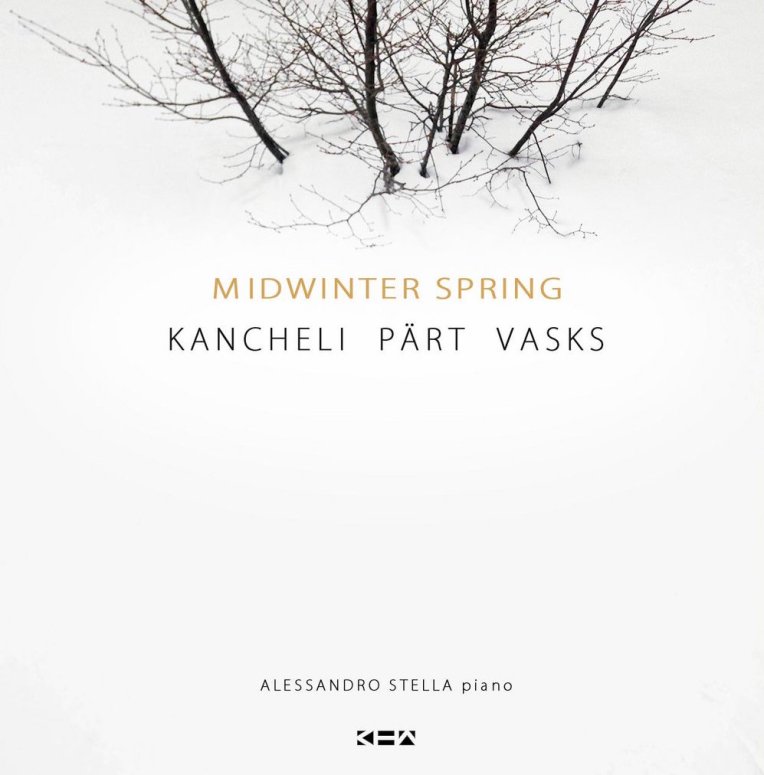


My latest review for Sequenza 21 is of Italian pianist Alessandro Stella’s contemplative solo recital disc of works by Giya Kancheli, Arvo Pärt, and Pēteris Vasks. Click the cover to read on…

Bernie Worrell may be best known as the backbone of George Clinton’s Parliament-Funkadelic, but on Elevation that spine sprouts veins, flesh, and wings in the keyboardist’s first solo piano transformation on record. While one may find it to be a surprising turn in an already-varied career, here is where the most paramount vessel of his seeking can be found: the heart.
The tune “In A Silent Way” by Joe Zawinul begins the album with a lyricism more expected of Tord Gustavsen, whose patience is echoed here. Worrell brings out a feeling of the American South in this rendition, painting the then and the yet-to-be in single brushstrokes. Hanging somewhere in the middle, he forges music like the glue between polarities of time. A low bass tone rises from a subconscious abyss, and writes its name across the mind’s eye with the control of a master calligrapher.
Whereas many jazz albums might use such tenderness as a warmup for quicker movements, this one keeps its promises. And so, Bootsy Collins’s “I’d Rather Be With You” lengthens the thread being pulled from this garment, removing a band of color from an overall pattern at once fading and forming. The balladic wavelengths allowed through this sonic portal are of the same frequency as those which link separated lovers by thought alone. Such transcendence is so damn immediate that you can’t help but feel like it’s your hands at the keys. And as Worrell draws lines in the water in order to feel its droplets clinging and separating, he evokes every human life caught in the karmic wheel.
It’s one among a handful of popular songs reimagined to be as naked as possible. Between the anthemic goodness of Carlos Santana’s “Samba Pa Ti” and Bob Marley’s “Redemption Song,” one common theme rules: the hidden truth of slowing down. It’s a philosophy epitomized in his take on “Ooh Child” by one-hit wonders The Five Stairsteps and “I Wanna Go Outside In The Rain” by The Dramatics. Both melt down the base metals of improvisation into the key of Worrell’s uniqueness. He makes no efforts to reveal secrets hidden in these melodies, but rather something far more difficult. He reveals their true selves.
John Coltrane’s “Alabama” is another example, which in the present version evokes rolling plains and clouds of smoke curling from pursed lips. A bittersweet nostalgia seeps through its curtain like light onto a kitchen table that was once alive with laughter but at which now sits only one. The pacing makes every snap of this uprooting that much more lucid to bear, while a stormy shadow trembles beneath it all.
Charles Mingus’s “Goodbye Pork Pie Hat” enacts further transformations from solid to liquid, throughout which balances of technical and creative emotions are under constant negotiation. Worrell turns the entire piece into one long inhale, as if to incorporate every particle of breath before expelling the carbon dioxide of his own infinitude.
Even more permeable borders outline such ruminations as “Light On Water” and “Realm Of Sight.” Each is the culmination not only of elements, but also of impulses that can only be sung, not spoken. Together, they form a modal flower, floating through the dust of history in search of that one stem held in the fingertips of an artist who continues to teach us that connecting with listeners requires the lone musician to unravel into their ears.
This is music you don’t interpret, but which interprets you.
Sara Davis Buechner
Barnes Hall, Cornell University
February 10, 2016
8:00pm
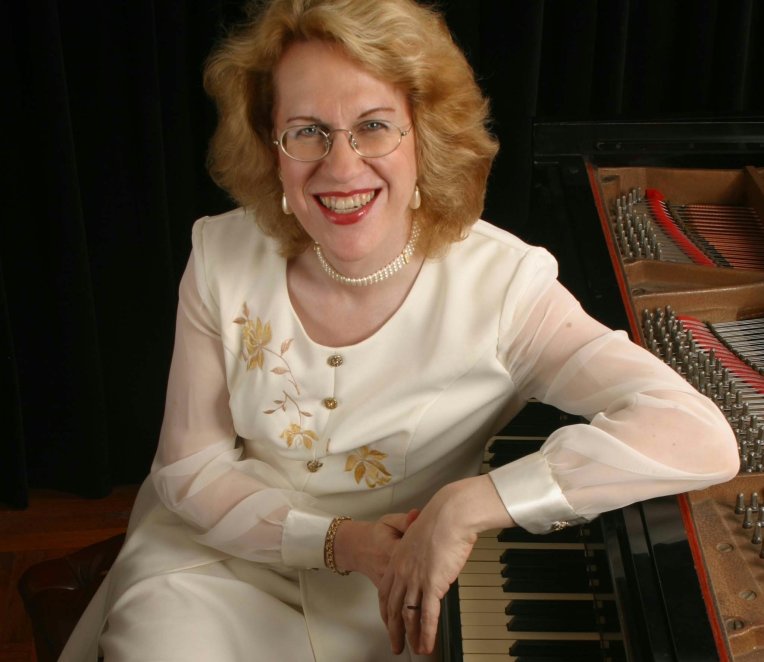
Solo piano concerts have come to hold a dual, contradictory status. They are ubiquitous in classical circles, where they serve didactic and diagnostic purposes through competitions and senior recitals. They’re also something of an anachronism in the contemporary sonic landscape, where digital listening threatens its live counterpart. On 10 February 2016, pianist Sara Davis Buechner brought something essential back to the Barnes Hall stage that too often eludes the musically inclined among us: humility.
It was evident in her curatorial preambles, in which she waxed to the audience anecdotally, passionately and honestly about the history of each piece before playing it. These thumbnail sketches provided a basis for absorption, an insider’s perspective on secrets that typically remain the performer’s sole purview. All the more appropriate, then, that the connective tissue of her program should be Ferruccio Busoni (1866-1924), an influential editor too often neglected as a composer, and whose breakout Elegies she rendered with experienced love. While foreknowledge can sometimes hinder appreciation, in this case knowing to expect an unconventional setting of a Bach chorale prelude or a quotation of “Greensleeves” allowed Buechner to transcend these bon mots with invention. From the set’s opening C-major triad, she spun wondrous and dynamic darkness, tumbling through Italian folk motifs and tempestuous dialogues with ease and leaving a trail of color bursts in her wake. Despite a formidable dynamic range, Buechner was careful to control grandeur within reason, pushing as much back into the keys as she was pulling from them, so as to honor the occasional contemplation. Busoni’s non-tonal language was thus properly illuminated, a dissonant body casting a harmonious shadow.
As is her gracious habit, Buechner paid homage to local culture by following with the 2010 Soliloquy, written for her by Takuma Itoh D.M.A. ‘12. Deeply impressionistic, it offered welcome shelter from Busoni’s storm. Cupped in the hands of a winter’s night, it was difficult not to read it as a full and rising moon. It embodied the dusting of snow outside the venue as much as the footprints left behind by those who had traveled through it to get there.
The Six Etudes for Piano, Op. 70 of Alfredo Casella (1883-1947) refastened attention to Busoni, who championed the young Italian among other fledgling composers of his time. Each of Casella’s knuckle-busting etudes was distinct, not least for all for bearing dedication to a different pianist. Collectively, they were something of a musical turnstile, allowing controlled access to changing textures. And while it was, between its aerobic trills and racing tempi, a technical tour de force, Buechner’s attention to choreography made it shine.
Capping off these lesser knowns were the Six Grand Etudes after Paganini of 19th-century juggernaut Franz Liszt, whose flamboyant personality was evident in every stroke. Buechner opted, as any sane pianist would, for the Busoni edition of these often-revised pieces, and with that connection brought her theme full circle. Whether playing a formidable passage for left hand only or executing runs with apparent ease, Buechner kept the mood as fresh as a farmer’s market and carried an underlying energy to its logical endpoint.
She then encored with a foxtrot called “Do-Do-Do,” a delightful confection she learned by ear from a rare recording of George Gershwin piano rolls. Witnessing her consummate balancing act of both the tune’s mechanical and expressive tendencies, it would come as no surprise to learn that she is one of the world’s few active silent film piano score interpreters. Every chord painted a kind of smile that one just doesn’t see any more on the silver screen.
(See this article as it originally appeared in The Cornell Daily Sun here.)
On Tuesday, 9 February 2016, Keith Jarrett returned to Carnegie Hall for a solo performance of spontaneously improvised music. My review of the concert is now available at All About Jazz here.
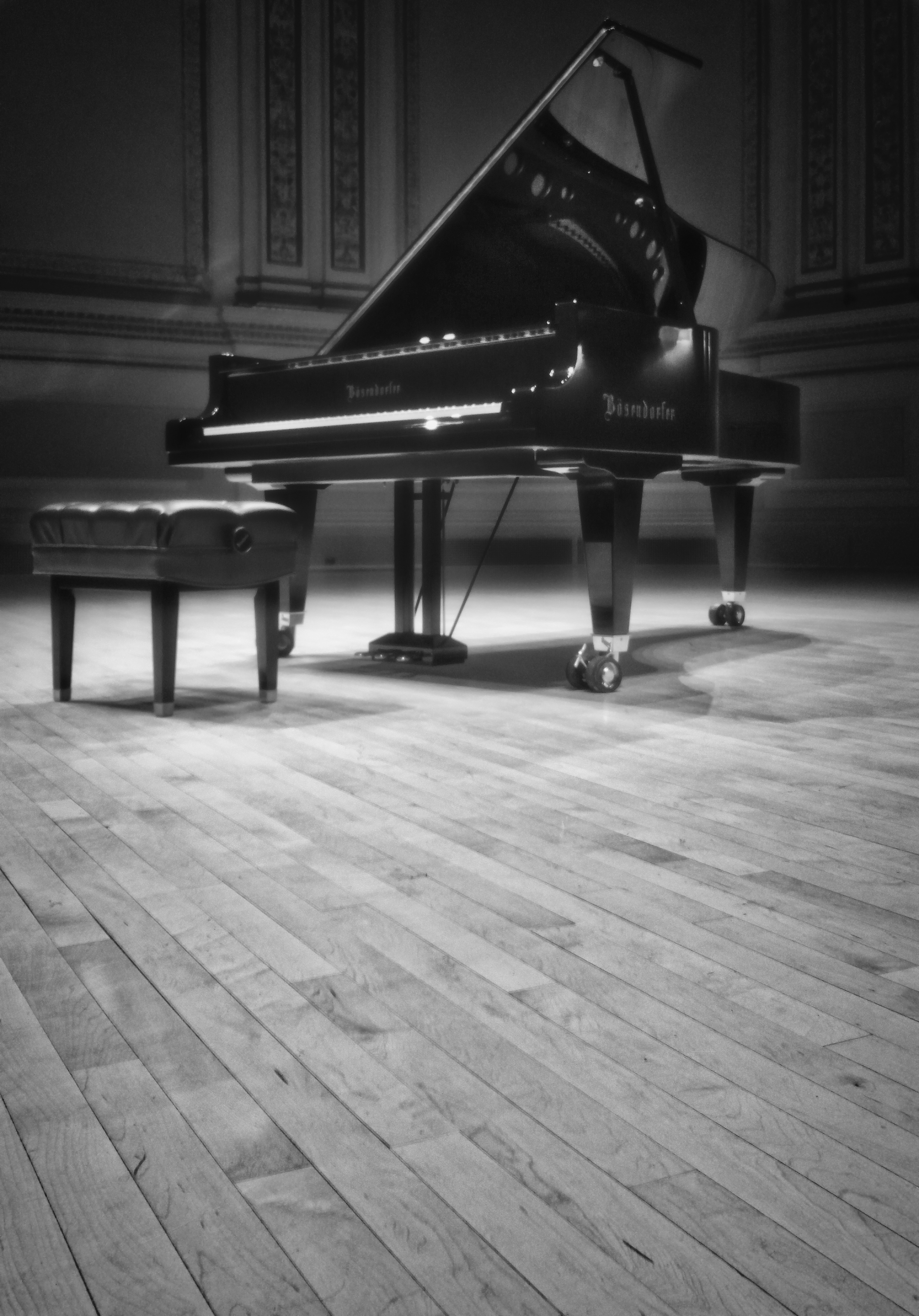
Pianist András Schiff is a genius. By that I don’t mean to describe an artist of exceptional talent, which nevertheless Schiff proved himself to be with his appearance at Carnegie Hall on 30 October 2015. I intend the original Latin meaning of “generative power” or “inborn nature,” by which his playing was duly possessed. This embodied approach to performance has become clearest since his tenure with ECM started in 1997. Schiff’s latest for the label is an all-Schubert recital spanning two discs and culminating, as did the Carnegie performance, in the Piano Sonata in B-flat Major of 1828. Whereas the album documents his reckoning with a Viennese fortepiano built that same decade, an instrument of concave power that shores up the Schubertian temple against any resistance of preconceptions, for this appearance only the convexity of a Bösendorfer would do. For him these qualities have never been opposite but complementary, as was clear when he sounded Schubert’s ominous trill. But let us, like Schiff, save the best for last.
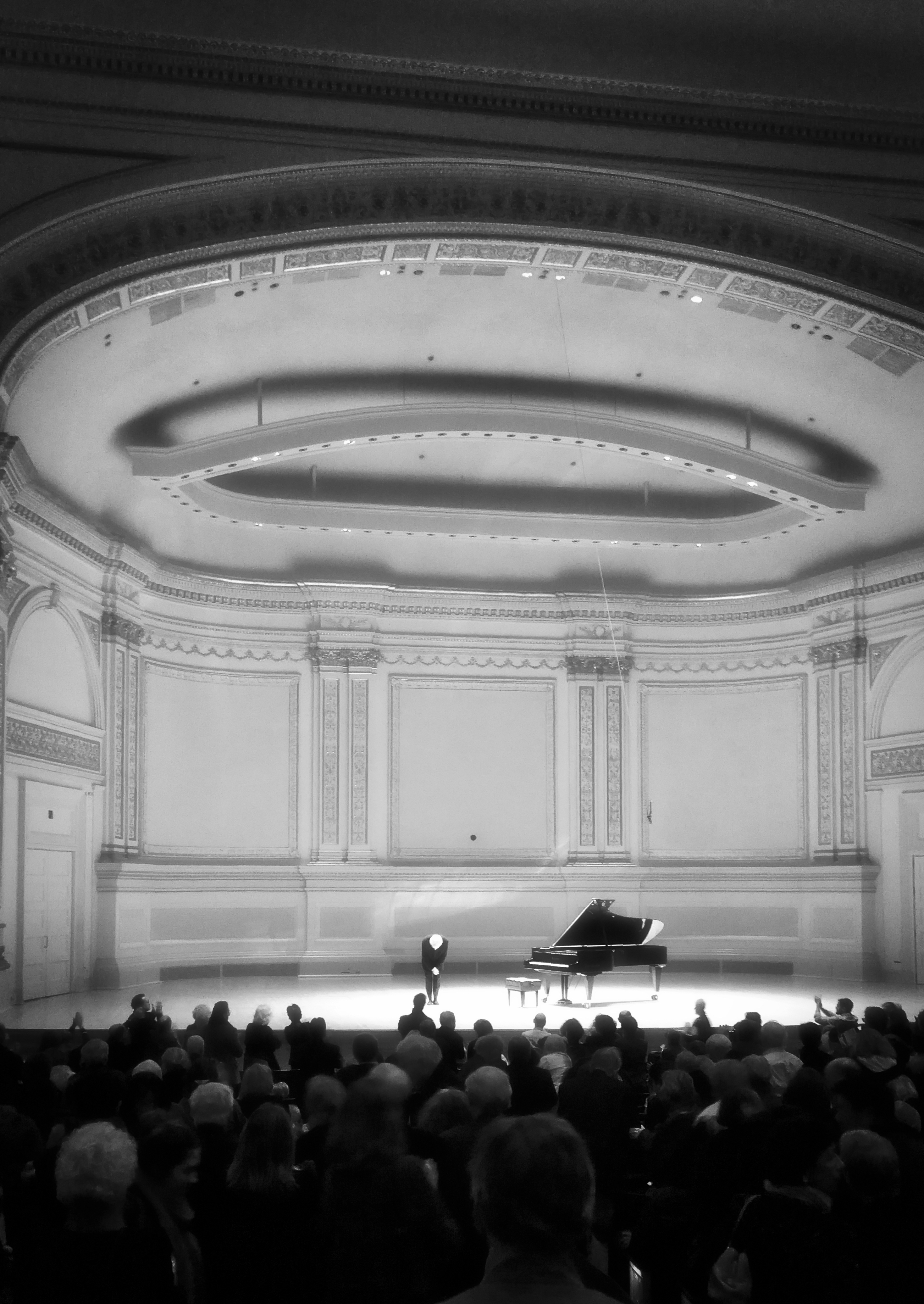
In addition to its sublime musicianship, Friday’s concert sported a masterful program, sequencing the final piano sonatas of Haydn, Beethoven, Mozart and dear, ill-fated Schubert, in that order. Schiff finessed his way through Haydn’s picture-perfect Sonata in E-flat Major (1794) like a skilled orator: No gesture or utterance was wasted. His Adagio was all the more barren for being surrounded by two leafier branches, neither of which shed a single trident in the gusts of Beethoven’s Sonata No. 32 in C Minor (1821/22). The latter came only after Schiff had hunched over the keys, as if in prayer, to gather himself. Equal parts brush and chisel, its curious, two-movement structure revealed the independence of Schiff’s fingers, and the composer’s in turn for treating repeats as opportunities for self-discovery and, in the dolorous latter half, holistic expression. The coda nevertheless resounded with affirmation of life.
Had it not been sandwiched between two heavyweights, Mozart’s Sonata in D Major (1789) might have seemed like poor casting. But its placement after intermission was refreshing. Although a subpar sonata, one that inlaid its frame at the expense of a clear scene within it, its technical flourishes emitted from Schiff’s fingers with seaward force. Thus cleansed by lack of challenge, we could navigate Schubert’s winding paths, tenderized to receive their shadows. Schiff opened the sonata like a thumb-worn book and read it aloud to the audience with burrowing grandeur. Despite its length, the first movement was eclipsed by Schiff’s restrained handling of it, which assured that the impact of the final Allegro rung true. Between them were a passionate Andante, in which he barely touched the keys as his left hand arced back and forth over the right, and a sunnier Scherzo. Throughout, Schiff was always moving ahead with the future in mind and all the necessary construction materials at his fingertips.
Just as the Goldberg Variations belong to Glenn Gould, so too does Schubert to Schiff. All the more appropriate that he should end the concert with the second of two encores, playing the Aria from Bach’s masterwork. In his handling it became an open lattice, if not also the vine creeping up it, dreaming of its own birth from seed and soil. Before that we were treated to Schumann’s rarely performed Geistervariationen (Ghost Variations) in E-flat Major, featured on Schiff’s 2011 ECM recording of the same name. Although written on the brink of madness, it was as lucid as all else, and showed Schiff as, more than anything, one of the great listeners to ever grace the Carnegie stage. That he played it all from memory would have seemed amazing had it not felt so inevitable.
(See the article as it originally appeared in The Cornell Daily Sun.)

Dollar Brand
Ancient Africa
Dollar Brand piano, flute
Recorded live June 1972, Jazzhus Montmartre, Copenhagen
Engineer: Lars Vester Petersen
Sound: Mantra Sound, Copenhagen
South African pianist Abdullah Ibrahim, known in a bygone era as Dollar Brand, is a soothsayer at the keyboard, and on this out-of-print JAPO release from 1974 he divines from the ebony and the ivory a lifetime’s worth of bones. Like its label predecessor, African Piano, this album was recorded live at the Jazzhus Montmartre in Copenhagen, but adds nearly three years of additional life experience to show for its mesmerizing rewards.
The original vinyl is a gorgeous thing in and of itself. Sleeved in a photograph of flaking, painted wood, it reads like a structure worn by time but which is also stronger for it. The performance consists of a long piano medley of original tunes plus an encore on flute. The bulk of the set opens, as did African Piano, with an extended take on “Bra Joe From Kilimanjaro,” a quintessential tune in Ibrahim’s personal archive. Its deep-set, rocking ostinato provides all the rachises he needs to strut with plumage burning bright. If not already obvious, Ibrahim is a brother of a different feather, one whose gifts are every bit as intuitive as those of Keith Jarrett, whose likeminded penchant for gospel-infused anthemism makes an early reveal before lighting a rocket into the jubilation of “Mamma.” Ibrahim’s lush comping fleshes out the atmosphere to its fullest, smoothing with bravado into the calmer “Tokai.” A joyful spread of chords flings us into the train ride of “Ilanga” with such traction that no tracks are required. As with so much of Ibrahim’s output, an underlying propulsion lends sanctity to the overarching message.
“Cherry” is a buoyant morsel of lyricism that sets us up for the heat of “African Sun,” which fades out of Side 1 and into Side 2. Both this and the following tune, “Tintinyana,” show an artist who understands the blues like few other contemporary pianists can. His take on the form is as nostalgic as a childhood tree, which continues to grow in mind even when its physical form succumbs to the axe of time. The roots of his left hand are so thick that every burst of foliage is like salt in the wounds of evil, for it knows that the divine await the righteous with open arms. In light of this, the romping swing of “Xaba” comes across as a purifying dance, an invitation to commune with exclusively musical worlds. The prayers of those worlds are to be found in “Peace – Salaam,” which ladders its way into the clouds as if they were puffs ejected from the pipe of history. Here we are invited to relax, unwind, and let our cares consume themselves into nothingness. A swell of applause brings us back to reality, and to the final “Air,” for which the keys are rested and the flute leaves the final word. And final it most certainly is, for it begins melancholy and finishes in a hunter’s dash, swift and sure.
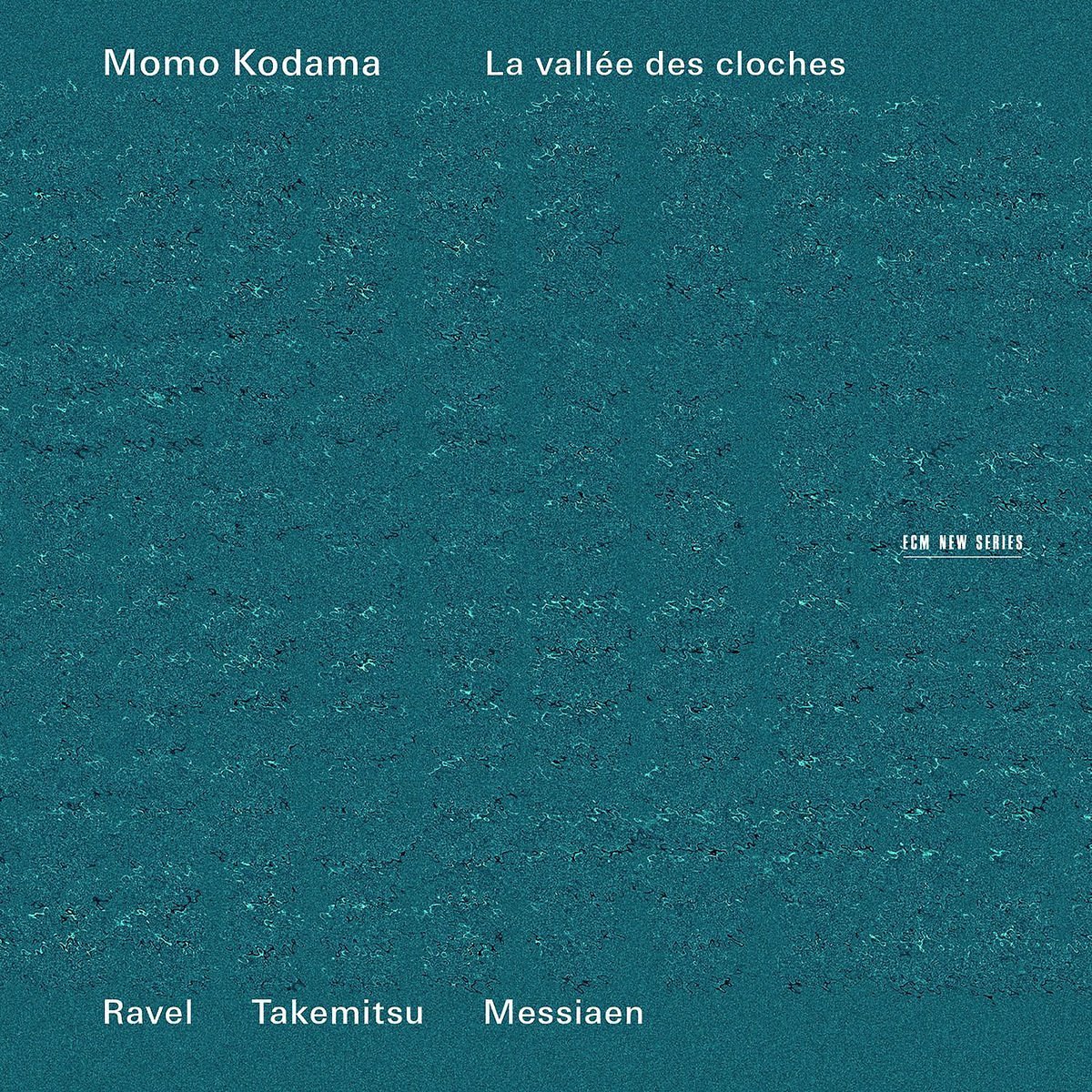
Momo Kodama
La vallée des cloches
Momo Kodama piano
Recorded September 2012, Historischer Reitstadel, Neumarkt
Engineer: Stephan Schellmann
Produced by Manfred Eicher
As of late, ECM’s New Series imprint seems to be on a mission to prove that impressionism in classical music is, if anything, an exercise in clarity. This has been the message behind such releases as Tre Voci and Alexei Lubimov’s account of the Debussy Préludes. Joining these debunkers is distinguished pianist Momo Kodama, whose first solo recital for the label is sublime as crystal.
The title (which translates to “The valley of the bells”) of her characteristic program comes from Maurice Ravel’s Miroirs. This five-part gallery of expressionist vignettes wants for nothing in environmental fidelity. Each is an embodiment of its image, and then some. The first two pieces, “Noctuelles” (Night moths) and “Oiseaux tristes” (Sorrowful birds), are together a study in contrasts, juxtaposing the former’s dreamlike wing-beats, which by slightest touch of pond’s surface scatter minnows in sunbursts of activity, and the latter’s methodical gravidity, which transgresses memory like a cigarette through silk. Already obvious at this point is Kodama’s meticulous pressure, her balancing of strength and fragility. She adds leagues to “Une barque sur l’océan” (A boat on the ocean). Like a ballerina dissolving one cell at a time, it pirouettes into a dream of wind and sail, as if one were the inverse of the other. “Alborada del gracioso” (Mornign song of the jester), on the other hand, has a Spanish flavor, made all the more vibrant for its dissonances and reflective detours, while the final bells make for some strangely provocative reflections.

At the other end of the album’s spectrum is Olivier Messiaen, a composer close to Kodama’s heart and whose La fauvette des jardins is a wonder. Something of an extension of the Catalogue d’oiseaux, a recording of which Kodama released to great acclaim on the Triton label in 2011, it presents formidable challenges to the musician by way of its affective variety. An ashen foundation in the piano’s lower register contrasts and diffuses the upward motions that follow, lighting the way with the breath of a thousand torches. Its paroxysms are decidedly spiritual. Through them salvation sings with the notecraft of insects. A restlessness of servitude pervades. It speaks through contact of flesh and bone, not tongue and breath. The piece’s negotiation of the progressive and the regressive is ideally suited to Kodama, who transforms its turbulence into an opportunity for reflection, such that its consonances feel exhausting in their orthodoxy.
Considering that Tōru Takemitsu was such a great admirer of both Debussy and Messiaen, his Rain Tree Sketch makes for effortless company. Occupying as it does the center of the program, one might feel tempted to read it as filler or segue from one French master to the other. In Kodama’s practice, however, it holds its own as a robust work of art. Takemitsu was, of course, a prolific film composer in his native Japan, and his experiences in that capacity seems to have carried over into his later works, of which this is but one evocative example. The illustrative strengths explored in the work introduce another relationship of balance into Kodama’s toolkit—this between circular and linear forms—and does so with meditative attention paid to the underlying touch of things. Like the musician herself, Takemitsu’s idea of a sketch is full enough to be called consummate.
Myung Whun Chung
piano
Myung Whun Chung piano
Recorded July 2013, Teatro La Fenice, Venice
Engineer: Rainer Maillard
Produced by Manfred Eicher
“I believe that musicians are only responsible for half of the real musical experience—the other half must be done by the listener. How one listens and receives the music is perhaps the most important gesture.” So writes Myung Whun Chung in a gracious liner note accompanying his ECM debut. One could receive no more fitting an invitation to a program for which the renowned conductor puts down his baton and takes to the piano, sharing his thoughtful inscriptions across some of the most immovable palimpsests of the classical canon.
In keeping with the spirit of listening, his barely titled piano is more a gift than a recital. It is also a brilliant instance of presentation, and of music’s personal necessity. The melodies we will know—some by name, others by association, each so ingrained in our subconscious that they would seem to exist of their own impulse.
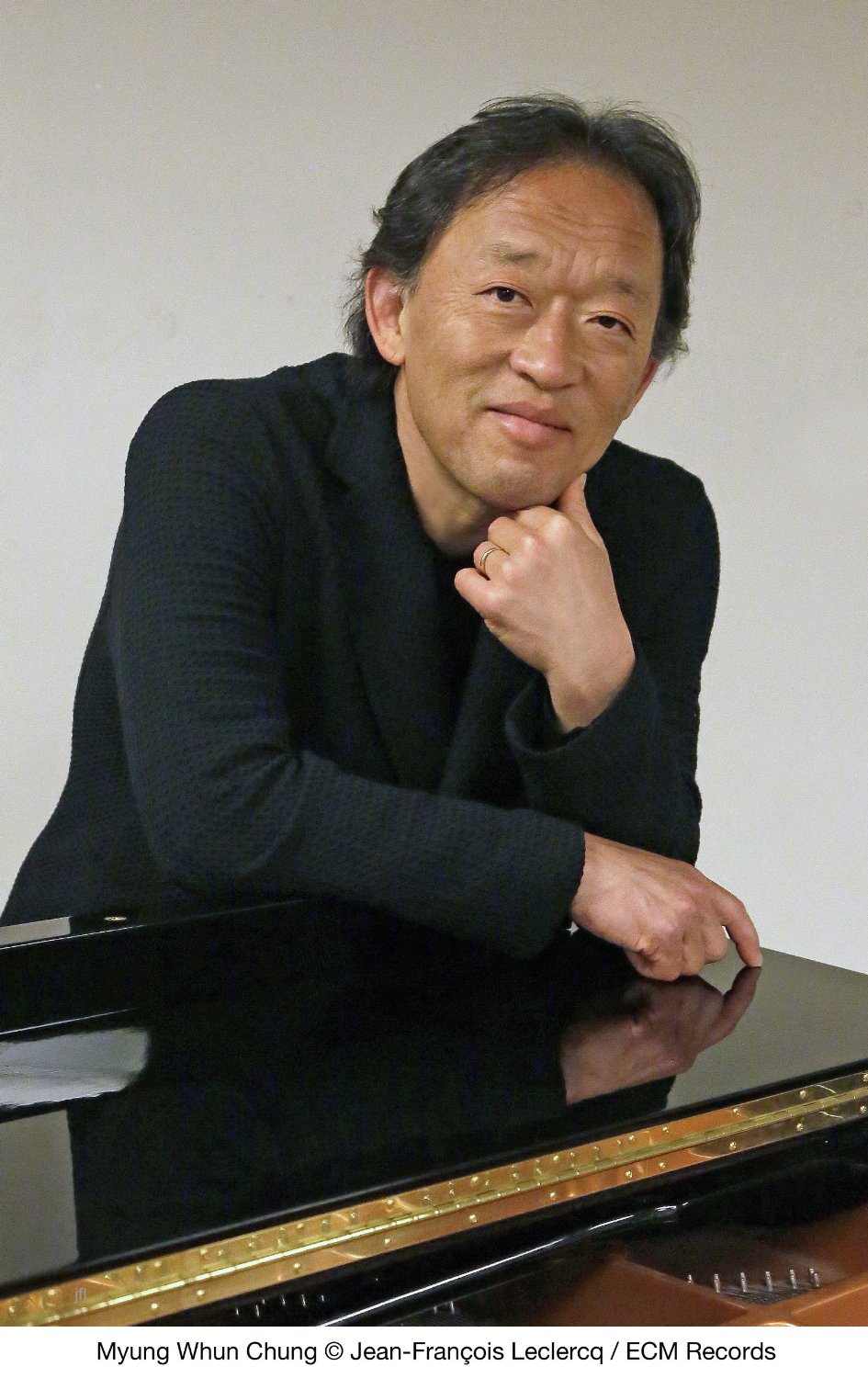
Chung’s forte is his commitment to texture. True to reputation as a conductor, his interpretations are remarkable for their studied pacing and dynamic appropriateness. The giants of the set list are also its greatest ambassadors for intimacy. Among them, Debussy’s Clair de Lune is paramount. Yet where this much-copied painting, excised from the composer’s Suite bergamasque, so often drifts through our outstretched hands, in Chung’s it has palpable elasticity, made material by a heartfelt triangulation of playing, instrument, and engineering. His Für Elise is likewise weighed, Beethoven’s castaway gem taking on a driven quality through a balance of whimsy and despair.
Intimacy also reigns over Chopin’s Nocturnes in D-flat Major, op. 27/2 and in c-sharp minor, op. posth. Chung draws out the fidelity of their singing and underlying dance, walking that ephemeral path between slumber and waking. Even Mozart’s twelve Variations on “Ah! Vous dirais-je, maman” (better known to many as “Twinkle, Twinkle, Little Star”) don a patina of solitude. Despite their jovial development, they retain a cerebral edge that looks back to Bach even as it looks ahead to Beethoven, and conjures up imagery of self-enclosed genius.
Even with all the evening hymns, two Schubert Impromptus—these in E-flat Major, D899/2 and G-flat Major, D899/3—render the album’s darkest shades. Lovely in their own way, not least of all by their performer’s evocative makeover, they clutch within their sparkling ribcages hearts of unresolved tensions. So too do Schumann’s melancholy Träumerei and whimsical Arabeske, each an ode to closed eyes. Yet nowhere do Chung’s intentions take such unforced flight as in Tchaikovsky’s Autumn Song, in which he gives proper attention to the open spaces of the score, allowing them to breathe so that we may share in that breath.
I can assure you that none of the above is mere reviewer’s hyperbole. To dismiss it as such is to misrecognize the music’s inherency and the selflessness with which it is presented. You will, of course, hear these pieces again, just as you have heard them many times before, but it is unlikely that you will find them so lovingly unpacked. This is music that recognizes us before we recognize it.
(To hear samples of piano, you may watch the video above or click here.)
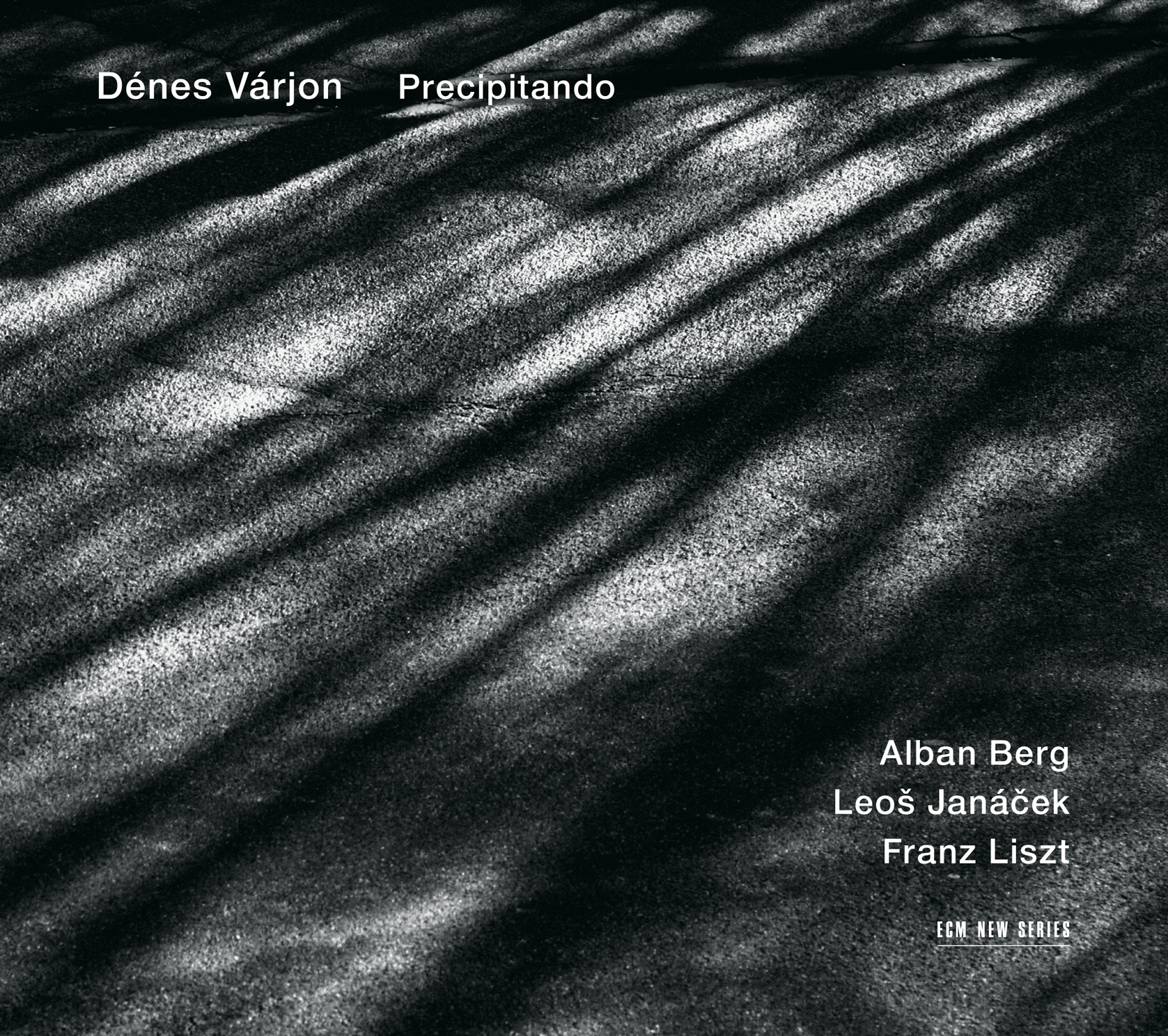
Precipitando
Dénes Várjon piano
Recorded April 2011, Auditorio Radiotelevisione svizzera, Lugano
Engineer: Markus Heiland
Produced by Manfred Eicher
Following his traversals of programs by Robert Schumann (New Series 2047) and Heinz Holliger/Clara Schumann (New Series 2055), Dénes Várjon returns to ECM with his first solo recital. Recorded in the pristine acoustics of the Auditorio Radiotelevisione svizzera in Lugano, Switzerland, Precipitando documents a new level of interpretive power from the Hungarian pianist.

If the album’s title, a music term meaning “rushing” or “headlong,” is realized anywhere, it is in the concluding b-minor Sonata of 1853 by Franz Liszt, with whom Várjon’s intimate familiarity is obvious from the start. Dark beginnings breed a full-blown thesis statement to almost overwhelming effect, yet Várjon handles a technically demanding interweaving of poetry and prosody with especial care. Because passages of quietude are relatively short-lived in this sonata, they tend to feel ominous whenever they do occur, fighting the invitation of descending motifs toward hope of light. Each such eclipse gives way to the diamond rings of Liszt’s dramatic reveals and, ultimately, to a shining, heavenly ladder.
At the beginning of the program we have Alban Berg’s Sonata op. 1 (1907/08, rev. 1920). Theodor Adorno called it his “apprentice piece,” as it was written under Arnold Schoenberg’s tutelage and bears the stamp of that teacher’s attention to detail. Although intended to be an example of traditional sonata form, after completing the single movement of which it is now composed, Berg (read: Schoenberg) found it to be complete. Like the Liszt, it is in b minor, but wanders into chromatic alcoves wherever it can. Also like the Liszt, it makes a torrent of a trickle and finds balance in the occasional reflection, sailing an ocean of tough-skinned lyricism toward delicate shores. A notably intense feeling of tactility cries out from Várjon’s reading.
Leoš Janáček’s V mlhách (In the mists) of 1912 makes its second appearance on ECM, following an interpretation by András Schiff (New Series 1736). Where Schiff’s mists are diffuse and autumnal, Várjon’s curl in the oncoming light of a spring dawn. In less uncertain terms, Schiff teases out the darkness in the light, while Várjon emphasizes the light in the darkness. It’s a bold and effective move, considering that these melancholy pieces tend to be associated with a composer thrown by conflict. Particularly memorable here are the arcing Andantino and final Presto, the resolve of which the pianist tenderizes with open eyes.
As a performer, Várjon is distinguished by his command of dynamics. At his fingertips, pianissimos are dreams and fortes are destructions. He is particularly adept at stalking the piano’s lower register, from which he elicits a rare fullness of clarity and in the soil of which he finds the harmonic roots of all three pieces here tangled in secret.
(To hear samples of Precipitando, click here.)
 Between Sound and Space: ECM Records and Beyond