Vincent Courtois/Robin Fincker/Daniel Erdmann: Lines for Lions (RJAL 397051)

Vincent Courtois cello
Daniel Erdmann tenor saxophone
Robin Fincker clarinet and tenor saxophone
Recorded, mixed, and mastered at La Buissonne Studios, Pernes-les-Fontaines, France
Recorded November 25-26 and mixed December 2024 by Gérard de Haro
Mastering at La Buissonne Mastering Studio by Nicolas Baillard
Release date: November 7, 2025

Cellist Vincent Courtois returns in the company of tenor saxophonists Daniel Erdmann and Robin Fincker, forming a trio that feels at once improbable and inevitable. Three voices that might easily collide instead interweave, tracing bright arcs through open air. The instrumentation alone promises unusual geometry. Two reeds converse above the dark grain of cello, a chamber ensemble with the pulse of jazz and the curiosity of explorers who have misplaced their compass on purpose.

The album’s title gestures toward the tune Gerry Mulligan wrote in 1952 as a tribute to Jimmy Lyons, a figure closely tied to the legacy of the Monterey Jazz Festival. That piece eventually became a touchstone of West Coast jazz, known for its luminous melodic contour and breezy contrapuntal motion. Those qualities hover like a distant ancestor throughout this recording. The trio does not imitate that tradition. Instead, they treat it as a horizon, a place toward which melodic clarity travels even while the music wanders through stranger terrain.

The group thrives on the friction of difference. Erdmann’s tenor carries a weathered edge, a tone where breath scratches against metal and every note seems carved from bark. Fincker offers a contrasting ease, especially when he turns to clarinet and lets its rounded voice float through the ensemble like a ribbon of smoke. Courtois stands at the center of this triangulation. His cello provides gravity, yet it refuses to remain merely foundational. At one moment it functions as bass, grounding the harmony with muscular pizzicato. At another it becomes a singer, bow drawing long shadows across the musical landscape. Through this constant transformation the trio achieves a peculiar equilibrium. The music feels airborne while remaining tethered to a deep structural spine. We can see all of these qualities reflected in their writing, which is fairly well distributed throughout the set.

Vincent Courtois: Architectures of Motion

Courtois composes as someone who thinks orchestrally even within the tight confines of a trio. His pieces often hinge on physical movement. Lines stretch, recoil, then leap again as if guided by invisible pulleys.

“Alone in Fast Lane” opens the album with an immediate surge of energy. The two tenors ignite like twin flares, each tracing its own spiraling path while the cello pulses beneath them with restless purpose. Courtois’s pizzicato acts as both skeleton and engine. The sound possesses a remarkable clarity. One hears the music’s anatomy in real time. Nerves spark through the reeds while the cello functions as spinal cord, transmitting impulses that set the whole organism in motion. The result is a texture both taut and exuberant, a kind of high velocity counterpoint that never loses its center.

“Seven Lines for Old Mediums” inhabits a different climate. The music becomes pointillistic, almost painterly. Notes appear like small constellations rather than extended phrases. Courtois allows silence to speak with unusual authority. Each gesture hangs in the air for a moment before dissolving, inviting the listener to lean closer. The piece suggests a quiet meditation on the past, not through nostalgia but through delicate fragments that recall older languages without repeating them.

“Adios Body (Hello Soul)” carries a melody built on a gentle octave leap, a motif that first arrives with lullaby tenderness. Gradually the texture thickens. The tenors begin to growl and circle each other in animated debate while the cello intervenes with calm authority, a mediator guiding two spirited interlocutors toward uneasy harmony. What begins in repose evolves into something almost theatrical. The music sheds its skin and reveals a more restless spirit beneath.

Daniel Erdmann: Conversations with a Crooked Smile

Erdmann’s writing introduces a playful angularity. His pieces often feel conversational, as though the ensemble has stumbled into a lively discussion at a café where every participant insists on finishing the other’s sentences.

“Mulholland Coffee Break” evokes exactly that sort of moment. The tune unfolds with relaxed swagger, a melody that seems to lean back in its chair while still maintaining a sly sense of rhythm. Courtois takes full advantage of the mood. His improvisation dives into unexpected harmonic corners, bow and fingers shifting roles with effortless agility. When Fincker’s clarinet arrives, it pours a warm gloss over the scene, thick with ease. One can almost imagine sunlight slanting through a window onto a cluttered tabletop of cups and scribbled notes.

“Finally Giovanni” thrives on whimsy. The two tenors chatter above Courtois’s buoyant pizzicato, their lines hopping and sidestepping like dancers improvising steps across a wooden floor. The tune’s charm lies in its elasticity. Themes stretch then snap back into place with mischievous delight. What might have been merely jaunty becomes something richer through the trio’s shared instinct for balance. Humor and precision coexist without strain.

Robin Fincker: Blues Through a Kaleidoscope

Fincker’s contributions bring a blues sensibility filtered through an exploratory imagination. His pieces often begin in recognizable territory before opening unexpected doors.

“There and Then” highlights the clarinet’s expressive warmth. A call and response emerges between it, tenor, and cello, each voice stepping forward then retreating into the weave. The blues inflection runs deep but never feels conventional. Courtois again proves a formidable improviser, his cello singing with both grit and tenderness.

“Lion’s Den” returns the trio to a denser thicket of interaction. A hint of bop flickers through the rhythmic undergrowth, yet the structure refuses to settle into predictable grooves. At the center, Courtois delivers a remarkable solo passage, a monologue that seems to narrate its own unfolding. Each phrase arrives with quiet agency, like a thought discovering its own meaning while being spoken.

“Hobo Clown” closes the album with a buoyant sense of motion. Playfulness becomes the guiding principle. The ensemble glides through shifting textures fluidly, revealing the full breadth of its dynamic and technical range. The music smiles without losing its intelligence. Every gesture feels alive to possibility.

In this sense the trio suggests a quiet philosophical lesson. Music does not merely express individuality. It also reveals how individuality expands when placed in conversation. Perhaps creativity resembles a kind of listening. One waits for another presence to enter the room, uncertain what it will change, curious about the space that will appear between the sounds. In that small interval something unexpected begins to breathe.
Vincent Courtois: Finis Terrae (RJAL 397046)

Vincent Courtois cello
Sophie Bernado bassoon
Robin Fincker clarinet, tenor saxophone
Janick Martin accordion
François Merville drums
Recorded, mixed, and mastered at La Buissonne Studios, Pernes-les-Fontaines, France
Recorded and mixed December 20-21, 2021 by Gérard de Haro, assisted by Matteo Fontaine
Mastered by Nicolas Baillard
Produced by Gérard de Haro & RJAL for La Buissonne and La Compagnie de l’imprévu
Release date: April 14, 2023

There are films that tell stories, and there are films that breathe. Finis Terrae belongs to the latter category. In 1929, Jean Epstein carried his camera to Ouessant, a wind-bitten island at the edge of Brittany, and pared narrative to its essentials. Fishermen gather seaweed on a barren rock. One suffers a minor injury. Pride intervenes. Infection spreads. Distance becomes danger. From this slender thread, Epstein draws something tidal and immense. The sea is not a backdrop but a manifestation of temperament. It glitters without warmth and devours without malice. Wind scours faces into maps of endurance, and hands move with tidal patience, thickened by salt and rope.

His lens grazes wool, stone, water, cloud until texture itself becomes drama. Close-ups turn faces into weather systems, while wide shots reduce men to brief notations against immensity. Each frame vibrates with the tension between fragility and expanse. Artifice scarcely intrudes. The men embody versions of themselves, their movements marked by an untrained gravity no actor could counterfeit. What emerges is neither fiction nor reportage but ritual. Time dilates. Waves repeat their ancient syllables against rock. Silence gathers like weather, pressing inward, creating not emptiness but expectancy, as though the image were listening for its own echo.

The wound at the center is modest in scale yet vast in implication. Stubbornness curdles into isolation, and fraternity strains under the weight of pride. When rescue arrives, it feels provisional rather than triumphant, a reminder that survival rests on cooperation as delicate as a boat’s balance in crosscurrent. The title, “End of the Earth,” names a boundary without spectacle, the horizon as threshold. At the brink, stripped of ornament, the human face remains, turned outward, raw as a tide pool exposed at low water. To watch Finis Terrae is to submit to abrasion. Salt seems to gather on the tongue. The wind seeps into the theater. Something erodes and clarifies at once.

Into this charged silence steps Vincent Courtois with a new soundtrack, an act both humble and daring. Writing for a silent film is a conversation across time, a practice of listening not only to what is visible but to what trembles beneath it. Courtois has long possessed a cinematic sensibility, evident in 2017’s Bandes originales, where he composed scores for imagined films and conjured phantom images through sound alone. There, he invented the screen. Here, he answers one already illuminated. The task shifts from discovery to correspondence. What sound belongs to stone, and what rhythm suits a horizon?

Joined by Sophie Bernado on bassoon, Robin Fincker on clarinet and tenor saxophone, Janick Martin on accordion, and François Merville on drums, Courtois approaches the film as interlocutor. The ensemble does not illustrate the images; it converses with them, sometimes in sympathy, sometimes in friction. The “Ouverture” grounds us immediately. Accordion and cello carry a grain that feels quarried from the same rock as the island, earthy yet lucid. Soft drumming enters like distant surf, reeds tracing the contours of labor and air. Sound and image begin to braid, the scrape of bow answering that of seaweed against stone.

In the title track, pizzicato cello pulses with restrained urgency while accordion phrases swell and recede like wind threading through narrow streets. The bassoon casts a dusky sheen across the fishermen’s silhouettes. Music shapes silence rather than filling it, revealing the architecture of quiet already present in the film. “Les Goémons” unfolds in textures that crumble and reform, evoking the uneven shoreline, as clarinet lines rise clear and saline above a gravelly bassoon foundation. The specificity of Ouessant remains palpable, yet the music gestures outward toward any place where humans confront the indifferent sublime.

“L’Impossible Départ” becomes a study in hesitation, sustained tones hovering like mist above water. Even when energy quickens in “Les Volontaires” and “Ouessant,” edging toward dance, a trace of melancholy persists. Celebration carries the memory of peril. Joy stands close to fear. In “L’Attente des Mères,” multiphonic bassoon murmurs and patient drumming create a taut acoustic space in which waiting feels almost visible. “Le Sauvetage” releases unbound tenor lines that surge with collective effort, less victory than will made audible.

The closing “Docteur Lessen” gathers the emotional residue of the journey. A forlorn melody drifts outward, neither resolving nor collapsing, moving toward the horizon without promise of arrival. Notes thin into distance, as though sound itself were subject to erosion, leaving the listener suspended between relief and continuation. Although the film deepens the experience, the soundtrack stands firmly on its own. Freed from the screen, it summons an inner cinema, much as Bandes originales once did, though now the phantoms have faces and weathered hands.

To add a soundtrack to a silent film is to recognize that images are never mute. They hum at frequencies we often overlook, and music can amplify that hum or reveal the solace within it. In the meeting of Epstein’s light and Courtois’s sound, time seems to fold, like two shores sensing one another across water. Perhaps every act of listening is an attempt to stand at such a shore. We face horizons we cannot cross, yet sound travels where the body cannot, binding us to strangers and to landscapes we may never inhabit. At the end of the earth, whether of rock or memory, we remain creatures who lean into the wind, attentive to whatever answers back.

Bill Carrothers/Vincent Courtois: Firebirds (RJAL 397040)

Bill Carrothers piano
Vincent Courtois cello
Eric Séva baritone saxophone on tracks 6 and 7
Recording, mixing, and mastering at Studios La Buissonne, Pernes-les-Fontaines, France
Recorded May 21 and mixed June 21, 2021, by Gérard de Haro, assisted by Matteo Fontaine
Steinway grand piano tuned by Alain Massonneau
Mastered by Nicolas Baillard
Produced and directed by Gérard de Haro & RJAL for La Buissonne Label
Release date: November 12, 2021

Firebirds is many things, but above all, an act of faith. Gérard de Haro, long a quiet architect of improbable encounters in his La Buissonne studio, had carried within him the intuition that pianist Bill Carrothers and cellist Vincent Courtois belonged in the same current. Each had left an imprint on the room’s air in separate sessions, as if their sounds were tributaries waiting for confluence. Yet they had never tested the tensile strength of their voices against one another. Courtois has confessed that without de Haro’s conviction, the meeting might have remained hypothetical. Trust became the catalyst. Trust in the ear behind the glass, trust in the unseen geometry of chance. What followed feels less like a collaboration than a tide answering the pull of a distant moon.

Indeed, despite the album’s title, it is water that courses through it by temperament. The frame is Egberto Gismonti’s “Aqua y Vinho,” placed at the threshold and the farewell. The cello begins alone, tracing the melody as though drafting a map across an empty sea. Its lines appear rectilinear at first, crystalline and deliberate, then soften, bending into arcs that suggest eddies and hidden inlets. When the piano joins, it does not so much accompany as set the shoreline in motion. Its chords fall with the measured cadence of footsteps along wet sand, insistent yet patient. Courtois responds with widening spirals of sound, ascending in vaporous abstraction before returning, each time altered, to the melody’s wellspring. The repetition never repeats. It accumulates.

The improvised title track arrived first in the studio, though it appears later in sequence, as if the musicians wished to let it steep before offering it whole. The title track smolders with a folk-inflected sorrow, embers glowing beneath a veil of restraint. Carrothers coaxes from the piano a warmth that suggests hearthlight flickering on stone walls. Courtois answers with phrases that hover between lament and lullaby, a bowed murmur that seems to remember something older than language. Their interplay suggests two elements seeking equilibrium, flame reflected on water, each transfiguring the other’s hue.

Standards such as “Deep Night” and “Isfahan” are treated as living aquifers. “Isfahan” opens into a spacious dusk, the arrival of guest musician Eric Séva’s baritone saxophone deepening the horizon. His tone spreads like ink in water, dark yet translucent, amplifying the nocturnal hush that permeates the record. The trio does not crowd the melody; they breathe around it, allowing space to function as tidepool and threshold. “Deep Night” shimmers with restraint, its contours revealed slowly, as if the musicians were polishing a stone discovered at low tide.

Even Joni Mitchell’s “The Circle Game” undergoes a gentle metamorphosis. Pizzicato cello skips like pebbles across a pond while the piano lays down chords that ripple outward in concentric rings. The familiar refrain acquires a different gravity here, less nostalgic than reflective, as though time were not a wheel but a river whose surface records every passing cloud.

The original compositions widen the estuary. “Colleville-sur-Mer” unfolds in a hush that feels tidal, grief receding and returning with unbidden regularity. “San Andrea” keens with a salt-etched intensity, its phrases cresting in plaintive arcs. “The Icebird” introduces a glacial clarity, tones refracted as if through frozen air, while “1852 mètres plus tard” paints in gradients of altitude and atmosphere, suggesting ascent through thinning light. Throughout, de Haro’s production captures not only the notes but the air between them, that charged interval where sound prepares to become something else.

To speak of transfiguration here is not mere embellishment. The album enacts it. Themes dissolve and reassemble, melodies shift from solid ground to liquid shimmer, textures ignite and cool. Each musician remains unmistakably himself, yet the encounter alters their outlines. The music seems to ask whether identity is ever fixed or always in the process of becoming, shaped by the streams it consents to enter. Perhaps art works similarly, eroding certainty, polishing rough edges, carving new channels in the bedrock of perception. If so, the true transfiguration may occur not within the notes themselves but within the listener, who steps into those same streams and discovers, upon emerging, that the shoreline has shifted.

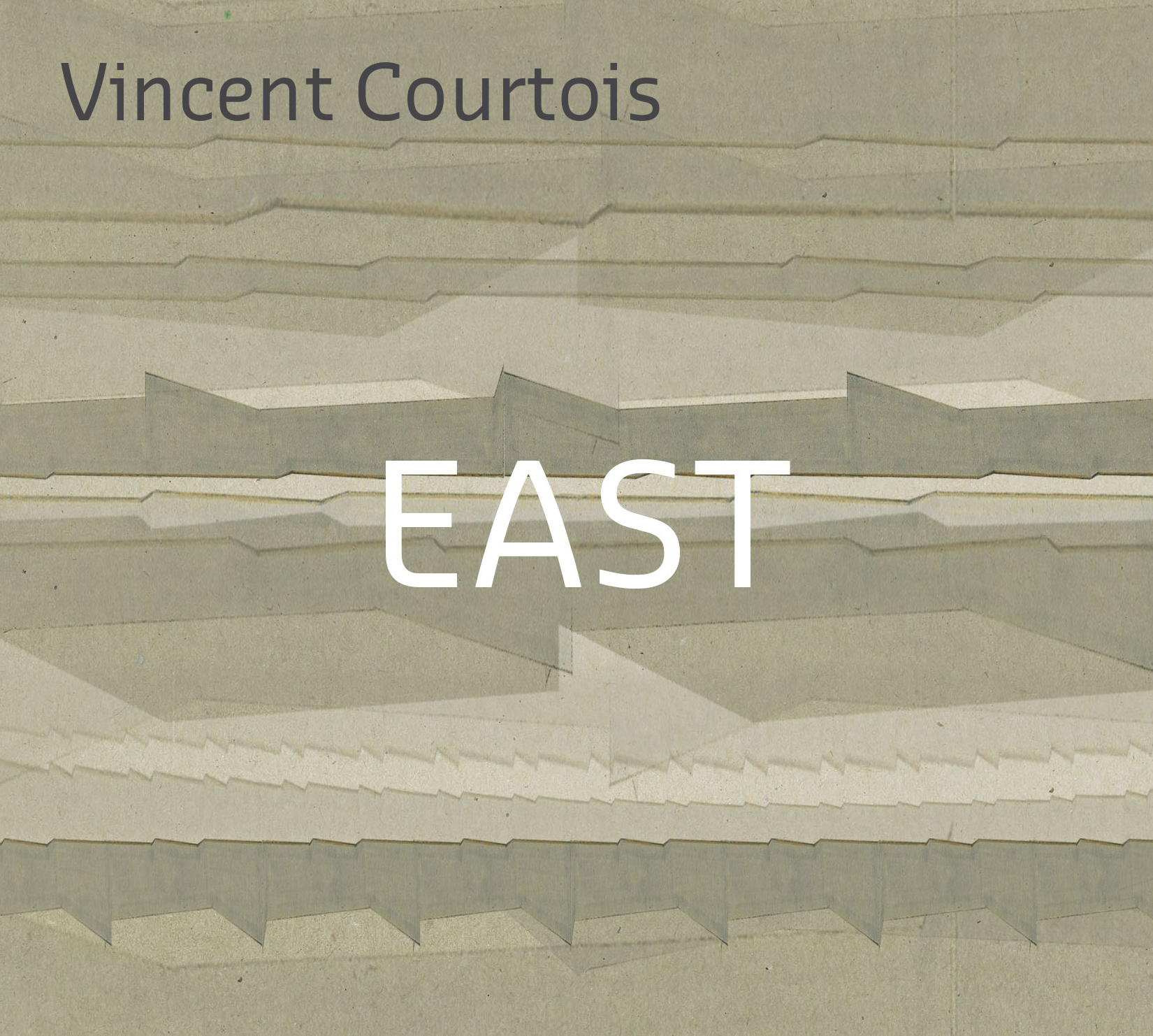
Vincent Courtois: EAST (YAN.009)

Vincent Courtois cello
Mixing: Gérard de Haro at La Buissonne Studios
Mastering: Nicolas Baillard at La Buissonne Studios
Production: Gérard de Haro and RJAL for La Buisonne & La Cie de l’Imprévu
Marketed in cooperation with ECM Records
Release date: November 12, 2021

Although cellist Vincent Courtois is best known in jazz circles, his musical imagination was founded in classical discipline at the Conservatory of Aubervilliers. When the early days of the pandemic suddenly suspended ordinary time, he found himself alone with an instrument, a room, and a long-held desire to confront the monumental solo repertoire of the 20th century. This album is a chronicle of that isolation, a record of inward motion that gradually widens into something like spiritual travel.

Arthur Honegger’s rarely heard Paduana opens the program with a plunge into the cello’s subterranean depths. From that darkness emerges a voice at once grounded and restless, searching for a horizon it can almost taste. Courtois draws a tone that feels inhabited, a living current that runs beneath every phrase. The music breathes, pauses, and advances with a quiet inevitability.

Hans Werner Henze’s nine-part Serenade follows like a gallery of shifting faces. Each movement appears to illuminate another angle of an elusive figure as it comes into being. The central Vivace flares with kinetic brilliance, as if the music were hammering itself into form before our ears. Courtois moves effortlessly between bowed intensity and fleeting pizzicato gestures, revealing how much freedom resides in precision.

Krzysztof Penderecki’s Per slava begins as a whisper that refuses to remain small. Taut double stops hover in an uneasy suspension, suggesting a soul momentarily detached from its body. As the piece unfolds, sorrow gathers weight without ever softening into consolation. Courtois describes its difficulty as “a seemingly unclimbable mountain.” Yet his ascent feels less like a conquest than a patient persistence that carries him to the summit.

That hard-won clarity leads naturally into György Ligeti’s Sonata for Solo Cello. The opening slides glint with a folkish warmth before the music accelerates toward the incandescent Capriccio, where exuberance becomes almost ecstatic. The performance vibrates with alertness, every gesture sharpened by joy. Luciano Berio’s Les mots sont allés, built from the letters of dedicatee Paul Sacher’s name, follows as a kind of celebratory labyrinth. Its variations rub against one another until friction turns to flame.

Paul Hindemith’s Cello Sonata then arrives with immediate authority. From its first gesture, it strides forward rather than wanders. Courtois lets the music declare itself with unshakable resolve. Texture accumulates, yet the line never fractures.

The album ends with Dominique Pifarély’s pour Fernando Pessoa, a work of quiet turbulence. Tender passages give way to veiled unease. Courtois shapes its twists with restraint, allowing mystery to remain intact. What lingers most is not technique, however adventurous, but the sense of an instrument speaking plainly across time. These works belong to an era when the cello still carried the burden of narrative, capable of song, proclamation, and inner confession all at once.

Solitude has not narrowed this music; it has deepened it. In listening, we are reminded that art does not rescue us from isolation so much as reveal what we were always carrying within it.

Vincent Courtois: Love of Life (RJAL 397034)

Cover

Vincent Courtois
Love of Life

Vincent Courtois cello
Robin Fincker clarinet, tenor saxophone
Daniel Erdmann tenor saxophone
Recorded June 26/27, 2019 in Oakland, 25th Street Recording Studio by Gérard de Haro, assisted by Gabriel Shepard
Mixed by Gérard de Haro at Studios La Buissonne, Pernes-les-Fontaines
Mastered by Nicolas Baillard at La Buissonne Mastering Studios
Produced by La Compagnie de l’imprévu and Gérard de Haro & RJAL for La Buissonne
Release date: January 31, 2020

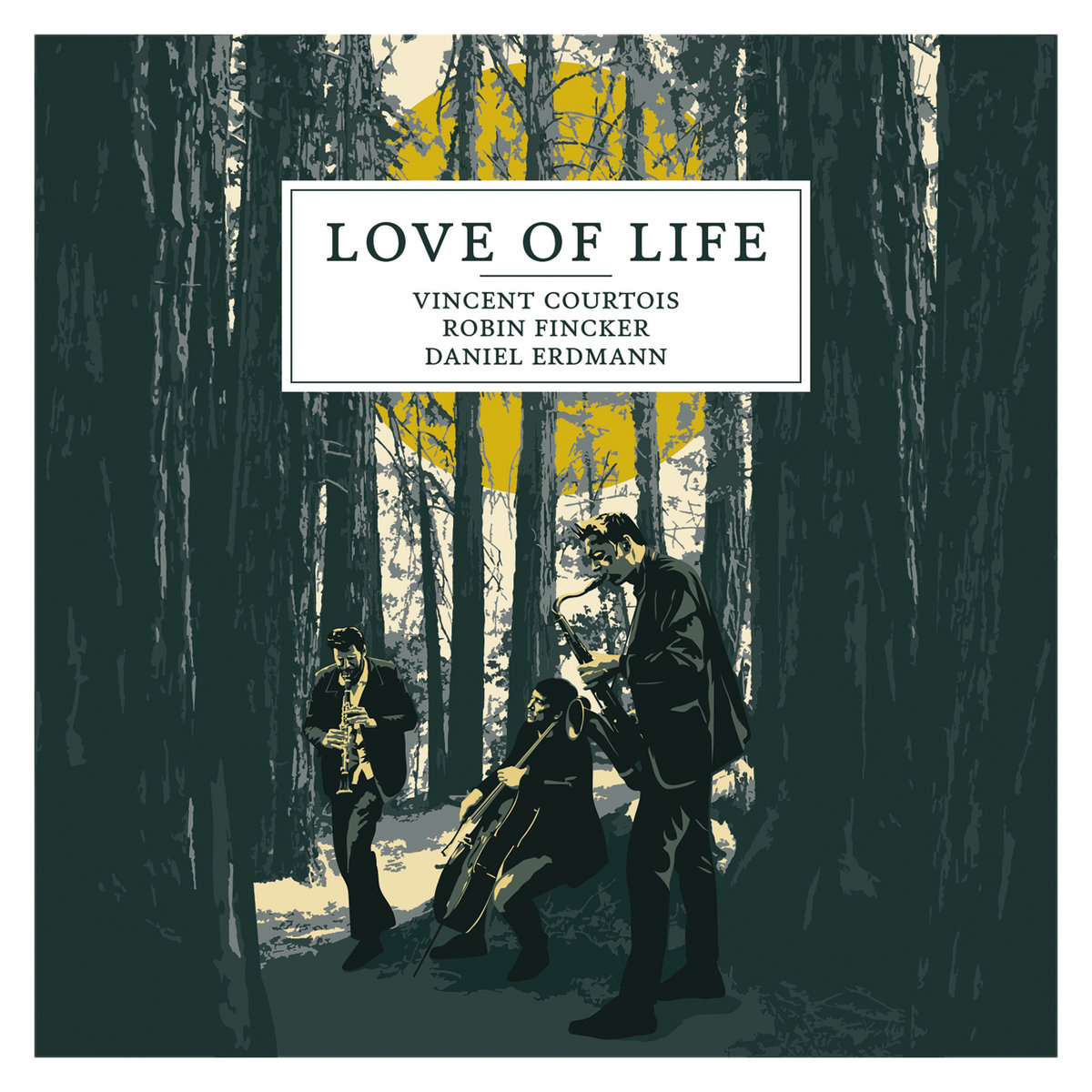
The appropriately titled Love of Life is cellist-composer Vincent Courtois’s wordless tribute to writer Jack London. London is a fairly recent discovery for Courtois, who cites the semiautobiographical Martin Eden as a constant companion while on tour with reed players Robin Fincker and Daniel Erdmann. The trio began their travels on the East Coast and ended them in California, where they met with London’s great-granddaughter, improvised under the towering trees near his gravesite (as pictured on the album’s cover), and recorded this session on the author’s Oakland, California homestead. The result is music that brims with agency and verve and explores London’s empathy for the underrepresented, the spat upon, and the voiceless.

Each track title pays respect to a short story or novel from London’s oeuvre. His empathy for divided selves is reflected in two diptychs: one for Martin Eden and the other for “To Build a Fire.” Ranging from the former’s jaunty charisma (indicative of a fumbling naivety) to the latter’s crackling flames, Courtois leverages an emotionally naked tone in the contexts at hand. Before these deeply psychological forays, the title track sets the pace with its gentle procession of horns, as if to remind us that everything will be okay in spite of the struggles faced by all. This in contrast the fact that hope seems so far away in the period song “Am I Blue” (Grant Clarke/Harry Akst), which captures the angst of being a working-class subject in a bourgeois world. That same disgruntlement carries over into “The Dream of Debs” and “South of the Slot,” wherein wars are waged internally.

“The Road” is a marvelous highlight. Here the tenors provide a harmonious framework, almost like another cello playing double stops, while Courtois cries out with guttural fortitude by means of his own. Fincker and Erdmann throw their own shining coins into the compositional fountain with “The Sea-Wolf” and “Goliah,” respectively. Where one is stormy and dire, the other is delightfully sardonic. Courtois caps off with a solo “Epilogue” to restore credence to remembrance as the only viable coping mechanism in a world hijacked by self-interested materialists.

Vincent Courtois: West (RJAL 397021)

Cover

Vincent Courtois
West

Vincent Courtois cello, vocal guide
Daniel Erdmann tenor saxophone
Robin Fincker clarinet, tenor saxophone
Benjamin Moussay piano, harpsichord, celesta, toy piano
Recorded September 1-4 and mixed November 20/21, 2014 at Studios La Buissonne by Gérard de Haro, assisted by Nicolas Baillard
Mastered Nicolas Baillard at Studios La Buissonne
Piano, harpsichord, celesta, prepared and tuned by Alain Massonneau
Produced by Gérard de Haro and RJAL, la Compagnie de l’Imprévu
Release date: April 21, 2015

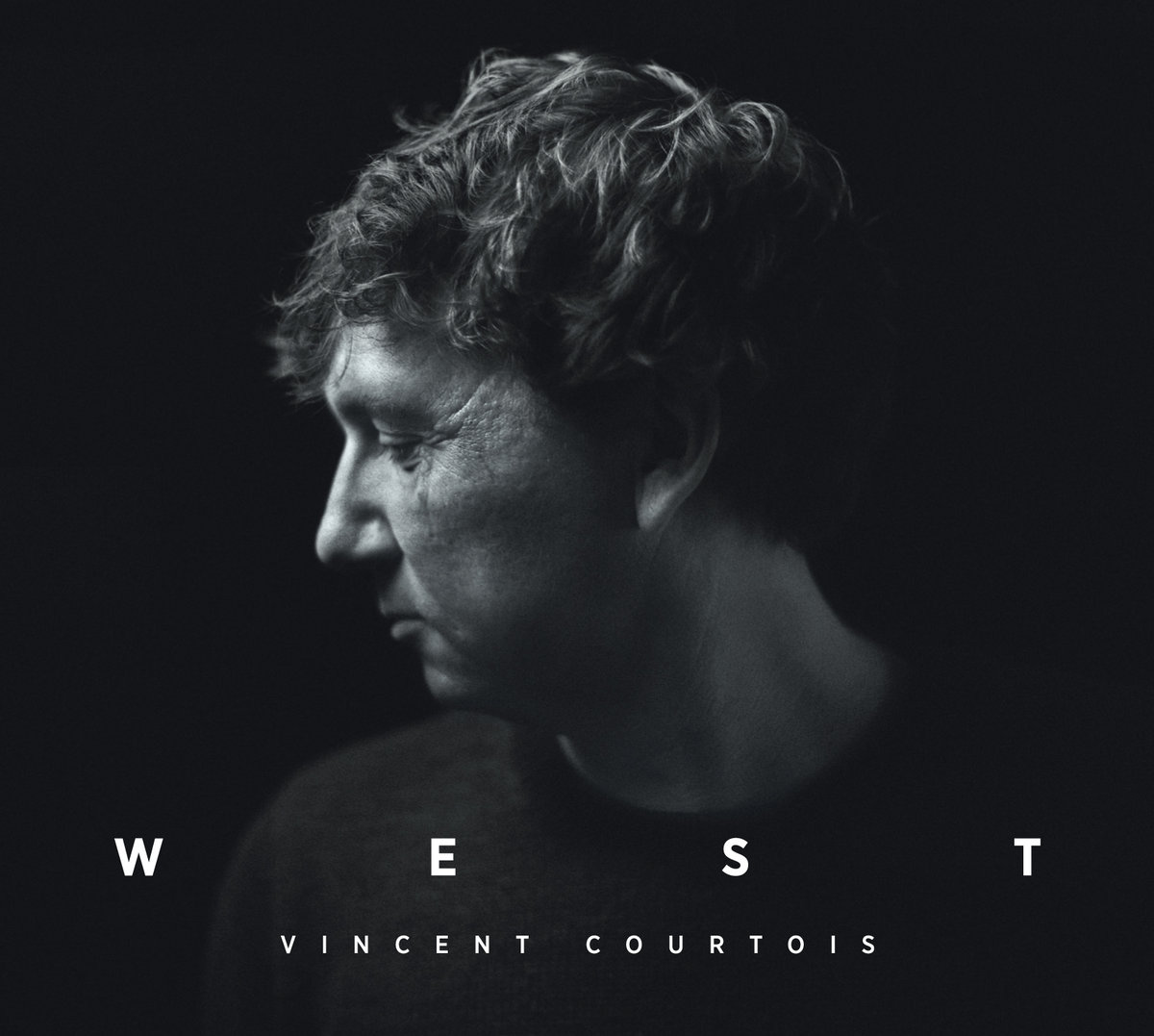
Cellist-composer Vincent Courtois continues his traversal of original landscapes, this time heading West in the most metaphorical possible sense. That is, he isn’t so much interested in dividing the world into arbitrary hemispheres as he is in questioning the very notion of borders as delineations of sociopolitical division and hierarchy while proceeding in a continuous direction. This philosophy is most forthrightly expressed in “So much water so close to home,” of which his pizzicato backbone and multitracked arco accents paint a living picture of the here and now as a means of putting the past into relief. His movements are palpable and consciously articulated, as Courtois himself notes in this album’s press release: “Conceiving, writing and orchestrating notes, almost like they were a travel plan, has become the main axis of my work, one that I cannot do without. A recording studio is a place like no other, these musical roads unwind and come alive.” Where on his last album, he explored such territories with saxophonists Daniel Erdmann and Robin Fincker, this time he welcomes also the structural backbone of Benjamin Moussay on piano, celesta, harpsichord, and toy piano.

Framed by two versions of “1852 mètres plus tard,” this sonic itinerary cushions every step in its picturing of time. Throughout “Modalités,” Fincker plays clarinet, later weaving with Erdmann’s tenor into a dramatic finish. From the brooding and distant (“Nowhere” and “L’Intuition”) to the whimsical and dramatic (“Freaks” and “Tim au Nohic”), every mood blossoms photorealistically. Moussay’s keyboards, especially the celesta and harpsichord of the title track, provide a Steve Reich-esque backdrop as multiple cellos dot the landscape with travelers. All of this funnels into the insistence of “Sémaphore,” throughout which the cello, divided into itself, draws an orthography of the soul for wayward ships to follow when lighthouses have used up their remaining oil. Moving ever forward yet glancing back to make sure that every footprint is a worthy record of what came before, each vessel docks safely to ensure our safe return.

Vincent Courtois: Mediums (RJAL 397015)

Cover

Vincent Courtois
Mediums

Vincent Courtois cello
Daniel Erdmann tenor saxophone
Robin Fincker tenor saxophone
Recording and mixing at Studio La Buissonne by Gérard de Haro
Mastering at Studio La Buissonne by Nicolas Baillard
Release date: October 23, 2012

Mediums brings together an unprecedented trio of two tenor saxophonists (Daniel Erdmann and Robin Fincker) and cellist Vincent Courtois. Described by the latter as “the story of music I’ve conceived then written, out of my childhood memories and the happiness I experienced in the fantastic world of fairgrounds and the people who work there,” it accordingly welcomes us into a fantastical world replete with colors, lights, and sounds as tensions and harmonies come together like a storm of forces. Though it takes a little time to get settled in, once the parameters are clear, we are taken on an epic childhood tour.

The pizzicato arpeggios of “Mediums” speak of a lyrical core, while the reeds unleash a guttural filigree around them. “Une inquiétante disparition” is in two split parts. From the insistent pulse of the first to the muscular bowing of the second, it turns cries into songs and back again. Between them are the whispering haunt of “Regards” (the album’s most graceful) and the locomotive exuberance of “Jackson’s Catch.” Virtuosity is applied sparingly throughout, and only for the effect of underscoring a primary sentiment.

The tender “Rita and the mediums” and “La nuit des monstres” share studio space with the programmatic (the three-part “Bengal”) and the abstract (“Entresort”). Like “The removal” that wakes us from this dream, we can take each as the beginning of another until rest seems like the memory of a life no longer lived.

If Courtois can be counted on for anything, it’s the integrity of his sonic scripts, wherein most characters are played by himself. New faces shine like the sun—melodies without any other purpose than to cast the listener’s shadow.

Vincent Courtois: L’imprévu (RJAL 397010)

Cover

Vincent Courtois
L’imprévu

Vincent Courtois cello
Recorded and mixed April 1-3, 2010 at Studios La Buissonne by Gérard de Haro
Mastered by Nicolas Baillard at Studios La Buissonne
Produced by Gérard de Haro and RJAL for La Buissonne
Release date: January 20, 2011

L’imprévu (The unexpected) is an album of unaccompanied short stories written and performed by Vincent Courtois. ECM listeners will know the French cellist from his work with Louis Sclavis. After toying with the idea of a solo album for more than 15 years, he and producer Gérard de Haro at last found a coincidence of schedules that brought them into the studio together. From the opening title piece, we can hear not only that Courtois is a player of sensitivity and poise but also that de Haro is a most suitable engineer to emphasize the nature of his sound.

The comfortable vibe established by such intimate borders as “Alone with G” (a pizzicato gem that treats the cello as a horizontal rather than vertical instrument) is occasionally broken, as by the scraping arpeggios of “Amnésique tarentelle” and “Skins” or the freely improvised strains of “Suburbs kiosk” and “No smoking,” so that no single mood never dominates. Neither is Courtois afraid to play with the idea of a solo project by multitracking himself into an orchestra. Such instincts feel not like additions from without but extensions from within. In the stretched-out chords of “Colonne sans fin,” “Sensuel et perdu,” and “Regards” (the latter two sounding nearly like lost tracks from David Darling’s Dark Wood), his experience as a composer for film bears deepest fruit. The one compositional outlier is “La visite” by Sclavis, a highlight for its thoughtful reading and tenderness, and its ability to say so much with so little. This is music for those who want nothing but.