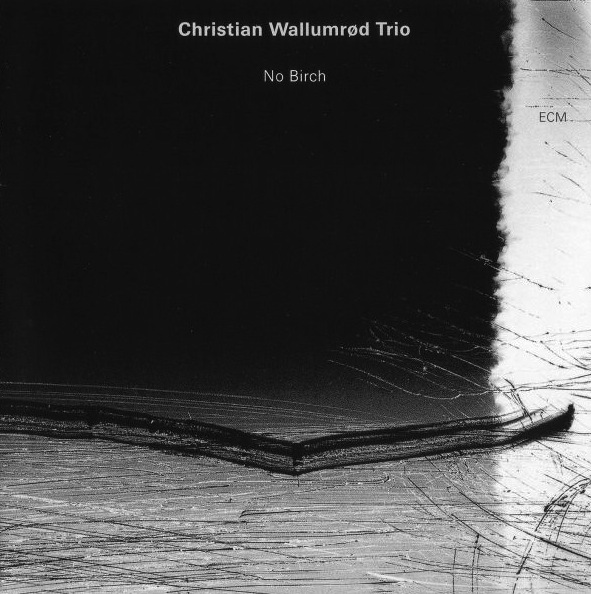
Christian Wallumrød Trio: No Birch (ECM 1628)

No Birch

Christian Wallumrød Trio
No Birch

Christian Wallumrød piano
Arve Henriksen trumpet
Hans-Kristian Kjos Sørensen percussion
Recorded November 1996 at Rainbow Studio, Oslo
Engineer: Jan Erik Kongshaug
Produced by Manfred Eicher

Of course it hurts when buds burst.
Otherwise why would spring hesitate?
–Karin Boye (trans. Jenny Nunn)

Pianist Christian Wallumrød makes his ECM debut with No Birch, an album of uncompromising melodic integrity and further proof that ECM’s mining of Nordic jazz ore continues to yield sonic jewelry like no other. The press release places the album somewhere between Morton Feldman minimalism and Paul Bley free play, and certainly we can feel a likeminded appreciation for negative space throughout. Yet beyond this lies an active, fluttering heart that is so full of expressivity that it must pace itself in lieu of bursting.
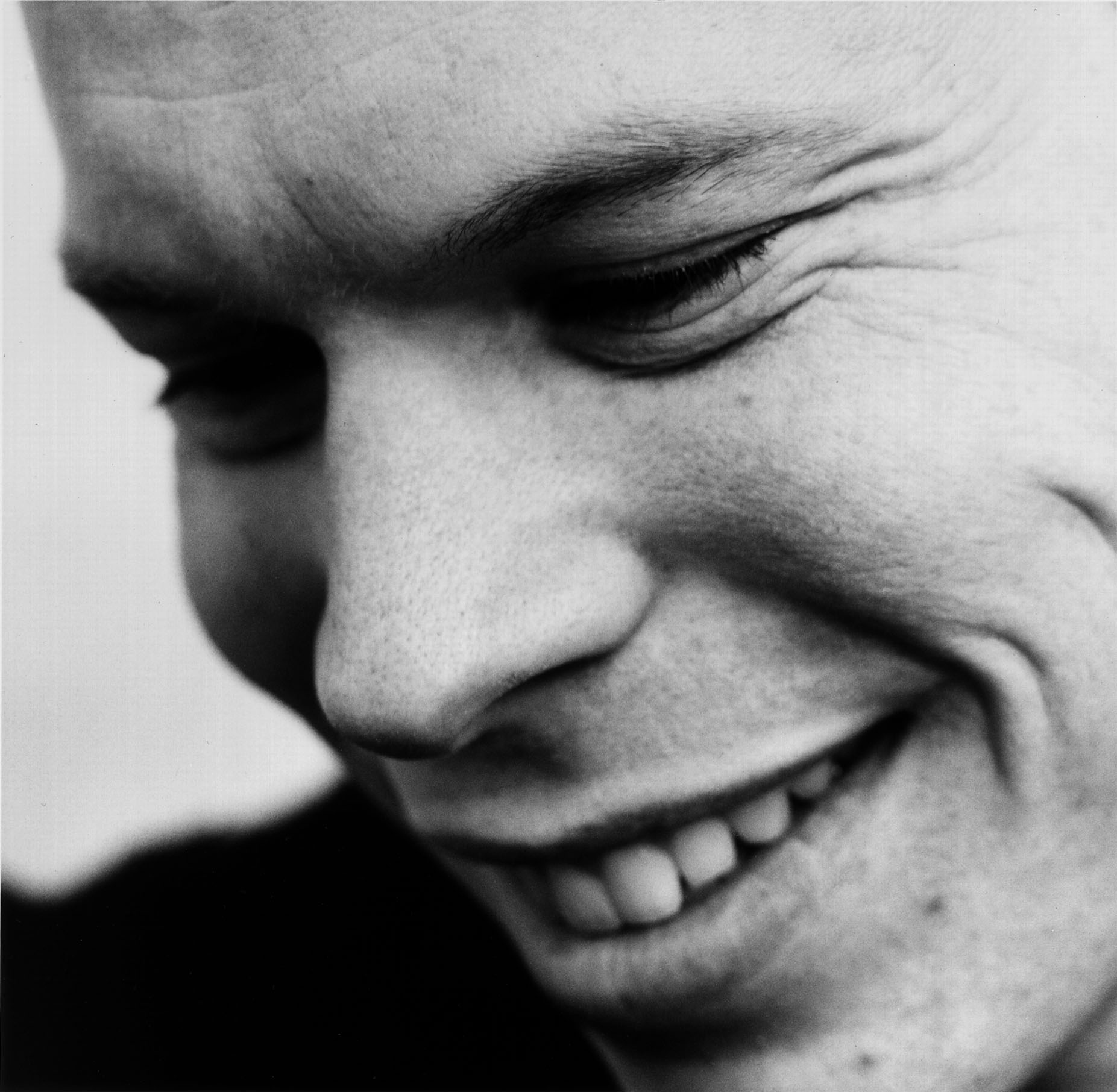
Wallumrød

Wallumrød is the youngest member of the group. From humble beginnings playing piano accompaniment at church (hence the reflective track “Before Church”) to intensive studies at Norway’s famous Trondheim Conservatory, where he developed an abiding interest in composition, he has found under producer Manfred Eicher’s purview the appropriate balance of space and atmosphere to open his emotional floodgates.
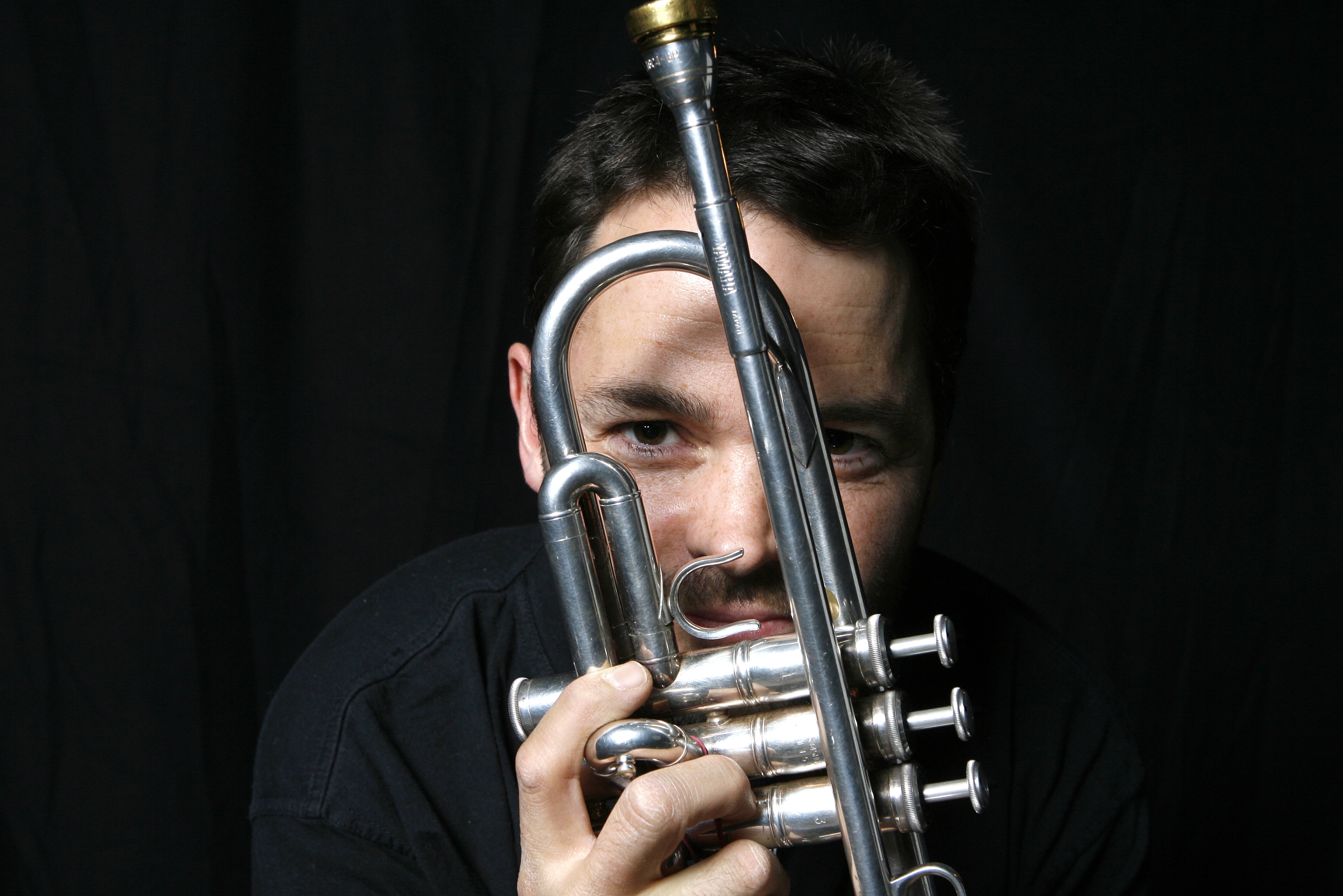
Henriksen

Freelance trumpeter Arve Henriksen has collaborated with a number of ECM stalwarts, including Jon Balke, Anders Jormin, and the great Misha Alperin, the latter of whom remains a touchstone of inspiration for this trio.
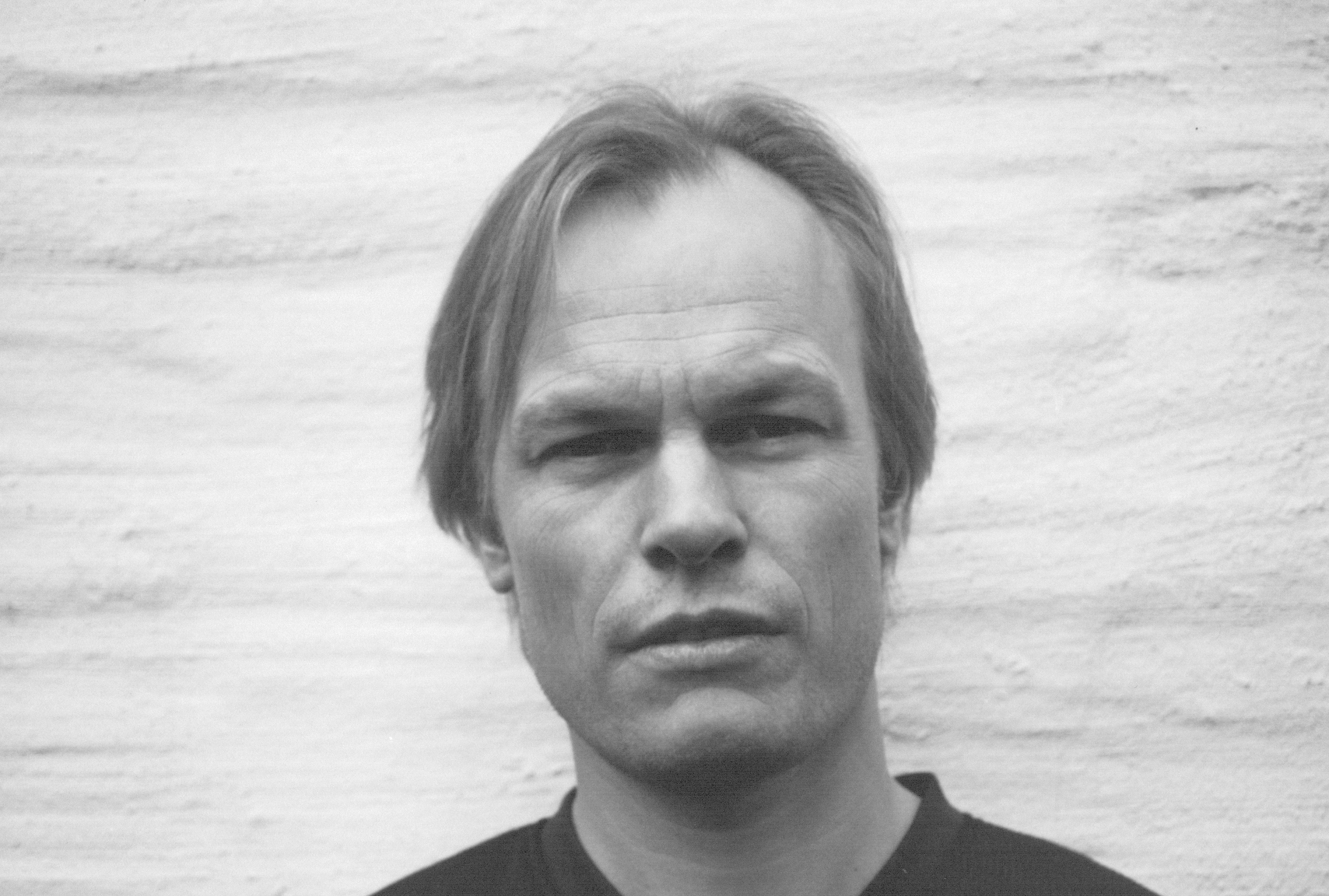
Sørensen

Take special note that Hans-Kristian Kjos Sørensen is credited as percussionist and not drummer, and you begin to imagine the group’s flavors before note one. Conservatory trained and much sought-after in contemporary jazz and classical scenes, he adds the subtlest edge, his palette elemental in the truest sense.

As a unit, these three friends have been playing since 1996, but what we hear in “She Passes The House Of Her Grandmother” implies generations of affect. Touching its feet to tundra soil as if it were the sun, it is the breath of blood and memory made manifest in the here and now. The unspoken becomes the flower of reality, plucked from the “Royal Garden.” This solo from Sørensen unravels a single cathartic and metallic cry, bowed at the edge of sibilance and time and carried across a landscape that was once pasture, since bordered and named under the banner of rule. It is the pulse of the soil, given light above ground in “Somewhere East,” a representative track that describes its directions only so that we might be aware of the center from which our perspective is realized. So locating us in the moment’s energy, the music sways, rooted. Next is “Travelling” in three parts, and which features some of the most delicate trumpet playing I’ve heard in a long while. Breathy, almost shakuhachi-like, it curls its fingers one at a time around a full glass, which is then tipped and spilled through the veins of “Ballimaran” and “Watering.” In the wake of these flowing sketches, the halting pianism of “Two Waltzing, One Square And Then” and “Fooling Around” cleanses the palette before “The Gardener,” the most somber of the set, refills with bittersweet aperitif.

Wallumrød’s “The Birch” is the album’s red thread, a four-tiered refrain that wipes its theme with the nostalgia of a hand across a foggy window. Tender and seasonally inflected, it brings liturgical wonder to the trio’s sanctity, as deferential as the day is long.

<< Crispell/Peacock/Motian: Nothing ever was, anyway (ECM 1626/27)
>> Rosamunde Quartett: Webern/Shostakovich/Burian (ECM 1629 NS
)

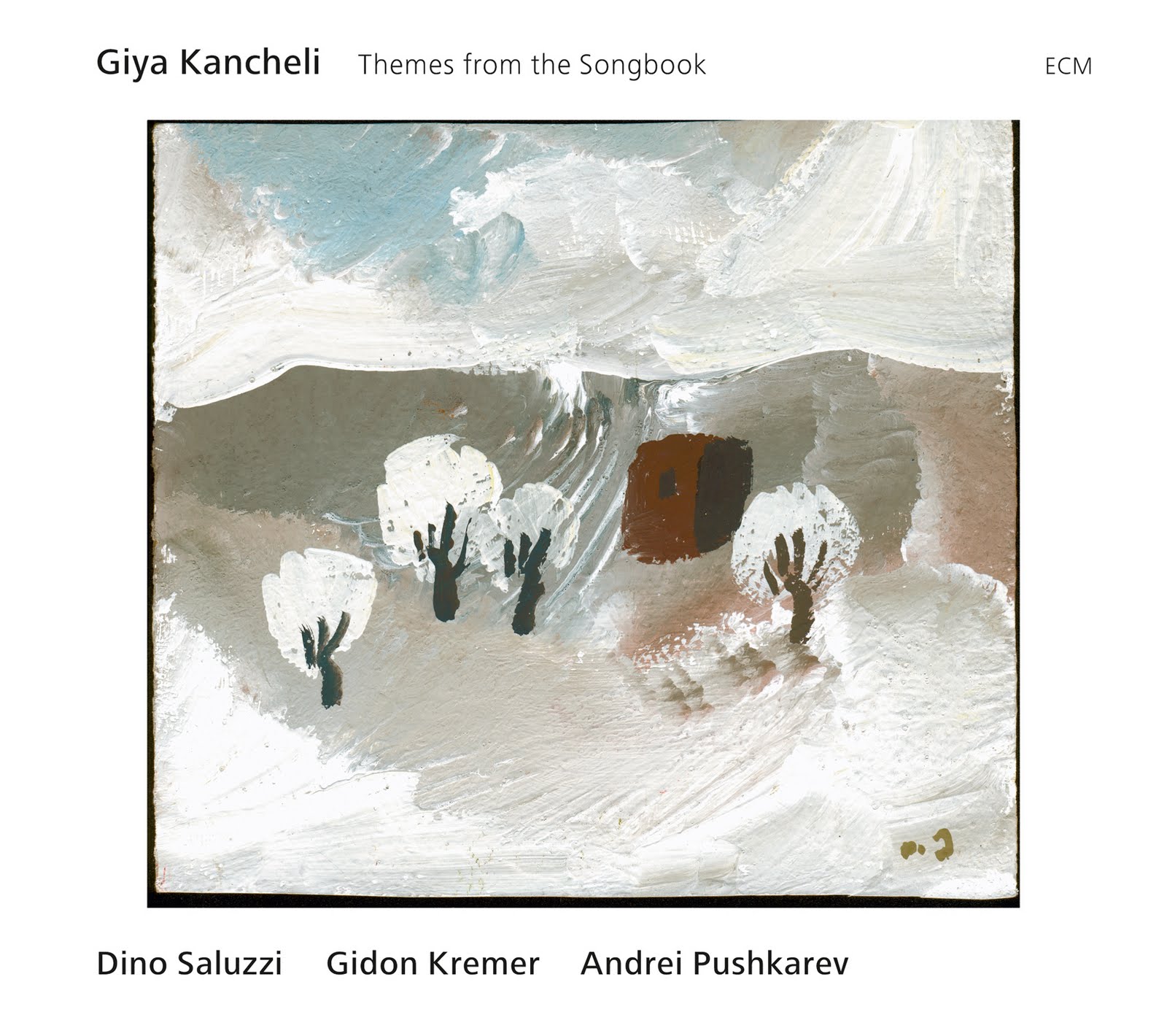
Giya Kancheli: Themes from the Songbook (ECM 2188)

Themes

Giya Kancheli
Themes from the Songbook

Dino Saluzzi bandoneón
Gidon Kremer violin
Andrei Pushkarev vibraphone
Recorded and mixed May 2010 at Rainbow Studio, Oslo
Engineer: Jan Erik Kongshaug
Additional recordings at Latvijas Radio, Riga
Engineer: Varis Kurmins
Final editing, mastering at MSM Studios by Christoph Stickel and Manfred Eicher
Produced by Manfred Eicher

Giya Kancheli’s first album for ECM’s flagship label is a major event. The Georgian composer will be more than familiar to New Series aficionados, who’ve had ample opportunity to acquaint themselves with his uncompromising sonorities, rich dynamic spreads, and recurring themes. Yet few of us will ever have known that he also developed a sideline—as did other (former) Soviet Bloc composers like Dmitri Shostakovich and Arvo Pärt, though none so prolifically—as scorer for theatre and cinema. One can see hear album as companion to the 2009 publication of Kancheli’s Simple Music for Piano: 33 Miniatures for Stage and Screen. The subtitle betrays little depth of his subsidy, which exceeds 100 unique productions. Although Kancheli humbly says in his preface of these songs, “Time will tell if they can survive outside their original context,” it is clear from this album that they already have. Their realization brings together an intimate cast, with producer Manfred Eicher as director. Bandoneón master Dino Saluzzi, violinist Gidon Kremer, and vibraphonist Andrei Pushkarev indeed move as if from behind a curtain, if not in front of a lens, bringing their sharp wit and live “editing” skills to an immediate yet highly polished sound-world. The inclusion of Pushkarev was a masterstroke, and his willingness to explore these themes is reflected in his collaborations with Saluzzi and Kremer in kind. Having recorded Themes as a surprise 75th birthday gift at Eicher’s suggestion, they bring lovingness to every motive and thus emphasize the preservation that flows by and within the art they share. And on that note, we have to thank, as does Kancheli’s son Sandro in his heartfelt liner notes, ECM for championing this music and its aftereffects, as might a cartographer love the land.

“Herio Bichebo” from Earth, This Is Your Son (1980, dir. Revaz Chkheidze) establishes a defining combination of vibraphone and bandoneón. The feeling is inevitably watery, its passage a boat adrift toward a mountain rife with ancestral longings. This atmosphere also sets the tone for the program’s careful use of pauses and suspensions. There is a forlorn quality, if not a sweet tenderness, to this introduction, wherein lurks the elegiac wave of Bear’s Kiss (2002, dir. Sergei Bodrov) and the grinding lows of When Almonds Blossomed (1972, dir. Lana Gogoberidze). Other cinematic highlights include the themes from Don Quixote (1988, dir. Chkheidze), which features an overdubbed Kremer and at once expresses the story’s inherent sadness and innocence, and the nostalgic disclosure of Mimino (1977, dir. Danelia and Gadriadze), for which Kremer joins Pushkarev. The latter draws out some of the deepest emotion in the main theme from Kin-Dza-Dza (1986, dir. Georgi Danelia and Revaz Gadriadze), shuffling characteristically Kanchelian bursts of exaltation into somber tiers.

All seven plays represented on Themes rose out of collaboration with renowned Georgian theatre director Robert Sturua, whose musicality marries well with Kancheli’s dramaturgy. The main theme from The Crucible (1965, play by Arthur Miller) marks Kremer’s first album entrance, his raspy bowing complementing the click of bandoneón keys to delectable effect. Saluzzi and Pushkarev reprise their chemistry in a carefree rendition of The Role for a Beginner (1979, play by Tamaz Chiladze), I daresay reaching subtle genius in As You Like It (1978). Memorable enough to be a jazz standard, it is a ballad that looks backward and forward as it spins in place to the rhythm of its heartbeat. And in fact, Shakespeare provides some of the deepest inspiration of the program, as in Saluzzi’s shadowy Hamlet (1992) and Pushkarev’s dynamic Twelfth Night (2001), which illustrates its story in flashes of light.

Jansug Khakidze, the late singer/conductor who was one of the composer’s closest friends, leads the Tbilisi Symphony Orchestra in an archival encore. His “Herio Bichebo,” warmly engineered by Mikhail Kilosanidze, is so iconic that many believed him to have written it. Listening to it here, one can understand why. Jan Garbarek fans will recognize his inimitable voice as the same behind “The Moon Over Mtatsminda” on 1998’s RITES.

Interestingly enough, Kancheli’s pieces for the stage sound the most cinematic, and vice versa. Together they comprise a daydream paginated and bound for travel. It is sure to please Kancheli veterans and newcomers alike, and will, I hope, inspire the latter to explore further.

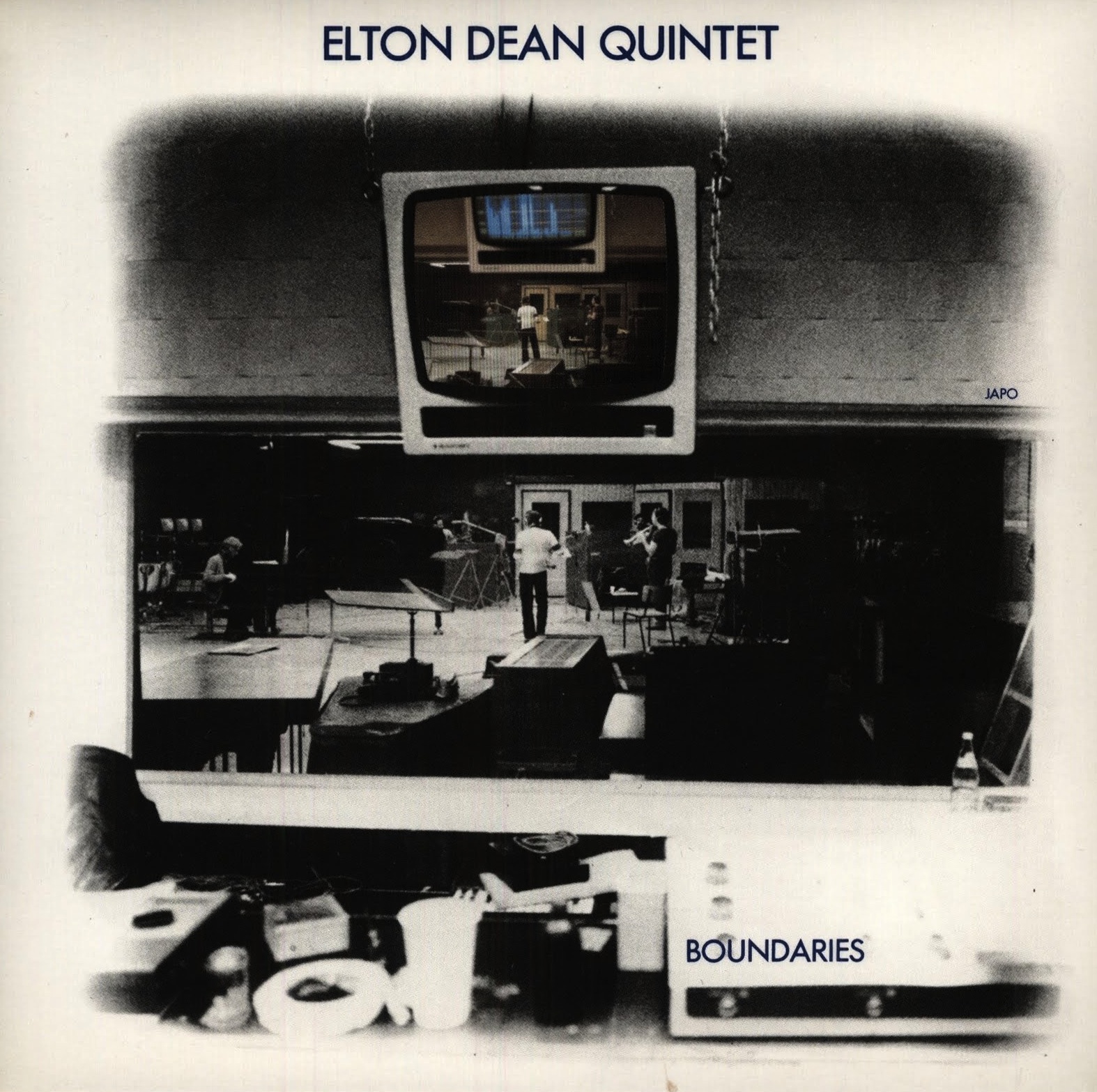
Elton Dean Quintet: Boundaries (JAPO 60033)

Boundaries

Elton Dean Quintet
Boundaries

Elton Dean saxello, alto saxophone
Mark Charig cornet
Keith Tippett piano, marimba, voice, bottle
Louis Moholo drums
Marcio Mattos bass
Recorded February 1980 at Tonstudio Bauer, Ludwigsburg
Engineer Martin Wieland
Produced by Steve Lake and Elton Dean

Late saxophonist Elton Dean (1945-2006) was notable not only for his finely separated fingering and smooth alto playing, but also for giving due attention to the saxello, a soprano variant which has in recent years seen a comeback in production. Sounding like a cross between its cousin and an English horn, its tonal possibilities give this JAPO session a freshness that has a ways to go yet before its expiration date. From 1966-67, Dean played sideman to singer Long John Baldry in the British R&B outfit Bluesology. Incidentally, the band’s piano man, Reginald Dwight, would borrow from Dean’s and Baldry’s names to create a new stage persona as none other than Elton John. As for Dean, he would go on to make a name (keeping his intact) for himself as saxophonist for the Keith Tippett Sextet, Soft Machine (for which he is perhaps best known), and a string of his own groups. The quintet featured here was among the freer of the latter incarnations, and included Tippett on piano and marimba, cornetist (and fellow Soft Machinist) Mark Charig, bassist Marcio Mattos, and South African drummer Louis Moholo.

EDQ
(Elton Dean Quintet, Rome 1980)

Dean takes on all composing duties, save for the group improv “Out Of Bounds.” This one is their creed. Between Tippett’s mysterious vocals and his marimba’s sprightly appearance (its only of the set) to the fantastic puckering from both horns and Mattos’s flint sparks, there’s much to savor. Yet it’s the title track that welcomes the album’s weightiest theme. Saxello and cornet make a piercing duo in this wide rubato river, as they do in the concluding “Fast News,” which, though primarily a cascading pianistic excursion, goads the listener upstream. Said aquatic qualities crystallize, appropriately enough, in the impressionistic “Oasis.” Each cymbal tap is a glint of sun across the selfsame surface. Mattos stumbles to the edge and lowers lips to drink, only to be met by the saxello’s mocking reality. These sere awakenings come to head during the final showdown between survival and stasis, sinking in quicksand with choices intact. The hope we seek comes to us through a glass darkly in “Basho,” which, if not named for the famous Japanese itinerant, at the very least instills a poetry all its own. Again Dean is the leading voice, turning all sorts of somersaults to earn his keep, while Charig gets some face time in the latter half: frayed and shining gold.

The playing on the whole is robust and centered, though Tippett’s sparkling pianism stands out—all the more so for the crisply engineered recording. You certainly won’t find much in the way of swing, however. Each cut sounds like an introduction to a piece that never materializes. This doesn’t mean the music is ill formed. Rather, it emphasizes the openness of its emotional tact. My one complaint is that Charig isn’t given more airtime. He’s clearly an emotionally charged player, but it’s Dean who dominates the scene. Thankfully, both are so arresting that it ultimately matters little. Quality reigns.

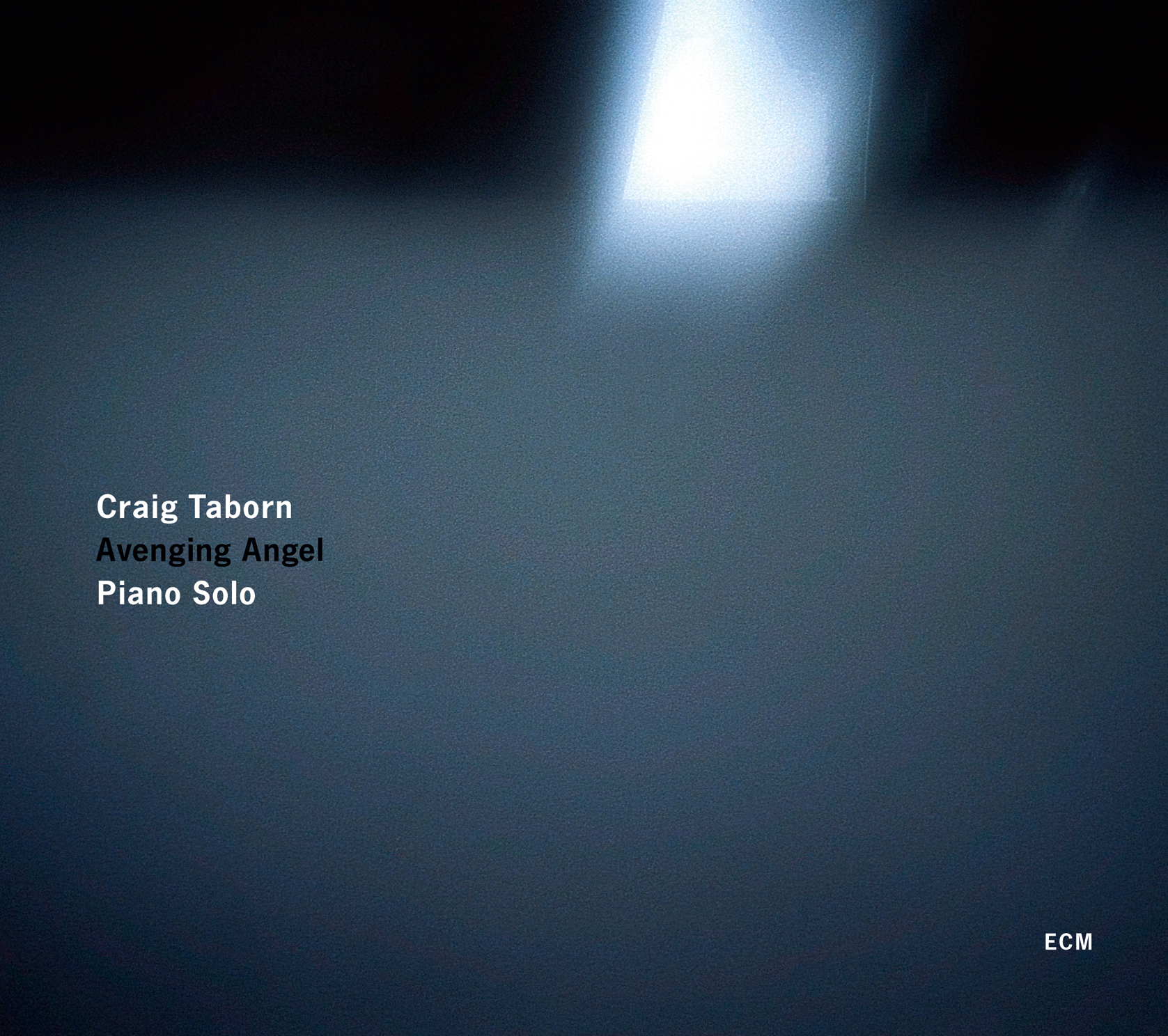
Craig Taborn: Avenging Angel (ECM 2207)

Avenging Angel

Craig Taborn
Avenging Angel

Craig Taborn piano
Recorded July 2010, Auditorio Radiotelevisione Svizzera, Lugano
Engineer: Stefano Amerio
Produced by Manfred Eicher

Avenging Angel marks Craig Taborn’s solo debut, this after a string of fine appearances on joints with Roscoe Mitchell, Evan Parker, Michael Formanek, and David Torn. Being an ardent Bill Laswell fan, however, my first encounter with the Minneapolis-born keyboardist came by way of his smooth electric piano stylings on Dub Chamber 3 (released 2000 on ROIR). Incidentally, that classic underground session also featured future ECM label mate Nils Petter Molvær on trumpet—perhaps a sign of things to come. The present album finds Taborn concentrating, as he has been in recent years, on the art of unaccompanied improvisation. The formula will sound familiar to anyone who has picked up a Keith Jarrett record in the last three decades, but the results, while likeminded, are starkly Taborn’s own. For whereas it is easy to read transcendence into Jarrett’s epic exegeses, Taborn wants us to dive into his instrument and nest in it for awhile. In his words, “This music is not about ‘transcending the piano’ as much as it is about working with what is possible within it.” Thus taking the dynamics of physical means, environment, and atmospheric context into account, he crafts a sound that appears structured yet which allows centuries of air to flow through its architecture.

Taborn
(Photo source: flickriver)

Like a tap on the shoulder from a shaded past, “The Broad Day King” introduces us to a watercolor-bleed of feeling. The effect is skeletal and tented by fingers of dawn. We can guess said king’s name. The music might even tell us. But ultimately his identity can be written only by hammers and strings, his reign as fragile as their tuning. If such titles mean anything to us, it is only because the Escherian landscape in which they are situated is so faithfully rendered. In the spontaneity of creation, Taborn locks us into the spirit not only of the elusive moment, but also of the many directions its ancestors have traveled to get here. We hear this in the sparkling eddies of “Glossolalia” and “Neverland,” and in child-like wonder of “Diamond Turning Dream,” which spins a bracelet of the former’s starlight.

This album is yet another benchmark for engineer Stefano Amerio, who posits Taborn’s intimate storytelling in a reverberant universe. The touch is just enough to spin an expansive backdrop while keeping the foreground crystal clear. This is truest in the title track, which dances uncannily at the edge of our firelight, and in “This Voice Says So.” The latter plays like a lullaby stretched into the slumbering pathos it inspires, making for one of the most beautiful tracks in ECM history. It is the illusion of stillness magnified, a glassine reflection, and all the deeper for its minimalism. And though Taborn does stir up the sediment, he is careful to end on the same delicacy with which the piece begins, ever attentive to the space(s) he inhabits. “True Life Near” is an example of the pianist’s uncanny ability to elicit tenderness from the often-sharp attack of his right hand. If any Jarrett parallels must be drawn, let them find purchase on this morsel of cinematic wonder. “Gift Horse / Over The Water” is a jauntier diptych with tight, 90-degree syncopations, and detailed riffs over a head-nodding ostinato. Its mechanical aspirations are more fully realized in “A Difficult Thing Said Simply,” while the bubbling “Spirit Hard Knock” exploits even more the capabilities of the studio’s Steinway D in epic waves. “Neither-Nor” is, as its title would seem to imply, the most “grammatical” of the set and has the quality of rainfall. Another highlight is “Forgetful,” a lost jazz standard trickling in from the other side of a dream, and which takes on some of the grandeur of that dream in its mellifluous resolution. “This Is How You Disappear” is a clever way to both say and realize fadeout. Drawing the curtain one fold at a time, until all that remains is the cover photograph’s sliver of backstage light, Taborn sets off a tender fuse with his finger roll, even as stars crash earthward, leaving only splashes of faraway nebulae to show for their sacrifice.

No matter how out of focus these images become, you can always count on Taborn to leave at least one focal point crisp. The focal point is paramount, for it invites us not only to listen but also to become. It is our hovel of transformation. As to what the listener might turn into, that’s as unpredictable as the paths his fingers take. If this angel avenges anything, it is the bane of expectation.

(To hear samples of Avenging Angel, click here.)

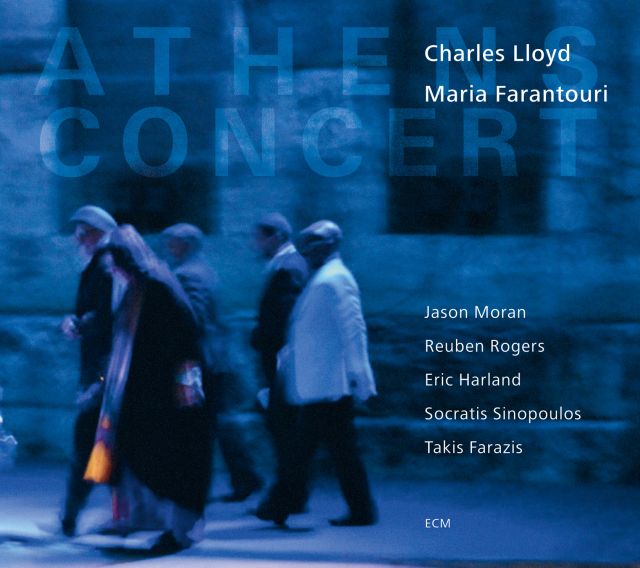
Charles Lloyd/Maria Farantouri: Athens Concert (ECM 2205/06)

Athens Concert

Charles Lloyd
Maria Farantouri
Athens Concert

Charles Lloyd tenor saxophone, flute, tárogató
Maria Farantouri voice
Jason Moran piano
Reuben Rogers double-bass
Eric Harland drums
Socratis Sinopoulos lyra
Takis Farazis piano
Recorded in concert June 2010 at Herod Atticus Odeon, Athens
Recording engineer: Nikos Espialidis
Assistant engineer: Kostas Kyriakidis
Equipment by Logothetis Music
Mixed by Manfred Eicher and Jan Erik Kongshaug at Rainbow Studio, Oslo
Produced by Manfred Eicher and Dorothy Darr

Where are we
that the wind won’t blow?

“The human voice can capture the heart more swiftly and directly than any other instrument,” writes Charles Lloyd in the liner notes for Athens Concert, an historic live event given the permanence it more than deserves through this landmark recording. Lloyd goes on to relate how, as a child growing up in Memphis, he would fall asleep to the sound of Billy Holiday’s voice from the radio under his pillow, and how years later that same magic revealed itself in contralto Maria Farantouri (Greece’s Edith Piaf, if you will), who he later befriended and who introduced him to the songs of Mikis Theodorakis after he’d invited her to sing one of his own. Farantouri’s heart is ancient, and her desire to introduce Lloyd to her culture is manifest in the depth of his playing. She characterizes the tenor master as “a shaman of jazz who dominates the stage with the power of the mystic and the innocence of a child. The sound of his music can have the weight of a stone or the lightness of the air. With his improvisations he weaves an imaginary but so familiar world, a mirage constantly disintegrating and reforming.” We might say, then, that Lloyd is a singer, channeling his breath through a weathered metallic throat and bidding the very stars to dance. The bridging of these two worlds spawns a third, one where voices of time sing like parents to a child.

And what is “Kratissa ti zoi mou” (I Kept Hold of My Life), which opens the program, if not a voice churning in the tide of darkness from which we all are born? George Seferis’s words (from the poem, “Epiphany, 1937”) blossom from an unmistakable tenor branch, smooth yet weighted as if by the buckshot of self-awareness and sliding like honey down an enviable backdrop: Jason Moran on piano, Reuben Rogers on bass, and Eric Harland on drums. Curtains part to reveal Farantouri’s husky swirls. Moran elicits sweet noise, mixing Ketil Bjørnstad-like textures with idiosyncratic spectral twists. An emblematic introduction into this forested sound-world, it is the concert’s Rosetta Stone. Lloyd’s classic “Dream Weaver” continues in the same flowing vein, his remarkably sunlit reed gathering enough thread to make even the most sedentary marionette nod in a groovy and somehow freer turn. Harland is also notable here, buoying a rich solo from Moran, who maintains epic contrast between the left and right hands throughout. Lloyd brings a classic edge to the denouement, further picked up by Rogers with intimacy. Our bandleader continues to regale us with his storytelling in “Blow Wind.” The original song finds Farantouri channeling Sheila Jordan, the lyrical star to an instrumental sky. Her voice indeed blows off into the distance, leaving Lloyd to shape those tendrils of dust left in her wake before she returns to stir them anew. Lloyd also pens “Prayer,” which features still more wonders from Moran. Farantouri’s full-throated, wordless song emerges from the bass, reedy like the muse that calls to her. A click away finds Lloyd setting words by politicist Agathi Dimitrouka in “Requiem.” A surprisingly buttery song that finds groove in the tragic, in it Farantouri’s tenderness clears the way for Moran’s more diffuse considerations, as microscopic as pollen and just as fragrant. The music of ECM mainstay Eleni Karaindrou also makes an appearance with “Taxidi sta Kythera” (Voyage to Cythera), which against a low and sultry swing allows gorgeous exchanges between the two bill headers, their voices filling the same crucible with variations of the same alloy.

LM 1

Pianist Takis Farazis joins for the performance’s remainder: the three-part Greek Suite, which he also arranged. Part I is the most ancient, shifting the sands with “Hymnos stin Ayia Triada,” an early Byzantine hymn to the Holy Trinity. Interweaving Lloyd’s flute and Farantouri’s flutedness, its song is its vow. “Epano sto xero homa” (In the Dry Soil) and “Messa Stous paradissious kipous” (In the Pradise Gardens) come from The Sun and Time by Theodorakis and as such unearth the greatest strengths of Farantouri’s gifts. Yet it is only when the strains of the lyra, played by Karaindrou regular Socratis Sinopoulos, touch the sky in Part II that the clouds weep rain. Amid its assortment of traditional tunes, “Thalassaki Mou” (My Little Sea) stands out to me. Although quite different from the version I grew up on the timeless Songs of the Earth by The Pennywhistlers, it nevertheless brings its own enchantment and stirs the musicians to invigorating levels. Part III boasts tunes from the Epirus region. Among the more moving are “Epirotiko Meroloi,” a lament of war and death told from a mother’s point of view, so well evoked by Lloyd’s uncanny intro and by the jangling folkways that ensue, and the intuitive digressions of lovesick souls in “Mori kontoula lemonia” (Little Lemon Tree). Harland grabs his fair share of the spotlight in “Alismono kae haeromae” (I Forget and I Am Glad), as does Sinopoulos in “Tou hel’ to kastron” (The Castle of the Sun), a traditional song from the Black Sea that is the band at its most attuned.

The encore also comes from a mother’s lips, as love pours through “Yanni Mou” (My Yanni) with more permanence than the bravery it mourns. The stichomythia between Farantouri and Lloyd discloses an oceanic world where the rhythms of fins and tails are the only music that remains. And if its mournful cast seems a somber note on which to end, it is only because the invigorations leading up to it linger like a childhood that refuses to let go. Such is the power of this music: it is memory incarnate.

(To hear samples of Athens Concert, click here or watch the video below.)

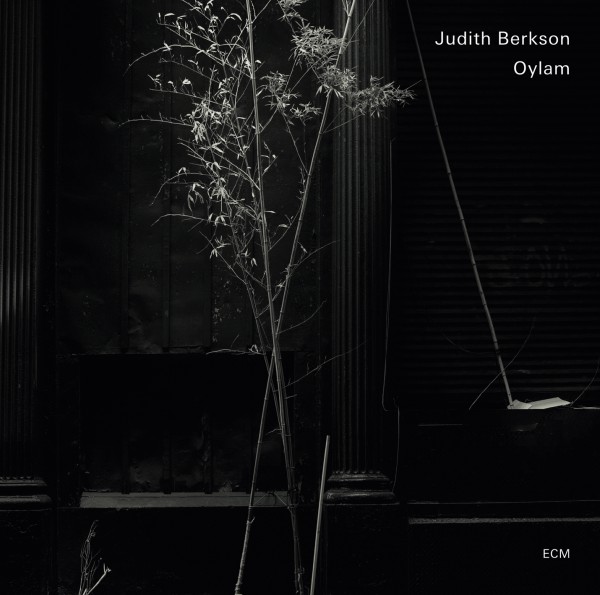
Judith Berkson: Oylam (ECM 2121)

Oylam

Judith Berkson
Oylam

Judith Berkson voice, piano, Wurlitzer and Rhodes pianos, Hammond organ
Recorded April 2009 at Artesuono Studio, Udine
Engineer: Stefano Amerio
Produced by Steve Lake

Oylam marks the ECM debut of singer/composer/keyboardist Judith Berkson. Although the title denotes “world, universe, creation, reality, realm,” the music seems to append the word “inner” to each of these notions. As a cantor and teacher of liturgical music at New York’s Old Westbury Hebrew Congregation, Berkson is rooted in tradition, but also in the atonal composers that moved her in her teens. She also studied theory and composition with Joe Maneri, thus teasing out a label connection through this recording. Her solo work is a more recent development, the fruit of her time spent in various group contexts. Since 2003, she has focused her energies on her own accompaniment: “I’ve been trying to redefine, for myself, what that might mean, exploring new ways in which voice and piano can be combined and performed by one person, working on all the different possibilities of rhythm, melody, harmony, texture and so on.” Berkson employs a modest range of keyboards and effects, lending a distinctly personal cast to this set of mostly originals, with a stroll down Standards Lane for good measure.

Berkson
(Photo by Luca d´Agostino)

The solo piano “Goodbye Friend No.1” sets the tone for a program that is equal parts resignation and resentment, an honest and brooding look at the air of separations that binds us. Such are the ironies we ecnounter. In the insistence of Berkson’s right hand—especially in songs like “Brute” and “Mi Re Do,” where flashes of dissonance and curlicues of loss reside in every unanswered question—turns the tarnished crystal of experience through which not all light may pass. That same right hand also flits in and out of sync with the lead of “Inside Good Times.” Uncanny in its imagery of children, offerings, and vapor, this song is smoothly contradictory, the first in a peppering of aural sticky notes (see “Little Arrows,” “Fallen Innocent Wandering Thieves,” and “Burnt”) filled with poetic shorthand.

The piano more often takes on a vocal role, while the words, expressed through the inadequacies of lips and tongue, are the beggar’s accompaniment. The supposed angst of urban living lays the bedrock of a bond that almost screams: Labels of praise are their own opposites. Between the wordless flexion of “Clives” and the rounded phrasings of “All Of You,” Berkson echoes, not quite morosely, the feeling of that praise on keys. This Cole Porter classic, along with the jazzier “They Can’t Take That Away From Me” of George a& Ira Gershwin, drops like a stone in the liquid of its surroundings. The cantorial “Ahavas Oylam” and “Hulyet, Hulyet” (a Yiddisdh folk song from the Polish-born poet Mordekhai Gebirtig) betray the capacity of Berkson’s chest voice. Whether floating on a warm wave of organ or nestled a cappella, it needs no mirrors to know its expressions. Berkson’s English lyrics to “Der Leiermann” from Franz Schubert’s Winterreise provide a fairytale turned sour by the heat of retelling, superseded only by the touch of “Goodbye Friend No.2,” which brings the album full oval, not to where it started but to where it will speak.

This is certainly an eclectic program, so those on the fence about buying it would so well to sample it first. Oylam fits snugly beside Sidsel Endresen’s So I Write, ever its idiosyncratic sibling. Yet in spite of the lines one might draw from Berkson to such iconoclasts as Lydia Lunch, Diamanda Galas, Maggie Nicols, and even Shelley Hirsch, this is not a game of shadows. It is, rather, a diary that recognizes our mortal limitations.

A perfect one for a rainy day, for it illuminates the rain that drips in all of us.

(To hear samples of Oylam, click here.)

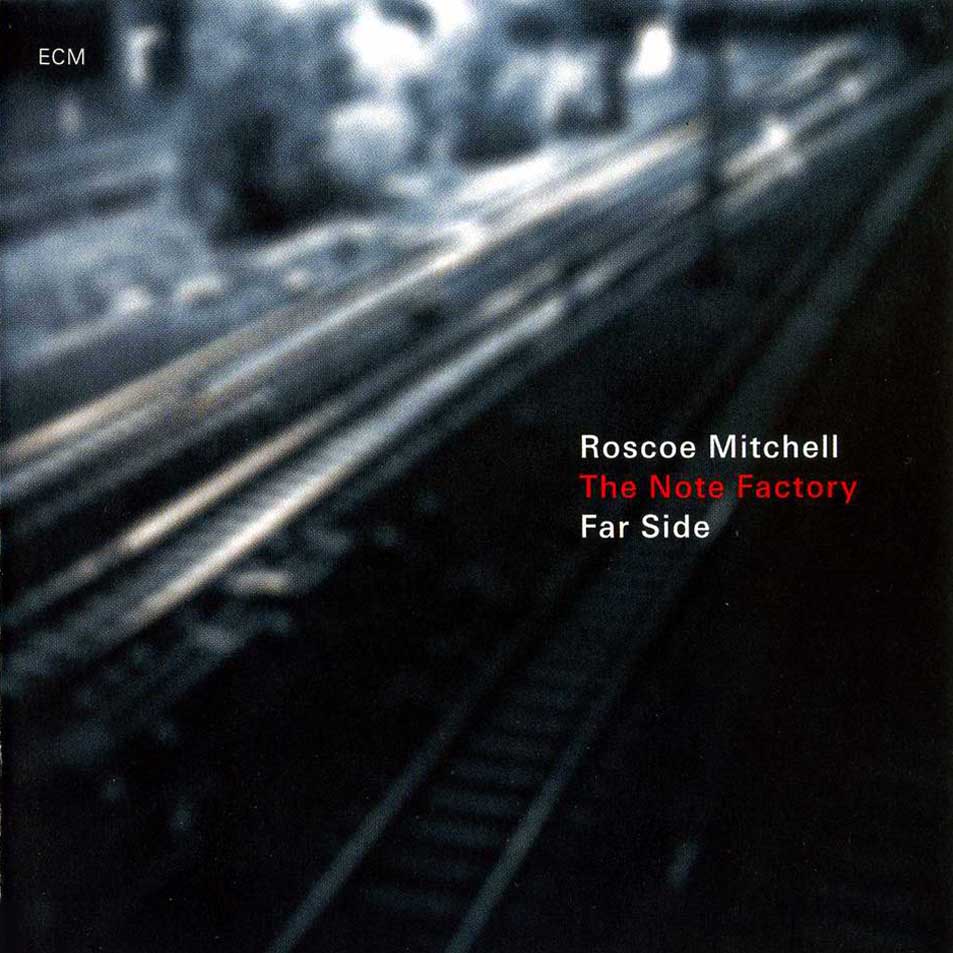
Roscoe Mitchell/The Note Factory: Far Side (ECM 2087)

Far Side

Roscoe Mitchell
The Note Factory
Far Side

Roscoe Mitchell saxophones, flutes
Corey Wilkes trumpet, flugelhorn
Craig Taborn piano
Vijay Iyer piano
Harrison Bankhead cello, double-bass
Jaribu Shahid double-bass
Tanni Tabbal drums
Vincent Davis drums
Recorded March 17, 2007 at Stadtsaal, Burghausen
Engineer: Gerhard Gruber (BR)
Radio producer: Roland Spiegel (BR)
Mixed at Artesuono Studio, Udine by Steve Lake and Stefano Amerio
Album produced by Steve Lake

Recorded live at the 2007 Burghausen Jazz Festival in Germany, Far Side documents Roscoe Mitchell’s expanding world of realizations. Working within his characteristically broad strokes is the Note Factory ensemble, something of a dream group for the saxophonist-composer and which includes the contributions of trumpeter Corey Wilkes, pianists Craig Taborn and Vijay Iyer, bassists Harrison Bankhead and Jaribu Shahid, and drummers Tanni Tabbal and Vincent Davis. The result of this coming together is a breaking apart: of expectation, of rigidity, of power. Bringing this approach to the saxophone renders Mitchell’s instrument at once ruler and ruled. We hear this especially in the three-dimensional title piece, for what begins as a lisp on the tongue of convention is methodically developed into full-blown, articulate language. Iyer’s keys rise in a droning arc, like a flipped page or vaulted pole in pathos, a breath at peace with its regularity. A muted Wilkes touches his blade to its mirror image and makes music of its shattered reflection. A kiss of cymbal and ivory unlocks the fringe nature of what swings within and activates a light source hitherto unseen. These torches shuffle themselves into the pack of cards at its center. As hands fan them, the pips dance, and Mitchell waits for the perfect moment of catharsis to wave the magic wand of his soprano and reveal our freely chosen selection. His effectual, sinewy line is a (literally) breathtaking display not only of technical dexterity but also of emotional integrity, matched sentiment for sentiment by a gurgling ascent from flugelhorn. Though translucent, the textures are dense and biologically attuned.

The two atonal pieces that follow take their inspiration from contemporary classical forms. In them one feels the thread reinforced by others less audible. Where the rubato, tenor-led contortions of Quintet 2007 A For Eight ply open spaces in which each instrument is deployed as its own cluster concept, the Trio Four For Eight leans toward the playful yet maintains graciousness. To this fire Wilkes adds fuel, trailing flute and drums that would be otherwise alone in the cognizance of their becoming. They would be heard as they are played, felt through the intermediary mallet and falling into the slumber of a brief coda in tutti.

Ex Flover Five is the most focused piece, for it allows the breadth of spontaneity to rear its magic within the predetermined frame. Taborn is especially terrific here, while Mitchell regales us with such intensity, it’s as if he’s placed a hand on a cold window and furiously scribbled in an attempt to remember its shape before it fades.

Mitchell

Those hoping for the kinetic synergies of Composition/Improvisation Nos. 1, 2 & 3 may initially feel disappointed in the Quintet and Trio, but upon closer inspection they allow naked insight into what lies at the core of Mitchell’s art. Either way, the composed sections will be, I think, refreshingly obvious to most listeners. And while the middle section may not be as “exciting” as the outers, it lends the album a concerto-like structure, with a contemplative center. Mitchell’s sound is not that of a proximate whisper but of a distant cry, one that reaches us before it withers. This is music for its own sake, present and accounted for. The congruousness of incongruity is alive and well.

(To hear samples of Far Side, click here.)

*For those following along: Iyer, Shahid, and Tabbal are leftmost in the stereo mix, while Taborn, Bankhead, and Davis are rightmost.

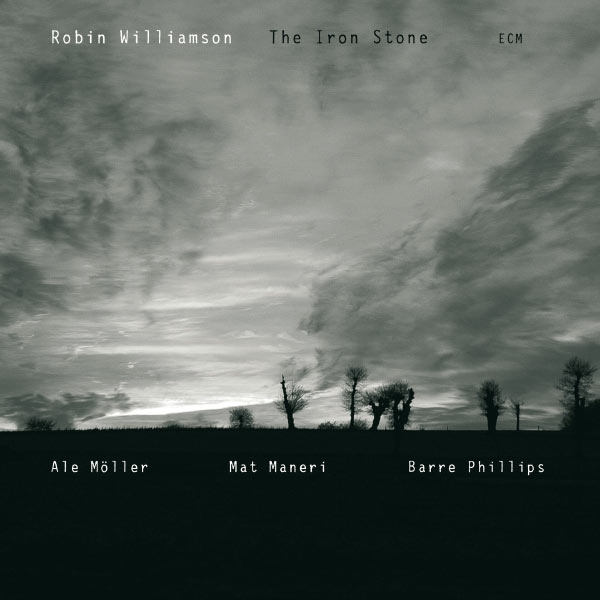
Robin Williamson: The Iron Stone (ECM 1969)

The Iron Stone

Robin Williamson
The Iron Stone

Robin Williamson vocals, Celtic harp, Mohan vina, Chinese flute, whistles, tabwrdd drum
Mat Maneri viola, Hardanger fiddle
Barre Phillips double-bass
Ale Möller mandola, accordion, clarino, shawm, natural flutes, drone flutes, whistles, jaw harps
Recorded September 2005, Mill House, Abergavenny
Engineer: Steve Lowe
Assistant: Dylan Fowler
Produced by Steve Lake

“Is it not strange that sheep’s guts could hail souls out of men’s bodies?”
–William Shakespeare, Much Ado About Nothing

From, but not to: this is the direction Robin Williamson travels by. For his third ECM outing, the man who puts the “true” in troubadour rejoins viola player Mat Maneri and fellow multi-instrumentalist Ale Möller, and plays for the first time alongside bassist Barre Phillips in tapping a trove of words by Sirs Walter Raleigh and Thomas Wyatt, Ralph Waldo Emerson, John Clare, and of course Williamson himself. “The Climber” offers a transportive introduction to this album’s relatively distant considerations, carrying us up through the clouds and into the moist particles of their origins. Improvised around the bard’s words, the music crawls and stretches, working its gnarled trunk around such shadows as “There Is A Music”—an ode to becoming that is played, as he sings, on the harp-haired gods by the fingers of tomorrow—and Emerson’s “Bacchus.” The last is the most heart-wrenching song of the set, a tale of forlorn tendrils and other fermentations caught in a butterfly’s wingspan.

There is an aged quality to the medieval Scots ballad “Sir Patrick Spens,” which through the arrangement here concedes to the palettes of coarser skies. It is not by mere virtue of Williamson’s years but fundamentally by perseverance of the tune itself that cuts the strings of time and marks wherever it may land. The fragility of Williamson’s telling gives impenetrable strength to the verses. Despite coming early in the program, this song drips with finality, drinking its vagaries through the scratching of bows and wistful sighs. The jaw harp trembles like the hearts of its characters, their lives tossed about the waves like discarded and shattered casks.

Williamson
(Photo by Jerry Young)

It is a stony and tender grave that harbors the melody of “Even Such Is Time,” which comes from “Lament For His Sister” by Rory Dall Morison—who, Williamson informs us in his liner notes, was one of the last traditional highland harpers—and replaces those words with Raleigh’s unconditional roundness. “Loftus Jones,” with music by Turlough O’Carolan, gets a vocal facelift. At Phillips’s suggestion, the group takes a “floating” approach to its wordless narrative. It calls to a different plane of our psyche, treading with carefully weighted soles on the sands of our adoration. Yet even these delicacies cannot help but dislodge a broken feeling or two from their interment, their bones having given up the ghost long ago for cloudy tragedies.

Also remarkable are this album’s evocations of animal life. A winding flute introduces us to “The Yellow Snake,” a somber tale of use and replenishment in a never-ending cycle of the elements of which the human body is composed and by which that same body does its deeds. “The Praises of the Mountain Hare” unearths a soothsayer’s gift, serrated like the mountain shawm that dances down its eastern slope, while in “The Badger” (Clare) Phillips’s scuttling phrasing mimes its eponym. A haunting instrumental epilogue draws us into “Political Lies,” among the more inescapable melodies of the Williamson songbook. In this tale of rearing recollections and broken realities, the history of mystery falls into its own rhyme and reason. The jangly slide guitar and thin-lipped poetry of the title track highlights a darkened wit about these follicles. “To God In God’s Absence” returns from its solo incarnation in The seed-at-zero in a fuller yet somehow more delicate version. No less intense for its adornments, it is Williamson at his finest. And there is, too, his stunning harp accompaniment to “Wyatt’s Song of Reproach,” a kiss to a visage half lit. “Verses at Ellesmere” is a flower of similar make. A ballad for his wife, Bina, if not also for love of balladry, it touches the ever green-ness of things and marks it with an insignia of most idiosyncratic design. These musings can only end with the open-ended “Henceforth,” which drops as a stone into a reflected sky, plying the reaches of dreams and bringing Williamson’s footprints full circle to the many copses and paths that hatch in his art.

The emphasis on spoken word and freer improvisatory elements on this record may polarize listeners. Nevertheless, let them not be a warning but an invitation. For in the grand scheme of sonic things, the truth of delivery reigns. The diction says it all: I am mortal, that I may sing of immortal things.

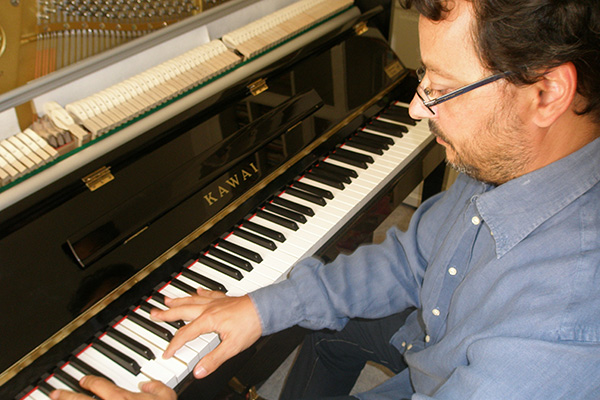
Admir Shkurtaj: Mesimér

Admir Shkurtaj
Mesimér

Admir Shkurtaj piano
Released 2012
AnimaMundi Edizioni

In the modest liner notes to his first solo piano album, composer/accordionist Admir Shkurtaj cites Béla Bartók (1881-1945) as a vital influence. The parallel is closely fetched, for each has mined the land of tradition for melodic ore and fashioned from it something altogether his own. Shkurtaj began his musical training in the Albanian capital of Tirana, but relocated to Salento—the heel of Italy’s boot—in 1991. There he studied composition (further under Alessandro Solbiati in Milan), even completing a degree in electronic music, and began exploring the local culture by way of his roots at the intersection of Balkan and jazz trajectories. The combination lends an archival air to this smattering of compositions by him and others among a hearty selection of folk song arrangements.

One can hear Bartók loud and clear in the Tarantella del Gargano. Its robust and complex flavors are all the more so for Shkurtaj’s delightfully jazzy touches, which also permeate Σeλφω (Selfo). The latter comes from Epirus, a region of northwestern Greece that borders Albania to the north, and in the present rendition yields a whimsical sound palette by threading scraps of the Italian newspaper Il Manifesto through the piano’s strings. Kali nifta undergoes similar preparation, using candles and fingertips to trace a jangling Balkan rumba. To to to is the album’s most poignant and recalls the work of Eleni Karaindrou, if not the other way around, while Comu è bellu cu bai pe’ mare and Cuccurucù lend oceanic playfulness. These experiments reach their pinnacle in the self-styled “musical screenplay” of Pizzica di San Vito. There is something of a tinkerer’s aesthetic in Shkurtaj’s playing that comes out especially in this piece. Like a child before a toolbox and a broken toy, he dismantles the music and puts it together in his own working fashion. The quality of his touch is also in strong evidence, perhaps bearing the torch of accordion virtuoso Giandomenico Caramia, to whom San Vito is dedicated.

Hyrje is the first of two originals and opens the disc resonantly. It is the compass for what follows, pointing to a world of intensely focused emotion. Pizzica di Santa Lucia is another fascination: random acts of pianism seek out the traditional Salentine dance that ends it. Works by two lesser-known composers round out the proceedings. Salvatore Cotardo’s are exuberant and crackling, approaching moth-like grace in the provocative dance of Aspro to chartí. Daniele Durante’s Luna otrantina trims the wick of nostalgia, trembling with contrasts as it fades with an impressionistic sigh.

Mesimér reminds us that tradition does not belong only to the past, as if we were somehow cut off from it over time. By virtue of its name, it continues through the reinterpretations of dedicated artists who recognize that where they’re going has everything to do with where they’ve come from. Performance is the most engaging form of preservation, and by virtue of his own Shkurtaj opens many doors. Such music is more than just another stamp for our internal passports. It is itself the journey such a stamp represents.

(See this review in its original form and hear samples at RootsWorld.)