Trio Mediaeval & Arve Henriksen: Rímur (ECM 2520)

Rímur

Trio Mediaeval & Arve Henriksen
Rímur

Anna Maria Friman voice, Hardanger fiddle
Linn Andrea Fuglseth voice, shruti box
Berit Opheim voice
Arve Henriksen trumpet
Recorded February 2016, Himmelfahrtskirche, München
Engineer: Peter Laenger
Produced by Manfred Eicher
Release date: March 3, 2017

If fate would send me around the world
far away from you,
I would yet, with tears, send you a sigh
that belongs to you.

The title of Rímur, Trio Mediaeval’s seventh album for ECM, takes its name from a longstanding tradition of Icelandic rhyming verses, passed down orally from generation to generation until reaching their present incarnations in a program that meshes three distinct voices with a fourth: that of trumpeter Arve Henriksen. In this artful sequence of chants, hymns, and folk songs drawn from Scandinavian sources, the quartet reimagines music as it might have swept across northern landscapes during bygone ages whose histories are renewed in these melodic survivors.

Because improvisation has always been a vital component of Nordic folk tunes, the leaps of intuition required of their interpretation are in-built into the music. And while saxophonist Jan Garbarek’s collaboration with the Hilliard Ensemble will draw obvious comparison—and, to be sure, fans of that project will want to own this one as well—it’s very much its own world, tracing a continental fringe that runs crosswise to that ECM classic.

The Icelandic material yields the most ghostly effects—not only because of a certain transparency, but more importantly because of Henriksen’s ability to see in it what few others might. Whether rising like the stream of a quiet fountain in “O Jesu dulcissime,” a highpoint of the disc for its vocal blending and Hardanger fiddle accents, or unraveling inner spirit in “Morgunstjarna,” a hymn to God’s only begotten Son in confirmation of grace, Henriksen reveals unforced harmonies, by turns balladic and martial. Other highlights include the original “Krummi,” the traditional Swedish shanty “Du är den första,” and the anonymous chant “Alma Redemptoris Mater.” In each of these, he extends the wingspan of expectation while yet cooling us in a familiar shade. In his absence, Friman, Fuglseth, and Opheim are spotlighted by a handful of vocal pieces, including some especially evocative material from Norway. Of these, the wedding tune “Brureslått” features some of the most stillness-inducing singing the trio has ever recorded.

At the heart of this recording are substantial hymns to Saints Birgitta (Sweden), Magnus (Orkney), and Sunniva (Norway). The first, by 14th-century Swedish composer Nils Hermansson, epitomizes the dynamics that make Trio Mediaeval such a unique ensemble. The way in which they spin from a single voice a sonority beyond triplicate measure is exquisite, even as Henriksen adds a voice of his own, at first in lockstep then in untethered flight. In the other hymns, they sail equally selfless waters. Would that we were able to turn their metaphorical vessel into a reality, docked far beyond the world’s storehouse of hatred by a braid of divine inspiration.

Colin Vallon Trio: Danse (ECM 2517)

Danse.jpg

Colin Vallon Trio
Danse

Colin Vallon piano
Patrice Moret double bass
Julian Sartorious drums
Recorded February 2016, Auditorio Stelio Molo RSI, Lugano
Engineer: Stefano Amerio
Produced by Manfred Eicher
Release date: January 13, 2017

For their third ECM recording, pianist Colin Vallon, bassist Patrice Moret, and drummer Julian Sartorious climb even deeper down the rabbit hole of their creative integrity. The music here was recorded without headphones, allowing the musicians to map open-bordered sonic territory. Meticulousness flows through “Sisyphe,” in which the dialogue between instruments follows the pulse of a vaster circulatory system. Such subtle insistence as that expressed in this opening track shows up that much more vividly on our listening radars. We know the end because he hear it in the beginning.

Titles are as much suggestive of an inner spirit as of the skin in which that spirit resides. Case in point would be “Tsunami,” which from insistent beginnings regresses into a memory of the quake that set it off. Moret’s centrifugal bassing is unassuming enough that we might not even be aware of its force until we’re caught in it, while Sartorious brings a three-dimensional realism to every curling tendril of water. And while the tune does build to peak intensity, one never senses danger. “L’Onde” is a distant companion, and after some cinematic ellipses transitions into a playful center before returning to form. The title track likewise undoes its own promises by meeting expectation halfway with something that, while rhythmically sound, nevertheless dislocates its own body.

“Smile” takes a more geometric approach, flitting through changes of key in the way a face might through emotions. Sartorious is a wonder, his distorted repetitions existing only to reveal the smallest disparities between them. The same holds true of “Tinguely,” the only contribution of Moret’s pen, in which prepared piano bejewels the very shadows on the way to a high-energy build. In much of what follows, including the melodic highlight “Morn” and the collectively improvised curio cabinet that is “Oort,” one encounters understated exuberance, a montage approach to memory, and deepest respect for the foundational arpeggio. For these reasons and too many more to articulate, Vallon’s is one of the most unpretentious piano trios in existence, and Danse further proof of its staying power in the ECM canon as a quiet but impression-heavy tesseract of sound. Let us hope it spins as long as we do.

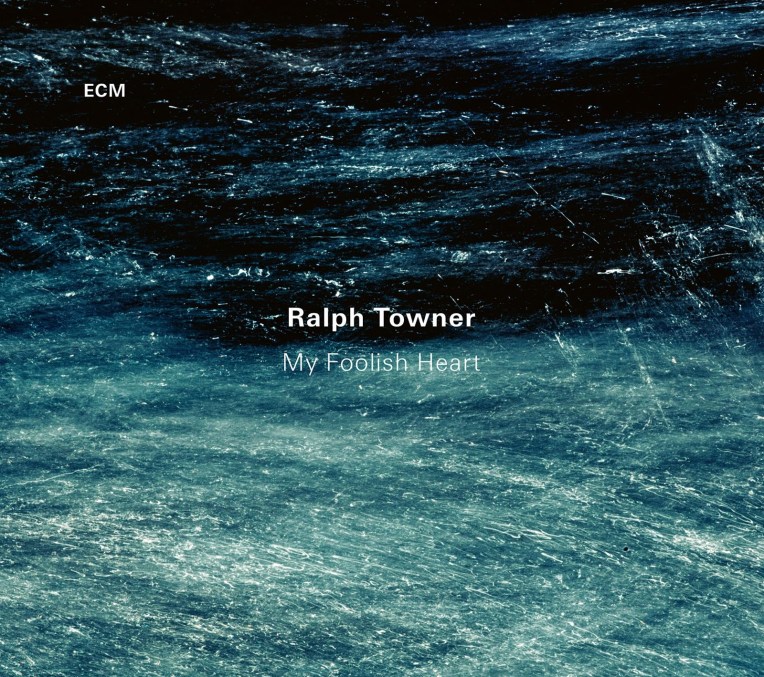
Ralph Towner: My Foolish Heart (ECM 2516)

My Foolish Heart

Ralph Towner
My Foolish Heart

Ralph Towner classical guitar, 12-string guitar
Recorded February 2016, Auditorio Stelio Molo RSI, Lugano
Engineer: Stefano Amerio
Produced by Manfred Eicher
Release date: February 3, 2017

Any new solo album from Ralph Towner is reason to celebrate. Even more so when you consider the guitarist and ECM veteran was just shy of his 76th birthday at the time of this recording. Not that one would know it by the joie de vivre that infuses even its quietest moments. In the opening “Pilgrim” we find Towner at his quintessential best, gluing a mosaic of disparate scales. There’s a domestic feeling to this piece, as if the occasional strums were the sounds of a straw broom moving across a wooden floor.

Towner’s playing can always be counted on for tactility, unafraid as he is to let details shine through. This is especially true of “I’ll Sing To You,” one of the set’s most melodic tunes, and in which every scrape of calloused fingers is captured in vivid close-up. As a composer, he excels in evoking a title’s movement or feeling. To wit: the sashaying gait of “Saunter” and the Baroque-inspired footwork of “Dolomiti Dance.” Of a kindred spirit are the two tracks featuring 12-string. Where “Clarion Call” is filled with stops and starts, thus working its magic through interruption of a spell, “Biding Time” echoes with reflective purpose.

Both “Shard” and “Rewind” are standbys from the Oregon songbook, and by their inclusion speak to the will of nostalgia. The latter tune ends the album with undulations of narrative. Before that we are treated to “Blue As In Bley.” Dedicated to Paul Bley, who passed away not long before Towner stepped into the studio, it’s a complex and finely wrought piece, which like the improvisations of its dedicatee cohere by magic of immediacy. A smattering of briefer pieces injects the discs of this musical spine with extra fluid. Of these, “Ubi Sunt” is a highlight for its choral beauty.

The title song by Victor Young has long been a source of inspiration for Towner, who revisits it here in humility. In his hands it feels like an old video watched in quiet ponderance. Every scene is a chance at renewal, proof that not only songs but also their interpreters can grow better with age.

Theo Bleckmann: Elegy (ECM 2512)

Elegy

Theo Bleckmann
Elegy

Theo Bleckmann voice
Ben Monder guitar
Shai Maestro piano
Chris Tordini double bass
John Hollenbeck drums
Recorded January 2016 at Avatar Studios, New York
Engineer: James A. Farber
Assistant: Akihiro Nishimura
Produced by Manfred Eicher
Release date: January 27, 2017

Through the fields,
why must I go home?
Through the night,
I see starlight.

Vocalist and composer Theo Bleckmann, encountered most recently by ECM listeners in collaboration with the Julia Hülsmann Quartet, strikes out on his own with his first session for the label as leader. Then again, “strikes out” is too forceful a term for music that submerges its face so deeply into the font of mortality that it arises glistening with afterlife.

For this journey he is joined by guitarist Ben Monder, pianist Shai Maestro, bassist Chris Tordini, and drummer John Hollenbeck, all of whom create an experience of ambient integrity. In “Semblance,” tides of guitar and piano find an intimate shoreline along which to flow, introducing the album with a tenderness exceeded by what follows. It’s also the first of scattered instrumentals, including the microscopic “Littlefields” (to which is added the tracery of Hollenbeck) and “Cortège” (aglow with Tordini’s cinematic bassing). Even—if not especially—when singing wordlessly, Bleckmann paints with his entire being: a feeling magnified in such near-volcanic meditations as “The Mission” and the title track. The latter’s ability to wring fire from ice, and vice versa, is more than alchemical; it’s experiential. Monder’s guitar takes on a revelatory tone, and presages the distortions of Bleckmann’s voice as it turns in on itself in demise. Like the transitions from rural to urban sprawl in “Wither,” it builds its own machinery of reckoning one gear at a time.

As for words, they fall in a quiet storm. While Bleckmann’s slow take on “Comedy Tonight” transcends the Stephen Sondheim staple in morose orbit, “To Be Shown To Monks At A Certain Temple” sets the words of 8th-century poet-monk Chiao Jan. Its sustained guitar, anchored by bass and drums, spins a fragrant web across which Bleckmann’s vocal spider may crawl in search of enlightenment, content enough to shine a voice through every dew drop as if it were an amplifier. His own words inhabit “Fields” and “Take My Life,” each a long-distance call from soul to soul. The latter’s ode to self-sufficiency finds Monder articulating that inner struggle and Maestro lighting torches of wisdom along the way, until the body is a vessel of vessels, sailing into itself to do it all over again.

Dim the light inside my eyes
Then fill my lungs with quiet
Let me subside to states more serene
Extinguish complexities in my dream

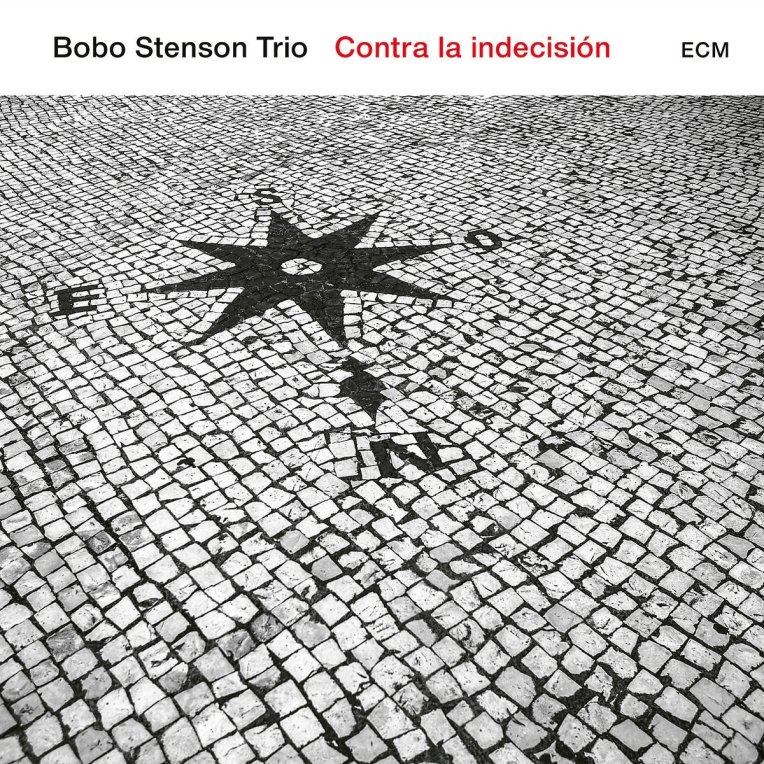
Bobo Stenson Trio: Contra la indecisión (ECM 2582)

Contra La Indecisión

Bobo Stenson Trio
Contra la indecisión

Bobo Stenson piano
Anders Jormin double bass
Jon Fält drums
Recorded May 2017, Auditorio Stelio Molo RSI, Lugano
Engineer: Stefano Amerio
Produced by Manfred Eicher
Release date: January 19, 2018

After a six-year hiatus, pianist Bobo Stenson, bassist Anders Jormin, and drummer Jon Fält return to the studio with a new direction in tow. The path of said direction carves its way through equally varied territory, but with a philosophical nakedness of association that distinguishes it from previous outings. Compositionally speaking, the focus is on Jormin, who contributes five new tunes. In each of these, especially the Hamlet-inspired “Doubt Thou The Stars” and intimate “Three Shades Of A House,” the broad-ranging palette of not only the composer but also Fält is showcased.

Whether coasting along the edges of consciousness with contemplative themes or shifting into a midtempo groove without looking back, the trio moves as a simpatico vessel, attuned to the subtlest changes of wind and current. Jormin’s confidence is expressed through unforced engagement, which in “Stilla” inspires colorful adlibbing from Stenson. The bandleader’s only original this time around is “Alice,” a haunting piece finding him in dialogue with bowed bass, not a hint of disagreement within earshot.

A smattering of bandmember favorites rounds out the set, including a unified rendition of Cuban songwriter Silvio Rodríguez’s title track, as well as classical melodies drawn from the oeuvres of Béla Bartók (“Wedding Song From Poniky”), Erik Satie (“Elégie”), and Federico Mompou (“Canción y Danza VI”). The latter two are standouts for their respectful introductions and denouements. The freely improvised “Kalimba Impressions” is also noteworthy for its synchronicity and lush, modal development. At once grounded in the source material and straying far from it, it gives testimony to Stenson’s favoring of poetry over prosody.

Although perhaps not quite the masterpiece that 2012’s Indicum was, there’s no reason why it shouldn’t occupy its own territory, beyond the trappings of comparison. As unassuming as an observer whose thoughtful profundity far outweighs the extroversions of its regard, it prefers a quieter approach, masterful in its own way.

(This article originally appeared in the August 2019 issue of The New York City Jazz Record, a full PDF of which is available here.)

Stefano Battaglia: Pelagos (ECM 2570/71)

Pelagos

Stefano Battaglia
Pelagos

Stefano Battaglia piano, prepared piano
Recorded May 2016 at Fazioli Concert Hall, Sacile (Italy)
Engineer: Stefano Amerio
Produced by Manfred Eicher
Release date: September 15, 2017

No one can comfort me in my misery
In my lamenting and suffering for love
But for the one in the beautiful mirage…

Following a string of concept albums—including the cinematically inflected Re: Pasolini—and endeavors with his trio, pianist Stefano Battaglia returns to ECM with a two-disc solo effort of mostly spontaneous music. Playing piano and prepared piano—and sometimes both—he weaves together a program from behind closed doors and live on stage, and by its sequence tells the story of a shoreline thirsty for the tide.

The piano at his fingertips is a printing press, every letter and ornament moved carefully into place before transferring messages to the pages of our inner ear. From the sweeping grandeur of “Migralia” to the brittle unspooling of “Brenner Toccata,” he understands that the sea is a force of forces, each drop with the potential to swallow vessels whole. He dots the map between them with exes and lines, charting terrain both vertical (“Horgos e Roszke”) and horizontal (“Life”). Like the sustains breathing throughout “Lampedusa,” his notes resonate as gifts for the broken.

Preparation of a piano is often seen as a way of expanding its vocabulary. Battaglia, however, treats it like an endoscopic camera into the instrument’s very heart. Taken as a measurement of its pulse, the gong-like meditation of “Processional” and rhythmic intensity of the brief “Dogon” indicate a healthy organism whose dreams are as melodic as they are ineffable. “Destino” is, perhaps, the rawest of these improvisations. It feels like déjà vu, folding time into a mysterious origami.

The title track is one of five composed pieces in the set. Among them, its archaeology of recall is matched only by the urgency of “Migration Mantra,” a wave of untold stories given room to breathe. In light of which the Arabic traditional “Lamma Bada Yatathanna” glows with all the beauty of life in its hands. A necessary touch of wordlessness for a world that can’t keep its mouth shut.

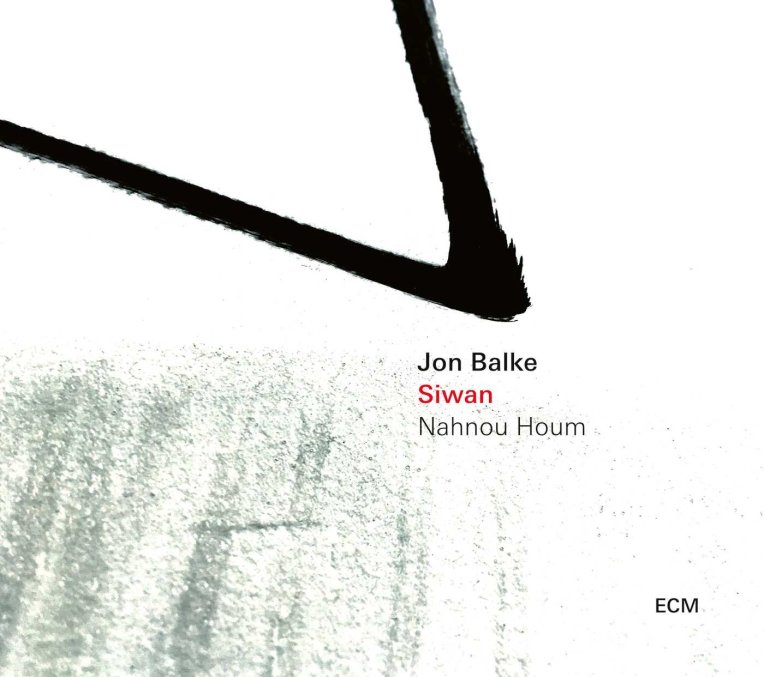
Jon Balke/Siwan: Nahnou Houm (ECM 2572)

Nahnou Houm

Jon Balke
Nahnou Houm

Mona Boutchebak vocals
Derya Turkan kemençe
Helge Norbakken percussion
Pedram Khavar Zamini tumbak
Jon Balke keyboards
Barokksolistene
Bjarte Eike violin, leader
Alison Luthmers violin
Øivind Nussle violin
Milos Valent viola
Per Buhre viola
Torbjørn Köhl viola
Judith Maria Blomsterberg violoncello
Mime Brinkmann violoncello
Johannes Lundberg double bass
Recorded January 2017 at Madstun and The Village Recording, Copenhagen
Engineer: Thomas Vang
Mixed May 2017 at The Village Recording by Thomas Vang and Jon Balke
Mastering: Christoph Stickel, MSM Studios, Munich
Produced by Jon Balke
Release date: November 3, 2017

Even when we drink entire seas, we stand amazed
that our lips are still as dry as dunes…
and endlessly we seek the sea to wet our lips, without seeing
that our lips are seaside dunes and we the sea.
–Attar Faridu Din

Divisive times call for unifying music, and that’s exactly what Jon Balke’s Siwan project has created. Taking Al Andalus and its culture of inclusion—convivencia—as inspiration, the pianist and his progressive assembly weave for us an anthem of humanity. “There is no room or time now for the division between them and us,” writes Balke in a liner note. “We are them and they are us.” Such thinking is already inherent in the instrumentation. Encompassing Balke himself on keyboards, Pedram Khavar Zamini and Helge Norbakken on percussion, and Derya Turkan onkemençe, all infused by the strings of Barokksolistene under the lead violin of Bjarte Eike, it feels alive with borderless awakening. But the light of that dawn rests surely in singer Mona Boutchebak, who joins the project in solidarity.

Boutchebak’s voice is quill to the ensemble’s paper, an artisan of a yearning so ancient that it feels immediately with us. The doorway to it all is “Duda” (Doubt), wherein poetry of Ibn Al Zaqqaq (12th century, Spain) ride a Baroque-like wave of strings and harpsichord. This transitions into a more delicate accompaniment of percussion as Boutchebak sounds the call for a sweeter love than that with which the world has become so distractedly obsessed. In response, the mournful cry of Turkan’s kemençe weeps for fallen grace.

Kindred spirits flow through the ensuing songs. Across spectrums of sorrow in “Castigo” (another setting of Ibn Al Zaqqaq), Boutchebak understands that singing is closest to speaking: without communication, it fails. And communicate she does, speaking the words of Saint John of the Cross (16th century, Spain) in “Sin Nada Querer” (Wanting Nothing) as if they were letters to be opened and read by candlelight. “To attain pleasure in everything,” she begins, “seek pleasure in nothing.” A philosophy put into practice by the musicians at hand.

Intimate details underscore these sentiments. Distant storms and rainfall trace the edges of “Itimad” and “Desmayar Se” (Swooning), each an ode to the timelessness of love, while the title track and “Del Rey” dig into atmospheric soil with crowding voices. The latter is one of a few instrumental ligaments, of which Zamini’s “ZemZemeh” is a highlight. Other remarkable amalgamations include the fluidly arranged “Aun Bebiendo” (Even When We Drink), which sets a text of Attar Faridu Din, a 13th-century Sufi mystic from Nichapur, Iran, and the Andalusian traditional “Ma Kontou,” for which Boutchebak sings unaccompanied, repeating the verse like a mantra. Because truth is always worth hearing, and must be repeated until it shines.

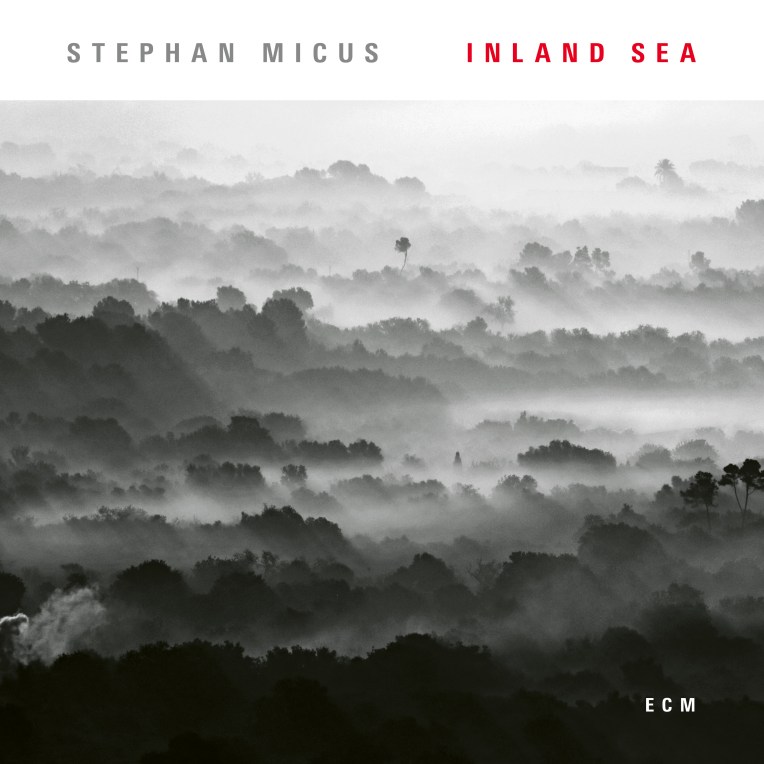
Stephan Micus: Inland Sea (ECM 2569)

2569 X

Stephan Micus
Inland Sea

Stephan Micus balanzikom, nyckelharpa, chord and bass zithers, shakuhachi, voice, steel-string guitar, genbri
Recorded 2014-16 at MCM Studios
An ECM Production
Release date: June 16, 2017

When talking about differences between cultures, it’s tempting to uphold products such as food, art, and music as foci of distinction. On the latter point, Stephan Micus has dedicated his life to that without which music would not exist: the instruments themselves. From the staggering amount in his repertoire, he draws stories that could never have been written by any other means. Take the duo, for example, which makes its first appearance in his milieu via the opening “Haze.” The balanzikom, an obscure seven-stringed lute from Tajikstan, feels so much like the mountains and open plains of its origins that it could never have come from anywhere else. The very land is its womb, as also of the wordless gestures projecting life into being. The nyckelharpa, a Swedish bowed instrument keyed like a hurdy gurdy, is as crisp as the climate of which it was born, accordingly grounded. Micus listens to these instruments much more than he plays them, and through his performances allows them to learn new languages by the same tongue and teeth. As the only one-on-one conversation between them, “Haze” sets a precedent of civil and spiritual exchange for all to follow. The nyckelharpa, for its part, glows in triplicate in “Dawn” and “Dusk.” Their combined song is more than diurnal; it’s life and death.

Likewise, the shakuhachi is more than a conduit for breath. For while Micus has rewritten its futures many times over, its ancestral home is unalterable. In “Sowing Wind,” he matches this Japanese bamboo flute with the chord zither, a 68-string instrument of his own design. The arc thereof is a primordial one, along which feelings of mutual regard flow as if they were a mythology to which we’ve blinded ourselves. This relationship deepens in “Reaping Storm,” switching chord zither for its bass counterpart. Now the mood is fragile and of a different season, fragrant of a world humbled by nature.

The balanzikom delineates further circles for Micus’s singing in “Flor del Sur.” Radiating along cardinal axes as if to hold continents in its embrace, the solo voice welcomes five percussive nyckelharpa, chord zither, and shakuhachi in “Nuria,” and among that assembly enacts a tale of disparate peoples brought together by tragedy. For “Virgen de la Mar,” Micus choruses his voice fifteen times over, and to it adds three genbri, a three-stringed bass instrument from Morocco. Treading the same soil packed by the feet of “Dancing Clouds” (plucked nyckelharpa, 6 percussive nyckelharpa, 3 bowed nyckelharpa, steel string guitar, genbri, bass zither) and laid to rest by “For Shirin and Khosru” (2 bass zithers, 2 nyckelharpa, 3 steel string guitars, genbri), it treats melodic resolution as the caress of a loving parent who dispels fears of darkness. Thus we are protected, hoped for, and fortified to face new days, bringing our own children to the well of mortality, that they might also see the reflections of all who came before them.

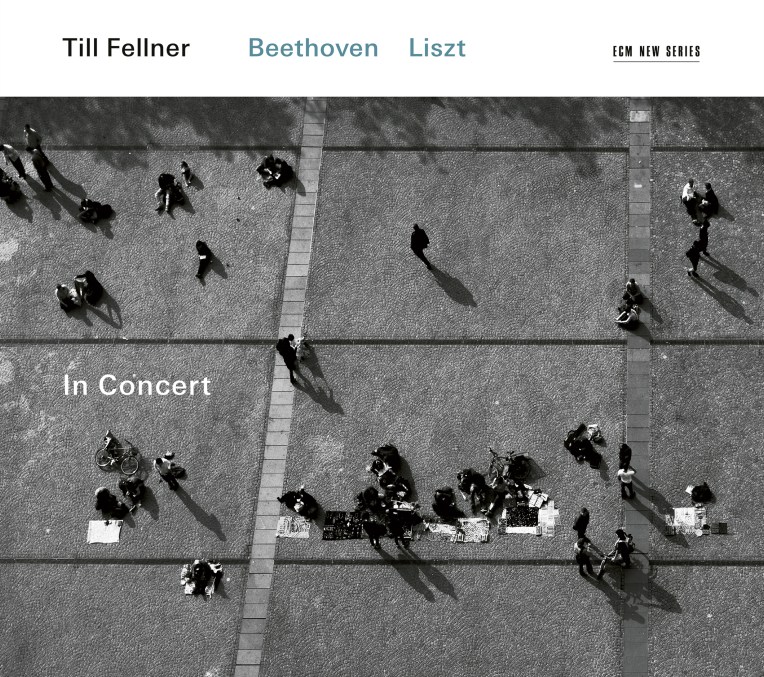
Till Fellner: In Concert – Beethoven/Liszt (ECM New Series 2511)

2511 X

Till Fellner
In Concert: Beethoven/Liszt

Till Fellner piano
Années de pèlerinage
Concert recording, June 2002
Wien, Musikverein, Großer Saal
Tonmeister: Gottfried Zawichowski
Engineer: Andreas Karlberger
An ORF Recording (Austrian Broadcasting Corporation/Radio Österreich 1)
Sonata No. 32
Concert recording, October 2010
Middlebury College Performing Arts Series
Mahaney Center for the Arts, Robison Hall
Tonmeister: Mark Christensen
Mastering: Markus Heiland
An ECM Production
Release date: November 2, 2018

But where of ye, O tempests! is the goal?
Are ye like those within the human breast?
Or do ye find, at length, like eagles, some high nest?
–Lord Byron, Childe Harold’s Pilgrimage

After a mosaic of recordings spanning the gamut from J. S. Bach to Thomas Larcher, Till Fellner returns to ECM with a pastiche of live recordings from 2002 and 2010. The first presents the Austrian pianist in his home capital for year one of Franz Liszt’s Années de pèlerinage. Inspired by the composer’s trip to Switzerland from 1835 to 1836 but unpublished until 1855, this aural scrapbook is alive with alpine imagery and motifs, encompassing firsthand memories, friendships, and even political views. It’s on the latter note that the collection begins with La Chapelle de Guillaume Tell. This stately introduction to an otherwise flowing work sets a precedent of architectural soundness that infuses all to follow. Contrast this with the watery beauties of Au lac de Wallenstadt and Au bord d’une source, and you already have a sense of the variety to which Liszt had eloquent access, rendered by Fellner with dynamic temperament.

While many sections, such as the sunlit Pastorale and Eglogue (the latter riffing on a shepherd’s song), are built around fleeting impressions, each nevertheless feels complete. This may be due to the fact nearly all of the music is revised from earlier material, an exception being the tempestuous Orage. No matter the duration, emotional integrity is the primary ingredient, so that the descriptions of Vallée d’Obermann’s thirteen precious minutes feel just as thick as Le mal du pays. Both seem to find the composer yearning for home when away from it, if not also for distant travels when in it, lending themselves to a score that only serves to nourish Fellner’s radiance. All the above shades of meaning cohere in Les cloches de Genève, by which the pianist elicits rich yet subtle sonorities.

If Liszt is a photographer, then Ludwig van Beethoven is a filmmaker whose magnum opus is surely the Sonata No. 32 in c minor. His Opus 111 shares its key signature with the Fifth Symphony and other monumental works, and provides a fitting end to his sonata cycle. As suggested in William Kinderman’s deeply considered liner essay, “The pair of movements of this sonata interact as a contrasting duality suggesting strife and fulfillment, evoking qualities which have stimulated much discussion, reminding commentators of the ‘here’ and the ‘beyond,’ or ‘samsara’ and ‘nirvana.’” Such spiritual language is no mere hyperbole, but an activation point of Beethoven’s grander concerns over the effects of art on the soul. As The Art of Fugue was to Bach, so is the Sonata No. 32 to Beethoven with regard to variation.

To be sure, Fellner touches upon those grander narratives, but more importantly keeps his ears attuned to the details. In the opening movement, for example, his arpeggios feel like quills on paper. Balancing stream-of-consciousness impulses with deeply articulated control, he links an unbreakable chain of progression. The second and final movement begins almost timidly, as if sifting through old notes for fear of what one might find, only to be surprised by a joy one never knew was waiting for rediscovery. Urgency compels the left hand while trills in the right signal a transformation of flesh into glory. “The transformational power of this closing music,” says Kinderman, “acts like a utopian symbol, which seeks to neutralize if not dispel the tragic reality embodied in the weighty opening movement of the work.” And perhaps weight is the most appropriate physical property by which to analyze what’s happening here, for regardless of size and scope, the relationship of every note to gravity is meticulously examined, its potential for flight believed in like a prayer.