Bach: Das Wohltemperierte Clavier – Schiff (ECM New Series 2270-73)

2270-73 X

Johann Sebastian Bach
Das Wohltemperierte Clavier

András Schiff piano
Recorded August 2011, Auditorio Radiotelevisione svizzera, Lugano
Engineer: Stephan Schellmann
Produced by Manfred Eicher

Johann Sebastian Bach’s The Well-tempered Clavier is more than a magnum opus. It’s an origin story. Practically speaking, it houses a prelude-fugue couplet for each of the 24 major and minor keys, twice over. Dated 1722 and 1742 respectively, Books I and II are the subjects of two earlier ECM New Series recordings by Keith Jarrett, while pianist Till Fellner has lent his shadows to Book I. Jarrett made the bold decision to record Book I on piano and Book II on harpsichord, thereby giving discernible substance to the two decades that separate them. Fellner’s poignant rendition is only half completed, and it remains to be seen whether the rest will reach market. Until then, label devotees have another.

In his marvelous liner notes, Paul Griffiths characterizes the WTC as “one of the central thoroughfares of western music.” He goes on to speak of prelude and fugue as gate and path or, another way, “Things in The Well-Tempered Clavier always come in pairs, but pairs that, unlike butterfly wings, display an essential asymmetry, if an asymmetry that will sound inevitable, even natural.” Doubtless, this asymmetry is inevitable, for it is the pollen that keeps Bach’s fields fragrant. As a renowned veteran of the composer, András Schiff dusts decades of return into these flora. For him the question is not whether to approach them as studio recording or as performance, because for him the two are inseparable. “To me, Bach’s music is not black and white; it’s full of colors,” he asserts. As in the cover art by Jan Jedlička, the music crosses lines in a deepening network of variation.

Schiff concludes his portion of the booklet with a note on pedal use—or, in his case, total lack thereof. The music is all the freer for it, the affectation a potent expressive tool. Like a digital photographer reverting to manual, Schiff’s process gives vision to its subject with meticulous care. Whether or not this creates a “purer” sound is entirely subjective, though one can hardly fault the sincerity of his choice, for indeed the pedal is often fantasy’s servant. In its place is a tasteful reverb, lacquered at Lugano’s Auditorio Radiotelevisione svizzera under the watch of engineer Stephan Schellmann.

Eschewment of pedal shortens the distance between attack and delay, making it more akin to human speech. Already, in the C major Prelude of Book I, we feel a linguistic touch speaking through those famous arpeggios as Schiff makes of the piano a syllabic organ, no mere percussive machine. His ability to distinguish palatal colors becomes further apparent in the A-flat major Prelude. Schiff’s hands-only approach lends pop and shine to the faster movements, and to the slower adds emotional weight. It also makes the rhythmic complexities glow. Whether the playful grinds of the C minor and C-sharp minor Fugues or the balance of taste and virtuosity of the D major Prelude, the relationship between medium and message becomes, again, inevitable the more one listens.

Perhaps most illuminating in this regard is the equal partnership of the left and right hands. Listen, for instance, to Schiff’s handling of the C-sharp minor Fugue ground, which folds words into sentences and sentences into stories, or the coalescence achieved in his E minor Prelude. From epic carriage to dulcet tickling, such nuances sweep the landscape free of its weeds. Other moments, like the F-sharp major Prelude, are the espresso in a latte universe. Also noteworthy are the extended trills, which Schiff varies to suit the mood at hand. Twirling like maple propellers at one moment (G minor Prelude) and methodically slow the next (F-sharp minor Fugue), they hold us captive at any speed.

Brilliant execution of the C major Prelude and C-sharp minor Fugue stand out in Book II, sounding at least like three hands. The sheer volume of intimacy in the D-sharp minor Prelude draws a comparable spiral of creative focus, and the famous F minor Prelude enchants, ghostly but tangible. The F-sharp major Prelude is yet another notable. This Schiff manages beautifully, shifting with perfect pacing between the dotted eighth-sixteenth couplets and moving into strings of sixteenths in this 3/4 piece. Likewise, his downward chromatic steps in the A minor Prelude are intuitively realized. The final Prelude and Fugue in B minor scintillate with new beginnings and good tidings. Thus, Schiff has locked us into Bach’s prism (especially in the E minor Prelude of Book II) with the precision of a Spirograph wheel and has held us there until the design can no longer repeat itself.

Happiness theorists believe that we become habituated to surpluses of pleasure or positive stimulation, to the point where even the most meaningful activities lose the value they once held. Bach’s WTC noshes on time with the same measured reflection that the iconic shepherd chews on his wheat stalk. In that idle motion is a world of temperament whose secrets will never be fully disclosed. Listening to this music today, it is easy to imagine how different our world is from the time in which it was written. The beauty of Schiff’s performance and Bach’s insightful writing is that, despite the potential infinitude of performances the score invites, at its heart is a survival instinct that will never falter so long as life walks this earth.

(To hear samples of this album, click here.)
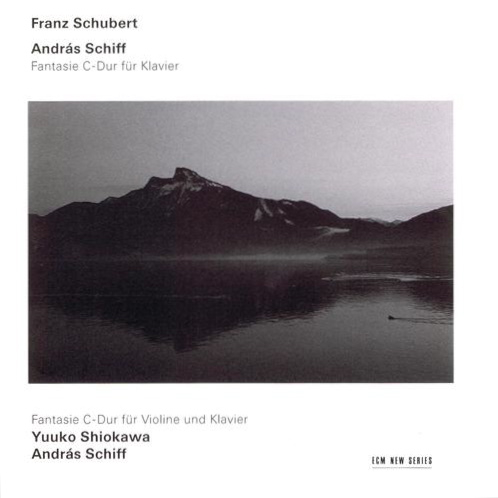
András Schiff: Schubert C-major Fantasies (ECM New Series 1699)

Schubert Fantasien

András Schiff
Franz Schubert C-major Fantasies

András Schiff piano
Yuuko Shiokawa violin
Recorded December 1998, Schloss Mondsee
Engineer: Stephan Schellmann
Produced by Manfred Eicher

It is tempting to say that the music of Franz Schubert (1797-1828) was ahead of its time. In the words of pianist András Schiff, “Schubert has such modernity—perhaps his time has only arrived now.” When encountering the 1822 “Wanderer” Fantasy for the first time, the characterization would seem to fit like a tailored suit. And yet, if we track its subsequent influence on composers as diverse as Liszt and Ligeti, it becomes clear that he was a composer of his moment, and it is this moment to which so many listeners have returned in their own wanderings. It might, then, be more accurate to say, “Modernity has such Schubert.”

In the first half of this recital disc for ECM, Schiff flows through the piece’s technical challenges like a river through a forest. As remarkable as this is, more intriguing are the ways in which he navigates its emotional mazes, for as a Schubert interpreter Schiff prefers poetry to drama. He gives requisite oomph to the magisterial introduction and from it elicits rounded gestures implying acres of pasture at a single touch of key. Yet his most commanding moments are the gentlest. Almost as still as mirrors, they reflect the leaf-patterned light that seeks them. Pulling away the vines, Schiff smells the moss, fecund with mystery. Knowledge of Schubert’s all-too-brief life inflects these passages darkly. From the spectral to the colloquial, the “Wanderer” spans the gamut of responses to landscape, though the Beethovenian desperation in the final fugue is undermined by an intermittent restraint that may sit oddly with fans of benchmark recordings like Richter’s or Pollini’s. Still, a resplendent sign-off gives the piece a total shape that is Schiff’s own.

His wife, violinist Yuuko Shiokawa, joins her partner for Schubert’s Fantasy D934, also in C major. Published posthumously in 1850, its proper score rested dormant beneath the recital stage until the 1930s. Emerging in a ghostly whisper, Shiokawa draws a spider’s thread through the piano’s microscopic tides. This is the dream to the former fantasy’s waking, made manifest through the strains of an inviting dance. Shiokawa brings appropriate balance of airiness and strident romanticism to what is arguably some of Schubert’s most beautiful writing. She partners well with the piano as a parallel voice—neither competing nor unified. Shiokawa also handles the technicalities with grace, particularly during a delightful passage that floats pizzicato in cascading undulations from Schiff’s fingers. Another flowery conclusion, if more succinct than the last, again closes the circle with confidence.

The recording here is noticeably soft in texture, heavy in the lower register. The combination sucks a bit of wind from Schubert’s sails in portions, especially in the finale of the “Wanderer.” Both Fantasies remain purest in their introductions and in their quieter turns. Such issues aside, with these two pieces Schubert shows that perhaps all music is fantasy.

<< Dave Holland Quintet: Prime Directive (ECM 1698)
>> Jan Garbarek/The Hilliard Ensemble: Mnemosyne (ECM 1700/01 NS
)

Ketil Bjørnstad/David Darling: Epigraphs (ECM 1684)

Epigraphs

Epigraphs

Ketil Bjørnstad piano
David Darling cello
Recorded September 1998
Engineer: Jan Erik Kongshaug
Produced by Manfred Eicher

Driven into the
terrain
with the unmistakable track:
grass, written asunder.
–Paul Celan, “The Straitening”

Until Epigraphs, the output from Norwegian pianist Ketil Bjørnstad and American cellist David Darling had been explicitly aquatic, as on The River the duo furthered ideas and atmospheres explored on the quartet project The Sea. Here there is a more grounded sense of architecture. And while some of it remains activated by water, for the most part it observes as it feels: on high ground. It is not a boat but an observatory, which allows the eyes to look freely into the heavens where feet and oars may not progress.

The resonance of the recording takes lantern shape. The “Epigraph” theme is its flame. As such, it flickers without ever losing hold of wick, a moment of dance lost as quickly as it fades. Much of this light comes through in song titles alone. There is enough dawn in “Wakening,” for one, to deny the imminence of dusk, so that the draw of “Silent Dream” moves with almost painful self-awareness. “The Lake” looks back through overtly drenched eyes toward a moving rite of passage. “Gothic,” too, sounds like a seed for The Sea that never sprouted, content in being self-contained. One can almost hear those distant cries, swooning electric between the clouds. In the spirit of balance, Darling digs low in “Upland,” reassuring us that Earth is not forgotten. He slips into the topography of Bjørnstad’s playing like a shoe to a foot, which follows wherever the wind may lead. Only at the end does he leap skyward through the narrow eye of a shooting star.

A smattering of Renaissance material by William Byrd, Orlando Gibbons, Guillaume Dufay, and Gregor Aichinger rounds out the disc and reveals itself as the core of everything that Bjørnstad and Darling have molded together. Byrd’s “Pavane” is replete with such gentility in the artists’ touch that one can almost taste the mythological impulses that nourish them. Aichinger’s “Factus Est Repente” ends with stark hymnal energy. Like the fountain pen that flows as long as there is ink, it fades only when the blood has left its poetry.

Epigraphs further yields two important tracks for both musicians and label. First is “After Celan,” which combines the shape of words and the shape of music. Second is “Song for TKJD,” a profound dip into Darling’s whirlpool of multi-tracked pathos. Here the landscape stretches, pixilates into a mosaic of monochrome. Like a lost traveler from his Cello, it comes to us fully bearded with the eternal youth of its message. It is a wavering tapestry in which Bjørnstad somehow finds purchase in the bones, a ladder of pages in absence of binding.

The quiet power of this music is its emphasis of reality over thought. It rounds the edges of our quotidian activities with intermittent variations, leitmotifs, and signposts. Bjørnstad and Darling share an ability to take something melancholy, even morose, and flood it with light to expose a spectrum in darkest hours. From the past to the present and back again, their path ties a loophole in space and cinches it until the moon closes her monocle.

<< John Abercrombie: Open Land (ECM 1683)
>> Jan Garbarek: RITES (ECM 1685/86
)

Bent Sørensen: Birds and Bells (ECM New Series 1665)

Birds and Bells

Bent Sørensen
Birds and Bells

Christian Lindberg trombone
Oslo Sinfonietta and Cikada
Christian Eggen conductor
Recorded October 1997 at NRK Studio, Oslo
Engineer: Audun Strype
Produced by Manfred Eicher

Visual practitioners have experimented with processes of decay for centuries. Their art has even become subject to it over time in varying degrees. Those working with sound, however, face different challenges in evoking the same. Electronic musicians have perhaps been most successful in this regard. Mike Sandison and Marcus Eoin, better known as Boards of Canada, often subject their creations to a sort of virtual oxidation whereby the music loses its sheen and welcomes blemishes and distortions into its fold. William Basinski inadvertently took this one step further when he captured the process live while recording what came to be known as the Disintegration Loops. And now we have Bent Sørensen, whose quasi-spectralist sound-world dons the ECM New Series cloak in this program of instrumental works.

Bent Sørensen

Most of the program places soloists inside an ad hoc group under the moniker Cikada Ensemble. The Lady and the Lark (1997) centers on viola amid a spray of other colors. And yet this series of five miniatures (the longest at three minutes) turns soloist into periphery, dotting a mandala-like framework with textured bodhisattvas. Amid fluttering intentions and water-drip effects, woodblocks touch the night with their toad-throated vibrations. Like paintings subjected to X-ray, they reveal underlying sketches. Such attention to microscopic detail further shapes the Funeral Procession for violin, viola and 6 instruments (1989), which similarly pulls up the carpet from the forest floor and shines a flashlight on all that squirms beneath. Like an astronomer, it focuses on the negative space as much as the stars, each nothing without its limpid backdrop.

By contrast, while The Deserted Churchyards for violin, cello, flute, clarinet, percussion and piano (1990) designates no central instruments, piano and flute act as quasar to its gaseous system. Their transcendent relays render invisible fissions audible. A tubular bell bends to the will of a shifting wind and drowns in a wisp of distance. From the title alone, one might imagine a still and neglected scene. We instead encounter a microbiome of scuttling activity. Desertion does not mean death; it means the freedom of kinesis to run its course unimpeded, except by its own zeal.

The Bells of Vineta for solo trombone (1990) dips freely into the Uncanny Valley. Christian Lindberg is the soloist, and his presence throughout is almost disturbingly vocal. With every muted slur he walks the line between cartoonish mockery and cathartic mourning. He travels with an eerie persistence in the tripartite title composition. Composed in 1995, it drops him into the larger palette of the Oslo Sinfonietta under the baton of Christian Eggen, who elicits a viscous, bleeding mosaic with wounds that sparkle from the touch of a healing ear. Each grows a tiny hand of light, plucking thorns of shadow from its own luminescent skin. Lindberg again animates his playing vocally, closing and separating to the pulse of a larger body. The result is a Doppler effect of the soul, the tinnitus of collected verses that make up any life. The occasional rhythmic passage cuts through the fog, each a tadpole swimming in the piano’s darkened well, a place where reality and childhood intermingle like ink and water, respectively. References to George Crumb, Gideon Lewensohn abound inside these cellular whispers, dreams yet to be dreamt and whose realization flowers with the tide’s recession.

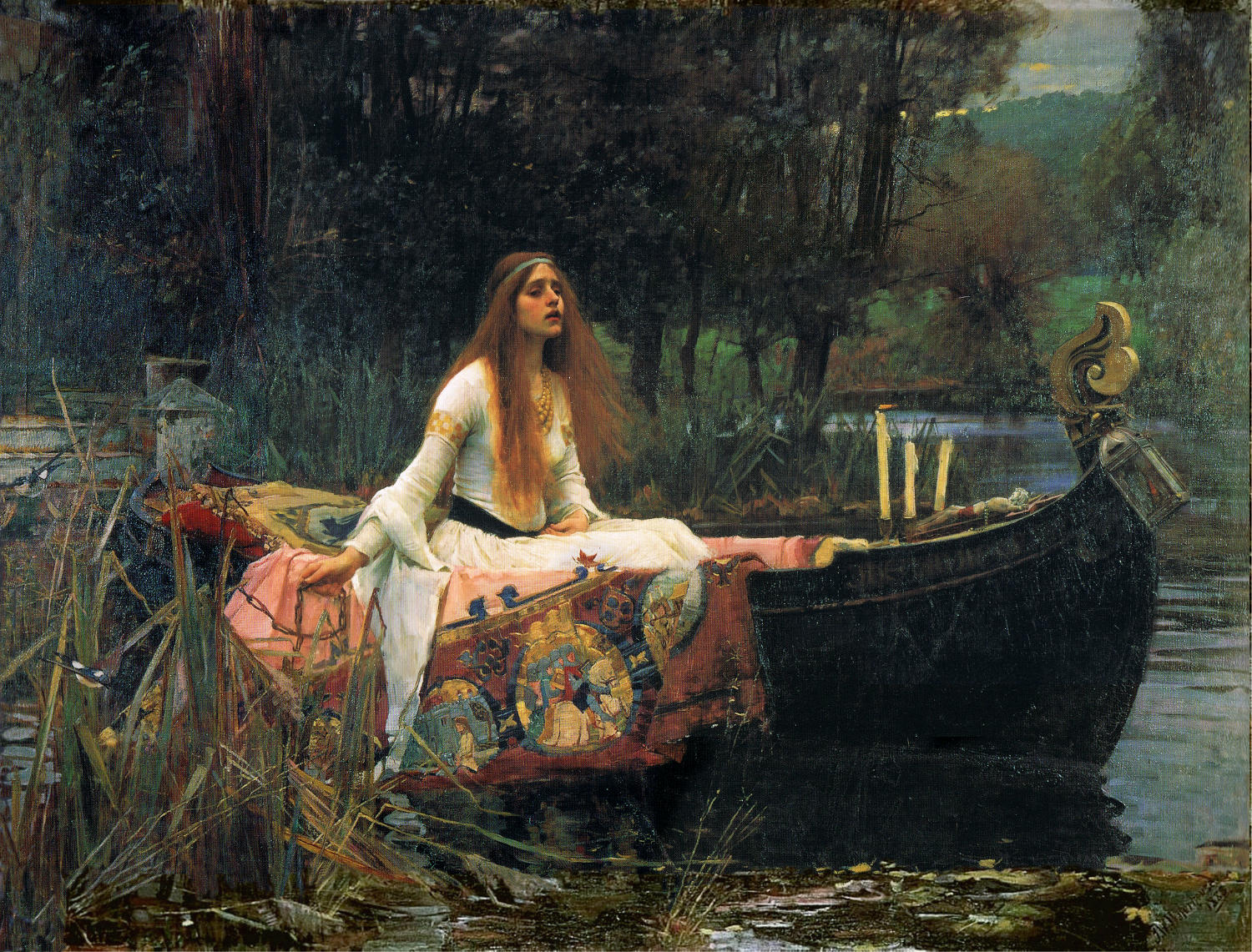
The Cikada Quartet draws a curtain with The Lady of Shalott (1993), which allows us to feel water and glass as if they were the same. Yet the cut of its passage is less like the boat in the famous John William Waterhouse painting…

Waterhouse Lady of Shalott

…and more like the threads in William Holman Hunt’s rendering, spilling from their loom with all the profusion of Christmas yet clipped by cerebral destruction. These are the paths we have taken, and they lead us all to where we began.

WHH Lady of Shalott

And on that note, these pieces, if only by virtue of their programming, exist as part of a phosphorescent whole. They arch their backs along the edge of a crescent moon, feeding off the oscillation of the night. By the humble touch of a fingertip to string and bone, their effect births as much as it dissolves. Though the foliage may change, the branches pulse in synapses of life. There is destiny in these leaves and it quivers with every verdant breath. In this music, sun and moon can touch each other without the slightest hint of destruction, for in that contact they acknowledge having been spun from the same breath.

<< Misha Alperin w/John Surman: First Impression (ECM 1664)
>> Keith Jarrett Trio: Tokyo ’96 (ECM 1666
)

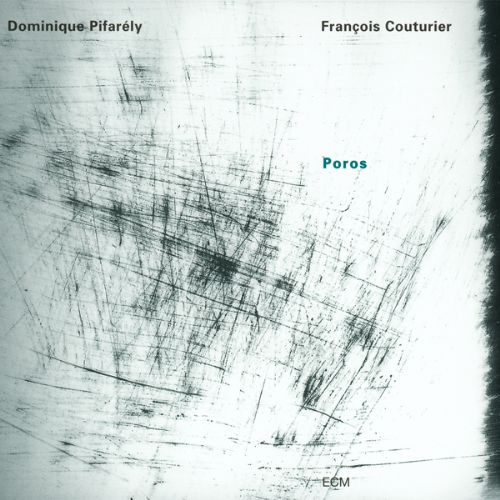
Dominique Pifarély/François Couturier: Poros (ECM 1647)

Poros

Poros

Dominique Pifarély violin
François Couturier piano
Recorded April 1997, Festburgkirche, Frankfurt
Engineer: Markus Heiland
Produced by Manfred Eicher

Dominique Pifarély—violinist and former co-leader of clarinetist Louis Sclavis’s acclaimed Acoustic Quartet—and pianist François Couturier—who since Anouar Brahem’s Khomsa has recorded a string of varied albums for ECM—team up for this unique collaboration. The resulting admixture of folk and modern classical influences finds the duo charting waters that might have otherwise remained glassy and still without the cut of their oars. The image is no mere metaphor, for the album’s title comes from French philosopher Sarah Kofman, who characterizes the concept in precisely these oceanic terms: a path through aquatic expanse that is just as vulnerable to erasure as it is to discovery. Its trailblazing implications rest on a blade of uncertainty, and therein lies their beauty.

One might be hard-pressed, however, to read any of this into the music in the absence of such a setup. The listener is instead confronted with a tantalizing, if restless, chain of events. “Trois images” awakens in a fit of pique, only to realize that the object of its scorn has already fallen away like the house of cards that is any dream. The musicians seem to run frantically trying to rebuild it before it gives up the ghost of reality. In other pieces like “Retours,” “Vertigo,” and the title piece we encounter an even more gnarled grammar. It is a dialectical assemblage of action and thought, of secrecy and exposition. The album is a constellation of references whose stars belie hues of the French modernists, free improvisation, and Bartók, among others. We therefore never rest for too long on one idea. The occasional locks stand out for their beauty, only to drown in a sea of cat cries prancing into blackout. What with the bubbling streams of “Labyrintus” and the grinding gears of “La nuit ravie” there is far more going on below and within, locked away behind a shell of almost ritual design. Pifarély brings the occasional jazzy inflection to the arc of his swing, most notably in Mal Waldron’s “Warm Canto” (from his 1961 album, The Quest), in which he blends tiptoeing pizzicato into explosive resonant chords in a chromatic whirlwind. “Gala” offers a pileated ending.

As on the album’s cover, the duo crosshatches incidentals in a knitted bruise. Pifarély trembles with the motion of a leaf obsessed with the fear of falling. His attention to detail and the precision of his agitations are thus remarkable. Couturier’s intricate astrology calls strangely from below, goading that leaf into decomposition. Only then do we see that the forest has been there all along, tilting, spinning, blurring into a looming mask of greens and browns. Traction is hard to come by, paths invisible. Our mind becomes the score, the stand on which its pages are turned, the sound dying to be released from within it. In thinking we believe, and in believing we know.

<< Giya Kancheli: Trauerfarbenes Land (ECM 1646 NS)
>> Michael Mantler: The School Of Understanding (ECM 1648/49
)

John Surman: Proverbs and Songs (ECM 1639)

Proverbs and Songs

John Surman
Proverbs and Songs

John Surman baritone and soprano saxophones, bass clarinet
John Taylor organ
John Surman
Howard Moody conductor
Recorded live at Salisbury Cathedral, 1 June 1996
Engineer: Mike Walter
Produced by Derek Drescher and Manfred Eicher

Multi-reedist John Surman returns to his chorister roots and lays bare his compositional prowess with this oratorio commissioned by the Salisbury Festival and premiered in June of 1996. The Salisbury Festival Chorus, founded in 1987 by Howard Moody (of whose compositions the Hilliard Ensemble and Trio Mediaeval have been strong proponents) approaches its Old Testament sources as the composer sets them: that is, with panache, a flair for syncopation, and raw intensity. Add to this pianist John Taylor in an unexpected turn on cathedral organ, and you’ve got a recipe for one of Surman’s most intriguing catalogue entries to date.

Despite the forces assembled, it is he who dominates the palette. The “Prelude” immediately places his cantorial baritone amid a wash of organ in a free-flowing Byzantine mode, thereby establishing a rich narrative quality from the start. Our first foray into choral territory comes in the form of “The Sons,” a robust piece that works men’s and women’s voices in an iron forger’s antiphony toward genealogical harmony. At first, the thicketed singing feels more like a shoreline along which reed and pipes crash in pockets of light and bas-relief. Yet as the “The Kings” soon proves, it is capable of the jaunty togetherness at which Surman excels. “Wisdom” has its finger most firmly on this pulse of greater fellowship, for there is a wisdom of Surman’s own in the brushwork of his soprano, which dances for all the world like the world.

This being a live BBC Radio 3 recording that was later mixed down at Oslo’s Rainbow Studio, the quality is rather compressed. Then again, so is the music, the message of which is as dense as its King James texts. The album’s space is left to Taylor, its images to the voices, its method to Surman’s winds. There is a rusticity to the album’s sound that matches the unadulterated emotions of the music. We hear this especially in “Job,” which like its scripture upholds divine reason in the face of hardship. The chanting here is a form of punctuation, the snaking baritone lines its restless grammar.

“No Twilight” continues to unravel the sopranic weave in what amounts to the heart of the album, both in spirit and in execution, and places the voices at the slightest remove to haunting effect. Surman’s streaks of sunlight—here the voices of reason—add depth of field to this vision, so that the whimsical shallows of “Pride” emphasize the frivolity and fragility of their eponym. The truth comes out in the ruminative organ solo that epilogues the piece. “The Proverbs,” with its ominous recitation, is the freest and builds eddies of judgment and self-reflection (note Surman’s brilliant evocation of the dissenter) until the rays of sacrifice blind with “Abraham Arise!”

In light of the stellar body of choral work that ECM has produced, Surman’s forays into the same are not life-changing, if only because they are about unchanging life. True to the lessons at hand, it is more descriptive than it is aesthetic. Its juxtaposition of distinct sonic color schemes is pure Surman, and represents not a detour from but a dive into the kaleidoscope of his discography…and one well worth taking, at that.

<< Dino Saluzzi/Rosamunde Quartett: Kultrum (ECM 1638 NS)
>> Keith Jarrett: La Scala (ECM 1640
)

Trio Mediaeval: A Worcester Ladymass (ECM New Series 2166)

A Worcester Ladymass

Trio Mediaeval
A Worcester Ladymass

Anna Maria Friman voice
Linn Andrea Fuglseth voice
Torunn Østrem Ossum voice
Recorded February 2010, Propstei St. Gerold
Engineer: Peter Laenger
Produced by Manfred Eicher

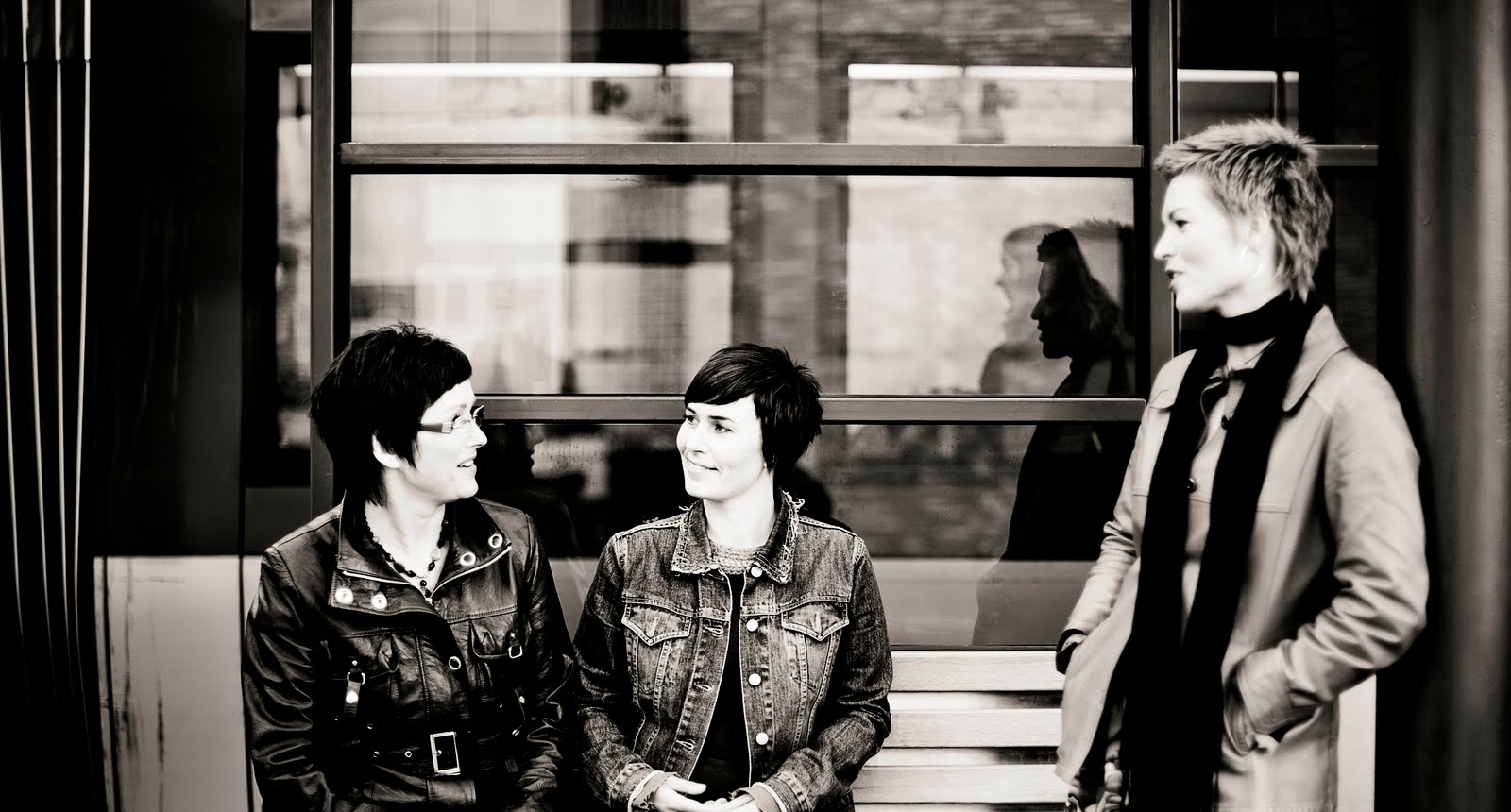
It’s astonishing to reflect on the breadth that Oslo’s Trio Mediaeval has represented in just four albums. From sacred choral music of the 14th and 15th centuries to the more contemporary yet kindred writing of Ivan Moody, Sungji Hong, and Gavin Bryars, not to mention a visceral account of Norwegian folk songs, sopranos Anna Maria Friman, Linn Andrea Fuglseth, and Torunn Østrem Ossum have, since their 1997 debut, been at the forefront of a style of vocal blending that also distinguishes the Hilliard Ensemble, under whom they studied to bring out the finest of their abilities.

TM
(Photo: CF-Wesenberg)

For this, their fifth ECM New Series album, they return to their namesake with a 13th-century Mass to the Virgin Mary, reconstructed from manuscripts found in a Benedictine Abbey in the English Midlands. When looking through the Worcester fragments—which survived Henry VIII’s purging sweep in the 1530s only because they were used to bind other codices—the singers found no Credo, and so commissioned Bryars to rectify their absence by contributing one, along with a Benedicamus Domino. As Friman further notes, today interpretation of music from the middle ages is at the whim of the performer and can be far removed from the religious bonds of its genesis. She and her cohorts embrace this severance wholeheartedly as a path to fresh performance, producing music not meant for concert audiences that breathes with its own flair (if not flare).

From the lilting cadence of the opening Salve sancta parens, it is clear that Trio Mediaeval has sculpted a sound-world all its own. In so gathering their winds together, the singers spin a theme for the ages that is at once entrenched in and severed from time. Most significantly, theirs is a space that listeners can inhabit. As two voices lock into a drone for the plainsong of a third, we can already sense the depth of technical achievement required to produce such seamless atmospheres. It is in this respect that A Worcester Ladymass stands out: in these three throats its technical attentions become, like those of the Hilliards, a fully embodied practice. One notices this in the meticulous pacing throughout. Striking enviable balance between interruption and pause, the gaps between phrases are neither contrived nor jarring. This is especially true of the Munda Maria, a vocal round that cleanses us from the inside. In such cyclical pieces as this and the Gloria, our three angels enact a Derridean sort of reiteration—which is to say, not mere repetition but rather a constant reformation of context. The same holds true of the Bryars Credo, which places a gentle stopper on the clock hands of their art, spinning one hand backward and the other forward. And while Byrars does craft a slightly dissonant edge, his changes are no less unexpected than, say, those in the Grata iuvencula of eight centuries ago.

Another remarkable feature is the fluid extension of syllables in the O sponsa Dei electa and the De supernis sedibus. Without falling into these open-mouthed traps, the Trio draws from them new webs of meaning. The brief addition of organ in the Benedicta / Virgo Dei genitrix and Agnus Dei only intensifies the celestial nature of those connecting lines. All of this makes the shorter pieces stand out in greater relief. Together, they form a sonic rondelle, which is illuminated by the light of the Mass interspersed among them. Much of that light is centered in the holy Sanctus. It serves the text as one might pray: kneeling and alone.

A Worcester Ladymass brings me back to the many early music recordings that enticed me as a novice listener. It finds its essence not in consolidation but through fragmentation, so that each section becomes a votive service unto itself. If the transcendence of the Sponsa rectoris omnium can be said to be representative of the whole, it communicates with an intuitive awareness of temporality that hovers in midair, not quite of heaven or of earth. For ages philosophers have tried to espouse the arbitrariness of the sign, but music such as this proves that the sign is life itself.

(To hear samples from A Worcester Ladymass, click here.)

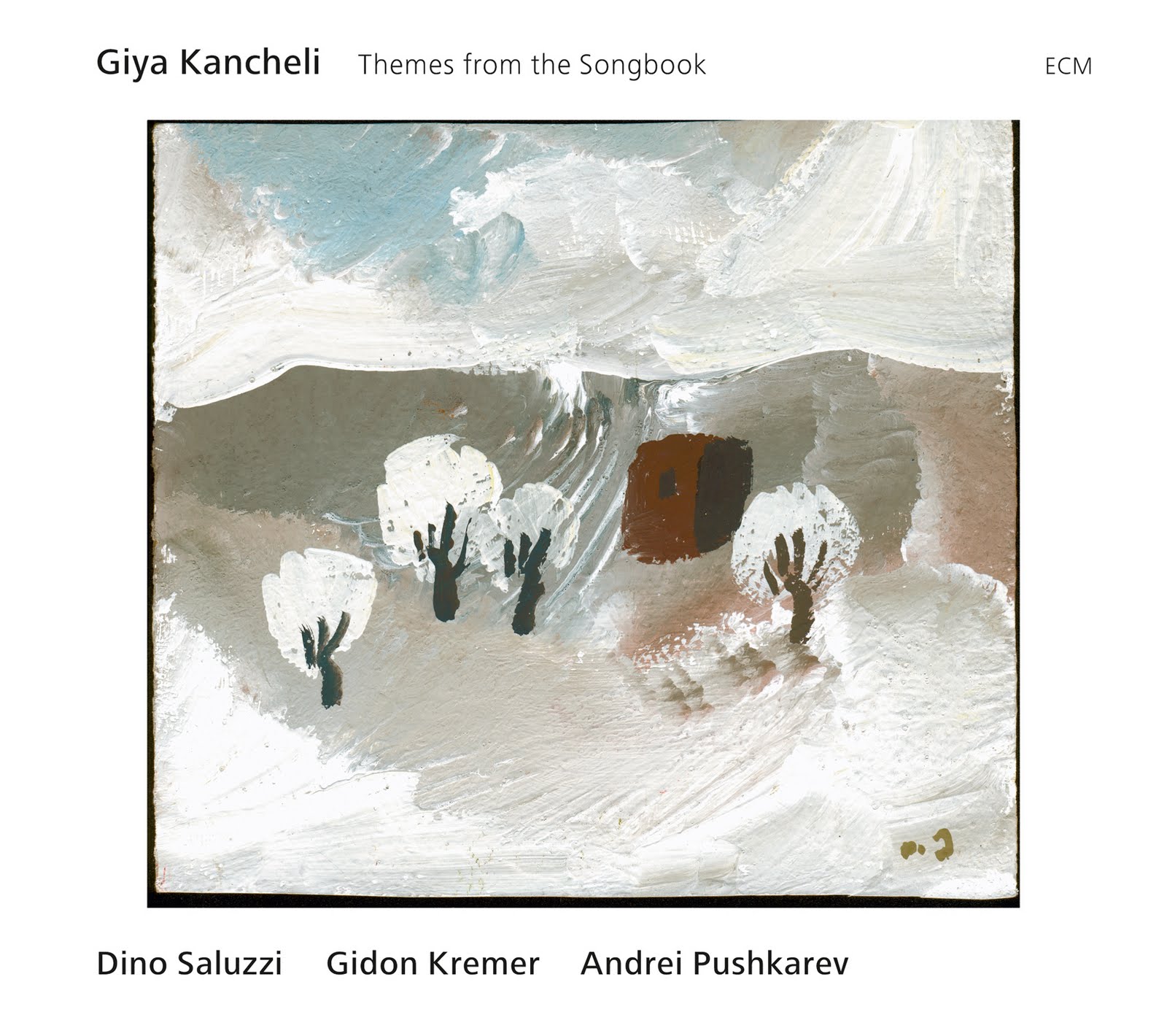
Giya Kancheli: Themes from the Songbook (ECM 2188)

Themes

Giya Kancheli
Themes from the Songbook

Dino Saluzzi bandoneón
Gidon Kremer violin
Andrei Pushkarev vibraphone
Recorded and mixed May 2010 at Rainbow Studio, Oslo
Engineer: Jan Erik Kongshaug
Additional recordings at Latvijas Radio, Riga
Engineer: Varis Kurmins
Final editing, mastering at MSM Studios by Christoph Stickel and Manfred Eicher
Produced by Manfred Eicher

Giya Kancheli’s first album for ECM’s flagship label is a major event. The Georgian composer will be more than familiar to New Series aficionados, who’ve had ample opportunity to acquaint themselves with his uncompromising sonorities, rich dynamic spreads, and recurring themes. Yet few of us will ever have known that he also developed a sideline—as did other (former) Soviet Bloc composers like Dmitri Shostakovich and Arvo Pärt, though none so prolifically—as scorer for theatre and cinema. One can see hear album as companion to the 2009 publication of Kancheli’s Simple Music for Piano: 33 Miniatures for Stage and Screen. The subtitle betrays little depth of his subsidy, which exceeds 100 unique productions. Although Kancheli humbly says in his preface of these songs, “Time will tell if they can survive outside their original context,” it is clear from this album that they already have. Their realization brings together an intimate cast, with producer Manfred Eicher as director. Bandoneón master Dino Saluzzi, violinist Gidon Kremer, and vibraphonist Andrei Pushkarev indeed move as if from behind a curtain, if not in front of a lens, bringing their sharp wit and live “editing” skills to an immediate yet highly polished sound-world. The inclusion of Pushkarev was a masterstroke, and his willingness to explore these themes is reflected in his collaborations with Saluzzi and Kremer in kind. Having recorded Themes as a surprise 75th birthday gift at Eicher’s suggestion, they bring lovingness to every motive and thus emphasize the preservation that flows by and within the art they share. And on that note, we have to thank, as does Kancheli’s son Sandro in his heartfelt liner notes, ECM for championing this music and its aftereffects, as might a cartographer love the land.

“Herio Bichebo” from Earth, This Is Your Son (1980, dir. Revaz Chkheidze) establishes a defining combination of vibraphone and bandoneón. The feeling is inevitably watery, its passage a boat adrift toward a mountain rife with ancestral longings. This atmosphere also sets the tone for the program’s careful use of pauses and suspensions. There is a forlorn quality, if not a sweet tenderness, to this introduction, wherein lurks the elegiac wave of Bear’s Kiss (2002, dir. Sergei Bodrov) and the grinding lows of When Almonds Blossomed (1972, dir. Lana Gogoberidze). Other cinematic highlights include the themes from Don Quixote (1988, dir. Chkheidze), which features an overdubbed Kremer and at once expresses the story’s inherent sadness and innocence, and the nostalgic disclosure of Mimino (1977, dir. Danelia and Gadriadze), for which Kremer joins Pushkarev. The latter draws out some of the deepest emotion in the main theme from Kin-Dza-Dza (1986, dir. Georgi Danelia and Revaz Gadriadze), shuffling characteristically Kanchelian bursts of exaltation into somber tiers.

All seven plays represented on Themes rose out of collaboration with renowned Georgian theatre director Robert Sturua, whose musicality marries well with Kancheli’s dramaturgy. The main theme from The Crucible (1965, play by Arthur Miller) marks Kremer’s first album entrance, his raspy bowing complementing the click of bandoneón keys to delectable effect. Saluzzi and Pushkarev reprise their chemistry in a carefree rendition of The Role for a Beginner (1979, play by Tamaz Chiladze), I daresay reaching subtle genius in As You Like It (1978). Memorable enough to be a jazz standard, it is a ballad that looks backward and forward as it spins in place to the rhythm of its heartbeat. And in fact, Shakespeare provides some of the deepest inspiration of the program, as in Saluzzi’s shadowy Hamlet (1992) and Pushkarev’s dynamic Twelfth Night (2001), which illustrates its story in flashes of light.

Jansug Khakidze, the late singer/conductor who was one of the composer’s closest friends, leads the Tbilisi Symphony Orchestra in an archival encore. His “Herio Bichebo,” warmly engineered by Mikhail Kilosanidze, is so iconic that many believed him to have written it. Listening to it here, one can understand why. Jan Garbarek fans will recognize his inimitable voice as the same behind “The Moon Over Mtatsminda” on 1998’s RITES.

Interestingly enough, Kancheli’s pieces for the stage sound the most cinematic, and vice versa. Together they comprise a daydream paginated and bound for travel. It is sure to please Kancheli veterans and newcomers alike, and will, I hope, inspire the latter to explore further.

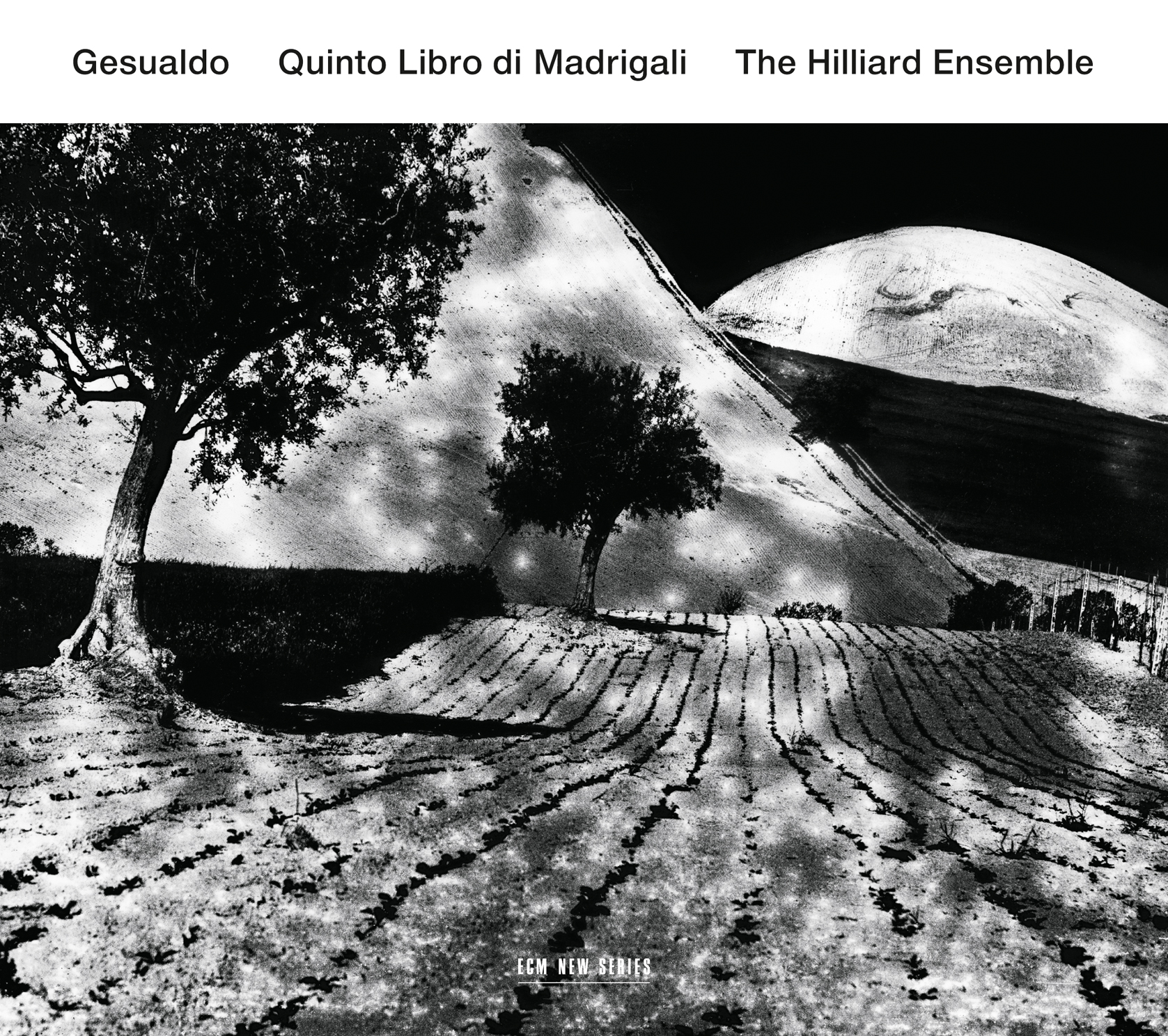
Gesualdo: Quinto Libro di Madrigali (ECM New Series 2175)

Gesualdo Madrigali

Carlo Gesualdo
Quinto Libro di Madrigali

The Hilliard Ensemble
Monika Mauch soprano
David James countertenor
David Gould countertenor
Rogers Covey-Crump tenor
Steven Harrold tenor
Gordon Jones baritone
Recorded November 2009 at Propstei St. Gerold
Engineer: Peter Laenger
Executive producer: Manfred Eicher

If my grief pains you,
only you, my soul,
can turn it all to joy.

On first hearing madrigals by Carlo Gesualdo (1566-1613), English writer Aldous Huxley proclaimed, “These voices—they’re a kind of bridge back to the human world.” In the mouths of the Hilliard Ensemble they certainly are. Baritone Gordon Jones cites the Prince of Venosa as a touchstone of the ensemble’s performing repertoire. And so, it is with practiced appreciation that they return to it as they take on his Fifth Book of Madrigals of 1611 in its entirety. Gesualdo finished his Sixth and final Book (he would leave fragments of an unfinished Seventh) in the same year, penning his first in 1594. Of the Fifth, Jones says, “The whole collection constitutes a gallery of dramatically lit portraits of human emotions with a heavy emphasis on the extremes of joy and despair.” On this note, the addition of soprano Monika Mauch and countertenor David Gould speaks to the range and color required of those extremes, and in this regard the ensemble emotes splendidly.

One can hardly discuss this music without mentioning its bold, mannerist dissonances. Written as it was by a man who had his wife and her lover murdered when he caught them in flagrante delicto and who subsequently receded into his own psycho-sonic cage, this can be no surprise. Even by today’s standards it rattles us. Yet to characterize Gesualdo’s output by so reductive a summation (dissonance, for example, was part and parcel of the madrigal idiom) would be to ignore the textually sensitive traditions of harmonic expansion upon which he built it. Despite being professedly “ahead of his time,” he was no enigma to his aristocratic contemporaries, being a particular favorite of Queen Christina of Sweden. For every gritty texture he loosed, a smoother one was in attendance, and we do well to remember the equal weight in both pans of the scale.

We have the Hilliard/ECM partnership to thank for already having done the composer justice with a sublime and direct rendition of his Tenebrae Responsories for the Christian Holy Week. Here that same trueness to the melodic line remains, and is so magnified by the bareness of its voices, by which the tortuousness we’ve come to expect lives by a more fluid name. If it lives anywhere, it is in the strange tenderness of Gioite voi col canto, which opens the collection with an autobiographical tinge:

Rejoice in song,
while I weep and sigh,
while tears choke my breath.
Alas, wretched heart of mine,
born for grief alone;
weep, but weep so much
that my mistress may be vanquished
by your tears, and then revert to seeing
my grief and pains in her.

The shifting tectonics of tenor lines and dulcet edge of Mauch’s gilding in the words’ weeping evocation is testament both to Gesualdo’s knack for comingling and to the sensitivity of the singers assembled at Propstei St. Gerold, where these works were so lovingly recorded. The charged weight of Itene, o miei sospiri rekindles these considerations, mixing “bitter weeping” with “loving song” in particularly adroit handling from the Hilliards. O dolorosa gioia falls into the same category of “painful joy,” a core theme of Book Five that finds further traction in Se vi duol il mio duolo. In both of these, the pathos of the text comes through tactfully. Death is another trope, as inescapable in the music as it is in us. From the heartfelt appeal of Occhi del mio cor vita (“Eyes, life of my heart”) and the lovesick resignation of Languisce al fin (“He who parts from his life languishes at last”) to the lachrymose accents of O tenebroso giorno (“O darkest day”), the music is practically dripping with it. Yet not all is so morose in this landscape, for there are also the flora of Felicissimo sonno, a heartfelt appeal to dreams as living threads to a love that cannot flourish in waking, and the intoxications of Correte, amanti, a prova (“Vie, lovers, in speed”) to soothe our weary countenances, to say nothing of the optimism that bids us a fond farewell in T’amo, mia vita (“I love you, my life”).

A small handful of these 21 madrigals stands out. The snaking turns of Mercè grido piangendo (“Have pity on me! I cry weeping”) showcase the coolness of the Hilliard’s peerless blend to the utmost, while the prototypically Gesualdan Tu m’uccidi, o crudele (“You are killing me, o cruel woman”) pulls out all the stops in its affective toolkit, achieving moments of sublime light. Finally, Se tu fuggi, io non resto, with its fluttering vowels and tight syncopations breathes with expert realization, even as its narrative voice bids us leave on the wings of cruelty.

Due to the subject matter and sheer variety of invention, and despite the pitch-perfect performances, this is no mere soundtrack for an idle afternoon. It asks us to steep in its brew until we begin to take on a bit of its flavor. Those who find beauty in the Tenebrae may encounter discomfort in these secular woes. But if this discomfort has anything to teach us, it is that the act of living depends on that very thing.