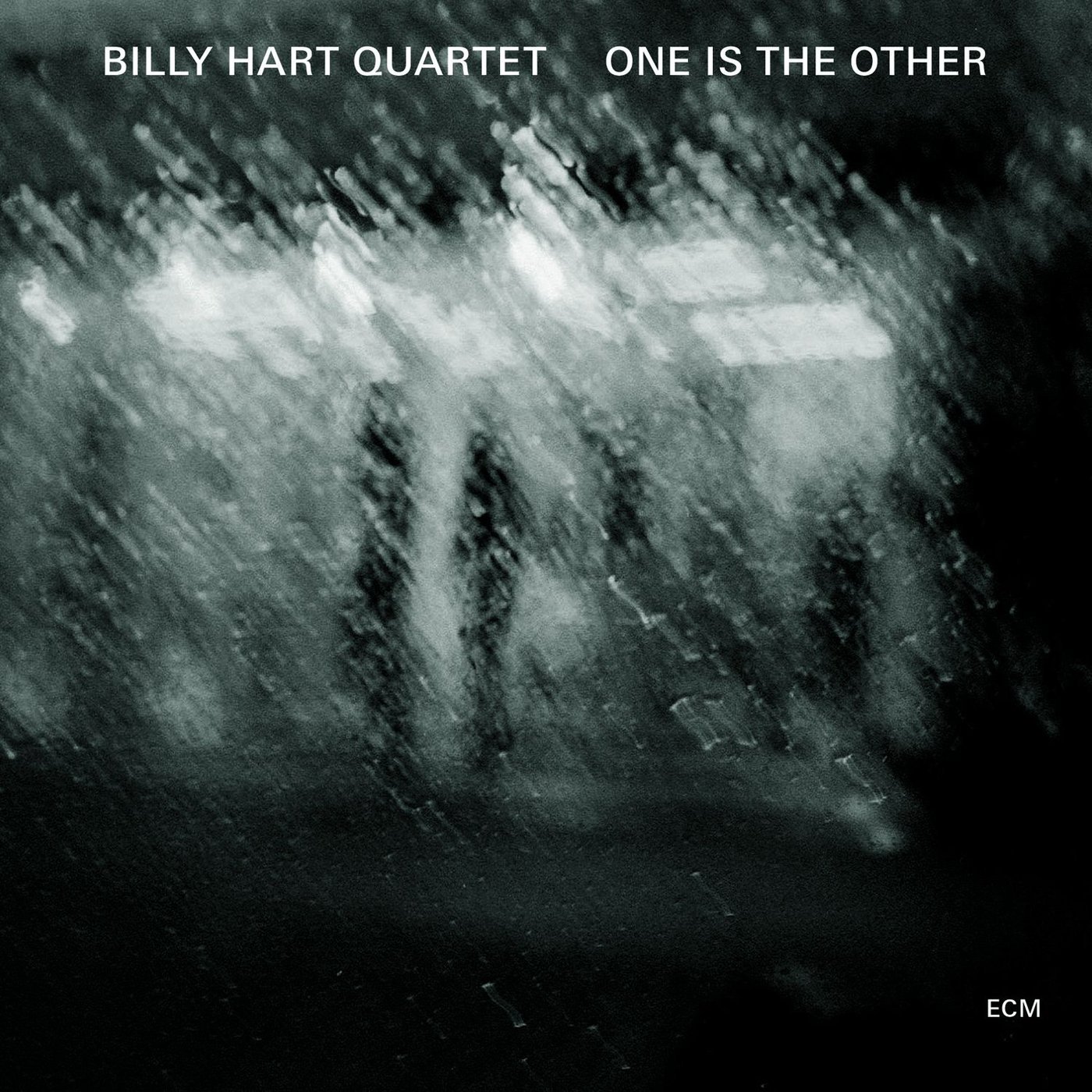
Billy Hart Quartet: One Is The Other (ECM 2335)

One Is The Other

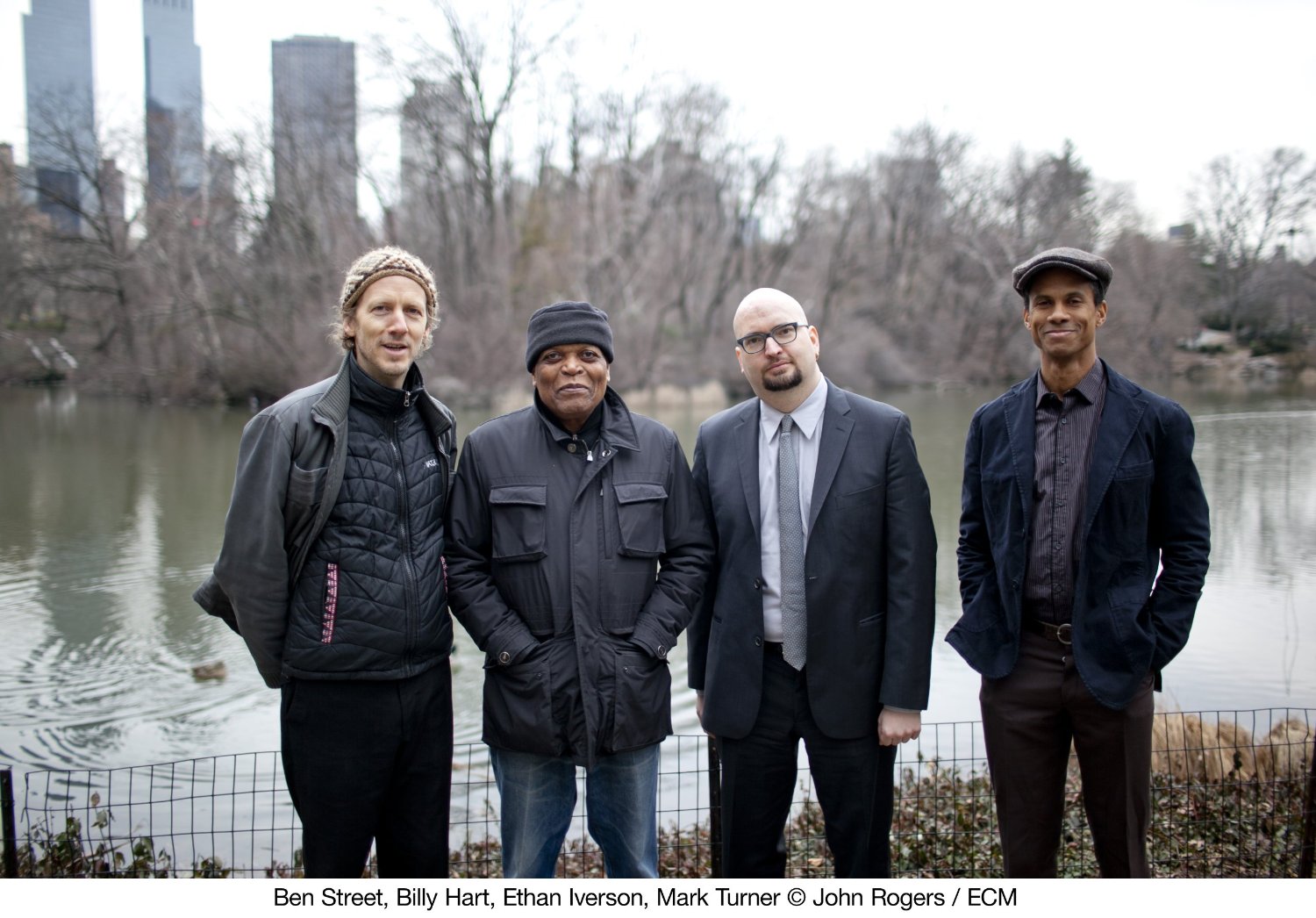
Mark Turner tenor saxophone
Ethan Iverson piano
Ben Street double bass
Billy Hart drums
Recorded April/May 2013 at Avatar Studios, New York
Engineer: James A. Farber
Assistant: Bob Mallory
Produced by Manfred Eicher

It is like jigsaw pieces on a mission that tenorist Mark Turner, pianist Ethan Iverson, and bassist Ben Street have fallen into place around master drummer Billy Hart, with whom they return for a second ECM round. One Is The Other is therefore a manifold title for the achievements of this unique quartet. Not only does it imply something shared among the musicians, but also emphasizes the ways in which their individual voices interlock. With freshness of voices and depth of spirits, they ply an ancient trade of intergenerational communication. Teaching and learning occur in both directions. This sense of equality pervades every exchange.

BHQ

Turner contributes two tunes, including the flowering opener, “Lennie Groove,” in which so much of what happens is indicative of what follows. A geometric intro from Iverson gives way to the rhythm section’s smooth entrance and the composer’s own tenor arcing into focus. Solos are tasteful, keenly attentive to Hart’s timing and, above all, sincere—not a shade of pretension within earshot. The gorgeous “Sonnet for Stevie,” which reappears on Turner’s leader date, Lathe of Heaven, is even more intimate here than it is there. Anchored by soft two-part harmonies from Street and Hart’s glittering cymbals, pianist and reedman stay a course that cares little for arbitrary destinations. Iverson counters with a deuce of his own, of which “Big Trees” ends the album in style. The textural brilliance of Hart’s intro betrays little of the slippery groove that unfurls in its wake. Especially noteworthy are Turner and Iverson’s solo, which despite being their most abstract of the set are also their most grounded. Hart also blushes us into “Maraschino,” an endearing track made all the more so for its vulnerability. One can hear every process at work. This is no small feat.

Hart offers up a triangle of originals. Beginning with “Teule’s Redemption,” a groovier affair with turn-on-a-dime interaction between him and Turner, pushing on through the cymbal-splashed energies of “Amethyst,” and ending in the urban vibe of “Yard,” these tunes comprise a mini album in and of themselves and highlight the consummate skills of everyone involved. Top it all off with the cherry of “Some Enchanted Evening” (from the Rodgers and Hammerstein musical South Pacific), and you’ve got yourself quite the confection to savor.

People often talk of artists being in their “prime.” Hart, however, proves that it’s as much a matter of revealing as knowing yourself. Indeed, here is a peacock with plumage fully fanned and ready to play.

(To hear samples of One Is The Other, click here.)

Winstone/Gesing/Venier: Dance Without Answer (ECM 2333)

Dance Without Answer

Dance Without Answer

Norma Winstone voice
Klaus Gesing bass clarinet, soprano saxophone
Glauco Venier piano
Recorded December 2012, Auditorio Radiotelevisione svizzera, Lugano
Engineer: Stefano Amerio
Produced by Manfred Eicher

When a night black as coal
Placed a cloud in her soul.
Still she found the wings to fly
To the higher places…

When people compare something to a fine wine, they mean to say that its flavor deepens with age. But what of the color? It, too, changes, taking on new hues as light strikes the residuals of its enjoyment. This is more like what Winstone’s voice can do to her listener, who is but the glass to her vintage and through the prism of her words takes on something of their atmosphere. Indeed, here is an album that begs a fireplace, an upturned book, and shelter from a snowstorm.

Winstone has rarely sounded better than in the company of reedist Klaus Gesing and pianist Glauco Venier. On Dance Without Answer, she joins them for a third time on ECM. There has always been something therapeutic about Winstone’s music. It always seems to deal with coping, whether with joy or sadness, as expressed in the opening title track. The figure of Venier’s piano casts a long-drawn shadow like the body of Gesing’s clarinet. Their instrumental foundation bleeds through transitions from day to night, where truths and lies of love coexist as reminders of what might never be.

In spite of a thematic consistency, the moods of this trio are as varied as the linguistic colors of the titles. Winstone and her bandmates take the listener through the stark histrionics of “Cucurrucucu Paloma” (a portrait of abandonment) and the folkish “Gust Da Essi Viva” (filigreed by Gesing’s soprano) to the earthier “A Tor A Tor” (centered by a didgeridoo-like bass clarinet) and the evocative “Slow Fox” without lapsing into a single unnecessary detour. Yet Winstone shines brightest in the darkest places. In a wordless, raga-like style, she brings hope to “High Places” and follows what would seem to be the same female protagonist through the experiential dramas of “A Breath Away,” a remarkable lullaby that sets Winstone’s lyrics to a tune by Ralph Towner. And yet, while the poignant “It Might Be You” may seem to confirm its elusive presence—love in this album is an asymptote, so that even here she encounters the realization but not consummation of it.

Rounding out the set is a bouquet plucked from the popular canon. In Nick Drake’s “Time Of No Reply” Winstone mediates between realms of light and loneliness, while from Joe Raposo’s timeworn “Bein’ Green” she teases out visceral tenderness. Regardless of the words, she puts her all into each color change. But before Fred Neil’s “Everybody’s Talkin’” closes the album with a final survey of the palette, we also reckon with Madonna in the panoramic “Live To Tell” and Tom Waits in the bluesier “San Diego Serenade,” of which one line says it all: Never heard the melody ’til I needed the song. Prophetic words for those who never needed these songs until they heard the melodies, and a clue to the album’s name: the dance does have an answer, and it is the music itself.

(To hear samples of Dance Without Answer, click here.)

Ralph Alessi: Baida (ECM 2321)

Baida

Ralph Alessi
Baida

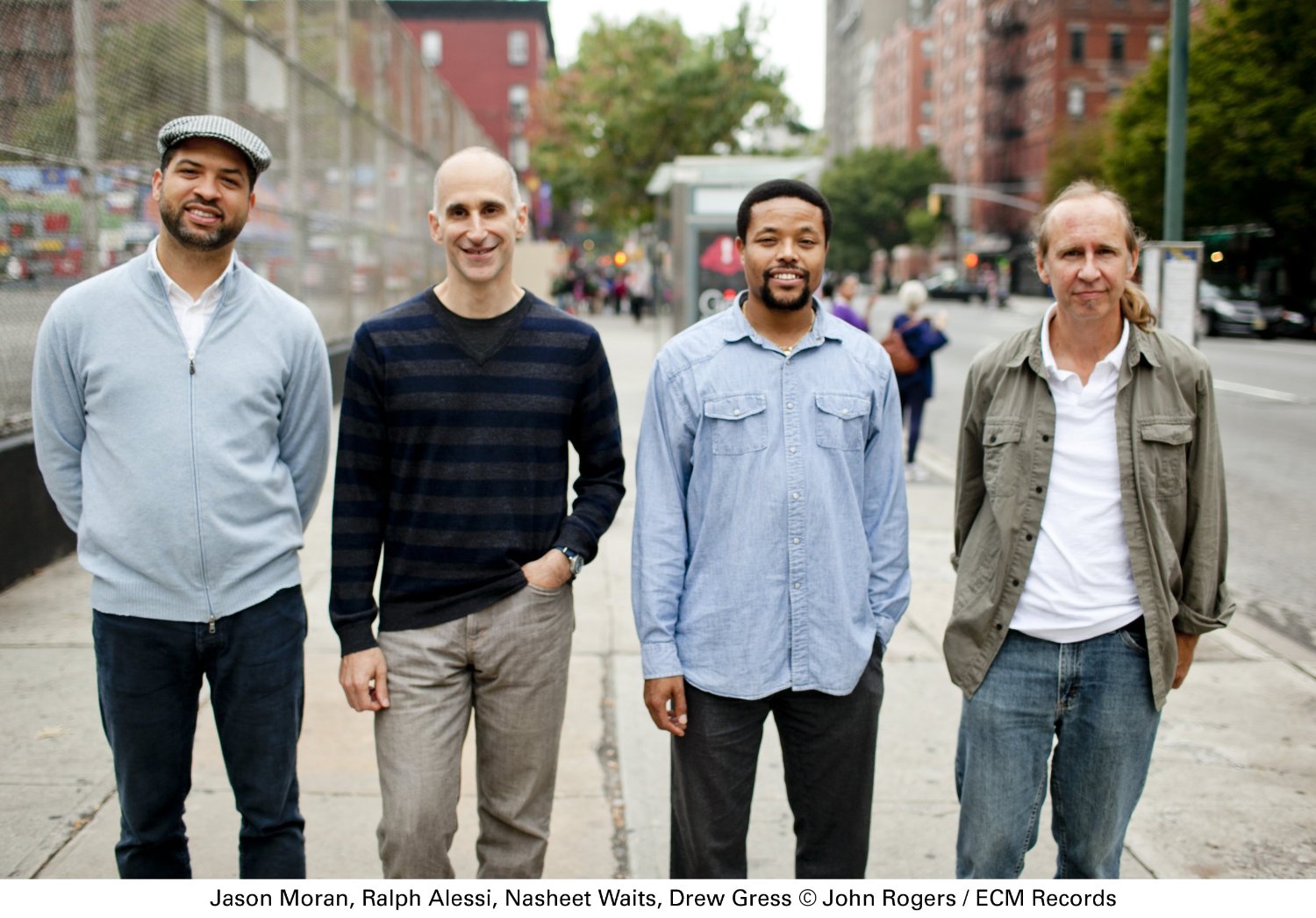
Ralph Alessi trumpet
Jason Moran piano
Drew Gress double-bass
Nasheet Waits drums
Recorded October 2012 at Avatar Studios, New York
Engineer: James A. Farber
Assistant: Charlie Kramsky
Produced by Manfred Eicher

Before making his ECM leader debut with Baida, trumpeter Ralph Alessi had only appeared once for the label on 1997’s underappreciated Circa, with pianist Michael Cain and saxophonist Peter Epstein. More importantly, he had already chiseled a fine reputation for himself on the New York jazz scene as an artist of limitless versatility. At last, those not privy to club appearances can experience his craft wherever exist the means to play an album. This all-Alessi program takes flight with pianist Jason Moran, bassist Drew Gress, and, in an ECM debut of his own, drummer Nasheet Waits all on board—only here we skip the safety announcement and go straight to the comfort of cruising altitude.

Baida Quartet

The title track opens the album with the rubato, unfastened introduction that has become a defining characteristic of so many ECM jazz sessions. Alessi and Waits walk the aisles with a sputtering yet precise sort of tracery before Gress and Moran sing of destinations not yet reached until the song’s reprise, muted upon landing, gives the all clear. Titles mark each leg of the journey with divergent associations. While “Baida” proudly fronts Alessi’s daughter’s word for “blanket,” “Maria Lydia” names the one woman who would have known his own babble: his mother, gone from this world shortly after the album’s completion. In such beautifully chromatic tunes as this, trumpet aficionados will hardly be able to deny an Enrico Rava influence at work. Neither in the swinging “Chuck Barris,” in which Alessi’s bold finesse, hiply relayed over rolling snare, pays further dues to the Italian master. Here is where the melodic turbulence really sets in as our craft reaches higher velocity speeds, especially in Moran’s solo, a flailing counterpart to Waits’s textured own.

As if to belabor the analogy, “In-Flight Entertainment” brings out the band’s most clean-shaven profile and puts Gress in the cockpit. Nearby selections are no less entertaining. The tongue-in-cheek “Gobble Goblins” opens with instrumental laughter from Alessi and Moran, both of whom flex their copiloting skills and, in the balladic “Sanity,” even go blindfolded for a spell. Other slow jams include “Throwing Like A Girl” and “I Go, You Go.” In these Alessi takes a nuanced approach, his every note rippling outward through the backing trio in alluring distortions. But it’s in the subtle under-bite of “Shank” and the rolling thunder of “11/1/10” that the crew puts it all together before making its final descent.

Alessi and his band never stray too far off course, flirtation just enough with danger to keep us on our toes while balancing maneuvers as would a skilled chef his flavors. Indeed, in an industry flooded with players who are all sugar, he is that rare combination of savory and sweet that encourages repeat business. Let’s hope that formula holds.

(To hear samples of Baida, click here.)

Charles Lloyd: Quartets (ECM 2316-20)

Charles Lloyd Quartets

Charles Lloyd
Quartets

Not only is saxophonist Charles Lloyd a gentle warrior; he is a fierce dancer. By “fierce” I mean not in the manner of a predator but of sunlight: which is to say, all the more life-giving for his quiet grace. With Lloyd, at the time of this writing, in his 77th year, the critics will tell you he has never sounded better. But the simple fact is: he never sounded worse, either, as attested by the refined levels of meditation achieved on the five albums collected for this essential Old & New Masters boxed set from ECM. Indeed, meditation is an unavoidable flower in the field of his biography, as he famously walked away from the stage in the early 1970s, only to return to the horn a decade later with formidable selflessness. This period also saw his association with producer Manfred Eicher take first flight. Listening to these albums as a set, however, one realizes that his comeback was not the most important celebration. His truest essence as a musician remained cupped like a pocket of air in a lotus in which was contained a universe of song. And so, to assert that Lloyd was at last going forward is to do his spirit a disservice. If anything, he was going inward.
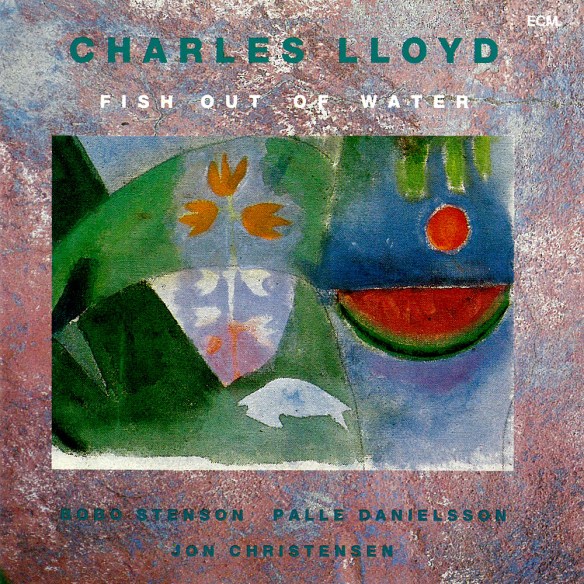
Fish Out Of Water

Fish Out Of Water (ECM 1398)

Charles Lloyd tenor saxophone, flute
Bobo Stenson piano
Palle Danielsson bass
Jon Christensen drums
Recorded July 1989 at Rainbow Studio, Oslo
Engineer: Jan Erik Kongshaug
Produced by Manfred Eicher

As Thomas Conrad notes of Lloyd in his accompanying reflections, “With eight notes, he can put you in the presence of his immortal soul.” And from the opening breaths of this ECM debut, the truth of Conrad’s statement becomes crystal. Here Lloyd is joined by pianist Bobo Stenson, with whom he would forge a significant working relationship, and Keith Jarrett’s European rhythm section: bassist Palle Danielsson and drummer Jon Christensen. Lloyd’s signature tenor, smoky of flavor and viscous of texture, floats through Stenson’s smooth action at the keys in the nine-minute title cut, which opens a program of seven originals. The delicacy of these two melody makers is the album’s bread and butter, as intensely apparent between notes as in them. Stenson draws freshly honed memories from Lloyd’s comforts, while the reedman takes pause and feeds back into the loop with darker nuances. The unwrapping of lyrical presents continues under the Christmas tree of “Mirror,” throughout which brushed drums and a resonant bass provide a landscape of fulcrums on which Lloyd balances smooth hits and fluttering asides alike, only to diversify the climate with flute in the contemplative “Haghia Sophia.” Again, from this Stenson manages to emote so complementarily that we almost get lost in the swirling oceanic foam from which arises a tenored Aphrodite. “The Dirge” is another drop into a limpid pool of soul that is reason enough to ingest this album’s nourishing vibes.

Two grooves await us in “Bharati” and “Eyes Of Love.” The former is seek, refined, and oh so moving. Lloyd speaks mostly in half-whispers, never louder than a private declaration, while the latter unfolds some of his softest playing on record. A buoyant yet introspective solo from Danielsson trips us into the rejoinder, which keeps the cool, blue fires stoked well into the flute-driven “Tellaro.” Lloyd releases Stenson adrift as if a flower upon a river, swimming as a fish beneath him into a forest where we cannot follow.

Mythology would like paint Lloyd’s hiatus prior to this album as a period of soul searching, during which he is said to have nearly abandoned music, only to return refreshed and pouring his all into the art form that so defines him (if not the other way around). And yet we clearly see that in the recordings since his soul searching has never stopped, for it continues to inhabit every breath that passes his reed. Even when Lloyd isn’t playing, there always seems to be a thin line connecting every stretch of silence. In this respect, we find here a spiritual level of jazz from artists all the more prodigious for their humility. In spite of their incendiary potential, they choose to cook rather than flare, each bringing his sensitivity to bear upon these insightful forays into melody and surrender. Tender to the utmost.

<< Shankar: nobody told me (ECM 1397)
>> Meredith Monk: Book of Days (ECM 1399 NS)

… . …
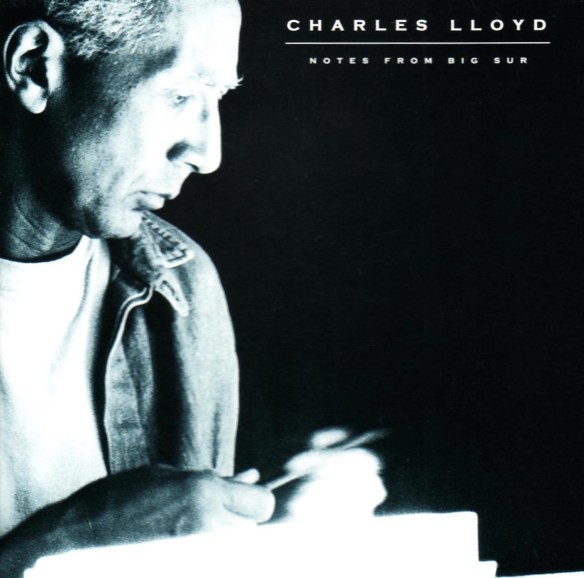
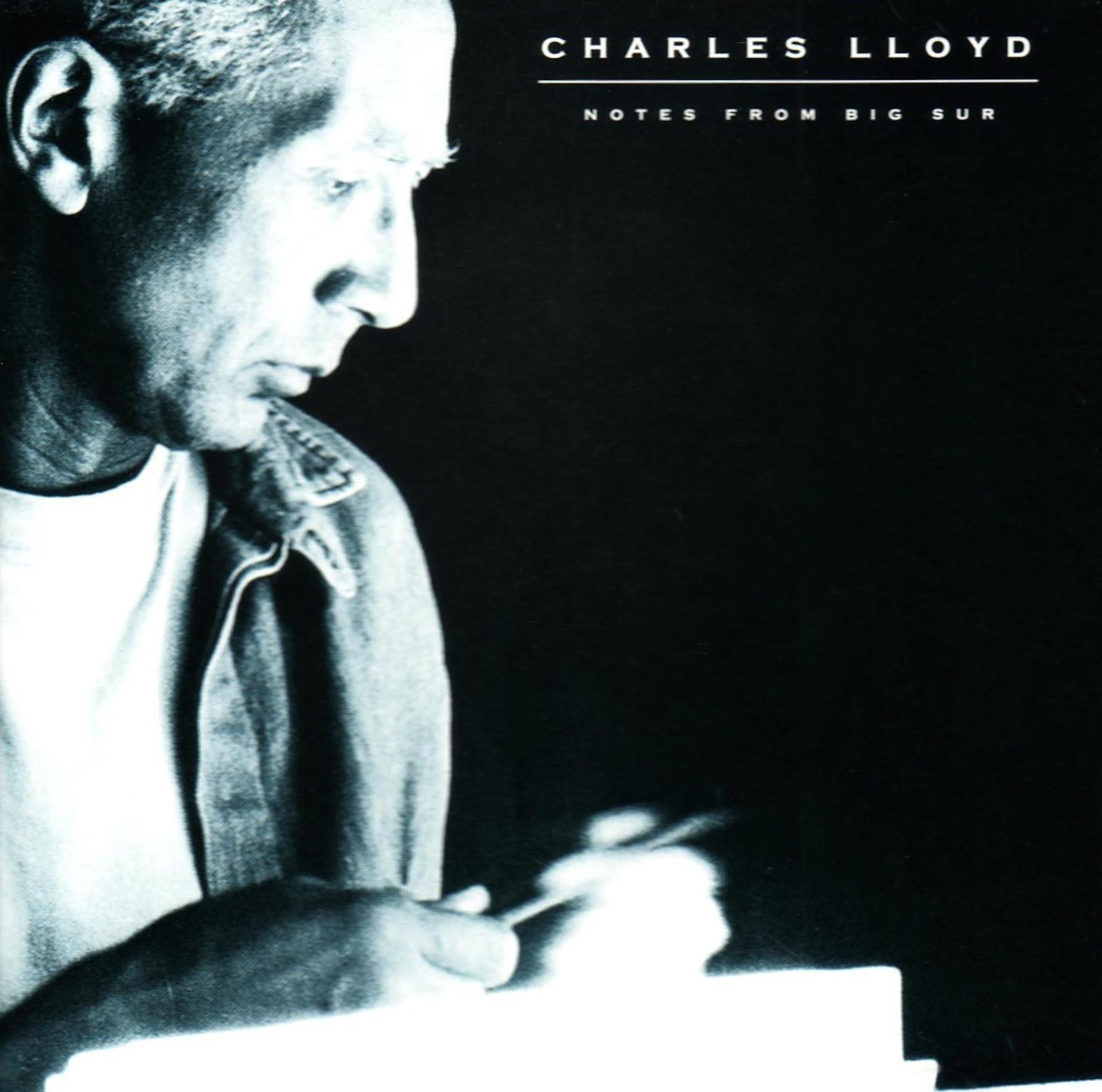
Notes From Big Sur

Notes From Big Sur (ECM 1465)

Charles Lloyd tenor saxophone
Bobo Stenson piano
Anders Jormin bass
Ralph Peterson drums
Recorded November 1991 at Rainbow Studio, Oslo
Engineer: Jan Erik Kongshaug
Produced by Manfred Eicher

When listening to these albums in chronological order, one’s appreciation for Lloyd’s notecraft can only increase. On Notes From Big Sur he finds himself in fine company: Bobo Stenson remains at the keys, but this time bassist Anders Jormin and drummer Ralph Peterson (in his only ECM appearance) take up a coveted rhythmic role. The feeling of afterlife offered in the opener, “Requiem,” is immeasurable. Arcing into a gorgeous cradle of sound, set off by Lloyd’s unerring climb into tuneful bliss, this is one of his most profound statements on record. Smooth-as-caramel pianism widens the doors into a vista of reflection, even as Lloyd pins a tail to this comet with a ribbon of his own. Were the band to stop here, the album would already be a masterpiece.

Gratefully they press on into the more free-flowing “Sister,” in which Lloyd takes occasional punctuations in the backing as prompts for chromatic essays. Stenson has his moments in the sun, as in his spiky solo for “Monk In Paris,” cascading runs in “Takur,” and buoyant commentary of “Sam Song.” Lloyd’s pointillism comes to the fore in the latter for a formidable rendering. Jormin, too, makes a notable statement here. “When Miss Jessye Sings” (dedicated, one imagines, to Norman) is another achingly soulful track, with enough dynamics to spread over the entire album’s surface and then some. The glue that binds comes in “Pilgrimage To The Mountain.” This two-part prayer draws us into the session’s core intentions. Peterson has just the right touch in both. He traces that same mountain with footprints, leaving Lloyd to paint a sunset, and us to reckon with the secrets of its pyramidal shadow.

<< David Darling: Cello (ECM 1464)
>> Krakatau: Volition (ECM 1466)

… . …
The Call

The Call (ECM 1522; also included as part of ECM’s Touchstones series)

Charles Lloyd tenor saxophone
Bobo Stenson piano
Anders Jormin bass
Billy Hart drums
Recorded July 1993 at Rainbow Studio, Oslo
Engineer: Jan Erik Kongshaug
Produced by Manfred Eicher

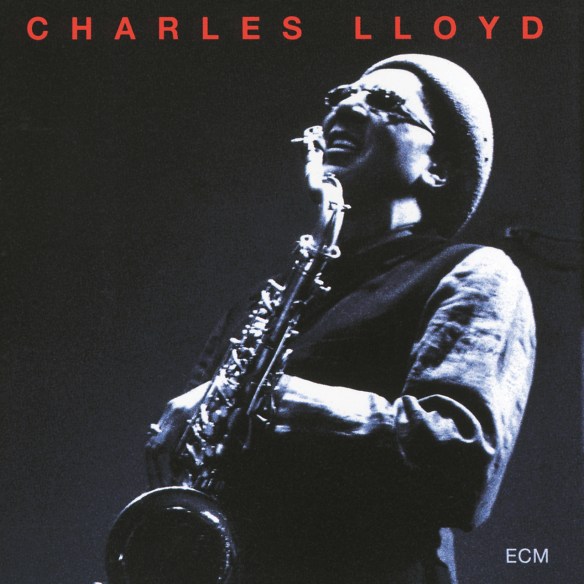
With The Call, Lloyd hit his ECM stride. Having pianist Bobo Stenson, bassist Anders Jormin, and drummer Billy Hart didn’t hurt. “It’s a full-service orchestra of love,” Lloyd once said in reference to this lineup. I decline to come up with a more fitting slogan, for the tender ode of “Nocturne” that opens this set of nine originals is bursting with it—that love which bears the weight of dreams on its shoulders and sews itself into the quilt of history. Stenson rings true, here and throughout, blending us into “Song” with a mélange of pointillism and legato undercurrents as Jormin’s buoyant solo carries us deeper into this moonlit cave. That Lloyd only joins in three quarters of the way through a nearly 13-minute odyssey reveals but one facet of his humility. His expression uncurls like the fist of a pacifist in “Dwija” while holding in its relief the possibility of defense. “Glimpse” has its own story to tell, painting a lakeside soiree under hanging lights, each wrapped in fragile paper and lending purpose to a slow dance one wishes might never end. Such bittersweet softness is the album’s emotional eigentone, fashioning a double-edged sword between the urgency of “Imke” and the blissful “Amarma,” the thoughtfulness of which shows Lloyd at his barest. Our leader is also irresistible in the celebratory “Figure In Blue, Memories Of Duke” (note also Stenson’s complementary touches) and the audio kiss of “The Blessing,” but saves the best for last with “Brother On The Rooftop,” an ululating duet with drums that might very well have planted the seed for his duo album with Billy Higgins, Which Way is East.

Lloyd knows not only how to tell a story, as any great jazz musician should, but also binds it in soft leather and tools it into a one-of-a-kind symmetry. He needn’t even inscribe it, for his spirit is in the details. Never one afraid to think out loud, he lets us in on everything.

<< Demenga/Demenga: 12 Hommages A Paul Sacher (ECM 1520/21 NS)
>> Federico Mompou: Música Callada (ECM 1523 NS)

… . …

All My Relations

All My Relations (ECM 1557)
Charles Lloyd saxophone, flute, chinese oboe
Bobo Stenson piano
Anders Jormin double-bass
Billy Hart drums
Recorded July 1994 at Rainbow Studio, Oslo
Engineer: Jan Erik Kongshaug
Produced by Manfred Eicher

Lloyd was positively soaring by the 1990s, during which time ECM’s microphones were there to catch every glorious note before it disappeared beyond the clodus. The Coltrane comparisons so often made in regard to his playing are more than justified on this especially bright, sometimes boppish, session, which like its cover speaks in bold contrasts of red, white, and gray. Lloyd blasts his colorful invention in cuts like “Piercing The Veil,” “Evanstide, Where Lotus Bloom,” and the anthemic title track with the conviction of a prophet, finding himself bonded along the way by superb kinship. Jormin always manages to find room where there seems to be none, painting his lines as he does into an intimate canvas, as if by the tip of Dali’s moustache, thereby rendering the darkened waters into which Lloyd prefers to deploy his vessels. Stenson is equally present. His gorgeous spate of calypso magic in “Thelonious Theonlyus” and luscious soloing in “Cape To Cairo Suite (Hommage To Mandela)” are the water to Lloyd’s arid valley. In both Lloyd shoulders stories of unerring ingenuity, stringing chants of hope on their way toward rapture. This leaves only Hart, who brings a ceremonial edge to the proceedings. In those two tracks for which Lloyd swaps his brass for flute (“Little Peace”) and Chinese oboe (“Milarepa”), Hart flickers, a tranquil flame of justice, spreading decks of cards to reveal an unpretentious flush, luring shadows and breathing energy into a gunmetal sky. So does this quartet begin on earth and end in heaven.

Even more powerful than the execution is the content: themes and interpretations spun from a well-pollinated mind. And so, it is Lloyd to whom we return. He catches every tiger by the tail, playing with a willingness to look beyond his licks and into the sun that grows them. From the way his sound circles the center, one can feel his horn swaying, loving, speaking. All My Relations is a celebration not only of roots, but also of the branches and leaves that would be nothing without them. This is what mastery feels like.

<< Michael Mantler: Cerco Un Paese Innocente (ECM 1556)
>> Jack DeJohnette: Dancing With Nature Spirits (ECM 1558)

… . …
Canto

Canto (ECM 1635)
Charles Lloyd tenor saxophone, Tibetan Oboe
Bobo Stenson piano
Anders Jormin double-bass
Billy Hart drums
Recorded December 1996 at Rainbow Studio, Oslo
Engineer: Jan Erik Kongshaug
Produced by Manfred Eicher

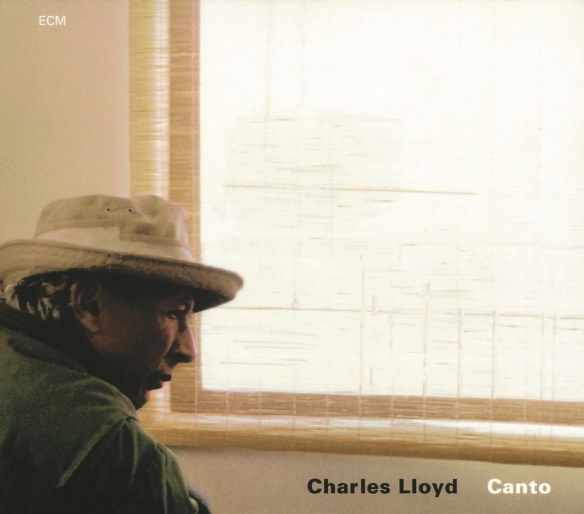
A picture may be worth a thousand words, but the cover photo of Charles Lloyd’s Canto shows a man who takes comfort in one: solitude. In that lingering, outward gaze into the light we see the immensity of his art more clearly than any number of words might ever hope to achieve. Which makes all the more incredible his acclimation to the talents of Stenson, Jormin, Billy Hart, with whom he again shares a bond (and a studio) for his fifth ECM outing. As if any proof were needed, Lloyd confirms that he has yet to fully chart the shadows cast some seven years earlier on Fish Out Of Water. If we have Eicher to thank for rescuing his music from the obscure corner into which it had been so carelessly painted by the media, we must also acknowledge the many inspirations that make their way into this book of seven chapters.

We might as well expand the title of the opening “Tales of Rumi” to “Tales of Rumination,” for such is the nature of the ancient Sufi mystic’s presence as Stenson tickles the piano’s oft-neglected lungs. A needle of thought appears and recedes, pinholing the night’s canvas with stars, each a camera obscura of time. As the trio steps into the foreground, giving blossom to this fragrance, Lloyd filters the spotlight with his rusted tenor, peaking above clouds of golden tenure. He would sooner slow down this train than ride it to the last station, content as he is to linger in patient refraction. We hear this also in the chromatic disc that tiddlywinks us into “How Can I Tell You.” He rolls and bakes this and every theme into a perfectly layered filo, never afraid to favor certain notes over others. It is his way of defining a center from which all other centers grow. Each is of equal weight. If anything, the balance of fadeout and all-out burn in “Desolation Sound” emboldens us to accept that weight as if it were our own. A Satie-like descriptiveness welcomes us into the title track. Built of air and memory, it features the rhythm section’s most attuned work of the set and epitomizes the tender robustness at which Lloyd is so adept. “Nachiketa’s Lament” draws its name from a tale in the Upanishads and the selfsame boy who frees himself from saṃsāra in his rejection of material things. Lloyd finds solace for this retelling in the Tibetan oboe, in combination with drums, for a portrait of fruitless plains and empty bodies. Jormin and Stenson reveal their signatures only as the sun sets into the hills of “M,” of which the mineral-rich bass provides a solid perch for the tenorist’s heavy wing beats. Hart shakes off his fair share of stardust in a solo to remember before the grand sweep of “Durga Durga” disturbs the mandala in the immediate wake of its completion.

Listening to Lloyd, especially as part of the quartet with which this set ends, is a multisensory experience. By the filament of his restraint he spins earth-shattering hymns. Opting always for a restorative edge, Lloyd finishes his tunes like someone who never wants to. He practices what he preaches and passes through criticism like a ghost through walls.

“Do not look at my outward form, but take what is in my hand.”
–Rumi

<< Bjørnstad/Darling/Rypdal/Christensen: The Sea II (ECM 1633)
>> Tomasz Stanko Septet: Litania (ECM 1636
)

Third Reel: s/t (ECM 2314)

Third Reel

Third Reel

Nicolas Masson tenor saxophone, clarinet
Roberto Pianca guitar
Emanuele Maniscalco drums
Recorded February 2012 Auditorio Radiotelevisione svizzera, Lugano
Engineer: Lara Persia
Mixed by Lara Persia and Manfred Eicher
Produced by Manfred Eicher

Third Reel is reedman Nicolas Masson, guitarist Roberto Pianca, and drummer Emanuele Maniscalco. On its surface, their collaboration yields something of a throwback to ECM’s heavier hitters, such as Krakatau. Closer inspection, however, reveals a highly nuanced solar system with intimate knowledge of its own orbits, eclipses, and asteroid belts. The heart of both album and band are the free improvisations peppered throughout the set list. Though selective and brief, they range from elastic twangs to a pollinated solo from Maniscalco, who further unleashes the brushes in a duet with Masson on tenor.

TR

In general, there’s no generality to be had. Atmospheric signatures can be as tender as Jimmy Giuffre (cf. Masson’s clarinet in “Miserere”) or as headlong as going over Niagara in a barrel (“Furious Seasons”). In this respect, titles seem retrospective. Like a Polaroid photograph, by the time their images catch up, the moments they describe have already gone to that nameless land of the past. Only through the magic of the recorded message do their realities seem to occur for the first time.

Some would seem to be more explicit with their references. “Bley,” for one, is a ligament of butterfly-kissed cymbal and bare, melodic gestures, which like the improvisations of its eponymous pianist seeks the lyrical in unexpected places. But then there is “Sparrow,” its dark balladry evoking Paul Bley even more, particularly his early quartet recordings for ECM with John Surman, Bill Frisell, and Paul Motian. The elliptical string games of the nouns (“Orbits” and “Spectrum”) are decidedly verbal, while the verbs (“Freeze” and “Fasten”) are as tangible as ash. They are the flame in the ice, a heart attack of musical proportions. And in the moodier “Eleventh Winter Tale,” brilliance becomes its own animal, stalking the methodical terrain of “Neuer Mond” with a distant prey in its eyes.

In the wake of this listening experience, one might deduce Third Reel’s name to be synonymous with a third dimension, Pianca being the x axis, Masson the y, and Maniscalco the z. Together they plot every audible point in space as if it were a droplet of water on a spider’s web after a storm, only to thrum its anchors until those droplets come raining down in a shower of sparks.

(To hear samples of Third Reel, click here.)

Lucian Ban/Mat Maneri: Transylvanian Concert (ECM 2313)

2313 X

Lucian Ban
Mat Maneri
Transylvanian Concert

Lucian Ban piano
Mat Maneri viola
Concert recording June 5, 2011 at Culture Palace, Targu Mures, Transylvania
Recorded by Tibor Kacso
Mastered by Christoph Stickel and Steve Lake
Produced by Lucian Ban and Steve Lake

Pianist Lucian Ban, making his ECM debut, joins veteran violist Mat Maneri in an impromptu duo concert. That much is obvious. What transpires between them is less so, elusive almost to the detriment of verbal capture. Much of the program was written by Ban with Maneri in mind after the two had played together in an ensemble context. Yet the way they unpack each tune into a beautiful mess of clothing and accoutrements, you’d think everything was played without preparation. (The freely improvised “Darn,” on the other hand, comes spilling out like a through-composed gnarl of roots and impulses.) Whatever the underlying structure, one thing is for sure: this is a dialogue of such intimate magnitude that it feels like a volcanic eruption in reverse.

Ban Maneri

Ban’s thematic titles are reflective of both his Romanian origins and life in New York City. “Not That Kind Of Blues” is smitten with the streets. It opens in a dimly lit room, the pianism resonant yet forthcoming. Maneri’s ergonomic bowing reveals a cartographic exactitude in its tuning, his instrument is no mere machine but a voice. From these nebulous beginnings emerges a stark figure whose urban life has just begun. It wavers, vulnerable, yet is attuned to the surroundings, as if it had known them in the womb. If such abstract analogies tell us anything, it’s that the duo is no longer that. It’s a choir of strings and hammers simmering below the potential to scream.

Rather than tunes, these deserve to be called places. Not only because titles such as “Harlem Bliss” and “Monastery” make reference to them, but also because they develop between vertices of infrastructure. Between Maneri’s lilting lyricism, selective double stops, and the true-to-jazz spirit that pervades every scrape of his bow and Ban’s florid yet never overbearing solos, both performers pick and choose their utterances with liturgical care. They move like ones unfazed by judgment. Even the latter tune’s groovier bodies cannot obscure the variegated heart that sings within. Maneri’s pizzicato puncta secure the canvas for an arcane raga, which by the camera lucida of Ban’s keyboarding is rendered renderable.

Before Ban’s “Two Hymns” in memory of his grandmother, Maria Voda, close the curtain with their protracted nod to earthly things, Maneri’s “Retina” (a reflective piece that contradictorily enough works its meditations behind closed eyes, it seems) and his solo treatment of the spiritual song “Nobody Knows The Trouble I’ve Seen” pay deference to very act of creation by crooning at the feet of it. We might, then, see this as Maneri’s own in memoriam to his late father Joe, whose playful spirit finds entry point into the foreground at such moments of abandon.

The musicians sound as if they are being moved by guidance of an unseen hand, a ghostly presence to make a trio of the act. Such a haunting begs description, but is immune to such. In the end, there’s little to say about the musical event documented on Transylvanian Concert, because it already says so much in a language without equivalent.

(To hear samples of Transylvanian Concert, click here.)

Andersen/Vinaccia/Smith: Mira (ECM 2307)

Mira

Andersen/Vinaccia/Smith
Mira

Arild Andersen double bass, electronics
Paolo Vinaccia drums
Tommy Smith tenor saxophone, shakuhachi
Recorded December 2012 at Rainbow Studio, Oslo
Engineer: Jan Erik Kongshaug
Produced by Manfred Eicher

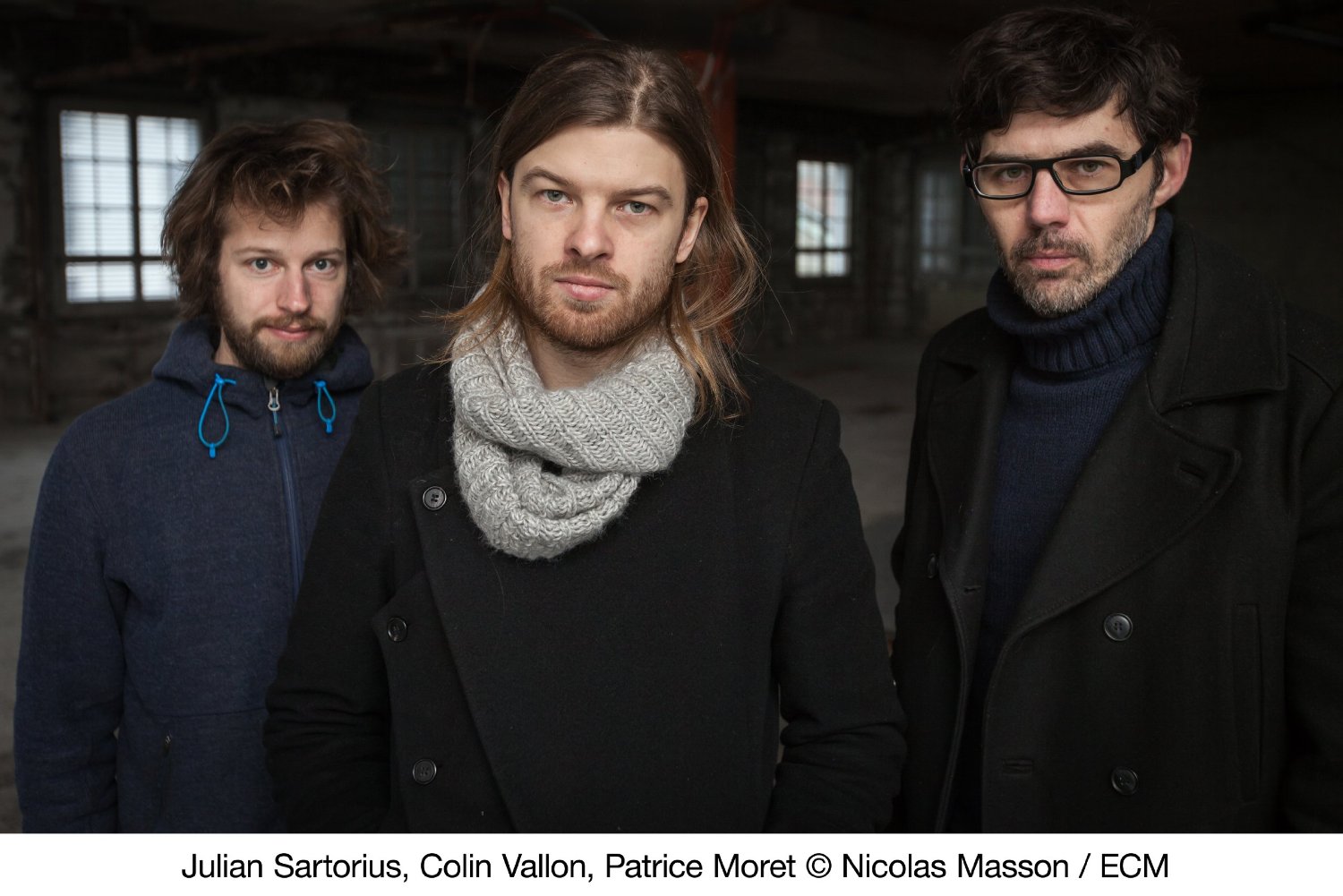
Bassist Arild Andersen, saxophonist Tommy Smith, and drummer Paolo Vinaccia are a rare trio not only in instrumentation, but also in the three-dimensionality of their interactions. Their debut album, Live At Belleville was a masterstroke of prowess and finesse, and introduced a band of such integrity that its messages were impossible to misunderstand. Now cloaked in the mystery of the recording studio—behind the doors of which magic is spun, spliced, and re-spun—these veteran collaborators deflect any expectations of sunlight in favor of a crepuscular palette.

Andersen Trio

Andersen again claims a majority of writing credits. Each tune is a different crater in the dark side of his moon. From first (“Bygone”) to last (“Stevtone”), his themes enable the framing and anchorage of a world far bigger than the sum of its parts. The former swings with a nocturnal air. It is a song in a windowless room, where moonlight remains but a dream and the crosshatching of people and cars below seems as far away as the stars above. Smith is the melodic body, while Andersen and Vinaccia stretch like shadows in streetlights. The latter track eases into its electronic drone by way of Smith’s inventive colorations, which seem to pull at invisible threads with mounting curiosity and inquisitiveness. Through a glacial exchange of places, Andersen takes the helm, following Vinaccia’s barest cymbals like a compass.

“Reparate” makes further use of Andersen’s electronics in much the same manner as his earlier Hyperborean. Over this distinctive blur of voices, Andersen explores the sensitivity behind his muscle. As if introducing a documentary that is about nothing but its own becoming, Smith picks up the thread and pulls it in leaps of intuition from sharp to rounded. Likewise balanced are the denser constructions of “Rossetti,” “Le Saleya,” and “Eight and More.” Whether hitching a rope between thematic vessel and port or soloing over Vinaccia’s rolling thunder, Andersen opens the eye of every needle, so that the drummer might find a way through. The mutual understanding here us as clear as the tune “Blussy” is smoky. Smith adds a slick edge to it all, but with a genuine roughness that gives eye-squinting traction to every turn.

Smith contributes “Kangiten,” a soaring and meditative shakuhachi solo which, despite its brevity, introduces an overtly spiritual band to the album’s spectrum (the title is a Japanese term for the elephant-headed Ganesh of the Hindu pantheon). Smith plays the bamboo flute again on “Raijin” (also Japanese, meaning “god of thunder”) in a ritualistic duet with Vinaccia that recalls Guo Yue and Joji Hirota’s kindred collaborations. Andersen’s title track returns us to the combination of strength and style that is his forte, his tone so full that background feels as present as foreground. Even the trio’s take on Burt Bacharach’s “Alfie” forges new alloy through the same admixture.

I wouldn’t hesitate to call Mira a profound leap forward for this trio, were it not for the simple fact of its falling inward. Not only is it a master class in harmony; it is an instructive example of self-assessment in the life of a musician whose best work may be yet to come.

(To hear samples of Mira, click here.)

Jack DeJohnette: Special Edition (ECM 2296-99)

2296-99 X

This treasure trove among treasure troves from the Old & New Masters series is the definitive archive of Jack DeJohnette’s Special Edition. The Chicago-born drummer, notes Bradley Bambarger in the set’s informative booklet, has appeared on more ECM albums than any other session musician. But it’s as a leader that his most enduring marks were made, and we can be sure that this re-release will both revive positive associations in anyone who remembers the albums on vinyl and inspire pristine ones for the digital newcomer. Like the project’s leader, Special Edition was about the joy of energy and the energy of joy, spreading love and music in overlapping measure.

ECM 1152

Special Edition (ECM 1152; also included as part of ECM’s Touchstones series)

Jack DeJohnette drums, piano, melodica
David Murray tenor saxophone, bass clarinet
Arthur Blythe alto saxophone
Peter Warren bass, cello
Recorded March 1979 at Generation Sound Studios, New York
Engineer: Tony May
Produced by Jack DeJohnette

There could hardly be a more apt title for the inaugural effort of Jack DeJohnette’s most influential project. As in his formidable collaborations with Keith Jarrett and Gary Peacock, DeJohnette kneaded enough preservatives into this album to keep it as fresh as the day it was baked. Special Edition also served as a launching pad for reedmen David Murray and Arthur Blythe, both onetime members of the World Saxophone Quartet and poster children for the post-bop generation. Their edgy expositions nest seamlessly into the present company. “One For Eric” kicks off the set with a swinging bang as alto sax and bass clarinet inhabit the right and left channels, bass and drums dancing between them with the Neo-Classical ebullience for which the track’s namesake, Mr. Dolphy, was so well known. Jumping from one visceral solo to another (Murray on a notable roll here), the group traces the fine edge between groove and abstraction with the skill of Philippe Petit on a wire. This tasty appetizer prepares us for the largest course in “Zoot Suite,” an instant classic that has since become a touchstone of DeJohnette’s repertoire. A masterful weave of raw horn vamps and somber asides, it is equal parts jubilee and dirge. Peter Warren keeps the beat throughout and makes sure his bandmates never hibernate for too long. “Journey To The Twin Planet” applies heavy mystique to this musical visage, grinding across the skin like the detuned bass at its foundation. DeJohnette introduces a dazzling free-for-all that works its way into mind and body with equal alacrity. The album rounds out with two Coltrane covers. “Central Park West” is a beautiful ode strung along by arco bass and detailed by liquid reeds, while “India” opens pianistically and runs through a stellar turn from Blythe before settling into a smooth rejoinder.

Were I to classify this album, I would unhesitatingly file it under “Zombie Jazz,” for it walks like the living dead, enchanting us with its embodied blend of natural and unnatural movements. There is something hard won about this music that makes it all the more engaging. Agitation has rarely sounded so fantastic.

<< Haden/Garbarek/Gismonti: Magico (ECM 1151)
>> Ralph Towner: Old Friends, New Friends (ECM 1153)

… . …

ECM 1189

Tin Can Alley (ECM 1189)

Jack DeJohnette drums, piano, organ, congas, timpani, vocal
Chico Freeman tenor saxophone, flute, bass clarinet
John Purcell alto and baritone saxophones, flute
Peter Warren bass, cello
Recorded live at Studio Bauer, Ludwigsburg, September 1980
Engineer: Martin Wieland
Produced by Manfred Eicher

“One, two, you know what to do.”

Jack DeJohnette’s Special Edition came up with another winner in this second ECM joint. Most of the blood of Tin Can Alley flows through the work of reedmen Chico Freeman (on tenor sax and bass clarinet) and John Purcell (on alto and baritone). Their voices—one rich with soul, the other provocative—define the title track. With the machine-gunned obbligato of DeJohnette and Warren covering their backs, they unhinge themselves. An epic baritone solo from Purcell drops the heaviest weight on the scale. These dialogues continue down the ramp of “Riff Raff,” even as Warren drops a heavy dose or two of his own. DeJohnette keeps tabs on every shift, all the way to his lusty swing in “I Know,” where a simulated crowd embraces his unbounded vocals. He also has a solo track, “The Gri Gri Man,” a veritable smoothie of congas, cymbals, toms, and organ. The occasional boom of timpani adds chunkiness to the texture.

Our journey through Tin Can Alley would be far from complete without “Pastel Rhapsody.” Another dialogue, this time between flutes, blends into a piano solo, which in its quiet manner paints the darkness with a meteor shower. From this sprouts a brassy stem, unfurling leaves and petals to the tune of something beyond our ken. Downright cosmic, and one of the most direct-to-heart ballads of the entire ECM catalog.

As with each of DeJohnette’s Special Editions, the cover photo is emblematic of the band’s free spirit, making music for the sake of its rewards. So if you happen to find yourself in this alley, they would much rather you stick around and feel what they’re doing than simply drop a dollar and move on.

<< Arild Andersen: Lifelines (ECM 1188)
>> Pat Metheny & Lyle Mays: As Falls Wichita, So Falls Wichita Falls (ECM 1190)

… . …

2000 X

Inflation Blues (ECM 1244)

John Purcell alto and baritone saxophones, flutes, alto clarinet
Rufus Reid bass, electric Bass
Chico Freeman bass clarinet, soprano and tenor saxophones
Baikida Carroll trumpet
Jack DeJohnette drums, piano, vocals
Recorded September 1982 at Power Station, New York
Engineer: Jan Erik Kongshaug
Produced by Manfred Eicher

For its third ECM outing, Jack DeJohnette’s Special Edition incorporates the robust sound of Baikida Carroll, who lends his trumpet to four out of five tunes, all composed by our gracious frontman. “Starburst” drops us from the sky into Freeman’s didgeridoo-like bass clarinet of Freeman as Rufus Reid stretches his bass like a tectonic rubber band through a steady drum riff. Intriguing crosshatching of tenor (Freeman) and alto (Purcell) saxes makes for a lively combination. Purcell also provides excellent baritone traction in the album’s closer, “Slowdown,” which capitalizes on its promise only in the last stretch and ends in noteless clarinet breath. An infectious twang-and-slide pattern locks us into its groove from the start. “The Islands” is an amalgamation of influences and impressions, the glare of sun and sands healed through the surgery of improvisation. Its abstract couplings of winds and horns lead to a delicate but enraptured drum solo. The title track gives us more of what we might have expected from the last: a smooth Reggae flavor. DeJohnette provides the requisite staccato of a clavinet while singing this timely lament:

A dollar’s worth about thirty cents
You’re working your behind off and you still can’t pay the rent
The more money you make, the more Uncle Sam takes
And the unions still cry for more dues
Poor people stay poor; they’re defenseless and sore
They cry out of frustration against a sad situation
Breeds hunger and strife, and a miserable life
And you know the politicians aren’t even bruised
But they won’t find the solutions to win this confusion
That’s why I sing these inflation blues

Tenor and alto add diffusive commentary to the repeat before playing us out bittersweetly. The absence of trumpet is keenly felt in the ornamental “Ebony,” which lands us in the album’s plushest diversions. Freeman’s gorgeous soprano provides the first solo over DeJohnette’s rims and piano. A rubato structure molds each melodic cell like a bead on a wire, Purcell and Reid turning out a fine solo apiece before closing in the fluted and jaunty fade.

The cover is another classic one and expresses the band’s humility and commitment to its roots. Like the single dollar bill being dropped into Carroll’s hat, the least compensation we can offer is our undivided attention to this consistently engaging set of down-to-earth music. Then again, if the last album taught us anything, our least isn’t worthy enough.

<< Walcott/Cherry/Vasconcelos: CODONA 3 (ECM 1243)
>> Michael Galasso: Scenes (ECM 1245)

… . …

ECM 1280

Album Album (ECM 1280)

John Purcell alto and soprano saxophones
David Murray tenor saxophone
Howard Johnson tuba, saxophone
Rufus Reid bass
Jack DeJohnette drums, keyboards
Recorded June 1984 at Power Station, New York
Engineer: David Baker
Produced by Jack DeJohnette

An exercise in exuberance in memory of his late mother, Album Album opens with one of DeJohnette’s most sophisticated compositions ever committed to disc: “Ahmad The Terrible.” With an engaging klezmer-like joie de vivre and fantastic sopranism from Purcell, it delights from start to finish. The first of five originals, it leaps from the speakers like a body in motion. As if that weren’t jubilant enough, “Festival” stirs up a crowd’s worth of enthusiasm, made all the more inspiring through spirited drumming. “New Orleans Strut” makes tongue-in-cheek use of drum machine as DeJohnette plays a synth lead (his pianism in the opener is also worth noting). Over this bubbly layer the punchy stylings of both reedmen work their way from the groove in most visible fashion. Such is the case in “Third World Anthem,” another sophisticated peak. Playful whoops from horns add a strong emotional undercurrent toward the elegant, staccato finish. “Zoot Suite” makes a welcome cameo, cut in half from its first appearance on Special Edition. Here it is delicate, but with no loss of groove to show for it. The one compositional outlier is “Monk’s Mood,” in which horns and bass dance cheek-to-cheek as if in an old Hollywood black-and-white. It also engenders the album’s only blatant lapse into unrequited joy through the baritone of Howard Johnson.

The verve of DeJohnette and his bandmates keeps us anchored amid a flurry of glorious activity and, alongside Reid’s tight bassing, allows little time for sadness. Here is a space in which mourning must wear a smile, where the self is always secondary to those one loves.

This is primetime creation with late-night attitude, fantasies turned realities by musicians who care about everything they touch through their refusal of false appearances. By looking into this mirror, we might just see more of ourselves than we know, because the freedom of DeJohnette’s networks far predates the social ones in which we are now so deeply mired. Herein lies a lesson in art: those who laugh only at others know too little, those who laugh only at themselves know too much, and those who laugh along with others know all they need to know. There’s too much badness in the world to ignore the possibilities found in what’s left behind. In this regard, few releases stress the virtue of reissuing as much as this one. A special edition indeed.

<< Egberto Gismonti/Nana Vasconcelos: Duas Vozes (ECM 1279)
>> Michael Fahres: piano. harfe (ECM 1281 NS)

Gary Peacock/Marilyn Crispell: Azure (ECM 2292)

Azure

Azure

Gary Peacock double bass
Marilyn Crispell piano
Recorded January and February 2011 at Nevessa Production, Saugerties, NY
Engineer: Chris Andersen
Produced by Gary Peacock and Marilyn Crispell

Bassist Gary Peacock and pianist Marilyn Crispell shared many fruitful years of collaboration in their trio with the late drummer Paul Motian. Yet those who had only intersected with these musicians on disc might never have been aware of a Peacock-Crispell duo project on the side. Azure solves the mystery of this collaboration in a crystal clear recording as far-reaching as it is cinched by mutual respect.

Peacock and Crispell

Their original set list is the very essence of unchained melodies, spooling back from the freely improvised title track in an alluring wave of creativity. This same tune comes as a breath of light after the game of shadows that precedes it. Though perhaps more in line with what one might expect from these legendary musicians, it’s all the more special for being the outlier of the program. It is indeed a portrait of open sky, but also a memory of storms. Looking back on its life, we encounter two further adlibs: the kindred “Blue” and the repartee of “Leapfrog,” each with a distinct inner swing and playfulness of spirit.

Beyond these stretch the open plains of Peacock’s compositions, each a journey in search of another. Spanning the gamut from robust exchanges (“Lullaby”) to the dance of marionette strings in the bassist’s arco draw (“Puppets”), his is a uniquely frayed brand of whimsy. And in a brief aside called “The Lea,” which is half bass solo and half duo, he speaks in picturesque tongues. Further solitudes await in the expository “Bass Solo” and “Piano Solo.” Where one puts a bluesier angle on the album’s development, the other knots itself until it cannot be pulled apart.

Crispell’s writing puts the crisp back into her surname and practically redefines the meaning of intimacy. The closely recorded “Patterns” opens with her running fingers before Peacock joins the chase, the two of them creating a tight circle of affirmation and magnifying a watchmaker’s craft so that every cog is audible. “Goodbye” emphasizes a contrast, but also reciprocation, of illustration and ornament in a duly bittersweet tune that is the album’s highlight. And the interlocking “Waltz After David M.,” like the whole, takes Crispell to new expanses.

The musicianship documented on Azure is of experienced and fearless order. The ship of these musicians even more so. It is unsinkable, and a ticket to ride should be required for even the most negligibly curious.

(To hear samples of Azure, click here.)