David Virelles: Mbókò (ECM 2386)

Mbókò

David Virelles
Mbókò

David Virelles piano
Thomas Morgan double bass
Robert Hurst double bass
Marcus Gilmore drums
Román Díaz biankoméko, vocals
Recorded December 2013 at Avatar Studios, New York
Engineer: James A. Farber
Assistant: Akihiro Nishimura
Produced by Manfred Eicher

David Virelles first dipped his oar into ECM waters from the vessel of Chris Potter’s phenomenal The Sirens and, more apparently, on Tomasz Stanko’s Wisława. The 30-year-old pianist, born and raised in Santiago de Cuba but now headquartered in Brooklyn, cites a range of musical influences, from Afro-Cuban sounds to Bach to Thelonious Monk. On Mbókò, his first leader date for the label, he taps even deeper origins. The album’s subtitle—“Sacred Music for Piano, Two Basses, Drum Set and Biankoméko Abakuá”—points to those origins while also disclosing its unique instrumentation. The biankoméko is a four-drum ensemble (also including sticks, cowbell, and shakers) of the Abakuá, a fraternal secret society of Cuba with West African roots. Around this ritual core Virelles enlists the services of Thomas Morgan and Robert Hurst on basses (heard left and right of center, respectively), Marcus Gilmore on drums, and Román Díaz on the biankoméko. As an integral participant and circle-maker of the album, Díaz brings his especial knowledge of a talking drum known as the bonkó enchemiyá to spinal effect, around which the nerves of Virelles’s piano parts took organic paths during the music’s genesis. It is a language more ancient than speech, one that flowers through the ritual power of improvisation and makes itself known like a puppet lifted by its strings.

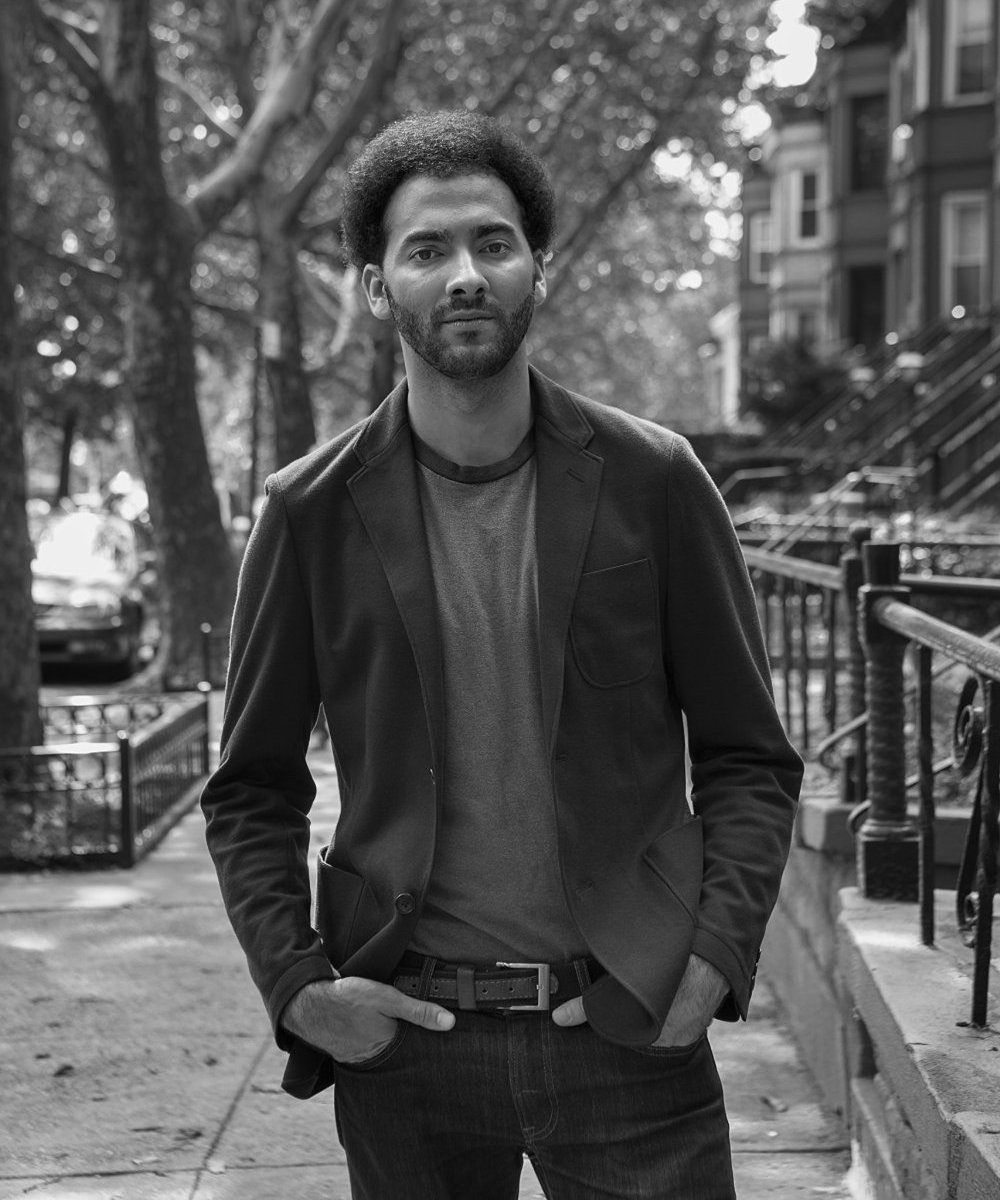
Virelles (Photo credit: Juan Hitters)

Because this album’s multivalent title is its sunrise and sunset, I use its three distinct meanings to divide this review as follows.

Fundament

The Abakuá faith derives from Carabalí beliefs, by way of southern Nigeria. Most Abakuá rituals are known only to initiates, and may involve purification and communion with the dead. According to Professor Alan West-Durán, the Abakuá accommodate two orders of drums—one more symbolic, the other the biankoméko heard here—in their religious practice. The latter are typically associated with dances of the Íremes, a reincarnated soul believed to be present during ceremonies or, in the case of occasional public rituals, with the demonic Ñáñigos. And yet, as William Luis elaborates in his book Culture and Customs of Cuba, the Abakuá Society, contrary to being discriminated as a supposed gang of thieves, is “a religious and mutual aid organization that works in the interest of its members.” Any secrecy surrounding the Abakuá is fundamentally a defense mechanism, a means of protecting their spiritual beliefs in a state of indefinite displacement. The Abakuá identity, in fact, goes as far back as 1836, although Carabalí presence in Havana dates further to the eighteenth century, when the Middle Passage uncoupled thousands of Nigerian slaves from their homeland and plugged them into the Cuban trade circuit.

Sugar cane

The music of the Abakuá—and, by extension, Virelles’s reimagining of it—wears masks. It does so not as a means of assumption or transposition, but to deepen the experience of self-expression. “Wind Rose (Antrogofoko mokoirén),” for instance, begins in the piano’s depths, a dream of the unconscious given voice through instrumental contact. It’s an awareness of enmeshment in all things, the knowledge that somewhere beyond any personal radius is another world, one step away. We may hear this in the percussion, which gives ground to the piano’s flotation. Only these two forces—ivory and skin—establish a perimeter of mood. Inside becomes outside. Like the sugar cane, the communication between Virelles and Díaz unites stalk and root. It is profound for having no interest in profundity. It steps from the shadows into candlelight in “The Scribe (Tratado de Mpegó),” where a fluttering beat gives rise to our first encounter with bass. There is an impactful solemnity to this triangle. It would seem to allude to an ancient past in which the mind was a force of nature—was, in fact, nature incarnate—and needed only blink to find its meal. Virelles brings an astonishing level of detail to the keyboard in this space. His smallest gestures move mountains. The split bassing of “Transmission” later in the set reveals even more such gestures, each the messenger of an underlying pulse. The splash of hard-won pianism that intros “Biankoméko,” too, lends gravity to the subtlest shadows. At the same time, it’s a sound that stirs the waters until ancestral currents are released, shaping rock and soil by the scraping of divine fingernails. The rhythmic waterfall of “Antillais (A Quintín Bandera)” allows Gilmore to unleash the most mindful color he has to offer, while “Aberiñán y Aberisún” clears a path for Díaz to sing. Although his voice recedes as quickly as it emerges from the surrounding forest, his ripple effect is such that all notions of unity are forever altered. This welcoming of spirit slips behind the unopened eye, leaving the sunrise bereft of reflective surface. In its place, the lush flora of “Seven, Through The Divination Horn” stretch their unbreakable vertebrae in the dawn, warm and acknowledged. “Stories Waiting To Be Told” gives us Virelles the Storyteller. The dream-walk of his inaugural solo lays a jagged, horizontal path, intersecting the vertical with sprawling rhythms and winding improvisations: the inhale to the others’ exhale. In light of this, giving praise to “The Highest One” paints not in upward but inward strokes. It is the opening of self to the selfless, or of the known to the unknown, as in the 40-second track, “Èfé (A María Teresa Vera),” that closes this ceremony as it began, our brothers of the keys and the drum pulling the already and the yet-to-be into the now.

The Voice

Abakuá initiates praise the Divine Voice. For them, sound is a sacred energy to be worshipped. Its highest leaders carry memory of the Voice within. Such responsibility is written in the energy of belonging. It bespeaks a love of private knowledge, an affirmation that just because one is relegated to the margin doesn’t mean one can’t also redefine that margin as its own territory. Mbókò is thus a record of the peacekeeper, of the knowledge-bringer, of the one who holds a mirror to the world as the surest way of preserving it.

(To hear samples of Mbókò, click here.)

Tarkovksy Quartet: s/t (ECM 2159)

Tarkovsky Quartet

Tarkovsky Quartet

François Couturier piano
Anja Lechner violoncello
Jean-Louis Matinier accordion
Jean-Marc Larché soprano saxophone
Recorded December 2009, Auditorio Radiotelevisione svizzera, Lugano
Engineer: Markus Heiland
Produced by Manfred Eicher

“What she thought about death was childish, but what could never have touched her in the past now filled her with poignant tenderness, as sometimes a familiar face we see suddenly with the eyes of love makes us aware that it has been dearer to us than life itself for longer than we have ever realized.”
–Georges Bernanos, Mouchette

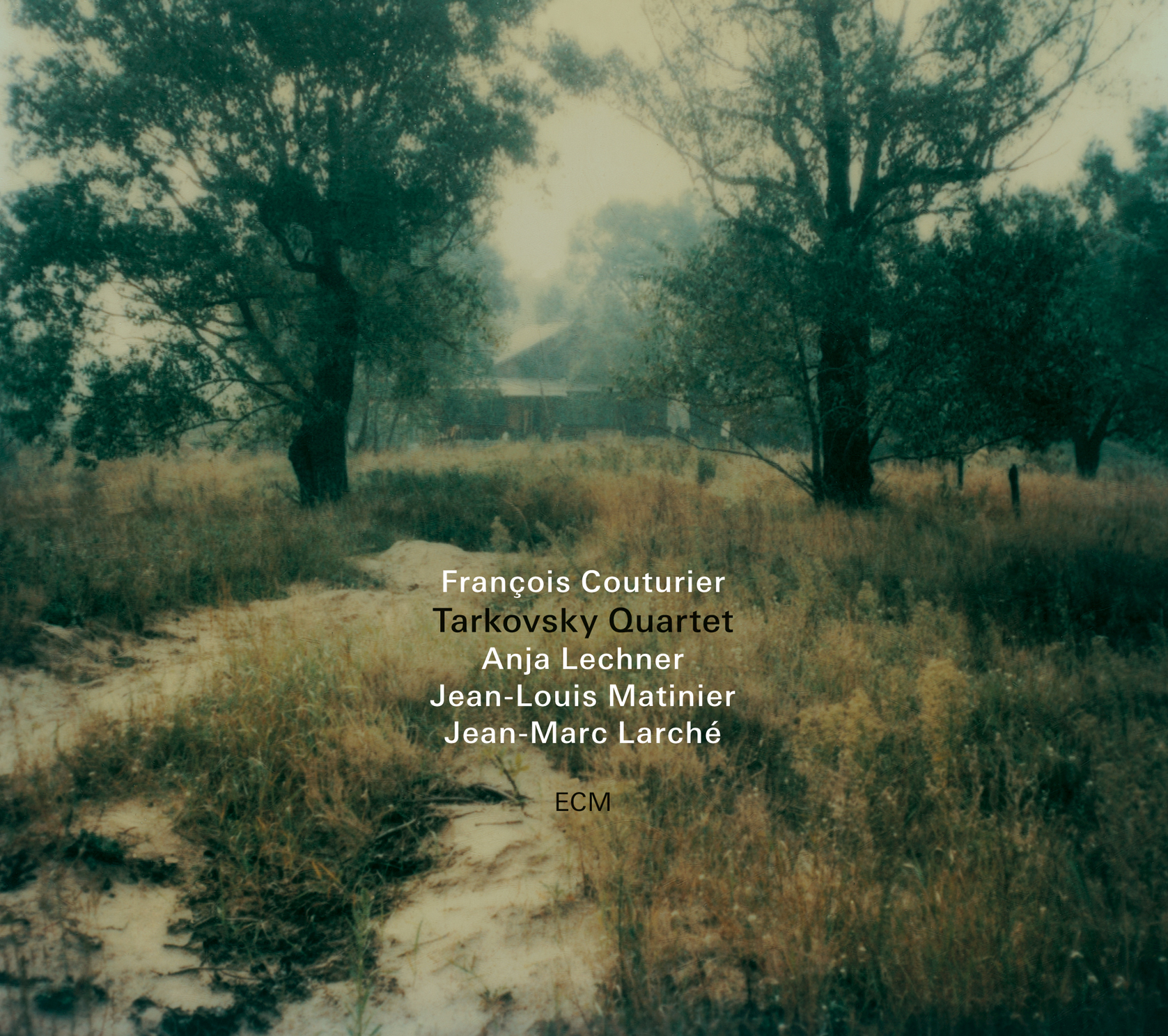
Forever striking about the cinema of Andrei Tarkovsky is its commitment to silence. Whether unfolded in the inner expanse of Solaris or cupped like the candle in Nostalghia, it breathes. For Tarkovsky, the latter sequence was indeed a representation of human existence: birth as inhale, and life as a flame trembling in protracted exhale. Likewise exhaling is this self-titled album from François Couturier’s Tarkovsky Quartet, which completes the pianist’s envisioned trilogy for ECM around the work of the master Russian filmmaker. More than a tribute, it is a tribune, quietly defending the right to sing without words as a way of opening the heart. Flipping through the aortal pages of its namesake, this album treats every concerted pump as a point along a line, from which dangles twelve tracks encased in solemnity.

TQ

The title of “A celui qui a vu l’ange” (A person who saw the angel), being carved on Tarkovsky’s tombstone, begins with the end. Couturier’s introduction discloses a ponderous reel of undeveloped film that unspools to the keystrokes of accordionist Jean-Louis Matinier and the threading of cellist Anja Lechner. Soprano saxophonist Jean-Marc Larché completes the image even as he unsettles it, startling the flow like a bird landing on a pond filled with broken bottles, scrap metal, and sharp stones. If such imaginings already feel cinematic, it is because they speak as much in a language of light as of sound—word and image made flesh through the divinity of direction.

That being said, the shape of this Tarkovsky Quartet is primarily rendered through the sculptor’s press of improvisation. Three pieces—“San Galgano” (which names the setting of Tarkovsky’s 1983 film Nostalghia), “Sardor” (a film for which he wrote the screenplay but never realized), and “La main et l’oiseau” (The hand and the bird), which points to The Mirror—are, in fact, entirely adlibbed, each a tangled web of signs stretching tundra for the feather brush. Like “Sardor,” a good portion of the album references people or places that never stood before his camera. “Mychkine” (named for the protagonist of Dostoyesvsky’s The Idiot, a subject Tarkovsky often spoke of cinematizing) is a remarkable dip into psychological pools. Matinier floats over surrounding fields of cello and piano, a lone blackbird lured by distant sparkle. Thomas Mann’s novel “Doktor Faustus” (which, again, Tarkovsky never filmed), on the other hand, remains grounded like a tree in this stark musical treatment. Tarkovsky’s favorite Bresson film, “Mouchette,” inspires an affectionate cordoning of the piano while the other instruments fragment the center. Even the ostinato backing of “La passion selon Andreï,” the original title of Andrei Rublev, would seem to articulate a parallel universe.

Two tracks snap living family photographs. “Tiapa” (a nickname for Tarkovsky’s youngest son) builds a lighthouse as Lechner underlies the waves before giving way to accordion and soprano, the second of which casts its own melodic torch so far that it becomes indistinguishable from the lighthouse beam, traveling far beyond the boats and never once looking down until the glow of a distant noon becomes visible. “Maroussia” (another nickname, this for Tarkovsky’s mother) splits the piano like a branch, connecting footprints toward a fiery clearing.

Throughout the program, musical nods to Bach, Pergolesi, and Shostakovich cut ghostly figures. Yet the deeper nods go to fundament and firmament. “L’Apocalypse,” for one, draws from the Book of Revelations, the cautions of which occupied Tarkovsky’s later films. This jagged yet somehow dancing music is a deconstructed cross. In the same spirit(uality), “De l’autre côté du miroir” opens with a tender solo from Lechner, whose interest in interstices makes for compelling listening. Couturier draws a slow-motion current, a tracking shot across centuries of growth in a single compression. The other instruments are echoes, ciphers lost on their way to salvation.

Here is a beacon for those who have only experience of the night.

(To hear samples of Tarkovsky Quartet, click here.)

Nik Bärtsch’s Ronin: Live (ECM 2302/03)

Ronin Live

Nik Bärtsch´s Ronin
Live

Nik Bärtsch piano
Sha alto saxophone, bass clarinet
Björn Meyer bass
Thomy Jordi bass (on “Modul 55”)
Kaspar Rast drums
Andi Pupato percussion
Recorded live 2009-2011
Mixed at Studios La Buissonne, Pernes-les-Fontaines
Recording engineer: Andi Pupato
Mixed at Studios La Buissonne, Pernes-les-Fontaines by Gérard de Haro, Romain Castera, Manfred Eicher, and Nik Bärtsch
Mastered by Nicolas Baillard
Produced by Manfred Eicher

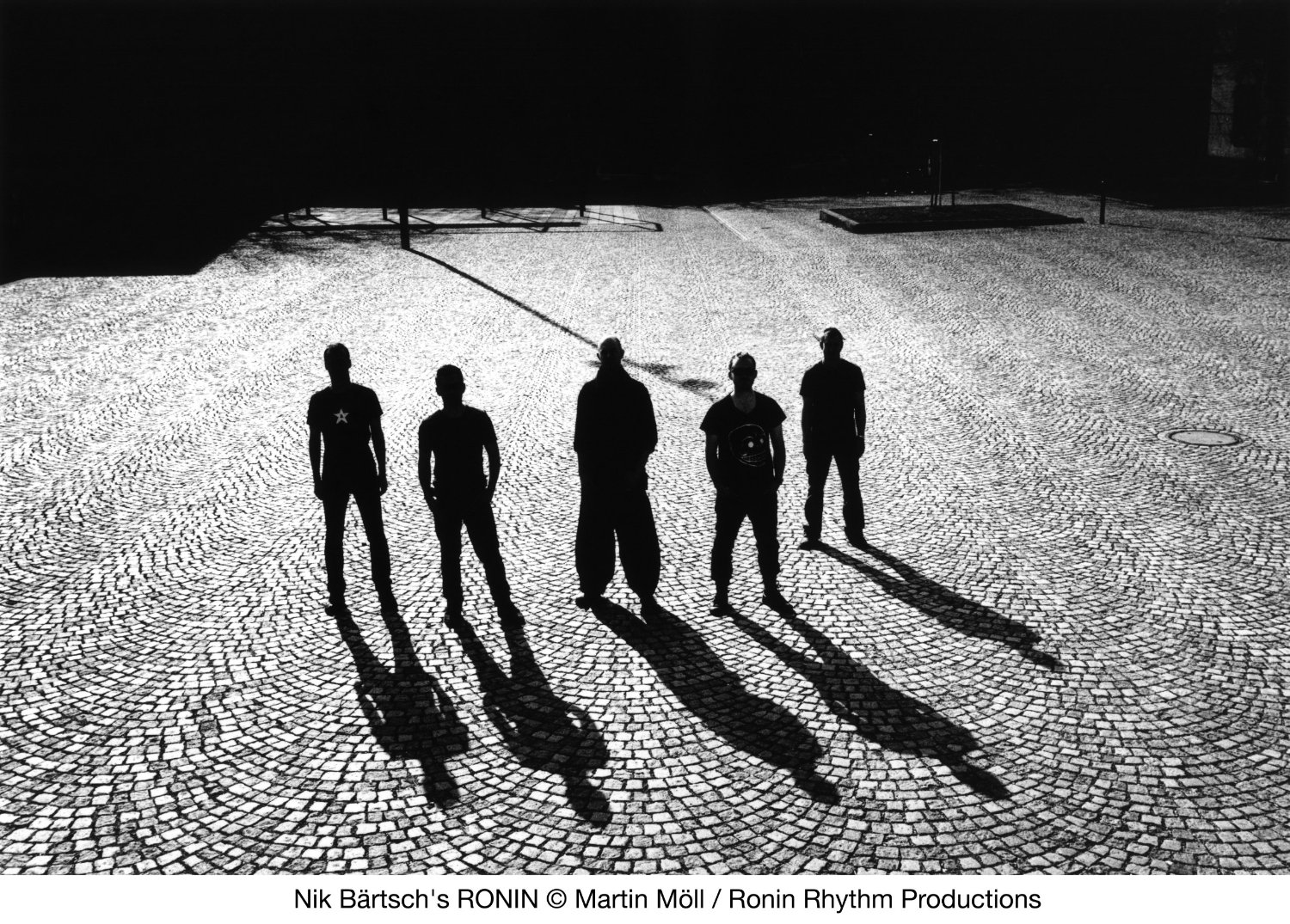
The rōnin, or masterless samurai, is an iconic character in both historical and fictional tales of feudal Japan. Many such tales rest on fulcrums of honor, whereby the loyalty of retainers is tested by ill circumstance or, in one infamous event, vendetta. Unique to the rōnin ethos, however, is the fact that, despite having gone rogue, he still possesses the tools of his training. Unlike contemporary figures of martial authority, whose badges or weapons are confiscated as a lawful consequence of their unlawful disallegiance, the historical rōnin wandered with identity markers intact, even if he was helpless to use them. Thus, he constantly skirted the edges of his own social—and sometimes physical—mortality. In Gerald Vizenor’s 2010 mash-up novel Hiroshima Bugi, for instance, protagonist Ronin is “a storier of death, and by the evocation of bushido, his many deaths are imagic, an eternal end and tricky resurrection by another name, in another character and presence.” That said, when I listen to the music of Nik Bärtsch’s Ronin, I feel as if the tools of his trade blossom anew: not as weapons but as instruments of survival. His music, in other words, builds fire in a cold world. It also finds honor in the resurrection of expectation. Often forgotten in popular representations of rōnin is that some actually became glorified in death, granted as they were by the shogunate the honor of ritual suicide—all of which complicates the rōnin figure as an agent purely of disavowal. He is, then, more rightly an enabler.

Ronin 1

In light of this, perhaps no word better describes the music of Nik Bärtsch’s Ronin than the Japanese term shibui, which connotes an aesthetic balancing of the minimal and the detailed. The overall effect of a shibui aesthetic is the constant disclosure of new perspectives and interconnections, each an enabler of the other in constant refresh. The muted intro of “Modul 41_17” (recorded in Lörrach, Germany) is thus a microcosm of all that is to follow. Bärtsch’s touch at the keyboard and bassist Björn Meyer’s geometric poetry harmonize, separate, and dance like mirror images in delay, while drummer Kaspar Rast’s undercurrent floats through the background as if it were the fore. Shimmering keys bid the groove welcome, punctuated by the bass clarinet of the mononymous Sha. And just when you think you’ve grasped their core sound, a stunning textural change occurs by way of Meyer’s looping as dampened pianism weaves through and around it. It is by far the most intimate portion of the album and becomes something of a philosophical turning point thereof. “Modul 35” (Leipzig) is a brighter and more harmonious machine of joyous shifts in density and light. An electric piano provides extra splashes of mercury.

In contrast, a sizable portion of the album is devoted to cloudy vistas, each more internal than the last, so that the fluid inflections of “Modul 42” (Vienna) and the arpeggiated chains of “Modul 48” (Gateshead) pave runways for melodies of great attraction, while the drone of “Modul 47” (Mannheim) yields a landbound trek of sand and moon. Through this low tide Bärtsch sends splashes of meticulous attention. Between the bass’s rocking and the piano’s rolling, there’s plenty to get the heart and mind moving in synchronicity with these exchanges, shedding its skin as might a talisman a fold of cloth.

Even a more propulsive construction like “Modul 17” (Tokyo) implies an afterlife through Rast’s locomotive brushes. More often, however, such slips into the void harbor a need for extroversion. “Modul 22” (Amsterdam) is among the subtler excursions in this regard. What begins as a delicate syncopation turns, at Bärtsch’s call, into a glass-blown groove. Pops from bass clarinet accentuate the off-kilter feel, mining the imperfection of every crystal until it resounds. “Modul 45” (Mannheim) reverses this formula, pouring grinding digs from the two bass instruments into its crucible until only a transcendent fountain of emptiness is left unfurling from a full-throated saxophone: the road to silence, paved in solar flare.

Sadly enough, Meyer would leave the band during the course of this assembly. He is replaced by Thomy Jordi on the concluding “Modul 55” (Salzau), a slice of nocturnal wayfaring that takes melodic precedence in a funk of ebb and flow. Wonderful.

Ronin’s Live proves that data streams have existed long before modern technology caught up and destroyed their souls. Theirs is clandestine clockwork that follows neither sun nor moon, but only the heartbeat of the listener. More than a summation of the band’s career thus far, it is a statement of new beginnings. It represents some of the most sustainable music on the planet. The recording is equally eco-conscious, sounding to the naked ear almost like a studio effort, clothed as it is in audiences’ quiet rapture, but feeling like a suit woven of leaves.

In the words of Makoto Ueda, Zen Buddhism “advocates liberty and all-inclusiveness of the soul.” Likewise, Bärtsch has developed a distinct language within the piano, a precise harmonic touch at the strings, a rattling of the cage. His skeletal awareness serves to emphasize the ephemeral nature of culture, which melts into an awareness of non-awareness, and dances until its feet leave the ground for good.

These rōnin have succeeded in making art of their weapons.

(To hear samples of Live, click here.)

Susanne Abbuehl: The Gift (ECM 2322)

The Gift

Susanne Abbuehl
The Gift

Susanne Abbuehl voice
Matthieu Michel flugelhorn
Wolfert Brederode piano, Indian harmonium
Olavi Louhivuori drums, percussion
Recorded July 30-August 1, 2012, Studios La Buissonne, Pernes-les-Fontaines
Engineer: Gérard de Haro
Assistant engineers: Nicolas Baillard and Romain Castéra
Produced by Manfred Eicher

If April and Compass, the two previous ECM traversals from Swiss-Dutch singer Susanne Abbuehl, charted a journey, then The Gift is its destination. Important to understanding the experience of listening to any Abbuehl album, particularly this one, is welcoming her idiosyncratic approach to poetry. These songs overflow with words from Emily Dickinson, Sara Teasdale, Emily Brontë, and Wallace Stevens. Rather than simply add music to them as would a jeweler bend miniscule claws around a diamond, she lets the verses walk around inside her before their spirits leave her lips.

Susanne Abbuehl

This time she incorporates her unique delivery into an even more attuned matrix. Pianist Wolfert Brederode and drummer Olavi Louhivuori sprout rhythmic branches that are every bit as melodic as her roots. But the flugelhorn of Matthieu Michel is what really sets this session apart from its predecessors. It’s a defining presence on the album where the clarinets of Christof May were before. Its rounded tone is a voice unto itself, swooning through the corridors of Abbuehl’s sole lyric contribution in “Soon (Five Years Ago).” This song, appropriately enough about the displacement of earthly time, may appear late in the program, but it’s also its defining statement of it.

Fans of Norma Winstone will surely rejoice at the freedom of Abbuehl’s approach, exemplified to peak effect in “The Cloud,” which opens in reverie. Activated by a kalimba’s metallic fingertips, her voice carries word and song along the trumpet’s cirrus drift. It is a restless feeling we counter here, one that remains in all that follows, so that even the simple admission of Dickinson’s “This And My Heart” (and its variation, which ends the album) harbors a shadow or two. We might feel this also in the arrangement, which engages voice and flugelhorn in marriages, divorces, and flirtatious commentaries. All the while, a processional feeling soaks through. Where the first song was emblematic for its atmosphere, so is this for an attention to detail by means of which Abbuehl and her band embody a conception of self that, so like a book, opens and flutters with the dynamism of language. From the mountains to the catacombs, it’s all here.

In light of such intensities, “If Bees Are Few” makes for an airy interlude, suspended as if above prairies misty with dandelion fluff. It closes its eyes and enters the dream that is “My River Runs To You.” Across this canvas of love, magical by way of lyric and music alike, the ocean paints itself into a network of inlets, each a harbor waiting for that one boat to make permanent docking. The effect is such that “Ashore At Last” breathes like a mission statement to the fanfare of its free and melodious flugelhorn. “Forbidden Fruit,” then, seems to close the circle of a miniature trilogy of sorts, swaying with all the gentle relief of a silhouetted tree against the night.

Indeed, for all its leaping heartbeats, much of The Gift is cradled in nocturnal contours and through them are revealed Abbuehl’s purest tones. In “By Day, By Night,” her voice is flute-like and devoid of vibrato, its waters as crystalline as those of time are muddied. Even in those passages in which she doesn’t sing, her spirit animates every reflection. In this sense, Stevens echoes farthest: “In my room, the world is beyond my understanding.” Holding to this philosophy, the album’s brightest moments are revealed where one might nominally least expect them: in “Shadows On Shadows.” Brontë’s imagery unfolds a scintillating act of transparency. It is the album’s lighthouse, but might remain unlit were it not for the embers of Abbuehl’s wonderful musicians. “Fall, Leaves, Fall” is the epitome of their sensitive approach. This song of death, haunted by an Indian harmonium and drummed whispers, is a prayer of sisterly forces. “Sepal” emerges from a landscape’s worth of flora and uncommon graces as a single petal falling, a light footstep without a trace except in the utterances of she who observes and vocalizes them into memory, as memory.

Understated yet full as a rose in bloom, this is the emotional clarity of which Abbuehl’s craft is possessed apart. In her purview, the moon disappears not when it is new, but when it hides beyond that most ephemeral of horizons: the human heart. It is a shadow of its own truth, a truth given understanding by Teasdale after all:

 I throw my mantle over the moon
And I blind the sun on his throne at noon,
Nothing can tame me, nothing can bind,
I am a child of the heartless wind—
But oh the pines on the mountain’s crest
Whispering always, “Rest, rest.”

(To hear samples of The Gift, click here.)

Sheppard/Benita/Rochford: Trio Libero (ECM 2252)

Trio Libero

Trio Libero

Andy Sheppard tenor and soprano saxophones
Michel Benita double-bass
Sebastian Rochford drums
Recorded July 2011, Auditorio Radiotelevisione svizerra, Lugano
Engineer: Stefano Amerio
Produced by Manfred Eicher

Putting on Trio Libero’s self-titled debut is like putting on a cashmere robe: it feels that good.

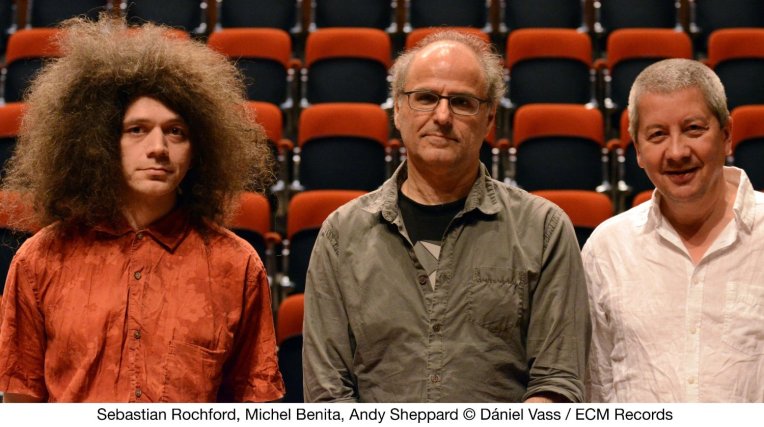
The level of comfort shared by saxophonist Andy Sheppard, bassist Michel Benita, and drummer Sebastian Rochford bears out from the first moments of opener “Libertino” with a looseness that never loses sight or hold of things. The themes are forthcoming but never insistent. An early solo from Benita trades off with some beautiful blowing from Sheppard, who unwinds a kite string toward cloudless sky. “Slip Duty” fronts Rochford’s limber bodywork as it traverses the landscape of his kit. To this percolating core Benita and Sheppard contribute structurally thematic elements in a variety of densities. “I’m Always Chasing Rainbows” features Sheppard on soprano. Despite the whimsical title, it describes a world of honest reflection. The two-part “Spacewalk” indeed balances gravity and buoyancy, an alterity of pathos that breathes melody and ends with a nebular cry for solidarity. “Dia da Liberdade” opens with an almost mournful bass solo, a lullaby for the fallen that trips the pulse of Sheppard’s wood-planed entrance. At times one can hear Paul Motian speaking through the drumming (he would pass away only four months after this album was recorded), only with a moth’s added murmuring. “Land of Nod” features more astuteness from Rochford in step with bass and piano. Don’t let the title fool you. It is one of the album’s livelier tracks and ripples beautifully at Sheppard’s fingertips as might a pond’s surface at the touch of a leaf. “The Unconditional Secret” is by far the most beautiful statement of the album. Its diurnal collage unites dreams and realities in a collage of transparencies. “Ishidatami” begins with another lovely bass intro, now with a sopranism as lithe as a tightrope walker bounding from anchor to anchor. The title, it bears noting, is a Japanese term for paving stones used to maintain navigable pathways in erosion-prone mountain passages, and serves well as a metaphor for the band’s unity. “Skin / Kaa” sustains a rubato flow into the modal tributary of “Whereveryougoigotoo,” the latter distinguished by its masterfully legato tenoring. “Lots of Stairs” is a weary but never wearying traversal. Under guise of balladry, “When We Live On The Stars…” concludes with a promise that the people and pleasures we adore will still be waiting for us when we wake.

Nowhere within these relatively brief tunes will you find demonstrative solos or waving of virtuosic flags. That said, it requires a special kind of virtuosity to carry off such music so humbly, and with a spirit that is as naked as the day all of us were born. This is the art of the trio, liberated.

(To hear samples of Trio Libero, click the image below.)

Trio Libero Photo

Text

Vallon/Moret/Rohrer: Rruga (ECM 2185)

Rruga

Rruga

Colin Vallon piano
Patrice Moret double-bass
Samuel Rohrer drums
Recorded May 2010 at Studios La Buissonne, Pernes-les-Fontaines
Engineers: Gérard de Haro and Nicolas Baillard
Produced by Manfred Eicher

Now here we have the debut of a trio for the ages. Deeply inspired by the folk music of the Caucasus, Rruga (the word means “path” or “journey” in Albanian) culminates six careful years of fine-tuning in a studio session that feels as if it were recorded the shadows of those very mountains. This Swiss outfit of pianist Colin Vallon, bassist Patrice Moret, and drummer Samuel Rohrer spins a web so robust that it threatens to uproot the trees it spans.

Vallon pens four tunes, of which two iterations of the title track stand like those very trees. The sound is likewise rooted from the very beginning and takes account of every crack of bark and quiver of leaf above. None of these young musicians seems possessed of ego, as if they were soloists of some inaudible and nameless orchestra—a force that by any other name might interlock into a familiar sigil of creative action. Here, however, the need for such emblems fades like so many notes, struck and plucked by hammers and fingers to rhythms born of the moment.

From the autobiographical (“Home”) to the cataclysmic (“Eyjafjallajökull,” meant to evoke the eponymous Icelandic volcano), Vallon and friends navigate a reflective grammar, interested as they are in forging tactile emotions as a unit rather than in dictating them through demonstrative soloing. The trio has an uncanny ability to sound electronic. “Eyjafjallajökull,” for instance, lays out a surface of drone into which Vallon drops strategic pebbles. The effect is haunting, gorgeous. “Meral,” named for the pianist’s late grandmother and reflecting a Turkish folk music influence, is smoothest of them all and embodies a straightforward approach to melody. There’s nothing jagged or showy. Even the prepared piano details feel like everyday occurrences.

Moret contributes two tunes. “Fjord” feels somehow suspended, sung as much by Rohrer’s brushes as by bass or piano. Yet it is his “Telepathy,” which takes its inspiration from Radiohead’s Thom Yorke, that epitomizes the album’s reach. Vallon’s pianism evolves from sleeping to waking, carving its path through the night with a thread of sun in hand. As density builds, so does the sky also thicken—to the point where the trio lies on its back as one body like Michelangelo and raises a paintbrush to its surface: looking up to look within.

The beat is always slightly askew and coheres by no small feat of careful listening. This is most obvious in the three tunes from Rohrer, whose “Polygonia” is a stunner. Its modal qualities give vitality to every angle. “Noreia,” named for a vanished ancient city of the Alps, is another glory, a soaring gem of melody that lands as softly as it takes off. Last from the drummer is “Epilog,” a flower within a flower.

Completing the set is a trio improvisation around the Bulgarian song “Shope Shope” by Stefan Mutafchiev. Titled “Iskar,” its prepared piano resounds like a warped gamelan before smoothing into a mid-tempo groove. It strikes perhaps the deepest root and drinks of its histories until every drop contributes a song.

If you’ve ever wondered how a record label could singlehandedly enrich the piano trio art form, then consider this your Exhibit A. Vallon is that rare player who can turn smolder into sparkle, and his bandmates know his chemical signatures inside and out. Rruga is an astonishing achievement and easily holds its own among ECM’s finest releases of all time.

(To hear samples of the album proper, click here.)

Manu Katché: Third Round (ECM 2156)

Third Round

Manu Katché
Third Round

Manu Katché drums
Tore Brunborg saxophones
Jason Rebello piano, Fender Rhodes
Pino Palladino bass
Jacob Young guitar
Kami Lyle trumpet, vocal
Recorded December 2009, Studios La Buissonne, Pernes-les-Fontaines
Engineers: Gérard de Haro and Nicolas Baillard
Produced by Manfred Eicher

Third Round follows up drummer Manu Katché’s previous ECM albums, Neighbourhood and Playground with his deepest love long yet. Joining him are saxophonist Tore Brunborg, pianist Jason Rebello, bassist Palladino, and guitarist Jacob Young. The latter contributes to three polished tunes: the lovely, piano-driven “Keep On Trippin’,” the gorgeous “Springtime Dancing,” and the sunlit “Flower Skin,” in which his acoustic shines brightest. Also guesting is Kami Lyle, who sings her own lyrics and plays trumpet in the tender “Stay With You.” It’s something of a surprise in a soundscape dominated by grooves and paved improvisational avenues.

In spite of the equal contributions from each musician throughout and Katché’s own understated role as leader, the drummer’s cymbals are truly the key to unlocking this album’s secrets. The opening “Swing Piece” is emblematic in this regard. It takes its first stretches of awakening on a soft layer of piano, over which Brunborg and Palladino sprinkle their dust, setting up a pulse that moves us to the end. But it’s Katché’s sparkle that really sets this vessel along the set list’s meticulous progression from horizon to horizon. To be sure, his bandmates interlock expertly in “Being Ben” and “Shine And Blue,” but the cymbals break surface at every turn with almost neon brilliance.

Katché has always been a melodic player, but on Third Round he turns up the dial on atmosphere, brushing around the beat a little in “Senses” and lending fragrance to the blossoming “Out Take Number 9,” a nominally expendable studio blip that turns out to be a real highlight. In the smokily final “Urban Shadow,” he paints two eyes closing in anticipation of a dance that never quite comes. Then again, that’s the beauty of Katché’s music: delicate yet always engaging, it holds you just enough to let you know it’s there if you need its comfort.

(To hear samples of Third Round, click here.)

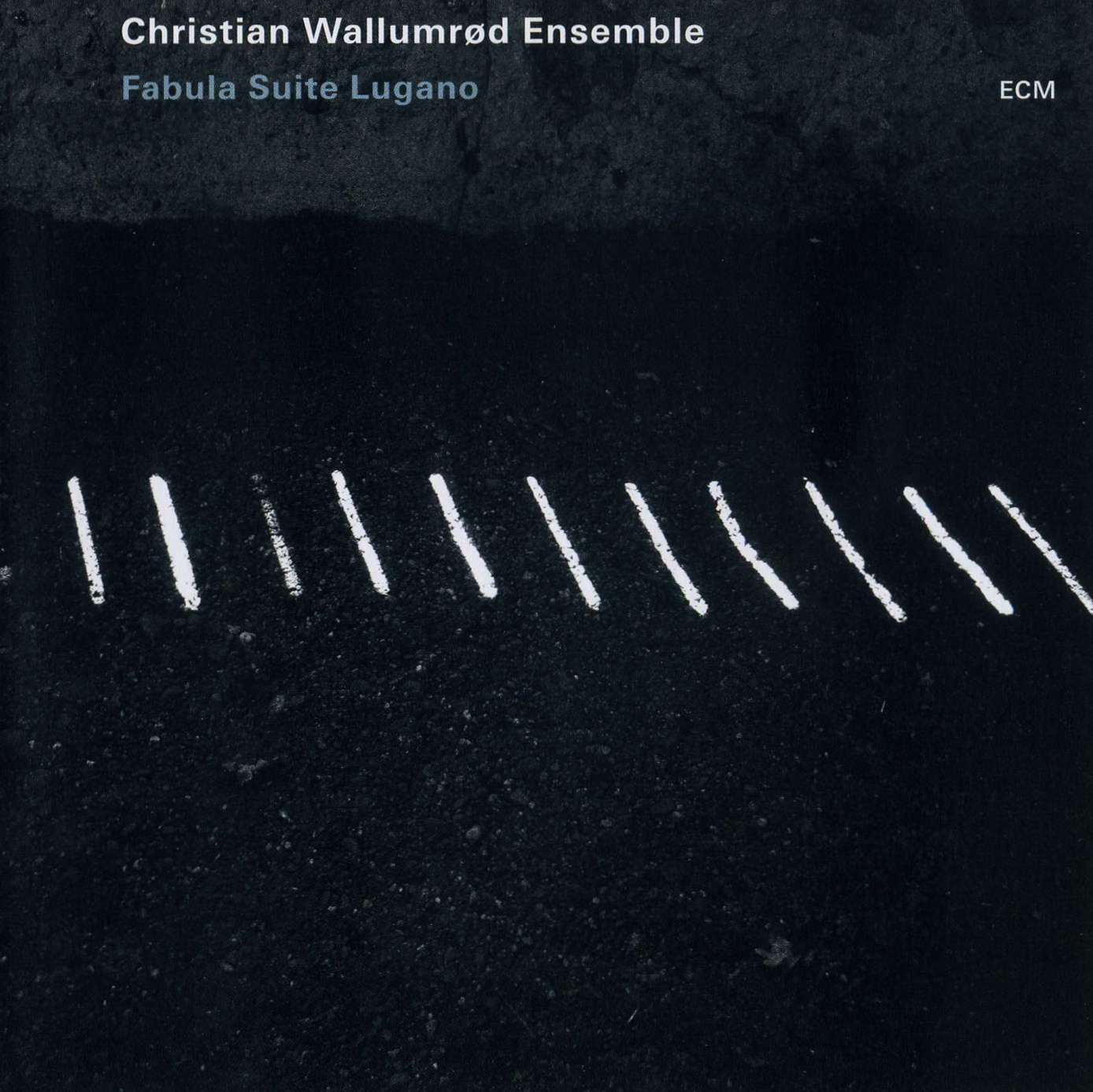
Christian Wallumrød Ensemble: Fabula Suite Lugano (ECM 2118)

Fabula

Christian Wallumrød Ensemble
Fabula Suite Lugano

Christian Wallumrød piano, harmonium, toy piano
Eivind Lønning trumpet
Gjermund Larsen violin, Hardanger fiddle, viola
Tanja Orning cello
Giovanna Pessi baroque harp
Per Oddvar Johansen drums, percussion, glockenspiel
Recorded June 2009, Auditorio Radio Svizzera, Lugano
Engineer: Markus Heiland
Produced by Manfred Eicher

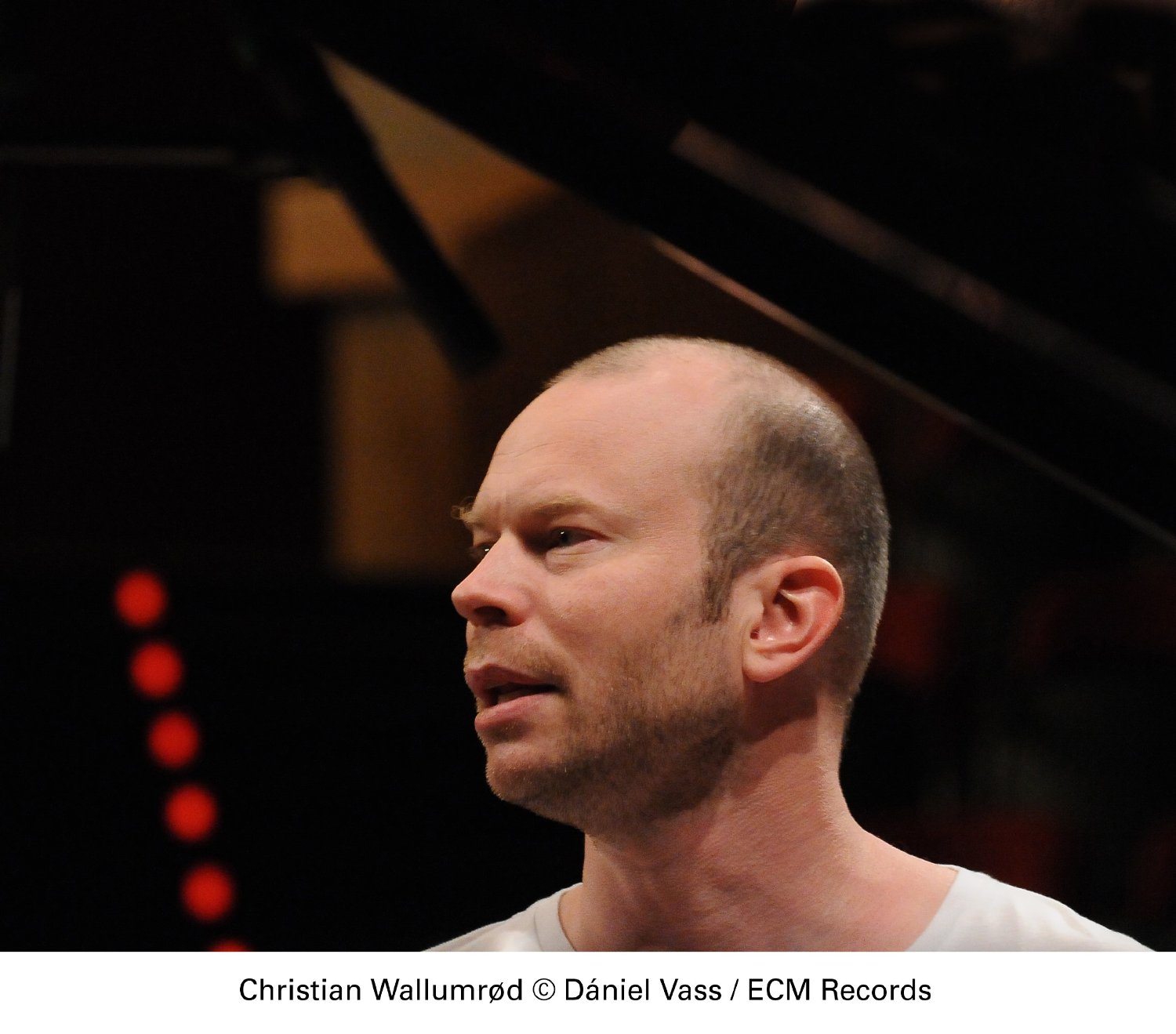
Christian Wallumrød is a court composer of our time, and we are his servants. His distinctly crafted chamber pieces on The Zoo Is Far ushered in a certain specificity and microcosmic style. Replacing trumpeter Arve Henriksen from that previous session is newcomer Eivind Lønning, whose lungs brighten the patina of Giovanna Pessi’s Baroque harp in “Scarlatti Sonata” and lend rounded contrast to the violin of Gjermund Larsen in the modestly titled “Duo.” Regulars Tanja Orning on cello and drummer-percussionist Per Oddvar Johansen flesh out the palette with insight and exactitude.

Wallumrød

This time, as Wallumrød’s sound-world paints through a new galactic stencil, he and his bandmates show a deeper commitment to the integrity and possibilities of atmospheric improvisation. Reference points are as varied as the album’s 18 tracks. “Quote Funebre” takes its inspiration from the music of Olivier Messiaen and Morton Feldman, which Wallumrød spins into what he calls “small harmonic events,” each a stepping stone for Larsen’s commenting fiddle, while the Swedish folk-inspired “Jumpa” (in two versions) lifts off agile feet into the future. For the most part, however, the core of each piece is a solar system unto itself, blown to dust and melted down into a rough gem. Here an emerald, there a ruby.

Pessi’s harping constitutes a defining voice within this modest choir. Her affinity for description infuses pieces like “Dancing Deputies” and “Blop” with tactility, foiling percussive undercurrents like staples across the skin of time, while her pathways light the way through the barely-touched instruments of “Snake.” Johansen is another, catching wind with wings in the descending trills of “Solemn Mosquitoes” and pulsing through the veins of “I Had A Mother Who Could Swim.” Through all of this mimesis, Wallumrød himself shines like a broken firefly, its light turned to liquid. The effect is somehow otherworldly. Even his toy piano in “Valse Dolcissima” feels less like the remnant of a human childhood and more like the language of an alien race who anthem is his concluding “Solo”—the benediction of an artist at play in his telescopic wanderings.

François Couturier: Un jour si blanc (ECM 2103)

Un jour si blanc François Couturier
Un jour si blanc

François Couturier piano
Recorded September 2008 at Auditorio Radio Svizzera, Lugano
Engineer: Stefano Amerio
Produced by Manfred Eicher

After a handful of collaborative efforts (most notably with oudist Anouar Brahem) at last we encounter François Couturier unaccompanied, feeling his way through an artful selection of 17 (mostly) improvised vignettes. Although nominally distinct from his first leader date, Nostalghia – Song for Tarkovsky, it is in fact the continuation of that very project, the second in a trilogy completed in 2011 by the self-titled Tarkovsky Quartet. Continuing with the cinematic theme, Un jour si blanc takes its title from a poem by Arseny Tarkovsky, as recited in the 1975 film The Mirror, directed by son Andrei. Drawing from a distilled yet no less vivid palette, Couturier pursues themes spanning the robust and the fleeting across an ever-shifting terrain. The album traces a diurnal arc, waking in the soft hues of “L’aube” and “Un calme matin orange” and drifting off to sleep in the shadows of “Par les soirs bleus d’été” and “Moonlight.” Between them runs an elemental cross of fertility and fantasy. Couturier treats every note carefully at these outer margins, cradling it like a blown eggshell primed for his delicate scrim. Within that frame stretches a vast pond, the surface of which quivers with the raindrops of an oncoming storm. Reflections of trees are lifted like decals by his right hand in “Lune de miel” and stuck to sky in the highly charged “Le soleil rouge.” Yet despite my own vivid associations, the music is for the most part earthy and unmasked. In this regard, the program’s three homage pieces are clearest in their expressivity. Bearing dedications to Arthur Rimbaud (“Sensation”), J. S. Bach (“L’intemporel”), and Andrei Tarkovsky himself (the title track), each embraces a different fragment of the mirror, much like the film it honors, as if it were the cell of a larger, divine body. They harbor scents of memories, of places soon to be reduced to ashes…

The Mirror

While connections to certain images may be clear, also clear is that this is no soundtrack. Rather, it is a tracking of sound in a way only synaesthesists might fully appreciate. Much of it feels aquatic, for example, but only the subtlest of changes tells us whether we are floating in fresh or swimming in salt. Of the former flavor, we have the four-part “Colors,” which, unlike the piano on which it is played, echoes with the hymns of an amphibian cloister. Of the latter, the diptych “Clair-obscur” grinds a tangier brand of jazz against the crags. This intriguing album—one of ECM’s most intimate solo piano recordings to date—reveals an artist sensitive to the personal science of adaptation. Like the track “Voyage d’hiver,” it sails on waves of depth magic and brings forward a profound realization that, although experience and memories may be ephemeral, the past is infallible. (To hear samples of Un jour si blanc, click here.)