Bobo Stenson Trio: Indicum (ECM 2233)

Bobo Stenson Trio
Indicum

Bobo Stenson piano
Anders Jormin double-bass
Jon Fält drums
Recorded November and December 2011, Auditorio Radiotelevisione svizzera, Lugano
Engineer: Stefano Amerio
Produced by Manfred Eicher

The anticipation of a new Bobo Stenson Trio release may be too much to bear, but the release of one is too much to ignore. This seventh album for ECM finds the Trio in new rags and old. Bill Evans’s “Your Story” was a favorite of Paul Motian, to whom the present version is dedicated, and starts the set off on a bittersweet note. It’s a heartfelt solo from Stenson that gives us perspective on the life of an artist whose contributions to the genre were incomparable. It also lulls us into a state of such openness that “Indikon,” the first of three freely improvised tracks, can be the only logical way to proceed. Along with its like-mindedly titled cousins, it reveals the album’s innermost thoughts. The title track even more so, as it threads slow and spiraling footprints along a haunting arco wire. Breathing room narrows to the point of claustrophobia, and slumbers there under a blanket of dead leaves. Here is the trio in its finest cohesions, spontaneous yet blossoming with organic comfort. Stringing one eureka moment after another, none of the musicians ever tries to lead the others, opting instead for close-eyed trust. “Ermutigung,” a protest song by East German dissident and Hanns Eisler protégé Wolf Biermann, levels off a scoop of political history with a smoothness of execution few can match. Fält’s subtleties keep its textures porous and susceptible to whatever comes in Stenson’s flights of abandon. Jormin steps forth in his deepest solo of the set and sweeps us like autumn into the cavernous “Indigo.” Amid rustlings of toms and cymbals, we hear the echo of a faraway song, changed by its journey from source to destination. Jormin pens two tunes. Between the frozen lake sheen of “December” and the creeping rays of “Sol” there is another album’s worth of imagery to ponder. The latter’s beginnings are remarkably enigmatic, every stroke of the horsehair a branch ready to fall. Both embody a depth of solitude that can only be seen in optimistic light. Jormin also offers his co-arrangement with Sinikka Langeland of a traditional Norwegian Ave Maria, which over its nearly eight-minute articulation of church rafters and prayerful thanksgiving recalls his work with Stenson on Matka Joanna. “La Peregrinación” is yet another unassuming vehicle for the bassist. Written in 1964 by late Argentine composer Ariel Ramírez, it sways like a playground swing in the wind of a tumultuous past. The lilting feel, maintained throughout, is all kinds of wonderful and fades into a sparkling finish. “Event VI” is adapted from George Russell’s eight-part suite, Living Time, thus bringing the Bill Evans connection full circle. Fält is as colorful as ever in his attempts to evoke the orchestral flavors of the original. Danish composer Carl Nielsen gets a nod in “Tit er jeg glad,” while another from across the water in Denmark, Ola Gjeilo, gets his in “Ubi Caritas.” Both are brushed and polished to a resonant shine, the second keening in aching curves of finality.


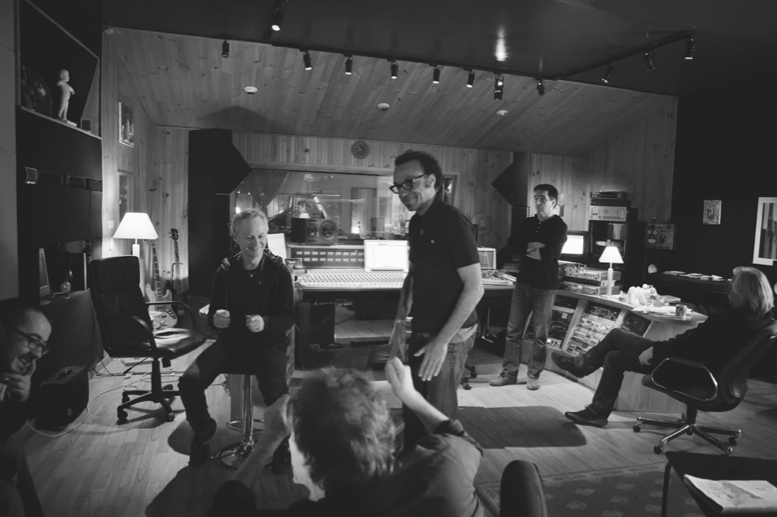
(Session photo by Nadia F. Romanini)

It’s encouraging to know that bands like Stenson’s exist. What the trio lacks in quantity, it makes up for in quality and, more importantly, in its ability to morph into a new animal with every title uttered from its lips. In this sense, “Indicum” is more than a vision of what could be. It is the solution to darkness.

(To hear samples of Indicum, click here.)

Manu Katché: s/t (ECM 2284)


Manu Katché

Jim Watson piano, Hammond B3 organ
Nils Petter Molvær trumpet, loops
Tore Brunborg tenor and soprano saxophones
Manu Katché drums, piano solo on Dusk On Carnon
Recorded March 2012, Studios La Buissonne, Pernes-les-Fontaines
Engineers: Gérard de haro and Romain Castera
Produced by Manfred Eicher

French-Ivorian drummer Manu Katché first caught my ear on Jan Garbarek’s Visible World, for which he provided a comforting balance of the smooth and the jagged. Since then, I’d heard him lurking in many of the saxophonist’s records, including Ragas and Sagas, I Took Up The Runes, and Twelve Moons. Yet it wasn’t until 2005’s Neighbourhood that he blossomed before my ears as a composer of economy, straightforwardness, and panache. Thus began the Manu Katché “band,” the makeup of which has changed with every album since. Horns remain a constant, and this latest effort puts him in studio contact with Nils Petter Molvær on trumpet and Tore Brunborg on reeds, along with Jim Watson on piano and Hammond B3. Molvær is a particularly welcome addition to the roster. Like Katché, he’d been a sideman for his fair share of memorable ECM sessions, including projects with singer Sidsel Endresen and Arild Andersen’s Masqualero, but his breakout moments came as a leader on 1997’s Khmer. As for Watson, he and Katché share a double life in the world of popular music—the former with Meshell Ndegeocello, the latter with Peter Gabriel—and for this outing the keyboardist takes the place of bass and completes an unbeatable (no oxymoron intended) rhythm section. This constant change in lineup speaks to the maturation of an artist whose instrument is so often forgotten in the grander mix, for even among these fiery talents his voice rings with a binding energy all its own.


(Session photo by Monika Rokicka)

It’s no coincidence, then, that those drums should lead us into the smoothness of “Running After Years,” the first of ten new originals. From its monochromatic groove and descending horn lines, we get a prime taste of Katché’s melodic sensibilities and of his band’s invaluable contributions toward realizing them. Molvær takes the first solo, walking avenues on winged heels. “Bliss” turns the lights down even lower on this city of love, giving Watson a chance to go a-Hammonding on fresh snowfall. “Loving You” funnels moonlight into the quietest corners of the heart, and with the last shows that keyboard and drums could take this album and run at any time if they wanted to. Molvær’s Jon Hassell-like touches in “Walking By Your Side” paint over an already smoky sky with charcoal before Brunborg’s tenor rides a wave of organ to distant shores. “Imprint” is a song without words, a quiet anthem for the departed that bleeds good memory. Its contrast to the surrounding tracks is starkly beautiful, and leaves us cored for the fluid energy Brunborg brings to “Short Ride.” As extroverted as its predecessor is veiled, it shows Katché’s kit skills at their bubbliest. “Beats & Bounce” is an easy favorite. Swinging from a piano hook that stays with you, this emblematic tune finds itself from the get-go and doesn’t let go. At moments you’d swear there was a bass there in the mix, but it’s Watson all the way. “Slowing The Tides” pushes us deeper into the album’s nocturnal engineering, through which organ wavers like dragon’s breath. The band ends its tenure on “Loose.” This simple chapter turns our protagonists inward, leaving only Katché alone at the piano for “Dusk On Carnon.” Originally trained on the instrument, he shucks the music from its husk, offering an ear to those who will partake.

With a feel for the evocative that is his trademark, Katché’s self-titled latest brings freshness wherever it goes. One listen is all it takes to convince us of its sheer enjoyment.

To hear samples of Manu Katché, click here. And for some footage in the studio, look no further:

Garbarek/Gismonti/Haden: Magico – Carta de Amor (ECM 2280/81)

Magico – Carta de Amor

Jan Garbarek tenor and soprano saxophones
Egberto Gismonti guitars, piano
Charlie Haden double-bass
Recorded live April 1981, Amerika Haus, München
Recording engineer: Martin Wieland, Tonstudio Bauer
Mixed 2011 at Rainbow Studio by Jan Erik Konghaug and Manfred Eicher
Produced by Manfred Eicher

“I know that the stars when I vanish will remain pegged way up there, fixed, immutable, gazing on the absurd hustle and bustle of men, small and ridiculous, striving with each other during the sole second of life allotted them to learn and to know about themselves, wasting it stupidly, killing one another, the ones fighting to avert exploitation by the others.”
–Dolores Ibárruri

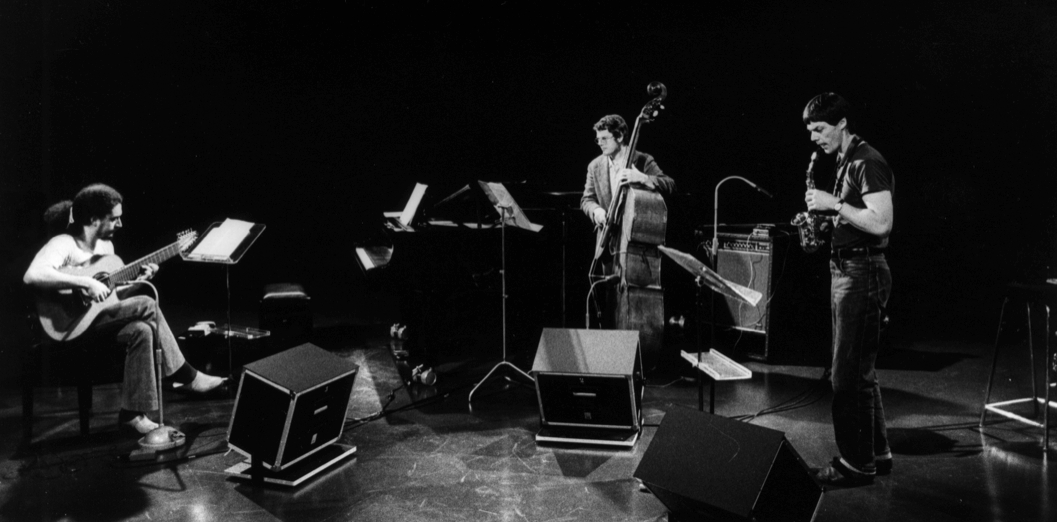
2012 has seen quite the magic act of releases from ECM’s archives. The encore comes literally so in the case of Magico: Carta de Amor, as the trio of saxophonist Jan Garbarek, guitarist/pianist Egberto Gismonti, and bassist Charlie Haden takes the stage in newly restored 1981 performances at Munich’s Amerika Haus, host to such classic recordings as Ralph Towner’s Solo Concert and the Art Ensemble of Chicago’s Urban Bushmen. From their studio work, these three mavericks draw a distinct blend of signatures, while from the two years spent touring prior to this recording they accomplish feats of improvisation that perhaps no studio could have induced or contained.

Bookended by two versions of Gismonti’s title track, a beautiful love letter indeed to the wonders within, Haden’s 16.5-minute tribute to Dolores Ibárruri, “La Pasionaria,” lends substance to the feathers in between. The entrance of bass is as effortless as it is invisible, dropping into the foreground as it does from the line of Garbarek’s ornamental reed. Changing his Liberation Music Orchestra clothing for something more romantic, Haden offers “All That Is Beautiful” (making its first appearance on record), an emotionally epic vehicle for Gismonti, who takes seat at the keyboard and sprinkles it with clouds and weighted dew.

If these are the tire tracks left behind, then “Cego Aderaldo” is the vehicle that left them. Driven by the 12 focused strings of its composer, it keeps us balanced along the album’s craggiest terrain. Here Garbarek does something wondrous as he opens the passenger-side door and jumps over the cliff, spreading burnished metal wings across a landscape that welcomes his flight with thermals galore. Gismonti continues on, spiraling up to the apex. There he plants not a flag of conquest, but seeds of thanksgiving. From the dulcet “Branquinho,” with its distant ideas of brotherhood, to the shining reprise of “Palhaço,” his fulfilling melodies bring out the playful best in Garbarek. If there were ever any doubts about the group’s unity, let “Don Quixote” stand as Exhibit A toward quelling them. Like the novel for which it is named, it is a critique of belittlement and insincerity in a society gone mad. It moves at the leisurely pace of a mule whose grandeur resides not without but within.

Garbarek gives us a triangle of stars, including folk song arrangements that whistle through dynamic peaks and valleys and a fully opened rendition of “Spor” (compare this to its infancy in the studio on Magico). To this mysterious canvas, Garbarek applies shadow on shadow, seeking out wounds of color in the language of his band mates before diving into repose.


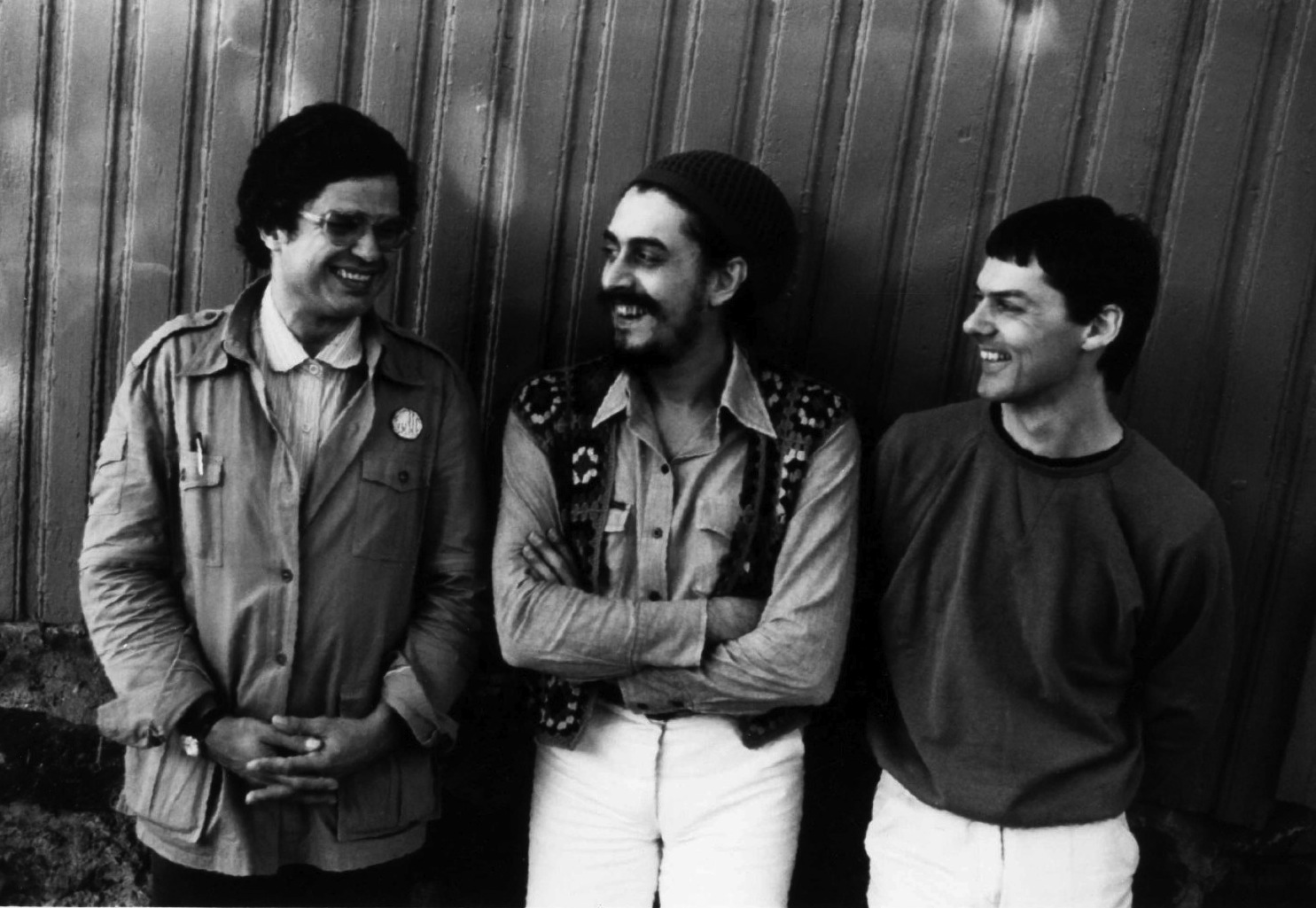
(Photos by Ralph Quinke)

While the unity expressed by these musicians is surely enthralling, it comes closest to perfection in the monologues. Garbarek’s energy is, if I may appropriate a Douglas Hofstadter subtitle, an eternal golden braid—one that nourishes itself on the light of which it is made, self-replicating and beyond the measure of value. Haden unfolds themes fractally. Trundling through empty streets with dog-eared book in hand and love in its margins, he brings closure to uprisings of the heart. Gismonti, for his part, is as breath is to lungs.

Let their individuality inspire you to action.

(To hear samples from Carta de Amor, click here.)

Evan Parker Electro-Acoustic Ensemble: Memory/Vision (ECM 1852)

Memory/Vision

Evan Parker soprano saxophone, tapes and samples
Philipp Wachsmann violin, electronics
Agustí Fernández piano, prepared piano
Barry Guy double-bass
Paul Lytton percussion, electronics
Lawrence Casserley signal processing instrument
Joel Ryan computer, sound-processing
Walter Prati electronics, sound-processing
Marco Vecchi sound processing, electronics
Recorded October 2002 at Norges Musikkhøgskole, Oslo
Live sound: Cato Langnes and Pål Klaastad
Recording engineer: Henning Bortne
Mixed December 2002 at Gateway Studio, Kingston-upon-Thames by Evan Parker and Steve Lake
Mixing engineer: Steve Lowe
Produced by Steve Lake

An introverted biological excursion percolating through the crevices of reason? The fundamental opposition of oil and water made whole? A wired caterpillar turning painfully into butterfly? If images exist in answer to these questions, Evan Parker has drawn them throughout the massive intimacies of Memory/Vision. He and his Electro-Acoustic Ensemble have created a monster, and its name is “chronotopology.” The selfsame theory, invention of esoteric philosopher Charles Musès (1919-2000), sees the phenomenon of chronology as an effect of microscopic breaks in the space-time continuum. Relativity strings these breaks into beginning, middle, and end. In its attempt to embody chronotoplogy to the utmost, the EAE hurls ghosts of instruments—through real-time electronic manipulation—into the abyss exploded by violinist Philipp Wachsmann, pianist Agustí Fernández, bassist Barry Guy, percussionist Paul Lytton, and Parker himself on soprano saxophone. Dancing with a wide array of accoutrements, and aided by a first-class team of sound processors, this nonet dives headlong into the piano’s harp skeleton and resurfaces with the voice of a prophet in its teeth. One can draw points of contact between it and, for starters, the work of jgrzinich, George Crumb, and even later Heiner Goebbels. Yet rather than read into it, I propose that you let it read into you.

What you hear is the voice of an un-caged bird looking for the past that flourished beyond its capture. The rush of water would sooth you in this dream were it not for the drought that veins the land with understated death. Suddenly, the piano turns upright and levels its paroxysms on a field of ebony and ivory. Reeds and bows balance on the edge of something free, coughing out the fulcrums of their revolution as stardust. Shades of recital bring their hummingbird thoughts to bear upon insectile realities. This is the corona of a storm that will never blossom and wither. A thistle of sound, prickly and rare.

What you see is yourself falling down the rabbit hole, your fingers scratching glyphs into the dirt and roots that funnel you into oblivion. Each of these yields a navigable direction. The patter and movement of birds indicate a world beyond the beyond.

What you feel is the sky growing cilia, tickling the borders of your skin and the biases it wears. Shifts of color and water link worm-hooks of possibility into recycled chains.

What you taste is the mineral of your anxiety, the acid of expectation folding into spontaneous acceptance. Itself a form of improvisation, it splashes across the ornaments of your social life until they glisten anew. With them comes the flavor of experience, the privilege of assumptions made after the fact.

What you smell is something burning from the inside out, singed bones crackling with transformation: the promise of embers condensed into charcoal and scribbled across the face of an unwound clock. Breathing in the haze of this cerebral (de)construction zone, you do not cough, but rather sleep for all the warmth that has embraced you.

You’ve hit the ground. You’ve experienced all these things, have through them known the measure of your life. If the music treads above you, it’s because you are beneath it. If below, it’s because you aren’t low enough. Parker and company have thus accomplished the impossible: breathing out by breathing in.

Crispell/Peacock/Motian: Nothing ever was, anyway – Music of Annette Peacock (ECM 1626/27)

Nothing ever was, anyway – Music of Annette Peacock

Marilyn Crispell piano
Gary Peacock double-bass
Paul Motian drums
Annette Peacock voice
Recorded September 1996 at Right Track Recording Studios, New York
Engineer: Jan Erik Kongshaug
Produced by Manfred Eicher

It’s astonishing to think that the music of Annette Peacock, given its rare and just dues on this essential 1997 release, has not been buried under more attention. Then again, when listening to it in the hands of pianist Marilyn Crispell (in her ECM debut), bassist Gary Peacock, and drummer Paul Motian, we feel it casting itself into a well of reflection so deep that it burrows out the other side of the earth, far beyond our reach. That it remains true to heart is part of its magic.

Annette’s mode of choice is the ballad, through which she forges sweeping landscapes of understatement. Her music is skeletal in the truest sense, using bones not as anchors for flesh, but rather as chambers for marrow and quiet emotional floods. The title track doubles as bookend, clothing us with and stripping us of a sound-world that thrives on the shadows of its language. These utterances are fleeting, imperative smiles that turn cloud into rain, lifting themselves like sentient decals from the sheet of time and turning slowly toward the splash of adhesion introduced by the rhythm section’s entrance. That the latter borders on superfluous is by no fault of the musicians, but by nature of Annette’s music, which is anything but simple. It is, rather, so full that the stony and rounded sighs our guides manage to elicit breathe with the density of a philosophical act.

Crispell tours a gallery of traveling installations, reflections of experiences served on two CDs for the nourishment of the sonically hungry. “Butterflies that I feel inside me” finds bassist Peacock in motion, redefining space with the humble genius he has brought to so many ECM sessions before and since. Here there is something more than the sum of his strings, as each player brings out the best in the other. Listen to the fissures of pure bliss in “open, to love” or “Albert’s Love Theme” and be moved as the trio opens intuitively, cutting a relenting and cinematic cloth into silhouettes of reason. An unexpected cameo from the composer herself draws a frayed thread through “Dreams (If time weren’t).” Annette’s vocals, raw to the core, embrace words like children of sentiment in a tale of fate and circumstance. This opens a path for Gary to indulge his apportioned commentaries, and for Crispell to voice every whisper of the heart that moves her. Following this is “touching,” which might as well be the ethos of the entire set. Touching is the focus of its attention. Touching is the embodiedness of the mood, which selects points of contact so carefully that it can only be spontaneous.

Let us not gloss over Motian, who is a wonder. His banter is forever sincere and offsets monologues with unerring intimacy. From the Carl Stalling-inspired “cartoon” and on through a string of brilliant vignettes that includes “Miracles” and “Ending,” we arrive at the arrayed sensitivity of “Blood.” It is the taste of an album that, by its end, has become a mirror within a mirror, at once reflector and reflected. Needling its compass toward the stillest horizon, it stands out like a name in a culture of anonymity.

<< Mozart: Piano Concertos / Adagio and Fugue (ECM 1624/25 NS)
>> Christian Wallumrød Trio: No Birch (ECM 1628
)

John Abercrombie Trio: Tactics (ECM 1623)

John Abercrombie Trio
Tactics

John Abercrombie guitar
Dan Wall Hammond B3
Adam Nussbaum drums
Recorded live at Visiones, New York, July 13-15, 1996
Engineers: David Baker and Bob Ward
An ECM Production

Third time’s a charm for the John Abercrombie Trio, which plants its eponymous guitarist along with Hammondist Dan Wall and drummer Adam Nussbaum in live soil at last. The change of setting does wonders for an already deep and exploratory group, the difference immediate in the shadowy fade-in of “Sweet Sixteen,” which introduces the instruments in a stepwise procession of agents. As Wall rolls his gentle grit across the plains of his solo, we are reminded of the organ’s rich history in jazz, and of the lineage (Larry Young, Jan Hammer, etc.) he draws from in, and transcends by virtue of, his playing. On this date, it’s his programmatic touches that cut deepest. His heat-distorted circles of talk in “Last Waltz,” for example, turn an already slow and arid tune to a state of conduction for Abercrombie and Nussbaum’s exchanges. So begins the album with two of three Abercrombie originals, the last being “Dear Rain,” which also stands as an exposition of the organ’s tender side, plush yet understated. Wall hits on two tunes of his own. “Bo Diddy” is a hip excursion into hard bop details. Nussbaum rocks the boat but keeps it afloat, supporting some of Abercrombie’s fieriest playing in a long while. A tight ground line from Wall indicates a bassist’s approach. This energizing run leaves us primed for something smooth and smoky. This we get in “You And The Night and The Music.” In this timeless standard, Abercrombie locks himself into what I like to call a “smoove groove.” Next is Nussbaum’s “Chumbida.” It is a slow-moving train that dreams of its celeritous youth, only to awaken to it in reality. It accomplishes this through no small feat of development before blending into Wall’s #2, “Mr. Magoo,” which winds the album’s tightest knots from all three, finally petering out into “Long Ago (And Far Away),” a laid-back groove that finds Wall and Abercrombie finishing buoyantly and warmly.

What’s special about this trio is that, even at its most enthralling moments, there is always tenderness to spare. Tactics may seem a curious title, especially when we think of it in the militaristic sense, but in the linguistic sense—i.e., patterns which combine to form larger constructions—it holds true. Abercrombie, Wall, and Nussbaum have done precisely that: taken patterns of the art to which they dedicate their lives and spun them into narratives with lives of their own.

<< Cain/Alessi/Epstein: Circa (ECM 1622)
>> Mozart: Piano Concertos / Adagio and Fugue (ECM 1624/25 NS
)

Masabumi Kikuchi Trio: Sunrise (ECM 2096)

Masabumi Kikuchi Trio
Sunrise

Masabumi Kikuchi piano
Thomas Morgan double bass
Paul Motian drums
Recorded September 2009 at Avatar Studios, New York
Engineer: James A. Farber
Assistant: Rick Kwan
Produced by Manfred Eicher

On paper, Tokyo-born pianist Masabumi Kikuchi may look the stranger, but put laser to disc and we’ve known him for decades. His prodigious talents were already clear in his teens, by which time he was sharing stages with Lionel Hampton and Sonny Rollins. He cut his first record—1963’s East & West—for Victor with Toshiko Akiyoshi and Charlie Mariano, the latter of course with formative ECM connections in work with Eberhard Weber. Kikuchi would get even closer to the label when he formed a trio with Gary Peacock and Paul Motian in the early 90s, releasing a string of albums under the moniker Tethered Moon for Winter & Winter. From there, Kikuchi continued his alliance with Motian on this ECM debut, adding 31-year-old bassist Thomas Morgan, for his most intuitive session yet. Having torn a page or two from the book of Paul Bley in the past, Kikuchi cites Motian as a major influence on his more recent endeavors, and indeed we feel in his artistry a pianistic equivalent of the late drummer, forever curious about what might be dancing just around the corner. That this would be Motian’s penultimate recording makes his contributions all the more poignant. His tsking filigree and palatable intimacy treads every rubato path like a millipede, predicting likeminded bursts of spontaneity from the keys.

Three tracks marked “Ballad” twine their way into the album’s skeleton, its veins pulsing with the nourishment of a freely improvised suite in ten parts. The lack of rehearsal is proportional to the music’s power of realization, rendering arbitrary such individual titles as “New Day” and “Short Stuff,” in spite of their economy of description. The listener will note that our idiosyncratic leader has a vocal presence, not so much singing like Jarrett as straining and growling against the tide that threatens to subsume him. As for Morgan, his bass creeps in at times like sounds from dreams upon waking. His gestures are listless and sincere, each a new ligament that leaves us stilled in golden light.

Kikuchi’s surname (菊地), if one wants to be literal about it, translates to “land of chrysanthemums.” It’s an appropriate analogy for quiet splendor of this all-too-ephemeral trio’s sound. It is similarly horizontal, training its microscopic lens wide and far within rather than trying to spike or send it skyward, until by the end it has thinned to comforting invisibility.

(To hear samples of Sunrise, click here.)

Anders Jormin: Ad Lucem (ECM 2232)

Anders Jormin
Ad Lucem

Mariam Wallentin voice
Erika Angell voice
Fredrik Ljungkvist clarinet, bass clarinet, tenor saxophone
Anders Jormin double-bass
Jon Fält drums
Recorded January 2011 at Studio Epidemin, Göteborg
Engineer: Johannes Lundberg
Assistant engineer: Petter Eriksson
Executive producer: Manfred Eicher

As a regular alongside greats Charles Lloyd, Bobo Stenson, Jon Balke, and Tomasz Stanko, Anders Jormin has taken irreplaceable part in some of the strongest records of the last two decades. Yet the Swedish bassist is also a fine composer, and in this vein has honed a sound-world uniquely his own. Ad Lucem is his third such project for producer Manfred Eicher, who has given him all the space his elements require to burgeon.

If water is ECM’s reigning elemental obsession, then light is a close second, and the title of Ad Lucem indeed activates the mind as if it were a prism. The setting places Jormin in unusually arrayed company. At its heart is the trio consisting of multi-reedist Fredrik Ljungkvist, drummer Jon Fälit, and Jormin himself. From this nexus spring the voices of Mariam Wallentin and Erika Angell, singing lyrics by the group’s leader. In Latin, no less. Regarding his preference for this “dead” language, Jormin appeals to its “sense of eternity and mystery”—qualities that lend themselves to the even more ancient language of improvisation. Wallentin and Angell, both experimenters of vibrant import, unravel the compact economy of his words, doing so sometimes without them, as in the diptych of “Clamor” and “Vigor.” Spinning the hearth of this music into a yarn of embers, they pass through the stained glass window of Ljungkvist’s tenor. Their every gesture becomes a color, joined by the solder of Jormin’s bass. The sentiments of “Hic et nunc” express it best: Here and now / Felt deep in my heart / Forever – twin souls touching each other. Over a meditative arco line and drums of distant plains (the patter of giants before a war?), they bring peace and stillness to the air, as also to “Inter semper et numquam.” In this scene of breathless time and bleeding stones from Danish writer Pia Tafdrup, they blend like the strings of a bass whose vibrations now stretch to the constitution of vocal flesh. While the journey is generally arid and ruminative (“Quibus” one of its many desert skies), Fält’s osteopathic interlude, “Lignum,” brings us into the deeper wounds of “Matutinum” and the bright English lyrics—the album’s only—of “Vox animæ.” Other highlights (no pun intended) include the clarinet filigree of “Vesper est,” among the more memorable melodies of the set, and the stunning tenorism of “Lux,” almost Charles Lloyd-like in its delicate brilliance and emblematic of the album’s quiet dazzle. “Cæruleus” is a wrenching sutra with some wild reed work that frees us into a dual kiss of farewell.

The virtue of its linguistic garments gives Ad Lucem the appearance of something eternal, even as it dances in the ephemeral wiggle room of jazz. It is the vagabond saint, the whisky priest on his horse, the elephant in the room who can sing…and do so compellingly.

(To hear samples of Ad Lucem, click here.)

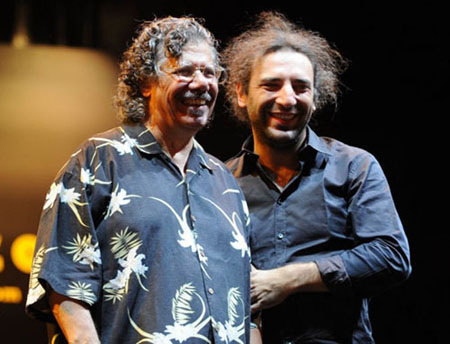
Chick Corea/Stefano Bollani: Orvieto (ECM 2222)

Chick Corea
Stefano Bollani
Orvieto

Chick Corea piano
Stefano Bollani piano
Recorded live at Umbria Jazz, December 2010-January 2011
Recording engineer: Bernie Kirsh
Assistant engineer: Roberto Lioli
Album produced by Manfred Eicher

It’s impressive enough that untouchables like Keith Jarrett have taken the art of solo piano improvisation to the depths they have. To maintain comparable wonder and cohesion with the addition of another 88 keys is another feat entirely. For Chick Corea the prospect has flung open the windows of creativity out onto exciting new landscapes. Having already realized this vision with greats old and new (Herbie Hancock an Gonzalo Rubalcaba among them), Corea takes an instrument already so full at his fingers and uses it as an invitation to Italian virtuoso Stefano Bollani. Of their eponymous performances, Corea remarks, “Orvieto was winter-cold. The experience was summer-warm.” The analogy of temperature proves salient, for throughout these spontaneous gigs audiences surely felt tingly all over from the crystalline precision of these two powerful talents: one a legend, the other perhaps someday to be.

Were it not for Corea’s unmistakable pointillism and the softness of Bollani’s release, the two might be nearly impossible to distinguish. Which is not to say these qualities don’t switch places at any given moment, telling us that such parsing is arbitrary. An “Orvieto Improvisation” begins Parts I and II, clearing the air of any pollutants and diving into the thick of things with a synergy of purpose that betrays far more than the two years Corea and Bollani spent playing together before the present recording. The second of these dovetails into the Miles Davis classic, “Nardis,” in which the closeness of contact is wondrous. It is a twisted music box come to life, a look back through forward means. The duo continues to lay the nostalgia on thick along a select handful of standards. Of these, “Doralice” feels most like childhood, sprinkled with life and love and everything in between. Its freshness breathes like wind through autumn leaves and imbues these timeless tunes with clear and present animation. The interweaving of “If I Should Lose You” and bygone ambiance of “Darn That Dream” show humility to the music at hands. And the piano’s percussion instrument status is nowhere more obvious than in “Tirititran,” for which Corea and Bollani take their syncopation to its greatest heights. Similarly astonishing exchanges abound in their rendering of Fats Waller’s “Jitterbug Waltz.”

The soundtrack quality of Jobim’s “Retrato Em Branco E Preto” sparks all of these feelings and more, as does the rounded edge of “Este Seu Olhar,” the latter unwinding with the precision of a player piano yet with the abandon of a frolic. These are of a piece with the pianists’ own compositions. Bollani gives us a breath of the city streets in his “A Valsa Da Paula,” turning philosophies into rattled change in the pocket, a new spring in the step, and the force of opportunity on the horizon. Corea counters with “Armando’s Rhumba,” wherein he clothes the program’s most transcendent moments with “La Fiesta”-like exuberance. It is the pinnacle of what these two can achieve, and a whimsical lead-in to the resolute “Blues In F.”

The music of Orvieto is about nothing if not detail. Had Corea and Bollani become visual artists (and who’s to say they are not), they would be engravers, drawing out from cold metal canvases a fully rendered world of ideas. Their art is their stylus, their touch the acid that turns contact to shading and dimension, our ears the paper on which the final images are printed.

(To hear samples of Orvieto, click here.)