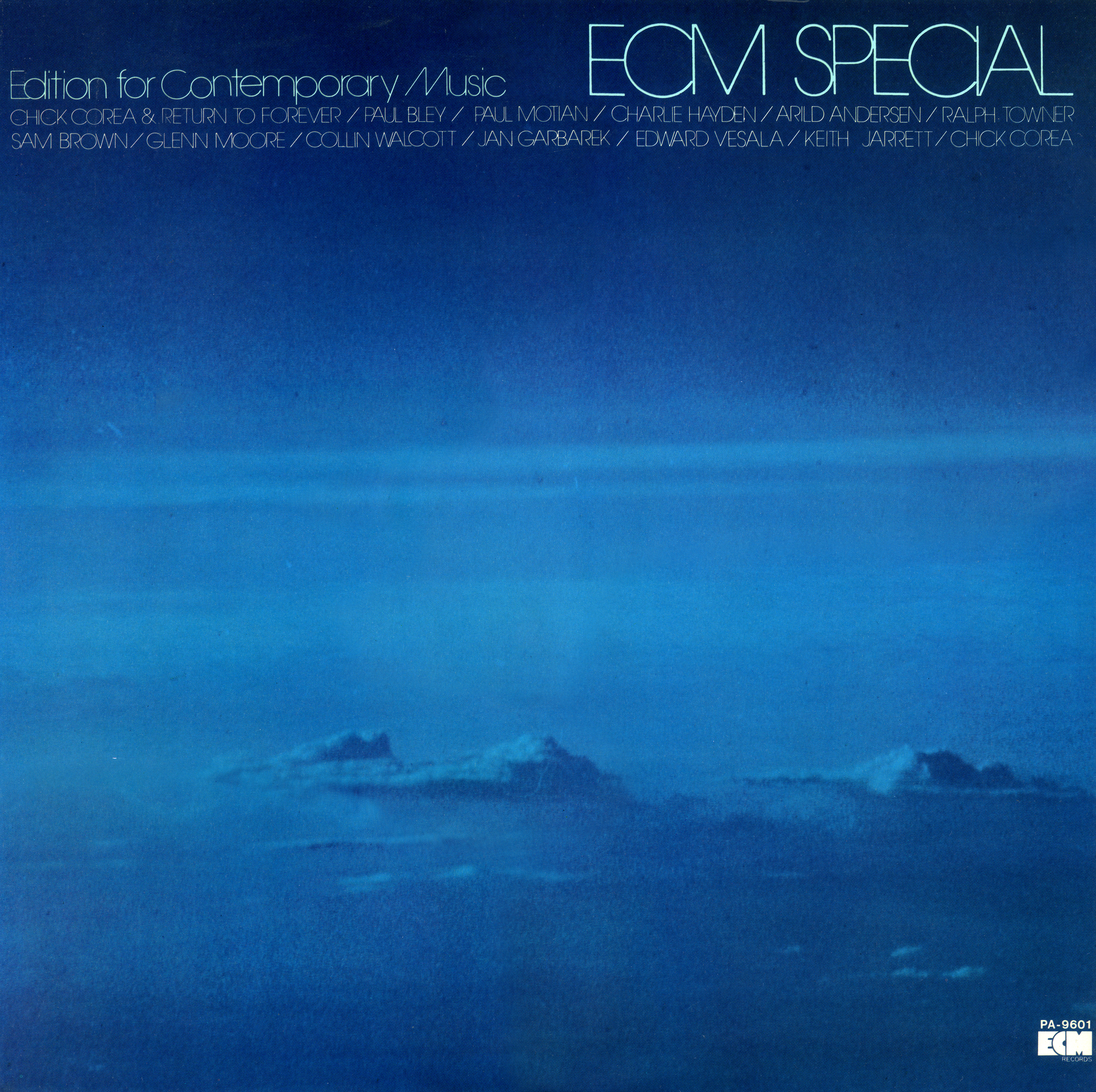
ECM Special IV: New Music in Trumpet & Saxophone

For the fourth volume in the Japan-only ECM Special series, we turn to a selection of tracks devoted to trumpet and saxophone, though the premise soon feels less taxonomic than metaphysical. Across the album, horn and reed serve as emissaries of the instant once melody slips free of intention. “Viddene” opens that passage with a descent into the font of Dis, the legendary duo album between saxophonist Jan Garbarek and guitarist Ralph Towner. Beneath them, a field recording of a wind harp stretches its drone into an almost mineral patience. Garbarek’s soprano, piercing yet hospitable, does not merely climb above the mountaintops but renders altitude a place where yearning can thin itself into radiance. Towner’s 12-string answers with wholesome grain and resonant wood, giving the saxophone’s aerial hunger a body to return to. The result is a soundscape of deep order, moving from abstraction toward groove.

In the wake of this dense conversation, “Tale” enters from Tomasz Stanko’s Balladyna, where the trumpeter speaks into the tensile architecture built by Dave Holland and Edward Vesala. The piece has a robust sense of motion, lumbering forward without losing balance, its gait full of alleyway intelligence and nocturnal cartilage. Stanko’s horn seems to carry a private flame cupped inside brass, illuminating only what it needs to continue. Nothing here explains itself, which is precisely why it convinces. The music fades while still in possession of secrets, leaving the listener with the sensation of having overheard a confession through a wall of smoke. “Svevende” returns us to Garbarek’s sound-world by way of Dansere, where his throaty reed cries with genuine emotional register in a setting only this band could have conjured. Bobo Stenson gathers the harmonic field around him, while Palle Danielsson and Jon Christensen give the rhythm a nervous, breathing intelligence. What begins in fragmentation gradually gathers into a more progressive pulse, around which Stenson and Danielsson inscribe their own Fibonacci sequence of lore.

Enrico Rava’s “By the Sea,” despite retaining the same rhythm section, changes the mood considerably, smoothing the surface until the music seems to stretch horizontally across an enormous inner screen. Taken from one of the trumpeter’s finest albums, The Pilgrim And The Stars, it sparkles all the more through John Abercrombie’s electric guitar, whose presence adds a filament of electricity to the surrounding calm. Rava’s melody moves with slick assurance, skating forward without needing to open its eyes, trusting the contours beneath it with almost dangerous grace. For listeners in 1977, the sound must have felt newly minted, a silver organism arriving from some studio out of time. Rava also closes the album in identical company with “Tribe,” from The Plot, and there the body returns with more visible muscle. A propulsive bass line is doubled by guitar, the cymbals flicker with chromatic wit, and Rava’s tone stays rounded yet incisive, peaking without snapping even the smallest twig in its surroundings. The groove has earth under its nails, but its mind is elsewhere, busy drawing constellations on the inside of the skull.

Between those two Rava signposts, Dave Liebman’s “The Call,” from Drum Ode, widens the album’s ritual dimension. One of only two ECM albums Liebman made as leader, Drum Ode remains a singular document, and this excerpt distills an ecstatic logic. His echoing tenor leaps joyfully amid a gathering of percussionists, a figure absorbed into a larger ceremony of impact and resonance. The title feels exact. This is a call, though not a summons, toward any ordinary destination. It is a signal sent backward through the body, toward the ancient percussive alphabet beating beneath thought. The energy is enormous, yet the recording never collapses into mere heat. ECM’s characteristic spaciousness gives even the densest passages a lucid edge, making the performance feel both historic and strangely unborn, a document whose ink has not yet dried in time.

Garbarek returns once again in “Belonging,” from Keith Jarrett’s timeless record of the same name. The duet opens in pianistic reverie before Garbarek’s soulful tenor walks into frame. Such seamless balladry grows rarer in an age increasingly trained to mistake synthesis for soul, yet here it stands, towering and alive, carrying its vulnerability without theatrical varnish. Then comes “’Smatter,” a gem among gems from Kenny Wheeler’s inimitable Gnu High. The bandleader’s flugelhorn converses with Jarrett’s unstable radiance while Holland and Jack DeJohnette keep the ground elastic beneath them. The piece lifts the spirits without sacrificing complexity, and Wheeler’s richness seems to come from a chamber deeper than technique. To hear this music now is to recognize that joy, when properly documented, becomes a difficult proof.

ECM Special IV is an evergreen meditation on breath under pressure, and its performances preserve the sensation of musicians listening so intensely that sound appears to enter the world through them rather than from them. The album’s profundity lies in its refusal to treat music as expression alone. This music suggests something stranger: that the self may be an instrument briefly borrowed by breath, a rented room through which larger silences pass on their way to becoming audible.
ECM Special III: New Music in Guitar

Following the first two ECM Special albums from the Japanese Trio Records imprint, this subsequent volume is the series’ first proper compilation, drawing finished tracks from a handful of canonical albums in the label’s history under the subtitle New Music in Guitar. That phrase is already a small philosophical disturbance. Not new music for guitar, as one might expect, but in guitar, as though the instrument were an interior world all to itself. Across these selections, the guitar becomes a threshold between the solitude of the hand and the vastness that opens when strings agree to tremble.

The journey begins with “Love Song” from John Abercrombie’s Timeless. On acoustic guitar, Abercrombie is joined by Jan Hammer on piano for a reverie that seems to hover in the afterglow of an otherwise phenomenally kinetic listening experience. The melody is tender and circular, a moonflower in fullest bloom of night. Interestingly, although drummer Jack DeJohnette is billed on the album, he does not appear on this duo track. Yet DeJohnette emerges alongside Abercrombie in the next selection, “Unshielded Desire,” taken from the first Gateway session, and the contrast is electrifying. This improvised powerhouse awakens the nervous system to the inspiring forces of these late greats, as Abercrombie’s guitar opens a fissure in the floor of the music, revealing a furnace underneath.

Next comes “Sad Hero” from Bill Connors’ enchanting Theme To The Gaurdian. Although Connors made only a handful of appearances on ECM, none were as intimately crafted as this. The present selection is a multitracked wonder in which different moths seem to gather around a single hidden lamp, each one casting a separate shadow from the same source. Connors plays with heartfelt attention to detail, yet the result never feels polished into sterility. The music carries the ache of an inward epic compressed into a few minutes of glowing filament. This track feels strangely inevitable beside Terje Rypdal’s “Like a Child, Like a Song,” the concluding piece from After The Rain. Another superior example of a single musician creating an entire world from scratch, it is characteristically fluid and dreambound in its quiet intensity. Amplified strings and piano are the primary voices, for all an elegiac vapor that erases the wall between composition and dream inscription.

No such sequence would be complete without Pat Metheny, and here we receive two prime examples of his early ECM language. “Watercolors,” from the album of the same name, threads his seamless lines through the fine needles of Dan Gottlieb’s drums and Eberhard Weber’s bass, giving the music a buoyancy both relaxed and exacting. Metheny’s phrasing already has that unmistakable sensation of forward motion carried by inner light, each note advancing with the composure of a traveler who knows the road because he has invented it beneath his own feet. “Missouri Uncompromised,” from Bright Size Life, shifts the terrain with Bob Moses and Jaco Pastorius at his side. The track veers into more twisted paths of improvisational continuity, its angles brighter, its logic more elastic. Metheny’s unwavering commitment to notecraft remains intact, but here the music refuses the straight corridor, choosing instead a route through mirrored stairwells and sideways doors.

“Matchbook” brings together Ralph Towner and vibraphonist Gary Burton, and the title track of their first duo record holds up beautifully for its shining atmosphere and fluid morphology. Towner’s guitar finds an ideal counterpart in Burton’s luminous attack, and together they construct a miniature habitat of suspended lines in which every tone has a tensile purpose. Last is “Elbow Room” from Sargasso Sea, which carries Towner forward with Abercrombie, bringing the compilation full circle. Its combination of electric and 12-string signatures continues to sparkle through an inventive exchange that feels conversational without lapsing into casualness.

Listening to this album now, one can only imagine what it must have felt like for Japanese audiences encountering these sounds at the time, gathered under careful curation. What a treasure, certainly, but the treasure may not reside only in the tracks themselves. Perhaps it lies in the act of transmission, in the record as a vessel crossing languages without translating anything, carrying the grain of fingers, circuits, wood, and breath into another listening culture. In that sense, ECM Special III is a small ceremony of distance overcome. The guitar, held close to the body, becomes a machine for imagining elsewhere. And somewhere in that elsewhere, the listener discovers that music’s deepest intimacy may be its refusal to belong entirely to the one who made it.

ECM Special II

Returning to ECM’s formative years can feel like entering a chamber where the future has been stored in mineral form. The label’s early catalog still radiates that paradoxical condition of sounding both newly born and long remembered, and in the context of this rare Japanese compilation series, the effect deepens into something almost ceremonial. Following its 1973 predecessor, ECM Special II gathers fragments from separate iterations of the same dream, arranging them not as a set of nested thresholds. Taken as a concentric circle, the album moves from exploratory outskirts toward a luminous core, asking us to hear outtakes and canonical statements as parts of one larger organism, a spiral of unfinished thoughts becoming articulate in the dark.

At the outer rim are two outtakes from the classic album A.R.C., with Chick Corea at the piano and Dave Holland on bass, while Barry Altschul’s percussion scatters sparks across the floorboards. Holland opens “Country Song” with a line that seems to hitch itself to some imaginary caravan, sturdy yet strangely weightless, giving the track its momentum. Altschul adds a granular shimmer, while Corea moves between muted-string color and full-throated pianism with an Americana feeling that never settles into nostalgia. The foot-stomping vamp has charm, certainly, but its deeper value lies in the sense of musicians testing the tensile limits of a shared intuition. Holland’s soloing is robustly delightful, his amplified twang stretching across flat plains and invisible roads until the music begins to smudge at the edges. Corea’s atmospherics gradually loosen the frame, and what might first appear to be a minor archival curiosity begins to glow as a document of cognition in motion. “Vadana II” pulls the circle outward into more abstract terrain, where the trio’s passion seems almost too volatile for the vessel meant to contain it. The thread loosens, vanishes, returns with a changed face. Structures rise and collapse into their own scaffolding. What remains is a sonic kaleidoscope whose beauty comes from the audible heat of refinement.

One ring inward brings us to two pieces from Red Lanta, the singular collaboration between Arte Lande and Jan Garbarek, one of the most quietly enchanted productions of ECM’s first decade. Their pairing possesses a delicacy that never becomes fragile, a pastoral intelligence sharpened by inward pressure. Garbarek’s flute enters with a lilting candor, while Lande’s pianism opens corridors inside the harmony. In “Miss Fortune,” the duo cultivates a bucolic edge without turning picturesque, breathing through a faintly impossible geometry of sunlight combed over fields. “Cherifen Dream of Renate” leans further toward folk inflection, yet its dream logic resists any simple earthbound reading. The piece seems to remember a village that may never have existed, a place built from half-sung names and the amber residue of sleep. Together, these tracks deepen the compilation’s circular design, translating the restless inquiry of A.R.C. into a more inward grammar of tenderness.

At the album’s center stands “Kukka,” from Garbarek’s seminal Witchi-Tai-To, where his tenor assumes the foreground with a calm intensity. Bobo Stenson’s piano keeps opening new surfaces beneath him, Palle Danielsson’s bass crests with lyrical force, and Jon Christensen’s drumming seems to occupy every corner of the room without crowding it. Though it is among the more laid-back selections from an often kinetic album, “Kukka” is no less dizzying for its abundance of internal motion. Stenson’s soloing has that rare quality of sounding inevitable only after it happens, while Christensen transforms time into a field of hidden hinges. Danielsson’s lines rise with a singing patience, giving the performance one of its most quietly magical moments. What makes the piece endure is its refusal to announce its profundity. It simply unfolds, and in unfolding reveals that restraint can be a form of velocity.

And then there is “The Colours of Chloë,” from Eberhard Weber’s album of the same name, a masterpiece whose presence here serves as a subterranean engine. With Rainer Brüninghaus on keyboards and Ralph Hübner on drums, Weber shapes a sound that remains unmistakable even when stripped of context, intimate yet vast in its truth. Against the rolling tide of synthesizer, images of the past flicker with cinematic charge, allowing the ears to remember what the eyes never witnessed. That whistling threadline comes alive with possibility, opening a path for Weber’s elastic bass and Brüninghaus’s photoreal sense of color to shine forth. Few artists have ever assembled atmospheric and melodic architecture with such uncanny poise. Weber’s sound world found its perfect complement in Manfred Eicher’s production sensitivity, which here feels like a form of listening made visible.

ECM Special II embodies a small philosophy of adjacency, a record of how music migrates from margin to center and back again without losing its ambient temperature. The outtake, the duo miniature, the iconic statement, the remembered masterpiece: each occupies its place in a mandala that turns archival miscellany into metaphysical cartography. These tracks arrive from the past without behaving as relics, each bearing questions that have not finished asking themselves.

Perhaps that is the unexpected gift of this album. It does not merely remind us that ECM’s early years were fertile; it suggests that listening is a form of archaeology practiced on the unborn. We lower the needle and discover not what was, but what still waits inside what was.

ECM Special I

Among the many rarities I’ve come across in this journey to review all things ECM, few are as intriguing as the 10-part “ECM Special” series released in Japan on Trio Records throughout the 1970s. The tracks on this inaugural album, all recorded in the earliest part of that decade, exude the energy of an unlocked room. The compilation gathers music from a formative stretch in ECM’s history, but its deeper fascination lies in the way it catches artists at the edges of statements they were still learning how to make. These are not simply leftovers, alternates, or marginalia, but apertures into manners of completion. Thus, the album offers a small constellation of provisional illuminations, each track carrying the charge of musicians moving through the half-lit corridor between impulse and form.

The Japanese liner notes deepen the sense of this release as both a historical document and a carefully considered act of transmission. Manfred Eicher contributes a brief but telling note of thanks to Trio, giving the label his blessing not only for preserving ECM’s commitment to sound quality but also for helping introduce its artists to Japanese listeners with the seriousness and care their music deserved. Hisamatsu Noguchi’s accompanying history of the label situates the compilation at an especially early stage in ECM’s development: his note that ECM had released only about 20 LPs by that point reminds us how close this music still was to the label’s origins. “Over the last three years or so,” he writes, “the musically rich jazz records released by ECM have, in no small measure, also served as a warning to existing jazz records that have become bogged down in commercialism.” In that formulation, ECM emerges not simply as a new label with a distinctive aesthetic but as a corrective pressure within the broader jazz marketplace, insisting on space, intention, and fidelity at a time when such values could feel imperiled. Noguchi extends that idea in his praise of Eicher for providing his musicians with “a concert-like setting […] in which to realize their pure intentions and musical plans.” 

And yet, the first track on the album is not an “ECM” track at all, though it comes with a relevant provenance in tow. In February 1972, Chick Corea formed the first iteration of Return to Forever with Stanley Clarke, Joe Farrell, Airto Moreira, and Flora Purim, recording the band’s eponymous ECM debut under the production of Manfred Eicher. During this same period, Corea and Clarke were also working with Stan Getz in a group that included Tony Williams, and on March 3, 1972, that ensemble recorded Captain Marvel for Columbia. The album included several Corea compositions, among them “Captain Marvel” and “500 Miles High.” Because of label entanglements, with Return to Forever associated with ECM in Europe and the Getz/Corea project issued by Columbia in the United States, later reissues and compilations sometimes drew these worlds into partial alignment. On ECM Special I, this music carries the feeling of a border crossing, jazz history folding its passport into a paper crane and sending it over several oceans at once.

Featuring Corea on electric piano, Farrell on flute, Clarke on electric bass, and Moreira on percussion, “Captain Marvel” bursts forward with radiant, forthright energy. The Return to Forever identity is unmistakable. Clarke’s bass does not merely propel the tune. It persuades it, shoulders it, gives it a muscular itinerary and a gleaming set of wheels. Everything interlocks with rare confidence, the groove sustained by an internal combustion that never clots or dims. Farrell’s flute surveys the whole journey from a height of untroubled clarity, while Corea’s solo reaches outward with quicksilver assurance, threading brightness through the piece’s open frame. The result is evangelically kinetic, a song with its windows flung open to the luxurious irresponsibility of motion.

In light of all this extroverted velocity, “Seven II,” an unreleased take from Paul Bley’s Open, to love. This version offers a more compact reading of the Carla Bley tune, turning toward realms of infolding affection. Bley’s touch seems to ask questions that the piano answers only in fragments, with the gravity of a mind reluctant to flatten feeling into explanation. Dissonant turns open small fissures in the lyric surface. Improvisational asides appear and disappear with the delicacy of thoughts glimpsed in profile. Moments of friction and concentrated resistance somehow grant the music its most lucid affirmations. By the final bluesy flourish, the piece has bowed to its own interior turbulence.

“Georgian Bay,” from Conception Vessel, features bandleader Paul Motian on drums, Charlie Haden on bass, and Sam Brown on guitar. It is a richly flowing track that surrenders itself to fluctuations of astonishing clarity. The music feels hyper-real in its depiction of time and place, yet the longer one listens, the more unreachable its world becomes. Brown’s arpeggios ripple with patient luminosity, Motian’s cymbals and percussion scatter points of mineral brightness, and Haden’s bass moves through the piece with lyrical sinew and grave freedom. The track evokes a landscape without illustrating it, which is always the harder and more mysterious achievement. Its minimal means generate an immense field of suggestion. Nothing is overdrawn, yet everything seems haunted by a fullness just outside the frame.

“Strings” is an unusual track, with Chick Corea improvising on the internal strings of the piano. Brief, kinetic, molecular, and intricate, it feels torn from the instrument’s hidden nervous system. The piano becomes a cabinet of bones and metallic dreams from which Corea coaxes a dense concentration of gesture and possibility. Drawn from the archives of the Piano Improvisations duology, the piece has the quality of a private experiment that accidentally opens onto metaphysics. In less than a handful of minutes, it suggests that an instrument is never singular. It is a society of concealed mechanisms waiting for a sufficiently curious intelligence to disturb its sleep.

“Brujo II,” from the vicinity of Trios/Solos, brings together Ralph Towner on 12-string guitar, Glen Moore on bass, and Colin Walcott on tabla. The track begins with sparkling guitar, then Walcott’s tabla gives the music traction while Moore’s arco bass draws its shapes into audible being. The chemistry is sometimes looser than what ultimately made it onto the album, yet that looseness has its own revealing quality, a sense of musicians finding the floor as they walk across it. Towner’s guitar glints with prismatic discipline, Walcott supplies an earthy centrifugal pull, and Moore’s lines turn the surrounding space into a darkened planetarium. The piece feels exploratory in the truest sense, testing how much unknown territory an ensemble’s shared breath can hold.

“Counterphonymic,” a track that fell by the wayside of Facing You, is a brief improvised piece with a twisted, jazzy flavor that refuses to stand still. Its rhythms falter yet lurch onward with a strange uprightness, producing an anxious but satisfying momentum. One might call it drunken, were it not for the crystal-clear intentionality beneath the surface. Keith Jarrett’s phrasing keeps slipping through trapdoors of its own devising, yet every stumble becomes a decision retroactively revealed as necessary. The piece is full of crooked intelligence, a miniature theater of imbalance in which poise is achieved by declining all conventional forms of poise.

“Bruremarsj,” with Jan Garbarek on tenor saxophone, Arild Andersen on bass, and Edward Vesala on drums, comes from Triptykon. A traditional tune, it works beautifully through proudly air-filled lungs, carrying a heartfelt and playful quality. Garbarek’s tone has a rural austerity that does not exclude tenderness. Andersen’s bass grounds the piece with quiet conviction, while Vesala’s drums complicate the path without disturbing its communal spirit. The track feels unified in a way that does not require polish. Its open grain is the point.

“Noon Song II,” an outtake from Piano Improvisations Vol. 1, shifts between lyrical reverie and upbeat dance with an almost mercurial sense of character. Corea moves between inwardness and buoyancy without making either feel stable for long. The piece keeps discovering new rooms inside itself, some intimate, some vividly animated, each entered with the fluency of an artist for whom improvisation is not wandering but instantaneous architecture. Its beauty lies in the way tenderness can suddenly acquire a pulse and motion can suddenly turn reflective. Corea lets moods infiltrate one another until the distinction between them begins to blur.

Taken as a whole, ECM Special I offers a timely glimpse into the recorded and performing process during a foundational period in ECM’s history. Yet its value extends beyond historical curiosity. The album reveals that the periphery of a catalog can contain some of its most charged material, precisely because these performances have not been embalmed by canonical expectation. They show musicians shaping sound at the edge of decision, making art before art has fully recognized itself in the mirror.

The deepest pleasure of this collection is that it refuses the museum logic of secondary material. Rather than asking us to treat these pieces as supplements to more authoritative albums, it invites us to imagine creation itself as an incomplete archive, a series of rooms opening behind the rooms we thought were barred from entry. In that sense, ECM Special I teaches that music’s most profound revelations may not arrive as monuments. Sometimes they appear as side doors, pencil marks, fragments saved by accident, faint signals from the workshop of becoming. And perhaps the life we call finished is also only another take, preserved on some impossible label, waiting for an unknown listener to lower the needle and hear, beneath all our official versions, the trembling master we never knew we had recorded.

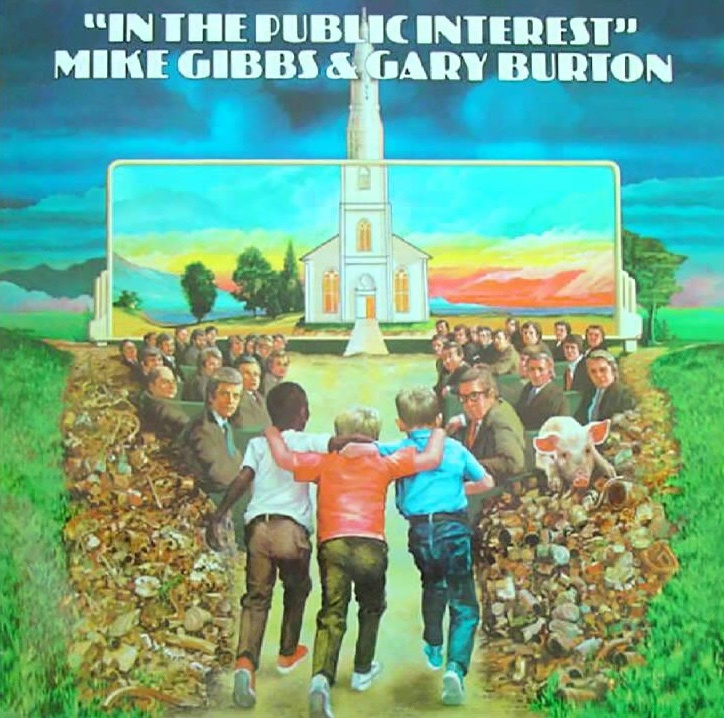
Mike Gibbs/Gary Burton: In the Public Interest

Mike Gibbs/Gary Burton
In the Public Interest

Michael Gibbs composer, arranged, conducted, producer
Gary Burton vibraphone, producer
Randy Brecker trumpet, flugelhorn
Marvin Stamm trumpet, flugelhorn
Pat Stout trumpet, flugelhorn
Jeff Stout trumpet, flugelhorn
Michael Brecker tenor and soprano saxophones
Harvey Wainapel alto and soprano saxophones
Paul Moen tenor and soprano saxophones, flute
Bill Watrous trombone
Wayne Andre trombone
Paul Falise bass trombone
Dave Taylor bass trombone, tuba
George Ricci cello (1,2,3)
Alan Schulman cello (4,5,6,7)
Pat Rebillot electric piano, organ
Allan Zavod piano, electric piano
Mick Goodrick guitar
Steve Swallow bass
Warren Smith percussion
Harry Blazer drums (1,2,3)
Bob Moses drums (4,5,6,7) 
Recorded at Electric Lady Studios, NY, June 25/26, 1973
Engineer: Dave Palmer
Mixed at Tonstudio Bauer, Ludwigsburg, West Germany, August 20/21, 1973
Mixing engineers: Kurt Rapp and Martin Wieland
Recording supervisor: Manfred Eicher

It has been well over a year since I’ve had enough time and energy to devote to this site. Now that I am back to posting regularly, in addition to catching up on ECM’s latest releases, I am resuming my quest to review every rarity I can find that may intrigue fans of the label. In that spirit, my readers sometimes do the finding for me, bringing things to my attention that I might otherwise have missed completely. Case in point is this out-of-print gem by way of Detrik, who dropped it in the comments, where it lingered for nine months before I gave it a spin. At last, I can offer my own.

Recorded in the summer of 1973 at Electric Lady Studios in New York and released a year later on Polydor, it bears the fingerprints of contemporaneous ECM productions. Manfred Eicher supervised the recording, which was mixed at Tonstudio Bauer by Kurt Rapp and Martin Wieland, the dream team behind Music From Two Basses. In this session, they render a rounded yet punchy sound.

Written, produced, and conducted by Mike Gibbs, In the Public Interest features a 21-piece band consisting of a robust brass section flanked by such heavyweights as saxophonist Mike Brecker, bassist Steve Swallow, guitarist Mick Goodrick, and drummer Bob Moses.

The A side begins appropriately with “The Start of Something Similar.” As the piano and vibes play in unison, dissonant brass gives rise to the theme before drifting into an atmospheric lull and back again. From this, one might expect a dreamier experience, but with “Four or Less,” it becomes obvious that reality abounds even when the musicians are at their most cerebral. Prominent now is the cello of George Ricci, who puts one rock into this stone soup for every two vegetables floating on top, Goodrick and pianist Allan Zavod stoking the fire until it all boils over in a free-for-all. Next is “Dance: Blue,” where groove is the name of the game. The horns evoke the colors of a 70s TV show (and all the associations that might come to mind with that image). Their carefree, youthful, seamless sound mellows as it goes, building a restrained strength in stretching out the theme.

After such a workout, it’s only fair that we are given a breather as we turn over to the B side, where “To Lady Mac: In Memory” awaits our ears.

A blistering flower of evocation, it features a soprano saxophone fluttering through heat waves of vibraphone on the way to “Family Joy, Oh Boy.” With weighty exuberance, this album highlight spotlights Burton in world-class form, navigating the maze laid out for him so adroitly by Swallow and Moses, who also share a savory dialogue. Lastly, the title tune, with its gentle carpet of vibraphone, electric piano, and cello, and “To Lady Mac: In Sympathy,” with its blushing skin, make for an easy offramp into contemplation.

In the Public Interest is an album of witty contrasts, thoughtful execution, confident melodies, and great charm. Listen to it here:

Music Hotel: ECM Musiktage Römerbad Badenweiler 1997 (VHS)

John Surman saxophones, clarinets
Anders Jormin double bass
Bobo Stenson piano
Dino Saluzzi bandoneón
Tomasz Stanko trumpet
Michelle Makarski violin
Jon Christensen drums
Rosamunde Quartett
Andreas Reiner
 violin
Simon Fordham violin
Helmut Nicolai viola
Anja Lechner cello
Filmed at Hotel Römerbad, Badenweiler, May 16-18, 1997
Edited by Pierre-Yves Borgeaud and Cyrille Nakache
Post-production: ARRI Studios, Munich
Executive producer: Fredrik Gunnarsson

Continuing in my coverage of ECM rarities, I was fortunate enough to be sent a copy of an obscure VHS tape documenting the 1997 Römerbad-Musiktage, where an eclectic group of ECM musicians gathered to perform as part of this annual musical event. The clamshell case insert provides the following description:

The Römerbad-Musiktage has been an important event in the contemporary music calendar since 1973, when impresario Klaus Lauer first began to present concerts in the Kuppelsaal of the hotel he owns in the South German resort town of Badenweiler. Although a wide range of music has been presented at the Hotel Römderbad, the emphasis has been on modern composition, and a close working relationship has been established with composers including Elliott Carter, Pierre Boulez, György Kurtág, György Ligeti and Wolfgang Rihm. In 1993, Lauer and music producer Manfred Eicher instigated another annual series, with performances by improvisors and interpreters associated with the ECM label. More than a mere festival, the Badenweiler meeting allows an informed public to witness ECM recording artists in the process of shared musical discovery. Spontaneity is the watchword as the musicians play together, in both proven and untested combinations. “The ECM Whitsun Concert Series at the Römerbad have become an enduring artistic experience,” wrote the Frankfurter Rundschau of the 1997 event. “The aesthetics of Eicher’s equally stringent and open agenda has acquired international renown. Listeners from 16 countries had the opportunity to enrich and modify their musical worldview and to perceive things unavailable at conventional music events.”

Sadly enough, the 50-minute video is not a document of the performances themselves. What we do get, however, is an intimate glimpse into ECM’s “behind-the-scenes” presence in the world of live music as Eicher brings together musicians that have rarely (if ever) shared a stage to create something as enduring in the minds of listeners as it is spontaneous in its coalescence. Filmmaker and friend of the label Pierre-Yves Borgeaud, along with coeditor Cyril Nakache, go to great lengths to clue us in not only on the logistics of putting together such an event but also on the everyday imperfections that must be ironed out to pull it off with elegance.

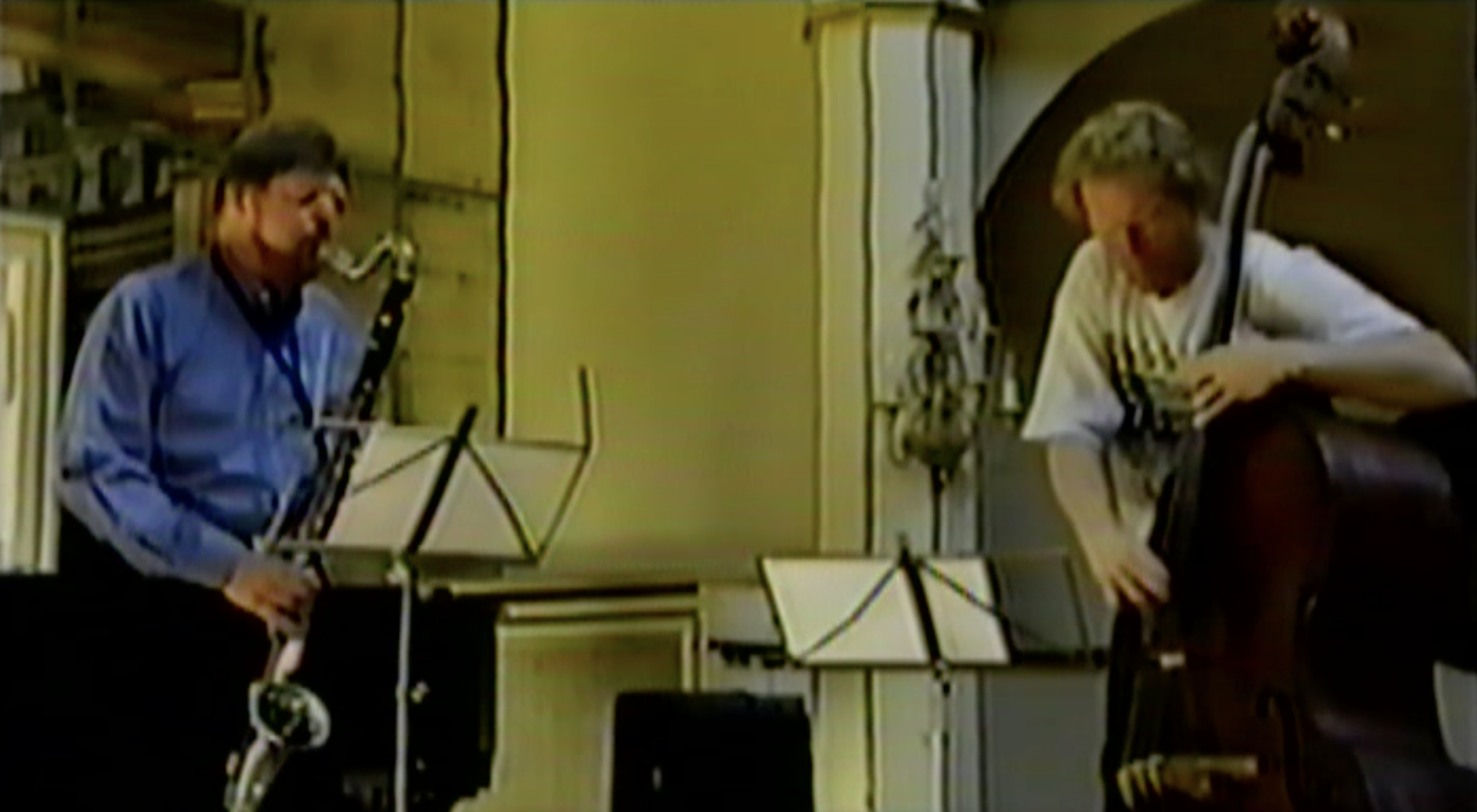
The split curtain that introduces us to the concert space, backgrounded by the unmistakable sound of John Surman’s bass clarinet, offers a sliver of orientation before we see the reed virtuoso in the flesh, along with bassist Anders Jormin, engaging in a measured dance as shots of the hotel’s interior and attentive staff are revealed in leisurely succession.

What follows is a series of rehearsal footage as Eicher molds the air with his hands, visually imagining what he hopes will take place when the room is populated with seasoned ears. Surman talks afterward about how easy it is to play with musicians who listen so deeply to each other before melodizing on soprano saxophone with Bobo Stenson and Jon Christensen joining on piano and drums, respectively.

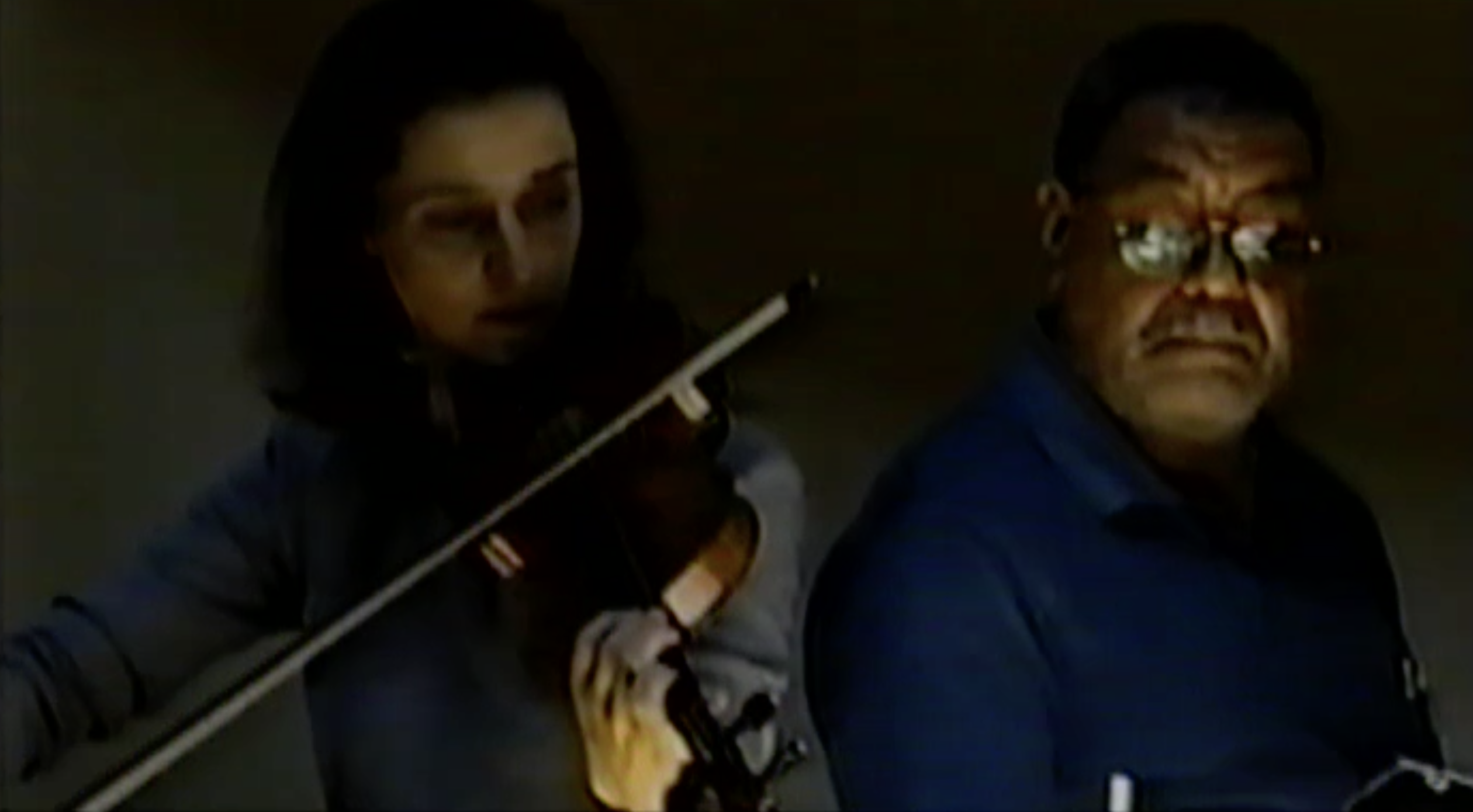
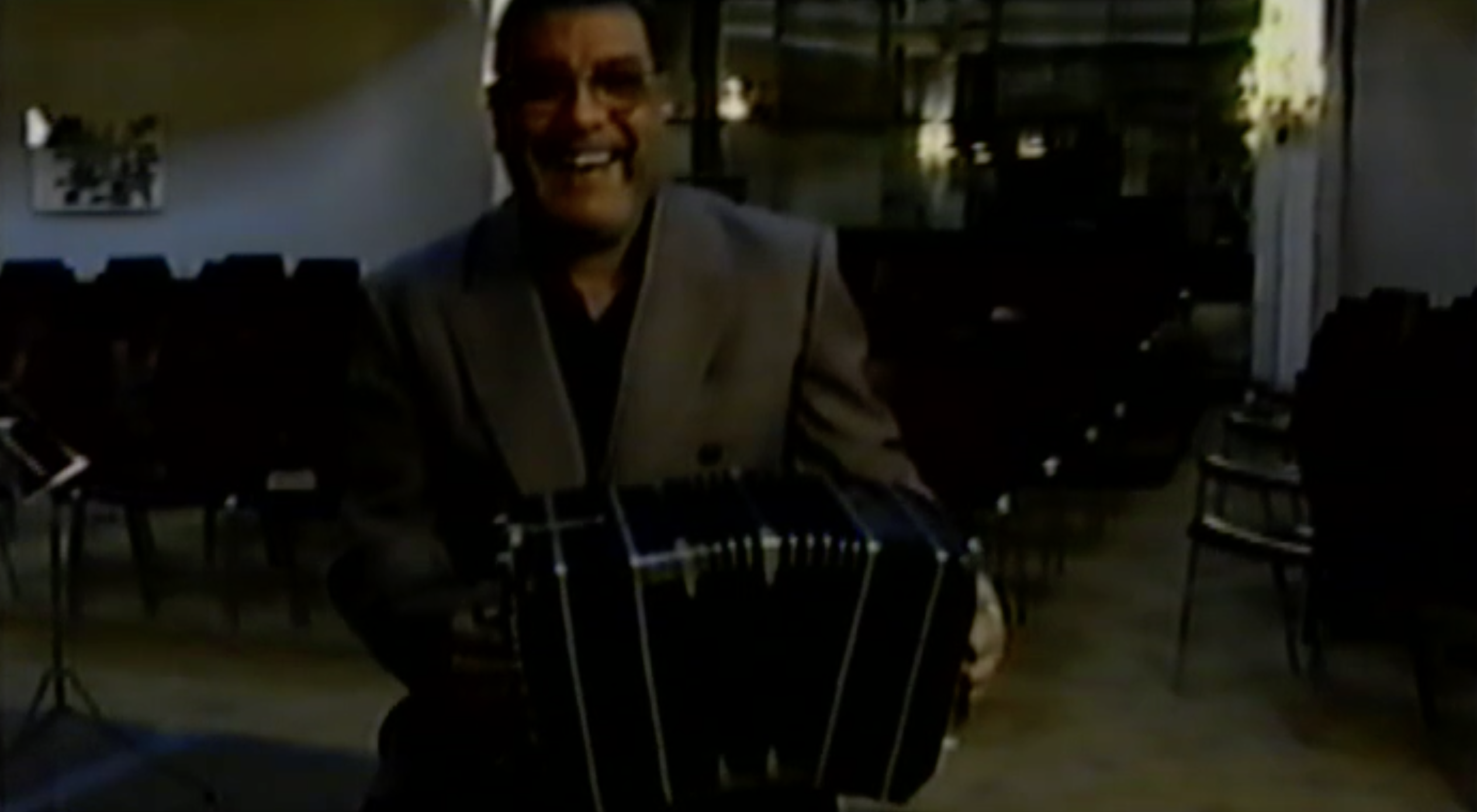
The film moves on to Dino Saluzzi, who fills the room with the resonance of his bandoneón as the other musicians decide on their configurations with Eicher’s input. They then augment Saluzzi with Jormin and trumpeter Tomasz Stanko. Violinist Michelle Makarski is also interviewed, expressing her love of improvisation despite her classical training and her gratitude for being among these jazz greats. She recalls being asked to perform the works of Keith Jarrett in New York City, which caught the attention of Eicher and resulted in the 1994 album Bridge Of Light, followed by her solo album Caoine one month before this film was made. Her sound meshes soulfully with Saluzzi and Stanko, the latter of whom talks about the beauty of the space, the dry acoustics of which allow for the cultivation of a fuller sound among such artfully curated musicians.

Saluzzi is the focal point of the most alluring ensembles, especially when he combines his sound with that of the phenomenal Rosamunde Quartett. Anchored by the robust cello of Anja Lechner, the strings pair wonderfully with Saluzzi’s generous spirit. In the interview that follows, he talks about pitching this formal music crossover as a blurring of divisions toward social harmony. His tangos uphold that ethos with utmost love, imprinting the film’s final moments with a message for all.

Peter Brötzmann: Nipples

Peter Brötzmann tenor saxophone
Evan Parker tenor saxophone
Derek Bailey guitar
Fred Van Hove piano
Buschi Niebergall bass
Han Bennink drums
Recorded April 18, 1969 at Tonstudio Bauer, Ludwigsburg (Track 1)and April 24, 1969 at Rhenus Studio, Godorf (Track 2)
Engineers: Kurt Rapp (Track 1) and Conny Plank (Track 2)
Cover design: Peter Brötzmann
Produced by Manfred Eicher + Jazz By Post

To my knowledge, Nipples is the only album produced by Manfred Eicher to not appear on the ECM label. This curious throwback was recorded in April of 1969, months before ECM’s first proper release would go down that same year in the famed Tonstudio Bauer, which yields the first track here. Of that track, which gives this album its name, we are given no warning, jumping instead into a blazing cacophony of sound. Even though it feels like waking up out of a coma in the middle of Shinjuku crossing, a bizarre sense of comfort begins to emerge the more one basks in its unrelenting glow. The one-two punch of Peter Brötzmann and Evan Parker on tenor saxophones bleeds on the proverbial page across which guitarist Derek Bailey, pianist Fred Van Hove, bassist Buschi Niebergall, and drummer Han Bennink add all sorts of diacritics, punctuation, and editorial asides. The result is like the chaos of peer review controlled in a single moving portrait wherein the listener’s visage gets split like Michelle Yeoh’s in Everything Everywhere All at Once. Despite (if not because of) this whirlwind approach, moments for solos abound, such as Van Hove’s flight of fancy about six minutes in. Against aggressive bowing and frontline drum work, his pianism kicks us in the shins and leaves us crawling for more. To that fray, Brötzmann and Bailey add uncompromising grit, all the while building up the ensemble to an ascorbic cohesion. A fantastic arco spasm from Niebergall in the third act yields equally favorable outcomes in this chameleonic chain reaction. All of this ends in a congregation of tails, each wispier and more meteoric than the last.

For the B-side, “Tell A Green Man” sheds Parker and Bailey to no less engaging effect. While the preamble from the rhythm section provides anything but discernible rhythm, its foundational qualities provide plenty of clay for Brötzmann and Van Hove to mold to their whim. Indeed, whim is the name of the game as irreverence ensues, dividing its equation until it bursts with the desire for recalibration. Niebergall’s scraping rears its tactile head for the listener to run a comb through, while Brötzmann gives himself over to less subtle temptations of vivacity.

Nipples first appeared on the Calig Records (Munich) in 1969 and was remastered by John McCortney in February 2000 at AirWave Studios (Chicago) for Atavistic. Three years later, Atavistic released a follow-up with outtakes from the same studio sessions. The result, called—what else?—More Nipples, offers up three tracks of invigorating mayhem. The title track gives up its ghost from the first moment, tracing its ephemeral paths with more delicate abandon. Despite a few ebb tides here and there, it focuses more on the inner than the outer. “Fiddle Faddle” is a reedy wonder dragged kicking and screaming through the fires of Niebergall and Bennink and may be my favorite of the collection for its control of free spirit. Finally, we have “Fat Man Walks,” which concedes to a groovier blues aesthetic, gut-wrenching and sincere in its devolvement into atonalism.

A much-needed call to attention in these dark times.

Interview: Keith Jarrett conducted by Timothy Hill

KJ front

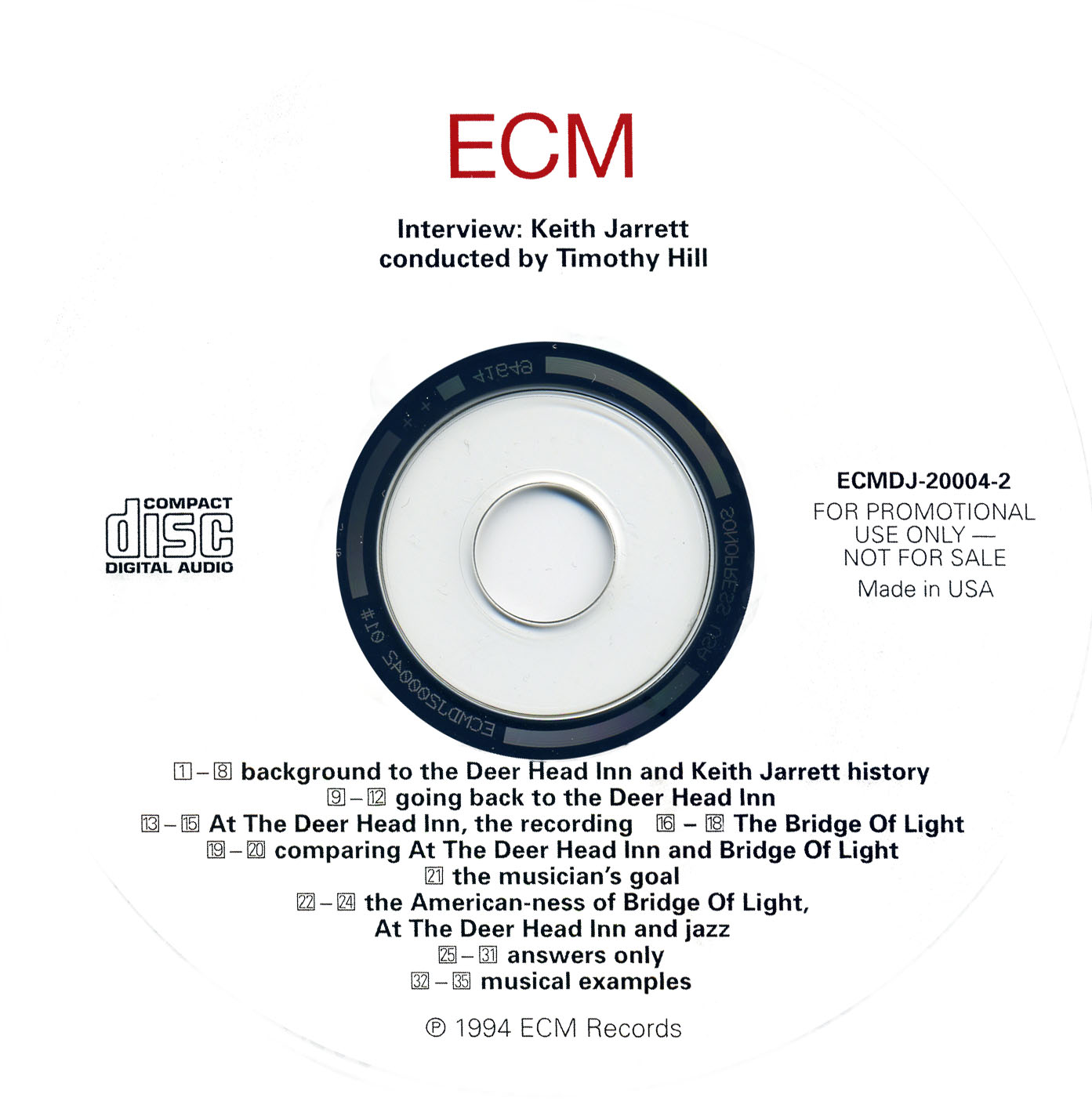
This ultra-rare promotional CD from 1994 contains an interview with Keith Jarrett conducted by Timothy Hill. Much of the interview is spent discussing the backstory and recording circumstances of At The Deer Head Inn, Jarrett’s phenomenal live album with bassist Gary Peacock and drummer Paul Motian, and Bridge Of Light, a program of classical music composed by Jarrett.

When Jarrett first encountered the Deer Head Inn itself, it was the only place of its kind in Pennsylvania Dutch Country, where jazz wasn’t exactly on the hearts and minds of communities far more concerned with everyday practicalities. Jarrett was living in Allentown, where jazz was limited to generic rooms at best. Deer Head was far enough away that he wasn’t really aware of it until he got his first regular gig there, playing drums for local pianist (and Jarret’s personal friend) Johnny Coates. “I learned a lot about what not to do twice,” he recalls of those early gigging days, long before the piano became his forte. After two summers of grabbing the Deer Head by its antlers, sitting in sometimes on guitar (which, incidentally, earned him an invitation from Stan Getz to play in a Calypso band), he left that part of his history behind to dive headlong into his career as a pianist. By the time the Deer Head gig materialized, he hadn’t played there as pianist for nearly three decades.

Many elements came together for that performance to make it what it was. First, the venue was a “piano room” in the truest sense, a place of intimate construction that practically begged for Jarrett’s song. Second was the fact that drummer Jack DeJohnette, his trio go-to, was unable to make it, leading Motian to fill in at the last minute. Third was the “behavior and concentration” of everyone involved—a rapt attention he attributes at least in part to Motian’s involvement. When things come together like that, following a natural flow without depending on “large things,” as he puts it, magic is born.

Jarrett further bows to a certain magic in the recording itself. He mentions the “crucial little keys” of how a player is feeling, and how technology may struggle to capture those details in such a beautiful way. In this case, however, they shine through with utmost clarity, including the vocal exclamations for which he is (in)famously known. “I should’ve written them a thank you note,” he quips, speaking of Peacock and Motian, who he makes a point of noting added their own whoops of excitement in the heat of the moment. “If I’m going to be the culprit, let it be all three of us.” The conversation turns naturally to the tune “Chandra” (included along with “It’s Easy To Remember” at the end of this CD), which Jarrett praises for Motian’s avoidance of sticks altogether. Where any drummer would start with brushes and switch to the punctuation of sticks, Motian’s continuous brushing spoke directly to Jarrett’s heart: “This is what we’ve got now. This is what it is. And it put me in another place, where the expectations were not the same as they would be every time you play.” Thus did Motian pull everyone into the center of things.

At around the time that Bridge Of Light was coming together, he was already working on a commission from Japan to write the Adagio for oboe and string orchestra featured on the album. When told there would be time left in the program, his thoughts turned to the Elegy he was writing for his Hungarian grandmother. Taking such an active role in directing that recording was, for him, like “being in charge of a country,” whereas Deer Head was like “being not in charge and knowing it would be okay.” Such polar, yet parallel, opposites would seem to define his career. At Deer Head, for example, there wasn’t any music until it was played, whereas in a classical setting, anxieties toward perfection ran high. Classical musicians, he avers, should be less obsessed over playing the same music better than anyone else and more concerned about being themselves enough not to care, allowing the music to “bloom for itself” instead. And if blooming is what it’s all about, then Bridge (from which the Adagio and the “Dance” of Jarrett’s violin sonata are also included here) is a veritable field of life.

“You don’t have to be emphatic when you’re doing something beautiful,” says Jarrett of the creative process. “If you emphasize the beauty of something, you might step on it.” And while one might easily flag this statement for hypocrisy, spoken as it is by someone who can stretch a concert staple like “Autumn Leaves” to well over 20 minutes, there’s a sense that Jarrett is always saying what needs to be said and, accordingly, wasting no notes whenever he’s “on.” As he observes of jazz: “It would be as though you were to write poetry in more than one language at a time…and make it somehow into a coherent language of its own.”

As interesting as the above insights are, at best I would say this rarity has value only as an archival curiosity for the Jarrett completist, though it’s always fascinating to hear him speak of his own work. Either way, the objects of this discussion tell more of their past, present, and future than even he could, and perhaps our journey to find and experience them is the strongest bridge of all.

20004-2-cd

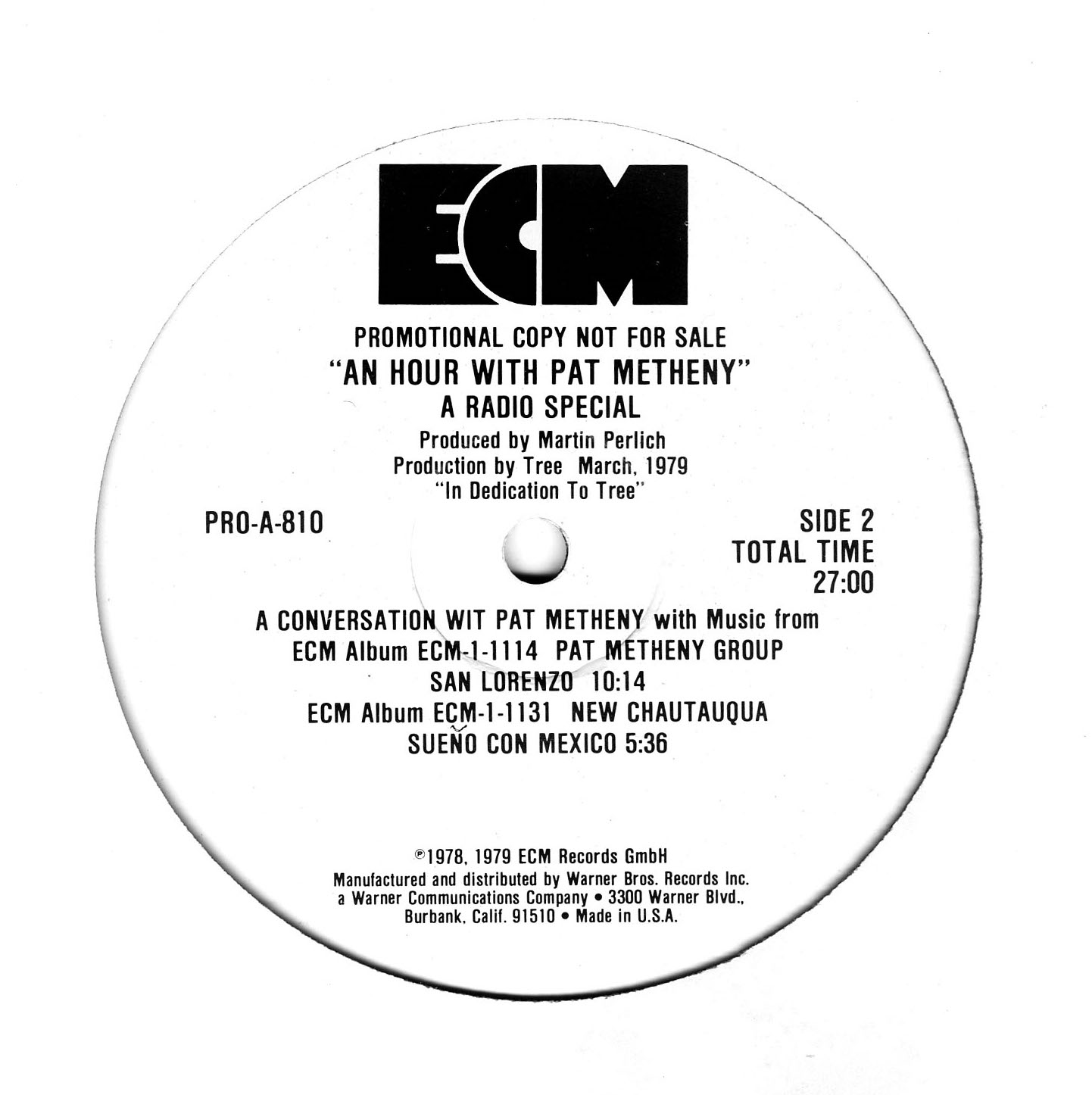
An Hour With Pat Metheny: A Radio Special

ECM PRO-A-810 Side A

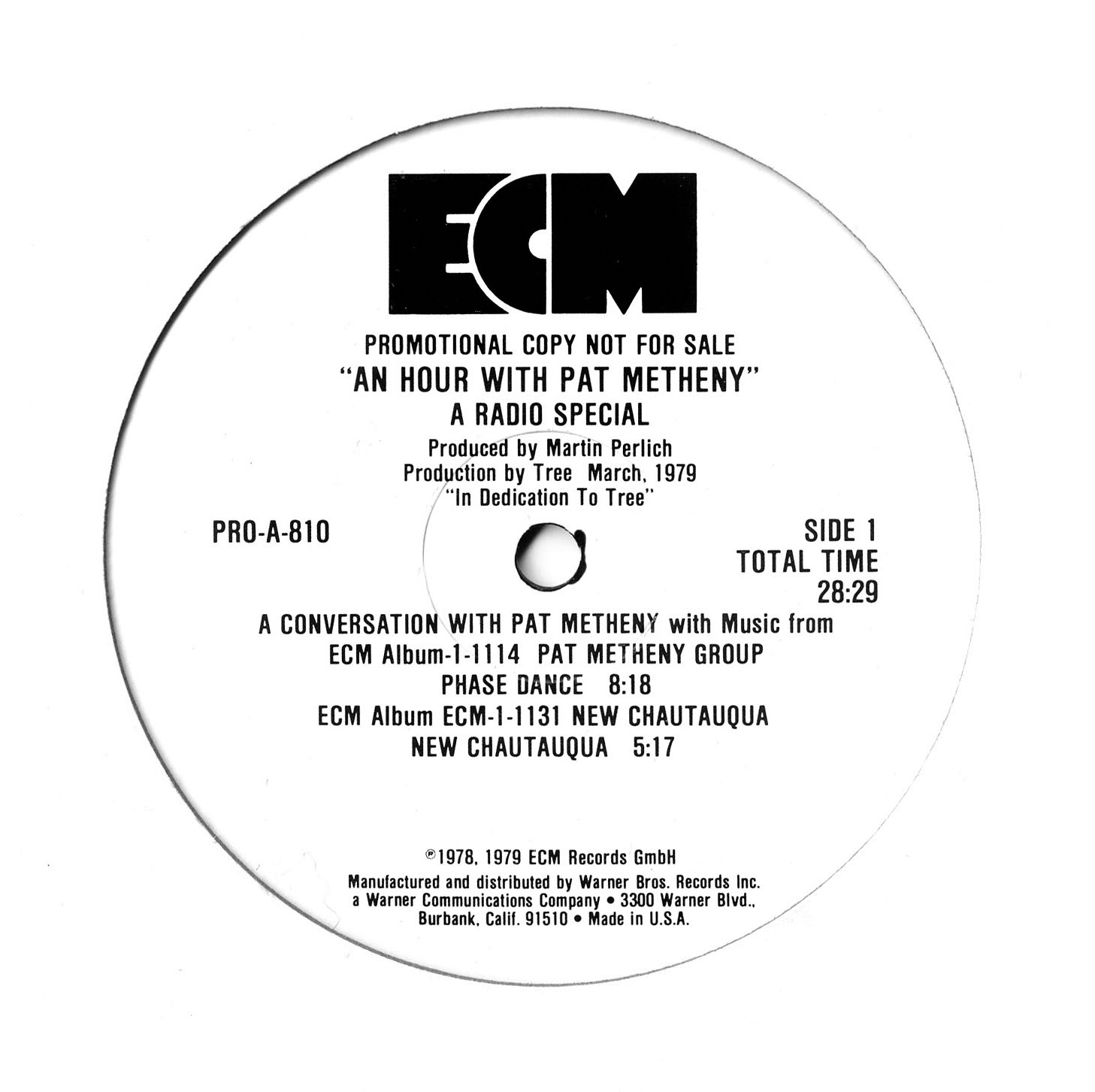
In March of 1979, Pat Metheny appeared on the “Oral Tradition” radio program (broadcast out of Venice, California) to talk about the Pat Metheny Group’s self-titled debut and his then freshly released solo follow-up, New Chautauqua. Produced by Martin Perlich, this hour-long special was released on a rare promo LP by ECM and features an in-depth conversation with the guitarist between selections from both of albums.

Metheny gets into the meat and potatoes of his upbringing. Growing up in small-town Missouri among a family of trumpet players, his brother Mike having taught the instrument at Berklee College of Music in Boston from 1976 to 1983, Metheny needed only reach his hand out to grab hold of one. And that he did, joining the school band and doing fairly well for himself until his need for braces put an end to his future in brass. Immersed as he was in Top 40 culture, guitar was an easy choice for a substitute, and so he picked out his first axe and starting swinging. After doing the “garage band thing” for about a year, at age 14 he had a watershed moment when he saw Wes Montgomery and Gary Burton’s group perform a stone’s throw away in Kansas City. Hearing improvisation in earnest for the first time, and in such close quarters, converted him to jazz on the spot. It wasn’t long before he had every album by Burton, Miles Davis, and John Coltrane he could get his hands on. He recalls how naturally the concepts of jazz came to him, whereas in rock music the role of the guitar was ultimately unclear. Sitting in with blues musicians in Kansas City, where he humbly guesses he was being brought onstage as more of a novelty at first than anything else, was his first real classroom. After a year of teaching in Miami, he joined Burton’s band with Steve Swallow, Bob Moses, and Mick Goodrick, all of whom saw something in the young guitarist. Along with their already-heightened abilities came the patience needed to allow someone like Metheny to blossom.

Metheny elaborates on his jump from rock to jazz. Whereas in the former vein he saw a vital sensuality that was of organic appeal to younger listeners, he also yearned for a subtlety that rock just didn’t have. He even gave prog (Deep Purple, Iron Butterfly, etc.) a chance in the hopes there might be something there. But he quickly realized how those guitarists were just “playing blues scales up and down like every rock player always did, [only] a lot longer and twice as boring.” It was in improvisation that he found the wider, more nuanced feeling he was searching for, and the first guitar icon to show him how it was done was Jimi Hendrix. Thinking back on it, he still wonders how Hendrix was as popular as he was. Still, Hendrix was in no way a conscious influence, but a talent to look upon with wonder. In Metheny’s estimation, the guitar was essentially neglected as a frontline instrument until Larry Coryell joined forces with Burton in 1967, paving the way for John McLaughlin and other pioneers. Before then, advances in guitar technology just weren’t developed enough to make it stand out against the harmonic landscape of a saxophone or piano. Coryell was groundbreaking for bringing a hard-edged sound to a jazz context, thereby widening the scope of what the instrument could do as a method of sound production. When Metheny himself came on the scene in 1974, the only viable gigs for jazz guitarists were with Jack DeJohnette, Chico Hamilton, or Burton. Burton was the natural fit.

From Pat Metheny Group we hear “Phase Dance” and “San Lorenzo.” In light these wonders, even Metheny is aware of their commercial appeal the non-jazz listeners (the album hit the Billboard charts, after all) but is adamant about changing nothing to achieve that success. “I just physically couldn’t play something that I didn’t really believe in,” he admits, thus capturing something essential to the steadfastness of his art.

Metheny transitions into reminiscing about touring in Oslo, where he spent three days writing, and two more recording, the music that would become New Chautauqua. Spurred on by fears of typecasting himself, and encouraged by producer Manfred Eicher, transitioning from a quartet to a solo project was the logical next step in his recording journey (though he isn’t without his sense of humor, as when quipping about a “fantasy record” with Lyle Mays and singer Nicolette Larson). Metheny likens the sound of Chautauqua to the open spaces of his childhood—hence the country twang of the album’s title tune (heard here, along with “Sueño Con Mexico” and “Daybreak,” the latter a nod to the Beatles’ “Please Please Me”). He also unpacks the title, which pays homage to the so-called Chautauqua who drove around playing one-nighters all up and down the Midwest (his great-grandfather, in fact, was a leader of one such group).

In addition to these anecdotal details, Metheny reveals a bit of his creative process. “Every time we hit the stage and we play the first notes, it enters a completely different realm for me,” he says of live performance, which is more than his wheelhouse but a way of life. He goes on to describe his style as one of playing “out” and never for himself, and shares an analogy for playing that was passed on to him by Burton: “There’s a whole grammar thing you go through when you’re becoming a musician and an improviser that’s very similar to…when you’re a child and you’re learning…how to speak…. It gets to the point where…you don’t think about verbs and pronouns and stuff…you just say whatever you have to say and it comes out. Sometimes there’s little goofs…but the message comes through if you’ve got something to say. It’s exactly the same when you’re improvising. You have this whole backlog of information, but when it comes time to play, as you become more advanced as a player, you think less and less about the technical things…and you just say what you have to say, and hopefully the audience will respond to what you’re saying if you make the picture clear enough for them.” And how does he respond whenever people come up to him and ask how he plays so well? “I haven’t practiced in four years.” The stage is where it all goes down.

“I don’t see myself as a guitar player that plays melodies in a setting,” he self-observes. “I see the act of playing the guitar and writing the tunes and having the band as a statement about what I want to be like as a guy, you know…. If I were ever not going to do that, I would go sell cars for my father.” Of course, we can be thankful he isn’t selling cars but rather music that was made to flow from their stereos as we drive along open roads to places we’ve yet to know.

ECM PRO-A-810 Side B