Art Ensemble of Chicago: Full Force (ECM 1167)

Art Ensemble of Chicago
Full Force

Lester Bowie trumpet
Joseph Jarman reeds, flute, gongs
Roscoe Mitchell reeds, percussion
Malachi Favors Maghostus bass, percussion, melodica, vocal
Famoudou Don Moye sun percussion
Recorded January 1980 at Columbia Recording Studios, New York
Engineer: David Baker
Produced by Manfred Eicher

Full Force begins in cool breath and ends in scalding heat, the inhalation and exhalation of its own mission. As one comes to expect from any AEC outing, tonal colors are on a mission to envelop us. Despite what the title would have you believe, this is an album of staggering subtlety and finesse. That being said, it is also an intense experience. The first such intimations appear early in “Magg Zelma,” which amid a delectable gamut of percussive signatures begins like an iteration of John Zorn’s Cobra—duck calls share the air with gongs, brass, and mysterious whistles—before the muddy bass of Malachi Favors is cross-hatched more regularly by cymbals and winds. Rhythmatist Don Moye keeps us in the loop as our reedmen crack a freedom egg. Big band horns carry us along through tight harmonies in “Care Free,” which lasts all of 51 seconds, prelude to the Mingus tribute “Charlie M.” Here, the mood and melody recall “A Sentimental Journey,” if through raunchier diction. An unhinged bass solo and some swanky sax from Roscoe Mitchell underline its narrative flow. “Old Time Southside Street Dance” christens itself with a bottle of fire. Laced with an incredible alto solo sustained by circular breathing and equally inexhaustible energy, this tune is perfectly programmed as the penultimate catharsis. A string of solos from trumpet, soprano, and bass skid into the finish line by the skin of their teeth.

These vagabond musicians prove their inventiveness at every turn, and nowhere more so than in via the Baroque chamber instruments woven into the prismatic title track. They hurtle forth with all the potential of a tornado compressed into a dot—a sweeping yet brief gesture, a calling out, a fluttering drum, a distorted voice, a bout of laughter, and a resolute twang running its fingernail around the edge of an enormous sonorous quarter.

Now occupying a well-earned place among ECM’s carefully chosen Touchstones series, this may just be the best entry point into the AEC’s fantastic ride.

<< Enrico Rava Quartet <<Ah>> (ECM 1166)
>> Reich: Octet / Music for a Large Ensemble / Violin Phase (ECM 1168 NS)

Steve Swallow: Home (ECM 1160)

ECM 1160 2

Steve Swallow
Home

Sheila Jordan voice
Steve Kuhn piano
David Liebman saxophones
Lyle Mays synthesizer
Bob Moses drums
Steve Swallow bass
Recorded September 1979 at Columbia Recording Studios, New York
Engineer: David Baker
Produced by Manfred Eicher

Quiet as is proper for such places;
The street, subdued, half-snow, half-rain,
Endless, but ending in the darkened doors.
Inside, they who will be there always,
Quiet as is proper for such people—
Enough for now to be here, and
To know my door is one of these.
–Robert Creeley, “Return”

Home is a title, and an album, of many masks. Though by the time of this recording, bassist Steve Swallow had been involved in a string of projects with Gary Burton and Carla Bley, here his creative sediments sifted into their comfort zone on a label that was to become a home in and of itself. A kindred home may be found in the poetry of Robert Creeley, whose tender colloquialism is Swallow’s sounding board throughout. With the unmistakable smolder of Sheila Jordan’s vocal warmth, its meaning is never lost. Recorded just two months after Playground and featuring three from that Steven Kuhn-led quartet (Swallow being the only substitution), Home betrays yet another of its valences through the sympathetic approach of its musicians.

Lilting and lovely are the names of the game in “Some Echoes.” The verdant synth work of Lyle Mays draws us immediately into Dave Liebman’s soprano leaps. The rasp of each inflected phrase wafts like a breeze through the open doors of the album’s cover, bringing with it the scents of a long-dead memory gradually reanimated with every freshly raked word. These Jordan plants carefully and from a safe distance, allowing Kuhn’s busy fingers to prance across the ivories in her afterglow (“She was young…” and “Colors”). During the slow-motion somersault that is “Nowhere one…,” a sumptuous horn pulls out any lingering threads from Jordan’s introductory call to melodic arms. Rather than see the battlefield as a place of violence, however, the music embraces it as a place of adoration; a landscape replete with fading lives and their instant renewals. In all of these, we feel the nostalgia that enlivens such lyrical swathes as the title track and the engaging “In the Fall.”

The album saves its most indelible marks for those moments where whimsy and mysticism entwine. The pinnacle thereof is reached in “Ice Cream.” From Swallow’s sublime opening to Jordan’s varicolored sprinkles, not to mention a cosmic turn from Kuhn, this one caramelizes to perfection. The playfulness continues in “Echo,” which not only sports Liebman’s best solo in the set, but also practices what it preaches with some didactic volleys between Kuhn’s right and left hands. The band plays us out in the throes of “Midnight,” where quotations of “Three Blind Mice” rub shoulders with a haunting drone before falling into a stream of nocturnal consciousness. The moonlight of Jordan’s voice at last cuts a soft figure from the clouds, becoming one with the dawn.

Swallow is a joy. He is always on the move, bringing a range of moods to the table. From the swagger of youthful ignorance to the pensive affair between the self and regret, it’s all here in one slick package. Jordan’s involvement makes it all the more so. In contrast to her extended poetics in Playground, here she is the keystone to the music at hand, setting the stage for every scene. One need only listen to the way she infuses “You didn’t think…” with such guttural optimism using only a couplet to gain insight into her brilliance.

This is simply infectious music, smooth and tessellated, with not a single false step to be noted.

<< Steve Kuhn/Sheila Jordan Band: Playground (ECM 1159)
>> David Darling: Journal October (ECM 1161)

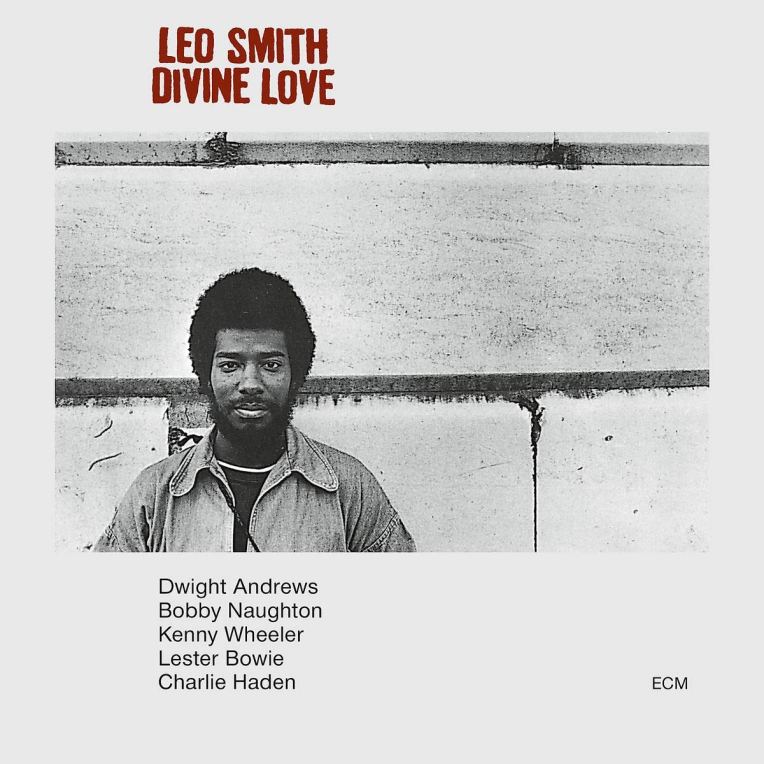
Wadada Leo Smith: Divine Love (ECM 1143)

ECM 1143

Wadada Leo Smith
Divine Love

Wadada Leo Smith trumpet, fluegelhorn, steel-o-phone, gongs, percussion
Dwight Andrews alto flute, bass clarinet , tenor saxophone, triangles, mbira
Bobby Naughton vibraharp, marimba, bells
Charlie Haden double-bass
Lester Bowie trumpet
Kenny Wheeler trumpet
Recorded September 1978 at Tonstudio Bauer, Ludwigsburg
Engineer: Martin Wieland
Produced by Manfred Eicher

Wadada Leo Smith’s Divine Love is one of ECM’s most tantalizing jewels, the result of many years ignoring the label’s advances. I can only speculate this was because the immediacy of his craft might have been adversely affected by the interventions of any svelte postproduction. Thankfully, and not surprisingly, Eicher and company gave this effort all the space it needed to breathe, for breath is precisely what this imaginative session is all about.

Since 1970, Smith has been utilizing two systems of musical production: a) rhythm-units, which balance every note produced with an equivalent unit of silence, and b) ahkreanvention, an amalgamated method of “scored improvisation.” The album’s two bookends exemplify the former, while the latter animates the single piece at their center. This structure gilds the recording with a cyclical feel that deepens with every listen. Drifting through the waves of mallet percussion (courtesy of Bobby Naughton) of the title track, each cry materializes as a vessel of indeterminate origin until we lose ourselves in the eddy of “Tastalun,” where muted trumpets (Lester Bowie and Kenny Wheeler join in here) streak the music’s inner language with deep gashes of spontaneous intent. With “Spirituals: The Language Of Love,” we return to where the album began, sailing forth into waters at once opaque and teeming with unseen light.

0413512-R1-E002
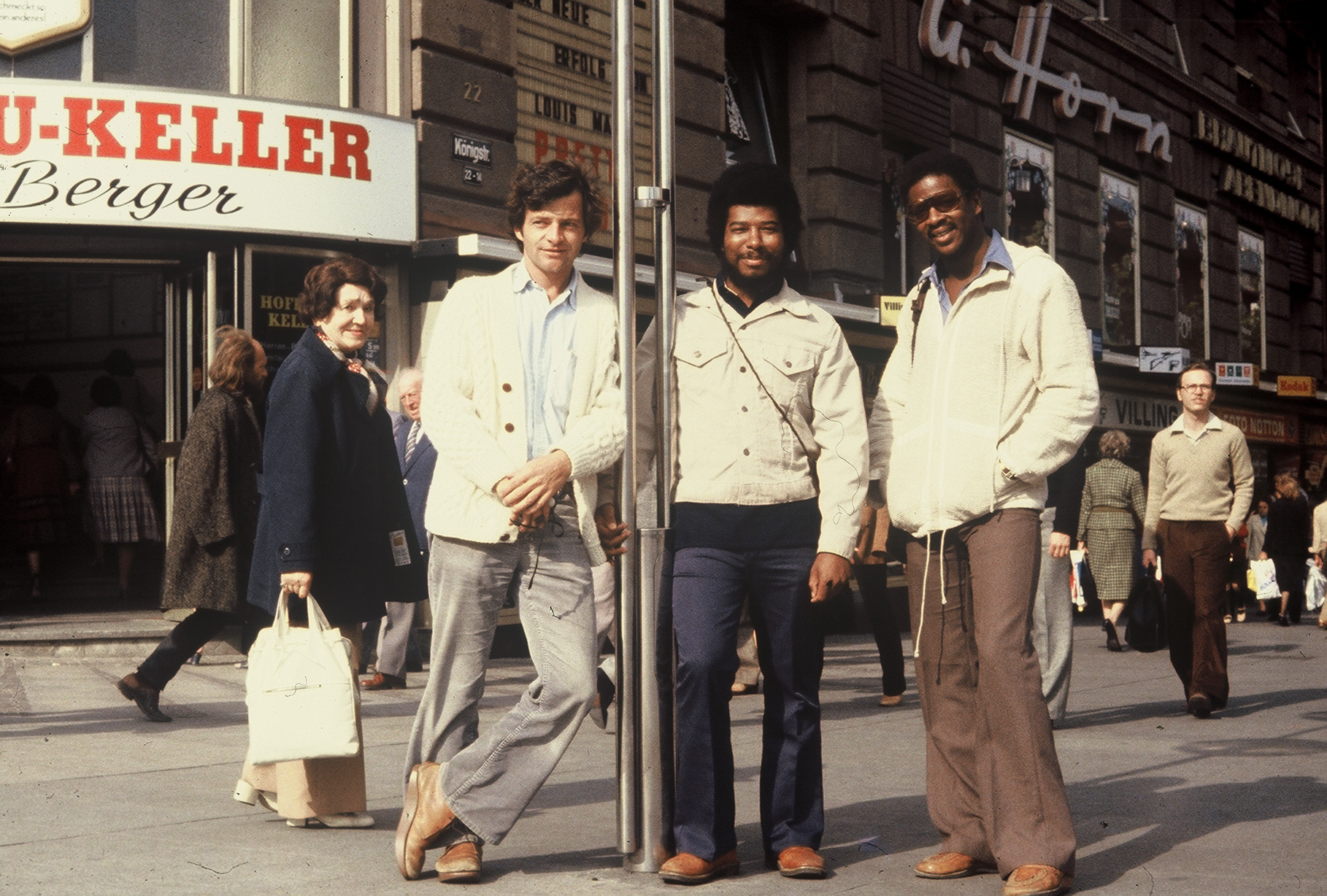
From left to right: Bobby Naughton, Wadada Leo Smith, Dwight Andrews
Stuttgart, West Germany, September 1978
(Photo by Fridel Pluff)

While Smith’s presence is felt throughout in his wavering horns and percussion, the alto flute of Dwight Andrews is for me the album’s soul. Smith’s pensive collaboration tries not to evoke beauty, but rather to find in the act of invocation an air of repose. Anyone expecting grooves and catchy tunes will find no foothold. This is a long confession spun from discomforting lucidity. In this trying melody called life, divine love is the truest note.

<< Richard Beirach: Elm (ECM 1142)
>> Terje Rypdal: Descendre (ECM 1144)

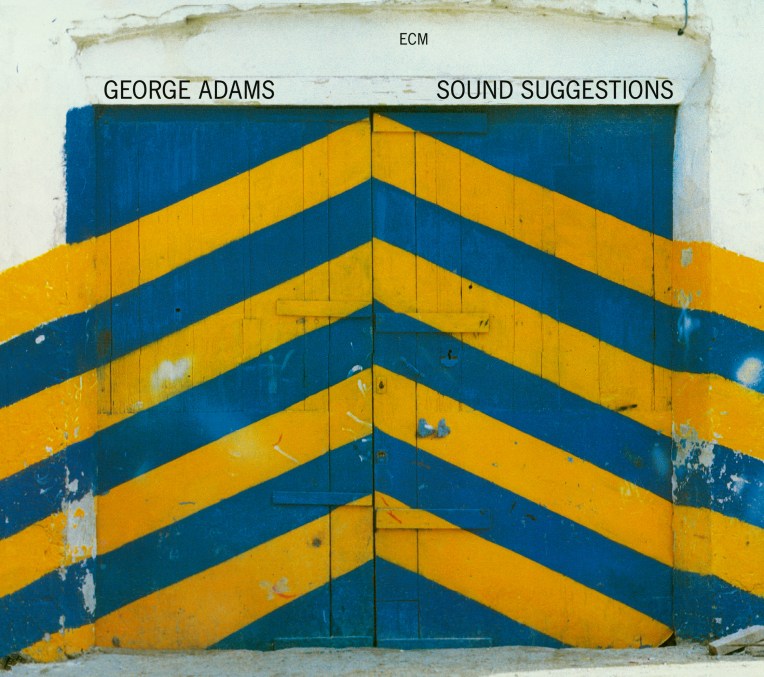
George Adams: Sound Suggestions (ECM 1141)

1141 X

George Adams
Sound Suggestions

George Adams tenor saxophone, vocal
Heinz Sauer tenor saxophone
Kenny Wheeler trumpet, fluegelhorn
Richard Beirach piano
Dave Holland bass
Jack DeJohnette drums
Recorded May 1979 at Tonstudio Bauer, Ludwigsburg
Engineer: Martin Wieland
Produced by Manfred Eicher

The intensities of Mingus veteran George Adams (1940-1992) took their only dip in the ECM pool with Sound Suggestions. Bringing characteristic fire to every lick, Adams was a force to be reckoned with, as evidenced in his later quartet recordings with Don Pullen for Blue Note. Joined by a stellar cast of label stalwarts, Adams sets alight the fringes of our expectations. His tenor is so luscious in the opener, “Baba,” that we swear we’ve heard it before, the lingering soundtrack to some dream or distant memory. Kenny Wheeler’s flugel paints a high-reaching arc under which Richie Beirach (piano) and Jack DeJohnette (drums) spread their blanket of sand. A lyrical solo from Wheeler bleeds into an equally robust turn from Adams, ending with an exclamation mark. Uplifting themes abound in “Imani’s Dance,” each linked by a mid-tempo groove of finely honed horns. Though head-nodding solos all around make this one a winner, it’s an especially glorious vehicle for DeJohnette’s mastery at the kit. Each of his gestures is one of a base pair, linking into the perfect helix that is “Stay Informed.” Here, a robust tenor gene manifests itself in the album’s most enthralling flight, rendered all the more intense by Beirach’s majestic trails. Segueing into “A Spire,” we find wider spaces, across which both Adams and German reedman Heinz Sauer level their weary songs, all the while backed by chattering cymbals and a rolling snare. The bluesy “Got Somethin’ Good For You” serves up a healthy portion of the voice behind the mouthpiece. Though a knot in the album’s smooth grain, the track is enlivened by a whirlwind of horns.

The musicianship on Sound Suggestions is as tight as the walls at Sacasyhuamán. Adams’s strokes are bold and direct, each a snowflake bronzed and offered to time with ceremonial care. And let us not forget the extraordinary talents of Sauer, whose tenor also graces Adelhard Roidinger’s underappreciated gem, Schattseite. Surely, this is one of ECM’s hottest joints.

<< Gary Burton/Chick Corea: Duet (ECM 1140)
>> Richard Beirach: Elm (ECM 1142)

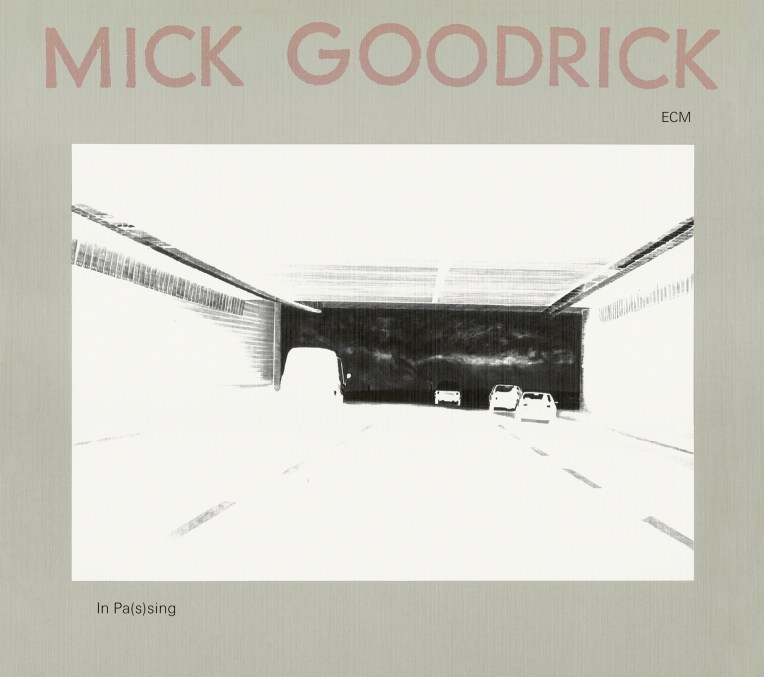
Mick Goodrick: In Pas(s)ing (ECM 1139)

1139 X

Mick Goodrick
In Pas(s)ing

Mick Goodrick guitar
John Surman soprano and baritone saxophones, bass clarinet
Eddie Gomez bass
Jack DeJohnette drums
Recorded November 1978 at Talent Studio, Oslo
Engineer: Jan Erik Kongshaug
Produced by Manfred Eicher

After guesting on three Gary Burton collaborations (The New Quartet, Ring, and Dreams So Real), guitarist Mick Goodrick broke out with his first album as leader—and what better place than ECM to open his art to its fullest, for this would be his last recording for the label. In Pas(s)ing consists entirely of Goodrick originals, save for the collectively improvised title cut, giving us an unassuming view of the thoroughly sanded figures that are his themes.

“Feebles, Fables And Ferns” is morning and dusk, a crepuscular confection wrapped in drums (DeJohnette), bass (Gomez), and tenor sax (Surman), and all tied with Goodrick’s sonic filaments. The latter’s airy, John Abercrombie-like tone is pensive and glows like embers. The bass is shallowly miked, making it seem an extension of the guitar. Its player often vocally anticipates his supporting lines, as in the lovely solo granted passage here. Surman’s equally mellifluous sound rolls off the tongue like a poem. “In The Tavern Of Ruin” continues the lush quartet sound, only this time with a brittle edge. Surman leads a slow procession of hooded figures before his soprano trails into Goodrick’s darkening clouds. Distant cries seize us as Surman again wraps his cosmic fabric around our ears. This makes “Summer Band Camp,” the album’s shortest track, all the brighter in its nostalgia. Surman smiles through his sound, as do all gathered, gently kissing the art into which they have grown. Gomez’s doublings add a chorused, rhythmic aphasia that foreshadows an ecstatic close. A tender bass clarinet lacquers “Pedalpusher” with molasses, sealing in an array of tactful changes which do nothing to obscure the phenomenal bass work therein. In closing, we find ourselves “In Passing,” which throbs with yielding yet intense sentiment. DeJohnette stitches a fine seam here, even as Surman cuts his thematic restraints in favor of more visceral forms of communication.

Goodrick’s elasticity throughout is a comforting presence, while Surman shines in what amounts to a starring role. These energies, buoyed by a plastic rhythm section, coalesce into what is easily one of my favorite ECM releases.

<< Paul Motian Trio: Le Voyage (ECM 1138)
>> Gary Burton/Chick Corea: Duet (ECM 1140)

Pat Metheny: New Chautauqua (ECM 1131)

ECM 1131

Pat Metheny
New Chautauqua

Pat Metheny electric 6- and 12-string guitars, acoustic guitar, 15-string harp guitar, electric bass
Recorded August 1978 at Talent Studio, Oslo
Engineer: Jan Erik Kongshaug
Produced by Manfred Eicher

Pat Metheny is one of those rare artists whose virtuosity is so fluid that it is no longer a necessary lens through which to view his music. Despite the 43 strings at his disposal for this fourth ECM outing, Metheny opts for pure expanse over density. While his first three projects found him fronting equally captivating support, here we see the Missouri native charting heretofore-unrecorded autobiographical depths that remain as resonant as they ever were.

New Chautauqua is bookended by two travel diaries. The title opener cracks like a morning egg onto a sizzling griddle. Here, as throughout, we find an entire desert compressed into a single grain of sand, needing only the microscope of Metheny’s meticulous syncopations to make our way through its staggering terrain. At the far end of the tunnel is new life lit by “Daybreak.” Additional guitars and bass ooze with optimism in this divided smile, holding fast to the idea of—but never the physical need for—a destination.

Along the way, we encounter a string of contemplative rest stops, each the trail marker of a limpid night. Every verse of “Country Poem” makes for a fitting prelude to the diptych of “Long-Ago Child/Fallen Star,” in which the 15-string harp guitar dialogues with an open slide in the lead. Such delicacy can only be drawn in negative space, using pigments of regret and joy in equal measure. A heavy pause inhales deeply before expelling its acoustic splendor, hovering over arpeggiated flowers like a silent and thoughtful bee whose days are numbered, but whose memory lives on through a psychological pollen of sorts that cross-fertilizes vaster, less visible pastures. “Hermitage” might as well be the album’s title, so thoughtful are its steps, each a point along a circle of plot and resolution. Yet the needle in the New Chautauqua haystack is “Sueño Con Mexico.” Threaded by an acoustic ostinato, around which Metheny gilds ornamental embraces, its unyielding grace never fails to unhinge. It has the entire world’s natural cycles in its purview, turning as might an eddy in an April stream.

Metheny’s is a highly refined world that is as loose as it is exacting, written in the kind of polished script that can only come from a musical path forged through love of communication. Among decades of varied output, this stands as one of his most vivid sonic postcards for the yet-to-be.

<< Azimuth: The Touchstone (ECM 1130)
>> Walcott/Cherry/Vasconcelos: CODONA (ECM 1132)

Jack DeJohnette: New Directions (ECM 1128)

ECM 1128

Jack DeJohnette
New Directions

Jack DeJohnette drums, piano
John Abercrombie guitar, mandolin
Lester Bowie trumpet
Eddie Gomez bass
Recorded June 1978 at Talent Studio, Oslo
Engineer: Jan Erik Kongshaug
Produced by Manfred Eicher

This album was indeed a new direction for drummer Jack DeJohnette, by then an ECM mainstay who with this effort flirted with the free-flowing atmospheres then characteristic of the label’s popular European projects. John Abercrombie—another household name whose amplified strings do wonders for DeJohnette’s impulses—forms, along with Chick Corea veteran Eddie Gomez on bass, a triangular foundation upon which trumpeter Lester Bowie—the album’s shining star—builds his towering sentimentalism. Fresh off the Art Ensemble of Chicago’s Nice Guys session, Bowie lays it on thick, eschewing his whimsical asides for straight-on lyric fortitude. One is hard-pressed to keep from sweltering in the “Bayou Fever” that opens this forgiving tale. Abercrombie’s buttery-soft licks seem to adhere the rawer intensities of DeJohnette and Gomez, while Bowie deploys one potent bundle of melody after another. “Where Or Wayne,” a rubato pun anchored by a harder-edged bass, relays moments of ecstatic abandon with majestic guitar solos, expertly played off of by Gomez, who lights a few aesthetic candles of his own. The nebulous imagery of “Dream Stalker” and the old-school virtuosity of “One Handed Woman” make for a kindly pair and leave us with no other recourse than to take shelter in the “Silver Hollow.” Abercrombie goes acoustic in the album’s closer, trading sweeping lines with bass, all the while drowning in DeJohnette’s dawn-like pianism.

A spacious inner current, heir apparent to a straightforward jazz with no strings attached, feeds into every moment of New Directions. The performances are attentively recorded with a present, live feel that gives the drums all the room they need, and us all the sonic candy we crave.

<< Arild Andersen Quartet: Green Shading Into Blue (ECM 1127)
>> Steve Reich: Music for 18 Musicians (ECM 1129 NS)

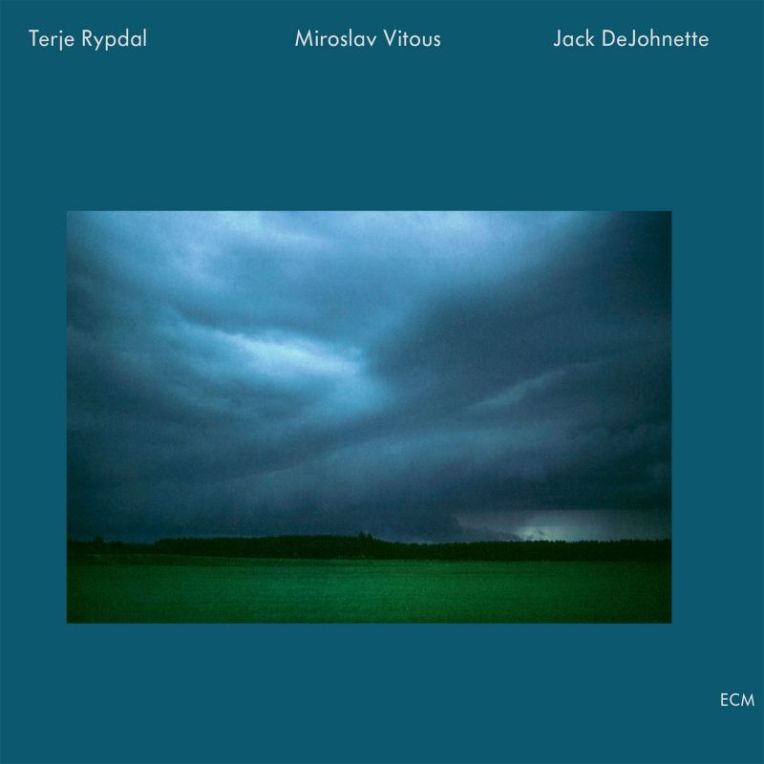
Rypdal/Vitous/DeJohnette: s/t (ECM 1125)

ECM 1125

Terje Rypdal/Miroslav Vitous/Jack DeJohnette

Terje Rypdal guitar, guitar synthesizer, organ
Miroslav Vitous double-bass, electric piano
Jack DeJohnette drums
Recorded June 1978 at Talent Studio, Oslo
Engineer: Jan Erik Kongshaug
Produced by Manfred Eicher

Terje Rypdal/Miroslav Vitous/Jack DeJohnette joins its eponymous crew in a one-off trio date for the ages. Although billed as something of a Rypdal venture, the album is primarily a canvas for Vitous, who bubbles forth with all the viscous potency of oil from a crack in the earth. The bassist and Weather Report founder culls from that selfsame influential oeuvre his classic tune, “Will” (a lilting and sentimental ride which made its first appearance on Sweetnighter), and pairs it with “Believer,” another original that is more Rypdal-driven. These two form the heart of a tripartite experience that begins with a pair of Rypdals. The first of these, “Sunrise,” floats in on DeJohnette’s scurrying drums, spurred by the air currents of Rypdal’s Fender Rhodes. Suspended plucking from bass stands out like heat lightning against Rypdal’s grittier monologues. Overdubs balance out the spacious surroundings with their fallow echoes. The guitar dominates here, its trembling accents seeming to grab clouds by their collars and shake them until melodies come falling out in patchy storms. He scrapes his pick along the strings, as if tearing holes in the very fabric of space-time. With respectful stealth, his gorgeous chording in “Den Forste Sne” manages to undercut the bowed bass, the latter recalling the tender songs of David Darling. This one is a stunner in its grandiose intimacy, accentuated all the more by Rypdal’s low-flying passes. We end with a diptych of group improvisations, each the shadow of the other. Between the frenetic syncopations of “Flight” and the pointillism of “Seasons,” we are given plenty of poetry with which to narrate our inner lives.

While, arguably, a pronounced variety of modes would have made this a “stronger” record, it seems content in being the languid organism that it is, and constitutes another enchanting landscape deservedly hung in the hallowed ECM Touchstones gallery. It might not be the best place to start, but what a detour to be had along the way…

<< Steve Kuhn: Non-Fiction (ECM 1124)
>> Art Ensemble of Chicago: Nice Guys (ECM 1126)

Bill Connors: Of Mist And Melting (ECM 1120)

1120 X

Bill Connors
Of Mist And Melting

Bill Connors guitar
Jan Garbarek saxophones
Gary Peacock bass
Jack DeJohnette drums
Recorded December 1977, Talent Studio, Oslo
Engineer: Jan Erik Kongshaug
Produced by Manfred Eicher

Three years after his astonishing acoustic turn on Theme To The Gaurdian and fresh from Jan Garbarek’s Places session, guitarist Bill Connors returned as leader for this moody quartet, for which one could hardly dream up a better roster: Garbarek (saxophones), Gary Peacock (bass), and Jack DeJohnette (drums) fill out the spectrum of this sound palette with the best of them. The synergy for which the latter two musicians have come to be so highly regarded is already plain to see here and spins the free and easy flow that characterizes the album’s ethos from beginning to end. While one might expect an electric guitar at anchor, Connors maintains his wireless interests with no loss of potency. One “side effect,” if you will, of this configuration is that the backing generally keeps its volume low and fades to near silence in order to give Connors ample soloing room. Garbarek’s chops are kept in check, for instance, in the opening cut, given only a single cosmic needle through which to thread their potentially overpowering strains. Similarly attractive negotiations abound in the heartrending tenor of “Not Forgetting,” in the lullaby effect of “Face In The Water.” Garbarek reignites in “Aubade” as if he were embodying the wavering reflections of a pool of fire. Where much of the album is diffuse and liquid, the groove of “Café Vue” is undeniably solid and allows for some engaging breaches of calm before being restored in “Unending.”

While perhaps less specific than Connors’s ECM debut, Of Mist And Melting is a worthy successor. It holds on to that same sense of freedom while charting an ethereal sound that could only come from those gathered.

<< Gary Peacock: December Poems (ECM 1119)
>> Ralph Towner: Batik (ECM 1121)