Two more reviews for RootsWorld online magazine, these of two very different albums: Iranian singer Marjan Vahdat’s long-awaited solo debut, Blue Fields, and Scottish fiddler Aidan O’Rourke’s autobiographical Hotline. Click a cover to discover!




Two more reviews for RootsWorld online magazine, these of two very different albums: Iranian singer Marjan Vahdat’s long-awaited solo debut, Blue Fields, and Scottish fiddler Aidan O’Rourke’s autobiographical Hotline. Click a cover to discover!

Marilyn Crispell
Vignettes
Marilyn Crispell piano
Recorded April 2007, Auditorio Radio Svizzera, Lugano
Engineer: Stefano Amerio
Assistant engineer: Lara Persia
Produced by Manfred Eicher
In the light of her successful trio albums for ECM, pianist-composer Marilyn Crispell brings jazz to its knees with a solo album of such shadow that descriptors run dry. Nominally, the reduction would seem to be just that: a paring of musicians from three to one, a nakedness of melody, a sparser palette. And yet, when “Vignette I”—the first of seven such improvisations strewn among a field of selectively prewritten material—casts its handful of stars into the night sky, the ripple effect is anything but restricted. Rather, this foray builds a grand emotion as only Crispell’s intersections of personal experience and growth can accommodate. Grounded by the occasional bass note, a floor to every ceiling, her introduction inhales as deeply as possible before draping its breath across the horizon. The six remaining vignettes capture details such as Crispell has never revealed before or since. Whether plucked like harp strings in rhythm with veiled footsteps (“Vignette II”) or tracing a vine’s path up an old stone wall (“Vignette VII”), she attends to every cell, reaching through muddy waters and touching the riverbed with her resolute sunbeams.
Above all, Crispell’s integrity is integral. As she labors between discomfort and resolution through the rubato oscillations of “Valse Triste,” navigates the pedestrian paths of “Sweden,” and places cross-sections of reminiscence under the dual microscope of “Ballade” and “Time Past,” an origin story begins to emerge. In “Gathering Light,” too, her mystical touch reigns. By the eddying currents of her left hand, she guides the school of fish evoked by her right, that its spiritual purpose might break shore and take root on land. Even in her most abstract moments (cf. “Axis”), Crispell’s feel for geometry is so genuine as to be irrefutable, and at her most somber (“Little Song For My Father”) she chains whispers of respect and love, allowing empty spaces to do most of the talking.
Rounding out the set are two artfully placed interpretations of others’ works. “Stilleweg” is by Norwegian trumpeter Arve Henriksen, and is an airy dance with a folkish quality. It is the other, however, to which I would focus your attention, for “Cuida Tu Espíritu” (Take Care of Your Spirit), by flutist Jayna Nelson, is one of the most transcendental piano works ever recorded for ECM. Crispell inhabits its every architectural nook and cranny, the staggered relationship between her fingers serving to magnify the holy vision at their tips.
Vignettes is both pure Crispell and Crispell at her purest. It holds its own alongside any Keith Jarrett album and is just as indicative of genius. An ECM “Top 10” candidate, for sure. Do yourself a favor and find out if you agree.

Stefano Bollani
Stone In The Water
Stefano Bollani piano
Jesper Bodilsen double-bass
Morten Lund drums
Recorded October 2008 at Avatar Studios, New York
Engineer: James A. Farber
Produced by Manfred Eicher
Italian pianist Stefano Bollani, last heard alongside mentor Enrico Rava on The Third Man, leads a hip Danish rhythm section of bassist Jesper Bodilsen and drummer Morten Lund for this colorful trio outing.
“Dom de iludir” is one of two Brazilian songs featured in the set and a personal favorite of Bollani. Written by Caetano Veloso, it intros with a pianistic staircase that leads us into the album’s mosaic of light and shadow. As brushed drums and bass saunter their way into frame, Bodilsen’s heartfelt solo giving early tell of the trio’s balladic core, we know we’ve come home. Antonio Carlos Jobim’s “Brigas nunca mais” closes the South American circle with fluted, martini-glass contours. Between these tunes are two more by Bodilsen, whose sweeping “Orvieto” channels Chick Corea, with whom Bollani would of course collaborate on an album of the same name. Contrasting this waterfall of sparkle and shine is the bar-lit “Edith,” which folds and unfolds a promise of love until it dissolves. In both tracks, the composer burns in the atmosphere by means of a deep pyrography, all the while retaining an optimistic sheen.
Aside from the trio’s fluid take on “Improvisation 13 en la mineur” by the (in Bollani’s estimation) underappreciated French composer Francis Poulenc and notable for Lund’s tactile engagement, the remaining tracks mine original Bollani ore exclusively. Much to this listener’s delight, the Latin undercurrent established at the outset colors the tender drivenness throughout, particularly in the nostalgia-laden “Asuda” and the concluding “Joker in the village,” prime vehicles both for bassist and drummer, respectively, who mix colors with such integrity that even Bollani’s textural authority can seem but sand to their waves.
That said, the leader elicits the album’s deepest moments by far in the aerial flyby that is “Un sasso nello stagno,” for which he soars and descends with the kind of precision that only years of flying experience can entail, and above all in “Il cervello del pavone,” one of the most fascinating trio cuts in the entire ECM catalogue. With its elliptical riffs and pointillist segues, it fills in the all the right gaps with tactful charm and understands that mastery comes only through a balance of groundedness and letting go.
(To hear samples of Stone In The Water, click here.)

Vassilis Tsabropoulos
The Promise
Vassilis Tsabropoulos piano
Recorded January 2008 at Dmitri Mitropoulos Hall, Megaron, Athens
Engineer: Nikos Espialidis
Produced by Manfred Eicher
Vassilis Tsabropoulos’s sixth ECM disc proves that less is indeed more. The Greek pianist-composer offers 11 pieces of original and improvised material, most of it sketched just weeks before the recording session. As solo piano records go, this has none of the fire of a Keith Jarrett or the richness of a Richie Beirach, but what it foregoes in flourish it supplements with emotional fluency.
The album is tented by the first iteration and two equidistant variations of a song called “The Other,” the repetition of which links bed sheets like a child scaling from an orphanage’s high window. Enjoying the feeling of cool, damp grass between his toes, he looks around before taking that first fateful step into new life. Starlit and sweet, his face draws curtains with a single gaze, whispering a ghostly farewell. Between these support beams thrives an effective garden of ruminations, each with its own part to play. “Tale Of A Man” perhaps sees that same child grown into someone who has never forgotten the way his escape has shaped the here, the now, and the ever after. The left and right hands run parallel along opposite riverbanks, never touching across the watery path until they at last reach the ocean into which that river empties.
“Smoke And Mirrors” overlooks that calm, moonlit sea. Hints of dance drop their anchors and hold their vessel true in the afterglow of moonset, which registers as but a glimmer on the water. In “Pearl” Tsabropoulos jumps from that vessel seeking the titular jewel. He finds it not between two shells, but growing of its own desire to be held. And so he plucks it from the sandy floor, cradling it in a calloused palm to the surface, where eyes await to behold its beauty.
One might easily read such evocative associations into the program’s whole, but the music holds its own without them. Despite the fact that much of it follows the same formula, laying melodic improvisations over flowing ostinatos, one also feels spoken to in an honest, reflective way. In this regard, the title track is the heart of Tsabropoulos’s art. Other key moments emerge by way of the crystalline geometry of “Djivaeri” and the intensely cinematic “Promenade.” And Tsabropoulos’s ECM tenure bears traces on “The Insider,” which recalls Ketil Bjørnstad at his solitary best, while “Confession” moves mountains with its G. I. Gurdjieff-like meditation.
These are as much pieces of literature as of music, their language as vivid on the wind as it would be on the page. The recording is distant, seemingly on the verge of floating away, and suits the sounds as the sun suits the moon. At the risk of over-comparing, fans of Eleni Karaindrou’s soundtracks—indeed, The Promise reads like a book of lost dances from an Angelopoulos film—will not want to pass this one by. It’s a melodic oracle. In hearing it for the first time, we know that we’ve heard it before.
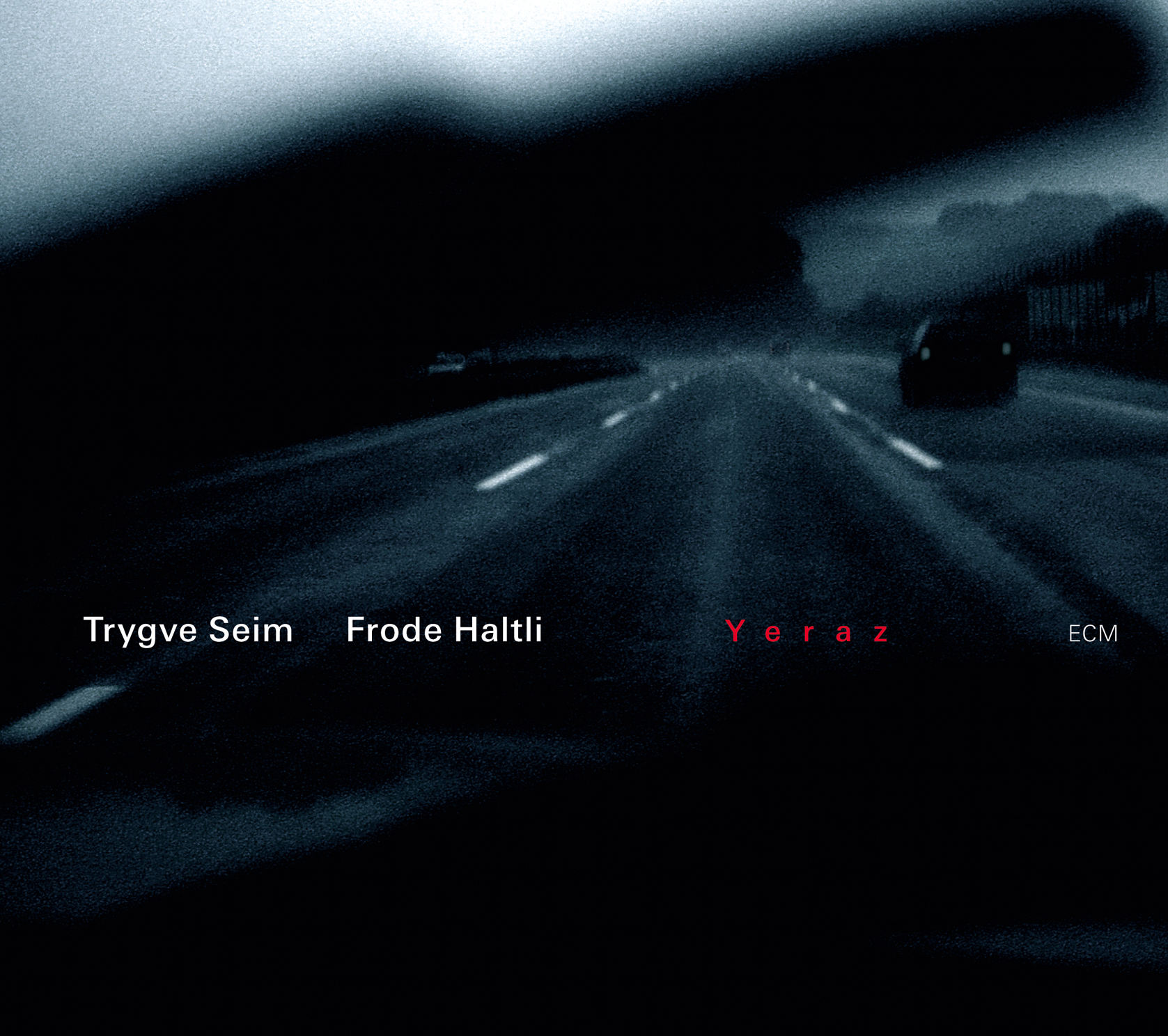
Trygve Seim soprano and tenor saxophones
Frode Haltli accordion
Recorded June 2007 at Rainbow Studio, Oslo
Engineer: Jan Erik Kongshaug
Produced by Manfred Eicher
Saxophonist Trygve Seim and accordionist Frode Haltli, both children of the Norwegian jazz scene and frequent collaborators who have grown into some of that scene’s most genre-defying proponents, pair up for an intimate songbook of frequencies that wraps the duo’s minds around an erudite program of mostly Seim-composed pieces. Exceptions include the haunting and windswept Armenian traditional song, from which the album gets its name, and the seemingly bipartite “MmBall,” penned by Seim’s go-to drummer, Per Oddvar Johansen. Seim and Haltli further explore two melodies—“Bayaty” and “Duduki”—by spiritual guru G. I. Gurdjieff (1866-1949), who, since Keith Jarrett’s 1980 Sacred Hymns, has been a ghostly presence on a handful of ECM projects.
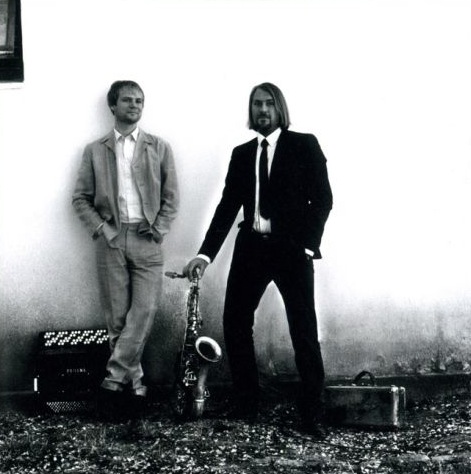
(Photo credit: Morten Krogvold)
Compared to past recordings, Haltli treads more carefully across the accordion’s polar ice caps, his touch as pliant as ever. With the slightest pitch bend or intervallic quaver, the accordion’s inner heart speaks with utmost profundity, especially in the lower range, which despite a seemingly tenuous hold on notes lays foundations of its own. Seim proves an ideal partner, not only sonically—both are reedmen of sorts—but also in musicality. Nowhere more so than in their interpretation of Bob Marley’s “Redemption Song,” for which the instruments blend so well they sound like extensions of one another, regressions and evolutions linking toward plush, resolute skies. In the Gurdjieff pieces, too, the duo feels like a splitting of the same consciousness. Seim’s duduk-like sound reveals tonal mastery, painting a cathedral from the steeple down to Haltli’s throaty bedrock.
As for Seim’s pieces, each is possessed of its own physical property. From the slow-moving liquid of “Airamero” to the cinematic grain of the Tom Waits-inspired “Waits for Waltz,” his writing engenders a joyous but never boisterous sense of play and understated virtuosity. Other Seim notables: the less inhibited brushwork of “Fast Jazz” and the accordion solo “Bhavana,” for which Haltli’s transcendent highs evoke the Russian bayan or, perhaps, the Japanese shō.
Holding the disc together are the freely improvised “Praeludium” and “Postludium,” each a beginning and an end in and of itself, waiting to redraw the circle. Thankfully, the PLAY button allows us to do just that.

Julia Hülsmann Trio
The End of a Summer
Julia Hülsmann piano
Marc Muellbauer double-bass
Heinrich Köbberling drums
Recorded March 2008 at Rainbow Studio, Oslo
Engineer: Jan Erik Kongshaug
Produced by Manfred Eicher
The more I get of you
The stranger it feels
And now that your rose is in bloom
A light hits the gloom on the gray
–Seal
From a long shoreline gentrified by Scandinavian jazz outfits, Julia Hülsmann’s all-German piano trio indeed hits the gloom on the gray with this sharp, lyrical ECM debut. The pianist tracks a robust set of ten tunes, most from her pen. Along for the journey are bassist Marc Muellbauer and drummer Heinrich Köbberling, both of whom contribute equally to the trio’s refreshing democracy. To that democracy the opening title track pays express deference, coming into being like Rachmaninoff’s Second Piano Concerto before settling into a balanced conversation between inner and outer voices.
The focus of Hülsmann’s writing is matched only by her playing. Whether navigating the upbeat geometries of “Quint” (in which the unity achieved with her rhythm section is a wonder to behold) or floating on the breeze of the Jobim-inspired “Sepia,” she attends to every motivic bend in the road without need of compass. She is just as comfortable turning out stunning fractals of improvisation as she is flitting like a butterfly through nonetheless dense crosswinds (to wit: “Senza” and “Gelb,” respectively). Yet despite her independent spirit, she is most at ease forging on-the-spot connections with her bandmates. Exemplary in this regard is “Not The End Of The World,” which pulses behind a scrim of shadow and draws unity between Muellbauer and Hülsmann’s left hand (foiling the soft-focus sparkle of her right) while Köbberling works gorgeous curlicues at the snare’s rim.
Bassist and drummer also contribute material. Muellbauer’s relatively brief yet smooth nocturnal lines make “Last One Out” a memorable aside. Köbberling’s two offerings, “Konbanwa” and “Where In The World,” both speak in softer poetries, yet with majesty of emotion.
The latter track ends the album with a song for those who cannot sing, a love letter for those who cannot love. Its flow pulls at the heartstrings with a Midas touch, a kiss of the hand that follows wherever you may travel. Speaking of such, one can hardly ignore the trio’s evocative take on Seal’s iconic “Kiss From A Rose,” given new life for all its bareness. Likewise stripped is the engineering, which by the grace of the great Jan Erik Kongshaug mikes the musicians nakedly while also bringing out their inner ability to read the wind.
A must.
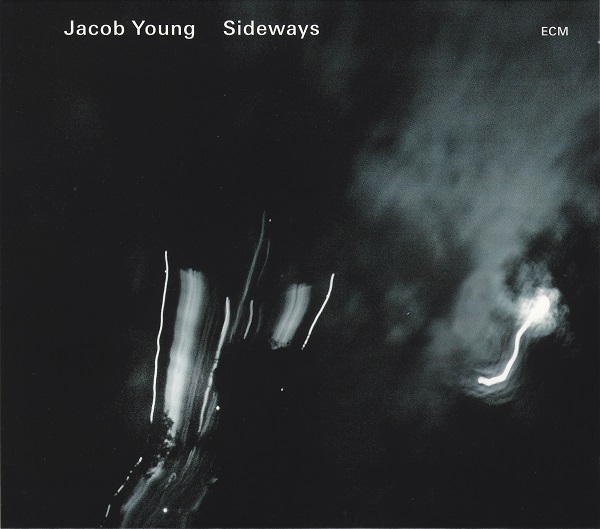
Jacob Young
Sideways
Jacob Young guitars
Mathias Eick trumpet
Vidar Johansen bass clarinet, tenor saxophone
Mats Eilertsen double-bass
Jon Christensen drums
Recorded May 2006 at Rainbow Studio, Oslo
Engineer: Jan Erik Kongshaug
Produced by Manfred Eicher
Norwegian guitarist Jacob Young’s sophomore effort follows coolly on the heels of his debut, Evening Falls. The wealth of Scandinavian talent at his side is enviable, to say the least. Trumpeter Mathias Eick, reedman Vidar Johansen, bassist Mats Eilertsen, and drummer Jon Christensen bring their uniquely tessellated feel for rhythm and hues to ten of Young’s originals, of which the title track sets the stage with the bandleader’s unmistakable acoustic. Mallet-caressed cymbals, trumpet, bass clarinet, and upright bass comingle in simpatico resonance, riding a slow and steady frequency from start to finish.
On that note, it’s difficult to say whether or not this music ever finds closure. Rather, each tune suspends itself high above the clouds, catching breath before measuring another dive into the next. In this regard, fans of Manu Katché’s ECM outings—into which the personnel here dovetails slightly—will surely rejoice in Young’s architecturally sound themes, ringing out clearly and distinctly before being recast in light harmonies and natural improvisational turns. Case in point: “Hanna’s Lament,” of which the two horns hover over Eilertsen’s landing pad before Young’s solo on classical guitar threads them all with the skill of a tailor’s needle. The evocative “Near South End” is another representative example, and traces its head through a unifying of bass and guitar. Christensen is the real key to unlocking the inventive nostalgia at play, as also in “St. Ella,” a volcano at the ready.
Eick is the most chameleonic of the bunch, as comfortable highlighting the canvas as he is slashing it with Tomasz Stanko-like leaps of intuition in “Maybe We Can.” Johansen, for his part, treads the line between dream and reality in “Out Of Night,” which at over 10 minutes could be an overbearing tune were it not for the naked clarity of his tenoring. With so much to admire and interpret in its unfolding, it best showcases the album’s finessed engineering.
That Young was fortunate enough to study with Jim Hall and John Abercrombie will be obvious on three tracks for which he goes electric: “Time Rebel,” “Slow Bo-Bo,” and “Wide Asleep.” Each is the side of hidden triangle, rendered to the tune of a watercolor enchantment. At some moments a balladic brew while at others a cosmic layering, the overall shape emerges only with thoughtful listening. Like the multi-tracked guitar-only epilogue, “Gazing At Stars,” it follows the gaze into sunset and to the twilight beyond.
Even with its air of mystery, Sideways comes to us as a completed puzzle, glued and framed so that we might admire its scenery without the task of putting it together. This leaves us free to bask in its light, turning its shadows like the pages of a book personally inscribed.

Terje Rypdal
Vossabrygg
Terje Rypdal guitar
Palle Mikkelborg trumpet, synthesizer
Bugge Wesseltoft electric piano, synthesizer
Ståle Storløkken Hammond organ, electric piano, synthesizer
Marius Rypdal electronics, samples, turntables
Bjørn Kjellemyr electric and acoustic bass
Jon Christensen drums
Paolo Vinaccia percussion
Recorded live April 12, 2003 at Vossa Jazz Festival, Norway
Engineer: Per Ravnaas, NRK
Executive producer: Manfred Eicher
Terje Rypdal’s Opus 84 is an interdisciplinary suite of epic proportions. The fruit of a 2003 commission by Norway’s Vossa Jazz Festival, this live recording finds the Norwegian guitarist-composer fronting an all-star cast that brings trumpeter Palle Mikkelborg, bassist Bjørn Kjellemyr, drummers Jon Christensen and Paolo Vinaccia, and keyboardists Bugge Wesseltoft and Ståle Storløkken to the fold. Truly special, though, is the ECM debut of Marius Rypdal, who provides digital connective tissue at key points along the way and mines his father’s own discography—particularly Ineo, op. 29 and the 5th Symphony, op. 50—to nu-jazz levels. His veritable hand basket of samples, breakbeats, and atmospheres spreads a picnic that tastes much like Khmer (and, for the obscurists out there, also like Japanese guitarist Sugizo’s 1997 drum ‘n’ bass solo effort, Truth?). His computational acumen is clearest on the three movements he co-writes with Terje: “Hidden Chapter,” “Incognito Traveller,” and “Jungeltelegrafen.” Of these, the first two wield classically cinematic brushes, moving waves of ambience and computerized utterances across swaths of bedrock. Samples range from violin and chorus to a warped phone call pulsing through city streets under cover of night. Gesture for gesture, Mikkelborg matches Rypdal’s every cry, breaking out in the final piece toward full-on escape.
The “brygg” of the album’s title means “Brew,” a forthright reference to Miles Davis’s seminal electric-era Bitches Brew. The introductory, 18-and-a-half-minute “Ghostdancing” mixes a likeminded concoction of heat-distorted drums and organ over a rocking bass line. The thinking is bold, dynamic, and recalls “Rolling Stone,” the once-lost track off Rypdal’s own Odyssey. In this sea of reverberation, Mikkelborg’s vessel stretches the broadest sail.
If Rypdal and friends seem to be digging into the past, it’s only because they are messengers from the future. Be it encoded in the double-headed “Waltz For Broken Hearts / Makes You Wonder” or the halting “That’s More Like It,” his resonant stream is palpable whether his plectrum touches string or not. In this context, Mikkelborg, ever the empathic performer, plays the melodic prince to Rypdal’s atmospheric king. The guitarist holds his authority by no small feat of restraint, as he does further in the post-meridiem groove of “You’re Making It Personal.” Bass and drums haul a heavy cart of night while trumpet cuts shooting star scars over the cityscape. This leaves only “A Quiet Word,” actually a rather dense wave of dreams, to build the afterglow, particle by particle.
This is how it’s done.
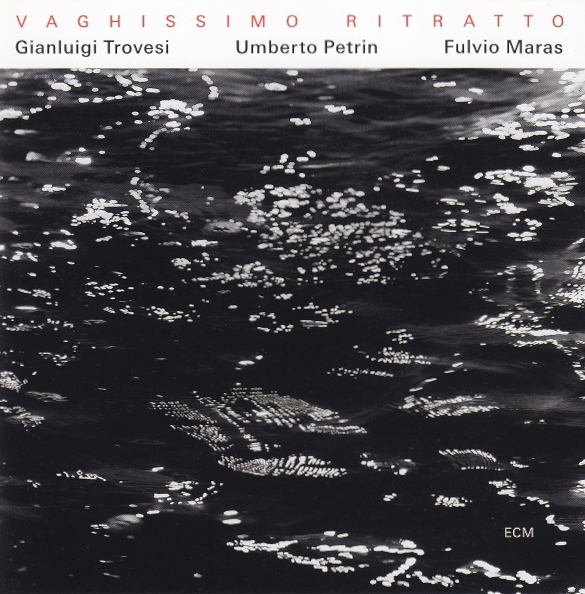
Gianluigi Trovesi
Vaghissimo Ritratto
Gianluigi Trovesi alto clarinet
Umberto Petrin piano
Fulvio Maras percussion, electronics
Recorded December 2005, Artesuono Recording Studio, Udine
Engineer: Stefano Amerio
Produced by Manfred Eicher
This album’s title, informs Steve Lake in his fascinating liner notes, comes from a madrigal by Giovanni Pierluigi da Palestrina, and connotes a beautiful, if hazy, portrait. From that concept, the trio of clarinetist Gianluigi Trovesi, pianist Umberto Petrin, and percussionist Fulvio Maras (who also provides subconscious electronics) unreels a bolt spanning premodern to modern textures, each deconstructed and rewoven along the way to the tune of each musician’s improvisational acumen. Vaghissimo Ritratto is thus a picture gallery that is as much spatial as temporal, painting with good-humored pigments over ECM’s vast canvas.
Trovesi has, of course, already left indelible marks on that same canvas, but perhaps none so distinctive as this. With Maras (heard also on the Trovesi Octet’s Fugace) and Petrin (of Trovesi’s Italian Instabile Orchestra) to assist him, the overall effect is a revelation. A good measure of the album’s “portraits” references Italian cellist and composer Alfredo Piatti. His themes resonate at regular intervals, each a cleansing exhalation before the next intake. In them, not only does Maras hint at a boundless inner world with his light applications, which haunt the edge of perception like dreams jumping off the cliff of waking; he also foils the record’s otherwise acoustic nature. Whether by means of an artful synthesizer or by the touch of hand on drum, he cuts a flash of poetry across every prosodic eye. Through it all, Trovesi stands like a prophet of the here and now. With a lyricism that is an intense as it is entirely his own, Trovesi hones a vibe as only he can elicit from even the simplest melodies.
As a unit, the trio sips from various glasses, moving photographically through stages of development. A taste of cabaret comingles with an operatic piquancy, while nostalgia binds the two in harmony. What might feel like the inside of a café at one moment could very well turn into a death scene the next. Such is the album’s theatrical edge, by which the trio adlibs its way through such tracks as “Serenata” with all the comfort of one reading from a score. And in “Mirage,” notable for the arresting, shawm-like quality that issues from Trovesi’s alto clarinet, we feel cargo moving across the sands while tintinnabulations, soft and hymnal, echo from the piano.
Two twentieth-century singer-songwriters, Luigi Tenco and Jacques Brel, are referenced in “Angela” and “Amsterdam,” respectively. In the hands of Trovesi and company, both of which move through changes with the greatest of ease, and with such grandeur as to make one yearn to have been there when first written. Maras and Petrin each contribute a tune in kind, delving through their rapport into jazzier turns.
If these are the vanity muscles, then the album’s blood supply comes from its host of Renaissance composers, including Claudio Monteverdi, Orlando di Lasso, Luca Marenzio, and Josquin Desprez. In the subsection, for instance, marked “Ricercar vaghezza,” the ritornello from Monteverdi’s opera “L’Orfeo” sounds downright futuristic, so pure is its antiquity, and receives the proper Trovesi treatment in the reedman’s “Grappoli orfici” (Orphic clusters), from which he unravels that Monteverdean thread and with it re-stitches the night sky to a toothsome smile of mountains along the horizon. Further delights await in Desprez’s classic “El grillo,” a song all the closer to my heart not only because it shares my last name, but because the spirited rendering it receives here removes that tongue-in-cheek wrapper and cracks open a little transcendence from within it.
By the time we reach our title destination, a vague and freely improvised foray that sparkles as it slumbers, we splinter along with the trio into a motif from Palestrina. Its message, though whispered, is clear enough: The circle is not a cycle, but the ripple of the first stone.
 Between Sound and Space: ECM Records and Beyond